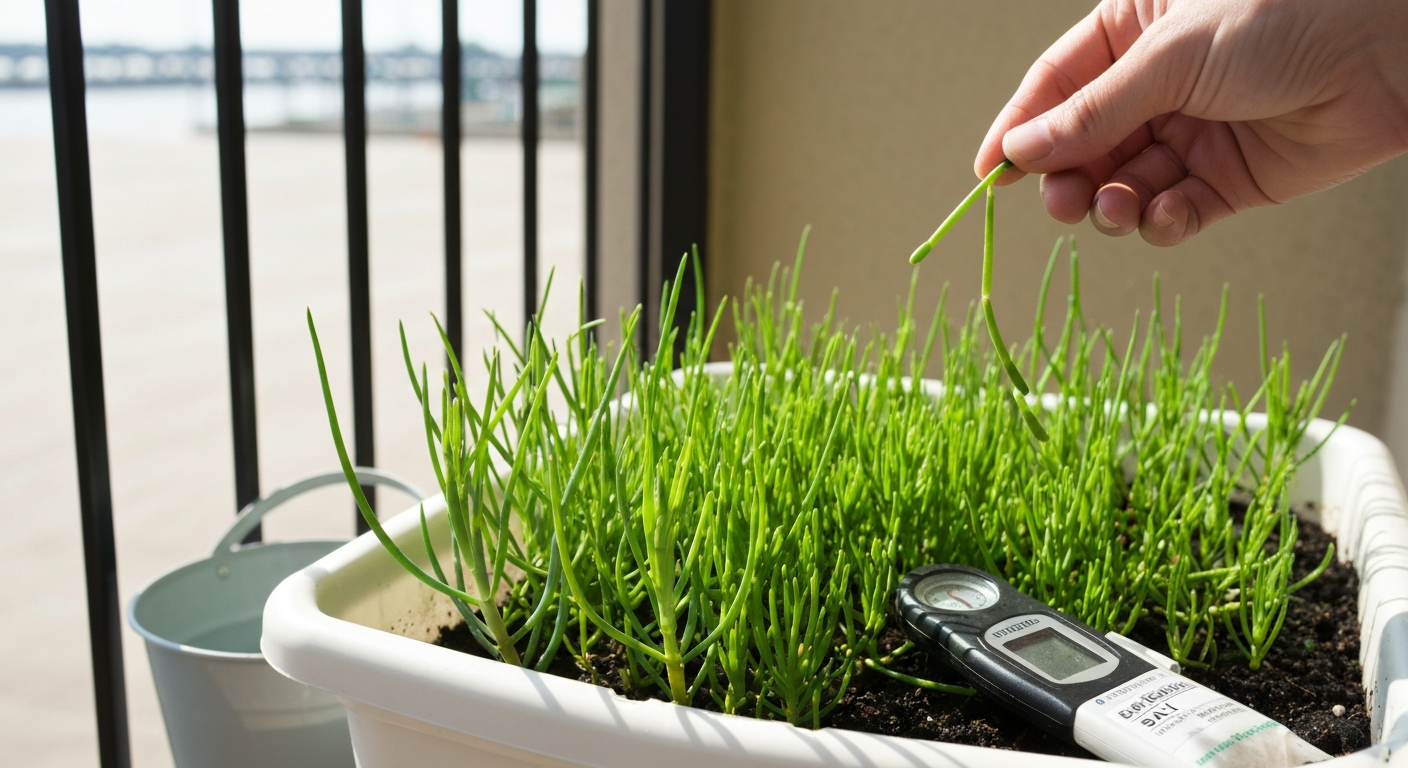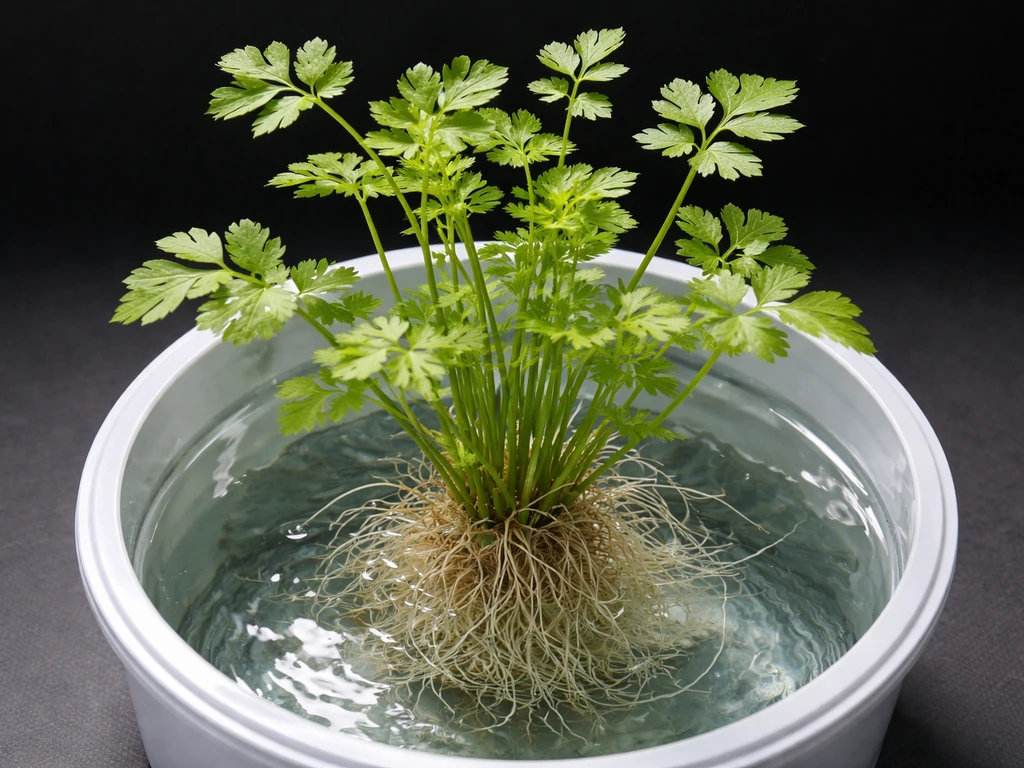
Pickerel weed (Pontederia cordata) grows best in shallow water at the edge of a pond, wetland planter, or large container, with its roots in saturated soil or submerged under about 10 to 12 inches of water and its leaves standing above the surface. Following these basics, you can dial in the right depth, light, and nutrients to grow pearl weed successfully in your setup. Plant rhizome divisions in spring, give it full sun, and it will establish within one growing season and flower reliably from early summer through fall. The spread is slower than most people fear, but a mesh basket or contained planter keeps it exactly where you want it if you have a smaller setup.
How to Grow Pickerel Weed: Step-by-Step Pond and Planter Guide
Marcus Holloway
12 Jun 2026
What pickerel weed is and why it's worth growing
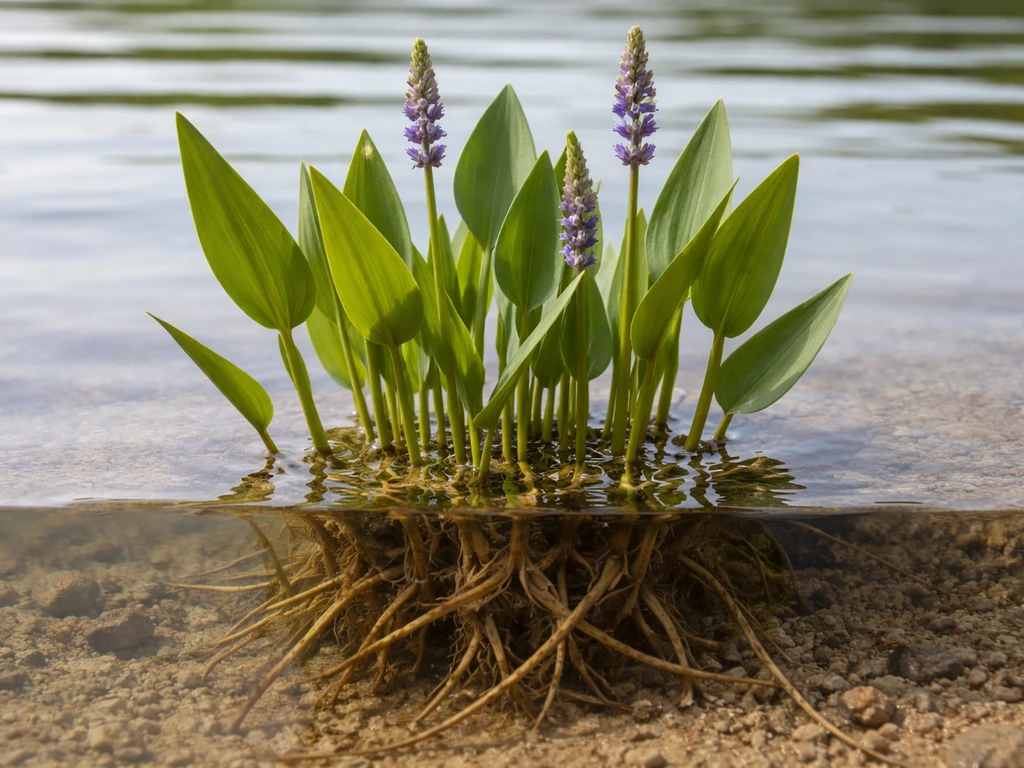
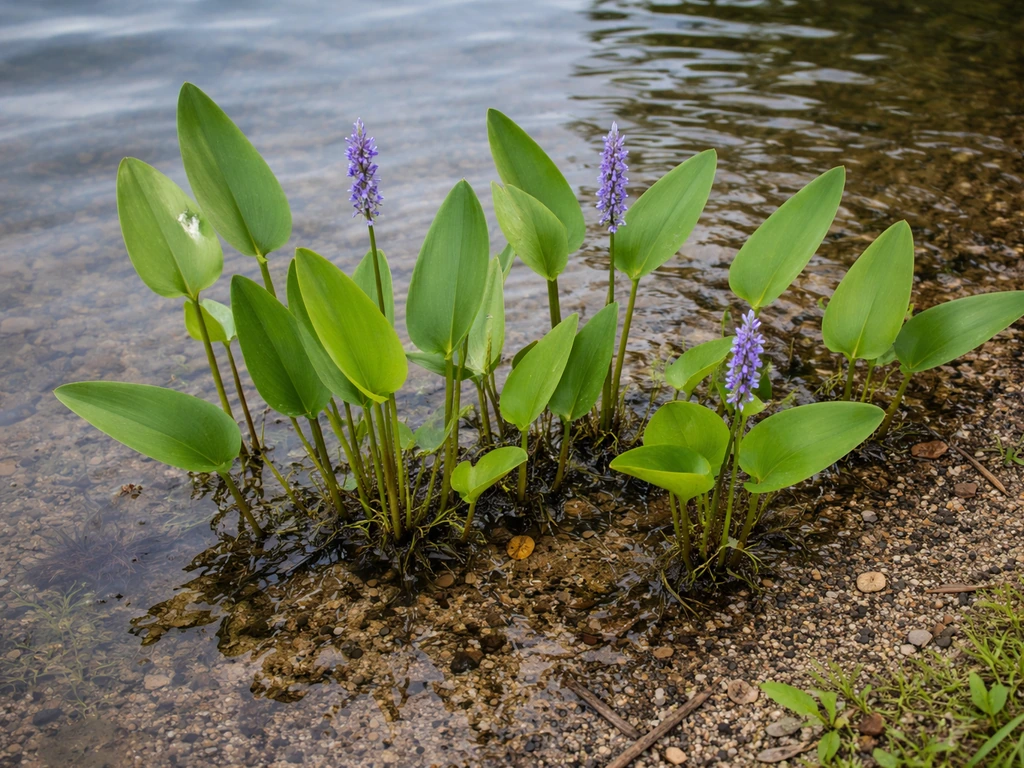
Pontederia cordata is a native North American emergent perennial. In the wild it colonizes the edges of slow-moving rivers, lake margins, and shallow ponds, which tells you a lot about what it wants from you: still or slow water, shallow depth, and plenty of light. The leaves are glossy, arrowhead-shaped, and can stand 2 to 3 feet above the waterline. From early summer into fall it pushes up dense spikes of violet-blue flowers that attract pollinators and make it one of the most visually striking marginal plants you can grow. The rhizomes overwinter underground and resprout every spring, so once it's in, it stays in.
From a practical standpoint, pickerel weed pulls nutrients out of the water column, provides cover for juvenile fish and invertebrates, and stabilizes pond margins. If you're already growing other aquatic species in the same system, those benefits stack up quickly. It's genuinely low-maintenance once established, and Mississippi State University Extension notes it spreads slowly and rarely causes problems in normal pond settings, which is reassuring if you've heard horror stories about marginal plants taking over.
Legality: where you can and can't grow it
In the continental United States, Pontederia cordata is native across most of the eastern half of the country and is generally unrestricted for cultivation in private ponds and containers. The USDA Plants Database confirms its native status across a wide range of states. That said, aquatic plant regulations vary by state, and some states restrict the introduction of any aquatic plant into public waters regardless of native status. Minnesota's invasive species law, for example, prohibits releasing plants into public waters even when possession is allowed. Before you plant in a natural waterway or lake, check your state's DNR or fish and wildlife agency website. For contained systems, backyard ponds, and wetland planters, you're almost universally in the clear. If you're unsure about a specific state, the EDDMapS database is a fast way to check reported occurrences and any associated regulatory flags.
Choosing the right setup
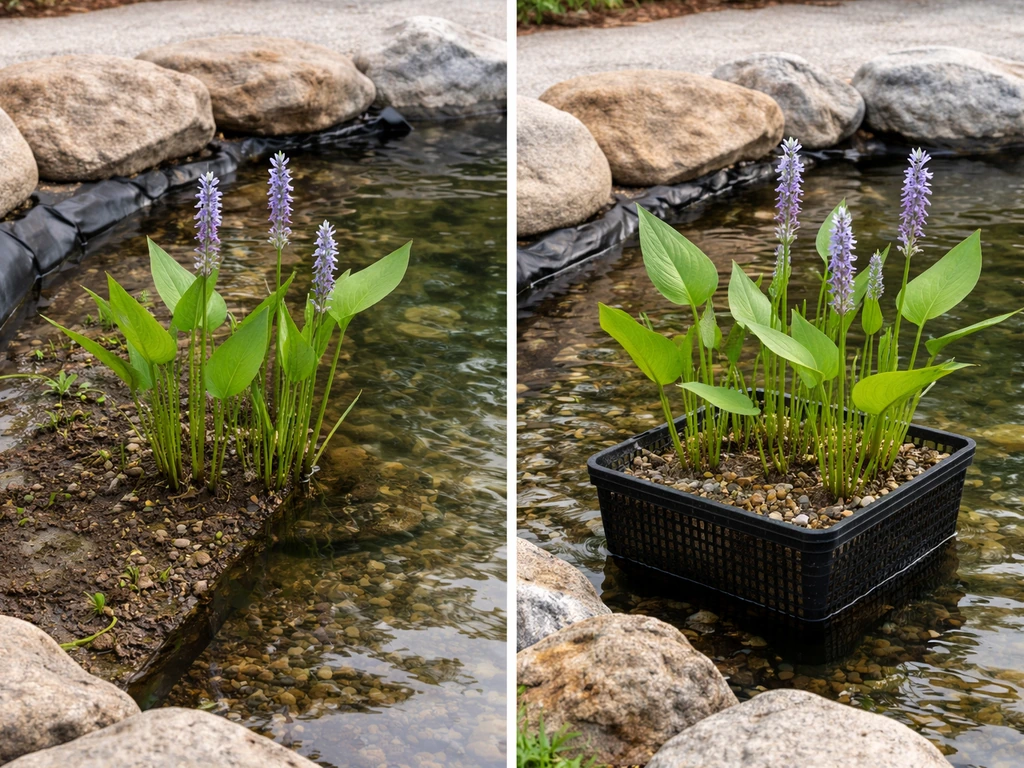
The setup you choose affects almost every other decision, so get this right before you buy plants or seeds. Pickerel weed is flexible, but it does have a minimum space and water requirement that rules out small desktop aquariums.
| Setup | Best for | Water depth | Containment needed? | Notes |
|---|---|---|---|---|
| In-ground pond (clay/liner) | Larger plantings, wildlife habitat | 8–12 inches over roots | Basket recommended | Best long-term performance; monitor rhizome spread annually |
| Container/wetland planter | Patios, small spaces, controlled growing | 4–12 inches over roots | Built-in by design | Use a pot at least 12 inches wide; repot every 2–3 years |
| Bog/wetland bed | Rain gardens, shoreline restoration | Saturated soil to 6 inches standing water | Edge trenching or liner helps | Great for naturalizing; give it more space upfront |
| Large aquarium or IBC tub | Experimental or indoor growing | Shallow margin zone only | Yes, contained by vessel | Needs very strong lighting; roots must not be fully submerged without emergent zone |
For most readers, a backyard pond with a mesh aquatic planting basket is the simplest starting point. The basket sits on a shelf or ledge at the right depth, controls rhizome spread passively, and lets you lift and divide the plant every few years without disturbing the whole pond. If you only have a patio, a 20-gallon or larger container half-filled with heavy loam and topped with water works well too. Missouri Botanical Garden specifically recommends marginal container placement with roots in mud under a few inches of water for exactly this reason.
Starting from seeds vs. rhizomes
I'll be honest: rhizomes are the easier path by a wide margin. If you can get your hands on a division from an established plant or order bare-root rhizome tips, skip seeds entirely for your first planting. Rhizomes establish faster, flower the same season or the next, and have far more predictable results. Seeds require cold stratification, specific temperature windows, and a lot of patience for what is ultimately a slower start.
Starting from rhizomes or divisions
The ideal planting window for rhizome tips and divisions is spring through midsummer. Texas Parks and Wildlife specifically documents rhizome-tip propagation from spring to midsummer as the best window for native aquatic plant establishment, and this matches what you'll see in practice. Oklahoma State University Extension suggests starting as early as April. Cut or obtain rhizome sections with at least one growing tip and a few roots attached. Plant them horizontally just under the surface of heavy loam or aquatic planting mix in your basket or container, with the tip angled slightly upward. Add pea gravel on top to cap the substrate and stop it from clouding the water. Then lower the whole thing into position.
Starting from seed
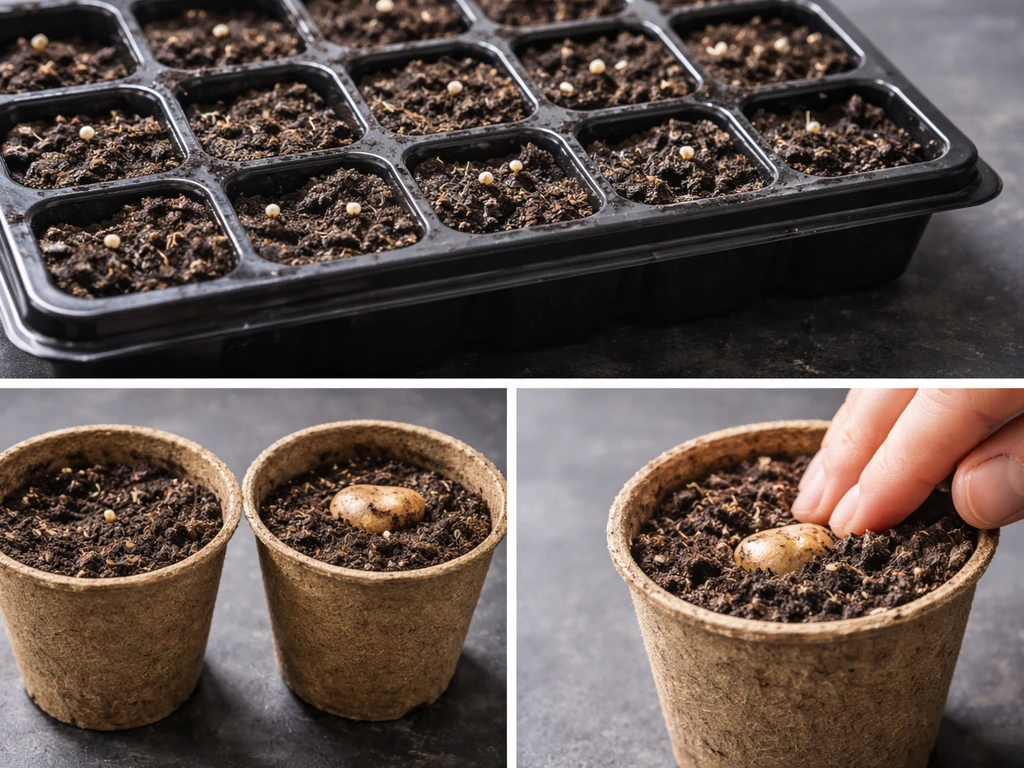
If seed is your only option, plan for a longer timeline. Whigham and Simpson (1982) report that Pontederia cordata seed germination depends on temperature regimes, following cold stratification. Research from Whigham and Simpson (1982) and USFS germination studies confirm that Pontederia cordata seed germinates best after cold stratification: wrap seeds in moist paper towel or sphagnum, seal in a plastic bag, and refrigerate at 34 to 40 degrees Fahrenheit for 60 to 90 days. After stratification, move seeds to shallow trays of warm, wet substrate at around 70 to 80 degrees Fahrenheit and keep them in bright light. Germination is slow and uneven. Grow seedlings in saturated or very shallow water conditions until they're robust enough (4 to 6 inches of leaf growth) to transplant to their final position. Expect 12 to 18 months before you see a flower spike from seed-started plants.
Water, light, temperature, and nutrients
Light
Full sun is the real requirement here. Both UF/IFAS and NC State Extension are explicit: pickerel weed performs best in full sun, meaning at least 6 hours of direct light daily. It tolerates partial shade but will produce fewer flowers and slower growth. If you're placing it in a spot that gets afternoon shade from a fence or tree, expect reduced performance. For indoor or tub setups without natural sun, you'll need high-output grow lighting positioned close to the emergent leaves, which adds complexity and cost.
Water depth and temperature
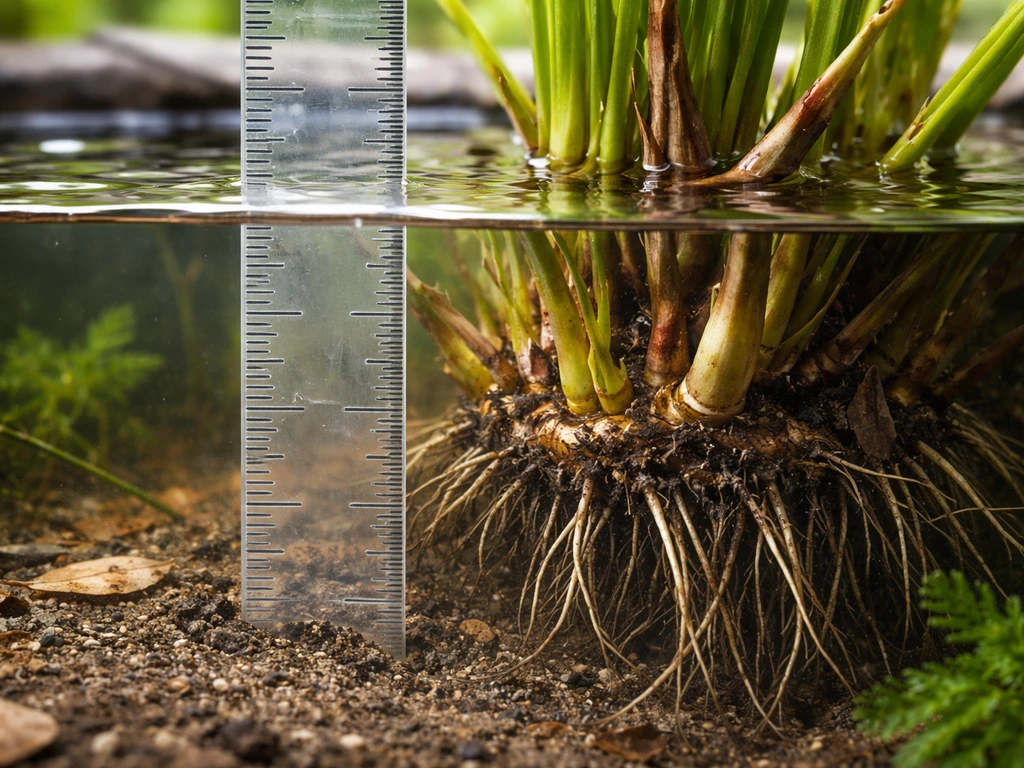
Plant so that the crown of the rhizome sits 2 to 4 inches below the waterline, with the water depth over the roots ranging from about 4 inches (for young transplants) up to 12 inches for mature established plants. UF/IFAS recommends roughly 12 inches of water at the pond edge as the practical target for established pickerel weed, and the RHS recommends 10 to 12 cm (about 4 to 5 inches) for basket-grown plants in shallower decorative setups. Both work, the difference is mainly how vigorous you want the growth. Deeper water slightly limits early establishment but supports taller, more robust plants once they're going.
Temperature-wise, pickerel weed is a temperate to subtropical species. It grows actively when water temperatures are between 60 and 85 degrees Fahrenheit. Below 50 degrees, growth slows dramatically. It handles brief frosts above ground because the rhizomes survive underground, but in USDA zones 3 to 4 the rhizomes may need protection or overwintering in a frost-free space (more on this in the seasonal care section).
Nutrients and water quality
Pickerel weed isn't particularly demanding about water chemistry, but it does best in slightly acidic to neutral water with a pH of around 6.0 to 7.5. In a pond or natural setting, it pulls nutrients directly from the sediment and water column, so additional fertilization is often unnecessary and can actually promote algae more than plant growth. For container or planter setups with inert substrate, push slow-release aquatic fertilizer tablets into the soil near the roots at planting time, then repeat once or twice per season. Avoid broadcasting granular or liquid fertilizer into the water: it feeds algae before it feeds your plants.
Planting depth, spacing, and managing spread
For a naturalized pond margin, space plants 2 to 3 feet apart to allow each rhizome clump room to develop. Mississippi State University Extension’s pickerelweed fact sheet also recommends blank" rel="noopener noreferrer">spacing plants 2 to 3 feet apart, which is a practical way to limit uncontrolled spread while still giving each clump room to establish. Oklahoma State University Extension suggests 1 to 3 feet of spacing for pond-edge planting, while UF/IFAS notes that plants set about 4 feet apart will eventually grow together into a stand, which works well for a shoreline border. In a smaller contained planter or basket, one rhizome per 12-inch basket is plenty; it will fill that space within one growing season.
The rhizomes do spread laterally under the soil. In a natural pond without any containment, a single plant can expand into a colony over several years. Missouri Botanical Garden describes this spread as rapid under optimal conditions. If you want defined edges, plant in mesh aquatic baskets and check them each spring: when you see roots pushing through the mesh edges or the plant looks crowded (yellowing older leaves, reduced flowering), it's time to lift, divide, and replant. In a lined or clay-bottom pond, you can also drive a spade along the margins each spring to cut back rhizome spread before it moves into areas you don't want it.
Maintenance, pests, and seasonal care
Regular maintenance
- Remove spent flower spikes after they brown off to keep the planting tidy and reduce seed drop if you want to limit natural spread.
- Cut back dead foliage in late fall or early winter once it fully browns, or leave it as overwintering wildlife cover and cut it in early spring before new growth emerges.
- Check and divide crowded clumps every 2 to 3 years in spring before active growth starts.
- Top-dress container plantings with fresh aquatic loam when repotting, and add new fertilizer tabs at the same time.
- In tub or container systems, partial water changes (about 20 to 25 percent) every few weeks help prevent nutrient buildup and algae.
Pests and competition
Pickerel weed doesn't have many serious pest problems. Aphids occasionally hit the flower spikes in summer; a strong blast of water knocks them off without needing chemicals. The bigger competitive threat in most pond setups is algae and aggressive emergents like cattails or common reed, which can out-shade pickerel weed if the water is very nutrient-rich. Keep nutrients in check, thin competing plants aggressively, and pickerel weed will hold its ground. In very eutrophic ponds, address the nutrient load first or the whole setup will tilt toward algae regardless of what you plant.
Seasonal care and overwintering
Pickerel weed is winter dormant. The Florida Native Plant Society documents this dormancy cycle clearly: above-ground foliage dies back, and the rhizomes rest underground or at the pond bottom until water temperatures warm again in spring. In USDA zones 5 and above (most of the eastern US), the rhizomes survive in the pond through winter without any help. In zones 3 to 4, lift container-grown plants before the first hard frost, drain excess water, and store the rhizomes in moist (not wet) peat or sand in a cool but frost-free garage or basement at around 35 to 45 degrees Fahrenheit. Replant the following spring once water temperatures consistently hit 55 degrees Fahrenheit or above.
Propagating, harvesting, and fixing common problems
Propagating to expand your planting
Division is the easiest and most reliable propagation method. In spring, before the main flush of growth, lift an established clump from its basket or the pond margin. Use a sharp spade or pruning saw to cut the rhizome mass into sections, each with at least one healthy growing tip and a set of roots attached. Replant sections immediately at the same depth as the parent plant. They establish fast in warm conditions and typically produce flowers in their first season if they were taken from a mature clump. Texas Parks and Wildlife documents this spring-to-midsummer propagation window as the most effective timing for native aquatic plants, and pickerel weed follows that pattern reliably.
Troubleshooting common problems
| Problem | Likely cause | Fix |
|---|---|---|
| Seeds won't germinate | No cold stratification or too cold/too warm after stratification | Cold-stratify for 60–90 days at 35–40°F, then germinate at 70–80°F in bright light |
| Slow or stunted growth after planting | Transplant shock, wrong depth, or insufficient light | Check water depth (aim for 4–12 inches over crown), ensure 6+ hours of direct sun, and reduce disturbance for 2–3 weeks |
| Yellowing leaves | Nutrient deficiency in inert substrate, or rhizomes too crowded | Add aquatic fertilizer tabs near roots; divide if the clump is 3+ years old and dense |
| Plant dying back in summer (not fall) | Water too deep, plant drying out in container, or pest damage | Recheck depth, ensure the container isn't drying out in heat, inspect for aphids on stems |
| Algae taking over the container or pond | High nutrient load in the water column | Reduce fertilization, do partial water changes, add floating plants like duckweed to compete with algae |
| Rhizomes spreading too aggressively | No containment in an in-ground pond with rich sediment | Lift and divide, plant in mesh baskets, or install a root barrier along the margins |
| No flowers after establishment | Insufficient sun or plant too young (seed-started) | Move to a sunnier location; seed-started plants may need a second full season before flowering |
One failure I've seen repeatedly is planting rhizomes too deep. If you bury the growing tips more than a few inches down in heavy substrate, they struggle to push through to the surface before running out of stored energy. Keep the tip just at or slightly below the substrate surface, not buried deep like a bulb. That single adjustment fixes a lot of 'my pickerel weed didn't come up' situations. If you want a step-by-step guide, focus on sun, the right planting depth, and limiting spread so your pond weed stays where you put it how to grow pond weed.
How this compares to growing other aquatic plants
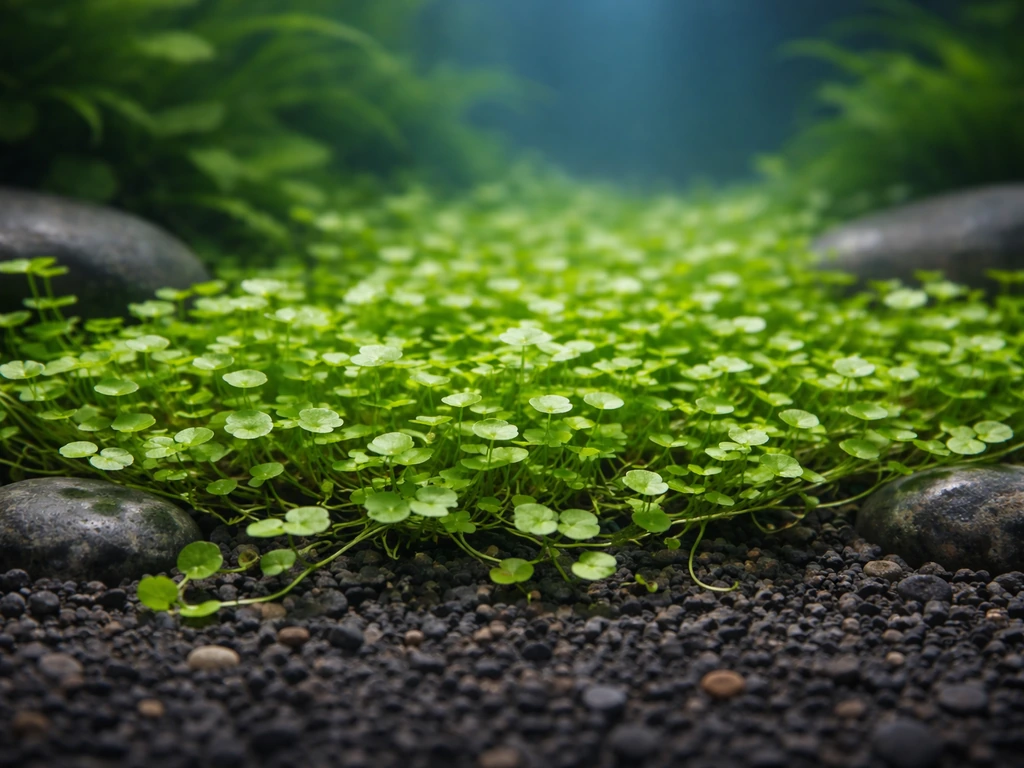
If you're already working with other marginal or submerged species in your system, pickerel weed sits in a similar niche to sago pondweed or pond weed in terms of water quality contribution, but it's purely an emergent plant rather than a submerged one, so it occupies the shallow margin zone rather than open water. If you're also trying to grow sago pondweed, use the same careful attention to water depth and light, but plan for different submerged-plant needs than pickerel weed. That makes it a natural companion to submerged species in a layered pond planting rather than a competitor. Pearl grass and pearl weed, which many aquatic gardeners grow as foreground aquarium species, need entirely different depth and lighting conditions, so there's no real overlap in setup requirements. For pearls specifically, the growing process is very different from marginals like pearl grass and pearl weed, so use the right freshwater pearl approach instead.
FAQ
Why is my pickerel weed not flowering even though it is growing?
If your goal is flowers, aim for at least 6 hours of direct sun and keep the crown at the correct depth (about 2 to 4 inches below the waterline). In deep shade, the plant often leafs out but delays or skips blooms, even when everything else seems fine.
What’s the most common reason pickerel weed rhizomes fail to come up?
A common cause is burying the growing tip too deep in heavy substrate. When dividing or planting rhizomes, place the tip at or just slightly below the substrate surface, then cap the mix so the crown is not covered by loose sediment that settles over the tip.
How often should I fertilize pickerel weed in a planter or pond?
In most pond and planter setups, you do not need frequent fertilizing. For containers with inert media, use slow-release aquatic fertilizer tablets placed near the roots at planting, then repeat only once or twice per season, and avoid broadcast feeding because it typically fuels algae.
How do I keep pickerel weed from taking over the rest of my pond?
Pick the location so the mature leaves can stand above the water without being trapped under floating debris or other plants. If you want a tidy edge, start with one basket per plant and plan to inspect and divide every few years, because rhizomes expand laterally under the soil.
What spacing should I use for a border versus a contained cluster?
Spacing depends on whether you are aiming for a border or a clump. For a shoreline stand, plants may be set farther apart initially (around 4 feet) so they knit together later. If you want distinct clusters, keep about 2 to 3 feet between plants.
Can I grow pickerel weed in a pond with a filter current or waterfall?
Pickerel weed generally prefers still or slow-moving water. In a pond with strong circulation, roots can get displaced and the water depth near the basket can change, so use a basket on a stable shelf or ledge and confirm the crowns stay at the target level after water levels fluctuate.
Can I grow pickerel weed in a container on a patio year-round?
Yes, but treat it like a temperate aquatic container plant. Use a container planter or mesh basket, keep it at the right depth for crown position, and in zones 3 to 4 plan a frost-safe storage step for rhizomes before hard freezes.
How do I tell when it’s time to divide my pickerel weed?
If you see yellowing older leaves and reduced flowering while the plant looks crowded, it usually means the rhizomes need division. Lift the clump in spring, cut it into sections with healthy growing tips and roots, then replant at the original crown depth.
Do I need cold stratification if I’m growing from rhizomes instead of seeds?
Choose cold stratification only if you are starting from seed. For rhizomes, skip stratification and plant in spring through midsummer. Seed-started plants often take 12 to 18 months to flower, so if you want quick results, rhizomes are the faster route.
What should I do with pickerel weed in colder zones during winter?
For over-wintering in zones 3 to 4, container-grown plants should be lifted before the first hard frost. Store rhizomes in moist but not wet peat or sand at about 35 to 45°F in a frost-free place, then replant after water temperatures are reliably around 55°F or higher.
My pond has algae and pickerel weed, what should I adjust first?
Avoid broadcasting fertilizer because it can drive algae first. If you have to troubleshoot algae, reduce nutrient inputs overall, thin competing emergents, and confirm the plant is getting enough light, since pickerel weed can’t out-compete algae in full shade or very nutrient-rich water.