You can grow saltwort (Salicornia and related glassworts) in containers, brackish hydroponic benches, tidal marsh tanks, and even as a biofilter in saltwater aquaculture systems. The core requirement is salinity: these are obligate halophytes that genuinely need salt to thrive, targeting roughly 20–35 ppt for vigorous growth. Get that right, give them full sun or strong grow lighting, and they are surprisingly forgiving and fast. I have harvested crunchy, sea-salty tips from a five-gallon container setup on a sunny balcony, and I have run a brackish hydroponic bench that fed into a shrimp tank. Both worked well once I stopped treating saltwort like a regular vegetable and started treating it like the coastal plant it is.
How to Grow Saltwort: Complete Guide for Containers & Tanks!
Marcus Holloway
14 Jul 2026
What saltwort is and why it is worth growing
Saltwort is the common name for plants in the genus Salicornia (family Amaranthaceae), often called glassworts or marsh samphire. Following a major 2017 taxonomic revision, the formerly separate genus Sarcocornia was folded into Salicornia, so if you see Sarcocornia on a seed packet or nursery label, you are still dealing with the same group of halophytes. The genus splits broadly into annual species (the classic glasswort vegetables) and perennial or shrubby forms that used to carry the Sarcocornia tag. Both are succulent, jointed-stemmed plants that thrive in coastal salt marshes, tidal flats, and saline soils where almost nothing else grows.
There are at least three compelling reasons to grow saltwort depending on who you are. First, it is a genuine gourmet vegetable: the young shoots have a bright, briny crunch and appear on restaurant menus as sea beans, sea asparagus, or marsh samphire. Second, it is one of the most practical extractive plants you can integrate into a marine or brackish aquaculture system, pulling dissolved inorganic nitrogen and phosphorus out of fish or shrimp effluent. Third, it has real habitat value in estuarine mesocosms and brackish display tanks where few other plants will survive the salinity. Any one of those goals is enough reason to add it to your setup.
When saltwort is the right choice for your setup
Before you order seeds, it helps to be honest about what you actually want. Saltwort is not a general-purpose aquatic plant: it needs saline conditions, and it performs best in systems built around salt. If your tank or garden is freshwater, plants like hornwort, frogbit, pennywort, moneywort, or water dropwort will be far easier choices. Saltwort earns its place only when salt is already part of your system design.
- Edible crop grower: You want a gourmet salt-marsh vegetable for the kitchen or a small market garden using saline water that would be useless for conventional vegetables.
- Aquaculture biofilter: You run a marine or brackish recirculating system (shrimp, marine fish, tilapia in saltwater) and need a plant biofilter to strip nitrogen and phosphorus from effluent.
- Habitat and display: You are building a brackish or coastal wetland mesocosm, tidal marsh tank, or public aquarium exhibit that needs authentic halophyte vegetation.
- Remediation or research: You are working with saline wastewater, degraded coastal soil, or conducting a bioremediation or constructed-wetland project where salt-tolerant plants are required.
- Not a good fit: Freshwater planted tanks, standard ponds, or low-salinity aquaponics systems designed for freshwater fish — the salt requirements will stress or kill everything else.
Choosing species and varieties
The Plants of the World Online database (Kew) lists over 70 accepted species in Salicornia, but for practical cultivation only a handful are commonly available or well-documented. Here is how the main options break down for container, hydroponic, and aquarium growers.
| Species / Group | Habit | Best Use | Pros | Cons |
|---|---|---|---|---|
| Salicornia europaea aggregate | Annual | Edible container or raised bed crop, marsh tank | Most studied for food use; widely available seed; fast growing | Germinates best at low salinity; shorter production window as annual |
| Salicornia bigelovii | Annual | Edible crop, brackish hydroponics, oilseed trial | Highest biomass and seed-oil yield data; tolerates full seawater irrigation; researched for IMTA | Less common in hobby trade; may need specialist suppliers |
| Perennial Salicornia (formerly Sarcocornia) species | Perennial / shrubby | Tidal marsh tanks, permanent displays, IMTA biofilter | Persistent structure year-round; good for biofilter beds; handles repeated cuttings | Slower to establish; fewer food-use references; may need pruning to prevent crowding |
| Salicornia dolichostachya and related coastal ecotypes | Annual to short-lived perennial | Coastal raised bed, mesocosm, habitat planting | Often locally sourced; adapted to regional salt-marsh conditions | Variable availability; ecotype performance differs by location |
My honest recommendation for a first grow: start with Salicornia europaea aggregate or S. bigelovii seed in a container or small hydroponic bench. Both are well-documented, forgiving once established, and you will have harvestable shoots within 8–12 weeks. Move to perennial forms only once you have the salinity management dialed in, because the perennial types are worth the longer establishment time only when you have a stable system to put them in.
Sourcing seeds and plants, legal considerations, and certified suppliers
This is where a lot of people run into trouble. Saltwort grows in protected coastal habitats in many countries, and wild-collecting plants or seeds without a permit is illegal in numerous jurisdictions. In the United States, collection from national seashores, national wildlife refuges, and state-protected coastal wetlands requires permits. In the UK, collecting Salicornia from Sites of Special Scientific Interest (SSSIs) is restricted. The rule of thumb: never pull plants from a wild salt marsh unless you have written permission from the land manager.
For legitimate sourcing, your best options are specialty seed companies that stock halophyte or salt-marsh seed, university-affiliated plant nurseries that trial Salicornia as a crop, and IMTA/aquaculture research centers that sometimes sell propagation material. In the US, the International Center for Biosaline Agriculture (ICBA) has conducted extensive genotype trials with S. bigelovii. Some coastal plant nurseries in the UK and the Netherlands stock marsh samphire plugs. When you order, ask specifically for cultivated-source material with a provenance statement, this confirms no wild collection and typically means more uniform germination rates. For aquarium-grade plants, check with specialist brackish tank suppliers or marine plant hobbyist forums, as demand is still niche and availability varies by region.
Beginner vs. experienced grower: which system to choose
Saltwort is genuinely accessible for beginners in its simplest form, a container with sandy substrate and regular saline irrigation, but the complexity scales up quickly when you add hydroponic circulation, tidal cycling, or IMTA integration. Here is an honest breakdown of where to start based on your experience level and goals.
| Grower Level | Recommended System | Complexity | Time to First Harvest | Key Skill Required |
|---|---|---|---|---|
| Complete beginner | Container/raised bed with sandy substrate, hand-watered with diluted sea salt solution | Low | 8–12 weeks from seed | Mixing and measuring salinity accurately |
| Beginner with aquarium experience | Small static brackish tank or tub with substrate planting and manual water changes | Low–Medium | 10–14 weeks | Maintaining stable salinity and light schedule |
| Intermediate | Recirculating brackish hydroponic bench (NFT or flood-and-drain) with pump and timer | Medium | 6–10 weeks once established | Salinity, pH, and nutrient monitoring; pump maintenance |
| Experienced aquaculturist | Tidal/marsh mesocosm or IMTA biofilter bed integrated with shrimp or marine fish system | High | Variable; 3–6 months for stable biofilter function | System integration, tidal cycle programming, water quality monitoring across multiple parameters |
I made the mistake on my first attempt of jumping straight into a recirculating system without having a handle on salinity drift. A pump seal failure slowly diluted my reservoir over a week and I thought the plants were dying from disease. They were just losing their salt. Start with containers and manual watering for at least one full growing cycle before adding pumps and timers.
Equipment checklist: soil containers and coastal raised beds
For container and raised-bed growing, the focus is on drainage, salt-tolerant materials, and getting your substrate mix right. Salt will corrode metal and degrade low-quality plastic over time, so material choice matters more than it does with freshwater setups.
Containers and beds
- Food-grade HDPE or polypropylene containers, minimum 5-gallon (19 L) per 2–3 plants; 15–20 gallon for a productive patch
- Coastal raised bed: 1.2 m x 0.6 m x 30 cm minimum depth, food-safe treated timber or recycled HDPE boards (never galvanized steel — it reacts with salt water)
- Drainage holes at base, 1 cm diameter minimum, plus a drip tray or catchment reservoir if you want to recycle runoff
- Window screen or mesh over drainage holes to retain substrate
Substrate
- Base layer: 5–8 cm coarse washed horticultural sand or pea gravel for drainage
- Growing layer: 15–20 cm of sharp sand or coarse river sand (avoid fine beach sand — it compacts)
- Optional amendment: 10–15% by volume of perlite to improve drainage and reduce compaction
- Avoid peat or high-organic mixes as they hold salt excessively and become phytotoxic; a small coir addition (5–10%) is acceptable for moisture retention
- Do not use standard potting compost as the primary substrate — salt buildup in organic-rich media causes rapid EC spike and root burn
Irrigation and tools
- Watering can with a fine rose or low-pressure drip line for even surface application
- A dedicated 10–20 L mixing bucket for preparing saline irrigation water
- Handheld optical refractometer (0–100 ppt range) for salinity checks, or a conductivity/TDS pen
- Calibration solution (35 ppt NaCl standard) for refractometer verification
- Marine-grade or food-safe salt mix (non-iodized sea salt, pickling salt, or aquarium-grade salt) — avoid iodized table salt
- pH meter or strips to monitor substrate runoff (target pH 7.0–8.2)
- Trowel, plant labels, and small dibber for seed sowing
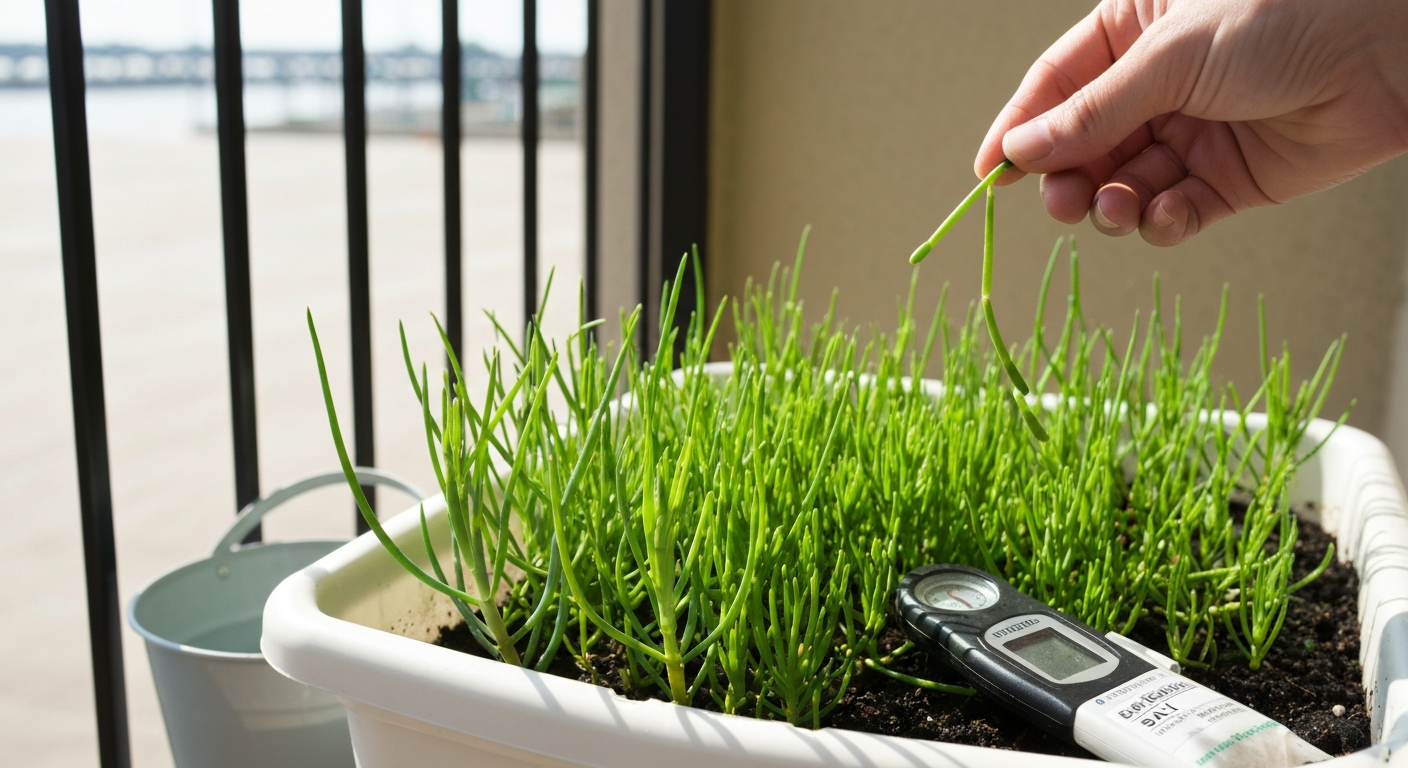
A note on salt accumulation: in containers without leaching, salinity in the root zone will increase with each watering as water evaporates but salt stays behind. Every 2–3 weeks, flood the container thoroughly with fresh or low-salinity water and let it drain completely. This leaching flush prevents toxic salt buildup at the roots and is one of the most important maintenance steps in container growing.
Equipment checklist: brackish and hydroponic systems
A recirculating hydroponic bench for saltwort works on the same principles as any flood-and-drain or nutrient film technique (NFT) system, but all wetted parts need to tolerate salt water. Reef aquarium equipment is a practical starting point because it is already designed for marine use. For practical mixing guidance, the Reef Salt Mix Calculator (practical mixing guidance) gives recommended salt amounts, roughly 35–38 g per litre to reach ~35 ppt (1.025–1.026 SG), and is useful alongside manufacturer instructions and a refractometer.
Reservoir and circulation
- HDPE or food-grade polypropylene reservoir, minimum 50–100 L for a small bench; larger reservoir = more stable salinity and temperature
- Submersible aquarium pump rated for saline use (e.g., Sicce, Eheim, or Rio salt-rated models), sized for 2–4 x reservoir volume per hour flow
- PVC or CPVC irrigation tubing and fittings (avoid galvanized metal fittings — salt corrodes them rapidly)
- Digital timer for flood/drain cycles (15 min flood, 45 min drain is a standard starting point)
- Overflow/drain pipe and return line sloped for complete drainage between cycles
Growing media and trays
- Expanded clay aggregate (hydroton/LECA) in net pots for NFT or DWC-adjacent systems
- Washed coarse sand in flood-and-drain trays (5–10 cm depth) as an alternative to clay pebbles — works well for Salicornia and more closely mimics natural substrate
- Food-grade polypropylene growing trays, minimum 10 cm depth
- Mesh or net pots if transplanting seedlings rather than direct-seeding into trays
Monitoring and sensors
- Temperature-compensated conductivity/salinity probe (Hanna, Atlas Scientific, or similar) for real-time EC monitoring
- Handheld refractometer as backup for spot checks; calibrate with 35 ppt standard before each use
- pH meter with ATC, calibrated to two points (pH 4 and pH 7 or pH 7 and pH 10 buffers)
- Thermometer or temperature probe — maintain water temperature at 15–28°C
- Dissolved oxygen (DO) probe or simple aeration check (target >5 mg/L DO at root zone)
- Air pump and airstone in reservoir for oxygenation between flood cycles
Nutrients and salt mix
- Aquarium-grade reef salt mix (Instant Ocean, Red Sea, or Tropic Marin) at approximately 35–38 g per litre of RO/DI water to reach ~35 ppt (SG 1.025–1.026) — always verify with refractometer
- For a purely extractive/biofilter application fed by aquaculture effluent, no additional nutrients are typically needed
- For standalone hydroponic growing: a dilute marine-origin nutrient solution or a small addition of a balanced hydroponic base nutrient at 1/4 standard freshwater dose (Salicornia is efficient at very low external nutrient concentrations)
- Never use standard freshwater hydroponic nutrients at full dose — the combined osmotic load with the salt will cause severe stress
Equipment checklist: tidal marsh tanks and saltwater aquaria
A tidal mesocosm is the most realistic and ecologically interesting way to grow saltwort, but it also has the most moving parts. The classic design used in NOAA and university research is a paired-tank system: a lower sump reservoir and an upper marsh tray, with a pump and timer cycling flood and ebb on a semidiurnal schedule (roughly every 6 hours, or twice daily). Here is what you need.
Tidal flushing gear
- Lower sump: 80–200 L HDPE tank or marine-grade aquarium as main reservoir
- Upper marsh tray: shallow polypropylene tray 10–15 cm deep with overflow drain set at target flood depth (typically 5–8 cm)
- Submersible pump (salt-rated) on a programmable timer — flood for 30–60 min, ebb for 5–6 hours (adjust to species and season)
- Gravity-return drain from marsh tray back to lower sump (no pump required on ebb side)
- Bulkhead fittings and PVC standpipes at the upper tray overflow point to control maximum flood depth
Substrates and planting
- Sieved estuarine sediment or a mix of coarse sand (70%) and sterilized fine mud or clay (30%) to approximate natural salt marsh substrate
- Minimum 10 cm substrate depth; 15 cm preferred for established perennial forms
- Avoid pure fine mud — it restricts oxygen to roots during ebb phase and promotes anaerobic conditions
Lighting
- Full-spectrum LED grow light or T5 HO fluorescent: Salicornia needs high light — target 200–400 µmol/m²/s PAR at plant surface
- Photoperiod: 14–16 hours for active growth; 12 hours for maintenance or winter simulation
- Position lights 20–30 cm above plant tops and adjust as plants grow; etiolation (stretching) is a clear sign of insufficient light
Monitoring tools for tidal systems
- Salinity: refractometer for daily sump checks; keep reservoir at 25–35 ppt
- pH: digital pH meter with ATC; target 7.8–8.2 in the sump water
- Temperature: inline or probe thermometer; 18–26°C optimal, avoid sustained temperatures above 30°C
- Dissolved oxygen: test kit or DO probe — sump water should stay above 5 mg/L; add a sump air pump if readings drop
- Nitrate and phosphate test kits (API saltwater or Salifert) if using as a biofilter — test weekly to verify nutrient removal performance
- Timer verification: check pump on/off cycles weekly; a missed flood cycle is more damaging to tidal plants than a missed day of watering in a container
Propagation: seed and cuttings step by step
Most growers start from seed. For a contrasting cultivating guide on non-vascular plants, see how to grow liverwort for tips on propagating and caring for bryophytes. One important thing the research makes clear: saltwort seeds are salt-sensitive at germination, even though the growing plant loves salt. Germinating seeds in full seawater will significantly reduce germination percentage. The right approach is to germinate at low salinity and then gradually acclimate seedlings to your target grow salinity.
- Stratification (optional but helpful): store seeds dry at 4°C for 2–4 weeks before sowing if germination rates are low.
- Prepare a germination tray with damp coarse sand or a 50: 50 sand/perlite mix moistened with freshwater or a very low salinity solution (2–5 ppt maximum).
- Sow seeds 0.5–1 cm deep, 2–3 cm apart. Do not sow deep — Salicornia seeds are tiny and need shallow placement.
- Keep the tray at 15–22°C with 12–16 hours of light. Do not let the surface dry out, but avoid waterlogging.
- Germination typically occurs in 7–21 days depending on species, temperature, and seed freshness.
- Once seedlings are 2–3 cm tall with their first distinct jointed segments, begin gradual salinity increase: add small amounts of salt mix to irrigation water, increasing by 3–5 ppt per watering over 1–2 weeks, until you reach your target grow salinity of 20–35 ppt.
- Transplant seedlings when 5–8 cm tall, handling roots gently. Expect some transplant shock and wilting for 2–5 days — this is normal.
Cuttings are an excellent propagation method for perennial forms. Take 8–12 cm tip cuttings with at least 3–4 segments, strip the lower 2–3 cm of side growth, and insert into moist low-salinity sand. Keep cuttings humid (a loose plastic dome helps) at 18–24°C. Roots typically form in 2–4 weeks. I have had better success rates with cuttings than seeds for perennial types, the germination variability of seed batches can be frustrating.
Planting, spacing, and water and substrate parameters
Once plants are established, the key is maintaining stable conditions within the right parameter ranges. Here are the targets to aim for across all systems.
| Parameter | Target Range | Notes |
|---|---|---|
| Salinity (grow phase) | 20–35 ppt (20–35 dS/m equivalent) | Best growth reported at this range; S. bigelovii handles full seawater (35 ppt); start lower for young transplants |
| pH (water/substrate) | 7.0–8.2 | Seawater naturally sits at ~7.8–8.2; avoid sustained pH below 6.5 or above 9 |
| Water temperature | 15–28°C | Growth slows below 12°C; sustained temperatures above 30°C cause stress in most annual species |
| Light (indoor) | 200–400 µmol/m²/s PAR | 14–16 h photoperiod for vigorous growth; reduce to 12 h for winter simulation |
| Substrate EC (container) | Monitor runoff EC | If runoff EC exceeds 60 dS/m, leach immediately with freshwater flush |
| Dissolved oxygen (hydroponic/aquatic) | >5 mg/L at root zone | Critical in flood-and-drain trays — ensure full drainage during ebb phase |
| Spacing | 10–15 cm between plants in beds; 5–8 cm in dense production rows | Closer spacing for young harvest (tender shoots); wider for seed/biomass production |
For containers and raised beds, water deeply 2–3 times per week in warm weather, allowing the substrate to partially dry between waterings, Salicornia tolerates brief drying far better than waterlogging. In hydroponic systems, flood-and-drain cycles of 15–30 minutes flooding with 4–6 hours between cycles works well. In tidal mesocosms, a semi-diurnal cycle (two floods per 24 hours) most closely mimics natural conditions and produces the most robust growth in my experience.
Ongoing care: irrigation, fertilizing, and pruning
In a well-set-up system, saltwort is low maintenance. The main tasks are salinity management, leaching, and harvesting (which doubles as pruning). For nutrient supply, the plant is naturally adapted to low-nutrient coastal soils, and over-fertilizing is a more common mistake than under-fertilizing. In an IMTA biofilter setup, the fish or shrimp effluent supplies all the nitrogen and phosphorus the plants need. In a standalone hydroponic system with clean saltwater, add a balanced hydroponic nutrient at one quarter of the manufacturer's recommended freshwater dose, and only increase if you see yellowing that does not resolve with a leaching flush.
Prune or harvest the top 3–5 cm of growing tips every 2–3 weeks once plants are established. This keeps plants bushy and productive rather than tall and straggly. Annual species will eventually bolt and flower (the shoots become woody and less palatable), so harvest heavily before this happens. Perennial forms can be cut back by up to one-third and will re-shoot from the base, I do a hard prune on my perennial plants in late summer and get fresh tender growth right through autumn.
Harvest timing, yield expectations, and food safety
For edible use, harvest young tip growth when shoots are 5–10 cm long and the color is bright green. This is typically 8–12 weeks from transplant. Once shoots begin to lignify and turn reddish-brown at the base, the harvest window for tender eating is closing. Field trials with S. bigelovii under optimized conditions have reported fresh biomass yields of up to roughly 10.9 kg per square meter in top-performing genotypes, with seed yields around 116 g per square meter. For a home container or small bench, expect considerably less, a well-managed 1 m² growing area can realistically yield 500 g to 1.5 kg of fresh tips per harvest cycle under good indoor light.
For food safety, plants grown in aquaculture systems that receive fish or shrimp effluent should be treated like any food grown in nutrient-enriched water: rinse harvested shoots thoroughly, and if the system uses treated municipal water or has any chemical additives, research food-safety standards in your jurisdiction before consuming. Plants grown in clean saline solutions with no animal effluent and no pesticides carry minimal food safety risk beyond normal produce hygiene.
Troubleshooting common problems
Yellowing and pale green color
If the jointed stems lose their bright green and look pale or yellowish, check salinity first. Paradoxically, both too-low and too-high salinity can cause yellowing. Test your irrigation water: if it is below 15 ppt, increase it gradually. If substrate EC in runoff is extremely high (above 60 dS/m), do an immediate leaching flush. If salinity is fine, check nitrogen availability, in a standalone system, a dilute nutrient addition usually resolves this within a week.
Wilting and collapse
Salicornia wilting is almost always a root issue: either salt toxicity from accumulated substrate EC, root rot from waterlogging, or transplant shock. Check your drainage. If the substrate smells sulfurous, you have anaerobic conditions in the root zone, improve drainage or reduce flooding duration. Transplant shock wilting (limp new transplants) usually resolves in 2–5 days if salinity and drainage are correct.
Etiolated, stretched growth
Long, thin, pale stems reaching toward the light mean your light intensity or duration is insufficient. Move grow lights closer (while avoiding heat stress, keep hand-check temperature at plant level below 35°C), increase photoperiod to 16 hours, or upgrade to a higher output fixture. This is the most common indoor failure mode I see.
Algae in brackish and tidal systems
Green algae and cyanobacteria mats on substrate surfaces are common in tidal and hydroponic setups, especially early on. Physical removal works for small outbreaks. Reduce photoperiod by 1–2 hours and ensure your irrigation does not leave standing water on substrate surfaces between cycles. In IMTA systems, some algae is normal and even beneficial; only act if it is out-competing the saltwort for light or clogging drainage.
Pests
- Aphids: occasionally colonize stem tips in container growing, especially indoors. Rinse with a low-pressure water spray or use an insecticidal soap spray (rinse off before harvesting for food).
- Fungus gnats: larvae damage roots in overly wet container substrate. Improve drainage, allow substrate surface to dry between waterings, and use yellow sticky traps.
- Shore flies and brine flies: more common in coastal or outdoor setups near saline water; rarely damaging to the plant itself, but can indicate decaying organic matter in the substrate.
Integrating saltwort with aquaponics and marine aquaculture
This is where saltwort moves from being an interesting plant to a genuinely functional part of your system. In integrated multitrophic aquaculture (IMTA) and constructed-wetland biofilter designs, a planted bed of Salicornia or perennial forms (formerly Sarcocornia) can provide measurable water quality improvements by stripping dissolved inorganic nitrogen (DIN) and phosphorus from shrimp or marine fish effluent. One experimental IMTA trial with shrimp/tilapia in a biofloc system found a hydroponic bench of halophytes lowered nitrate concentrations by approximately 23% compared to a control, and other IMTA studies have reported DIN reductions of tens of percent to over 50%, depending on hydraulic loading and the ratio of plant bed area to fish biomass. A controlled IMTA trial (Integrated multitrophic aquaculture applied to shrimp rearing (Aquaculture)) reported a hydroponic bench of Sarcocornia reduced nitrate by about 23% versus a control.
To set up a basic extractive bed, size your halophyte bench at roughly 0.5–1 m² of planted area per kilogram of feed input per day in your fish or shrimp system. Route clarified (solids-settled) effluent through the plant bed before returning water to the main system. Do not route raw effluent with suspended solids directly into the root zone, this clogs substrate and creates anaerobic pockets. Monitor nitrate and phosphate weekly, and expect the biofilter function to become more effective as plant biomass and root density increase over the first 4–8 weeks.
How saltwort compares to freshwater aquatic plants
If your system is freshwater, saltwort is not your answer. For freshwater setups, see our guide on how to grow water dropwort for a compatible edible macrophyte option. For freshwater aquarium planting, see how to grow moneywort in aquarium for step-by-step guidance. For freshwater alternatives and step-by-step guidance, see a practical guide on how to grow frogbit. Plants like hornwort, frogbit, pennywort, moneywort, liverwort, and water dropwort all offer faster establishment, wider temperature tolerance, and zero salinity requirements. They are better biofilters in freshwater systems simply because they can be grown at scale without managing brine. Saltwort fills a completely different niche: it is the plant to choose when salt is a requirement, not a problem. For freshwater hobbyists looking for a suitable aquatic plant, see a practical guide on how to grow hornwort in aquarium for setup and care tips.
| Plant | Salinity Tolerance | Best Use Case | Choose Instead of Saltwort When… |
|---|---|---|---|
| Saltwort (Salicornia) | Obligate halophyte: 20–35 ppt optimal | Marine/brackish IMTA, edible salt-marsh crop, tidal mesocosm | You need salt — this is the only choice |
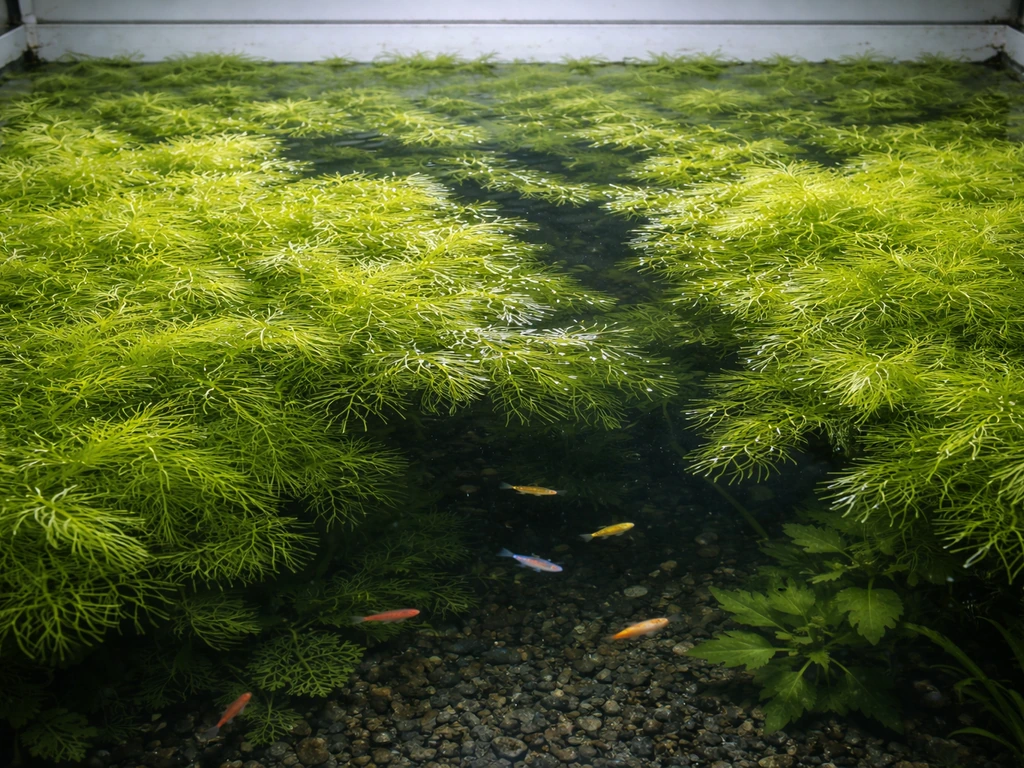
| Hornwort | Freshwater only (<2 ppt) | Freshwater tanks, ponds, aquaponics | Your system is freshwater and you need a fast-growing oxygenator |
| Frogbit | Freshwater only | Low-flow freshwater tanks and ponds, surface coverage | You want a floating plant for a freshwater setup |
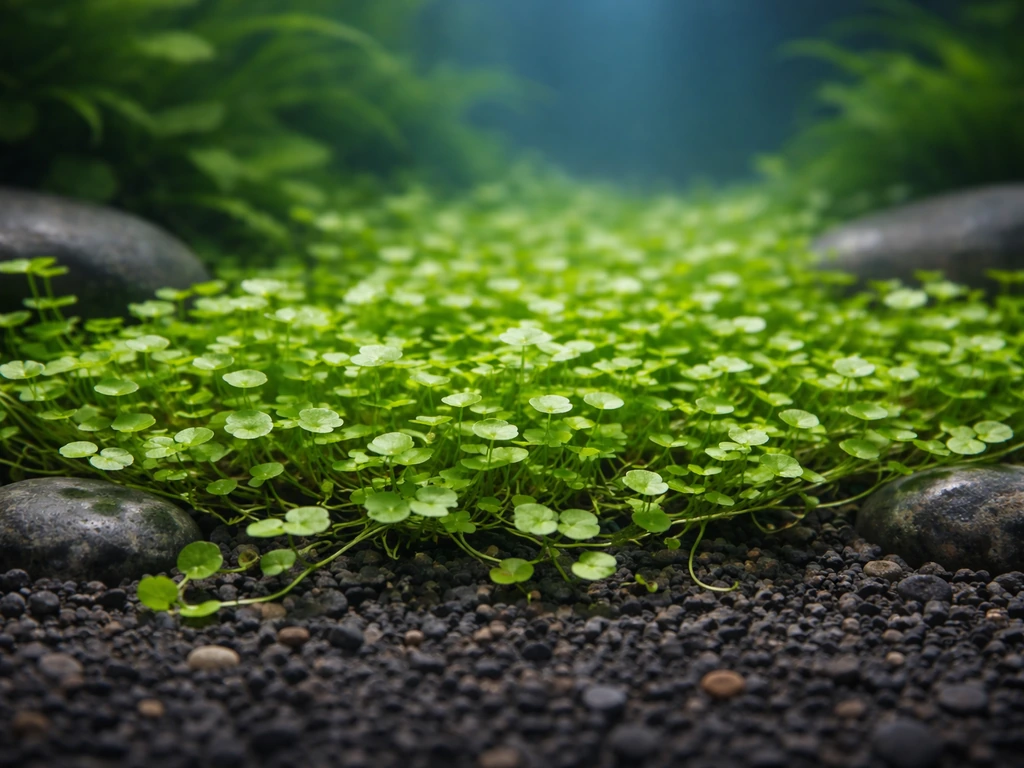
| Pennywort | Freshwater to very low brackish (<5 ppt) | Aquarium foreground/midground, small aquaponics | You need a compact, adaptable freshwater plant |
| Moneywort | Freshwater only | Aquarium planting, small-scale freshwater biofilter | You want a low-maintenance stem plant for freshwater |
| Liverwort (aquatic) | Freshwater only | Aquarium hardscape and low-light tanks | You want a carpet or attachment plant for a freshwater tank |
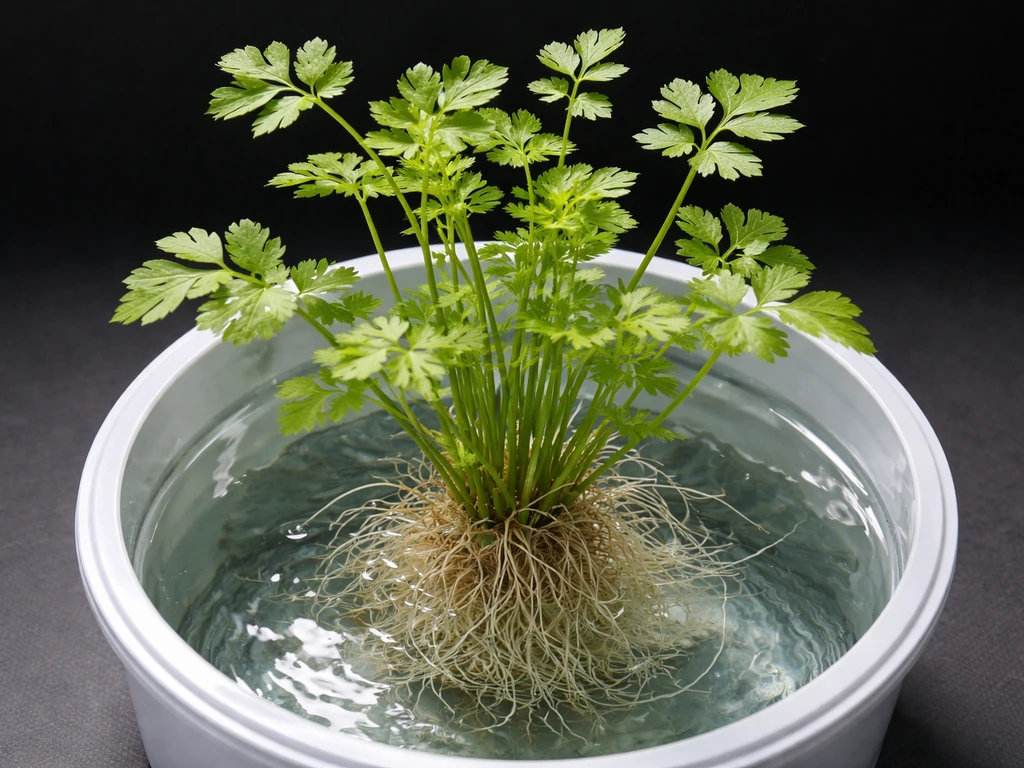
| Water dropwort | Freshwater to very low brackish | Marginal aquatic bed, constructed freshwater wetland | You are building a freshwater constructed wetland or marginal planting |
The decision tree is simple: start with your water salinity. If it is under 5 ppt and you are not planning to add salt, choose a freshwater species from the list above. If it is 15 ppt or higher, or if you are running a marine/brackish recirculating system, saltwort is your best available macrophyte option, and it will outperform all the freshwater alternatives in those conditions by a wide margin.
FAQ
What is saltwort (Salicornia / glasswort) and when is it the right plant to grow?
Saltwort (commonly Salicornia and related formerly-named Sarcocornia/Tecticornia taxa) are succulent halophytes adapted to brackish-to-saline environments. Choose saltwort when you want a salt-tolerant edible leafy crop, a coastal/marsh-style ornamental, a biofilter for saline aquaculture (IMTA), or a plant for tidal mesocosms. Use saltwort instead of freshwater pond plants when your system will run brackish (≈5–35 ppt) or full-strength seawater and when you need salt tolerance and halophytic nutrient uptake.
Which species or taxon should I select for containers, hydroponics, marsh tanks or aquaria?
Pick species by life-history and use: • Annual, fast-growing edible types (Salicornia europaea aggregate, S. bigelovii) for seasonal containers and hydroponic benches. • Perennial/shrubby taxa (formerly Sarcocornia, some Tecticornia) for permanent marsh mesocosms and shoreline plantings. • For edible harvest and IMTA trials, S. bigelovii and S. europaea-types are common. Check local flora and regulations—some taxa are protected or invasive in certain regions.
What equipment and materials do I need for each system type?
Quick checklists: • Containers/pots: UV-stable pots, washed coarse sand or sandy mix, drainage layer, RO/DI or local seawater source, marine salt mix, refractometer, aquarium heater (if needed), grow light for indoors. • Brackish hydroponic benches: troughs/raft or NFT channels, pumps, timers, aeration, saline nutrient solution, sand/gravel or inert media beds for planted systems, conductivity probe and pH meter. • Tidal/marsh tanks: paired reservoir + marsh tank, submersible pump, programmable timer, sieved marsh sediment or trays, overflow/drain, mesh to prevent clogging, salinity/conductivity meter. • Saltwater aquaria: standard marine tank equipment, live sand/rock optional, gentle flow, stable salinity, refractometer, quarantine/propagation tub.
What substrate and soil mixes work best?
Use free-draining, low-organic substrates to avoid waterlogging and salt caking: washed coarse sand or 70:30 sand:coir/peat (for containers where moisture retention is needed). For marsh/tidal systems, sieved estuarine mud or sand layered over drainage is common. Avoid uncomposted high-organic potting mixes that retain salts. Provide a drainage layer or regular leaching to prevent salt accumulation.
What are the target water and substrate parameters (salinity, temperature, light, pH, nutrients)?
Practical ranges: • Salinity: germination benefits from low-salinity/ fresh water or diluted brackish (0–10 ppt); growth optimum ~20–35 ppt (brackish to seawater). • Temperature: 10–28 °C (50–82 °F); many annuals prefer 15–25 °C for best growth. • Light: full sun outdoors; under lights 12–16 h/day at 200–400 μmol·m⁻²·s⁻¹ for dense growth. • pH: near seawater pH 7.8–8.2 for irrigation; substrates tolerated across ~5.5–9 but avoid strongly acidic conditions. • Nutrients: low-to-moderate NPK with micronutrients; use saline-compatible fertilizer or marine macronutrient sources, monitor EC/ionic balance. • Measurement tools: handheld refractometer, conductivity/salinity probe, pH meter, thermometer, PAR meter (optional).
How do I propagate saltwort from seed step-by-step?
Seed propagation: 1) Source viable seed from trusted supplier. 2) Pre-soak seeds briefly in fresh water (a few hours) to reduce salt inhibition. 3) Sow onto moist, well-draining sand or seed mix surface; cover lightly. 4) Keep substrate moist with low-salinity water (0–5 ppt) and at 15–22 °C. 5) Germination timing is species-dependent—monitor for 7–21 days. 6) Once seedlings have several true segments, gradually increase salinity over 1–2 weeks to target growth salinity (20–35 ppt). 7) Harden off seedlings to outdoor light/salinity before transplanting.