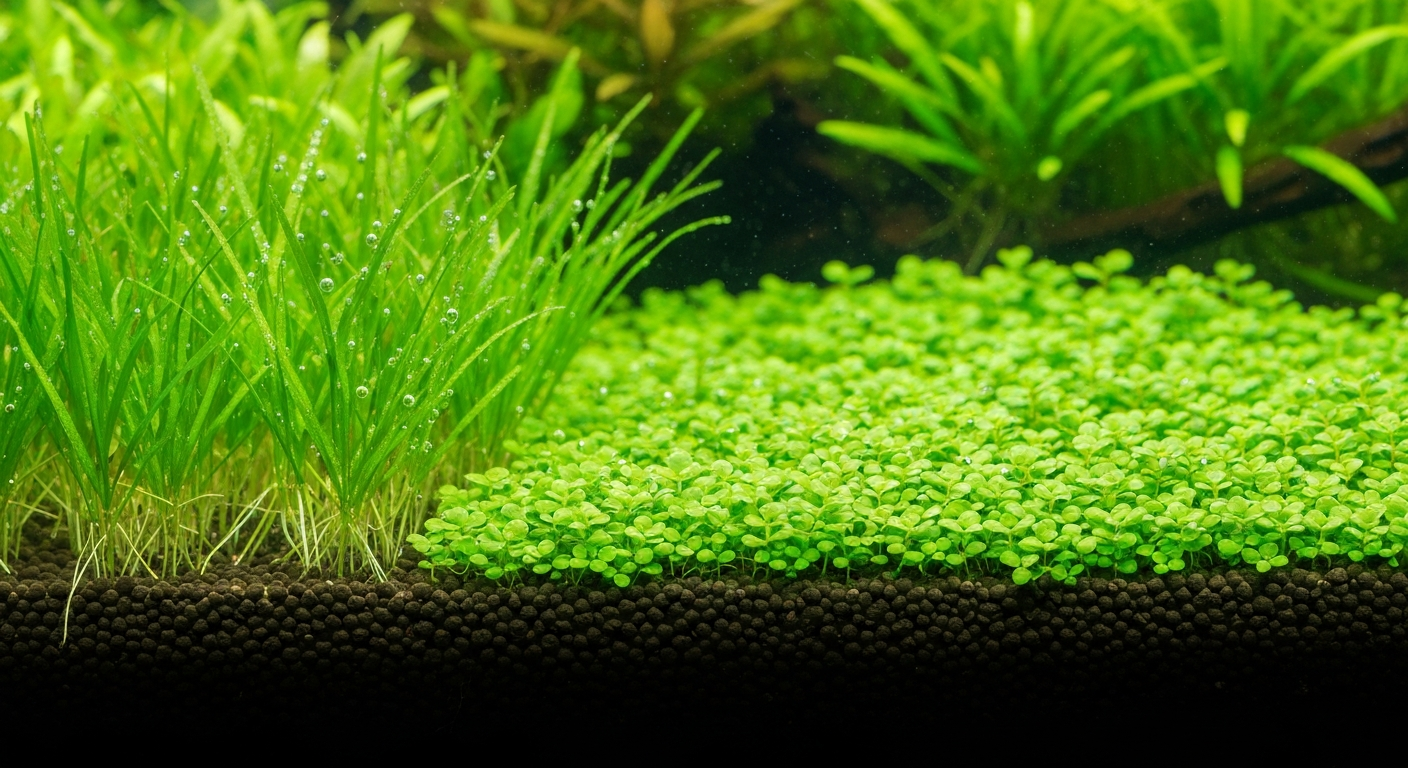
Growing pearl grass successfully starts with figuring out which plant you actually have, because the name gets applied to at least four different species across aquarium, pond, and garden contexts. For most aquarium hobbyists, pearl grass means either Lilaeopsis brasiliensis (Brazilian microsword) or Micranthemum micranthemoides (pearlweed), both of which carpet the foreground of a planted tank given fine substrate, moderate-to-high light (30–100+ μmol PAR at the substrate), and consistent fertilizing. Get those three things right and you'll have a green carpet within 6–10 weeks. Everything else in this guide fills in the details for each species and system.
How to Grow Pearl Grass: Complete Guide for Aquaria & Ponds
Marcus Holloway
18 Jul 2026
Quick start checklist
Use this as your one-page reference before you order plants or fill your tank. It covers the most common use case (aquarium carpet) and flags where other systems differ.
Key parameters at a glance
| Parameter | Lilaeopsis brasiliensis | Micranthemum micranthemoides (pearlweed) | Sagina subulata (terrestrial) |
|---|---|---|---|
| Temperature | 20–29°C (68–85°F) | 21–30°C (70–86°F) | 5–20°C (40–68°F) |
| pH | 5.0–7.5 | 6.0–7.5 | 5.5–7.0 |
| Light (PAR at substrate) | 40–80 μmol·m−2·s−1 | 30–60 μmol·m−2·s−1 | Outdoor/indirect sun |
| CO2 injection | Recommended | Helpful, not essential | Not applicable |
| Substrate | Fine aqua soil or sand + root tabs | Fine aqua soil or inert + root tabs | Garden soil, well-drained |
| Planting spacing | 0.5–1 cm clumps | 0.5–1 cm clumps | 5–10 cm plugs |
Step-by-step planting actions (aquarium carpet)
- Set up your tank with at least 6–8 cm of fine-grain active substrate (ADA Aqua Soil Amazonia powder or equivalent, grain 1–2 mm). If using inert sand or gravel, pre-install Seachem Flourish Tabs every 15 cm across the foreground.
- Fill the tank to about one-third before planting to keep substrate from floating.
- Rinse tissue-culture cups under lukewarm water to remove agar gel completely — residual agar encourages fungus.
- Divide each plug into small clumps of 5–10 stems using fine-tipped scissors.
- Use stainless aquascaping tweezers to push each clump 1–1.5 cm into the substrate, spaced 0.5–1 cm apart.
- Fill the tank slowly and start lighting at 8 hours per day (work up to 10 hours once plants show new growth).
- Begin CO2 injection at 1–2 bubbles per second and target 20–30 ppm dissolved CO2, confirmed with a 4dKH drop-checker (lime green color = good).
- Dose water-column fertilizer from day one using the Estimative Index (EI) protocol: NO3 10–30 ppm, PO4 1–2 ppm, K 10–30 ppm cumulative per week with a 50% water change every 7 days.
- After 3–4 weeks, trim the carpet to 2–3 cm height to encourage lateral spread rather than vertical growth.
- Repeat trimming every 2–3 weeks. Expect full coverage in 6–10 weeks depending on light, CO2, and planting density.
What people actually mean by 'pearl grass'
The name pearl grass has no fixed botanical meaning, which is the source of a lot of confusion in trade listings and hobby forums. When you search it online or browse a marketplace, you might land on any of four genuinely different plants, or occasionally something that has nothing to do with plants at all. Here is what the name most commonly refers to, and how to tell them apart quickly.
- Lilaeopsis brasiliensis or L. novae-zelandiae (Brazilian microsword / New Zealand microsword): a rhizomatous, grass-like aquatic plant sold for foreground aquarium carpets. Narrow linear leaves with internal transverse septa, arising from rhizome nodes. Most aquarium retailers in North America and Europe list this as 'micro sword' or occasionally 'pearl grass.'
- Micranthemum micranthemoides (syn. Hemianthus micranthemoides): the plant most commonly called 'pearlweed' or 'pearl grass' in the hobby. Tiny, opposite rounded leaves on visible stems that root freely at nodes. Grows faster than Lilaeopsis and is more forgiving of lower light.
- Hemianthus callitrichoides ('HC Cuba' / dwarf baby-tears): sometimes grouped with the above but is taxonomically distinct and much more demanding. Leaves are 1–3 mm, the smallest of any common carpeting plant. Requires very high light (>80–100 μmol PAR) and CO2 injection. Not for beginners.
- Sagina subulata (corsican pearlwort / Irish moss): a terrestrial groundcover with awl-shaped leaves and tiny white flowers, sold as a lawn substitute or rock garden plant. Has no aquatic application. Completely different from the aquarium plants above.
- Freshwater pearl cultivation: searching 'how to grow pearl grass' occasionally surfaces results about growing freshwater pearls inside mussels, which is a separate aquaculture topic (mussel farming / bivalve pearl culture) entirely unrelated to aquatic plants.
A quick ID tip: if your plant has grass-like blades rising from a creeping horizontal rhizome with no visible jointed stems, it's almost certainly Lilaeopsis. Lilaeopsis species are rhizomatous aquatic herbs with narrow grass‑like leaves arising from nodes along a creeping horizontal rhizome Lilaeopsis species are rhizomatous aquatic herbs with narrow grass‑like leaves arising from nodes along a creeping horizontal rhizome.. If you see tiny round opposite leaves on branching stems that feel slightly fleshy, it's Micranthemum or Hemianthus. If it forms a low terrestrial mat with star-like awl leaves and tiny white flowers, it's Sagina, and it does not belong in a fish tank.
Plant profiles: who's who in the pearl grass family
Lilaeopsis brasiliensis (Brazilian microsword)
Family Apiaceae. Rhizomatous aquatic herb native to South America. Leaves are narrow, grass-like, 3–10 cm tall, and arise in clusters from nodes along a creeping horizontal rhizome. When you slice a leaf you'll see faint transverse internal divisions, a diagnostic trait. Grows slowly compared to stem plants, which means once established it stays tidy longer between trims. Used almost exclusively as a foreground or midground carpet in planted aquaria and paludariums. Listed in Kew's Plants of the World Online as a distinct valid taxon. Propagates by rhizome division. L. novae-zelandiae (New Zealand microsword) is smaller and lower-growing, otherwise similar in care.
Micranthemum micranthemoides / Hemianthus micranthemoides (pearlweed)
Family Linderniaceae (formerly Scrophulariaceae). A fast-growing stem plant recorded on GBIF with a wide natural distribution across eastern North America and the Caribbean. Small round leaves (2–5 mm) arranged in opposite pairs or whorls on branching stems. Roots at every node when stems touch substrate, which is what makes it such an effective carpeting plant. More tolerant of lower light and fluctuating conditions than HC Cuba. Commonly propagated by tissue culture and widely sold in sealed cups. Can be grown as a surface float, mid-column stem, or low carpet depending on trimming habit. One of the better choices for first-time carpet growers.
Hemianthus callitrichoides (HC Cuba / dwarf baby-tears)
The most demanding of the trio. Leaves are 1–3 mm, stems are hair-thin, and the plant hugs the substrate like a bright green moss layer when happy. It needs injected CO2, very high PAR (80–100+ μmol at substrate), soft slightly acidic water, and a fine nutrient-rich substrate to produce that classic carpet look. Without CO2 it melts back to a sad stringy mess within weeks. I tried growing HC without CO2 on my first high-light tank and lost the whole carpet by week three. It's genuinely beautiful when it works, but start with pearlweed or Lilaeopsis first.
Sagina subulata (corsican pearlwort / Irish moss)
Family Caryophyllaceae. A terrestrial perennial groundcover native to western Europe, grown widely in gardens and as a lawn alternative in cool climates. Forms dense mats of awl-shaped bright green leaves 2–5 cm tall, topped with tiny star-shaped white flowers. NC State Extension, Sagina subulata (heath pearlwort / Irish moss) describes its mat habit, tiny awl-shaped leaves and small white flowers NC State Extension — Sagina subulata (heath pearlwort / Irish moss). Described in NC State Extension fact sheets as preferring moist, well-drained acidic soil (pH 5.5–7.0) and partial shade to full sun in cool conditions (best below 20°C). Fully terrestrial: it does not grow submerged or as an aquatic plant. If you are looking for a garden groundcover called pearl grass, this is likely your plant.
Pontederia cordata (pickerelweed)
Family Pontederiaceae. An emergent marginal aquatic native to the Americas, with broad heart-shaped leaves on long stalks and dense purple flower spikes in summer. Grows in 10–40 cm of water at pond edges, bog gardens, and wetland margins. Not a carpeting plant and not related to 'pearl grass' in any way, but it appears in searches because it shares pond and marginal environments. NC State Extension describes it as a vigorous wildlife plant that supports bees, hummingbirds, and waterfowl. It's a worthwhile companion in outdoor ponds where you need vertical structure and colour. For detailed care and planting instructions, see our guide on how to grow pickerel weed.
Stuckenia pectinata / Potamogeton pectinatus (sago pondweed)
Family Potamogetonaceae. Accepted name Stuckenia pectinata per ITIS, though still widely sold and referenced under the synonym Potamogeton pectinatus. A submerged pondweed with very fine, thread-like leaves and long branching stems. Produces starchy tubers that are an important waterfowl food source. Used in wildlife ponds, restoration plantings, and occasionally in large naturalistic aquaria. Grows in a wide range of conditions from brackish to fresh water. Not what most aquarium hobbyists mean by 'pearl grass,' but worth knowing about for outdoor pond applications. For step‑by‑step instructions on how to grow sago pondweed, see the guide on how to grow sago pondweed (resource fa4b046e‑f0c1‑4090‑80a3‑abd3b56e8f0a).
A note on freshwater pearls
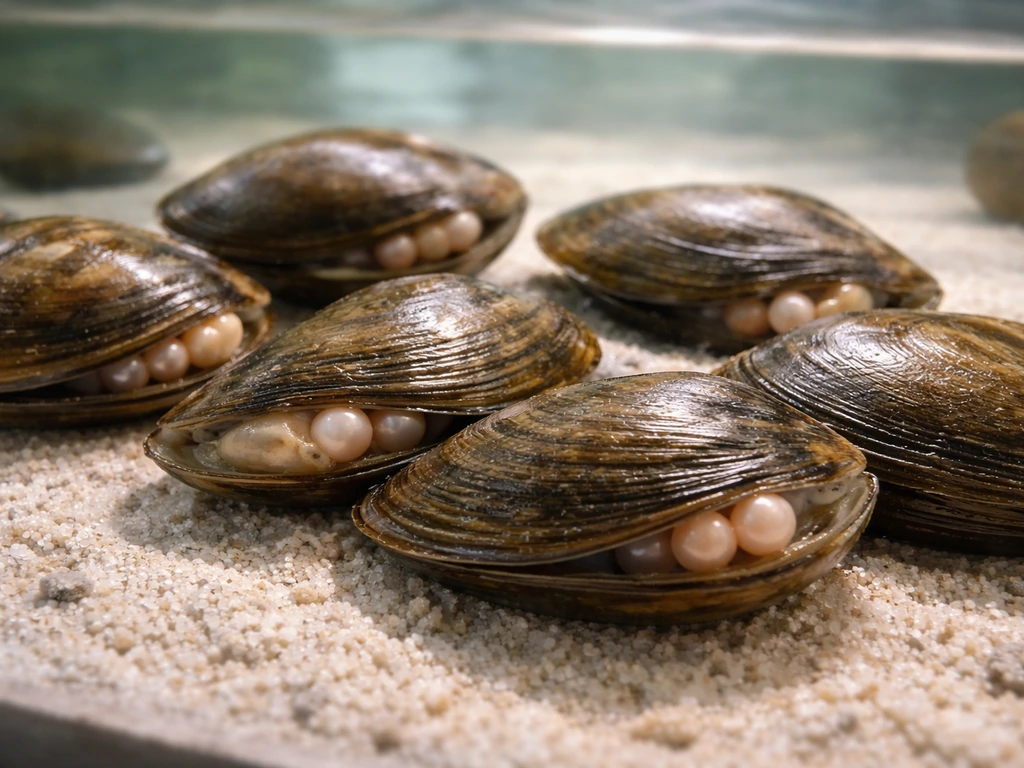
Freshwater pearl cultivation involves culturing freshwater mussels (mainly Hyriopsis and Cristaria species in China, or Margaritifera in North America and Europe) to produce nacreous pearls inside bivalve tissue. It is an aquaculture practice, not a plant-growing activity. If you want detailed guidance on mussel husbandry and nucleation techniques, see our guide on how to grow freshwater pearls. If that is what you are researching, you need information on mussel husbandry, host fish for glochidia larvae, water quality for bivalves, and nucleation techniques. It shares nothing with growing carpeting plants beyond the word 'pearl.'
Which system should you choose?
Different pearl grass candidates belong in genuinely different environments. Matching the plant to the right system saves a lot of failed attempts. Here is a practical decision guide based on what you have and what you want to do.
| Your goal | Best plant | Best system | Why |
|---|---|---|---|
| Foreground carpet in a fish tank | Micranthemum micranthemoides or Lilaeopsis brasiliensis | Aquarium / planted tank | Controlled parameters, CO2 possible, enclosed environment suits small-leaved carpets |
| Demanding show carpet for aquascape competition | Hemianthus callitrichoides (HC Cuba) | High-tech planted tank with CO2 | Needs very high PAR and injected CO2; tank gives full control |
| Outdoor wildlife pond edge | Pontederia cordata, Lilaeopsis (marginal), sago pondweed | Pond / bog planter | Emergent and submerged species need depth variation and outdoor light |
| Bog garden or container water feature | Lilaeopsis (wet margin), Pontederia | Bog / marginal planter | Root access to saturated substrate; tolerates temperature swings |
| Hydroponic or floating raft system | Micranthemum micranthemoides | NFT / DWC / floating raft | Fast-growing stem plant handles nutrient solution root bathing well |
| Cool-climate garden groundcover | Sagina subulata (corsican pearlwort) | Garden bed / containers | Fully terrestrial; needs well-drained soil not water |
If you are still unsure, ask yourself one question: is the plant going to be permanently submerged, partially submerged, or living in soil? Permanently submerged points you toward Micranthemum, Lilaeopsis, or HC Cuba in an aquarium or deep pond system. Partially submerged (roots wet, leaves above water) points toward Lilaeopsis at pond margins or Pontederia for larger ponds. Soil only means you're looking at Sagina, a completely different growing path.
Equipment you need (and budget-friendly alternatives)
Aquarium carpet setup
- Tank: any standard glass or acrylic aquarium, minimum 30 cm (12 inches) depth for comfortable carpeting and light penetration. Shallow tanks (Iwagumi style, 15–20 cm) can work for carpets but need very precise lighting.
- Substrate: ADA Aqua Soil Amazonia (powder grade, grain 1–2 mm) is the gold standard for small-rooted carpets. Budget alternative: any fine-grain inert sand (grain 0.5–1 mm) plus Seachem Flourish Tabs every 15 cm, replaced every 3–4 months.
- Lighting: LED fixture capable of delivering 40–100 μmol PAR at substrate level. Mid-range options: Chihiros WRGB II, Fluval Plant 3.0. Budget option: decent full-spectrum LED strips from reputable brands with PAR meter confirmation. A PAR meter (rental or purchase) is genuinely worth it.
- CO2 system: pressurized CO2 cylinder, regulator with solenoid, inline or in-tank diffuser, and a 4dKH drop-checker with indicator solution. Budget alternative: DIY yeast CO2 for small tanks (under 60 litres), though output is inconsistent.
- Filter/pump: canister filter or hang-on-back filter sized for at least 5–10x turnover per hour. Surface agitation should be minimal (disrupts CO2 concentration). Spray bars or angled outlet nozzles help.
- Fertilizers: EI (Estimative Index) dry salt mixes (KNO3, KH2PO4, K2SO4, CSM+B trace mix) for water column. Root tabs (Seachem Flourish Tabs or equivalent) for substrate-feeding species like Lilaeopsis.
- Propagation tools: fine-tipped stainless tweezers (25–30 cm), curved scissors for trimming, long straight scissors for bulk trims, a turkey baster or syringe for removing debris from carpet after trimming.
- Thermometer and heater: digital thermometer for monitoring; adjustable heater sized to tank volume.
- pH/KH testing: liquid test kits (API or Salifert) for regular pH and KH monitoring to confirm CO2 levels.
Bog, pond edge, and outdoor systems
- Aquatic baskets or mesh planters: 1–2 litre baskets for marginal planters; larger 5–10 litre for pickerelweed.
- Aquatic compost or loam-based substrate: purpose-made pond compost topped with pea gravel or fine gravel to prevent cloud-up.
- Pond liner or pre-formed pond: minimum 40 cm depth for submerged planters; shallower shelf (10–20 cm) for marginals.
- Weights or anchor stones: to hold baskets in position at the correct depth.
- Slow-release aquatic fertilizer tablets: Pondtabbs or equivalent, placed in substrate at planting.
Hydroponic/raft systems
- DWC tub, NFT channel, or foam raft board (2.5 cm thick, food-grade EPS).
- Air pump and airstones for oxygenation of nutrient solution.
- pH meter (calibrated, not strips) and EC/TDS meter.
- Hydroponic net cups (2.5–5 cm) and growing media: hydroton (LECA), rockwool, or coco coir plugs.
- Hydroponic nutrient solution: two-part or three-part concentrate (e.g., General Hydroponics Flora series) or custom mix.
- Grow light (LED or T5) with timer.
Aquarium carpet protocol (planted tank)
This is the most detailed section because it's where most readers will spend their time. I'll give the full protocol for Micranthemum micranthemoides and Lilaeopsis brasiliensis together, noting where they differ.
Substrate and depth
Lay 6–8 cm of fine active substrate (ADA Aqua Soil Amazonia powder grade or equivalent) across the foreground. This depth matters: too shallow and plant roots can't anchor, too deep and anaerobic pockets form. For inert substrates, press one Flourish Tab every 15 cm into the substrate before planting, about 3–4 cm down. Lilaeopsis is especially root-hungry and will visibly stall in unfertilized inert sand without tabs. Micranthemum feeds more from the water column and tolerates inert substrates a bit better.
Light intensity and photoperiod
Aim for 40–60 μmol PAR at the substrate for Micranthemum micranthemoides and 50–80 μmol PAR for Lilaeopsis brasiliensis. HC Cuba needs 80–100+ μmol. Measure at the substrate with a PAR meter, not just at the water surface. Start your photoperiod at 8 hours per day for the first two weeks to limit early algae outbreaks while plants establish. Move to 10 hours once you see consistent new growth. Avoid running more than 10–11 hours even in high-tech tanks: it does not speed up plant growth but it does fuel algae.
Temperature, pH, and hardness
| Parameter | Micranthemum micranthemoides | Lilaeopsis brasiliensis | HC Cuba |
|---|---|---|---|
| Temperature | 21–30°C (70–86°F) | 20–29°C (68–85°F) | 22–28°C (72–82°F) |
| pH | 6.0–7.5 | 5.0–7.5 | 5.0–7.0 |
| GH (general hardness) | 2–15 dGH (flexible) | 2–12 dGH | 0–8 dGH (soft preferred) |
| KH (carbonate hardness) | 1–8 dKH | 1–8 dKH | 0–4 dKH (soft preferred) |
Fertilizer and dosing (EI method)
The Estimative Index (EI), developed by Tom Barr, is the most reliable non-limiting fertilizer approach for high-tech planted tanks. The logic is simple: dose more nutrients than the plants can use, then reset with a large weekly water change rather than trying to measure exact uptake. For a standard 60-litre high-tech tank dosed three times per week, target cumulative weekly levels of: NO3 at 10–30 ppm, PO4 at 1–2 ppm, K at 10–30 ppm, and micronutrients via CSM+B trace mix. Follow with a 50% water change on day seven. If you use a commercial liquid fertilizer (Seachem Flourish Comprehensive plus Flourish Excel), dose per manufacturer instructions and still do weekly 30–50% changes.
CO2 and flow
Target 20–30 ppm dissolved CO2. Use a 4dKH reference solution in your drop-checker: lime green means you're in range, yellow means too much CO2, blue means too little. Turn CO2 on 1–2 hours before lights on and off 1 hour before lights off. Keep surface agitation low: a spray bar directed slightly downward or an angled outlet nozzle works well. High surface agitation degasses CO2 rapidly and wastes a lot of cylinder gas. Water flow across the carpet (not vertical turbulence) helps deliver nutrients to leaves, so aim for gentle horizontal circulation.
Planting density and technique
Divide tissue-culture plugs into clumps of 5–10 stems. Space clumps 0.5–1 cm apart across the foreground using stainless tweezers. Tighter spacing costs more plants up front but gives you a carpet in 4–6 weeks rather than 8–10. Push each clump 1–1.5 cm into the substrate, not deeper. If stems float up in the first few days, replant them: this is normal while roots haven't anchored yet. A common mistake I made early on was planting clumps too deep, burying the lower leaves and causing melt at the base.
Trimming and maintenance schedule
- Week 1–3: minimal intervention. Remove any visibly dead or rotting leaves with tweezers. Do not trim yet.
- Week 3–4: first trim once new growth is visible. Cut to 2–3 cm height using long straight scissors. Remove clippings immediately with a net or siphon before they sink and create detritus.
- Every 2–3 weeks after: repeat trimming to the same height. Regular trimming forces lateral runner spread and keeps the carpet dense.
- Monthly: add replacement root tabs if using inert substrate (check manufacturer guidance, typically every 3–4 months per tab).
- Weekly: 50% water change, clean glass, re-dose EI fertilizers.
Propagation
Both Micranthemum and Lilaeopsis propagate without much effort once established. Micranthemum naturally roots at each stem node: when you trim, the removed clippings can be immediately replanted into bare patches or a separate container. For step-by-step guidance on how to grow pearl weed, see the internal guide titled how to grow pearl weed (97c0ac17-b2b0-4a24-8c77-5ffa7e306e29). Lilaeopsis spreads by rhizome runners: new leaf clusters appear at intervals along the rhizome. You can pull a runner section gently and replant it in a different area. Tissue-culture cups from commercial suppliers start sterile and pest-free, which is worth the small premium if you are setting up a new tank.
Bog, marginal planter, and pond-edge protocol
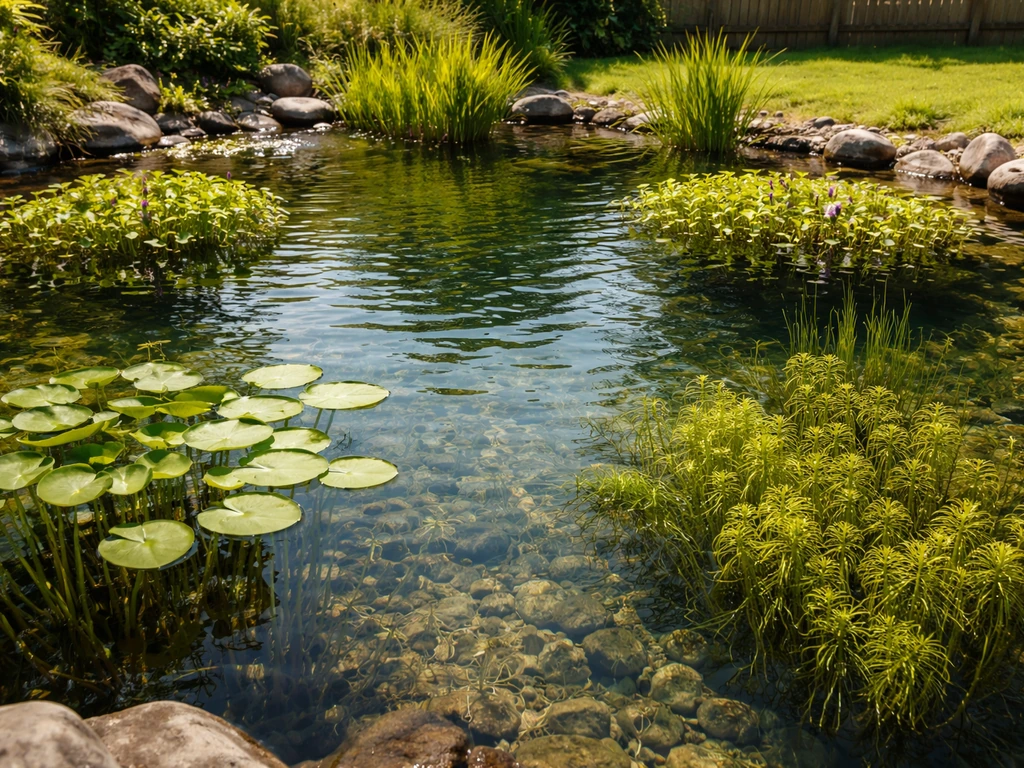
Lilaeopsis spp. can also grow as marginal plants with leaves above water, which makes them useful at pond edges and in bog planters. For detailed, step-by-step guidance on how to grow pond weed, including planting depth, seasonal care, and common pests, see our guide on how to grow pond weed. Pontederia cordata and Stuckenia pectinata (sago pondweed) belong in this section too.
Substrate and planting depth
Use a loam-based aquatic compost or purpose-made pond substrate in mesh planters. Top with a 1–2 cm layer of pea gravel to prevent the compost from dispersing into the water. Plant depth varies by species: Lilaeopsis at pond margins prefers its crown at 0–5 cm below the waterline. Pontederia cordata does best with its crown at 10–30 cm depth. Sago pondweed (Stuckenia pectinata) is fully submerged and can be planted in 30–100 cm of water. For bog planters, keep the substrate saturated but not flooded more than 5 cm above soil level for most marginal species.
Light, temperature, and pH
Outdoor plants rely on natural sunlight, which in summer typically delivers far more PAR than any aquarium fixture. Aim for at least 6 hours of direct sunlight for Pontederia and Lilaeopsis. Temperature tolerances are broad: Lilaeopsis handles 10–28°C in outdoor conditions; Pontederia is hardy to approximately -15°C in USDA zone 5 and above. Sago pondweed tolerates 5–25°C and a wide pH of 6.5–8.5, making it one of the most adaptable pondweeds available. For bog planters, pH between 6.0 and 7.5 suits most species.
Fertilizer and water level management
For planted baskets in ponds, use slow-release aquatic fertilizer tablets (Pondtabbs or equivalent) pushed into the substrate at planting time, one tablet per litre of substrate volume. Reapply every growing season. Outdoor ponds generally have enough background nutrients from fish waste and leaf decomposition that heavy fertilizing is not needed and may promote algae. For Pontederia in a wildlife pond, no supplemental feeding is usually necessary after the first season. Keep water levels relatively stable for marginals: a fluctuation of more than 15–20 cm stresses emergent plants during their active growing season.
Anchoring, density, and pruning
Place mesh baskets on pond shelves at the right depth and anchor with flat stones on top of the gravel layer if water movement or fish activity risks tipping them. Plant Pontederia at 1 plant per 0.25 m2 of pond surface (it spreads vigorously). Lilaeopsis margins can be planted more densely: clumps every 5–10 cm. Prune Pontederia back to the crown in autumn, removing dead flower spikes to prevent seed dispersal if self-seeding is a concern. Sago pondweed can be thinned by pulling runners in summer if it becomes too dense.
Hydroponic, raft, and floating system protocol
Micranthemum micranthemoides is the best candidate for hydroponic systems among the pearl grass group. Its fast growth, tolerance of water-column nutrients, and easy propagation from cuttings suit DWC (deep water culture), NFT (nutrient film technique), and floating raft systems. Lilaeopsis can also work in shallow hydroponic channels but is slower and less commonly used this way.
Growing media and planting
Use 2.5–5 cm net cups filled with hydroton (LECA), rinsed rockwool cubes, or coco coir plugs. For raft systems, cut holes in a 2.5 cm foam board to fit net cups. Insert small stem cuttings of Micranthemum (3–5 cm each) into the cups, with the cut end buried in the media. Roots develop in 5–10 days in warm conditions (24–26°C). Space cups 5–8 cm apart on the raft. For stolon attachment (Lilaeopsis), lay the rhizome section across a shallow rockwool slab and pin it flat with a small wire staple; roots attach in 10–14 days.
Nutrient solution and targets
| Parameter | Target range | Notes |
|---|---|---|
| EC (electrical conductivity) | 0.8–1.4 mS/cm | Start low (0.8) for new cuttings, increase to 1.2–1.4 after rooting |
| TDS | 400–700 ppm | Equivalent to EC range above |
| pH | 5.8–6.5 | Check and adjust daily; drifts up as plants absorb nutrients |
| Nitrogen (NO3) | 100–150 ppm | Higher N for leafy growth |
| Phosphorus (P) | 30–50 ppm | |
| Potassium (K) | 100–200 ppm | |
| Calcium (Ca) | 60–100 ppm | |
| Magnesium (Mg) | 20–40 ppm | |
| Temperature (solution) | 20–26°C | Warmer increases uptake; avoid >28°C (root stress) |
A simple starting recipe using a commercial two-part concentrate: mix Part A and Part B per the manufacturer's dilution instructions to reach EC 1.0–1.2 mS/cm, then check and adjust pH to 6.0–6.2 using pH-up (potassium hydroxide) or pH-down (phosphoric acid) solutions. Monitor EC and pH daily for the first two weeks; top off with plain pH-adjusted water between full nutrient solution changes. Do a full solution change every 7–10 days to prevent salt and pathogen buildup.
Lighting, oxygenation, and photoperiod
Run a full-spectrum LED or T5 fixture at 16 hours light / 8 hours dark for maximum growth rate in a hydroponic system (unlike aquariums, you are not battling algae in a closed tank). Target PAR at the canopy of 150–250 μmol for fast vegetative growth. Oxygenate the nutrient solution with an air pump and airstone: maintain dissolved oxygen above 6 mg/L. In warm conditions (above 24°C), run the airstone continuously. DWC systems are particularly vulnerable to low DO at warm temperatures, which causes root rot quickly.
Propagation in hydroponic systems
Take cuttings from actively growing tips every 2–3 weeks. Trim to 3–5 cm sections, remove the bottom set of leaves, and insert into a fresh net cup with media. Roots appear in under a week in a warm, oxygenated system. This makes Micranthemum one of the fastest self-propagating plants you can run through a small hydroponic system. A single 10 cm tissue-culture plug can supply 50+ cuttings within a month.
Troubleshooting common problems
Algae on the carpet
- Green spot algae (hard green dots): usually means phosphate is too low. Increase PO4 dosing slightly. Also check that PAR is not too high for your nutrient level.
- Thread algae / hair algae: typically a sign of excess light relative to CO2 or nutrients. Reduce photoperiod to 8 hours, increase CO2 to drop-checker lime green, and ensure EI doses are consistent.
- Blue-green algae (cyanobacteria, slime on substrate): indicates low flow across the carpet and often low nitrates. Increase circulation, raise NO3 to 15–20 ppm, and do a 3-day blackout if the problem is severe.
- Staghorn algae (grey brushy tufts on leaves): almost always a CO2 fluctuation issue. Check solenoid timing, diffuser cleanliness, and whether cylinder is running low.
Melting or yellowing
- New tissue-culture plants melting back: normal for the first 1–2 weeks as plants transition from sterile agar to tank water. Do not disturb; let them push new emersed or submersed growth. If still melting at week 3, check CO2 and light.
- Yellow leaves across the plant: likely a nitrogen or iron deficiency. Increase NO3 dosing (EI) and add a chelated iron supplement if not already included in your trace mix.
- Transparent or pale new leaves: calcium or magnesium deficiency, or excessively low KH. Check GH/KH and supplement with calcium chloride + magnesium sulphate if needed.
- Base of stems rotting: substrate is too deep, anaerobic, or plants are buried too deep. Re-plant at 1–1.5 cm depth and improve flow across the substrate.
Slow growth or failure to carpet
- Check PAR at substrate level, not water surface: most beginner failures come from lights that look bright but deliver under 20 μmol at 30 cm depth.
- Confirm CO2 is actually reaching target: replace drop-checker solution if it has not been changed in months (it becomes inaccurate).
- Consider trimming earlier: letting the carpet grow too tall causes the lower layers to shade out and go bare in the middle.
- Rule out allelopathic neighbours: some fast-growing stem plants (particularly Hygrophila species) can chemically suppress slower carpeting plants when grown in close proximity.
Pests
- Snail eggs on carpet: a nuisance rather than a plant health threat. Assassin snails or manual removal work well. Avoid snail-killing chemicals near delicate carpeting plants.
- Aphids or shore flies (hydroponic systems): common in systems with exposed aerial growth. Yellow sticky traps above the canopy, and a dilute neem oil spray on leaves (rinse away from nutrient solution), are effective without harming aquatic roots.
- Root rot (hydroponic/DWC): usually caused by low dissolved oxygen or water temperature above 26°C. Increase aeration, lower water temp, and treat with beneficial bacteria products (Hydroguard or equivalent).
Companion plants and practical uses
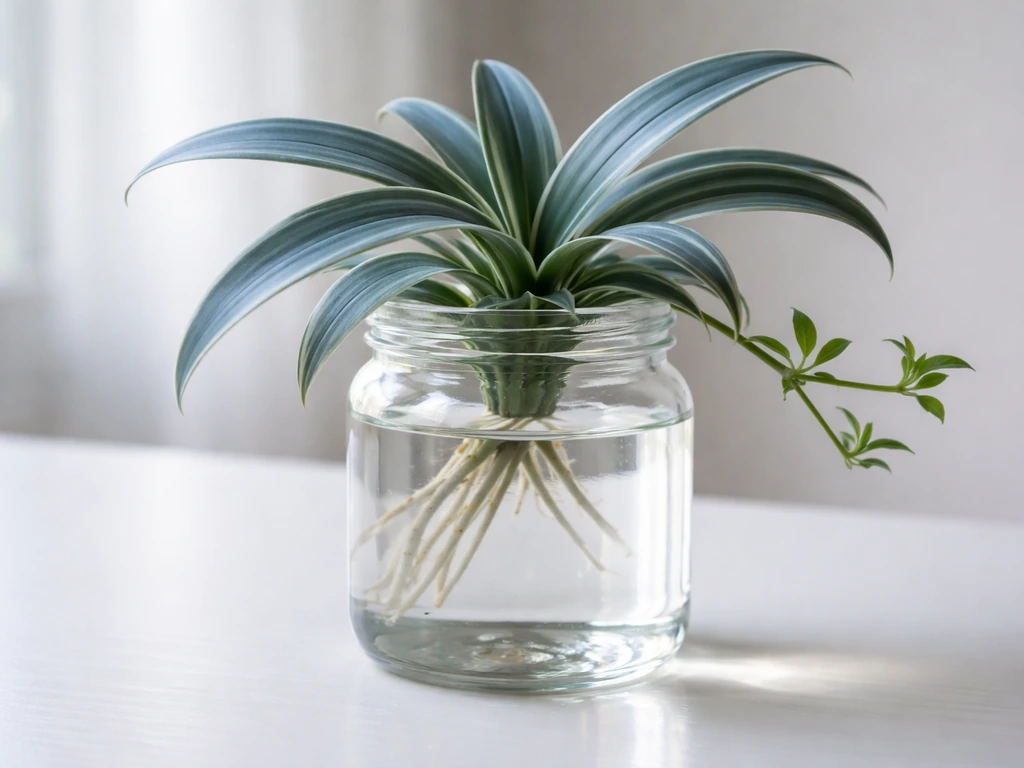
In planted aquaria, Micranthemum and Lilaeopsis carpets work well with stem plants like Rotala rotundifolia or Ludwigia in the midground and background, and with mosses (Java moss, Fissidens) on hardscape. For shrimp tanks, a dense pearlweed carpet provides foraging surface and shelter. Avoid pairing fine carpets with large cichlids or goldfish that actively dig: they'll uproot the carpet in hours. If you're also caring for terrestrial houseplants nearby, see our guide on how to grow blue pearl chlorophytum for potting, light, and watering tips.
In outdoor ponds, pickerelweed (Pontederia cordata) pairs naturally with sago pondweed as a combination of emergent vertical interest and submerged oxygenating cover. Sago pondweed's fine leaves provide fish spawning habitat and waterfowl food. Adding a few floating plants like water hyacinth (Eichhornia) can help manage nutrient levels in fish-heavy ponds while the submerged plants establish.
For hydroponic systems, Micranthemum works best as a standalone ornamental crop rather than alongside edible plants: it does not produce a useful harvest, but it is a useful indicator plant for system health because it responds visibly to pH drift, nutrient imbalance, and oxygen stress before most edible crops show symptoms.
FAQ
What exactly does the name “pearl grass” refer to and how do I tell look‑alikes apart?
“Pearl grass” is an ambiguous trade name used for several different plants. Common taxa sold under this name: Micranthemum species (aka Hemianthus spp.; 'pearlweed' / aquarium carpet stems with opposite tiny round leaves on visible stems), Lilaeopsis spp. (Brazilian/novae‑zelandiae microswords; grasslike linear leaves arising from a rhizome/runners), and terrestrial pearlworts such as Sagina subulata (very low mat‑forming rosette with awl‑shaped leaves and tiny white flowers). Look‑alikes to separate: Hemianthus (Micranthemum) — stems with paired/decussate tiny rounded leaves, roots from nodes; Lilaeopsis — distinct grass‑like leaves from a rhizome, leaves linear; Sagina (pearlwort) — terrestrial mat with rosettes and flowers; Pontederia (pickerelweed) and pondweeds (Stuckenia/Potamogeton) are larger marginal/submerged pond plants and not carpeting aquarium plants. Note: “freshwater pearls” refers to mussel/pearl farming and is unrelated to plant culture.
Which cultivation systems are appropriate for plants called “pearl grass” and when should I choose each?
System recommendations by plant group: 1) Aquarium/planted tank (foreground carpet): choose Micranthemum spp. (pearlweed) or Lilaeopsis brasiliensis for aquascaping carpets in freshwater aquaria. 2) Bog/marginal planters and outdoor ponds: Lilaeopsis novae‑zelandiae or actual pondplants (pickerelweed Pontederia cordata, native pondweeds Stuckenia/Potamogeton) for shallow margins. 3) Hydroponic/raft: marginal Lilaeopsis can be grown in rafts or trays with roots in nutrient solution; Micranthemum may grow emersed on foam rafts. 4) Garden/houseplant/groundcover: terrestrial Sagina subulata (pearlwort, Irish moss) for lawns and rock gardens. Choose aquarium systems for aquatic carpets and tight scapes; choose marginal/pond systems where emergent growth and wildlife value are wanted; choose terrestrial Sagina for dry, well‑drained groundcover under foot traffic guidelines.
What step‑by‑step planting and care protocol should I use for Micranthemum (aquarium ‘pearlweed’) in a planted tank?
Step list: 1) Prepare tank and substrate: use fine active aquarium soil or inert sand/gravel with root tabs. 2) Dose and equipment: install LED lighting capable of 30–80 μmol·m−2·s−1 at substrate level depending on strain, optional CO2 injection aiming 20–30 ppm for faster growth, gentle but steady flow, and a filter sized for tank volume. 3) Planting: divide plugs into 3–6 mm clumps; plant clumps 0.5–1.0 cm apart across the foreground using fine tweezers. 4) Water parameters: temperature 21–30°C (70–86°F), pH 5.5–7.5, KH 0–6 dKH acceptable; GH moderate. 5) Fertilization: use water‑column dosing (EI or daily macro/micro dosing) targeting non‑limiting NO3 10–30 ppm, PO4 1–2 ppm, K 10–30 ppm; root tabs every 3–4 months if substrate inert. 6) Lighting & photoperiod: 8–10 hours/day; increase to 8–12 hours with higher light/CO2 but watch algae. 7) Maintenance: trim the carpet every 1–3 weeks to encourage lateral runners; remove floating debris; weekly 25–50% water changes if using EI. 8) Propagation: trim tops and replant clippings; allow runners and side shoots to fill gaps. Expected timeframe for coverage: weeks to months depending on light, CO2 and density.
What planting and care protocol should I use for Lilaeopsis (Brazilian microsword) in aquaria and marginal setups?
Aquarium (submerged) protocol: Substrate: fine active aqua soil powder or very fine gravel with root tabs. Light: medium to high PAR at substrate (~40–80 μmol·m−2·s−1 for easy coverage, >80 μmol·m−2·s−1 if dense carpet desired). CO2: recommended for dense carpets; aim 20–30 ppm. Temperature: 20–28°C (68–82°F). pH: 5.0–7.5; KH low tolerated. Fertilizer: EI-type or regular dosing with root tabs. Planting: plant small clumps 0.5–1 cm apart; use tweezers. Maintenance: trim runners to encourage lateral spread; trim every 2–4 weeks. Marginal/raft protocol: plant into shallow trays, keep roots in nutrient solution (hydroponic raft) with moderate light and aeration; emersed leaves may become shorter and stronger. Propagation: division of rhizome clumps or cut runners; replant divided pieces.
How do I grow terrestrial pearlwort (Sagina subulata) as a groundcover?
Site and soil: full sun to part shade; well‑drained sandy to loamy soil, pH 5.5–7.5. Planting: sow seeds or plant plugs in spring or early fall; space plugs 5–10 cm apart for quicker coverage. Watering: keep moist until established, then tolerate moderate drought. Fertilizer: light balanced granular or slow‑release fertilizer in spring; avoid heavy nitrogen which promotes tall growth. Mowing/trimming: occasional light shearing maintains low carpet (approx. 5–10 mm height). Pests/diseases: watch for crown rot in poorly drained sites. Uses: rock gardens, between stepping stones, low‑traffic lawn replacement.
What equipment and supplies do I need to start growing pearl grass (aquarium and pond variants)?
Essential equipment checklist (aquarium carpet focus): - Substrate: fine active aqua soil (powder or small grain) or fine gravel/sand + root tabs - Lighting: aquarium LED with known PAR, adjustable photoperiod - CO2 system: pressurized CO2 with diffuser or beginner yeast DIY for low budget; drop‑checker and KH/pH test kit - Filtration: sponge/canister filter sized to tank volume for gentle circulation - Planting tools: fine tweezers, scissors, propagation tray - Fertilizers: complete macro + micro fertilizers or EI kit, root tabs - Water testing: pH, KH, GH, NO3, PO4 strips or liquid tests - Optional: heater, thermometer, spray bottle for emersed propagation, planting anchors (pebbles) Beginner/low‑budget options: inert sand + Seachem Flourish Tabs, LED desk lamps rated for planted tanks, DIY CO2 for small tanks, sponge filter for gentle flow. Pond/marginal checklist: shallow planters, aquatic soil or pond planting bags, pond fertilizer tabs, marginal pots, pump for circulation, mulch for shading young plants.