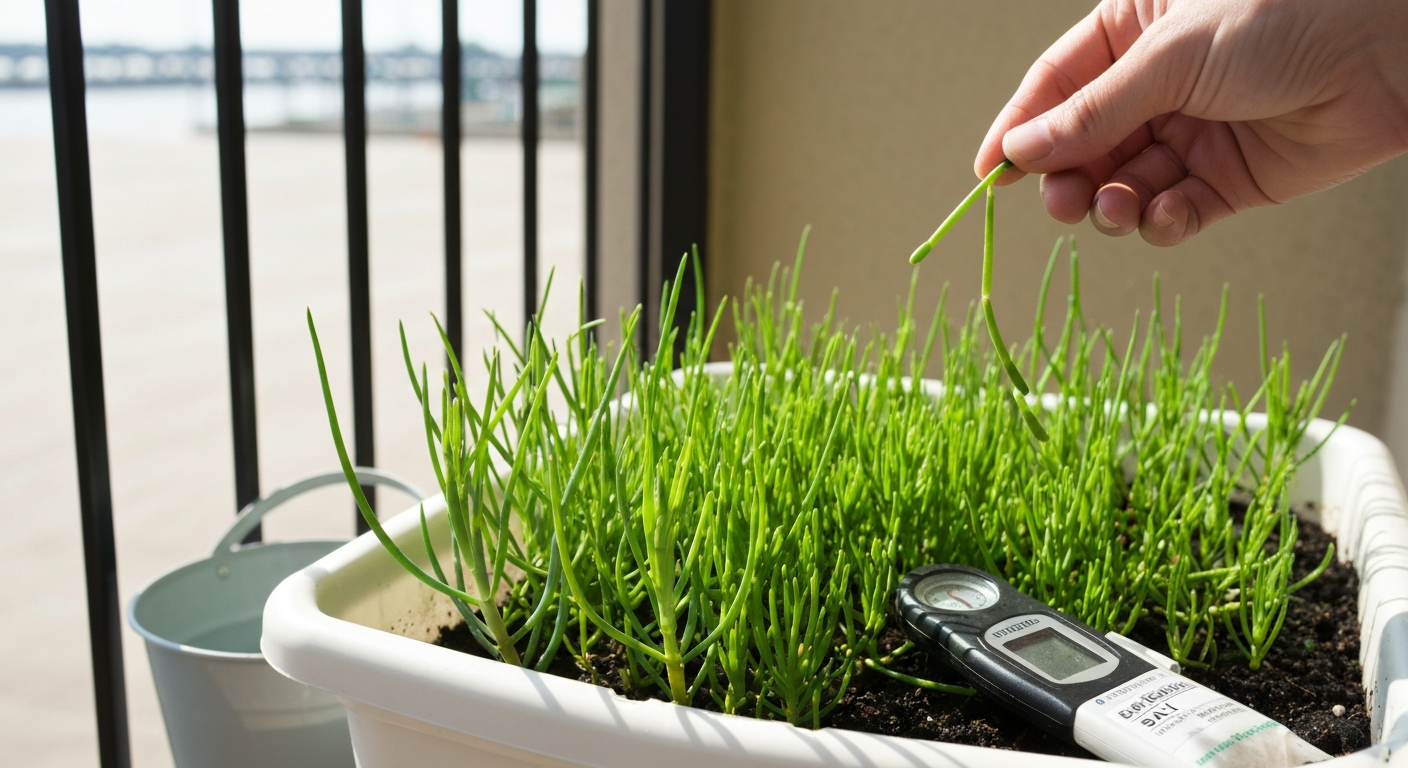
You can grow aquatic plants in a fish tank successfully by matching the right plant types to your tank's light and substrate, keeping water parameters in the pH 6.5–7.8 range, running a consistent 8–10 hour photoperiod, and dosing a balanced liquid fertilizer weekly. Most beginners fail not because planted tanks are hard, but because they skip one of those four basics and then can't figure out which one is the problem. This guide walks through every step in order so you can get plants rooted, growing, and actually staying alive. In an aquaponics setup, watercress can be grown similarly to other nutrient-hungry leafy greens, but you’ll need steady water quality, adequate flow, and the right light schedule.
How to Grow Water Plants in a Fish Tank Step-by-Step
Marcus Holloway
1 Jun 2026
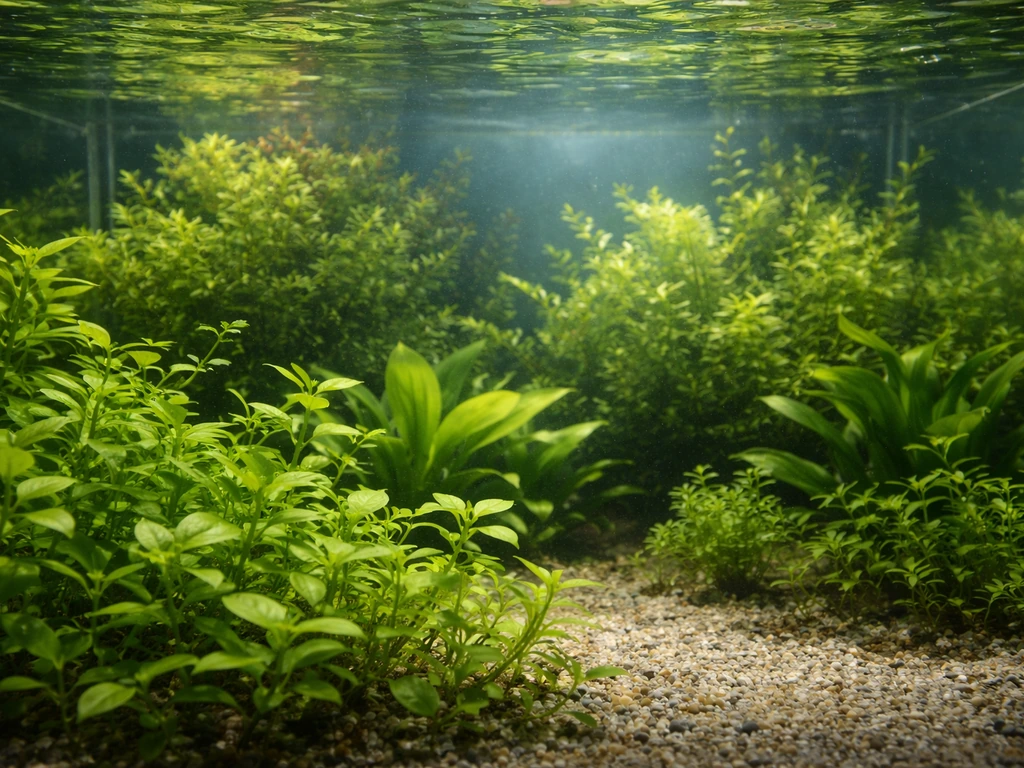
Pick the right type of water plants for your tank
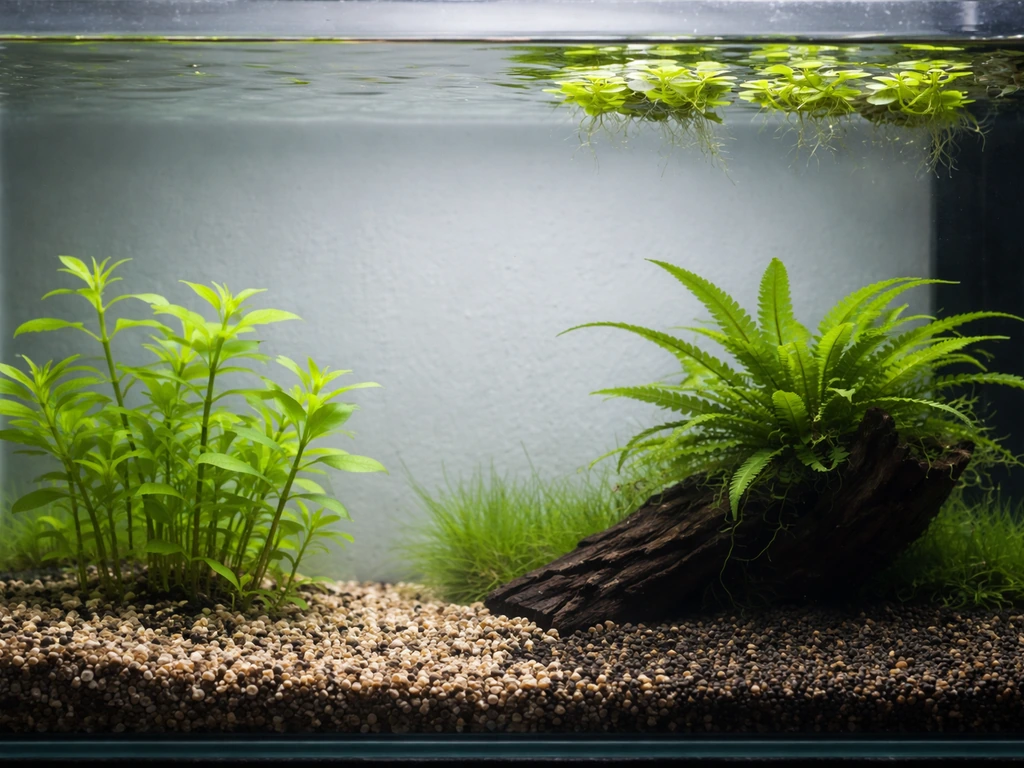
Aquarium water plants fall into three main categories: rooted plants, floating plants, and epiphytes (which technically root but not in substrate). Knowing which category your plant belongs to changes everything about how you set it up.
Rooted plants
These are stem plants and rosette plants that anchor into gravel or substrate and pull a portion of their nutrients through their roots. Water wisteria, Amazon swords, and cryptocorynes are classic examples. They need at least 2–3 inches of substrate to anchor properly. Water wisteria is one of the fastest-growing beginners' options, but fair warning: it almost always melts badly when first planted (more on that later).
Epiphytes (attach, don't bury)
Java fern and Anubias are epiphytes. Their rhizome (the thick horizontal stem everything grows from) must never be buried in substrate. Aquarium Spare Parts’ care sheet for Microsorum (Java fern) notes that the rhizome must stay underwater and advises attaching Java fern to rock or driftwood so it does not float and/or rot [Their rhizome (the thick horizontal stem everything grows from) must never be buried in substrate. ](https://www.
aquariumspareparts. com. au/content/Care%20Sheet%20-%20Micosorum%20%28Java%20Fern%29. pdf).
Bury it and it rots, and then you wonder why your plant died. Instead, tie or glue them to driftwood or rocks and let the roots grip on naturally. I made the burying mistake with Java fern my first time and lost the whole plant in about two weeks. Both species are extremely forgiving in almost any freshwater condition, don't need CO2 injection, and handle low to moderate light well, which makes them ideal starting points for beginners.
Floating plants
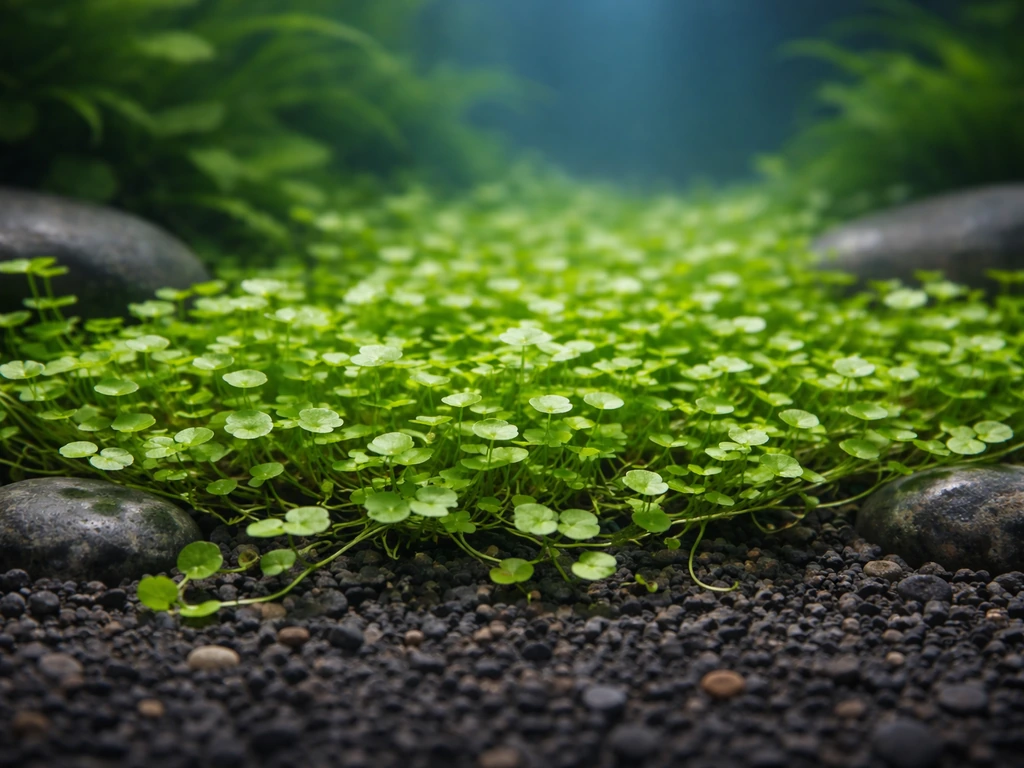
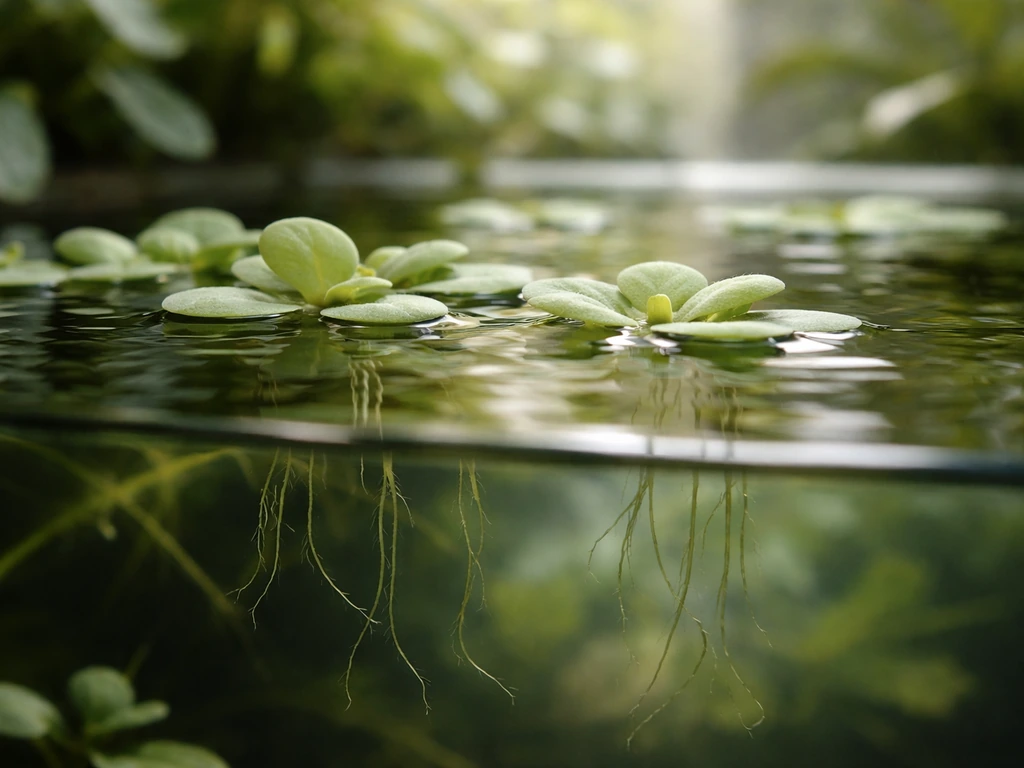
Frogbit, duckweed, salvinia, and water lettuce all float on the surface with roots hanging into the water column. They're fantastic for soaking up excess nutrients and providing cover for fish, but they have one major drawback: if they cover the entire surface, submerged plants underneath get starved of light. Keep floaters to about 30–50% of your surface area maximum, or corral them to one section of the tank with an airline tube ring.
Water wisteria is a nice middle-ground plant because it works either way: planted in substrate as a stem plant, or floating horizontally at the surface where it grows hanging roots along the stem. If you're growing it as part of an aquaponics-style setup or just want something flexible, that dual-mode growth habit makes it very useful. Growing food in water through aquaponics or similar methods often uses floating plants in exactly this way.
| Plant Type | Example Species | Root in Substrate? | Light Need | CO2 Needed? | Beginner Friendly? |
|---|---|---|---|---|---|
| Rooted/Stem | Water wisteria, Amazon sword | Yes (2–3 in.) | Moderate–High | Optional but helps | Yes |
| Epiphyte | Java fern, Anubias | No — attach to decor | Low–Moderate | No | Yes |
| Floating | Frogbit, Duckweed, Salvinia | No | Moderate | No | Yes |
Tank setup essentials for plant growth
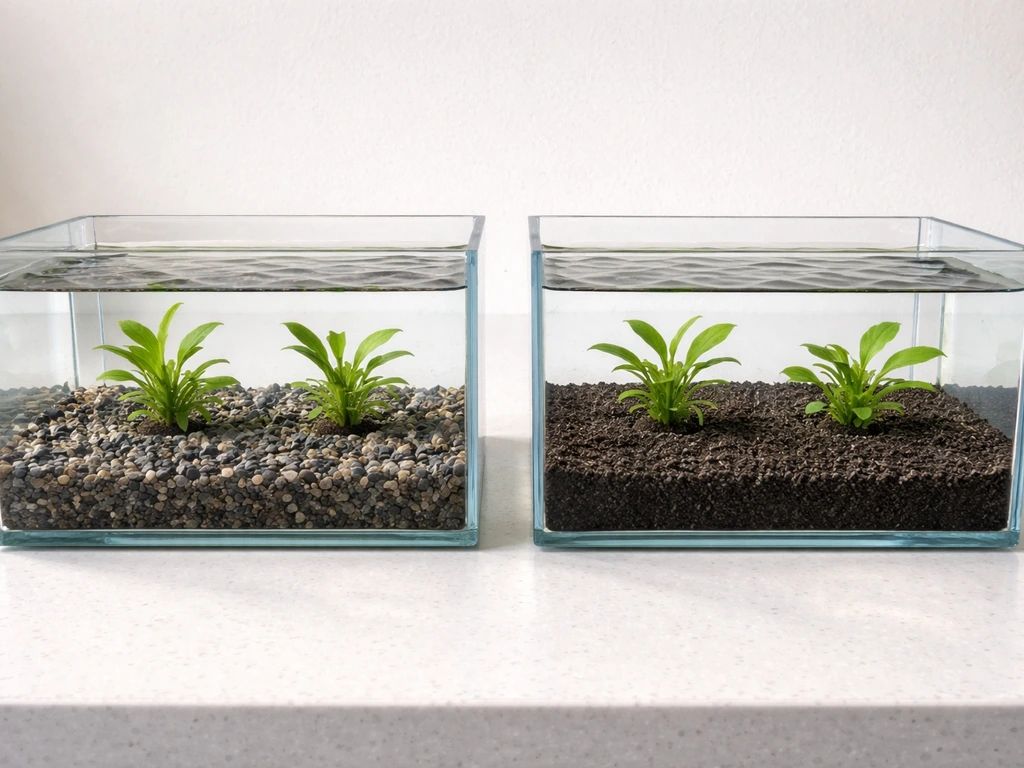
Substrate
For rooted plants, your substrate choice matters a lot. Plain aquarium gravel works, but it holds almost no nutrients on its own. A dedicated plant substrate like Fluval Stratum, ADA Aqua Soil, or Seachem Flourite releases nutrients slowly and has better particle structure for roots to grip. If you're on a budget, a layer of root tabs pushed into plain gravel every 4–6 inches every few months gets you most of the way there. Aim for a substrate depth of at least 2–3 inches for stem plants and rosettes.
If your tank has a bare bottom or you're using fine sand, epiphytes and floaters are your best friends since they don't rely on substrate at all. Java fern especially thrives on bare-bottom tanks when attached to hardscape.
Layout and planting zones
One practical tip from Tropica's planting guidance that I wish I'd known earlier: plant before you fill the tank all the way if you can. Reaching down into a full 40-gallon tank to orient stems correctly in gravel is genuinely frustrating, and plants end up crooked or floating loose. Fill to about 50%, plant everything, then top up slowly. If your tank is already established and full, use long aquascaping tweezers and plant at a slight angle so the stem anchors better.
General layout rule: tall background plants like wisteria or vals at the back, mid-size plants in the middle, and short foreground plants or hardscape-attached epiphytes at the front. Floaters go last and get managed from the start so they don't take over.
Lighting and photoperiod basics
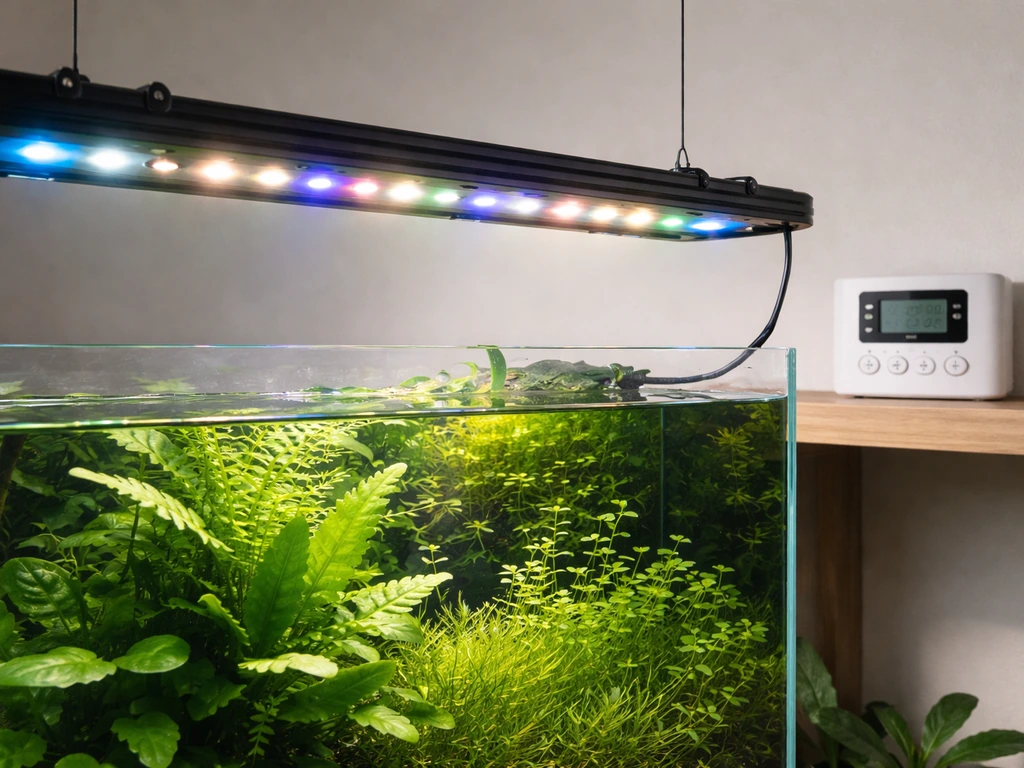
Most aquarium plants do well under full-spectrum LED lighting in the 6500K color temperature range. You don't necessarily need the most expensive light on the market, but you do need a timer. Consistency matters more than raw intensity for beginners. Run your lights for 8–10 hours per day and turn them off completely for the rest. Leaving lights on 14–16 hours doesn't grow plants faster; it grows algae.
If your plants are struggling or algae keeps taking over even with everything else correct, your light is often the culprit. Either it's too dim for the plant species you chose, or it's too intense for the amount of CO2 and nutrients in the water. More light without matching carbon (CO2) input just feeds algae, it doesn't feed plants. Also clean your light fixture periodically: a grimy lens or dimming bulb reduces output more than most people expect.
- Target color temperature: around 6500K (daylight spectrum)
- Photoperiod: 8–10 hours on, rest off — use a timer
- Low-light plants (Java fern, Anubias): even a basic LED works
- Medium/high-light plants (wisteria, stem plants): look for lights with PAR 30–80+ at substrate level
- Signs of too much light: algae explosion, especially green spot or hair algae
- Signs of too little light: melting, leaf drop, slow or no new growth
Water parameters and circulation
Most freshwater aquarium plants are pretty tolerant, but they have a comfortable zone. Aim for pH between 6.5 and 7.8, general hardness (GH) around 50–100 ppm, and alkalinity (KH) between 3 and 8 dKH (roughly 54–140 ppm). These ranges cover the vast majority of commonly available aquarium plants and also suit most community fish, so there's usually no conflict between fish needs and plant needs.
Temperature should stay between 72–82°F (22–28°C) depending on your fish species. Most plants don't mind the same range tropical fish prefer.
Flow and CO2
Circulation matters more than people realize. Plants need water movement to bring CO2 and nutrients to their leaves. A gentle flow from your filter or a small powerhead keeps things moving without blowing plants around. Java fern in particular can thrive in tanks with just a basic filter providing water movement, without any CO2 injection at all.
For CO2 specifically: you don't need an injection system for low-light, slow-growing plants like Java fern and Anubias. But if you want to grow medium or high-demand plants fast, pressurized CO2 injection is the single biggest upgrade you can make. When CO2 is insufficient relative to your light level, plants can't outcompete algae, and that's usually where algae problems spiral out of control. If you're adding CO2, adjust the level based on your KH to reach a target pH (your CO2 chart or a KH/pH calculator gives you the exact target). Liquid carbon supplements (like Seachem Flourish Excel) are a lower-cost alternative that helps somewhat, but they're not equivalent to pressurized CO2 for demanding plants.
Nutrients and fertilization
Plants need macronutrients (nitrogen, phosphorus, potassium) for leaf and root growth, and micronutrients (iron, magnesium, manganese, etc.) for cellular functions. In a fish tank, fish waste provides a lot of nitrogen and phosphorus naturally, which is a built-in advantage over a fishless planted tank. Even so, potassium and micronutrients often run low and need to be dosed.
A simple all-in-one liquid fertilizer like Seachem Flourish Comprehensive or Aquarium Co-Op's Easy Green dosed once or twice a week handles most of what you need. For heavily planted tanks or high-demand species, you may need to dose macros (NPK) separately. If you have a low-light, low-tech tank with Java fern and Anubias and a decent fish load, you might barely need to fertilize at all beyond root tabs near any rooted plants.
Reading deficiency signs
- Yellow or translucent older leaves, starting at tips: likely nitrogen deficiency — dose a nitrogen-containing fertilizer
- Pinholes in leaves, sometimes with yellow or brown edges: potassium deficiency — add a potassium supplement or all-in-one fert
- Overall leaf lightening (chlorosis) on older leaves: could be magnesium deficiency — Epsom salt (magnesium sulfate) at 1 tablespoon per 50 gallons can help
- Yellow new growth or pale shoots: iron deficiency — add an iron-specific supplement like Seachem Flourish Iron
- Brand-new plants with yellow leaves right after purchase: probably melting, not deficiency — wait it out before dosing heavily
Avoiding algae through fertilization balance
The rule here is: dose what your plants are using, not more. Excess nutrients combined with excess light and insufficient CO2 is the algae recipe. Do regular water changes (25–30% weekly) to reset nutrient levels, and don't over-fertilize trying to fix a melting problem that's actually just transition stress. More fertilizer won't fix a light problem or a CO2 problem.
Planting and acclimation steps
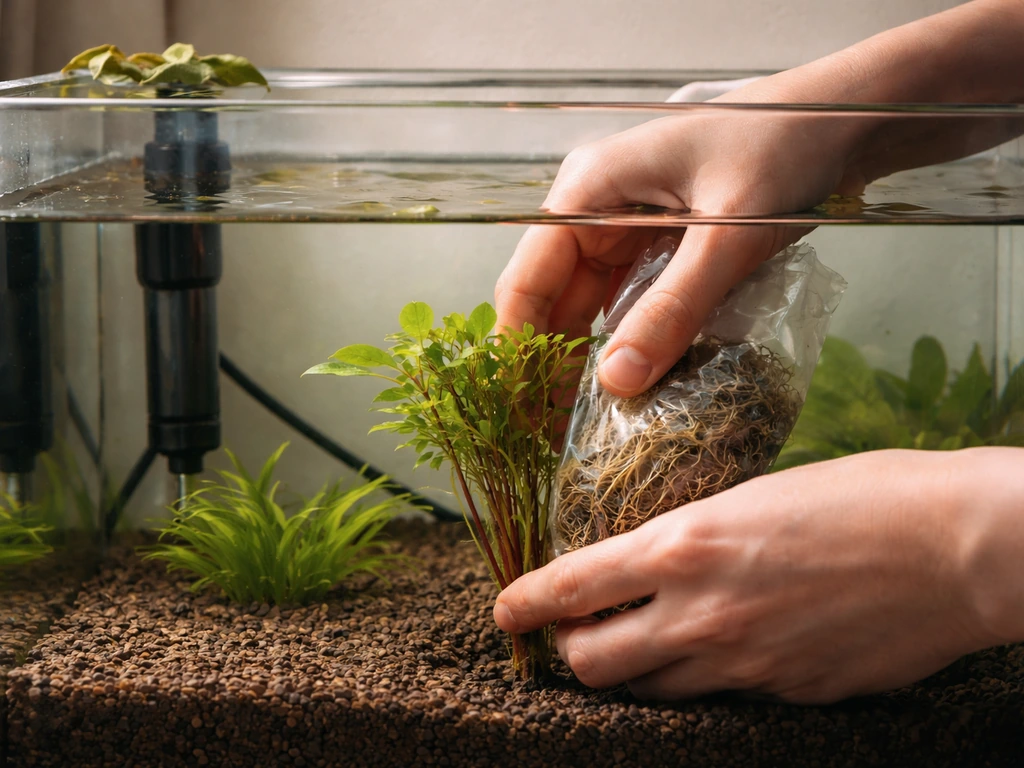
Getting plants established is where most people lose momentum because they plant, watch things melt, and assume they failed. Understanding the transition phase changes your whole perspective.
- Quarantine new plants (optional but smart): if you have an established tank, soak new plants in a diluted bleach dip (1 part bleach to 19 parts water for 2 minutes, then rinse thoroughly) or place them in a separate quarantine container for 1–2 weeks to avoid introducing snails, algae, or pathogens
- Trim dead or damaged leaves before planting: remove any yellow, brown, or clearly dying material so the plant focuses energy on new growth
- For rooted plants: push the roots into substrate at a slight angle, deep enough that the crown (where roots meet stem) sits just at or slightly above the substrate surface — burying the crown causes rot
- For epiphytes (Java fern, Anubias): attach to driftwood or rock using aquarium-safe super glue gel or cotton thread; press the rhizome against the surface and hold for 30 seconds with glue, or wrap thread around it until roots attach naturally over a few weeks
- For floaters: place gently on the surface and let them spread; restrict them to a portion of the surface using a floating corral made from airline tubing bent into a ring
- Keep lights at a moderate level (not maximum intensity) for the first 2–3 weeks while plants acclimate
- Do a 25–30% water change after planting to dilute any substrate disturbance or tannins, then dose a half-dose of your all-in-one fertilizer
What to expect in the first few weeks
Most plants sold in aquarium stores are grown emersed (above water) or in a greenhouse with much stronger light and atmospheric CO2. When you put them underwater, those existing leaves are essentially useless in the new environment and will melt back. That's completely normal. The plant isn't dying; it's rebuilding.
If you want to grow a stream of new leaves without stressing your plants, keep their light, nutrients, and water movement balanced from day one. New submerged-adapted leaves will emerge from the base or growing tips. For water wisteria this transition can take anywhere from two weeks to two months depending on your conditions. For Java fern and Anubias, new leaves are slow to arrive regardless since both are inherently slow growers.
Resist the urge to uproot and replant repeatedly during this phase.
Maintenance and troubleshooting
Weekly maintenance routine
- 25–30% water change to export waste and reset nutrients
- Dose all-in-one liquid fertilizer after water change (follow product dosing guide for your tank size)
- Trim any dead or yellowing leaves at the base to prevent them rotting in the tank
- Check that filter flow is unobstructed and plants haven't blocked intake
- Prune fast growers like wisteria by cutting stems and replanting the top 4–6 inch cutting — the old stem will often sprout new side shoots
Troubleshooting the most common problems
| Problem | Likely Cause | Fix |
|---|---|---|
| Plants melting after purchase | Transition from emersed to submerged growth | Wait 2–8 weeks; trim dead leaves; ensure adequate light and nutrients |
| No new growth after 4+ weeks | Light too low, nutrients missing, or CO2 insufficient | Check light PAR; add fertilizer; consider liquid carbon or CO2 |
| Yellow older leaves | Nitrogen deficiency | Dose nitrogen-containing fertilizer; check fish stocking isn't too low |
| Pinholes in leaves | Potassium deficiency | Add potassium supplement or increase all-in-one fert dose slightly |
| Algae explosion | Light/CO2/nutrient imbalance | Reduce photoperiod to 6–7 hours temporarily; increase CO2 or reduce light intensity; match fert to plant demand |
| Epiphyte rhizome rotting | Rhizome buried in substrate | Unbury immediately; reattach to hardscape above substrate |
| Floaters blocking light | Surface covered more than 50% | Thin out floaters weekly; use a surface corral to limit spread |
| Plants uprooted repeatedly | Fish digging (cichlids, goldfish, loaches) | Use larger substrate grain; add more rocks/hardscape to anchor plants; switch to epiphytes or floaters that fish can't uproot |
Fish interactions to watch
Most community fish (tetras, rasboras, corydoras, small livebearers) are completely plant-safe. The trouble species are cichlids, goldfish, large plecos, and digging loaches. If you have any of these, your rooted plants will get uprooted constantly. The solution is to rely on epiphytes attached to hardscape, use heavy rocks or decor to weigh down substrate plants, or switch to floating species they can't reach. Anubias is a good choice here because it's tough, unpalatable to most fish, and grows on hardscape away from digging. Also watch fish waste levels: heavy bioloads can spike ammonia and nitrates, which in moderate amounts actually feeds plants, but in high amounts can stall sensitive species.
When plants stall but don't melt
If your plants are alive but just sitting there not growing, work through this checklist before adding more fertilizer or CO2. Light duration and intensity are the first things to check: even if you think your light is adequate, a dirty fixture or bulb degradation can cut output significantly. Clean your light, verify your photoperiod with a timer, and see if that changes things over 2–3 weeks. If light is confirmed fine, add a half-dose of fertilizer and wait another two weeks before adjusting further. Stacking multiple changes at once makes it impossible to know what actually worked.
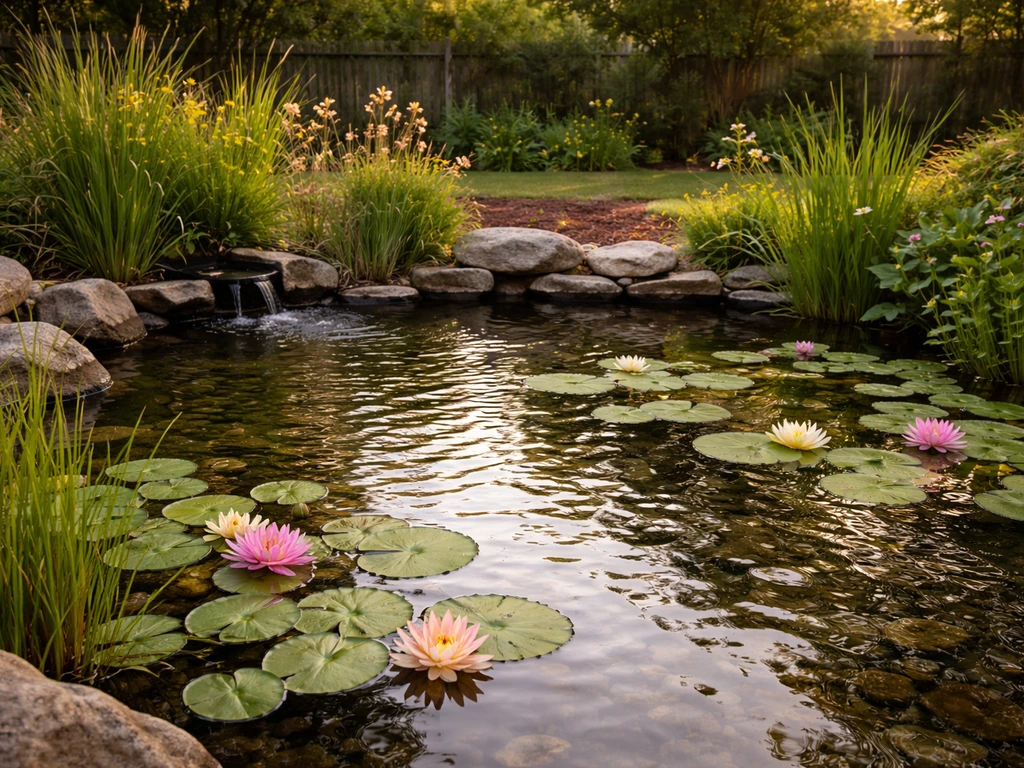
For readers growing plants beyond a standard aquarium setup, like a dedicated water garden or a home aquaponics system, many of these same principles apply but the scale and species choices shift. Growing water plants at home across different system types builds on this same foundation of light, nutrients, and water chemistry, just adapted to whether you're working with a pond, a container, or a flow-through hydroponic setup. If you want the same plant success in a flowing environment, see these tips for how to grow a stream.
FAQ
Do I need a specific substrate for rooted plants, or will gravel alone work?
Gravel works physically for anchoring, but it usually runs out of nutrients quickly. If you use plain gravel or sand, plan on root tabs near heavy root feeders (like swords and wisteria) every few months, otherwise growth stalls even if your water parameters and lighting are correct.
How do I know if my plant is melting from transition stress versus dying from a real problem?
Melting from emersed-to-submerged transition typically affects older leaves first, then you should see new growth emerging at the base or tips within a few weeks. If you see black rot that spreads through the base rhizome, repeated total collapse, or no new shoots over a couple months, treat it as a setup issue (often burying epiphyte parts, poor anchoring, or unstable water conditions).
What’s the right way to plant stem plants so they don’t float or pull out?
Trim long stems back so you have shorter, firm sections to anchor, then bury only the lower portion where roots develop, not the crown. If your substrate is coarse or your stems keep loosening, add more depth (aim for 2 to 3 inches for these plants) or use planting tweezers to press roots firmly into the gravel.
Can I grow water plants in a tank that doesn’t have a filter or heater?
It’s usually harder. Water movement helps deliver CO2 and nutrients to leaves, and temperature stability supports steady plant metabolism. If you truly run minimal equipment, favor epiphytes (Java fern, Anubias) and floaters, and expect slower growth and slower recovery when something goes wrong.
How much surface cover from floaters is too much?
The 30 to 50% guideline helps, but also watch the behavior of submerged plants. If your under-plants start thinning, turning pale, or algae increases where light is reduced, reduce floaters further. Rearranging floaters into one area works better than evenly spreading them once they multiply.
Should I dose fertilizer even if I’m getting algae?
Stop adding nutrients if you suspect the algae is being fueled by excess light plus nutrients, not by lack of fertilizer. Instead, verify your photoperiod with a timer, clean the fixture, and confirm you’re not overfeeding fish. If plants are clearly not growing after light is corrected, then reduce to a half-dose schedule rather than increasing immediately.
My plants aren’t growing, but water tests look “fine.” What’s the fastest thing to check?
First confirm light delivery, not just lamp brand. A dirty lens, wrong bulb type, or bulb aging can reduce useful intensity. Then recheck photoperiod timing, because inconsistent schedules or accidentally longer “on” times often explain months of stagnant growth.
Is liquid carbon enough if I can’t add pressurized CO2?
Liquid carbon can help low to medium-demand tanks somewhat, but it does not replace CO2 injection for fast growth plants under stronger light. If you’re running brighter light while using only liquid carbon, algae often wins because plants still cannot access sufficient carbon fast enough.
How should I adjust CO2 targets if my KH is very different from typical ranges?
Use your KH to set a realistic pH drop target rather than guessing, because the same CO2 level does not create the same pH change in every tank. Also, adjust gradually and monitor fish behavior and plant response, since rapid swings can stress livestock even if the numbers later look “correct.”
What fertilization schedule is safest for beginners to avoid nutrient spikes?
Start conservative, dose once or twice per week, and only increase after you see real new growth. Pair dosing with regular water changes (25 to 30% weekly as you already plan) because that limits nutrient accumulation that can feed algae faster than plants can use it.
Can I use sand instead of gravel, and will it affect plant success?
Fine sand can work, but it tends to compact and can make root anchoring harder, and it usually offers minimal nutrient availability. If you use sand, consider more frequent root tab placement and ensure rooted plants have enough depth to stay stable. For epiphytes and floaters, sand makes little difference.
How do I handle planted tanks with cichlids or other digging fish?
Use strategies that prevent uprooting: attach epiphytes to hardscape with glue or ties, weigh down plants with heavier rocks, and consider floating plants that the fish cannot easily dislodge. Avoid relying on delicate anchored crowns, because repeated digging can mimic “melting” symptoms even when your nutrients and light are ideal.
Do I need to remove decaying leaves, and where should they go?
Yes, remove dead or rotting leaves promptly to prevent trapped decay from increasing waste and clouding water. If you pull plant material during transition, avoid uprooting healthy bases repeatedly, because frequent replanting often resets establishment and slows recovery.
How long should it take before I expect noticeable growth?
Transition can take weeks to months, depending on whether plants were grown emersed and how demanding they are underwater. Fast growers like water wisteria may show changes sooner, while Java fern and Anubias commonly grow slowly and may look “stuck” while they rebuild, so evaluate by new growth at the base before declaring failure.