You can grow a healthy water garden in almost any container or backyard pond by picking the right mix of plants, keeping your water chemistry stable, and doing a few simple maintenance tasks each week. Whether you're starting with a 30-gallon stock tank on a patio or digging a full backyard pond, the core process is the same: choose your setup, add the right plants, cycle the water, and stay on top of the basics.
How to Grow a Water Garden: Setup, Plants, and Care
Marcus Holloway
11 May 2026
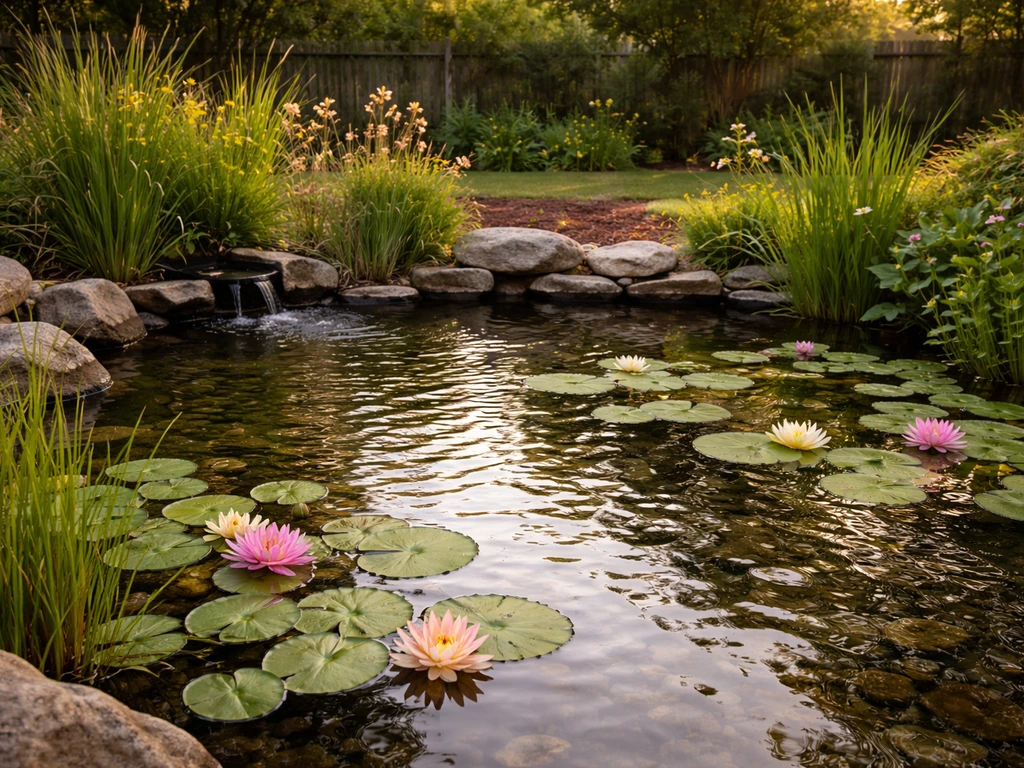
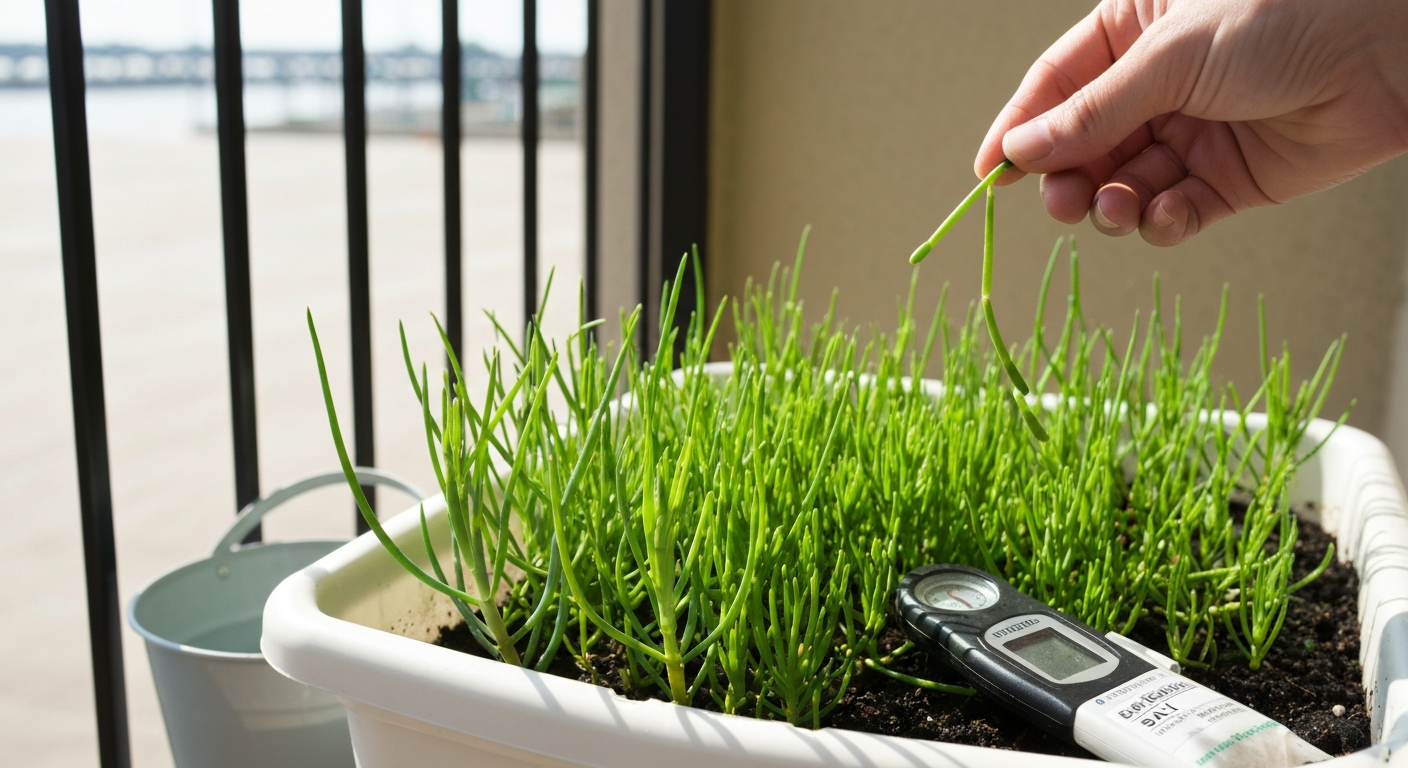
Here's exactly how to do it. If you want to grow water plants at home, start by choosing the right container or pond size and matching plant types to your light and water depth. If you want the simplest path to success, follow the steps in this guide on how to grow a stream-style water feature.
Decide your water garden type and build plan
Before you buy anything, figure out which style of water garden fits your space and budget. This single decision changes nearly everything else: how much filtration you need, which plants work, how often you maintain it, and what it costs to run. There are two main paths for most people.
Container or stock-tank water garden (small scale)
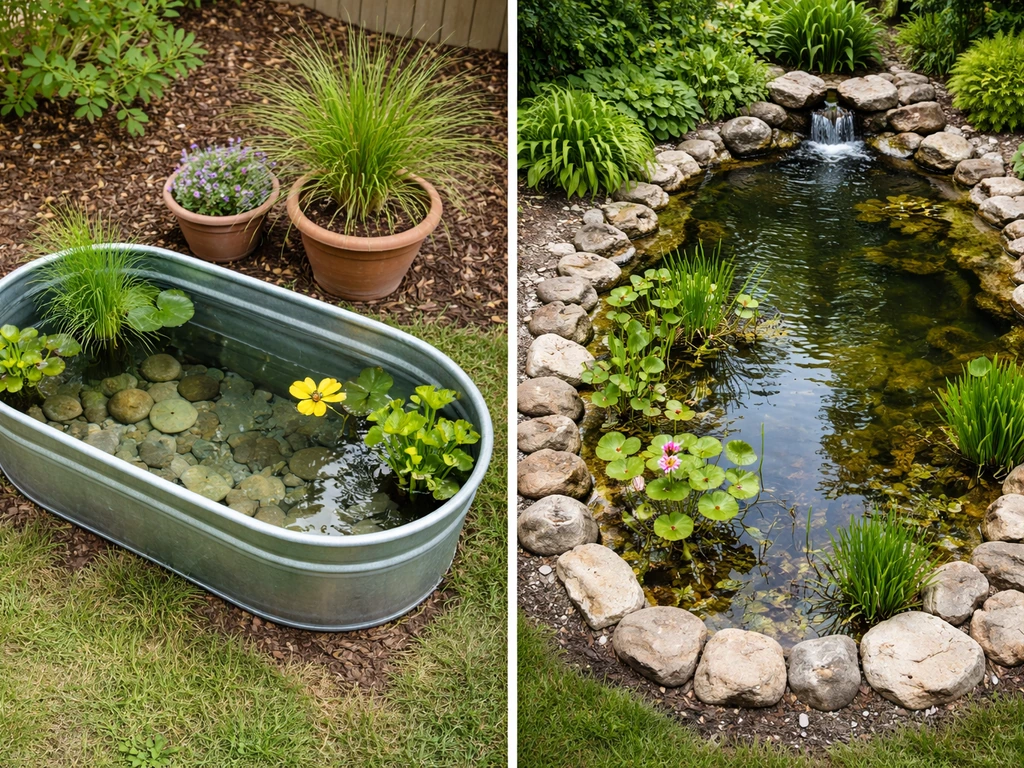
A container water garden is a great first build. A 15- to 100-gallon container, a half whiskey barrel, a galvanized stock tank, or even a large ceramic pot can all work. You don't need a pump or filter if you keep the plant load high relative to the water volume and avoid adding fish. This is a genuinely low-effort setup that can sit on a deck, balcony, or patio and still look beautiful. The downside is that small volumes heat up fast in summer and need more frequent top-offs as water evaporates.
Backyard pond (mid to large scale)
A true pond, whether it's a preformed liner you drop into the ground or a flexible EPDM liner you shape yourself, gives you much more design freedom and stability. Water temperature swings are gentler in a larger volume, algae blooms are easier to manage with proper filtration, and you can support fish. A minimum practical size is around 250 gallons if you want koi or goldfish; smaller than that and your water chemistry gets unstable fast. Budget at minimum for a pump, a mechanical/biological filter, and optionally a UV clarifier for green-water control.
| Feature | Container Garden | Backyard Pond |
|---|---|---|
| Typical size | 15–100 gallons | 250–5,000+ gallons |
| Setup cost | Low ($30–$200) | Moderate to high ($300–$3,000+) |
| Filtration needed | Usually none if plant-only | Pump + mechanical/bio filter required with fish |
| Fish compatible | Goldfish (small volumes only) | Goldfish, koi, and others |
| Maintenance level | Low–moderate | Moderate |
| Winter hardiness | Needs to be brought in or drained in cold climates | Can overwinter in place if deep enough (18"+ minimum) |
For most beginners, I recommend starting with a 50- to 100-gallon stock tank. You'll learn the fundamentals without committing to a major excavation project, and you can scale up once you're comfortable. I started with a half whiskey barrel and killed everything in it the first summer, mostly because I didn't manage the heat and forgot about evaporation. A stock tank with a dark interior was a much better second attempt.
Choose the right location, light, and water depth
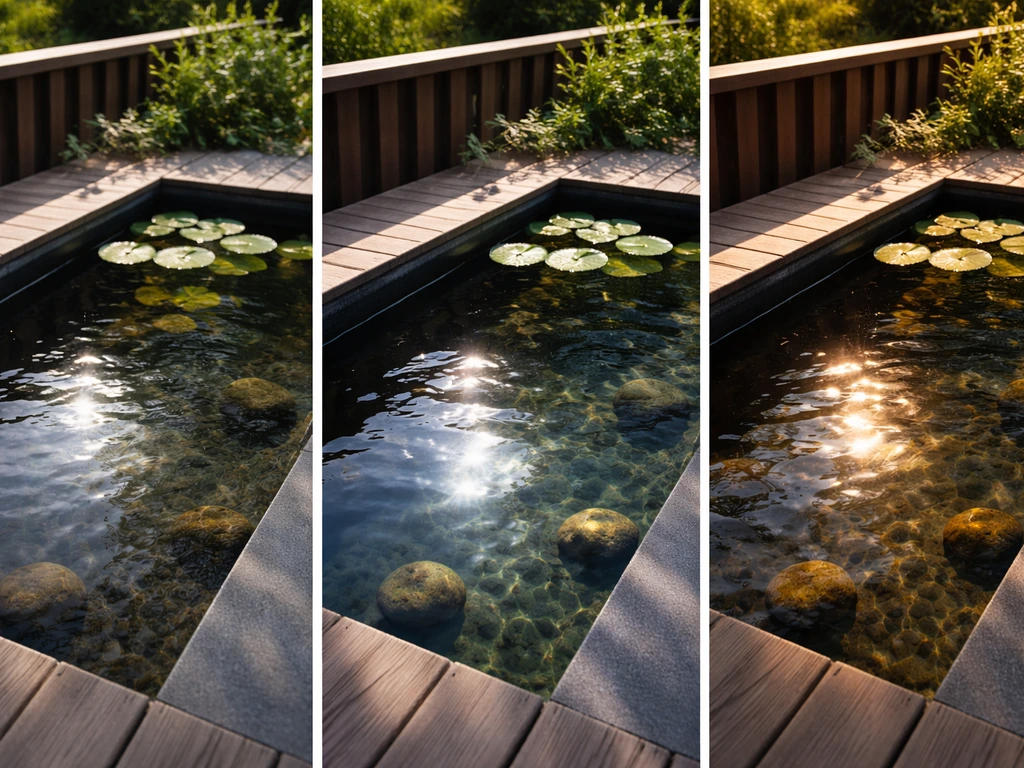
Most aquatic plants need 4 to 6 hours of direct sunlight per day at a minimum. Water lilies and lotuses need 6 or more hours to bloom reliably. If your site gets fewer than 4 hours, stick to shade-tolerant marginals like pickerel rush or cardinal flower, but honestly, your choices get very limited in deep shade. Pick the sunniest spot you have that's also reasonably level.
Avoid placing a water garden directly under deciduous trees. You'll spend significant time scooping leaves before they sink and decompose, releasing nutrients that fuel algae. Leaf debris is one of the main causes of the sludge layer that builds up at the bottom of ponds and drives oxygen crashes.
Water depth by plant and fish type
Different plants need different water depths, and this affects how you design your shelving or use bricks/stands to position pots. Here's a practical reference:
| Plant/Purpose | Recommended Water Depth |
|---|---|
| Marginal plants (iris, cattail, pickerel rush) | 0–6 inches over crown |
| Water lilies (hardy varieties) | 12–18 inches over crown |
| Water lilies (tropical varieties) | 6–12 inches over crown |
| Lotus | 2–12 inches over crown (start shallow) |
| Submerged oxygenators (hornwort, milfoil) | Fully submerged, 6–24 inches |
| Floating plants (water hyacinth, duckweed) | Any depth, free-floating |
| Fish (koi overwintering) | Minimum 18–24 inches at deepest point |
In a container garden without shelves, use bricks, cinder blocks, or overturned pots to raise or lower plant pots to the right depth. In a larger pond, build in a shallow shelf (6–12 inches deep) around the perimeter for marginals and leave the center zone deep for lilies and fish.
Select plants (marginal, floating, submerged) and a simple planting layout
A healthy water garden uses three layers of plants working together. Each layer does a specific job, and if you skip one, you'll fight harder problems later. This is the single most important concept in water gardening: plants are your first line of filtration, oxygenation, and algae control.
The three plant layers and what they do
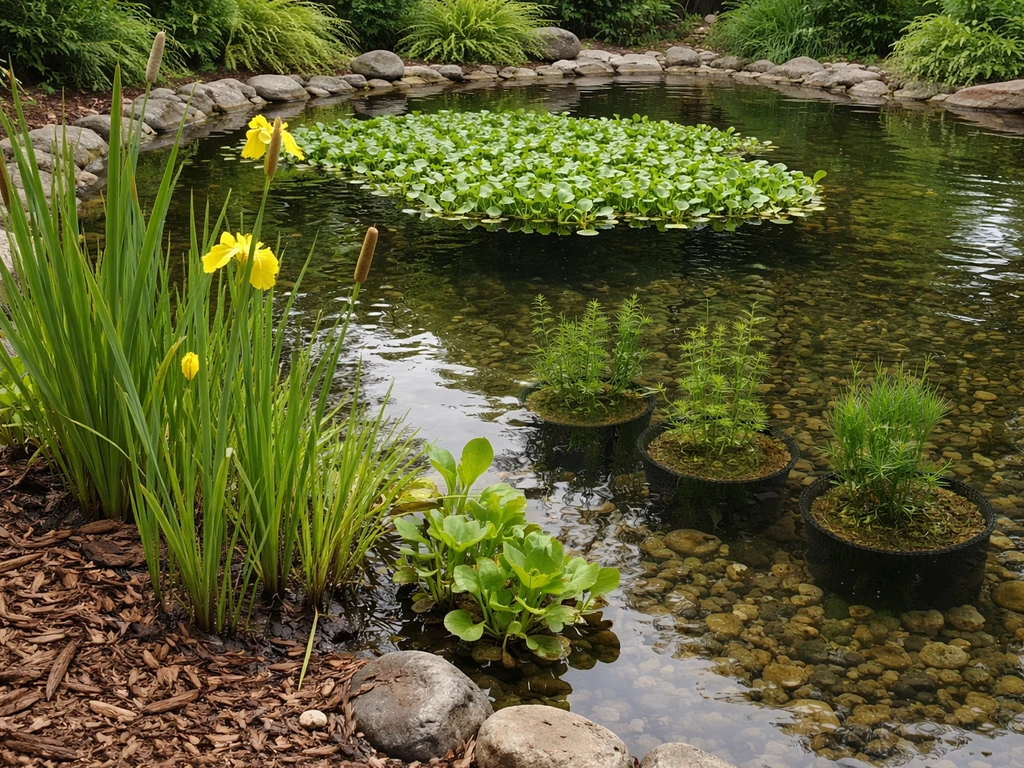
- Marginal plants (planted in shallow water or boggy areas at the edge): iris, pickerel rush, cattail, cardinal flower, rush, taro. They soften the edges visually, absorb excess nutrients, and provide habitat.
- Floating plants (sit on the surface, roots hang free): water hyacinth, water lettuce, duckweed, frogbit. They shade the water to slow algae growth and pull nutrients directly from the water column through their roots.
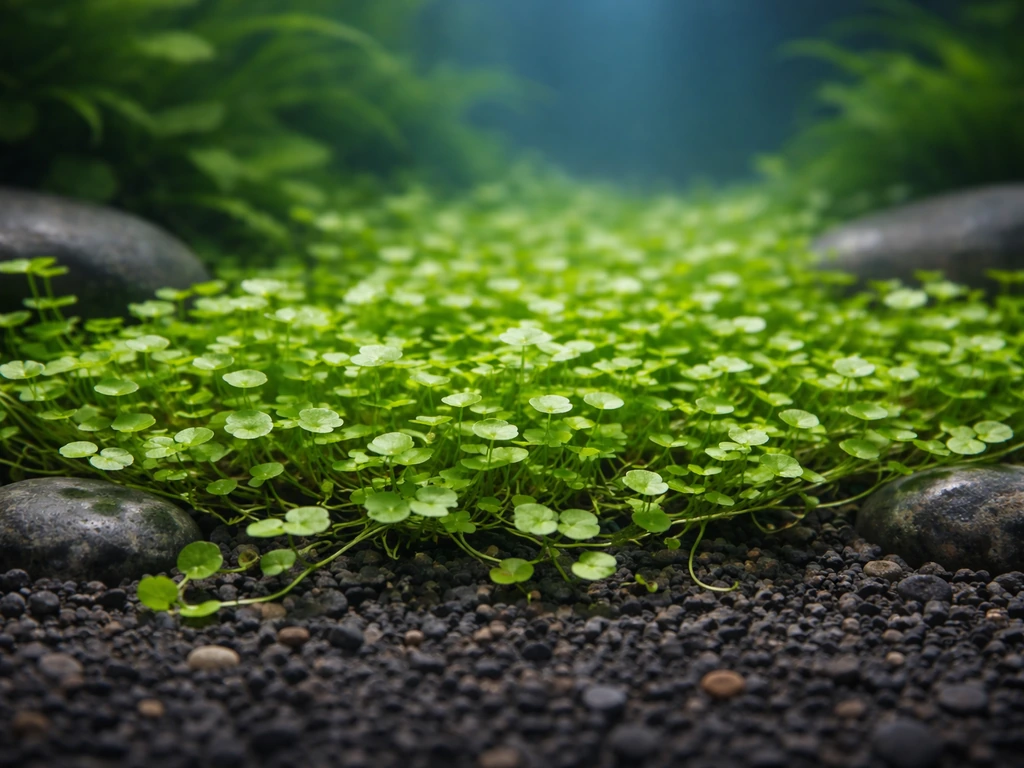
- Submerged oxygenators (fully underwater): hornwort, anacharis (elodea), spiked water milfoil, water moss. They produce oxygen during daylight hours, absorb CO2 and nutrients, and give fish and other aquatic life cover.
Aim for floating/surface coverage of about 50 to 70 percent of the water surface. That ratio dramatically cuts the amount of sunlight hitting the water and is the single best passive algae deterrent you have. Water lilies count toward that coverage, and their large pads are perfect for the job.
Easy beginner plants that actually work
- Hardy water lily (Nymphaea varieties): bulletproof in most climates, blooms reliably in zones 4–10, overwinters in place if the pond doesn't freeze solid
- Pickerel rush (Pontederia cordata): fast-growing marginal with blue-purple flowers, very forgiving
- Water hyacinth (Eichhornia crassipes): aggressive nutrient absorber, great for new ponds still cycling (note: invasive in warm climates, don't release into natural waterways)
- Hornwort (Ceratophyllum demersum): hardy oxygenator, no roots needed, just drop it in
- Anacharis/Elodea: another easy oxygenator, grows fast and shades the water column
- Sweet flag (Acorus calamus): versatile marginal that tolerates a wide range of conditions
Simple planting layout for a container garden
For a 50-gallon stock tank: use one small water lily or a dwarf lotus in the center on a raised stand, two or three bunches of hornwort or anacharis loose in the water, and one or two small pots of marginals (pickerel rush or dwarf cattail) on bricks near the edges. Add one or two water hyacinth plants on the surface. That's it. You don't need 10 species in a container.
Set up water quality basics: fill, balance, and avoid common mistakes
This is where most beginners make their biggest mistakes, and it's also the most important phase. Good water chemistry isn't complicated, but you do need to understand a few numbers and give your system time to establish before it's truly stable.
Fill and dechlorinate
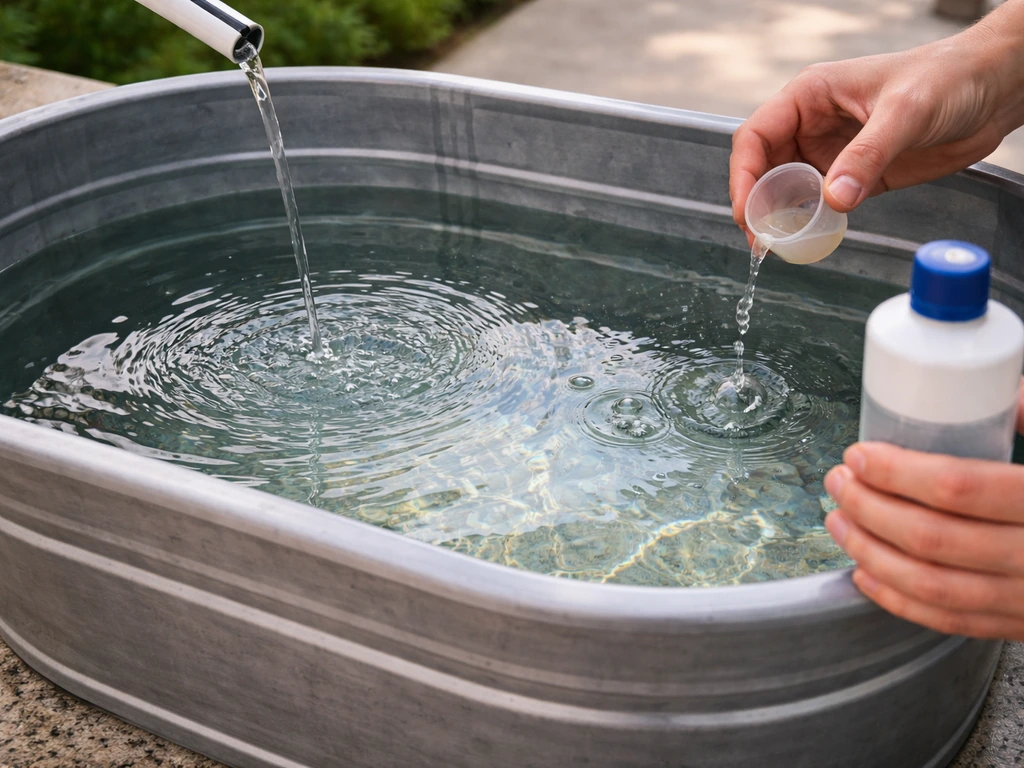
Tap water contains chlorine or chloramine, both of which kill beneficial bacteria and stress plants. Always add a dechlorinator (sodium thiosulfate-based pond treatments are cheap and widely available) when filling with tap water. For a container, a single small dose treats the full volume in minutes. For a large pond fill, add it as the water goes in. Rainwater is safe to use if you can collect it, and well water is usually fine but worth testing for pH and hardness first.
The nitrogen cycle and why new ponds need time
A new pond or container is biologically empty. There are no beneficial bacteria yet to break down fish waste or decaying plant matter. Those bacteria (nitrifying bacteria) need 4 to 6 weeks to build up to levels where they can keep pace with the waste your fish produce. During that time, ammonia and nitrite can spike to dangerous levels. If you add fish immediately to a new pond, you're very likely to lose them within days to ammonia poisoning.
The nitrogen cycle works like this: fish waste and decomposing organic matter produce ammonia. One group of bacteria converts ammonia to nitrite. A second group converts nitrite to nitrate. Nitrate is far less toxic and gets absorbed by plants or diluted with water changes. Your goal for an established pond is zero ammonia, zero nitrite, and low nitrate.
Water quality targets to aim for
| Parameter | Target Range | Why It Matters |
|---|---|---|
| Ammonia (NH3) | 0 ppm | Toxic to fish even at 0.25 ppm; kills quickly |
| Nitrite (NO2) | 0 ppm | Interferes with oxygen uptake in fish blood |
| Nitrate (NO3) | Under 40 ppm | Less toxic; controlled by plants and water changes |
| pH | 6.5–8.0 | Affects ammonia toxicity and plant nutrient uptake |
| KH (carbonate hardness) | 80–120 ppm | Buffers pH swings; critical stability factor |
| Dissolved oxygen (DO) | 6–9 mg/L | Essential for fish health and beneficial bacteria |
Testing schedule that actually works
For the first 2 to 4 weeks after starting a new pond (especially one with fish), test ammonia, nitrite, pH, and KH daily. It sounds like a lot, but this is the window where problems develop fast and a test takes 5 minutes. Once your pond is established with consistent zero ammonia and nitrite readings for at least two weeks, drop to weekly testing. Test nitrate every two weeks or monthly after that. A liquid test kit (API Pond Master is a common choice) is far more accurate than test strips. The API Pond Master test kit is a 4-in-1 kit that measures pond water pH, ammonia, nitrite, and phosphate.
Filtration: what you actually need
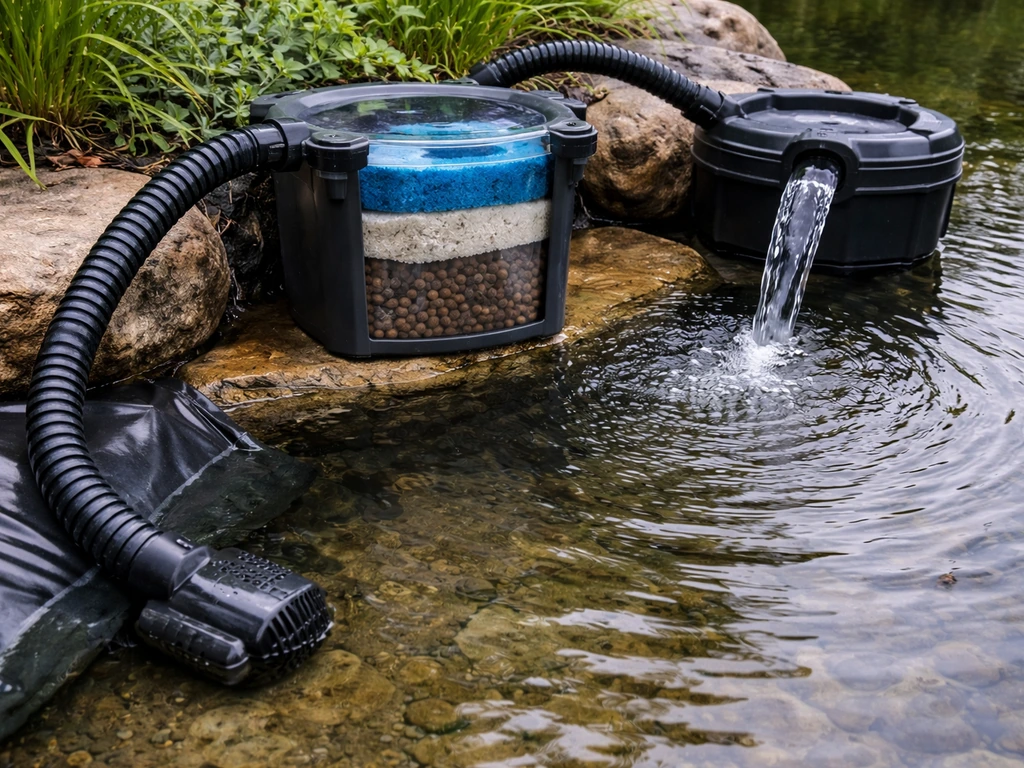
If you have fish, you need a pump and a filter. Mechanical filtration catches physical debris like leaves and waste. Biological filtration is where beneficial bacteria colonize media surfaces and process ammonia and nitrite. Many beginner pond kits combine both in one unit with a built-in UV clarifier.
If your filtration is properly sized for your fish load and maintained consistently, you may not need a UV clarifier at all. UV clarifiers are specifically designed to kill free-floating, single-celled algae that cause green water; they don't do much for string algae attached to surfaces or for bottom sludge. If you do use a UV clarifier, [replace the bulb annually even if it still lights up](https://www. thepondguy.
com/learning-center/my-uv-bulb-was-still-working-when-i-pulled-it-out-for-the-winter-do-i-still-need-to-replace-it/); UV output degrades significantly before the bulb burns out.
Common setup mistakes to avoid
- Adding fish before the cycle completes (the most common and most costly mistake)
- Skipping dechlorination when filling or doing water changes
- Overstocking fish for your pond volume (a general rule: no more than 1 inch of fish per 10 gallons of water)
- Not cycling the filter before adding fish if you're in a hurry (you can seed it with bacteria products to speed the process)
- Placing the bio-filter media in direct UV exposure, which kills the beneficial bacteria you need
Maintenance for healthy growth: feeding, fertilizing, pruning, and water changes
A water garden that's left completely alone will eventually become a murky, choked mess. But it doesn't need daily attention once established. A consistent weekly routine is enough for most systems.
Fertilizing aquatic plants
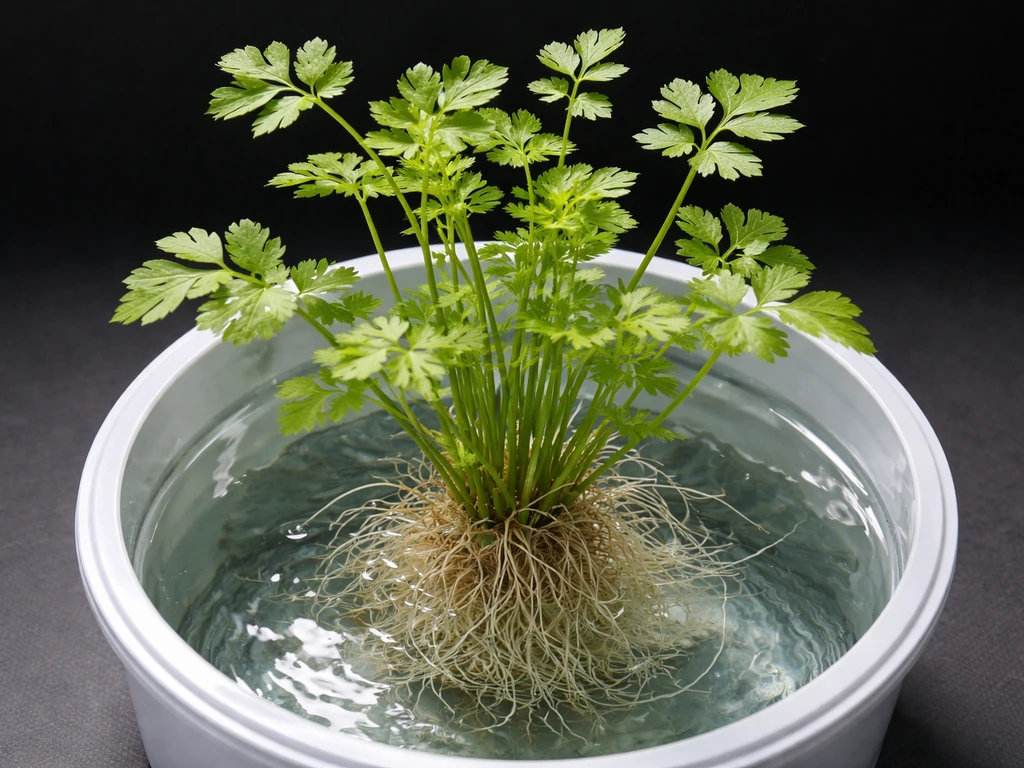
Water lilies, lotus, and other heavy feeders need fertilizer to bloom reliably. Use slow-release aquatic plant fertilizer tablets pushed into the soil of individual pots, not granular or liquid fertilizer added directly to the water. If you want to grow watercress using aquaponics, the setup will shift toward keeping a biofilter and cycling nutrients for both fish and plants. Adding fertilizer to the water directly feeds algae as much as it feeds your plants, and you'll end up fighting a green-water battle you can't win. Push one or two tablets into the soil of a lily pot each month during the growing season (spring through early fall).
Floating plants like water hyacinth don't need added fertilizer at all if you have fish. Their roots absorb nitrates directly from the water column, which is exactly what you want. They're doing double duty as both a plant and a biological filter.
Pruning and plant management
- Remove dead or yellowing leaves from water lilies before they sink and decompose
- Trim back aggressive marginals (cattail especially) before they overtake the edges
- Thin out floating plants like water hyacinth and duckweed regularly; they can cover the entire surface within weeks in warm weather and will eventually block light from submerged plants
- Cut back submerged oxygenators if they become so thick they clog the pump intake
- Divide water lilies every 2 to 3 years when they stop blooming well or overcrowd their pot
Water changes
Do a 10 to 20 percent water change weekly or biweekly in a pond with fish, especially during the first growing season. Always dechlorinate the new water before adding it. Partial water changes dilute nitrates and reset the chemical balance without disrupting the bacterial colonies in your filter. For a plant-only container garden, just top off for evaporation and do a 20 to 25 percent change monthly.
Fish feeding
Feed fish only what they can consume in 2 to 3 minutes, once or twice a day. Uneaten food sinks to the bottom, decomposes, and spikes ammonia. As water temperature drops below 65°F in fall, reduce feeding significantly, and stop feeding entirely once temperatures are consistently below 50°F. Fish metabolism slows dramatically in cold water, and food left to rot in a cold pond can cause oxygen crashes.
Prevent and fix algae, cloudiness, and oxygen problems
Algae and cloudy water are the two most common complaints from water gardeners, and they usually come from the same root causes: too much light hitting open water, too many nutrients, and not enough plants or filtration. Here's how to read the problem and fix it.
Green water (suspended algae bloom)
Green water happens when microscopic single-celled algae multiply in the water column. It looks like pea soup and happens fast in warm, nutrient-rich, sunny water. Prevention is always better than treatment: get your surface coverage to 50 to 70 percent, don't overfeed fish, and make sure your biological filtration is fully cycled. To fix it once it's happening, add a UV clarifier (they specifically target free-floating algae by disrupting cell reproduction), increase your floating plant coverage immediately, and check your fish load and feeding habits. A properly sized UV clarifier running 24/7 can clear green water in 3 to 7 days.
String algae (filamentous algae)
String algae looks like green hair attached to rocks, pond walls, and plant stems. UV clarifiers don't touch it since it's not free-floating. Manual removal (gloves on, pull it out by hand or with a brush) combined with improving overall plant coverage and reducing nutrients is your main approach. Barley straw extract used preventatively can slow string algae, and keeping your water flowing with good circulation helps too.
Cloudy or brown water
Cloudy brown water is usually a combination of tannins from decomposing leaves or organic matter, fine particles from disturbed substrate, or a bacterial bloom in a new pond. For leaf tannins, remove debris before it accumulates and consider a pond net in fall. For new pond cloudiness (milky white or white-gray), it's often a bacterial bloom during the cycling process and will clear on its own as the nitrogen cycle establishes. Don't do a massive water change in response; it just resets the cycle clock.
Low oxygen and fish stress
The target dissolved oxygen level for healthy fish is 6 to 9 mg/L. Fish at the surface gasping for air is the emergency signal for low oxygen. This happens most often on hot summer nights (warm water holds less oxygen) or after a bloom of algae dies off suddenly and decomposing organic matter consumes oxygen.
Your fixes, in order of urgency: run a fountain or air pump overnight when temperatures spike, add an aerator or air stone, and remove accumulated sludge from the bottom. Your submerged oxygenating plants produce oxygen during daylight but actually consume it at night, so if you have a very dense planting of oxygenators and warm nighttime temperatures, you can paradoxically have an oxygen problem at night even with many plants.
- Add a fountain or waterfall feature: surface agitation is the most consistent way to maintain dissolved oxygen
- Run an air pump with an air stone in summer, especially overnight
- Don't let algae bloom and die off in huge cycles; consistent management prevents crashes
- Keep the bottom clean; deep sludge is an oxygen sink as it decomposes
Scale tips, seasonal care, and your quick-start checklist
Heat management in summer
Small containers heat up fast and can reach temperatures that stress or kill both plants and fish. Dark-colored stock tanks absorb heat quickly. Provide shade cloth over part of the container during peak heat, use water lily pads to shade the surface, and top off frequently with cool water to counteract evaporation. For larger ponds, a waterfall or fountain does double duty: it aerates and keeps the surface water temperature slightly lower through evaporative cooling.
Fall preparation
Install pond netting before the leaves begin to fall, not after. A tent of fine mesh over the pond surface means you lift the net, shake the leaves off, and replace it rather than spending hours skimming. Reduce fish feeding as temperatures drop below 65°F and stop completely below 50°F. Trim back marginal plants to just above the waterline as they die back. Remove any tropical plants (water hyacinth, water lettuce, tropical water lilies) before the first frost since they won't survive.
Winter care
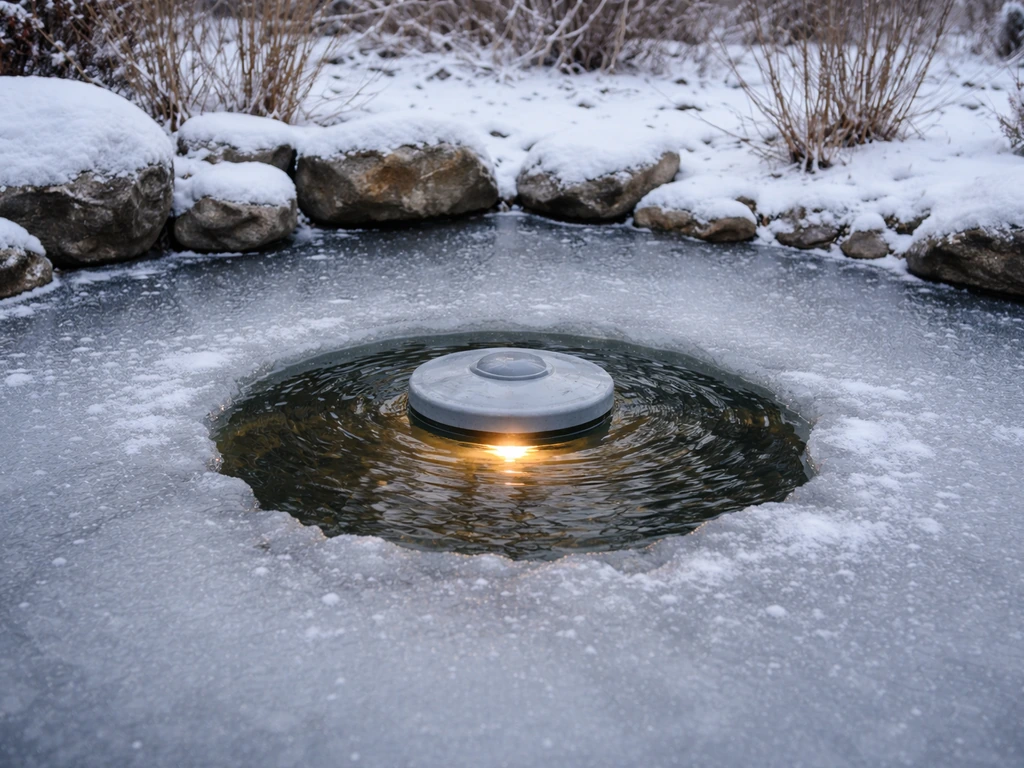
For a backyard pond in a climate with freezing winters, your main concern is keeping a hole in the ice for gas exchange (oxygen in, toxic gases out). A pond de-icer or floating heater does this without heating the whole pond. Hardy water lilies drop their pads and go dormant; as long as the root mass doesn't freeze solid, they'll return in spring. A pond that's at least 18 to 24 inches deep at the lowest point typically won't freeze to the bottom in most climates. Never break through ice by slamming something against it; the shockwave can injure or kill fish. Melt a hole with a pan of warm water instead.
For a container water garden that can't overwinter in place, bring hardy lily tubers indoors in a bucket of water in a cool (not freezing) location like a basement or garage. Drain and store tropical plants as you would any tender tropical, or just treat them as annuals and replace next spring.
Spring restart
In spring, before your plants fully wake up and before you resume fish feeding, do a partial clean. A 20 percent water change and a vacuum of accumulated bottom muck is usually enough if you managed fall well. Restart your pump and check your filter media. Test water parameters before resuming normal fish feeding. Your biological filter colony may have reduced over winter and needs a few weeks to rebuild, so go slow on feeding until you confirm ammonia and nitrite are back to zero.
Scaling up: what changes as you go bigger
If growing food in water or expanding into aquaponics interests you alongside ornamental water gardening, the plant-management and water-chemistry principles transfer directly. Larger ponds are generally more stable (temperature swings are gentler, water quality is less volatile) but require bigger equipment investments and more time to troubleshoot when something goes wrong. A good rule: size your pump and filter for at least 1.5 times your actual pond volume to have headroom for fish load spikes and heat events.
Quick-start checklist
- Pick your setup: container (50–100 gallons) or pond (250+ gallons with pump and filter)
- Choose a location with 4 to 6+ hours of direct sun and away from large deciduous trees
- Fill with tap water and add dechlorinator immediately
- Set up pump and filter (if using fish); seed filter with beneficial bacteria product
- Add plants first: one oxygenator bunch per 10 gallons, floating coverage to 50–70% of surface, marginals at the edges
- Wait 4 to 6 weeks before adding fish; test ammonia and nitrite daily during this window
- Add fish only after two weeks of stable zero ammonia and zero nitrite readings
- Fertilize water lilies with slow-release tablets pushed into pot soil, monthly during growing season
- Test water weekly (ammonia, nitrite, pH, KH) once established
- Do 10 to 20 percent water changes weekly or biweekly in fish ponds, always with dechlorinated water
- Install pond netting before fall leaf drop
- Reduce fish feeding below 65°F, stop entirely below 50°F
- Keep a de-icer or aerator running in winter to maintain a gas-exchange hole in ice
A water garden rewards patience more than any other type of garden. The first six weeks of a new build are the highest-risk period. Get through the nitrogen cycle with your plants established and your chemistry stable, and you'll have a system that largely manages itself with a bit of weekly attention. Once your water plants are established, you can keep the tank stable by following the same cycling and water-quality steps for a fish tank water plants in fish tank. Start small, learn the system, and expand from there. Most of the people who tell you water gardening is difficult just tried to do too much too fast without letting the biology catch up first.
FAQ
How many hours of light do I need, and what if I only get morning sun?
If you have fewer than 4 hours of direct sun, you usually have to rely on shade-tolerant marginals and accept less reliable lily or lotus blooms. Morning sun is often fine because it warms the pond gradually, which can reduce early algae surges compared with intense late-day sun. Try to avoid constant, reflected light from white walls or hardscape that increases total light hitting the water.
Should I start with fish, or is it better to cycle the water garden first?
For any new pond or tank, start the biological cycle before adding fish. Even if you plan to use a filter, beneficial bacteria need 4 to 6 weeks to ramp up, and adding fish early commonly leads to ammonia or nitrite spikes. If you must start immediately, use a very light fish load and test daily, then only increase after you consistently see zero ammonia and nitrite.
What filter size should I buy if I have fish and plants?
Size filtration based on the fish load, not just the tank volume. A practical approach is to choose a filter rated for at least 1.5 times your actual pond volume to provide headroom for warm-weather oxygen drops and waste spikes. Also confirm the filter can physically support the turnover rate your pond needs, and that you can maintain it (access to media, easy rinsing, consistent operation).
Do I need a UV clarifier if I have good plant coverage and a filter?
If green water is not recurring, you may not need UV. UV clears free-floating single-celled algae, it does not remove string algae or sludge issues, and it can be unnecessary when your surface coverage and nutrient control are already strong. Consider running UV 24/7 only as a targeted response for recurring pea-soup algae, then evaluate whether you can reduce it.
How do I prevent sludge if I have fish?
Sludge builds when organic waste settles faster than your system processes it. Use a net to catch leaves early, avoid overfeeding, and keep fish feeding portions small. In addition, routine spot-cleaning and periodic bottom vacuuming (especially in deeper areas where waste collects) helps maintain oxygen levels and reduces the nutrients that feed algae.
Can I use fertilizer tablets in the water garden without causing algae problems?
Yes, but only if you fertilize plants properly. Push slow-release tablets into the soil of individual rooted pots, avoid adding granular or liquid fertilizer directly to open water, and do it sparingly (for example, one or two tablets per lily pot during the growing season). If you see persistent algae despite good coverage, pause fertilizing and confirm your feeding and fish load are not overpowering your plant uptake.
How often should I test water once the pond looks stable?
After the cycle is complete, you do not need daily testing. A good baseline is weekly tests during early establishment, then weekly or every two weeks once readings stay consistent, with nitrate checked less often. If you change the fish load, add new plants, or experience a temperature spike, test again because stability can shift quickly.
Why did my pond turn cloudy after I did a water change?
Cloudiness right after a change often happens because the system shifted, either from disturbing debris, reintroducing suspended particles, or interrupting the cycling balance. Avoid massive water changes as a first response, instead do partial changes and check ammonia, nitrite, and pH. If the pond is newly set up, a bacterial bloom can clear on its own, but only if ammonia and nitrite are back to safe levels.
What should I do if my fish are gasping at the surface?
Treat it as an urgent oxygen problem. Run an air pump or fountain immediately, especially during hot nights, and add aeration to raise dissolved oxygen. If there is heavy algae die-off, remove excess organic buildup if possible and reduce any feeding right away, because decomposing material and warm water both push oxygen down.
How do I manage oxygen when nights get warm and I have lots of oxygenating plants?
Oxygenating plants release oxygen in daylight but consume it at night, so dense planting plus warm nights can still cause nighttime oxygen dips. If you notice recurring night-time stress, increase aeration, reduce overcrowding of oxygenators, and monitor for temperature spikes that lower dissolved oxygen capacity.
What temperature changes are most dangerous for water gardens, especially in small containers?
Small containers heat up fast and can swing between hot and cold extremes, stressing plants and fish. Use partial shading during peak heat, increase surface shading with lily pads, and top off frequently with cool (dechlorinated) water during hot spells. In cold weather, plan ahead for overwintering so water does not freeze solid in the root zone.
How do I handle leaves without breaking my pond or choking it with debris?
Install pond netting before leaves start falling so you can lift, shake, and reinstall quickly. Once leaves settle and decompose, they release nutrients that drive algae and create bottom sludge. If leaves do get in, remove them promptly rather than waiting for a scheduled clean.
What’s the safest way to deal with ice in a freezing-winter pond?
Keep a hole in the ice for gas exchange using a pond de-icer or a floating heater designed for ponds. Do not break ice by striking it, the shockwave can injure or kill fish. If you must melt a hole, use a pan of warm water, and avoid repeated thaw-freeze cycles that stress animals.
When should I restart feeding and cleaning in spring?
Do a partial clean and vacuum muck before resuming normal feeding, then test parameters and confirm ammonia and nitrite are at zero. Your bacterial colony may be reduced after winter, so restart feeding gradually and only return to normal portions once the cycle is clearly back to stable readings. This prevents feeding waste from creating an ammonia spike.
Can I keep tropical plants in a cold climate water garden?
Usually not in place. If you cannot maintain a non-freezing container, remove tender plants like water hyacinth and water lettuce before the first frost and store them appropriately (treat them like tender aquatics). Hardy water lilies can often overwinter if the root mass does not freeze solid, but the exact success depends on how deep your pond is and whether it remains unfrozen at the bottom.