Growing grass in an aquarium means establishing a low-growing carpet of aquatic plants across your tank floor, and yes, you can start that carpet from seeds. The short answer: pick the right species for your light level, get a nutrient-rich substrate, plant dense (or sow seeds thin and even), and hit at least 35–50 PAR at the substrate with a consistent photoperiod. Add CO₂ if you can. Most beginners fail not because the plants are hard, but because they skip one of those four things. This guide covers all of them.
How to Grow Grass in Aquarium: Seeds to Carpet Plants
Marcus Holloway
6 Apr 2026
Choosing the right aquarium grass for your tank
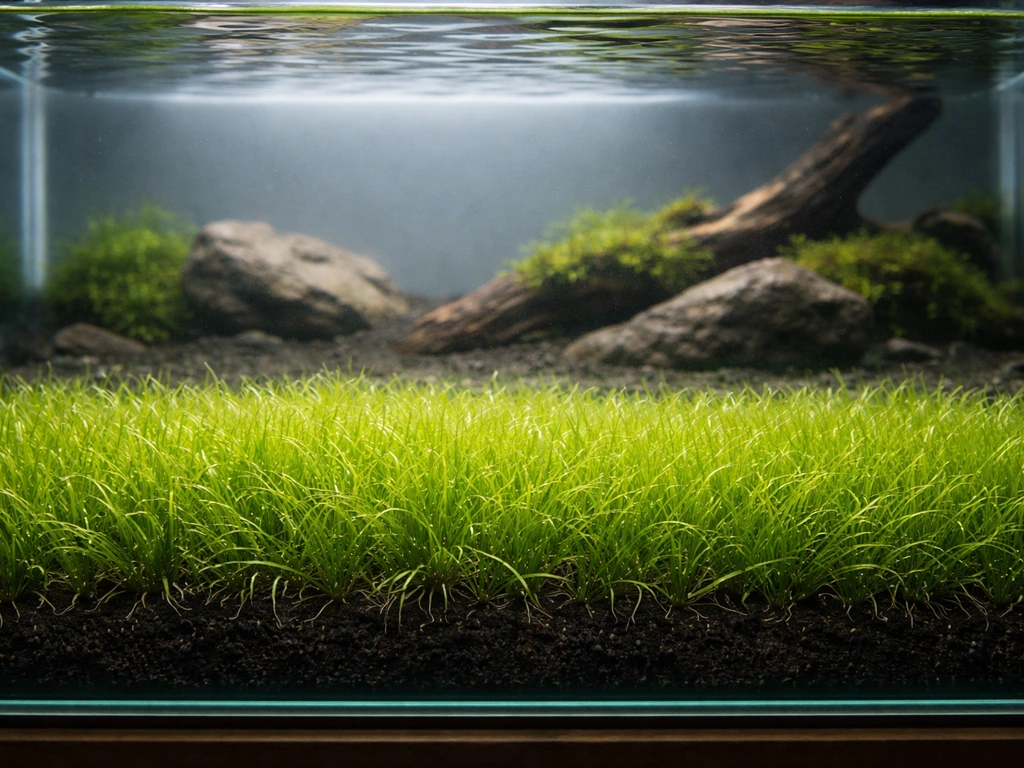
"Aquarium grass" is a catch-all phrase for several completely different plants that share a low, grass-like or mat-forming growth habit. The species you pick changes everything: substrate type, light intensity, CO₂ requirements, and how long it takes to carpet. Here are the four most common ones people actually grow.
| Plant | Scientific Name | Light (PAR at substrate) | CO₂ Needed? | Difficulty |
|---|---|---|---|---|
| Monte Carlo | Micranthemum tweediei | 40–60+ PAR | Recommended, not required | Beginner-friendly |
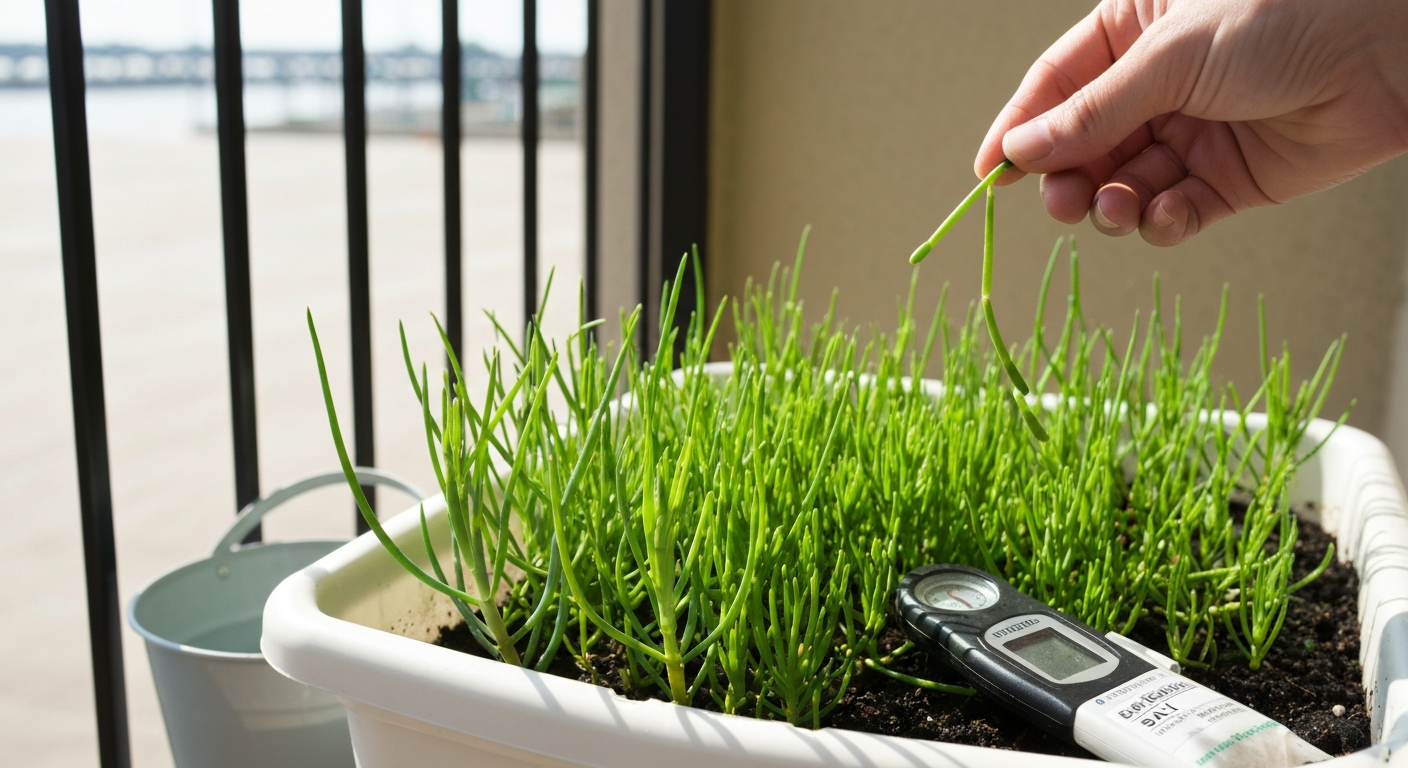
| Dwarf Hairgrass | Eleocharis parvula | 35–50 PAR | Helpful but optional | Beginner-friendly |
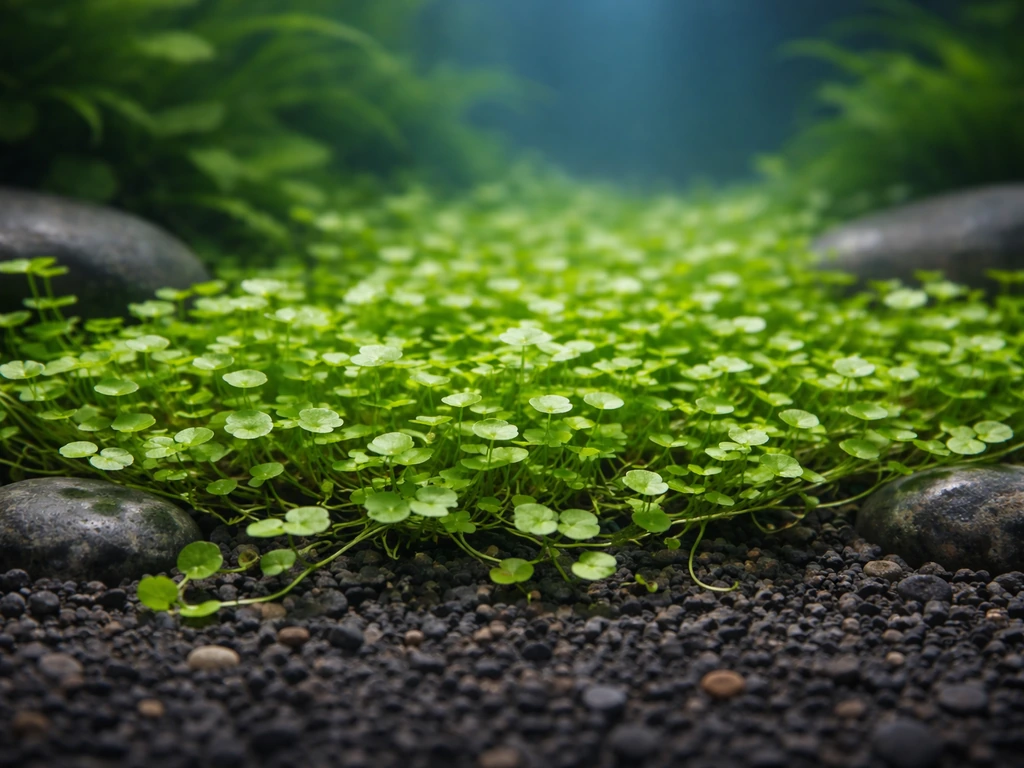
| HC Cuba / Dwarf Baby Tears | Hemianthus callitrichoides | 50–80+ PAR | Required for carpeting | Advanced |
| Glossostigma | Glossostigma elatinoides | 35–60+ PAR | Required or liquid carbon | Intermediate |
Monte Carlo is the one I recommend starting with. It carpets reliably, tolerates a wider range of conditions, and unlike HC Cuba it won't melt on you the moment CO₂ fluctuates. Growing Monte Carlo in an aquarium is genuinely achievable for someone on their first planted tank, which is not something you can say about HC Cuba. Dwarf hairgrass is a great alternative if you want a more literal grass look rather than a leafy mat.
Glossostigma is beautiful but it will grow upward and wither fast under low light, so be honest with yourself about what your fixture can do before picking it. Glossostigma (Glossostigma elatinoides) is often described as needing high light and added CO₂ to maintain a small-leaf, dense carpet, and without CO₂ it can grow out of control Glossostigma (Glossostigma elatinoides) can grow out of control without added CO₂.
If you want something less demanding on the equipment side, growing bacopa in an aquarium is worth considering as a midground or background companion that fills space while your carpet establishes. It is not a carpet plant, but it is forgiving and adds depth to the layout while you figure out your parameters.
Equipment and substrate you actually need
Substrate
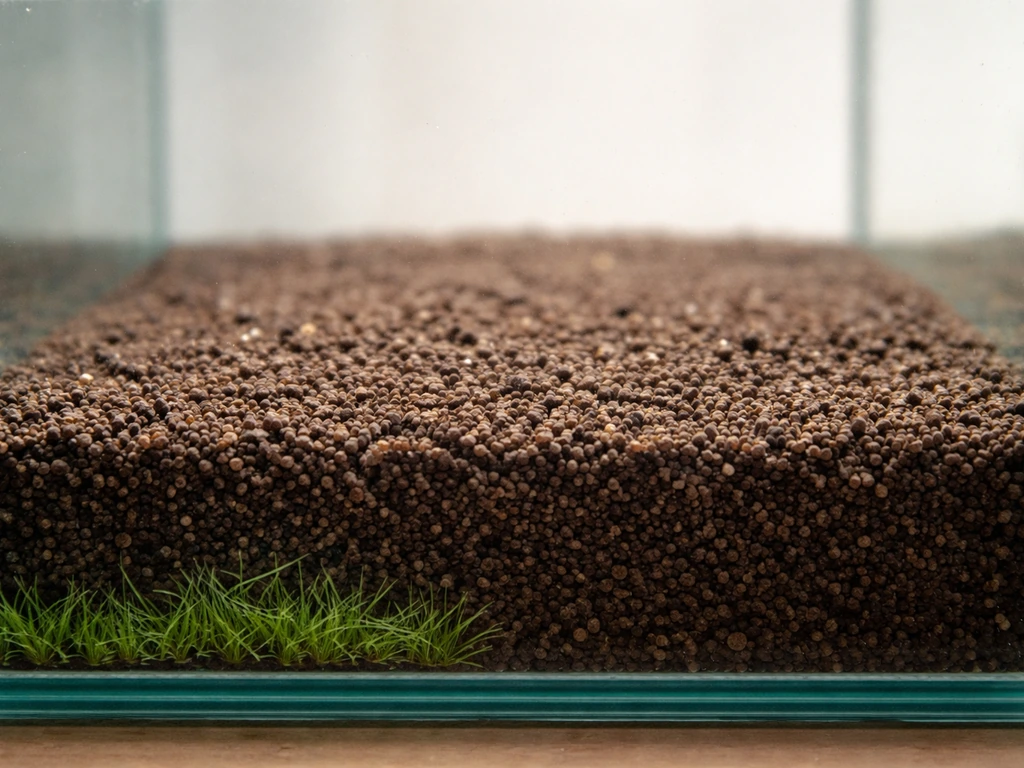
This is the single most important piece of equipment for any grass-carpet plant. You need a fine-grained, nutrient-rich substrate, ideally a commercial aquasoil like ADA Aqua Soil Amazonia, Fluval Stratum, or similar. These substrates are slightly acidic (pH 6.0–7.0 range), soft enough for roots to penetrate, and loaded with nutrients that feed root growth. Coarse gravel will not work for carpet plants like dwarf hairgrass because the roots can't spread laterally through it, and without lateral root spread you will never get a true carpet. Aim for a substrate depth of 2–3 inches in the foreground where you are carpeting.
Root tabs are a practical add-on, especially if you are using an inert substrate like plain sand or fine gravel. They deliver nutrition directly to the root zone without dumping excess nutrients into the water column, which matters because extra water-column nutrients without matching CO₂ and light is a fast lane to an algae bloom. For an initial planting in a standard 10-gallon tank (roughly 200 square inches of floor space), a practical starting point is 6–8 root tabs arranged in a grid, replaced every 2–3 months as they deplete.
Lighting
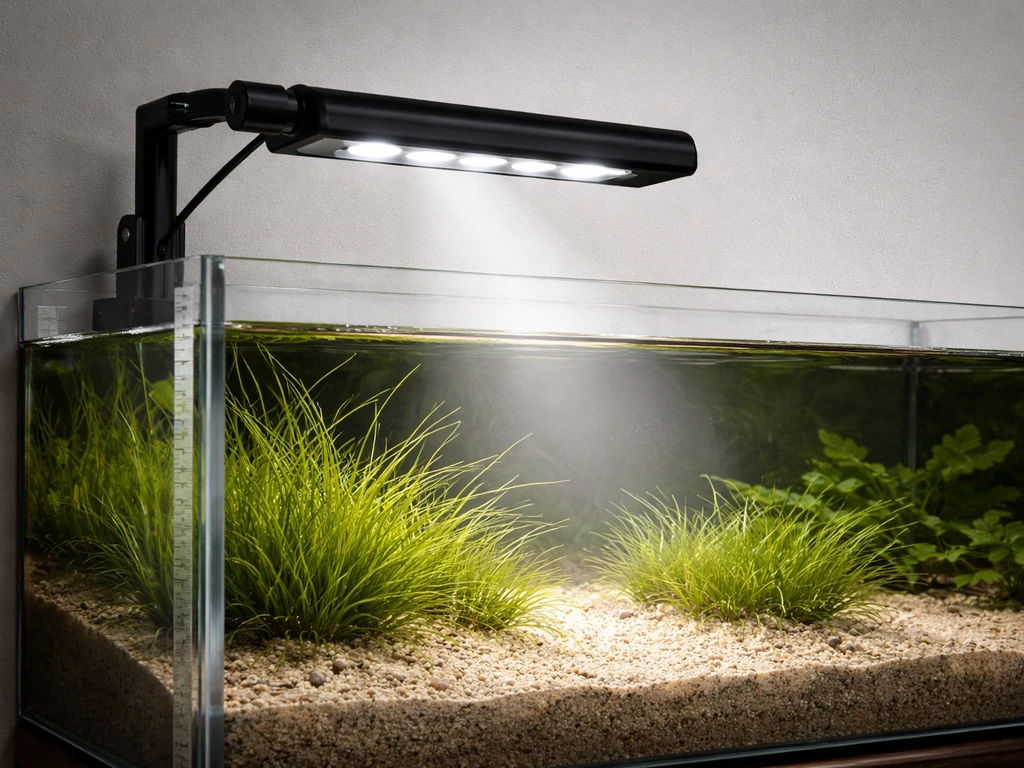
You need a light that can actually deliver adequate PAR at substrate level, not just one that looks bright. For Monte Carlo and dwarf hairgrass, your minimum target is 35–50 PAR measured at the substrate. For Glossostigma, aim for at least 60 PAR. For HC Cuba, assume you need 50–80+ PAR and CO₂. Budget LED fixtures from brands like Fluval, Chihiros, or Current USA Satellite Plus can work, but measure with a PAR meter if you can borrow or buy one. A fixture that looks bright to your eye may only deliver 15–20 PAR at the bottom of a 12-inch tall tank, which will result in upward-reaching, pale, struggling plants every time.
CO₂ system
A pressurized CO₂ system (regulator, needle valve, diffuser, and either a paintball cylinder or a full 5 lb tank) is the most reliable route to a fast, healthy carpet. Your target dissolved CO₂ level is 20–30 ppm. Going above 30 ppm risks stressing fish and invertebrates by displacing oxygen, so keep it in that window. If a full CO₂ setup is not in your budget right now, liquid carbon supplements like Seachem Excel or similar can provide a modest carbon boost and are better than nothing for Monte Carlo or dwarf hairgrass, but they are not a replacement for real CO₂ with HC Cuba or Glossostigma.
Growing aquarium grass from seeds
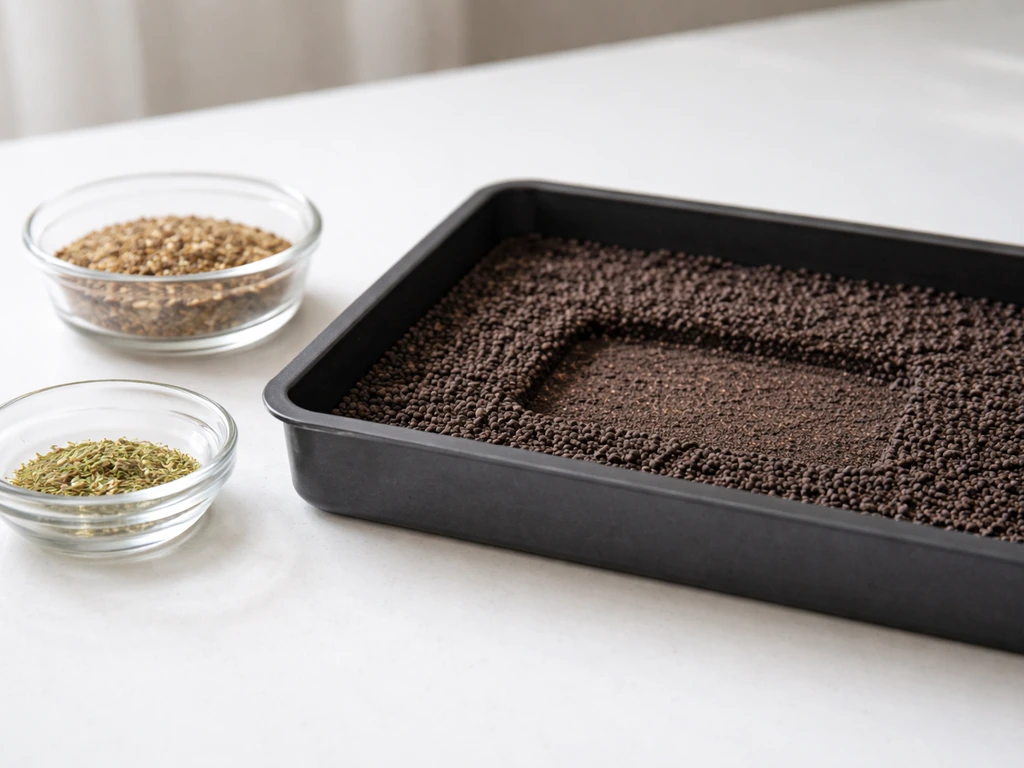
Seed-based aquarium grass is a real product category, most commonly marketed as dwarf hairgrass seeds or mixed aquatic carpet seeds. The seeds are tiny and the germination window can be slow, but the method is straightforward. One important thing to know upfront: many "aquarium grass seeds" sold online are for semi-aquatic or terrestrial grass species that will sprout but die once fully submerged. Buy seeds specifically labeled for fully aquatic use, or better yet, buy from a reputable aquatic plant supplier rather than a generic marketplace listing.
For a deeper dive on the seed-specific approach, the guide on how to grow carpet grass seeds in an aquarium covers germination in detail. The core method here is the blank" rel="noopener noreferrer">dry start method (DSM), which is the most reliable way to get seeds to germinate and establish before flooding the tank.
Dry start method for seeds (step by step)
- Set up your aquasoil substrate in the tank at 2–3 inches depth. Do not fill with water yet.
- Moisten the substrate thoroughly with a spray bottle until it is damp but not soupy. It should hold moisture without puddling.
- Sprinkle seeds evenly across the surface. Do not clump them. A thin, even distribution is better than a heavy one because overcrowded seedlings compete and rot.
- Mist the surface lightly after sowing. Press seeds gently into the substrate surface with a flat card so they make good contact.
- Cover the tank with plastic wrap or a glass lid to trap humidity. The goal is to maintain near-100% humidity inside the tank.
- Place under your aquarium light on a 10–12 hour photoperiod. Seeds need light to germinate properly.
- Mist daily to keep the substrate moist. Check for any dry patches and address them immediately.
- Germination typically begins within 7–14 days depending on species and temperature. Maintain the sealed environment until you have dense coverage.
- Once you have a solid mat of growth (usually 3–5 weeks for most species), slowly introduce water by trickling it in over several hours to avoid disturbing the seedlings.
- After flooding, resume your normal planted tank routine: CO₂, lighting, and fertilization.
The DSM works because it eliminates the biggest early threats: seeds washing around before they root, algae blooms triggered by new-tank nutrients, and the oxygen/CO₂ fluctuations that slow germination underwater. I have tried sowing seeds directly into a flooded tank and the results were inconsistent at best. The DSM is slower up front but produces a much more uniform carpet.
Light, CO₂, nutrients, and water parameters that make grass actually grow
Photoperiod and light intensity
Start your photoperiod at 6 hours per day for the first two weeks after flooding (or after planting tissue cultures). This sounds counterintuitively short, but it significantly reduces algae pressure during the vulnerable establishment phase when your plants are not yet growing fast enough to out-compete algae for nutrients. After two weeks of stable, algae-free growth, increase by 30 minutes per week until you reach your target of 8–10 hours. Your PAR target at the substrate remains 35–60 PAR depending on species.
CO₂ dosing
Aim for 20–30 ppm dissolved CO₂ in the water column. The easiest way to gauge this without a dissolved CO₂ test kit is a drop checker: bright green indicates roughly 30 ppm, yellow is too high, blue is too low. Run your CO₂ on a timer so it comes on 1–2 hours before the lights turn on and shuts off 1–2 hours before lights go out. This lets CO₂ build to target levels before the plants start photosynthesizing and prevents CO₂ from accumulating overnight when fish need dissolved oxygen.
Fertilization
Carpet plants are heavy root feeders, so a combination of root tabs (for root-zone feeding) and a liquid all-in-one fertilizer or a two-part macro/micro system (for water-column feeding) gives you the best coverage. If you are following an Estimative Index (EI) approach, you are targeting roughly 3–5 ppm nitrate, around 1 ppm phosphate, and 10–12 ppm potassium as a weekly baseline. Dose after each partial water change.
The EI logic is that slightly excess nutrients with high light and high CO₂ drives plant growth rather than algae growth, because it is CO₂, not nutrients, that is the limiting factor for algae when light is adequate. If you see algae despite dosing, the culprit is almost always low CO₂ or unstable CO₂, not too much fertilizer.
Water parameters
Most aquarium carpet plants thrive in soft to moderately hard water at a temperature between 70°F and 78°F (21°C–26°C). A pH of 6.5–7.2 is ideal for most species, and aquasoil will naturally buffer toward the lower end of that range. Moderate flow from your filter keeps CO₂-rich water moving through the carpet rather than letting it stagnate, but avoid directing a strong current directly at the carpet area or it will uproot newly-established plants. Hardness above 200 ppm GH can slow growth in sensitive species like HC Cuba, so if you are on very hard tap water, consider cutting it with RO or distilled water.
Step-by-step workflow: from bare tank to established carpet
- Set up substrate at 2–3 inch depth, add root tabs in a grid before capping with substrate if using inert base layer.
- Install hardscape (rocks, driftwood) before planting so you are not disturbing the carpet later.
- If using seeds: execute the dry start method as described above. If using tissue cultures or plant portions: plant directly into moist substrate, then flood.
- For tissue-culture planting: break the tissue culture plug into small portions (about 1 cm diameter), separate any gel completely, and plant each portion 1–2 cm apart across the foreground. Planting dense gives the carpet a head start on filling in.
- Fill tank slowly using a plate or plastic bag to diffuse the water flow so substrate and plants are not disturbed.
- Start CO₂ at a low rate and adjust upward over the first week while monitoring fish behavior and drop checker color.
- Run lights at 6 hours per day for the first two weeks. Begin dosing liquid fertilizer at half the recommended dose for the first two weeks.
- After two weeks, if the tank looks clean and plants are rooting, increase photoperiod by 30 minutes and bring fertilizer to full dose.
- Perform 30–50% water changes weekly to export accumulated nutrients and maintain water quality.
- Expect initial visible carpeting in 4–8 weeks depending on species, light, and CO₂. Monte Carlo and dwarf hairgrass typically carpet in 4–6 weeks under good conditions; HC Cuba takes longer.
Maintenance, troubleshooting, and keeping your carpet healthy
Algae blooms
Algae during the establishment phase is the most common problem, and it almost always points to an imbalance rather than a single cause. Green spot algae on glass usually means low phosphate. Green dust algae is common in new tanks and often clears on its own after a few weeks as the tank matures. Hair algae and staghorn algae usually point to unstable or insufficient CO₂.
Before cutting fertilizer (a common instinct), check your CO₂ first. Also remember that a healthy population of beneficial microorganisms on surfaces actually supports plant health. Learning how to grow biofilm in your aquarium intentionally can help beneficial bacteria establish quickly, which in turn stabilizes the tank's nitrogen cycle and reduces the nutrient spikes that fuel algae. Keeping the photoperiod short during establishment (6–7 hours) is your single best preventative tool.
Poor growth or failure to carpet
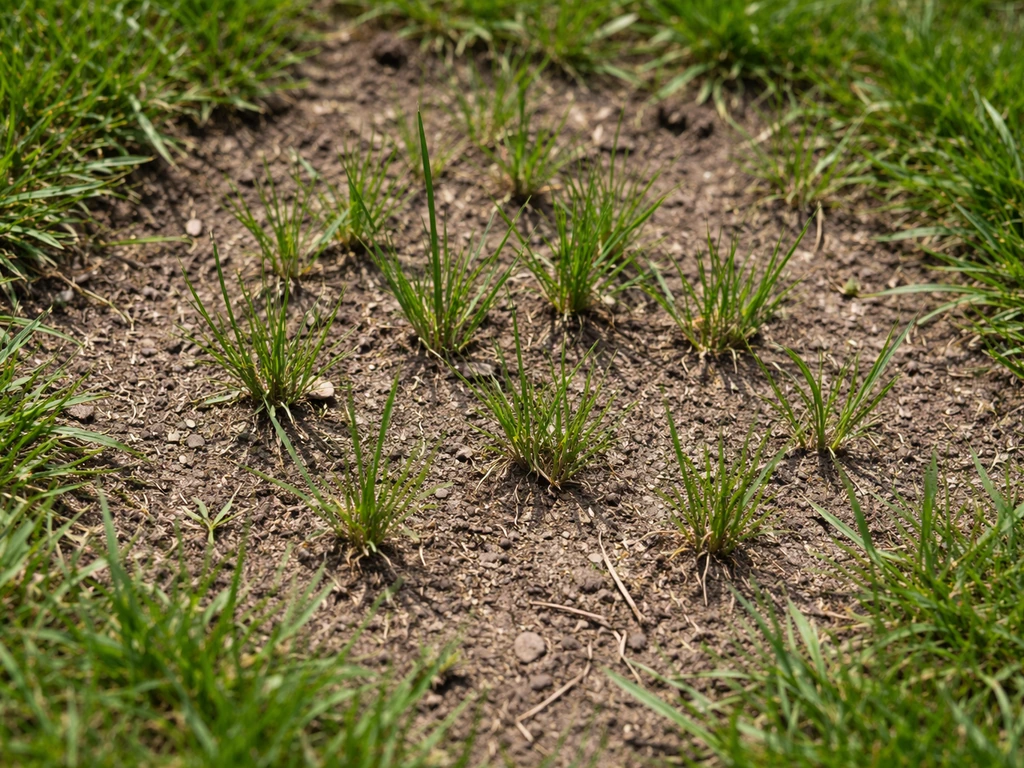
If your grass is growing upward instead of spreading laterally, you are dealing with one of three things: insufficient light at the substrate level, no CO₂ or very low CO₂, or too little substrate nutrient availability. Check PAR at the substrate specifically, not just near the water surface. Increase CO₂ toward 25–30 ppm. Add root tabs if you have not already. Also check whether the plant is receiving flow, because stagnant water at the substrate level limits the CO₂ delivery to the leaves even if your water-column CO₂ is adequate.
Melting
Melting (leaves yellowing, softening, and dissolving) in the first 2–3 weeks after planting is extremely common with tissue-culture plants and is not necessarily a death sentence. The plants are transitioning from the emersed (above-water) form they grew in the lab to their submersed form. Trim away the melted portions with scissors, keep your parameters stable, and wait. New submersed growth typically appears within 2–3 weeks at the base of the plant. Do not pull the plant out during this phase. The roots are still alive even when the leaves look terrible.
Uprooting
Fish and shrimp are the usual culprits for uprooted carpet plants, especially in the first few weeks before the roots anchor firmly. Corydoras, loaches, and goldfish in particular will bulldoze a new carpet.
If you have bottom-dwelling fish, either plant into a denser mat (so there is less loose substrate to dig), use the dry start method to let roots establish before fish are introduced, or weigh down vulnerable sections temporarily with small smooth stones placed around (not on) the plants. Shrimp are also notorious for grazing on new growth.
If you have a shrimp tank and want a healthy carpet, check the guide on how to grow biofilm in a shrimp tank because a biofilm-rich tank gives shrimp an alternative food source that reduces their pressure on your carpet plants.
Seeds not germinating
If your seeds are not sprouting after 14 days, check three things: substrate moisture (should be consistently damp, not drying out at all), temperature (seeds germinate best between 72°F–78°F), and light (seeds need light even during the dry start phase). If all three are correct and you still see nothing after three weeks, you may have seeds that are not genuinely aquatic. This is a real and frustrating issue with seeds sold through non-specialist retailers. Try a reputable aquatic plant seller and use the dry start method with verified species.
Ongoing trim and carpet maintenance
Once your carpet is established, trim it regularly with aquascaping scissors to keep it compact and encourage lateral spread rather than vertical growth. A flat horizontal trim across the top of the carpet every 2–4 weeks keeps the dense, low-profile look most people are after. After trimming, do a water change and siphon out any clippings before they decay and spike ammonia. Some carpet plants like dwarf hairgrass benefit from occasional substrate disturbance between runners to let light and flow reach the lower portions of the mat and prevent dead patches in the middle.
Expanding beyond the carpet
Once your carpet is stable, you will probably want to add more visual interest to the tank. If you are experimenting with unusual aquatic plant placements, the guide on growing monstera in an aquarium covers an unconventional approach that some aquascapers use for dramatic above-water or emergent growth. For a natural seagrass biotope aesthetic as an alternative to traditional carpet plants, the article on how to grow seagrass in an aquarium is worth reading, since seagrass species have completely different requirements and are suited to specific setups. The main point is that the substrate, light, CO₂, and nutrients you have already invested in for your grass carpet will serve you well as you expand your planted tank in any direction.
The realistic timeline for a beginner going from bare tank to a finished carpet is 6–10 weeks. The first two weeks feel like nothing is happening. Then it starts. Stick with your parameters, do your weekly water changes, and resist the urge to change things every few days when you see slow growth. Stability is what carpet plants reward more than anything else.
FAQ
Can I grow grass in an aquarium using just gravel or sand without aquasoil?
You can, but only if you make up for the lack of nutrients with frequent root-zone feeding. Carpet plants depend on lateral root spread, so choose fine, inert substrate and use root tabs (and possibly gentle spot dosing under the mat). Without enough root-zone nutrition, growth tends to stall or create bare patches even when water-column nutrients look correct.
How do I know if my aquarium light is strong enough, not just bright?
Measure PAR at the substrate depth with a meter, or at least verify by comparing the fixture’s spec to your tank height and reflector design. Many LEDs produce high surface brightness but low bottom PAR, which leads to plants growing upward and thinning out across the floor. If you cannot measure, raise the fixture or test by temporarily increasing distance from the water surface while watching whether leaves stay low and healthy.
What’s the fastest way to avoid algae during the first weeks of planting?
Run a short photoperiod from day one, keep CO₂ stable, and dose nutrients to match your light and CO₂ rather than chasing high N and P. The photoperiod schedule matters most, but also avoid overfeeding fish or adding extra fertilizers right after planting. If algae shows up, verify CO₂ and PAR at substrate before reducing fertilizer.
Do I really need pressurized CO₂ to grow a carpet from seeds?
Not always, but seeds and slow-growing carpets are much more reliable with true CO₂. Liquid carbon can help some species, yet it does not consistently replicate CO₂ gas injection for demanding plants. If you are growing Monte Carlo or dwarf hairgrass from seed, start with DSM and short light, then upgrade CO₂ if the mat stalls after the early germination window.
How long should I wait before adding fish or shrimp to an aquascape starting a grass carpet?
Plant carpets, run the system, and let roots anchor for at least several weeks. A common mistake is adding bottom dwellers as soon as the tank cycles, which often uproots runners before they grip the substrate. Use the dry start method or wait until you see firm anchoring and new base growth, then introduce sensitive livestock gradually.
My carpet is spreading at the edges but leaves dead spots in the middle, why?
Dead centers usually come from insufficient light and CO₂ penetration through a thick mat, or from nutrient starvation in the lower runners. After the carpet is established, trim regularly and consider occasional gentle disturbance between runners (especially for dwarf hairgrass) to re-open paths for flow and light. Also ensure your filter flow is not creating dead zones on the substrate.
How often should I trim and should I remove all clippings?
Trim every 2–4 weeks once the mat is dense, and remove clippings after trimming. Letting cut runners decay in the tank can spike ammonia and fuel algae. For a uniform look, keep trims flat and resist removing too much at once, because aggressive cutting can temporarily slow lateral spread.
What dissolved CO₂ number should I target if my drop checker color is not clear?
Target roughly 20–30 ppm dissolved CO₂, and use timing to stabilize readings (the color should match after CO₂ has run for at least an hour). If the drop checker stays yellow or the plants look stressed, it often means insufficient gas delivery or a diffuser that is not dispersing well. Check that the CO₂ turns on 1–2 hours before lights, off 1–2 hours before lights, and that your bubble counter settings are not drifting.
Why do my seeds sprout but then disappear after flooding?
This usually happens when the seeds were not truly fully aquatic species. Some “aquarium grass” listings are actually semi-aquatic grasses that germinate on a dry start but die after full submersion. If you see strong germination during DSM and rapid decline after flooding, switch to seeds explicitly labeled for fully aquatic growth from a specialist supplier.
Should I use root tabs even if I am using a comprehensive fertilizer like EI?
Yes for most setups, especially when using inert substrate. EI dosing targets nutrients in the water column, while carpet plants still pull a large share from the root zone. Root tabs help prevent a slow “nutrient starvation” effect where the top looks fine but lateral runners fail to fill in.
Is temperature and hardness critical for all aquarium grass species?
They matter most for sensitive species like HC Cuba. If your tap water is very hard (high GH) or you run higher pH, growth can be slower or more unstable even when light and CO₂ are correct. Use RO or distilled water if needed, and rely on stable buffering since sudden pH swings can stress newly planted carpets.