Liverworts are genuinely easy to grow once you understand what they actually want: consistent moisture, moderate indirect light, good humidity, and a surface they can grip. They don't need soil in the traditional sense, they don't need fertilizer every week, and they forgive a lot of beginner mistakes as long as you don't let them dry out completely. If you've been struggling to get them established or keep them alive, this guide will walk you through everything from picking your setup to fixing problems when they show up.
How to Grow Liverworts: Step-by-Step for Aquatic Setups
Marcus Holloway
16 Apr 2026
What you need to know about liverwort growth
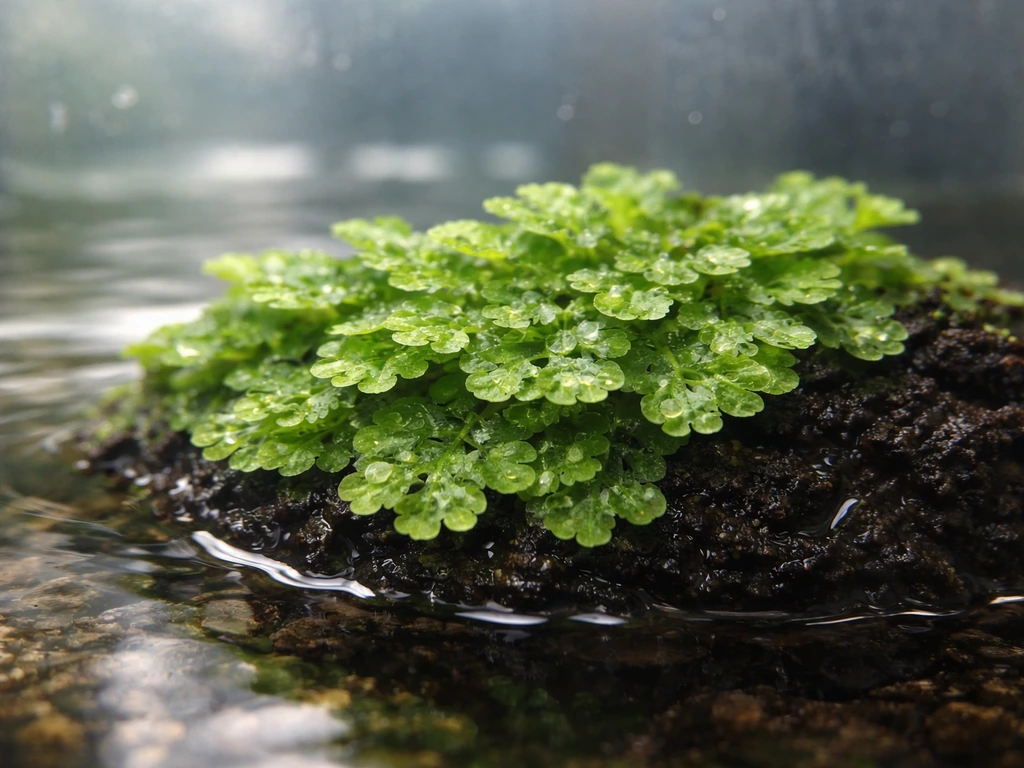
Liverworts belong to the division Marchantiophyta and are among the oldest land plants on Earth. For cultivation purposes, there are two main forms you'll encounter: thallose liverworts (like Marchantia polymorpha), which have a flat, ribbon-like body called a thallus, and leafy liverworts, which look superficially like tiny mosses. Most hobbyists working in aquatic and paludarium setups deal with thallose types, so that's the focus here.
A healthy thallus is firm, structured, and a rich green color. It anchors itself to surfaces using rhizoids, which are hair-like structures that grip rock, wood, or substrate rather than absorbing nutrients the way roots do. If your liverwort looks collapsed, slimy, or extensively brown, those are warning signs you'll want to catch early. One thing that surprised me when I first started: liverworts don't grow fast. Expect a few weeks before you see obvious new thallus expansion, and several months before a patch really fills in.
Marchantia specifically reproduces vegetatively through gemmae, which are tiny disc-shaped propagules that sit inside small cup-shaped structures on the thallus surface called gemma cups. When a water droplet lands in a gemma cup, it physically splashes the gemmae out and onto nearby surfaces, where each one can grow into a new thallus. This splash dispersal mechanism is one of the reasons liverworts spread naturally in moist, irrigated environments. In a controlled setup, you can use this to your advantage by misting directly over gemma cups during propagation.
Pick the right setup: terrarium, paludarium, or semi-aquatic
The setup you choose will determine almost every other variable, so get this decision right first. Liverworts are not fully aquatic plants, but they thrive at the interface of air and water, which makes them a natural fit for aquatic hobbyist environments. Here are the three most realistic options:
Enclosed terrarium (easiest for beginners)
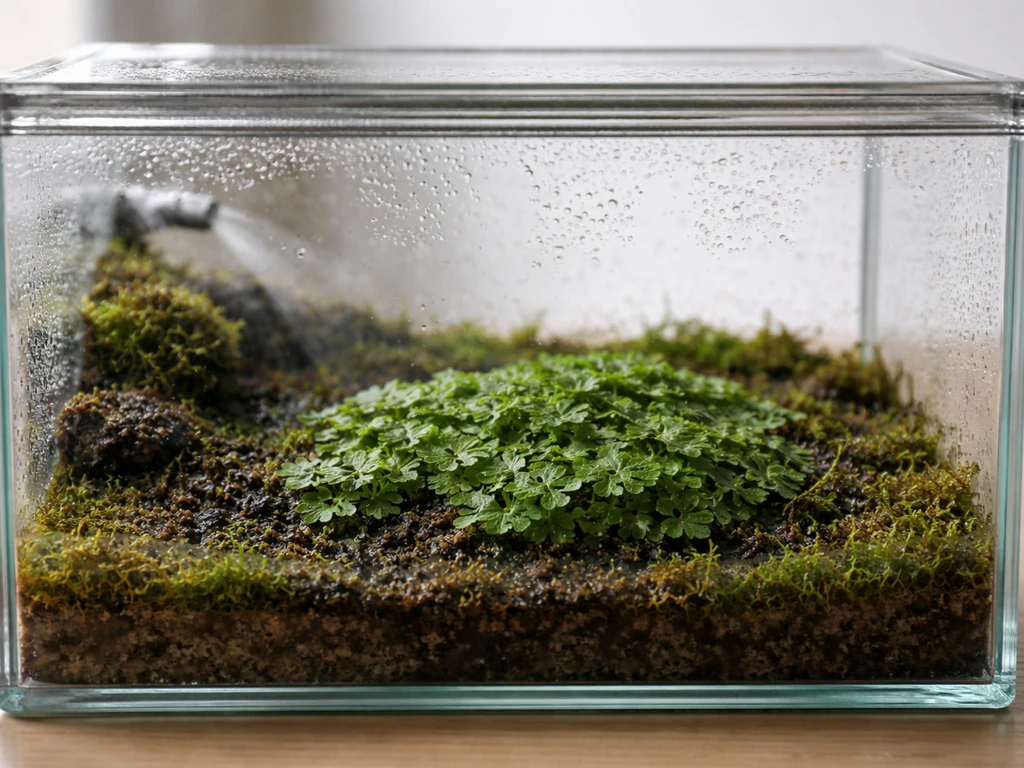
A closed or semi-closed glass terrarium is the most forgiving setup for liverworts. The glass traps humidity, so you don't have to mist constantly, and temperature stays more stable. A 5 to 20 gallon glass tank with a tight-fitting or partially covered lid works well. I started my first liverwort patch in a repurposed 10-gallon aquarium with a mesh lid covered 75 percent by a sheet of glass, and it took almost no intervention to keep the humidity high enough.
Paludarium (best for long-term display)
A paludarium, which combines a water section with a land/emergent section, is arguably the ideal permanent home for liverworts. They can colonize the splash zone above the waterline, grow on hardscape like rocks and driftwood that stay perpetually damp, and benefit from the constant evaporation off the water surface. If you're already running a paludarium or thinking about building one, liverworts are one of the best plants to anchor into the semi-aquatic zone. Growing frogbit in the water section pairs well with liverworts on the land section, since both prefer similar low-to-moderate light and high moisture.
Aquarium splash zone or hydroponic setup
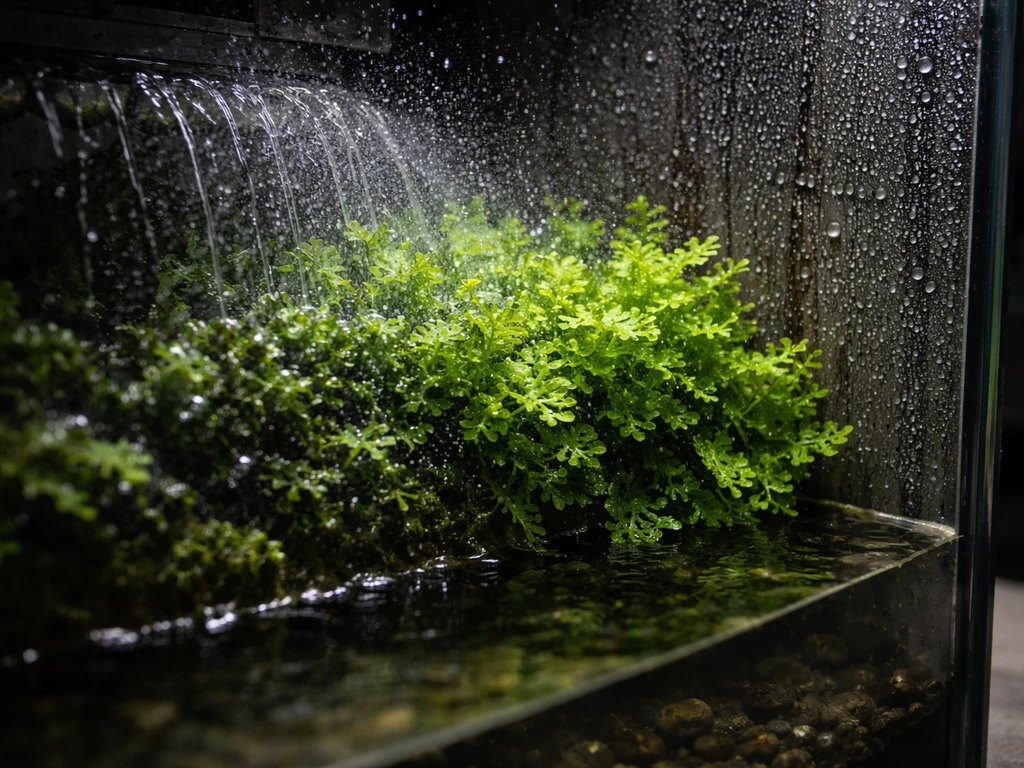
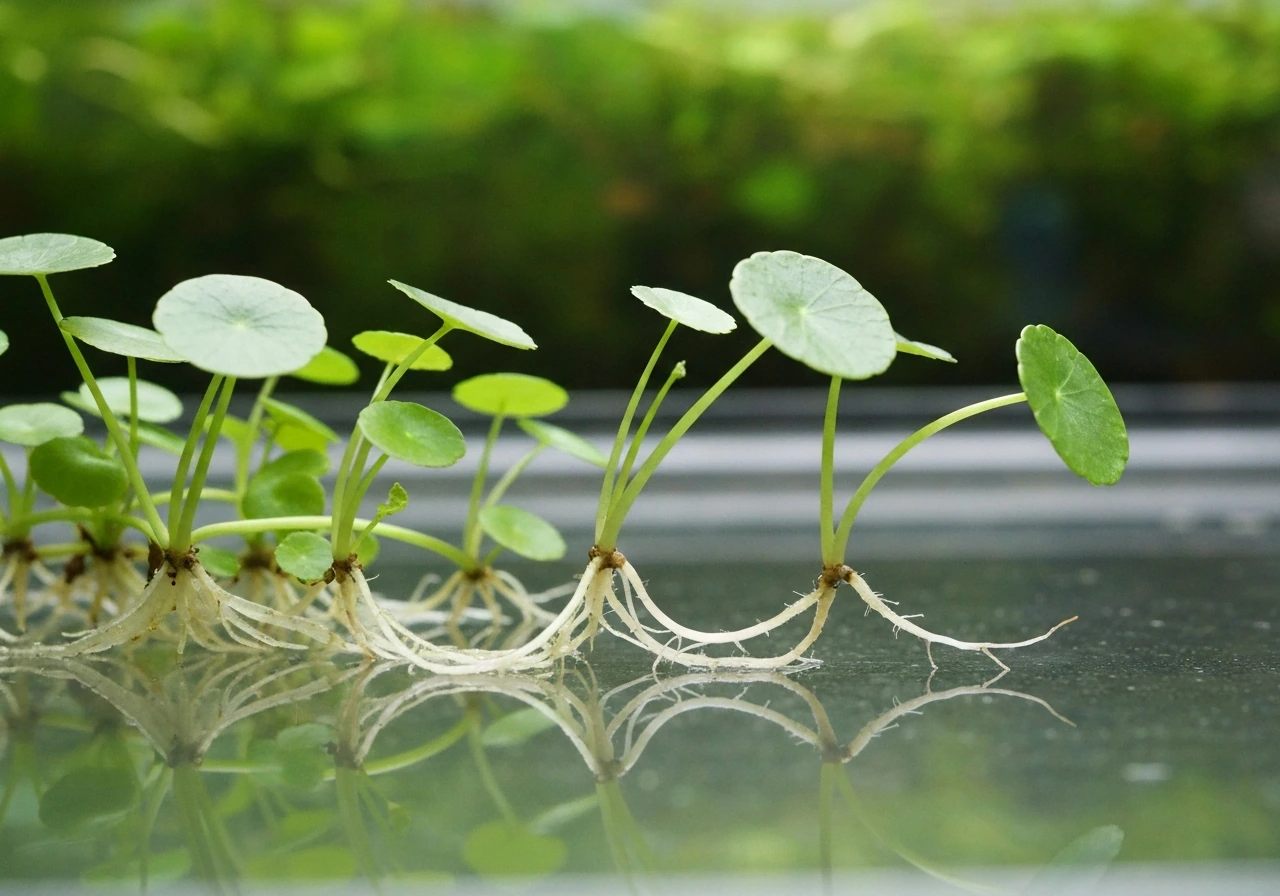
Liverworts won't survive fully submerged for long, but they do excellently in the emergent zone of an aquarium, on filter outflow splash walls, or in a hydroponic-style flood-and-drain setup where the medium stays moist but not waterlogged. If you're running a low-tech planted aquarium, attaching liverwort to rocks near the waterline or in a hang-on refugium works well. Think of the conditions that leafy aquatics like pennywort prefer in semi-aquatic arrangements, and you're in the same ballpark for moisture and light.
Light, moisture, humidity, and temperature targets
Getting these four parameters right is the core of successful liverwort cultivation. Here's what you're aiming for:
| Parameter | Target Range | Notes |
|---|---|---|
| Light intensity | 50–150 µmol/m²/s (low to medium) | Bright indirect or filtered; direct sun causes bleaching |
| Photoperiod | 10–14 hours per day | 12 hours is a reliable default |
| Humidity | 70–90% RH | Above 80% strongly preferred for thallose types |
| Temperature | 60–75°F (15–24°C) | Avoid sustained temps above 80°F |
| Airflow | Gentle, not drying | Stagnant air encourages mold; strong airflow dries thallus |
| Surface moisture | Constantly damp, not waterlogged | Thallus should feel moist to the touch at all times |
For lighting, a 6500K LED grow light or a standard planted-tank full-spectrum bulb both work well. Position the light so the liverwort receives bright but diffused light, not direct beam. I've had good results running a small LED at about 30 cm above the patch for 12 hours a day. If you notice the thallus turning pale green or almost yellow, it's getting too much light. If growth stalls entirely and the plant looks dark but produces no new lobes, bump up the light duration by one to two hours.
Humidity is the one variable beginners underestimate most. Liverworts don't have a cuticle the way vascular plants do, so they lose moisture directly through their surface. Below 60 percent relative humidity, thallose liverworts start to curl and brown within hours. In an open room, you'll need to mist several times a day or run a small ultrasonic humidifier pointed at the enclosure. Inside a closed terrarium, ambient humidity often stays in the 80 to 90 percent range without intervention, which is exactly where you want it.
Substrate, attachment, and water quality
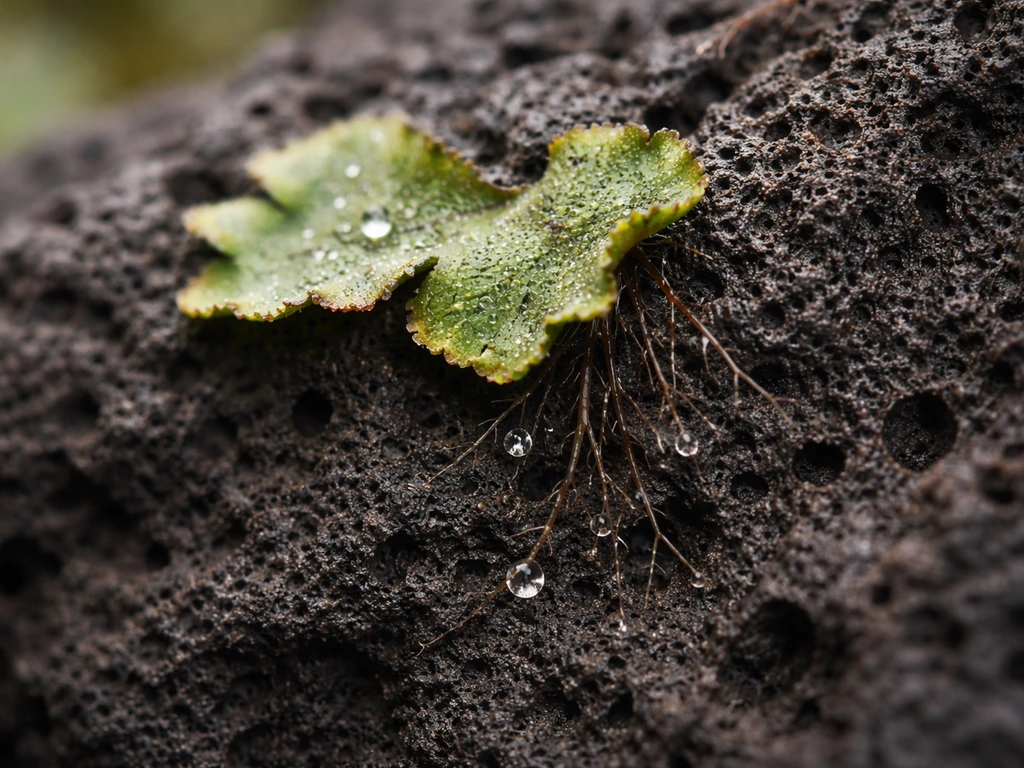
Liverworts don't feed through their rhizoids the way rooted plants feed through roots, but the substrate still matters because rhizoids need something to grip. Smooth surfaces like bare glass are very difficult for liverworts to colonize. Rough, porous surfaces are ideal.
- Lava rock and pumice: highly porous, holds moisture, excellent for rhizoid grip, near-neutral pH
- Driftwood and cork bark: natural texture, slightly acidic, liverworts attach readily
- Coconut coir or sphagnum moss substrate: good for ground-level patches, retains moisture well
- Aquatic substrate (fine gravel or clay-based): works for aquarium splash zone setups
- Avoid: smooth plastic, bare glass, or overly compacted dense soils with no air pockets
For water quality in a paludarium or aquarium-adjacent setup, liverworts prefer soft, slightly acidic to neutral water: pH 6.0 to 7.5, low TDS (under 200 ppm is ideal), and no heavy chlorine or chloramine. If you're using tap water for misting, let it sit 24 hours or use a dechlorinator. Ammonia, nitrite, and nitrate should be kept low, similar to what you'd maintain for aquatic plants. This is the same kind of water quality you'd target if you were growing something like hornwort in a planted system.
To physically attach liverwort to hardscape at the start, use small pieces of cotton thread, fishing line, or a dab of gel-type super glue (cyanoacrylate) on the back of the thallus. Don't use rubber bands or anything that compresses the thallus. Within two to four weeks, the rhizoids will grip the surface on their own and you can remove any thread if needed. I usually just leave cotton thread in place since it breaks down naturally.
Starting liverworts from fragments or purchased cultures
You can source liverworts in a few ways: buying tissue cultures or starter patches from aquatic plant shops, collecting fragments from a friend's established setup, or (where legal and appropriate) carefully harvesting a small amount from a wild, healthy population. Tissue cultures are cleanest since they're free of hitchhiking pests, algae, and disease.
When you receive or collect liverwort, handle it gently. The thallus tears easily and damaged sections are slower to establish. Keep it moist during transport, wrapped in a damp paper towel inside a sealed bag. Don't let it sit in a dry environment for more than an hour or two before planting.
To propagate from fragments, cut or gently tear the thallus into sections at least 1 to 2 cm long. Smaller fragments can work, but they take longer to establish. Lay the fragment flat on your chosen substrate and hold it in place. Mist immediately. As I mentioned earlier, Marchantia also produces gemmae in its gemma cups, and you can deliberately encourage splash dispersal by misting directly over gemma cups onto a nearby prepared substrate. This is a great low-effort way to colonize a new surface in the same enclosure.
Timeline expectations: fragments typically show new growth within two to three weeks under good conditions. A small patch will start to look established at four to six weeks, and meaningful coverage of a 10 x 10 cm area takes two to four months depending on conditions. Don't rush it. Liverworts reward patience more than intervention. The same general patience applies when you're getting started with water dropwort or other slow-establishing aquatic plants.
Ongoing care and a realistic maintenance schedule
Once established, liverworts are genuinely low-maintenance. Here's a practical schedule that works for both terrarium and paludarium setups:
| Frequency | Task |
|---|---|
| Daily | Check moisture level; mist if surface feels dry (in open setups) |
| Every 2–3 days | Check humidity readings; adjust ventilation or lid coverage as needed |
| Weekly | Remove any dead or browning thallus sections; check for mold or algae spots |
| Bi-weekly | Top off water reservoir (paludarium/aquarium); check water quality parameters |
| Monthly | Trim overgrown patches to prevent overcrowding; refresh substrate moisture if using coir/sphagnum |
| As needed | Propagate new fragments to new surfaces; relocate patches that are struggling |
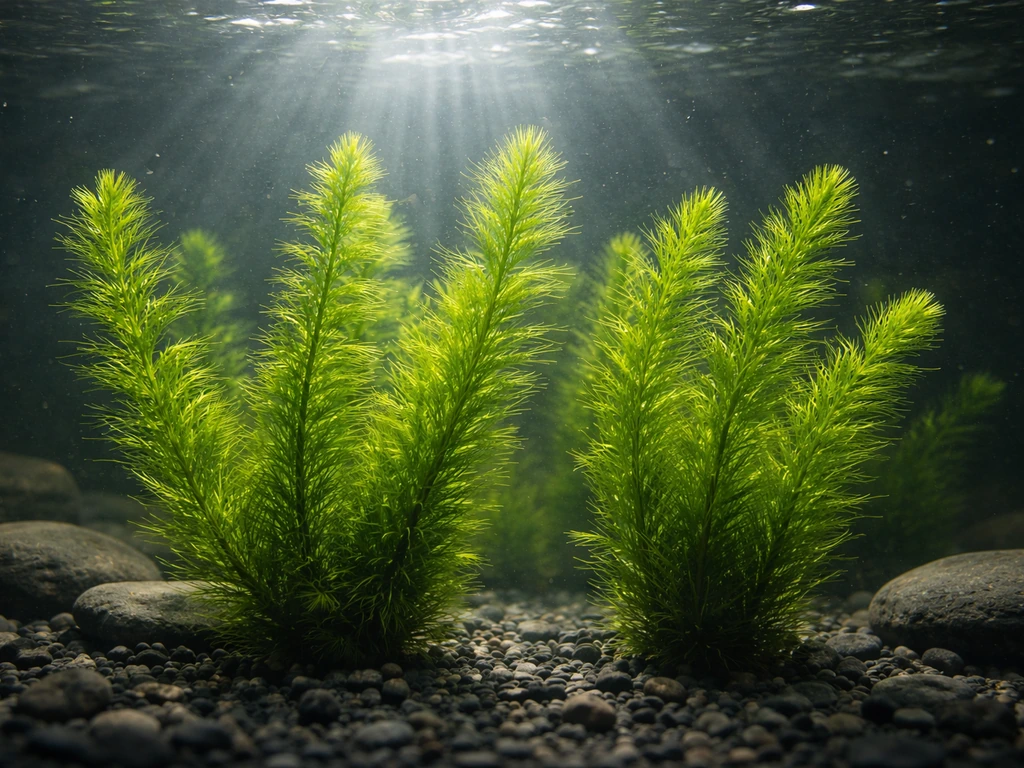
One thing worth knowing: liverworts don't compete well with fast-growing aquatic plants for light or space. If you're running a mixed setup, keep taller or faster-growing plants away from your liverwort patches so they don't get shaded out. In an aquarium with floating plants, for example, manage the floating layer so liverworts growing on the splash wall still get sufficient light. Growing hornwort in an aquarium works well alongside liverworts if you keep the hornwort trimmed so it doesn't block light to the emergent zone.
When your liverwort patch gets large and dense, it's time to thin it. Crowded thalli compete with each other and the center of a thick mat can start to rot from lack of airflow. Thin by gently pulling out older sections from the center and leaving the active growing edges. The cuttings you remove are perfect for starting new patches.
Troubleshooting: drying, algae, mold, and slow growth
Thallus drying out and curling
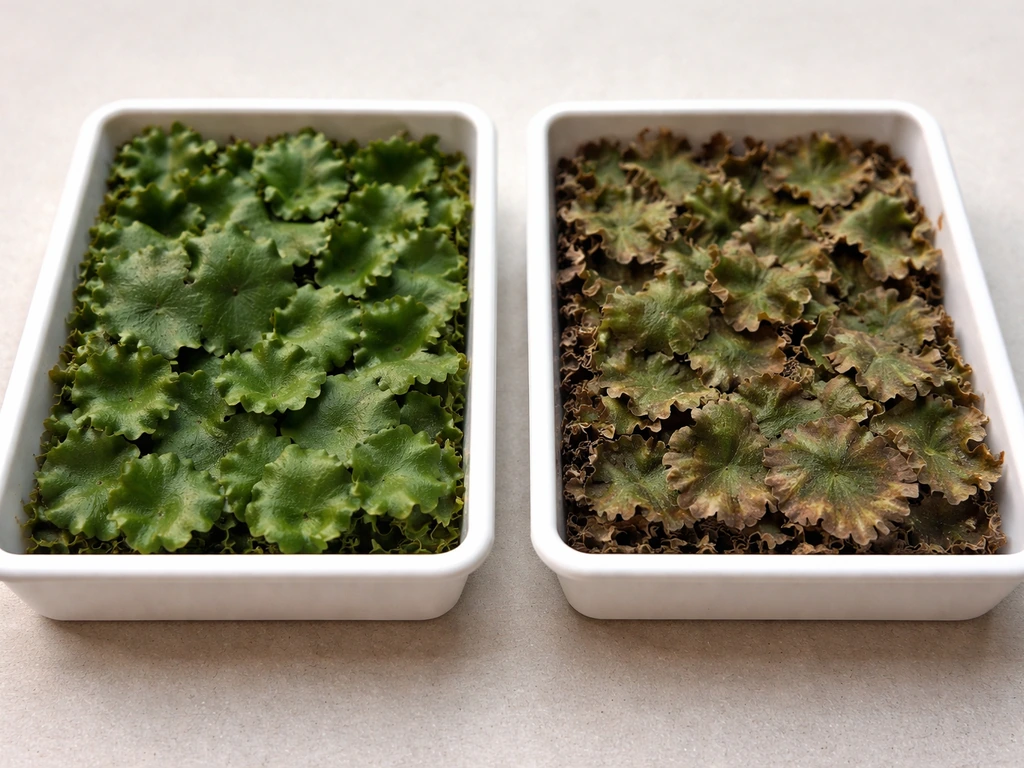
This is the most common problem and the fastest killer. If your liverwort is curling at the edges and browning, it's dehydrating. Mist immediately and check your humidity. If you're in an open setup, increase enclosure coverage. If the plant is fully crispy and dark brown, it may be beyond saving, but try soaking the patch in dechlorinated water for 30 minutes before giving up. Liverworts can sometimes recover from partial desiccation if caught in time.
Algae takeover
Green algae growing over your liverwort is a sign of too much light, too many nutrients in the water, or both. Reduce photoperiod by one to two hours and check your water source. If you're misting with nutrient-rich water or using any fertilizer near the setup, stop. Manual removal with a soft toothbrush works for small algae outbreaks. If you have a similar issue in a planted aquarium context, the approach mirrors what you'd do when dealing with algae affecting moneywort in an aquarium: reduce light duration first, then address nutrients.
Mold or rot
White or gray fuzzy growth on or around your liverwort is mold, usually caused by stagnant air and excess moisture with no airflow. Increase ventilation by opening the enclosure lid more, adding a small USB fan on a low setting, or reducing misting frequency slightly. Remove visibly moldy sections immediately. The line between high humidity and mold-encouraging stagnation is thin, so aim for gentle air movement without drying the thallus.
Slow or stalled growth
If your liverwort looks alive but isn't producing new lobes or gemmae after four to six weeks, check light first, then temperature. Temps below 55°F (13°C) or above 82°F (28°C) cause growth to stall without obvious visible damage. If light and temperature are in range, the issue is often poor attachment to substrate: thallus that isn't in firm contact with a surface can't establish rhizoids and will sit dormant. Press fragments firmly against the substrate and re-secure them if needed.
Poor attachment to substrate
If rhizoids aren't gripping, the surface is probably too smooth or too wet (waterlogged substrate discourages rhizoid penetration). Try switching to lava rock or cork bark and make sure the surface is damp but not dripping. Re-attach with fresh cotton thread and give it another two weeks before assessing. This issue sometimes comes up with halophyte-adjacent setups too: maintaining the right moisture balance, not too wet and not too dry, is a principle that applies whether you're growing liverworts or working with something like saltwort in a brackish or semi-aquatic system.
Supplies checklist and your quick-start plan
Here's everything you need to get started today. Most of this is inexpensive or already on hand if you run any kind of aquatic setup:
- Glass enclosure: 5 to 20 gallon tank or equivalent, with a partial lid
- Full-spectrum LED light: 6500K, capable of 50–150 µmol/m²/s at substrate level
- Timer for lights: set to 12 hours on/12 hours off
- Hygrometer/thermometer combo: to monitor humidity and temperature inside the enclosure
- Spray bottle or small misting system: for dechlorinated or RO water
- Porous substrate/hardscape: lava rock, pumice, driftwood, or cork bark
- Cotton thread or fishing line: for initial attachment
- Liverwort starter: tissue culture, purchased patch, or fresh fragment at least 2 cm
- Dechlorinator or RO water source: for misting and water changes
- Small USB fan (optional but recommended): for gentle airflow in enclosed setups
Your quick-start plan, once you have the materials, looks like this:
- Set up your enclosure with porous hardscape or substrate and run the light for 24 hours to check heat buildup before adding any plants.
- Mist the substrate until it's evenly damp, then check humidity with your hygrometer. Adjust lid coverage until you're holding 75 to 85 percent RH.
- Place your liverwort fragment flat on the substrate or hardscape and secure it with cotton thread. Mist immediately after placement.
- Run lights on a 12-hour timer and check moisture daily for the first two weeks. Do not let the surface dry out.
- At week two, look for rhizoid attachment (gently tug the fragment; resistance means it's gripping). New thallus lobes should appear by week three.
- At week four to six, assess coverage and troubleshoot anything from the section above if growth is stalled.
- Once established, shift to the bi-weekly maintenance schedule and begin propagating fragments to new surfaces if desired.
If you're building a more complex setup around your liverworts, it's worth planning the full plant community from the start. Semi-aquatic floaters and emergent plants can complement a liverwort-heavy paludarium nicely. For inspiration on companion plants, take a look at how people grow moneywort in an aquarium for a plant that shares some of the same moisture and light preferences. Getting the enclosure conditions right for liverworts usually means you've also created a great environment for a whole range of aquatic and semi-aquatic species.
FAQ
Can I grow liverworts in a fully aquatic aquarium, with no emergent area at all?
Usually no. Thallose liverworts can survive for a short period when kept humid, but long-term growth requires the air-water interface. Plan for an emergent splash wall, a hang-on refugium, or a wet rock just at or slightly above the waterline so the surface stays damp without becoming fully submerged.
What water temperature is best for growth, and how does it affect timing?
Aim for the same general range as many low-tech aquatic setups, roughly 65 to 80°F (18 to 27°C). Near 55°F (13°C) or above 82°F (28°C) growth commonly stalls, and you may wait much longer than the usual 2 to 3 week timeline for visible new lobes.
How do I know whether my liverwort is dehydrating versus being stressed by light?
Dehydration typically shows first as edge curling followed by rapid browning, even if the overall color seems dark green beforehand. Light stress more often causes paling toward yellowish-green with slowed or stalling growth rather than fast, crispy dieback. If in doubt, check humidity immediately, then adjust light duration by 1 to 2 hours.
Should I rinse liverworts before placing them in my tank or terrarium?
If your supplier shipped them dry or in plant bags, gently rinse with dechlorinated water to remove loose debris, then re-mist before attachment. Avoid soaking for long periods, and do not scrub the thallus, because damaged sections establish slower and can trigger algae or mold where fragments break apart.
What’s the safest way to attach liverwort to rock or wood if I don’t want to glue anything?
Use cotton thread or fishing line and tie loosely around the thallus area, then keep it pressed firmly until rhizoids grip (typically a few weeks). If you do use cyanoacrylate gel, apply a small dot to the back of the thallus only, keep it minimal, and avoid flooding the glued spot so you do not trap air bubbles.
Do I need to fertilize liverworts to help them spread?
In most hobby setups, no. Liverworts do not rely on frequent feeding, and added nutrients are more likely to feed algae than the liverwort. If you want to support a mixed tank, focus on stable water parameters (low TDS, low nitrate) and indirect light, rather than adding fertilizers directly to the liverwort surface.
What should I do if my liverwort is growing but spreading very slowly?
First confirm the attachment and moisture balance. Surfaces that are too smooth or too wet can prevent rhizoids from gripping properly. Also reassess light diffusion, since direct beams or over-shading can reduce new lobe formation even when the thallus remains green. After correcting those, give it at least another 2 weeks before changing anything else.
How do I thin or prune a dense liverwort patch without crashing it?
Thin from the center outward, removing older, darker sections while leaving active edges in place. Re-attach the cut pieces immediately to new nearby damp surfaces so they do not dry between moves. Expect regrowth to resume from remaining edges within weeks, but avoid removing more than about a third of the total patch at once.
Is it normal to see mold or fuzzy growth after misting heavily?
It can happen when humidity is high but air movement is too low. If you see white or gray fuzz, improve ventilation (slightly open the lid, add gentle low-speed airflow, or reduce misting frequency) and remove affected sections right away. The goal is gentle airflow without repeatedly drying the thallus surface.
Can algae overtake liverwort even if my liverwort looks healthy?
Yes. Algae can start from excess light or nutrients even when the liverwort is still green. Treat early by reducing photoperiod by 1 to 2 hours, pausing any nutrient-rich misting or fertilization, and manually removing algae from the liverwort surface with a soft toothbrush before it forms a thick mat.
Do gemmae propagation methods require special handling or timing?
Not special, but timing matters. If you want to encourage gemmae-based spread, mist directly over gemma cups so water physically splashes the propagules onto a prepared damp surface. Keep the new landing area consistently humid after splashing, since tiny propagules are sensitive to drying during the first days of establishment.
What humidity target should I aim for in a room versus a closed terrarium?
In open setups, keep relative humidity above about 60%, and many people aim higher because desiccation can happen quickly. In closed or semi-closed glass terrariums, ambient humidity often naturally stays in the 80 to 90% range, which is a sweet spot. If your patch curls within hours, your humidity is likely too low for your room conditions.