Bacopa is one of those aquarium plants that rewards you for not overthinking it. Give it decent light, reasonably stable water, and a little patience, and it grows into a lush, upright stem plant that fills the background beautifully. But if you skip the basics, you will end up with a melting, floating mess. This guide walks you through everything, from picking the right plant at the store to trimming it into a thick, bushy colony months later.
How to Grow Bacopa in an Aquarium: Step by Step Guide
Marcus Holloway
8 Apr 2026
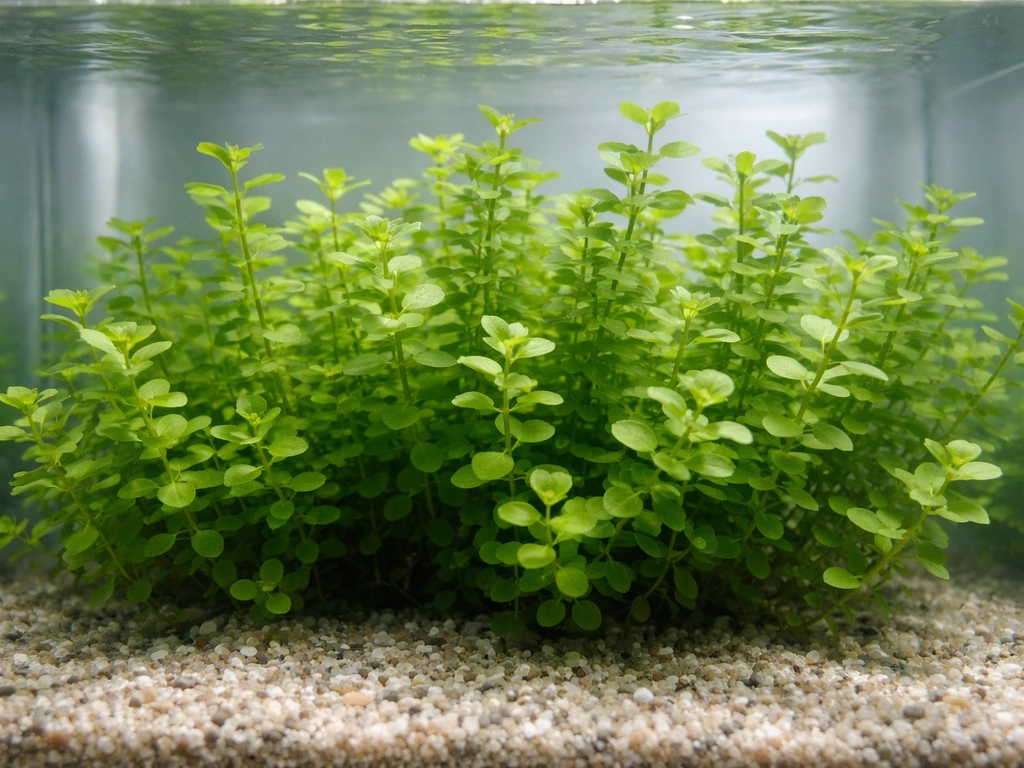
Picking the right bacopa to grow
Two species dominate the hobby: Bacopa caroliniana and Bacopa monnieri. Caroliniana has slightly larger, rounder leaves and a mild lemony scent when you crush them above water. Monnieri is narrower-leaved, sometimes called Baby Tears (not to be confused with Hemianthus), and is arguably even more forgiving of fluctuating conditions. For a first-time grow, either works.
Caroliniana is easier to find, and monnieri handles a wider temperature swing (18 to 28°C, pH 5 to 9 according to species profiles), which makes it a good pick if your tank runs warm or your tap water is on the hard side. For Bacopa monnieri (moneywort), typical aquarium parameters are about 72, 84°F and pH 6. 0, 7.
5, and CO2 is not required though it can enhance growth [monnieri handles a wider temperature swing (18 to 28°C, pH 5 to 9 according to species profiles), which makes it a good pick if your tank runs warm or your tap water is on the hard side. ](https://www. aquariumdomain. com/SpeciesProfiles/FreshwaterPlants/Moneywort.
shtml).
When you buy, you have two forms to choose from: rooted/potted plants and bare stem cuttings. Rooted, potted bacopa (like the lemon bacopa caroliniana sold in established pots by specialty aquatic retailers) is ready to drop in immediately. The root system is already active, which means faster anchoring and less melting. Bare stem bunches are cheaper and usually fine, but they need a week or two to root before they really take off. There is also tissue-cultured (TC) bacopa caroliniana, sold in small sealed cups. TC plants are grown fully submerged in sterile conditions, so they transition to your aquarium with almost no shock. If you have had bad luck with melt before, start with TC or a pre-rooted pot.
One thing worth knowing: bacopa is amphibious. Many plants sold at fish stores were grown emersed (above water) for commercial reasons. That emersed form looks different from the submerged form, and the transition is when melting happens. Buying plants explicitly labeled as 'submerged form' or TC reduces that risk significantly.
Getting your aquarium setup right
Bacopa caroliniana has a fairly tight sweet spot for water chemistry. Target a temperature between 22°C and 26°C (roughly 72 to 79°F) and a pH of 6. Aquarium Industries provides a Bacopa caroliniana TC care sheet with target conditions of 22, 26°C and pH 6. 8, 7.
2, and it recommends individual planting into substrate [Target a temperature between 22°C and 26°C and a pH of 6. ](https://www. aquariumindustries. com.
au/wp-content/uploads/2015/05/Bacopa-TC. pdf). 8 to 7. 2.
If you are running monnieri, the window is wider: 68 to 82°F and pH 6. 0 to 7. 5. The main thing to avoid is wild swings.
A stable 7. 0 is better than a tank that bounces between 6. 5 and 7. 8 throughout the day.
Hardness is less critical, but moderately soft to moderately hard water (GH 4 to 12) suits both species well.
Tank size does not really matter for bacopa. It grows fine in a 10-gallon nano all the way up to a 150-gallon display. What does matter is consistent filtration and gentle circulation. You want enough flow to carry nutrients past the leaves, but bacopa stems are fragile, and a strong direct current will batter them until they break. Position your filter outlet so it creates a circulation pattern rather than a direct blast toward your planting area.
| Parameter | Bacopa caroliniana | Bacopa monnieri |
|---|---|---|
| Temperature | 22–26°C (72–79°F) | 20–28°C (68–82°F) |
| pH | 6.8–7.2 | 6.0–7.5 |
| Light demand | Low (responds well to medium) | Low to medium |
| CO2 | Medium (6–14 mg/L ideal) | Low to medium |
| Growth speed | Slow to moderate | Moderate |
| Beginner friendliness | Very easy | Very easy |
Lighting and CO2: dialing in real growth
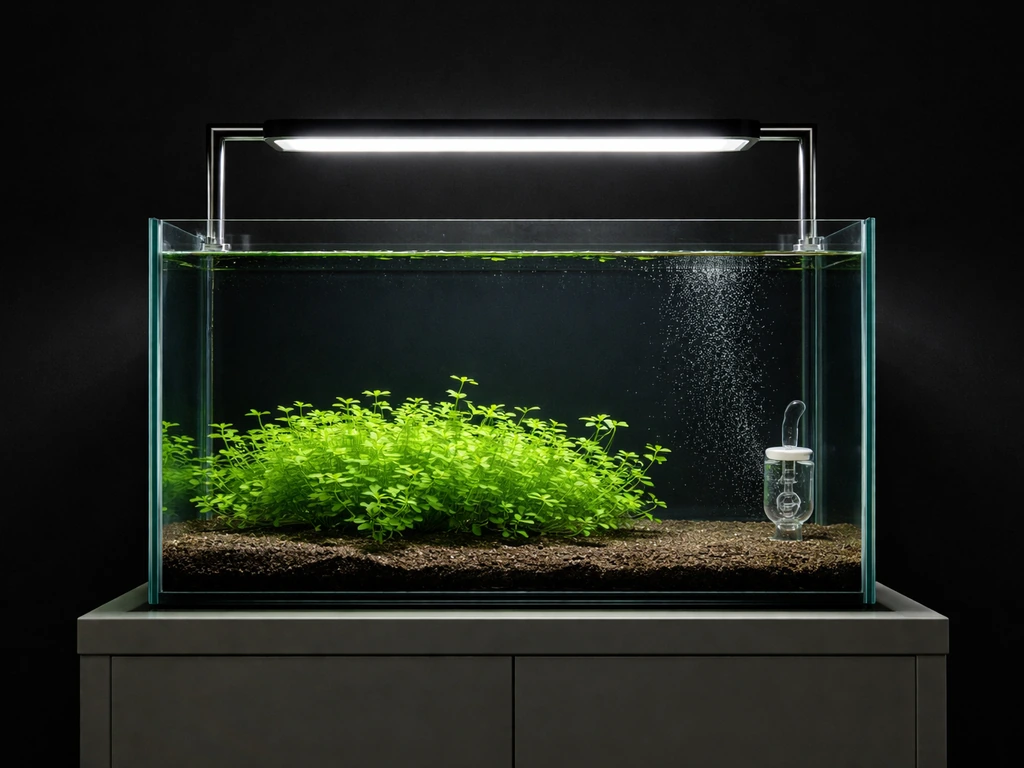
Tropica classifies bacopa caroliniana as a low-light plant, which is true in the sense that it will not die under modest lighting. But 'low light' does not mean 'dim.' There is a real difference between surviving and thriving. Aim for around 100 µmol PAR at the substrate level where your bacopa sits. If you are using a cheap clip-on LED and your bacopa is growing sideways toward the light source or the leaves are looking limp and pale, you are under-lit. Bump up the light duration to 8 to 10 hours per day first, then consider a stronger fixture if the problem persists.
CO2 is the most powerful growth lever you have with bacopa. The plant can absolutely survive without CO2 injection, and plenty of people grow it successfully in low-tech setups. But adding CO2 at 6 to 14 mg/L transforms the growth rate and leaf quality. When I switched my caroliniana tank to pressurized CO2, the new leaves came in noticeably thicker and larger within three weeks, exactly the kind of improvement described by growers who have pushed the plant under CO2. If you are not running CO2, compensate with good lighting and a generous liquid carbon supplement like glutaraldehyde-based products. Just dose carefully and watch for sensitivity in sensitive tankmates.
Flow and CO2 work together. Better circulation distributes dissolved CO2 evenly through the water column so every stem gets exposure. A spray bar running along one side of the tank works well for bacopa setups. Avoid surface agitation that off-gasses your CO2 before the plants can use it.
How to plant and anchor bacopa properly
Bacopa is a background or midground plant. Plant it toward the back third of your tank in groups of three to five stems, spaced about 3 to 4 cm apart. This spacing lets each stem get light without shading its neighbors, and as the colony fills in, it creates a dense wall effect. If you are planting near other stem plants, bacopa pairs naturally with taller, faster growers behind it since it does not compete aggressively for light.
Push each stem 3 to 4 cm (about 1.5 inches) into the substrate. Bacopa roots are not aggressive, but they need enough depth to anchor before they establish. Use tweezers or planting tongs and angle the stem slightly while pushing it in so the substrate grips it on two sides. In fine sand or light substrate, stems float back up easily until roots form. The fix is simple: push deeper, gently pack substrate around the base, and place a small piece of hardscape (a smooth stone or driftwood fragment) next to the stem base for a few days while it anchors. Do not use lead weights on the stem directly, as this can rot the tissue at the pinch point.
For substrate, a nutrient-rich capped substrate (like Fluval Stratum, Aquasoil, or a similar planted-tank substrate) gives bacopa a meaningful root feed. You can also grow it in plain gravel or sand if you supplement with root tabs, but active substrate will always give you a head start on rooting speed and early growth vigor. Just like when you grow Monte Carlo in an aquarium, a good capping substrate makes a noticeable difference in how quickly your new plants anchor and put out runners or new shoots.
Feeding and fertilizing your bacopa
Bacopa feeds through both its roots and the water column, so a two-pronged fertilizing approach works best. Place one root tab per every 15 to 20 cm of planting area under your bacopa stems at planting time, then replace them every 2 to 3 months as they break down. This handles iron, potassium, and micronutrients at the root level where bacopa actively absorbs them.
For water column dosing, use a balanced all-in-one liquid fertilizer once or twice a week. If you are running a low-tech tank without CO2, dose conservatively: too many nutrients without the carbon to process them feeds algae faster than it feeds your bacopa. A rough starting dose is half the bottle's recommendation, then adjust based on plant response. In a high-tech CO2-injected setup, you can dose more aggressively because the plants are growing fast enough to consume nutrients before algae can colonize them.
Watch the leaves for deficiency signs. Yellowing of older (lower) leaves usually points to nitrogen or potassium deficiency. Small holes or pinholes in otherwise healthy leaves suggest potassium is low. Pale new growth with green veins (interveinal chlorosis) is a classic iron deficiency. If you see that last symptom, dose chelated iron directly and consider switching to a fertilizer with higher iron content. Deficiency symptoms in bacopa show up slowly given its modest growth rate, so you have time to correct course before significant damage occurs.
One underrated food source in planted tanks is biofilm that grows in an aquarium. While bacopa is not a biofilm feeder the way shrimp are, a healthy microbial layer in the substrate contributes to organic breakdown that releases nutrients at the root zone. A biologically active tank generally means better plant health across the board.
Pruning, spreading, and propagating from cuttings
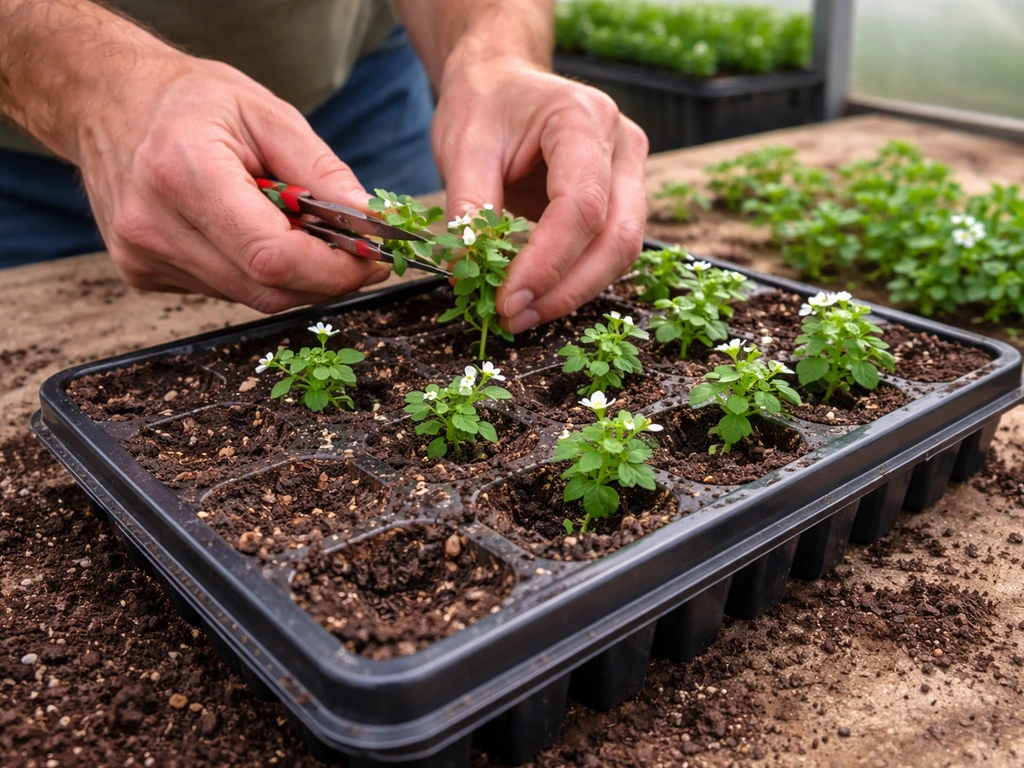
Bacopa grows slowly compared to fast stem plants like rotala or hornwort, but it does grow, and if you never prune it, you end up with tall, leggy stems that are bare at the bottom and crowded at the top. The fix is regular trimming, and the good news is that every cut you make gives you a free new plant.
When your stems get tall enough to reach the surface or start shading lower plants, trim them about halfway up, cutting just above a leaf node. Replant the top cutting directly into the substrate. The original rooted stem will push out new side shoots from the nodes below the cut, which is how you build that thick, bushy colony over time. Repeat this cycle every 4 to 6 weeks and within a few months you will have a full background wall from just a few starting stems.
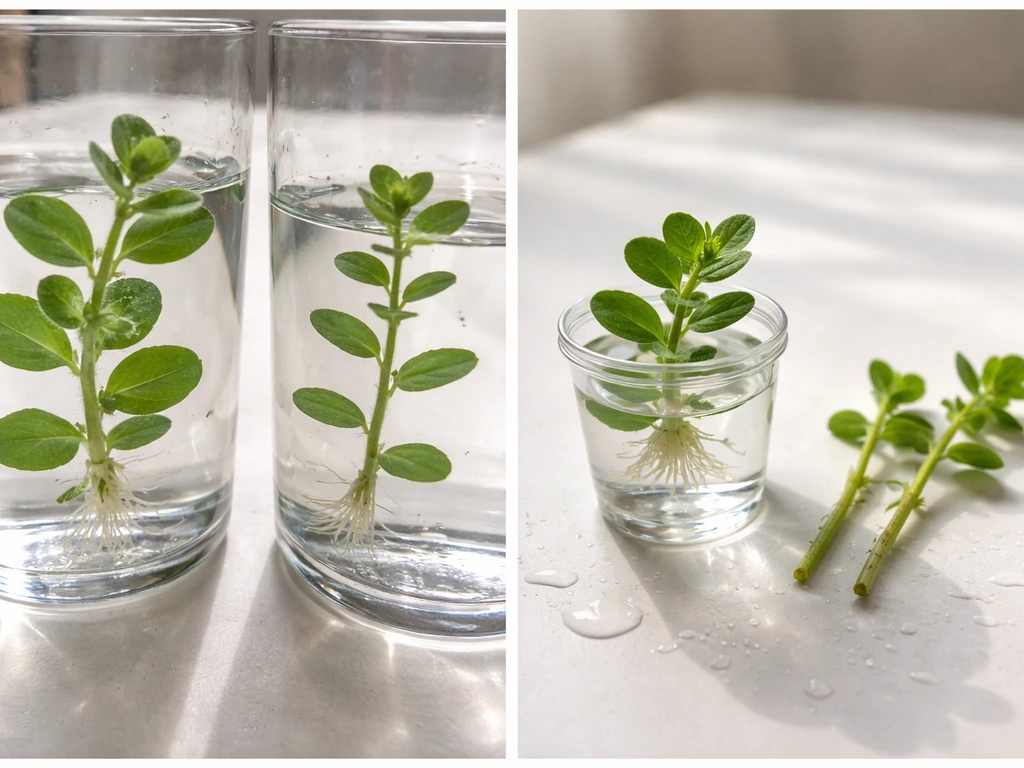
Propagation from cuttings is genuinely this simple: trim the top 5 to 10 cm of a healthy stem, remove the bottom one or two sets of leaves to expose bare stem, and push that bare section into the substrate. No rooting hormone, no special treatment. The cutting will develop roots within 7 to 14 days under normal conditions. This is the same basic trim-and-replant method that works for most aquarium stem plants, and bacopa is one of the most reliable responders to it.
If you are growing a mixed planted tank, consider how bacopa fits into your overall layout. It works well as a mid-height background anchor between taller plants and foreground carpets. If you are also working on getting a foreground carpet established, the strategies you use to grow carpet grass seeds in an aquarium complement bacopa nicely since both benefit from consistent CO2 and nutrient levels.
Troubleshooting the most common bacopa problems
Melting and blackening leaves
Melting is the most common thing people panic about with bacopa, and it almost always happens in the first one to three weeks after purchase. The plant was grown emersed (above water), and when you submerge it, the old emersed leaves die off while the plant grows new submerged-form leaves. This is normal and not a death sentence.
The fix is to remove dead or blackening leaves promptly so they do not rot and foul the water, then leave the plant alone. New growth will appear at the stem tips within one to two weeks if your lighting and water parameters are stable. If the stem tips themselves are blackening (not just lower leaves), that is a sign of something more serious, usually a water chemistry problem, too little light, or physical damage during planting.
Slow or no growth
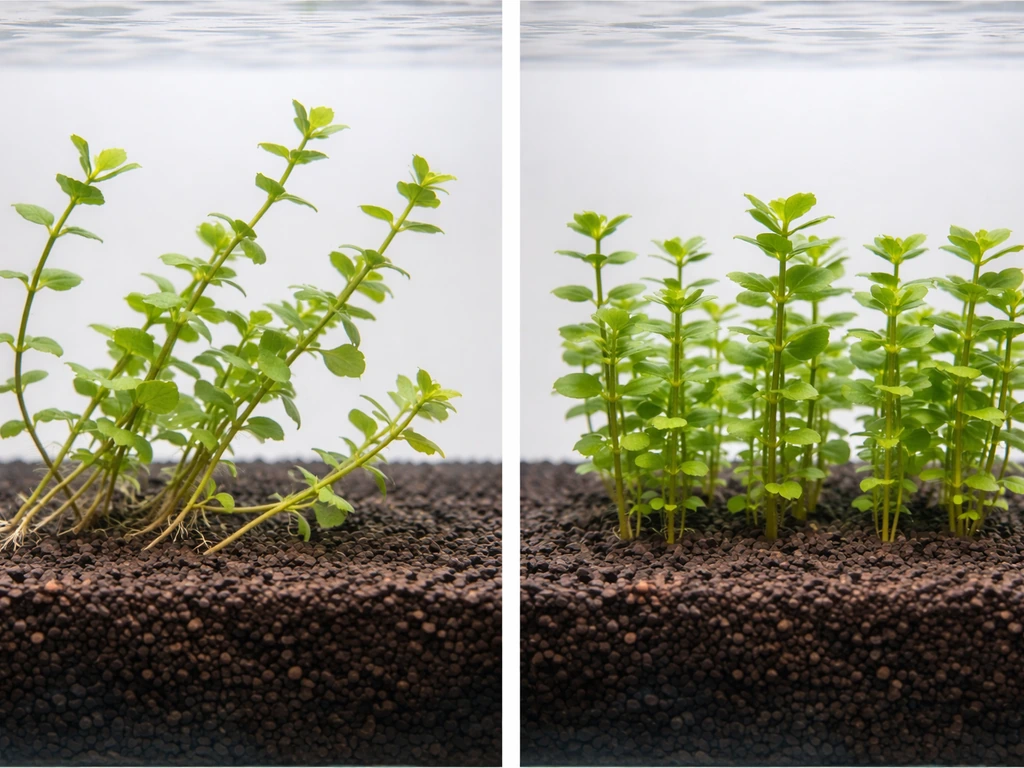
Bacopa is not a fast grower even under good conditions. If you have had it in the tank for three weeks and see no new leaf nodes at the top, check lighting first. A limp, pale plant that is not growing is almost always under-lit. Next, check CO2 or carbon availability. Without enough carbon, even a well-lit bacopa will stall. Finally, check your dosing schedule. A plant that is not getting nitrogen, phosphorus, and potassium consistently has no building blocks for new tissue.
Stems floating up and refusing to stay planted
This is a planting depth problem, not a plant problem. Push stems deeper (3 to 5 cm), use a heavier substrate or mix some gravel into fine sand at the planting area, and prop stems with small stones for the first week. Once roots form, bacopa anchors firmly and will not float.
Algae taking over the leaves
Algae on bacopa leaves is a symptom of imbalance, not a bacopa-specific problem. The most common cause is too much light with too little CO2 or nutrients, which creates the perfect environment for algae while starving the plant. Green spot algae on leaves usually means phosphate is low. Black beard algae (BBA) often signals CO2 fluctuations. The fix is to address the imbalance: improve CO2 consistency, adjust lighting duration, and match your fertilizer dose to your light level. Manual removal of heavily algae-covered leaves is fine since bacopa grows new ones readily.
Holes in leaves or dying leaf tips
Holes are almost always a potassium deficiency. Dose a dedicated potassium supplement (potassium sulfate works well) and increase your all-in-one fertilizer frequency. Dying tips on new growth can also indicate calcium or magnesium deficiency, particularly in soft-water tanks. A small dose of Epsom salt addresses magnesium, and crushed coral or calcium-rich rocks will buffer both calcium and hardness over time.
Stem breakage and fragile plants
Bacopa stems are naturally a little brittle, especially near the base of older growth. High flow directed at the stems will snap them repeatedly. Redirect your filter outlet or add a sponge pre-filter to diffuse the current. Stems that are breaking at the base are often rotting due to poor water circulation around the substrate, so gentle flow near the bottom of the tank matters too.
What success actually looks like over time
In the first two weeks, expect some lower leaf loss and minimal visible growth. This is normal. By week four, you should see new leaf nodes emerging at the tops of your stems and, in a CO2-supported tank, noticeably larger and greener new leaves compared to what you planted. By week eight to twelve, regular trimming and replanting should have your original colony doubled or tripled in stem count. A mature bacopa background, after four to six months of trim-and-replant cycles, becomes genuinely impressive, a dense green wall of upright stems that fish love to weave through.
If you want to branch out from bacopa once your tank is running well, the same slow, patient approach works for other aquatic plants. Learning how to grow seagrass in an aquarium follows a similar logic: stable parameters, patience through the establishment phase, and consistent nutrients. And if you ever want to try something on the unusual end of the spectrum, growing monstera in an aquarium setup is a fun experiment that leans on the same emersed-to-submerged transition principles you will have already mastered with bacopa.
The bottom line: bacopa is genuinely one of the most forgiving stem plants you can grow. Get your light above the 'just surviving' threshold, keep your water stable in the 22 to 26°C and pH 6.8 to 7.2 range, add CO2 if you want faster results, and trim regularly. Do those four things and bacopa will fill your background faster than you expect.
If you are building out a fully planted tank and want to fill every layer, it is also worth exploring how to grow grass in an aquarium for the foreground and how to grow biofilm in a shrimp tank if you are keeping dwarf shrimp alongside your plants. A layered approach, carpeting grasses in front, midground stems like bacopa in the middle, and active biofilm supporting your shrimp colony in the substrate, is how you build a tank that looks and functions like a real aquatic ecosystem.
FAQ
My bacopa melted after I planted it, how long should I wait before assuming something is wrong?
If bacopa arrives looking healthy but then stops putting out new leaf nodes, re-check light at the substrate level (not just the fixture setting). A common fix is extending photoperiod to 8 to 10 hours before changing hardware, and verify the light is not being blocked by floating debris or a high water line you never accounted for when the plant was sold.
Can I move bacopa between different aquariums or swap it between tanks?
Yes, but you need a clear transition plan. Keep the stems submerged once they start recovering, and avoid sudden temperature or pH swings during the swap. The biggest mistake is moving plants between tanks with very different CO2 availability, then expecting the same growth rate without adjusting lighting and fertilizing.
What should I do if I do not run CO2 and algae starts showing on bacopa leaves?
Bacopa does fine without CO2, but if you see algae on leaves, you likely added more nutrients than your carbon supply can support. A practical approach is to reduce fertilizer to half-dose temporarily, keep lighting at the low end of your normal schedule, and increase circulation gently so nutrients reach the plant rather than building on the water surface.
How should I prune bacopa so the cuttings root quickly and do not rot?
When trimming, always cut just above a node and remove the top without leaving damaged tissue. If the trimmed top is very short or leaves were removed too aggressively, it may root slowly, so target a cutting length of about 5 to 10 cm like you would for propagation and replant it promptly.
How do I know whether holes on bacopa are potassium deficiency versus damage, and how much potassium should I add?
In most tanks, dosing potassium directly can help when you see holes and pinholes on otherwise healthy leaves, but do it gradually. Oversupplying potassium can unbalance uptake of other cations, so consider small incremental increases and watch new growth rather than chasing symptoms every day.
What can cause bacopa stems to keep floating back up?
If bacopa keeps floating despite pushing the stems deeper, the usual causes are planting into very fine sand that does not grip or using too little depth before roots develop. Use planting depth around 3 to 5 cm, pack substrate gently around the base, and consider temporarily propping with a small smooth stone next to the stem until it roots.
How can I prevent emersed-to-submerged melt when I buy bacopa from a local store?
To reduce melt risk, buy plants clearly labeled as submerged form or TC, and quarantine if you can. For the first week, remove yellow or blackening leaves immediately, keep parameters steady, and avoid major changes to lighting intensity or fertilizing schedule while the plant is rebuilding submerged leaves.
Will aquarium snails or shrimp eat bacopa, and will that stop it from becoming bushy?
Snail grazing is more likely to slow down the colony than to fully kill bacopa, but heavy nibbling can keep stems from filling in and can create ragged leaf edges. If your bacopa looks trimmed but you are not pruning, check for nocturnal grazing and consider adjusting feed timing or adding a small food routine to distract snails.
My bacopa grows slowly, could it be my water chemistry stability rather than the nutrients?
Bacopa tends to look “stunted” in soft, low-buffer tanks when pH swings daily, especially if you run lights longer than your system can stabilize. Try to avoid frequent water changes with very different pH, use consistent top-off water, and monitor daily pH, not just weekly.
Can I grow bacopa successfully in a heavily planted tank where it is competing for light?
Yes, and the main limitation is your layout. If bacopa is shaded by taller stems, it may stretch and thin out. Place it so it receives consistent light at the substrate, use spacing similar to 3 to 4 cm between stems, and trim earlier rather than letting it get shaded and leggy.