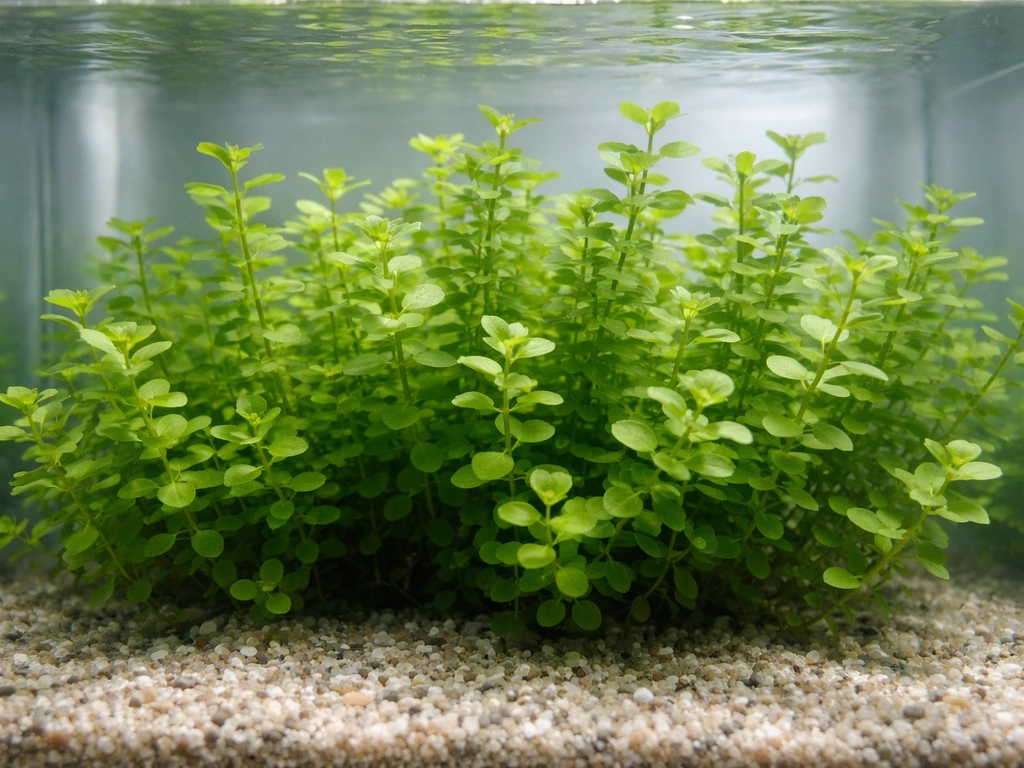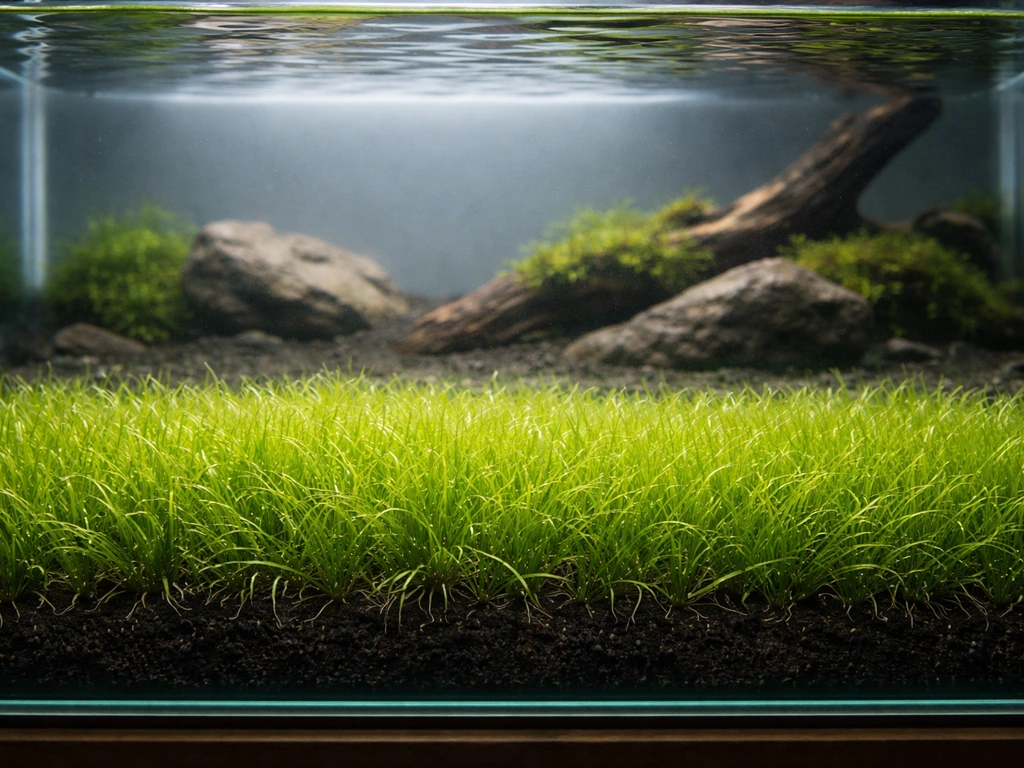
Monte Carlo is one of the most satisfying carpeting plants you can grow in an aquarium, but it has a reputation for either taking off beautifully or sitting there doing nothing for weeks. The difference almost always comes down to how you set up the tank and plant it from day one. This guide gives you a concrete plan: the right plant, the right setup, and the exact steps to get a dense green carpet in four to six weeks.
How to Grow Monte Carlo in an Aquarium: Step-by-Step
Marcus Holloway
15 Apr 2026
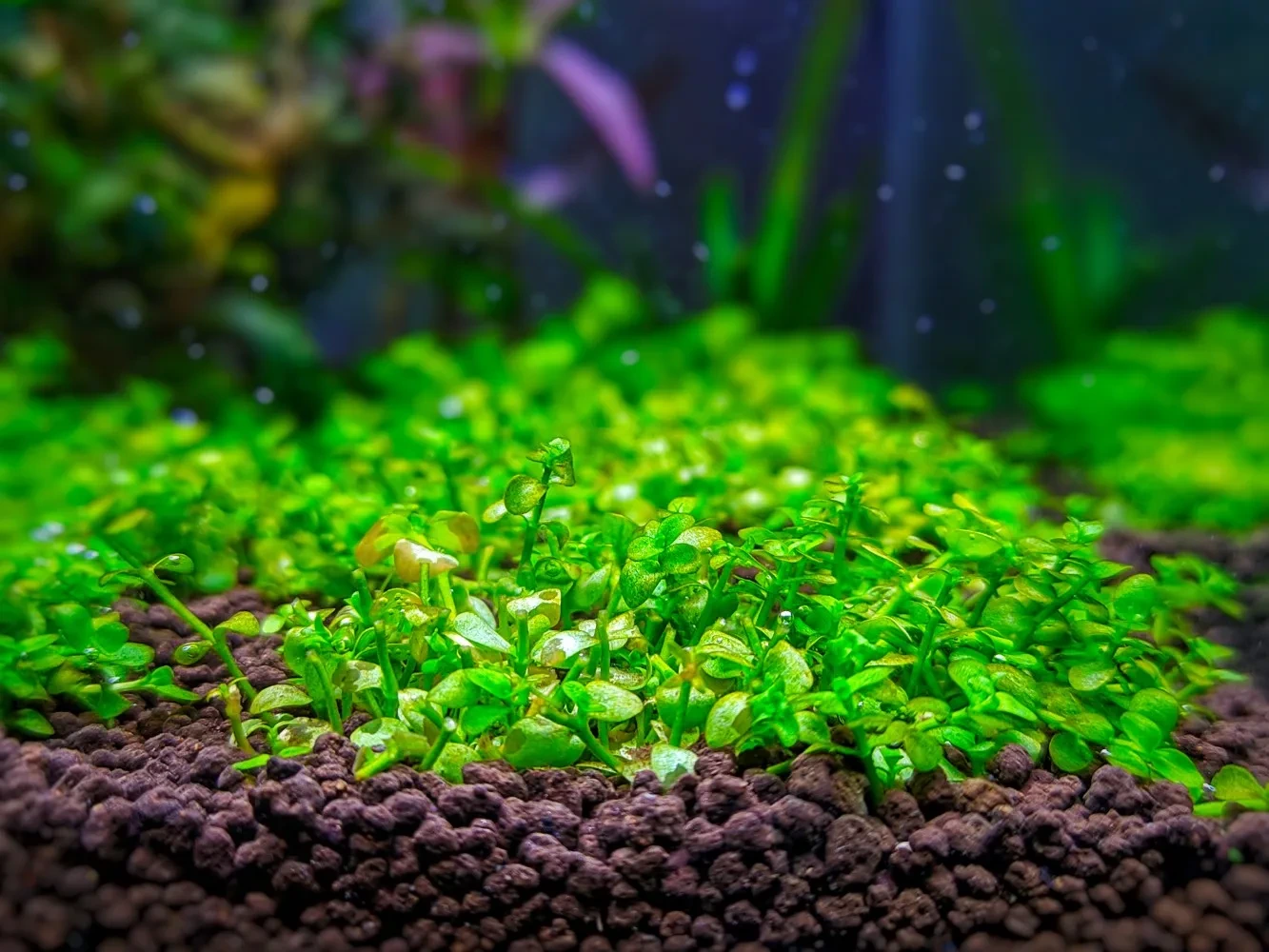
What Monte Carlo actually is (and how not to buy the wrong thing)
The plant sold as 'Monte Carlo' in aquarium stores is Micranthemum tweediei 'Monte Carlo'. That full cultivar name matters, because there are lookalikes in the trade. One Reddit hobbyist planted what they thought was Monte Carlo and ended up with Micranthemum micranthemoides, a related species with longer internodes that grows upright instead of creeping along the substrate. The two look similar in a bag but behave very differently in the tank.
When you're buying, look for the full name on the label: Micranthemum tweediei 'Monte Carlo'. Tissue culture cups (also called TC or in-vitro) are the safest option because they're grown in sterile conditions and free of pests, snails, and algae. Potted plants work fine too, but rinse them thoroughly and discard the rockwool. Monte Carlo is often compared to Hemianthus callitrichoides (Dwarf Baby Tears or HC) as an easier-to-grow carpeting alternative, which is a fair comparison. Monte Carlo tolerates a slightly wider range of conditions and is generally more forgiving for beginners.
Tank setup basics that actually matter for carpeting
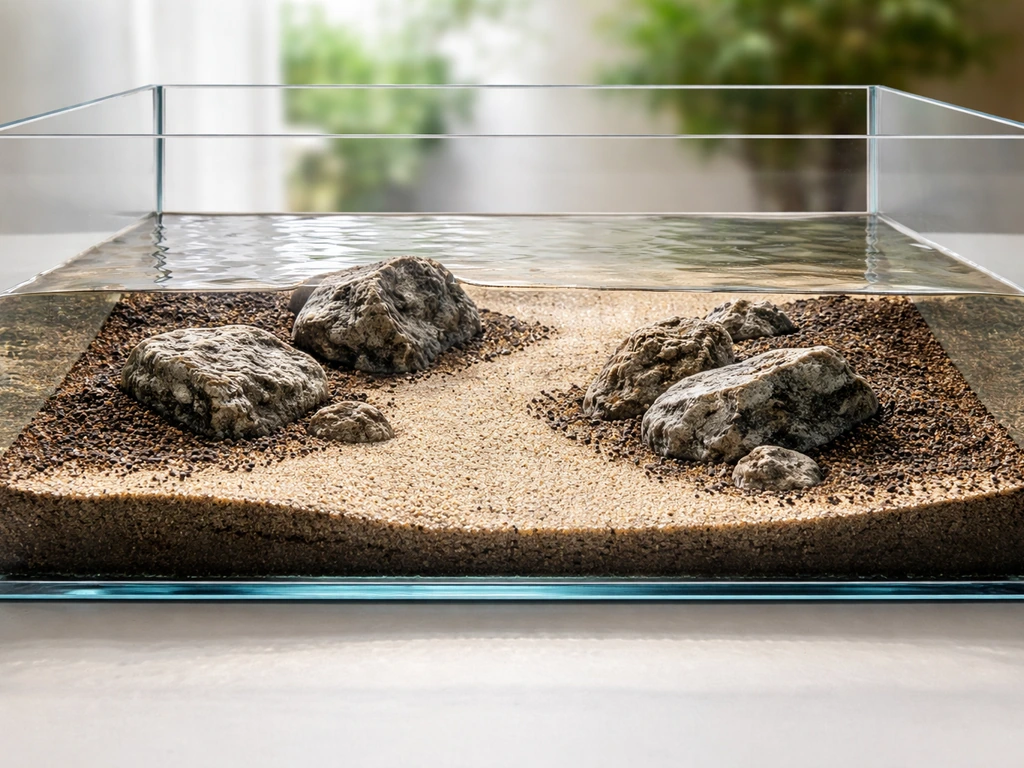
Monte Carlo doesn't need a massive tank, but it does need a well-thought-out setup. It works in tanks as small as five gallons, and I've seen it do well in shallow aquariums (under 12 inches of water depth) because getting adequate light to the substrate is much easier. The shallower the tank, the less powerful your light needs to be to hit the carpeting target.
Substrate is where a lot of beginners cut corners and then wonder why their carpet isn't spreading. Use a nutrient-rich planted aquarium substrate like ADA Aquasoil, Fluval Stratum, or a similar capped system. Monte Carlo feeds heavily through its roots once it establishes, so an inert gravel-only substrate will slow it down significantly unless you're supplementing with root tabs.
Aim for a substrate depth of at least 2 to 3 inches so the plant has something to anchor into and draw nutrients from. AquariumCalc’s substrate calculator guide provides a general planted-tank guideline of about 1. 5, 2. 5 inches (4, 6 cm) of substrate depth for certain categories, including low-tech planted tanks [substrate depth of at least 2 to 3 inches](https://aquariumcalc.
com/substrate-calculator/). Monte Carlo can also grow over hardscape like rocks and driftwood when it has enough length, which gives you some creative flexibility at the edges of your layout.
If you want to get ahead of algae problems before they start, think about how to grow biofilm in your aquarium as part of your cycling plan. A properly cycled, biologically active tank gives Monte Carlo a much more stable environment to root into than a brand-new setup with swinging parameters.
How to plant Monte Carlo so it actually roots
This is the step most guides gloss over, and it's where most failures happen. Planting Monte Carlo correctly from the start is the single biggest factor in whether it carpets or just floats around and rots.
Preparing the plant
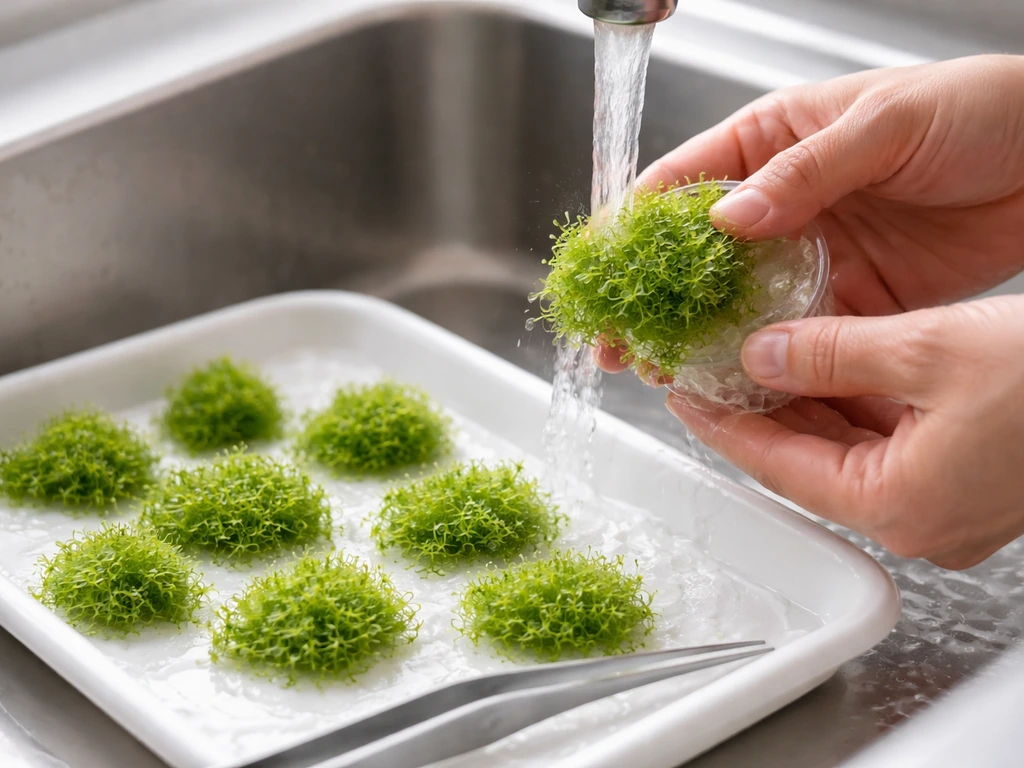
If you're using a tissue culture cup, rinse the agar gel off completely under lukewarm water. Then break the plant mass into small portions, roughly 1-inch clumps. Don't try to plant it as one big chunk. Smaller clumps spread faster and root more reliably. If you're working with a potted plant, separate it into similar-sized portions after removing the rockwool.
The planting method
You need curved aquascaping tweezers for this. Straight tweezers will work in a pinch, but curved ones let you angle into the substrate much more precisely. Push each clump into the substrate at roughly a 45-degree angle, deep enough that the roots and lower stem are anchored but the leaf tips are still visible above the surface. Burying the tops is one of the most common mistakes and it causes the plant to melt rather than root. Space your clumps about 2 to 3 cm apart across the planting area. That spacing encourages horizontal runners to fill in the gaps rather than growing straight up.
The dry start method (optional but effective)
If you haven't filled the tank yet, consider the dry start method. Plant Monte Carlo into moist substrate with no standing water, cover the tank with plastic wrap to keep humidity at nearly 100 percent, and mist the substrate daily. Under good light, the plant roots aggressively in these conditions and you get a head start on the carpet before flooding. After two to four weeks, slowly fill the tank over a few days. This method does involve more patience upfront, but it dramatically reduces the early floating and replanting headaches.
Light, CO₂, and nutrients: the growth triangle
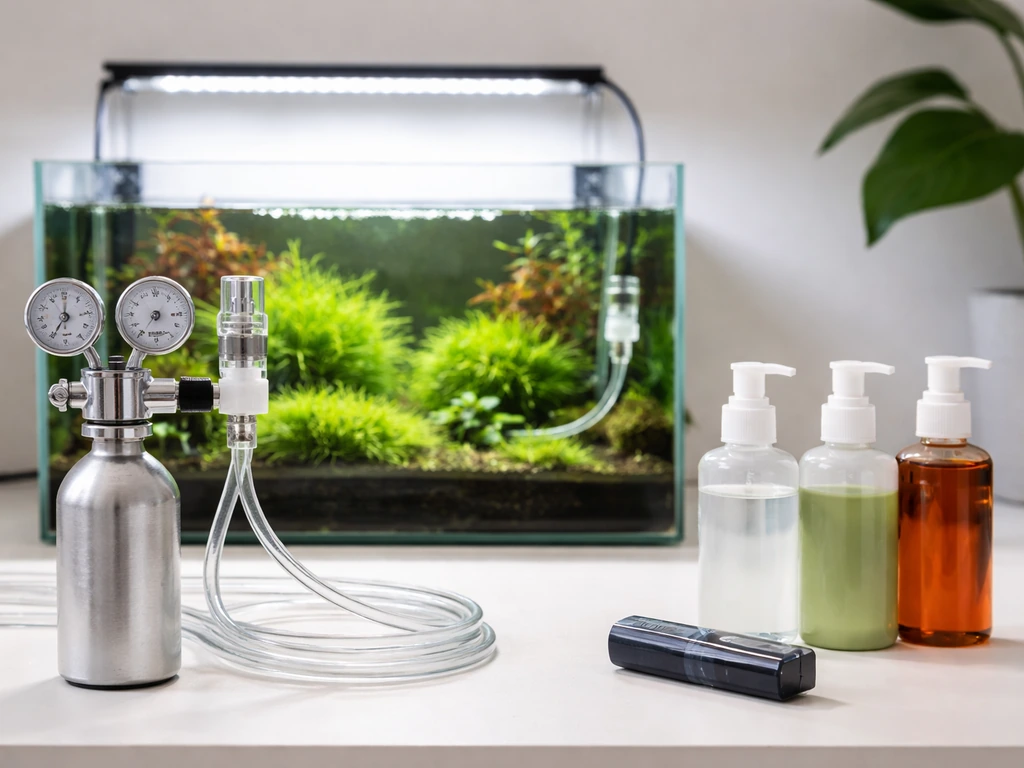
These three inputs are interdependent. Crank one up without the others and you create imbalances that invite algae. Get all three dialed in together and Monte Carlo grows fast and compact.
Lighting
For Monte Carlo to carpet rather than just survive, you need at least 35 to 50 PAR at substrate level. Measure this with a PAR meter if you have access to one. If you're guessing, assume that a decent planted tank LED (like a Chihiros, Fluval Plant 3.0, or similar quality light) at full power over a shallow tank will usually hit this range. Run lights for 8 hours per day on a timer. I've found that going beyond 10 hours without enough CO₂ just grows algae, not plant.
CO₂
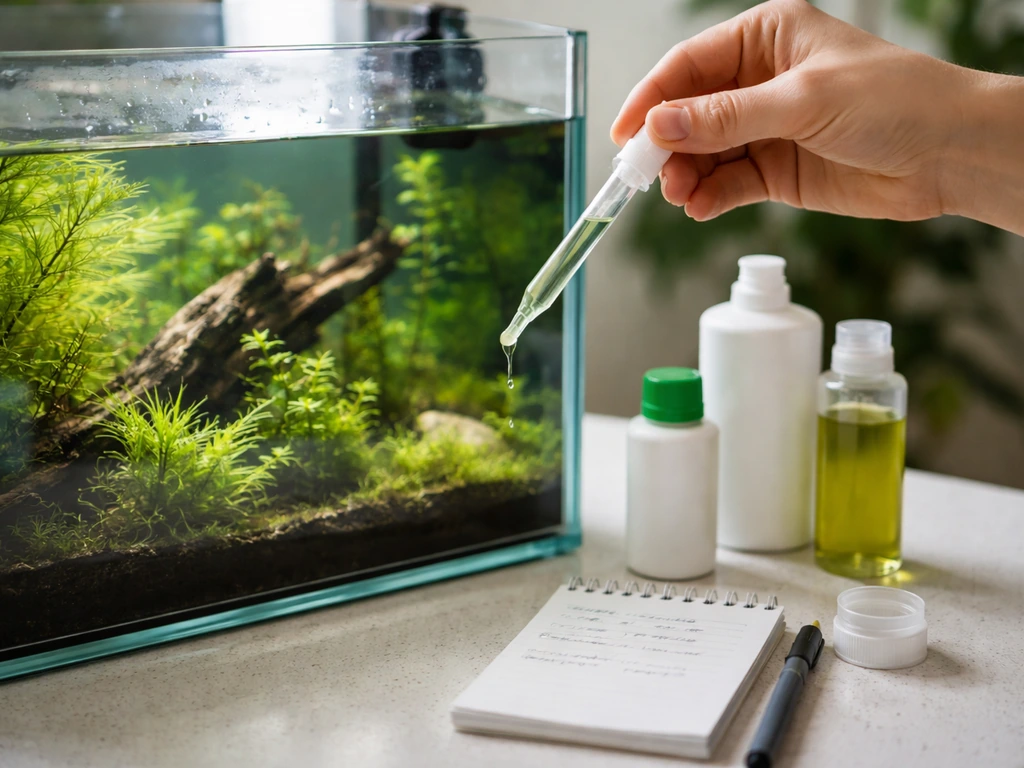
CO₂ injection is the biggest lever you have for fast, compact carpeting. Without it, Monte Carlo will grow, but it tends to be slower, stretchier, and harder to keep low. With injected CO₂, aim for a dissolved concentration of 20 to 35 ppm. The easiest way to monitor this without a dedicated meter is a drop checker: using a 4 dKH reference solution, the checker should turn green, which corresponds to roughly 30 ppm of dissolved CO₂. A yellow reading means you've gone too high; blue means you need more. Run CO₂ on the same schedule as your lights, turning it on about an hour before the lights come on and off about an hour before lights go out.
If CO₂ injection isn't possible right now, liquid carbon supplements (like Seachem Excel or similar) can help, but temper your expectations. You'll get growth, but carpeting will be slower and you'll need to be more precise with your light and nutrient balance to avoid algae. Monte Carlo can survive without CO₂ injection, but injected CO₂ is what gets you a dense, compact, fast-spreading carpet.
Fertilization
Monte Carlo is a fast grower once it establishes, and it needs consistent feeding to stay that way. Dose a comprehensive liquid fertilizer two to three times per week. Tropica Premium or Tropica Specialised Nutrition are solid choices: use Premium for tanks with a mix of plants and Specialised if Monte Carlo is the main focus (it has a higher nitrogen and phosphorus content). Make sure your substrate is nutrient-rich too. If you're using an inert substrate, root tabs placed every 4 to 6 inches under the planting area will compensate.
Water parameters and a simple maintenance schedule
Monte Carlo is reasonably adaptable, but staying within its preferred parameters keeps it growing steadily and reduces the chance of melt or stagnation.
| Parameter | Target Range | Notes |
|---|---|---|
| Temperature | 22–28 °C (72–82 °F) | Stable is more important than exact; avoid swings |
| Water hardness | 2–8 dGH | Softer water tends to work better with CO₂ systems |
| pH | 6.5–7.5 | CO₂ injection will naturally lower pH; monitor daily |
| Nitrite (NO₂) | 0 ppm | Even moderate nitrites cause melting in early stages |
| Ammonia (NH₃) | 0 ppm | Only plant in a cycled tank |
| Nitrate (NO₃) | 10–20 ppm | Low-to-moderate level; part of the nutrient triangle |
Weekly maintenance routine
- 30 to 50 percent water change every week, using dechlorinated water matched to tank temperature
- Dose liquid fertilizer after each water change (and again mid-week if growth is vigorous)
- Check CO₂ drop checker color daily during lights-on period
- Trim any upward-growing stems back to substrate level to encourage horizontal spreading
- Replant any clumps that have floated loose by pressing them back in with tweezers
- Spot-clean algae from glass and hardscape before it gets established
Troubleshooting: melting, slow growth, holes, and algae
Monte Carlo is melting or turning brown
Some melt in the first week or two is normal, especially with tissue culture plants transitioning from emersed to submersed growth. The plant is shedding leaves it grew in air and replacing them with aquatic-adapted ones. However, if the whole plant goes brown and mushy, check your water parameters first. High nitrites are a specific trigger for early-stage Monte Carlo melt, and this is a sign your tank may not be fully cycled. Get nitrites to zero before planting, and if melt happens mid-growth, do a large water change immediately and test your parameters.
Monte Carlo isn't spreading
Slow or no spread almost always comes down to one or more of the three growth inputs being insufficient. Aquascapedia also says slow Monte Carlo coverage is usually linked to low light, poor substrate nutrients, or no CO2, and recommends improving those factors (including considering CO2) to encourage faster stolon formation slow or no spread almost always comes down to one or more of the three growth inputs being insufficient. .
Work through this checklist: Is your PAR at substrate level actually above 35? Is your CO₂ at 20 ppm or higher (drop checker green)? Is your substrate nutrient-rich, or are you relying only on water column dosing? Fix the weakest link first.
In my experience, low light is the most common culprit in setups that have CO₂ but still struggle, because the light isn't actually reaching the substrate at useful intensity.
Holes in the leaves
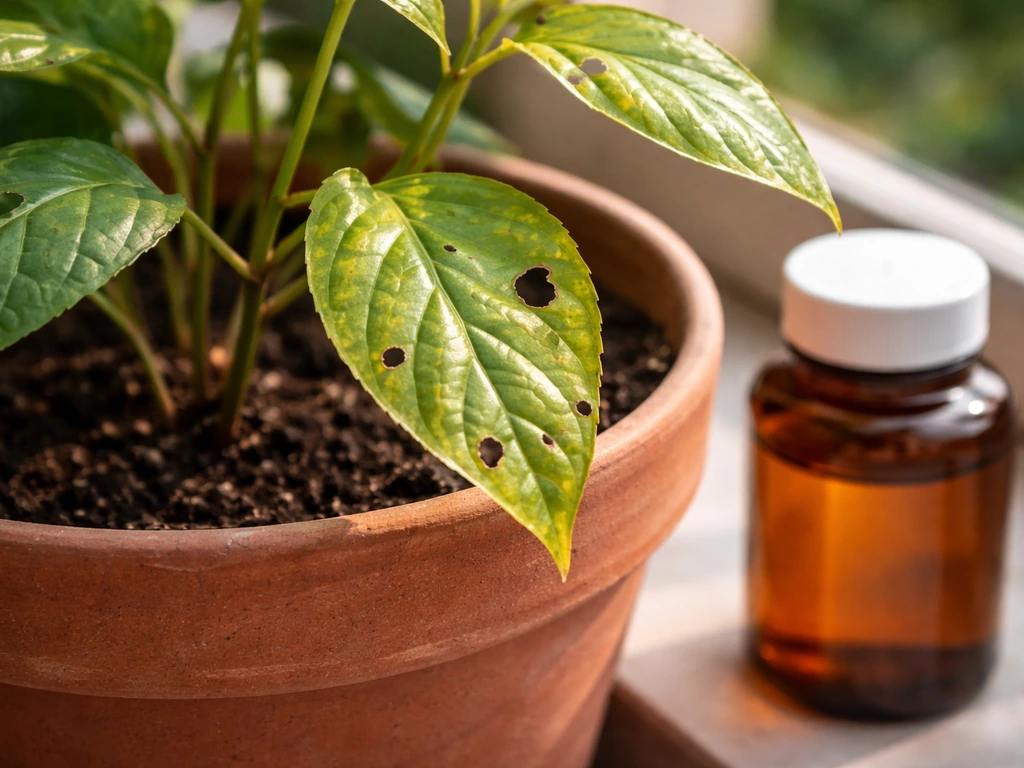
Holes are usually a potassium or micronutrient deficiency. Switch to a more complete fertilizer if you're using a basic one, and increase your dosing frequency. Holes can also appear if shrimp or snails are grazing heavily on the plant, so check your tank inhabitants too.
Algae outbreaks
Algae on Monte Carlo is almost always a symptom of imbalance, not an independent problem. The most common scenario: you raised your light intensity without a matching increase in CO₂ and nutrients, and algae moved in before the plant could use the extra energy. Green spot algae on leaves means phosphate is low relative to light. Hair algae or green water usually points to too much light and not enough CO₂.
Dial back the light photoperiod to 6 hours temporarily, increase CO₂ if you can, and do a few consecutive days of large water changes. If you're also curious about leveraging microbial communities to compete with algae, reading about how to grow biofilm in a shrimp tank gives a useful perspective on tank balance that applies here too.
Monte Carlo growing upward instead of carpeting
If your Monte Carlo is shooting up instead of spreading horizontally, it's usually reaching for more light. Either your PAR is too low at substrate level, or the plant was planted too deep and is trying to get its tips above the substrate. Trim the upward growth close to the substrate and increase light intensity. Replant any clumps that are buried more than half their stem length.
How long it actually takes, and what to do once the carpet fills in
In a well-set-up high-tech tank (good light, injected CO₂, nutrient-rich substrate), Monte Carlo will show visible horizontal spreading within two to three weeks of planting. By weeks four to six, you'll have a recognizable carpet forming. Full, dense coverage of the entire planting area typically takes eight to twelve weeks depending on how much area you're covering and how densely you planted at the start. Planting clumps closer together at the beginning (2 cm spacing instead of 3 cm) speeds up the visual payoff, at the cost of using more plant material.
Once the carpet is established, the main maintenance job becomes thinning. Monte Carlo will eventually build up a thick mat that traps debris underneath and starts to lift at the edges. When that happens, use sharp scissors to trim the whole carpet to about 1 cm height. This sounds dramatic but the plant recovers quickly and the fresh growth comes in dense and compact. If you have bare patches, cut a small section from a dense area and replant the clumps into the gap using the same tweezers technique from the beginning.
If you find yourself interested in growing other low-growing aquatic plants alongside Monte Carlo, the techniques for growing carpet grass seeds in an aquarium share a lot of overlap in terms of substrate prep and lighting requirements, and the two approaches can complement each other in a mixed layout.
For those who want to explore other carpeting or foreground options, growing grass in an aquarium covers a range of species that work well in similar high-light setups and can fill a foreground when Monte Carlo isn't the right fit for a particular tank. Similarly, if you're building out a more complex planted tank with taller background or midground plants, growing bacopa in an aquarium pairs well with Monte Carlo because it thrives in the same water parameters and benefits from the same CO₂ and fertilizer regimen.
One thing worth noting for aquascapers who want to experiment with unusual contrasts: some hobbyists have tried pairing Monte Carlo with broader-leaf semi-aquatic plants along the tank edges. If that's a direction you're interested in, growing monstera in an aquarium gives a clear breakdown of what's possible with larger semi-aquatic plants as a backdrop or emersed accent to a Monte Carlo carpet foreground.
And if you're drawn to the idea of building a more complete aquatic ecosystem around your carpet, growing seagrass in an aquarium is worth reading for context on how different aquatic plant types interact with the same water column and what that means for overall tank balance.
Your next steps, right now
- Confirm you have the right plant: look for Micranthemum tweediei 'Monte Carlo' on the label, and prefer tissue culture to avoid hitchhikers
- Check your substrate: if it's inert gravel only, add root tabs before planting or swap to a nutrient-rich substrate
- Measure your PAR at substrate level before planting. If you're under 35, raise your light or reduce water depth
- Set up CO₂ injection and calibrate with a drop checker using 4 dKH reference fluid. Target green, meaning roughly 30 ppm
- Plant in 1-inch clumps at 2 to 3 cm spacing using curved tweezers, angled at 45 degrees with leaf tips visible above substrate
- Start a weekly water change and fertilizer schedule immediately after planting
- Test water parameters on day one and again after one week. Zero nitrites is non-negotiable before and during early establishment
- Be patient for the first two weeks. Some melt is normal. By week four you should see clear horizontal spreading
FAQ
My Monte Carlo keeps floating or loosening, what should I change first?
If your Monte Carlo is floating, it is almost always a planting depth or anchoring issue. Replant the clumps so the lower stem and roots are fully buried, keep the leaf tips above the substrate, and do not bury more than about half the stem length. After replanting, avoid disturbing the substrate for 24 to 48 hours so new roots can grip, and confirm you do not have strong current aimed directly at the planting area.
How do I stop algae from taking over right after I plant Monte Carlo?
To prevent algae while keeping Monte Carlo rooted, reduce light intensity or photoperiod temporarily and keep CO₂ steady. A practical approach is to run lights for 6 hours instead of 8 while you verify drop checker color, then restore the schedule once algae slows and new growth looks normal. Also check that you are not overdosing nutrients while CO₂ and light are still mismatched, because plant melt plus algae often comes from imbalance right after planting.
What if my CO₂ level keeps fluctuating, can Monte Carlo still carpet?
Staying within 20 to 35 ppm CO₂ is important for dense growth, but stability matters more than the exact number. If your drop checker swings from blue to green, you can get melt followed by algae. Use a diffuser positioned to distribute gas evenly, start CO₂ about an hour before lights, end it about an hour before lights off, and avoid overshooting during feeding or water changes by making adjustments gradually.
Can I grow Monte Carlo without CO₂ injection, and what changes should I expect?
You can technically run Monte Carlo without injected CO₂, but you must treat it as a slower, higher-risk setup. Expect more trimming and a tighter balancing act between light, fertilizer, and substrate nutrients. If you see persistent hair algae or green water, the fastest fix is usually lowering light photoperiod and ensuring you have enough nutrients (especially if you are on inert substrate) rather than adding more liquid carbon.
How do I know if my light is strong enough (or too strong) for Monte Carlo carpet?
Choose lighting based on PAR at the substrate, not the LED wattage. If you do not have a PAR meter, use a conservative starting point (especially with shallow tanks where it is easy to overdo intensity) and increase gradually over 1 to 2 weeks. If your PAR is too low you get upright stretching and slow runners, if it is too high without matching CO₂ you tend to get algae first.
When should I thin or trim Monte Carlo, and will it damage the carpet?
Yes, you can trim, and trimming is often the difference between a mat that stays low and a carpet that becomes thick and lifts. Cut the entire carpet to roughly 1 cm when it gets dense enough to trap debris, then replant trimmed sections into bare areas immediately. Use sharp scissors to minimize tearing, and wait about a week to judge results because new runners need time to re-anchor.
What water tests matter most before planting, and what do I do if melt starts?
If nitrites are elevated, Monte Carlo may brown and melt because the tank is not biologically ready. Before planting, test nitrite and ammonia and wait until nitrite is consistently at zero, not just “falling.” After planting, if melt becomes widespread and mushy, do a large water change right away and retest, because mid-growth failures often trace back to cycling problems or recent changes that disrupted beneficial bacteria.
Monte Carlo has holes in the leaves, how can I tell deficiency from grazing?
If you get holes, switch from a basic fertilizer to one that covers potassium and micros more completely, and increase dosing frequency rather than just total dose. Also examine grazers, especially shrimp and snails, because heavy grazing can mimic deficiency symptoms. If the “holes” appear overnight in the same spots, suspect animals or physical damage before assuming a nutrient issue.
Does planting spacing change how fast Monte Carlo carpets, or is it just the nutrients and light?
The best planting spacing depends on your goal. For fastest visual carpet, plant closer (about 2 cm). If you prefer using less plant and can wait longer, use wider spacing (around 3 cm) and be consistent with CO₂, light, and substrate nutrients. Either way, smaller clumps spread faster because they establish more root points, reducing the chance of large sections rotting before they take.
My Monte Carlo is growing up instead of spreading. How do I fix that?
If Monte Carlo is shooting upward, it is usually chasing light, or it was planted too deep. Trim any upward growth close to the substrate, then replant clumps buried deeper than about half the stem length so the leaf tips remain visible. Next, verify substrate-level PAR, because some setups look bright at the water surface but still fail to deliver enough intensity where Monte Carlo wants it.