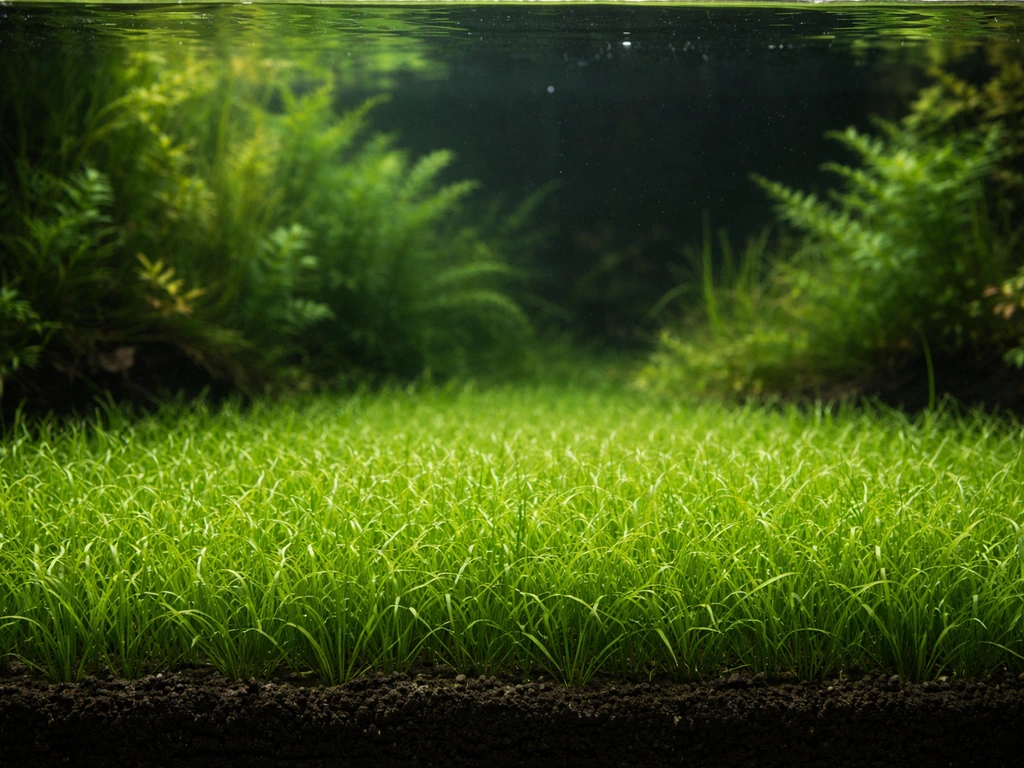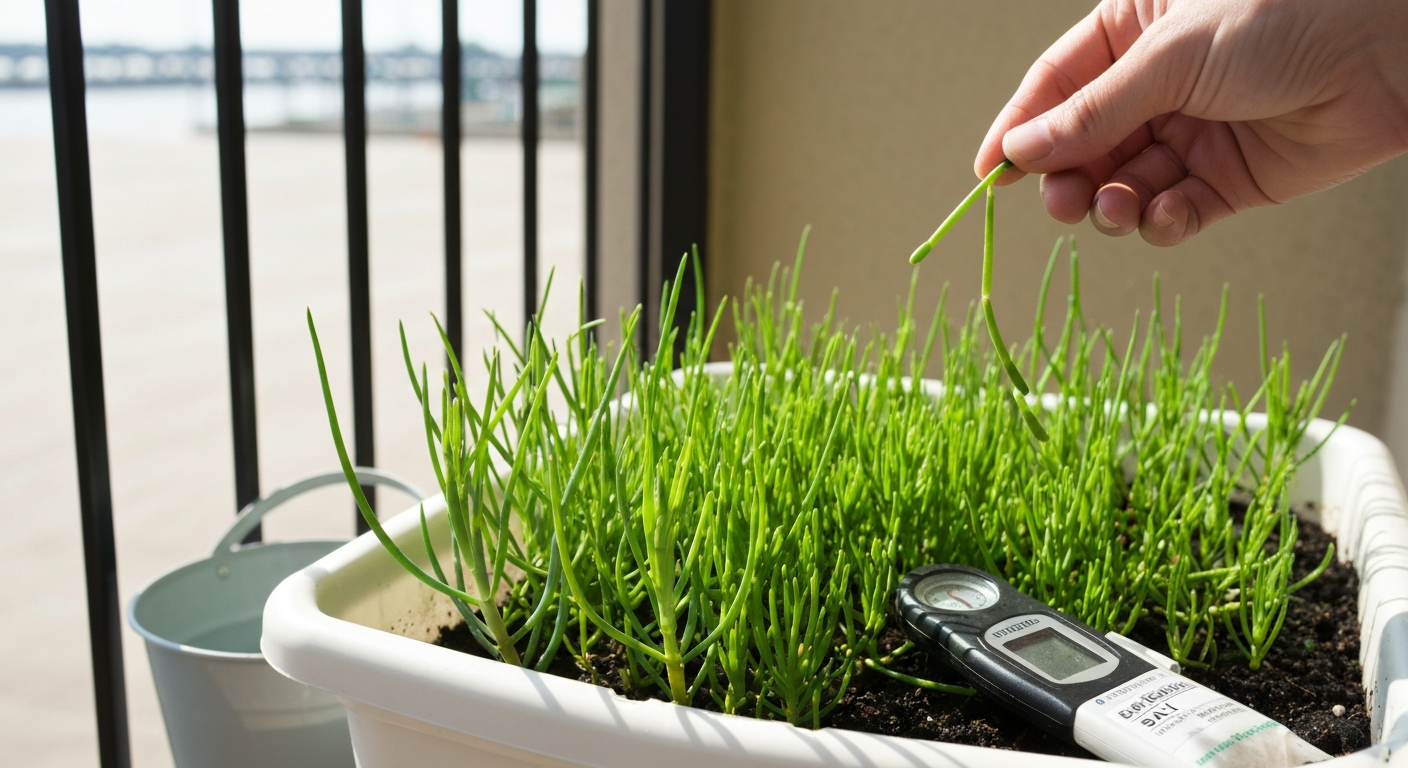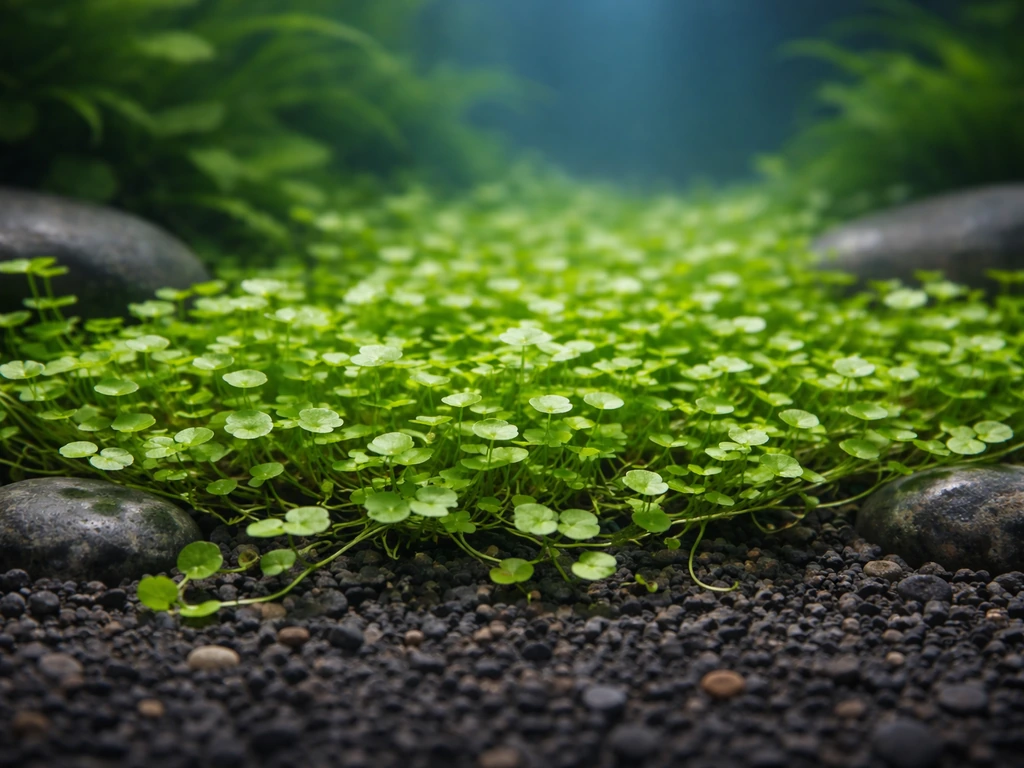
Growing Monte Carlo emersed means planting Micranthemum tweediei in moist substrate inside a covered container and letting it root and spread in open air before you ever flood it. Done right, you end up with a dense, fully rooted carpet in 4 to 6 weeks that survives flooding far better than plugs dropped straight into a filled tank. The key variables are nutrient-rich substrate, high light, consistent moisture without waterlogging, and a humidity tent to keep the air around the leaves from drying out. See a practical dry-start method guide for HC Cuba and Monte Carlo at https://gensou.sg/dry-start-method-carpet-plants/ Dry Start Method Carpet Plants: HC Cuba and Monte Carlo (4–6 week emersed root development).
How to Grow Monte Carlo Emersed Step by Step
Marcus Holloway
20 Jun 2026
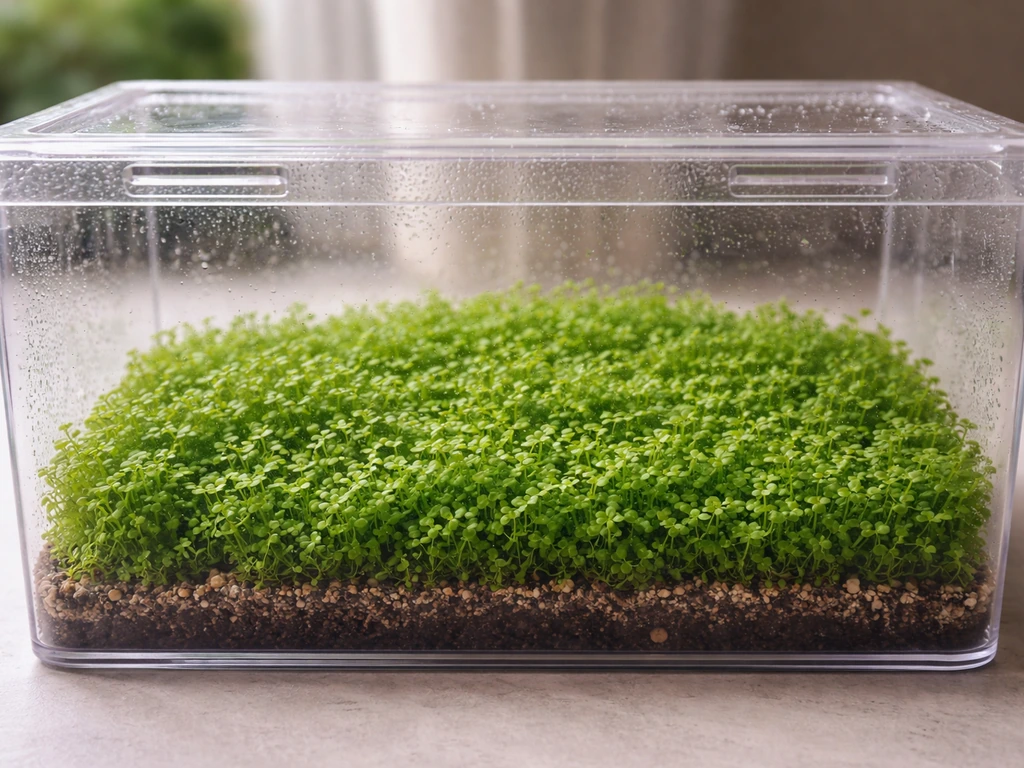
What Monte Carlo is and why growing it emersed is trickier than it sounds
Monte Carlo (Micranthemum tweediei) is a small-leafed creeping plant from South America that forms a low, lush carpet along the substrate. It's become one of the most popular foreground carpeting plants in planted aquariums, but it has a reputation for melting, growing in patches, or just stalling when planted directly into a filled tank. That's where emersed growing changes the game.
In emersed conditions, Monte Carlo is essentially grown like a terrarium plant: roots in moist soil, leaves in humid air, no water column above it. The plant puts energy into rooting downward and spreading laterally before it ever has to deal with the stress of submersion. When you finally flood the tank, you're flooding an already-established carpet rather than a handful of fragile plugs fighting to anchor themselves.
The tricky part is that 'emersed' doesn't mean 'dry.' Monte Carlo still needs constant moisture at the substrate level and high ambient humidity around its leaves. Get either of those wrong and you get browning, rot, or a stalled carpet. You also need actual nutrients in the substrate, because unlike a water column you can't just dose the water and expect the plant to thrive. The emersed phase strips away a lot of the safety nets that a mature planted tank provides.
Pick the right container and setup before you plant anything
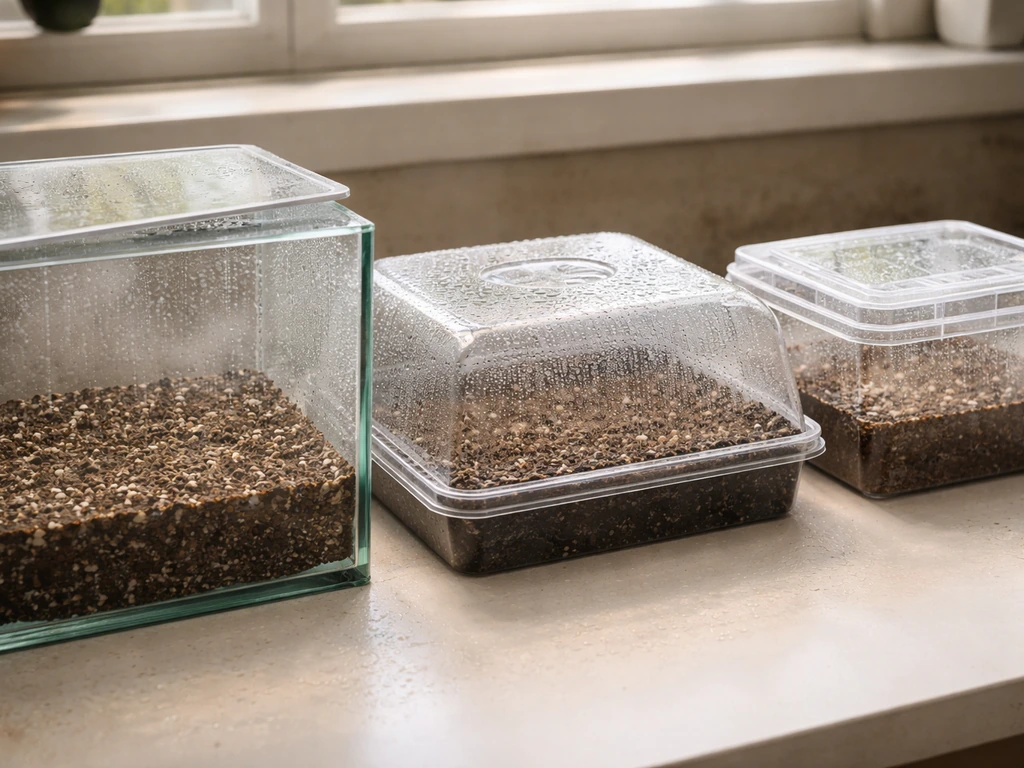
Your container is basically a humidity chamber. The most common options are a standard glass aquarium with a glass or plastic lid, a shallow propagation tray with a clear dome, or a plastic tub with plastic wrap stretched over the top. All of these work, and the choice mostly comes down to what you already have and what the final aquascape will look like.
If your end goal is a planted aquarium, use the actual tank. If you want, you can use the same approach to build a setup specifically for growing cow grass in your aquarium. Set it up dry, plant into the substrate, and seal the top with the glass lid or plastic wrap. This means you skip the step of transferring the carpet later, which always risks tearing up the roots you spent weeks building. If you're building a paludarium or want to grow emersed patches on hardscape like wood or rock, a shallower propagation tray or tub gives you more flexibility to position the pieces before committing to a final layout.
- Glass aquarium with a sealed lid: best if this is your final display tank. No transplanting needed.
- Shallow propagation tray with a humidity dome: good for growing carpet panels you'll transfer later or for testing.
- Plastic tub with plastic wrap lid: budget-friendly and works well for beginners; easy to cut vents if humidity gets too high.
- Hardscape in a tray: if you want Monte Carlo on driftwood or rocks, attach it with thread or tissue culture fragments directly to the surface, keep it moist, and tent the whole setup.
Whatever you use, plan for a small gap or vent in the lid. A completely sealed container with zero airflow can lead to rot and fungal issues because the leaves can't transpire properly. A slight crack or a few small holes gives enough gas exchange without collapsing humidity.
Substrate and media: this is where most people cut corners
Monte Carlo is not going to carpet quickly over inert gravel or plain sand. It needs nutrients at the root zone, and in emersed conditions it can't pull anything from the water column. Active aquasoil (brands like ADA Amazonia, Tropica Aquarium Soil, or similar) is the right call here. These substrates contain enough slow-release nutrients to feed the plant through the entire emersed phase without extra dosing.
Depth matters too. Aim for about 2 to 3 inches (5 to 7.5 cm) of aquasoil. Going thinner means roots hit the tank bottom quickly and have nowhere to anchor. Going much deeper doesn't hurt, but thick inert caps on top of aquasoil can limit the plant's ability to access deeper nutrients. If you want a sand or gravel topping for aesthetics, keep it very thin, under half an inch, and make sure the active substrate beneath it is the dominant layer.
Avoid using only silica sand or plain gravel as your main carpet substrate during the emersed phase. Research consistently shows that substrate composition directly affects how well Monte Carlo acclimatizes and spreads, and inert materials simply don't provide what the plant needs at this stage.
Lighting: high output, dialed-in schedule
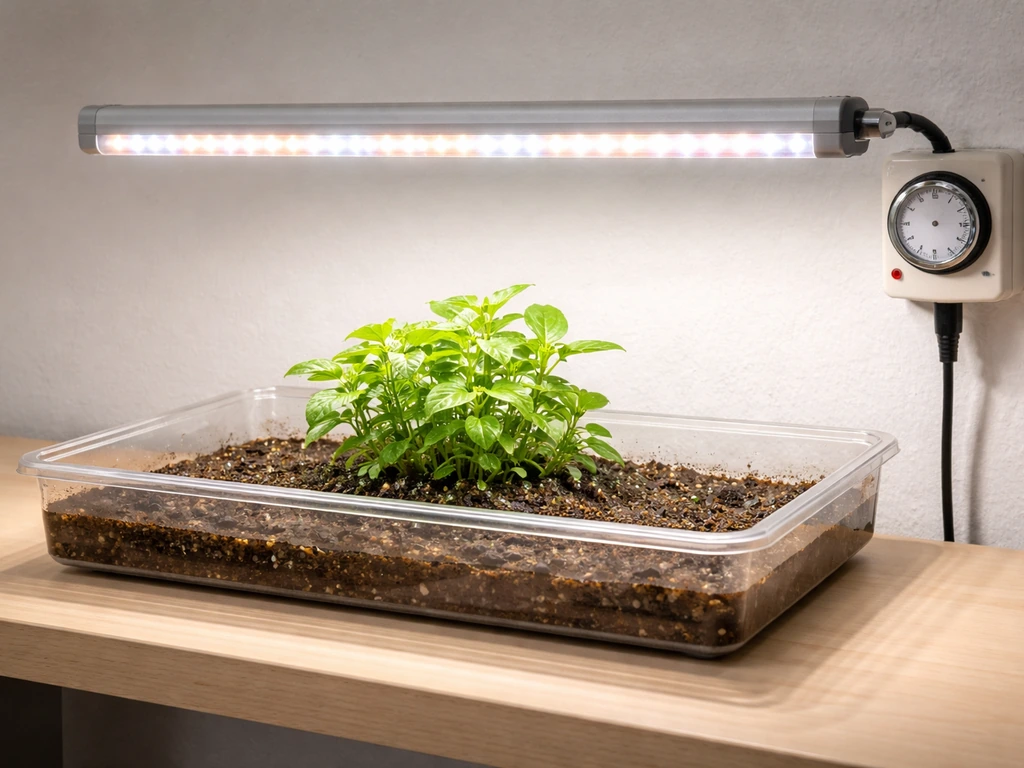
Monte Carlo is a high-light plant. In emersed conditions, you want a full-spectrum LED or T5 fixture sitting 6 to 12 inches above the substrate surface, running at a measured PPFD of roughly 50 to 100 micromoles per square meter per second at the substrate. That's comfortably in the moderate-to-high range for aquatic plants and translates to most mid-tier planted tank lights at moderate intensity settings.
Photoperiod during the emersed phase should be 8 to 10 hours per day. Start toward the lower end, around 8 hours, if you're not running CO2 injection. Fast Aquatics notes that Monte Carlo care guidance emphasizes high lighting as a requirement, while CO2 is optional but beneficial for growth and color not running CO2 injection. This keeps algae risk low while still giving the plant enough energy to grow. Once you see active spreading and the carpet is thickening, you can push to 10 hours. Don't run lights for 12 or more hours early on. More light than the plant can use just feeds algae.
Use a timer. Consistency matters more than the exact hour count. Plants respond to predictable light cycles, and irregular schedules stress them.
Humidity and watering: damp like a wrung-out sponge
The moisture target for emersed Monte Carlo is substrate that feels like a thoroughly wrung-out sponge: obviously damp but not so wet that water pools on the surface or drains from the bottom when you press it. The leaves and substrate surface should glisten after misting but not have standing water sitting on them for hours.
Mist the surface once or twice daily with a hand sprayer. In the morning works well because the lights come on and any surface water evaporates during the photoperiod rather than sitting on leaves all night. Misting heavily right before lights go off can leave wet leaves in a dark, still environment, which promotes rot. That's the mistake that kills a lot of emersed attempts.
Humidity inside the tent should stay above 70%, ideally in the 80 to 90% range. You can check this with a cheap digital hygrometer placed inside the container. If humidity is dropping too fast, your lid seal has too many gaps. If you're seeing condensation dripping back onto the plants constantly and the substrate feels soggy, crack the lid slightly more. It's a balance between retaining moisture and allowing some airflow.
For larger setups or if you're growing on hardscape, a small ultrasonic mister or fogger placed in a water reservoir at the base of the setup can automate humidity. This works especially well in paludarium-style builds where you want Monte Carlo growing on wood or elevated sections.
CO2, nutrients, and feeding schedule
CO2 injection during the emersed phase is optional but it makes a real difference. With CO2, you're looking at a 4 to 6 week emersed rooting period before the carpet is ready to flood. Without it, expect 8 to 12 weeks for comparable density. The plant still grows without CO2, just slower and sometimes patchier.
If you're using CO2 injection in an enclosed emersed setup, run the gas only during the photoperiod and shut it off when lights go out. CO2 accumulation in a sealed or semi-sealed container overnight can reach dangerous concentrations by morning, which can harm the plant and any organisms in the setup.
For nutrients, active aquasoil carries you through most of the emersed phase without needing extra feeding. That said, if you're 3 or more weeks in and growth has slowed or leaves are looking pale, a diluted liquid fertilizer helps. Mix a standard all-in-one aquatic plant fertilizer (something like Seachem Flourish or TNC Complete) at about half the normal dosage and mist it directly onto the substrate surface once a week. You're feeding the roots, not a water column, so less is more. Heavy doses can burn the roots or spike algae.
If you're running a high-tech setup with CO2 and high light and you want to push growth hard, you can add a diluted macro fertilizer (NPK) to your weekly misting routine alongside the all-in-one. Keep the concentration low. The Estimative Index approach works well conceptually for this, but dial the doses back to roughly 25% of standard EI rates since there's no water volume buffering your additions.
How to actually plant it and what success looks like
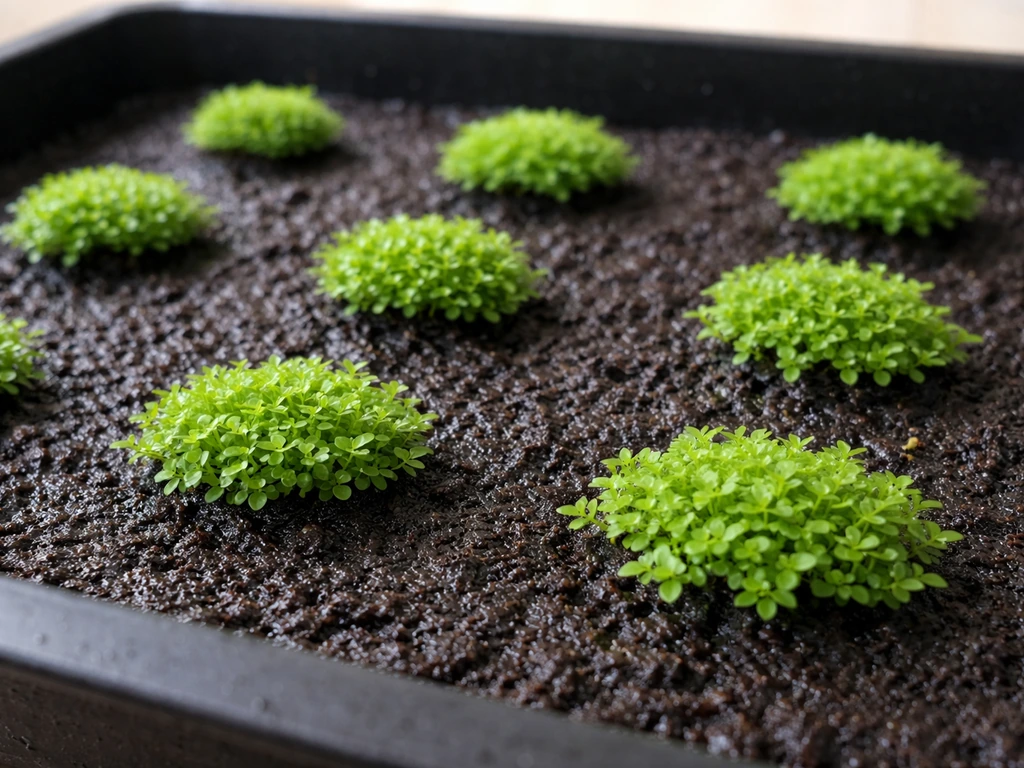
Start by moistening your substrate thoroughly before planting. It should be at that wrung-sponge moisture level before you put a single plant in. Then portion your Monte Carlo into small clumps, roughly the size of a fingernail, and press each one into the substrate so the roots and stem base are buried but the leaves sit above the surface. This is the single most common mistake: burying the leaves. Buried leaves rot. Only the roots and the lowest node of the stem go below the surface.
Space the clumps about 1 to 2 cm apart across the whole area you want carpeted. Closer spacing gives you faster full coverage but uses more plant material. Wider spacing saves plant material but takes longer to fill in and risks patchiness. Once planted, mist the surface lightly, seal the lid, and leave it alone for the first 3 to 4 days.
Here's what to expect week by week:
- Days 1 to 5: The plants look exactly as you planted them, maybe slightly wilted. This is normal. They're adjusting to emersed conditions and starting to send roots down.
- Week 1 to 2: New leaf growth appears. The clumps start looking brighter green and slightly fuller. Runners may start appearing at the edges of the patches.
- Week 2 to 4: Runners spread laterally and begin filling gaps. The individual patches start connecting. This is the phase where good substrate nutrients and humidity really pay off.
- Week 4 to 6 (with CO2): The carpet looks dense, the surface is mostly covered, and plants feel firmly anchored. This is when it's ready to flood.
- Week 8 to 12 (without CO2): Same end result, just slower. Don't rush the flood if it's not fully rooted.
Flooding the tank: the transition from emersed to submerged
When your carpet is fully rooted and covering the substrate, it's time to flood. For the best results when you flood into a planted aquarium, follow the steps in our guide on how to grow vallisneria in aquarium conditions. Do this slowly. Add water in small amounts over a day or two, letting the water level rise gradually rather than pouring in the full volume at once. This reduces the shock of the environmental shift.
Expect some melt after flooding. This is nearly universal and it doesn't mean you failed. The emersed leaves, which developed in humid air, are not adapted to life underwater. They'll often yellow, soften, and fall off within the first week or two of submersion. What matters is that the roots and stem nodes are healthy and that new, submerged-adapted leaves grow from them. If you built a genuinely rooted carpet, those new leaves come in quickly and the carpet fills back out within 2 to 4 weeks post-flood.
Fixing the problems that actually happen
Melting and browning during the emersed phase
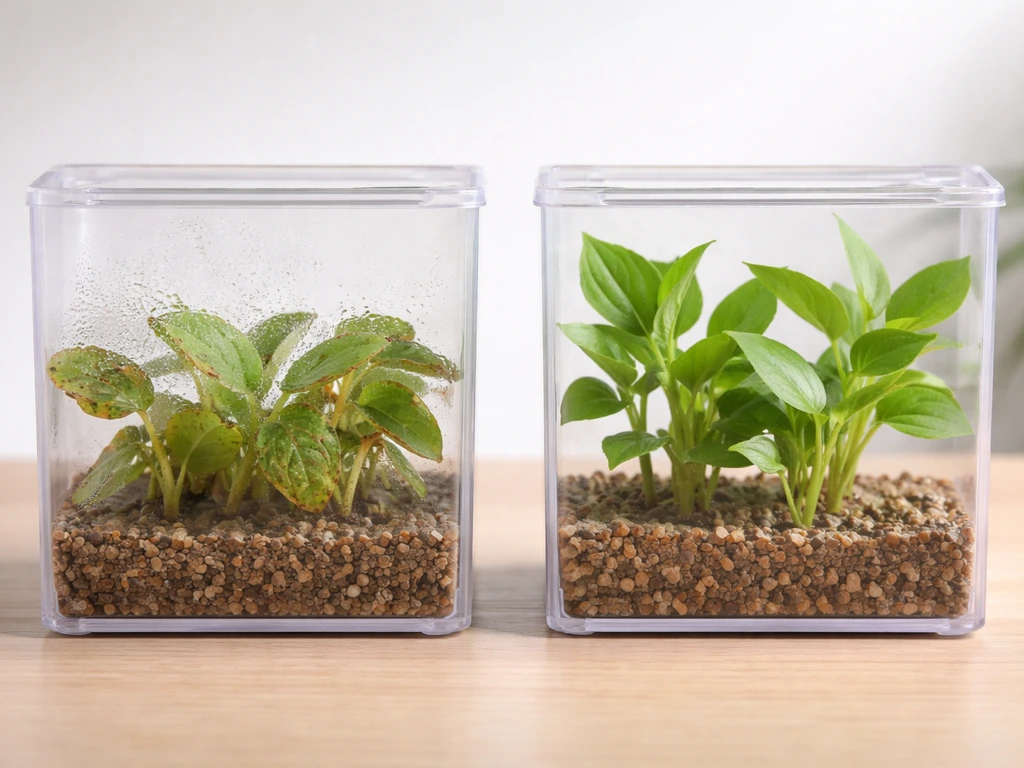
If leaves are turning brown or mushy during the emersed stage (not after flooding), the most common causes are overwatering, poor airflow, or buried leaves. Check that water isn't pooling on the surface. Lift your lid and let it air out for 30 minutes. If you see rotting at the stem bases, you've likely got leaves buried too deep. Gently replant those sections so the leaves are fully exposed above the substrate.
Slow growth and patchy coverage
Slow growth in the emersed phase usually traces back to one of three things: not enough light, inadequate substrate nutrients, or low humidity. Tropica also notes that Micranthemum ‘Monte Carlo’ benefits most from moderate to high lighting and CO2, with slower or weaker growth when those inputs are lower. Check your PPFD at the substrate level and confirm it's hitting at least 50 micromoles.
If you're using inert substrate or a very thin layer of aquasoil, start adding diluted fertilizer to your misting routine. Patchy coverage often means the initial planting was too sparse or some plugs didn't survive the first few days. Fill bare spots by pressing in additional clumps and they'll catch up quickly once the established areas are spreading.
Algae outbreaks
Algae in an emersed setup typically signals that your light intensity or duration is outpacing the plant's current ability to use it. The fix is to drop the photoperiod down to 6 hours temporarily while the carpet fills in. Once you have good coverage and active growth, bring it back up to 8 to 10 hours. Also check that you're not overdosing fertilizer. Excess nutrients in a thin water film on the substrate surface feed algae just as fast as they feed the plant.
Post-flood melt
Post-flood melt is expected and is not the same as failure. If you see yellowing and leaf drop in the first 1 to 2 weeks after flooding, just maintain good water parameters (stable temperature, CO2 if you're running it, balanced nutrients in the water column) and wait.
If you’re looking specifically for how to grow hair grass in an aquarium, the same idea of matching your substrate, light, and humidity setup to your plant’s needs is what helps you avoid slow growth wait. The roots you built during the emersed phase are still there and intact. New submerged leaves will emerge.
If you see zero new growth after 3 weeks of flooding and the stems themselves are black and mushy, that's a true failure, usually from substrate rot or not enough root development before flooding.
Maintenance during the emersed phase
Monte Carlo in emersed conditions doesn't need pruning the way it does submerged. If some areas grow taller or faster, you can trim the tops with scissors to keep the carpet compact and encourage lateral spreading. Wipe condensation from the inside of the lid if it's dripping back heavily onto the plants. Top off moisture every 1 to 2 days. That's really the bulk of the maintenance: mist, check moisture, check for rot, and wait.
One comparison worth keeping in mind: if you've grown other carpeting plants like hairgrass or dwarf hairgrass emersed, Monte Carlo behaves similarly in terms of the dry-start timeline and moisture needs, but it's less tolerant of dry spells and more forgiving of slightly lower light. Hairgrass from seed needs a similarly careful dry-start setup, so the same humidity, light, and substrate principles apply when you're germinating and growing small-leaf grass for an aquarium hairgrass or dwarf hairgrass emersed. If you've had success with those species using this method, Monte Carlo will feel familiar.
Quick reference: emersed Monte Carlo at a glance
| Parameter | Target / Recommendation |
|---|---|
| Substrate | Active aquasoil, 2 to 3 inches deep; avoid plain sand or gravel as the main layer |
| Light intensity (PPFD) | 50 to 100 micromoles per square meter per second at substrate surface |
| Photoperiod | 8 to 10 hours per day; drop to 6 hours if algae appears |
| Humidity inside tent | 80 to 90%; keep above 70% minimum |
| Substrate moisture | Damp like a wrung-out sponge; surface glistens after misting, no pooling |
| Misting frequency | Once or twice daily, preferably at or before lights-on |
| CO2 injection (optional) | Run during photoperiod only; off at night |
| Fertilizer | Diluted all-in-one at half dose, misted onto substrate once per week if needed |
| Emersed phase duration (with CO2) | 4 to 6 weeks |
| Emersed phase duration (without CO2) | 8 to 12 weeks |
| Planting depth | Roots and stem base below surface; all leaves exposed above substrate |
| Clump spacing | 1 to 2 cm apart across the carpet area |
FAQ
What should I do if my emersed Monte Carlo substrate dries out or gets too wet? (how do I recover it)?
If you miss the ideal moisture window and the substrate dries out, Monte Carlo may stall and some newly planted clumps can die back. Re-moisten slowly to the wrung-sponge level, then increase misting frequency for 2 to 3 days (small, frequent doses) rather than soaking it. If leaves are already browning, gently lift a small section to check root health before replanting, because dead plugs will not recover once the stem base rots.
Can emersed Monte Carlo get algae, and how do I tell if it is an algae problem or a plant-stress problem?
It can be, depending on how hard you push the photoperiod and fertilizer. In a sealed or nearly sealed container, algae often appears as a green film on the substrate or leaves when light is too strong for the plant’s current biomass. A safer approach is to start at 8 hours, keep humidity stable, and only raise light after you see lateral runners across most of the area.
How much ventilation is safe in the humidity tent, and how do I know if I have too much or too little airflow?
“Humid enough” for Monte Carlo usually means you avoid having dry leaf surfaces while still preventing standing water. If you see persistent standing droplets, dripping condensation that keeps hitting leaves, or a substrate surface that stays glossy after the photoperiod, your setup is too wet or too airtight. Crack the lid slightly more, mist less per session, and make sure airflow can exchange air without collapsing humidity.
If I need to fix bad planting spots later, should I replant, trim, or just wait?
You can, but do not bury the leaves or stem tips. If you choose to do it, press only the roots and the lowest node into the substrate, then trim any clearly dead, mushy sections before refixing the clumps. Also expect more melt after flooding if the clumps were stressed during replanting, so plan to flood only when the carpet is already visually rooted.
How risky is CO2 in an emersed container, and how should I adjust CO2 when moving to flooded conditions?
Yes. CO2 accumulation is the reason the article recommends turning CO2 off when lights go out in enclosed setups. If you cannot time it, reduce output significantly and use a container with a small vent gap so gas does not build overnight. After flooding, resume CO2 gradually rather than jumping to the same rate you used during emersed growth, since submerged demand can spike.
What are common fertilizer mistakes during the emersed stage (and how do I troubleshoot algae after fertilizing)?
During the emersed phase, Monte Carlo does not like fertilizer on leaves. If you see algae or browned leaf tips after misting, it usually means you dosed too strongly or sprayed too heavily. Switch to half-dose (or less), mist onto the substrate rather than directly onto foliage, and reduce the frequency to once every 10 to 14 days until the carpet is thick.
How can I tell normal post-flood melt from a real failure?
After flooding, you may see yellowing and leaf drop, but true failure is usually indicated by rotting stems that turn black and mushy, with no new submerged growth after about 3 weeks. If the roots are firm and white to light-colored, treat it as normal melt and focus on stable temperature, adequate light, and steady nutrients in the tank.
If my carpet seems stuck, how do I diagnose whether the problem is light, depth, or substrate mix?
The substrate layer can be too thick, but the more common issue is a thick inert top that blocks nutrient reach. If your carpet is not spreading, first confirm light at the substrate level, then check whether you used a dominant active substrate layer with only a thin aesthetic cap. If the cap is thick, scrape back and thin it locally rather than adding more fertilizer.
Should I grow Monte Carlo emersed in the actual aquarium or in a separate container, and which one is easier to maintain?
Yes, but choose it based on your ability to keep moisture stable. A small clear dome or tub works best for small patches, but for a full-tank footprint the full aquarium lid is easier to control and less likely to dry out at the edges. Also ensure any tub has enough lid contact to keep humidity but not a fully airlocked seal, since rot risk rises when gas exchange is near zero.
Do I need to prune emersed Monte Carlo to get a dense carpet faster?
You typically do not prune during emersed growth for dense carpets, because trimming can remove actively rooting tissue and slow spread. If only a few blades are taller, trim sparingly just the tallest ends. Once flooded, then you can treat height control as an aquascape task, since submerged pruning can redirect growth.