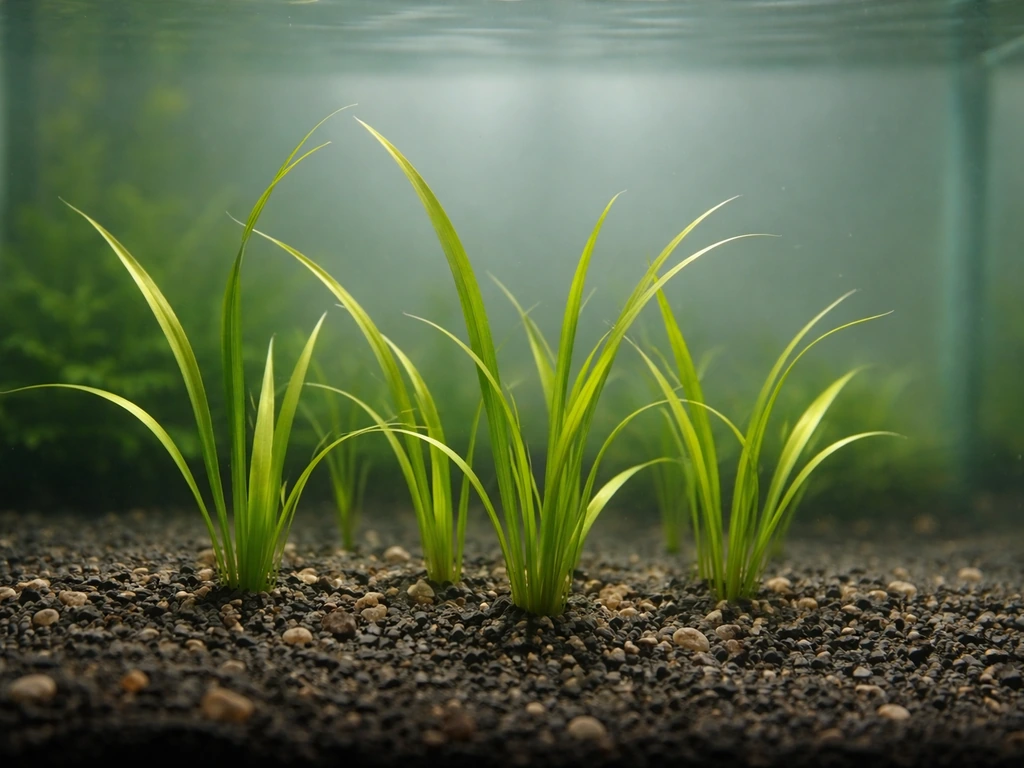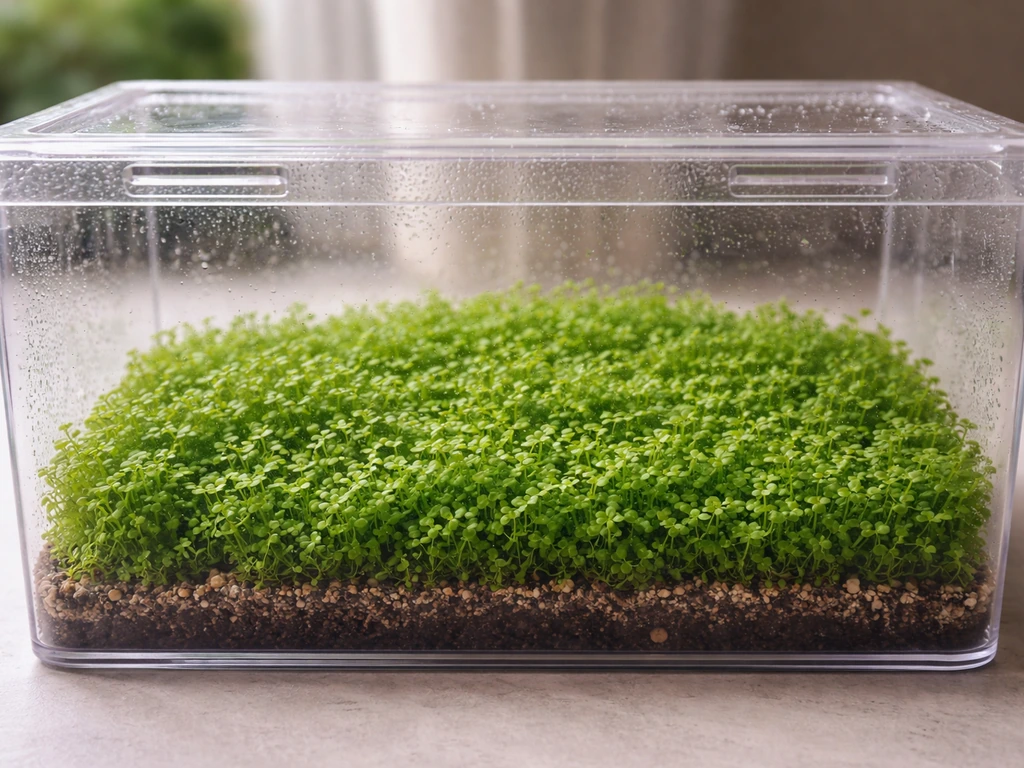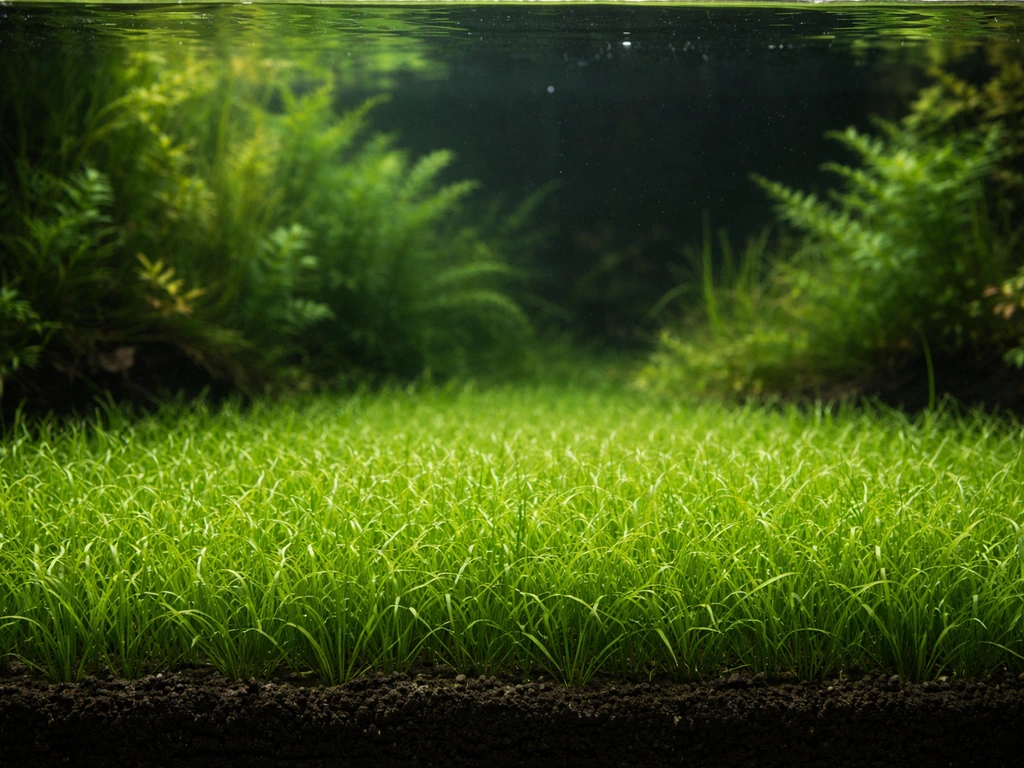
You can grow small-leaf carpeting grass in your aquarium from seed, but you need to go in with clear expectations: most "aquarium carpet seed" packets sold online are not what they claim to be, and the species that do work from seed (mainly dwarf hairgrass, Eleocharis parvula or Eleocharis acicularis) germinate best using a dry-start method before the tank is flooded. Skip that step and you'll likely end up watching seeds float around, rot, or sprout into something completely wrong. Do it right, though, and you can have a dense, low carpet in 6 to 10 weeks without spending a fortune on tissue-culture pots. Once you have your dry-start approach set, you can focus on the regular aquarium care steps that help the carpet stay flat and dense grow cow grass in aquarium.
How to Grow Small Leaf Grass Aquarium From Seed: Step-by-Step
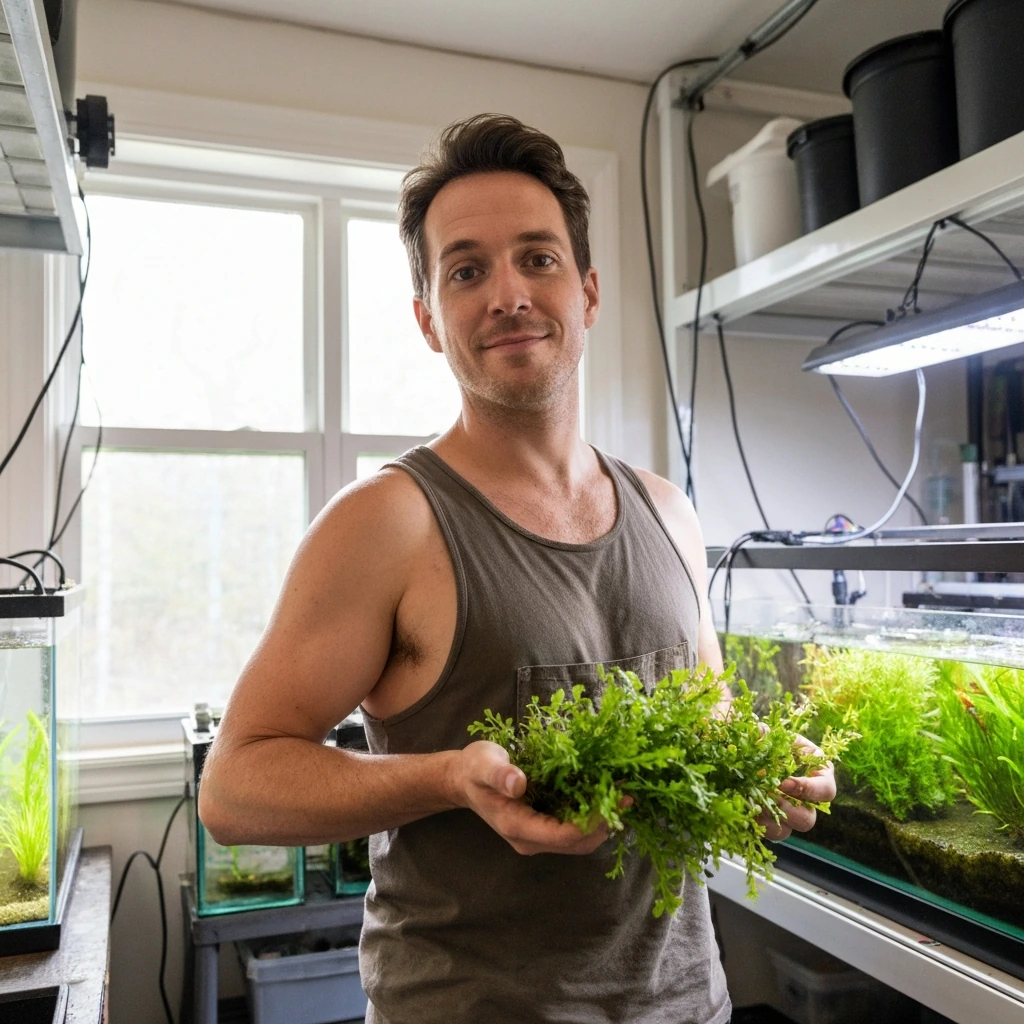
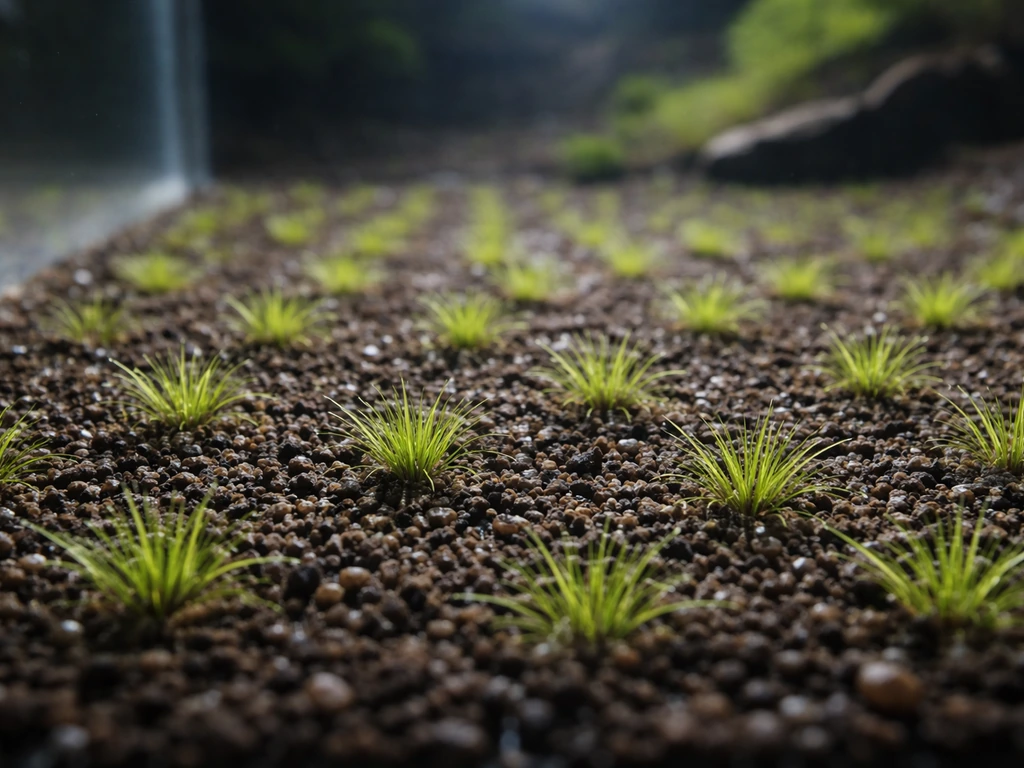
What "small leaf grass" actually means and how to pick the right seed
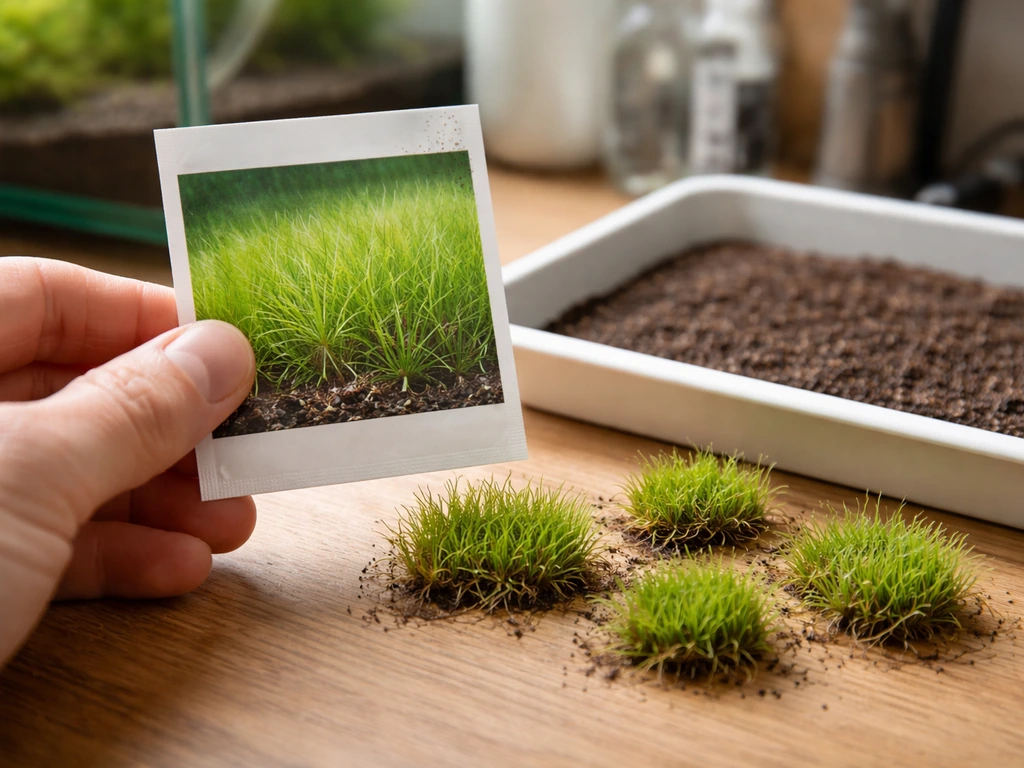
"Small leaf grass" is not a single species. In aquascaping forums and product listings, it gets used interchangeably for several low-growing carpeting plants, most commonly dwarf hairgrass (Eleocharis parvula or E. In aquarium common names, blank" rel="noopener noreferrer">Eleocharis parvula is often sold as dwarf spikerush, small spikerush, or hairgrass, and the “dwarf hairgrass” label is frequently used for Eleocharis spp. in aquascaping. acicularis), glossostigma (Glossostigma elatinoides), and sometimes dwarf sagittaria or Monte Carlo. If you're buying seeds specifically, the realistic candidates narrow down fast. Glossostigma and Monte Carlo are almost never sold as viable seed in the hobby and are far better started from tissue culture or emersed plugs. Dwarf sagittaria spreads by runners and isn't typically seeded either.
Dwarf hairgrass (Eleocharis spp.) is the one plant genuinely available from seed that can form a small-leaf grass carpet. If a packet says "aquarium carpet seeds" or "dwarf hairgrass seeds" with no species name, treat that as a red flag. A lot of these packs circulating on Amazon and similar marketplaces are repackaged terrestrial grass or sedge seeds that look fine for the first week or two and then melt completely once submerged. The aquarium hobby has a name for this: the carpet seed scam. It's widespread enough that many experienced aquarists refuse to buy carpet seeds at all and stick to tissue-culture starts instead.
If you want to try seeds anyway, here's how to shop smart: look for sellers that specifically name Eleocharis acicularis or Eleocharis parvula on the label. Buy from a reputable aquascaping supplier rather than a general marketplace. Read reviews specifically looking for whether the plant was confirmed after it grew. Better yet, buy tissue culture or potted starts of dwarf hairgrass alongside your seeds so you have a backup. The seeds are cheap enough that the experiment is worth running; just don't bet your whole tank setup on them.
Aquarium setup for seed germination
The single biggest factor in success is running a dry start, which means you germinate the seeds before you flood the tank. This is how serious aquascapers grow carpeting grass from Eleocharis seed, and it sidesteps most of the germination problems you'd face underwater. You're essentially treating the early phase like a terrarium rather than an aquarium.
Light
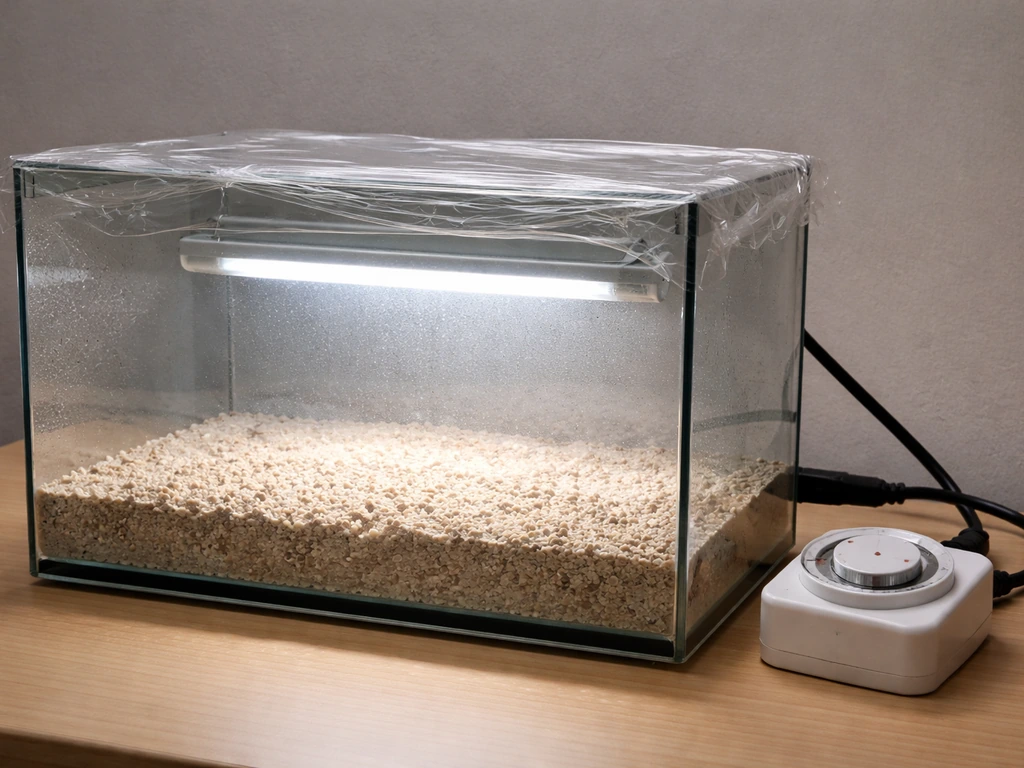
Use a full-spectrum LED grow light or your aquarium light placed close to the substrate, running 10 to 12 hours per day. During the dry-start phase, you don't need anything fancy because the plants are small and the light demand is modest. Once you flood, dial intensity up if you're targeting a dense carpet: Eleocharis and especially Glossostigma won't creep low and flat without strong light. Insufficient light is the main reason carpeting grasses grow tall and weedy instead of hugging the bottom.
Temperature
Keep the tank at 22 to 26 degrees Celsius (72 to 79 F) during germination and early growth. Eleocharis seed germination is helped by warmth: cooler temperatures slow or stall it. If your room runs cold, a small seedling heat mat under the tank helps a lot during the dry-start phase.
Water and humidity during dry start
During dry start, you're not filling the tank. Instead, you mist the substrate once or twice a day to keep it moist but not waterlogged, then cover the tank with a sheet of plastic wrap or glass to trap humidity. Aim for a foggy, greenhouse-like environment inside the tank. Check daily and mist if the surface looks dry. Stagnant moisture breeds mold, so you do need to crack the cover for 15 to 30 minutes each day for fresh air circulation.
Water flow and CO2 after flooding
Once you flood the tank (usually after 3 to 5 weeks of dry start once the carpet looks established), keep flow gentle near the substrate. Hard current will uproot seedlings and dislodge new runners. A sponge filter or a spray bar pointed at the surface works well. For CO2 injection after flooding, start conservative: around 0.
5 to 1 bubble per second for a tank under 60 liters, and adjust based on plant response and a drop checker. Aim for a green-yellow reading on the checker, which corresponds to roughly 20 to 30 ppm dissolved CO2. CO2 isn't strictly required during dry start, but it makes a real difference once the tank is flooded.
If you want the fastest, most reliable results, follow the same dry-start approach for how to grow vallisneria in an aquarium setup how to grow vallisneria in aquarium.
Choosing and prepping your substrate
Substrate is where a lot of people cut corners and regret it later. Eleocharis has fine, shallow roots that need something they can actually penetrate. You want a layered approach: a nutrient-rich bottom layer (aquasoil like ADA Aqua Soil, Fluval Stratum, or similar) topped with a fine-grain cap of sand or small gravel in the 1 to 3 mm range. The cap keeps seeds from sinking too deep and makes the surface look clean and natural. Aim for the nutrient base at 4 to 6 cm deep and the cap at about 1 to 2 cm.
Before you add seeds, make sure the substrate surface is smooth and level. Depressions collect seeds in clumps; ridges leave bare patches. Lightly mist the surface and let it absorb before seeding so the moisture is even throughout. Avoid using pure sand with no nutrient layer underneath for a seeded carpet: the plant needs accessible nutrients as soon as roots develop, and an inert substrate alone will starve early growth.
Planting without losing seeds
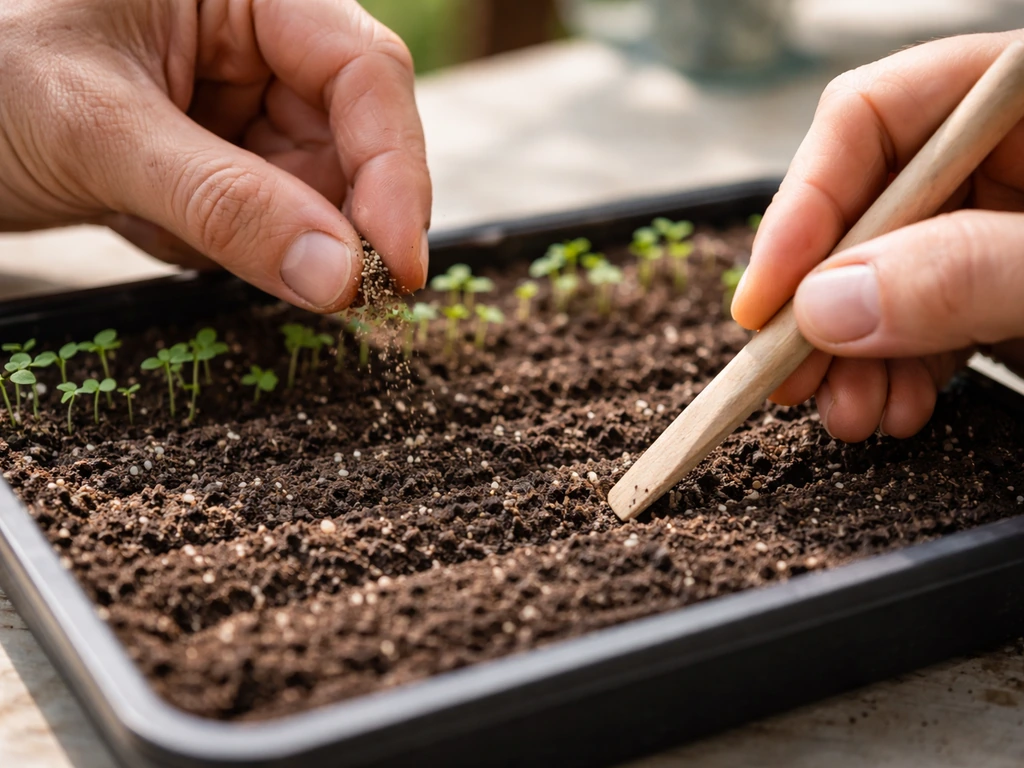
This is where most beginners lose half their seeds immediately. Do not sprinkle seeds onto a wet surface from a height; they bounce and cluster. Instead, mix your seeds with a small amount of dry sand in a cup (roughly 1 part seed to 3 parts sand), then spread the mixture by hand in a thin, even layer across the substrate. The sand weighs the seeds down and spaces them out. After spreading, press them lightly into the surface with a flat piece of plastic or your fingers. Eleocharis seeds should not be buried: they need light to germinate, so pressing them in rather than covering them is the right move.
Seed-starting and early growth routine
The first two weeks are the most nerve-wracking part. Here's what to expect and what to do day by day.
- Days 1 to 3: Nothing visible yet. Mist twice daily, keep the cover on, and resist the urge to poke at the substrate. Check that humidity is high (condensation on the cover is a good sign).
- Days 4 to 7: You should start to see tiny green sprouts, hair-thin, beginning to emerge. If you see white fuzz, that's mold, which usually means the surface is too wet or there's no air circulation. Remove the cover for an extra 30 minutes and let it breathe.
- Days 7 to 14: Sprouts become more visible and start to stand upright. The substrate should still be evenly moist. At this point you can lightly mist with a dilute liquid fertilizer (more on that below).
- Days 14 to 21: Runners may begin spreading from the first sprouts. This is the point where growth accelerates. Continue misting and maintaining humidity.
- Weeks 3 to 5: Once the carpet has decent coverage, individual blades are at least 2 to 3 cm tall, and roots look established, you're ready to flood slowly. Add water in stages over 2 to 3 days, not all at once.
After flooding, expect some leaf dieback on older blades as the plant transitions from emersed to submerged growth. This is normal and not a sign of failure. New growth from the crowns and runners will be the submerged-adapted form, which is typically shorter and more compact.
Fertilization and carbon: what the plant actually needs
During dry start, the plant is small and the nutrient demand is low. A light diluted all-in-one liquid fertilizer misted onto the surface every 3 to 4 days is enough. Once the tank is flooded, dosing becomes more important.
Use a complete all-in-one liquid fertilizer that covers both macronutrients (nitrogen, phosphorus, potassium) and micros including iron. Dose based on the nitrate level in your water: aim for 10 to 25 ppm nitrate in a planted tank. If nitrate is consistently below 10 ppm, increase dosing frequency. If algae is appearing and nitrate is already high, cut back. The mistake most people make is over-dosing fertilizer before their plant mass is large enough to absorb it, which feeds algae instead of the carpet.
CO2 is not mandatory during dry start, but after flooding it makes a significant difference for carpeting. Without CO2 injection, carpeting grasses like Eleocharis and especially Glossostigma tend to grow upward rather than spreading flat. If you're not running pressurized CO2, use a liquid carbon supplement as a partial substitute, keep lighting on the moderate side to avoid outpacing the plant's carbon uptake, and be patient: the carpet will grow but more slowly. The rule of thumb here is that fertilizer and light should be balanced against carbon availability. Pouring in nutrients and blasting with light in a tank without CO2 is a reliable way to grow algae, not carpet.
Trimming, spacing, and building the actual carpet
Once your grass is submerged and growing, the goal shifts from getting it to survive to getting it to spread flat and dense. A few techniques make a real difference here.
Trim early and often. The first trim usually happens around 3 to 4 weeks after flooding, once blades reach about 3 to 4 cm. Cut down to about 1 to 1.5 cm with sharp aquascaping scissors. This encourages the plant to put energy into horizontal runners and new lateral growth rather than height. After the first trim, aim to trim every 2 to 3 weeks or whenever the carpet gets above 3 cm. Remove all trimmings promptly: floating clippings decompose and can cause ammonia spikes or algae in a young tank.
If the carpet is patchy after flooding (which it almost always is), thin out dense spots and replant small plugs in the bare areas. Eleocharis plugs transplant easily: use tweezers to push a small cluster of 5 to 8 blades into the substrate about 1 cm deep in the bare spot. Do this in batches and the carpet will fill in evenly within a few weeks.
Spacing matters more than density at planting time. Overcrowded areas will shade each other out and develop mold or rot at the base. If you seeded heavily and everything came up at once in one section, thin it out by removing small clumps and replanting them elsewhere. A carpet that starts at even medium density and is trimmed regularly will look fuller after 6 weeks than one left to grow dense and tall.
Troubleshooting: when things go wrong
Seeds not germinating
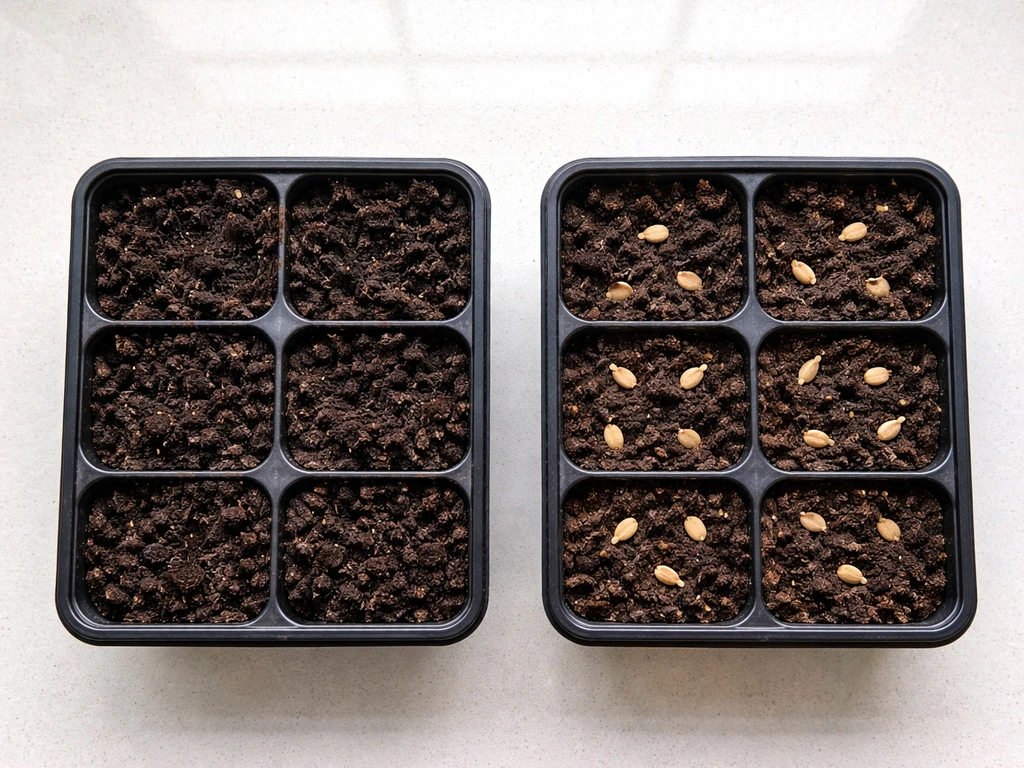
- Check that seeds are pressed into the surface, not buried. They need light to germinate.
- Ensure temperature is at least 22 C. Below that, germination stalls.
- If nothing has sprouted after 14 days, the seeds may be non-viable (a common result of bad-quality "carpet seed" packs). This is the point where having tissue-culture starts as a backup saves you.
- Verify the substrate is moist but not waterlogged. Sitting water at the surface suffocates seeds.
Melting after flooding
- Some leaf melt is normal as emersed blades die back and the plant grows new submerged leaves. Wait 1 to 2 weeks before panicking.
- If the whole carpet melts with no new growth, the roots likely weren't established enough before flooding. Drain back down to a thin water layer and let growth continue before trying again.
- Melting combined with black substrate patches signals rot, usually from too much organic debris or anaerobic conditions. Gently siphon the area and increase surface agitation.
Algae outbreak
- Green spot algae on the substrate surface during dry start: usually from too much light or inconsistent misting. Reduce the light photoperiod by 2 hours.
- Green algae bloom after flooding: almost always a sign that fertilizer or light is outpacing CO2 and plant uptake. Cut the photoperiod to 6 to 8 hours and reduce fertilizer dose until the plant mass grows.
- Hair algae specifically: a strong indicator of high light with low CO2. Either add CO2, reduce light, or both.
Patchy or uneven carpet
- Uneven seeding distribution is the usual cause. Transplant small plugs from dense areas to bare spots.
- Shaded areas will always be slower and thinner. Rearrange hardscape or adjust light angle if one section of the tank is consistently in shadow.
- Fish or shrimp digging up new growth: try temporarily blocking access to the carpet area with mesh or hold off on adding livestock until the carpet roots in fully (usually 4 to 6 weeks post-flooding).
Grass growing tall instead of flat
- This is almost always a light problem. Increase the intensity or move the light closer.
- No CO2 can also cause this in species like Glossostigma. Add CO2 or reduce light to match what the plant can actually use.
- Regular trimming trains the carpet to grow flat over time.
Maintenance schedule and when to expect a stable carpet
Here's a realistic timeline and what to do at each stage.
| Phase | Timeframe | Key tasks |
|---|---|---|
| Dry start germination | Days 1 to 14 | Mist twice daily, maintain humidity, check for mold, light 10 to 12 hrs |
| Dry start growth | Weeks 2 to 5 | Mist with diluted fertilizer every 3 days, allow runners to spread, trim if needed |
| Flooding | Week 3 to 5 | Add water gradually over 2 to 3 days, start CO2 injection, begin regular dosing |
| Early submerged phase | Weeks 5 to 7 | Expect some melt, do 20 to 30% water changes twice weekly, monitor for algae |
| Carpet filling in | Weeks 7 to 10 | First trim, transplant bare patches, adjust fertilizer based on nitrate testing |
| Stable carpet | Week 10 and beyond | Trim every 2 to 3 weeks, maintain CO2 and fertilizer routine, reduce water change frequency to weekly |
Most people who follow this process have a recognizable carpet by week 8 to 10. A fully stable, lush, even carpet usually takes 12 to 16 weeks total from seeding. That's normal and honestly faster than most people expect when they start out frustrated at week two with nothing visible.
For ongoing maintenance, keep trimming on schedule and test nitrate every two weeks. Once the carpet is stable and well-rooted, it becomes one of the lower-maintenance parts of a planted tank. If you ever want to expand beyond the grass carpet and add mid-ground or tall background plants, species like vallisneria work well as a contrast behind a low Eleocharis foreground, since vallisneria is a completely different growth form and handles similar water parameters. If you're interested in exploring other carpeting approaches, growing plants like Monte Carlo emersed before transitioning them to a flooded tank follows a similar dry-start logic and is worth looking into once you've got this process down.
The biggest thing I'd tell someone starting this today: buy seeds from a named Eleocharis species source, run the dry start, and don't flood too early. Those three things alone will put you ahead of most people who try this and give up after the seeds don't sprout underwater. The method works; it just requires patience in the first two weeks when nothing looks like it's happening.
FAQ
My packet says “small leaf grass” or “aquarium carpet seeds” but no species name. Should I plant it anyway?
You can, but treat it as a gamble. If the label does not explicitly state Eleocharis parvula or Eleocharis acicularis, plan for failure because many “carpet seed” packets are terrestrial seeds that melt after submersion. If you try anyway, keep a backup option (potted or tissue-culture dwarf hairgrass) so you do not waste your scaping timeline waiting for a carpet that never forms.
How do I know the dry-start period is finished, before I flood?
Flood when the substrate is clearly populated with fine, upright sprouts or short grass forms across most of the intended area, not just a few random germinations. If you flood while seedlings are still mostly invisible or only wet-looking (no visible shoots), you increase dieback and get more patchy regrowth.
What causes the “seed rot” problem during dry start, and how can I prevent it?
Most rot comes from waterlogged conditions (too much soaking or no evaporation control) or a humid cover that never gets air. Keep the substrate moist but not puddled, mist lightly, and crack the cover daily for fresh air circulation. If you see fuzzy growth on the surface, increase airflow immediately and reduce misting frequency.
Do I need CO2 during dry start to get good germination?
No. CO2 is mainly helpful after flooding for flatter, denser growth. During dry start, focus on temperature, humidity, light, and substrate moisture. Adding CO2 while still emersed does not reliably improve germination and can complicate the setup.
What’s the best temperature if my room is cool for dry start?
Aim for the high end of the recommended range, about 24 to 26 C (75 to 79 F), because warmth speeds germination. If your room runs cold, place a small seedling heat mat under the tank and monitor with a thermometer so you do not overheat the top layer and dry it out.
Can I seed directly into sand only, without an aquasoil base?
It is not recommended. Even if seeds germinate, a pure inert substrate often starves seedlings once roots develop, which leads to slow establishment and thin coverage. Use a nutrient-rich base layer and a fine 1 to 3 mm cap so the roots can access nutrients while the cap helps keep seeds from sinking too deep.
My carpet grew, but it is tall and bushy instead of low and flat. What should I change?
Usually it is a light and carbon balance issue after flooding. Increase light intensity or shorten the distance to the substrate, then ensure CO2 availability (pressurized or a conservative liquid carbon approach). Also trim early, since frequent early trimming forces energy into runners rather than height.
How often should I trim, and what happens if I trim too late?
Start trimming around when blades reach roughly 3 to 4 cm after flooding, and cut back to about 1 to 1.5 cm. If you wait longer, the plant invests in vertical growth and later runner development is slower, which can keep the carpet patchy and require more replanting.
What’s the safest way to replant patchy areas without disturbing the rest of the carpet?
Replant in small batches using tweezers, pressing a tiny cluster of about 5 to 8 blades into bare spots around 1 cm deep. Avoid yanking established runners, and work quickly so uprooted sections do not dry out. After replanting, keep flow gentle near the substrate for a week.
Why does algae show up right after flooding when I’m trying to grow grass?
Common causes are over-fertilizing early (nutrients feed algae before the carpet mass can absorb them), too much light too soon, or poor CO2 balance. Start with moderate lighting, dose fertilizer based on nitrate targets (not guesswork), and if you do not run pressurized CO2, keep light moderate and be patient with slower carpet spread.
Do I need to thin or spread out seedlings at planting time if I already seeded heavily?
Yes, usually. If everything germinates at once in one dense zone, shading and base rot risk increase. Thin dense clumps by removing small sections and replant elsewhere, or spread seeds more evenly next time using a seed-to-sand mix so spacing is consistent from day one.
Can I combine dwarf hairgrass with other foreground plants later?
You can, but start with a plan for spacing and trimming overlap. Fast carpeting runners can outcompete or smother slower foreground plants, especially near the light and nutrient-rich zones. If you add species later, wait until the hairgrass is stable and well-rooted, then use spot separation (bare gaps or careful edging) so the new plant is not constantly shaded.