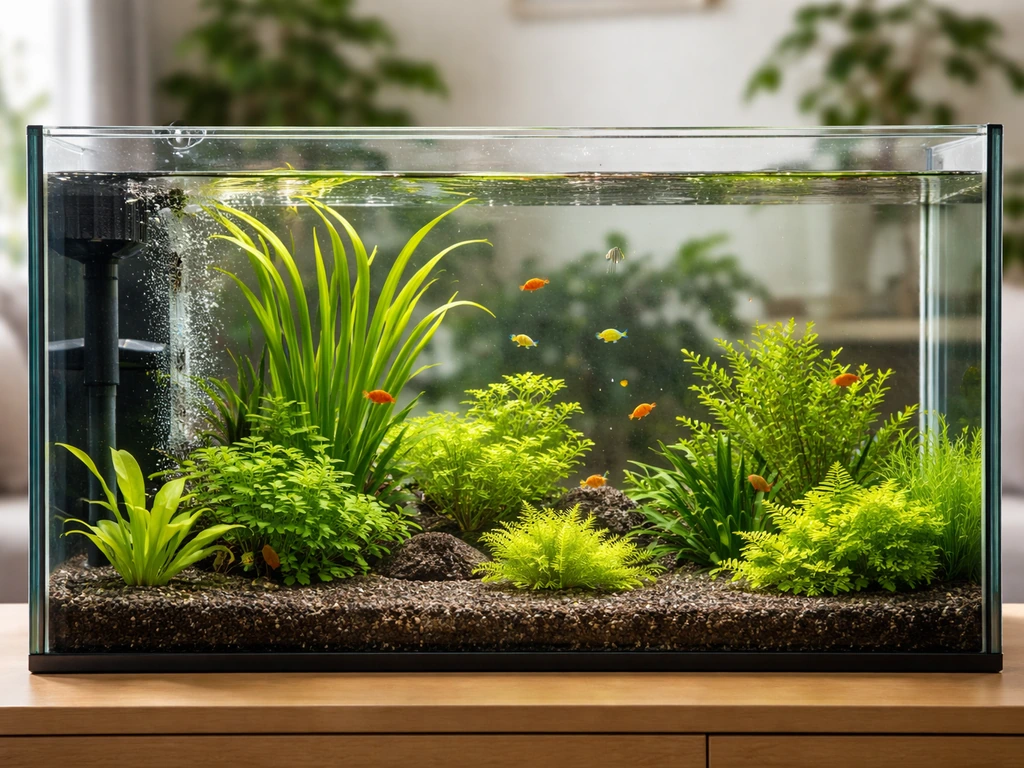
Most aquatic plants can double in size or biomass within 7 to 17 days under the right conditions. To hit that pace consistently, you need four things working together: enough light (at least 70–150 µmol·m⁻²·s⁻¹ PPFD for most species), a carbon source (CO₂ injection or fast-growing floaters that use atmospheric CO₂), a complete fertilizer matched to your system, and stable water temperature in the 20–28 °C range. Growth, photosynthesis and acclimation by two submerged macrophytes in relation to temperature (Functional Ecology / PubMed) documents species‑specific temperature responses in submerged macrophytes (Elodea, Callitriche), showing strong effects on relative growth rate with increases between ~16–32 °C and species optima rather than a single universal temperature. Get those four right and fast growth is predictable. Miss any one of them and you'll be wondering why your plants are just sitting there turning yellow.
How to Grow Aquatic Plants Fast: 30/60/90-Day Plan, Setup & Dosing
Your 4-week fast-growth plan
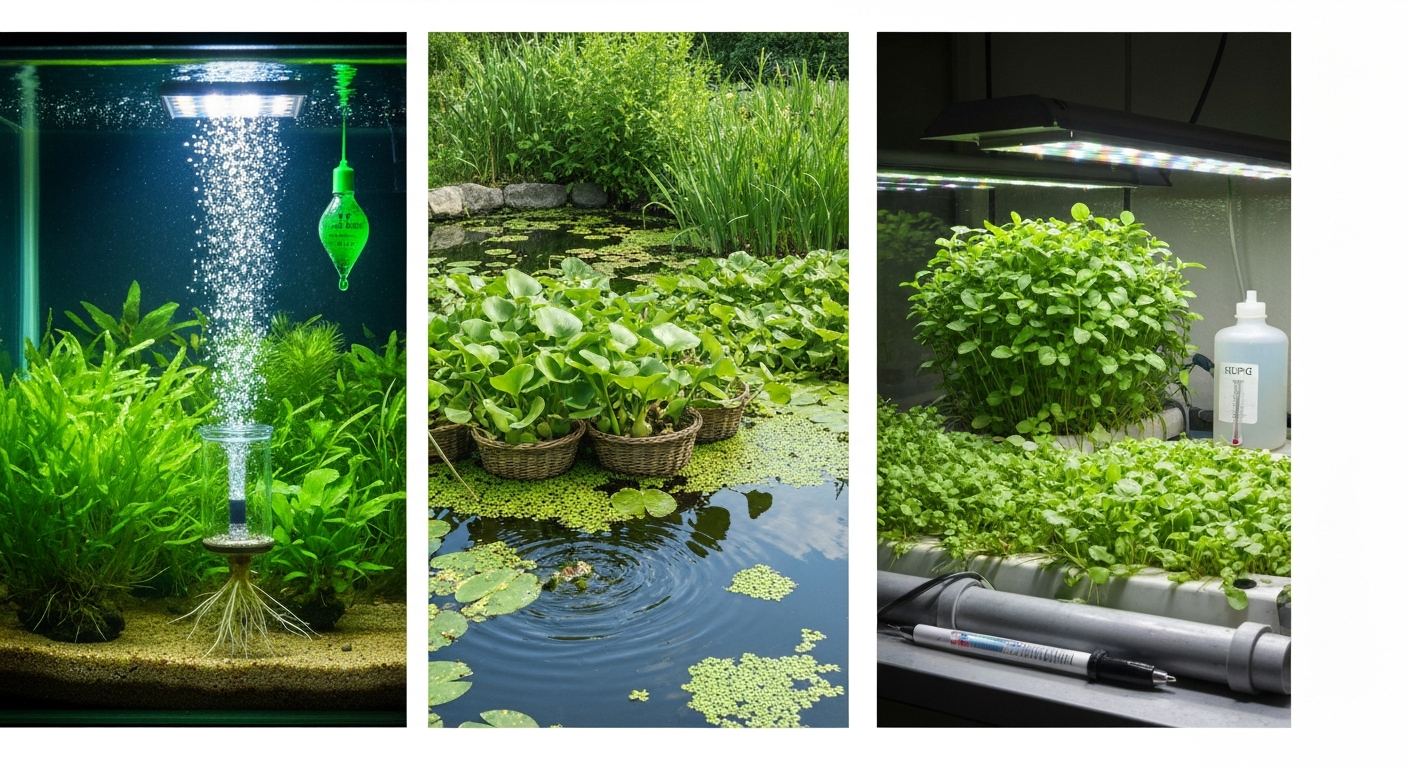
This plan works across aquarium, pond, and hydroponic setups. The goals and actions shift each week as the plants move from establishing roots to active biomass production. Expect visible growth differences between week one and week four, not overnight miracles.
| Week | Focus | Key actions | Expected gains |
|---|---|---|---|
| Week 1 | Establish and stabilize | Plant or float new specimens, set lighting to medium (70–150 µmol·m⁻²·s⁻¹), dial in temperature (22–26 °C), begin baseline fertilizer dose, check pH and KH daily | Roots beginning to anchor; minimal top growth; floating species like duckweed may already show early doubling |
| Week 2 | Ramp nutrients and CO₂ | Start CO₂ injection (or confirm good surface agitation for low-tech); increase fertilizer to full EI or target dose; raise light to upper-medium if no algae present; test NO₃, PO₄, K | Stem plants showing 2–5 cm new growth; floating mats expanding 20–40%; first new leaves on rosette species |
| Week 3 | Optimize and prune early | Trim any melting leaves to redirect energy; do a 30–50% water change if using EI method; spot-dose iron if new leaves are pale; adjust CO₂ timing to 1–2 hours before lights-on | Stem plants growing 1–3 cm per day in high-light/CO₂ setups; carpeting species beginning lateral runners; pond plants visibly filling out |
| Week 4 | Harvest, divide, or fill in gaps | Harvest or trim fast-growing stems to 50% of their height; replant cuttings to fill bare areas; assess nutrient test results and fine-tune dose; record growth to calibrate week 5 onward | Duckweed doubling every 2–4 days under optimal conditions; stem plants may need trimming twice per week; pond marginals showing strong new shoot production |
I'll be honest: week one is where most people get impatient and start over-adjusting. I've done it myself. The plants aren't failing, they're just directing energy downward into roots before you see the top-growth payoff. Sit on your hands for the first seven days and just keep conditions stable.
Choose fast-growing species for your system
Species choice is probably the single biggest lever you have for fast results. A slow-growing species like Anubias will never compete with a stem plant like hornwort, no matter how perfect your setup is. Match the species to the system, and you'll hit your growth targets much faster.
Aquarium fast-growers
- Hornwort (Ceratophyllum demersum): one of the fastest stem plants available, grows 2–5 cm per day in good light, no substrate needed
- Hygrophila polysperma: tolerates low to medium light and still pushes strong growth, great for beginners
- Egeria densa (dense waterweed / related to Elodea): reliable RGR of 0.04–0.09 per day under non-limiting conditions, with doubling times as short as 7–17 days
- Vallisneria spp.: rapid runner production once established, fills a tank width in weeks
- Duckweed (Lemna minor): floating, grows at RGR up to 0.42 per day under optimal light and nutrients — doubling time under 2 days is achievable
- Water sprite (Ceratopteris thalictroides): fast, versatile, works floating or planted
Pond fast-growers
- Water hyacinth (Eichhornia crassipes): aggressive surface grower, excellent nutrient uptake, useful for nutrient export
- Pickerelweed (Pontederia cordata): marginal, fast vertical growth, works well in planting baskets
- Watercress (Nasturtium officinale): fast biomass production, edible, ideal for pond-edge or bog-filter setups
- Water lettuce (Pistia stratiotes): floating rosette, doubles quickly in warm ponds above 22 °C
- Marsh marigold and other marginals: rapid spring establishment when temperature hits 15 °C+
Hydroponic and reservoir fast-growers
- Watercress: purpose-built for flowing water channels, harvestable in 3–4 weeks from transplant
- Duckweed: exceptional biomass production rate, protein-dense, doubles in under 2.5 days in well-managed reservoirs with N > 5 mg·L⁻¹ and P > 1 mg·L⁻¹
- Water spinach (Ipomoea aquatica): tropical, high-yield, continuous harvest system-friendly
- Azolla (water fern): fast-covering nitrogen fixer, good for aquaponic surface layers
Semi-aquatic species: aquatic grasses, Pachira, and Phalaris
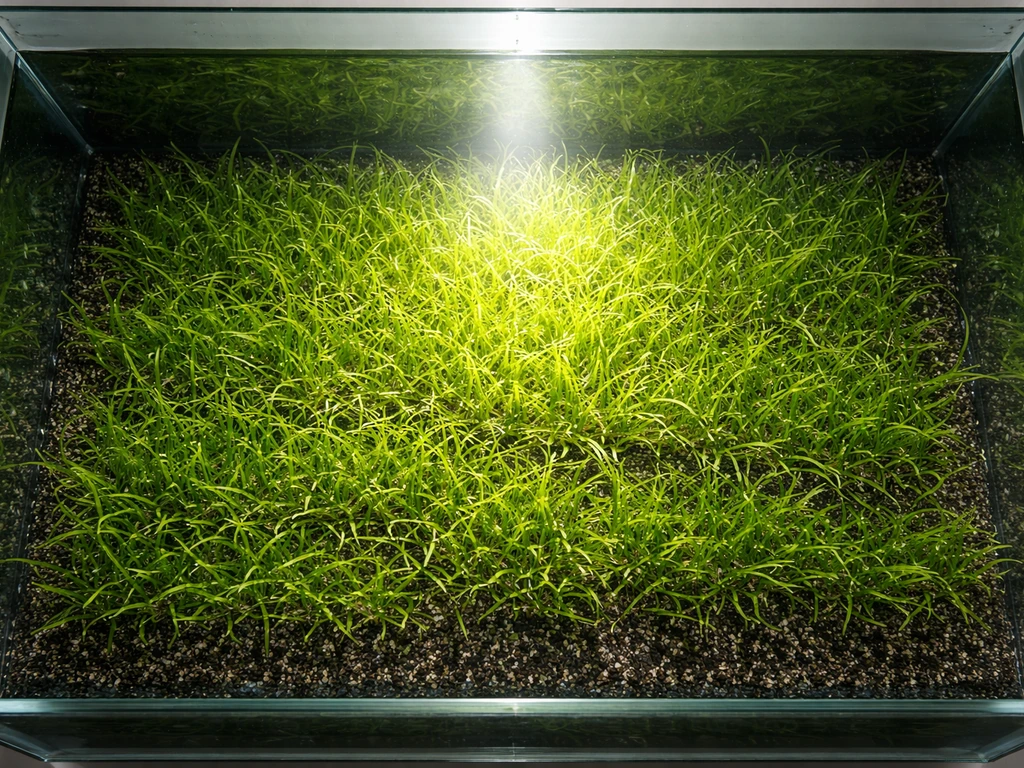
Aquatic grasses deserve their own mention here. Species like hairgrass (Eleocharis acicularis) are popular aquarium carpeting plants, but they're slow to establish without CO₂ and high light. If you want fast aquatic grass coverage, focus on high light (150–350 µmol·m⁻²·s⁻¹), CO₂ injection, and iron-rich substrate. You can read more about aquatic grass growing specifically in the aquatic grass guide on this site.
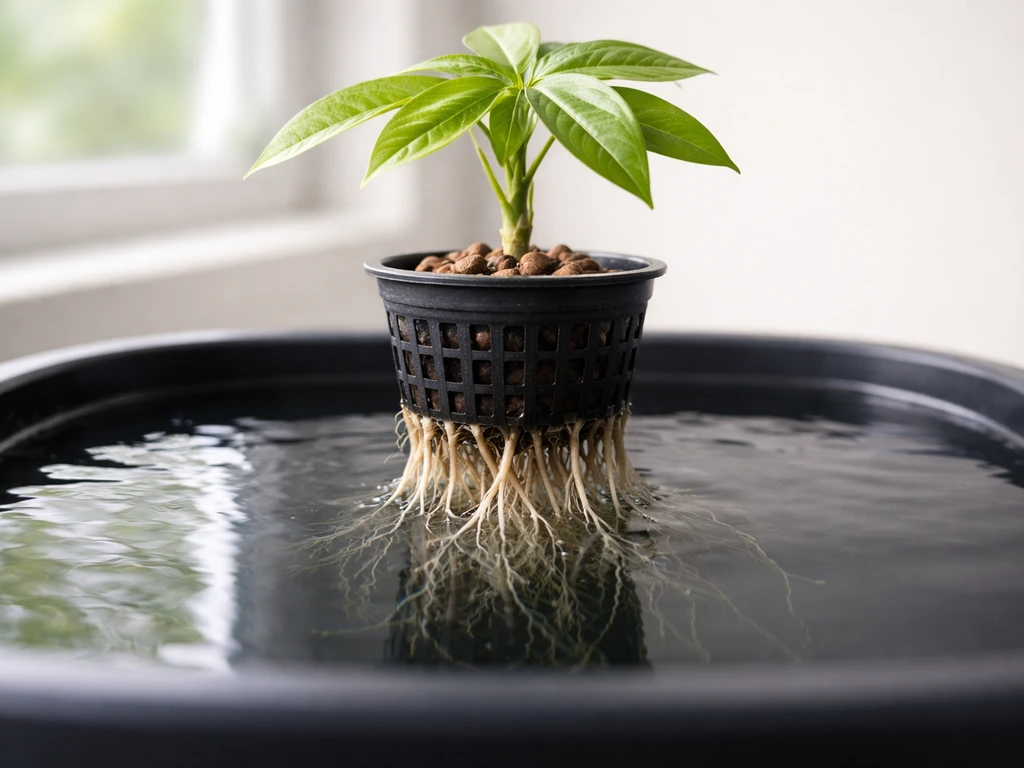
Pachira aquatica (the money tree or water chestnut) is semi-aquatic rather than truly submerged. It grows fastest when its roots are in wet soil or shallow water with the crown kept dry, in temperatures of 18–27 °C and bright indirect light. It's a slow grower by aquatic plant standards, adding maybe 30–60 cm per year, so if speed is your goal this isn't your first choice, but it's a rewarding long-term specimen.
Phalaris aquatica (bulbous canarygrass) and its relatives like Phalaris arundinacea (reed canarygrass) are emergent grass species that grow aggressively in wet soils and shallow water. They establish fast from rhizome divisions and can reach 1–2 meters in a single season under warm, nutrient-rich conditions. They're excellent for pond margins and biofilter planted zones, but in some regions they're considered invasive, always check your local regulations before planting.
Seeds vs cuttings and runners: which propagation method is faster
For fast results, cuttings and runners almost always win. Seeds are the right call in specific situations, but if you want biomass in weeks rather than months, starting from established vegetative material is the reliable path. Here's how to think about the decision.
| Factor | Seeds | Cuttings / runners / divisions |
|---|---|---|
| Time to visible growth | 2–6 weeks to germination, then weeks more to establish | Days to first new growth once rooted |
| Difficulty | Higher: requires proper germination conditions, sometimes scarification or stratification | Lower: most stem plants root in 5–10 days in good conditions |
| Species availability | Some species only available as seed (e.g., many lotus, Nymphaea) | Most aquarium and pond staples are widely available as cuttings or plugs |
| Genetic variation | Produces varied offspring — useful for breeding or experimentation | Clones of the parent plant — predictable, consistent growth |
| Cost | Cheap per unit but slower ROI in time | Higher upfront cost per unit, faster payback in growth speed |
| Best for | Rare species, large-scale propagation projects, seed-specific species (lotus, Nymphaea, some aquatic grasses) | Fast aquarium fills, productive pond margins, hydroponic startups, aquatic grasses from runners |
| Recommended for fast growth? | Only when cuttings are unavailable | Yes, default choice for speed |
One exception worth noting: if you're starting from seeds for something like aquatic grasses (Eleocharis, for example), expect 4–8 weeks before you see carpet coverage even under good conditions. Starting from tissue-culture plugs or divisions cuts that to 2–4 weeks. The aquatic plants from seeds guide on this site goes deeper on germination techniques if you're committed to the seed route. See our guide on how to grow aquatic plants at home for step-by-step germination techniques and timing. For step-by-step instructions, see how to grow aquatic plants in aquarium. If you plan to start from seed, see our guide on how to grow aquatic plants from seeds for step-by-step germination and seedling care.
Aquarium setup checklist for fast plant growth
This checklist is for a high-tech planted aquarium aiming for maximum growth. Tick everything off before you add plants and you'll avoid the most common first-month failures.
- Tank size: 40 L minimum recommended for stable CO₂ and chemistry management; larger volumes buffer parameters better
- Lighting: LED grow light delivering 70–150 µmol·m⁻²·s⁻¹ PPFD at substrate level for medium-demand plants; 150–350+ µmol·m⁻²·s⁻¹ for carpeting and high-demand species; photoperiod 10–12 hours per day
- CO₂ injection: pressurized system targeting 15–25 mg·L⁻¹ dissolved CO₂ (use a drop-checker or inline sensor); start CO₂ 1–2 hours before lights-on, stop at lights-off; if fish are present, keep dissolved CO₂ below 15 mg·L⁻¹ to protect fish welfare
- Temperature: heater set to 22–26 °C; verify with a calibrated thermometer, not just the heater dial
- Filtration: gentle flow (turnover 4–6x tank volume per hour); avoid high surface agitation that degasses CO₂
- Substrate: 5–8 cm of nutrient-rich aquatic soil (e.g., ADA Aquasoil, Fluval Stratum, or similar) or inert gravel over root tabs
- pH: target 6.5–7.0 (CO₂ injection naturally lowers pH; monitor with a calibrated pH meter)
- KH: 3–8 dKH (54–143 ppm as CaCO₃) for stable CO₂ buffering
- GH: 3–10 dGH (50–180 ppm Ca+Mg) depending on plant and fish species
- Nutrients (EI method for fastest growth): NO₃ 20–30 ppm, PO₄ 1–3 ppm, K 20–30 ppm, Fe (chelated) 0.1–0.5 ppm; dose macros 3x/week, micros 3x/week, weekly 50% water change
- Water change schedule: 30–50% weekly minimum when running EI fertilization
Pond setup checklist for fast plant growth
Pond plants have the advantage of natural sunlight and larger water volumes, but they're also more exposed to temperature swings, predation, and competition from algae. For detailed, step-by-step advice specific to outdoor waterbodies, see our guide on how to grow pond plants. This checklist focuses on conditions for maximum spring-to-summer growth.
- Pond volume: at least 500 L for meaningful planted zones; larger ponds self-regulate temperature better
- Sun exposure: minimum 6 hours direct sunlight for most flowering and emergent species; floating plants like water hyacinth and water lettuce need 8+ hours
- Water temperature: target 18–28 °C for tropical/temperate species at peak growth; most marginals begin growing actively above 15 °C in spring
- Planting baskets: use aquatic planting baskets lined with hessian, filled with low-nutrient aquatic compost topped with pea gravel; this contains roots and reduces free-floating nutrients that feed algae
- Planting zones: place submerged oxygenators (hornwort, waterweed) at 30–60 cm depth; marginals (iris, Phalaris, pickerelweed) at pond edge in 0–15 cm water; floaters (water hyacinth, duckweed) free on surface
- Fertilizer: use slow-release aquatic plant fertilizer tablets pushed into basket substrate; avoid broadcast liquid fertilizers in ponds — they fuel algae
- pH: target 6.5–8.0; natural pond pH often rises during the day due to plant photosynthesis — this is normal
- Pond pump/filter: maintain moderate circulation to distribute nutrients and oxygen; avoid heavy surface agitation in planted sections
- Fish stocking: goldfish and koi will eat or uproot many plants; use protective mesh around planted baskets or keep planting density high enough that the fish can't reach all plants
- Algae control: introduce oxygenating plants as soon as possible in spring to outcompete algae for nutrients; aim for at least 60% surface coverage with floating or emergent plants
Hydroponic and reservoir setup checklist
Hydroponic aquatic growing is where the most precise control is possible, and where the fastest growth rates are achievable. Duckweed, watercress, and water spinach in well-managed NFT or raft systems are genuinely some of the fastest-growing food crops on the planet.
- System type: NFT channel, deep water culture (DWC/raft), or static reservoir depending on species; duckweed does best in shallow static or slow-flow reservoirs 10–20 cm deep
- Lighting: full-spectrum LED grow light; for duckweed target a DLI of 5–20 mol·m⁻²·day⁻¹ (equivalent to PPFD 116–463 µmol·m⁻²·s⁻¹ on a 12-hour photoperiod); for leafy greens aim for DLI 12–17 mol·m⁻²·day⁻¹
- Photoperiod: 14–16 hours for maximum vegetative growth
- Temperature: 20–28 °C water temperature; tropical species like water spinach prefer the upper end
- pH: maintain 6.0–7.0; check daily at first, then weekly once stable
- EC/TDS: target EC 1.2–2.0 mS·cm⁻¹ for leafy aquatic plants; duckweed can thrive at lower EC (0.5–1.0 mS·cm⁻¹) with sufficient N and P
- Nutrient solution targets (starting point for biomass production): N 125–150 mg·L⁻¹, P 40–50 mg·L⁻¹, K 150–200 mg·L⁻¹, Ca 70–90 mg·L⁻¹, Mg 40–60 mg·L⁻¹, Fe 1–3 mg·L⁻¹
- Minimum N and P for duckweed: N > 5 mg·L⁻¹ and P > 1 mg·L⁻¹ are the thresholds below which growth rate drops sharply — check these first if growth stalls
- Water change / top-up: replenish water lost to evaporation daily with plain water; replace nutrient solution fully every 7–14 days in closed reservoirs to prevent salt buildup
- Aeration: gentle air stone or slow circulation prevents stratification and maintains oxygen above 5 mg·L⁻¹ dissolved O₂
- Harvest schedule: harvest 30–50% of floating biomass (duckweed, azolla) every 2–4 days once doubling time is under 3 days; cut watercress shoots to 5 cm above water every 7–10 days
Exact environmental targets for fast growth
Every system has slightly different targets, but the same parameters matter across all of them: light intensity, CO₂ or carbon availability, temperature, water flow, and water chemistry. Here's a quick-reference table you can pin next to your setup.
| Parameter | Aquarium (high-tech) | Pond (outdoor) | Hydroponic / reservoir |
|---|---|---|---|
| Light (PPFD µmol·m⁻²·s⁻¹) | 70–150 medium; 150–350+ high-demand | Full sun 6–10+ hours (natural) | 116–463 (DLI 5–20 mol·m⁻²·day⁻¹ for floaters) |
| Photoperiod | 10–12 hours/day | Natural daylight (8–14 hrs seasonal) | 14–16 hours/day |
| CO₂ dissolved (mg·L⁻¹) | 15–25 (fish-safe upper: 15); inject 1–2 hrs before lights-on | Atmospheric + plant-produced; no injection usually needed | Not typically injected; surface gas exchange sufficient for floaters |
| Temperature (°C) | 22–26 (tropical); 16–22 (temperate) | 18–28 for peak growth; marginals start at 15+ | 20–28; optimize to species |
| pH | 6.5–7.0 (CO₂ systems); 6.5–7.5 general | 6.5–8.0 (natural diel variation normal) | 6.0–7.0 |
| KH | 3–8 dKH (54–143 ppm) | Not typically controlled; aim 3–10 dKH | Not typically measured; use pH buffering solution if needed |
| GH | 3–10 dGH (50–180 ppm) | Not typically controlled | Ca + Mg supplied via nutrient solution |
| EC / TDS | Not typically targeted; use individual nutrient tests | Not typically targeted | EC 0.5–2.0 mS·cm⁻¹ depending on species |
| Flow / circulation | 4–6x tank volume/hr; low surface break | Moderate; slow in planted zones | Gentle; 0.2–0.5 L·min⁻¹ per m² surface for DWC |
A quick note on measuring these parameters: for aquariums, a calibrated digital pH meter (not strips) and a KH test kit are the minimum investment. For CO₂, a drop-checker filled with 4 dKH reference solution gives you a continuous color indicator, green means you're in the target zone, yellow is too high, blue is too low. For hydroponic systems, a combined pH and EC pen is essential and worth the $30–50 it costs. Temperature: always use a separate thermometer rather than trusting a heater's built-in dial, which can be off by 2–4 °C.
Substrate and root nutrition: where fast growth actually starts
Most planted aquarium guides focus on water column dosing and forget that rooted plants get a significant portion of their nutrients through their roots. Getting the substrate right is especially important in the first four weeks when roots are establishing. I've replanted the same species in inert sand vs a nutrient-rich substrate and the difference in Week 2 growth is not subtle.
Choosing your substrate
- Nutrient-rich aquatic soil (ADA Aquasoil, Fluval Stratum, Tropica Aquarium Soil): best for planted tanks and fast root-feeding species; naturally lowers pH toward 6.5–7.0; typically exhausted of base nutrients after 12–18 months but structure remains intact
- Inert gravel or sand over root tabs: cheaper, more flexible for aquascaping, and works well when root tabs are placed every 15–20 cm throughout the substrate
- Pond aquatic compost in planting baskets: low-nutrient loam or specialist aquatic compost is best for pond baskets — avoid regular garden compost which releases excess nutrients and fuels algae
- Hydroponic systems: substrate is usually inert (clay pebbles, rockwool, foam) because nutrients come entirely from the water solution; focus on EC and nutrient ratios rather than substrate nutrition
Root tabs vs water column dosing
Root tabs and water column fertilizers are not competing products, they target different feeding pathways. Root tabs feed substrate-rooted plants directly via root uptake: Cryptocorynes, Echinodorus, Vallisneria, and Amazon swords are all heavy root feeders. Water column liquid fertilizers feed floating plants and stem plants that absorb nutrients through their leaves and stems. For the fastest growth in a mixed planted tank, use both: root tabs placed 3–5 cm below the substrate surface every 15–20 cm, combined with a water column fertilization method (EI for maximum speed, PPS-Pro if you want less algae risk).
Root tab placement and planting technique
- Push root tabs 3–5 cm deep into the substrate, within 5 cm of the plant's root zone — not on top of the gravel
- Space tabs every 15–20 cm in planted areas; heavy feeders like Amazon swords can use one tab per plant every 2–3 months
- When planting stem plants for fast growth, strip the bottom 3–4 cm of leaves and push the bare stem 3–4 cm into the substrate; roots will emerge from nodes within 5–10 days
- For rosette plants (Echinodorus, Cryptocoryne), plant so the crown (where leaves meet roots) sits at substrate level, not buried; burying the crown causes rot
- In nutrient-rich aquatic soil, do not add root tabs for the first 6–12 months — the soil provides sufficient nutrition and adding tabs can spike ammonia
- Refresh root tabs every 2–3 months in established tanks with heavy root-feeding species
Fertilizer dosing schedules that actually work
Two dosing methods dominate the planted aquarium world for good reason. The Estimative Index (EI) is the go-to for fast growth in high-light, CO₂-injected tanks because it floods the system with nutrients and relies on weekly large water changes to prevent buildup. PPS-Pro is the lower-maintenance approach that doses small amounts daily to maintain steady low concentrations. Here's when to use each.
| Method | Best for | Macro targets | Micro schedule | Water change requirement | Algae risk |
|---|---|---|---|---|---|
| Estimative Index (EI) | High-light CO₂ tanks, fastest possible growth | NO₃ 20–30 ppm, PO₄ 1–3 ppm, K 20–30 ppm — dosed 3x/week | Micronutrients (Fe, Mn, etc.) 3x/week on alternate days to macros | 50% weekly, non-negotiable | Low if water changes are maintained; high if skipped |
| PPS-Pro | Lower-tech tanks, mixed fish/plant community, less hands-on | Lower steady-state: NO₃ 5–10 ppm, PO₄ 0.5–1 ppm, K 10–20 ppm — dosed daily in small amounts | Daily micro dose included in regime | 30–50% weekly recommended | Lower day-to-day risk |
| Hydroponic full solution | Reservoir/NFT systems | N 125–150 mg·L⁻¹, P 40–50 mg·L⁻¹, K 150–200 mg·L⁻¹, Ca 70–90 mg·L⁻¹, Mg 40–60 mg·L⁻¹, Fe 1–3 mg·L⁻¹ | Included in complete nutrient solution | Full reservoir refresh every 7–14 days | Managed via pH and light control |
One thing I got wrong early on: I thought more fertilizer meant faster growth, and I'd double-dose when I didn't see results. That just feeds algae. The plants can only absorb nutrients up to their rate of photosynthesis, which is controlled by light and CO₂. Fix light and CO₂ first, then match fertilizer to what the plants can actually use.
Pruning and harvest routines to keep growth moving
Aquatic plants slow down when they're crowded, shaded, or allowed to accumulate old, low-energy tissue. Regular pruning or harvesting is not just cosmetic, it's an active growth management tool. For stem plants in aquariums, cut the top two-thirds of each stem and replant the cut tops; the remaining bottom stump will produce multiple new shoots within a week, effectively multiplying your plant count. For floating plants like duckweed or water hyacinth in ponds, remove 30–50% of the surface biomass every 3–5 days once the colony is established, this keeps the plants in an active exponential growth phase rather than a plateau. In hydroponic watercress channels, cut shoots to 5 cm above the water line every 7–10 days for continuous production.
Troubleshooting: algae, deficiencies, melt, and pests
Algae outbreaks
Algae almost always comes down to an imbalance between light, CO₂, and nutrients, too much light relative to CO₂ or nutrients available to plants. The fix sequence: first, reduce photoperiod by 1–2 hours or dim lights 20%; second, check CO₂ levels (many green algae explosions are CO₂-starvation events where plants aren't competing effectively); third, review whether nutrients are actually hitting target ranges rather than being over-dosed. In ponds, increase surface coverage with floating plants to shade the water column and compete for nutrients.
Nutrient deficiencies: quick diagnosis
| Symptom | Likely deficiency | Fix |
|---|---|---|
| New leaves pale yellow-green (chlorosis), older leaves still green | Iron (Fe) or manganese (Mn) | Dose chelated iron to reach 0.1–0.5 ppm; check pH (Fe unavailable above pH 7.5) |
| Yellowing starts in older (lower) leaves first | Nitrogen (N) or magnesium (Mg) | Increase NO₃ dosing; add Epsom salt (MgSO₄) for Mg at 1–2 tsp per 40 L |
| Purple or reddish undersides on leaves, stunted roots | Phosphorus (P) | Increase PO₄ dosing to 1–3 ppm range |
| Leaf edges brown or crispy, tip burn on new growth | Potassium (K) or calcium (Ca) | Dose potassium sulfate; for Ca, check GH and consider remineralizing RO water |
| Pinholes or transparent patches on older leaves | Potassium (K) | Increase K dosing to 20–30 ppm target |
| Overall stunted growth, dark green leaves, no new shoots | CO₂ or light limitation (not a nutrient issue) | Increase CO₂ or raise light intensity before adding more fertilizer |
New plant melt
Melt happens when a plant transitions from emersed (grown above water) to submersed conditions, it's normal and not a sign that you're doing something wrong. The emersed leaves die off and submersed leaves grow in their place. The best response is patience and not removing the plant: keep conditions stable, trim dead leaves to prevent rot, and within 2–4 weeks new growth should emerge from the crown. Cryptocorynes are the classic example, but tissue-culture plants of any species can melt briefly after introduction.
Pests and physical damage
- Snails: Malaysian trumpet snails and bladder snails are common stowaways on new plants; rinse new plants in a dilute alum solution (1 tbsp per 4 L for 2–3 minutes) or quarantine for a week before adding to your system
- Goldfish and koi in ponds: protect newly planted baskets with mesh covers until plants are established enough to tolerate nibbling
- Aphids on semi-aquatic or emergent plants: submerge affected stems briefly or knock pests off with a gentle spray of water; avoid insecticides near water with fish or crustaceans
- Hydra or planaria in aquariums with shrimp: these are often introduced on plants; fenbendazole-based treatments exist but always check compatibility with your specific inhabitants before treating
Safety notes when fish and crustaceans share the system
The main tension in a fish-and-plant system is CO₂. Plants want 20–25 mg·L⁻¹ for maximum photosynthesis, but many fish begin showing stress at 15 mg·L⁻¹ and measurable physiological changes are documented at and above that threshold. Experimental RAS trials show measurable physiological and growth effects in teleosts at CO₂ exposures of 15 mg·L⁻¹ and above, with impairment and hematological changes increasing toward 30 mg·L⁻¹ (Effects of elevated carbon dioxide on growth, feed efficiency and physiological responses in RAS‑based juvenile pikeperch (15–30 mg·L⁻¹ exposures)). Sensitive species like salmonids and some crustaceans have even lower tolerances. The practical compromise: in fish-heavy systems, target the lower end of the CO₂ range (10–15 mg·L⁻¹), run CO₂ only during the light period, and watch fish behavior as your primary real-time monitor. If fish are gasping at the surface, gathering near the filter outlet, or visibly stressed, CO₂ is too high, increase surface agitation immediately and reduce injection. Never prioritize plant growth over fish welfare.
Fertilizer safety is a secondary concern. In shrimp tanks, avoid copper-containing fertilizers or fish medications entirely, copper is acutely toxic to invertebrates at very low concentrations. Use fertilizers formulated for shrimp-safe planted tanks, and always check ingredient lists. In aquaponic systems where you're producing edible plants, stick to food-safe nutrient solutions and avoid synthetic micronutrient mixes formulated for ornamental horticulture.
What realistic fast growth actually looks like
Under genuinely optimized conditions: duckweed can double its colony mass every 2–4 days; Elodea-type plants add 1–3 cm per day in length; stem plants like Hygrophila can grow 3–5 cm per day in CO₂-injected high-light tanks; watercress is harvestable from cuttings in 3 weeks in a flowing hydroponic channel. These are achievable numbers with the setups described above, not best-case lab results. What won't happen is overnight transformation. The 4-week plan gets you to a thriving, fast-growing system; the 8-to-12-week mark is when most aquariums and pond plantings truly look established and full. That timeline is worth knowing before you start, because impatience at week two has killed more planted tanks than bad water chemistry ever did.
FAQ
What exact environmental numeric targets (light, CO₂, temperature, flow, water chemistry) should be sourced for fast aquatic plant growth in each system?
Provide system‑specific numeric targets with tolerances and caveats: Aquarium (high‑growth/CO₂): PPFD at surface 150–350 µmol·m⁻²·s⁻¹ (medium 70–150; low 20–70); CO₂ dissolved ≈15 mg·L⁻¹ conservative upper limit for mixed fauna, 20–25 mg·L⁻¹ for plant‑only/very hardy setups; temperature 20–28 °C (species dependent); pH 6.5–7.5 (CO₂ systems often 6.5–7.0); KH 3–8 dKH; target NO₃ 20–30 ppm, PO₄ 1–3 ppm, K 20–30 ppm, Fe 0.1–0.5 ppm. Pond: surface PAR lower but aim DLI equivalence for target species; temperature follow local climate—optimize spring/summer 15–28 °C for many macrophytes; maintain good circulation (turnover to avoid stagnation). Hydroponic/reservoir (food crops & fast biomass): EC and ionic targets—N 125–150 mg·L⁻¹, P 40–50 mg·L⁻¹, K 150–200 mg·L⁻¹, Ca 70–90 mg·L⁻¹, Mg 40–60 mg·L⁻¹, Fe 1–3 mg·L⁻¹; pH 5.5–6.5 (leafy greens), temperature 18–24 °C (cooler leafy crops) or 20–28 °C for tropical aquatics. Also supply conversion formulas (DLI = PPFD × photoperiod × 0.0036) to translate DLI targets to aquarium LED settings and provide acceptable ranges rather than single numbers.
Which species should be recommended for fastest visual and biomass results (aquarium, pond, hydroponic/reservoir, floating) and expected 30/60/90‑day timelines?
List quick starters with expected growth rates under non‑limiting conditions: Floating/rapid biomass — Duckweed (Lemna spp.): RGR 0.07–0.42 d⁻¹ (doubling 1.6–10 days) — expect cover/biomass saturation within 30 days under ideal light/nutrients; Salvinia/Water lettuce: rapid floating growth in 2–6 weeks. Aquaria fast growers — Elodea/Egeria: RGR ~0.04–0.09 d⁻¹ (doubling 7–17 days) — visible stems and thickening in 30–60 days; Hygrophila/Rotala/most stem plants: rapid stem elongation, 30‑day noticeable growth, dense stands by 60–90 days with CO₂/fert. Carpeting (fast but high‑tech) — HC/Glossostigma: require high light+CO₂; expect visible carpeting 60–90 days in ideal conditions. Hydroponic/reservoir (food crops): fast leafy greens (lettuce, watercress) — full harvest in 30–45 days depending on cultivar and nutrient/lighting. Semi‑aquatic/tolerant species (Pachira aquatica): slower; treat as pot/soil‑based semi‑aquatic with multi‑month establishment. Provide ranges and note species‑specific optima (use species tests for temperature/light).
What precise propagation methods and when to choose seeds vs cuttings/runners for fastest establishment?
Give method‑by‑method instructions and decision rules: Cuttings/runners — choose for fastest, predictable results in aquaria/ponds for stem plants (Rotala, Hygrophila, Elodea) and runners (Java fern via plantlets, Vallisneria via runners) — expect rooted/established growth within 7–21 days. Division/rhizome propagation — use for Anubias, Cryptocoryne, many marginals; slow but reliable. Seeds — use when specimens are required (food crops/hydroponics, rare species) or for large scale pond restoration; seeds are slower (germination and seedling stages take weeks to months) but good for genetic diversity. Tissue/cutting tips: take 5–10 cm healthy apical cuttings, remove lower leaves, insert into substrate or fasten to hardscape; for floating species, thin existing mats to promote multiplication. Give clean hygiene steps to avoid pathogens and pests.
What substrate and fertilization strategy (root tabs vs liquid, macro/micro targets, dosing schedules) produces fastest growth across systems?
Provide actionable schedules: Aquaria high‑growth/CO₂: use nutrient‑rich inert substrate or inert substrate + root tabs for heavy root feeders; combine with EI (high macros) or PPS‑Pro steady dosing. EI style for fastest growth: dose macros 3×/week (or bulk daily split) and micros 3×/week, weekly 50% water change to reset excess; targets NO₃ 20–30 ppm, PO₄ 1–3 ppm, K 20–30 ppm. PPS‑Pro for steady low‑algae: small daily doses to maintain target ppm. Root tabs: place near heavy root feeders (crypts, swords) every 8–12 weeks. Hydroponic/reservoir: use complete nutrient solutions (examples: N 125–150 mg·L⁻¹, P 40–50 mg·L⁻¹, K 150–200 mg·L⁻¹), monitor EC and maintain pH with buffers; change or top up nutrient stock per crop cycle (daily monitoring, reservoir refresh 7–14 days depending on volume/use). Pond margin plants: use aquatic soil or heavy loam, dose slow‑release fertilizers for marginals and tablets for emergent species seasonally.
What equipment and shopping list items (specific product types and measurement tools) must be recommended for reliable, fast growth builds?
Provide checklist categories and example items: Lighting — programmable full‑spectrum LED fixture with adjustable PPFD (brands: Finnex, Fluval, Chihiros as examples); CO₂ — pressurized CO₂ kit with regulator and solenoid, or DIY yeast only for small trials (pressurized recommended for control); diffusers — inline reactor or ceramic diffusers, bubble counters, solenoid valve; Monitoring — PAR meter (or smartphone PAR apps with caveats), pH meter, KH test kit, EC/TDS meter (for hydroponics), dissolved CO₂ meter or drop checker; Filtration/circulation — canister or sponge filter for aquaria, pond pump sized for ~1–4× volume turnover depending on plant/animal needs, air stones for oxygenation; Substrate/fertilizers — aquatic soil, sand, root tabs, EI/PPS‑Pro fert kits, chelated iron; Reservoir gear — submersible pump, air pump, reservoir cover, reservoir heater (if needed); Tools — sharp scissors/razor for pruning, tweezers for planting, planting weights. Recommend getting spare reagents (test kits) and replacement CO₂ cylinders/solvent.
What exact 30/60/90‑day plans (actionable daily/weekly tasks and dosing) should an article include for aquarium, pond, and hydroponic setups?
Provide sample schedules per system: Aquarium (CO₂ high‑tech): Day 0: setup substrate, plant hardscape, fill, inoculate with fast stems; Days 1–7: low photoperiod 6–8 h, no/low CO₂, start dosing micros; Days 8–14: raise photoperiod to 8–10 h, start CO₂ at low dose 10–15 mg·L⁻¹ equivalent, begin EI macros 3×/week, monitor parameters; Days 15–30: increase CO₂ to 15–20 mg·L⁻¹ if fauna tolerant, increase light to target PPFD; perform weekly 50% water change, trim & replant trimmings. 60 days: expect dense stem growth; maintain EI, prune twice weekly. 90 days: establish maintenance cycle, reduce macros if algae issues. Pond (fast growth species): Weeks 0–2: plant containerized floats/marginals, ensure circulation; Weeks 2–6: monitor nutrient inputs, thin floating mats weekly; Weeks 6–12: expect canopy/biomass — harvest/seed control monthly. Hydroponic/reservoir (leafy greens): Day 0: prepare nutrient solution to target EC/pH, transplant seedlings; Days 1–14: 16–18 h light, check EC/pH daily, top up nutrients; Weeks 3–4: first harvest for fast greens (salad cut), refresh reservoir every 7–14 days. Provide explicit dosing schedules (EI macros 3×/week, micros 3×/week with weekly 50% WC; PPS‑Pro daily small dosing examples) and monitoring checklists for each interval.