You can grow healthy, actively growing aquatic plants in an aquarium this week by getting three things right: a decent light on a timer, a nutrient-rich or supplemented substrate, and water parameters in the right range (pH 6. If you're wondering how to grow aquatic plants at home, these basics will help you get started without guesswork grow healthy, actively growing aquatic plants.
How to Grow Aquatic Plants in an Aquarium Fish Tank
Marcus Holloway
16 May 2026
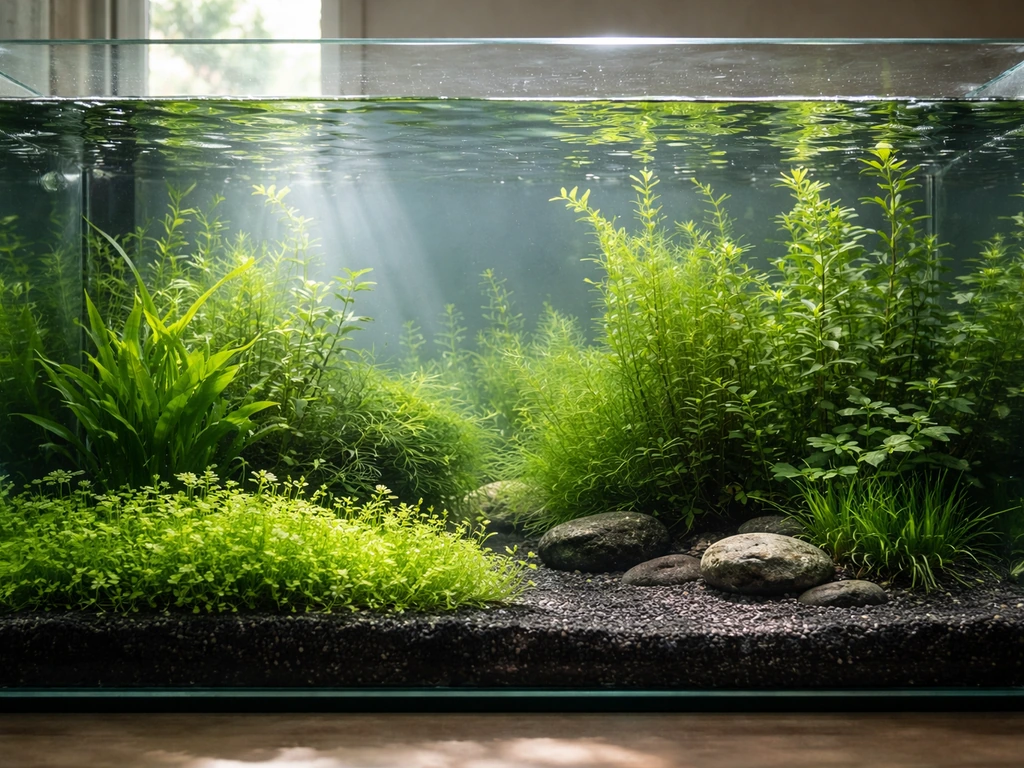
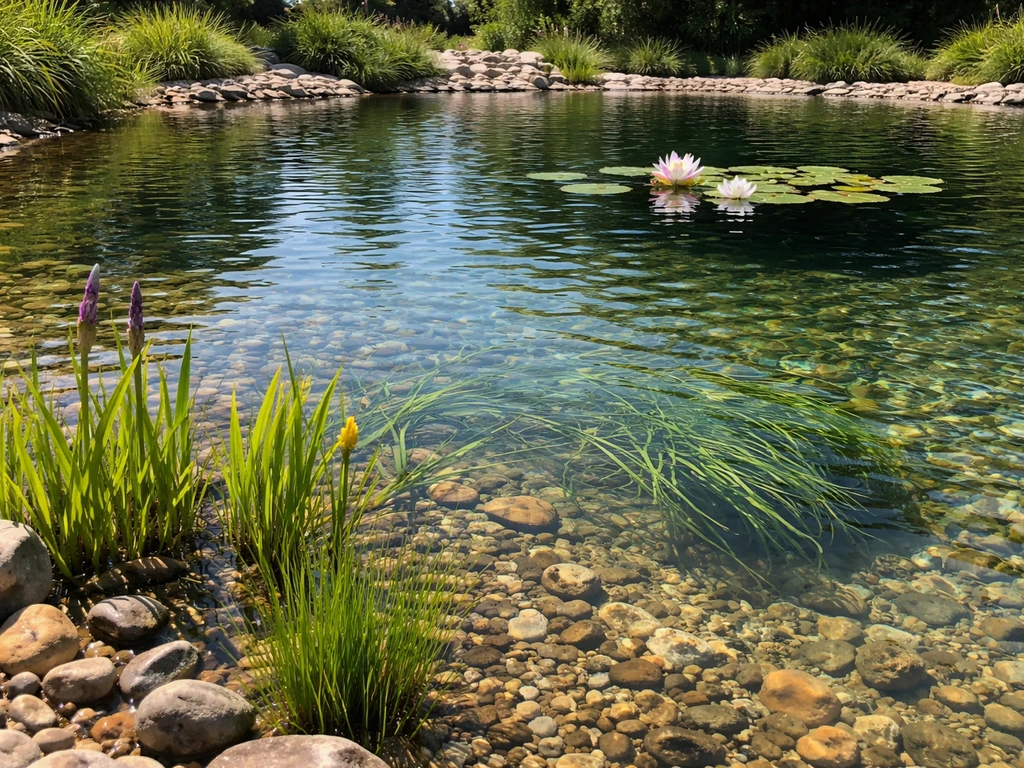
Once you know the basics for aquatic plants, you can follow a simple step-by-step approach to grow pond plants in the right conditions outdoors. 5–7. 8, temperature 74–80°F). Everything else, including CO2 injection and fancy fertilizer schedules, is optional at first.
Start simple, get plants rooted and showing new growth, then layer in more complexity as you understand what your specific tank needs.
Pick the right aquatic plants for your tank
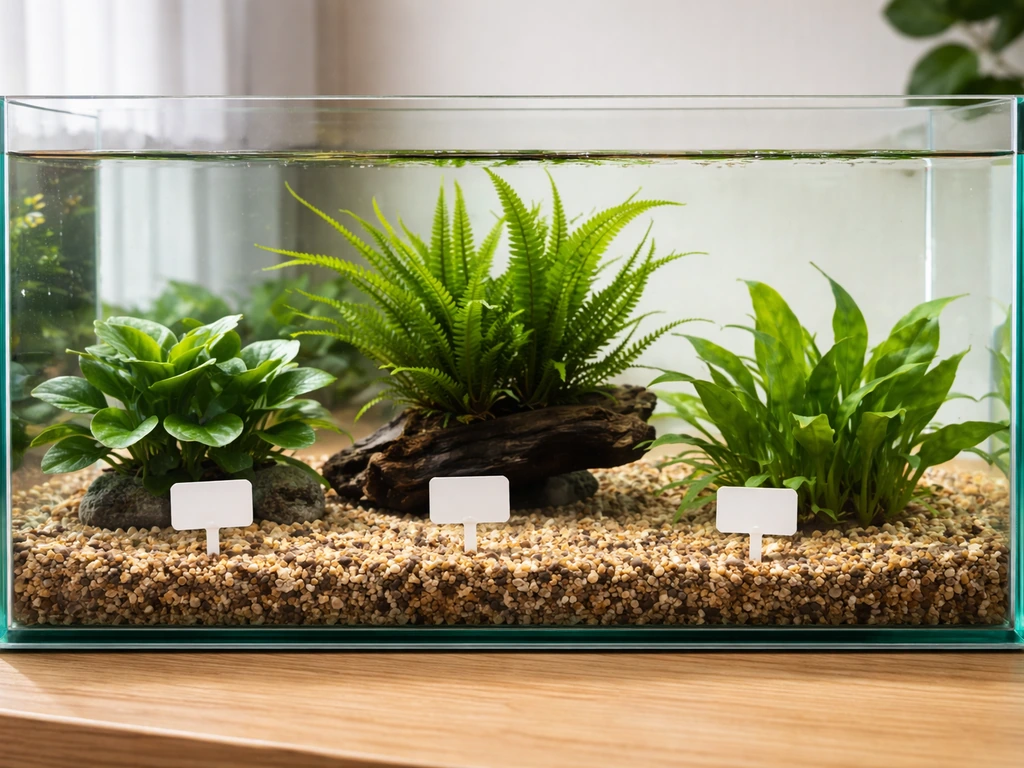
The single biggest beginner mistake is buying plants that need more light and CO2 than a basic tank can provide. I've done it, and it's frustrating. Start with plants that thrive in low to medium light without injected CO2, then upgrade later if you want to.
The most forgiving options for a first planted tank are Anubias, Java fern, Cryptocoryne (crypts), Vallisneria, Hornwort, and floating plants like Amazon frogbit. These all do well at under 30 PAR (roughly 1–2 watts per gallon on older fixtures) and don't need CO2 injection to grow. Amazon sword is a solid mid-level pick that needs a bit more light, around 30–50 PAR or 2–3 watts per gallon, but it's still low-maintenance overall.
| Plant | Light Needed | CO2 Required | Feeding Style | Beginner Rating |
|---|---|---|---|---|
| Anubias | Low (under 30 PAR) | No | Water column / rhizome | Very easy |
| Java fern | Low (under 30 PAR) | No | Water column / rhizome | Very easy |
| Cryptocoryne | Low (under 30 PAR) | No | Root feeder | Easy |
| Vallisneria | Low (under 30 PAR) | No | Root feeder | Easy |
| Hornwort | Low (under 30 PAR) | No | Water column | Very easy |
| Amazon frogbit | Low (under 30 PAR) | No | Water column / floating | Very easy |
| Amazon sword | Medium (30–50 PAR) | Helpful but not required | Heavy root feeder | Moderate |
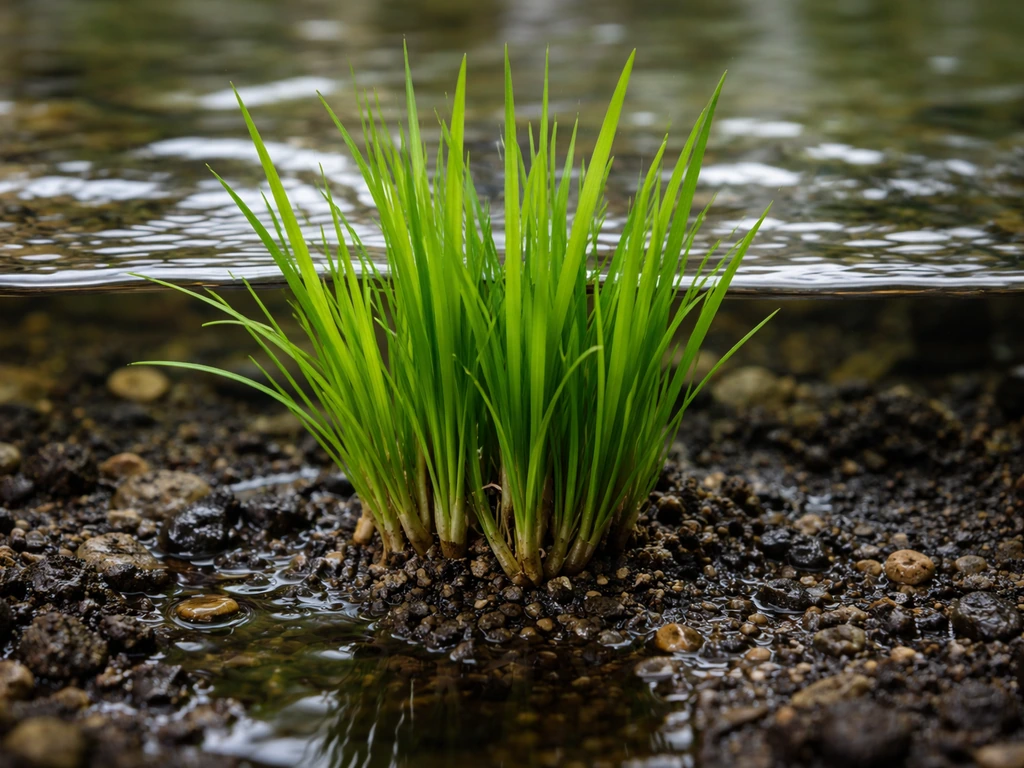
If you're growing plants in a fish tank that already has residents, check fish compatibility before buying plants (more on that toward the end of this guide). And if you're curious about growing aquatic plants from seeds or exploring specific species like aquatic grasses, those are separate setups worth looking at once you have the basics down. Aquatic grasses are usually treated like other light-demanding root-feeding plants, so match the light and nutrients to the specific species you choose.
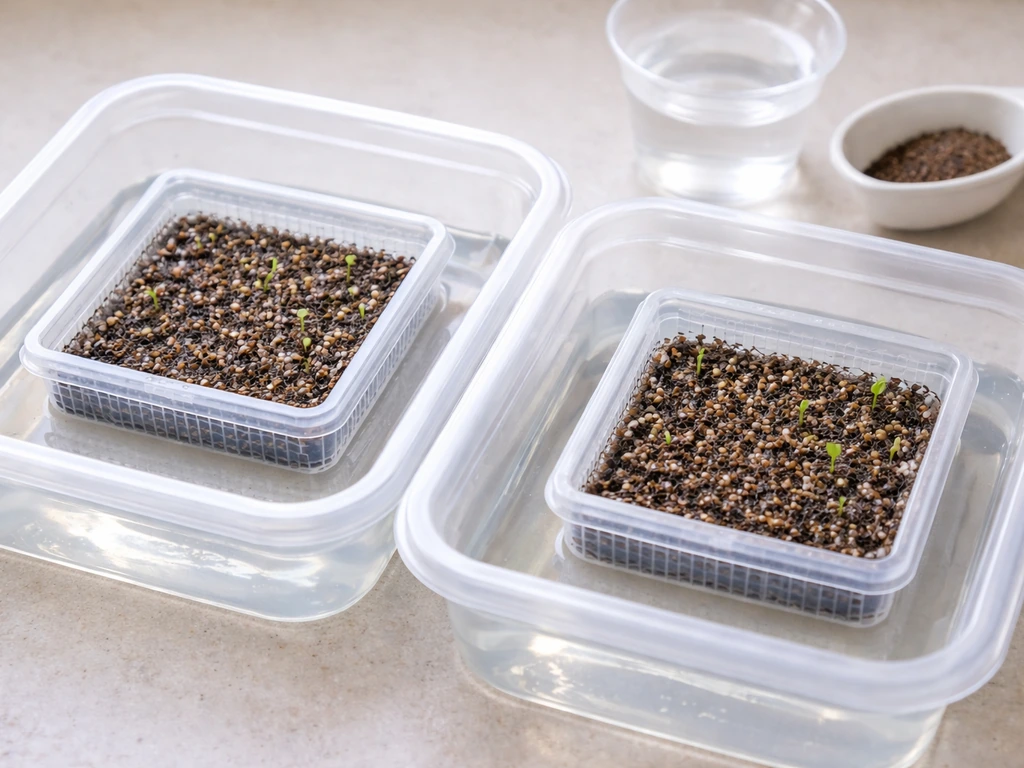
If you want to try a grass-like species outdoors or in a tank, learn how to grow phalaris aquatica and what conditions it needs exploring specific species like aquatic grasses. If you want to grow aquatic plants from seeds, the key is to start them in the right seed germination medium and maintain stable light, warmth, and water conditions.
Set up light, water parameters, and nutrients
Light: the most common point of failure
Plants need light to photosynthesize, but too much light without matching nutrients and CO2 is the fastest way to get an algae outbreak. For a beginner low-tech setup, aim for 6–8 hours of light per day and start on the lower end. Use a timer, and if your light supports it, program a 30–60 minute ramp-up and ramp-down period to simulate sunrise and sunset. This reduces stress on fish and plants and gives you a cleaner photoperiod to adjust.
PAR (photosynthetically active radiation) is the best measurement for comparing lights. Under 30 PAR suits the easy low-light plants listed above. 30–50 PAR works for medium-light plants like Amazon sword. If you don't have a PAR meter, remember that PAR increases the closer the light is to the plant, so a light that seems dim on a deep tank may be plenty on a shallow one.
Water parameters: what to hit and what to test
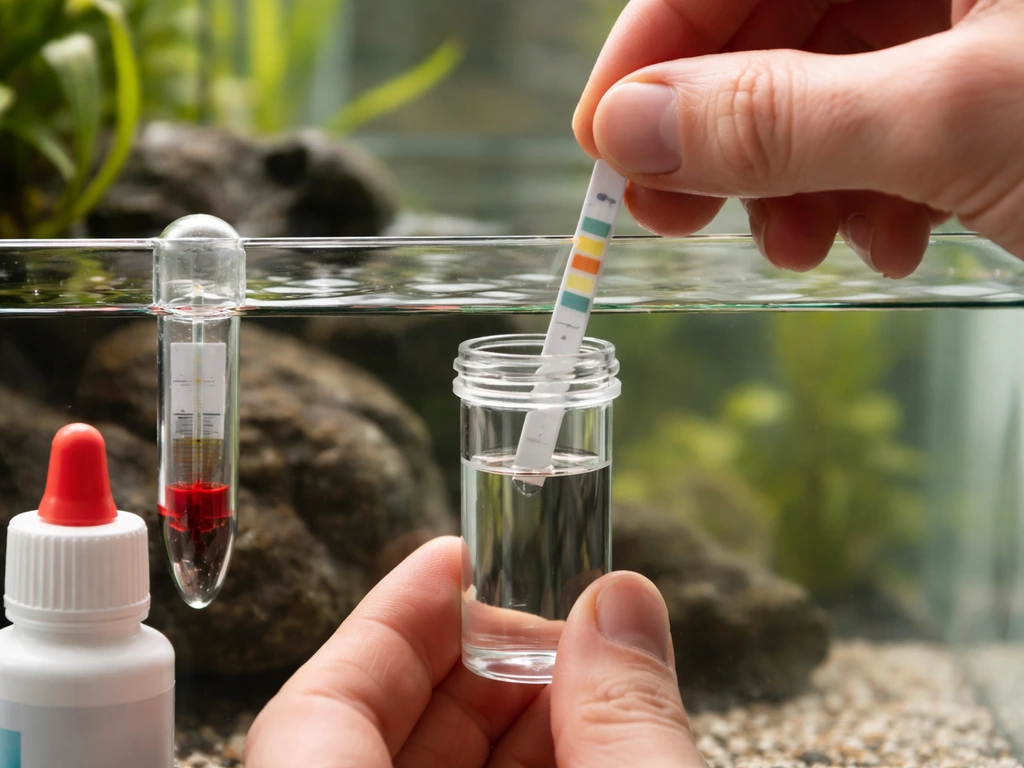
Most aquatic plants do best in the following range: pH 6.5–7.8, general hardness (GH) 50–100 ppm, alkalinity 3–8° dKH (54–140 ppm), and temperature 74–80°F. If your tap water falls in this range, you're good to use it directly. If your tap water is way off, RO or deionized water remineralized with a product like Aqueon Freshwater Renewal gives you a clean starting point. Test your water weekly at first, especially while you're dialing in fertilizer.
CO2: do you actually need it?
Plants use CO2 for photosynthesis, so more CO2 generally means faster growth. But for low-tech setups with easy plants, the CO2 naturally dissolved from the atmosphere and produced by fish respiration is usually enough to keep things alive and growing slowly. You don't need CO2 injection to start.
If you upgrade to a medium or high-tech setup later, the target is 20–30 ppm CO2. A CO2-focused guide also emphasizes that keeping the CO2 level in the right range, alongside water chemistry, supports better performance in planted tanks target is 20–30 ppm CO2. A drop checker filled with a 4 dKH reference solution is the easiest way to monitor this: green color means you're in the right range, yellow means too much, blue means too little. Pressurized CO2 (cylinder plus regulator) is more stable and controllable than DIY yeast-based systems, especially for tanks over 20 gallons. DIY CO2 is budget-friendly but output is inconsistent and harder to dial in.
Substrate, planting, and how to help roots establish
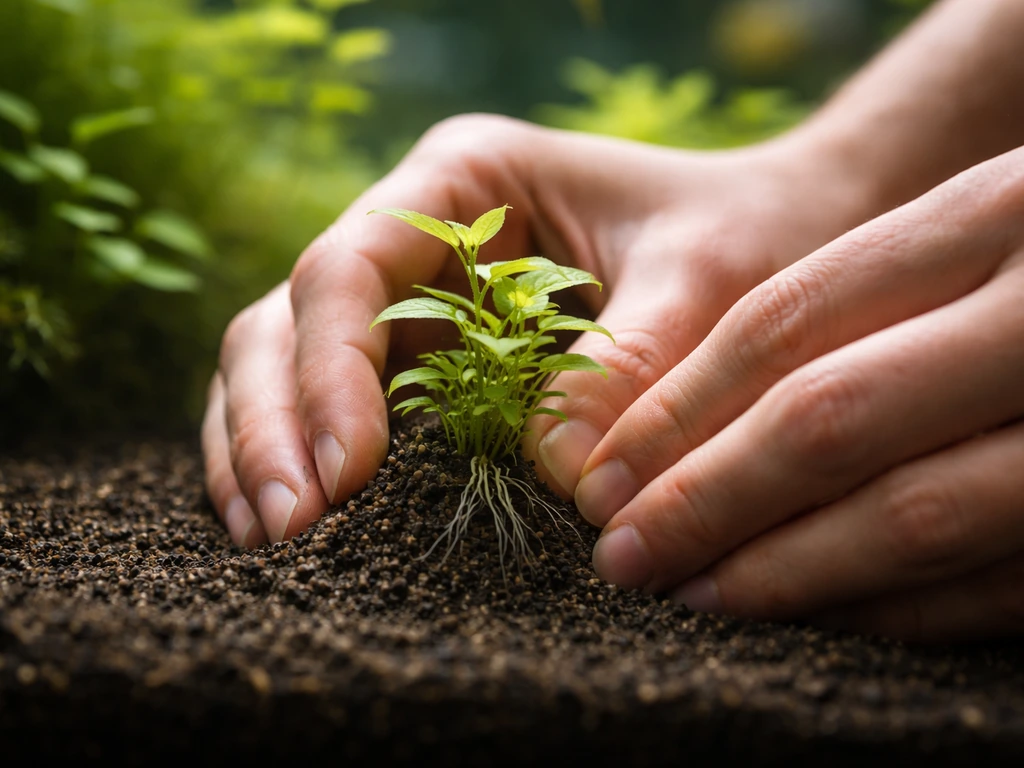
Choosing a substrate
Nutrient-rich aquatic soils (like Fluval Stratum or Aquasoil) give root-feeding plants a built-in advantage and are the easiest substrate choice for a planted tank from scratch. They're buffered for slightly acidic to neutral pH, which suits most aquatic plants well. Plain gravel or sand is inert, meaning it holds zero nutrients on its own, so you'll need root tabs to feed root-feeding plants in those substrates.
Planting technique: what actually works
How you plant matters as much as what you plant. Here's the core guidance for the most common plant types:
- Rooted plants (crypts, Vallisneria, Amazon sword): push the roots gently into the substrate so the crown (where roots meet stem) sits just at the surface. Burying the crown causes rot.
- Rhizome plants (Anubias, Java fern): never bury the rhizome. Tie or glue them to rocks or driftwood, or wedge them between hardscape so the rhizome stays exposed. Burying the rhizome kills them every time.
- Stem plants (Hornwort, Bacopa, etc.): trim the bottom node clean and push the bottom 1–2 inches into substrate. They root quickly from nodes.
- Floating plants (Amazon frogbit, duckweed): just place them on the water surface. No planting needed, but limit surface agitation or they'll struggle.
Root tabs: when and where to use them
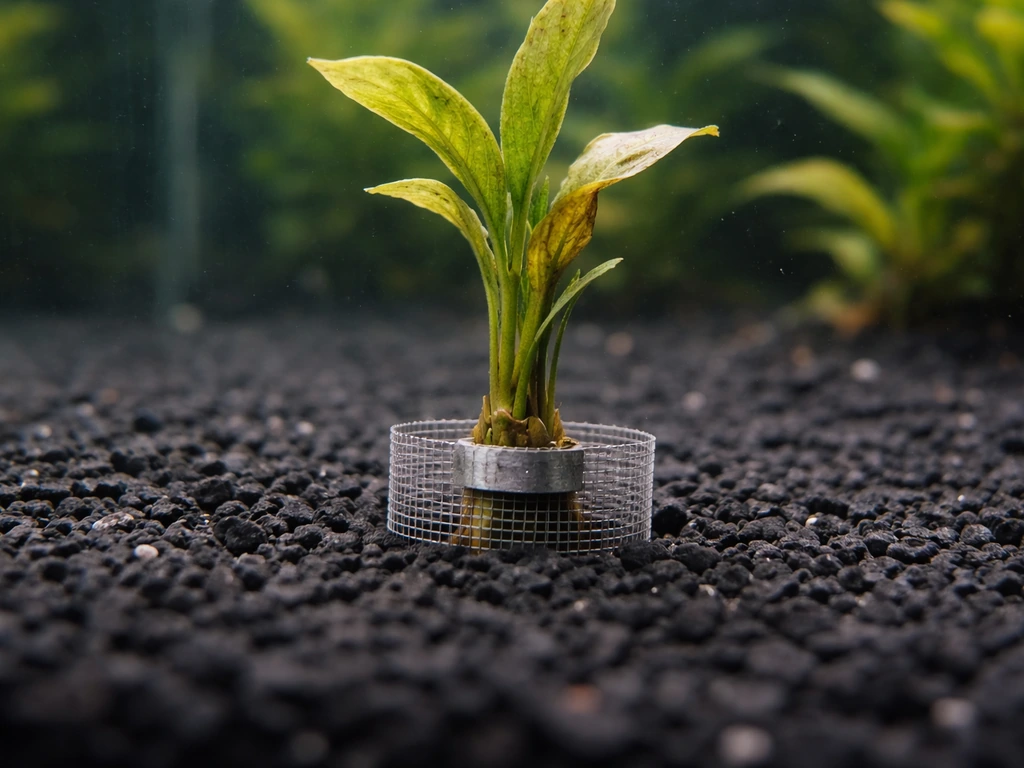
If you're using inert substrate like sand or gravel, root tabs are essential for root-feeding plants. Push them into the substrate near the roots, not directly under the crown. For a plant like Amazon sword with wide root spread, place multiple tabs around the perimeter of the root zone. For Anubias and Java fern attached to hardscape, skip the root tabs entirely since they feed from the water column, not the substrate.
In a densely planted tank, you can place root tabs every 4 inches (10 cm) across the substrate. Replace them on a schedule: a young Amazon sword might only need one tab every 6 weeks, but a mature, full-grown sword can need several tabs per month. Replace as the plant grows, not on a fixed calendar.
Ongoing care routine (fertilizing, pruning, water changes)
Fertilizing without overdoing it
For most beginners, an all-in-one liquid fertilizer like Easy Green covers macronutrients (nitrate, phosphate, potassium) and trace elements in one bottle. Dose once or twice a week to start, then test and adjust. If nitrate climbs above 50 ppm, do a 50% water change and hold off on fertilizer until it drops to 25 ppm or below. If your plants are yellowing and nitrate reads near zero, increase your dose.
The key rule: fertilize based on what your plants are actually consuming, not a fixed schedule. Fish waste adds nutrients too, so a heavily stocked tank may need less fertilizer than a lightly stocked one. Test weekly at first, especially in the first month, and you'll quickly learn your tank's pattern.
One important note from Tropica that I've seen proven out in practice: adding fertilizer when plants can't absorb it just feeds algae. If you're in a low-light setup with slow-growing plants, dose conservatively.
Trimming: don't skip this
Trimming is the single most important maintenance skill in a planted tank. Overgrown plants shade lower leaves, cause die-off, and mess up water flow. For stem plants, cut just above a node and replant the top cutting if you want to propagate. For Amazon sword, remove old outer leaves at the base when they yellow. For Anubias and Java fern, trim old or dying leaves at the base of the leaf stem, not the rhizome.
Water changes
A 25–30% weekly water change is the standard baseline for a planted tank. This keeps nutrients from accumulating, exports waste, and replenishes trace minerals. Don't skip water changes thinking plants will absorb everything. They won't, and the buildup causes problems. If nitrate is already elevated above 50 ppm at your weekly check, bump up to a 50% change that week.
Preventing and fixing algae and nutrient issues
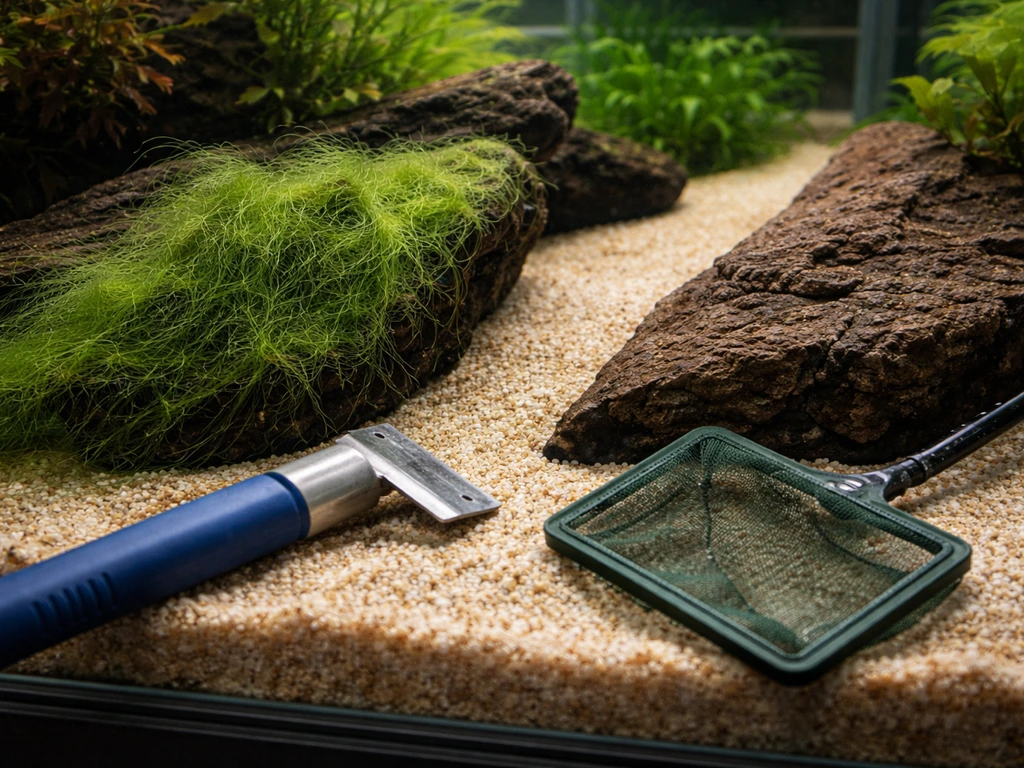
Algae in a planted tank almost always comes down to an imbalance: too much light for the amount of plant biomass, too many nutrients without enough plant uptake, or both. The fix is almost always about reducing one or both inputs until your plants catch up.
Green algae and hair algae respond strongly to excess light. If you're seeing a green film on the glass or stringy hair algae on plants, the first move is to cut your light period back to 6 hours per day and see if the problem stabilizes within a week. Black beard algae (BBA) is usually tied to CO2 fluctuations, inconsistent flow, or low CO2 in injected tanks. It's harder to eliminate once established.
Here's the algae troubleshooting framework I use:
- Reduce light hours to 6–7 per day immediately.
- Cut fertilizer dose in half until algae slows.
- Check flow: stagnant spots accumulate nutrients and grow algae. Redirect a powerhead if needed.
- Do a 50% water change if nitrate is above 50 ppm.
- Manually remove as much algae as you can by hand or with a scraper.
- Once plants start outcompeting algae (new growth visible), slowly increase light and fertilizer back to normal levels.
Adding fast-growing plants like Hornwort or floating plants early in a new tank helps starve algae out by absorbing nutrients before algae can. This is a legitimate strategy, not a workaround.
Troubleshooting common problems (melting, yellowing, slow growth)
Most planted tank problems have a recognizable pattern once you've seen them a few times. Here's what's actually going on and what to do.
Plant melting after you first add it
This is almost always normal, especially with crypts (it's literally called 'crypt melt'). Plants sold commercially are often grown emersed (above water) or in different water conditions than your tank. When you put them in, older leaves die off as the plant adapts. Don't pull the plant out. Leave the roots in place, remove the dead leaves, and wait 2–4 weeks. New submersed-form leaves will usually emerge from healthy roots.
Yellowing leaves
Yellowing has a few different causes and the pattern tells you which one you're dealing with:
- Uniform yellowing of older leaves first: nitrogen deficiency. Test nitrate. If it's near zero, increase fertilizer dose.
- Yellow between green veins (interveinal chlorosis): iron or micronutrient deficiency. Switch to a fertilizer that includes iron, or add root tabs with iron for root feeders.
- New leaves yellowing while old leaves are fine: potassium deficiency in some cases, or CO2 limitation in higher-light tanks.
- Lower leaves yellowing while upper leaves are green: normal light shading from above. Trim or thin upper growth.
Slow or stalled growth
Slow growth in a low-tech setup is expected and not necessarily a problem. But if plants aren't showing any new growth within 3–4 weeks, check these in order: light duration and intensity, nutrient levels (especially nitrate close to zero), and whether root-feeding plants have access to root tabs. In tanks with CO2 injection, stalled growth often means CO2 is inconsistent or too low.
Plants floating or not staying rooted
This is mostly a planting technique issue. Stem plants need to be pushed deep enough that the substrate holds them before roots develop. Use plant weights or lead strips temporarily if needed. For crypts and swords, make sure you're burying the roots but not the crown. Anubias and Java fern should be tied or glued to hardscape and will attach on their own over a few weeks.
Poor root development
If root-feeding plants aren't developing roots, they're probably not finding nutrients in the substrate. Add root tabs near the root zone. If you're using nutrient-rich substrate, it may have been exhausted or was installed too thin (aim for at least 2–3 inches of substrate depth to give roots room to grow).
Fish compatibility and how to protect plants in a planted tank
Not every fish is plant-friendly, and mixing the wrong species will cost you both plants and money. Goldfish, large cichlids, and many herbivorous species will uproot, eat, or shred plants. Even plant-safe fish can cause issues if they're diggers or if the stocking density is too high.
Fish that generally coexist well with planted tanks include tetras, rasboras, danios, corydoras, small plecos (like bristlenose), most livebearers, and dwarf shrimp. Shrimp actually help by grazing on algae and dead plant matter without damaging healthy leaves.
Here's how to protect your plants when you have fish in the same tank:
- Use heavier substrate or bury root tabs deep enough that diggers (like corydoras) don't expose them.
- Anchor delicate stem plants with plant anchors or weights until roots establish fully.
- Avoid liquid fertilizers with copper if you keep shrimp: copper is lethal to invertebrates even at low concentrations.
- Place Anubias and Java fern on hardscape rather than in substrate. Diggers can't uproot them if they're tied to rocks or wood.
- If cichlids are destroying plants, choose tougher, less palatable species like Anubias, Java fern, or Vallisneria. Swords and crypts are more likely to get eaten or uprooted.
- Floating plants provide cover for surface-shy fish and reduce light to lower layers, which can help manage algae in a heavy fish setup.
One honest note: if you have a heavily stocked fish tank with aggressive or herbivorous fish, the plants will always be fighting an uphill battle. Either adjust the fish selection or stick with the toughest, most unpalatable plant species. A lightly stocked planted tank is dramatically easier to manage than a community tank with 30 fish trying to eat everything.
What a realistic timeline looks like
Setting expectations right saves a lot of frustration. Here's what to expect when starting a planted aquarium from scratch:
| Week | What to Expect |
|---|---|
| Week 1 | Plants may melt slightly or look rough as they transition. This is normal. Don't yank them out. |
| Week 2–3 | New leaves should start emerging on healthy plants. Root systems begin establishing. |
| Week 4 | Plants should show visible growth. Start testing water and adjusting fertilizer dose based on nitrate. |
| Month 2–3 | Growth accelerates. Trimming becomes regular. Algae issues (if any) should be stabilizing if you've adjusted light and nutrients. |
| Month 3+ | Consider CO2 injection, higher-demand plants, or aquascape refinements if you want to push further. |
Growing aquatic plants in an aquarium is genuinely one of the most satisfying parts of the hobby, but the first few weeks require some patience and observation. If you're specifically wondering how to grow Pachira aquatica, the key is recreating a consistent, moisture-rich environment and matching light and nutrients to its needs Growing aquatic plants in an aquarium. The setups that succeed are the ones where the grower is blank" rel="noopener noreferrer">watching, testing, and adjusting rather than setting it and forgetting it. Once you understand your tank's specific balance of light, nutrients, and plant load, it gets much easier to maintain and push into more advanced territory.
FAQ
Can I grow aquatic plants in a brand-new aquarium right away, or should I cycle first?
You can plant during the first week, but you should still cycle the tank and be extra conservative with fertilizer. In a new tank, nutrient and bacterial levels shift quickly, so start with low light, easy plants, and test weekly so you don’t accidentally feed algae during the cycle.
What’s the best way to choose plants for my specific aquarium size and light level?
Match the plant to your PAR reality, not the bulb label. If you do not measure PAR, use height and distance to estimate, then start with low-to-medium light species for the first 4 to 6 weeks. If growth is slow but stable and algae stays minimal, you can gradually upgrade plants or increase light duration.
How do I prevent algae if I don’t want to reduce light too much?
Instead of jumping straight to “less light,” increase plant biomass and adjust nutrients to the amount of light. Add fast growers early, trim regularly, and dose fertilizer only after checking nitrate. If green film appears, cut the photoperiod first, then reassess nutrients after you see a response over 5 to 7 days.
Do I need CO2 for plants, or can I succeed with low-tech?
Low-tech works well for many beginner plants as long as your light and nutrients are aligned. CO2 injection is optional at first, but if you later see consistent stalling in a medium or high-light setup, CO2 instability (not total absence) is a common culprit, so monitor with a drop checker before changing everything else.
How much substrate depth do I really need, and what if my tank has a shallow bed?
If you want root-feeding plants to thrive, aim for at least 2 to 3 inches of substrate so roots have room to explore and stay fed. With shallow substrate, root tabs become more important and should be placed near the root zone. If you cannot increase depth, consider planting more water-column feeders like Anubias or Java fern.
How often should I replace root tabs?
Don’t rely on a fixed schedule, watch the plants. A good approach is to start with tabs in the root zone, then increase frequency only when you see stalled growth in root-feeding species or when new leaves slow while light is stable. Mature heavy root spreaders like swords usually require more frequent replenishment than young plants.
Should I fertilize only when plants show problems?
No, but also don’t “stick to a schedule.” The best practice is to fertilize based on weekly test results and observed growth. If nitrate is already above your target and algae is increasing, pause or reduce dosing. If nitrate trends toward zero and plants are yellowing, increase dose slightly rather than making large jumps.
What if my tap water tests outside the recommended pH, GH, or alkalinity ranges?
Treat it as a starting-point mismatch, not an automatic failure. If values are far off, use RO or deionized water remineralized to your target range so you are not chasing swings each week. Test after any major water-source change, especially alkalinity, because it affects both stability and plant performance.
Why are my plants melting, especially crypts, and should I remove them?
Melting is common when plants transition from emersed to submerged growth, particularly with crypts. Leave the roots in place, remove the dead leaves, and give it time, typically 2 to 4 weeks, for new submerged leaves to appear. If the roots are browning or collapsing, then the issue is likely water parameters, planting depth, or nutrient access.
How do I know if stalled growth is a light problem versus a nutrient problem?
Use a simple order of checks: first confirm light duration and placement stability, then test nitrate and substrate feeding access. If nitrate is near zero, root-feeding plants may not be getting enough through the substrate. If CO2 is injected and growth stalls, also check for CO2 consistency rather than assuming you need more light immediately.
Can I plant directly into sand or gravel without buying a nutrient soil?
Yes, but you must feed root-feeding plants through root tabs. Inert substrates provide no nutrients on their own, so placing tabs correctly and ensuring sufficient substrate depth is what replaces the “buffered nutrition” you would get from aquatic soils.
What’s the safest stocking approach for a planted aquarium?
Start with fewer animals than you think you can keep and increase gradually. Heavy stocking makes it harder to control nutrients and algae, even when plants are healthy. If you already have fish, prioritize plant-safe, non-digging species and consider hardscape-attached plants for better survivability.
How can I protect plants when fish are shredding or digging?
Separate the problem types: for diggers, use sturdier anchoring methods like burying crown correctly for swords and crypt roots, and rely on hardscape-attached plants for rhizome growers. For shredders or herbivores, plant survival may never reach “easy” levels, so you may need to change fish selection or choose species known to be tougher.
What trim schedule should I follow for stem plants and swords?
Trim before plants become dense enough to shade lower growth and restrict flow. For stem plants, cut just above a node and replant the tops to maintain density. For Amazon swords, remove old outer leaves at the base when they yellow, because leaving decaying leaves can worsen water quality and algae conditions.
How do I avoid shocking the tank during water changes?
Match temperature and avoid large swings in water chemistry, especially alkalinity and pH. Use the baseline approach (about 25 to 30% weekly), and if nitrate is already high, increase that week’s change to around 50%, then keep testing to prevent rebound.
Should I use floating plants in addition to rooted plants?
Floating plants can be very helpful, especially during early establishment, because they compete with algae for nutrients and reduce light reaching algae-prone surfaces. If algae is your main issue and you want less intervention, add fast-growing floaters and keep your light at a beginner-safe duration.