The easiest aquarium plants for beginners are Java fern, Anubias, cryptocorynes, Amazon sword, Vallisneria, and hornwort. These six handle low light, don't need pressurized CO2, and survive the water parameter swings that are completely normal in a new tank. If you pick from this list, keep your light on 6–8 hours a day, dose a basic all-in-one liquid fertilizer once a week, and follow the simple planting rules for each species, you will have live plants thriving in your first tank within a few weeks.
Easy to Grow Aquarium Plants for Beginners: Top Picks
Marcus Holloway
8 Jun 2026
What actually makes a plant "easy" for beginners
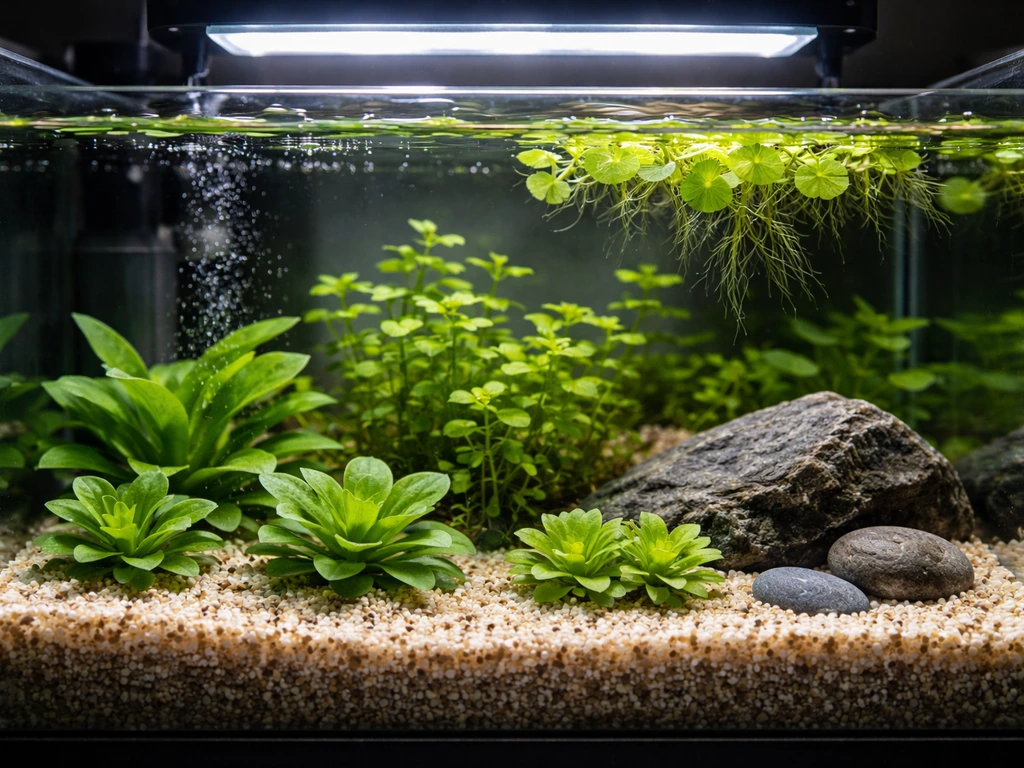
A lot of plants get labeled easy but aren't. Real beginner-friendly plants share a specific set of traits that matter when you're still learning the hobby and your tank conditions aren't perfectly dialed in yet.
- Low to medium light tolerance: they grow under basic LED fixtures without needing high-output reef-style lighting
- No CO2 injection required: they pull enough dissolved CO2 from normal tank water and fish respiration
- Wide water parameter range: they don't die if your pH drifts from 6.8 to 7.4 or your temperature swings a few degrees
- Forgiving nutrient needs: they won't immediately melt if you miss a fertilizer dose
- Simple or self-sufficient propagation: they spread or reproduce without you doing much
- Available and affordable: you can actually find them at most fish stores or online
The CO2 point is worth emphasizing. Pressurized CO2 systems are expensive, require tuning, and can crash your tank if something goes wrong. For beginners, skipping CO2 entirely and sticking to plants that don't need it removes a huge layer of complexity. As Tropica notes, plants marked as easy generally don't require added CO2 to survive, though growth does improve with a little supplementation if you ever want to go that route later.
The six easiest aquarium plants you should actually buy
Java fern (Microsorum pteropus)
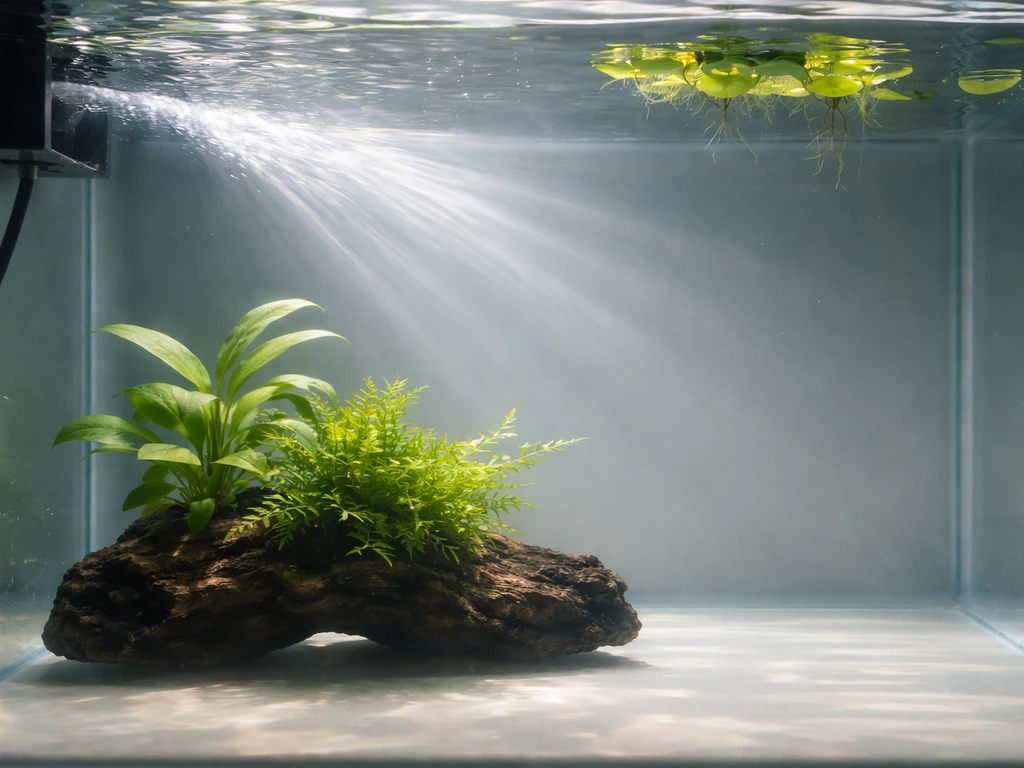
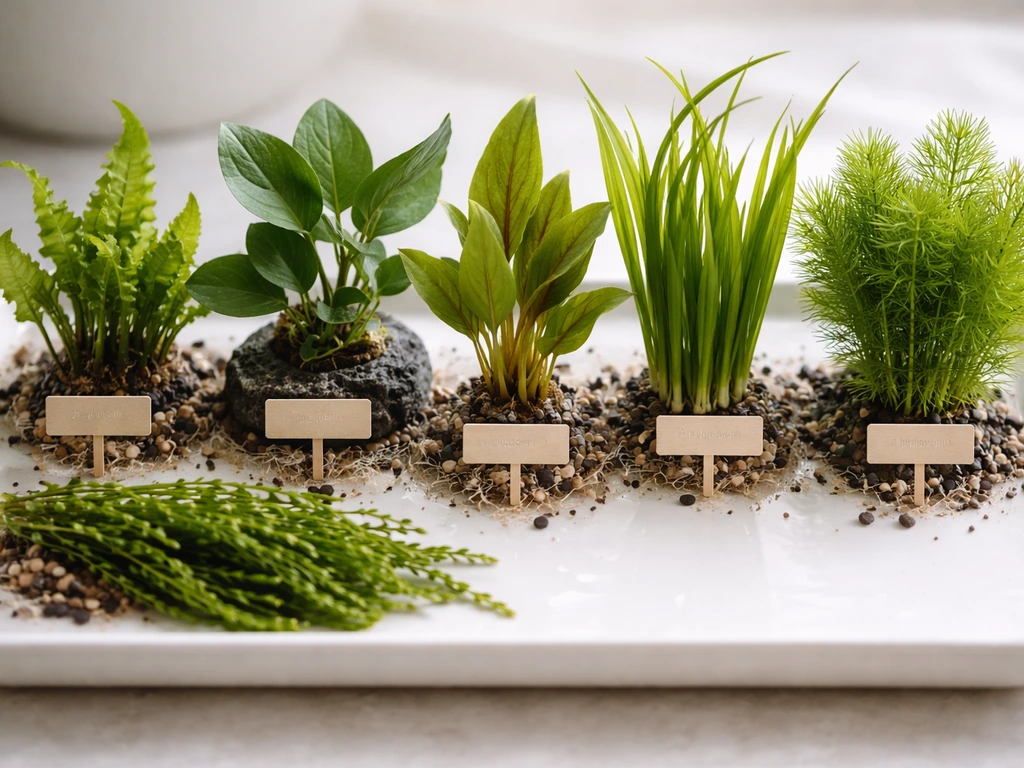
Java fern is probably the single most forgiving aquarium plant in existence. It grows in low light, doesn't care about CO2, tolerates a wide range of water hardness, and you literally cannot bury it in substrate. In fact, burying the rhizome (the thick horizontal stem) will kill it. Tropica also warns that you should not cover the rhizome, because if it is covered “the plant will rotten.” do not cover the rhizome or the plant will rotten. Java fern is a rhizome plant that feeds through its leaves and attaches to rocks or driftwood. Tie it to a piece of hardscape with a rubber band or thread, and it anchors itself over a few weeks. Propagation is almost effortless: little plantlets grow right off the mature leaves and can be pinched off and attached elsewhere.
Anubias
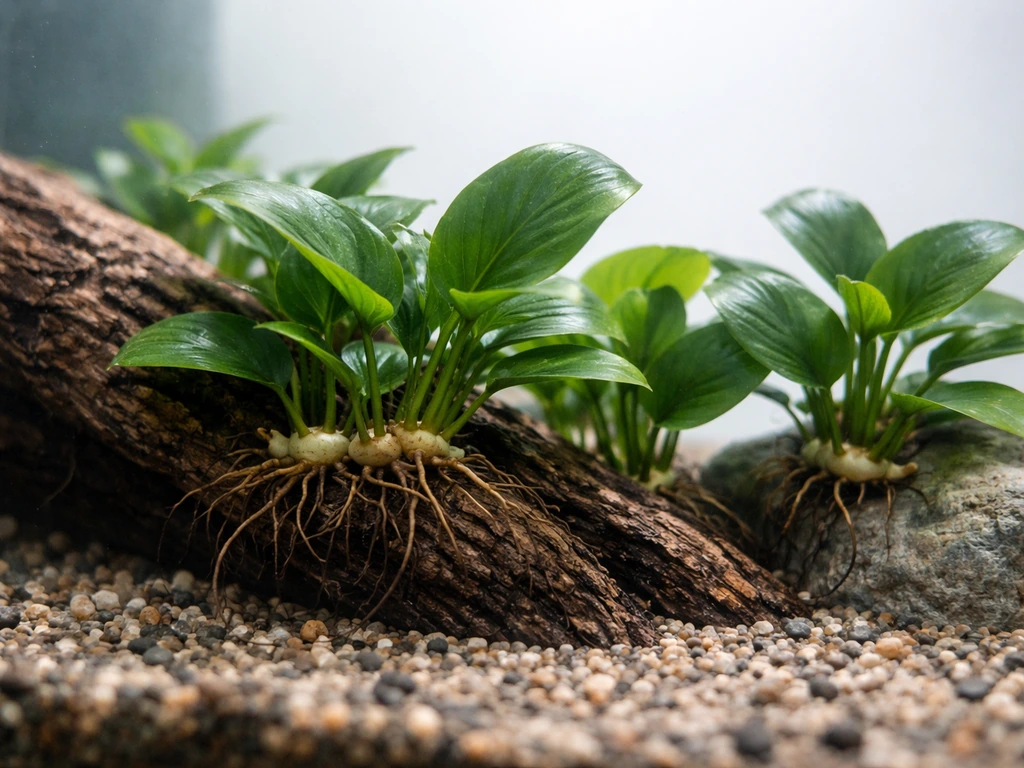
Anubias is similarly bulletproof. It's slow-growing, which actually works in a beginner's favor because slow plants don't create nutrient imbalances as fast. It handles very low light, doesn't need CO2, and like Java fern it's a rhizome plant that should be attached to hardscape rather than planted in substrate. The thick, waxy leaves resist algae and browsing from fish. The main rule: never bury the rhizome. If it's buried, it rots, and the plant dies. Keep it exposed and you'll have it for years.
Cryptocorynes (crypts)
Crypts are rosette plants that root into the substrate, and they come in a wide range of sizes and leaf shapes. They're tolerant, low-light, no-CO2 plants, but there's one thing beginners need to know: crypt melt is real and it's normal. Aquarium Co-Op notes that crypts are rosette plants, and their planting method emphasizes burying the roots while keeping the crown above the substrate, and that some crypt melt after introduction is common blank" rel="noopener noreferrer">bury the roots while keeping the crown above the substrate. When you introduce a crypt to a new tank, the leaves often melt away within the first week or two. This happens because most crypts are grown emersed (above water) at commercial farms, and when they go underwater in your tank, the plant sheds those leaves and regrows aquatic-form leaves. It's not dead. Leave it alone, and new growth almost always appears from the roots. For more detail on this conversion process, the topic of growing aquatic plants in their emersed versus submerged forms is worth exploring.
Amazon sword (Echinodorus)
Amazon swords are fast-growing, dramatic background plants that can reach 12–20 inches in a healthy tank. They're heavy root feeders, which means they need root tabs in the substrate to perform well, but once you give them that, they take off fast. They're hardy, handle a range of water conditions, and their bold leaf structure adds instant visual impact to any tank. One sword plant placed in the back center of your tank can fill out a background on its own within a couple of months.
Vallisneria
Vallisneria (vals) is a tall, grass-like plant that spreads by runners across the substrate. It needs zero CO2 and grows quickly under basic lighting. One of its best beginner traits is that it naturalizes well, sending out runners that produce new plants automatically. If vals isn't growing, the most common cause is a nutrient deficiency, specifically low nitrates. A quick nitrate test and a dose of all-in-one fertilizer usually fixes it. Vals are a great background or side-wall plant and will fill a tank fast if conditions are right.
Hornwort (Ceratophyllum demersum)
Hornwort might be the hardiest plant on this list. It survives a temperature range of roughly 50–85°F (10–30°C), which means it works in unheated tanks, tropical tanks, and everything in between. It doesn't even need substrate: hornwort can float freely or be loosely anchored. It grows fast, absorbs excess nutrients, and out-competes algae by pulling nutrients from the water column. The downside is that it sheds fine needles as it grows, which can clog filters. A quick rinse of the filter media every couple of weeks handles that easily.
Light, water, and nutrients: the simple setup that works
Lighting
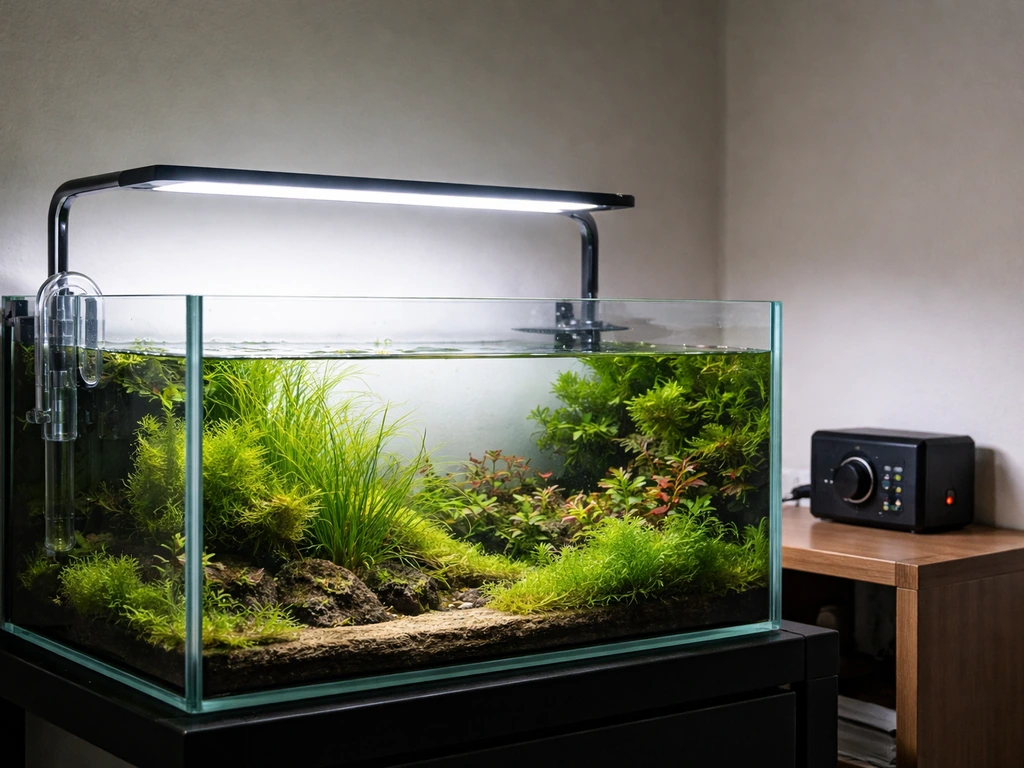
For this plant list, any modern LED aquarium light rated for planted tanks will work. You don't need anything expensive. Start with 6–8 hours of light per day when your tank is new and plants are adapting. Use a timer, it's one of the best investments you'll make. Once the tank is established (4–6 weeks in), you can push to 8–10 hours if you want faster growth, but don't go beyond that. More light doesn't mean more growth; it usually means more algae. If algae starts appearing on the glass or plants, cut light back to 6 hours before trying anything else.
Water parameters
The plants on this list are genuinely tolerant. A pH of 6.5–7.8 is fine for all of them. Temperature in the 72–78°F (22–26°C) range suits most tropical setups, and hornwort handles much wider swings. If you want to focus specifically on tropical aquarium plant growth, keep temperature stable and match light and nutrients to what your plants are consuming. You don't need to chase perfect water chemistry to grow these plants. Regular water changes (25–30% weekly) are more important than hitting exact numbers, because water changes replenish minerals and reset any buildup of waste compounds.
Nutrients
You need two types of fertilization for this plant mix: a liquid all-in-one fertilizer for water-column feeders (Java fern, Anubias, hornwort, and vals) and root tabs for substrate feeders (crypts and Amazon swords). For liquid fertilizer, a starting dose of around 1 mL per 10 gallons once a week is a solid baseline. Check your nitrates after a week: if they're in the 0–25 ppm range, you're dosing correctly. If nitrates are already high from fish waste, hold off on fertilizing until they drop. For root tabs, press them into the substrate in a grid pattern roughly every 4–6 inches near root-feeding plants, and replace them about once a month if you're using inert substrate like gravel or plain sand.
How to actually plant them: substrate, anchoring, and floating
The planting method depends entirely on what type of plant you're dealing with. If you want to avoid soil entirely, use inert substrate or simply anchor rhizome plants to hardscape grow aquarium plants without soil. Getting this wrong is the number one reason beginner plants fail, especially with Java fern and Anubias.
| Plant | Planting Method | Key Rule |
|---|---|---|
| Java fern | Attach rhizome to rock or driftwood; don't plant in substrate | Rhizome must stay exposed or it rots |
| Anubias | Attach rhizome to hardscape; wedge base between rocks if needed | Never bury the rhizome |
| Cryptocoryne | Plant roots into substrate; keep crown (base of leaves) just above substrate | Bury roots, not crown; expect melt then recovery |
| Amazon sword | Plant roots into substrate; add root tab nearby | Plant deeply enough to anchor, but don't bury the crown |
| Vallisneria | Plant individual runners into substrate, 1–2 inches deep | Light substrate (fine gravel or sand) works best for runner spread |
| Hornwort | Float freely or loosely anchor with plant weight | Does not need substrate at all |
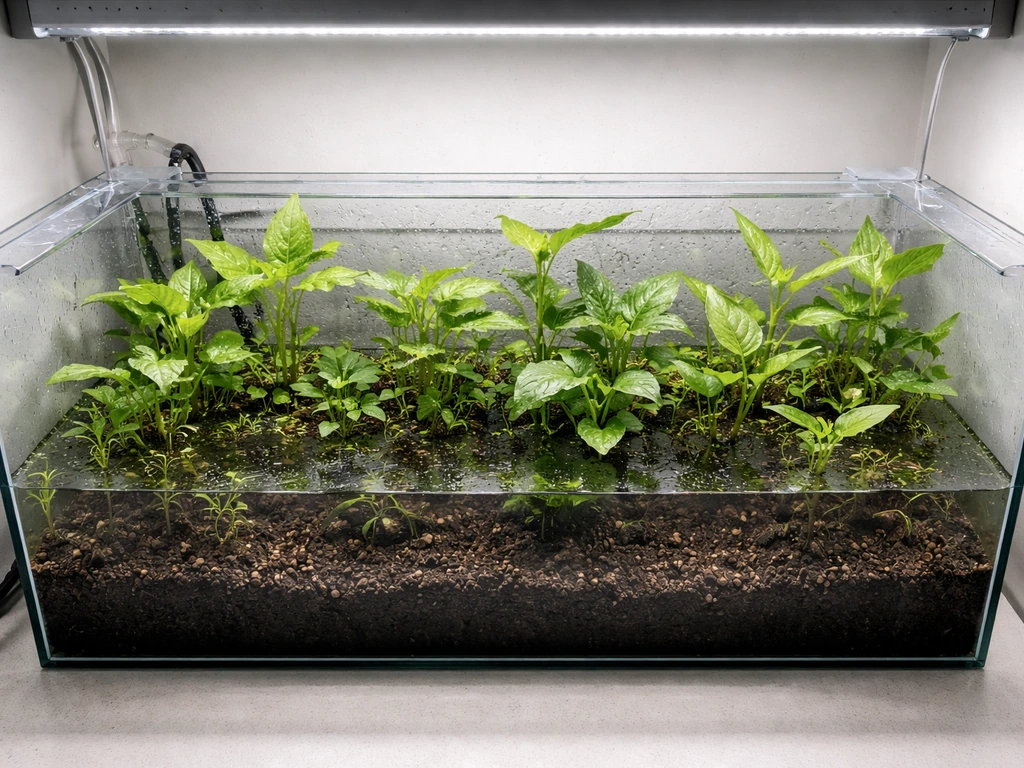
One practical tip from experience: it's easier to plant before you fill the tank all the way. Planting with several inches of water already in the tank is frustrating, especially with small crypts or vals that keep floating up. If you're setting up from scratch, plant in a shallow layer of water or even partially moist substrate, then slowly fill.
Your starter plan: what to buy and do this week
Here's the practical plan if you're starting a planted tank today. This setup works for a standard 10–40 gallon beginner tank and doesn't require CO2 or specialty equipment.
- Buy these 3–4 plants first: Java fern (1–2 pots), Anubias barteri (1 pot), a crypt like Cryptocoryne wendtii (2–3 plants), and optionally a bunch of hornwort. This gives you rhizome plants, a rosette, and a floater/filler with zero overlap in care requirements.
- Get a basic planted tank LED light and a plug-in timer. Set the timer to 6 hours per day for the first two weeks.
- Use a plain gravel or fine sand substrate if you don't already have something set up. Push 2–3 root tabs into the substrate where your crypts will go.
- Attach Java fern and Anubias to any piece of driftwood or rock using black thread or a rubber band. Plant crypts with roots in the substrate and crowns just above it. Float or loosely anchor hornwort if using it.
- Dose liquid all-in-one fertilizer at 1 mL per 10 gallons on the day you plant and once every 7 days after that.
- In week 1–2: expect crypt melt. Don't panic, don't pull the plants out. Leave them. Java fern and Anubias will look unchanged. Hornwort will start growing almost immediately.
- In week 3–4: look for new crypt growth at the base. Increase light to 7–8 hours per day if everything looks healthy and algae-free. Do a water change and check nitrates.
If you want to add an Amazon sword or Vallisneria after the first month, both slot in easily as background plants once your tank is cycling and stable. Growing freshwater aquarium plants more broadly opens up a lot of species options once you're comfortable with this starter group.
Troubleshooting the most common beginner problems
Plants are melting or falling apart
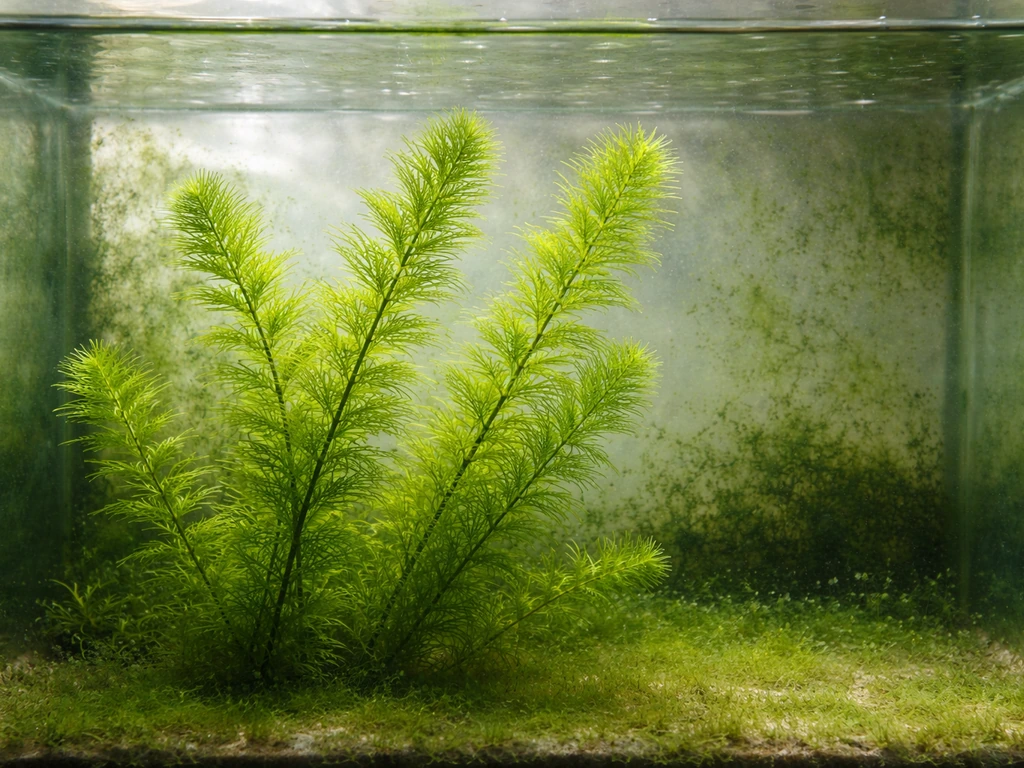
If it's your crypts, this is almost certainly crypt melt, which is a normal conversion response when emersed-grown plants transition to your aquarium water. Leave them alone. New aquatic-form leaves will sprout from the roots. If Java fern or Anubias leaves are rotting, check whether the rhizome is buried or covered by substrate. Unbury it immediately. If rhizome damage is severe (dark, mushy), trim the rotted section back to healthy tissue with clean scissors and reattach.
Algae taking over
Algae outbreaks almost always trace back to too much light and too few nutrients being consumed by plants. The imbalance tips in algae's favor. Your first move is always to cut light back, go to 6 hours per day and see if it slows in a week. Second, check that your plants are actually healthy and consuming nutrients. If your plants are struggling (melting, not growing), they're not competing with algae. Fix the plant issue first, and algae usually backs off once healthy plants are using up available nutrients.
Plants growing very slowly or not at all
Slow growth in the first 2–3 weeks is normal while plants acclimate. If slow growth persists past a month, check three things in order: light duration (are you hitting at least 6 hours?), nitrates (test the water, 10–20 ppm is a good target; near zero suggests the plants are starving), and root tab placement (for crypts and swords, make sure there's a root tab within a few inches of each plant).
Holes in leaves or yellowing
Yellowing on new leaves usually points to iron deficiency. Yellowing or holes in older leaves is more often potassium deficiency. Both are solved by switching to a complete all-in-one fertilizer that includes micronutrients and potassium, or by adding a dedicated supplement. If you see pale new growth specifically, look for a fertilizer that contains chelated iron. The fix usually shows in new growth within 2–3 weeks.
Plant died even though it's labeled "easy"
Usually one of four things happened: the rhizome was buried (Java fern/Anubias), the plant arrived in poor health from the store and never recovered, the water parameters were extreme (very high ammonia during a cycling crash), or lighting was completely insufficient. Easy plants can still die under genuinely bad conditions. Check the basics: Is your tank cycled? Is ammonia near zero? Is any light actually reaching the plant? Fixing those three things solves the vast majority of beginner plant deaths.
Keeping it simple long term: trimming, propagation, and routine care
Once your plants are established, the routine really is simple. Weekly water changes (25–30%) do more for plant health than almost anything else. Dose liquid fertilizer once a week, refresh root tabs near crypts and swords once a month with inert substrate.
Trimming keeps the tank looking good and actually helps plant health by allowing light to reach lower leaves. For vals and hornwort, just cut stems to the height you want. New growth continues from the cut point. For Java fern, remove old yellowing leaves at the base and leave the rhizome untouched. Anubias grows slowly enough that you rarely need to trim it, but you can remove individual leaves cleanly with scissors if they get old or algae-covered.
Propagation with these species is almost automatic. For details on starting new plants from seeds, see our guide on how to grow aquarium plants from seeds how to grow aquarium plants seeds. Java fern produces plantlets on its leaves that you can pull off and reattach elsewhere once they have a few roots. Anubias rhizomes can be divided with a clean cut, each piece with a few leaves will grow independently. Crypts spread by sending up daughter plants around the mother plant. Vals run constantly if they're happy. You'll be giving plants away within a few months of a healthy setup, which is a great sign.
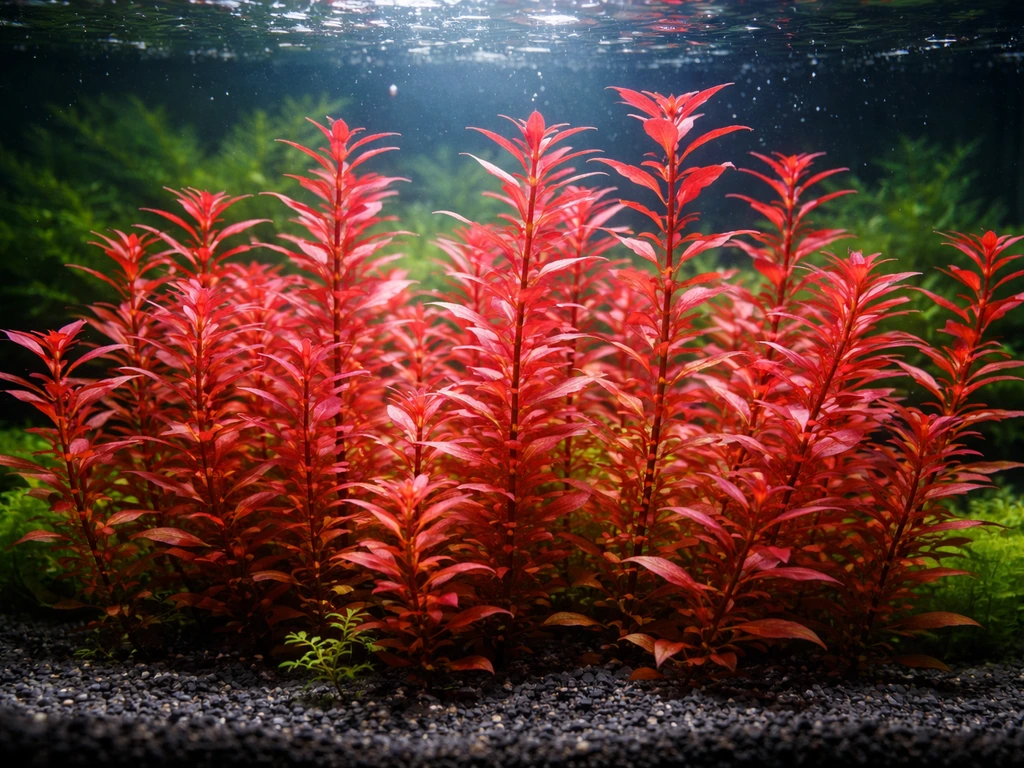
If you ever want to expand into more challenging territory, growing red aquarium plants or true tropical species often requires pushing light intensity and adding CO2, which is a natural next step once you're confident with this beginner group. But honestly, a well-planted tank using only the species on this list can look genuinely beautiful without ever adding CO2 or high-end equipment. That's the whole point of starting here.
FAQ
Can I run this planted-tank beginner list in gravel without any soil?
Yes, but with one caution. Root-feeding plants (crypts and Amazon swords) will need either root tabs or nutrient-rich substrate, otherwise they often stall. Rhizome plants (Java fern, Anubias) and hornwort will do fine in inert substrate as long as their rhizomes are not buried and hornwort is anchored or floated with decent light.
What light schedule should I use if I want easy growth but minimal algae?
If you are keeping CO2 off the table, choose a light that can produce stable brightness, then use a timer. Start at 6 to 8 hours, and only extend if algae stays controlled and plants start putting out new leaves within a few weeks. A good practice is to increase light by 1 hour increments every 3 to 5 days rather than jumping straight to longer photoperiods.
How do I know whether my fertilizer dose is helping or just fueling algae?
A fast way to confirm you are feeding the plants you have is to test nitrates after starting your routine. For this group, liquid fertilizer dosing is mainly for water-column uptake, so if nitrates are already consistently high, pause liquid fertilizer and focus on weekly water changes. If nitrates are near zero, your plants may be starving or not growing, and you should verify light hours first.
My crypts melted soon after adding them, are they dead?
Not necessarily. Some beginners notice melting and assume the plants are dying. Crypt melt is common during the first 1 to 2 weeks after switching from emersed to submerged growth. If the roots are healthy, new aquatic leaves usually appear after the melt phase. Java fern and Anubias should not show melting, if they do, it is usually from rhizome burial, poor arrival condition, or extreme water stress.
What exactly counts as “burying” the rhizome, and what should I do if I already did?
For rhizome plants, the rhizome must stay above the substrate surface. Covering it traps oxygen-poor conditions that lead to rot. The easiest approach is to attach Java fern and Anubias to a hardscape, then only let roots dangle into the tank. If you already buried a rhizome, unbury it immediately and trim any mushy, dark tissue back to firm, healthy sections.
Will hornwort change my nitrate levels, and how should I adjust the rest of my feeding?
Hornwort is great at nutrient uptake, so it can reduce nitrates and algae pressure, but it can also make the rest of your fertilizing feel unpredictable. That means you should still test nitrates weekly and adjust, especially if you have a heavy bioload. Also watch filter flow, hornwort sheds tiny pieces, and a clogged intake or filter sponge can quietly worsen water quality.
What if my plants are “easy” but still look terrible, is my tank possibly the problem?
Yes, especially in early tanks. If your tank is not cycled, ammonia and nitrite spikes can prevent plants from establishing and can cause permanent leaf damage. Before judging plant performance, confirm ammonia is at or near zero and nitrite is not present, then give plants several weeks to acclimate with consistent light and fertilization.
How can I tell whether yellowing is iron deficiency or something else?
Common symptom-driven fixes help. Pale new growth on these plants often points to missing micronutrients, and chelated iron is the key detail to look for when you suspect iron deficiency. If older leaves show holes or yellowing patterns, potassium may be low. The fastest approach is to switch to a complete all-in-one that includes both micronutrients and potassium rather than adding separate supplements one at a time.
If crypts or Amazon swords slow down, is it usually light or root tabs?
Crypts and Amazon swords are the most sensitive to poor root feeding. Make sure root tabs sit in the substrate close to each plant, not far away, and use a placement grid so nutrients reach individual root zones. If growth stays slow past a month, retest nitrates and confirm each root-feeding plant has an active tab within a few inches.
Should I treat algae immediately with chemicals, or change plant care first?
Yes, but do it carefully. When you see algae, start by reducing light to about 6 hours and evaluate plants first. If your plants are melting or not growing, algae often wins because plants are not consuming nutrients yet. Only after plants stabilize should you consider additional changes, like adjusting fertilizer dose or improving nutrient balance.
Can I add plants after the tank is already filled, or is it better to plant before filling?
You can, and it often helps, but timing matters. If you are establishing from scratch, planting with a few inches of water is easier on small crypts and vals. If you are doing a water change later, anchor rhizome plants first and avoid burying any rhizome during rearranging. After major changes, give plants a couple of weeks to show new growth before you conclude the setup is failing.