Growing freshwater aquarium plants reliably comes down to getting four things right: choosing plants that match your setup, planting them correctly, dialing in light and nutrients, and knowing how to fix problems before they spiral. You don't need a high-end aquascape rig or years of experience. What you do need is a clear process, and that's exactly what this guide covers from start to finish.
How to Grow Freshwater Aquarium Plants Step by Step
Marcus Holloway
15 Apr 2026
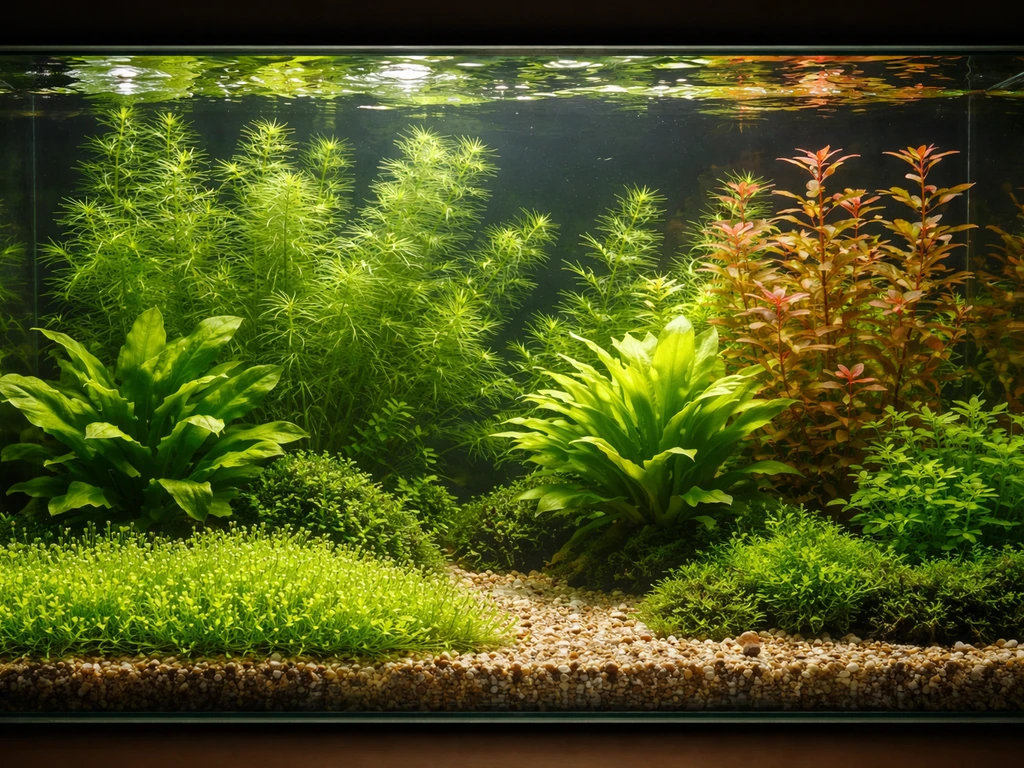
Choosing the right freshwater aquarium plants
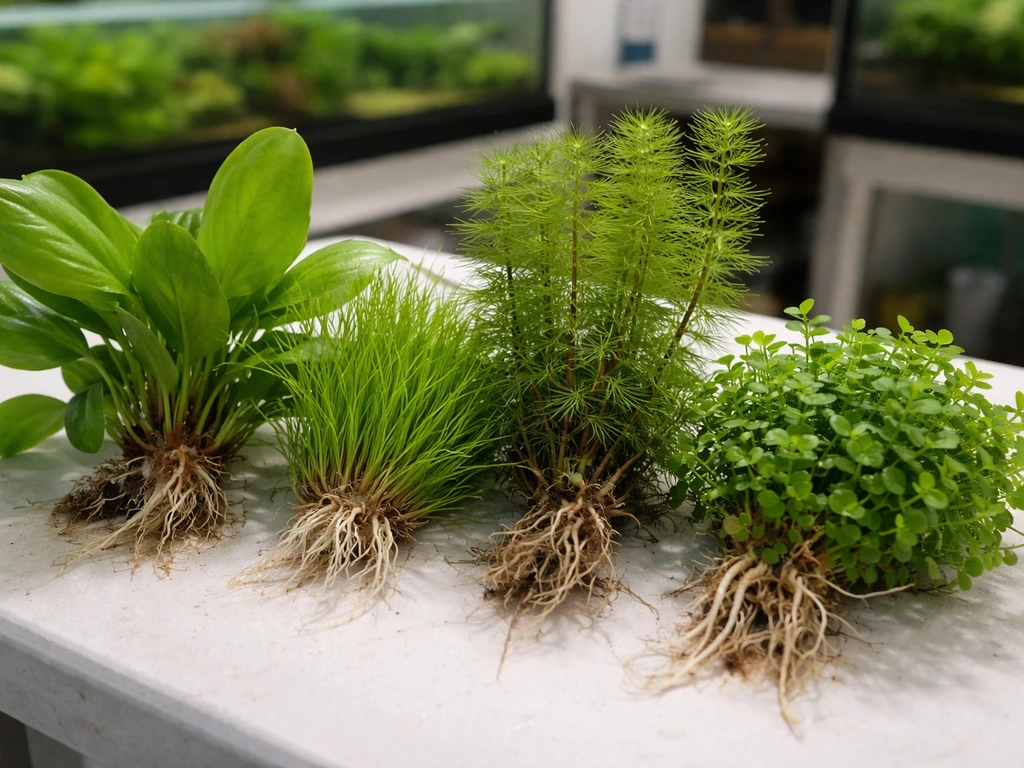
The single biggest mistake beginners make is buying plants that look cool at the store without checking whether those plants can survive their current setup. Before you buy anything, ask yourself three questions: How much light does my tank get? Do I have CO2 injection? What's my substrate? Your answers will determine which plants will actually thrive.
For most people starting out, the best move is to pick easy-to-grow aquarium plants that are genuinely beginner-friendly. Think Java fern, Anubias, hornwort, water sprite, and cryptocorynes. These tolerate a wide range of water parameters, don't demand CO2 injection, and forgive the occasional missed water change. Once you've kept those alive for a few months and understand how your tank behaves, you can start adding more demanding species.
Plants fall into a few broad categories based on how they grow and how you plant them. Understanding the difference saves you a lot of headaches.
- Stem plants: Fast growers like hornwort, rotala, and ludwigia that are planted directly into the substrate by their cut stems. They grow quickly and need regular trimming.
- Rosette plants: Planted individually by their crown (the central base where leaves meet roots), like Amazon swords and cryptocorynes. They spread via runners along the substrate.
- Rhizome plants: Anubias and Java fern attach to hardscape (wood or rock) via a thick horizontal stem called a rhizome. Never bury the rhizome — it will rot.
- Floating plants: Duckweed, frogbit, and water lettuce grow at the surface with roots hanging freely into the water. No planting required.
- Mosses: Tied or glued to hardscape. They absorb nutrients directly from the water column.
Temperature compatibility matters more than people realize. Most common aquarium plants do well between 72–82°F (22–28°C), but some prefer cooler water. African Water Fern, for example, does best in the 68–78°F (20–26°C) range and can struggle in warmer tropical setups. Always cross-check temperature requirements before combining plants in the same tank.
Tank setup: substrate, planting method, and water parameters
Your substrate choice has a direct impact on how well rooted plants grow. You have three main options: inert gravel or sand, aquasoil, and dirted tanks capped with gravel. Each works, but they serve different plant types and require different fertilization approaches.
| Substrate Type | Best For | Fertilization Needed | Longevity |
|---|---|---|---|
| Inert gravel/sand | Rhizome plants, mosses, floaters | Liquid ferts + root tabs required | Indefinite (no nutrients to deplete) |
| Aquasoil (e.g., Fluval Stratum, ADA Amazonia) | Demanding stem plants, rosettes | Root tabs later as soil depletes | 1–3 years before nutrients fade |
| Dirted tank (capped) | Heavy root feeders, planted community tanks | Minimal early on; add root tabs later | Many years if capped properly |
For most beginners, a 2–3 inch layer of fine inert gravel or aquasoil is the practical starting point. Aquasoil gives you a head start on nutrients, but it can cause ammonia spikes during cycling, so cycle the tank before adding fish. Inert substrates are safer but require you to handle fertilization entirely yourself.
How to plant each type correctly
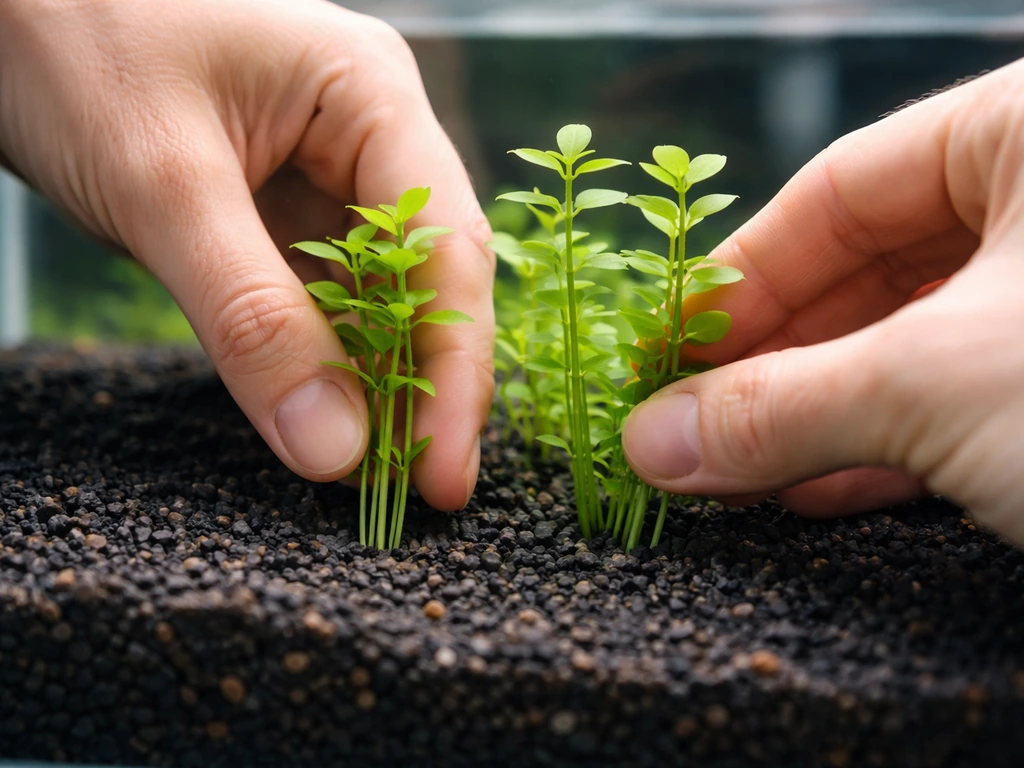
Stem plants go in by pushing the bottom 1–2 inches of the stem into the substrate. Plant them in groups rather than single stems for a natural look. For rosette plants like swords, bury the roots but keep the crown at the substrate surface, burying the crown causes rot. Rhizome plants like Anubias and Java fern should be tied to driftwood or rock with fishing line or attached with aquarium-safe superglue gel. They can also be wedged into crevices. The key rule: the rhizome (that thick horizontal stem) must stay above the substrate at all times.
If you're interested in exploring setups where plants grow entirely without traditional substrate, it's worth reading about how to grow aquarium plants without soil, which covers water column feeding and hardscape-based systems in detail.
Water parameters that matter most
For the majority of freshwater plants, target these parameters as your baseline:
- pH: 6.5–7.5 for most species (some plants prefer slightly acidic)
- KH (carbonate hardness): 3–6 dKH for stability, especially if you're running CO2
- GH (general hardness): 4–8 dGH suits most plants
- Temperature: 72–80°F (22–27°C) for the majority of tropical species
- Ammonia and nitrite: 0 ppm always — plants do not replace proper cycling
Soft, acidic water generally favors faster plant growth because CO2 is more available at lower pH. If your tap water is hard and alkaline (pH above 7.8, KH above 8), some species will struggle and CO2 injection becomes harder to dial in accurately.
Lighting and photoperiod: getting enough light without cooking the tank
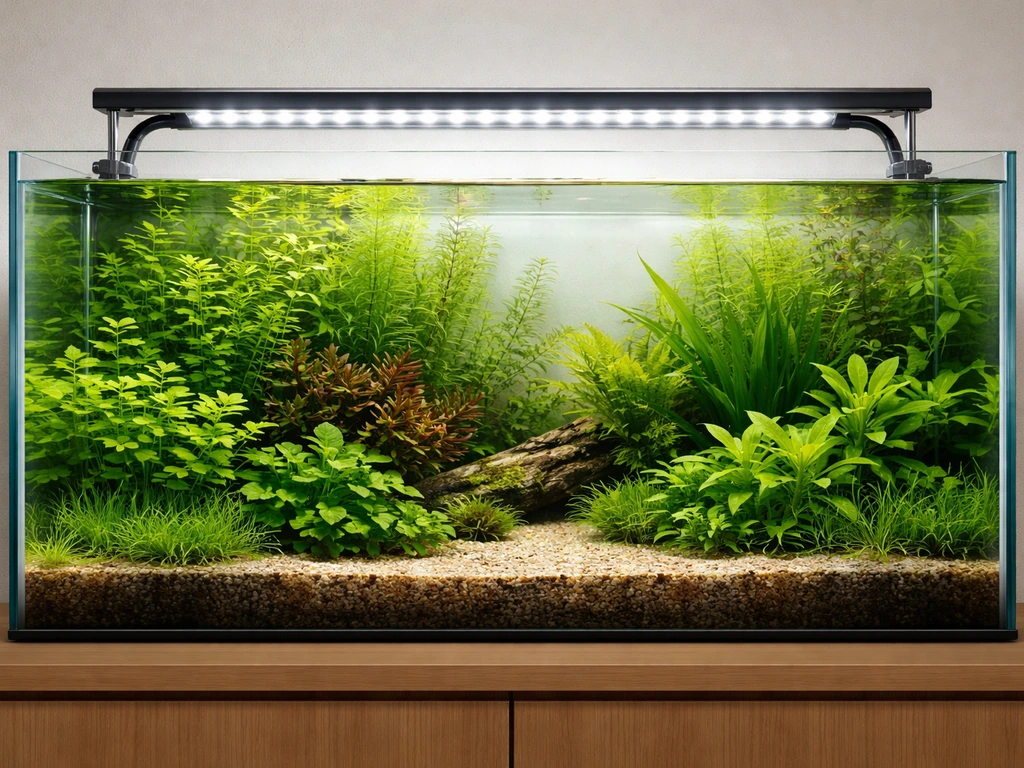
Light is the engine that drives plant growth, but more isn't always better, especially in a new tank. Too much light without enough CO2 and nutrients to match is the fastest way to trigger an algae outbreak. When you first set up a planted tank, start at 6–8 hours of light per day and let the plants acclimate before pushing the duration higher.
The practical rule: make one change at a time in a low-tech system and wait about two weeks before making the next adjustment. This gives you time to see whether plants or algae are responding to each change. If algae appears after you bump the photoperiod from 7 to 8 hours, that's your signal to pull back.
Choosing a light for plant growth
Modern LED fixtures designed for planted tanks have made this much easier. Look for lights rated in PAR (photosynthetically active radiation) and matched to your tank depth. A general guide by plant type and required light intensity:
| Light Level | PAR at Substrate (approx.) | Suitable Plant Types | CO2 Needed? |
|---|---|---|---|
| Low | 15–30 µmol/m²/s | Anubias, Java fern, mosses, crypts | No |
| Medium | 30–75 µmol/m²/s | Most stem plants, swords, vallisneria | Optional but helpful |
| High | 75–150+ µmol/m²/s | Carpet plants, demanding stem plants, red plants | Yes, strongly recommended |
For a low-tech tank with easy plants, a quality LED running 6–8 hours a day is plenty. If you want to grow vibrant red aquarium plants or demanding species, you'll need a higher-output fixture and, almost certainly, CO2 injection to keep algae from overtaking the tank.
Avoid placing tanks in direct sunlight. It's uncontrollable, heats the water, and causes persistent algae problems. Stick to artificial lighting you can schedule and dim consistently.
Fertilization and CO2: nutrient plans for low-tech vs high-tech setups
Plants need macronutrients (nitrogen, phosphorus, potassium) and micronutrients (iron, manganese, calcium, magnesium, and others) to grow. How you deliver those nutrients depends on which plants you're growing and whether you're running CO2.
Low-tech setups: liquid fertilizers and root tabs
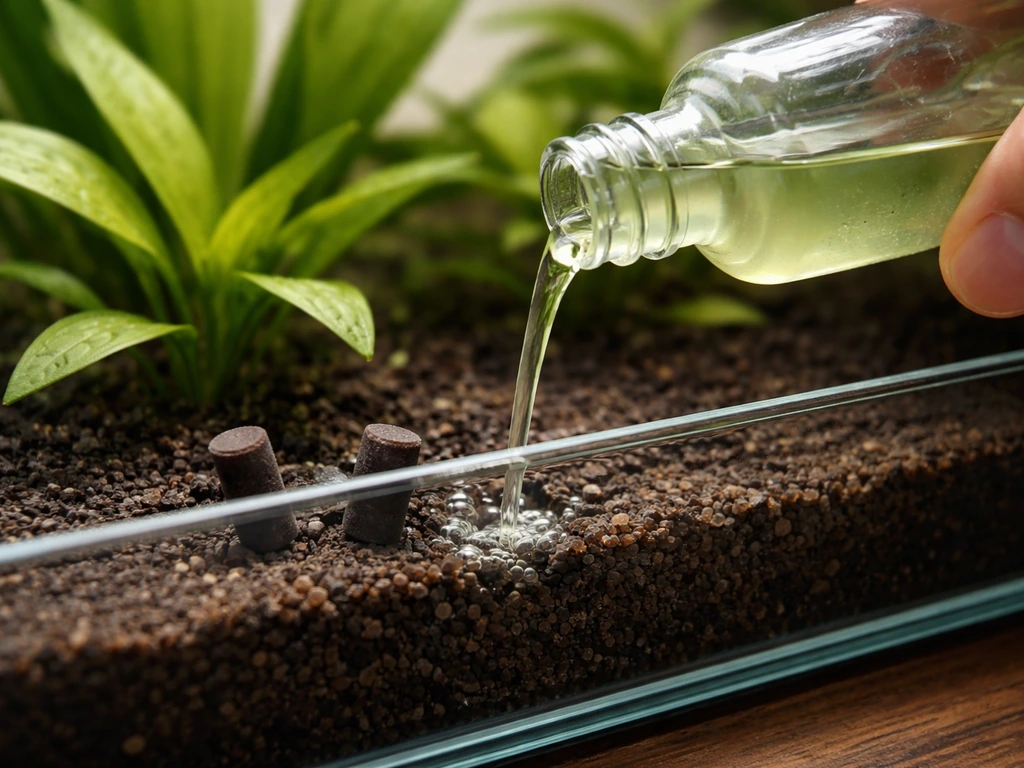
For most planted tanks without CO2 injection, a combination of a liquid all-in-one fertilizer and root tabs covers your bases. Liquid fertilizers like Aquarium Co-Op's Easy Green deliver nutrients directly into the water column, which feeds mosses, floating plants, rhizome plants, and stem plants. With liquid fertilization, you can test the water to decide when to dose again rather than guessing. A good starting dose is one pump per 10 gallons once or twice a week, then adjust based on plant response.
Root tabs are specifically for substrate-rooted plants like swords, crypts, and vallisneria. Plants like Anubias, Java fern, and floating plants don't benefit much from root tabs because they don't feed through the substrate. When placing root tabs, push them into the substrate at about 2–3 inches deep and bury them fully so nutrients release at the root zone rather than leaching into the water column. Space them on a grid pattern with roughly one tab every 5–6 inches (12–15 cm) across the planting area. If a tab pops back up out of the substrate, poke a small hole in one end and squeeze it once while it's submerged to help it sink and stay put.
Broad micronutrient supplements like Seachem Flourish cover elements like calcium, magnesium, and iron, but be aware that Flourish is a micronutrient supplement, not a complete NPK fertilizer. It works best as a complement to a full macro/micro regimen rather than as a standalone solution.
High-tech setups: pressurized CO2 and advanced dosing
If you're running high light and demanding plants, CO2 injection is the game changer. The target CO2 concentration for a planted aquarium is 15–30 mg/L (ppm), with 20–30 ppm being the sweet spot for vigorous growth. The most reliable way to dial this in without a CO2 probe is to use a drop checker with reference solution and cross-reference your pH and KH readings on a CO2-KH-pH chart. As a general rule, CO2 injection typically causes roughly a 1.0 pH drop from the tank's baseline degassed pH when you're in the right range.
Keep your KH in the 3–6 dKH range when running CO2. This provides enough buffering to prevent wild pH swings while still allowing CO2 to dissolve effectively. If your KH is too high (above 8 dKH), you'll struggle to reach the target CO2 concentration without driving pH dangerously low.
For advanced nutrient dosing in high-tech tanks, dry fertilizer systems like the PPS-Pro method use potassium nitrate (KNO3) and monopotassium phosphate (KH2PO4) to deliver precise amounts of nitrogen and phosphorus. This approach works well when CO2 is stable and you want granular control over nutrient levels. If CO2 isn't stable, adjust your nutrient load first before chasing micro deficiencies.
If you're growing plants primarily above the waterline as part of a hybrid setup, the guide on how to grow emersed aquarium plants covers the different fertilization and humidity requirements for that growing mode.
Water flow, temperature, and maintenance for healthy growth
Good water circulation does more for plant health than most beginners expect. Flow distributes CO2 and nutrients evenly across all plant surfaces, prevents dead spots where detritus accumulates and cyanobacteria can take hold, and helps remove waste products from leaf surfaces. Aim for a turnover rate of 5–10 times the tank volume per hour for planted tanks. A 40-gallon tank should have a filter or powerhead moving 200–400 gallons per hour.
Avoid blasting the water surface hard enough to cause significant surface agitation if you're running CO2, surface agitation gasses off CO2 quickly and makes it nearly impossible to maintain target concentrations. With no CO2 injection, moderate surface movement is fine and helps with oxygenation.
Routine maintenance steps that directly affect growth
- Weekly water changes: 25–30% weekly removes accumulated nitrates, replenishes trace minerals, and dilutes any imbalances. Consistency matters more than volume.
- Trimming: Fast-growing stem plants need trimming every 1–2 weeks. Cut the top third, replant the tops, and discard the bottom stems as they age.
- Gravel vacuuming: Lightly vacuum the substrate surface to remove mulm (decomposing matter). Avoid deep vacuuming near planted areas — you'll disturb roots and pull up root tabs.
- Glass cleaning: Wipe algae from glass weekly before it becomes thick. A clean front glass also helps you monitor plant color and growth accurately.
- Filter maintenance: Rinse filter media in old tank water (never tap water) once a month to maintain flow without destroying beneficial bacteria.
Temperature stability matters as much as the temperature itself. Swings of more than 2–3°F within a day stress plants and fish alike. A reliable heater with a built-in thermostat set to 76–78°F (24–26°C) works well for most community planted tanks with tropical species.
Plant care by type: fast vs slow growers and common beginner mistakes
Understanding the growth rate of your plants helps you set realistic expectations and maintain the tank without it becoming a chore.
Fast growers
Stem plants like hornwort, water wisteria, rotala, and ludwigia are fast growers that can double in size within a couple of weeks under good conditions. They're excellent at outcompeting algae for nutrients in a new tank, which is why planting heavily from the start is one of the best algae-prevention strategies. The downside is they need frequent trimming. Neglecting fast growers leads to shading of lower plants, leggy growth, and lower leaves that rot and pollute the water.
If you want to propagate stem plants from seed rather than cuttings, the process for growing aquarium plants from seeds involves specific germination conditions and humidity management that differ from standard planting.
Slow growers
Anubias, Java fern, and most mosses grow slowly, we're talking one or two new leaves per month under good light. Don't panic if these plants seem to stall for a few weeks after planting. That's normal adjustment behavior. The upside is they need almost no trimming and can tolerate low light. The common mistake with rhizome plants is burying the rhizome in the substrate. The rhizome needs to be fully exposed or tied to hardscape, never buried, because covering it cuts off oxygen and causes it to rot from the base.
Tropical species considerations
Many of the most popular aquarium plants are tropical species that require stable warm temperatures and consistent nutrition. If you want to build a lush planted display with species like Amazon swords, vallisneria, or red lotus, understanding the specific care needs of each is important. A dedicated look at how to grow tropical aquarium plants will walk you through the species-specific requirements in more detail.
Common beginner mistakes at a glance
- Running the light for 10–12 hours from day one (causes algae blooms before plants are established)
- Burying rhizomes on Anubias and Java fern (leads to rot and plant loss)
- Only adding root tabs for floating plants or mosses (they don't feed through the substrate — waste of money)
- Not trimming fast growers regularly (lower plant die-off from shading)
- Changing too many variables at once (impossible to diagnose what caused an algae or growth problem)
Troubleshooting: algae, melting, nutrient deficiencies, and plant die-off
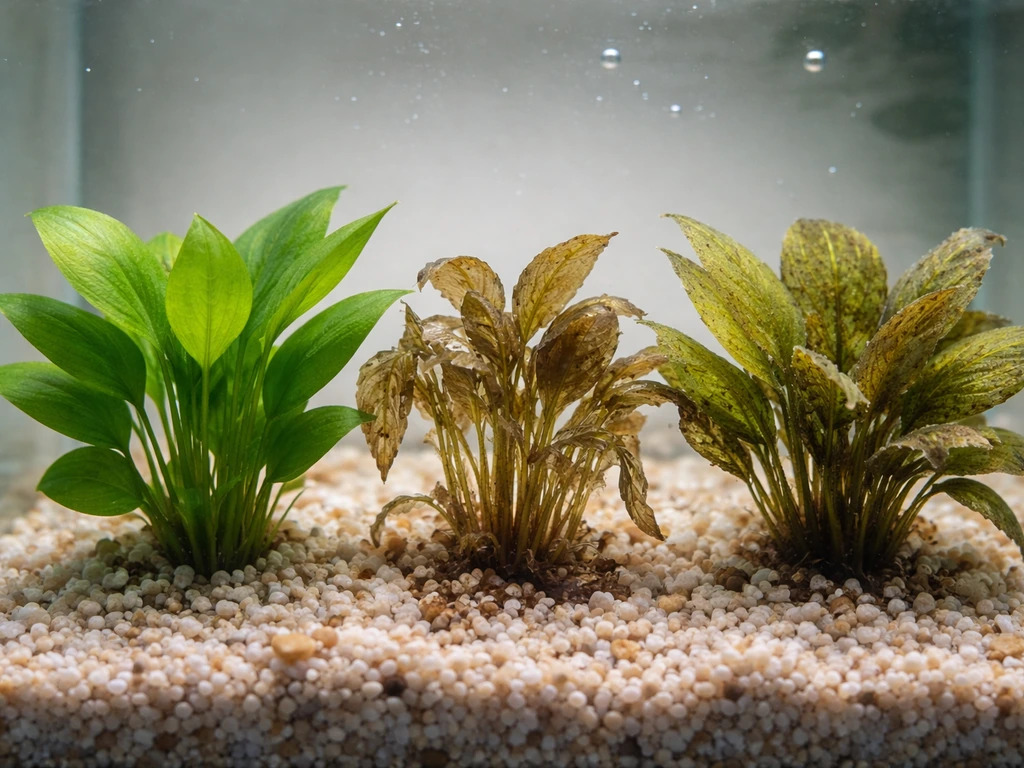
Most planted tank problems have a clear cause once you know what to look for. Here's how to diagnose and fix the most common ones.
Algae outbreaks
Brown algae (diatoms) are common in new tanks during the first 4–8 weeks as the tank matures. They typically disappear on their own once silicates are depleted and plants establish, but they can return if nutrient imbalances persist or maintenance slips. Wipe them off glass and hardscape and keep up with water changes.
Green algae (green dust, green spot, hair algae) usually signal too much light relative to nutrients or CO2. If you see a green algae outbreak, reduce the photoperiod by 30–60 minutes, check that you're fertilizing consistently, and make sure plants are actually growing (if plants aren't consuming nutrients, algae will). Green hair algae in particular responds well to reducing light duration and adding fast-growing stem plants to compete for nutrients.
Cyanobacteria (blue-green algae) appears as slimy, foul-smelling mats, often dark blue-green or reddish, that coat plants and substrate. It's associated with nutrient imbalances (often low nitrates relative to phosphates) and poor water flow creating dead spots. Fix it by improving circulation, doing several large water changes, and addressing any areas of low flow in the tank.
Plant melting
Melting is when leaves turn transparent, mushy, and fall apart, and it's one of the most alarming things to see as a beginner. In most cases, it's a transition response rather than a sign your plant is dying. Many aquarium plants are grown emersed (above water) at commercial farms, and when they're submerged in your tank, they shed their emersed leaves and regrow submersed ones. This is completely normal and is especially well-documented with cryptocorynes, where it's called "crypt melt." As long as the roots and rhizome (or crown) are intact, the plant will recover.
Melting can also be triggered by major parameter changes (a big shift in pH, hardness, or temperature), nutrient deficiencies, or CO2 fluctuations. If melting happens after you've changed something in the tank, that change is likely the cause. Remove the melted leaves to prevent them from rotting in the water, and give the plant 2–4 weeks to push new growth before giving up on it.
Nutrient deficiency symptoms
| Symptom | Likely Deficiency | Fix |
|---|---|---|
| Yellowing of older leaves first | Nitrogen (N) | Increase liquid fertilizer dose; add root tabs for rooted plants |
| Yellow leaves with green veins (interveinal chlorosis) | Iron (Fe) or manganese (Mn) | Add iron-containing liquid fertilizer; check pH (iron uptake drops above 7.5) |
| Holes or rotting leaf edges | Potassium (K) | Dose potassium chloride or switch to a complete liquid fertilizer |
| Pale new growth, stunted tips | Calcium or magnesium | Check GH; add a calcium/magnesium supplement if GH is very low |
| Purple undersides on leaves | Phosphorus (P) | Increase fertilizer dose; check that you're not underdosing macros |
The most common deficiency scenario in a low-tech tank is simple: not enough fertilizer across the board. Before chasing specific micronutrient deficiencies, make sure you're dosing a complete all-in-one fertilizer regularly and have root tabs in place for your substrate feeders.
Plant die-off and slow growth
Slow growth is almost always caused by one of three things: insufficient light, insufficient nutrients, or insufficient CO2 (in high-demand setups). Run through the checklist in order. First, is the light strong enough and running for at least 6–8 hours? Second, are you fertilizing consistently and are root tabs in place? Third, if you're running CO2, is the drop checker showing the correct range and is injection consistent throughout the day?
True plant die-off (where healthy-looking plants suddenly crash) is often caused by a sudden parameter shift, a disease brought in on new plants, or physical damage (like a rhizome being buried or a plant being uprooted repeatedly). Quarantine new plants if possible, and try not to disturb the substrate around established plants during water changes.
One thing I've learned after years of planted tanks: the most successful setups aren't the ones with the fanciest equipment. They're the ones with the most consistent routine. Regular water changes, predictable lighting schedules, and steady fertilization beat a chaotic high-tech setup every time. FishTankMath notes that weekly 50% water changes are commonly used for high-tech planted tanks using CO2 and ferts, while other setups may need different percentages Regular water changes, predictable lighting schedules, and steady fertilization. Start simple, get the basics dialed in, and build from there.
FAQ
How do I choose plants if my tap water is hard or my pH is high?
If your tap water is hard or alkaline, consider lowering the starting bio-load and choosing plants that tolerate higher KH. Also test pH and KH together, because a low pH number alone can be misleading, and you may need to rely on CO2 stability and algae-safe lighting (shorter photoperiod) until nutrients and growth catch up.
What should I do if my plants stall after I set up the tank?
A good “starter” target is to keep plants in the ground and feed them, not to chase numbers. If plants are not visibly growing within 2 to 4 weeks, re-check whether light duration is at least 6 to 8 hours and whether you are dosing a complete fertilizer (plus root tabs for true substrate feeders), then make only one adjustment and wait about two weeks before changing anything else.
Should I use liquid fertilizer, root tabs, or both?
In low-tech setups, you usually should not rely on liquid fertilizer alone for root feeders. Use root tabs for swords, crypts, and vallisneria (or other heavy root-rooted plants), and still dose a liquid fertilizer for water-column users like mosses and many floating plants. If you mix root and rhizome plants, that division matters for how you feed them.
How often should I trim aquarium plants, and what’s the safest way to trim them?
Trim based on growth and placement, not on a schedule. Remove only the shaded, dying, or excess biomass, then replant the trimmed tops for stem plants. After trimming, keep lighting steady (do not reduce or increase it the same day), and watch for short-lived cloudiness that can come from disturbed substrate.
What are the most common planting mistakes that cause rot or melting?
Use planting “depth rules” to avoid rot and die-off: rosette and crown plants keep the crown at the substrate surface, stem plants bury the stem base 1 to 2 inches, and rhizomes must remain fully above the substrate. If you accidentally bury a rhizome or crown, remove it promptly if possible, otherwise expect melting from the covered portion and a slower recovery.
My algae is coming back. How can I tell whether it’s a light problem or a fertilizer problem?
If you see algae but your plants look healthy, the issue is often light and nutrient balance, not a lack of “doing something.” Reduce photoperiod by 30 to 60 minutes first, confirm your fertilizer routine is consistent, and add or increase fast-growing stem plants to help outcompete algae for available nutrients.
How do I maintain stable CO2 without killing my plants or driving pH swings?
With CO2 injection, aim for stable CO2 delivery rather than chasing daily fluctuations. Avoid strong surface agitation that vents CO2, and maintain KH in the 3 to 6 dKH range so the pH drop you target is meaningful. If your pH swings more than a small amount day to day, pause and stabilize parameters before changing fertilizer or light.
How can I tell whether a plant should be glued to hardscape or planted into the substrate?
“Rooted” and “rhizome” plants are easy to mix up. Rhizome plants (like Java fern and Anubias) should be tied or glued to hardscape and never buried, while true substrate-rooted plants benefit from root tabs. If a plant keeps melting in spite of good light, check whether you buried the wrong structure (the rhizome vs the roots).
Can I plant during tank cycling, and do I need to change my fertilization plan?
If you are using a tank cycling period, avoid adding fish while you are cycling when using nutrient-rich substrates like aquasoil. For plants, start with easy species and plant early, but dose nutrients cautiously because an ammonia spike during cycling can harm plants and confuse later algae diagnosis.
What changes when I switch plants from emersed growth to a fully submerged aquarium?
If you want to grow emersed, expect a different routine: plants often need higher humidity and different fertilization patterns, and they may look temporarily different after switching to submerged growth. Label your plants by growth mode, and after moving them underwater give them 2 to 4 weeks to adjust before judging results.