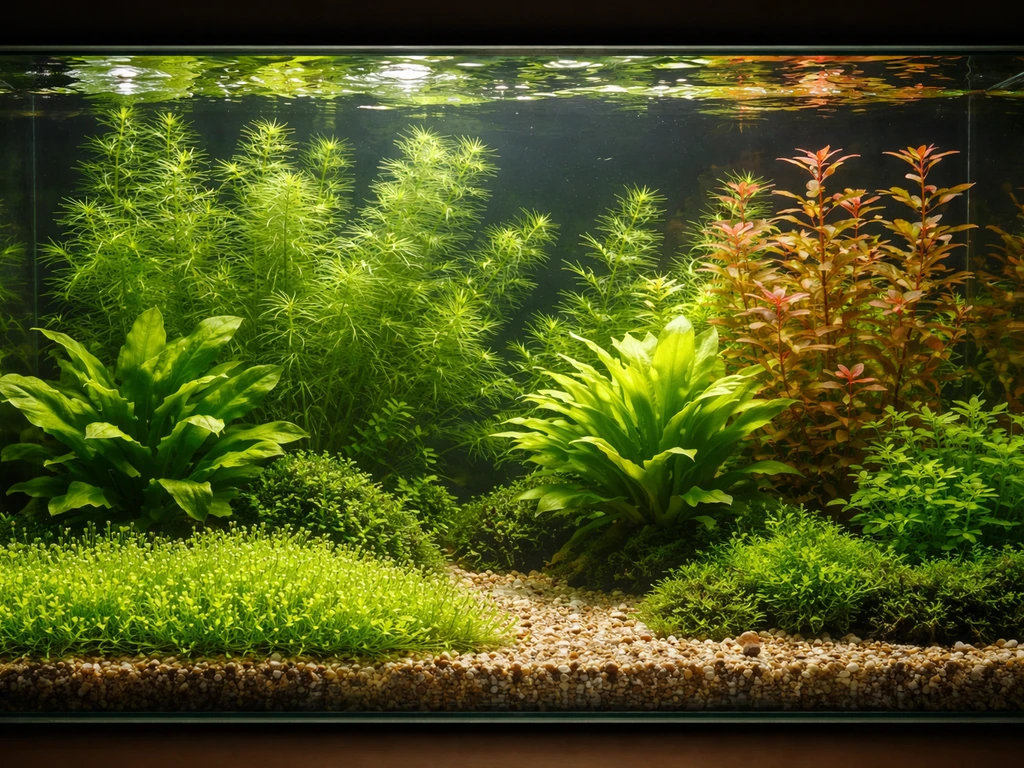
Yes, aquarium plants absolutely can grow without soil, and many of the most popular species actually do better that way. The trick is understanding what "without soil" really means for different plant types, and then replacing the nutrients that soil would normally provide. Get those two things right and you can run a thriving, lush planted tank with bare glass on the bottom if you want.
How to Grow Aquarium Plants Without Soil: Step-by-Step Guide
Marcus Holloway
16 Apr 2026
Do aquarium plants actually need soil or substrate?
Soil and substrate serve two purposes in a planted tank: physical anchoring and nutrient storage. But here's the thing: aquatic plants evolved to pull nutrients from the water column, not just their roots. Many species, especially floating plants and epiphytes (plants that attach to surfaces), have almost no relationship with substrate at all. Java fern is a perfect example. It should never be planted in substrate because burying the rhizome causes it to rot. The same is true for Anubias, Bolbitis, and most mosses. For these plants, "soil-free" is not a workaround, it's the correct method.
Stem plants are a different story. They can root into substrate and pull nutrients from it, but they are equally capable of absorbing everything they need through their leaves and stems directly from the water. In a well-fertilized water column, stems often grow faster without substrate than with it, because nutrients are immediately available rather than bound in soil. The plants that genuinely struggle without substrate are heavy root-feeders like Amazon swords and certain Cryptocorynes, but even those can adapt with the right feeding strategy.
The best soil-free methods
There are several ways to go substrate-free, and the right choice depends on which plants you want to keep and how you want the tank to look.
Water column only (bare bottom)
A bare-bottom tank with only liquid fertilization works well for stem plants, floating species, and any plant you attach to hardscape. The entire nutrient supply comes from what you dose into the water. Cleaning is easier, you can see exactly what's on the bottom, and there's no substrate locking up nutrients unpredictably. The downside is that you need to stay on top of your dosing schedule, because there's no buffer when you miss a week.
Attached to rocks or wood (epiphyte method)
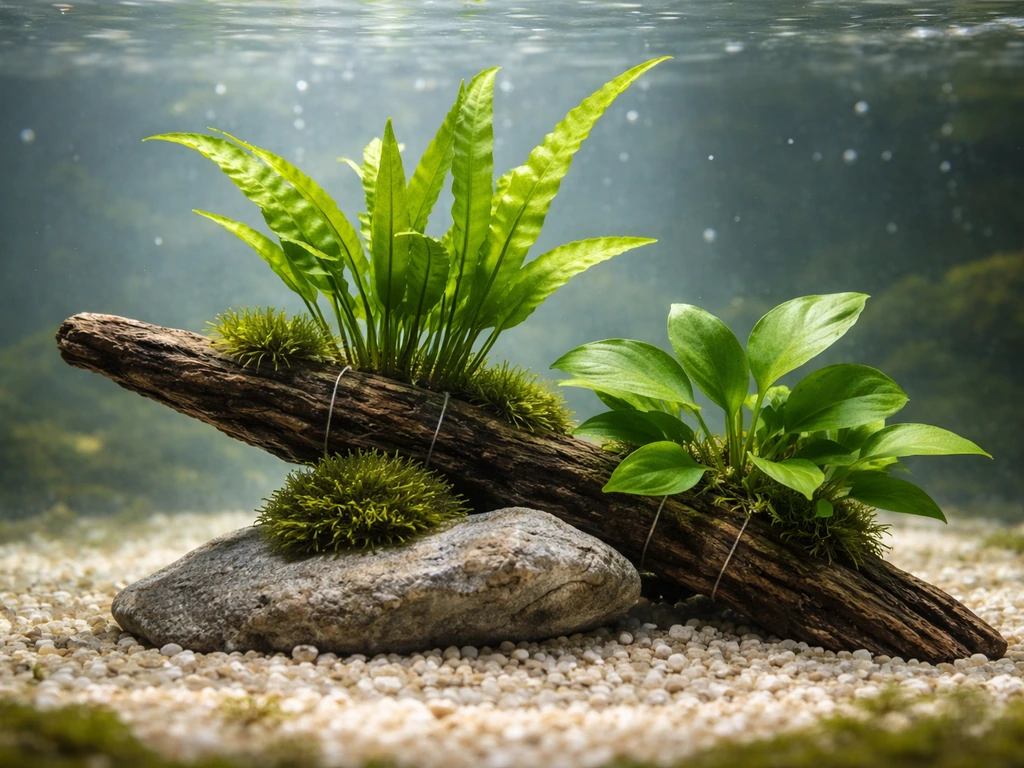
This is the most natural-looking soil-free setup. Java fern, Anubias, and mosses are tied or glued to rocks, driftwood, or ceramic decorations using cotton thread or aquarium-safe super glue gel. The rhizome sits exposed to the water, roots grip the surface over time, and the plant feeds entirely from the water column. Tropica specifically warns never to cover the rhizome because even partial burial causes rot. The thread dissolves on its own within a few weeks once the roots have taken hold.
Floating plants
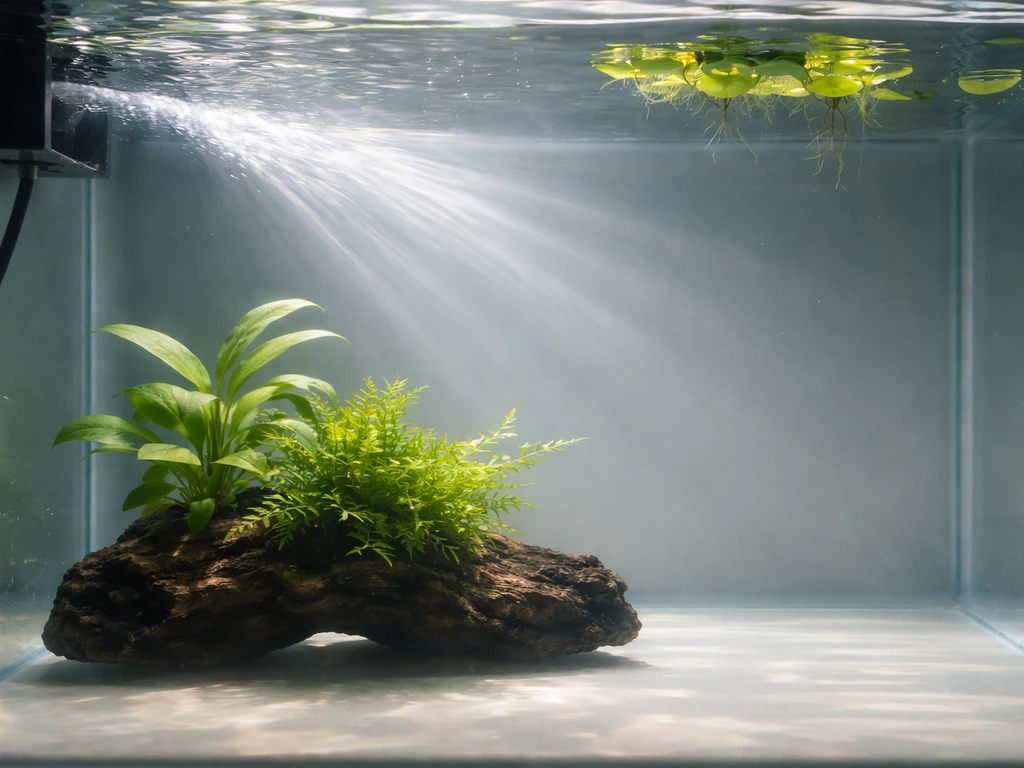
Floating plants like Salvinia, frogbit, and Azolla need zero substrate and zero attachment. They sit at the surface, roots dangling into the water, absorbing everything they need directly. They're fast-growing, excellent at pulling excess nutrients out of the water (which helps with algae control), and almost impossible to kill. The tradeoff is that dense floating coverage blocks light from plants below, so you need to manage surface coverage if you're running a layered setup.
Hydroponic and aeroponic approaches
Some growers run aquarium plants in a semi-hydroponic setup, where plants are potted in inert media like lava rock, pumice, or clay pebbles and fed with nutrient solution. This works especially well for growing plants in an emersed state, where the leaves are above water but the roots sit in nutrient solution or a moist inert medium. Emersed growing is actually how many commercial aquarium plants are produced before they hit store shelves, which is why they sometimes melt when first submerged (more on that below). For a fully submerged setup, the "hydroponic" equivalent is a well-circulated, well-fertilized water column: essentially what every good planted tank already is.
The easiest plants to start with in a no-soil setup
If you're new to soil-free aquatic planting, start with forgiving species that are naturally suited to it. Choosing the wrong plants first is the most common reason beginners get frustrated. The species below either attach to surfaces or float, meaning substrate is irrelevant to them from day one.
- Java fern (Microsorum pteropus): ties to wood or rock, extremely low-light tolerant, slow-growing but nearly indestructible
- Anubias (various species): attaches to hardscape, tolerates low light, grows slowly so nutrient demand is minimal
- Java moss (Taxiphyllum barbieri): ties or glues to any surface, tolerates a wide range of conditions, great for covering rocks
- Marimo moss balls (Aegagropila linnaei): just place them in the tank, no attachment needed
- Salvinia and frogbit: floating plants, zero effort on placement, excellent nutrient sponges
- Hornwort (Ceratophyllum demersum): can float freely or be loosely anchored, extremely fast-growing, very forgiving
- Water wisteria (Hygrophila difformis): stem plant that roots readily but thrives when floated or left loose in good water
- Cryptocoryne wendtii: can adapt to water-column feeding with root tabs as backup, one of the most resilient Crypts for bare setups
If you want to branch out after getting comfortable with the basics, there are quite a few more beginner-friendly aquarium plants worth exploring, including some that handle a range of water conditions with minimal intervention. Once you have stable water chemistry and a fertilization routine, you can start experimenting with more demanding species.
Setting up your no-soil system: lighting, flow, temperature, and CO2
Lighting
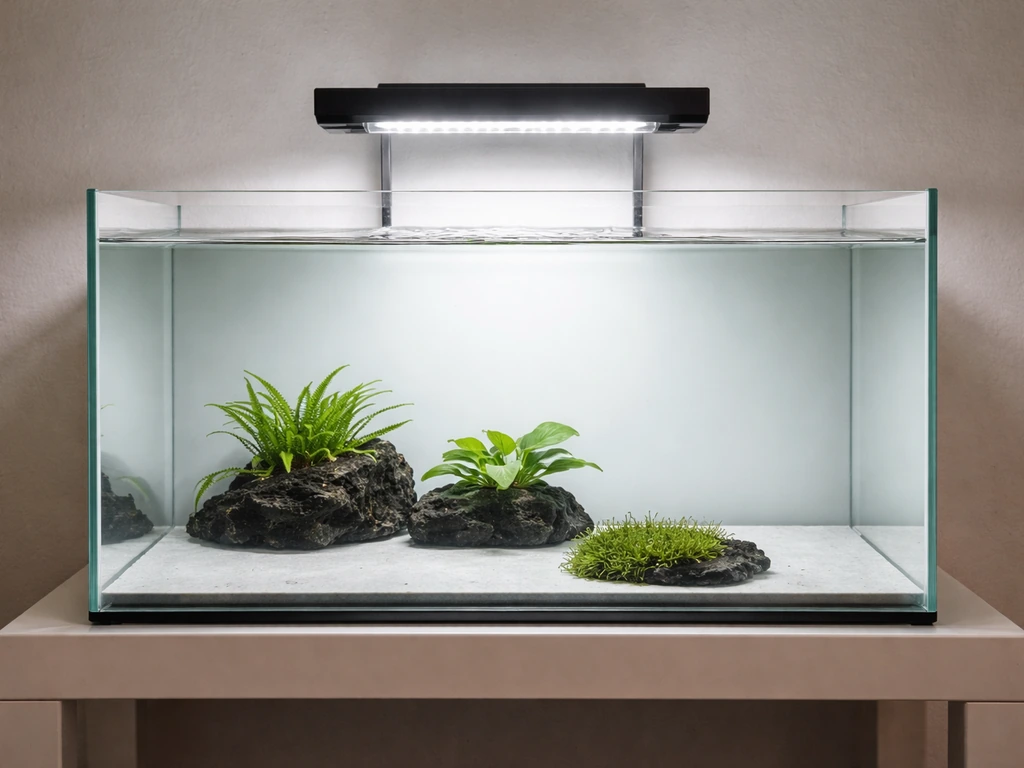
Light is where most beginners either over-invest or make the wrong tradeoffs. More light is not always better, especially in a new, soil-free setup where the nutrient system isn't dialed in yet. Plants rarely need more than 8 to 9 hours of light per day, and running longer photoperiods in an unbalanced system is one of the fastest ways to trigger an algae outbreak. For a new tank, start at 5 to 6 hours per day and increase gradually as your plants establish and your fertilization routine stabilizes. A high-intensity setup with strong PAR values at the substrate level can actually increase algae pressure if your CO2 and nutrients aren't keeping up.
For the low-light species listed above (Java fern, Anubias, moss), a basic LED fixture providing 20 to 40 PAR at plant level is enough. Stem plants and more demanding species want 40 to 80 PAR or higher. Use a timer so the photoperiod is consistent every day. Inconsistent light cycles stress plants and confuse the system's biological balance.
Water flow and circulation
In a soil-free tank, circulation is especially important because nutrients have to reach plant leaves through the water. A stagnant dead zone near your plants means they starve even in a well-fertilized tank. Aim for a turnover rate of 4 to 6 times the tank volume per hour for most planted setups. Avoid blasting rhizome plants like Java fern or Anubias directly with strong flow, as they prefer gentler movement, but make sure the water around them is never completely still.
Temperature
Most common aquarium plants do best between 22 and 28 degrees Celsius (72 to 82 F). Tropical aquarium plants generally prefer the warmer end of that range, around 24 to 28C, while temperate species like hornwort and certain mosses tolerate cooler temperatures. Stable temperature matters more than hitting a precise number. Swings of more than a few degrees stress plants and can trigger melting, especially in recently transitioned specimens.
CO2
Injected CO2 is not required for a soil-free planted tank, especially if you're working with low-light species. Java fern, Anubias, and floating plants do fine on the natural CO2 dissolved in your tap water from gas exchange. Where CO2 injection becomes helpful is when you're running higher light levels and fast-growing stem plants. Without enough CO2 to match light intensity, plants slow down and algae fills the gap. If you're not injecting CO2, keep your light levels moderate and don't push photoperiod above 8 hours. That balance keeps the system stable without the added complexity and cost of a CO2 system.
Feeding your plants: fertilization in a soil-free tank
This is the part that actually makes or breaks a no-substrate setup. Without soil storing nutrients, every element your plants need has to come from the water column. That sounds intimidating but it's actually very manageable once you understand which nutrients to prioritize and how often to dose.
What nutrients matter and why
Macronutrients (nitrogen, phosphorus, and potassium, often called NPK) are the primary building blocks. Nitrogen is typically supplied as nitrate and should stay between 5 and 30 ppm. Dropping below 5 ppm causes plants to pull nitrogen from their older leaves, turning tips yellow and eventually causing whole leaves to melt. Potassium targets vary by source, but a practical working range is 10 to 30 ppm, with some recommendations targeting up to 50 ppm in heavily planted tanks. Phosphate is a secondary concern in most systems with fish, since fish waste supplies it naturally.
Iron is the micronutrient most likely to become deficient in a water-column-only system. The target range is 0.05 to 0.1 mg/L. Iron deficiency shows up as yellowing between leaf veins (interveinal chlorosis) on new growth specifically, which is the key diagnostic sign. Unlike nitrate and potassium, you don't need to maintain a measurable iron level in the water at all times because plants absorb it quickly. Dose iron regularly but don't expect to see it accumulate on a test. Aquasabi describes it this way: nutrients like nitrate, potassium, and magnesium need to be held at a certain level continuously, while iron and phosphate don't need to be measurably present all the time as long as they're being dosed regularly.
Liquid fertilizers: the backbone of soil-free feeding
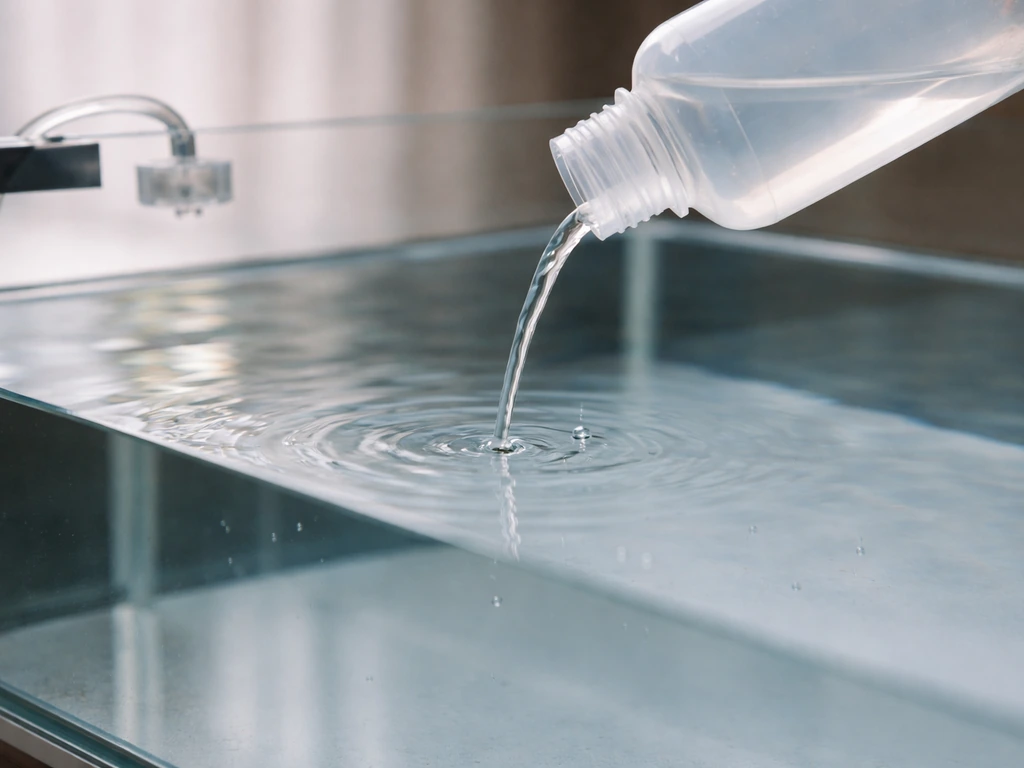
A comprehensive liquid fertilizer that covers both macro and micronutrients is the simplest starting point for most growers. Tropica Specialised Nutrition recommends 6 mL (3 pumps) per 50 liters of water weekly as a starting dose, with the explicit note that you need to adjust based on how fast your plants absorb nutrients. Underdosing starves plants; overdosing without enough plant mass to consume it fuels algae. Start at the recommended dose, test your water after a week, and adjust from there.
For a more targeted approach, Seachem's Flourish line lets you dose specific elements separately. Flourish Potassium (potassium sulfate) helps maintain potassium around 50 ppm depending on plant uptake, and Flourish Nitrogen covers nitrate and urea nitrogen. Seachem also publishes specific dosing charts for Flourish Iron, which is worth bookmarking if you're dosing iron separately. The advantage of individual dosing is precision: if you see iron deficiency but your nitrate is fine, you can address iron without pushing other elements higher. The downside is that managing multiple bottles is more complex.
Root tabs as a supplement
If you have any root-feeding plants in your tank (like Crypts or dwarf sags) even in a minimal substrate or in small pots, root tabs are a targeted way to feed them without spiking the water column. Push a tab into the substrate or inert media near the root zone every 2 to 3 months. For a truly bare-bottom setup with no root-feeders, you can skip them entirely. The liquid column is enough.
A simple starting dosing schedule
| Nutrient | Target Range | Product Type | Dose Frequency |
|---|---|---|---|
| Nitrate (N) | 5–30 ppm | All-in-one liquid or Flourish Nitrogen | Weekly, adjust to test results |
| Potassium (K) | 10–50 ppm | All-in-one liquid or Flourish Potassium | Weekly |
| Phosphate (P) | 0.5–2 ppm | All-in-one liquid (supplement if fish load is very low) | Weekly or as needed |
| Iron (Fe) | 0.05–0.1 mg/L | Flourish Iron or chelated iron supplement | 2–3x per week or per label |
| General micros | Per label | All-in-one liquid | Weekly |
Water changes are part of your fertilization strategy, not just maintenance. A 30 to 50 percent weekly water change resets accumulated compounds, removes algae spores, and gives you a predictable baseline to dose from. It also prevents any single nutrient from building up to toxic or algae-triggering levels. Dose fresh nutrients after each water change, not before.
Troubleshooting: what goes wrong and how to fix it
Plants melting after you add them
This is the most alarming thing for beginners and it's almost always normal. Most commercially sold aquarium plants are grown emersed (leaves above water) or in tissue culture. When you submerge them, the existing leaves are adapted to air conditions and will die back as the plant grows new, water-adapted leaves. This process can look dramatic but the plant is not dying. Keep the water stable, maintain your fertilization, remove dead leaves before they decompose, and new growth will follow within 2 to 4 weeks. The key is not to panic and pull the plant or start changing conditions randomly.
Yellowing leaves
Yellow leaves have multiple causes and the location of the yellowing tells you what's wrong. Yellowing starting at leaf tips (especially on older leaves) usually points to nitrate deficiency. Plants cannibalize old leaves for nitrogen when the water column runs low, which is why you see it on existing leaves before new growth shows symptoms. Test your water: if nitrate is below 5 ppm, increase your nitrogen dose. Interveinal yellowing on new leaves, where the veins stay green but the tissue between them turns pale yellow, is the signature of iron deficiency. Dose iron more frequently and consider a dedicated chelated iron supplement. General pale yellowing across the whole plant often indicates a magnesium or overall nutrient deficiency.
Algae outbreaks
Algae in a planted tank almost always means the system is out of balance: too much light, too few nutrients, or too few plants to compete. In a soil-free setup, the two most common triggers are excess light and insufficient plant mass relative to the nutrients you're dosing. If you see algae establishing, reduce your photoperiod by an hour or two first. Then check that your nitrate isn't dropping below 5 ppm (counterintuitively, very low nitrate can trigger algae because plants become too weak to compete). Increase your water change frequency temporarily to dilute nutrients and remove algae spores. Don't just add algae-killing chemicals: address the underlying imbalance. Use an iron test kit to confirm you're not overdosing iron, which can also encourage certain algae types.
Slow or stalled growth
If your plants are alive but not growing, the usual culprits are insufficient light, low CO2 (for higher-demand species), or underdosing nutrients. Check that your light fixture is actually delivering adequate PAR at the plant level, not just at the surface. For stem plants especially, if you're running no CO2 injection, the natural CO2 in the water may simply be the limiting factor. Either add CO2 or switch to lower-demand species. For nutrient stalls, increase your all-in-one dose by 25 percent for two weeks and observe. If growth resumes, you were underdosing.
Rhizome rot
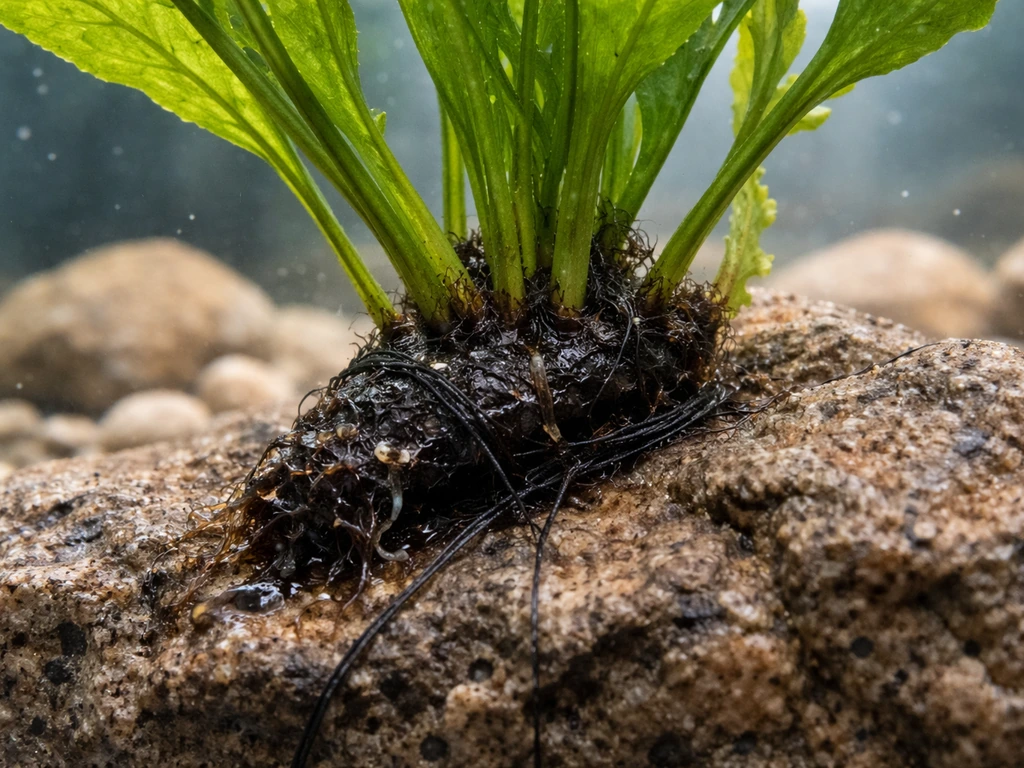
If your Java fern or Anubias is turning black and mushy at the base, the rhizome has been buried or is sitting against the substrate with no water circulation. Unattach the plant, trim away any rotted tissue with clean scissors, and reattach it to hardscape so the rhizome is fully exposed to water flow. This is almost always a placement error, not a disease.
Expanding your no-soil planted tank
Once your baseline is stable, there's a lot of room to grow. If you want to explore more colorful species, growing red aquarium plants is a natural next challenge since reds typically need higher light and iron levels than green species, which means tuning the exact skills you've been building. For planted tanks with fish, the nitrogen cycle and fertilization plan overlap in useful ways, and understanding how to grow freshwater aquarium plants in a full community setup adds a layer of complexity around bioload and nutrient balance worth exploring.
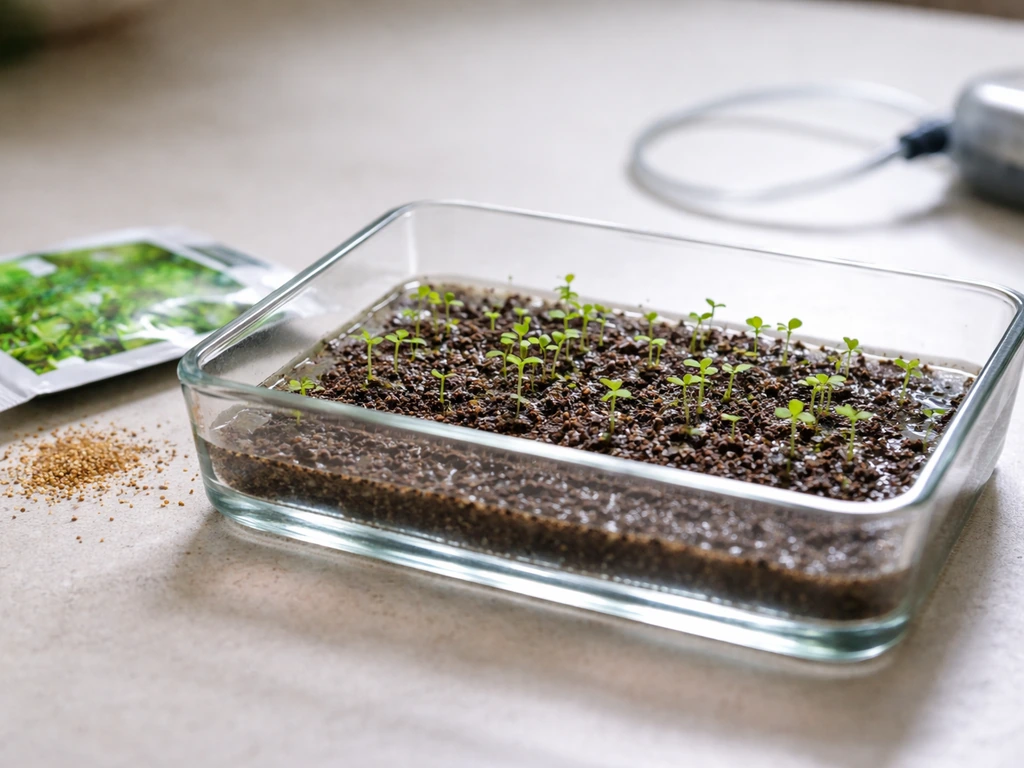
If you want to try starting plants from scratch rather than buying established specimens, growing aquarium plants from seeds is an interesting angle, though most true aquatic plants don't produce seeds the way terrestrial plants do. What you're usually working with are spores, bulbs, or rhizome divisions, and the soil-free approach applies well to all of them as long as you provide adequate nutrients and light from the start.
The short version: a no-soil planted tank works because aquatic plants are fundamentally water-fed organisms. Give them light, flow, stable temperatures, and a consistent fertilization routine, and they don't miss substrate at all. Start simple, test your water, adjust your dosing, and the system will tell you exactly what it needs.
FAQ
Can I use regular potting soil or garden soil under the plants even though I want a soil-free look?
No. Regular soil can leach ammonia, organics, and metals, and it can release nutrients in an uncontrolled way that destabilizes pH and fuels algae. If you want a “no-soil” approach, use bare bottom or inert media only (and keep rhizomes fully exposed for attachment plants).
What should I do if my tank has no fish, so there is no waste to supply nitrate and phosphate?
If you rely only on dosing, you must intentionally maintain nitrate and usually phosphate too. Test weekly and adjust your liquid fertilizer, since without fish there is no natural nutrient input to buffer dosing mistakes.
Do I need a nutrient test kit if I already follow the fertilizer label dosing?
It helps a lot for the first month. At minimum, test nitrate and iron (and ideally phosphate) weekly, because no-soil systems are sensitive to underdosing and overdosing, especially when plant mass is still low
How do I prevent algae when I start a new bare-bottom planted tank?
Use a shorter initial photoperiod (start lower than your goal), keep nitrate from dropping below about 5 ppm, and wait for plant mass to catch up before increasing light. Also remove decaying leaves quickly, since they add nutrients that feed algae.
Can I grow floating plants and still grow plants on the bottom in the same tank?
Yes, but manage light competition. Floating plants will block light, so trim them regularly to avoid starving lower plants, and make sure your bottom plants are getting enough PAR to match the nutrients you are dosing.
Will my stems root and grow if the bottom is completely bare?
Many stem plants still grow well because they can absorb nutrients from the water column, but they may grow slower if they cannot anchor. If you want better stability, tie or wedge stems to hardscape or use inert attachment points, then dose normally.
Are root-feeding plants like crypts and dwarf sags still possible with no substrate?
They are harder but not impossible. Since their nutrient uptake is partly root-based, consider using small inert pots or periodic targeted feeding (for example, root tabs in an inert medium). If you truly go fully bare bottom with these plants, plan to rely more on liquid dosing and watch for early slow growth.
How often should I dose fertilizer in a bare-bottom setup if I do weekly water changes?
A common approach is to dose after each water change according to the label, then adjust based on weekly test results. Since there is no substrate buffer, aim for consistent dosing rather than a big dose all at once before the next change.
What does it mean if my Java fern or Anubias looks fine above, but its rhizome is covered in algae or turns degraded?
It usually means placement or coverage is wrong. Keep the rhizome exposed to moving water, do not bury it, and improve flow around it. If algae is coating it, gently clean the surface and ensure you are not over-lighting for your nutrient level.
Why do my plants “melt” after I switch them to a soil-free tank?
Melting after purchase or transfer is often normal because plants were grown emersed or tissue-cultured. Focus on stable temperature, correct light ramping, and consistent fertilization, then remove dead tissue so it does not decompose and add nutrients to the water.
Can I run a soil-free tank with very low light and no CO2?
Yes, especially with low-demand plants like Java fern, Anubias, and moss, and with floating plants if you manage their coverage. Keep expectations realistic for fast growth, and do not push long photoperiods, since low CO2 combined with high light commonly triggers algae.
What turnover or circulation is “enough” if my plants need nutrients delivered through the water column?
A useful starting target is about 4 to 6 tank volumes per hour. Make sure flow creates gentle circulation, not stagnant zones, but avoid strong direct blasting at rhizome plants because they prefer calmer movement around their attachment points.