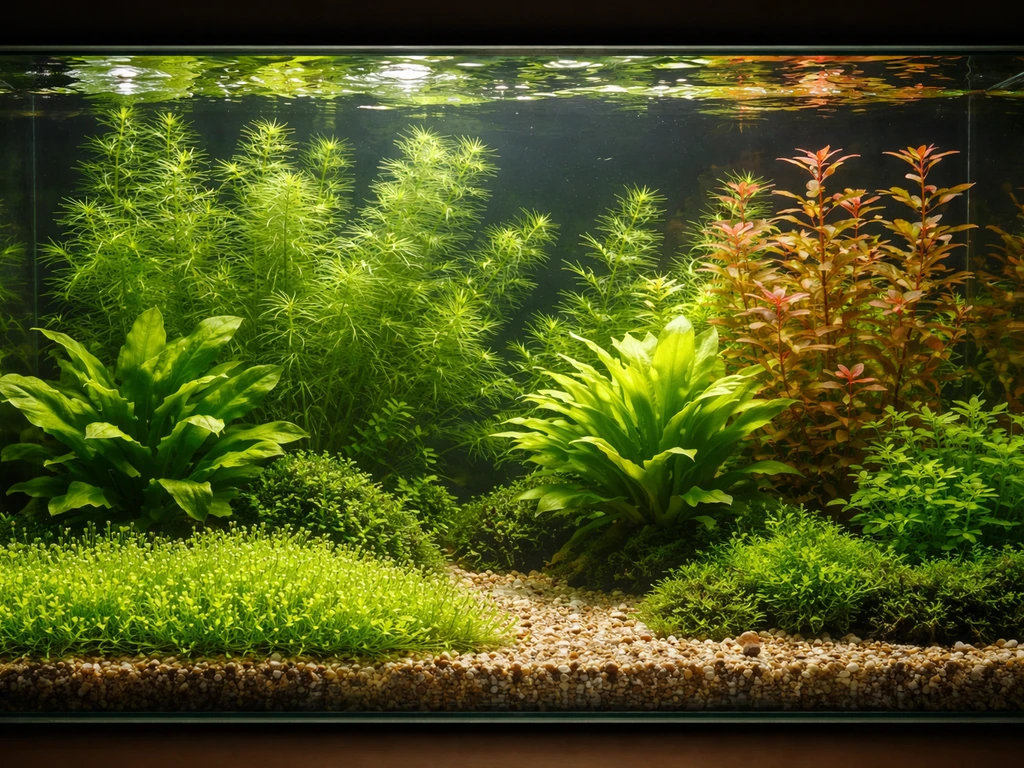
Red aquarium plants turn and stay red when they get high-intensity light (at least 50–80 PAR at the leaf surface), steady CO₂ around 20–30 ppm, and consistent iron-rich fertilization. Nail those three things and most red species will color up within two to four weeks. Miss even one of them and you'll get green or brown leaves no matter how good your substrate is.
How to Grow Red Aquarium Plants: Step-by-Step Guide
Marcus Holloway
18 May 2026
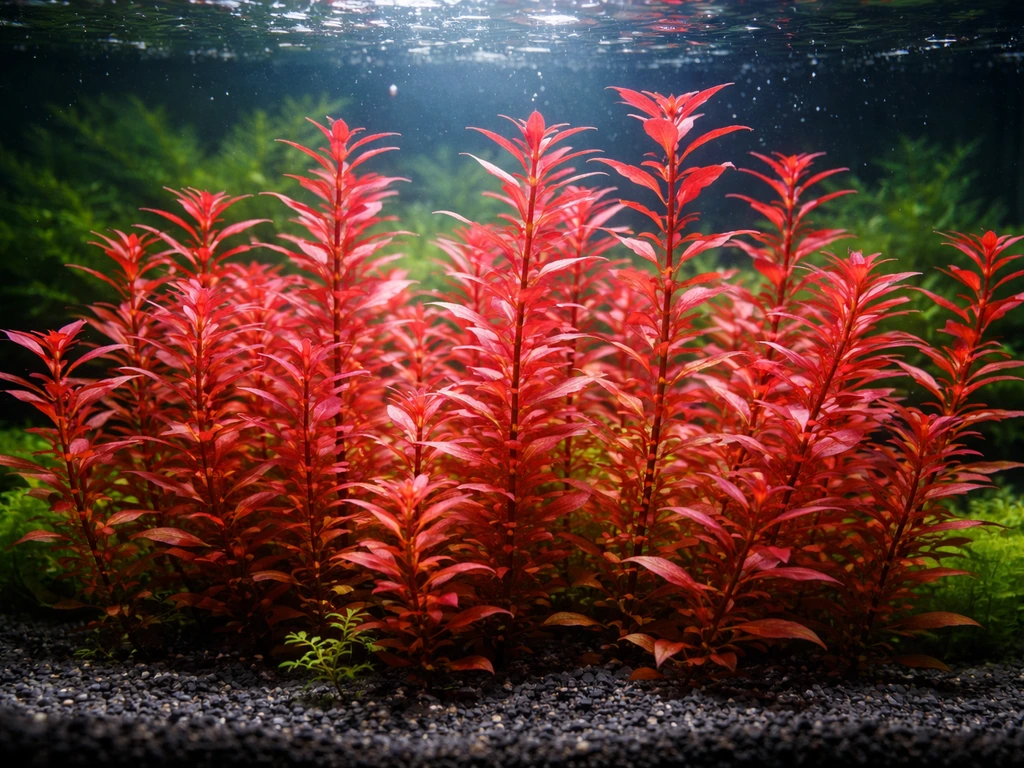
Choosing the right red aquarium plants
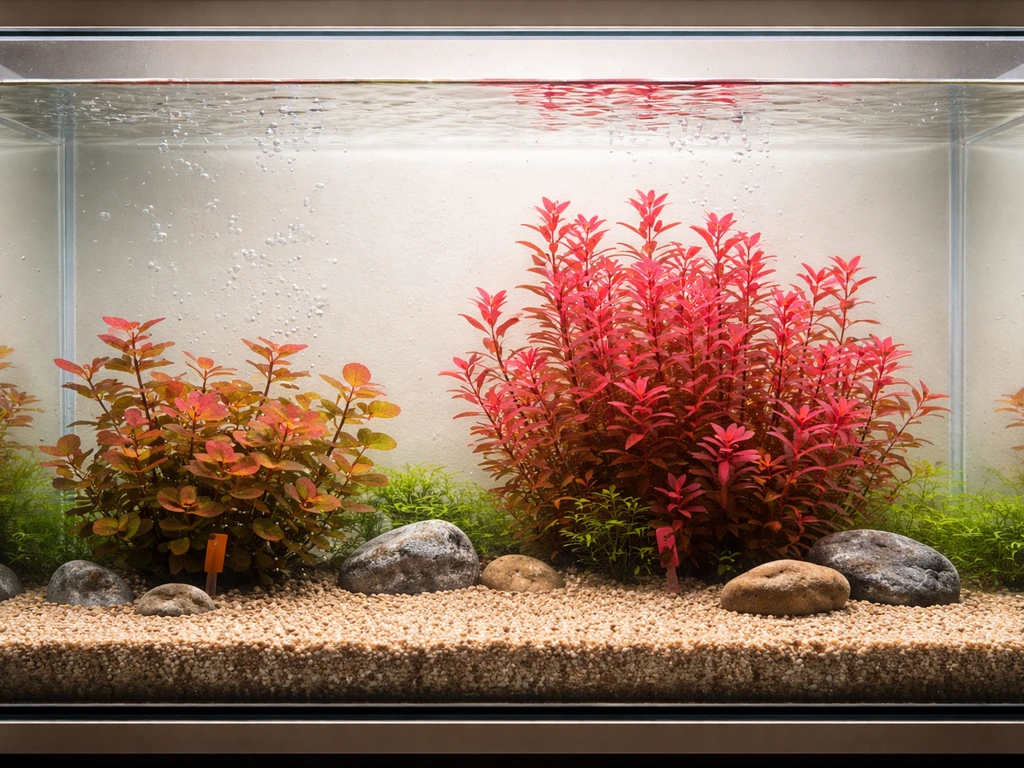
Not all red plants are equally demanding, and picking the wrong one for your setup is the fastest way to get frustrated. I'd split them into two tiers: plants that will show red under moderate conditions, and plants that only go red when everything is dialed in perfectly.
For beginners, start with species that are naturally predisposed to red without a fight. If you want a true beginner-focused list, focus on species that color under moderate-high light with basic fertilization. Rotala rotundifolia, Ludwigia repens, and Alternanthera reineckii 'Mini' all respond well to moderate-high light and basic fertilization. They're forgiving enough that small mistakes won't immediately send them green. Ludwigia palustris is another good one, and it can actually show some red even under medium light, which makes it a useful benchmark plant.
If you're more experienced and want intense scarlet or burgundy tones, look at Rotala 'H'ra', Rotala macrandra, Ludwigia sp. 'Super Red', or Ammannia gracilis. These are the showoffs of the red plant world, but they're demanding. Rotala macrandra in particular needs high CO₂, high light, and clean water or it melts fast. If you're also growing tropical aquarium plants alongside reds, keep in mind that many overlap in care requirements, but the reds typically need a notch more light intensity.
| Plant | Difficulty | Light Needed | CO₂ Required | Red Intensity |
|---|---|---|---|---|
| Ludwigia repens | Easy | Medium-High | Helpful but optional | Orange-red |
| Alternanthera reineckii 'Mini' | Easy-Medium | High | Recommended | Deep red-pink |
| Rotala rotundifolia | Easy-Medium | High | Recommended | Pink-red |
| Ludwigia sp. 'Super Red' | Medium | High | Yes | Bright red |
| Rotala macrandra | Hard | Very High | Yes, high | Deep scarlet |
| Rotala 'H'ra' | Medium-Hard | High | Yes | Orange-red gradient |
Light and CO₂ setup for red coloration
Light is the single biggest driver of red pigment in aquatic plants. Red coloration comes from anthocyanins and carotenoids, and plants produce more of these pigments under high light intensity as a kind of stress response and energy regulation. If your light is too weak, the plant defaults to producing chlorophyll (green) because that's what it needs to survive. More light means more pigment, and that means more red.
For most red stem plants, you want PAR values of at least 50 at the substrate level, with 80–150 PAR being the sweet spot for deep coloration. High-quality LED fixtures like Chihiros, Fluval Plant 3.0, or AI Blade planted editions can hit these numbers over a standard 20–75 gallon tank. Run your light for 8 hours per day, no more, to keep algae under control while still giving plants enough energy. I've found that splitting the photoperiod (4 hours on, 1–2 hours off, 4 hours on) can reduce algae pressure without hurting plant coloration.
CO₂ injection is not technically mandatory for every red plant, but it is the second-biggest lever you have. Without added CO₂, most red plants either grow slowly, color up weakly, or lose their reds over time. The target is 20–30 ppm dissolved CO₂ in the water. The practical way to hit this is with a pressurized CO₂ system and a drop checker: when the drop checker solution turns lime green using a standard 4 dKH reference solution, you're sitting right around 30 ppm. Yellow means you've gone too far and are stressing fish; blue means you're underdosing. Set your regulator so the checker is consistently lime green during the photoperiod.
If CO₂ injection isn't an option for you right now, liquid carbon supplements (like Seachem Excel) can help marginally, but they won't replace real CO₂ for the demanding red species. With the right light and dosing, emersed growth can also produce strong red coloration over time emersed aquarium plants. Stick to easier reds like Ludwigia repens if you're going low-tech, and crank the light as high as you can without triggering algae.
Nutrient requirements and fertilizing schedule
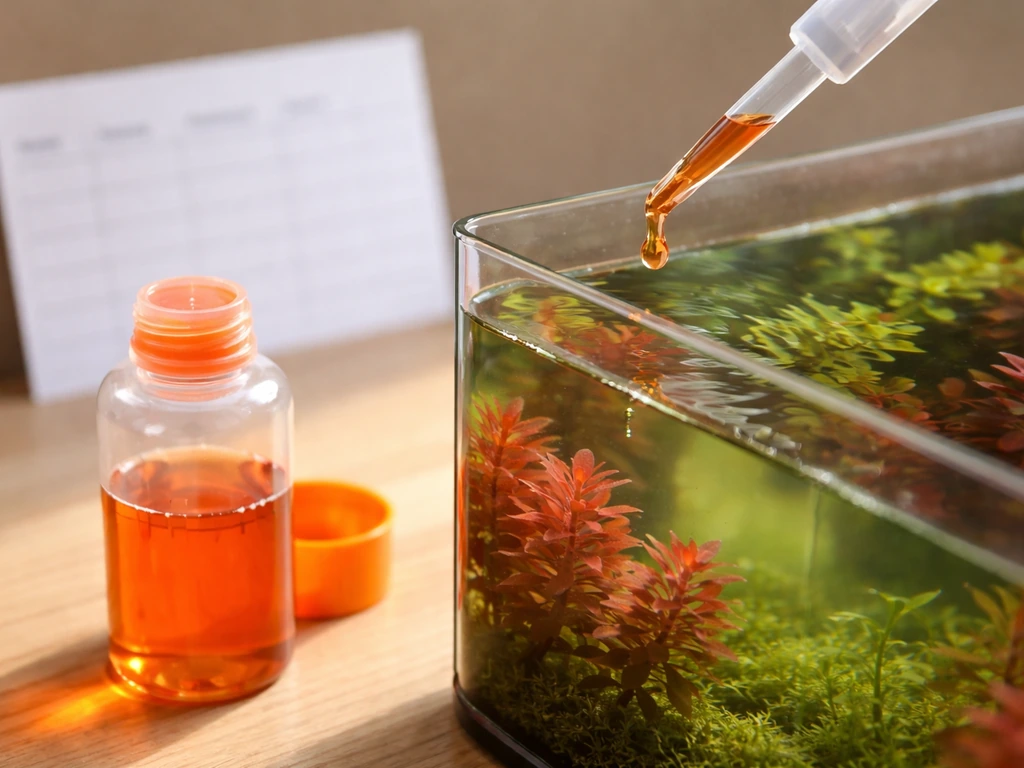
Plants need macronutrients (nitrogen, phosphorus, potassium) and micronutrients (iron, manganese, zinc, boron, and others) to grow and color well. For red plants specifically, iron is the most talked-about micronutrient because iron deficiency directly causes new leaves to come in yellow-green rather than red. But potassium deficiency is just as common and causes holes and browning in leaves. Don't fixate on iron alone.
Iron and micronutrients
Aim to maintain iron levels around 0.10 mg/L (ppm) in the water column. With Seachem Flourish Iron, the dosing is 1 capful (5 mL) per 200 liters (50 gallons) to hit that target. Dose two to three times per week rather than all at once, since iron oxidizes and becomes unavailable to plants quickly. Chelated iron (EDTA or DTPA forms) stays available longer, especially in tanks above pH 7. If your tank runs alkaline, look for DTPA-chelated iron products specifically.
For broader micronutrient coverage, use a comprehensive trace element supplement like Seachem Flourish Comprehensive or equivalent dry micros mixed yourself. Dose these two to three times per week as well, following the product's recommended amounts for your tank size.
Macronutrients and your fertilizing method
The two most popular fertilizing approaches for planted tanks are Estimative Index (EI) and PPS-Pro. EI is simpler for beginners: you dose generously several times per week and do a 50% water change every week to reset any nutrient accumulation. This prevents toxic buildups while ensuring plants always have what they need. PPS-Pro aims to dose more precisely to match what plants actually consume, so water changes are smaller and less frequent. For red plant tanks, I personally prefer EI because the consistent nutrient availability supports steady, colorful growth without worrying about depletion mid-week.
A basic EI schedule for a high-tech (CO₂-injected) planted tank looks like this: dose macros (potassium nitrate for N and K, monopotassium phosphate for P) on Monday, Wednesday, and Friday; dose micros and iron on Tuesday, Thursday, and Saturday; and do a 50% water change on Sunday before starting the cycle again. Adjust amounts based on tank size and plant density.
Water parameters, substrate, and planting method
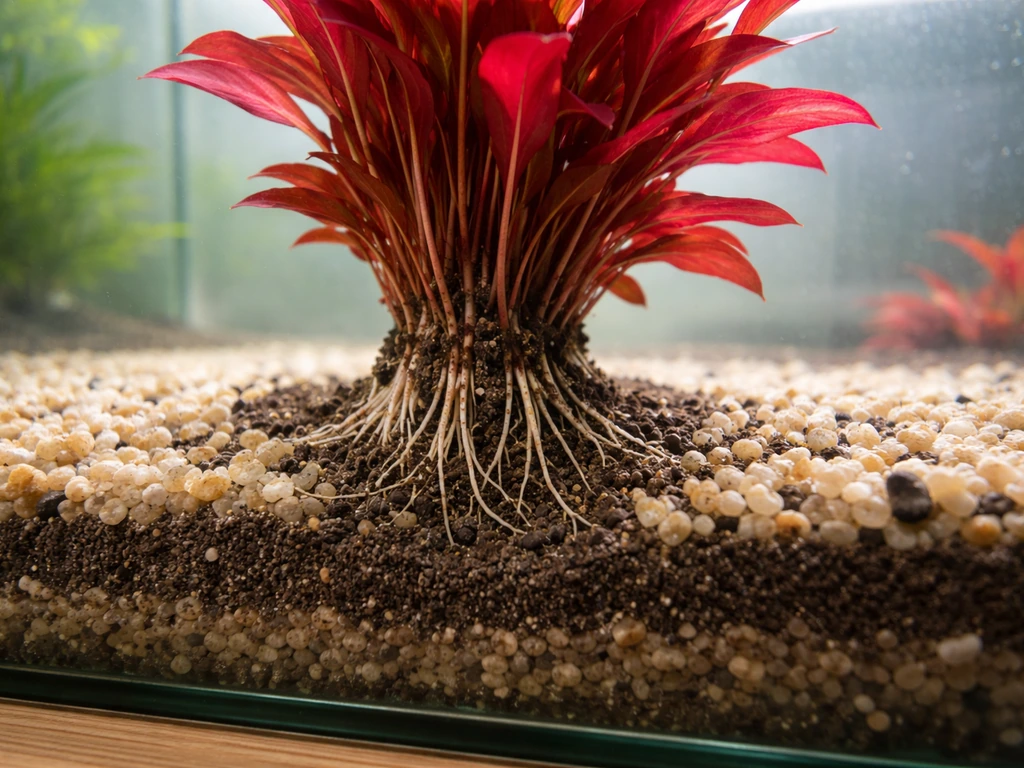
Most red aquarium plants prefer soft to moderately hard water with a pH between 6.5 and 7.2. Softer water (lower GH) tends to support better nutrient uptake, and the slightly acidic end of that pH range keeps iron more available in the water column. If your tap water is very hard or alkaline (pH above 7.5), consider RO water blended back with remineralizer to hit the right parameters. Temperature should stay between 22 and 28°C (72–82°F), with most red stems doing best around 24–26°C.
Substrate matters more than people realize, especially for root-feeding plants. Nutrient-rich active substrates like ADA Aqua Soil, Fluval Stratum, or UNS Controsoil provide a long-term slow-release nutrient bed and naturally buffer pH toward the acidic range. If you want to grow aquarium plants without soil, you can use inert substrate with root tabs or rely more on water-column fertilizing to keep the plants fed. These are worth the investment if you're serious about red plants. Inert substrates like plain gravel or sand work too, but you'll need to rely entirely on root tabs and the water column for nutrients.
When planting stem plants, separate individual stems and plant them in small groups with spacing of at least 2–3 cm between stems. Crowding them traps detritus, blocks light to lower leaves, and causes the bottom portions to deteriorate. Bury the stems about 2–3 cm into the substrate so they're anchored but the lower nodes can still receive water flow. For rosette-type red plants like Alternanthera, don't bury the crown or it will rot.
Water flow, temperature, and day-to-day care
Good water circulation does two things for red plants: it distributes CO₂ and nutrients evenly across all leaves, and it carries waste products away from the plant surface. Aim for a turnover rate of 5–10x the tank volume per hour from your filter and any supplemental circulation pump. The flow shouldn't be so strong that it's blasting stem plants sideways (they'll anchor poorly and snap), but gentle movement across all areas of the tank is important. Dead spots cause CO₂ and nutrient starvation in specific areas even when your overall levels look fine.
Keep temperature stable. Swings of more than 2°C in a day can stress red plants and trigger melting in sensitive species like Rotala macrandra. Use a quality heater with a thermostat, and in warmer months, monitor closely. Above 28°C, growth gets sloppy and CO₂ solubility drops, which compounds problems in high-tech tanks.
Routine maintenance that actually matters: trim plants before they hit the water surface, remove dying or decaying leaves promptly, and vacuum the substrate surface during water changes to prevent mulm buildup, which can fuel algae. Weekly is a realistic maintenance cadence for most hobbyists.
Troubleshooting: weak color, algae, and deficiency symptoms
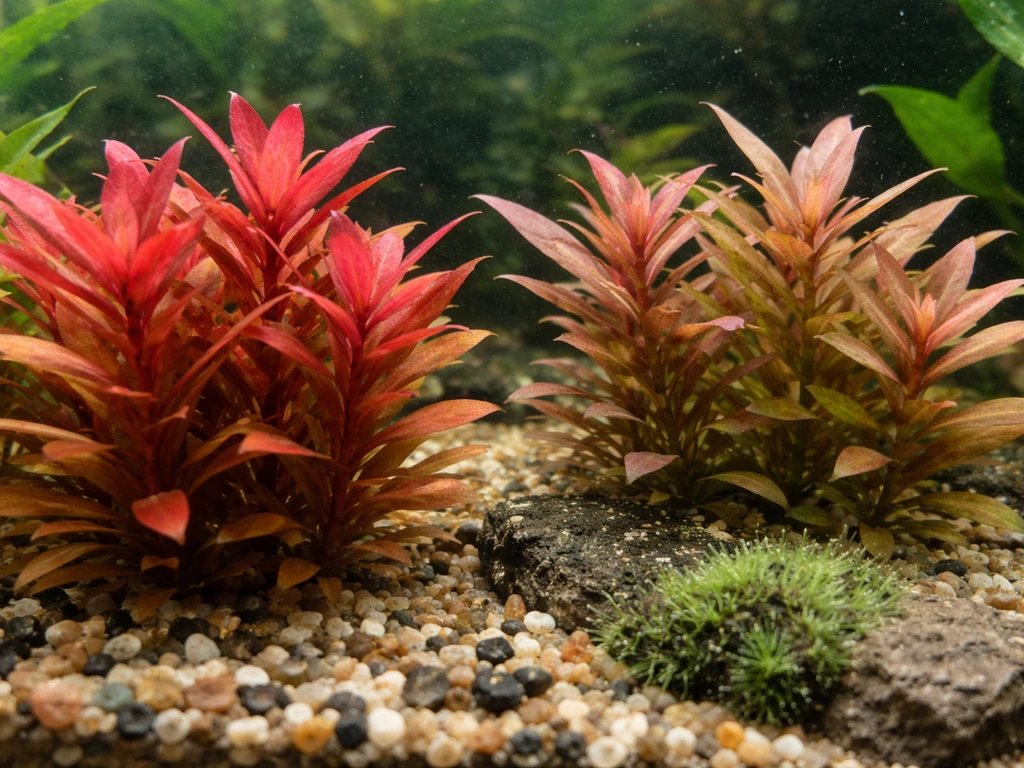
When something goes wrong with red plants, the symptoms usually point you straight to the cause if you know what to look for. Here's how to read what your plants are telling you.
| Symptom | Likely Cause | Fix |
|---|---|---|
| Leaves stay green instead of turning red | Light too weak or CO₂ too low | Increase PAR to 80+, raise CO₂ to 20–30 ppm |
| New leaves come in pale yellow-green | Iron deficiency | Dose chelated iron 2–3x/week, target 0.10 ppm Fe |
| Holes in leaves, browning edges | Potassium deficiency | Add potassium nitrate or potassium sulfate |
| Older leaves yellow uniformly | Nitrogen deficiency | Increase nitrate dosing, target 10–25 ppm NO3 |
| Leaves melt or turn transparent | Parameter shock, temp swing, or CO₂ spike/drop | Stabilize CO₂, check temperature, replant healthy tops |
| Stunted growth, no new shoots | CO₂ or light limiting | Check drop checker, verify PAR at plant level |
| Green algae on leaves or glass | Too much light or nutrients without enough plant growth | Reduce photoperiod by 1 hour, increase plant density |
| Black beard algae (BBA) on leaves | CO₂ fluctuation | Stabilize CO₂ injection, maintain consistent flow |
| Red color fades after a trim | New growth needs time + consistent conditions | Maintain parameters, color returns in 1–2 weeks |
The most common mistake I see is people assuming their plants aren't red because of iron, when the real culprit is light. Buying more fertilizer won't fix a lighting problem. Before changing your dosing routine, make sure you can confirm your PAR levels with a meter or at least verify that your light is rated appropriately for a planted tank.
Propagation and growing a denser, more colorful tank over time
Stem plants are the easiest plants to propagate in the hobby. If you’re starting from scratch, use this same approach to plan how to grow aquarium plants from seeds for consistent color and healthy growth propagate. When your Rotala or Ludwigia reaches the surface, cut the top 8–12 cm off and replant it into the substrate. The original stem will branch and send out two to four new shoots from the cut point, which creates a bushier, denser appearance. Do this every two to four weeks and your tank fills in fast.
One thing worth knowing: freshly trimmed and replanted tops often go greenish for a week or two before coloring back up. The new growth is adapting to being underwater again (if it had broken the surface) and building its pigment response. Don't panic and change your parameters during this window. Just maintain consistent light and CO₂ and the red comes back.
Increasing plant density also helps with algae control. A densely planted tank means more plants competing with algae for nutrients and CO₂, which naturally suppresses algae growth. This is why new tanks with sparse planting often struggle with algae early on: the balance tips toward algae until plants fill in. Buy or propagate enough plants to densely plant from the start if you can, especially for the first four to six weeks.
For rosette-type red plants like Alternanthera reineckii, propagation works by cutting side shoots that develop at the base and replanting those. They're slower growers than stem plants but very rewarding as foreground or midground accents once established.
Common mistakes and a simple starter plan
Mistakes that kill red coloration
- Using low-wattage or low-PAR lights and expecting red plants to color up anyway
- Dosing iron without a broader fertilizer regime, causing imbalances in other nutrients
- Skipping water changes and letting nutrient levels drift into deficiency or toxicity
- Planting stems too close together so lower leaves die from lack of light and flow
- Injecting CO₂ but not monitoring it, causing fish stress or CO₂ crashes overnight
- Adding red plants to a new unstable tank and expecting immediate color results
- Trimming too aggressively all at once, stripping photosynthetic mass and stalling growth
A beginner starter plan (scalable for experienced aquarists)
- Choose an easy red plant: start with Ludwigia repens or Rotala rotundifolia for your first attempt.
- Set up lighting: use a quality planted-tank LED at 50–80 PAR at substrate level, 8 hours/day.
- Add CO₂: install a pressurized CO₂ system with a drop checker; target lime green (around 30 ppm) during the photoperiod.
- Use a nutrient-rich substrate: ADA Aqua Soil or similar active substrate gives you a strong foundation.
- Start a simple EI fertilizing routine: macros Monday/Wednesday/Friday, micros and chelated iron Tuesday/Thursday/Saturday.
- Iron target: dose Seachem Flourish Iron at 5 mL per 200 L two to three times per week, aiming for 0.10 ppm.
- Do a 50% water change every Sunday before restarting the fertilizing week.
- After four weeks, evaluate color: if plants are still green, first check PAR and CO₂ before adjusting fertilizers.
- Once comfortable with one or two easy red species, step up to Ludwigia sp. 'Super Red' or Rotala 'H'ra' and repeat the same process with slightly more light intensity.
- Trim and replant tops every two to four weeks to build density and keep lower leaves healthy.
Red aquarium plants are genuinely achievable at all skill levels, but they do require a real commitment to the fundamentals. If you've struggled with freshwater aquarium plants before and found them going green or dying, revisiting your lighting setup is almost always the first thing worth fixing. If you want to grow tropical aquarium plants alongside your reds, matching light intensity to the species is still the foundation for strong, stable growth lighting setup.
If you want a quick way to get consistent results, follow a simple routine for light, CO₂, and fertilizing before you change more than one variable at a time freshwater aquarium plants. Get that right, add CO₂ if you can, and keep your iron and nutrients topped up consistently. If you also want step-by-step guidance for growing emersed aquarium plants, focus on the right humidity, light intensity, and gradual water-to-air transition keep your iron and nutrients topped up consistently.
Give it four to six weeks of stable conditions and you'll start seeing the reds that made you want these plants in the first place.
FAQ
My red plants keep going green even though I dose iron. What should I check first?
Start by confirming the light you are actually delivering at the leaf level (PAR at the substrate), then check dissolved CO₂ during the photoperiod. If light and CO₂ are correct, only then troubleshoot nutrients. Iron is often blamed, but if PAR is low or the CO₂ indicator is not consistently lime green, added fertilizer usually does not restore red pigment.
How do I tell whether my red plant is deficient or just temporarily acclimating after trimming?
If you see yellow-green new growth, distinguish between deficiency and acclimation. New tops after trimming commonly look greener for 1 to 2 weeks because pigment is rebuilding, so avoid changing multiple parameters immediately. If the older leaves have already lost red permanently, reassess PAR, CO₂ stability, and whether iron is being dosed in small frequent doses.
Why does my Alternanthera or other rosette red plant lose color or rot at the base?
For rosette plants, avoid burying the crown and base. Inadequate flow or trapped mulm around the crown can cause rot that also looks like poor color. Use gentle circulation across the plant, keep the crown above substrate, and remove any decaying leaves promptly.
I can grow some red stem plants, but macrandra melts quickly. What’s the typical cause?
Watch for fast melt plus dull, washed-out reds as a pattern. Rotala macrandra and similar showy reds often fail in tanks that are inconsistent with CO₂ or water cleanliness, not just tanks with low light. If trimming and replanting repeatedly causes melt, prioritize stable CO₂, stronger flow around the plant surfaces, and more frequent removal of dead leaves and mulm.
What is the safest way to troubleshoot red plant color without making things worse?
Use a simple “one-variable-per-week” approach. Pick the most likely lever (usually light intensity or CO₂ stability), then adjust only that factor and give the tank 7 to 14 days to respond. If you change light hours, PAR, CO₂, fertilizing, and substrate all at once, you will not know which change caused the improvement or the failure.
Can I get strong red coloration with liquid carbon instead of pressurized CO₂?
Instead of guessing with bottled “liquid carbon,” treat it as a supplement, not a replacement. If you cannot inject CO₂, choose easier reds that show color under moderate light, run your light higher without triggering algae, and accept that some species will stay more burgundy or pink than fully deep red.
How can my iron dosing still be “too low” even if I’m using the right iron product?
Many people under-estimate where the root of the problem is. If PAR is adequate but red is weak, confirm dosing frequency, not just total amounts. Iron loses availability relatively quickly, so dosing 2 to 3 times per week and using chelated iron forms (EDTA/DTPA, especially for higher pH) helps keep new growth capable of producing red pigments.
What nutrient problems besides iron most commonly stop red plants from coloring?
A tank can be very green even when nutrient levels seem fine if potassium is missing. Holes, browning, and damaged leaf edges often point to K issues. For red plants, do not focus only on iron, test or estimate macro balance, and ensure you are supplying nitrogen, phosphorus, and potassium consistently.
Is it better to run the light longer or increase intensity to get more red?
Yes, but do it deliberately. If you raise photoperiod in response to poor color, do so gradually, because longer light increases algae risk. A practical approach is to keep a consistent day schedule (for example, about 8 hours total) and use splitting to reduce algae, rather than jumping to very long continuous lighting days.
Does my fertilization method affect red color stability, or is it only about light and CO₂?
Clean water and stable conditions matter. If you are running EI, plan the weekly water change because it resets nutrient accumulation and helps avoid hidden imbalances, which can indirectly affect plant vigor and color stability. Also vacuum mulm during water changes, because organics and surface buildup can drive algae and reduce effective CO₂ availability to leaves.
How do I know my CO₂ level is safe for fish while still supporting red color?
If you can measure or estimate your CO₂ better, you can tune safely. Use a drop checker and keep it consistently lime green during the photoperiod using a standard 4 dKH reference solution. If it turns yellow, back down CO₂ to avoid fish stress, since red plants are not worth putting livestock at risk.
My tap water is hard and pH is high. Will that prevent red plants from working?
It can be. If you have very hard or alkaline source water, iron availability drops even when you dose correctly, which can show up as weak reds and persistent yellow-green leaves. Blend RO with remineralizer or adjust your water parameters toward the target pH range so chelated iron behaves as intended.
Why do my stems look red on top but fade to green or die near the bottom?
For stem plants, plant in small groups with a bit of spacing so lower leaves get light and flow. Crowd zones trap detritus and create local starvation, which can cause patchy red and bottom leaf decline even if overall tank parameters look correct.
Why do my plants look worse in the first month of a new tank?
Yes, and it often explains “slow red” after setup. Sparse planting lets algae take the first nutrients and CO₂ advantage while plants are still establishing roots. Increase plant density early, and expect a 4 to 6 week stabilization period before judging final red performance.
If I replant trimmed tops, why do they turn green before turning red again?
Freshly trimmed tops can go greener for 1 to 2 weeks after replanting, this does not necessarily mean your plan failed. Maintain the same PAR and CO₂ conditions, avoid additional mid-cycle changes, and give the new submerged growth time to rebuild pigment response before making big adjustments.