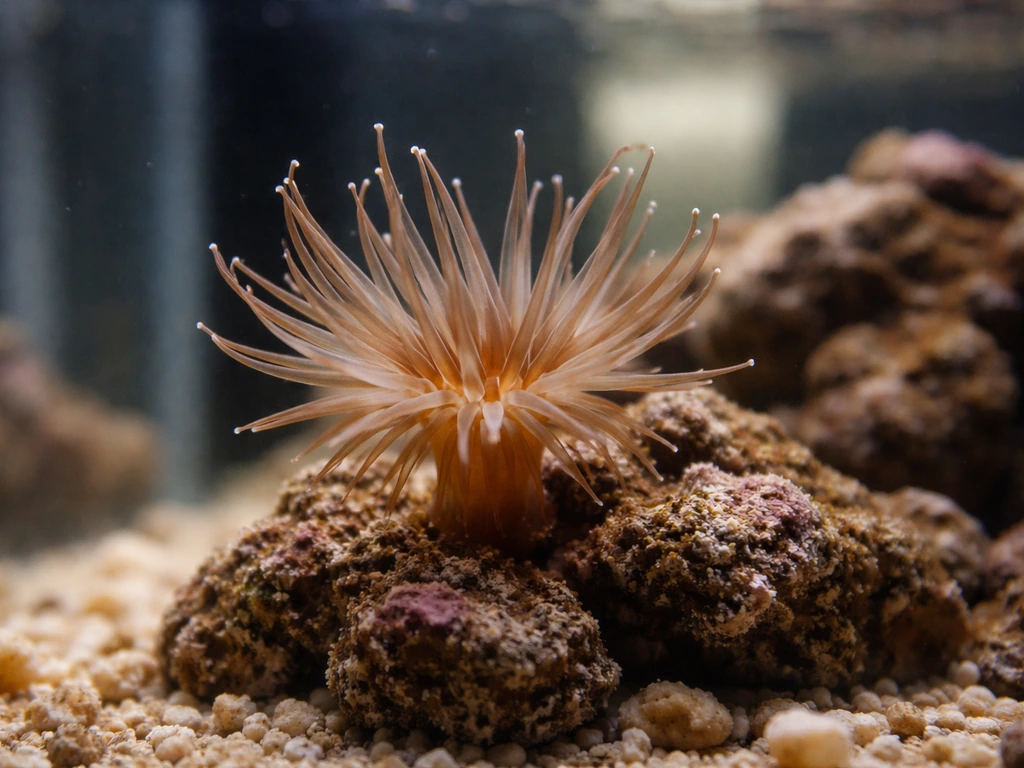
If you want a sea anemone that actually survives past the first month, start with a bubble-tip anemone (Entacmaea quadricolor) in a stable saltwater tank of at least 21 gallons, with specific gravity at 1.025–1.026, temperature at 76–78°F, pH between 8.1 and 8.3, and moderate indirect flow. Get those parameters locked in before the animal ever hits your water, and you've already solved most of the problems that kill anemones in beginner tanks.
How to Grow Sea Anemones in a Saltwater Aquarium
Marcus Holloway
6 Jul 2026
Choosing the right species and where to get it
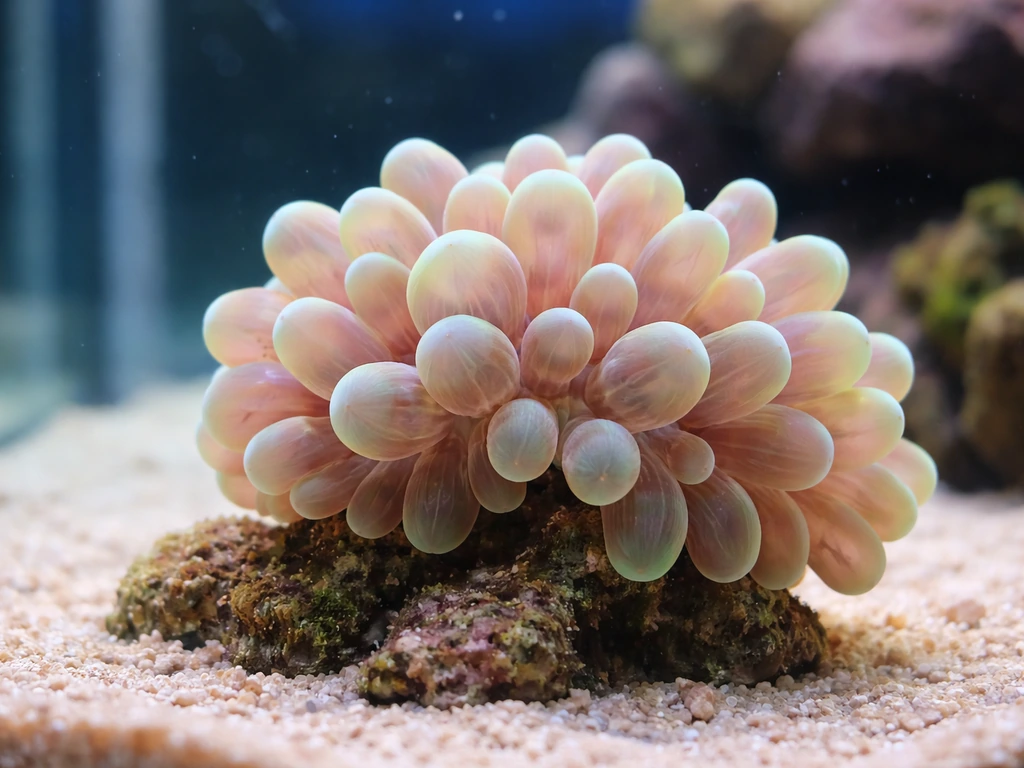
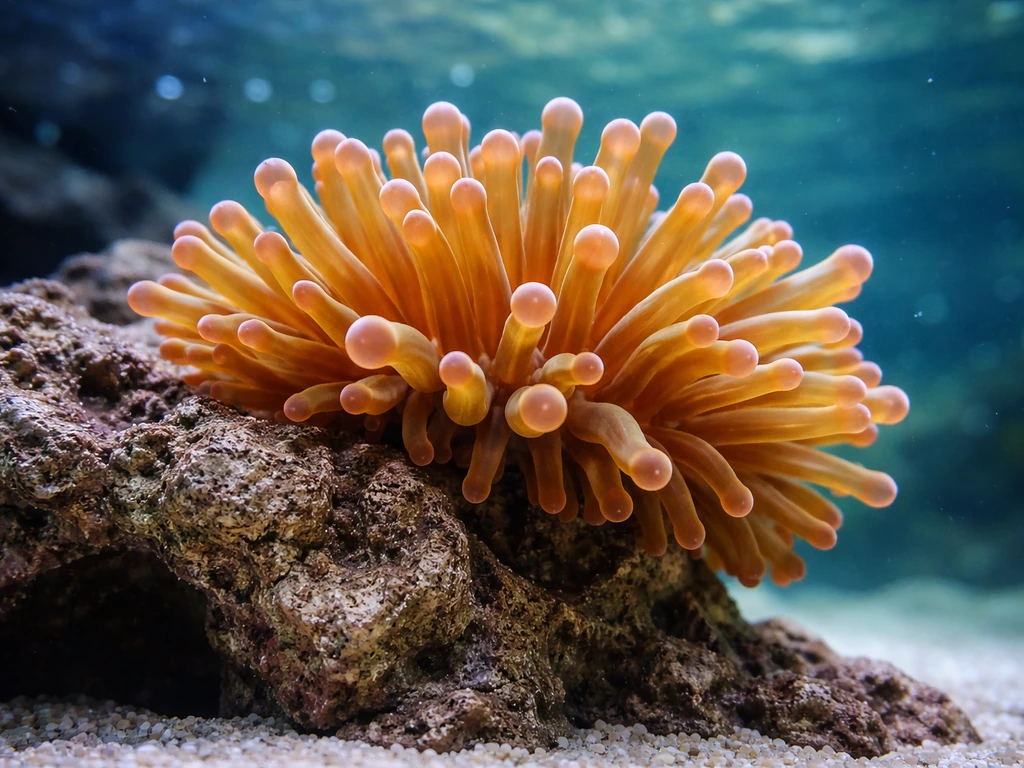
Species choice matters more than almost anything else here. Bubble-tip anemones are the go-to for beginners and intermediates for good reason: they tolerate a wider range of conditions than most, they're compatible with many clownfish species, and captive-bred or tank-raised specimens are widely available. If you want a more specific guide for a different species like Japanese anemones, see how to grow Japanese anemones for related steps and expectations. Carpet anemones look spectacular but are genuinely difficult to keep, have huge space requirements, and can eat fish. Long-tentacle anemones (Macrodactyla doreensis) sit somewhere in the middle and need specific placement on a sand bed with their foot anchored under rock. Unless you're already comfortable with reef chemistry and have a mature, stable tank, stay with the bubble-tip.
Where you source the animal matters too. Wild-collected anemones face shipping stress and can arrive in poor condition, and heavy collection pressure is a real concern for some reef populations. Whenever possible, buy a tank-raised or captive-propagated specimen from a reputable reef shop or fellow hobbyist. Tank-raised animals are already adapted to aquarium life, acclimate faster, and are far more likely to attach and feed immediately. If you do buy wild-caught, look for a specimen that's already attached in the dealer's tank, has plump tentacles, and doesn't have any visible tissue recession or white patches. Avoid anything that looks deflated, stringy, or is floating loose in the bag.
Check trade regulations before you buy anything imported. CITES governs international commercial trade in many marine organisms, and some countries or states have additional restrictions. California, for example, has specific permitting rules around collecting marine invertebrates for the aquarium trade. When in doubt, buy from a domestic breeder or a shop that can confirm the sourcing.
Tank setup and water parameters
A 21-gallon minimum is a hard floor, not a suggestion. Smaller tanks are simply too chemically unstable. A small water chemistry swing that would be no big deal in a 75-gallon system can be catastrophic in a 10-gallon nano. Most experienced reef keepers recommend 30 gallons or more for bubble-tips specifically because they can grow and move around, and because the extra water volume gives you a buffer when life gets busy and you miss a water change.
The tank needs to be fully cycled before you add any anemone. This is non-negotiable. A mature tank with established live rock and a working nitrogen cycle gives your anemone a stable environment from day one. Many anemone deaths happen in tanks that are only a few weeks old.
Target water parameters
| Parameter | Target Range | Notes |
|---|---|---|
| Specific Gravity (SG) | 1.025–1.026 | Avoid below 1.023 or above 1.027 |
| Temperature | 76–78°F (24–26°C) | Stability matters as much as the number |
| pH | 8.1–8.3 | Test at the same time each day |
| Alkalinity (dKH) | 8–11 dKH | Keep stable; swings stress corals and anemones |
| Ammonia / Nitrite | 0 ppm | Any detectable level is a problem |
| Nitrate | < 20 ppm | Lower is better for long-term health |
| Phosphate | < 0.05 ppm | Elevated levels affect zooxanthellae |
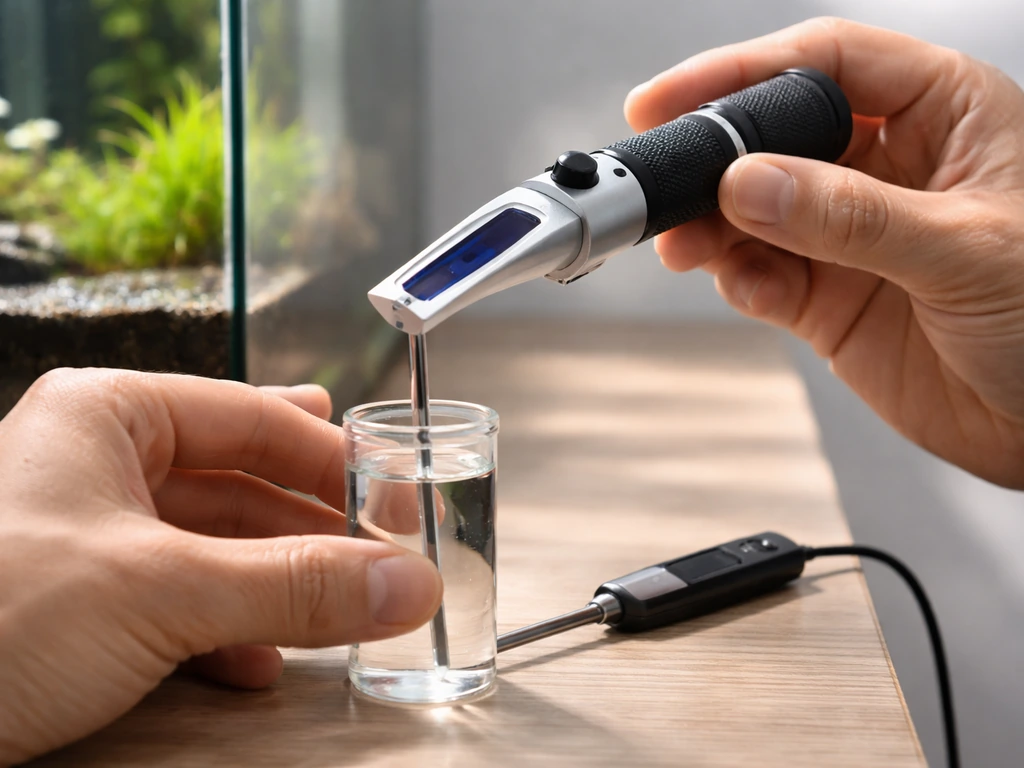
Use a quality refractometer (not a cheap swing-arm hydrometer) to measure salinity. Use a refractometer for salinity or specific gravity and keep alkalinity tests aligned with reef targets and common kit examples like the Hanna checker, as outlined in the MrSWT test kit checklist MrSWT test kit checklist recommends a refractometer and references reef-type targets (including a Hanna checker example). Calibrate it with a reference solution at around 77°F before use, since temperature affects readings. A Hanna checker or comparable digital meter works well for alkalinity. Test at least weekly when the tank is new, and every two weeks once it's established and stable.
Lighting
Anemones get the majority of their energy from zooxanthellae, the symbiotic algae living inside their tissue. Those algae need light to photosynthesize, which means your lighting setup directly controls whether your anemone thrives or slowly starves. For bubble-tip anemones, target 150–250 PAR at the anemone's resting position. Too little light and the animal will look pale and won't grow. Too much and it can bleach, expelling its zooxanthellae and leaving you with a white, deteriorating animal. A quality LED reef light set to a 10–12 hour photoperiod works well. If you don't have a PAR meter, borrow one from your local reef club or a fish store before finalizing your light placement.
Flow and circulation
Moderate, indirect flow is what you want. In the wild, anemones live in areas with gentle, oscillating current, not a firehose blasting their oral disc. Point your powerheads so the return flow creates gentle movement throughout the tank, but doesn't blow directly at where the anemone is likely to settle. Strong direct flow causes the anemone to close up, stretch out trying to find a calmer spot, or simply detach and wander. A wandering anemone is a problem because it can contact and kill corals, get sucked into a powerhead, or wedge itself somewhere difficult.
Acclimating your anemone and getting it to stay put
The safest way to acclimate an anemone is the drip method. Float the sealed bag in your tank for 15–20 minutes to match temperature. Then open the bag, place it in a bucket, and use airline tubing to drip tank water into it at a rate of about 2–3 drops per second. Run this for 60–90 minutes. Your goal is to match salinity within about 0.001 SG before you transfer the animal. Once acclimated, use a net or your hand (wear gloves) to transfer the anemone directly into the tank, discarding the bag water. Do not pour the bag water into your display tank.
Turn off your powerheads for at least 30 minutes after introduction. Give the anemone time to find a spot it likes and start attaching its foot. Place it near the base of your live rock where it can tuck its pedal disc into a crevice. Bubble-tips prefer to have their foot anchored in rock, not on open glass or bare sand. Don't keep moving it if it doesn't settle immediately. Some anemones take 24–48 hours to fully commit to a spot, and constantly repositioning them causes stress.
A few placement warnings: keep the anemone away from powerhead intakes. If yours doesn't have an intake guard, buy one before introducing the anemone. Getting caught in a powerhead is one of the most common ways anemones die. Also keep it away from strong direct light at first. Let it acclimate to your tank's light gradually over the first week by placing it lower in the tank, then letting it move up on its own.
Feeding your anemone the right way
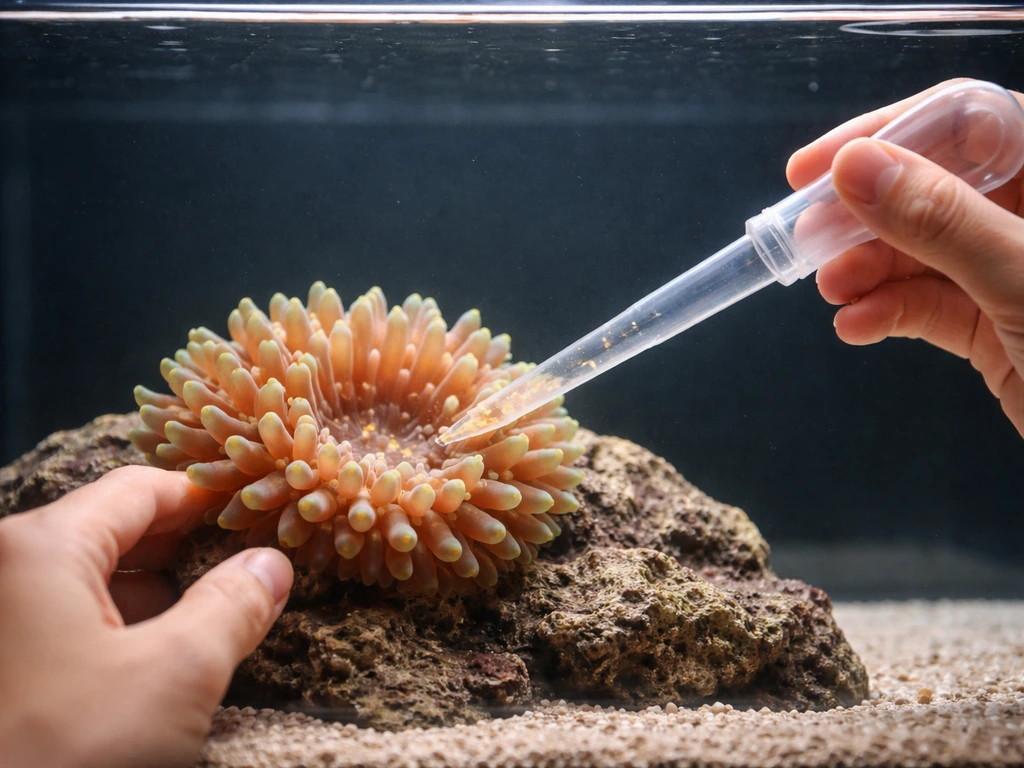
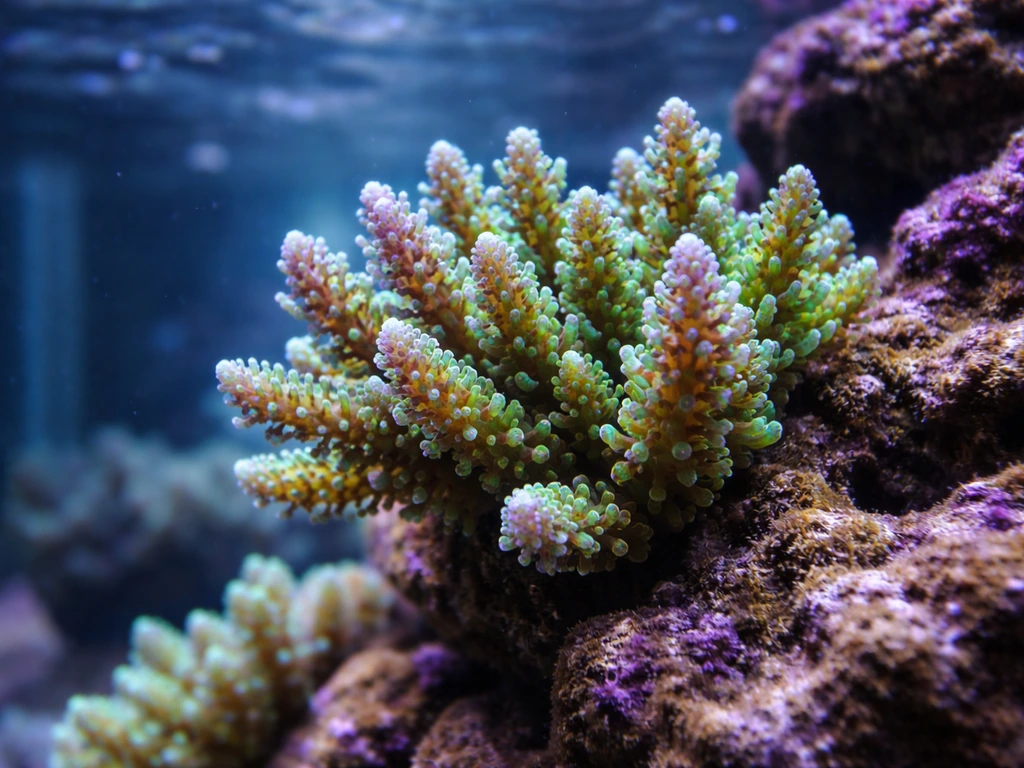
In a well-lit tank, a bubble-tip anemone can survive mostly on photosynthesis, but it'll grow faster and look better if you supplement with regular feeding. Acropora can also grow faster with the right lighting, steady water parameters, and consistent feeding and flow. Aim to feed once or twice a week. Good food options include thawed frozen mysis shrimp, silversides cut into small pieces, and krill. The pieces should be roughly the size of the anemone's mouth (smaller than you think). Always thaw frozen food in a small cup of tank water first and strain out the excess liquid before feeding. That liquid is full of nutrients that can foul your water.
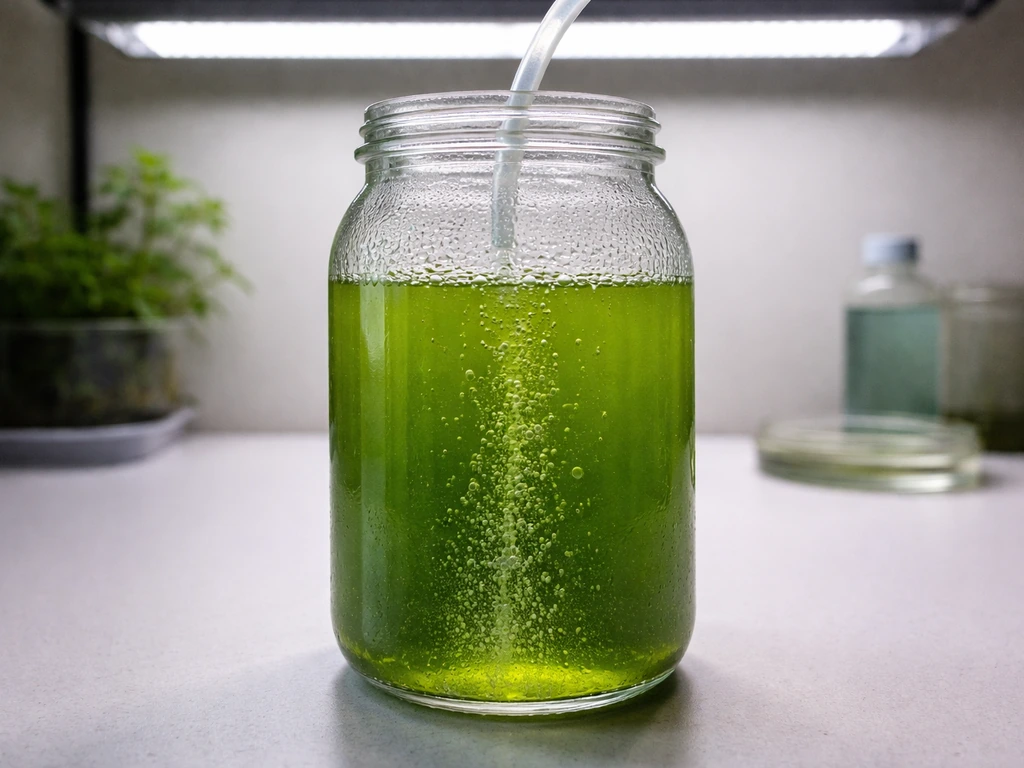
The actual feeding process: turn off your powerheads or wave makers, then use a long feeding stick or tongs to gently place the food directly on the anemone's tentacles. If you also keep microalgae, you may want the next-step guidance on how to grow nannochloropsis for reliable live feed. Healthy anemones will grab it within a few minutes. Leave the flow off for 5–10 minutes after it grabs the food so it can close around and digest it before the current carries anything away. If the anemone repeatedly rejects the food, back off and try again in a few days. Forced feeding a stressed or sick anemone makes things worse.
One thing I learned the hard way: overfeeding is worse than underfeeding. If you dump in too much food and the anemone doesn't take it all, you'll spike ammonia in a small tank within hours. Less is more, especially in a system under 50 gallons.
Day-to-day care and keeping things stable
Anemones don't want excitement. They want stability. The single biggest factor in long-term success is keeping your parameters consistent, day in and day out. Here's a routine that works:
- Weekly 10–15% water changes using properly mixed, temperature-matched saltwater. This keeps nitrates and phosphates in check without large chemistry swings.
- Test salinity, temperature, and pH weekly at minimum. Test alkalinity every two weeks once your tank is established.
- Top off evaporated water daily (or use an auto-top-off unit). Evaporation raises salinity fast in small tanks, and swings stress anemones more than a slightly off number.
- Check powerhead intakes weekly to make sure they're clear and the guard is in place.
- Observe the anemone daily. Color, posture, and tentacle fullness tell you a lot. A healthy bubble-tip is full and round with distinct bubble tips during the day.
- Quarantine any new fish or corals for at least a week before adding them to the display tank to prevent introducing pests or disease.
Equipment-wise, you need a reliable heater with a separate thermometer (don't trust the built-in thermostat alone), a working protein skimmer especially for smaller tanks, adequate live rock for biological filtration, and powerhead guards on all intakes. A spare heater is cheap insurance. Heater failures, both stuck-on and stuck-off, are among the most common causes of sudden anemone death.
Troubleshooting: when things go wrong
Anemone won't attach
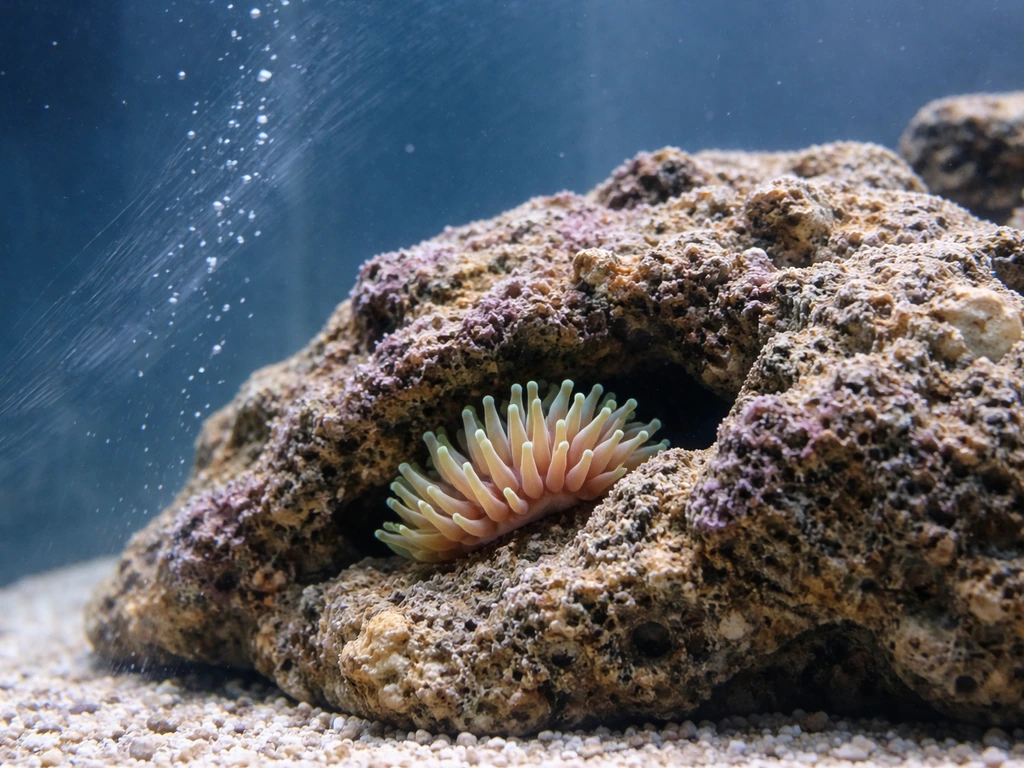
If your anemone is wandering and not settling after 48–72 hours, the most likely causes are flow, lighting, or water quality. Check that there's no direct current blasting the spot it's trying to occupy. Make sure your parameters are in range. If water quality looks fine, try placing the anemone in a small plastic container with holes (or a mesh cup) wedged in the rock to hold it in place for 24 hours while it establishes its foot. Once it grips, remove the container.
Melting and tissue recession
Melting (rapid tissue loss) is a serious emergency. If you see white, stringy tissue coming off the anemone, get it out of the tank immediately. A melting anemone can foul the entire tank within hours and kill everything else. The most common triggers are extreme parameter swings, a powerhead strike, bacterial infection, or adding a sick animal to a tank that wasn't quarantined. Unfortunately, a severely melting anemone usually can't be saved. If it's only partial tissue recession, improve water quality, reduce stress factors, and watch closely.
Bleaching
A bleached anemone (white or very pale) has lost its zooxanthellae, usually from too much heat or too much light. Research has shown that temperatures pushed above 27°C (80.6°F) can trigger bleaching in bubble-tip anemones. Check your heater, reduce light intensity, and increase feeding frequency to compensate for lost photosynthetic energy while it recovers. Some anemones recover from mild bleaching; severe or long-duration bleaching is often fatal.
Gaping or deflating
Occasional deflation throughout the day is normal. Anemones expel water periodically. But a persistently gaping mouth that stays open for hours, or an anemone that looks deflated all day every day, signals a problem. Check ammonia and nitrite first. Then look at salinity stability and temperature. A gaping anemone in an otherwise healthy tank sometimes just needs a few days to adjust after introduction.
Pests and predators
Aiptasia anemones, while a different species entirely, are a common pest that can be confused with or introduced alongside desirable anemones on live rock. If you suspect you have Aiptasia, you can treat it like a pest and follow guides on how to grow aiptasia responsibly for study or removal Aiptasia anemones. They're nearly impossible to manually remove without spreading them further. Peppermint shrimp or berghia nudibranchs are the most reef-safe biological controls. Some fish like filefish can also nip at anemone tentacles, so check compatibility before adding any new fish to an anemone tank. Bristle worms generally leave healthy anemones alone, but will opportunistically consume a dying or stressed one.
Propagation and long-term growth
Bubble-tip anemones will split on their own once they're large, healthy, and well-fed. This is the easiest form of propagation and requires nothing from you except good ongoing care. A single anemone can become a colony of clones over months to years in a stable tank. The split usually happens quickly, often overnight, and each half will attach and recover independently within a few days.
Manually propagating by cutting is possible and is the basis of commercial anemone aquaculture research with E. quadricolor. Studies have tested cutting anemones into halves and quarters, with results showing that survival is achievable and that directed feeding post-cut improves recovery outcomes compared to no feeding at all. That said, manual cutting is stressful to the animal and best left until you have experience with a healthy, established colony. If you do attempt it, use a sharp clean blade, cut quickly, and keep both fragments in ideal water conditions with reduced flow during recovery.
On the ethical and legal side: if your colony grows large, be thoughtful about how you sell or trade fragments. Some regions restrict collection or commercial sale of certain marine invertebrates without permits. Captive-bred anemones are almost universally legal to trade between hobbyists, but check your local rules. Prioritizing tank-raised animals in your own purchasing also reduces demand on wild reef populations, which face real collection pressure globally.
One final thought: anemones reward patience more than almost any other reef animal. The hobbyists who succeed long-term aren't the ones who obsess over optimization. They're the ones who set up the tank right, leave the parameters alone once they're stable, and resist the urge to move or overfeed the animal. Get your chemistry dialed in, source a good tank-raised specimen, drip acclimate it properly, and give it a quiet corner of live rock with good light. If you want to grow Anubias fast, start with strong light, stable nutrients, and make sure the rhizome never gets buried give it a quiet corner of live rock with good light. Most of the time, it'll take care of the rest.
FAQ
What’s the minimum time a tank should be stable before I add a bubble-tip anemone?
Cycling is required, but stability matters more than the number of weeks. Aim for parameters to hold steady for at least 2 to 4 weeks, with consistent salinity, pH, and ammonia/nitrite at zero, before introducing the anemone.
Can I keep a sea anemone in a nano tank if I test constantly?
It’s risky even with frequent testing. In tanks under about 30 gallons, salinity and temperature swing faster, and a heater or power outage has less buffer. If you try smaller than 21 gallons, the chance of sudden death rises sharply.
Should I acclimate a sea anemone using drip or bag temperature matching only?
Use drip acclimation if you can. Temperature matching alone does not equalize salinity, and anemones are sensitive to small SG differences. Match SG to within about 0.001 before moving the animal to the display.
My anemone won’t attach. How long should I wait before changing anything?
Give it time, usually 24 to 48 hours, and up to 72 hours if flow and lighting are already reasonable. Avoid repeatedly relocating it, instead check for direct powerhead output, verify PAR at the intended resting area, and consider temporarily stabilizing it in a rock wedged container for a day.
Is it dangerous to place the anemone on sand instead of rock?
For bubble-tips, yes, it can be. They generally do better when the pedal disc can anchor in a crevice under or within live rock. If it keeps settling on open sand, review flow patterns and consider rearranging rock to create secure, low-turbulence zones.
How do I prevent my anemone from wandering into corals or getting sucked in?
Use powerhead guards on all intakes, and keep the anemone away from returns and intake outlets. Also seed the tank with enough space in the anemone’s preferred light-and-flow zone, because wandering is often when it can sting or get trapped.
What PAR or light settings are best if I don’t have a PAR meter?
Start with a conservative intensity and place it lower in the tank, then move it gradually over a week based on behavior and color. A good sign is normal expansion and tentacle color, a bad sign is repeated gaping, pale bleaching, or staying tightly retracted.
My anemone looks pale. Does that always mean it’s getting too much light?
Not always. Pale often indicates low light or poor photosynthesis, while very white, bleached tissue usually points to excessive intensity or heat. Check temperature first, then confirm whether it’s brightening in color as you reduce light, or worsening as you increase it.
How often should I feed a bubble-tip anemone, and what if it ignores food?
Typically once or twice weekly is enough if the tank light supports growth. If it rejects food repeatedly, don’t force it, wait a few days, and reassess water quality, light stability, and whether direct flow is stressing it during feeding.
Is overfeeding really that harmful in a small aquarium?
Yes. In small systems, uneaten food can spike ammonia quickly, sometimes within hours, which can trigger melting. Feed small portions sized to the mouth, remove any obvious leftovers, and consider doing the next feeding only after the tank shows stable nutrient behavior.
Can I target-feed with the powerheads running?
Better not. Turn off powerheads or wave makers during feeding so food stays on the tentacles long enough to be taken and held. After it grabs the food, wait about 5 to 10 minutes before turning flow back on.
What should I check first if the anemone has a gaping mouth or stays deflated?
Start with basic water quality, specifically ammonia and nitrite, then verify salinity stability and temperature. If those are correct, look for hidden causes like a failing heater, unstable dosing, or the animal being hit by direct flow or light.
My anemone is melting. What’s the fastest emergency response?
Act immediately. Remove the anemone from the tank as soon as you see rapidly deteriorating, white stringy tissue, because it can foul the system quickly. Then check for parameter swings, powerhead issues, recent livestock additions, and any signs of bacterial infection in the system.
What’s the difference between normal deflation and a problem?
Normal deflation can happen intermittently throughout the day. A persistent open or gaping mouth for hours, ongoing deflation every day, or visible tissue changes are warning signs, especially if they coincide with elevated ammonia/nitrite or temperature drift.
How can I tell if Aiptasia is actually an anemone I want to keep?
Aiptasia usually stays smaller, often reproduces quickly, and can remain stubborn on live rock surfaces. If you’re unsure, treat it as a pest until you confirm it, because manual removal often spreads it further when done incorrectly.
Can filefish or other fish safely live with a bubble-tip anemone?
Compatibility is species-specific. Some fish may nip tentacles, especially as they get hungry or stressed, even if they look reef-safe. Quarantine new fish and observe feeding and aggression patterns before assuming safety.
When will a bubble-tip split, and will both halves survive?
Splitting generally happens when the anemone is large, healthy, and well fed, often after months in a stable environment. Each half typically attaches and recovers independently within a few days, but watch flow to ensure both halves can settle.
Is cutting an anemone a good idea for a beginner trying to propagate it?
Usually not. Manual cutting is stressful and should be attempted only after you have a healthy, established colony and can manage recovery conditions. If you do attempt it, use a very sharp clean blade, cut quickly, and reduce flow during recovery.
Are there legal restrictions I should think about even when buying from local shops?
Yes. Trade and collection rules can vary by region, and some imports require permits. Ask the shop how the specimen was sourced, and confirm local regulations if you plan to trade or sell fragments later.