To grow Acropora fast, you need stable water chemistry (alkalinity 8.2–8.8 dKH, calcium 380–450 ppm, magnesium 1,250–1,350 ppm), strong turbulent flow at 40–50x turnover, high PAR in the 350–450 range at final placement, and enough nutrients in the water that your coral isn't starving. Nail those four things consistently and you will see measurable growth within weeks. Skip the stability part and nothing else matters.
How to Grow Acropora Fast: Fast SPS Growth Guide
Marcus Holloway
2 Jun 2026
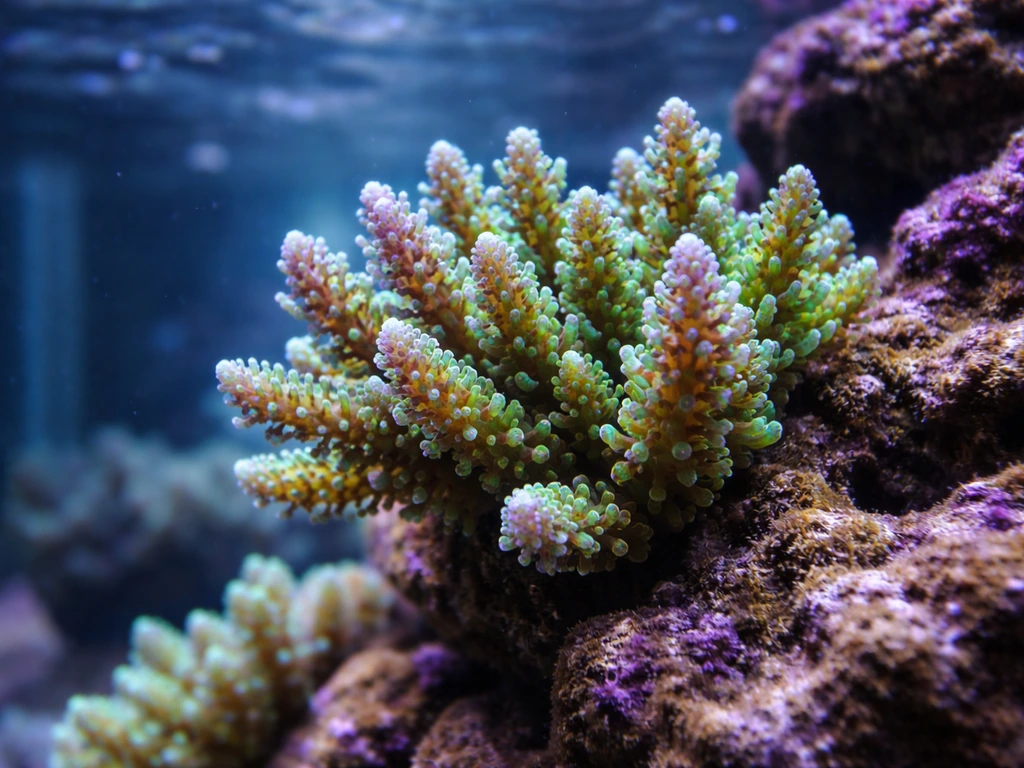
Fast-growth basics for Acropora
Acropora is the fastest-growing stony coral you can keep in a home reef tank, but it only grows fast when every condition is right at the same time. That's the part most people miss. They dial in the light, ignore the flow, or let alkalinity swing by a full dKH point overnight and wonder why their frags are stalling. Growth in Acropora is driven by two parallel processes: tissue growth (the living animal expanding) and skeletogenesis (the coral depositing calcium carbonate). Both need energy, and both are sensitive to instability. The honest truth is that chasing fast growth means obsessing over consistency, not just hitting target numbers.
Here is the mental model that actually works: think of every parameter as a dial, and your job is to keep every dial steady while slowly turning up the inputs (light, nutrients, flow) once stability is confirmed. The biggest mistake beginners make is adjusting multiple things at once. Change one thing, wait 48–72 hours, test, then move on. Experienced reef keepers who grow Acropora fast are not doing anything exotic. They are just boring and consistent.
Tank setup and water chemistry targets
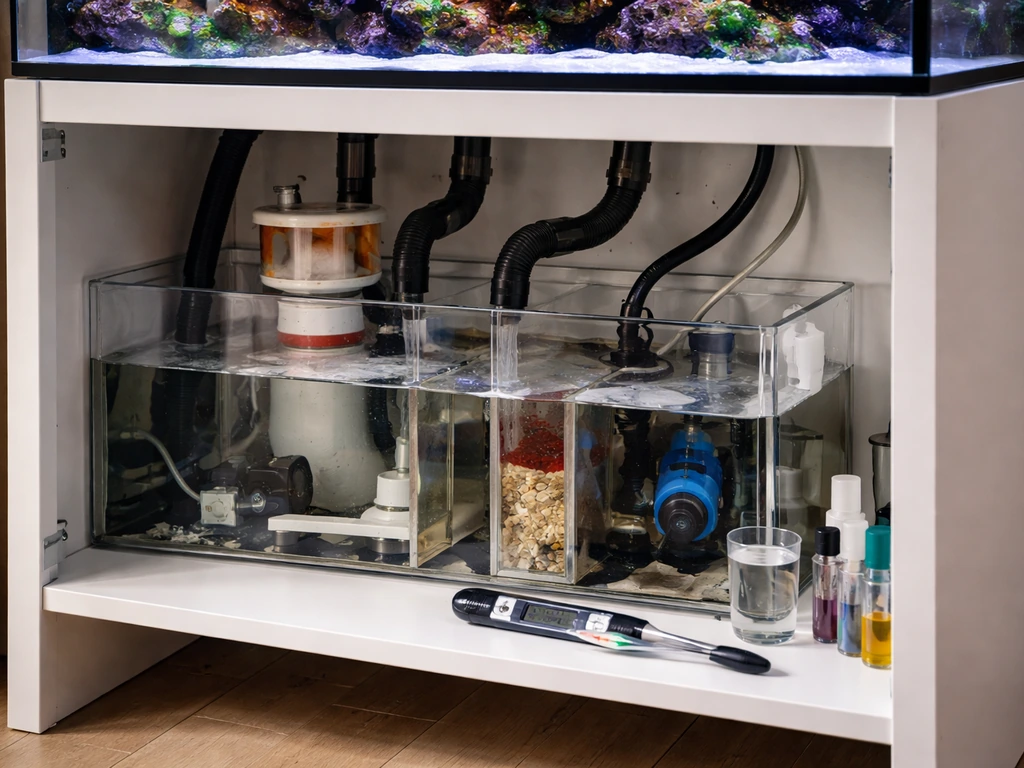
You do not need a huge tank to grow Acropora quickly, but you do need a system with enough water volume to buffer against swings. A 50-gallon or larger display with a sump is ideal because it gives you more total water volume and a place to run a refugium or skimmer. The sump also lets you dose more precisely without spiking parameters in the display. Tanks under 30 gallons can work, but they require more frequent testing and tighter dosing because even small consumption spikes will move your numbers fast.
These are the chemistry targets you should be hitting and holding for a growth-focused SPS system. The ranges listed below are not just acceptable ranges. They are the specific windows that support fast tissue and skeletal growth without pushing the system into instability.
| Parameter | Target Range | Why It Matters for Growth |
|---|---|---|
| Alkalinity (dKH) | 8.2–8.8 | Fuels skeletogenesis; swings above 0.2–0.3 dKH/day stress growth tips |
| Calcium (ppm) | 380–450 | Paired with alkalinity for skeleton deposition |
| Magnesium (ppm) | 1,250–1,350 | Keeps calcium and alkalinity from precipitating out; supports coral enzymes |
| Salinity (SG) | 1.025–1.026 (34–35 ppt) | Upper end of natural reef range supports SPS metabolism |
| Temperature (°F) | 77–79 | Stable is more important than hitting a specific number |
| Nitrate (ppm) | 5–15 | Low but not zero; starved corals grow slowly |
| Phosphate (ppm) | 0.05–0.10 | Same logic as nitrate; ultra-low phosphate stalls growth in SPS systems |
A note on nutrients: the old-school advice of keeping nitrate and phosphate as close to zero as possible actually works against fast Acropora growth. SPS-heavy systems that run 5–15 ppm nitrate and 0.05–0.10 ppm phosphate consistently outperform tanks with undetectable nutrients. The coral's zooxanthellae need some nitrogen and phosphorus to photosynthesize efficiently. Running ultra-low nutrients is a holdover from the early days of reef keeping and it still trips people up today.
Lighting intensity, spectrum, and photoperiod
Acropora wants 350–450 PAR at its final position in the upper third of the tank. That is the sweet spot for fast growth without bleaching risk. Below 250 PAR, skeletal extension slows dramatically. Above 500 PAR without proper acclimation, you will bleach your coral before it has a chance to grow. The spectrum matters too. Acropora responds well to a blend of blue-heavy spectrum (around 420–450 nm) combined with white for visibility, but the real driver of photosynthesis and growth is PAR, not color temperature.
Keep your photoperiod in the 10–12 hour range. Running lights longer than 12 hours does not proportionally increase growth and can contribute to nuisance algae. A common schedule that works well is a 30-minute ramp-up, 9–10 hours at full intensity, then a 30-minute ramp-down. That gives the coral a consistent daily light dose without the stress of abrupt on/off transitions.
Acclimating new frags to your light
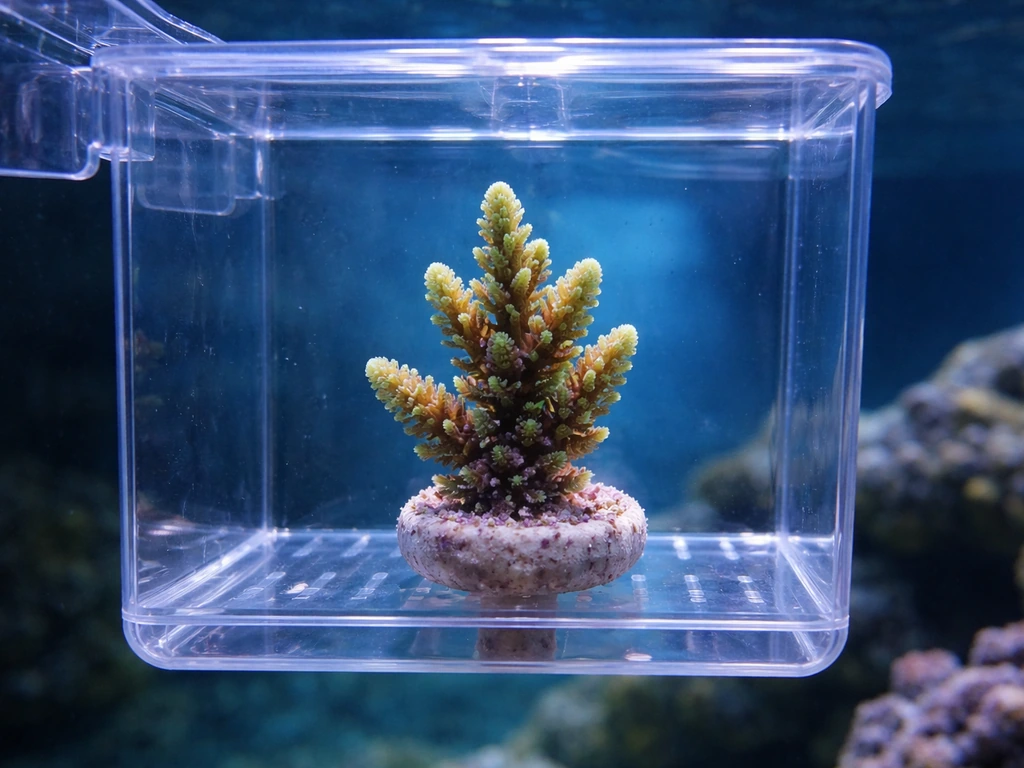
This is where I have seen more new-frag deaths than anywhere else. Dropping a frag from a vendor's tank (often lower PAR conditions) directly into 400 PAR is a reliable way to bleach it in under a week. Take 2–4 weeks minimum for light acclimation, and up to 6 weeks if the frag came from a particularly low-light environment. Start the frag in the bottom third of the tank or shade it temporarily. Reduce the daily photoperiod by 1–2 hours during the first week while it adjusts. Increase PAR gradually by moving it up a few inches every few days rather than jumping it to the top all at once.
Flow patterns and placement: where to mount frags
If there is one area where hobbyists consistently under-invest, it is flow. Acropora in the wild lives in areas of intense, constantly changing water movement. In a home tank, you are targeting 40–50x total system turnover for an SPS-dominant setup. That means a 100-gallon system needs 4,000–5,000 gallons per hour of total flow from all pumps combined. The character of the flow matters as much as the volume. Random, turbulent flow keeps polyps actively feeding and prevents detritus from settling on tissue. Laminar flow (a single strong jet pointing in one direction) creates dead spots everywhere else and can also physically damage tissue closest to the pump output.
Use at least two powerheads or wavemakers positioned on opposite sides of the tank so their outputs interact and create turbulence. Gyre-style pumps are excellent for Acropora tanks but position them so corals are not sitting directly in front of the pump output at full blast. The goal is to see all your Acropora polyps gently swaying or 'dancing' at any given moment. If polyps are pinned flat or the coral is visibly getting blasted, move it or redirect the pump.
Placement rules for fast growth
- Mount frags in the upper third of the tank once fully light-acclimated (target placement zone for 350–450 PAR)
- Keep frags at least 6–8 inches from direct pump outputs to avoid tissue damage
- Avoid low-flow corners and areas behind rock structures where detritus settles
- Position branching Acropora so flow hits between the branches, not just the front face
- Leave room for growth in every direction: Acropora frags can double or triple in size within a year under good conditions
Feeding, supplements, and keeping alkalinity, calcium, and magnesium dialed in
Acropora feeds heterotrophically, meaning it actively captures organic particles and dissolved nutrients in addition to photosynthesizing. Feeding your corals speeds growth noticeably, especially for small frags trying to establish. Broadcast feeding with fine-particle coral foods (rotifers, concentrated phytoplankton, or powdered coral foods in the 5–50 micron range) 2–3 times per week is a good baseline. If you are also culturing microalgae for reef feeding, see how to grow nannochloropsis as a related option alongside your coral-focused routine. Amino acid supplements can support tissue growth, but dose conservatively: overdosing causes bacterial blooms that tank oxygen and pH, which then stress the corals you were trying to help. Add amino acids in the evening when corals are more likely to be actively feeding.
Dosing alkalinity, calcium, and magnesium
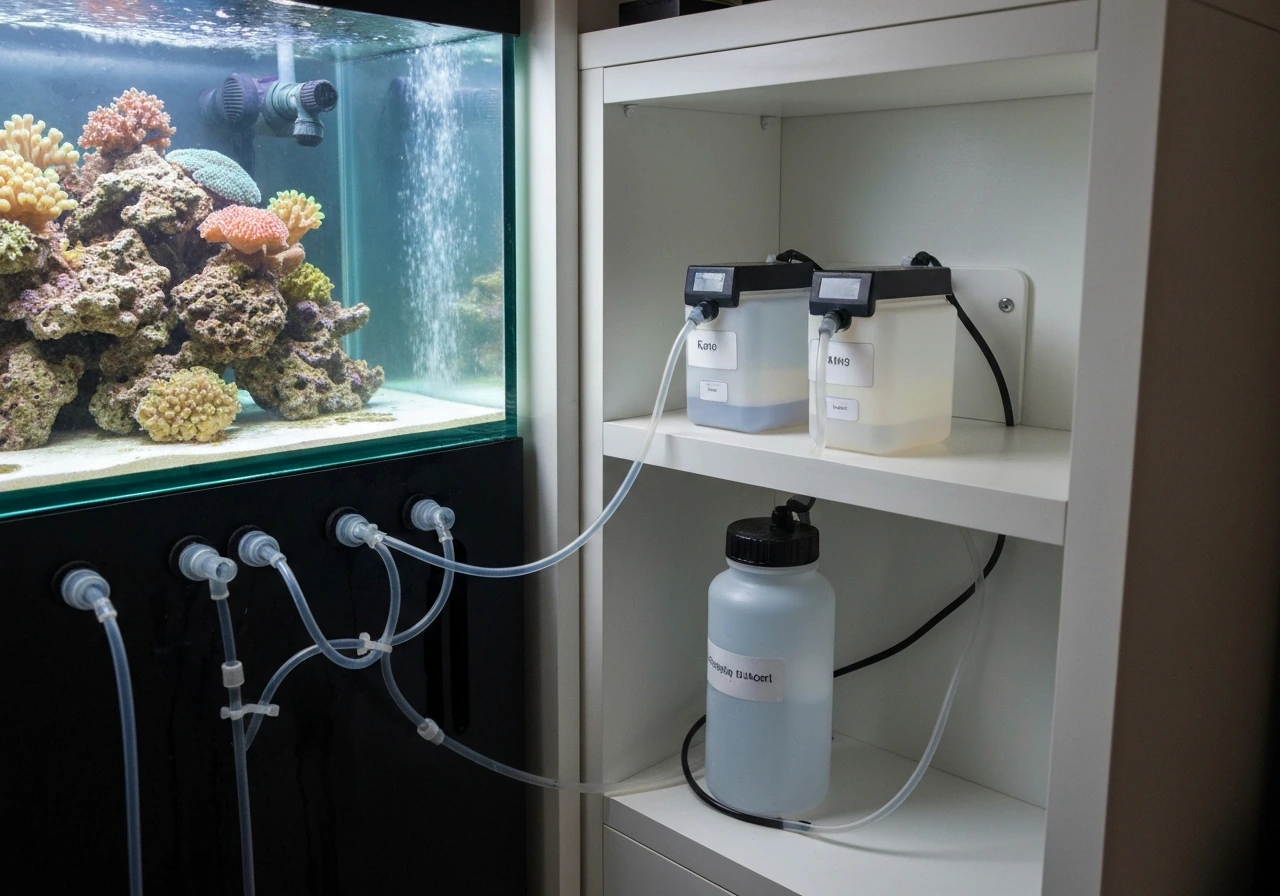
A two-part dosing system (balanced calcium and alkalinity solutions) is the most practical and affordable way to maintain parameters in a growth-focused SPS tank. A calcium reactor is excellent for larger, high-demand systems. Whatever method you use, the most important rule is keeping daily alkalinity swings under 0.2–0.3 dKH. That number sounds small, but Acropora is genuinely sensitive to it. In a growing SPS system, alkalinity consumption can be significant and it can jump suddenly after adding new frags, increasing PAR, or improving your nutrient balance. This is why testing frequently is non-negotiable when you are actively pushing growth.
Start dosing when your alkalinity drops more than 0. My Reef Log also recommends using a practical dosing stability rule-of-thumb, like starting when alkalinity drops by more than about 0.2 dKH in 24 hours or calcium drops by more than about 10 ppm over a few days Start dosing when your alkalinity drops more than 0.. 2 dKH in 24 hours or your calcium drops more than 10 ppm over a few days. Dose in small, frequent increments rather than one large correction. High-demand tanks benefit from 4–12 dose events per day via a dosing pump rather than a single large daily dose. After any change to your dosing schedule, wait 48–72 hours before testing to see where the new steady state lands. Testing alkalinity daily or every other day is appropriate when you are calibrating a new system. Once it is dialed in, 2–3 times per week is sufficient for ongoing monitoring.
Frags vs. established colonies: growth expectations and how to accelerate each
Starting with a small frag (a 1–2 inch mounted fragment) is the most common entry point, and there is a real difference in what to expect compared to adding an established colony. Frags spend the first 4–8 weeks mainly recovering from the stress of being cut and shipped, extending existing tissue, and putting down enough coralite foundation to anchor themselves to the substrate. Visible branch extension typically kicks in after that initial recovery phase. Under good conditions, a 1-inch Acropora frag can reach 3–4 inches within 6 months and develop into a recognizable colony within a year.
Established colonies skip the recovery phase and will respond to improved conditions faster, sometimes showing increased polyp extension and new growth tips within 1–2 weeks of being moved to better light and flow. The tradeoff is that established colonies are more expensive to acquire and can be harder to ship without stress. If you want the fastest observable growth and have the conditions ready, buying a well-established frag from a local reefer (avoiding shipping stress entirely) is often the best approach.
To accelerate frag growth specifically, prioritize these three things in order: stability first, then light acclimation, then nutrient support. Do not rush the light acclimation process to get the frag into higher PAR faster. A bleached frag takes weeks to recover and you lose all the time you were trying to save. Once the frag is showing clear polyp extension and new growth tips (white tips on the branches), that is your signal that conditions are right and you can begin gradually optimizing further.
Troubleshooting common growth stalls and stress causes
When Acropora stops growing, there is almost always a specific cause. If you are troubleshooting a similar stalling problem, the approach for how to grow aiptasia is also about stabilizing the right conditions and watching how the organism responds over time. The challenge is that multiple issues can look the same from the outside. Here is how to systematically work through the most common problems.
Alkalinity and parameter instability
Sudden alkalinity changes are the number one growth-stall cause in SPS tanks. Signs include paling at the growth tips, reduced polyp extension, and in severe cases, rapid tissue loss (RTN or STN). If your alkalinity is swinging more than 0.5 dKH between tests, that is your first problem to solve before anything else. Test at the same time each day because alkalinity fluctuates naturally with pH and the diurnal cycle, and comparing tests taken at different times of day can be misleading.
Inadequate or inconsistent light
If your Acropora has been in the tank for more than 8 weeks, is fully acclimated, and still shows no growth tips, check your actual PAR with a meter rather than relying on manufacturer intensity settings. LED fixtures shift output over time and the PAR at coral level can drop significantly as bulbs age. Anything below 250 PAR will result in noticeably slower growth.
Starvation (nutrients too low)
If nitrate reads less than 2 ppm and phosphate is undetectable, your coral may be nitrogen-starved. This often presents as pale, washed-out coloration and minimal growth despite good lighting. The fix is to slightly raise nutrients through feeding and reducing the aggression of your nutrient export (running your skimmer a little wetter, reducing GFO if you are using it).
Acropora Eating Flatworms (AEFW)
AEFW are one of the most frustrating causes of growth stalls because the damage accumulates before most hobbyists notice the pest. Signs include irregular tissue recession starting at the base of branches, small oval structures visible on the underside of branches in bright light, and rapid tissue loss that does not respond to improved parameters. Treatment typically requires multiple dip sessions with a coral dip product, spaced approximately 3 weeks apart to catch the life cycle stages that survive the first treatment. Remove affected frags from the display for dipping rather than treating in the tank.
Dead spots and flow issues
If specific frags in one area of the tank are not growing while others are thriving, check for detritus accumulation near those frags. Detritus settling on coral tissue causes localized tissue death and smothers the coral's ability to feed and respire. Redirect a powerhead to clear that zone and consider whether your overall flow pattern has any dead spots. Strong, random flow keeps the tank clean and keeps your Acropora healthy.
Mounting and placement stress
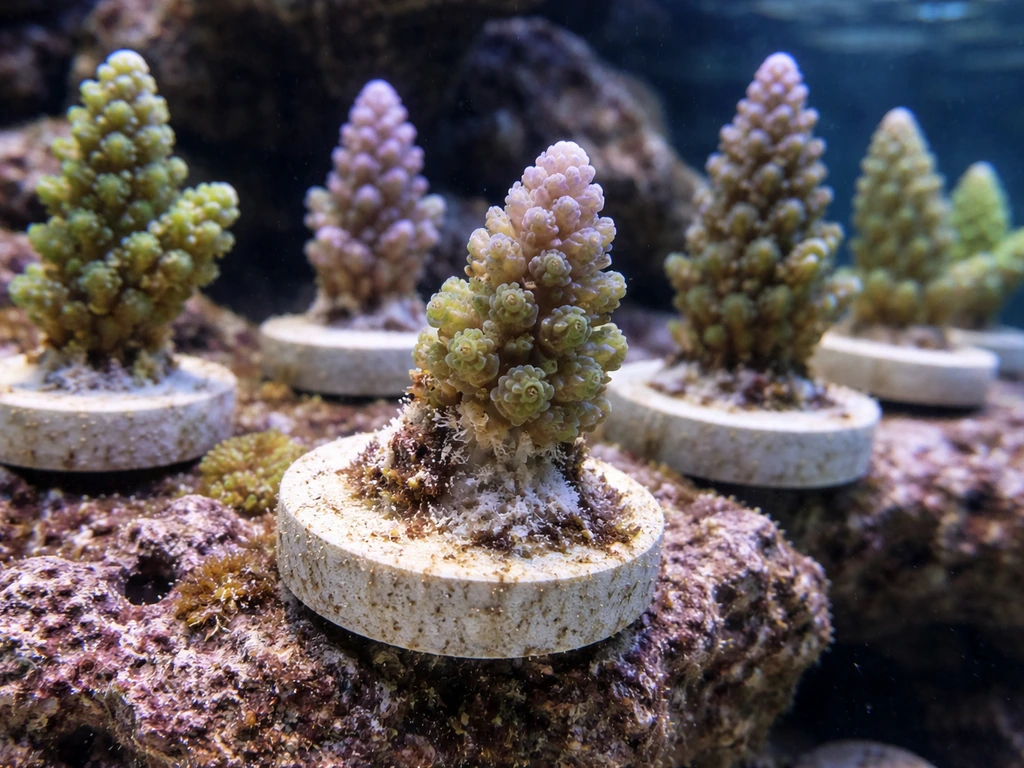
Frags that are mounted on plugs and then placed directly on rockwork can develop tissue damage at the base where the plug rests against uneven surfaces. Make sure the frag plug is stable and that no rock edges are pressing against the coral tissue. Frags that tip over and land tissue-side down on rock or sand can suffer rapid tissue loss in the first few minutes. Use frag racks or epoxy mounting to keep frags secure and upright, especially during the first few weeks.
Your weekly monitoring schedule and routine
This is the routine I would recommend for anyone actively trying to grow Acropora fast. It takes about 20–30 minutes per week once your system is dialed in, more during the calibration phase. The consistency of this routine is what actually produces results.
- Daily (takes 2 minutes): Visually inspect all Acropora frags and colonies. Check for polyp extension, unusual pale patches, tissue recession, or detritus accumulation on coral surfaces. Confirm pumps and dosers are running.
- Every other day during calibration phase: Test alkalinity with a reliable test kit or ICP probe. Note the value and the time of day. Compare to your previous reading to confirm your doser is holding the target. Adjust dosing only after confirming the trend over at least two tests.
- Twice per week (ongoing): Test alkalinity, calcium, and nitrate. Once your system is stable and you have confirmed consumption rates, you can drop calcium and magnesium to weekly testing.
- Weekly: Test phosphate, magnesium, and salinity. Visually inspect flow patterns, clean pump intakes, and check for any detritus buildup in low-flow zones. Photograph frags from the same angle each week to track growth objectively.
- Weekly: Feed corals broadcast-style with fine-particle coral food. Dose amino acid supplement in the evening if you are using one, and keep the dose conservative.
- Every 2 weeks: Check your PAR at frag positions with a PAR meter. Confirm light acclimation progress for any new arrivals and move them up slightly if they are responding well (good polyp extension, white growth tips).
- Monthly: Full parameter check including ICP testing if possible. Review your growth photo record. If you are not seeing measurable growth in frags that have been in the tank for more than 8 weeks, revisit the troubleshooting section and identify the limiting factor before making any changes.
The step that makes the biggest difference in this routine is the weekly photograph. It is easy to convince yourself a coral is growing (or not growing) based on memory, but photos do not lie. Set up a consistent shot from the same angle with the same white balance settings once a week and you will have objective data to work with. When you start seeing consistent white growth tips on your Acropora branches in those photos, you will know your system is performing. That is the target. Everything in this guide is designed to get you there as reliably and quickly as possible.
One last thing: Acropora is genuinely one of the more demanding corals you can keep, and growing it fast amplifies that demand. If you are also interested in sea anemones, the approach and water-parameter priorities can be quite different, so it helps to review how to grow sea anemone before you make changes. The same principles of stability, flow, and feeding apply to other corals in your system, from the simpler Anubias-like beginner corals to anemones sharing your reef. As you get more comfortable with the rhythm of testing and adjusting, you will find that the whole tank benefits, not just the Acropora. If you are figuring out how to grow Japanese anemones, the same habit of keeping conditions stable will make a big difference. Start with one change at a time, test obsessively for the first month, then relax into a maintenance routine once stability is confirmed. The same consistency mindset applies to how to grow Anubias fast, focusing on stable conditions and the right light and nutrients for quicker rhizome and leaf growth growing Anubias fast.
FAQ
How fast can you realistically expect Acropora growth in a home tank?
If stability and placement are correct, you should see improved polyp extension and more visible branch tips within 2 to 4 weeks, and measurable branch length over the next few months. A fast observable jump is more common in established colonies, while fresh frags often spend 4 to 8 weeks recovering before real extension starts.
What alkalinity test frequency should I use if I am trying to grow Acropora as fast as possible?
During calibration, test daily or every other day at the same time, then switch to 2 to 3 times per week once trends level out. If you are dosing frequently or adding multiple frags, increase testing temporarily because growth pushes consumption up and alkalinity can swing after additions.
Can I run higher PAR than 450 to get faster growth?
Not safely without acclimation. Above the typical sweet spot, Acropora often bleaches before it grows because photosynthesis stress outruns recovery. If you want more growth, increase PAR gradually and watch for paling at tips, reduced extension, or tissue lightening that persists beyond the acclimation window.
Do I need to maintain ultra-low nitrate and phosphate for the fastest Acropora growth?
Usually no. Extremely low nutrients can starve the symbiotic algae and slow growth, even with good light and flow. Aim for measurable nitrate and low but present phosphate, and adjust export if colors and growth tips stay washed out despite correct PAR.
Should I target peak feeding right before lights out, or during the photoperiod?
A practical approach is feeding in the evening when corals are more likely to actively capture food, especially for amino acids. For broadcast particulate foods, you can feed during a period when flow is appropriate to keep food suspended, then resume your normal flow pattern after food disperses.
How do I prevent my additions from ruining stability, especially when adding new frags?
Additions can abruptly change consumption, and you may see an alkalinity or calcium drift after new SPS go in. Increase testing for 3 to 7 days after additions, and avoid making other changes in the same window so you can identify which parameter actually moved.
What flow setup is best, and how do I avoid laminar dead spots?
Use multiple pumps/wavemakers on opposite sides to create random, turbulent movement around branches. Confirm by observing polyps, they should gently sway or dance. If polyps are pinned or detritus consistently accumulates in one pocket, redirect one pump or re-aim to break up that zone.
My Acropora is growing but looks pale, is that normal or a warning sign?
If paleness comes with reduced polyp extension or shorter, thinner new tips, it is often a sign nutrients or alkalinity stability are off, not just light color. Check nitrate and phosphate readings for being too low, and confirm alkalinity swings are under about 0.2 to 0.3 dKH daily.
How long should I acclimate a frag to new light, really?
Plan on at least 2 to 4 weeks, longer (up to 6) if it came from a much lower-light system. Reduce photoperiod slightly at first, start in the lower third, then raise it gradually by a few inches every few days while monitoring for paling or stalled extension.
What is the fastest way to troubleshoot a growth stall when everything seems correct?
Verify the two most common silent failures first, actual PAR at coral level and alkalinity stability between tests. If PAR is low due to LED aging or incorrect placement, growth slows even if your settings look right. If alkalinity swings exceed roughly 0.5 dKH between tests, fix that before chasing flow or feeding.
Will increasing feeding alone make Acropora grow faster?
Feeding can help, but it is not a substitute for stability. Overfeeding can worsen oxygen and pH swings, especially if amino acids are dosed aggressively, which then stresses corals. If you feed more, keep an eye on tank stability and adjust export conservatively rather than removing all export at once.
Is it better to mount on plugs or epoxy directly to rock to grow faster?
Either can work, but mounting errors can slow growth or cause base tissue damage. Ensure plugs are stable, avoid rock edges pressing on tissue, and keep frags upright. Epoxy or a frag rack helps prevent tipping, which can trigger rapid tissue loss.
How do I know if detritus is the reason specific frags are stalling?
Look for localized tissue paling or recession near the same spots while neighboring frags thrive. After you see a pattern, observe whether that area has reduced flow or repeated debris settling. Redirect flow to clear the zone and give it time, localized issues can improve only after the smothered tissue recovers.
What are signs of AEFW, and should I treat the whole tank if I find damage?
Look for irregular recession starting near branch bases and small oval structures under bright light. If you confirm suspected damage, treat affected frags outside the display and plan multiple dip sessions spaced about 3 weeks apart to catch surviving life stages. You do not want to wait for spreads before acting, but you should also avoid treating healthy frags in a way that adds more stress.
How do I track growth objectively without guessing?
Take one weekly photo from the same angle and distance with consistent camera settings, then compare branch tip development over time. Photos help you see whether growth tips are truly appearing, especially when short-term polyp extension changes make memory unreliable.
What should I do if my calcium drops but alkalinity looks stable?
It usually means your dosing or supplementation mix is imbalanced, or demand changed after additions. Adjust dosing for the specific parameter that is falling, and increase testing temporarily to prevent large corrections. Aim to keep daily alkalinity swings tight, because alkalinity instability is the most common growth-stall trigger.