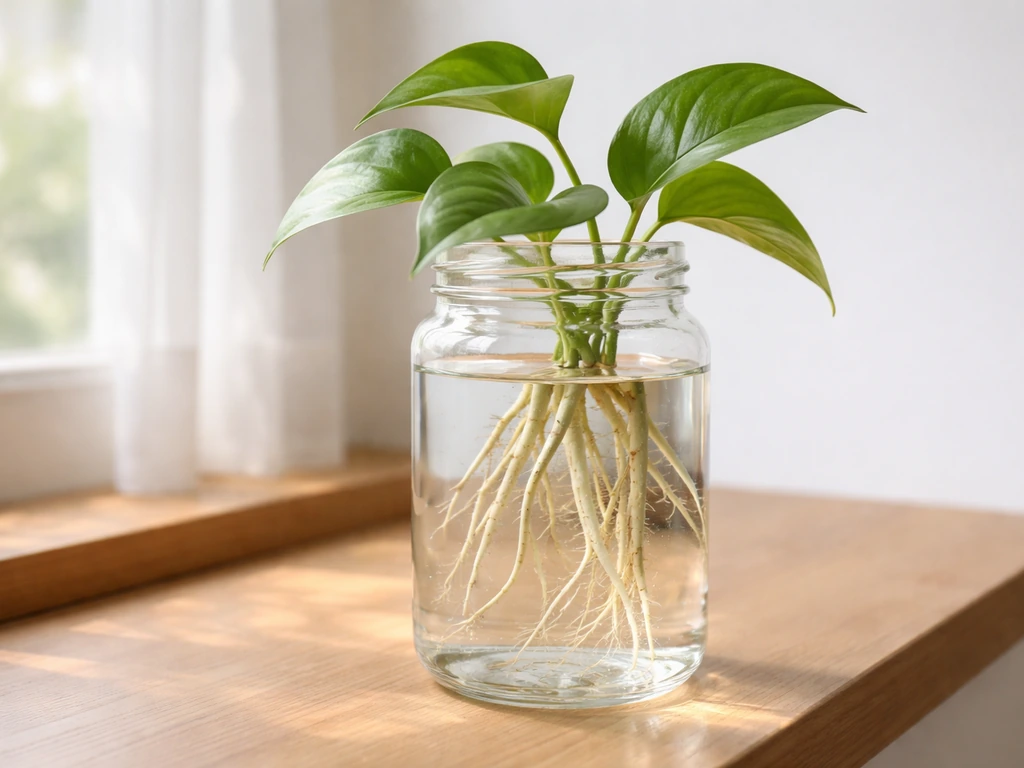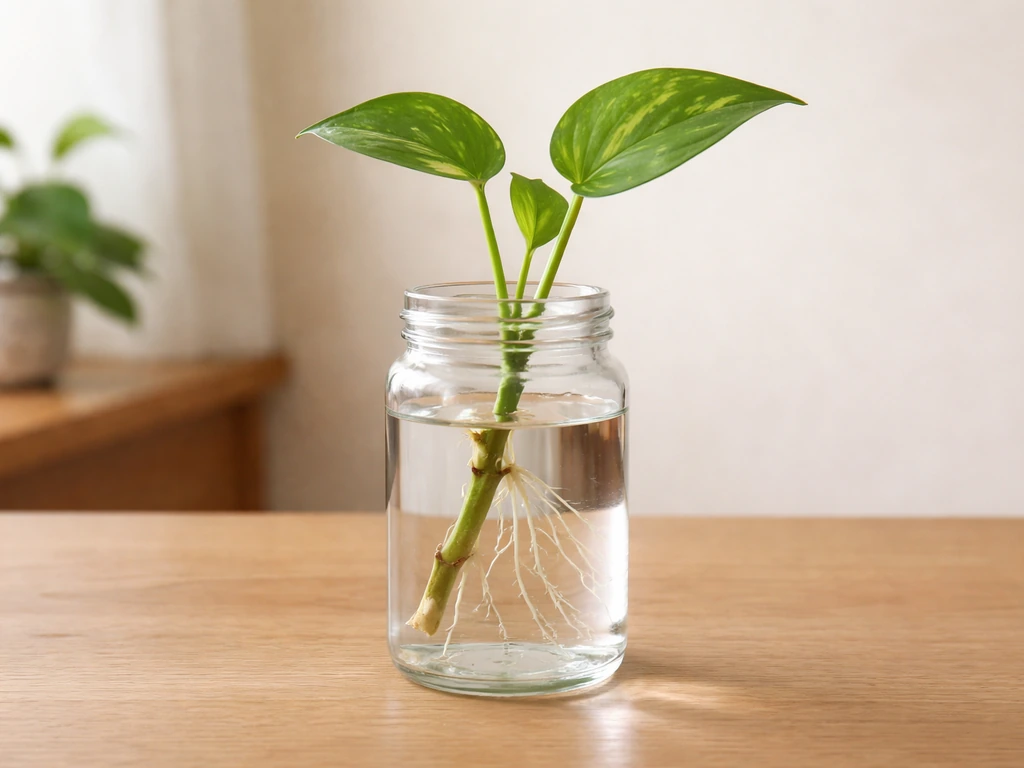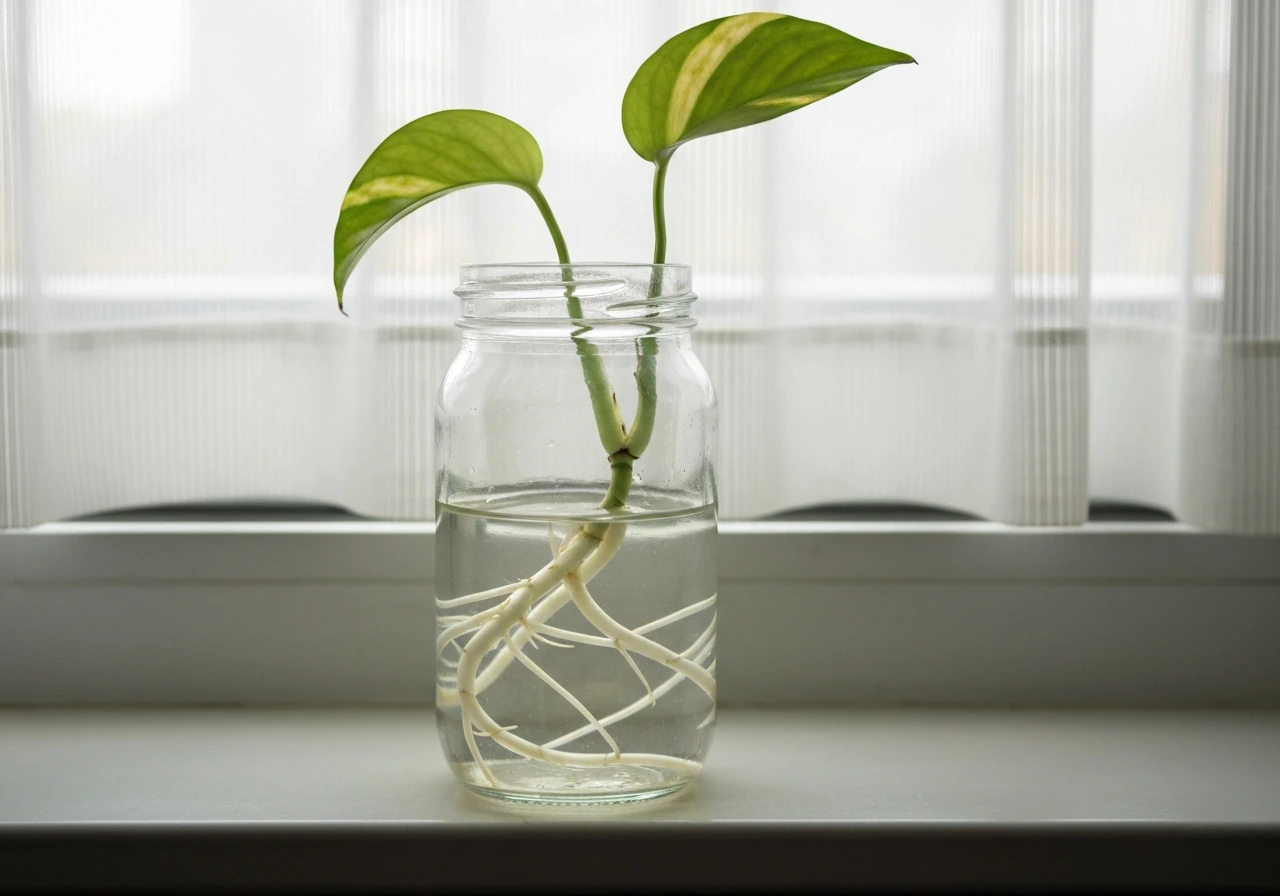
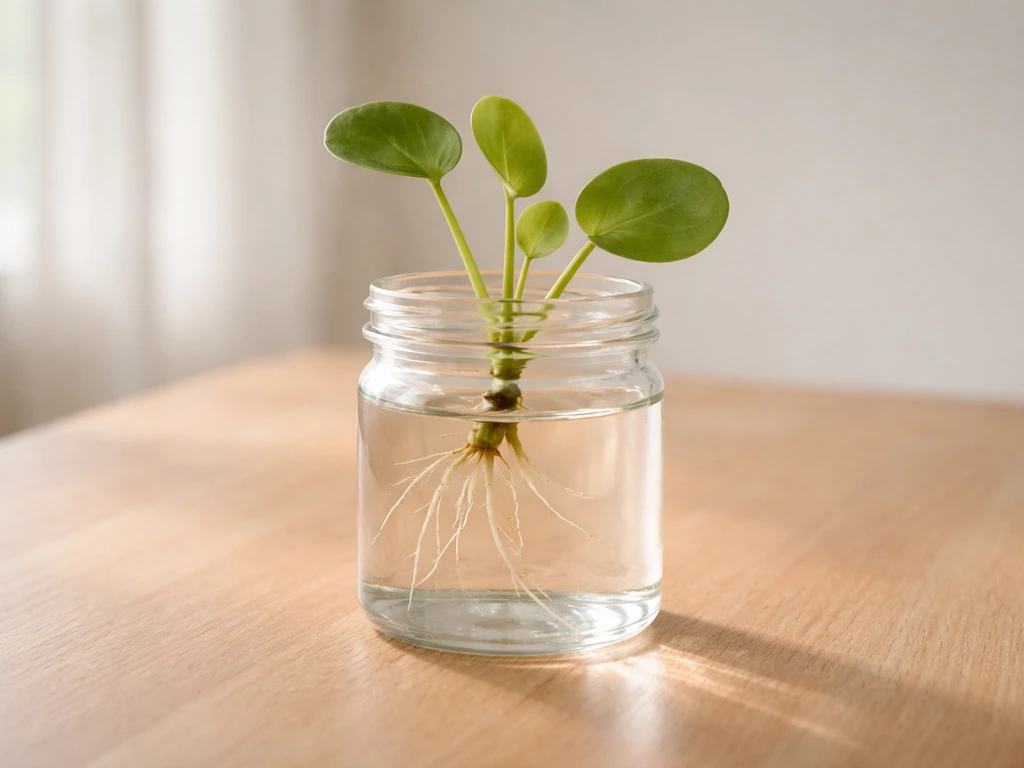
You can grow a coin plant (Pilea peperomioides) in water by taking an offset or stem cutting, placing just the cut end in a clean glass of dechlorinated water, setting it in bright indirect light, and changing the water every 3 to 5 days. Roots typically appear within 1 to 3 weeks. Most growers use water as a rooting step before moving the plant to soil or a semi-hydroponic setup, though you can keep it in water longer if you add a dilute nutrient solution and manage the container carefully.
How to Grow Coin Plant in Water: Step-by-Step Guide
Marcus Holloway
13 Jun 2026
Which 'coin plant' are we actually talking about?
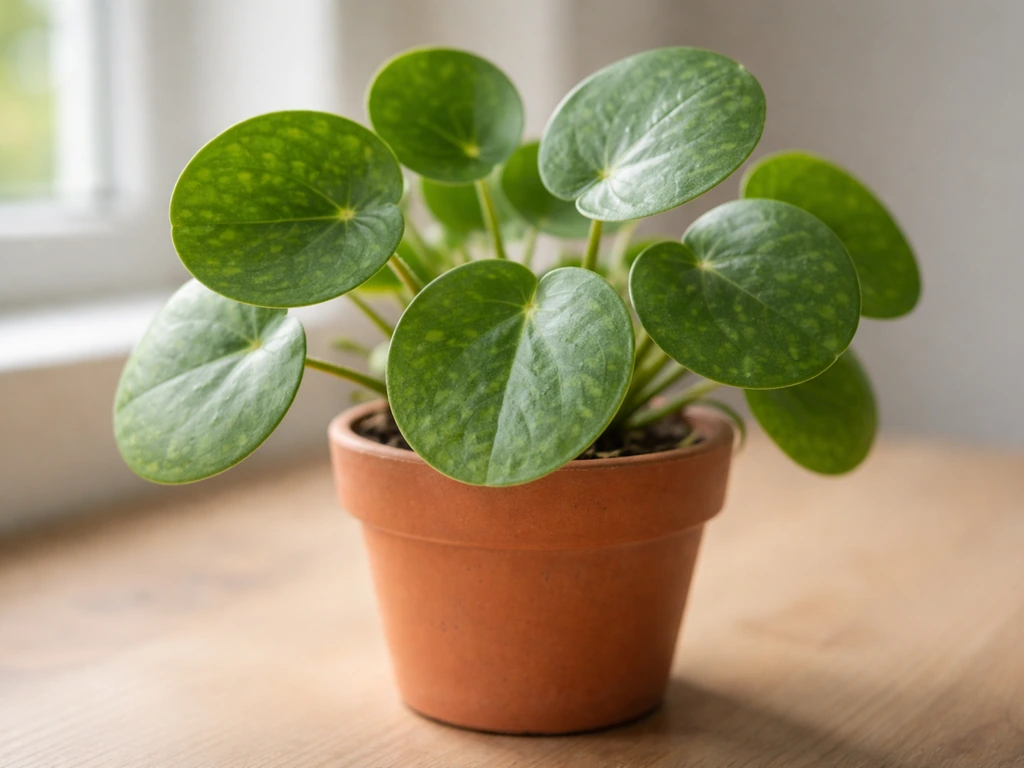
This guide is specifically about Pilea peperomioides, the Chinese money plant (also called the UFO plant or pancake plant). It is native to the Yunnan and Sichuan provinces of southern China and belongs to the nettle family, Urticaceae. The name 'peperomioides' causes real confusion because it makes people think it is related to Peperomia, but those are completely different plants in different families with different propagation rules. There are also other Pilea species sold under 'coin plant' labels online (Pilea depressa, for example), so double-check that your plant has the signature large, round, peltate leaves on long stems before following this guide.
When people search 'how to grow coin plant in water,' they usually mean one of three things: (1) water propagation, where you root a cutting in plain water and then move it to soil; (2) keeping a cutting in a jar of water indefinitely, which works but stalls without nutrients; or (3) a proper semi-hydroponic setup using an inert medium like LECA with a nutrient reservoir. This guide covers all three, starting with the basic water-rooting method most beginners actually want, and then explaining how to go further if you want to keep it water-based long term. The steps are similar to how to grow money plant in water, especially for keeping the water clean and giving the cutting steady light water-rooting method.
What you need before you start
Container
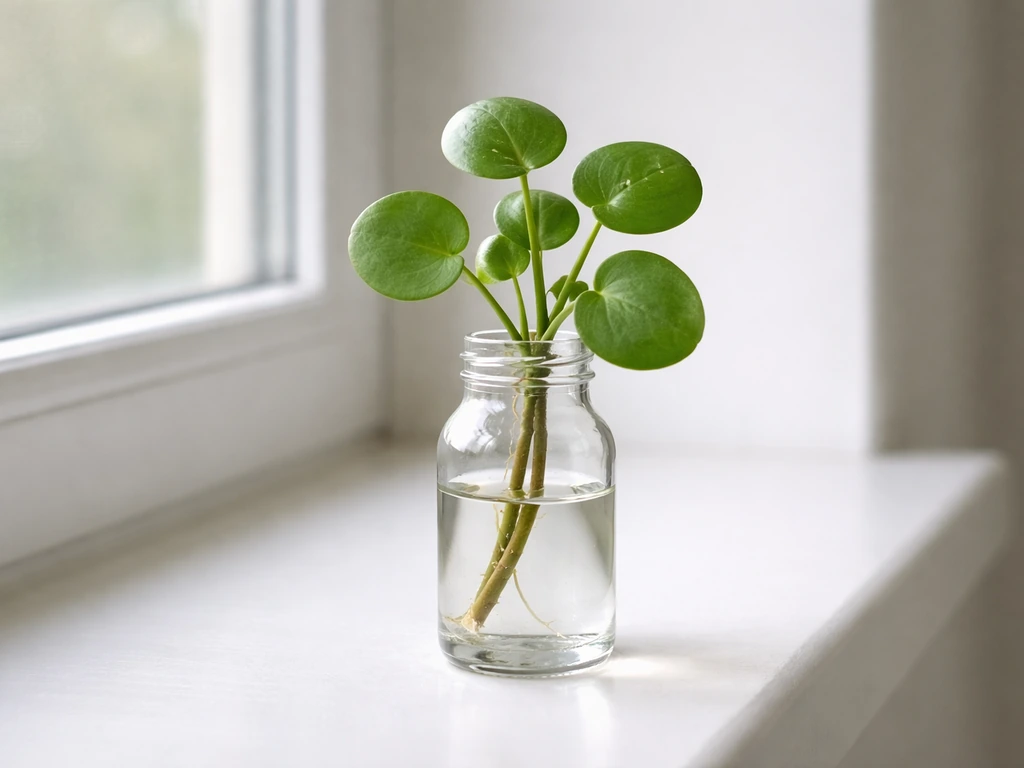
A small, narrow-necked glass jar or vase works best. The narrower opening helps hold the cutting upright while keeping the leaves above the waterline. Dark or opaque containers are better than clear glass because they block light from reaching the water, which dramatically slows algae growth. If you only have a clear jar, wrap it in paper or tape for the same effect.
Water type
Filtered or dechlorinated water is strongly preferred. Tap water with chlorine or chloramine can irritate the cut tissue and increase rot risk at the base of the cutting. If you only have tap water, let it sit uncovered in a glass for 24 hours to allow chlorine to off-gas (this does not remove chloramine, so filtered is genuinely better if you have the option). Room-temperature water matters too: cold tap water straight from the faucet can shock the cutting.
Tools
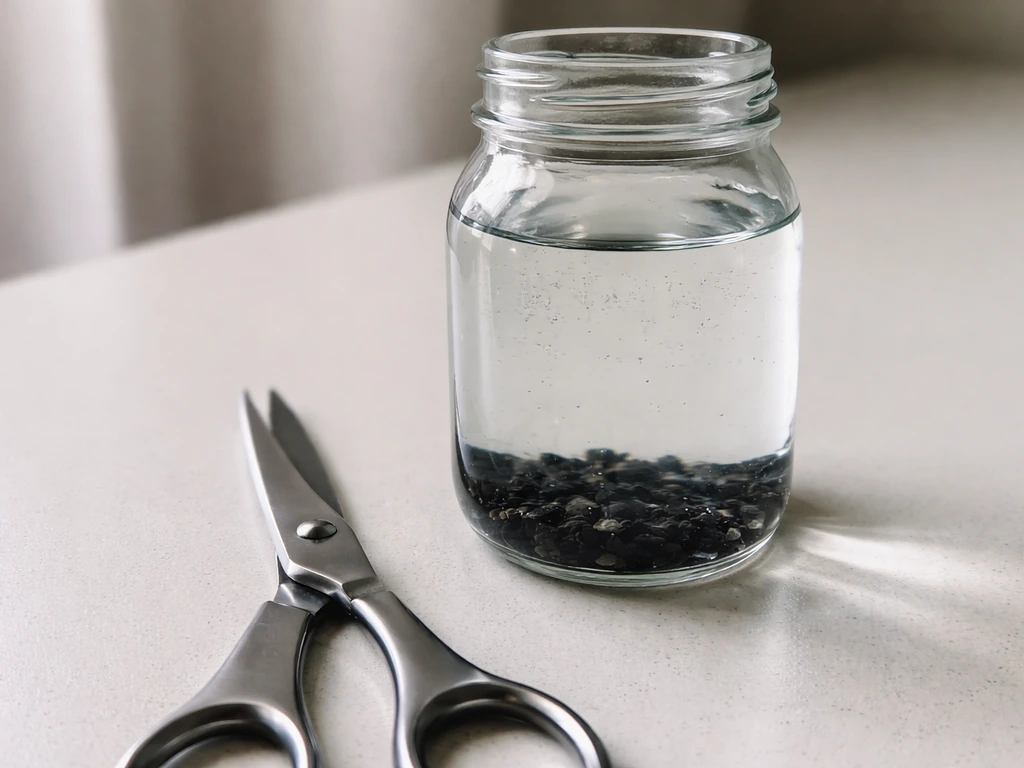
- Clean, sharp scissors or a scalpel (sanitize with rubbing alcohol before use)
- Glass jar or vase with a narrow neck
- Filtered or dechlorinated water
- Optional: activated charcoal pellets to slow algae and bacterial growth in the water
- Optional: a basic liquid hydroponic fertilizer if you plan to keep the plant in water long term
Choosing the right cutting
Here is where most beginners go wrong: a bare leaf will root in water, but it will never become a new plant. Pilea.com confirms this directly. The leaf will sprout roots, sit there for months, and go absolutely nowhere. What you need is either an offset (a baby plant that grows up from the soil at the base of the mother plant) or a stem cutting that includes a node or a small piece of stem tissue at the base of the leaf. The offset is by far the easiest and most reliable starting point, so if your mother plant has babies growing around the base, use those. For Pilea peperomioides, the RHS notes that offsets form around the base, and that individual leaves can root in water or moist compost (though rooting does not always mean the leaf will become a full plant) offsets (baby plants) growing around the base.
For an offset, wait until it has at least two or three leaves and is a couple of centimeters tall. Use a clean blade to sever it close to the soil or at the rhizome connection. For a stem cutting without an offset, cut a healthy lateral stem that includes at least one leaf and a clear node, removing any leaves that would sit below the waterline.
How to root your coin plant cutting in water, step by step
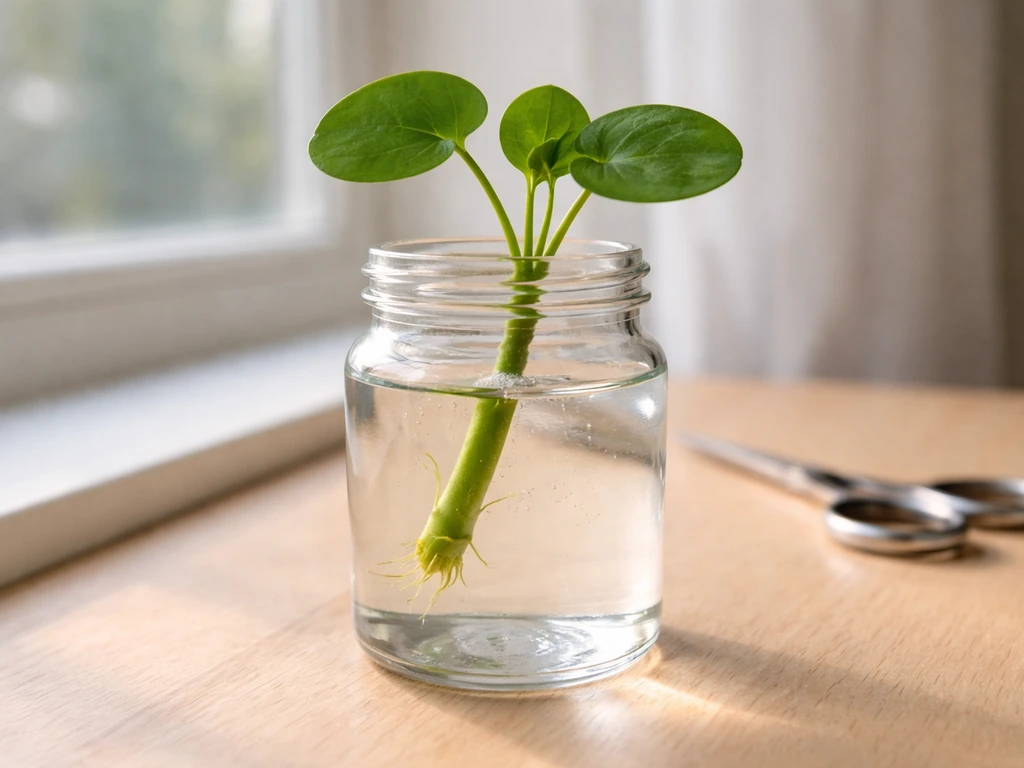
- Sanitize your scissors or blade with rubbing alcohol and let them dry for a minute.
- Take a clean offset or stem cutting from a healthy mother plant. If using an offset, slice it cleanly at the base where it connects to the mother plant's root system.
- Let the cut end air-dry for 15 to 30 minutes. This helps the wound callous slightly and reduces the chance of immediate rot.
- Fill your jar with filtered or dechlorinated water at room temperature. Fill it enough to submerge the cut end and any small node area, but not so much that leaves or leaf bases touch the water.
- Place the cutting in the jar so only the bottom 1 to 2 cm of the stem is submerged. The leaf or leaves must stay above the waterline.
- Position the jar in a spot with bright, indirect light. A north- or east-facing windowsill works well. Avoid direct sun, which heats the water, accelerates algae growth, and can scorch the cutting.
- Aim for a temperature between 18°C and 24°C (65°F to 75°F). Warmer conditions within this range speed root development.
- Change the water every 3 to 5 days without exception. Do not wait until the water looks dirty.
- Expect to see the first roots within 1 to 3 weeks under good conditions. Full root development sufficient for transplanting typically takes 3 to 6 weeks.
I have had cuttings root in as little as 10 days on a warm, bright windowsill in summer, and I have had other cuttings take nearly six weeks in cooler conditions. Temperature and light consistency make the biggest difference. If your cutting sits in a dark corner of the kitchen, do not be surprised if nothing happens for a month.
Keeping the water clean and the roots happy
Water hygiene is the single most important maintenance task during water propagation. Stagnant water is where rot starts. Change the water every 3 to 5 days as a baseline rule, and bump that to every 2 to 3 days if you notice any cloudiness or smell. Each time you change the water, rinse the jar with clean water before refilling.
To prevent algae from colonizing your jar: use an opaque container or block light from reaching the water. Algae needs light to grow, so this alone solves most algae problems without any chemistry. If algae does appear, scrub the jar clean at your next water change. Adding a few pellets of activated charcoal to the bottom of the jar is a simple passive measure that reduces bacterial buildup and keeps the water cleaner between changes.
Oxygenation is something many guides skip over. Roots need oxygen as much as water, and stagnant, oxygen-depleted water is what pushes a cutting toward rot. Frequent water changes refresh dissolved oxygen. If you are setting up something more long-term and want to go further, a small aquarium air stone connected to a micro pump will keep the water oxygenated continuously. This is especially useful if you are running a deeper reservoir rather than a small jar.
Troubleshooting: what went wrong and how to fix it
| Problem | Likely Cause | Fix |
|---|---|---|
| Stem end is mushy or black | Stagnant water, rot at the cut end | Trim back to healthy tissue with a clean blade, let it air-dry briefly, restart in fresh water with changes every 3 days |
| No roots after 3+ weeks | Wrong cutting type (leaf only), no node, too cold, or too dark | Check that your cutting has stem tissue at the base; move to a warmer, brighter location |
| Yellow leaves | Waterlogged tissue, rot beginning, or natural leaf drop from stress | Inspect the cut end for mushy tissue; if clean, the leaf drop may be initial transplant stress and should resolve once roots form |
| Green slime or algae on jar | Light reaching the water | Switch to an opaque container; scrub the jar at the next water change |
| White fuzzy growth on cut end | Fungal growth, usually from poor water hygiene | Trim the affected area, rinse the cutting, sanitize the jar, restart with fresh dechlorinated water, and increase change frequency |
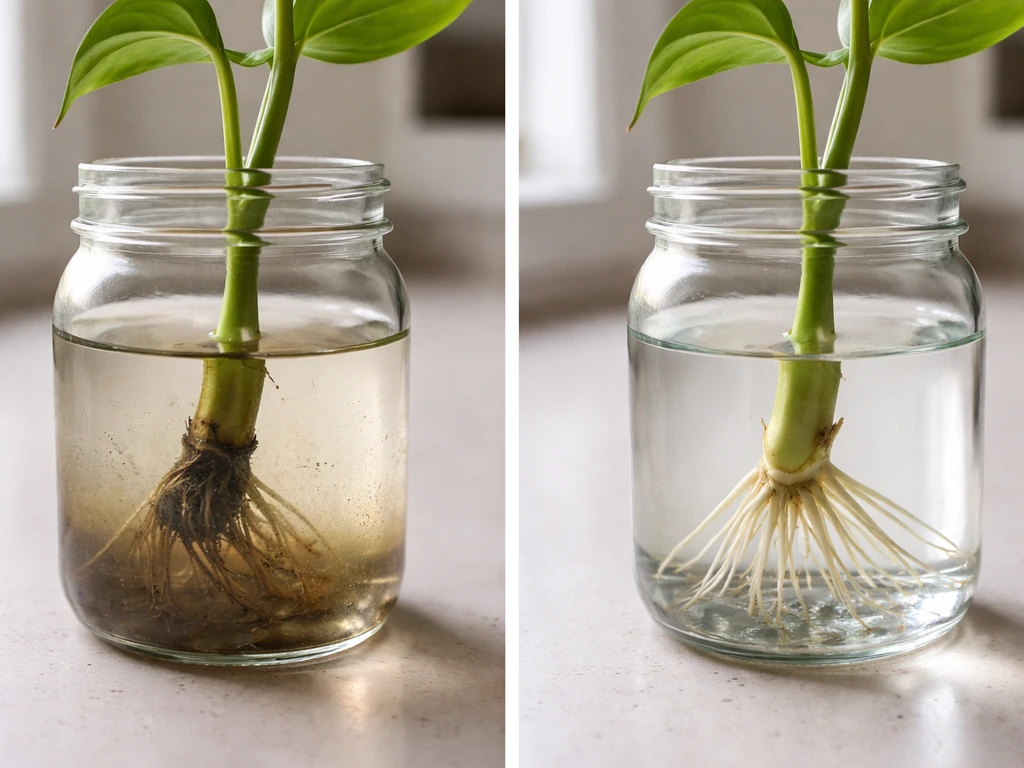
| Roots are dark brown or black and smell bad | Root rot from prolonged stagnant conditions | Trim all rotted roots to clean white tissue, restart in fresh water, change every 3 days until new white roots form |
| Leaf roots but plant doesn't grow further | Leaf-only cutting without stem tissue | This is a dead end. Start over with a proper offset or stem cutting that includes node tissue |
Root rot is the most common failure. Healthy roots are white to pale cream and firm to the touch. As soon as you see darkening that moves up the root toward the stem, act quickly: trim back past the dark tissue to clean white, sanitize your jar, and restart in fresh water with more frequent changes. Catching it early is the difference between saving the cutting and losing it entirely.
Long-term options: stay in water or move to substrate?
Once roots have formed, you have a real decision to make. Plain water in a jar is a rooting environment, not a growing environment. A cutting sitting in plain water without nutrients will survive for a while, but growth will stall quickly because there is nothing to feed the plant. If you want to keep the coin plant in water long term, you need to shift to a proper nutrient solution. If you just want a healthy, thriving plant, transitioning to soil or a semi-hydroponic substrate is easier and more reliable for most growers.
Option 1: Keep it in water with nutrients (hydroponic-style)
If you want to keep the plant in water indefinitely, add a dilute hydroponic nutrient solution once roots are at least 1 cm long and looking healthy. Use a balanced liquid hydroponic fertilizer and start at about a quarter of the recommended strength to avoid burning young roots. As a rough target for an established nutrient solution, a TDS in the range of 500 to 800 ppm is a reasonable starting zone for a young plant like this; full hydroponic systems for leafy plants often run 1,000 to 1,500 ppm, but you want to stay on the lower end until the plant is established. Monitor pH and aim for 5.5 to 6.5, which is the standard range for hydroponic foliage plants. Change the nutrient solution fully every 7 to 10 days rather than just topping it up, to prevent salt buildup and bacterial growth.
Option 2: Semi-hydroponics with LECA
Semi-hydroponics is a more forgiving long-term setup than a plain water jar. You pot the rooted cutting in LECA (lightweight expanded clay aggregate) in a pot with a lower reservoir. Roots wick moisture and nutrients up through the medium rather than sitting fully submerged, which keeps them oxygenated and dramatically reduces rot risk. This is genuinely a better long-term home for a coin plant than an open jar of water. The transition from water roots to LECA is simple: place the rooted cutting in rinsed LECA with the root tips reaching into a shallow nutrient reservoir (about 2 to 3 cm deep), and let the plant adapt over 1 to 2 weeks before increasing the reservoir depth.
Option 3: Transition to soil
This is the most straightforward end point for most growers. Pilea peperomioides does very well in a free-draining potting mix, and moving it from water to soil is simple once the roots are ready. This is also the approach that produces the fastest, most robust growth long term, since soil provides a buffer of nutrients and microbial support that plain water cannot replicate.
How to know when it's ready to move up
The benchmark most guides agree on is roots that are at least 2 to 3 cm (roughly 1 inch) long. At that length, the plant has enough root surface to take up moisture from a new medium without immediately drying out. Do not wait for roots to grow very long in water before transplanting. Long, tangled water roots are brittle and adapted to being fully submerged. The longer you wait, the harder the transition and the higher the chance of transplant shock when conditions change.
If you are moving to soil, fill a small pot (7 to 10 cm is enough to start) with a free-draining potting mix, make a hole in the center, lower the rooted cutting in, and firm the mix gently around the roots. Water the soil thoroughly but do not waterlog it. Keep the newly potted plant out of direct sun for the first week and maintain higher ambient humidity if possible (a loose plastic bag tent over the pot for 3 to 5 days helps). Expect some leaf droop for a few days as the plant adjusts. This is normal.
If you are moving to semi-hydroponics, rinse the LECA thoroughly before use, and start with a shallow nutrient reservoir so the roots have some air exposure as they adapt. Water roots and substrate roots are physiologically different, so give the plant 2 to 3 weeks to develop new root structures before expecting strong growth.
Once established in its final medium, the coin plant needs the same care as always: bright indirect light, consistent moisture without waterlogging, and a periodic nutrient top-up. If you are keeping it in a hydroponic or semi-hydroponic system long term, watch for yellowing leaves as the first sign of nutrient deficiency and adjust your solution strength accordingly. Pilea peperomioides is a fast grower when conditions are right, and it will reward a properly set-up water or semi-hydro system with new leaves and offsets within weeks.
If you are also growing other easy water-propagated plants, the methods here overlap with how growers approach money plant (Epipremnum aureum/Pothos) in water, fortune plant, and other popular cuttings. The same water hygiene and nutrient timing you use for fortune plant cuttings will help your coin plant stay healthy while it roots. The core principles around water hygiene, cutting selection, and nutrient management are shared across all of them, so once you have this process dialed in for your coin plant, you are set up to propagate almost anything from a jar.
FAQ
My coin plant cutting rooted in water, but it is not growing. What should I do next?
If you see roots forming but no new leaves, it usually means you have a true rooting setup but not a feeding setup. Once the root tips are healthy and at least about 1 cm long, switch from plain water to a dilute hydroponic nutrient solution, and keep light bright and indirect. Without nutrients, the plant can stay alive but will often stall.
Can I keep a coin plant in water forever without switching to soil or nutrients?
Yes, but it is easier to fail. If you keep a plain water jar long term, you will often get slow decline, yellowing, and algae, because there is no food and oxygen balance becomes harder. The more reliable “indefinite” option is adding nutrients to a hydroponic solution (with pH and TDS monitoring) or moving to semi-hydroponics with LECA.
What’s the best way to save my cutting if I suspect root rot?
Remove the leaf or stem piece that is submerged and failing, and restart clean. Healthy roots should be firm and pale, not dark or mushy. Trim back to white tissue, sanitize the container, and restart with fresh dechlorinated water, then increase water-change frequency (often every 2 to 3 days) until you see new, firm root growth.
How often should I fully replace the water or nutrient solution, and should I ever top it off instead?
Do not change only a little water. For hydroponics long term, do a full nutrient solution change every 7 to 10 days (not just topping off) to prevent salt and bacterial buildup that can burn or sour the root zone. If you see persistent cloudiness or odor between changes, shorten the interval and scrub the jar.
My water is getting cloudy, is it algae or bacteria, and how do I tell which problem I’m dealing with?
Cloudy water alone can be algae, bacteria, or both. If it is cloudy but there is no smell and the jar is opaque or kept dark, you can usually fix it with a thorough jar rinse and a more consistent light-blocking setup. If there is a sour smell or roots turn dark, treat it as bacterial rot risk, trim damaged tissue if needed, and refresh water more frequently.
Can I put my coin plant cutting in direct sunlight to speed up rooting?
Coin plant cuttings usually need bright indirect light, not direct sun. Direct sun can overheat the water and cook tender tissue at the cutting end. If you want a simpler rule, aim for a well-lit window location where you can comfortably read a book without glare, and rotate the container slightly so growth stays even.
Do I really need a dark container, or can I use a clear jar?
Clear containers are fine for short rooting periods, but for long-term water growing they often trigger algae and light exposure to the water surface. If you use clear glass, block light (wrap the jar or cover it) so the water stays darker. This is one of the fastest ways to reduce algae without chemicals.
Is it okay to use untreated tap water and let it sit for a day?
Yes, but avoid cold water. Let tap water sit uncovered only helps with chlorine, not chloramine, so filtered water is better. Also use room-temperature water so you do not shock the cutting. If the temperature in your glass is very different from the room, roots may stall and rot risk goes up.
I tried propagating from a leaf, roots formed, but it never became a new plant. Why?
If the cutting has no node or no base stem tissue, a single leaf will often root but it will not form a new plant. Use an offset with a rhizome connection, or a stem cutting that includes a visible node near the base. When in doubt, prioritize offsets because they are the most reliable.
How long should I wait before moving from water to soil or LECA?
When roots are long and tangled, transplant shock is more likely because the root system is adapted to constant water and can break easily. A practical target is transplanting when roots are about 2 to 3 cm long (firm and healthy), then moving promptly to soil or LECA rather than waiting longer.
When transitioning from water to LECA, how deep should I keep the nutrient reservoir at first?
Start shallow and let the plant adapt. In semi-hydroponics, keep the reservoir shallow so root tips get air exposure during the first 1 to 2 weeks, then gradually increase depth as new roots form. If you start with roots fully submerged right away, oxygen drops and rot risk rises.
How do I adjust nutrients if my coin plant in water starts yellowing?
Aging leaves, yellowing, or slowing growth in nutrient water often signals that the solution strength is off. If you have no nutrient meter, you can still use a safe method: start at quarter strength, then adjust gradually. If leaves yellow while roots remain pale and firm, raise strength slightly and check pH around the 5.5 to 6.5 range.