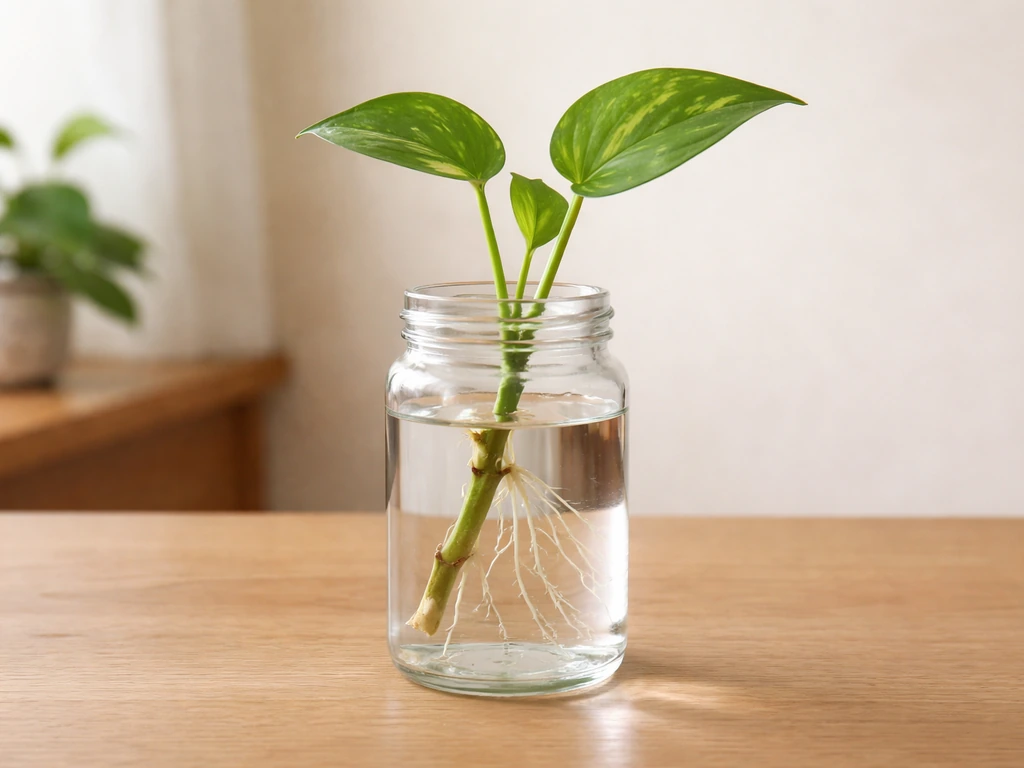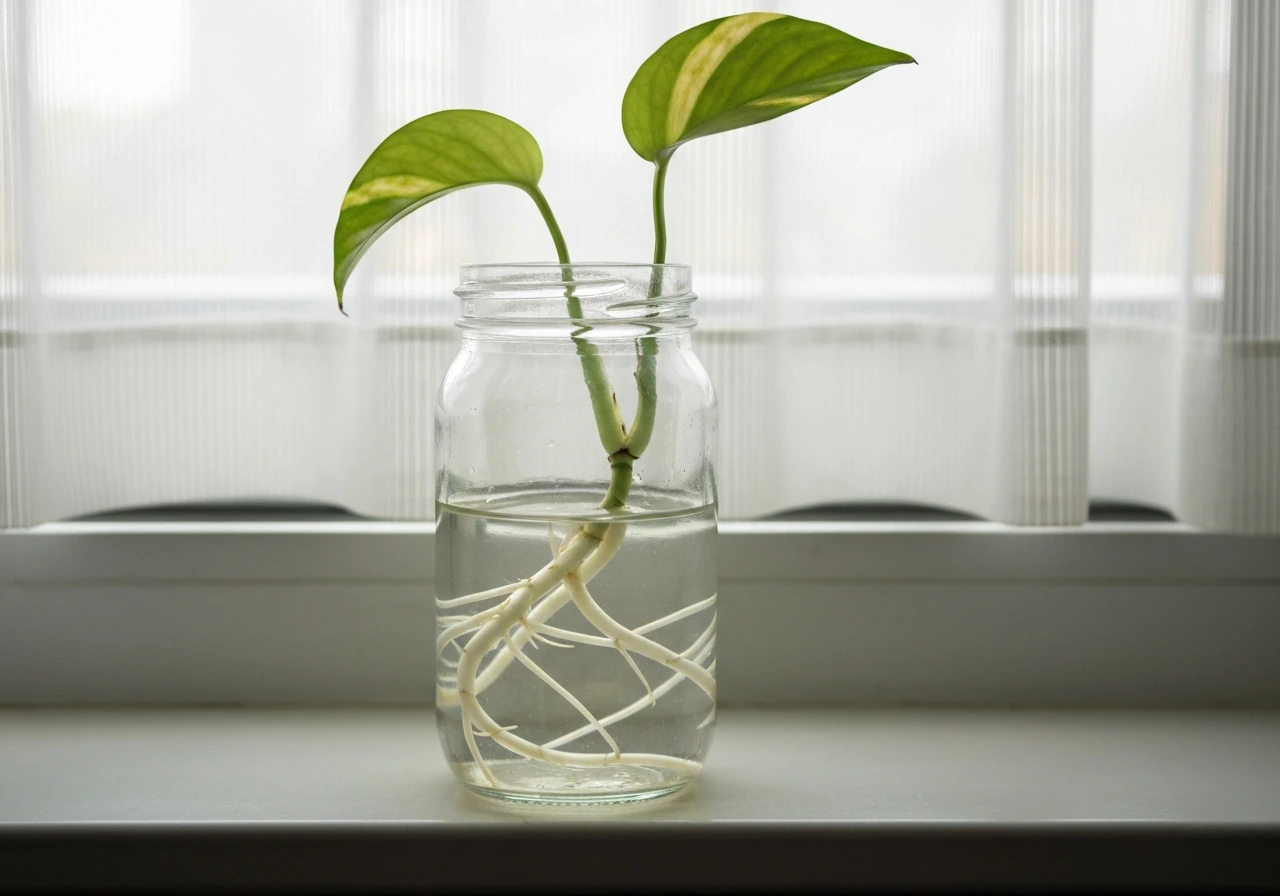
For the first 2 to 4 weeks while roots are forming, plain water is genuinely all you need. Once roots are 2 to 3 inches long and the plant is clearly settled in, that is when you start adding a diluted balanced liquid fertilizer every 4 to 6 weeks to keep growth going. That is the whole framework. Everything else in this guide is about doing those two stages correctly so you do not end up with rotting stems, slime, or a plant that stalls out after a promising start.
What to Add in Water to Grow Money Plant (Pothos)
Marcus Holloway
24 May 2026
Propagating vs. growing long-term: two stages, two approaches
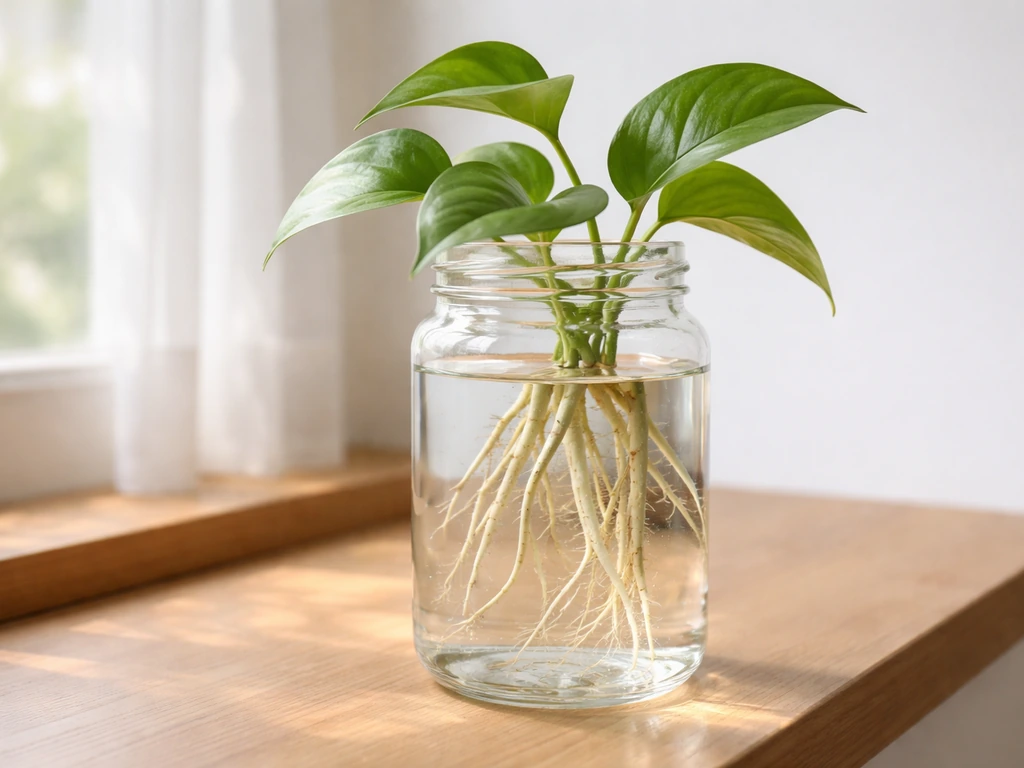
Most problems people run into with money plant (pothos) in water happen because they treat propagation and long-term water culture as the same thing. They are not. Propagation is the rooting stage, where a fresh cutting just needs clean water, warmth, and light to push out roots. Long-term water culture, sometimes called semi-hydro or water-only growing, is what comes after rooting, and it does require added nutrients because there is no soil to pull minerals from. Getting this distinction right is everything.
During propagation, the cutting is living off stored energy in the stem and leaves. Adding fertilizer at this stage can actually burn the developing root tips before they harden off. So resist the urge to feed early. Once the plant has a solid root system and you want to keep it growing in water indefinitely, you shift into maintenance mode and start feeding on a schedule. This guide walks through both stages in order.
Which water to use and how to prep it
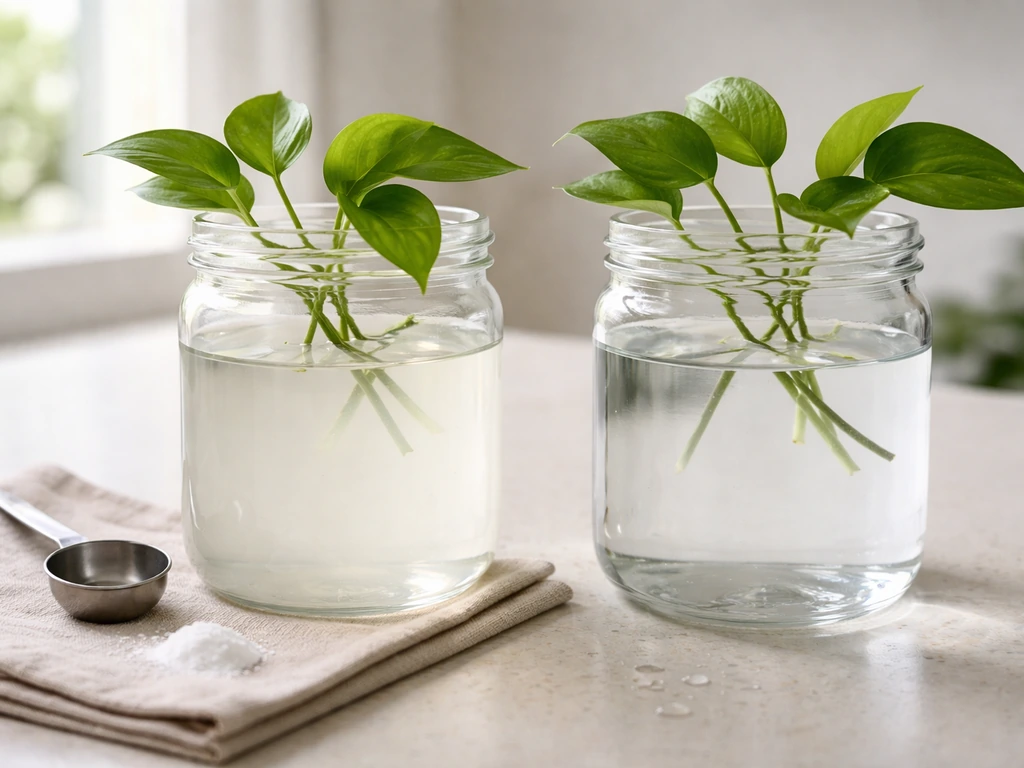
Tap water works fine for most people, but it does contain chlorine and sometimes chloramine, which can irritate young roots and affect the microbial balance in your container. The easy fix is to let tap water sit uncovered in a glass or jug overnight before using it. Chlorine off-gasses on its own within 24 hours. Chloramine does not off-gas as easily, so if your municipal water uses chloramine (you can call your water supplier or check their annual report), use filtered water or add a small amount of sodium thiosulfate dechlorinator, the kind sold in aquarium shops.
Filtered water (like from a Brita pitcher or reverse-osmosis system) is a clean starting point but RO water is almost too pure for long-term water culture because it strips out trace minerals. If you use RO water, you will need to be more diligent about adding nutrients later. Room-temperature water is important throughout: cold water shocks roots and slows growth, so let your water sit until it reaches roughly 65 to 75 degrees Fahrenheit before using it.
Cleanliness of the container matters just as much as the water itself. Algae, bacterial slime, and root rot almost always start in a dirty jar. Wash your container with dish soap and rinse it thoroughly before you start, and clean it again every time you change the water.
What to actually add to the water (and when)
Stage 1: Rooting phase, plain water only
For the first 2 to 4 weeks, plain dechlorinated water is your best tool. No fertilizer, no additives. Change the water every 5 to 7 days to keep it fresh and prevent stagnation. I have tried adding fertilizer at this stage thinking it would speed things up, and the result was root tip damage and slow development compared to the plain-water control sitting next to it. Keep it simple here.
Stage 2: Long-term water culture, liquid nutrients
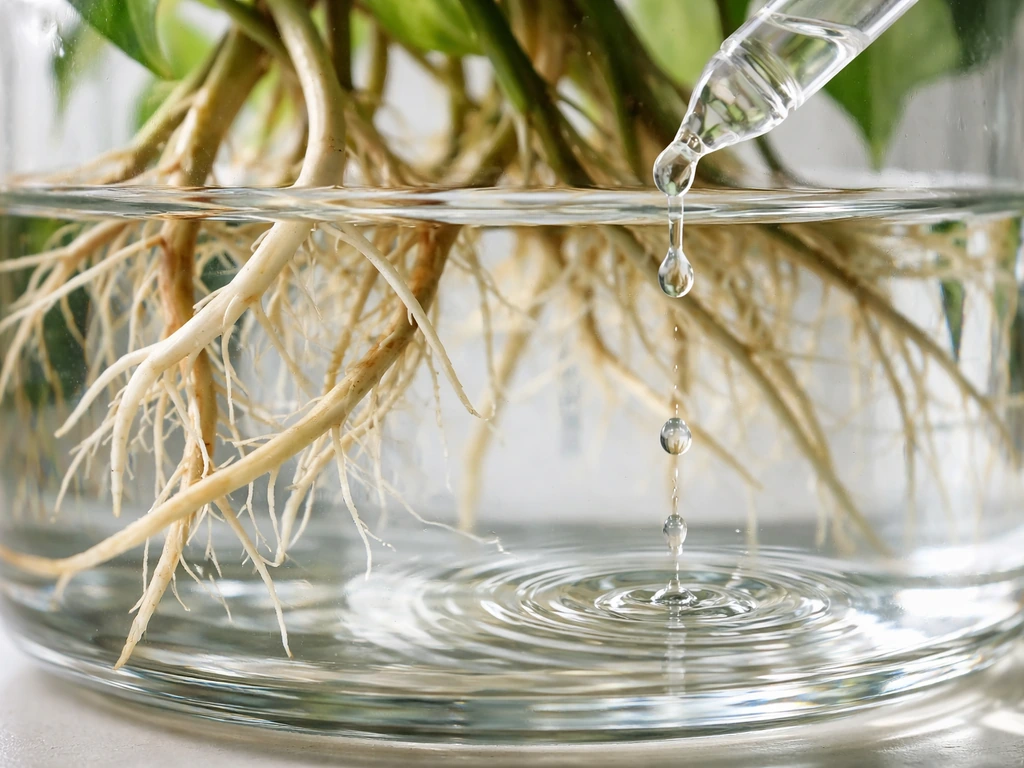
Once roots are established (2 to 3 inches long, white or light tan, with some branching), you can start adding nutrients. If you are specifically wondering how to grow coin plant in water long term, the key is switching from plain water to diluted nutrients once roots are established long-term water culture. A balanced liquid fertilizer labeled something like 10-10-10 or 20-20-20, diluted to about one quarter of the recommended label dose, works well. For a jar or vase setup, that usually means 1 to 2 drops of concentrate per cup of water, but always check your specific product because concentrations vary. Feed every 4 to 6 weeks in a water culture setup, not every week the way you might with soil. Too much fertilizer in water with no soil to buffer it causes salt buildup and burned roots fast.
If you want to take the hydroponic approach more seriously, a dedicated hydroponic nutrient solution like a two-part or three-part hydro formula gives you better control over the nutrient ratios, pH, and electrical conductivity (EC). For pothos in water culture, aim for a solution EC of around 0.8 to 1.2 mS/cm and a pH of 5.5 to 6.5. You do not need a lab for this: inexpensive pH drops or a basic pH pen and a cheap EC meter from an aquarium or hydro shop are enough to stay in range. If you are already growing plants or fish using hydroponic or aquarium systems, you probably have this equipment already.
| Approach | When to use | Dose | Frequency | Best for |
|---|---|---|---|---|
| Plain water | Rooting phase (weeks 1 to 4) | None | Change every 5 to 7 days | Beginners, propagation only |
| Diluted all-purpose liquid fertilizer | After roots are 2 to 3 inches | 1/4 label dose | Every 4 to 6 weeks | Long-term water culture, beginners |
| Hydroponic nutrient solution | After roots are established | Target EC 0.8 to 1.2 mS/cm | Refresh with each water change | Serious water growers, advanced users |
The additives people try: what helps, what hurts
Rooting hormone
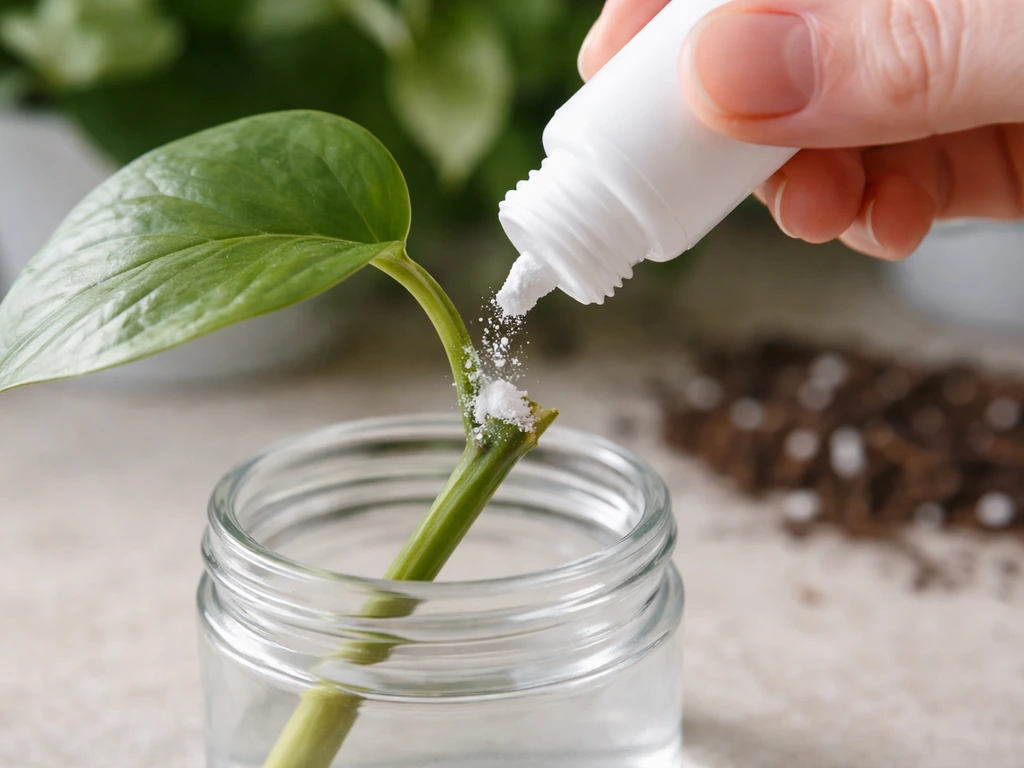
Rooting hormone (IBA or NAA based, the active ingredient in products like Clonex or Rootone) can give propagation a head start, especially if your cutting is a harder-to-root variety or came from a more mature plant. For water propagation, liquid rooting hormone or a gel form that dissolves slightly into the water works best. Powder forms tend to just sit on the stem and wash off. The effective concentration range in commercial propagation is roughly 20 to 200 ppm of IBA, and most consumer products fall within that when used as directed. Dip the cut end of the stem in gel or liquid hormone for about 5 seconds before placing it in your water jar. It is not essential for pothos because pothos roots easily anyway, but it can shave a week off your rooting time.
Epsom salt
Epsom salt (magnesium sulfate) is sometimes suggested as a water additive to boost growth. In soil, it can correct magnesium deficiency. In a plain water setup, it adds magnesium and sulfur but none of the other macro or micronutrients the plant needs. Using it as a substitute for real fertilizer will leave the plant short on nitrogen, phosphorus, and potassium. If you are already using a balanced fertilizer and notice yellowing between leaf veins (a classic magnesium deficiency sign), adding a small pinch of Epsom salt, roughly one eighth teaspoon per quart of water, can help. On its own as the only additive, it will not keep a money plant healthy long-term.
Hydrogen peroxide
A very dilute hydrogen peroxide solution, around 1 to 3 milliliters of 3% drugstore peroxide per liter of water, is occasionally used to add dissolved oxygen and fight off anaerobic bacteria and root rot organisms. It can be useful as a one-time treatment if you notice early signs of sliminess or rot, but it is not something to add routinely because it kills beneficial microbes along with harmful ones and can irritate roots at higher concentrations. If your water change schedule is consistent, you should not need it at all.
Bleach
Skip bleach entirely. Even at very low concentrations, chlorine bleach damages root tissue and disrupts the biological environment in your container. If you are trying to sterilize a container, use it for that, rinse extremely thoroughly, then never add it to water where the plant is sitting.
Aquarium water and fish tank water
This one is actually useful. Water from a healthy, established fish tank contains nitrates, trace minerals, and beneficial microbes from the nitrogen cycle, which makes it a genuinely decent low-level fertilizer for water-grown plants. If you keep aquariums or hydroponic tanks (which many readers of this site already do), using old aquarium water as a partial or complete water change for your money plant jars is a smart recycling move. It works best for established rooted plants, not fresh cuttings. Avoid water from tanks with disease outbreaks or heavy medication use.
How to set up the cutting and get roots going
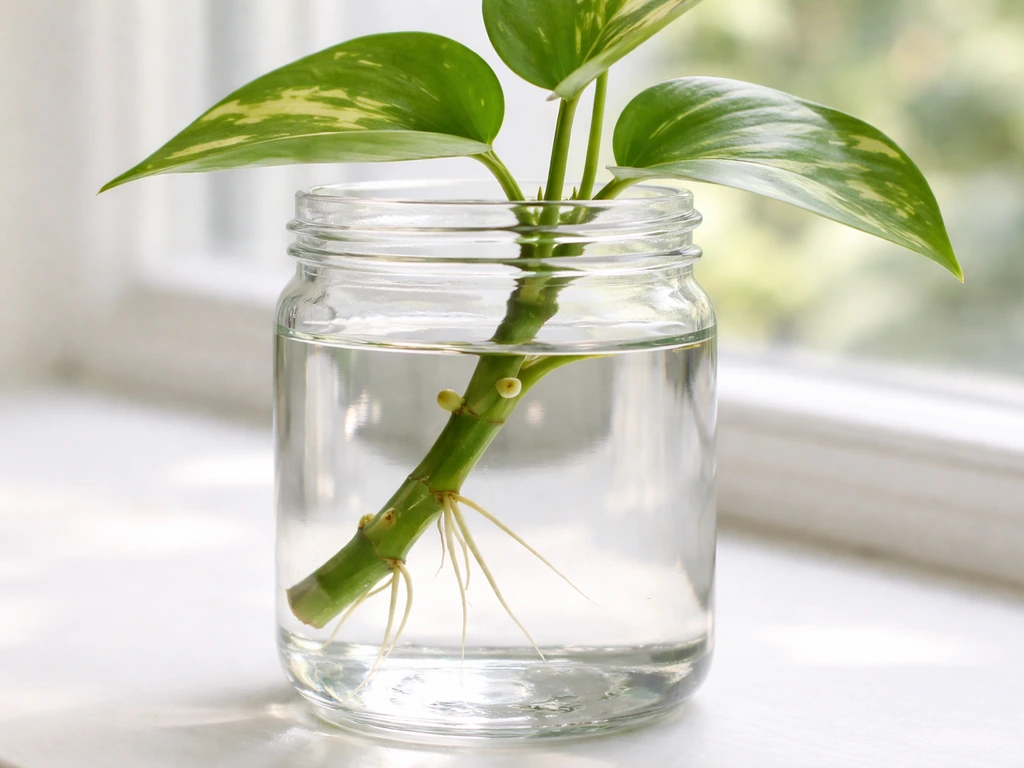
Take a cutting that is 4 to 6 inches long with at least one node (the small brown bump or ring on the stem where roots emerge) and one or two healthy leaves. Cuttings without a node will not root. Strip off any leaves that would sit below the water line because submerged leaves rot quickly and contaminate the water. The node itself needs to be submerged to trigger root growth.
Use a glass or opaque jar. Opaque containers slow algae growth by blocking light from the water. Place the jar in a bright spot out of direct harsh sunlight. Roots should appear within 1 to 3 weeks under good conditions. At 4 weeks with no root development, check that the node is actually underwater and that the water temperature is warm enough.
Oxygenation matters more in long-term water culture than in short-term propagation. For a simple jar setup, regular water changes are enough to refresh dissolved oxygen. If you are growing multiple plants or running a more serious setup, a small aquarium air pump and airstone (the kind used in fish tanks) adds constant gentle aeration and significantly reduces the risk of stagnation and root rot. This is one of those small upgrades that makes a noticeable difference.
Light, temperature, and keeping the water healthy
Money plant grows well in bright indirect light, around 10 to 12 hours per day. Direct midday sun through glass heats the water, encourages algae, and stresses roots. A north or east-facing windowsill, or a spot a few feet back from a south-facing window, is ideal. Grow lights work perfectly if natural light is limited. Keep water temperature between 65 and 80 degrees Fahrenheit consistently.
Water change schedule
- During rooting: change all water every 5 to 7 days
- Once rooted and in long-term culture: change or top off water every 1 to 2 weeks
- When adding fertilizer: mix nutrients into fresh water before adding to the container, do not just dump fertilizer into old sitting water
- Top off between full changes with plain dechlorinated water as the level drops from evaporation
Algae control
Green algae growing in your jar is harmless to the plant but competes for nutrients and looks unpleasant. The two best controls are blocking light from the water (opaque container, or wrapping a clear jar in paper or foil) and changing the water regularly. If algae has taken over, rinse the container and roots thoroughly with clean water, scrub the jar, and refill. You do not need chemical algaecides in a small jar setup.
Water level
Keep the water level so the node and root zone are submerged but at least the lower half of the stem is out of water. Once roots are several inches long, you do not need to submerge the entire root system. Leaving some roots partially exposed to air actually improves oxygen uptake and reduces rot risk. This is exactly how many semi-hydroponic systems work.
Troubleshooting: rot, slime, no roots, yellow leaves
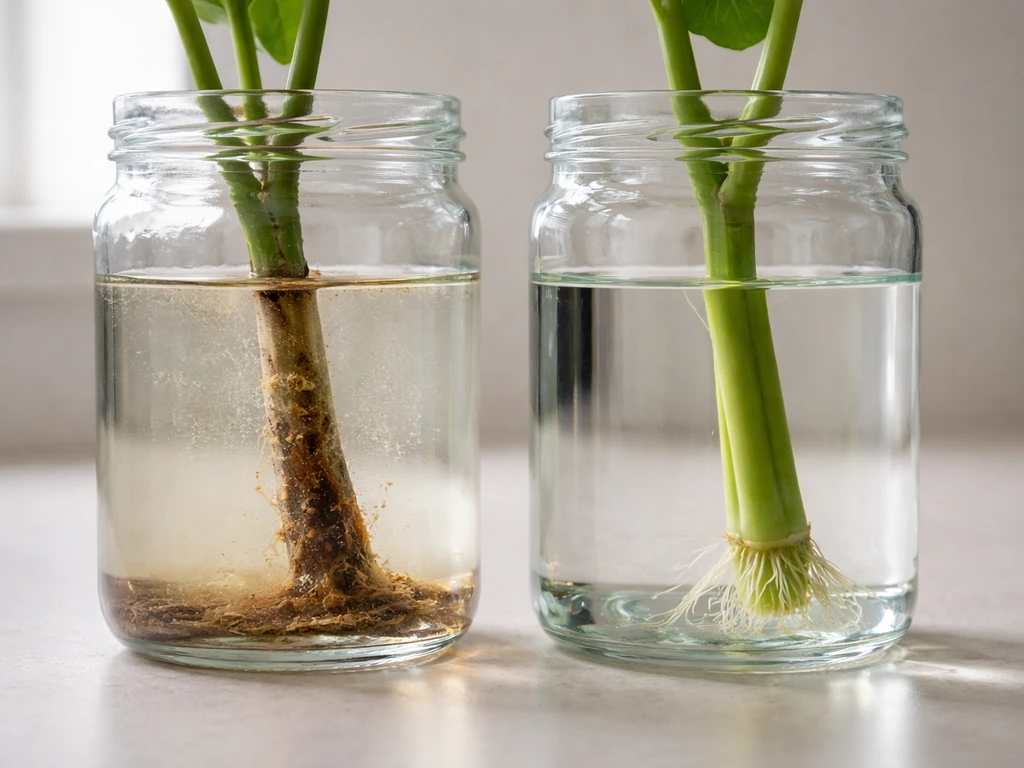
Brown or rotting stem
This usually means leaves were left below the waterline, the water was not changed often enough, or the container was not clean to begin with. Remove the cutting, trim the affected portion of the stem back to clean green tissue with a sterile blade, rinse the roots gently, clean the jar, and refill with fresh water. If the rot has reached the node, that cutting is gone and you need to start with a new one.
Slime on roots or jar walls
Slime is bacterial biofilm, and it forms when water is stagnant, too warm, or contaminated. Full water change, jar scrub, and more frequent changes going forward fix it in most cases. If it keeps coming back, try adding a small airstone to keep the water moving.
No roots after 3 to 4 weeks
Check that the node is submerged. Check water temperature (too cold is the most common culprit). Make sure the cutting has at least one intact node and is not just a leaf with a petiole (a bare leaf stem will not root). Move it to a warmer, brighter spot and try a liquid rooting hormone dip if you have not already.
Yellow leaves
Yellowing in an established water-grown money plant almost always signals nutrient deficiency, particularly nitrogen. If you are following this for how to grow money plant in water in tamil, focus on starting fertilizers only after roots are established. If you have not started feeding yet or have been delaying water changes, this is your sign to do both. Start a quarter-dose liquid fertilizer feeding on a 4 to 6 week schedule and see if new growth comes in green. If the yellowing is between leaf veins while the veins stay green, that points specifically to magnesium deficiency, which a small Epsom salt addition can address.
Stunted or very slow growth after rooting
In a plain-water-only setup, slow growth after the rooting phase is expected because the plant has nothing to feed on. This is the most common reason to switch to a diluted fertilizer or hydroponic nutrient solution. If you want it to grow faster, the key is switching at the right time to diluted nutrients once the roots are established, and keeping the water temperature warm. If you are already feeding but growth is still slow, check your light levels first. Money plant in low light is slow regardless of what is in the water. Also check that you are not overfeeding and creating a high-salt environment, which locks out nutrient uptake even when nutrients are present. When in doubt, do a full water change with fresh plain water, wait a few days, then restart feeding at a lower dose.
If you want to go deeper into the growing side of things beyond just keeping cuttings alive, the techniques for growing money plant in water faster and maintaining healthy aquatic plant systems overlap significantly with broader water-based propagation and hydroponic growing methods covered elsewhere on this site. The fundamentals here carry over directly. If you are wondering how to grow plant clippings in water, the same stage-based approach and water quality checks apply, not just for money plant but for many common houseplant cuttings.
FAQ
How can I tell the difference between a cutting that is rooting and one that is stalling in water?
Rooting usually starts as tiny bumps at the node and then turns into light-colored root branches within 1 to 3 weeks. If you see the node staying unchanged, leaves slowly weakening, and there is no new root structure by about week 4, recheck that the node is submerged, water temperature is warm (about 65 to 75°F), and the cutting has at least one healthy node, not just a leaf petiole.
Can I add fertilizer from day one to make my money plant root faster?
No, fertilizer during the first 2 to 4 weeks often harms the developing root tips because the cutting is relying on stored energy. Wait until roots are about 2 to 3 inches long and visibly established, then switch to a quarter dose on a 4 to 6 week schedule.
What is the right amount of fertilizer to add in water if I want quarter strength?
Use the fertilizer label as your reference, dilute to roughly 25% of the recommended dose, then apply only during the long-term feeding stage. Since concentrates vary by brand, the safest approach is to measure to label instructions first, then convert that to quarter dose using your water volume.
Should I use plain water changes or keep topping up when water evaporates?
Do a full water change on schedule, do not just top off. Topping up increases concentration of any salts and residues from fertilizer, and nutrients do not “reset” the way a full replacement does.
If my money plant is in water, do I need pH testing and what should I do if it is off?
You do not need it for casual jar propagation, but for long-term water culture, aim for about pH 5.5 to 6.5. If your pH drifts, water changes usually fix it faster than repeated chemical tweaks, because nutrients and salts build up over time.
Can I use RO water long term without problems?
You can, but RO water is very low in trace minerals, so you must be more consistent with nutrient additions once rooting is established. Stick to the same diluted feeding approach, and do more frequent water changes to avoid nutrient imbalance.
My water smells bad or turns cloudy, is peroxide a good first fix?
Cloudiness and odor usually mean stagnation or early rot. Start by doing a full water change, scrubbing the jar, trimming any unhealthy tissue back to green, then improve maintenance (more frequent changes and possibly gentle aeration). Use peroxide only as a one-time emergency treatment, not routinely, because it can disrupt helpful biology and irritate roots.
Is Epsom salt safe to use for yellowing, and how do I know it is magnesium?
Epsom salt is only helpful when yellowing is between leaf veins while the veins stay greener. Use a small pinch (about one eighth teaspoon per quart) along with otherwise normal maintenance, it should not replace balanced fertilizer once roots are established.
What if the roots are growing but leaves start yellowing after I begin feeding?
That can happen from overfeeding, using too strong a dose, or letting salt build up between water changes. Fix it by lowering to quarter dose (or pausing feeding for one cycle), then resume on the 4 to 6 week schedule with full water changes.
How much of the roots should be submerged, can the entire root system be underwater?
For best oxygenation, keep the node and lower root zone submerged, but it is fine if some roots are partially exposed once roots are several inches long. Keeping everything fully underwater longer than needed increases rot risk.
Can I grow multiple cuttings in one jar together?
You can, but overcrowding raises the chance of bacteria slime and nutrient competition. Use enough water volume for each cutting, keep nodes fully submerged, and be strict about cleaning and water change frequency to prevent one cutting from contaminating the rest.
When should I start using airstones or aeration instead of just water changes?
If you notice recurring slime, slow growth despite good light and temperature, or you are keeping several plants in larger containers, aeration helps by keeping dissolved oxygen higher. A small aquarium air pump with airstone is a practical step when jar-only maintenance starts failing.
Is aquarium water always safe for money plant cuttings?
It works best for already rooted plants, not fresh cuttings, because young roots are more sensitive. Only use water from a healthy tank without disease outbreaks or heavy medication, and still do normal cleanliness and water-change hygiene.