You can get a pothos (money plant) cutting rooted and visibly growing in water within 3 to 4 weeks, sometimes faster, if you get three things right from the start: a good cutting with a node, clean water in the right container, and decent indirect light. Everything else is fine-tuning. This guide walks you through exactly what to do today, what actually speeds things up, and how to fix it when something goes wrong.
How to Grow Money Plant in Water Faster Step by Step
Marcus Holloway
13 Apr 2026
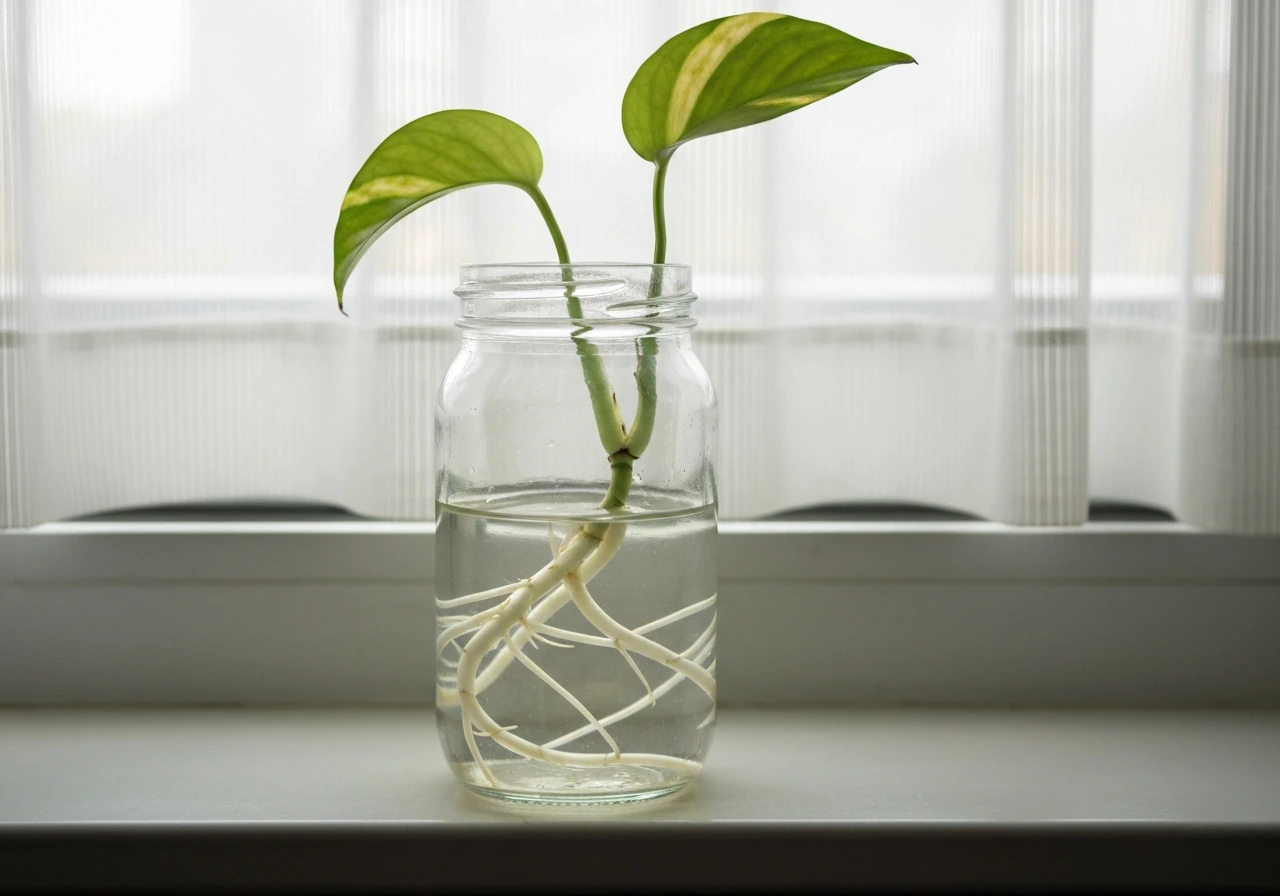
Money plant (pothos) basics for water growth
Pothos (Epipremnum aureum) is one of the easiest plants to grow in water because it naturally produces roots from its nodes, the bumpy joints along the stem where leaves attach. Those nodes contain meristematic tissue, which means they're primed to produce both roots and new growth when they hit water. Research from the University of Wisconsin Extension confirms that pothos vines root in approximately 3 to 4 weeks, and new buds can start showing up in as little as 1 to 2 weeks under warm conditions. That's genuinely fast for a water-only setup.
The reason water culture works so well for pothos is that the plant is semi-epiphytic in the wild. It's used to clinging to surfaces and absorbing moisture and nutrients from whatever's around it. In a water setup, you're essentially mimicking that environment in a controlled way. Growing money plant in water is not a compromise compared to soil, for propagation and long-term display, it can actually outperform soil in the early stages because oxygen and moisture are both consistently available at the roots.
One thing worth knowing upfront: "money plant" means different things in different regions. If you're looking for guidance on a coin-shaped floating plant, there's a separate guide on how to grow coin plant in water that covers that species specifically. This article focuses on the trailing vine pothos that most people in the US, UK, and South Asia mean when they say money plant.
Selecting cuttings and setting up your water container
Choosing the right cutting
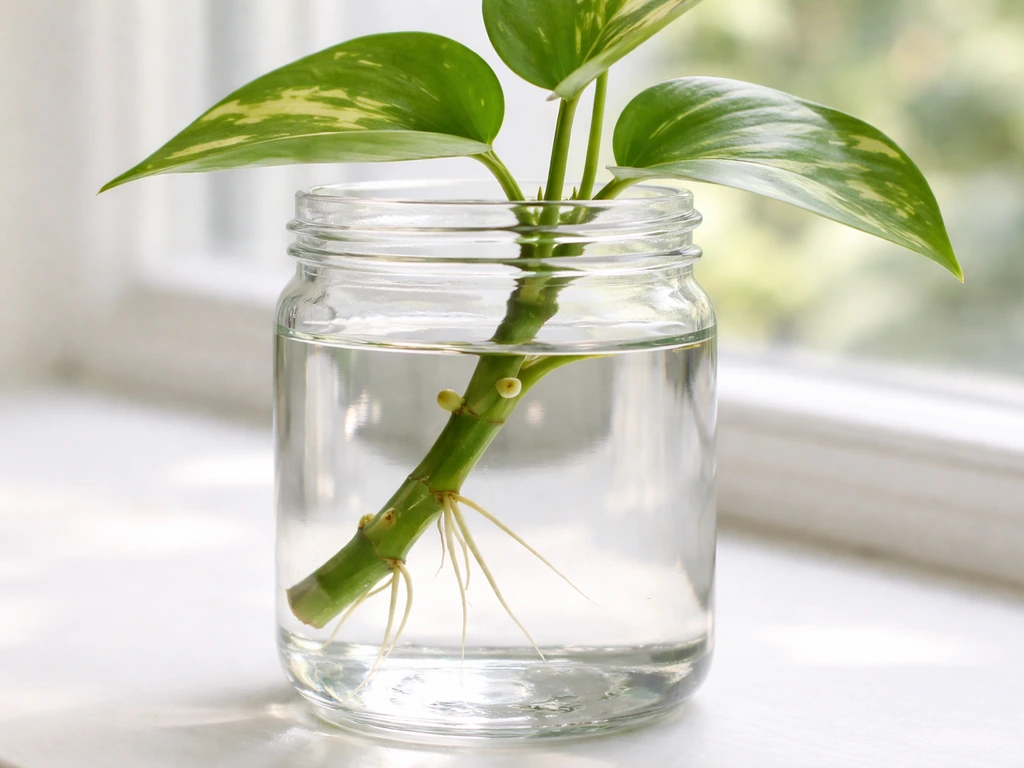
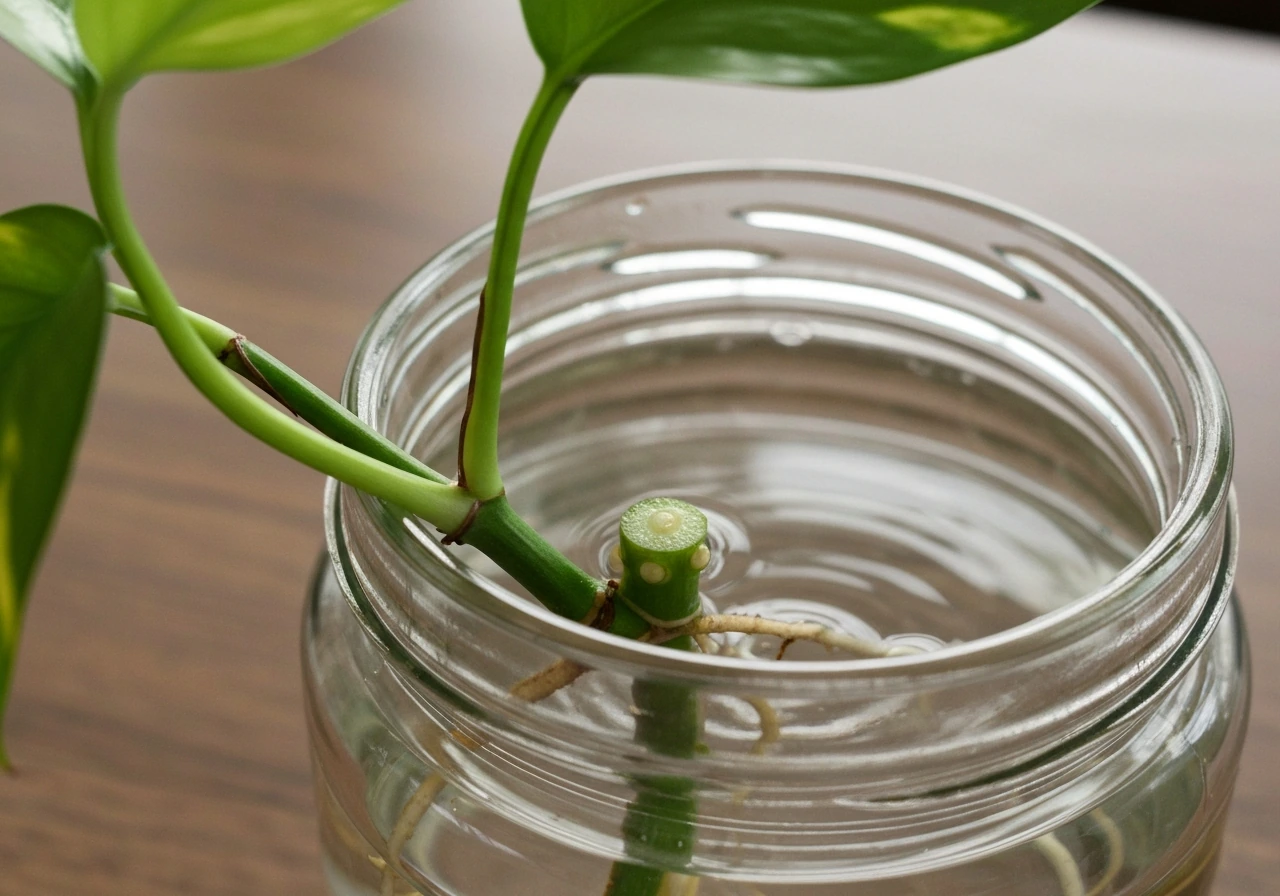
The single most common reason cuttings fail in water is skipping the node. I've seen this happen over and over: someone snips a nice-looking piece of vine, puts it in a jar, and waits. Nothing happens because there's no node to generate roots. Each cutting you take needs at least one node, and ideally one or two leaves still attached so the plant can photosynthesize while roots develop. BobVila also emphasizes keeping pothos nodes in water so the cutting can root effectively using the stem joints where leaves attach keep the pothos nodes in water. Here's exactly how to prep a cutting that will actually root:
- Use clean scissors or a sharp blade — wipe with rubbing alcohol first to avoid introducing pathogens.
- Cut a 4 to 6 inch section of healthy vine just below a node (the little nub or brown bump on the stem).
- Remove any leaves that would sit below the waterline — submerged leaves rot quickly and contaminate the water.
- Leave at least one or two healthy leaves above the water surface.
- If the stem end looks ragged or crushed, make a clean diagonal cut to expose fresh tissue.
Bottle vs. jar vs. glass, which container works best
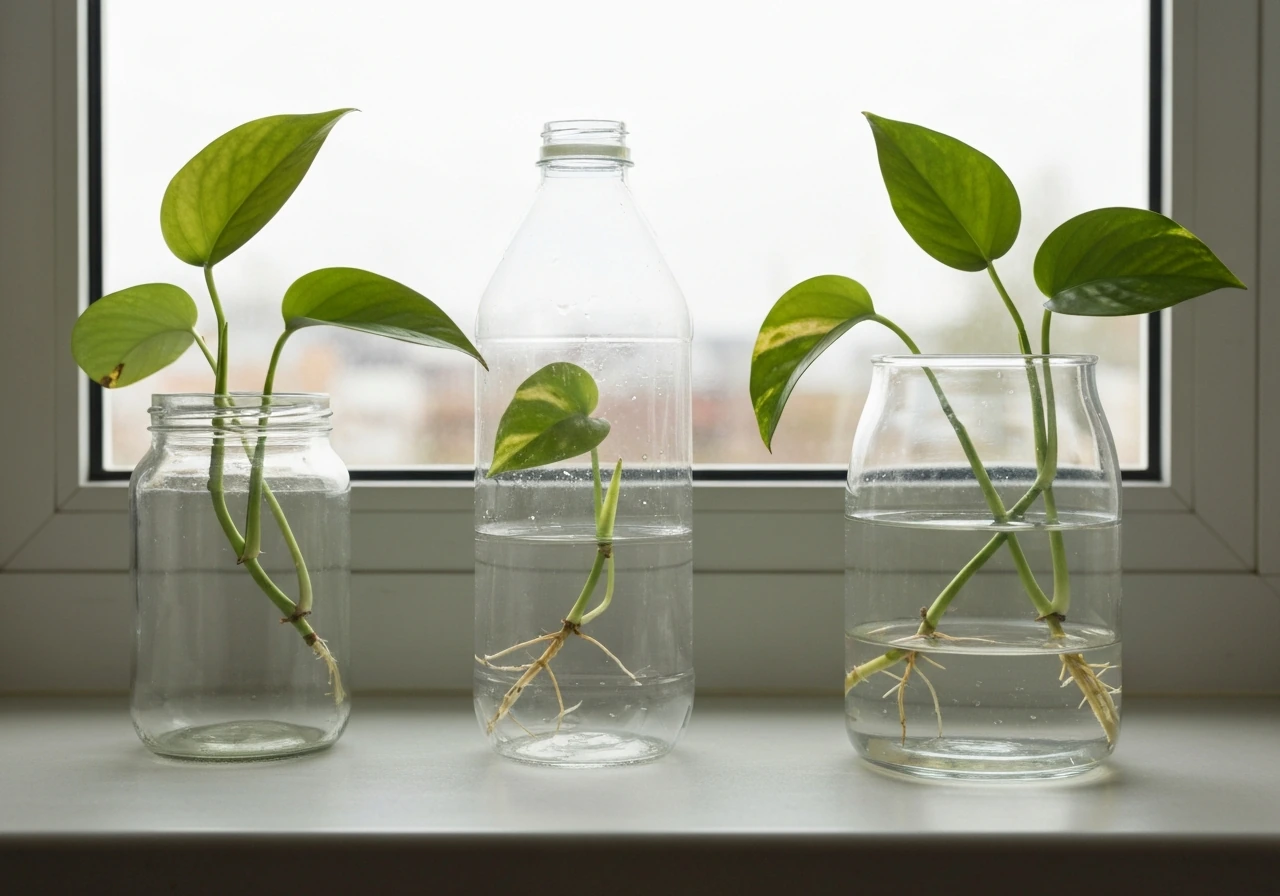
Your container choice matters more than people think, mostly because of light and stability. Here's a quick comparison of the three most common options:
| Container | Best For | Light Transmission | Algae Risk | Notes |
|---|---|---|---|---|
| Clear glass jar | Single cuttings, display | High | Medium-High | Looks great, easy to monitor roots |
| Opaque/dark bottle | Multiple cuttings, algae control | None (outside) | Low | Blocks light to water, reduces algae growth significantly |
| Clear plastic bottle | Budget setup, beginners | High | High | Works fine short-term; harder to clean |
| Narrow-neck vase | Longer vines, display | High | Medium | Neck holds stem upright without additional support |
If you want speed over looks, use a dark or opaque container to keep light off the water, this directly reduces algae and keeps the water cleaner for longer. If aesthetics matter and you want to watch the roots develop, go with a clear glass jar but be prepared to change the water more often. Whatever you use, make sure the container is tall enough to hold the cutting upright without the node fully submerging (a couple of inches of water covering the node is plenty). Don't fill it to the brim, the stem end needs oxygen exposure, not full submersion.
Water conditions that actually speed up growth
Light
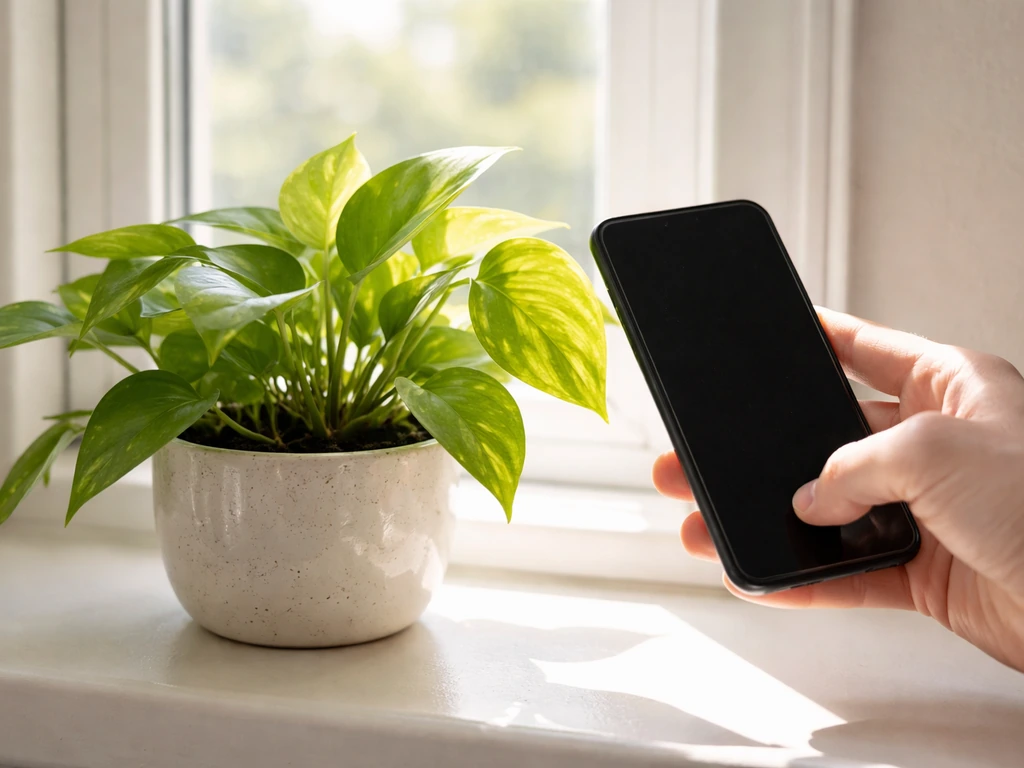
University of Florida/IFAS greenhouse production data puts the optimal rooting light level for pothos at around 3,000 foot-candles. In home terms, that's bright indirect light, think a spot a few feet back from a south- or east-facing window, or directly in front of a north-facing window. Direct sun will bleach the leaves and heat the water, which promotes bacterial growth. Low light won't kill the cutting, but it will slow rooting noticeably. Aim for 10 to 12 hours of bright indirect light per day. A grow light on a timer works well if your space is dim.
Temperature
Temperature is one of the biggest levers you have for faster growth and it's often overlooked. UF/IFAS data shows rooting happens within 3 to 4 weeks at around 80°F (27°C). Drop the temperature below 65°F (18°C) and you'll see rooting slow dramatically or stall completely. Keep your cutting somewhere consistently warm, away from air conditioning vents, cold windowsills in winter, or drafty spots. The water temperature matters too: cold water from the tap shocks the cutting. Let tap water sit and come to room temperature before using it.
Water quality
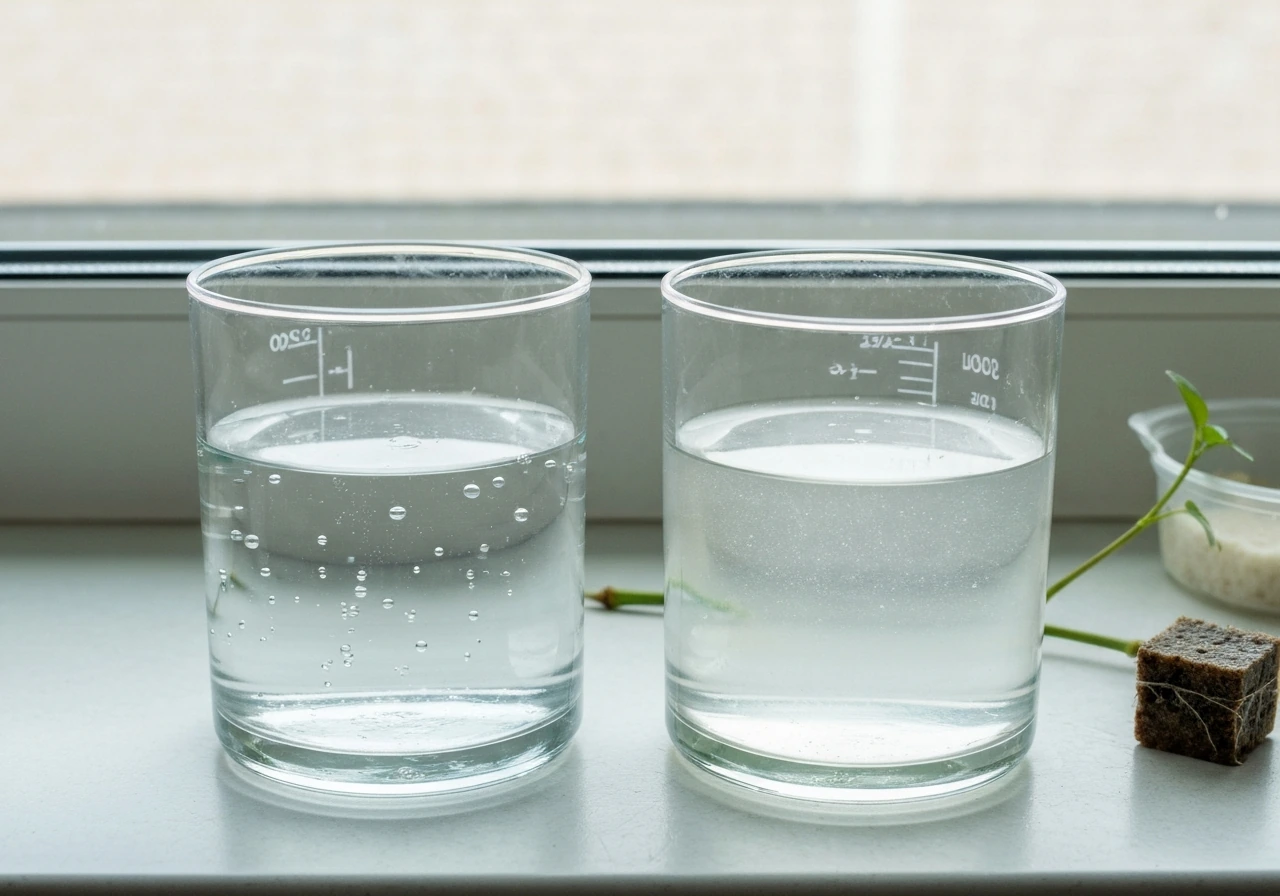
Plain tap water works, but chlorine and chloramine can slow rooting and stress the cutting. The simplest fix: fill your container the night before and let it sit uncovered for 24 hours. This off-gasses most chlorine. If your tap water is heavily treated, use filtered or rainwater instead.
For pH, pothos does well in a range of 6. 0 to 7. 0. You don't need to test obsessively, but if you're having persistent problems and your water is very hard or very soft, a basic pH test strip can tell you a lot.
Change the water every 5 to 7 days in a clear container, or every 7 to 10 days in an opaque one. Fresh water means fresh oxygen, which is what the developing roots actually need.
Nutrients and faster-growth tactics
Plain water will root a cutting, but it won't sustain vigorous growth for long. Once roots appear (usually by week 2 to 3), the plant starts needing nutrients it can't get from water alone. This is where a lot of water-grown pothos stall out, people assume water is enough forever. It's not. The good news is that a very small amount of the right nutrients makes a big difference. If you want to know exactly what to add in water to grow money plant faster, the short answer is a diluted liquid fertilizer at about one-quarter the label strength.
What nutrients to use and how often
Use a balanced liquid houseplant fertilizer (like a 20-20-20 or similar NPK ratio) or a purpose-made hydroponic nutrient solution. Both work. Mix at about 25% of the recommended dose, water culture roots are more sensitive to salt buildup than soil-grown plants. Feed every two to three weeks once roots are at least half an inch long. Before roots appear, skip the fertilizer entirely: it can cause algae blooms and stress the unrooted cutting rather than helping it.
Root stimulants and propagation boosters
A few safe options people commonly use to speed up rooting in water: a small pinch of willow water (made by soaking willow bark or young twigs, it contains natural rooting hormones called indolebutyric acid), a single drop of liquid seaweed extract, or a tiny amount of hydrogen peroxide (3%, about 1 teaspoon per liter) added to the water at each change to keep it oxygenated and reduce bacterial load. I've personally had good results with seaweed extract, it seems to produce more robust roots compared to plain water alone. Avoid overloading the water with multiple additives at once; pick one and stick with it.
If you're interested in how these techniques apply to other trailing plants, the same principles around node selection and dilute feeding apply when you grow plant clippings in water generally, pothos is just one of the most forgiving species to start with.
Ongoing care and troubleshooting
Most problems in water culture come down to three things: too little light, stale water, or a compromised cutting. Here's what to look for and what to do about it:
Black or mushy stems (rot)
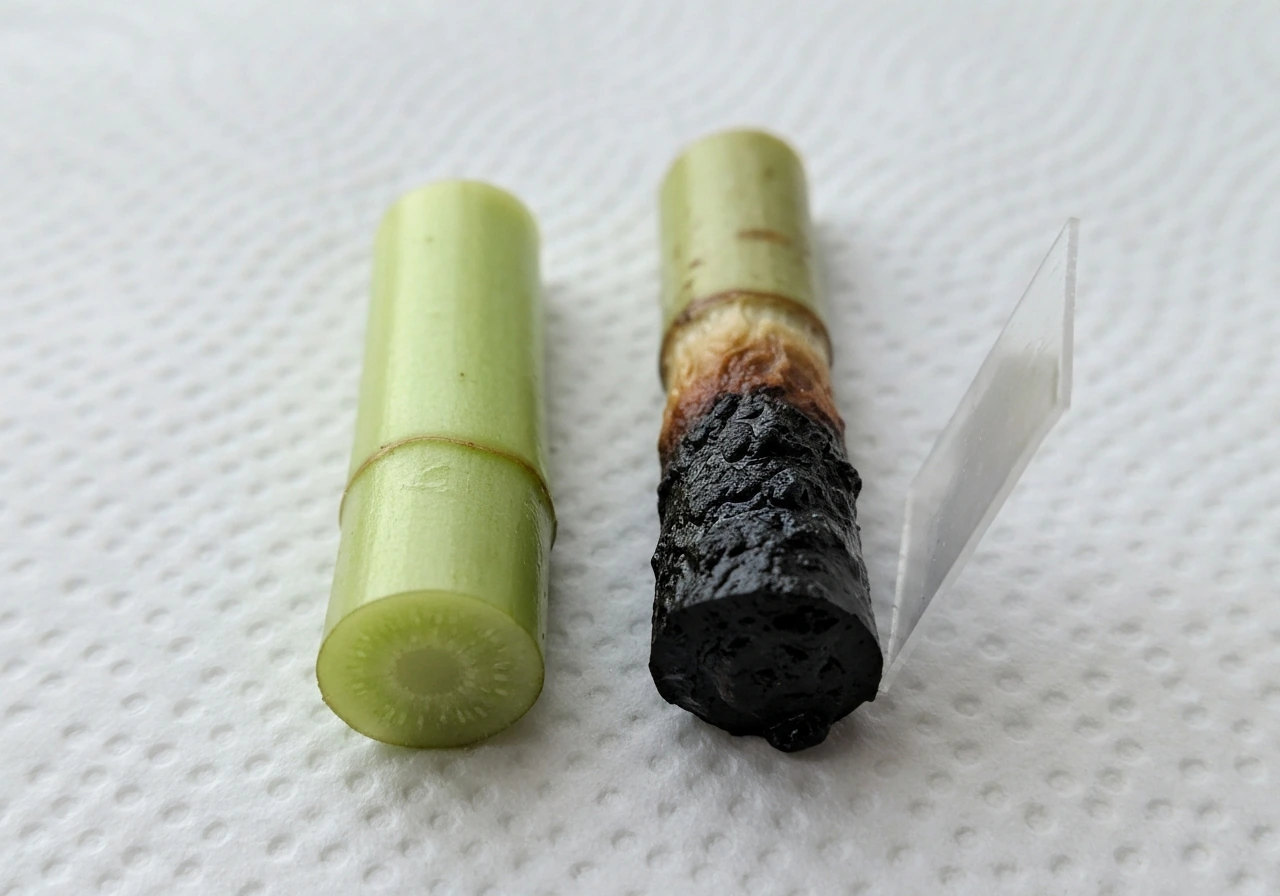
This is the most alarming thing to see, and UF/IFAS propagation notes confirm it's a real risk: black mushy rot typically starts at the cut end and can travel upward into healthy stem tissue if not caught. If you see this, act immediately. Pull the cutting out, trim back to firm, healthy tissue with a sterile blade, rinse the remaining stem under clean water, and put it in fresh clean water. Improve airflow around the container and make sure the water level only covers the node area, not large sections of stem. Overcrowding multiple cuttings in one small container makes this worse.
No roots after 4+ weeks
Check the basics first: is there actually a node submerged? Is the room warm enough (above 68°F consistently)? Is there enough light? If all three are fine, try moving the container to a warmer, brighter spot for a week. If still nothing, take a fresh cutting from a different part of the plant, sometimes older stem sections just don't root as readily as younger growth tips.
Yellowing leaves
A yellow leaf right after cutting is normal, the plant is redirecting energy. Persistent yellowing of multiple leaves usually means one of two things: too little light, or the water has gone stale and the roots (if present) are oxygen-starved. Change the water, move to a brighter spot, and check that no submerged leaves are rotting and contaminating the water. Over-fertilizing can also cause yellowing in water culture, so if you've been adding nutrients at full strength, cut back.
Algae buildup
Green or brown slime on the container walls or roots is algae, and it thrives when light hits nutrient-rich water. It rarely kills the plant directly, but it competes for oxygen and makes the whole setup messy. Fix it by switching to an opaque container, changing water more frequently, and reducing fertilizer concentration. Scrub the container walls each time you do a water change. If your setup is in direct sun, move it back a foot or two.
Slow leaf growth despite good roots
If roots look healthy but new leaves aren't appearing, the plant is probably nutrient-limited. Start adding a quarter-strength liquid fertilizer at each water change. Also check that the light duration is adequate, less than 8 hours of bright indirect light per day will suppress top growth even when roots are thriving.
When to keep it in water vs. move it to soil
Pothos can genuinely live in water indefinitely, it's not just a temporary propagation step. Whether you keep it in water long-term or transfer to soil (or another growing medium) depends on what you want from the plant.
If you're growing for display or as part of an aquatic or hydroponic setup, there's no reason to pot it. Water-grown pothos with regular weak feedings can produce long, healthy vines for years. Just upgrade the container as the root mass grows and maintain your feeding and water-change schedule. This approach aligns naturally with hydroponic systems where pothos is often used as a nutrient-absorbing plant in aquarium or reservoir setups.
If you want to transfer to soil, the best window is when roots are 2 to 4 inches long, long enough to anchor in soil but not yet so adapted to water that the transition stresses the plant. Move too early (less than 1 inch of root) and the plant struggles to take up moisture from soil. Wait too long and water-adapted roots can have trouble adjusting to soil conditions. When you do pot it up, use a well-draining mix and water it more frequently for the first two weeks to ease the transition.
A related option is to transfer into a semi-hydroponic or LECA (clay pebble) setup rather than soil. This keeps the roots in a wet, oxygen-rich environment similar to water culture while providing more physical support for larger plants. For anyone running a full water-culture system, that's often the natural next step rather than going back to soil entirely.
If you're working in a different regional context or language and want a more localized take on setup variations, there's a version of this guide covering how to grow money plant in water in Tamil that addresses locally available containers and common regional conditions. For those interested in other lucky or ornamental plants that thrive in water-only setups, the techniques here also translate well to growing fortune plant in water, which follows a similar propagation logic.
The short version: if the plant is thriving in water, leave it there. If it's outgrowing its container, getting tangled, or you want a bushier plant with more soil-grown vigor, pot it up at the 2 to 4 inch root length mark and give it a smooth transition with extra watering. Either way, you've got a plant that proved it can grow, that's the hard part done.
FAQ
What kind of cutting gives the fastest rooting in water?
For faster results, use younger vine tips with 1 to 2 leaves and at least one node. Avoid very old, thick, or woody sections, because they often root more slowly even when the node is present. If you are unsure, take cuttings from the top 6 to 12 inches of the healthiest growth.
Should I use a clear jar or an opaque container to grow money plant faster in water?
Dark containers tend to root sooner mainly because they reduce algae and keep oxygen levels stable, since algae can consume oxygen. If you choose a clear jar for viewing, place it in bright indirect light and change water on schedule to prevent the oxygen drop that can slow new roots.
How much of the cutting should be submerged in water?
No, do not fully submerge the stem end. Keep only the node zone submerged (a couple of inches of water covering the node is enough). If multiple nodes or a large length of stem are underwater, the submerged tissue can rot, which stalls rooting and may spread upward.
Does chlorinated or hard tap water slow down rooting?
Tap water is fine if you dechlorinate it, but chloramine is harder to remove by simply leaving water out. If you have persistent yellowing, slime, or stalling despite good light and warmth, switch to filtered water or let water sit 24 hours before use (then keep doing it consistently).
My room is warm sometimes, but not all day, will temperature swings affect growth speed?
If you are trying to speed up early rooting, keep the cutting warm and stable, ideally around 80°F (27°C). Avoid temperature swings from AC vents or cold drafts, and do not set the container directly against a cold window in winter, as root growth can stall even when the room feels warm.
When should I start fertilizing my money plant cutting in water?
Once roots are at least about half an inch long, start feeding at quarter strength every 2 to 3 weeks. Before roots form, skip fertilizer, because unrooted cuttings cannot use nutrients and it often triggers algae or root stress that delays progress.
Can I combine rooting aids like seaweed, willow water, and peroxide in the same water?
Yes, but use it carefully. Pick one additive method (seaweed extract or willow-water or hydrogen peroxide) rather than stacking several. Overdoing additives can harm new tissue. If you try hydrogen peroxide, keep it small and add it only at water changes, not daily.
What does it mean if my cutting keeps yellowing in water?
A single leaf yellowing right after cutting is usually normal, but yellowing that continues across multiple leaves usually points to low light or stale, oxygen-depleted water. Fix it by changing water, removing any leaves that touch the water, and moving to brighter indirect light for at least 10 to 12 hours a day.
What should I do if nothing changes after a month in water?
Replace “waiting” with a quick diagnosis. If there is no visible root progress after 3 to 4 weeks, check that a node is submerged, light is bright indirect (not dim), temperature stays above about 65°F (18°C), and the water is being changed on schedule. If all are correct, restart with a fresh cutting from a younger section.
How do I handle black mushy rot, and how do I prevent it from coming back?
If rot starts, catch it immediately at the cut end. Trim back to firm tissue with a sterile blade, rinse the stem, and place the cutting in fully fresh water. Also reduce water contact, improve airflow, and avoid overcrowding, since a contaminated system can re-infect new roots.
Can pothos stay in water long-term, or should I eventually move it to soil?
For hydroponic-style display, keep pothos in water indefinitely if you maintain water changes and weak feeding. If you want a fuller plant, you can later propagate by taking additional cuttings from healthy sections once the vine is growing, then maintain your nutrient and light schedule rather than moving it in and out of soil.
What is the best time to move my water-grown pothos to soil, and how do I reduce transplant shock?
Transition timing matters. A good transfer window is when roots are roughly 2 to 4 inches long, because the plant can anchor and pull moisture from soil. After potting, water more frequently for the first two weeks, because the root system is still adjusting from water culture to a drier, aerated medium.
How do I stop algae or slime from building up on the container walls?
The main cause of slime is light hitting nutrient-rich water and oxygen getting low. Use an opaque container, reduce fertilizer strength, scrub the container each water change, and do not overfill (oxygen exposure at the stem end matters too). If slime keeps returning quickly, shorten the time between water changes.