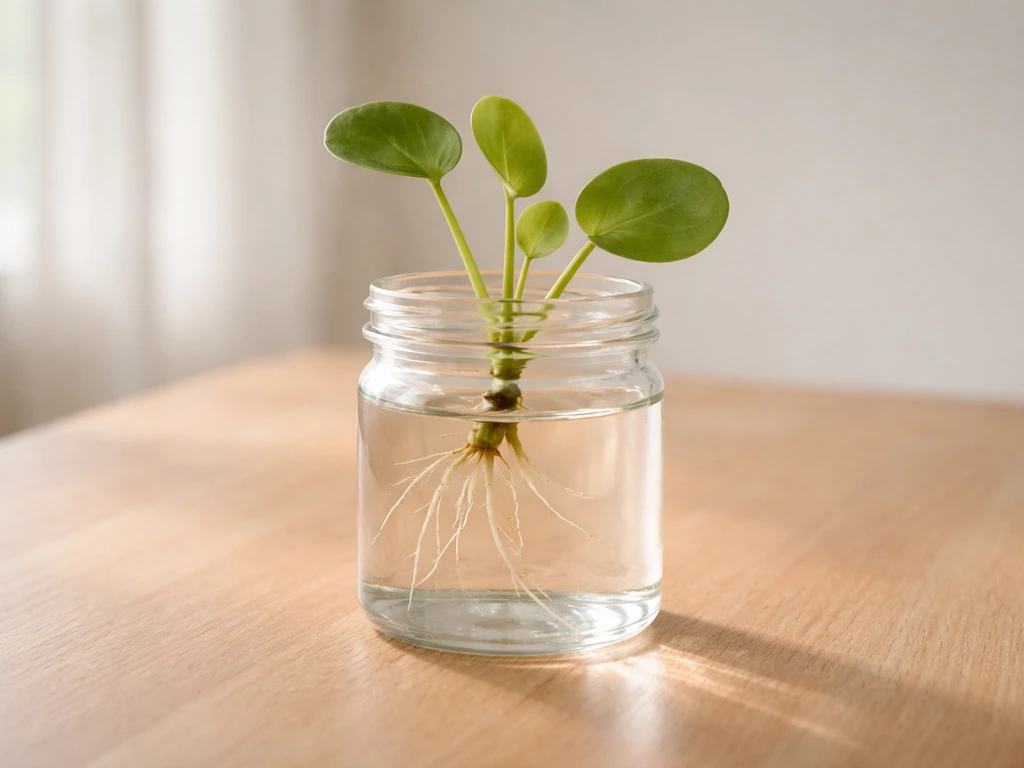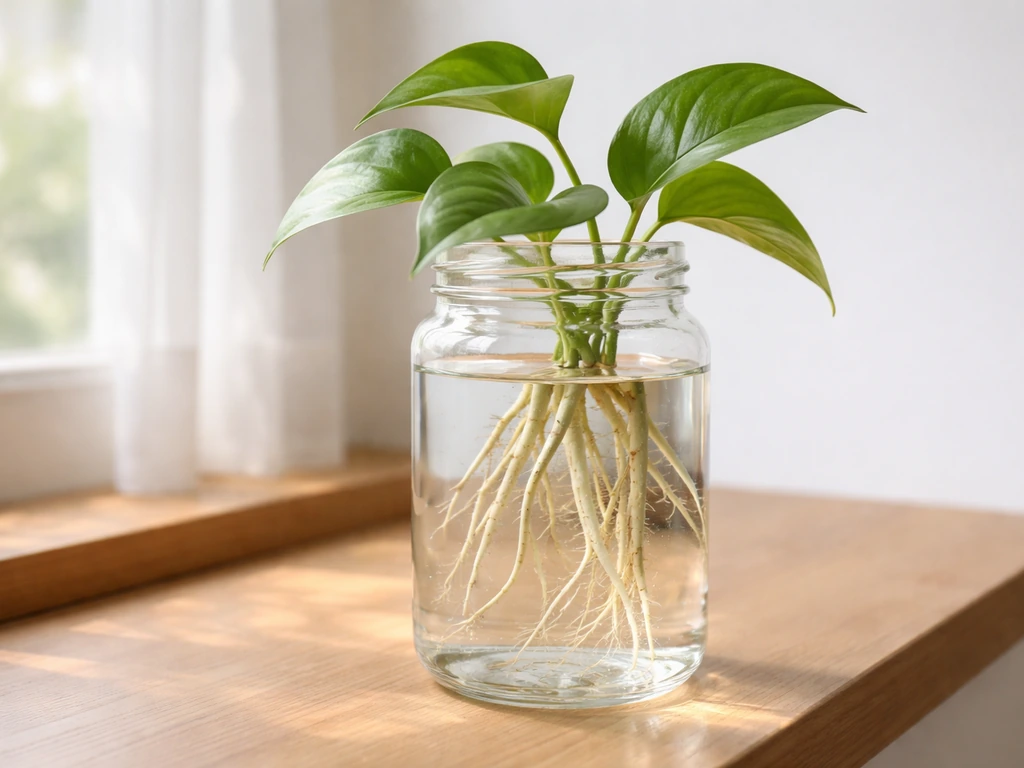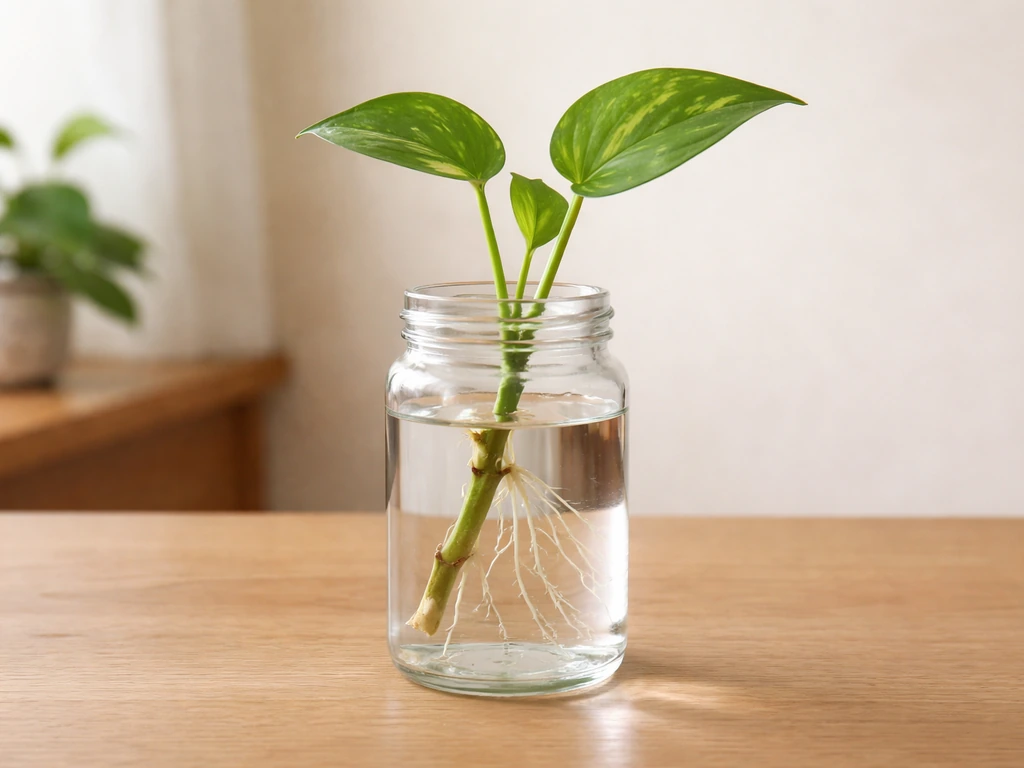
You can grow a fortune plant in water by taking a healthy stem cutting with at least one node, placing it in a clean glass or BPA-free container of dechlorinated water, and keeping it in bright indirect light at around 20–25 °C (68–77 °F). For a step-by-step guide on how to grow money plant in water, see our detailed how-to. Most pothos cuttings sprout roots in 1–3 weeks. Pilea offsets are nearly as fast. Pachira (money tree) is slower and less predictable, but it does work with patience and the right technique.
How to Grow Fortune Plant in Water: Step-by-Step Guide
Marcus Holloway
15 Jul 2026
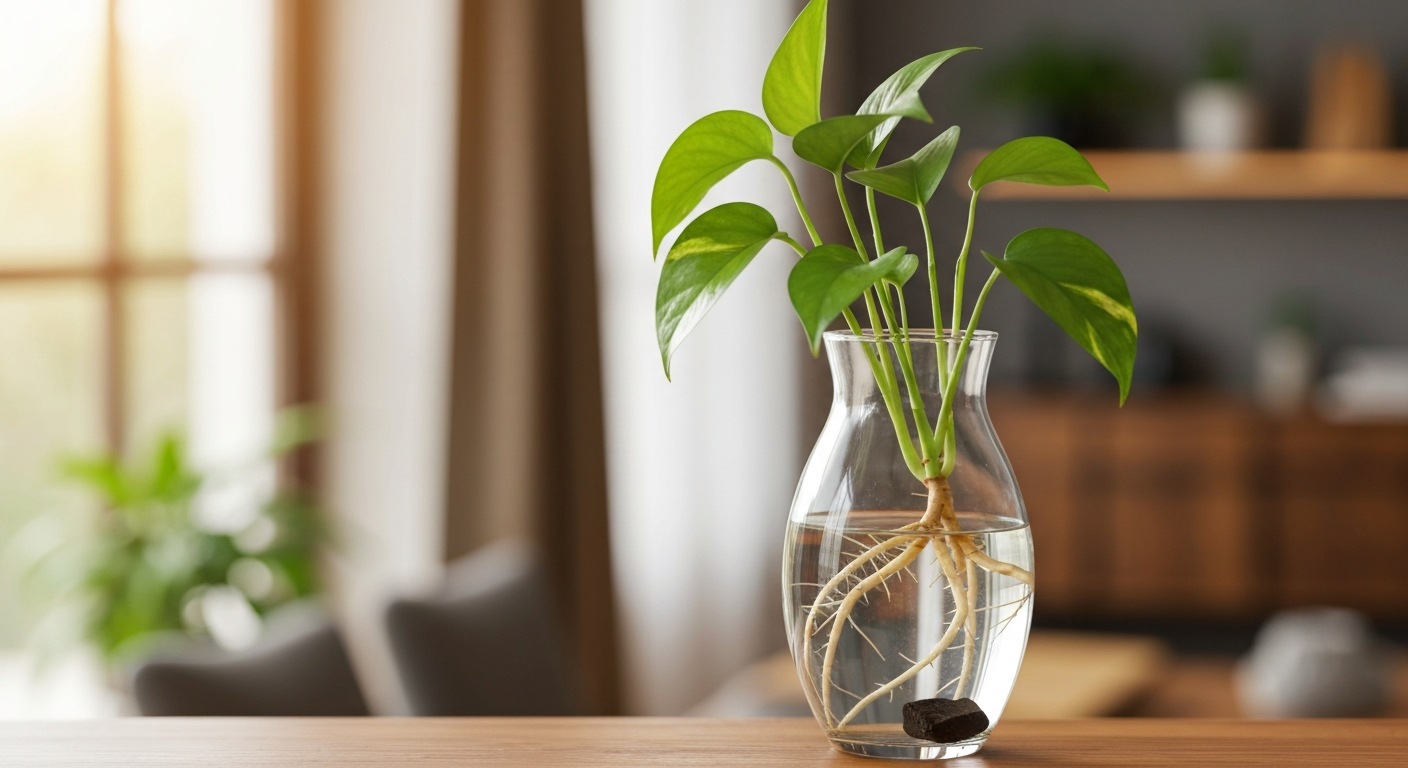
What you actually get out of growing fortune plants in water
Water propagation is genuinely useful for aquatic gardeners and hobbyists because you can watch every stage of root development without digging anything up. There are no soil pathogens to worry about during the rooting phase, the setup costs almost nothing beyond a clean jar, and cuttings that have established water roots transition beautifully into hydroponic systems. I have kept pothos growing purely in water for over two years in a nutrient-topped-up vase next to my aquarium, and the roots stay clean and the growth never stops.
That said, water growing has real limits. Woody species like Pachira take much longer to root and can rot if conditions are not managed carefully. Plants kept in plain water with no added nutrients eventually yellow and stall, because water alone does not supply nitrogen, phosphorus, potassium or micronutrients the way soil does. And if you skip regular water changes, you will get a slimy, oxygen-depleted mess that kills the cutting before roots ever form. Know the limits and you can work around them.
Which plant is actually your fortune/money/coin plant?
The names fortune plant, money plant, coin plant, and Chinese money plant get applied to several completely different species, and the propagation method that works brilliantly for one can fail on another. Before you start cutting, it is worth knowing which plant you actually have.
| Common Name(s) | Scientific Name | Key Visual ID | Water Rooting Reliability |
|---|---|---|---|
| Pothos / Golden Pothos / Money Plant | Epipremnum aureum | Vining stems, alternate heart-shaped leaves, often variegated, visible aerial roots at nodes | Excellent — roots in 1–3 weeks |
| Chinese Money Plant / Coin Plant / UFO Plant | Pilea peperomioides | Compact upright stem, round peltate leaves on long petioles (leaf stalk attaches at leaf centre) | Excellent — pups root in 1–3 weeks; stem cuttings slightly slower |
| Money Tree / Malabar Chestnut | Pachira aquatica | Small tree, palmate leaves with 5–7 leaflets, woody stem often braided in cultivation | Moderate — takes weeks to months, more variable |
| Jade Plant (sometimes called money plant) | Crassula ovata | Succulent, thick oval leaves, woody stem, no aerial roots | Poor — succulents rot quickly in water; not recommended |
Epipremnum aureum is the plant most reliably labelled 'money plant' in South Asian households and it is the easiest species on this list to root in water by a wide margin. Pilea peperomioides is widely sold as 'Chinese money plant' or 'coin plant' and is nearly as beginner-friendly. Pachira aquatica is the braided 'money tree' sold in decorative pots and is a legitimate tropical wetland tree, it can root in water but the process is slower. If someone handed you a succulent with thick rubbery leaves, that is almost certainly Crassula ovata, and I would not attempt long-term water growing with that one.
Quick recommendation: which species to pick for water propagation
Start with Epipremnum aureum (pothos) if you want the fastest, most forgiving result. It has aerial roots already forming at every node, it tolerates a range of light and temperature conditions, and it will root in water even when you make small mistakes. Pilea peperomioides is the second-best choice, especially if you already own one that is throwing off pups. Pachira is worth trying if you specifically want the money tree look, but set your expectations accordingly, it needs warmer water, a sterile setup, and significantly more patience. I would not recommend starting a water-growing hobby with Pachira.
Containers, supports, and tools you will need
Container choice matters more than most beginner guides admit. You need something inert, easy to clean, and ideally transparent so you can monitor root development and water clarity without disturbing the plant. The FDA guidance re: lead leaching from ceramicware and food-contact surfaces notes that glazed ceramics can leach lead and recommends using inert glass or certified lead‑free food‑safe ceramics and avoiding untested antique or imported earthenware.
- Clear glass vessels (mason jars, glass vases, repurposed wine bottles): ideal — inert, easy to sterilize, lets you see root growth and spot algae early
- BPA-free food-grade plastic containers: acceptable and lightweight, good for hydroponic setups where you want to avoid breakage
- Glazed ceramics: usable only if certified food-safe and confirmed lead-free — avoid antique, imported, or untested earthenware which can leach lead into the water
- Avoid any metal containers or fittings, especially copper — copper is acutely toxic to aquatic invertebrates and phytotoxic at elevated concentrations, which matters if your water-grown plants share a system with fish or shrimp
For container size, a narrow-necked bottle works well for a single pothos cutting because the neck supports the stem without anything else needed. For Pilea pups or multiple cuttings, a wide-mouthed jar gives more oxygen surface area, which matters for keeping dissolved oxygen (DO) levels healthy at the root zone. Wide, shallow containers naturally have better gas exchange than deep, narrow ones.
- Sharp, clean scissors or a sterile scalpel/knife for taking cuttings
- Rubbing alcohol (70%) or a 10% bleach solution for sterilizing tools between cuts
- Aquarium air stone and small pump (optional but useful for long-term water growing — gentle aeration prevents oxygen depletion)
- pH strips or a basic pH meter (target 5.5–6.5 if you plan to add nutrients or transition to a hydroponic system)
- Activated charcoal pellets (optional but helpful — a small pinch in the container slows bacterial growth and keeps water cleaner between changes)
- Dechlorinator or filtered water (more on this below)
Water quality: the part most guides skip
Plain tap water can work, but there is one catch that trips up a lot of beginners. Many municipal water systems in the US and other countries now use chloramine rather than plain chlorine for disinfection. Unlike free chlorine, chloramine does not dissipate if you just leave water sitting out overnight. Boiling does not reliably remove it either. This matters because chloramine at tap concentrations can inhibit root formation and stress cuttings.
The practical fixes are straightforward. A crushed vitamin C tablet (ascorbic acid) neutralizes chloramine in a standard household amount of water almost instantly. Campden tablets (potassium metabisulfite, the same thing used in home brewing) also work. Purpose-made aquarium dechlorinators containing sodium thiosulfate are widely available and cheap. If you have a point-of-use catalytic activated carbon filter on your tap, that handles chloramine too. Any of these options will do, I use crushed vitamin C tablets because they are always in my kitchen and cost almost nothing.
Choosing a good donor plant and preparing your cutting
The cutting you take is the single biggest factor in whether water propagation succeeds or fails. See our guide on how to grow plant clippings in water for step-by-step instructions. A cutting from a stressed, diseased, or nutrient-deficient plant will root poorly or rot before it gets started. Take cuttings only from healthy plants with firm stems, strong leaf color, and no signs of pests or disease.
- Sterilize your cutting tool with 70% rubbing alcohol or a 10% bleach solution and let it dry before use — dirty blades introduce rot-causing bacteria directly into the cut surface
- For pothos (Epipremnum): select a stem section with at least one node (the slightly bumpy joint where a leaf meets the stem) and ideally an existing aerial root nub at that node — this aerial root is essentially a pre-formed root that will develop faster once submerged
- Cut cleanly just below the node with a single downward stroke — no sawing back and forth, which crushes the vascular tissue
- Leave 1–2 leaves above the node for photosynthesis; remove any leaves that would sit below the waterline entirely — submerged leaves rot and foul the water
- For Pilea peperomioides: if taking a pup (offset), wait until it has at least 2–3 small leaves and is at least 3–5 cm tall, then gently separate it from the mother plant's roots with a clean cut
- For Pachira: choose a semi-hardwood cutting about 10–15 cm long with at least two leaf nodes, from current-season growth that has just started to firm up — avoid purely soft new growth (rots fast) or fully woody old growth (roots very slowly)
One thing I learned the hard way: do not take the cutting and leave it sitting on a bench for an hour before putting it in water. The cut end begins to dry and oxidize quickly. Get it into your prepared water within a few minutes of cutting for the best result.
Step-by-step: from fresh cutting to visible roots
- Day 0 — Prepare your container: wash with hot soapy water, rinse thoroughly, and fill with dechlorinated water (room temperature, not cold from the tap). If using activated charcoal, drop in a few pellets now.
- Day 0 — Place the cutting: insert the cut end so the node is 3–5 cm below the water surface. The leaves must stay above the waterline. In a narrow-necked bottle, the neck itself acts as a support. In a wide jar, prop the cutting with a folded piece of mesh, a rubber band across the top with the stem threaded through, or just rest the cutting across the rim.
- Days 1–3 — Initial placement: position the container in bright, indirect light. A spot near a window that gets morning sun but not harsh midday rays is ideal. Keep air temperature at 20–25 °C (68–77 °F). Do nothing else. The cut end needs time to callous very slightly before roots initiate.
- Days 3–7 — First water change: empty and replace the water fully, rinsing the container. This is critical for maintaining dissolved oxygen levels and flushing any bacteria accumulating at the cut surface. You will likely see the cut end has slightly swollen or a pale nub has appeared — that is the root initiation zone.
- Week 1–2 — Root tips appear: small white or cream root tips emerge from the node. Pothos often shows 5–15 mm roots within 7–10 days under warm conditions. Pilea pups may show fine roots at the base within a similar timeframe. Continue changing water every 5–7 days.
- Week 2–3 — Root development: roots begin branching and extending. Keep water changes regular. If roots start looking brown or slimy, that is an oxygen or bacteria issue — change the water immediately, gently rinse the roots under running dechlorinated water, and consider adding a small air stone.
- Week 3–6 — Transplant-ready stage: for pothos and Pilea, aim for roots that are 5–10 cm long with visible secondary branching before transplanting to soil or a hydroponic system. Roots this size have enough mass to survive the transition without stress. For Pachira, wait until roots are at least 3–5 cm long and well-established, which may take 6–10 weeks or more.
Variations by plant type: stem cuttings, pups, and woody cuttings
Epipremnum aureum (pothos), stem cuttings
Pothos is almost foolproof. Take a vine section with two or three nodes, submerge the bottom node, and you are done. If the cutting already has an aerial root at the submerged node, root development is faster and more reliable. Long pothos vines can be cut into multiple segments for multiple cuttings, each node section will root independently. This is the best species to start on if you are new to water propagation.
Pilea peperomioides, pups and stem cuttings
A healthy Pilea produces offsets (pups) from its base and sometimes from the stem. Pups with their own small root nubs at the base are the easiest to root in water, they often root within a week in warm conditions. If you take a stem cutting from a Pilea (for example, cutting the top of a leggy plant to encourage branching), it will also root in water but takes a bit longer since there are no pre-formed root initials to accelerate the process. Spring and early summer are the best times to take Pilea cuttings, as the plant is in active growth.
Pachira aquatica (money tree), woody stem cuttings
Pachira cuttings benefit from a few extra steps compared to the soft-stemmed plants above. The Money Tree Plant (Pachira aquatica) Care Guide | The Old Farmer's Almanac notes that Pachira can be propagated from stem cuttings and growers commonly root cuttings in water, though it is generally slower and more variable than for pothos or Pilea. After taking a semi-hardwood cutting, let the cut end air-dry for 30–60 minutes to form a very light callous before placing it in water, this reduces the chance of bacterial rot entering the fresh cut. Keep water temperature warmer than you would for pothos, ideally 23–27 °C (73–81 °F), because Pachira is a tropical species that originates from wetland environments in Central and South America. Change the water every 4–5 days rather than weekly, since woody cuttings are more prone to fouling the water. Do not be alarmed if leaves drop during the first two weeks, this is normal as the cutting redirects energy toward root formation.
How to speed up rooting and early growth
Light
Bright, indirect light for 12–14 hours a day is the sweet spot. Direct sun through glass heats the water unevenly and can encourage algae. A north or east-facing windowsill, or a spot 1–2 metres from a south-facing window, usually works well. If natural light is poor, a basic grow light set to a 14-hour cycle makes a noticeable difference, I tested this in winter with pothos cuttings and rooting time dropped by about a week compared to a dim shelf. For more specific tips and a step-by-step checklist on speeding rooting and early growth, see a short guide on how to grow money plant in water faster.
Temperature
Root initiation is significantly faster in the 20–25 °C range than in a cool room. If your home drops below 18 °C at night, consider a small aquarium heater in the water (set to 22–23 °C), this is especially useful for Pachira. A heat mat under the container also works. Cold water slows enzyme activity at the root zone and dramatically extends the rooting timeline.
Aeration and water changes
Dissolved oxygen at the root zone is non-negotiable. In still water, oxygen levels can drop low enough to cause hypoxia at the cutting base, leading to rot rather than roots. The simplest fix is frequent water changes every 5–7 days. If you want to go longer between changes or are managing multiple cuttings at once, add a small aquarium air stone connected to a micro-pump, gentle bubbling keeps DO levels healthy and the setup costs under $10. Wide, shallow containers also help by maximising the water surface area exposed to air.
Rooting hormones and natural alternatives
Rooting hormone powder (IBA, indole-3-butyric acid) is well-established in propagation science and does speed up rooting in water, particularly for Pachira. Dip or dust the cut end lightly, then place immediately in water. For pothos and Pilea it makes less difference because these plants root so readily anyway, but it does not hurt. If you prefer a natural option, raw honey diluted in water (roughly 1 teaspoon per litre) has mild auxin-like and antibacterial properties that some growers swear by. Willow water (made by soaking willow twigs in water for 24 hours) contains natural indolebutyric acid and salicylic acid, and has a reasonable evidence base among propagators for encouraging root development in cuttings. Use either one as your rooting soak water rather than plain water for the first week.
Adding nutrients once roots form
Plain water supports rooting but will not sustain long-term growth. For specifics on what to add in water to grow money plant, see recommendations for appropriate liquid hydroponic fertilizers and safe dilution rates to support long-term growth. Once roots are 3–5 cm long, switch to a diluted liquid hydroponic fertilizer or balanced liquid houseplant fertilizer at about one-quarter of the label strength. Target a solution pH of 5.5–6.5 for best nutrient availability, if you are serious about this step, a basic pH meter is worth the investment. Over-fertilizing at full strength will burn young water roots. Start dilute and increase gradually over several weeks.
Safe water additives and what to avoid
| Additive | Purpose | How to Use | Cautions |
|---|---|---|---|
| Activated charcoal pellets | Reduces bacterial growth, keeps water clearer between changes | A small pinch (1–2 teaspoons per litre) in the bottom of the container | Use horticultural/aquarium-grade charcoal, not BBQ charcoal |
| Diluted liquid fertilizer | Provides NPK and micronutrients for growth after roots form | 1/4 label strength; change water and re-dose weekly | Never use at full strength on fresh cuttings — will burn roots |
| Hydrogen peroxide (3%) | Can kill surface bacteria and algae; adds oxygen briefly | 1–2 ml per litre maximum, occasionally — not as a routine additive | Kills beneficial root bacteria at higher concentrations; use sparingly |
| Rooting hormone (IBA) | Stimulates adventitious root formation | Dip cut end before placing in water | Use as directed; do not overdose |
| Raw honey / willow water | Mild auxin activity, antibacterial properties | 1 tsp honey per litre or willow-soak water for the first week | Replace with plain or nutrient water once roots form |
| Copper fittings / copper additives | N/A — do not use | N/A | Acutely toxic to aquatic invertebrates, potentially phytotoxic — never use in shared aquatic systems |
Water change and maintenance schedule
Consistency here prevents most of the problems beginners encounter. Here is the schedule I follow for water-grown fortune plants:
- Every 5–7 days: full water change — empty the container, rinse with clean water, and refill with fresh dechlorinated water (or nutrient solution once roots are established)
- Every water change: inspect roots — white and firm is healthy; brown, soft, or slimy means trouble (see troubleshooting below)
- Every water change: check water clarity — slightly yellow-tinted water is normal as organic matter breaks down; dark, foul-smelling water means bacteria are out of control and you need to clean the container more thoroughly
- Monthly: clean the container with a dilute bleach solution (1 part bleach to 10 parts water), rinse extremely thoroughly, and refill — this resets algae and biofilm buildup on the glass
- When adding nutrients: test pH before adding — adjust to 5.5–6.5 with pH up/down solution if needed
Troubleshooting: what went wrong and how to fix it
Root rot (brown, slimy, foul-smelling roots)
The most common problem, almost always caused by insufficient oxygen or infrequent water changes. Trim the rotted root sections with sterile scissors, rinse healthy remaining roots gently under dechlorinated water, clean the container with dilute bleach, rinse well, and refill with fresh water. Add an air stone going forward to prevent recurrence. If the entire root system has gone brown with no firm white roots remaining, the cutting is unlikely to recover.
Algae growing in the container
Green algae on glass walls is a sign of too much light hitting the water directly, combined with any nutrients in the solution. It does not immediately harm the plant but competes for nutrients and oxygen. Switch to an opaque container or wrap the outside of a glass container in paper or foil to block light from the water, light should reach the leaves, not the root zone. A full container clean and water change will clear existing algae.
Yellowing leaves
Lower leaves yellowing and dropping during the first two weeks of water propagation is usually normal, the cutting is shedding non-essential leaf mass while it puts energy into root formation. If yellowing spreads to all leaves after roots have formed, it is a nutrient deficiency signal: the plant needs a dilute liquid fertilizer added to the water. Yellowing combined with soft stems points to root rot.
No roots after three weeks
Check temperature first, this is the most common cause of slow rooting. If the room is below 20 °C, move the cutting somewhere warmer or use a heat mat. Also check that the node is actually submerged: a cutting placed with just the stem tip in water and the node above the waterline will not root efficiently. Finally, check the cutting itself, a cutting taken from a very old, stressed, or recently repotted plant sometimes just does not have the energy reserves to root quickly.
Pests (fungus gnats, aphids)
Water-propagated cuttings are much less prone to fungus gnats than soil-grown plants because there is no moist organic medium for larvae to colonise. If you see aphids or spider mites on the leaves, wipe the leaves down with a damp cloth and keep the plant away from other infested plants. Neem oil diluted in water can be applied to leaves (not the root water) if pests persist.
When and how to transplant to soil or a hydroponic system
Transplanting too early is the single biggest mistake people make after successful water rooting. Roots grown in water are physiologically different from soil roots, they have thinner cell walls and are adapted to low resistance, high-moisture conditions. If you move a cutting with 1 cm hair-like roots into dry potting mix, those roots will desiccate and die within days.
Wait until roots are at least 5–10 cm long with visible branching (secondary roots coming off the main root strands). At that size, the root system has enough mass to survive the transition shock. When transplanting to soil, use a well-draining mix and water thoroughly immediately after transplanting, then keep soil consistently moist (not waterlogged) for the first two to three weeks while the plant grows new soil-adapted roots. Shading it from bright direct light for the first week also reduces transplant stress.
To keep the plant in a water-based hydroponic system permanently, transfer the rooted cutting to a net pot filled with clay pebbles (hydroton) in a hydroponic container, with the roots hanging into the nutrient solution below. This is a smooth transition because the root architecture is already adapted to water, there is no drying-out shock. Maintain nutrient solution pH at 5.5–6.5 and change or top up the solution weekly. This is genuinely the most satisfying outcome for aquatic gardeners: a fully self-sustaining water-grown plant that keeps producing new leaves indefinitely.
A quick note for Tamil-language readers (தமிழ் சுருக்கம்)
தண்ணீரில் மணி செடி (பொட்டோஸ் / Epipremnum aureum) வளர்க்க, ஒரு ஆரோக்கியமான தண்டின் ஒரு கணு (node) உள்ள பகுதியை வெட்டி, சுத்தமான கண்ணாடி குடுவையில் க்லோரமின் நீக்கிய தண்ணீர் நிரப்பி வையுங்கள். இலைகள் தண்ணீருக்கு மேல் இருக்கட்டும். வெயில் நேரடியாக படாத வெளிச்சமான இடத்தில் வையுங்கள், தண்ணீரை 5–7 நாட்களுக்கு ஒருமுறை மாற்றுங்கள். 1–3 வாரங்களில் வேர்கள் வரும். வேர்கள் 5–10 செ.மீ ஆனதும் மண்ணில் அல்லது ஹைட்ரோபோனிக் முறையில் மாற்றலாம். தமிழில் மேலும் தகவல்களுக்கு, money plant தமிழில் வளர்க்கும் முறை குறித்த இந்த தொடர் கட்டுரைகளைப் பார்க்கவும்.
Comparing water propagation methods at a glance
| Species | Best Cutting Type | Time to Visible Roots | Best Season | Long-term Water Growing | Difficulty |
|---|---|---|---|---|---|
| Epipremnum aureum (Pothos) | Stem cutting with node + aerial root | 1–2 weeks | Any, best spring–summer | Excellent with nutrients | Beginner |
| Pilea peperomioides | Pup/offset; or stem cutting | 1–3 weeks | Spring and early summer | Good with nutrients | Beginner |
| Pachira aquatica (Money Tree) | Semi-hardwood stem cutting | 4–10 weeks | Spring–summer (warm) | Moderate — prefers eventual soil | Intermediate |
| Crassula ovata (Jade) | Leaf or stem cutting | Very slow; prone to rot | Spring | Not recommended | Not recommended for water |
If you are just getting started, choose pothos. If you already grow money plant or coin plant and want to expand your technique, Pilea propagation from pups is a genuinely satisfying and fast process that pairs well with the water-change and container habits you will already have built. For step-by-step instructions specifically on how to grow coin plant in water, see our guide on how to grow coin plant in water. And if the goal is a full hydroponic setup, both pothos and Pilea transition to net-pot systems with almost no fuss, which is the whole reason water propagation is so relevant to aquatic gardening in the first place.
FAQ
Which houseplants are commonly called “fortune,” “money,” or “coin” plants, and which root best in water?
Common plants sold as “money/fortune/coin” plants include Epipremnum aureum (pothos/golden pothos), Pilea peperomioides (Chinese/Chinese‑money plant), and Pachira aquatica (money tree). Pothos and Pilea root very reliably in plain water (roots often appear in 1–3 weeks under warm, bright conditions). Pachira can root in water but is slower and more variable; success depends on cutting maturity, season and temperature.
What materials and containers are best for water propagation?
Use clean, inert containers: clear glass jars, food‑grade (BPA‑free) plastic bottles, or lead‑free glazed ceramics. Avoid unknown antique earthenware (risk of lead), copper fittings, and metal whose corrosion can harm plants or aquatic life. Provide a transparent or translucent container to monitor roots and change water easily.
How do I choose and prepare a cutting for water propagation?
Select a healthy, non‑flowering stem with at least one node (and preferably an aerial root). Make a clean cut just below a node using a sterile blade. Remove leaves from the lower node(s) so the node and a short internode will be submerged but leaves stay above water. For Pilea, you can also use pups/offsets with attached roots or small stem pieces with a node.
Step‑by‑step: how to root a cutting in water (practical routine)?
1) Fill container with dechlorinated water (see water treatment Q). 2) Insert cutting so node is submerged and leaves are above water. 3) Place in bright, indirect light at 20–25°C (68–77°F). 4) Change water every 3–7 days or top up and refresh to keep it clear; more often if cloudy. 5) Monitor for roots; pothos/Pilea typically root in 1–3 weeks. 6) Once roots are several centimetres (1–3 in) long and healthy, decide to keep in water long‑term or transplant to soil/hydroponics.
How can I speed rooting and improve success rates?
- Keep warm (20–25°C) and bright, indirect light. - Use cuttings with clear nodes and at least one aerial root. - Optional: dip cut end briefly in a commercial rooting hormone (IBA) for harder species; many pothos/Pilea root fine without it. - Improve dissolved oxygen: use shallow wide containers, frequent water changes, or gentle aeration (air stone) to prevent hypoxia and sliminess. - Maintain clean water and replace immediately if murky or foul.
What water treatments or additives are safe and useful?
Safe options: dechlorinate tap water (see next Q), add a small pinch of complete liquid houseplant fertilizer at 1/4–1/8 of label strength after roots form, or put a piece of activated carbon in a filter bag to reduce organics. Avoid copper compounds and heavy metals. Hydrogen peroxide is sometimes used in very dilute amounts to oxygenate (follow precise low dosages); routine use risks tissue damage. Do not rely on simple standing to remove chloramine.