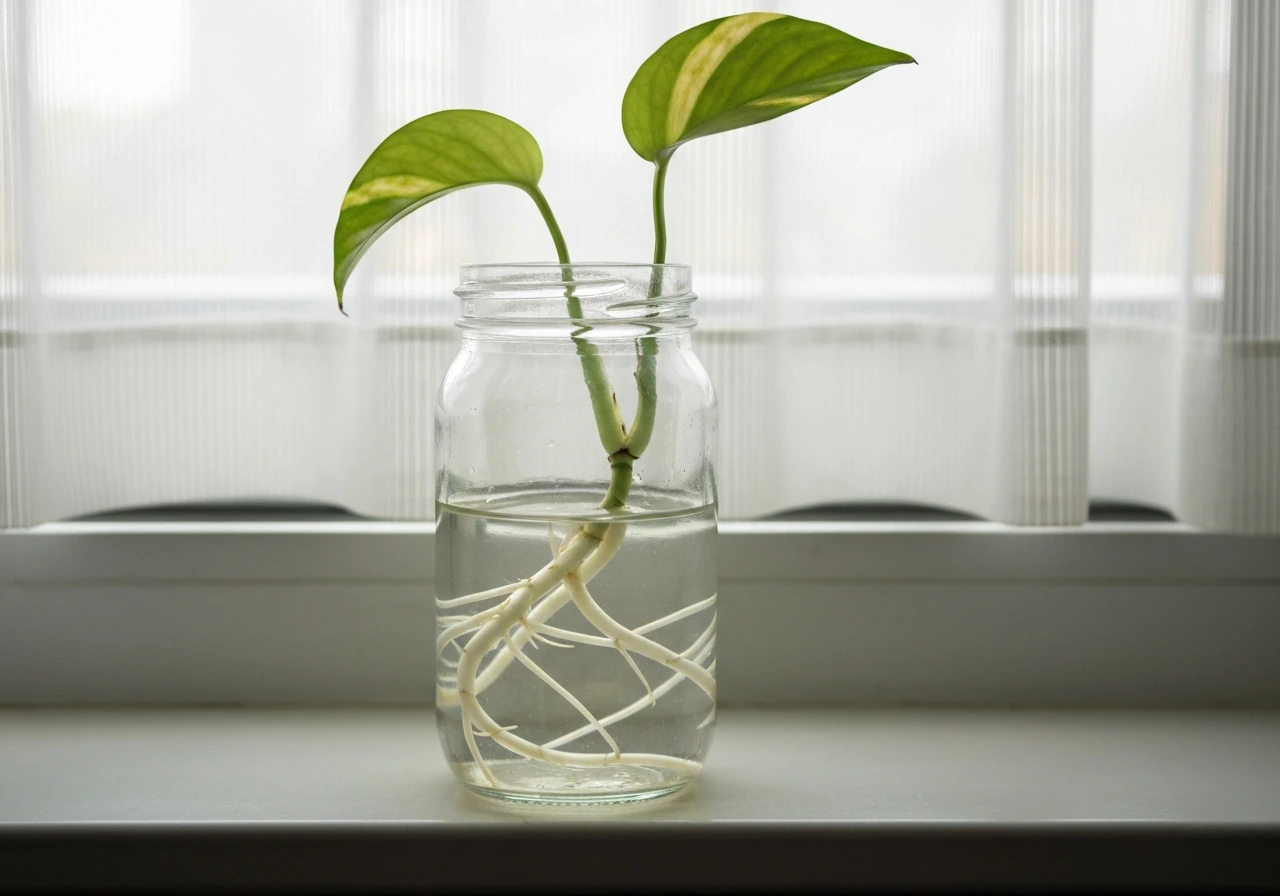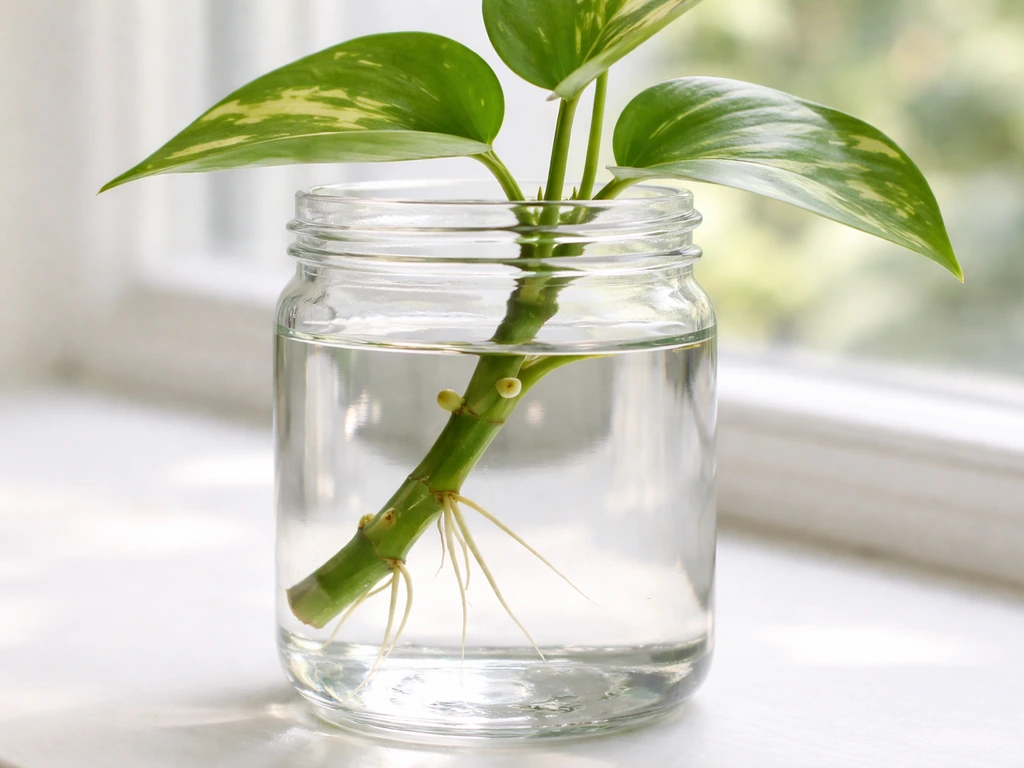
Take a 3–4 inch cutting just below a node, strip any leaves that would sit underwater, drop it in a clean glass jar with room-temperature water, place it in bright indirect light, and change the water every 5–7 days. That is the whole method. Roots start showing in 1–3 weeks, and within 4–8 weeks you will have a rooted cutting ready to move to soil or a hydroponic setup. Everything below is the detail that keeps it from failing.
How to Grow Money Plant in Water in Tamil: Step-by-Step
Marcus Holloway
5 May 2026
What money plant are we talking about? (Quick ID check)
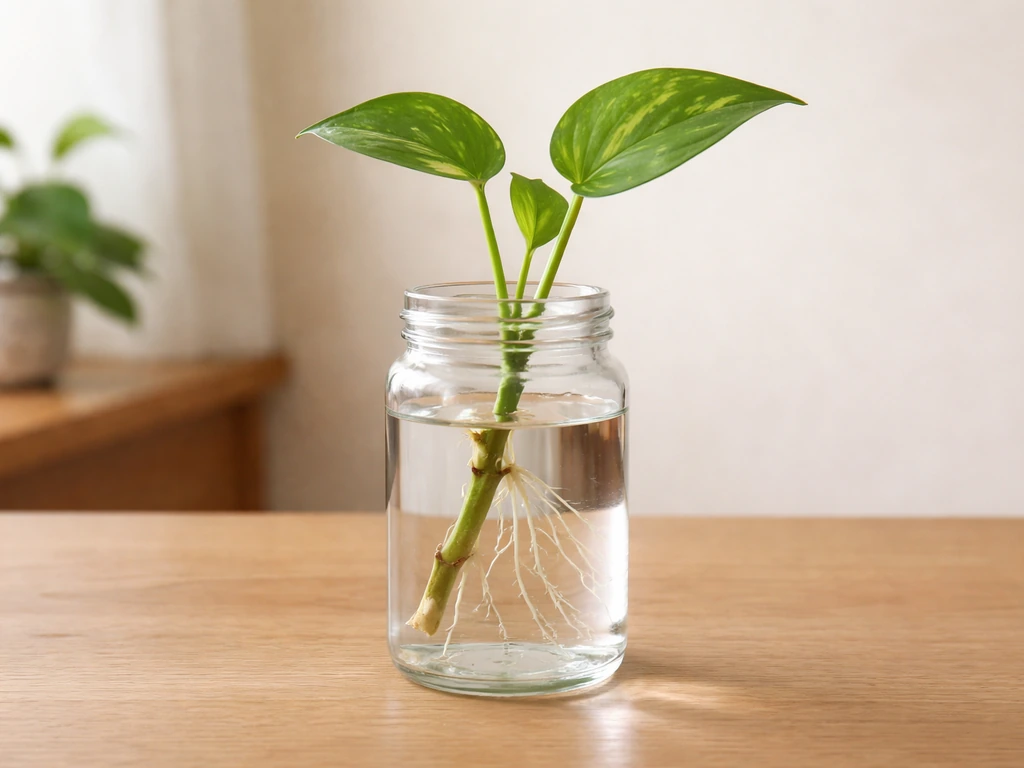
In Tamil, the money plant is called பண்வரவு செடி or காசு செடி, and the plant most people mean is Epipremnum aureum, also called golden pothos. It is a vining plant with heart-shaped leaves that are usually green with yellow or cream streaking. You will recognize it by the long trailing vines, small bumps along the stem called nodes, and sometimes tiny aerial roots already poking out from mature stems. It climbs walls and trellises but also trails perfectly from a jar of water.
One quick clarification: the round coin-leaved plant sometimes called the Chinese money plant is Pilea peperomioides, which is a completely different species. The water-growing method in this guide is for Epipremnum aureum (pothos). If your plant has heart-shaped leaves with variegation and vines with visible nodes, you are in the right place. This is the same plant described across Tamil Nadu, Kerala, and most of South India as a low-maintenance good-luck houseplant, and it roots in water more reliably than almost any other houseplant you will try.
What you need before you start
You do not need special equipment. The list is genuinely short, and most of it is already in your kitchen.
- A healthy stem cutting from an existing money plant: 3–4 inches (7–10 cm) long with at least one node and 2–3 leaves
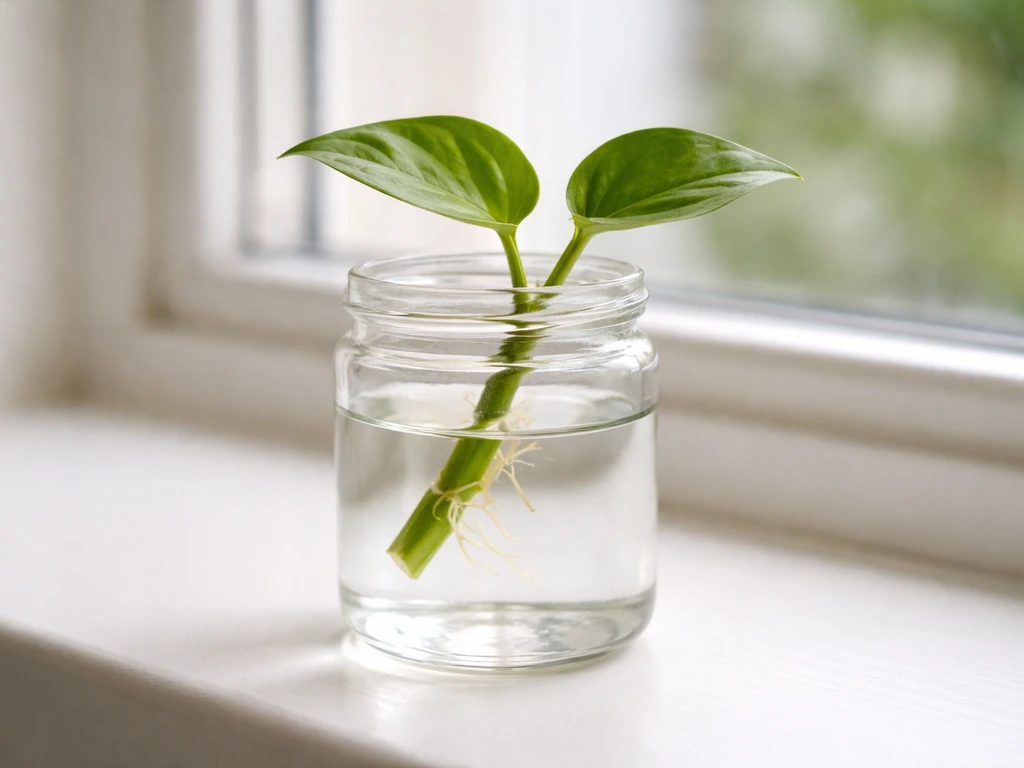
- A glass jar, bottle, or vase: clear glass is ideal so you can see root development without disturbing the cutting
- Water: plain room-temperature water works fine; if you are using tap water, let it sit uncovered for 30–60 minutes to let chlorine dissipate, or use filtered water
- Clean scissors or a blade: disinfect with rubbing alcohol or a diluted hydrogen peroxide solution before cutting to avoid introducing bacteria
- A bright spot indoors: a windowsill with indirect light, not direct sun
On the container: clear glass lets you watch roots form without pulling the cutting out to check, which is a habit that genuinely slows rooting. A jar that is tall enough to hold 2–3 inches of water while keeping the leaves clear of the water surface works perfectly. Dark or opaque containers also work, but you lose the visual feedback that tells you when roots are ready.
How to take the right cutting
This is where most beginners go wrong. The cutting needs to include a node, which is the small bump or notch along the stem where leaves attach and where roots will grow. Penn State Extension notes that houseplant propagation commonly uses vegetative methods where stems and key points like nodes are used to produce an identical plant cutting needs to include a node. No node, no roots. It really is that simple.
- Find a healthy vine on the parent plant with at least 3–4 leaves and no signs of yellowing or rot
- Locate a node (the bump just below where a leaf meets the stem)
- Cut 0.5–1 cm below that node using clean scissors
- Keep 2–3 leaves on the cutting but remove any leaves that would end up below the waterline once placed in the jar
- Let the cut end sit in open air for 10–15 minutes if the stem looks very juicy, so the cut calluses slightly before going into water
Leaving leaves submerged underwater is the single most common reason cuttings rot. They break down quickly, cloud the water with bacteria, and the stem follows. Strip them off cleanly before the cutting goes into the jar.
Step-by-step: setting up the water jar
- Wash the glass jar with soap and hot water, then rinse thoroughly. Residue from previous use can carry bacteria or algae spores.
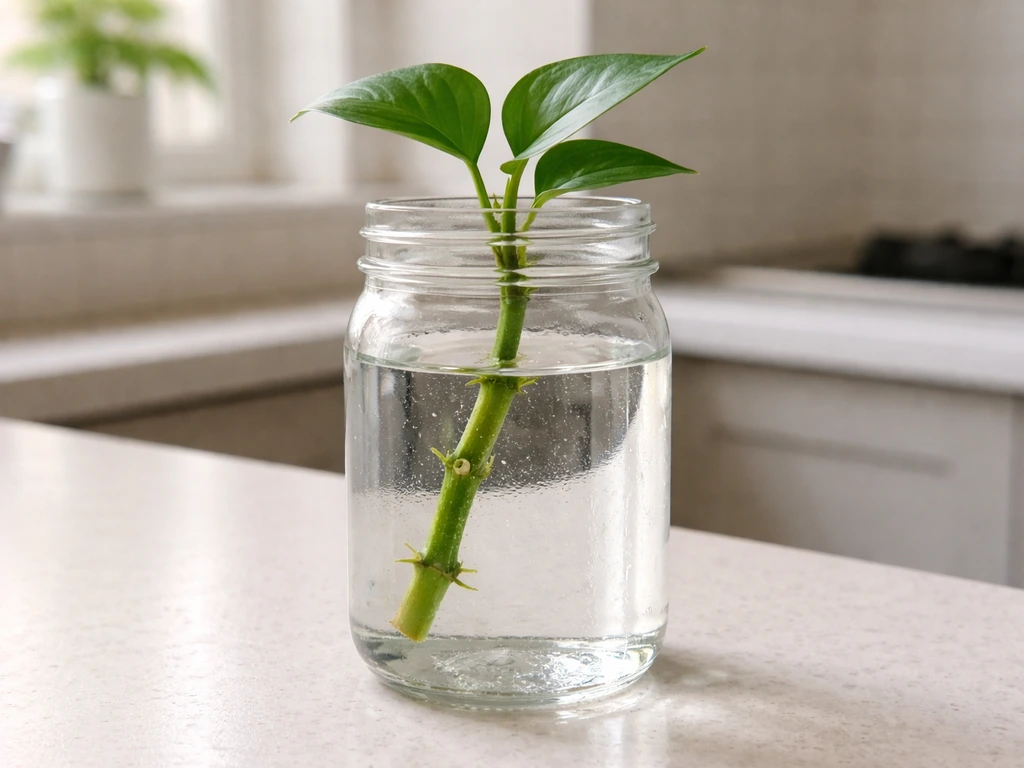
- Fill the jar with room-temperature water until it is about half to two-thirds full. The node and 1–2 inches of stem should be submerged; the leaves must stay above the waterline.
- Place the cutting in the jar so at least one node is underwater. You can prop the cutting against the rim of the jar if needed.
- Set the jar in a spot with bright, indirect light. A north- or east-facing windowsill in India works well. Avoid direct afternoon sun, which heats the water and accelerates algae growth.
- Mark the date on a sticky note on the jar so you track when to change the water and when to expect roots.
Light, temperature, and ongoing water care
Money plant is forgiving, but it roots fastest and stays healthiest within a specific range of conditions. In most Tamil Nadu homes, the climate is already favorable for most of the year.
Light
Bright indirect light is ideal. Direct sun through glass heats the water rapidly, encourages green algae to bloom, and can scorch the cutting's leaves before roots even form. A spot 1–2 feet back from a sunny window, or a bright spot under a fluorescent or LED grow light, gives good results. Completely dark corners produce slow, weak rooting.
Temperature
Money plant roots well between 18°C and 30°C. Most South Indian homes fall in this range year-round, which is a natural advantage. Avoid placing the jar near air-conditioning vents or cold drafts, which can shock the cutting and stall root development or even cause blackening of the stem tips.
Water change schedule
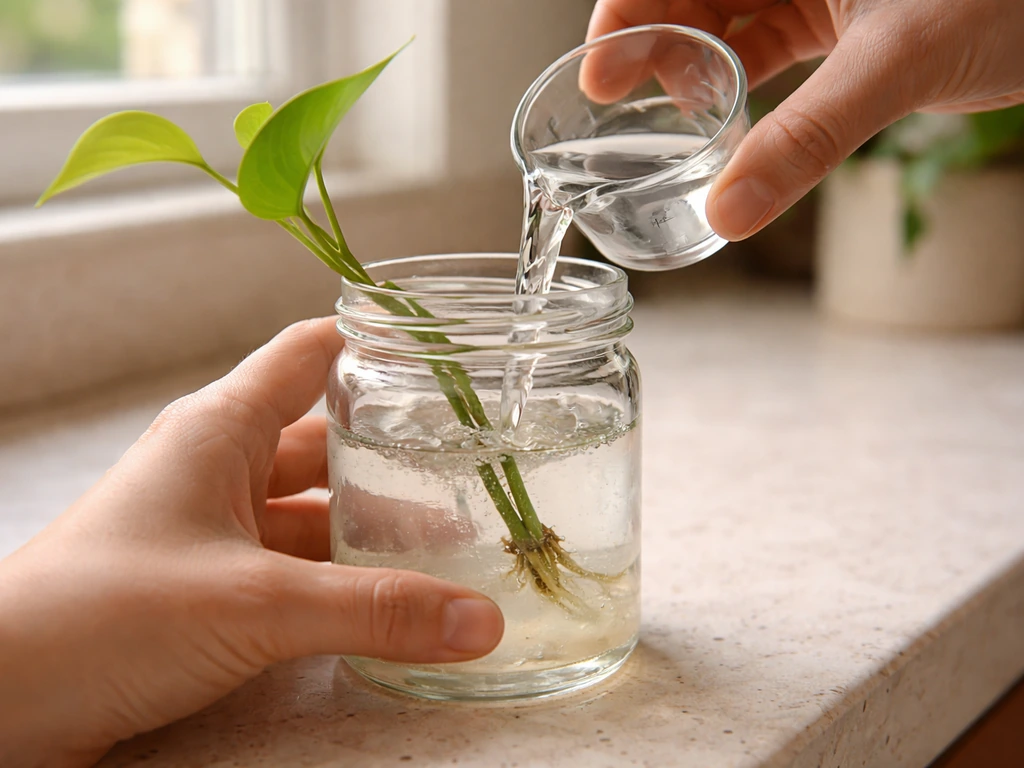
Change the water every 5–7 days during the rooting phase. Fresh water brings oxygen back to the submerged stem and removes the bacteria and breakdown products that cause rot. Once the plant is rooted and growing steadily, you can stretch this to every 2–3 weeks, but during those first few weeks when the cutting is vulnerable, weekly is the safer habit. Each time you change the water, refill to the same level, rinse the jar quickly, and check the stem for any soft or discolored spots.
Top up with fresh water between changes if the level drops. Do not let the node go dry, even for a day, or rooting stalls immediately.
Do you need nutrients? Options for long-term water growing
For the first 4–6 weeks while roots are forming, plain water is enough. The cutting is living off stored energy in the stem and leaves. After that, if you plan to keep the money plant growing in water permanently (which works well and many people do), you need to add nutrients or the plant will slowly yellow and weaken.
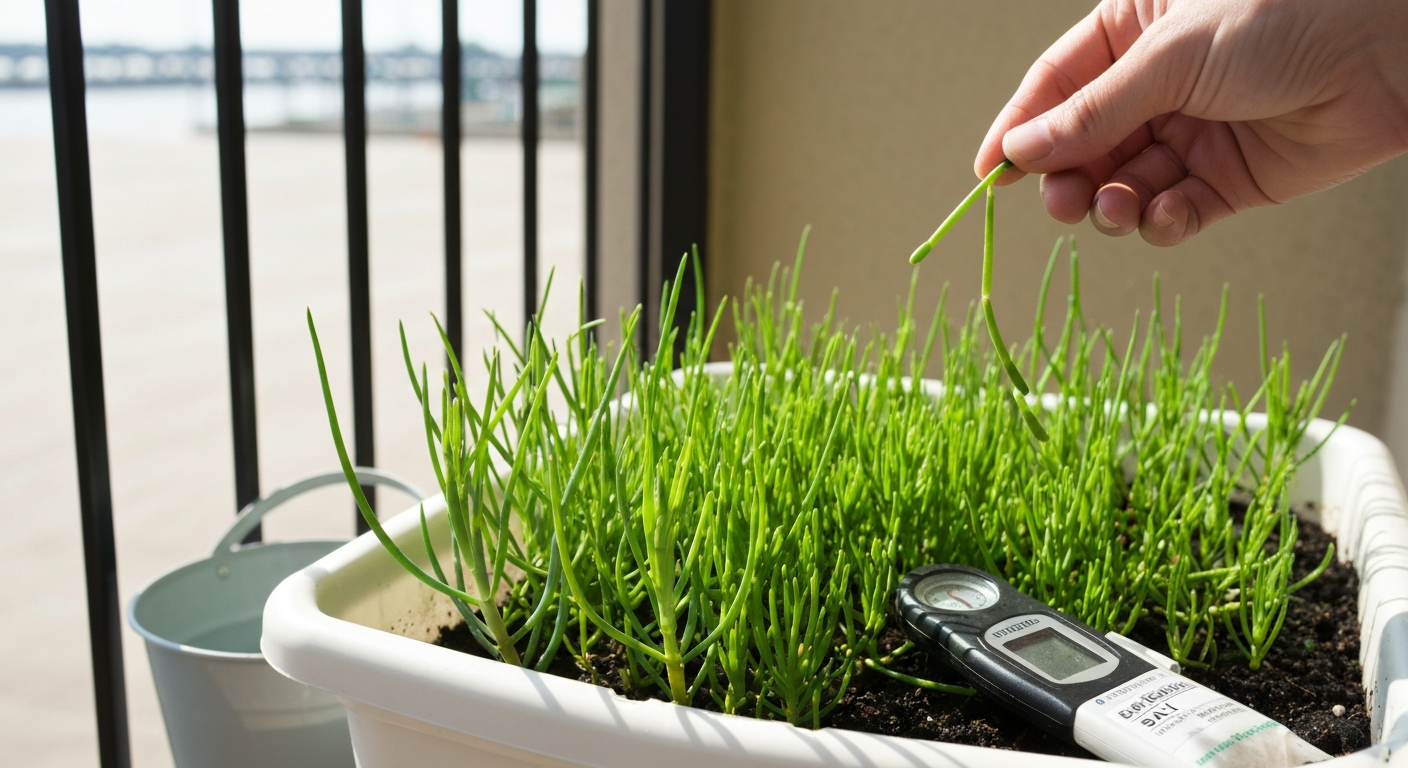
The easiest approach: add a small amount of liquid houseplant fertilizer to the water every 4–6 weeks. Use a quarter of the dose recommended on the label for soil plants. Too much fertilizer in water causes salt buildup on roots and can burn them. If you want to go further into hydroponic-style growing, keep the solution pH between 6.0 and 6.5 and the electrical conductivity (EC) between 0. Electrical conductivity (EC) is commonly reported in mS/cm and measures the concentration of dissolved salts in hydroponic solutions. 6 and 1.2 mS/cm using a balanced foliage nutrient solution. This is the same approach used in full hydroponic setups and produces noticeably better long-term growth than plain water alone.
If you eventually want to move your water-rooted cutting to a more structured growing system, a LECA (lightweight expanded clay aggregate) or semi-hydroponic setup is a natural next step from water propagation. The roots adapt well when they have already grown in water. This connects naturally with what we cover in broader guides on hydroponic and aquatic cultivation methods on this site.
Transitioning from water to soil (when and how)
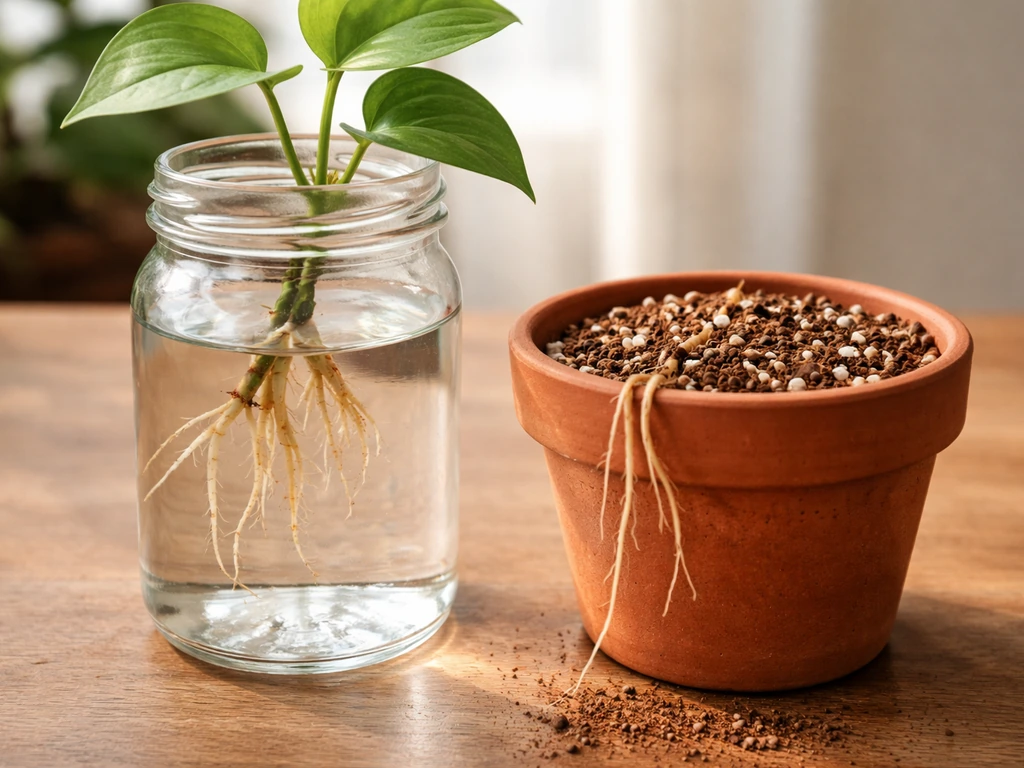
The right time to pot up is when roots are 2–4 inches (5–10 cm) long and visibly healthy: white or light tan, firm, and branching slightly. Do not wait until the roots are excessively long and tangled, because long water-adapted roots have a harder time adjusting to soil compared to shorter, newer ones.
- Prepare a small pot with well-draining potting mix (cocopeat plus perlite works well in Indian conditions)
- Gently remove the cutting from the jar, handling the roots as little as possible
- Make a hole in the soil with a pencil or stick and lower the roots in without bending them
- Water the soil thoroughly immediately after planting
- Keep the newly potted plant in the same bright indirect light spot and avoid direct sun for the first 2 weeks while the roots adjust
- Expect some brief drooping or a new leaf pause for 1–2 weeks; this is normal transplant adjustment, not failure
If you want to keep it in water indefinitely instead of potting up, that is a valid choice. Long-term water growing works, provided you keep up with nutrient additions and regular water changes. If you are specifically growing a fortune plant in water, follow the same node and water-care steps, then add light fertilizer once roots are established Long-term water growing. Some people prefer this because it is cleaner and visually appealing in a glass vase.
Troubleshooting: when things go wrong
Most problems with water-grown money plant come down to three things: dirty water, wrong light, or a cutting with no viable node. Here is how to diagnose and fix the most common issues.
| Problem | Likely Cause | Fix |
|---|---|---|
| Yellow leaves on cutting | Submerged leaves rotting, or water not changed often enough | Remove submerged leaves, change water immediately, and switch to weekly water changes |
| Mushy or slimy stem at the base | Bacterial rot, often from leaves decaying in water or a dirty jar | Trim the rotted section back to firm healthy stem, disinfect the jar, and restart in fresh water; if the node is gone, the cutting cannot be saved |
| Black or dark stem tip | Root rot from stagnant water, or cold draft damage | Check for cold air sources, trim to healthy tissue, clean the container, and change water every 5 days until recovery |
| Green algae on jar walls and water | Too much direct light reaching the water | Move to indirect light, switch to an opaque container, and scrub the jar at each water change |
| No roots after 3–4 weeks | No node submerged, water too cold, or light too low | Confirm a node is actually below the waterline, move to a warmer brighter spot, and make sure water is changed weekly |
| Roots forming but leaves are pale | Not enough light, or plant needs nutrients if it has been 6+ weeks | Increase light intensity and add a quarter-strength liquid fertilizer at the next water change |
One thing I have seen trip people up repeatedly: they check rooting by pulling the cutting out of the jar every few days. Every time you do that, you stress the emerging root tips and sometimes snap them off entirely. Use a clear jar and look from the outside. Only handle the cutting when you are changing the water, and do it gently.
If you are dealing with persistent algae or bacterial cloudiness that keeps coming back fast, try adding a few drops of 3% hydrogen peroxide diluted in water (roughly 1 part H2O2 to 3–4 parts water) as a brief soak or rinse for the jar during cleaning. It kills surface bacteria and algae without harming the cutting at that dilution. Do not add it directly to the rooting water in large amounts.
How long does all this actually take?
Under good conditions (bright indirect light, weekly water changes, warm temperature between 22–28°C), here is a realistic timeline:
| Week | What to Expect |
|---|---|
| Week 1 | Cutting settles in; no visible roots yet; leaves should stay firm and green |
| Week 2–3 | First root nubs appear at the node; may be 0.5–1 cm long |
| Week 4–5 | Roots 2–4 cm long and branching; new leaf growth may begin |
| Week 6–8 | Roots 5–10 cm long; plant is ready to pot up into soil or move to a hydroponic setup |
Cooler temperatures, lower light, or infrequent water changes push everything toward the slower end. You might wait 8 weeks for pot-ready roots in a dim room, or see them in 3 weeks on a warm bright windowsill in summer. The method is the same either way; the timeline just shifts.
Your next steps right now
If you have a money plant at home or can get a cutting from a neighbor (pothos is one of the most freely shared plants in South India), you can start this today. Once you have the cutting rooted, follow the same water-care steps so you know how to grow coin plant in water successfully. This guide answers how to grow money plant in water using a simple cutting, bright light, and regular water changes start this today. Take a cutting, pick your cleanest glass jar, fill it with room-temperature water, and set it on your brightest windowsill that does not get direct sun. Change the water next week. Check for roots in two weeks. That is genuinely it for the first phase.
Once rooted, you can keep it in water long-term with light fertilization, pot it up to soil, or explore a proper hydroponic setup with a nutrient solution and pH management. The water-rooting step you just learned is the same foundation used for all those paths. Get the cutting rooted first, then decide what comes next based on how much you want to invest in the system.
FAQ
How do I know my cutting has a node if I am growing money plant in water in Tamil Nadu homes where cuttings are sometimes trimmed a lot?
Look for the small bump or notch on the stem where leaves attach. Even if leaves are removed for underwater parts, the node should still be visible along the vine. If you cannot find any bump on the section you are using, don’t add it to water, take a slightly longer cutting until you get at least one clear node.
Can I grow money plant in water in a wide mouth bowl instead of a jar?
Yes, but ensure the water depth stays around 2–3 inches and the leaves stay above the surface. Wide bowls often leave more leaf area near the water line, which increases rot risk. A narrow jar helps keep leaves clean and makes water level control easier.
My water turns green quickly, what should I do to stop algae while growing in water?
Move the setup farther from direct sun and keep bright indirect light only. Also clean the container during your regular water change (rinse jar walls and refill). If algae repeatedly returns, avoid leaving the jar in a sunny spot even for a few hours, because glass concentrates heat and light.
Is tap water okay for money plant growing in water, or should I use boiled or filtered water?
Tap water is usually fine, but let it come to room temperature before use, and avoid using water that feels very chlorinated or has an unusual smell. If your tap water consistently causes cloudiness or bad smells, switch to filtered or dechlorinated water and keep the same water-change schedule.
How much water should I keep in the jar, and can I top up anytime?
Keep the node area submerged but do not allow leaves to touch the water. You can top up with room-temperature water between changes if the level drops, but keep the same depth target so the node stays wet and the stem does not dry out even briefly.
Can I add fertilizer from day one when learning how to grow money plant in water in Tamil?
It’s better to wait. For the first 4–6 weeks during rooting, plain water is enough because the cutting relies on stored energy. Start light feeding only after roots form and growth stabilizes, using a reduced dose to prevent root burn and salt buildup.
How do I treat bacterial smell or cloudy water that keeps coming back, and is hydrogen peroxide safe?
If cloudiness returns fast, the cause is usually dirty rinse, submerged leaves not fully removed, or infrequent changes. Only consider dilute 3% hydrogen peroxide as a brief jar rinse or soak, around 1 part H2O2 to 3–4 parts water, and do not pour large amounts into the rooting water.
When should I transplant my water-rooted money plant to soil or LECA?
Transplant when roots are about 2–4 inches (5–10 cm) and look healthy (white or light tan, firm, and not mushy). Avoid waiting until roots are long and tangled, because older water roots can struggle more during the transition.
Can I keep the money plant permanently in water without soil, and how often should I fertilize?
Yes, long-term water growing works if you keep changing water regularly and provide nutrients. Use a small amount of liquid houseplant fertilizer every 4–6 weeks to start, then adjust if leaves yellow. If you see slow growth with pale leaves, increase feeding slightly, but never at full label strength.
What temperature is best for rooting, and what should I do during cooler nights or AC use?
Aim for a warm range, roughly 18–30°C. Avoid placing the jar near AC vents or cold drafts because sudden chilling can stall rooting or cause darkening near the stem tips. If nights get cold, move the jar to a warmer indoor spot but keep light bright and indirect.
My cutting rooted but new leaves are small or pale, why is that happening?
Common causes are insufficient light after rooting, nutrient deficiency in long-term water culture, or stress from too much fertilizer too early. Ensure bright indirect light, then start gentle feeding after roots establish. If you only do water changes but never fertilize, expect gradual yellowing later.
Do I need to remove all underwater leaves completely, or can some leaves touch water?
Remove leaves that would sit underwater, and keep leaf surfaces off the water line. Leaves that are partially submerged rot faster and cloud the water, which can attack the stem. If a leaf accidentally falls into the jar, trim it off to protect the cutting.