Hornwort (Ceratophyllum demersum, also sold as coontail) is one of the easiest aquarium plants you can grow, but it has a reputation for melting into a sad pile of needles the moment you bring it home. That reputation is mostly earned by one mistake: not acclimating it properly. Once you understand how it actually grows, and stop trying to plant it like a rooted stem plant, it becomes nearly bulletproof. Here's exactly how to set it up and keep it thriving. If you’re interested in saltwort instead of hornwort, the approach is different—use the right substrate, salinity, and moisture conditions for saltwort species how to grow saltwort.
How to Grow Hornwort in an Aquarium Step by Step Guide
Marcus Holloway
18 Apr 2026
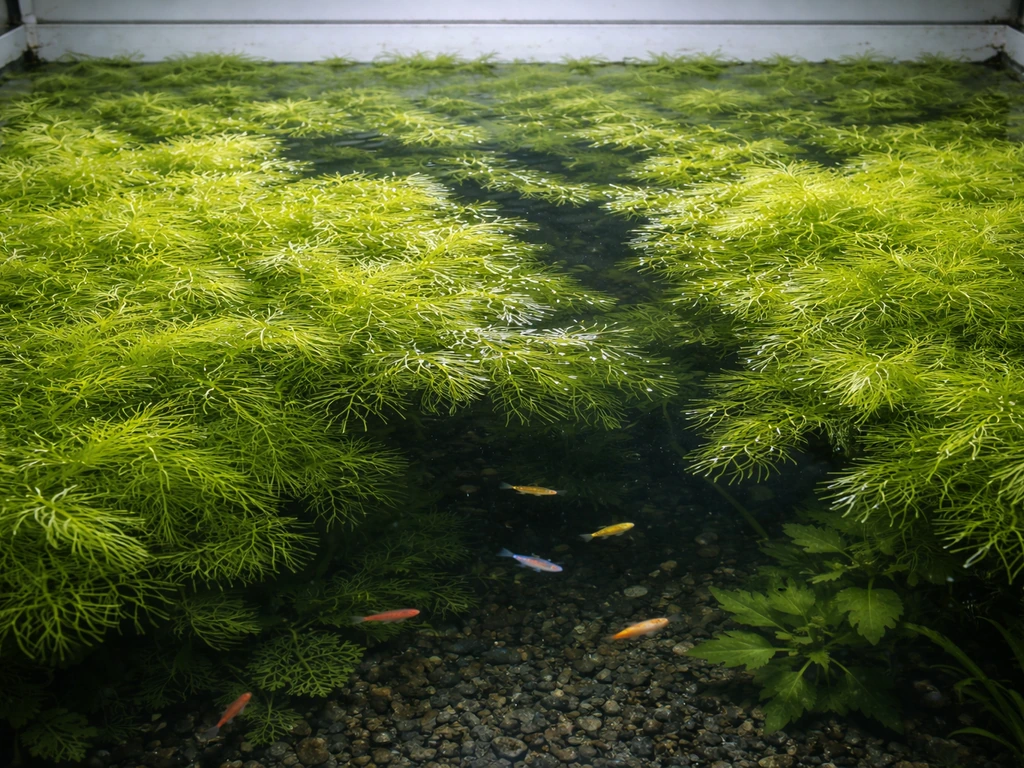
What hornwort is and how it actually grows
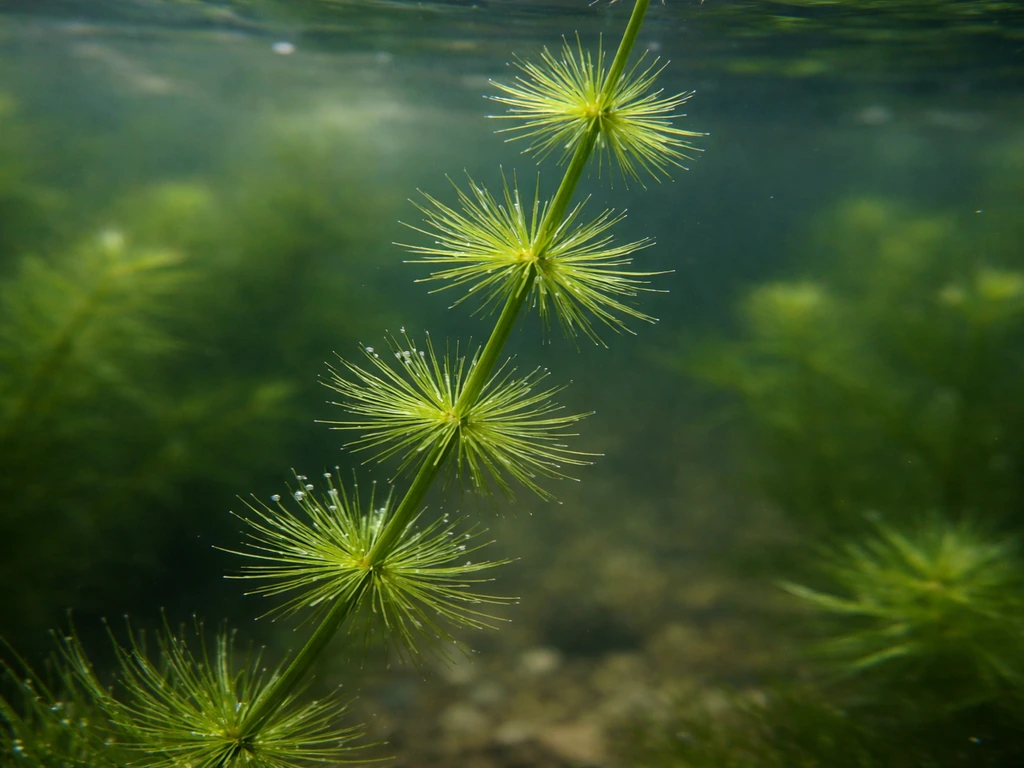
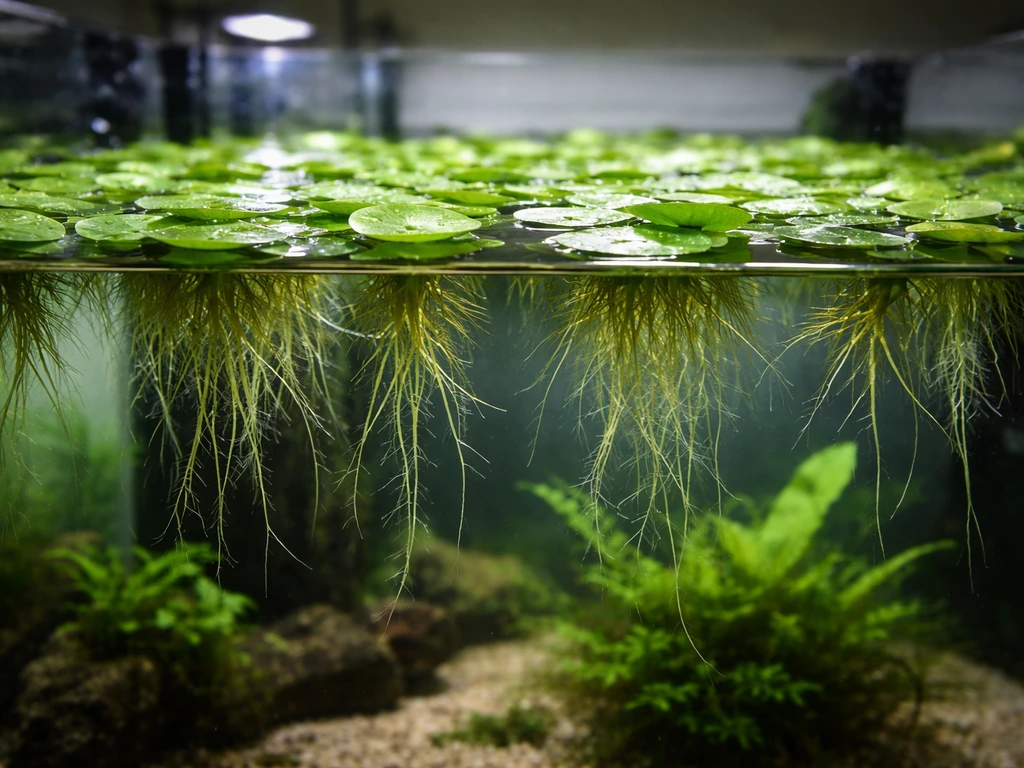
Ceratophyllum demersum is a true aquatic plant, meaning it lives its entire life submerged. What makes it unusual is that it never develops proper roots. Instead of anchoring itself and drawing nutrients from substrate, hornwort feeds entirely from the water column, absorbing ammonia, nitrates, and phosphates directly through its stems and needle-like leaves. That single fact explains almost every care decision you need to make.
In the wild, hornwort spreads by vegetative fragmentation. A piece breaks off, floats, and regrows into a new plant. In your tank, that same mechanism is both its superpower and the reason burying it in gravel causes problems. The buried end has nothing to grip with, it just rots. The fragment floats free, and you're left wondering why your "planted" hornwort is drifting around the tank. That's not failure, that's the plant doing exactly what it's designed to do.
In outdoor ponds, hornwort forms turions (dense, compact stem tips) in cold seasons that sink and go dormant, then regrow in spring. In a stable indoor aquarium you won't see true turions, but you may notice a growth slowdown if your tank temperature drops or your light schedule shifts. That's normal biology, not a disease.
Tank setup: lighting, temperature, water parameters, and flow
Hornwort is genuinely flexible on parameters, which is part of why it works well for beginners. If you want to grow water dropwort specifically, focus on its unique moisture and light needs instead of hornwort’s setup hornwort is genuinely flexible. But "flexible" doesn't mean "anything goes." Here are the ranges that consistently produce healthy growth.
| Parameter | Ideal Range | Tolerated Range |
|---|---|---|
| Temperature | 68–77°F (20–25°C) | 50–86°F (10–30°C) |
| pH | 6.5–7.5 | 6.0–8.0 |
| Water Hardness (dGH) | 5–15 | Wider range tolerated |
| Lighting (photoperiod) | 8–10 hours/day | 6–12 hours/day |
| CO2 injection | Not required | Boosts growth if added |
Lighting
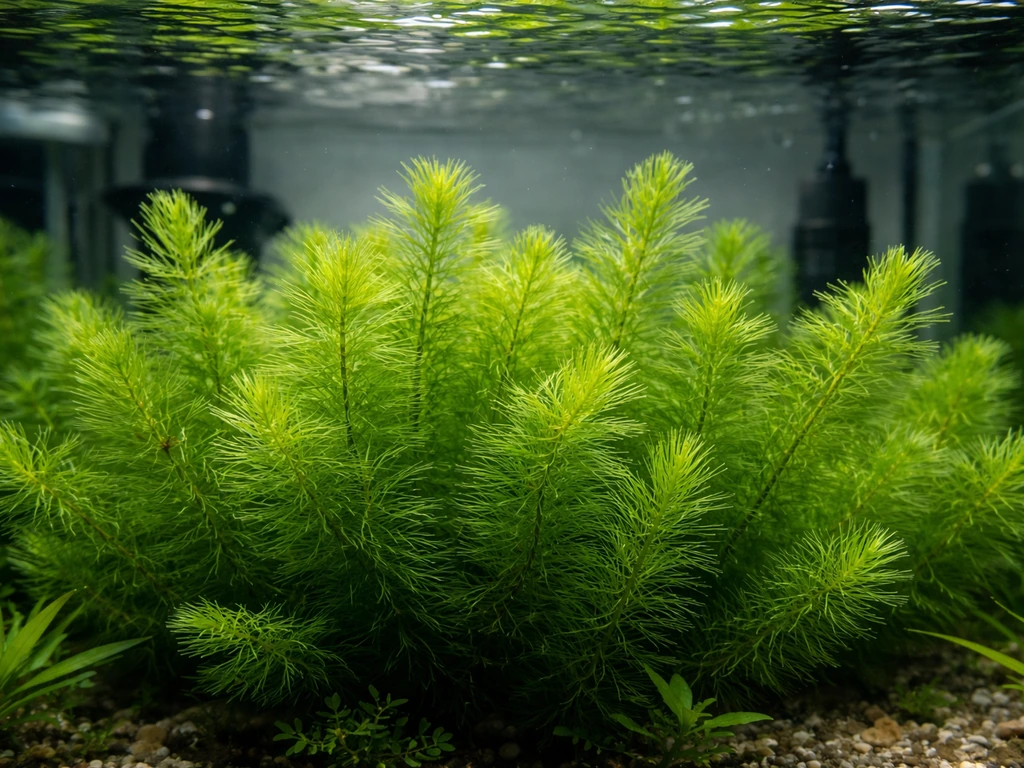
Hornwort doesn't need intense light. A standard aquarium LED running 8 to 10 hours a day is enough to get strong, dense growth. Too much light (more than 12 hours, or a very high-output fixture with no dimming) will actually encourage algae to colonize the plant before it has a chance to establish. If you're running a planted tank with high-light demanding plants, hornwort can coexist, but keep the photoperiod consistent and use a timer. Inconsistent light schedules are a common trigger for needle shedding.
Temperature and water parameters
The wide temperature tolerance (50–86°F) is real. I've kept hornwort in an unheated tank at around 65°F and it grew fine, just a bit slower. It also does well in tropical setups at 78–80°F. What it doesn't tolerate is sudden swings. Moving it from a 65°F store tank to your 78°F tropical setup without acclimating is the single most common cause of that infamous needle dump. For pH and hardness, aim for 6.5–7.5 pH and 5–15 dGH and you'll be in the sweet spot. Hornwort can push into harder, more alkaline water (up to pH 8.0) but stability always matters more than hitting a specific number.
Water flow
Moderate flow is fine. Hornwort actually benefits from gentle circulation because it helps distribute nutrients throughout the water column where the plant feeds. Very strong flow (like a powerful wavemaker pointed directly at the plant) can break stems and create a constant mess of floating fragments. Aim for gentle to moderate circulation and keep your filter return pointed away from a dense hornwort clump.
Starting hornwort: cuttings, floating vs. planting, and placement
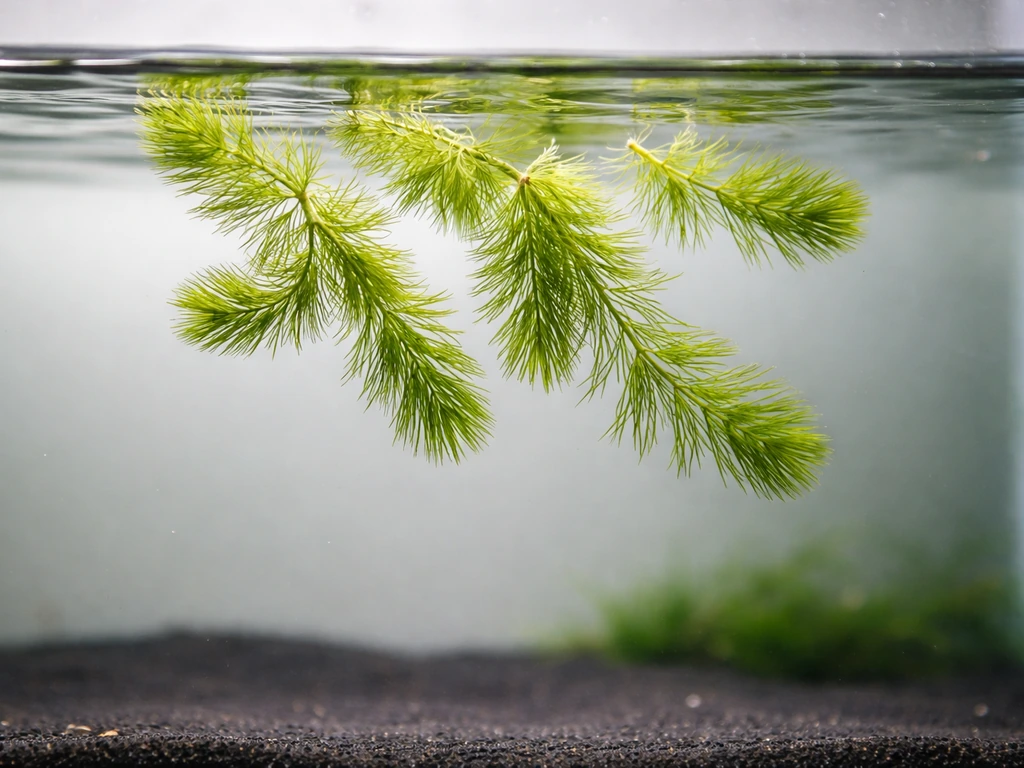
Whether you buy hornwort from a store or get cuttings from another hobbyist, the starting method is the same. You're working with stem fragments, and those fragments want to float. Here's how to set them up for success from day one.
Acclimating new hornwort
Before you put hornwort in your tank, float the bag or container in the tank for 20 to 30 minutes to equalize temperature. Then slowly mix small amounts of your tank water into the container over another 15 minutes before transferring the plant. This slow temperature and chemistry transition dramatically reduces the shock-induced shedding that makes new hornwort look like it's dying. It's not a complicated step, but skipping it is the number one reason people think hornwort is a difficult plant.
Floating vs. anchoring in substrate
Let it float. I know it looks messy and you want a neat, planted look, but blank" rel="noopener noreferrer">hornwort has no rooting structures. Wikipedia notes that Ceratophyllum lacks proper roots, which is why it relies on its stems and leaves to feed from the surrounding water blank" rel="noopener noreferrer">hornwort has no rooting structures. If you push the stem into gravel or sand, the buried portion will rot within a week or two, the stem will detach, and you're back to a floating plant anyway. If you genuinely want it in the midground or background, the best approach is to loosely anchor it with a plant weight or a suction cup clip near the top of the stem, so the plant hangs down without the end being buried in substrate. This way the whole stem stays in the water column where it can actually feed.
Propagating from cuttings
Propagation is almost embarrassingly simple. Take a healthy stem section, at least 4–6 inches long, and float it in the tank. Within a week or two in good conditions, it will start pushing new growth from the tip. Hornwort fragments are hardwired to regrow, so as long as the cutting isn't rotted or diseased, it will take. This also means trimming the plant naturally gives you more plants to spread around the tank or share.
Placement strategy
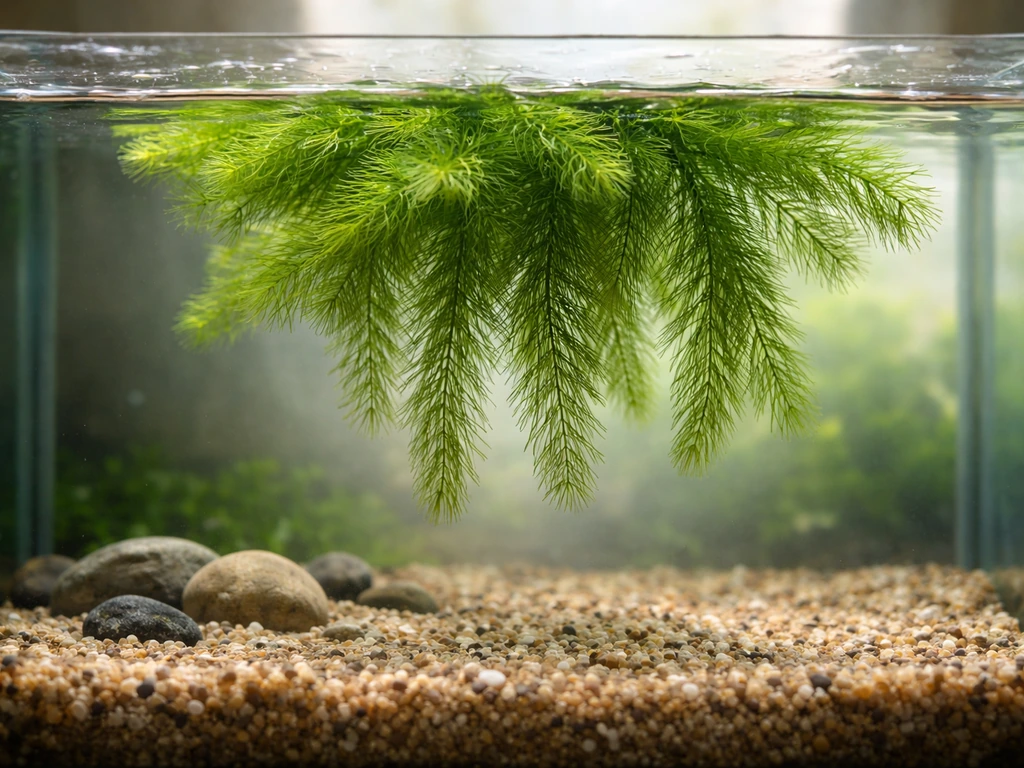
Floating hornwort in the back third of the tank is a practical default. It keeps the front open for viewing, gives fish and shrimp cover in the rear, and puts the plant in the path of light without shading other plants completely. If you have species that need surface cover (like fry, or shrimp that want to hide), letting some hornwort float loosely at the surface works extremely well. Just keep an eye on how much surface it covers so it doesn't block light to lower plants.
Water nutrition, feeding, pruning, and what growth actually looks like
Nutrients: fish waste is your fertilizer
Here's the thing about hornwort that makes it so practical: in a tank with fish, it usually doesn't need any added fertilizer at all. It feeds directly from the water column, pulling ammonia, nitrates, and phosphates from fish waste and uneaten food. This is also why it's such a useful plant in fish-heavy setups where nitrates can accumulate quickly. In a low-tech, moderately stocked fish tank, hornwort will grow robustly on waste alone. If you're running a very lightly stocked or near-fishless setup, you can dose a basic liquid fertilizer once a week to give it something to work with. Root tabs and substrate fertilizers are a waste of money here since the plant never taps into the substrate.
CO2: optional, not required
Hornwort grows well without CO2 injection. If you're already running CO2 for other plants in a high-tech setup, hornwort will definitely respond with faster, denser growth. But if you're a beginner or running a low-tech tank, don't let the absence of CO2 hold you back. It's not a limiting factor for this plant.
Pruning and controlling growth
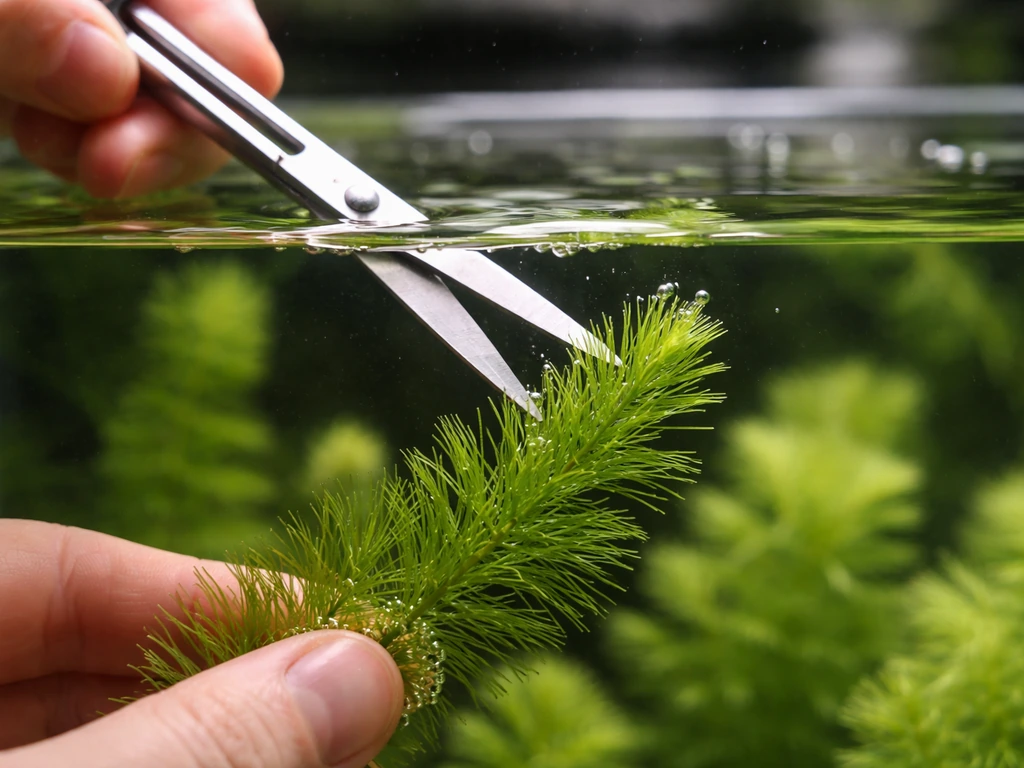
In good conditions, hornwort grows fast. Really fast. Left unmanaged it will take over the surface and start shading everything beneath it. Plan to trim it every 1 to 2 weeks once it's established. The method is simple: cut stems to the length you want with sharp scissors, remove the trimmed sections from the tank, and let the remaining stems keep growing. Don't remove more than about a third of the plant at once. Taking off too much in a single session strips away too much photosynthetic tissue and can stress the plant, causing a setback in growth. Consistent, moderate trimming beats infrequent heavy cuts every time.
What healthy growth looks like and how fast to expect it
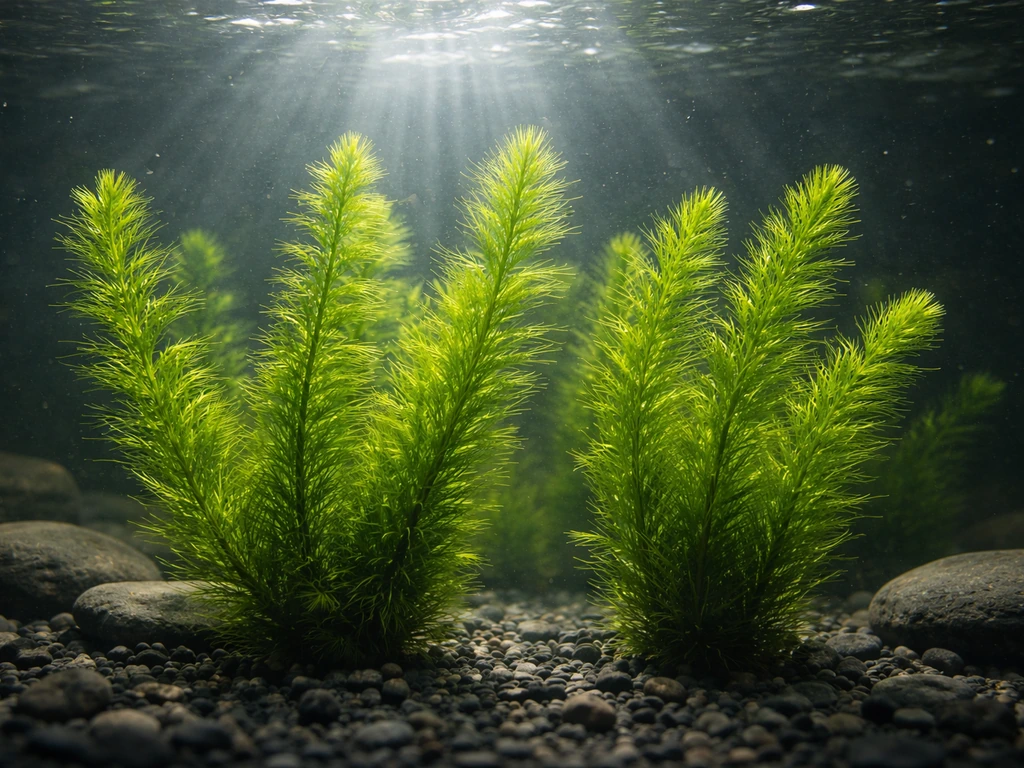
In good conditions (stable temperature, decent light, fish waste available), hornwort can grow several inches per week. New growth appears at the stem tips as bright green, tightly packed needles. The overall texture should be dense and almost bristly. If stems look sparse, with widely spaced needles or pale coloring, that's a signal that light or nutrients need attention. After bringing home new hornwort, give it 1 to 2 weeks to acclimate before judging its growth rate. The initial shedding phase is almost always temporary.
Common problems and how to fix them fast
Melting and needle shedding
This is the most common complaint and almost always comes down to one thing: a sudden change in conditions. The plant was in one environment at the store, and your tank is different. The shock triggers mass needle drop that looks alarming but usually isn't fatal. What to check first:
- Temperature difference between the source water and your tank (aim for less than 2°F difference during transfer)
- pH stability (swings above or below the 6.5–7.5 sweet spot, especially sudden ones)
- Light schedule consistency (did your photoperiod change recently?)
- Water hardness (very soft or very hard water outside the 5–15 dGH range can stress the plant)
If the shedding is minor and the tips are still green and growing, just wait it out. Gravel-vacuum the fallen needles so they don't decompose and spike your nutrients. If the entire plant is shedding and the stem tips look brown or mushy, that's a more serious problem. Pull the plant out, trim off any rotted sections back to healthy green growth, and re-float the healthy portions in stabilized water.
Rot at the base or buried end
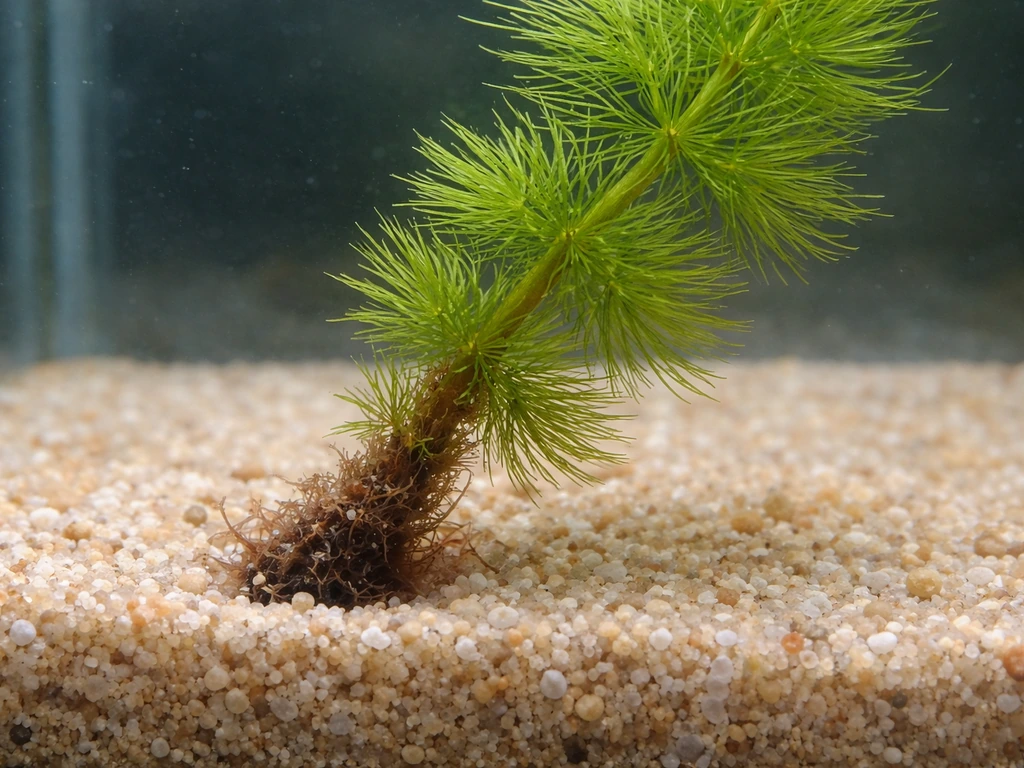
If you've tried to plant hornwort in substrate and the base is turning brown and mushy, that's expected. The fix is to stop trying to anchor it in the ground. Pull it out, trim the rotted portion off completely, and float it instead. Use a clip or plant weight near the upper portion of the stem if you need it anchored vertically.
Slow or stalled growth
If your hornwort isn't growing after the initial 2-week acclimation window, work through this checklist:
- Check your light: is it running at least 8 hours per day? Is the fixture powerful enough to reach the plant?
- Check nutrients: in a very lightly stocked tank, add a liquid fertilizer and see if growth picks up within a week
- Check temperature: below 65°F growth slows considerably; above 86°F the plant can stress
- Check flow: stagnant water prevents nutrients from reaching the plant's stems effectively
- Check for algae on the plant itself, which can block light from reaching the needles
Algae growing on hornwort
Hornwort is often used as an algae-fighting plant because it competes for the same nutrients algae needs. But when hornwort is stressed or the tank conditions are out of balance (too many nutrients, too much light, not enough hornwort growth to compete), algae can actually colonize the plant itself. The needles trap filamentous algae particularly well. The fix is to address the root imbalance: reduce your photoperiod by an hour or two, check if you're overfeeding fish, and add algae-eating crew members like amano shrimp or nerite snails. Healthy, fast-growing hornwort will out-compete algae naturally. Stressed or slow-growing hornwort won't.
Hornwort won't stay in place
If hornwort keeps floating to the surface when you want it in the midground, use a small stainless steel plant weight crimped gently around the lower portion of the stem (not the very tip). Alternatively, a suction cup plant clip attached to the glass holds stems at whatever depth you want without burying them. Both solutions keep the entire plant in the water column where it feeds properly.
Compatibility, tank strategy, and working with other species
Fish tanks
Hornwort is particularly well-suited to fish-heavy tanks precisely because it thrives on the waste those fish produce. It actively removes ammonia, nitrates, and phosphates from the water, making it a functional part of your biological filtration. For goldfish tanks, community tanks, and breeding setups, hornwort pulls double duty: it improves water quality and provides cover and structure. Just be aware that some larger fish (goldfish especially) will nibble on it, which can create a constant mess of floating fragments. Manage this by keeping more hornwort than the fish can eat, or accept that the plant will be consumed and treat it as a renewable food source.
Shrimp tanks
Hornwort is excellent in shrimp tanks. The dense needle structure gives shrimp a place to graze on biofilm, hide from perceived threats, and breed in safety. Neocaridina and caridina shrimp both do well with hornwort as cover. Because shrimp produce less waste than fish, you may need to supplement with liquid fertilizer occasionally to keep growth robust, but in an established shrimp colony the bio-load is often enough.
Planted tanks with other plants
Hornwort works in planted tanks but needs to be managed more actively. Its fast growth can shade slower-growing foreground and midground plants if left unchecked. Trim it on a regular schedule (every 1 to 2 weeks) and keep it toward the back or floating at the surface. It's a great companion plant for easy-going stems like moneywort or frogbit, which also tolerate varying light and don't need CO2. If you’re pairing it with moneywort, check out how to grow moneywort in aquarium so the two plants thrive under the same setup. Frogbit has different growth needs than hornwort, so use a frogbit-focused guide for the right light, nutrients, and floating setup. If you're running a high-tech planted tank with demanding species, hornwort can coexist but monitor it closely so it doesn't dominate.
Managing out-of-control growth
Once hornwort is established and happy, the challenge shifts from "how do I get it to grow" to "how do I keep up with it." Build trimming into your weekly tank maintenance routine. Removed cuttings can be given to other hobbyists, used in a pond, or composted. If you go on vacation and come back to a tank overrun with hornwort, do multiple moderate trims over 2 to 3 weeks rather than one massive cut, which can shock the plant and trigger a shedding episode.
The bottom line with hornwort is that almost every failure comes from fighting its nature rather than working with it. If you mean pennywort in a pond or aquarium, the growth requirements are different, so it helps to follow a pennywort-specific guide for light, water, and placement. Float it, don't plant it. Acclimate it slowly. Give it fish waste or a basic liquid fertilizer. Keep the light on a timer. Trim it regularly. Do those five things and you'll have more hornwort than you know what to do with inside a month.
FAQ
Why does my hornwort look OK for a few days, then suddenly turn brown and mushy at the base?
That usually means part of the plant ended up buried or trapped in substrate where it rots. Pull it out, trim back to firm green tissue, then float the healthy portion or anchor it with a clip or plant weight near the upper stem (keep the buried-free end fully in the water column).
Is it safe to trim hornwort and throw the cuttings back in the tank?
Yes, but avoid dumping too much at once. Remove small-to-moderate amounts, then let the plant recover. Large trimming sessions can stress hornwort and cause another shedding cycle, especially right after a recent tank change.
How do I stop hornwort from covering the entire surface and shading other plants?
Use a simple trimming schedule plus placement. Keep the densest hornwort in the back third, and if it creeps upward, cut stems back before it forms a full surface mat. If you want to limit surface spread, don’t let long runners float freely across the tank, keep them in a concentrated area.
Will hornwort melt if I move it from a store tank with different water parameters?
It can, even when the overall numbers seem close. The key is slow acclimation, temperature equalization, and avoiding sudden chemistry changes. If you see heavy shedding, do not bury the remnants, just re-float healthy tips in stabilized, well-aerated water.
Can I grow hornwort in a tank without fish, will it still thrive?
It can grow, but slower, because it relies on nutrients in the water column (ammonia, nitrates, phosphates). In near-fishless tanks, consider a basic liquid fertilizer once a week and keep lighting moderate, so hornwort can compete before algae takes over.
Why is hornwort not growing even after I waited the initial 2-week period?
First confirm it is not being limited by either light inconsistency or nutrient imbalance. Check your photoperiod timer, review feeding if you have fish, and reduce excessive light if algae is present. Also make sure flow is gentle enough that stems are not being torn into fragments but still distributing nutrients.
Does hornwort need nutrients like root tabs or substrate fertilizers?
No, root tabs and substrate fertilizers are usually wasted because hornwort does not use substrate. If you want to supplement, dose in the water column (for example a basic liquid fertilizer in low fish situations) rather than adding products under the plant.
Will hornwort harm fish or shrimp, or affect water quality negatively?
Typically it improves water quality by consuming dissolved nutrients. The main risk is behavioral and physical: heavy nibbling by goldfish can leave lots of fragments, and dense surface growth can reduce oxygen exchange if it becomes a full mat. Trim and manage surface coverage if you notice plants or livestock acting stressed.
How much hornwort should I add for algae control in a new tank?
Start with enough biomass that it can compete quickly, not just a few strands. If the tank is new and nutrients are low, hornwort may grow slowly at first, so you may need to wait longer or lightly supplement nutrients to help it establish before algae gains ground.
My hornwort keeps floating where I do not want it. What is the best way to anchor it without burying it?
Anchor vertically using a suction cup plant clip on the glass or a small plant weight attached near the lower portion of the stem (not at the very tip). This keeps the plant in the water column so the feeding end does not rot in substrate.