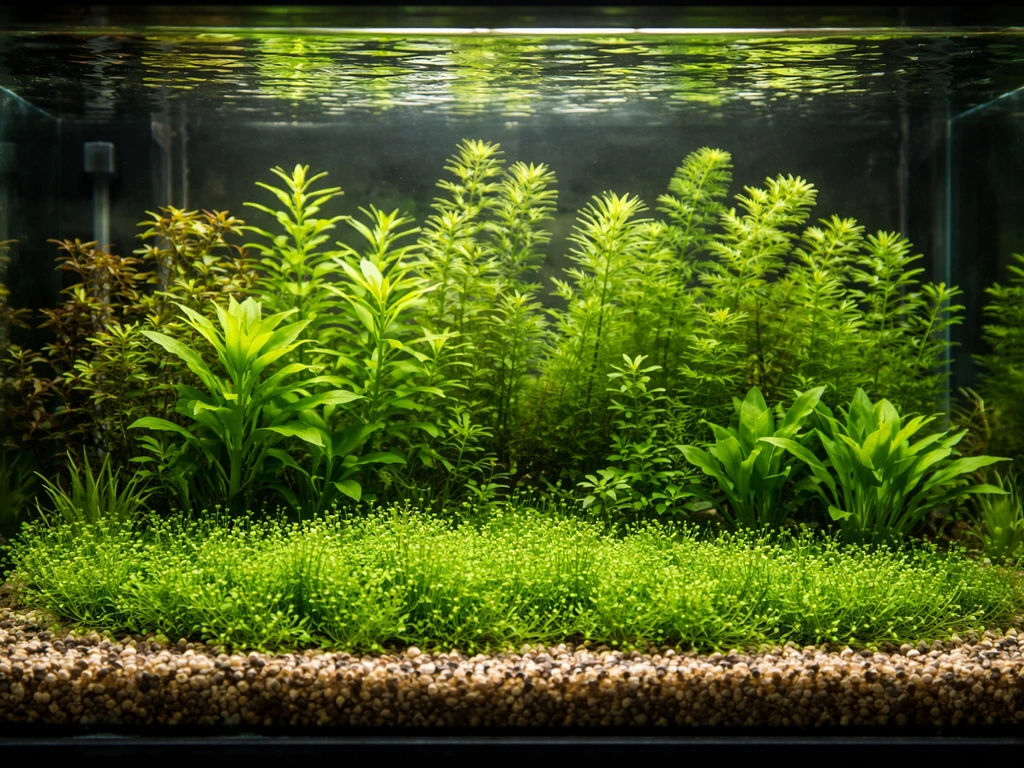
You can grow living aquarium plants successfully by choosing forgiving species like Java fern, Anubias, or Cryptocoryne, setting up a nutrient-ready substrate, running lights for 6 to 8 hours a day on a timer, dosing an all-in-one liquid fertilizer weekly, and planting each species correctly based on whether it feeds from roots or the water column. Skip CO2 injection to start unless you are pushing high-light, fast-growing stem plants. Most failures come down to three things: wrong planting depth, too many light hours too soon, and no fertilizer routine. Fix those three and most living plants will thrive.
How to Grow Natural Plants in an Aquarium Step by Step
Marcus Holloway
28 May 2026
Picking beginner-friendly aquarium plants
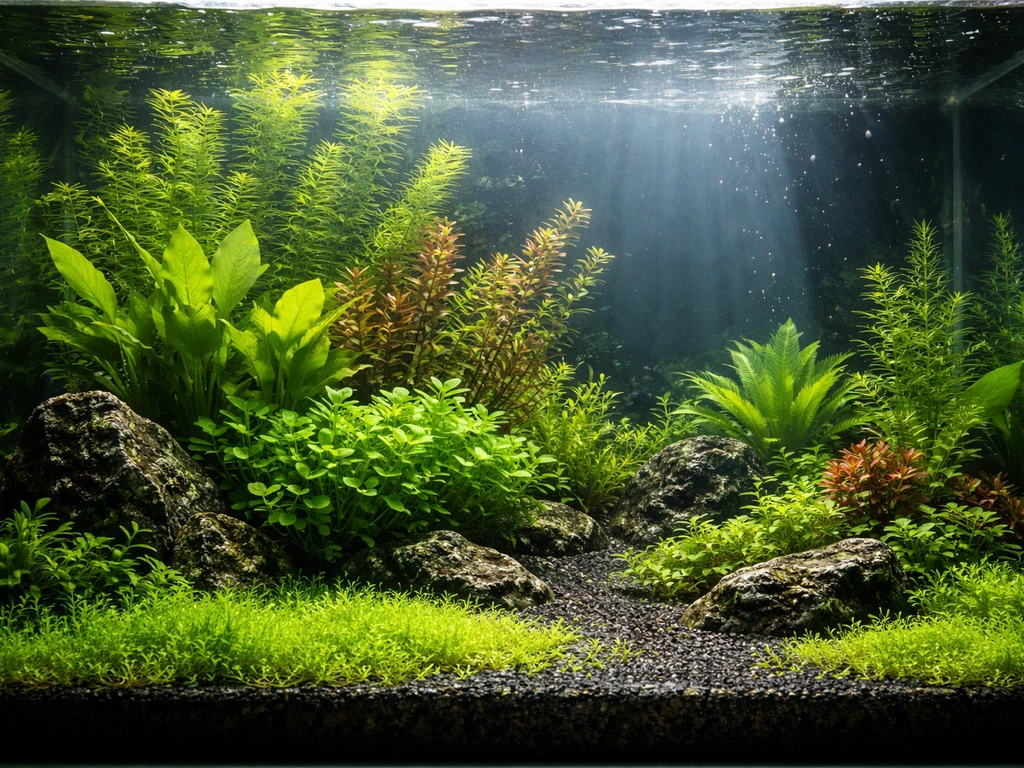
The single biggest thing you can do to set yourself up for success is choose plants that are genuinely forgiving. A lot of beginners walk into a fish store, buy whatever looks good in the display tank, and then wonder why half of it is dead two weeks later. The display tank usually has CO2 injection, dialed-in nutrients, and strong lighting. Your tank probably does not, at least not yet.
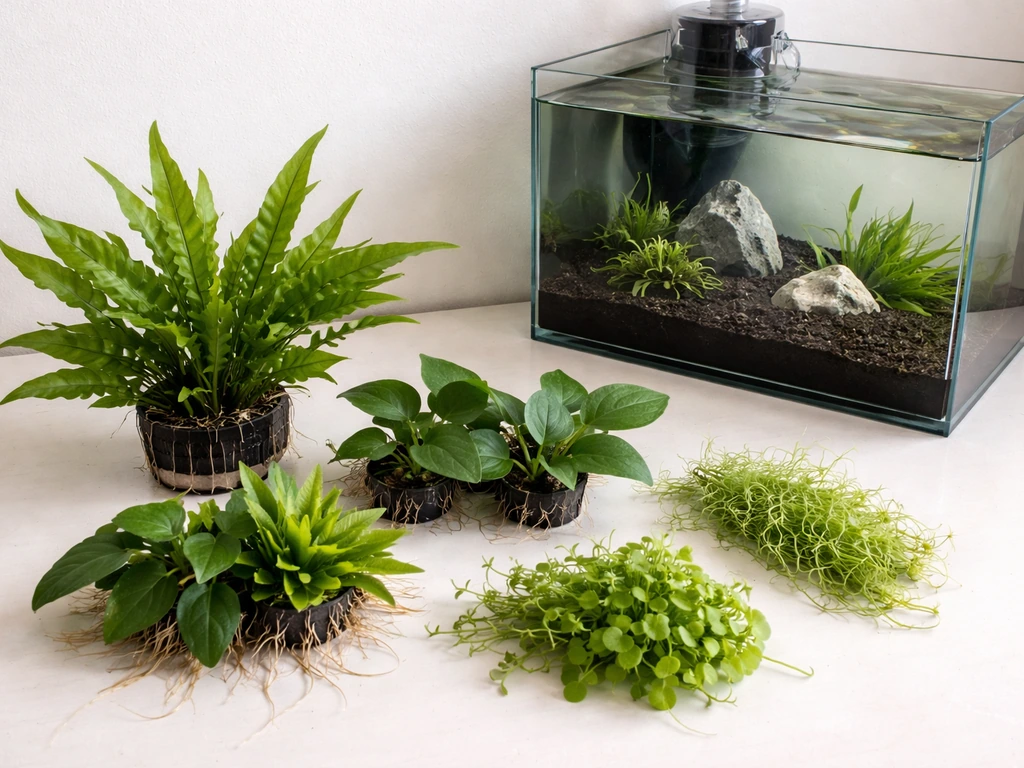
For a first planted tank, stick to these species. They tolerate low light, grow slowly enough that imbalances do not spiral out of control immediately, and forgive inconsistent fertilization: Anubias are widely regarded as among the easiest aquarium plants to maintain because their light and nutrient requirements are very low tolerate low light.
- Anubias (any variety): extremely low light and nutrient needs, naturally slow growth, nearly bulletproof if planted correctly
- Java fern: slow growing, thrives without CO2 injection as long as you have decent flow and filtration, very hard to kill
- Cryptocoryne (Wendt, Beckettii, Lutea): tolerates low to bright light, grows faster under stronger light, and can handle harder water
- Bucephalandra: similar care to Anubias, does well attached to hardscape
- Amazon sword: a heavy root feeder, but vigorous and rewarding once you get root tabs in place
- Floating plants like frogbit or water lettuce: pull nutrients directly from the water column, outcompete algae, and need zero planting
One honest warning about Cryptocoryne: when you first plant it, the leaves will often melt back to stubs. This is called crypt melt and it is completely normal. The plant is shedding its old emersed-grown leaves and pushing out new submerged ones. Do not throw it away. Leave it alone, keep the roots in the substrate, and new growth will appear within a few weeks. Knowing that in advance saves a lot of panic.
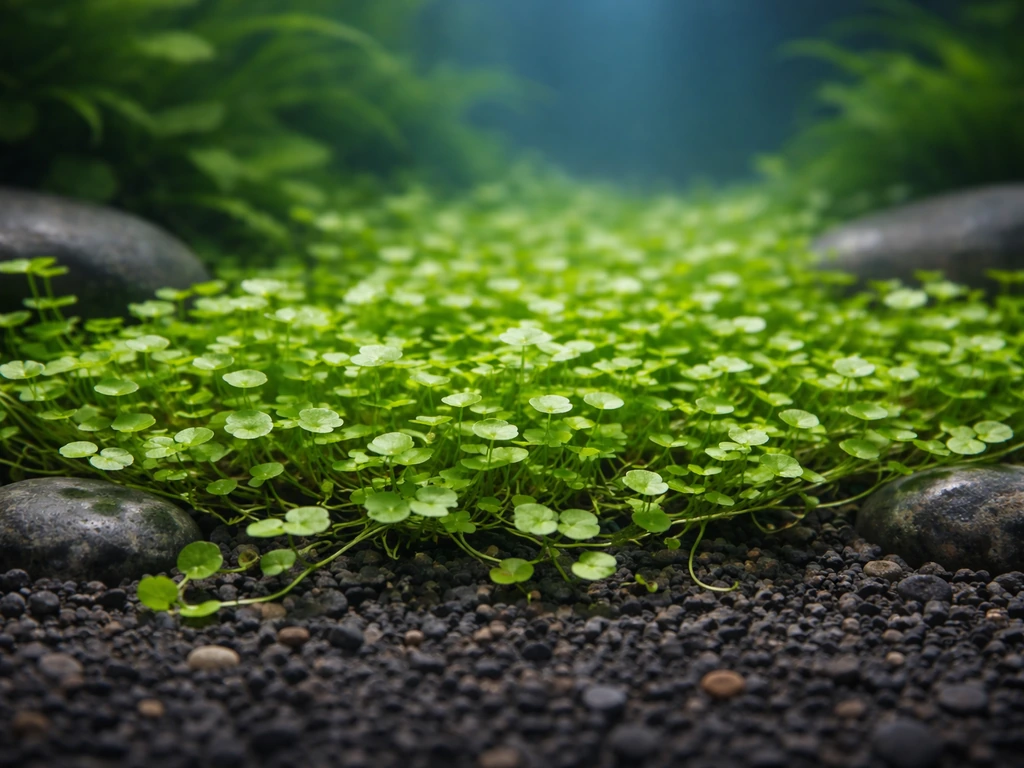
If you are already comfortable with the basics and want to branch out into stem plants or carpeting plants, those categories have their own growth habits and challenges worth understanding before you dive in. If you are specifically aiming for carpet plants, focus on high-quality planting in nutrient-rich substrate and a tight lighting and fertilization routine carpeting plants.
Tank setup for natural plant growth
Substrate
Your substrate choice matters a lot more for root-feeding plants than for rhizome or floating plants. Anubias and Java fern absorb nutrients primarily from the water column, so they will grow in plain gravel or even attached to wood and rock. If you want a clear start, this is exactly how to grow aquarium plants with the right substrate and feeding approach for each species. Amazon swords, Cryptocoryne, and vallisneria are heavy root feeders and need either a nutrient-rich substrate or root tabs placed near their roots.
You have three practical options:
- Active planted substrates (like Fluval Stratum or ADA Amazonia): ready to go out of the bag, buffering pH slightly acidic, ideal for a full planted tank from day one
- Inert sand or gravel with root tabs: more affordable, works well if you use root tabs placed deep enough near root zones so they feed roots rather than leaching into the water column and feeding algae
- Dirt or topsoil capped with sand or gravel: a cheap, nutrient-rich option, but once it is set up you cannot move plants around without disturbing the cap and clouding the tank
If you go the root tab route with inert substrate, push the tabs at least 2 to 3 centimeters deep into the gravel near the root zone, not close to the surface. Tabs sitting too shallow leach nutrients into the water column, which feeds algae rather than your plants.
Water parameters
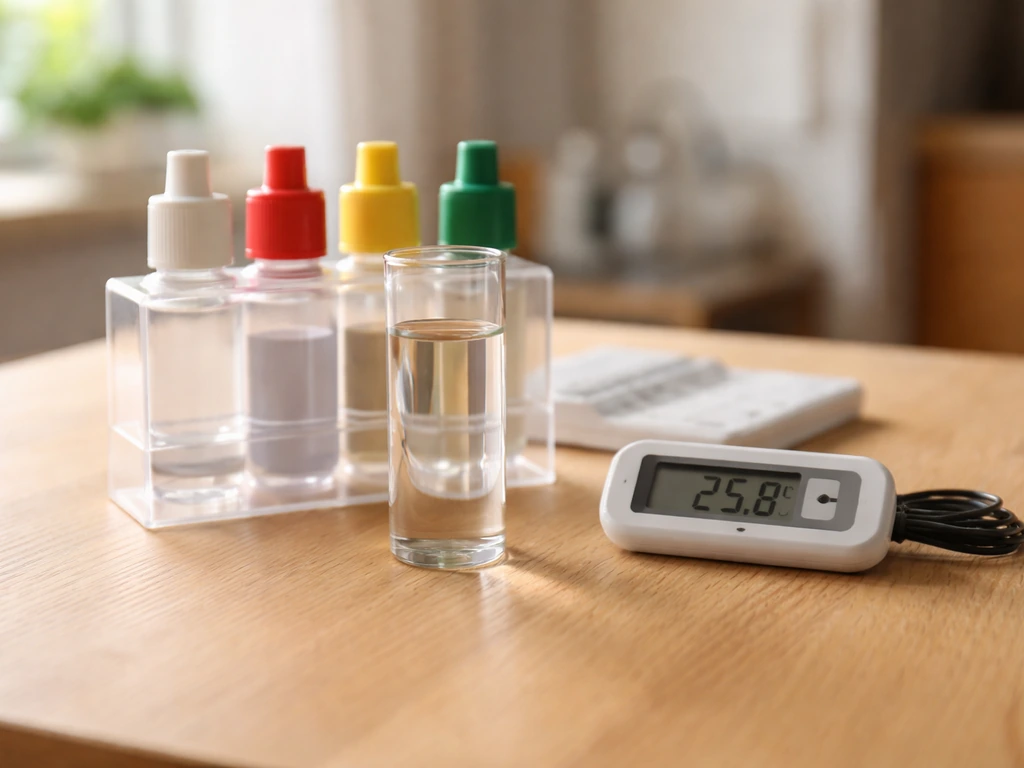
Most beginner-friendly plants are flexible. A pH between 6.5 and 7.5 works for almost everything on the beginner list. Temperature between 22 and 28 degrees Celsius covers the range. The more important thing is stability: wild swings in pH or temperature stress plants just like they stress fish. Use a dechlorinator every water change and let new water match the tank temperature before adding it.
Filtration and flow
Plants need water movement to deliver CO2 and nutrients to their leaves and carry waste away. A filter rated for your tank size or slightly above is the baseline. For Java fern and Anubias specifically, good circulation is called out as a key factor for success even without CO2 injection. Avoid so much surface agitation that you are gassing off CO2 faster than plants can use it, though. A gentle, steady flow is better than a turbulent splash.
Lighting requirements and how to schedule it
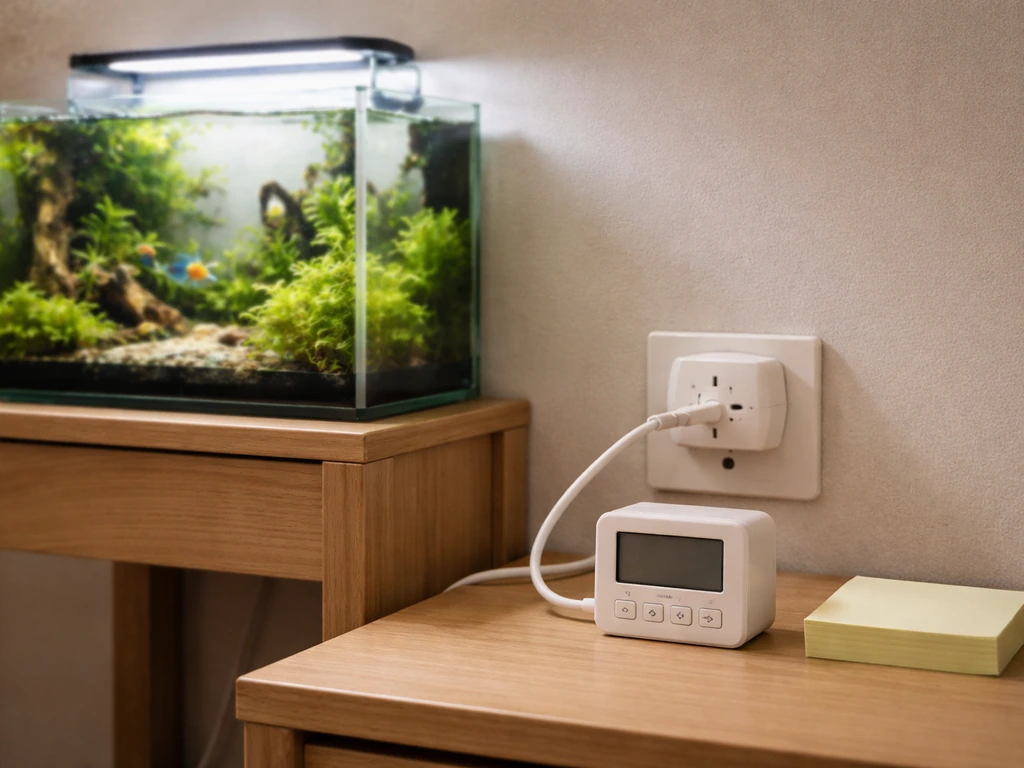
Light is the most common way beginners accidentally trigger algae. More hours feels like it should equal more plant growth, but that is not how it works. If your light intensity is right but you run it too long, algae blooms. If intensity is too low and you compensate by running it longer, you still get algae and the plants barely benefit.
Here is the schedule that consistently works for a new planted tank:
- Weeks 1 to 3: 6 hours per day on a timer, no exceptions
- Week 4 onward: increase gradually to a maximum of 8 hours per day if plants are growing and algae is not appearing
- Make only one adjustment at a time and wait at least two weeks before changing anything else
Use a plug-in timer. It costs a few dollars and removes the biggest variable in algae control. Forgetting to turn the light off for a couple of extra hours a day is one of the most reliable ways to trigger a green water or hair algae outbreak in a new tank.
For intensity, modern LED planted-tank lights are generally powerful enough to grow both low- and high-light plants. The key is balance, not just buying the brightest fixture you can find. For beginner species like Anubias and Java fern, a mid-range LED is more than adequate and you will have an easier time managing algae.
Nutrients and fertilization
Plants need macronutrients (nitrogen, phosphorus, potassium) and micronutrients (iron, manganese, zinc, and others) to grow. In a fish tank, fish waste provides some nitrogen, but it is rarely enough on its own, and trace elements are almost always deficient unless you actively dose them.
Liquid fertilizers for the water column
An all-in-one liquid fertilizer dosed once or twice a week covers most tanks well, especially for rhizome plants and floaters that feed from the water column. Products like Easy Green from Aquarium Co-Op combine macros and micros in one bottle, which keeps the routine simple. Products focused on trace elements only, like Seachem Flourish, are typically dosed one to two times per week and work best as part of a broader nutrient strategy rather than as your sole fertilizer.
Start at the recommended dose on the bottle, then test your nitrate levels after a week. If nitrate climbs above 20 to 30 ppm between water changes, ease back slightly. If plants look pale or growth is stalled and nitrate is near zero, dose a bit more. Adjust based on what your tank tells you, and change one thing at a time.
Root tabs for heavy root feeders
Amazon swords, Cryptocoryne, and vallisneria get a significant portion of their nutrition through their roots. If you have inert sand or gravel, liquid fertilizers in the water column are not enough to supply what root feeders need at the root zone. Place root tabs in the substrate near the roots of these plants every few months as they dissolve and nutrients deplete. As your plant biomass grows, you may need to replenish them more frequently.
Carbon
Plants use carbon dioxide as their primary carbon source for photosynthesis. In a planted aquarium, plants also release CO2 at night because they respire when there is no light Plants release CO2 at night because they respire when there is no light.. In a low-tech tank without CO2 injection, natural CO2 from fish respiration and bacterial activity typically sits around 2 to 3 ppm, which is enough for slow-growing, low-light plants. Liquid carbon supplements (like Seachem Excel) can provide a small supplemental boost and have some algae-inhibiting properties, but they are not a true replacement for injected CO2 if you are trying to grow demanding plants fast.
Planting methods and mistakes to avoid
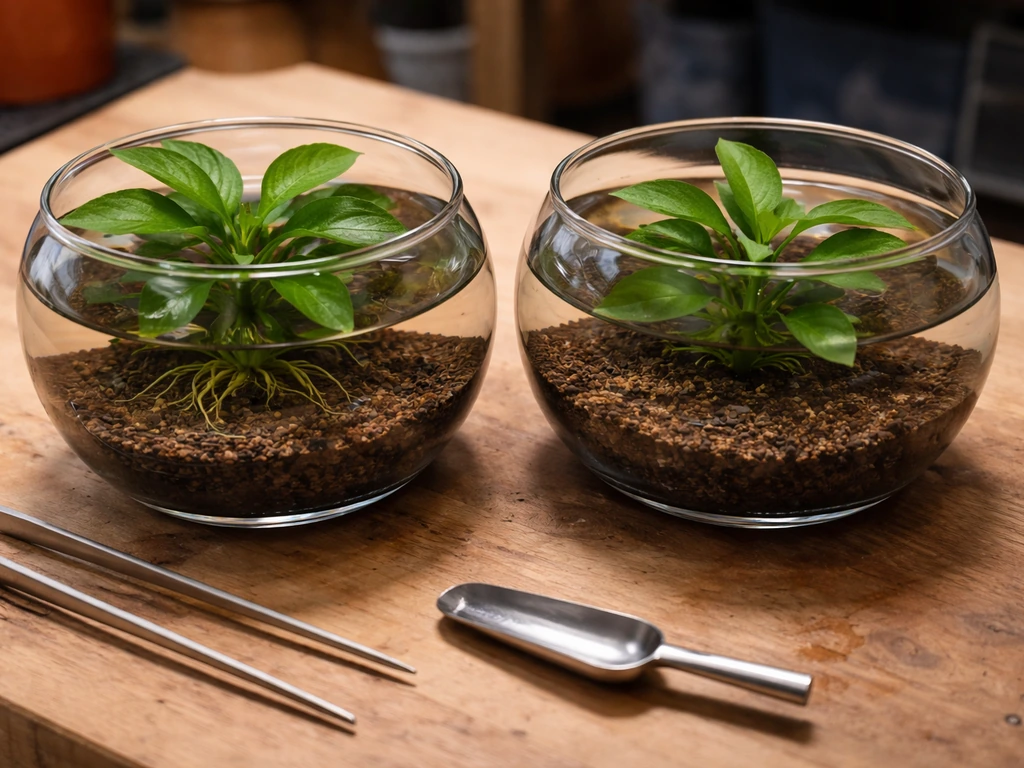
How you physically plant each species is probably the most overlooked factor in whether plants live or die in the first month. Each group has a specific planting method, and getting it wrong causes melt, rot, and failure that looks like a nutrient problem but is actually a planting problem.
| Plant Type | Examples | Correct Planting Method | Common Mistake |
|---|---|---|---|
| Rhizome plants | Anubias, Java fern, Bucephalandra | Attach to hardscape (driftwood, rock) or leave rhizome above substrate surface | Burying the rhizome in substrate, which causes it to rot |
| Rosette/root plants | Amazon sword, Cryptocoryne | Bury roots and substrate portion, keep crown above substrate level | Burying the crown, which prevents new leaf growth and causes rot |
| Stem plants | Rotala, Ludwigia, Bacopa | Push lower stem into substrate, remove bottom leaves before planting | Planting too shallow so stems float free, or leaving leaves buried to rot |
| Floating plants | Frogbit, water lettuce, duckweed | Place on water surface, no planting required | Leaving no surface space, leading to overcrowding and blocked light below |
For Anubias specifically, the most common beginner mistake is pushing the thick green rhizome into the substrate. It will rot within a week or two. Tie it to driftwood with cotton thread or fishing line, or wedge it between rocks with the rhizome sitting above the gravel. Java fern is the same: the rhizome must stay exposed. I made this mistake myself with my first Anubias nana and spent two weeks wondering why it was dying when I had done everything else right.
When planting rosette plants like Amazon sword, bury the roots fully but stop before you hit the crown, the point where the leaves emerge. If the crown is covered, new leaves cannot push through and the plant suffocates. Leave it sitting just above the substrate surface.
CO2 options: when it is worth adding and when it is not
CO2 injection is not required for a successful planted tank, and for beginners, adding it too early often creates more problems than it solves. Here is an honest breakdown of when it makes sense and when to skip it.
Skip CO2 if
- You are growing Anubias, Java fern, Bucephalandra, Cryptocoryne, or floating plants
- Your lighting is in the low-to-medium range
- You are new to planted tanks and still learning the balance of light, nutrients, and water changes
- You want a low-maintenance setup
Add CO2 if
- You are growing high-light, fast-growing stem plants or demanding carpeting plants
- You have strong lighting and plants are showing signs of CO2 limitation (slow growth, algae on leaves, pale new growth despite adequate nutrients)
- You want faster, lusher growth and are prepared to manage the full balance of light, nutrients, and CO2 together
If you do add CO2, a pressurized system is more reliable and consistent than DIY yeast-bottle setups, which give unpredictable output and can crash overnight. Keep your surface agitation moderate: too much splashing will drive injected CO2 out of the water before plants can use it. Target CO2 levels around 20 to 30 ppm measured with a drop checker or CO2 test kit, and run injection only during the photoperiod, never at night when plants are not photosynthesizing.
One thing worth saying clearly: CO2 injection is not a substitute for proper lighting and nutrients. Adding CO2 to a tank with weak light and no fertilization does nothing useful and can destabilize water parameters.
Troubleshooting common problems
Plant melting
If leaves are turning transparent, mushy, or simply dropping off, the first question is whether the plant was planted correctly. Rhizome buried? That is your answer. Crown covered on a rosette plant? Same issue. Fix the planting before assuming it is a nutrient or chemistry problem. If the planting is correct and a Cryptocoryne is still melting, wait: crypt melt after transplanting is a normal transition, not a death sentence. Keep the roots in substrate and give it three to four weeks.
Slow or no growth
Anubias and Java fern are naturally slow growers, so patience is part of the deal. But if faster-growing plants like swords or stem plants are stalling, check nutrients first. If you want fast results with stem plants, focus on providing enough light, consistent nutrients, and proper CO2 or CO2-free balance before you plant. Zero nitrate means plants are starving. Add fertilizer. If nutrients are in range and light is adequate but growth is still sluggish, and you are running a medium-to-high light setup, CO2 limitation may be the bottleneck. Either reduce light intensity to match your natural CO2 level or add CO2 injection.
Algae outbreaks
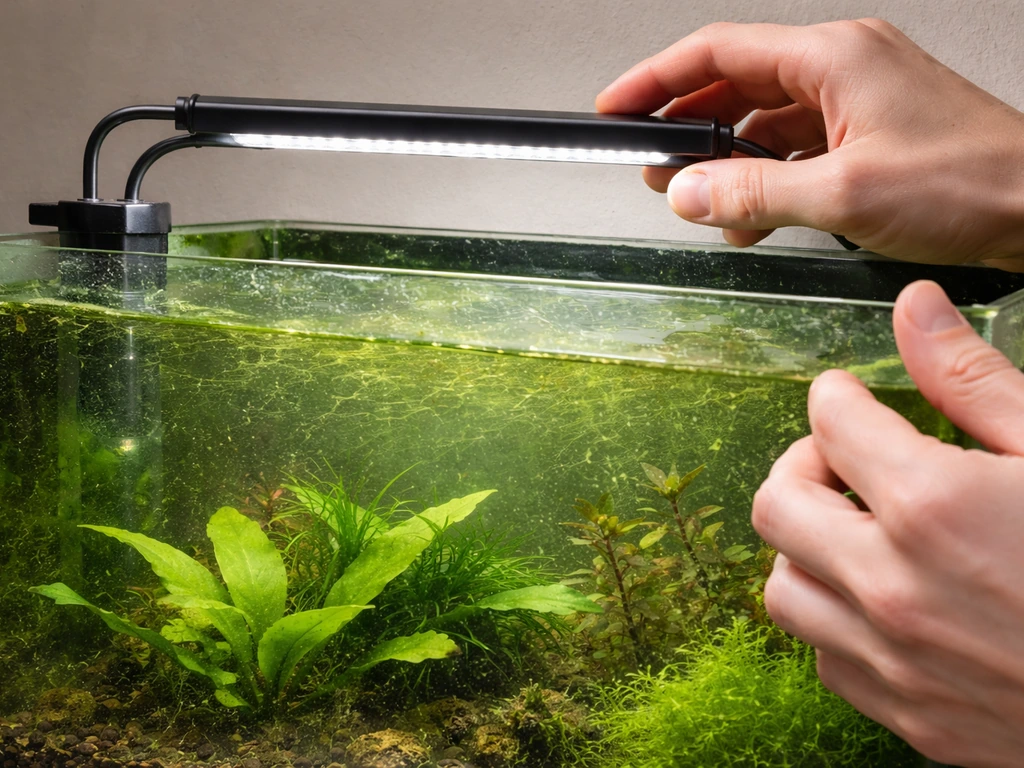
Algae is almost always a symptom of imbalance, not a random event. The most common causes in planted tanks:
- Too many light hours on a new tank (run 6 hours max for the first three weeks)
- Light intensity too high for the plants and CO2 level you have
- Excess nutrients in the water column with insufficient plant mass to consume them
- Inconsistent CO2 in a CO2-injected tank (fluctuating CO2 levels trigger algae faster than stable low CO2)
- Infrequent water changes allowing nutrients to accumulate beyond plant uptake
Make one change at a time and wait two weeks before adjusting again. Cutting light hours is usually the fastest lever to pull when algae appears in a new tank.
Yellowing leaves and deficiencies
Yellow leaves across the whole plant usually mean nitrogen deficiency: dose more macros. Yellow leaves with green veins (interveinal chlorosis) point to iron or micronutrient deficiency: dose a trace element supplement or switch to an all-in-one fertilizer that includes iron. Pale new growth specifically is often an iron issue. Older leaves yellowing first while new growth looks fine is usually a mobile nutrient (nitrogen or potassium) deficiency. Anubias with yellowing and decline often has a combination of too much direct light on the rhizome, poor water movement, and low nutrients.
Cloudy water
Bacterial blooms cause milky white cloudiness in new tanks and typically clear on their own within a week or two as the nitrogen cycle establishes. Green water (pea-soup green) is a free-floating algae bloom driven by excess light and nutrients. Reduce photoperiod, do two or three water changes of 30 to 50 percent in the first week, and consider floating plants to compete for nutrients. Avoid disturbing a capped dirt substrate, as this releases tannins and particles that will cloud the tank significantly.
Maintenance routines and how to upgrade for better growth
Weekly and monthly habits
A consistent maintenance routine is what separates a thriving planted tank from one that lurches from problem to problem. Here is what actually works:
- Weeks 1 to 4 (new tank): water changes of 25 to 50 percent two to three times per week to remove excess nutrients and stabilize conditions while plants establish
- Established tank: water changes of 10 to 25 percent every one to two weeks, depending on fish load and plant density
- Dose liquid fertilizer once or twice per week, adjusted based on nitrate test results
- Replace root tabs near heavy root feeders every 2 to 3 months or when plants show deficiency signs
- Trim fast-growing plants before they shade slower species or block light from carpeting plants
- Replant trimmed stem cuttings directly into substrate to fill gaps and increase plant mass (more plant mass means less algae)
Filter maintenance
Clean filter media when you notice reduced flow or visible debris buildup, not on a rigid calendar. Rinse media in old tank water or dechlorinated water, not tap water, and agitate it gently rather than scrubbing. Scrubbing destroys beneficial bacteria. Never replace all your filter media at once: stagger replacements so you always have established media running.
Simple upgrades that actually move the needle
If your plants are growing but you want better results, here is the order in which upgrades tend to pay off most:
- Better lighting: if you are using a basic fish-tank LED with no planted-tank rating, upgrading to a proper planted-tank fixture is the single biggest improvement for most hobbyists
- Active substrate or root tabs: if your root-feeding plants are pale or stunted and lighting is fine, substrate nutrition is the next variable to address
- All-in-one fertilizer routine: if you have not been fertilizing consistently, starting a weekly dose routine will produce visible results within two to three weeks
- CO2 injection: only add this once the above three are dialed in; adding CO2 to an otherwise imbalanced tank creates instability, not better growth
Growth timelines are worth setting realistic expectations for. Anubias and Java fern may put out one new leaf every two to four weeks, and that is completely normal. Cryptocoryne will spend the first month looking half-dead and then suddenly take off. Stem plants can grow a centimeter or more per day under good conditions. Judge your setup by the trend over four to six weeks, not by what you see after three days.
FAQ
Do I need root tabs if I already dose liquid fertilizer in the water column?
Often, yes for heavy root feeders. Java fern and Anubias are fine with water-column nutrients, but Amazon swords, Cryptocoryne, and vallisneria typically need nutrients at the substrate root zone. A practical approach is to start with root tabs for root feeders and then reassess after a few weeks using how the plants respond (older leaf dieback, slowed new growth).
How do I place root tabs so they do not feed algae?
Put them directly in the root zone, typically a few centimeters down, and avoid burying them right under open substrate where they can leach broadly. If you see algae spikes shortly after adding tabs, consider reducing tab frequency, spacing them farther apart, and pairing changes with shorter light schedules until things stabilize.
What light schedule should I use if algae starts even though my intensity is moderate?
Cut the photoperiod first, not the fertilizer. In a new tank, reducing from your current schedule by about 2 to 4 hours and holding steady for two weeks usually gives plants a chance to catch up. Also verify your timer actually turns the lights fully off, since partial failures can keep algae growing.
Can I grow plants with tap water that I dechlorinate, but the temperature swings a bit?
Temperature swings can suppress plant growth even when nutrients and light are correct. Aim for stability by matching the temperature of new water to the tank before adding it, and avoid frequent water-change gaps that let the tank drift. If fish are fine but plants stall, check for temperature and pH stability issues first.
How can I tell if my problem is nutrient deficiency versus a planting mistake?
If a plant’s melt or decline aligns with where it was planted, suspect technique first. Rhizome plants (Anubias, Java fern) should never have the rhizome buried, and rosette crowns (Amazon sword style) should not be covered. If planting is correct and symptoms persist after the normal transition period (for Cryptocoryne, usually weeks), then adjust nutrients.
Cryptocoryne is melting, should I remove it or replant it?
Do not remove it during the crypt melt phase. Keep the roots in place and allow new submerged growth to emerge. Replanting or constantly moving it often restarts the transition and delays recovery.
My nitrate is zero, but my plants still look bad. What should I do?
Zero nitrate usually means nutrients are not reaching plants, but confirm whether your light is also too low or your plants are newly transplanted (some species take time). If nitrate is truly near zero, dose fertilizer and give it a week, then reassess. Make one adjustment at a time so you can see what actually changed plant behavior.
If I dose fertilizer and my plants grow faster, how do I avoid overdosing?
Use nitrate as a guide. After starting at the recommended dose, test after about a week and aim for nitrate that rises but does not climb too high between water changes. If nitrate climbs above your target range, reduce dosing slightly. Keep water-change volume and timing consistent while you dial this in.
Do I need CO2 injection for fast growth of stem plants?
Not strictly, but slow growth despite adequate light and nutrients often points to CO2 limitation. For demanding stem plants, you can either accept slower growth with natural CO2, or add CO2 while keeping light and fertilization balanced. A common mistake is adding CO2 while light or nutrients are still insufficient, which can destabilize the tank without boosting growth.
What is the safest way to start CO2 if I decide to add it?
Start only during the photoperiod and use moderate surface agitation so you do not blast CO2 out of the water. Measure CO2 with a drop checker or test kit and target a reasonable range rather than chasing very high numbers. Also avoid adding CO2 if your lighting and fertilizer routine are not already steady.
How much water movement do plants need, and can too much flow cause problems?
Plants need steady circulation to deliver nutrients to leaves and keep waste from accumulating, especially for non-CO2 tanks. However, excessive surface agitation can drive off CO2 and make the system less stable. Aim for gentle, consistent flow, not turbulent splash, and confirm that plants are not being physically dislodged.
My new tank gets cloudy for a few days. Is that a bacterial bloom problem or a plant issue?
Milky white cloudiness in the first 1 to 2 weeks is usually a bacterial bloom and commonly clears as the nitrogen cycle establishes. Avoid major changes like deep substrate disturbance during that period, because you can add extra particulates that keep cloudiness going.
Green water happened after I added more light. What is the best first fix?
Reduce the photoperiod immediately and hold it there for at least two weeks. If you want to accelerate recovery, do a few water changes in the first week, then focus on long-term balance. Also check that you are not accidentally running the lights longer than intended due to a faulty timer.
How do I avoid breaking my tank when I maintain the filter media?
Do not replace all filter media at once and do not rinse with tap water. Rinse in old tank water or dechlorinated water, and handle media gently so beneficial bacteria survive. Clean only when flow drops or debris visibly accumulates, and keep the schedule flexible rather than date-based.
Why are my older leaves yellowing first while new growth looks okay?
That pattern often suggests a mobile nutrient deficiency such as nitrogen or potassium rather than a locked-down iron issue. Before changing everything, confirm nitrate trends and consider whether your fertilizer routine matches what your plants are doing. If you switch products, do it gradually and keep the rest of the routine constant.