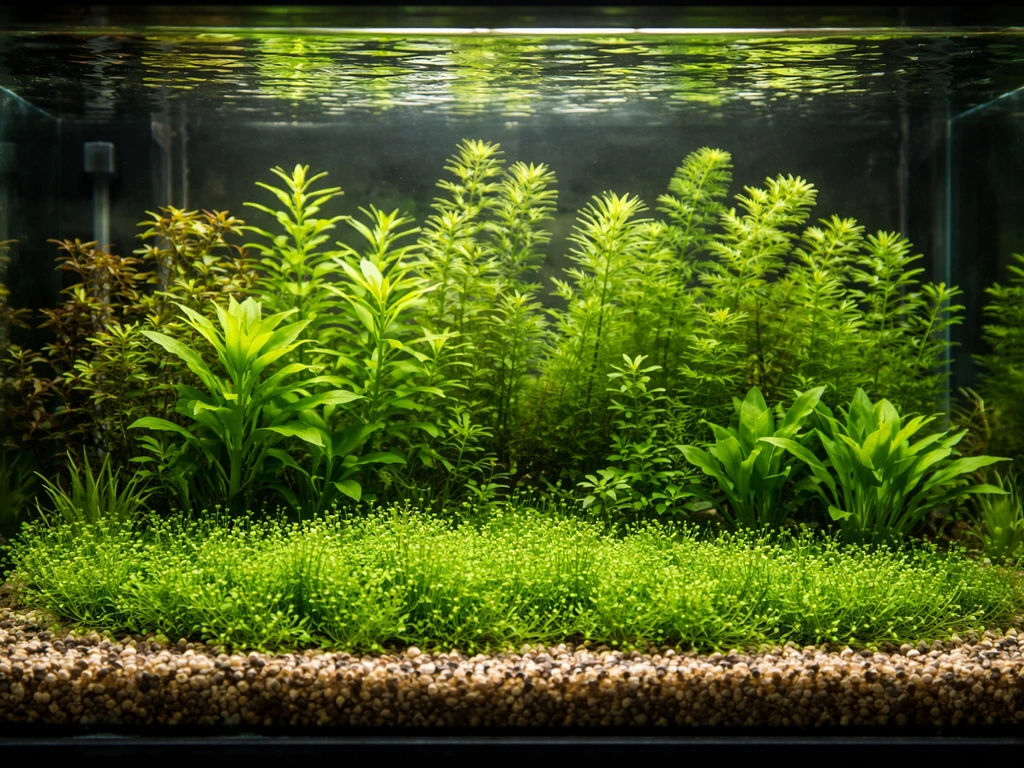
Stem plants grow fast, fill in backgrounds beautifully, and help keep algae in check by soaking up excess nutrients before algae can. To get them thriving, you need at least moderate light (20–50+ PAR), a nutrient source either in the substrate or the water column, plants buried 2–3 inches deep with lower leaves removed, and stable water parameters. CO2 injection speeds things up dramatically but is not strictly required for easier species. Once you have CO2 and basic dosing in place, you will be well on your way to learning how to grow tissue culture aquarium plants in a stable setup CO2 injection speeds things up dramatically. Get those basics right from day one and most stem plants will show new growth within a week.
How to Grow Stem Plants in an Aquarium: Step by Step
Marcus Holloway
21 Jun 2026
Choose the right stem plants for your tank conditions
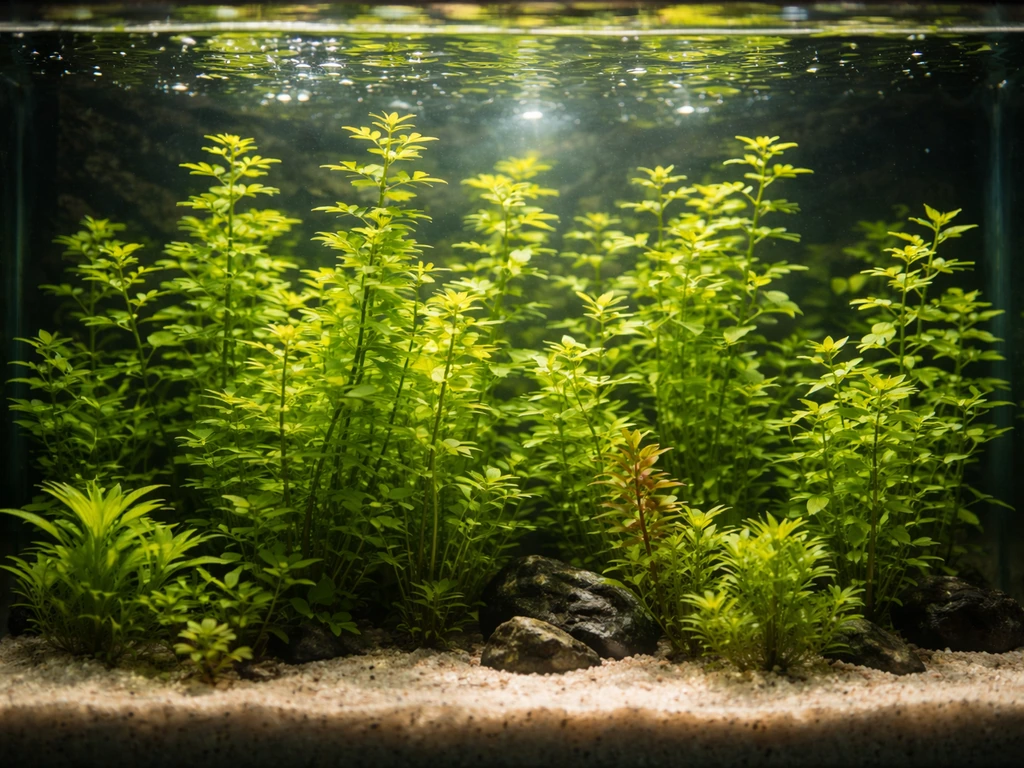
Not every stem plant suits every tank, and picking species that match your existing conditions is one of the biggest factors in whether you succeed or spend months wondering why nothing grows. Start with the water you already have, then pick plants that fit inside it.
For beginners or anyone running a low-tech setup without CO2 injection, these are genuinely hard to kill:
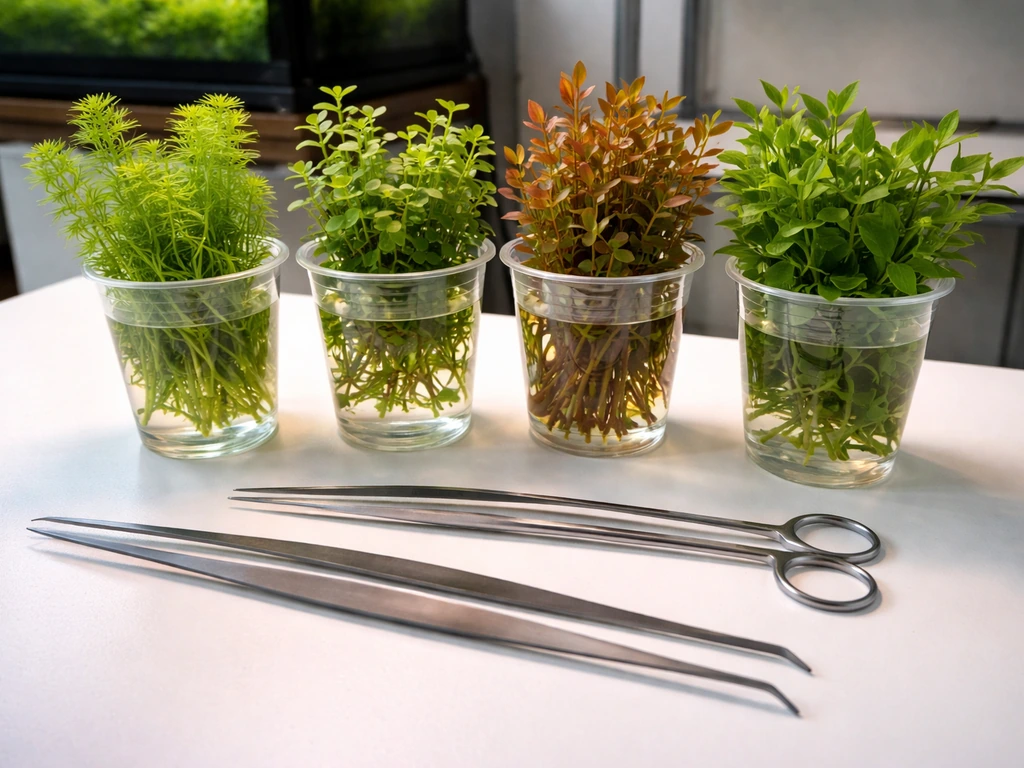
- Hygrophila polysperma: the classic fast-grower, tolerates a wide range of conditions, and puts out new side shoots within days of planting. Great for filling in a tank quickly.
- Hygrophila corymbosa 'Siamensis': tolerates temperatures from 18–30°C, pH 5.5–7.5, and KH anywhere from 2–18 dKH. Nearly bulletproof and a great first stem plant.
- Limnophila sessiliflora: often called ambulia, grows rapidly and forgives uneven dosing or low light better than most.
- Bacopa caroliniana: slower than the hygrophilas but very tolerant of low-nutrient tanks and looks great in mid-background positions.
- Willow hygro (Hygrophila angustifolia): does best at medium to high light (20–50+ PAR) and rewards you with fine, delicate-looking leaves.
If you're running CO2 injection and higher light, you can branch into faster, more demanding plants like rotala rotundifolia, ludwigia repens, or even ludwigia palustris, which develop stronger red coloration under high light with adequate iron. For most people starting out, though, stick to the hygrophila family first. They're forgiving, grow fast, and teach you the maintenance rhythm before you commit to more sensitive species.
Tank setup: substrate, planting layout, and water parameters
Substrate options
Stem plants can feed from both the substrate and the water column, which gives you flexibility. Here's how to think about substrate choices:
| Substrate Type | How Long It Feeds | Best For | Notes |
|---|---|---|---|
| Inert gravel or sand | Doesn't feed plants on its own | Low-tech or water-column-fed tanks | Add root tabs for substrate feeding; easy to maintain |
| ADA Amazonia / active substrate | 12–18 months of active feeding | High-tech CO2 setups, serious planted tanks | Expensive but very effective; softens water slightly |
| Dirted substrate (capped) | Long-term nutrient source | Budget high-nutrient setups | Use only 1/8–1/4 inch of dirt under at least 2 inches of gravel cap to prevent leaching |
| Root tabs in any substrate | Tabs last ~3–6 months each | Supplementing inert substrates | Push tabs deep, keep them covered so fish and snails don't dislodge them |
For most hobbyists, a bag of quality plant substrate or plain gravel with root tabs works well. Root tabs are particularly useful for stem plants like bacopa and moneywort that do absorb a meaningful amount from their roots, though fast-growers like hygrophila pull most of their nutrients from the water column anyway. Liquid fertilizer in the water column is the more critical input for stem plants overall.
Planting layout
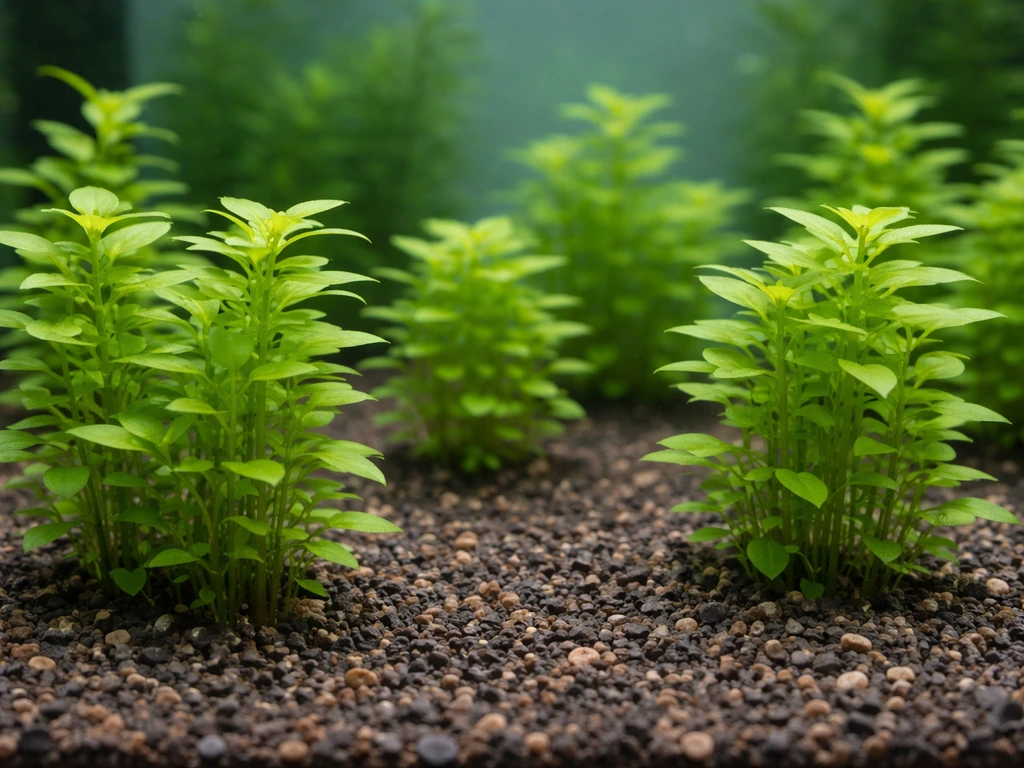
Stem plants belong in the background and mid-background of most aquascapes, planted in groups of 5–10 stems per cluster. If you want a carpet-like look, use the same planning mindset and focus on low-growing ground-cover species and tighter planting spacing canopy effect will shade the lower leaves. Give each stem about an inch of space from its neighbors so light can reach the lower portions of the plant. As they grow and fill in, the canopy effect will shade the lower leaves anyway, which is natural and manageable through regular trimming.
Water parameters
For hardy stem plants, the target range is broad. Most species do well in temperature of 22–28°C, pH between 6.0 and 7.5, and KH of 2–15 dKH. Stability matters more than hitting exact numbers. A tank that stays at pH 7.2 consistently is far better than one that swings between 6.8 and 7.6 daily, which can stress plants and create conditions where algae wins. Do a quick test on your tap water and choose species that already fit it rather than fighting to adjust your water chemistry.
Lighting plan: intensity and schedule for fast growth
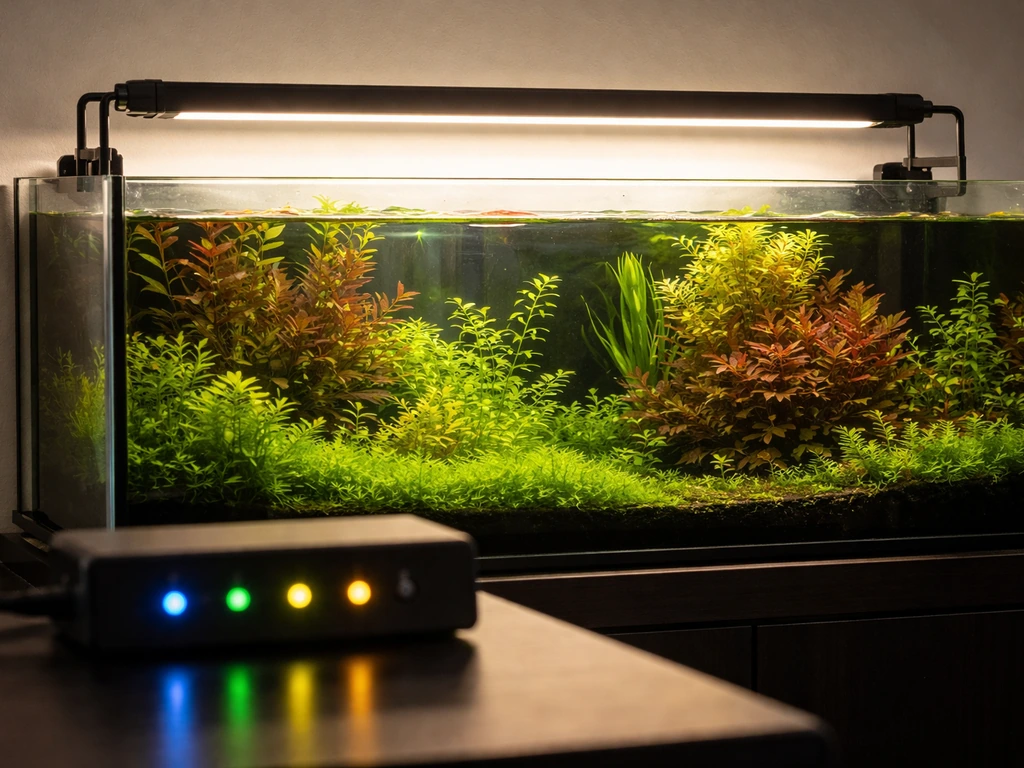
Light is the engine of stem plant growth and it's also the easiest thing to get wrong. Too little and stems grow leggy, reaching toward the surface with long gaps between leaves. Too much light without enough CO2 and nutrients to match it, and you're basically fertilizing an algae bloom instead of your plants.
How much light do stem plants need?
Most stem plants grow well in the medium to high light range of 30–80 PAR at the substrate level. Willow hygro and similar species want at least 20–50+ PAR to avoid getting leggy. More demanding species like rotala and ludwigia benefit from 60–80+ PAR, but only if CO2 and nutrients can support it. If you're running a low-tech tank, staying in the 20–40 PAR range keeps algae more manageable.
Photoperiod: how long to run your lights
Start new tanks at 6–8 hours per day and use a timer, always. Running lights 24 hours does not grow plants faster, it just gives algae a permanent advantage. The general rule: low-tech setups do well at 6–8 hours, high-tech CO2 setups can run 7–8 hours or slightly more. If you want to increase the photoperiod because growth looks slow, add only 15–30 minutes at a time and wait a week to observe the response before adding more.
A soft ramp helps too. If your light controller allows it, starting at around 50% intensity for the first 30 minutes (a simulated sunrise) reduces the abrupt light shock that can encourage green spot algae on slow-growing surfaces. The first 30 days in any new tank are when algae pressure is highest, so keeping PAR on the lower end of your target range during this window and then increasing it as plants establish is a smart play.
Light spectrum
A color temperature of 6500K (cool white or daylight) is the standard recommendation for planted tanks. Most modern LED plant lights sold for aquariums are already tuned well. If your light came with the tank as a hood fixture, it may not be adequate for stem plant growth, and upgrading to a dedicated planted-tank LED is usually one of the highest-impact changes you can make.
Nutrients and CO2: what stem plants need and how to dose and monitor
CO2 injection
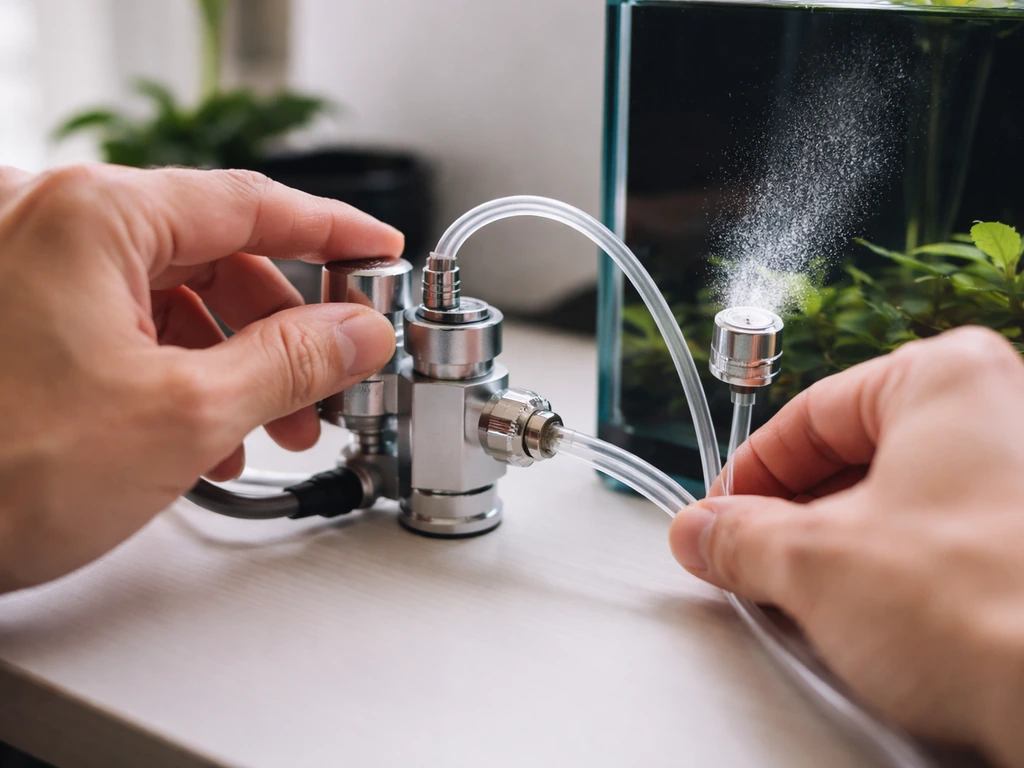
CO2 is not required for easy stem plants like hygrophila and bacopa, but it transforms what's possible. With CO2 injection, the same plants grow 3–5 times faster and develop more compact, lush growth. The target for most planted tanks is 20–30 mg/L (ppm) during the photoperiod. Don't exceed 30 ppm because that stresses fish. A drop checker is the easiest monitoring tool: lime green means you're right in the target zone, yellow means too much, and blue-green means you need more. Turn CO2 on about an hour before lights come on and off about an hour before lights go out to manage gas levels safely.
You can estimate CO2 using the pH/KH relationship: a KH of 4 and pH of 7.0 puts you at around 15 mg/L CO2, while the same KH at pH 6.8 gets you closer to 24 mg/L. Use an online CO2 calculator to check your levels if you don't have a drop checker yet.
Liquid fertilizers
Stem plants pull a lot of nutrients from the water column, especially nitrogen, potassium, and micronutrients including iron and magnesium. A complete liquid fertilizer dosed regularly covers most of what they need. A starting point is around 6 mL per 50 liters per week for a product like Tropica Premium Nutrition, adjusted up or down depending on how densely planted your tank is and how fast your plants are growing. Dose after water changes, not before.
Watch for these signs of specific deficiencies:
- Yellowing of older (lower) leaves: usually nitrogen deficiency. Increase your nitrogen dose or switch to a fertilizer with a higher N ratio.
- Yellowing of new growth with green veins still visible: iron or manganese deficiency. Add a chelated iron supplement.
- Purple or red undersides on leaves that normally aren't red: phosphorus deficiency in some species.
- Holes or clear spots in leaves: potassium deficiency. Dose potassium separately if using a low-K fertilizer.
- Pale overall coloration without clear patterning: general macronutrient underdosing. Increase full-spectrum fertilizer dose and check water column nitrate target of 10–25 ppm.
Root tabs
For stem plants specifically, root tabs are a helpful supplement rather than the primary nutrient source. Place them close to the root zone of heavier root feeders like bacopa. Push them deep enough that they stay covered and don't get dislodged by digging fish or snails. They dissolve slowly over weeks, so one tab per cluster of stems every 3–4 months is reasonable maintenance.
Step-by-step planting and the initial takeoff period
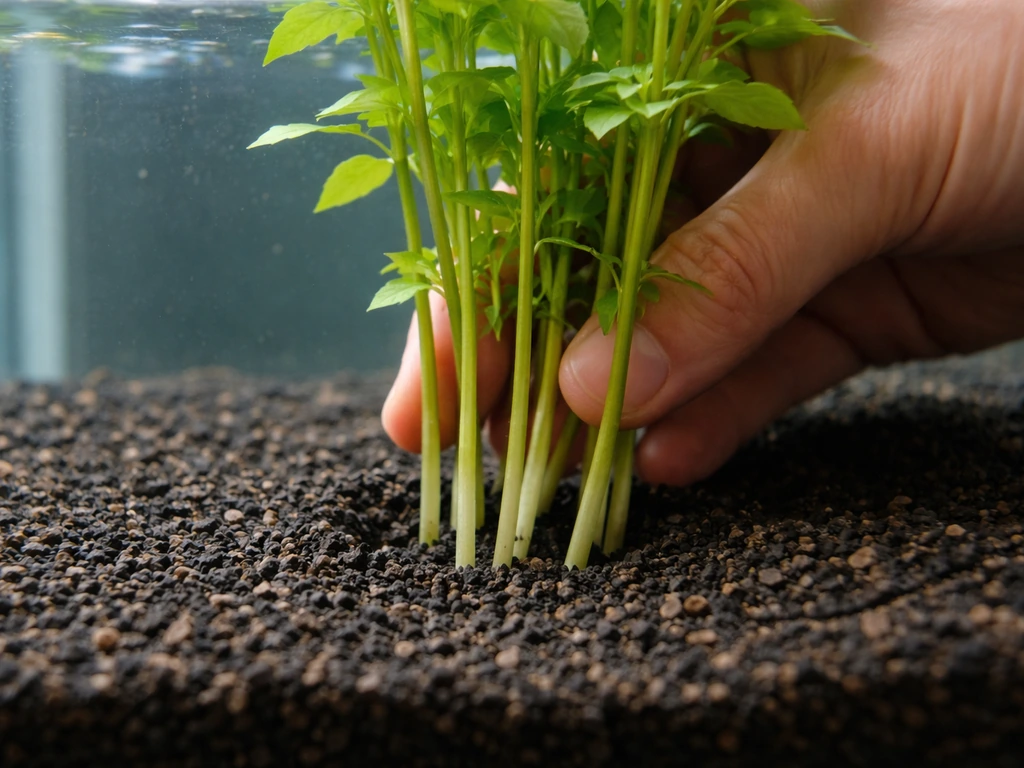
- Prepare the stems: Remove any leaves from the bottom 2–3 inches of each stem. These buried leaves rot quickly and create ammonia spikes. Only bare stem should go below the substrate surface.
- Plant deeply: Push each stem at least 2–3 inches into the substrate. Shallow planting means the stems float out within a day. Use planting tweezers for precision and to avoid disturbing neighboring stems.
- Space them right: Leave about 1 inch between stems in a group and plant groups 2–3 inches apart from each other. This lets light reach the lower stems and gives roots room to develop without competition.
- Optional: float first. If you received stems without roots, some hobbyists prefer to float them for 3–5 days until a root node develops before planting. This works well, though most stems planted directly will root out within a week anyway.
- Stabilize parameters: After planting, don't chase your numbers aggressively. Keep the water temperature stable, run your lights on the timer, and start fertilizing on your schedule immediately.
- Watch the first two weeks closely: This is when melting happens (more on that below) and when most beginner mistakes compound. Don't add more fertilizer or increase light just because growth looks slow. The plant is acclimating first.
- Expect takeoff around weeks 2–4: Once stems have rooted and shifted from their emersed form to the submersed form, growth accelerates noticeably. New lateral shoots appear, stems grow toward the surface, and the tank starts to look full.
The first 90 days are the most critical period in a planted tank. Higher light in this window actually increases algae risk more than plant growth because the plants aren't established enough to use everything you're throwing at them. Keep light on the lower end of your target range for the first 30 days, then gradually increase as the plants root in and your nutrient uptake stabilizes.
Ongoing care: trimming, propagation, and preventing algae
Trimming
Stem plants grow fast and they will reach the surface, shade lower portions of the tank, and get scraggly if you don't trim them regularly. The rule is simple: trim before they hit the top third of your tank, not after they're already at the surface. Use sharp scissors, cut across the stem cleanly just above a leaf node, and remove the cut-off top portions. The remaining stem will branch at the cut point, giving you two or more new growing tips and a bushier appearance over time.
Propagation by cuttings
Every trimming is also a propagation opportunity. Take any cutting that's 3–4 inches long with healthy leaves, strip the bottom inch of leaves, and plant it directly into the substrate just like you did the original stems. Within a week you'll have new roots and fresh growth. This is how a small initial group of 10 stems turns into a full background in a matter of weeks. Hygrophila polysperma in particular can produce new lateral shoots so quickly that you can propagate multiple times within a single month.
Preventing algae during fast growth
Fast-growing stem plants are actually your best algae suppression tool because they out-compete algae for the same nutrients. A densely planted background of hygrophila or limnophila pulls nitrogen and phosphorus out of the water column so quickly that algae can't establish easily. The risk comes when your plants are not yet established or when you boost light and fertilizer faster than plant growth can absorb the increase. Prevent algae by:
- Using a timer and never extending the photoperiod more than 15–30 minutes at a time.
- Keeping nitrate in the 10–25 ppm range rather than letting it climb above 40 ppm.
- Doing regular 30–50% water changes weekly to reset nutrient levels.
- Trimming consistently so the canopy doesn't block light to lower leaves, which then die and release nutrients back into the water.
- Adding a small cleanup crew: nerite snails or otocinclus catfish handle surface algae well without disturbing plants.
Troubleshooting common problems: melting, stalling, yellowing, and algae
Plants are melting after planting
Melting in the first one to two weeks is almost always normal. Most commercially sold stem plants are grown emersed (out of water) in greenhouses, and when you submerge them, they shed those adapted leaves and regrow new submersed-form leaves. The stem goes from lush to bare and ugly before it rebounds. Don't panic and don't pull the plant. Trim away clearly rotting or fully yellowed leaves right at the base so decaying tissue doesn't spike ammonia. ScienceInsights notes that trimming clearly rotting or fully yellowed leaves can help prevent the decaying tissue from spiking ammonia during the first week or two after planting blank" rel="noopener noreferrer">decaying tissue doesn't spike ammonia. Leave the healthy stem tissue and any new tiny leaf growth at the nodes. Within two to three weeks, new submersed growth should be clearly visible. If you're aiming for natural aquarium plants rather than a strict low-tech emersed-to-submersed approach, you can use these same stem-plant tips to guide how to grow natural plants in aquarium.
If stems are melting from the bottom upward with healthy growth at the top, that's a sign the plant has fully converted. At this point you can cut the healthy top 3–4 inches and replant it, discarding the bare lower stem. This is the correct fix and prevents the leggy, bare-stem look.
Growth has stalled completely
If plants aren't growing after the first three weeks, check these in order: light first (is it actually reaching the plants at adequate PAR?), then nutrients (are you dosing consistently?), then CO2 (if you're running injection, is the drop checker lime-green during the photoperiod?), and finally temperature (below 20°C significantly slows most stem plants). The most common culprit in beginner tanks is light that's too weak or positioned too far above the surface.
Leaves are yellowing
Yellow lower leaves that fall off: nitrogen deficiency. Test your nitrate and aim to keep it between 10 and 25 ppm. Yellow new growth at the tips with green veins: iron or manganese deficiency. Add a chelated iron supplement. Overall pale yellowing across the whole plant: general nutrient starvation, likely from infrequent fertilizing or large water changes without re-dosing. Increase your fertilizer schedule and test your water column nutrient levels.
Stems are leggy with big gaps between leaves
This is a light problem. The plant is stretching toward the surface because it's not getting enough intensity where it's sitting. Either raise your light's output, lower it closer to the water surface, or switch to a higher-output fixture. Medium light at the substrate (30–50 PAR) should prevent leggy growth in most hygrophila species. If you're already at adequate PAR, check that nothing is blocking the light, like a dense floating plant layer or a heavy green-water algae bloom.
Algae is taking over alongside your stem plants
The most common cause is an imbalance between light, nutrients, and CO2. If you have high light but are underdosing fertilizer, the excess light energy has nowhere productive to go and algae fills the gap. If you're running CO2 injection, check that it's running reliably and that levels are actually hitting 20–30 ppm. Green spot algae on glass is usually a phosphate deficiency signal. Green hair algae is often caused by too much light relative to plant uptake. The fix is almost always to reduce light by 30 minutes per day until algae growth slows, then bring other parameters into balance before increasing light again.
Plants keep floating out of the substrate
You either didn't plant deep enough or the substrate is too shallow. Stems need 2–3 inches of substrate to anchor properly. If your substrate layer is only 1 inch deep, the stems will float no matter how well you plant them. Add more substrate to reach at least 2.5 inches depth, or use small planting anchors (sold as plant weights) to hold stems in place while they root. Once roots establish after about one week, this problem goes away on its own.
Growing stem plants successfully comes down to getting the basics stable and then staying consistent. If you want to go deeper than stem basics, focus on choosing beginner-friendly species, then match light, nutrients, CO2, and planting depth so they can take off quickly how to grow aquarium plants. Start simple with a forgiving species like hygrophila, dial in your light schedule, dose nutrients regularly, and don't chase problems in the first two weeks. Once the tank establishes its rhythm, the plants do most of the work for you, and you'll find yourself trimming and propagating far more than troubleshooting.
FAQ
Which stem plants are the best choice when I am still figuring out my aquarium conditions?
Start with hygrophila polysperma or related hygrophila species for fast growth with minimal fuss. If your water is especially hard or your nutrients tend to run low, choose species known to tolerate that more consistently rather than switching between fast and sensitive plants every week.
How many hours per day should I run the light for stem plants if I am using CO2 but not CO2 injection?
If you are using a CO2 method that is not injection, treat it like a low-tech tank for timing. Keep the photoperiod around 6 to 7 hours initially, then adjust by 15 to 30 minutes only after you see steady new leaf formation rather than algae or melting.
How deep should I plant stem cuttings to avoid them floating or uprooting?
Aim for roughly 2 to 3 inches of substrate in the area you plant, then bury the stems deep enough that at least the first leaf node is under the substrate. If you are limited by substrate depth, use planting anchors temporarily until new roots establish, usually within about a week.
Do stem plants need CO2 right away, or should I wait until the tank is stable?
You can start without CO2, then add it once your light and fertilizing routine are consistent. If you introduce CO2 early, keep other inputs conservative to avoid pushing algae, especially during the first month when plants have not fully ramped up nutrient uptake.
What is the best way to dose fertilizer for stem plants so I do not trigger algae?
Dose after water changes and keep dosing consistent rather than spiking when you see slow growth. If algae appears after increasing nutrients, reduce the light first or pause the increase, then resume at a lower rate once plants show new growth at the stem tips.
How can I tell if my stem plants are failing due to light blockage rather than low nutrients?
Look at the growth pattern. If upper areas look healthy but lower leaves stall or yellow, suspect shading, blocked beams from hardscape, or floating plants covering the background. Quick tests include temporarily removing floating cover and confirming PAR at the substrate level where stems are rooted.
What should I do if stem plants grow fast but the lower leaves keep dropping?
That is often normal canopy and shading as stems mature, but bottom-up leaf loss can also indicate poor anchoring or nutrient imbalance. Ensure stems are deep enough, then check whether nutrients and CO2 are sufficient during the photoperiod rather than only adjusting light.
How do I trim stem plants without permanently stunting them?
Trim before the stems reach the top third, cut above a healthy leaf node, and replant cuttings promptly if you want to thicken the background. Avoid trimming everything at once if the tank is very new, because sudden large biomass removal can temporarily reduce nutrient uptake and destabilize algae control.
Why do I see algae after increasing light intensity, even though I am dosing fertilizer?
Light increases plant growth only when CO2 and nutrient uptake rise with it. If CO2 delivery is unreliable, plants cannot match the new light demand, so algae uses the excess. Verify your CO2 target using a drop checker during the photoperiod, then adjust light more slowly rather than making big jumps.
Can I grow stem plants successfully in a brand-new tank that has not cycled fully?
It is possible, but you should be cautious because unstable water chemistry and higher ammonia can interfere with plant establishment. Let the tank cycle, then start stems with lower light on the first weeks and dose nutrients regularly, so plants absorb what they need as conditions stabilize.
When stem plants melt from emersed-to-submersed conversion, how do I prevent it from getting worse?
Do not remove every leaf or uproot the plant, instead trim away only clearly rotten or fully yellowed tissue at the base. This reduces decaying material that can spike ammonia, while leaving the stem nodes to regrow submerged leaves within one to three weeks.