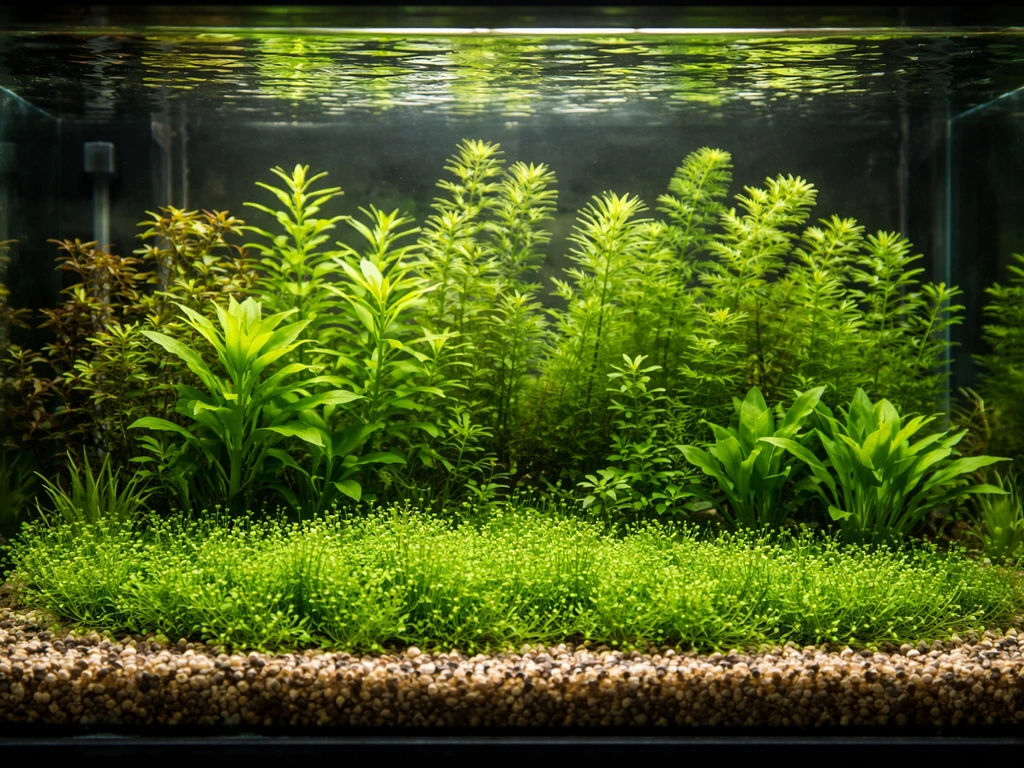
To grow aquarium carpet plants successfully, you need a nutrient-rich substrate (ideally 2.5 to 3 inches deep with fine grain), strong light at substrate level (100 to 150 PAR minimum), CO₂ injection, and either small rooted clumps planted about 1 inch apart or seeds broadcast directly onto a damp substrate before flooding. Get those four things right and most carpet species will fill in within 4 to 10 weeks. Get even one wrong and you'll be staring at patchy, yellow, algae-smothered disappointment for months.
How to Grow Aquarium Carpet Plants Step by Step
Marcus Holloway
17 Jun 2026
Choosing the right carpet plant (and deciding how you'll start it)
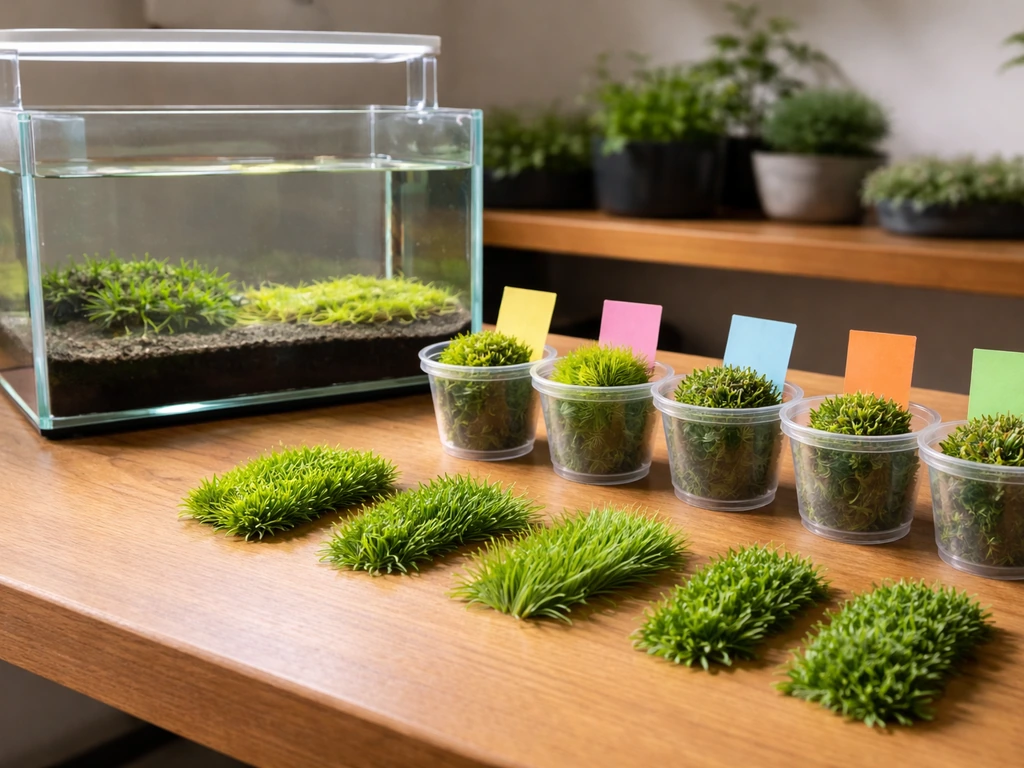
Not all carpet plants are created equal, and the wrong choice for your tank's tech level will cost you time and money. Here's how the most popular options stack up honestly.
| Plant | Difficulty | Light Needed | CO₂ Required? | Best for Seeds? |
|---|---|---|---|---|
| Monte Carlo (Micranthemum 'Monte Carlo') | Beginner-friendly | Moderate-strong | Strongly recommended | No (plants only) |
| Dwarf Hairgrass (Eleocharis parvula) | Beginner to intermediate | High (100–150 PAR) | Strongly recommended | Yes (seeds available) |
| Microsword (Lilaeopsis brasiliensis) | Beginner | Moderate | Helpful, not essential | No (plants only) |
| Glossostigma elatinoides | Difficult | Very high | Required | No (plants only) |
| Dwarf Baby Tears (HC Cuba) | Difficult | Very high | Required | No (plants only) |
If you're new to carpets, start with Monte Carlo or microsword. Monte Carlo is forgiving, grows relatively fast, and handles moderate CO₂ better than most. Dwarf hairgrass is the go-to if you want to start from seeds, since hairgrass seeds are the most reliably available carpet seeds on the market. Glossostigma and HC Cuba are genuinely difficult and belong in high-tech setups with dialed-in CO₂ and near-perfect water parameters. I tried HC Cuba in my second planted tank without pressurized CO₂ and it melted within three weeks.
On the seeds-vs-plants question: starting from seeds is cheaper upfront but slower and less predictable. Starting from rooted plant clumps (including tissue culture plants) is faster and more reliable. If your budget is tight and you have patience, seeds work well for dwarf hairgrass. For every other species, buy plants. Tissue culture plants are worth considering because they arrive pest-free and algae-free, which gives your carpet a cleaner start.
Setting up your tank: light, CO₂, water, and flow
This is where most carpet attempts fail before a single plant goes in. Get the conditions wrong and no amount of good planting technique will save you.
Light
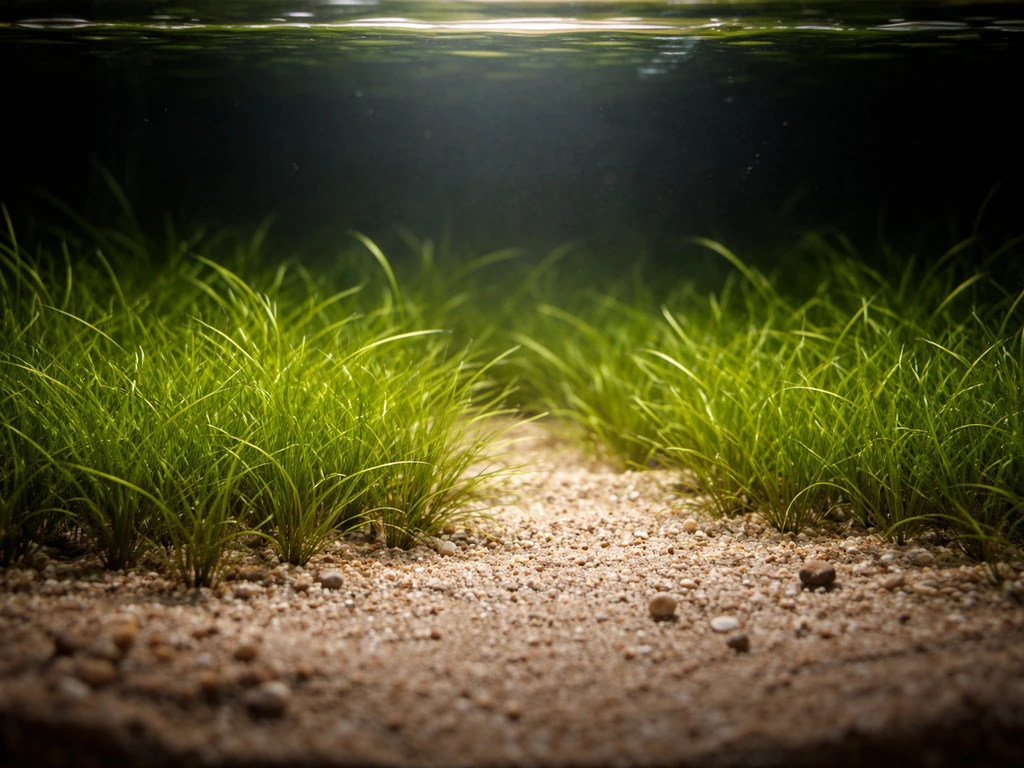
Carpet plants are substrate-level plants, so the light has to reach the bottom of the tank with real intensity. For dwarf hairgrass, you need 100 to 150 PAR at the substrate. Monte Carlo needs something in that moderate-to-strong range too. A cheap, low-power LED sitting on top of a 20-gallon won't cut it. Use a PAR meter if you can borrow one, or look up PAR readings for your specific light at your tank depth. Run lights 8 to 10 hours per day on a timer. Inconsistent light hours are a trigger for algae outbreaks, especially during the establishment phase.
CO₂
Pressurized CO₂ is the single biggest upgrade you can make for carpet plants. Target 20 to 30 ppm in the water column. Use a drop checker with 4dKH reference solution to monitor it in real time (green means you're in range, yellow means too much, blue means too little). Liquid carbon supplements like glutaraldehyde-based products can help in low-tech setups, but they are not a substitute for pressurized CO₂ if you're trying to grow demanding species like Glossostigma or HC Cuba. For microsword and Monte Carlo in a well-fertilized substrate, liquid carbon plus good light can work, but growth will be slower.
Water parameters
Most carpet plants prefer soft to slightly acidic water. A pH of 6.0 to 7.0 is the sweet spot for the majority of species. Glossostigma specifically prefers pH in the 5 to 7 range with soft water. Temperature between 68 and 78°F (20 to 26°C) suits all the common carpet species. Keep GH between 3 and 8, and KH between 1 and 4 for CO₂-injected tanks. Stability matters more than hitting exact numbers. Swings in pH or temperature stress carpet plants during the critical establishment window.
Flow and circulation
Good water circulation does two things: it distributes CO₂ and nutrients to the substrate level, and it prevents dead spots where algae colonize. Aim for a turnover rate of 5 to 10 times your tank volume per hour. For a carpet zone, position your filter outlet so there's gentle movement across the substrate without blowing your plants out of the ground. Monte Carlo in particular benefits from circulation reaching down to the substrate according to Tropica's own care guidance. I've had carpet zones die off in corners where flow just didn't reach.
Substrate: depth, grain size, and preparing the carpet zone
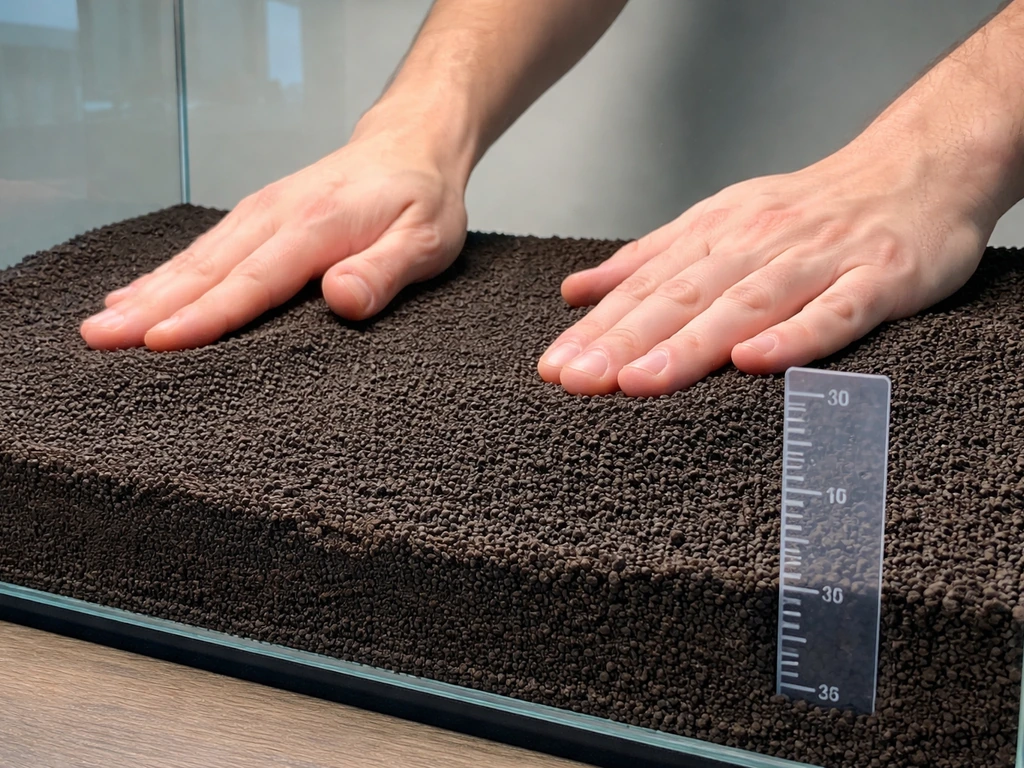
Substrate is the foundation and it's non-negotiable for carpet plants. They anchor via shallow runners and roots, so the substrate has to hold them while also feeding them.
- Depth: 2.5 to 3 inches minimum for the carpet zone. Shallower than that and roots can't anchor, plants tip over, and nutrient reserves run out fast.
- Grain size: fine grain between 1 and 3mm is ideal. Coarse gravel doesn't hold roots well and leaves air gaps that cause plants to float free.
- Substrate type: nutrient-rich aquasoil (like Tropica Aquarium Soil, ADA Amazonia, or similar) is the best single-substrate choice. It provides both physical anchoring and a long-term nutrient reservoir. Microsword can do reasonably well in organic-rich dirt/soil capped with fine sand. Plain inert gravel needs heavy root tab supplementation to work.
- Slope the substrate: for aesthetics and practical drainage, slope it from about 1.5 inches at the front to 3 or more inches at the back. This makes carpets look better and helps with planting at the front.
- Before planting, make sure the substrate is wet but not fully flooded. Moist substrate holds plants better during initial placement and is essential if you're seeding.
If you're using aquasoil, be aware that most active aquasoils leach ammonia for the first few weeks. Let the tank cycle fully before adding carpet plants, or do daily large water changes during the ammonia spike phase. Carpet plants going into a tank with a 2 to 3 ppm ammonia spike will melt and die, full stop.
Starting your carpet from rooted plants
This is the most reliable method and the one I'd recommend to anyone who isn't specifically trying to do the seeds-in-aquarium approach.
- Prepare your plant portions: Divide the plant mat or pot into small clumps, roughly the size of your thumbnail. Remove any rockwool or nursery medium from the roots entirely. For tissue culture plants, rinse the gel off thoroughly in dechlorinated water.
- Space the clumps 3/4 to 1 inch apart across the carpet zone. This spacing sounds sparse but it's intentional. Closer than that and the plants compete for light and nutrients before runners establish. Farther than 1.5 inches and fill-in takes much longer.
- Use aquascaping tweezers (straight or curved) to push each clump 0.5 to 1cm into the substrate. You want the roots buried but the crown (where leaves emerge) sitting just at or above the substrate surface.
- Work in sections so no area stays exposed too long. Plant the front, then work backward toward the hardscape.
- If you can, use the dry-start method (DSM): after planting, mist the substrate with water instead of flooding immediately. Seal the tank with plastic wrap to maintain humidity above 80% and keep lights on 8 to 10 hours a day. After 4 to 6 weeks of surface growth, flood the tank slowly. DSM can dramatically speed up carpet establishment and reduce algae risk because there's no open water column for algae to bloom in early on.
- If flooding immediately (wet start), keep the water level low for the first week if possible, and maintain CO₂ and light from day one.
What to expect after planting
During the first 1 to 2 weeks, don't panic if some leaves yellow or the plants look like they're melting back. Transplant shock is normal. What you're watching for is new growth at the crown and the appearance of runners spreading horizontally. By week 3 to 4 you should see runners connecting clumps. Full carpet coverage typically takes 6 to 12 weeks depending on species and how dialed-in your conditions are. Monte Carlo and dwarf hairgrass are usually the fastest; microsword is slower but more tolerant.
Once the carpet is established, trim it regularly with aquascaping scissors. Cutting hairgrass and Monte Carlo back to about 1 inch encourages lateral runner production and keeps the carpet dense. Letting it grow too tall causes lower leaves to shade out, the carpet thins, and algae moves in underneath.
Growing carpet from seeds in an aquarium
Aquarium carpet seeds, mostly marketed as dwarf hairgrass seeds or generic 'aquarium grass seeds,' have exploded in popularity on e-commerce platforms. The results are genuinely hit or miss, and a lot of that comes down to seed quality and method. Here's what actually works.
Seed quality reality check
Buy seeds from reputable aquatic plant sellers or specialty aquarium shops, not generic marketplace listings. Many cheap listings sell terrestrial grass seeds that will never survive submerged. blank" rel="noopener noreferrer">Legitimate dwarf hairgrass seeds (Eleocharis parvula) are the most commonly available and most viable option for aquarium seeding.
The seeding process step by step
- Set up your substrate and hardscape fully before adding any water. You want the aquasoil surface moist but not submerged. Mist it thoroughly with a spray bottle.
- Sprinkle seeds as evenly as possible over the carpet zone. You don't need to bury them. They need light to germinate, so surface placement is correct. A light, even layer is better than clumping them. Think of it like seeding a lawn: sparse and even beats dense and patchy.
- Mist the seeds gently after spreading so they make contact with the substrate. Don't blast them or they'll move.
- Cover the tank loosely with plastic wrap or a humidity dome. You want 80%+ humidity to prevent the substrate from drying out.
- Turn on your lights for 10 to 12 hours per day. Seeds don't need CO₂ during germination, but your lights must reach the substrate level.
- Mist daily to keep the surface damp. Check for drying corners and mist those spots specifically.
- Germination typically begins in 7 to 14 days. You'll see tiny green sprouts appearing across the substrate. Wait until you have visible coverage (usually 3 to 5 weeks after germination) before slowly flooding.
- Flood gradually: add a few inches of dechlorinated water every day over 3 to 5 days rather than filling the tank all at once. This reduces float-off and stress to the young seedlings.
- Once flooded, start CO₂ injection and maintain your normal fertilizing schedule.
Seeds take longer overall than planting rooted plants. From seeding to full carpet you're usually looking at 8 to 14 weeks. But the cost is low and, if it works, the carpet grows up as one uniform field rather than a patchwork of clumps filling in. The failure rate is also higher than with plants, so order more seeds than you think you need.
Nutrients and fertilizing to drive carpet spread
Carpet plants are heavy feeders at the root level. Nutrient deficiency is one of the top reasons carpets stall, thin out, or turn yellow after an initially promising start.
Substrate vs. water column feeding
Carpet plants feed primarily through their roots, so substrate nutrition matters most. A good aquasoil handles this for the first 6 to 18 months. After that, or if you're using inert substrate, add root tabs every 4 to 6 inches throughout the carpet zone and replace them every 3 to 4 months. Even with aquasoil, water column dosing supports faster spread and healthier coloration.
Water column dosing targets
- Nitrate (NO3): 10 to 25 ppm. Below 5 ppm and you'll see yellowing and stunted growth. Above 40 ppm and algae risk increases sharply.
- Phosphate (PO4): 0.5 to 2 ppm. Don't let this go to zero. Phosphate deficiency causes leaves to turn dark or purple-tinged in some carpet species.
- Potassium (K): 5 to 15 ppm. Often overlooked and commonly deficient in established tanks.
- Iron (Fe): 0.1 to 0.5 ppm total iron. Low iron shows as yellowing new growth (interveinal chlorosis) in carpet plants.
- Magnesium (Mg): 2 to 5 ppm. Deficiency looks like yellowing between leaf veins on older leaves.
Dosing schedule
Use an all-in-one liquid fertilizer (like Seachem Flourish Comprehensive or TNC Complete) three times per week during the establishment phase. Once the carpet is filling in, you can move to the Estimative Index (EI) method if you want more precise control: dose macros (NPK) on Monday, Wednesday, Friday and micros (iron, traces) on Tuesday, Thursday, Saturday, then do a 50% water change on Sunday to reset. This prevents nutrient lockout and keeps parameters stable. It sounds like a lot but it takes about 5 minutes per dosing day.
Troubleshooting carpet and seed problems
Most carpet failures come down to one of six recurring problems. Here's how to identify and fix each one quickly.
Algae overtaking the carpet zone
Green algae, green spot algae, and especially blue-green algae (cyanobacteria) are the most common carpet killers during establishment. Blue-green algae forms a smothering mat over seeds and young plants and can wipe out a carpet in days. It's usually triggered by low flow, very low nitrates (below 5 ppm), and unstable CO₂. Fix it by: increasing circulation directly across the substrate, raising nitrates to 15 to 20 ppm, stabilizing CO₂ delivery, and doing a 3-day blackout (lights completely off, cover the tank) as an emergency intervention. After the blackout, do a 50% water change and remove as much algae manually as you can before restarting.
Seeds not germinating
If you're past 14 days with no sprouts, the most likely culprits are bad seed quality, insufficient humidity, or insufficient light reaching the substrate surface. Check that the substrate stays visibly moist (not wet, not dry) and that your lights are actually on for 10 to 12 hours. If humidity is low, re-seal the tank cover. If nothing appears by day 20, the seeds are likely not viable and you need a new batch from a better source.
Patchy or uneven carpet growth
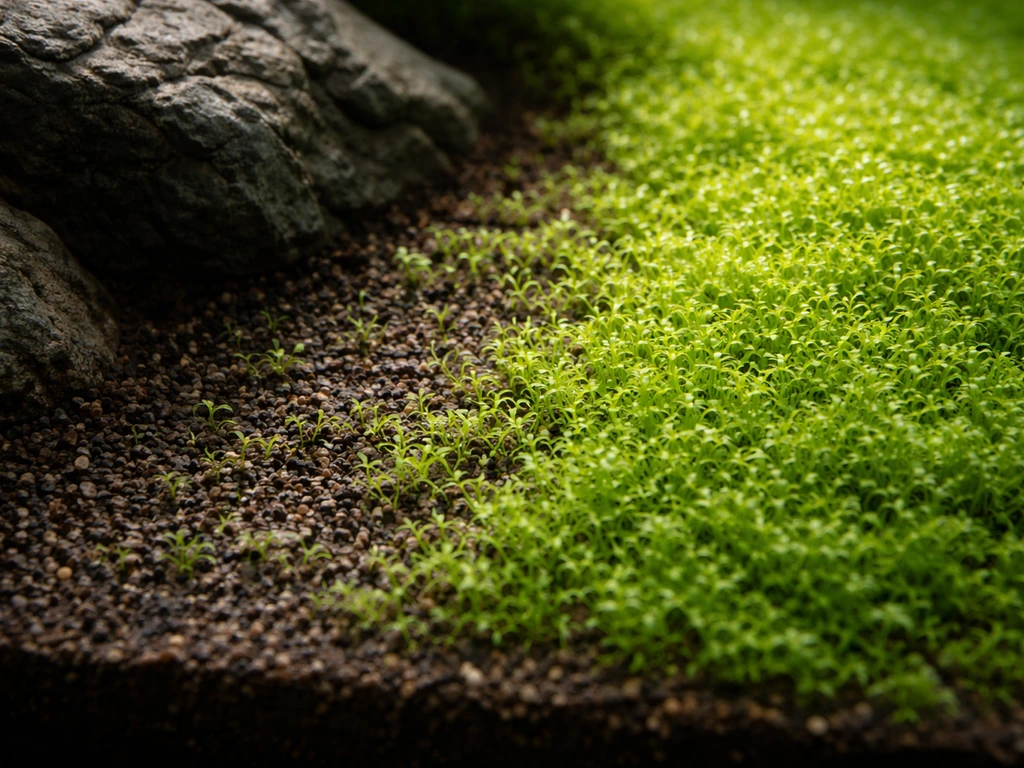
This usually means uneven light distribution, nutrient hotspots, or inconsistent CO₂ coverage. Check whether the thin patches are in shadowed areas (behind hardscape, at tank edges). Reposition your light or add a second light source. For CO₂ issues, watch your drop checker across different parts of the tank and adjust your diffuser placement so distribution is more even. Adding a second CO₂ diffuser in a larger tank (over 40 gallons) often solves this immediately.
Plants floating up after planting
This is a substrate depth problem. If plants keep floating free, your substrate is either too shallow, too coarse, or you're not pushing the roots in deeply enough. Push clumps at least 1cm into the substrate. With very fine or light substrate, you can also hold plants in place temporarily with a small pebble on top of the clump (not the crown) until roots anchor. This is especially useful for hairgrass.
Yellowing or melting after initial planting
Some melt is normal, especially with Monte Carlo and microsword making the transition from emersed to submerged growth. Wait up to 3 weeks before worrying. If melt is total and new growth isn't appearing, check CO₂ levels, confirm your substrate isn't in an ammonia spike from new aquasoil, and verify your light is reaching the substrate level. A PAR reading under 50 at the substrate will stall or kill most carpet species.
Carpet thinning after initial establishment
This usually happens around the 3 to 6 month mark when aquasoil nutrients start depleting, or when you've been undertrimming. Add root tabs every 4 to 6 inches, increase fertilizer dosing, and trim the carpet back hard to 0.5 to 1 inch. It sounds counterintuitive but cutting it back forces lateral runner production and the carpet regrows denser.
Your setup checklist and timeline to expect
Before you put anything in the tank, run through this list. Every item you skip is a potential failure point.
- Substrate: fine grain aquasoil, minimum 2.5 inches deep in the carpet zone, tank fully cycled before planting
- Light: confirmed 100+ PAR at substrate level, timer set for 8 to 10 hours per day
- CO₂: pressurized system set up, drop checker in place, targeting 20 to 30 ppm
- Flow: filter turnover at 5 to 10x tank volume per hour, outlet positioned to reach substrate
- Water: pH 6.0 to 7.0, temperature 68 to 78°F, GH 3 to 8, KH 1 to 4
- Fertilizer: all-in-one liquid fert ready, root tabs available for later top-ups
- Plant stock: healthy rooted clumps or verified viable seeds from a reputable source
| Method | First signs of growth | Runners/spreading | Full carpet coverage |
|---|---|---|---|
| Rooted plants (wet start) | 7 to 14 days | 3 to 5 weeks | 6 to 12 weeks |
| Rooted plants (dry-start method) | 7 to 14 days | 2 to 4 weeks | 4 to 8 weeks after flooding |
| Seeds (dry germination) | 7 to 14 days | 3 to 6 weeks | 10 to 16 weeks after flooding |
Growing carpet plants connects directly to the broader set of skills covered in planted tank keeping, including stem plant trimming and maintenance and understanding how natural planted aquarium systems work together. Those same trimming routines apply when you learn how to grow stem plants in aquarium setups, too stem plant trimming and maintenance. The principles here, especially on substrate nutrition, CO₂ delivery, and lighting, carry over to every other plant type in your tank. Get carpets right and the rest of your planted tank usually follows.
Start today by checking two things: your substrate depth and your light PAR at the substrate. Those are the two conditions that either make or break every carpet attempt I've seen. If both are solid, pick your species, order your plants or seeds, and give it 10 weeks before judging results. The carpet almost always comes if the foundation is right.
FAQ
How often should I fertilize during carpet plant establishment, and can I overdo it?
Follow a light-to-moderate regimen during the first phase (for example, an all-in-one liquid 3 times per week), but stop short of heavy dosing if you see algae spikes. If you dose for a week and green film or spot algae accelerates while CO₂ and light are unchanged, pause fertilizer for 3 to 5 days and verify nitrate is in a workable range before increasing again. Root tabs should be added in the substrate, not used as a substitute for liquid fertilizer early on.
My plants are growing, but the carpet stays thin. What should I check first?
Start with the two biggest thinness drivers you might miss: nutrient delivery at the root zone and light uniformity. Even if PAR is “high enough” overall, a few shadow bands or uneven hotspots can keep runners from filling. Recheck PAR at multiple points across the tank bottom (center, edges, near hardscape), then confirm you are actually pushing roots into the substrate and not holding them at the surface with gravel movement.
Should I dose CO₂ based on ppm, or is bubble counting easier?
Use the ppm target and monitor with a drop checker because bubble counting is unreliable across different diffusers, water flow, and tank backpressure. If you are seeing blue or persistent “too low” color even after adjusting bubbles, move to diagnosing diffuser placement and circulation patterns first, then fine-tune from the drop checker readings.
Can I grow carpet plants without CO₂ injection if I use brighter lights?
You can keep some moderate options going (like microsword or Monte Carlo) if you combine strong substrate nutrients with reliable liquid carbon and strong light, but bright light alone often worsens algae while still limiting growth. If you do not reach a substrate-level PAR that supports the species, brighter surface light usually just creates algae. The practical decision is species choice first, then low-tech-friendly supplementation, rather than trying to force demanding carpets.
What water changes schedule is safest while the carpet is filling in?
Do smaller, consistent changes during establishment to avoid parameter swings, especially pH and temperature. If you are running an Estimative Index-style reset, use the full reset timing as described (including the weekly water change), because frequent partial changes can interrupt nutrient availability and slow runner spread. Also, avoid large immediate changes during the first 1 to 2 weeks unless you must correct ammonia or temperature emergencies.
Do carpet plants need to be trimmed soon after planting, or should I wait for full coverage?
Do not wait passively for a blanket layer if you see long strands forming early. Trimming to roughly keep growth around 1 inch in the early phase encourages lateral runners and prevents shading from tall blades. The caveat is timing, if you just installed clumps, wait until you see clear new growth at the crown, then trim gently rather than cutting everything down immediately.
How do I prevent floating or uprooting when the filter outlet creates strong flow?
Aim for gentle, substrate-level movement rather than surface turbulence. Position the outlet so flow passes across the carpet zone without blasting it, and consider partial flow control (for example, angling the outlet or using a deflector) so runners can anchor. If plants keep coming loose, the problem is often not flow strength alone, it is insufficient root insertion depth or substrate that is too coarse for shallow runners to grab.
What substrate grain size works best, and does it affect algae?
Fine grain supports easier root anchoring and better nutrient contact at the root zone, which helps carpets outcompete algae. Very coarse substrate can leave runners unable to stay planted and can create micro pockets where detritus collects. If you use inert substrate, coarse grain also makes root tabs less effective because nutrients do not distribute as evenly through the immediate root zone.
I’m getting blue-green algae, but my nitrates are not extremely low. Why could that still happen?
Cyanobacteria can still trigger with unstable CO₂ delivery, low flow at the substrate, or poor nutrient availability in a specific micro-area even when the tank average nitrate looks fine. Check for uneven CO₂ coverage using the drop checker and look for dead corners with low circulation. If you do an emergency blackout, follow it with manual removal and a water change, then restart only after circulation and CO₂ stability are corrected.
If my seeds do not sprout by day 14, when should I stop troubleshooting and replace the batch?
If you confirm the substrate stays consistently moist and the lights are truly reaching the bottom for 10 to 12 hours, then by day 20 no sprouts usually indicates poor viability rather than fixable technique. At that point, order a new batch from a more specialized aquatic plant source, and avoid extending humidity or light changes endlessly without any visible germination.
How can I tell whether yellowing is normal melt or a nutrient or CO₂ problem?
Normal melt typically happens early (first 1 to 3 weeks) and is followed by new growth at the crown or visible runner starts. If plants are yellowing but there is no fresh crown activity, check CO₂ stability first using the drop checker, then confirm you are not dealing with an aquasoil ammonia spike. Persistent yellowing after the crown has been established usually points to nutrient deficiency at the substrate, especially if runners are not expanding.
When should I add root tabs, and how do I know they are working?
Add root tabs after the substrate’s initial nutrient contribution fades, commonly after several months with aquasoil, or earlier if you see stall symptoms in inert setups. They are working when new runners accelerate and older yellow patches stop spreading. If you add root tabs but see no recovery, the issue is often still light reach, CO₂ stability, or root anchoring depth, so verify those before adding more fertilizer.