Tissue culture aquarium plants can go from sealed cup to thriving carpet or lush stem plant within 3 to 6 weeks, but only if you rinse off the gel, plant them correctly for their type, keep light low for the first couple of weeks, and give them time to adjust. Skip any of those steps and you will deal with bacterial blooms, algae spikes, or a full melt that never bounces back.
How to Grow Tissue Culture Aquarium Plants Step by Step
Marcus Holloway
26 Jun 2026
What tissue culture actually means and what to expect
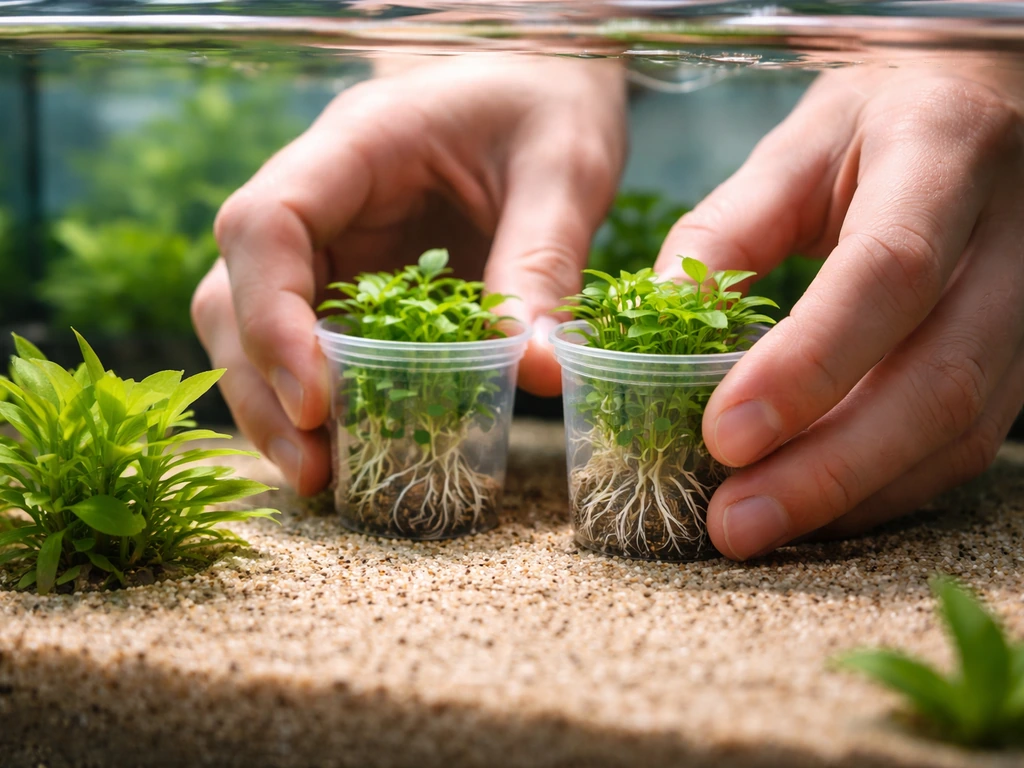
Tissue culture (TC) plants are grown in a sealed, sterile lab environment, typically in a clear plastic cup or flask filled with agar gel or a liquid medium that provides all the nutrients the plant needs to develop roots and shoots without soil, bacteria, or algae. Brands like Tropica (1-2-Grow), Dennerle (Plant-It), and Buce Plant all use this format. The result is a plant that is 100% pest-free, snail-free, and algae-free when it leaves the lab, which is a genuinely huge advantage over traditional aquarium plants.
The catch is that TC plants are raised in a sterile, highly controlled environment that is nothing like your aquarium. The moment you open the cup and introduce the plant to tank water, bacteria, fluctuating parameters, and real light, the plant has to rebuild its physiology from scratch. Some leaves will melt. That is normal, expected, and not a sign you did something wrong. Most species recover within 2 to 4 weeks, though some, crypts in particular, can take longer. If the rhizome or crown is healthy, new growth will come.
Buying and handling TC plants: what to do the moment they arrive
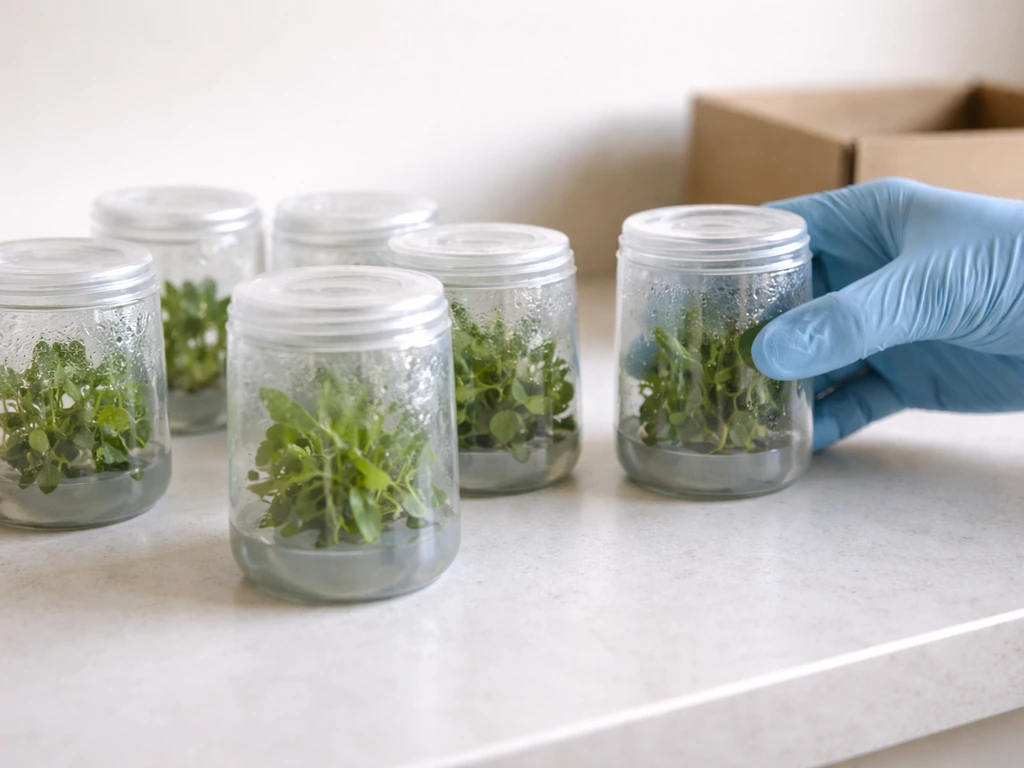
The first rule is to keep the cup sealed until you are ready to plant. The sterile gel inside protects the plant, and opening it early introduces bacteria and dries out the roots. If you need to hold TC plants for more than a day or two before planting, open the cup, rinse off the gel completely, and place the plant in a container of dechlorinated water, either submerged or floating. Aquasabi advises rinsing tissue-culture media off entirely because the growth medium contains sugar, which can promote bacterial blooms; it also emphasizes keeping plants moist during prep and planting blank" rel="noopener noreferrer">rinsing off the gel completely. After opening the cup, Tropica recommends taking the plant out and blank" rel="noopener noreferrer">rinsing off the growing media under the tap. Do not leave it sealed for weeks on the shelf and hope for the best.
When you are ready to plant, here is exactly what to do: open the cup, pull the plant plug out gently, and rinse it thoroughly under cool running tap water. Get every trace of the gel medium off the roots and leaves. This step matters more than most beginners realize, the growth medium contains sugar, and if you leave it in your tank it will feed a bacterial bloom almost immediately. Some TC plants, especially Dennerle's range, also include rockwool or mineral wool at the base. Remove as much of that as you can without destroying the root mass. Keep the plant moist throughout this whole process; do not let roots dry out on the counter while you set up the tank.
- Keep cups sealed until the moment you plant
- If holding plants longer, rinse gel and store in dechlorinated water
- Rinse all gel/agar completely under running water before planting
- Remove rockwool or mineral wool as much as possible
- Never let roots or rhizomes dry out during prep
- Keep plants away from direct sunlight and bright artificial light before planting
Acclimating TC plants to your aquarium
Acclimation is less about floating the plant in the tank for 20 minutes and more about giving your entire tank the right conditions during weeks 1 through 3. TC plants coming from a sterile lab are essentially going through a controlled-to-chaotic transition, and the more stable and low-stress you make the tank environment, the faster they settle in.
The single most effective thing you can do during the first two to three weeks is reduce your light period to around 6 hours per day. This is straight from Tropica's new-tank guidance and it works. Lower light means less algae competition while your plants are too stressed to outcompete it, and it reduces the energy demand on plants that are not yet rooted or photosynthesizing efficiently. Once you see new growth, which usually means the transition is complete, you can bump light duration back up toward 8 to 10 hours.
Weekly 25% water changes during this period are also essential. Changing water dilutes organics, excess nutrients from any gel residue you missed, and the compounds that algae thrive on. Do this every week for the first month and you will sidestep a lot of the algae bloom problems that plague new planted tanks.
If your tap water is chlorinated, let it sit 24 hours before using it for water changes, or use a dechlorinator. Chlorine is hard on stressed, newly planted TC plants with compromised root systems.
The tank conditions that make TC plants thrive
TC plants are not magical, they need the same conditions as any aquarium plant, they just arrive in better shape. Getting the setup right before you plant is much easier than troubleshooting after. Here is what actually matters:
Light
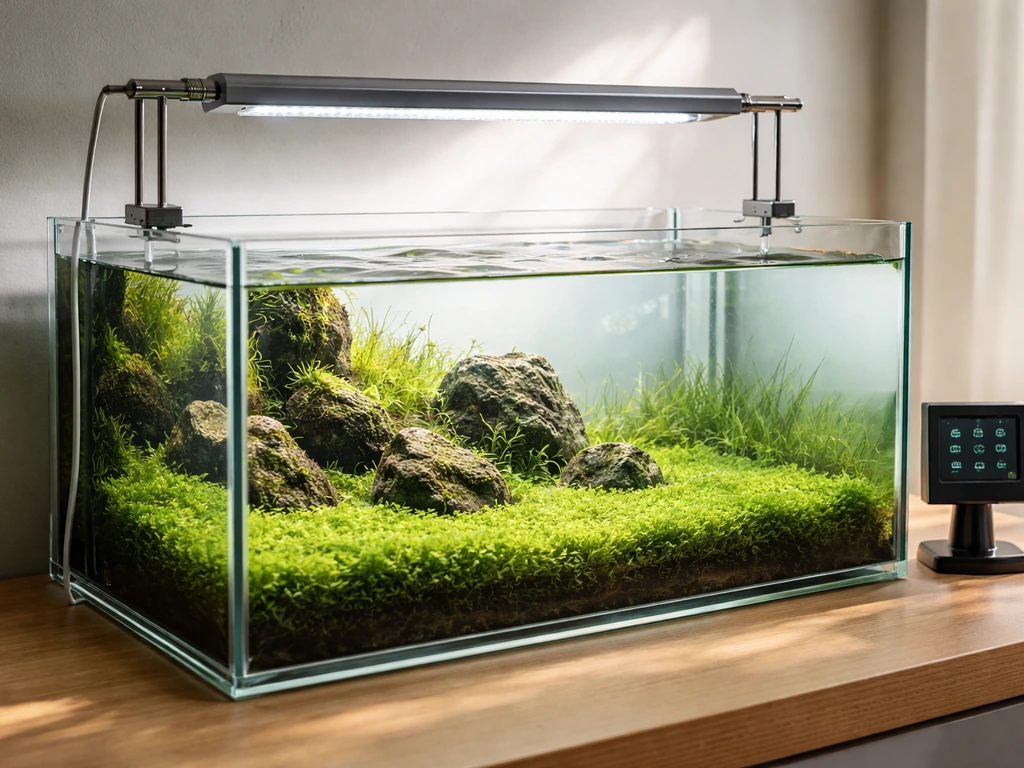
Start at 6 hours per day for weeks 1 to 3, then increase to 8 to 10 hours. Intensity depends on species: carpeting plants like Hemianthus callitrichoides 'Cuba' and Glossostigma need high-intensity light (PAR 50 to 100+ at the substrate level), while epiphytes like Anubias and Bucephalandra prefer lower, indirect light and can burn under intense beams. Use a timer, consistency matters more than the exact number of hours.
Temperature
Most TC aquarium plants are tropical species that prefer 72 to 78°F (22 to 26°C). Keep a heater in the tank and check it with a separate thermometer rather than relying on the heater's dial. Cold water slows metabolism and root development significantly during the transition phase.
Flow and filtration
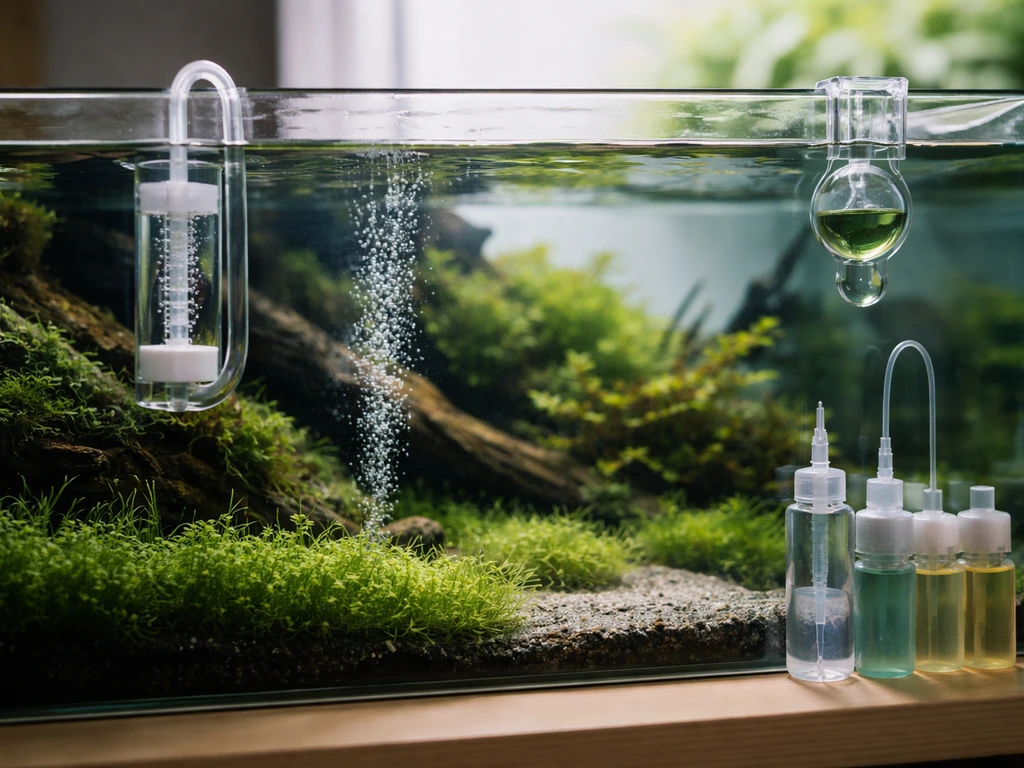
Moderate flow is ideal, enough to distribute CO2 and nutrients evenly across the tank but not so strong that it uproots freshly planted carpeting plugs or blasts delicate new growth off stems. A sponge filter or hang-on-back works fine for most low-tech setups. For high-tech CO2 tanks, a canister filter with a spray bar that creates surface movement without excessive surface agitation keeps CO2 in the water column longer.
CO2
Pressurized CO2 is not mandatory for TC plants to survive, but for carpeting species it is close to mandatory for them to actually carpet. Without CO2, Hemianthus callitrichoides 'Cuba', Monte Carlo, and Glossostigma will grow extremely slowly, get spindly, or melt out. A target of 20 to 30 ppm dissolved CO2 (a green-to-yellow drop checker reading) is the standard for a high-tech planted tank. If you are running low-tech, stick to hardier TC species like crypts, Java fern, or Bucephalandra.
Nutrients and fertilizers
Stem plants feed primarily from the water column, so liquid fertilizers dosed 2 to 3 times per week are their main nutrient source. For a deeper look at stem planting, you will also want to follow the right planting depth so roots establish quickly without rot Stem plants feed primarily from the water column. Carpeting plants and rosette species like crypts benefit more from root tabs placed near the root zone in addition to liquid ferts. Do not skip fertilizing during the transition period, deficiencies show up quickly on plants that are already stressed, and pale or yellow new growth is a common early warning. Dose conservatively at first (half the recommended amount) and increase once you see consistent new growth.
How to plant different TC types: substrate, attachment, and depth
This is where a lot of beginners make critical mistakes, and it is not intuitive. The planting method depends entirely on the type of plant, burying the wrong plant type will kill it fast. To get natural aquarium plants to thrive long term, focus on stable water parameters, appropriate light, and the right planting method for each type how to grow natural plants in aquarium.
Carpeting plants (Hemianthus callitrichoides, Monte Carlo, Glossostigma)
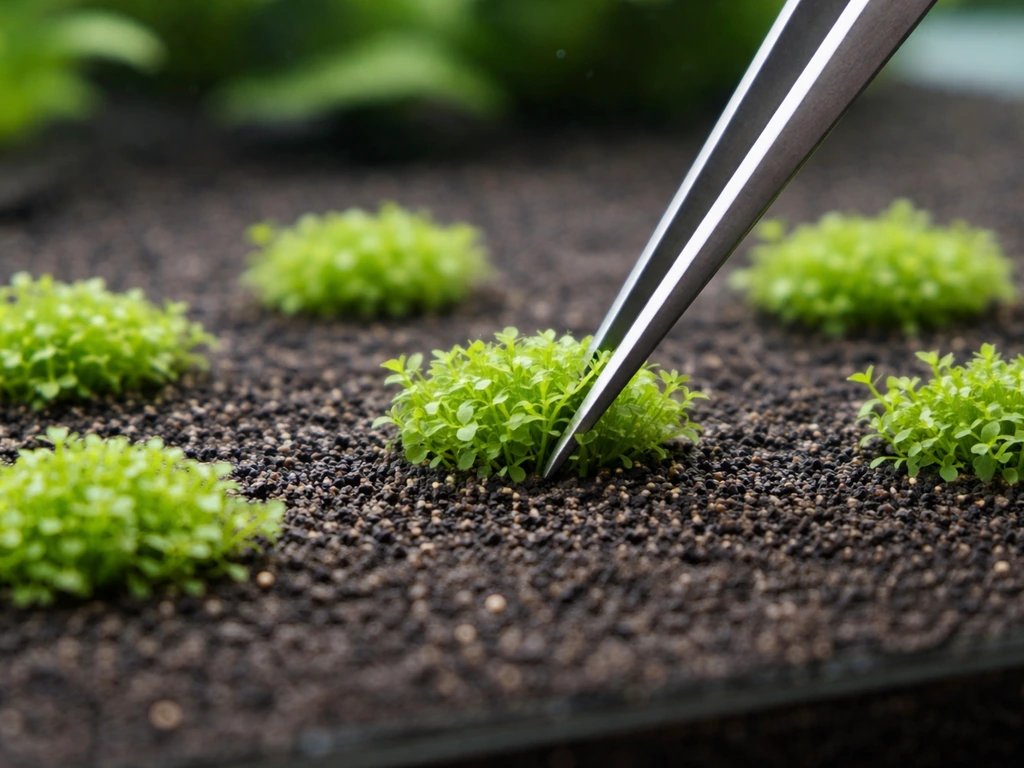
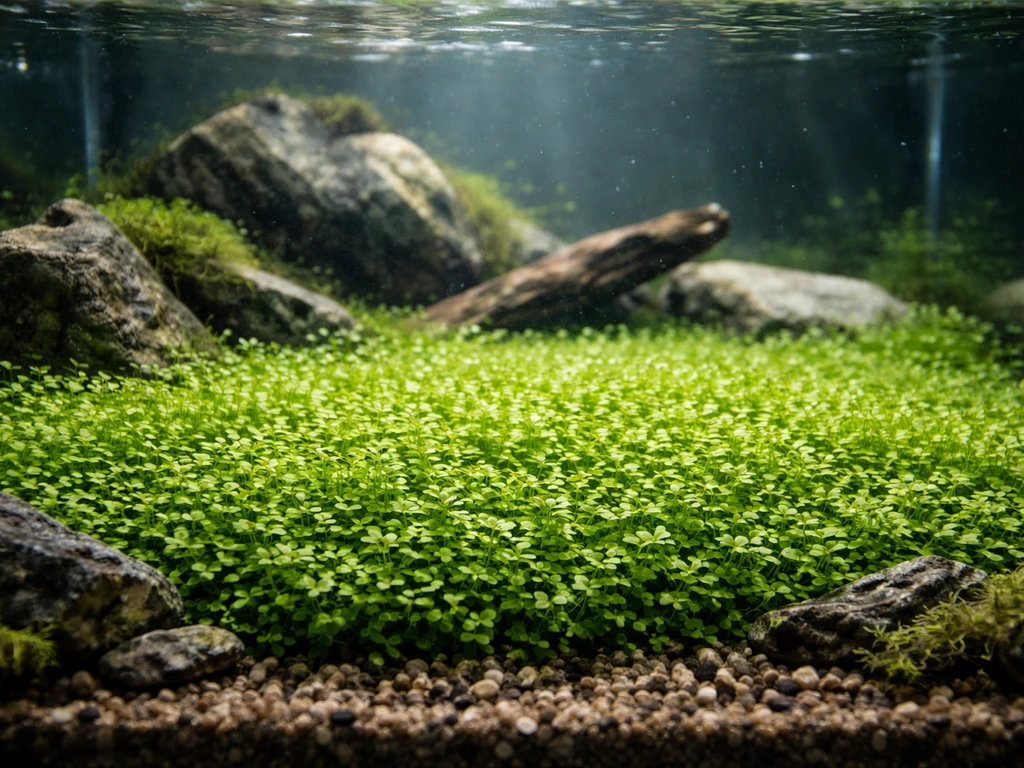
These come as dense plugs in the TC cup. Separate the plug into smaller portions, roughly pencil-eraser size, using clean scissors or tweezers. Plant each portion about 1 to 1.5 cm apart, pushing the base just barely into the substrate (about 0.5 to 1 cm). Do not bury them deep. A nutrient-rich fine-grain substrate like aquasoil makes rooting faster. These plants need high light and CO2 to actually spread horizontally. Without both, they will grow upward or melt.
Rhizome and epiphyte plants (Anubias, Bucephalandra, Java fern)
Never bury the rhizome. This is the thick horizontal stem that leaves and roots grow from, and burying it in substrate causes rot within days. Instead, tie or glue these plants to hardscape, rocks, driftwood, or lava rock, using aquarium-safe super glue gel or cotton thread. The thread will dissolve eventually; the glue holds immediately. If a TC Buce arrives looking melted with just a bare rhizome showing, do not give up. Attach it and wait. New leaf growth often appears within several weeks once the rhizome adapts.
Stem plants (Hygrophila, Rotala, Bacopa)
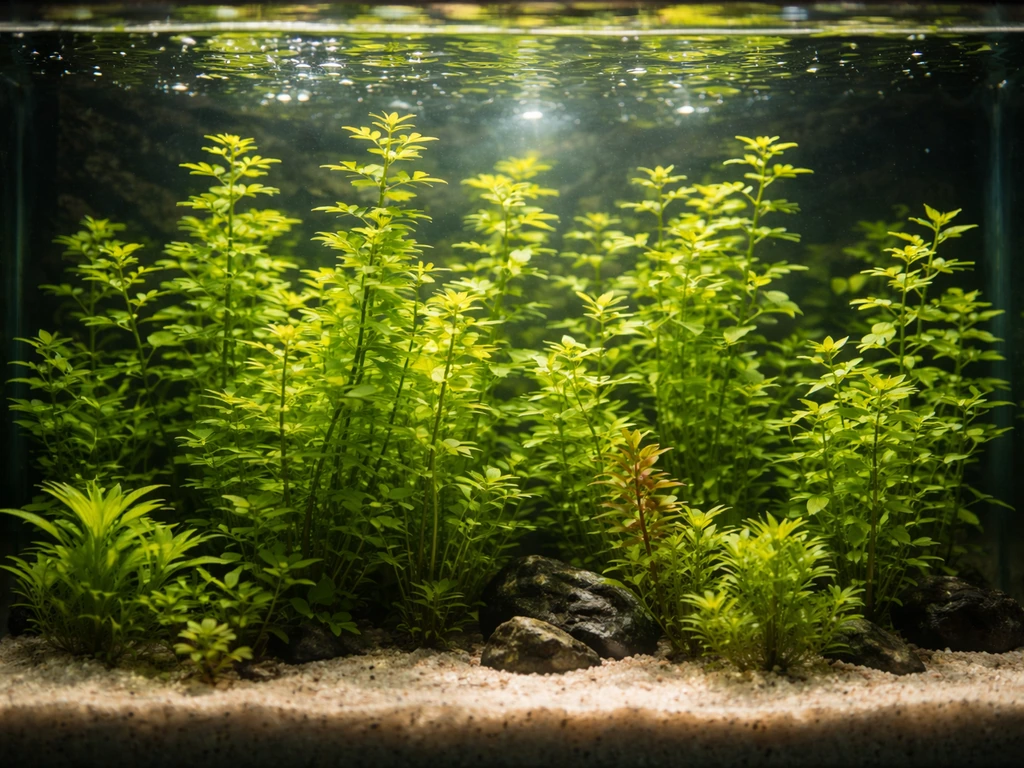
Separate individual stems and plant them in small clusters, burying the bottom 2 to 3 cm of stem in substrate while keeping all leaves above the substrate line. Planting too deep rots the lower stems. Space clusters 2 to 4 cm apart to allow light penetration to the base. Stem plants in TC cups may arrive shorter than typical store-bought stems, but they root quickly once planted and respond well to water-column fertilization.
Rosette plants (Crypts, dwarf sag, Echinodorus)
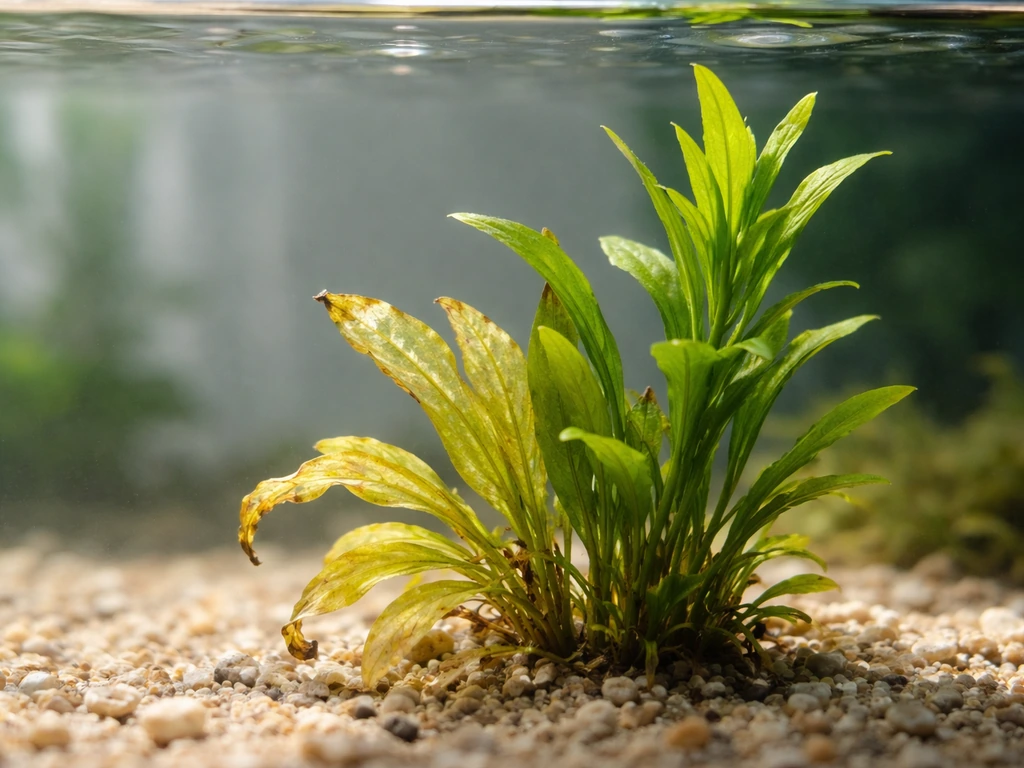
Plant the crown just at the substrate surface, roots go in, crown stays exposed. Crypts are famous for melting almost completely after any disturbance, and TC crypts are no exception. This is not failure; it is crypt behavior. As long as the roots and crown are intact and planted correctly, they will regrow. Some crypt melts take 4 to 6 weeks to fully resolve, so patience here is non-negotiable.
Troubleshooting the most common TC plant problems
| Problem | Likely Cause | What to Do |
|---|---|---|
| Leaves melting/yellowing after planting | Normal transition stress from sterile to tank conditions | Trim dead leaves, maintain stable water, wait 2–4 weeks for new growth |
| Algae bloom in week 1–2 | Excess nutrients from gel residue or too much light too soon | Reduce light to 6 hrs/day, do 25% water change, ensure gel was fully rinsed |
| Black or brown mushy stems/rhizomes | Rot from burial too deep or gel residue left on plant | Trim rotted sections, reposition rhizome above substrate, rinse more thoroughly next time |
| Carpeting plants growing upward instead of spreading | Insufficient light intensity or no CO2 | Increase light PAR at substrate, add CO2 or increase injection rate |
| No new growth after 4 weeks | Nutrient deficiency or incorrect light spectrum/intensity | Check and dose macro/micro nutrients, verify light is reaching the substrate |
| Bacterial cloudiness after planting | Sugar-containing gel medium left on plant | Do a water change, check filter is running, rinse all future TC plants more thoroughly |
| Mold-looking fuzz on arrival | Contamination in cup (uncommon) or condensation | Rinse plant thoroughly, inspect rhizome/crown — if firm and green, it is likely fine to plant |
The single most common failure mode I see is impatience with melt. People pull plants out, toss them, and buy new ones, then repeat the cycle. If the crown or rhizome is firm and the roots look white or pale (not black and mushy), leave the plant in the tank and give it time. Melt is almost always cosmetic during transition.
Week-by-week routine: what to do in the first month
Week 1: plant, reduce light, and leave it alone
Set your light timer to 6 hours per day. Plant everything using the methods above. Do not add fish yet if you can avoid it, fish waste adds nutrients that algae will exploit before your plants are established. Run filtration and CO2 if you have it. Do not move or disturb plants even if some leaves start melting. Melting leaves within the first few days are almost always a transition response, not disease.
Week 2: first water change and early assessment
Change 25% of the water. Trim any fully dead or melted leaves with clean scissors to prevent them from decomposing in the tank. Check for signs of new growth, look for bright green new leaves emerging from the center of rosettes, small new leaves on rhizomes, or lateral shoots on stems. Even tiny new growth at this stage is a very good sign. Keep light at 6 hours. Continue dosing fertilizer at half rate.
Week 3: increase light duration slightly
If you are seeing consistent new growth with no major algae outbreak, increase light to 7 to 8 hours per day. Do another 25% water change. Increase fertilizer to the full recommended dose. If algae is creeping in, hold light at 6 hours for another week. At this point carpeting plants should be showing lateral growth, stems should be visibly taller, and rhizome plants should have at least one or two new leaves unfurling.
Week 4 and beyond: normal maintenance begins
By week 4, most TC plants that survived the transition should be actively growing. You can introduce fish if you haven't already. Continue weekly 25% water changes, trim stem plants to encourage bushy growth, and trim carpet plants if they are overgrowing their zones. Carpeting plants like HC Cuba should be showing a dense mat by weeks 4 to 6 in a high-tech setup. If growth is still stalled at week 4, check your CO2 levels, light PAR at the substrate, and nutrient dosing before changing anything else.
Quick-start checklist: buy and set up today
- Buy TC plants from a reputable source — keep cups sealed until you are ready to plant the same day
- Set up your tank with clean substrate, filled with dechlorinated water at 72–78°F (22–26°C)
- Set light timer to 6 hours per day before adding any plants
- Prepare a clean surface, scissors, tweezers, and a bowl of dechlorinated water
- Open TC cups, pull out plant plugs, rinse all gel thoroughly under cool running water
- Remove as much rockwool/mineral wool as possible without destroying roots
- Plant based on type: rhizomes on hardscape (not buried), carpet plugs split and placed just below substrate surface, stems buried 2–3 cm, rosette crowns at surface
- Add root tabs near carpeting and rosette plant planting zones
- Start CO2 injection if available; target 20–30 ppm
- Dose liquid fertilizer at half the recommended amount
- Do a 25% water change at the end of week 1 and every week through month 1
- Trim dead leaves in week 2, increase light to 7–8 hours in week 3 once new growth appears
- Ramp up to full fertilizer dose and normal light schedule (8–10 hours) once plants are actively growing
TC plants are honestly one of the best ways to start a planted tank, no pest snails, no algae spores hitching a ride, and a known-clean starting point. The workflow above applies whether you are growing carpet plants, attaching epiphytes to hardscape, or filling out a stem plant display. Once your TC plants have acclimated, you can follow a simple schedule for light, nutrients, and trimming to keep aquarium plants growing reliably. If you are also growing other aquarium plant types alongside your TC plants, the same light and nutrient schedule applies, TC plants just need that extra rinse step and a little more patience during weeks 1 and 2.
FAQ
Can I speed up acclimation by keeping the tank very clean and running stronger filtration right away?
Yes, good mechanical and biological filtration helps stabilize the tank, but it does not replace the first-week rules. Keep light at the reduced 6 hours per day for weeks 1 to 3, and still do the weekly 25% water changes. Rapid filtration can reduce ammonia spikes, but too much light or nutrient imbalance is still what triggers algae during TC stress.
What if the gel will not fully rinse off, or it looks like a cloudy film on the plant?
Rinse longer under cool water until the cloudiness stops transferring. If you notice gel residue in the tank after planting, increase the next water change to 30% and lightly vacuum the substrate surface (avoid uprooting plugs). For especially stubborn residue, do a second rinse right before planting, even if the plant has been kept moist.
Should I cycle the aquarium before planting TC plants?
If you can, aim for a tank that already has stable filtration and is running through its early cycle. You can plant TC during cycling, but do not add fish early and keep the initial feeding low. TC plants can handle the transition, but algae takes advantage of unstable nutrients, so stability matters more than plant type.
How do I know whether “melt” is normal transition versus an actual problem like rot?
Normal transition usually looks like melting outer leaves while the base stays firm and light-colored (not black or mushy). If the crown or rhizome feels soft, smells foul, or the rot spreads downward, that is rot and you should remove the affected portion and reattach or replant correctly. Healthy TC bases often show small new growth from the center or nodes within 2 to 6 weeks, depending on species.
Do TC plants need CO2 even if they are not carpeting plants?
Most TC stem and rosette plants can grow without pressurized CO2, especially in low-tech tanks. However, without enough CO2, carpeting and many demanding foreground species either grow extremely slowly or repeatedly melt. If you want faster, more reliable growth, use CO2 for high-demand species, and consider switching to harder TC options (like crypts or Bucephalandra) if you cannot maintain CO2.
My thermometer says the heater is set correctly, but the tank feels cool. Is that a common cause of slow TC growth?
Yes. Heater dials can be inaccurate, and temperature drops during the transition phase slow root establishment. Use a separate thermometer, then fine-tune the heater so the tank stays roughly 72 to 78°F (22 to 26°C). A stable temperature often fixes “stalled at week 2 to 3” problems without changing anything else.
Can I plant TC carpet plugs into aquasoil, sand, or gravel interchangeably?
You can, but rooting speed and stability differ. Very fine nutrient-rich substrates like aquasoil help carpeting plugs root faster, which reduces early melt. If you use inert gravel or sand, add root tabs for root feeders (crypts, rosettes) and be more consistent with fertilization. Also avoid burying deeper than the plug base depth, deep planting increases decay risk.
What is the correct way to separate dense TC plugs, and how small should the portions be?
Separate into small portions about pencil-eraser size, keep roots intact, and plant each portion with short spacing (around 1 to 1.5 cm for carpets). Do not pull the plug apart aggressively, that can damage rootlets and increase melt. If you are unsure, err on slightly larger portions, they tolerate transition better.
Should I dose fertilizer right after planting, or wait until I see new growth?
Dose immediately but conservatively at first (about half the recommended amount). TC plants are already stressed and deficiencies can show quickly, pale or yellow new growth is a warning sign. If your tank is showing algae pressure, keep the dose light initially, then increase once growth becomes consistent.
Will shrimp, snails, or fish affect TC plant acclimation?
Fish are the biggest risk early because waste adds nutrients that algae can exploit before plants are established. For cleanup crews, snails and shrimp are typically less disruptive than fish, but they still disturb substrate and can dislodge freshly rooted plugs. If you add any livestock, do it after you see real new growth and keep trimming dead leaves promptly.
How do I prevent uprooting during the first few weeks?
Use moderate flow and avoid strong currents that can tug at not-fully-rooted plugs. If you run CO2 and have strong surface agitation, aim for circulation that moves water without blasting the substrate. Consider temporarily placing a gentle barrier or reducing flow direction toward newly planted areas until you see anchoring.
What if my carpet starts growing up instead of spreading sideways?
That usually means insufficient CO2 and/or not enough effective light at the substrate, even if the overall light duration is correct. Confirm substrate-level intensity (not just the light’s settings), then check your CO2 target if you are running high-tech. In low-tech, consider switching to lower-demand TC carpet or foreground species because sideways spread is harder without CO2.
Should I trim melted leaves right away or leave everything alone?
Trim fully dead leaves as soon as you notice them, use clean scissors, and remove them from the tank to reduce decomposition. Do not trim healthy tissue just because some outer leaves are melting. Pruning helps keep water clearer during transition, but avoid disturbing the base.
How long should I wait before I change the light schedule beyond week 3?
If you have consistent new growth and no significant algae, you can raise light gradually around week 3 (for example to 7 to 8 hours). If algae is creeping in, hold at 6 hours another week before increasing. Sudden jumps in light early are a common reason TC plants look worse even when the rinse and planting steps were correct.