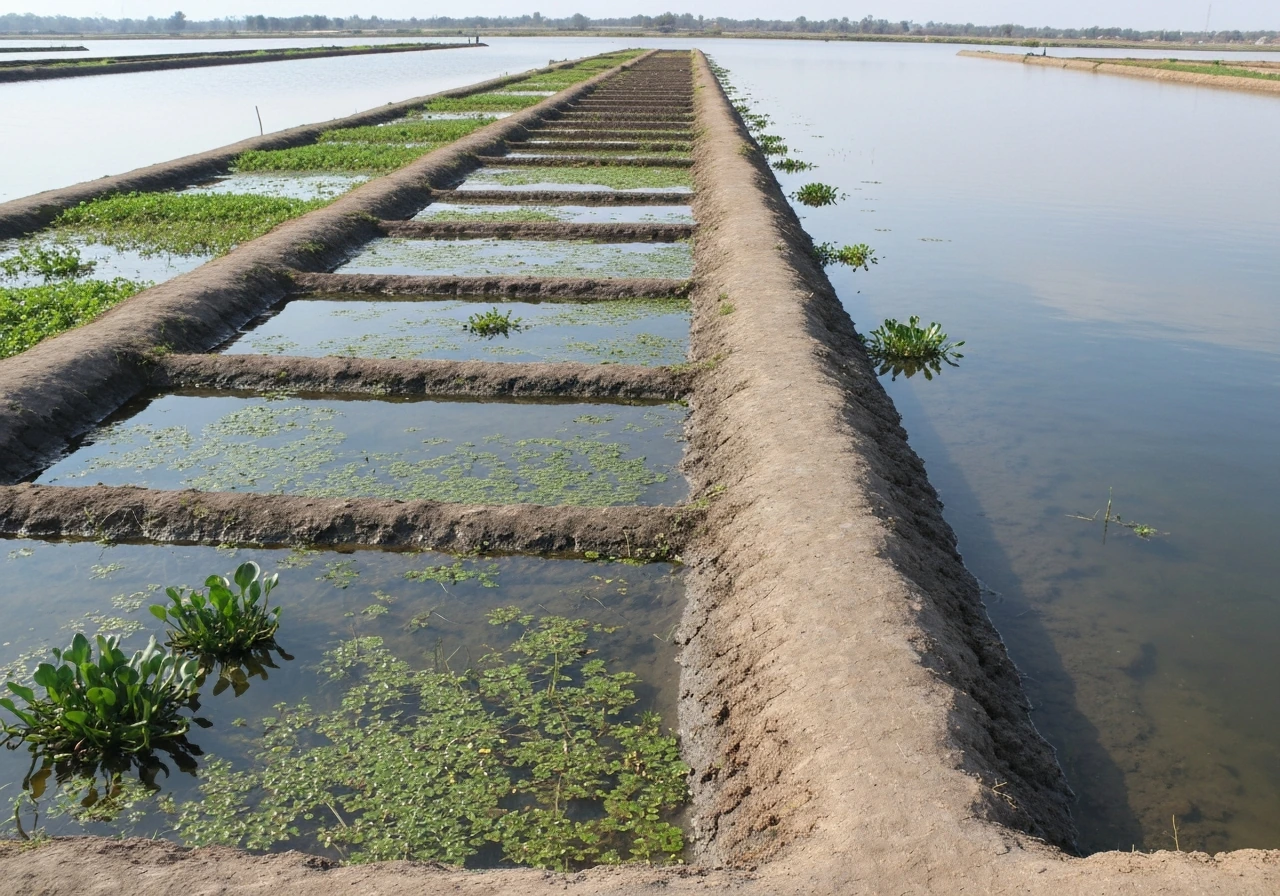
Chinampas were raised rectangular planting beds built directly on shallow lake beds, used by the Aztecs and other Mesoamerican cultures in the Valley of Mexico to grow crops with remarkable consistency. The beds sat about 1 meter above the surrounding water level, separated by narrow canals wide enough for a canoe to pass through. That water proximity was the whole point: it kept soil moisture constant, delivered nutrients, and allowed harvests to happen in rotation year-round. If you want to understand how chinampas worked as a food production system, the short answer is: smart bed construction plus managed water access equals naturally fertilized, continuously productive growing space.
How Were Chinampas Used to Grow Crops Step by Step
Marcus Holloway
13 Apr 2026
What chinampas actually are
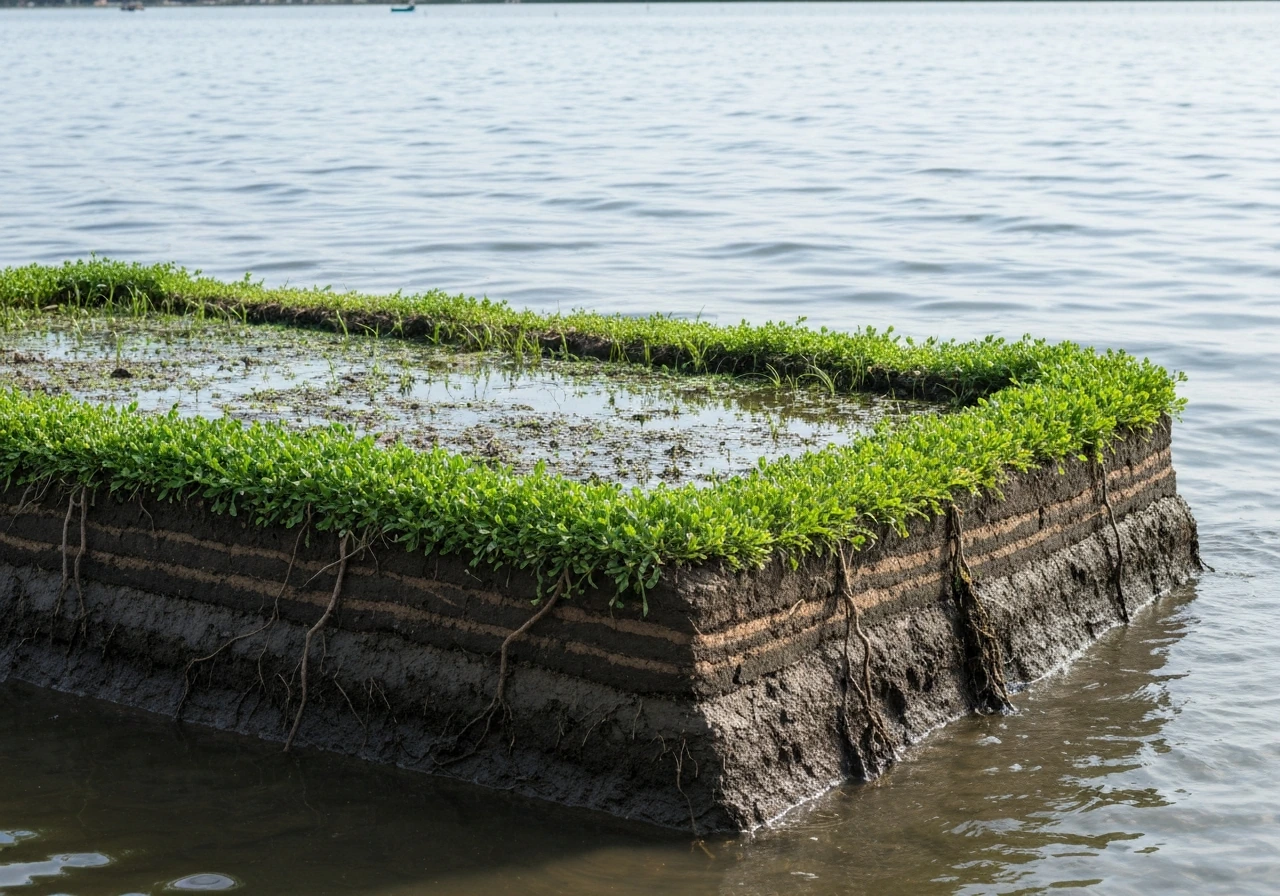
A chinampa is not a floating island, despite the popular description. It is a fixed raised bed built up from the lakebed itself, using layers of mud, aquatic vegetation, and organic debris piled high enough to plant on. Chinampas are small, stationary artificial islands built on lake beds for agricultural purposes. The surrounding lake or wetland fills the canals between beds, and those canals are what keep the whole system alive: they deliver water to the root zone by capillary action through the bed walls, regulate moisture without standing water on the surface, and provide a transport route for moving harvested crops and materials.
The typical dimensions cited in historical and agronomic records are roughly 2 to 4 meters wide and 20 to 40 meters long, raised to about 1 meter above the waterline. That width matters more than it looks. A narrow bed means roots on either side are never more than a meter or so from the canal water, so capillary moisture reaches the entire growing surface without irrigation infrastructure. Wider beds would dry out in the center and defeat the purpose.
How chinampas were built and maintained
Building a chinampa started from the lake bottom up. Workers staked out the bed perimeter using wooden posts driven into the shallow lakebed, then wove reeds, branches, and aquatic grasses between the stakes to form a containment wall. Think of it like building a very long, low basket anchored in water. Once the frame was in place, they layered alternating loads of lake mud and decaying aquatic vegetation inside it, piling the material until the surface cleared the waterline by roughly a meter.
Willow trees (ahuejotes in Nahuatl) were planted along the bed edges as a living stabilization system. Their roots anchored the walls, prevented erosion from canal water movement, and provided light windbreak protection for crops growing on the surface. This was not a one-time build: beds were raised and refreshed regularly as the organic material compressed and the surface settled. Maintenance meant periodically scooping sediment from the canal floor and adding it back on top of the bed, which conveniently also deepened the canal for canoe access.
Keeping the canals clear was not optional. Silted-up channels reduced both water access and transport efficiency. Canal dredging was built into the regular maintenance cycle, and the dredged material went straight onto the bed surface as a fertility top-up. The system was essentially self-composting.
How the water system enabled crop growth
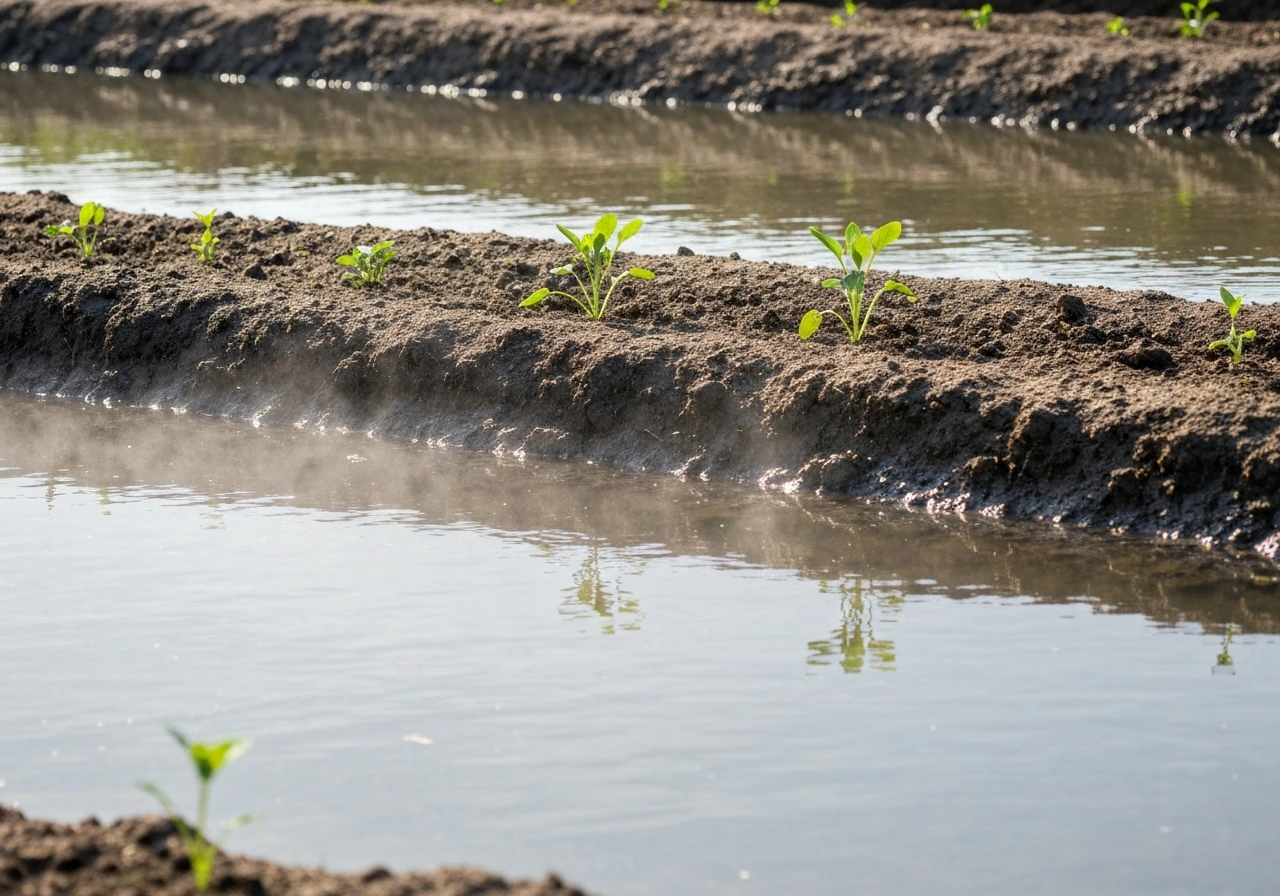
The water management in a chinampa system is passive and clever at the same time. Because the bed is raised but surrounded by water, capillary action pulls moisture continuously through the lower layers of the bed toward plant roots. The surface drains freely so roots get moisture without waterlogging. This balance, wet below and aerated above, is genuinely difficult to replicate with conventional irrigation.
When canal water levels dropped during dry seasons, growers resorted to manual delivery: scooping water from the canal using poles and buckets and splashing it directly onto the bed surface. It is a simple technique but it worked because the beds were narrow enough that a person standing in a canoe could reach the center of the planting surface without stepping onto the bed. When water levels rose, the porous bed walls and the raised height of the surface protected crops from flooding.
Oxygen availability in the root zone was maintained by the raised, well-draining bed structure. Waterlogged roots would have been a chronic problem if the beds had been lower or wider. The 1-meter height above the waterline was not arbitrary: it gave the organic-rich growing medium enough vertical depth to stay aerobic at the surface while staying connected to groundwater below. This is the same principle behind modern wicking beds, just executed at a much larger scale and over centuries of refinement.
What crops were grown and how planting was organized
Chinampas were genuinely productive, growing maize, beans, squash, chili peppers, tomatoes, and a range of edible greens and herbs. The productivity came partly from the fertility of the beds and partly from the planting organization. Rather than treating the whole bed as a single crop plot, growers used a relay system: seedlings were started in small nursery sections of the bed (or in separate seedling rafts called chapines) and transplanted onto cleared sections as previous crops finished. This kept bed surface in continuous production.
Harvest cycles were staggered across multiple beds so there was always something ready. A chinampa operation with several beds running in rotation could produce food year-round in the mild lacustrine climate of the Valley of Mexico. The long, narrow bed shape lent itself to row planting along the length, with access from the canoe canal on both long sides. Short-season crops like greens and herbs were planted in the sections closest to the canal edges, while longer-season crops like maize occupied the stable center ground.
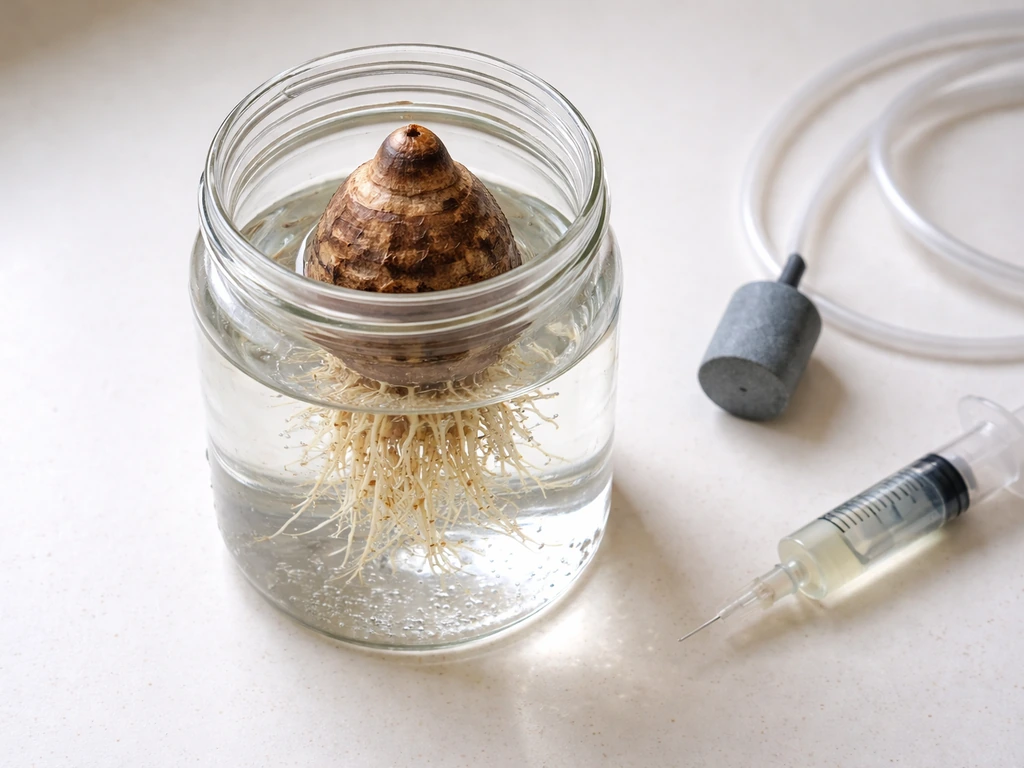
If you are growing taro or other semi-aquatic crops, the edge zones of a chinampa-style bed are particularly well suited to them. Growing taro in water follows the same logic: the plant wants moisture-rich soil without true submersion, which is exactly the condition at the lateral edge of a raised wet bed.
Where the fertility came from
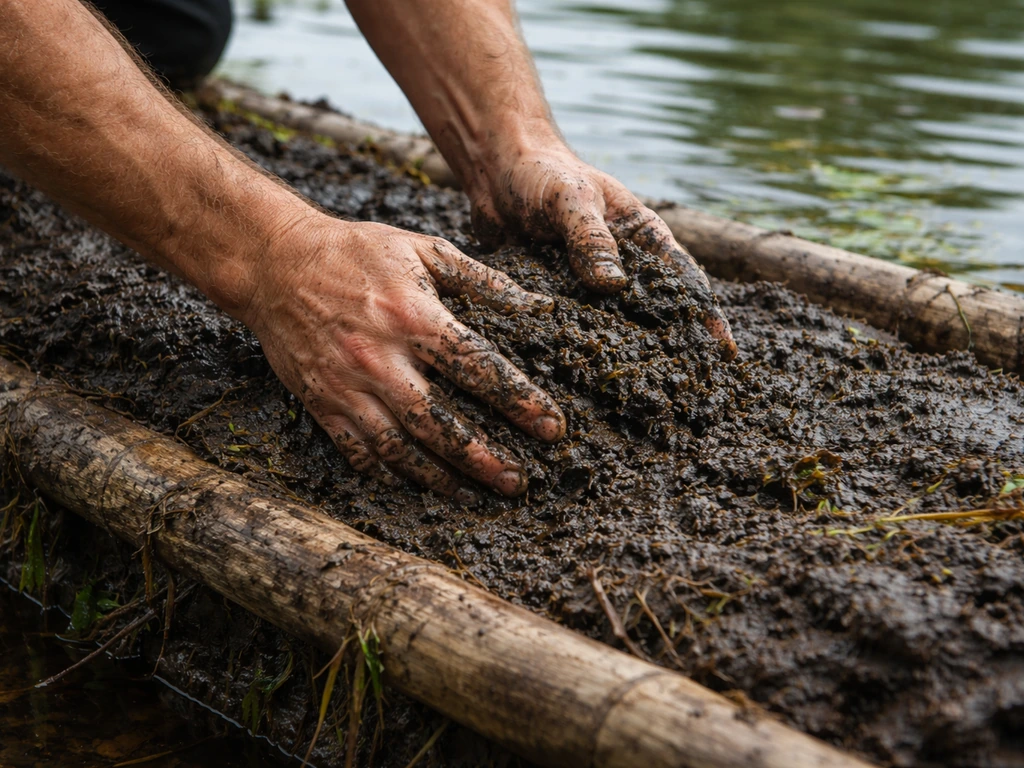
The nutrient system in a chinampa is basically nature doing composting at scale. Lake sediments are rich in decomposed organic matter, algae, aquatic plant debris, and animal waste from the water column. When growers dredged that material from the canal floor and applied it to the bed surface, they were applying a nutrient-dense amendment with very similar function to aged compost or worm castings.
A laboratory study of Xochimilco chinampa agricultural soil found that sediment from the canals surrounding chinampas is still applied to soils used to cultivate crops, including vegetables and maize dredged that material from the canal floor and applied it to the bed surface. Nitrogen, phosphorus, and micronutrients accumulated in the sediment over time, and the regular top-dressing cycle replenished what crops removed.
The aquatic vegetation used in bed construction also broke down over time, releasing nutrients slowly into the bed profile. There was no imported fertilizer, no external compost pile, and no soil amendment program in the modern sense. The lake ecosystem fed the beds and the beds fed the crops, in a loop that lasted centuries without degrading the growing medium. That is the part of chinampa agriculture that modern growers find hardest to replicate without access to a living lake ecosystem.
What worked and what didn't: honest constraints
Chinampas had real limitations that get glossed over in the "ancient superfarm" narrative. The lake system in the Valley of Mexico was brackish in places, and salinity stress on crops was a documented problem, especially during dry periods when evaporation concentrated salts in the canal water. When that water was scooped and applied to beds, it brought the salt with it. Over time, salinity buildup could reduce yields significantly.
Water level fluctuations were the other major variable. A wet year could flood beds that were not tall enough; a dry year reduced canal depth and made manual irrigation more labor-intensive. Pests and weeds thrived at the wet edges of beds, and the high organic content of the soil created ideal habitat for fungal diseases in humid conditions. The system rewarded attentive management and punished neglect fast.
| Factor | Benefit | Risk / Limitation |
|---|---|---|
| Water proximity | Constant capillary moisture to roots | Flooding risk if bed height is insufficient |
| Sediment fertility | Natural nutrient replenishment from canal dredging | Salinity or contamination if water quality is poor |
| Organic-rich bed material | High water retention and slow-release nutrients | Fungal disease risk in humid conditions |
| Narrow bed design | Full moisture reach without irrigation | Lower total yield per bed vs. wide field farming |
| Canal network | Easy crop transport and water access | Labor-intensive dredging and maintenance |
| Year-round growing climate | Continuous harvest rotation possible | Climate-dependent: frost or drought breaks the cycle |
How to adapt chinampa principles into a modern water-based garden
You do not need a lake in your backyard to use chinampa logic. The core principles, raised organic bed, water contact at the sides and base, passive capillary moisture, and periodic sediment amendment, translate into practical setups for anyone growing with aquatic or water-adjacent systems.
Build a wicking or semi-aquatic raised bed
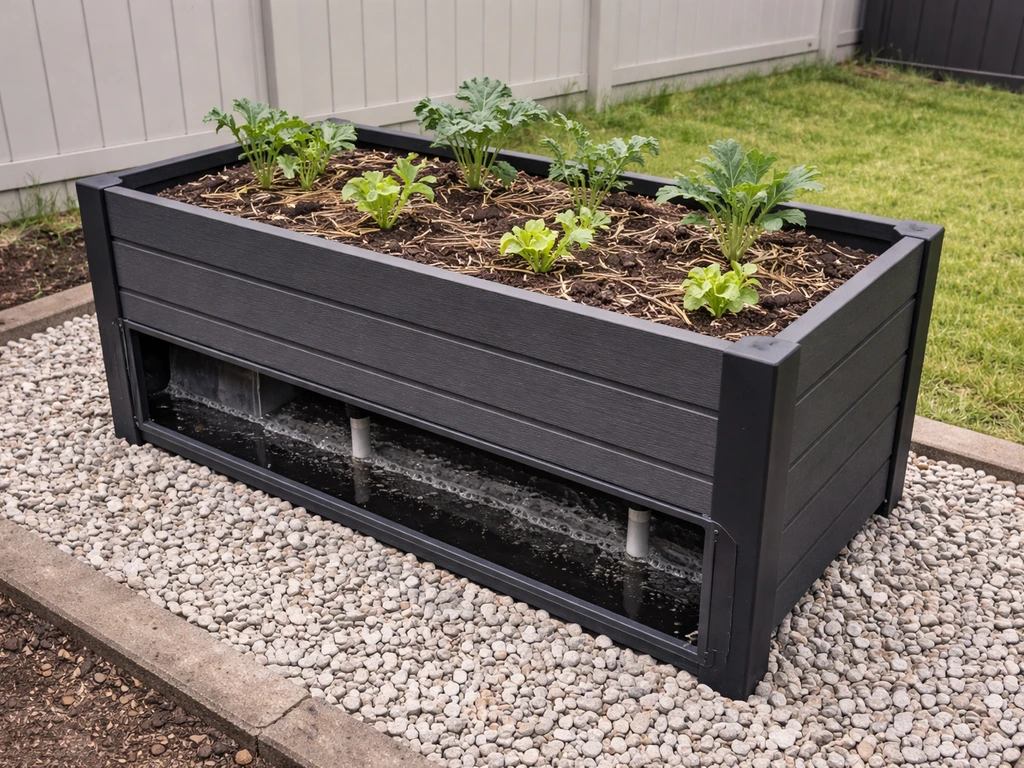
The simplest modern analog is a wicking bed: a raised container with a water reservoir at the base separated from the growing medium by a wicking layer. The growing medium stays moist from below without sitting in water. If you want to go closer to the original design, build a long, narrow raised bed (aim for that 2 to 4 meter width limit) adjacent to a water feature, aquaponics tank, or recirculating channel. The bed sidewalls should allow lateral moisture transfer, either through a porous wall material or by positioning the bed so one or both long sides are in direct contact with the water source.
Use recirculating water and aquatic plants for fertility
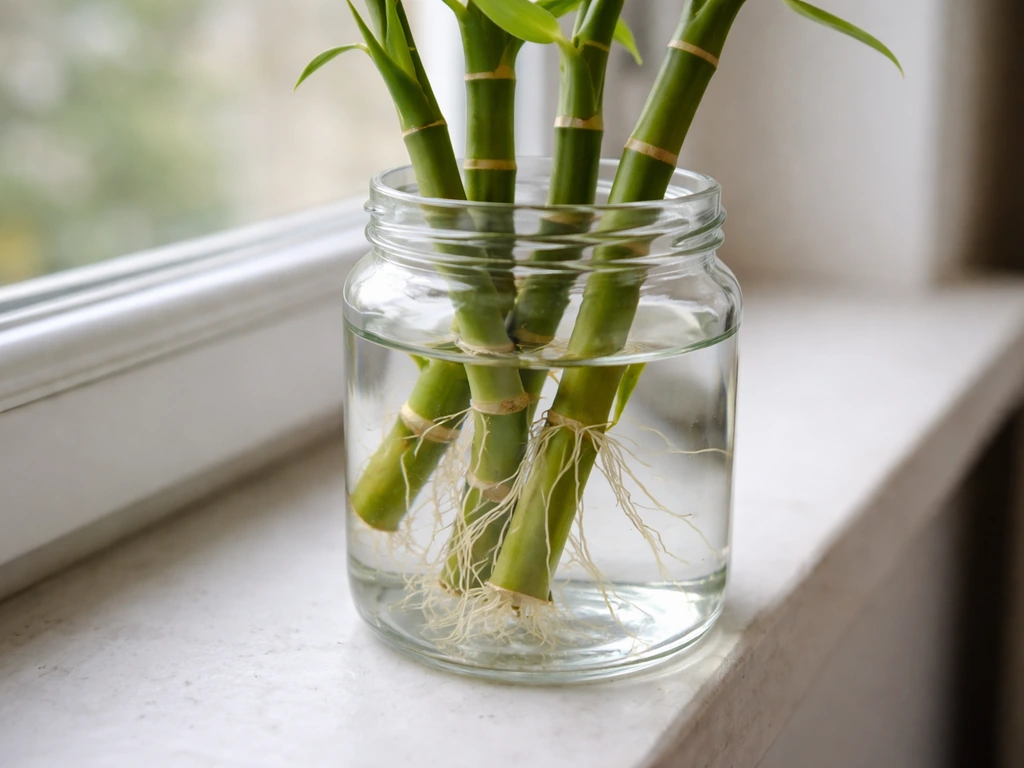
If you pair your raised bed with a recirculating water system, you can replicate the nutrient delivery function of the chinampa canal. Aquatic plants and algae growing in the water channel absorb and then release nutrients as they decompose, mirroring what lake sediment did historically. Periodically harvesting the algae or plant matter from your channel and applying it as a surface mulch on your bed is a direct translation of the canal-dredging fertility cycle. You can even integrate plants like bamboo grown in a water channel along the bed edges to serve the same windbreak and bank-stabilizing function that ahuejote willows did on traditional chinampas.
Choose crops that suit the moisture profile
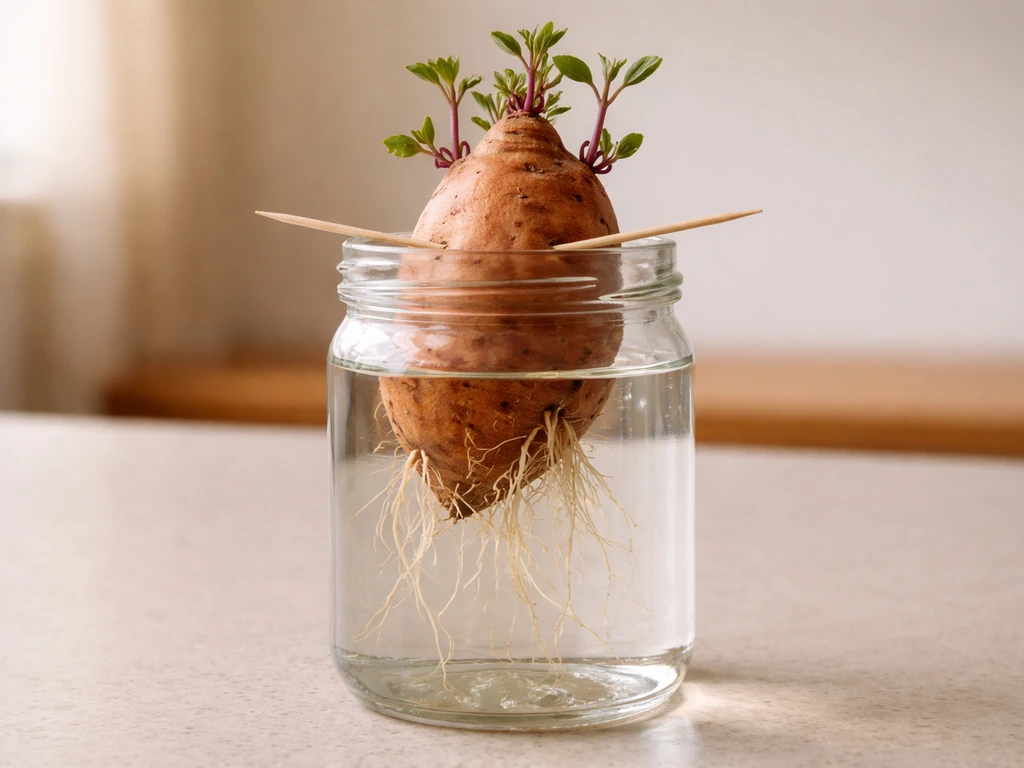
The best crops for a chinampa-style setup are ones that tolerate high soil moisture without requiring submersion. Leafy greens, herbs, tomatoes, peppers, beans, and squash all performed well historically and will perform well in a modern wicking or semi-aquatic bed. Root crops like yams are also good candidates for the well-drained upper bed profile. If you have not tried growing a yam in a water-adjacent setup, the soil moisture consistency of a chinampa-style bed is actually close to ideal for them.
Monitor water quality carefully
The salinity and contamination risks that affected historical chinampas apply to modern setups too. If your recirculating water source accumulates dissolved salts (common in recirculating aquaponics systems over time), those salts will migrate into your bed via capillary action. Test your water source regularly and do a partial water exchange when electrical conductivity climbs above 2.0 mS/cm for most vegetable crops. Keep the pH of your water source between 6.0 and 7.0 for optimal nutrient availability in the bed.
Step-by-step starting guide
- Choose a location next to or above an existing water source (pond, aquaponics tank, recirculating channel, or large reservoir).
- Build a raised bed no wider than 1.2 to 1.5 meters (for home scale) and as long as your space allows. Use untreated wood, concrete block, or stone.
- Fill with a mix of high-organic growing medium: compost-rich topsoil, aged aquatic plant material if available, and coarse perlite or sand for drainage (target 30 to 40% organic matter).
- Install a wicking layer or connect one bed wall to the water source so capillary moisture can feed the base of the growing medium.
- Plant in rows along the length of the bed, with moisture-hungry crops at the lateral edges and drought-tolerant varieties toward the center top.
- Every 4 to 6 weeks, harvest accumulated organic matter or algae from your water channel and top-dress the bed surface with a 1 to 2 cm layer as a fertility amendment.
- Monitor for fungal issues at the base of plants near the wet edges; improve surface airflow with wider plant spacing if needed.
- Rotate crops across sections of the bed rather than replanting the same crop in the same spot each cycle.
Lucky bamboo is another plant worth considering as a structural or edge element in this kind of setup because it thrives exactly where water meets soil. If you want more detail on water-rooted planting techniques, understanding how to grow lucky bamboo in water covers the water depth and container management principles that apply to edge-zone planting on a semi-aquatic bed.
The core lesson from 700 years of chinampa farming
What made chinampas work was not magic or lost technology. It was a design that put crops exactly at the interface between wet and dry: moist enough at the root zone to stay productive through dry periods, drained enough at the surface to prevent rot and disease. The nutrient system was closed-loop by necessity, using the lake itself as the compost pile. The narrow bed dimensions were not arbitrary but were calibrated to the physics of capillary movement. Every part of the design solved a specific growing problem without external inputs. That is a blueprint worth taking seriously, whether you are working with a backyard pond, an aquaponics setup, or a water-connected raised bed in a modern garden.
FAQ
If chinampas were “on water,” were they actually floating?
Chinampas were raised beds, not true floating rafts, so they did not move with the water surface. The key was a fixed foundation built on the lakebed, then packed up with mud and aquatic organic material, while the canals stayed filled to keep the sidewalls and lower root zone supplied by capillary moisture.
How narrow did chinampas need to be, and why?
The bed width matters because moisture has to reach the entire root zone from the canal sidewalls. In practice, keeping beds in that roughly 2 to 4 meter range helps ensure the center stays within capillary reach, reducing reliance on frequent hand watering.
What is the biggest mistake people make when trying to “copy” chinampas in a small garden?
Avoid stepping or compacting the planting surface, since the system depends on stable aeration near the top and moisture continuity below. Access from the canoe canals on the long sides and restricting traffic to edge paths helps prevent compaction that can worsen root-zone oxygen problems.
Did chinampa farms need maintenance or were they self-sustaining forever?
Maintenance was ongoing. As the organic layers compressed, workers rebuilt and re-elevated surfaces by adding sediment back on top, and they dredged canals to restore both water flow and fertility supply.
Where do weeds and fungal problems tend to show up, and how can you manage them?
In a chinampa-style system, weeds and pests often concentrate near wet edges because humidity and organic matter are higher there. A practical approach is to manage edge zones more aggressively, harvest edge greens frequently, and keep plant spacing for airflow to reduce fungal pressure.
How do you prevent the salinity buildup that troubled historical chinampas?
Historical salinity problems were tied to evaporation concentrating salts in canal water during dry periods, and then those salts getting applied to the bed. For modern setups, the decision aid is simple: if your water source conductivity trends upward, do partial water exchanges rather than “top off” only.
How high should a raised chinampa-style bed be to avoid waterlogging?
The beds were high enough to reduce flooding, and the surface could drain freely. If you are designing a modern analog, aim for a growing medium depth that stays aerated at the top while remaining laterally connected to moist layers below, otherwise you risk rot from waterlogging.
How did farmers keep chinampas producing year-round instead of having one big harvest?
Chinampas achieved continuous production by staggering plantings and using relay cycles, often with nursery sections and transplants. If you want year-round output at smaller scale, plan a schedule where a bed section is replanted as soon as a short-cycle crop is harvested, rather than treating the bed as one single crop block.
Where in a chinampa setup do semi-aquatic plants like taro grow best?
If you are growing semi-aquatic crops like taro, the edge zones are more forgiving than the center because they stay moister without needing full submersion. In a modern design, dedicate the wettest strip near the water interface to taro or similar plants, and keep drier sections for leafy greens or tomatoes.
How do you recreate the canal sediment and nutrient cycling without a lake?
In modern recirculating systems, the “canal dredging” equivalent is periodically removing nutrient-rich biomass (algae or aquatic plant growth) from the water channel and applying it as mulch to the bed surface. This preserves the closed-loop idea instead of only feeding with external fertilizer.
What do you do during drought conditions when canal water levels drop?
You generally should not rely on capillary action alone if your water source can drop significantly. Historically, growers manually delivered water when canal levels fell, so in a backyard version you should plan for supplemental watering during dry spells or when your reservoir level decreases.
Are chinampa-style beds safe to use with aquaponics water, or do you need extra precautions?
Yes, aquaponics and recirculating channels can work, but contamination and salt accumulation are real. A practical safeguard is to monitor water chemistry (especially electrical conductivity and pH) and isolate or filter solids to prevent clogging and uneven nutrient delivery into the bed.