Yes, you can grow bamboo in water at home, but the outcome depends almost entirely on which plant you're actually working with. If you've got a container of pebbles and a spiraling green stalk that someone called "Chinese bamboo" or "water bamboo," that's almost certainly not a true bamboo at all. And if you're starting from a genuine bamboo cutting? The process works, but it takes a bit more patience and the right technique. Let me break down exactly what you're dealing with and how to get it right either way.
How to Grow Bamboo in Water Step by Step for Beginners
Marcus Holloway
3 Apr 2026
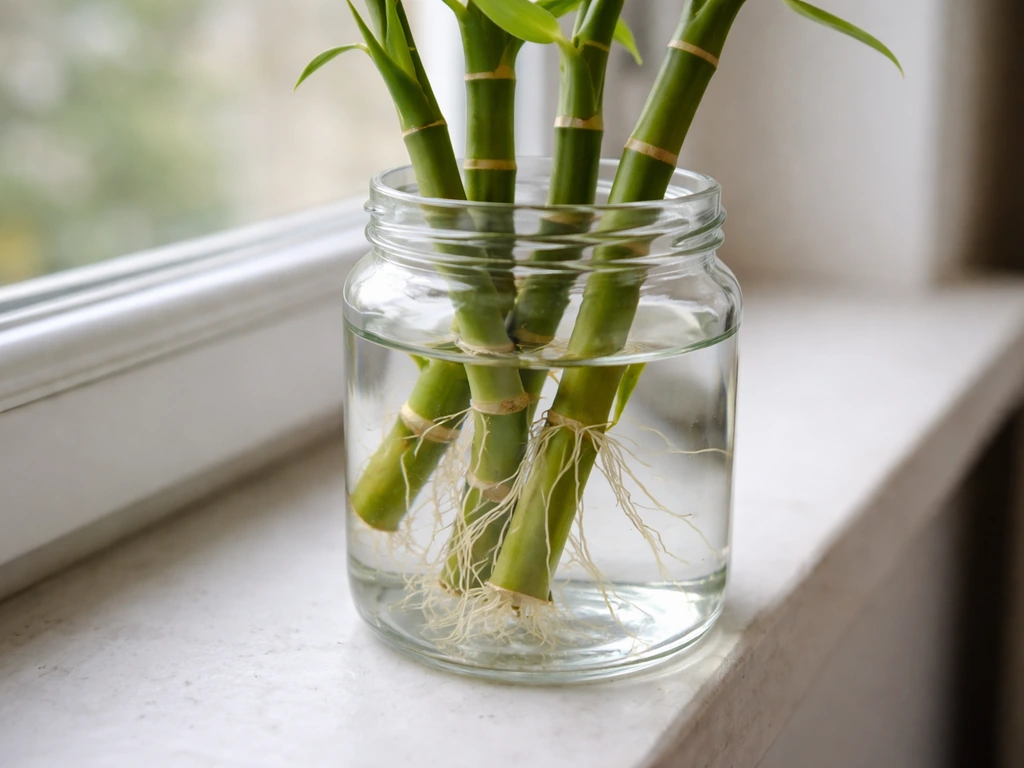
What 'growing bamboo in water' actually means
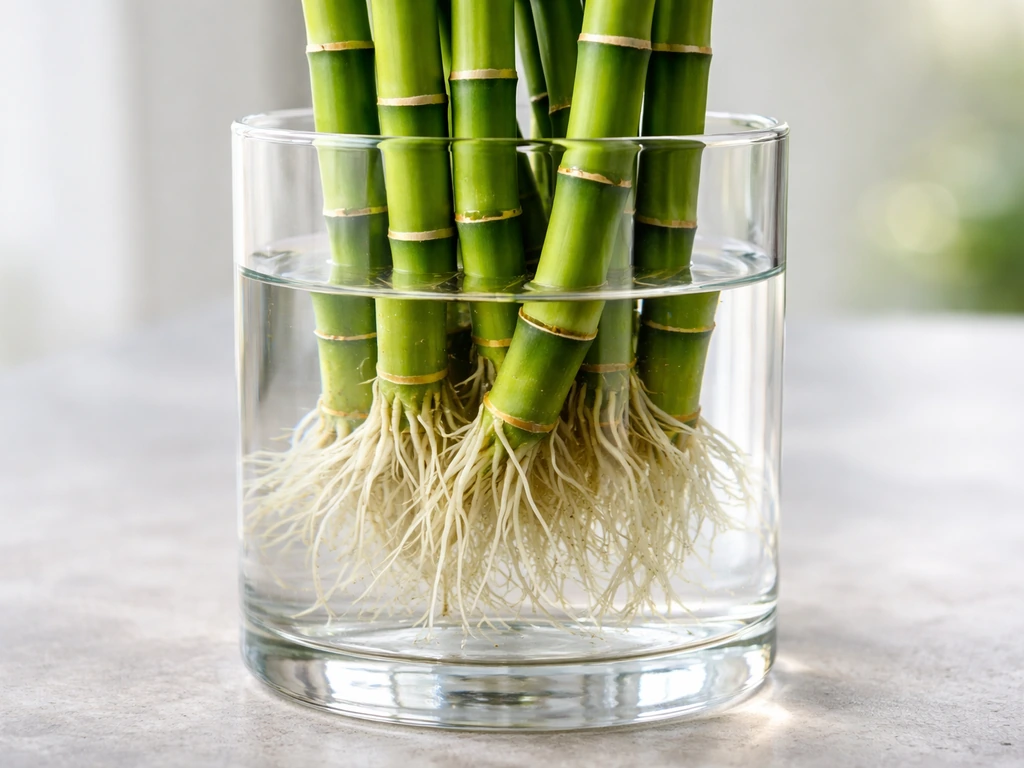
The phrase covers two very different plants and two different goals. The first is true bamboo, a member of the grass family (Poaceae), which you'd propagate using culm cuttings (sections of the main stalk with nodes) or rhizome divisions. The second is what most people find in garden centers labeled as "lucky bamboo," "Chinese bamboo," or "water bamboo." That plant is almost always Dracaena sanderiana, a tropical houseplant that looks bamboo-like but is completely unrelated. Dracaena thrives long-term in a simple water-and-pebbles setup. True bamboo, on the other hand, roots in water as a starting step but needs to move to soil or a hydroponic growing medium to actually thrive.
So when you search for growing bamboo in water, you're likely after one of three things: keeping a Dracaena (lucky bamboo) alive and healthy in a water container, starting a true bamboo cutting in water to generate roots before planting, or experimenting with a semi-hydroponic setup for established bamboo. This guide covers all three, but I'll be honest with you about which approach is realistic and which sets you up for disappointment.
Picking the right bamboo type before you start
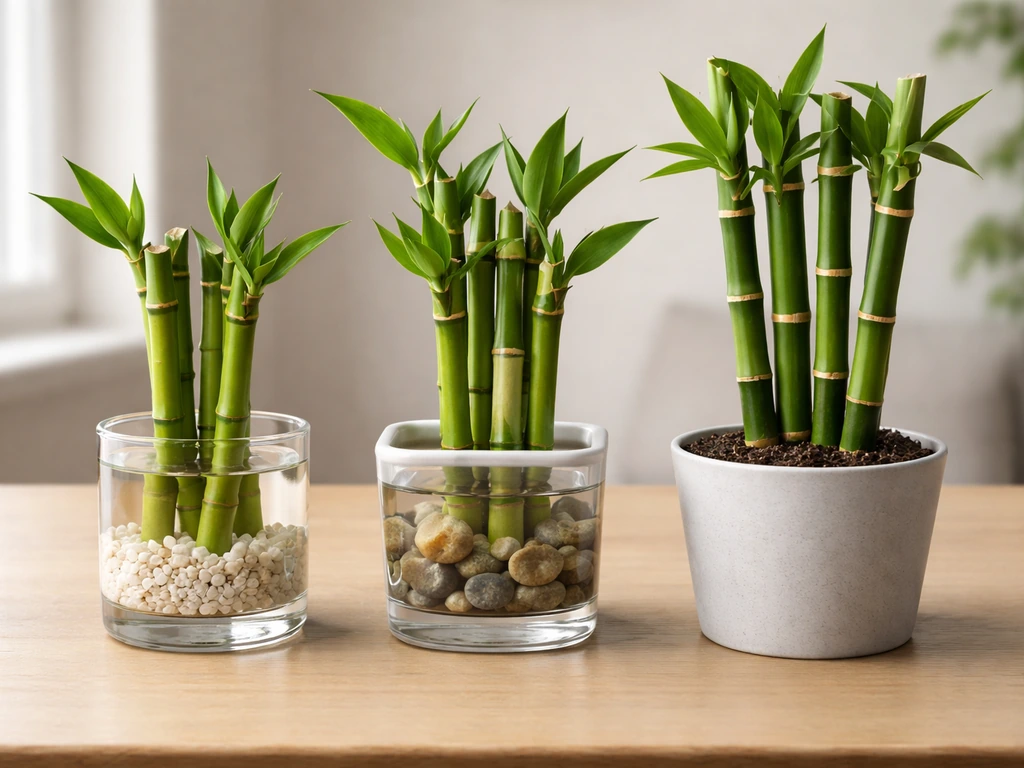
This is the step most guides skip, and it's the one that matters most. If you walk into a store and grab a plant sold as "lucky bamboo," "Chinese bamboo," or "water bamboo" in a vase of water, you almost certainly have Dracaena sanderiana. It's a great plant and it does grow permanently in water, but it isn't bamboo. The good news: growing lucky bamboo in water is genuinely easy, and the care requirements are well-documented.
If you want actual bamboo (Phyllostachys, Bambusa, Fargesia, or similar genera), you're working with a grass that doesn't naturally root and sustain itself in plain water the way Dracaena does. True bamboo can be rooted in water from culm cuttings, but it's a temporary propagation stage, not a permanent growing method. Species like Bambusa vulgaris and Phyllostachys aurea are among the most commonly propagated from cuttings, but success rates vary considerably by species and even by the individual cutting. A review of bamboo macropropagation research confirms that culm-cutting results are inconsistent and highly dependent on species, cutting maturity, and conditions.
| Plant | Common Names | Grows Permanently in Water? | Best Use Case |
|---|---|---|---|
| Dracaena sanderiana | Lucky bamboo, Chinese bamboo, water bamboo | Yes | Long-term indoor water display |
| True bamboo (e.g., Phyllostachys, Bambusa) | Bamboo, timber bamboo, running bamboo | No (temporary rooting only) | Water rooting before soil or hydroponic transfer |
My recommendation: if you want a low-maintenance water plant that looks like bamboo, go with Dracaena. If you want a real bamboo and are willing to put in the work, start with cuttings in water and plan to transplant. Don't try to keep true bamboo indefinitely in a plain water vase; it will stall and eventually rot.
How to grow bamboo cuttings in water (step by step)
Rooting true bamboo cuttings in water is possible, but I want to be upfront: it's not as reliable as rooting, say, a pothos or even a Dracaena stem. The best candidates are culm cuttings from healthy, mature canes that include at least one or two nodes (the solid rings on the stalk). Here's the process that gives you the best shot.
What you need
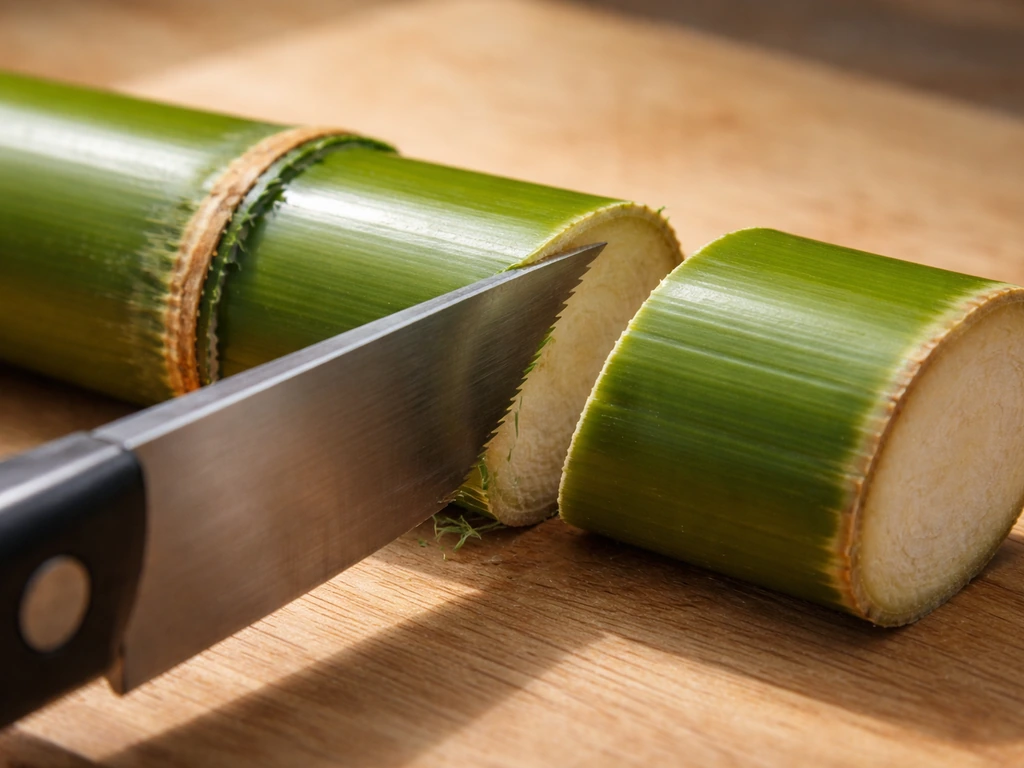
- A healthy bamboo culm that is 1 to 3 years old (not brand new growth, not very old and woody)
- A clean, sharp knife or pruning saw
- A tall glass jar, vase, or container deep enough to submerge at least 2 to 3 inches of the cutting
- Filtered or dechlorinated water (tap water left out overnight works in a pinch)
- Optional: a small amount of liquid rooting hormone dissolved in water
The cutting and setup process
- Select a culm section that is 8 to 12 inches long and includes at least two nodes. Cut cleanly just below the lower node and just above the upper node. Avoid crushing the cut ends.
- Remove any leaves or branches from the lower third of the cutting, keeping a few leaves near the top to support photosynthesis.
- If you have powdered or liquid rooting hormone, dissolve it in your water according to the product's directions. This step is optional but increases your odds, especially for stubborn species.
- Stand the cutting upright in your container. Submerge the lower node in about 2 to 3 inches of water. The upper node and leaves should remain above the waterline.
- Place the container in a warm, bright location out of direct sun. Aim for 65 to 80°F (18 to 27°C).
- Change the water every 3 to 4 days to prevent bacterial buildup. Watch the submerged node for small root nubs, which should appear in 3 to 6 weeks under good conditions.
- Once roots are 1 to 2 inches long, the cutting is ready to transfer to soil or a hydroponic growing medium.
One honest note from my own experience: I've had culm cuttings from Phyllostachys aurea root reliably in about 4 weeks during warm months and fail completely in winter even indoors. Temperature consistency matters more than most guides let on. If your space drops below 60°F at night, root development stalls or stops entirely.
Setting up your indoor water container
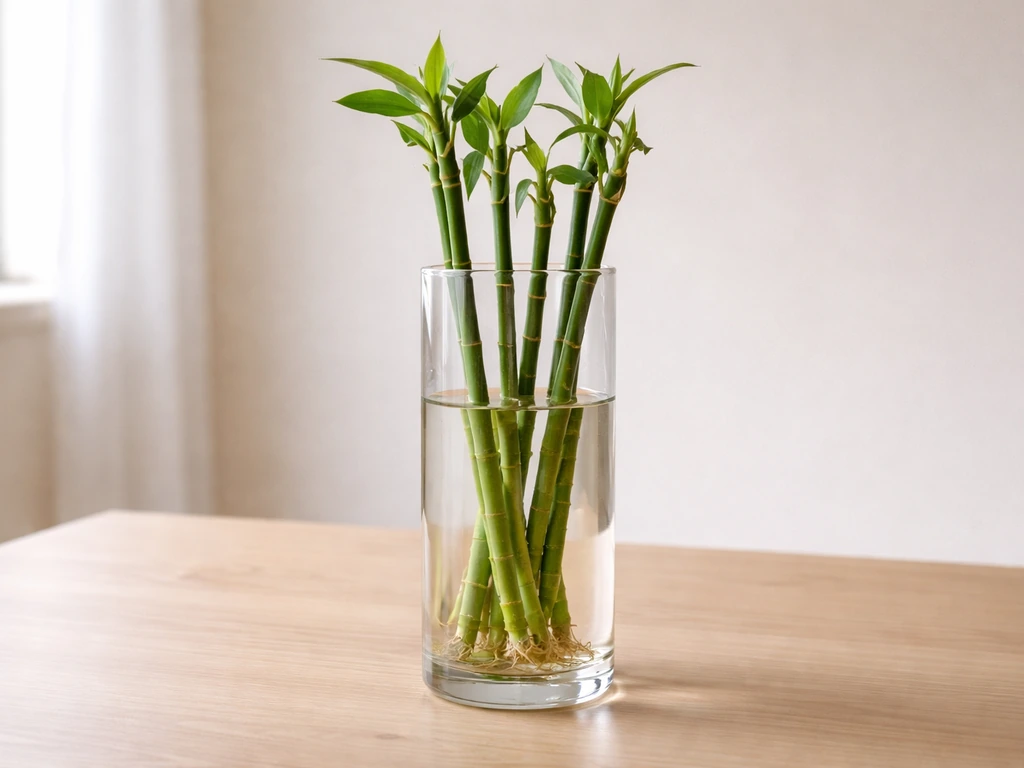
For Dracaena (lucky bamboo) in a permanent water setup, container and water quality are everything. For true bamboo cuttings being rooted temporarily, the same principles apply but the stakes are lower since it's a short-term process. Here's what works for both.
Container choice
Use a container that is tall and stable enough to support the cuttings without tipping. Glass or ceramic are best because they don't leach chemicals into the water. Avoid metal containers, especially for longer setups, since some metals can be toxic to roots at low concentrations. A container with a narrow neck helps hold cuttings upright without extra support. For Dracaena, adding a 1 to 2 inch layer of clean aquarium gravel or decorative pebbles at the bottom anchors the stalks nicely.
Water quality
Bamboo and Dracaena are both sensitive to fluoride and chlorine, which are present in most municipal tap water. Use filtered water, distilled water, or tap water that has been sitting uncovered for 24 hours to let chlorine off-gas. Keep the water pH between 6.0 and 7.0 for best results. Below 5.5 or above 7.5 and you'll see yellowing and slowed root development. A basic aquarium pH test kit costs a few dollars and takes the guesswork out.
Light and temperature
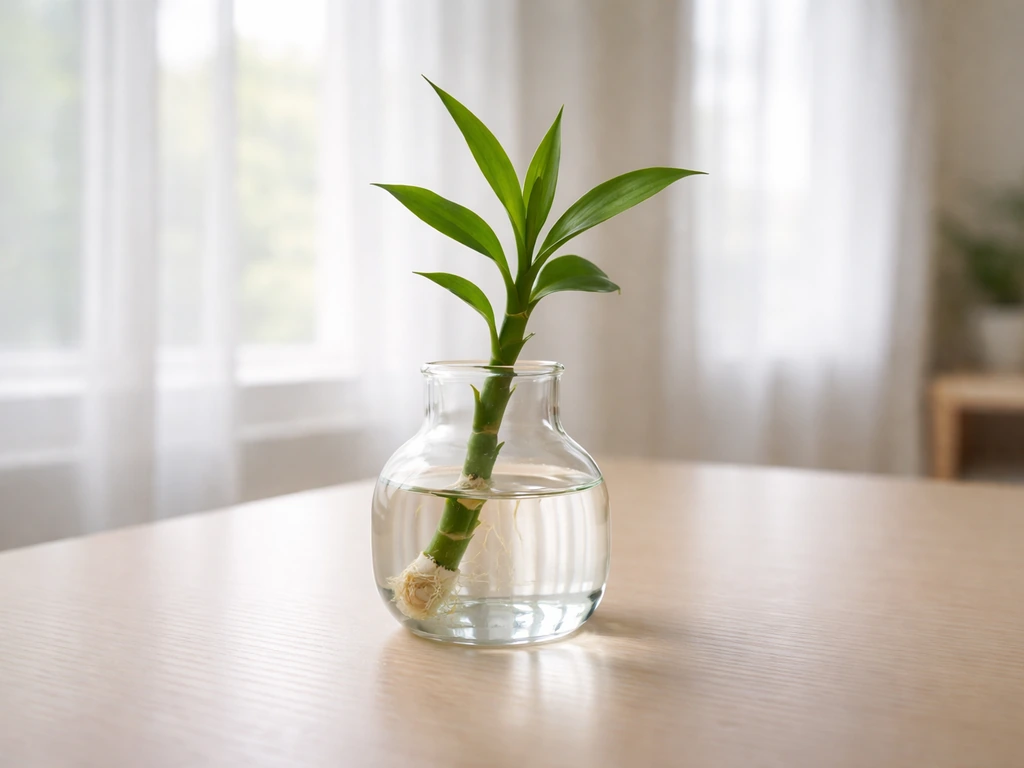
Both Dracaena and rooting bamboo cuttings prefer bright indirect light, not direct sun. A spot 3 to 5 feet from a south- or east-facing window is ideal. Direct sun heats the water, promotes algae growth, and can scorch leaves. Aim for 10 to 12 hours of light daily, whether from a window or a basic grow light. For temperature, the sweet spot is 65 to 80°F (18 to 27°C). At this range, root initiation is fastest and bacterial activity in the water stays manageable.
Keeping it healthy: water changes, nutrients, and algae control
This is where most people fall short. A still, stagnant container without regular maintenance becomes a bacterial soup within two weeks, especially in warm conditions. Here's the schedule and approach I use.
Water change schedule
- For rooting cuttings: change water every 3 to 4 days. Fresh water discourages bacterial rot at the cut end.
- For Dracaena in a permanent water setup: change the water fully every 7 to 14 days. Top off with clean water in between as needed.
- Always bring replacement water to room temperature before adding it to avoid shocking the roots.
- If the water looks cloudy or smells off before your scheduled change, do it immediately.
Adding nutrients
For short-term rooting of true bamboo cuttings, you don't need to add nutrients. The cutting has enough stored energy to initiate roots. For Dracaena grown permanently in water, a very dilute liquid fertilizer every 4 to 6 weeks is all it needs. Use a balanced liquid fertilizer (such as 10-10-10 or similar) at one-quarter the recommended dose. Over-fertilizing is one of the fastest ways to kill a water-grown Dracaena, so less really is more. If you want to try a hydroponic approach for rooted bamboo cuttings, a dilute, complete hydroponic nutrient solution at an EC of around 0.8 to 1.2 mS/cm is a reasonable starting range.
Preventing rot and algae
- Use an opaque container, or wrap a clear container in dark paper or cloth. Algae need light to grow, so blocking light to the water column cuts the problem off at the source.
- Do not add gravel or pebbles that haven't been rinsed thoroughly. Organic debris in gravel feeds algae and bacteria.
- Avoid placing the container in direct sunlight. Even a few hours of direct sun on a glass container can trigger a rapid algae bloom.
- A small piece of activated carbon (aquarium grade) placed in the water absorbs organic compounds and keeps the water cleaner between changes.
- If you see green slime on the container walls, scrub them with a bottle brush during your next water change. Don't let it build up.
Troubleshooting: no roots, slimy water, and yellow leaves
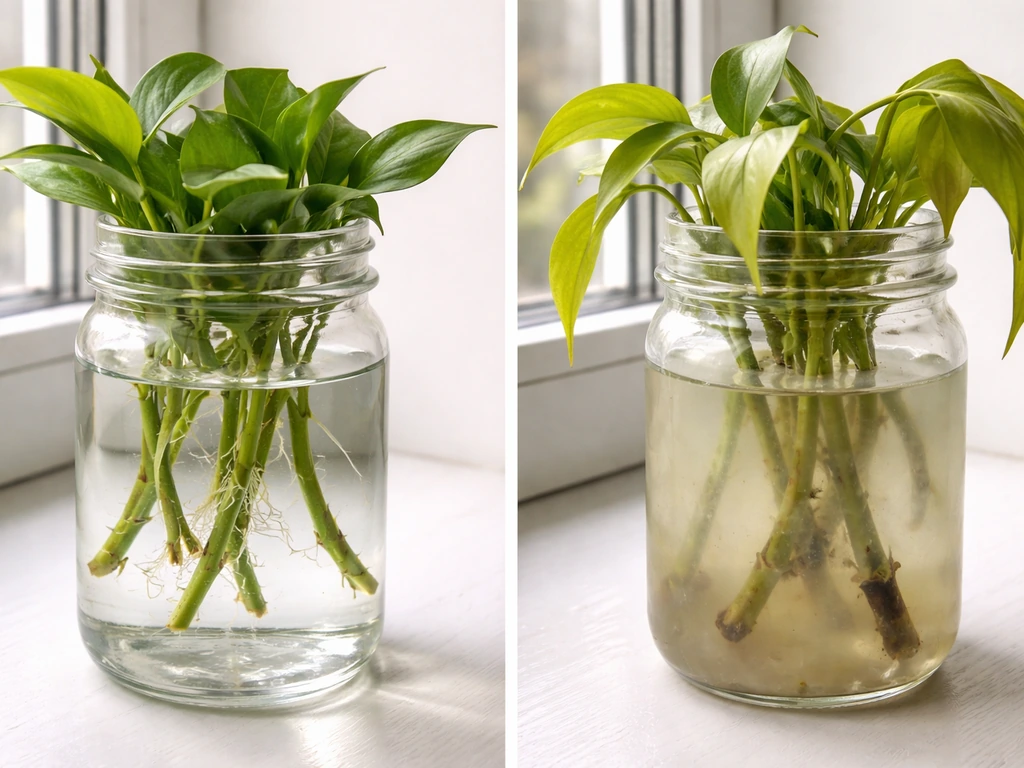
Here are the problems I see most often, along with what actually fixes them.
No roots after 4 to 6 weeks
First, check temperature. If the water or air is below 65°F, root initiation slows dramatically. Move the container somewhere warmer, or use a seedling heat mat under the container set to around 70 to 75°F. Second, check whether the node is actually submerged. Roots emerge from nodes, not from cut ends. If only the cut end is in the water and the node is above the waterline, reposition the cutting. Third, consider trying rooting hormone. Dissolve a small amount of IBA (indole-3-butyric acid) rooting powder in the water at the label's recommended concentration. Finally, for true bamboo: accept that some cuttings simply won't root, especially from older canes or certain species. This isn't a sign you did anything wrong.
Slimy water and bacterial rot
Slime in the water is a sign of bacterial overgrowth. Do a full water change immediately, scrub the container thoroughly, and trim away any soft, mushy root or stem tissue with a clean blade. Then reduce the interval between water changes going forward. If the problem keeps recurring, add a small piece of activated aquarium carbon to the container between changes. Bacterial rot at the cut end of a culm cutting usually means the cut was not clean initially or the water was too warm and stagnant. Re-cut the affected end by half an inch to expose fresh tissue, then restart with clean water.
Yellow leaves
Yellow leaves are the most common complaint, and they have multiple causes. Fluoride toxicity from tap water is the most frequent culprit, especially in Dracaena, which is unusually sensitive to fluoride. Switch to filtered or distilled water and the problem usually resolves within a few weeks. Overfeeding is the second most common cause: if you've been adding fertilizer at full strength or more frequently than every 4 to 6 weeks, cut back immediately and do a full water flush. Low light causes a pale, washed-out yellow rather than the bright yellow of fluoride burn. If leaves are uniformly pale, move the plant closer to a light source. Finally, cold water or cold drafts from vents or windows cause yellowing at the leaf tips. Keep the container away from air conditioning vents.
Algae takeover
If green algae is coating the inside of a clear glass container, it means the water is getting too much light. The fix is simple: use an opaque container or block light from the container. You can also add a snail or two if you're running a shared aquatic system, since they're natural algae grazers. Anyone familiar with aquatic plant setups, like the water-based growing systems used when you grow taro in water, already knows that managing algae is mostly about light control, not chemicals.
From rooting to actually thriving: what comes next
For Dracaena (lucky bamboo), staying in a water-and-pebbles setup is perfectly fine for years. You don't need to transplant it. Add dilute fertilizer occasionally, keep up with water changes, and it'll keep growing. Expect slow, steady growth of a few inches per year under indoor conditions.
For true bamboo rooted from a culm cutting, water is a stepping stone, not a destination. Once your roots are 1 to 2 inches long, transplant into a well-draining potting mix or a perlite-heavy hydroponic substrate. True bamboo needs far more root space and nutrient availability than plain water provides for sustained growth. After transplanting, keep the medium consistently moist but not waterlogged for the first 4 to 6 weeks while the root system establishes.
If your goal is larger-scale production or you're interested in how water-based cultivation scales up, it's worth looking at historical examples like how chinampas were used to grow crops in water-bordered raised beds. That system fed entire civilizations using fundamentally similar principles: controlled water access, nutrient management, and the right plant in the right medium.
Realistic expectations matter here. True bamboo rooted from a culm cutting is not going to shoot up into a tall grove in its first year. You might get 6 to 12 inches of new shoot growth in year one after transplanting, with more vigorous growth in years two and three as the rhizome system develops. Water-rooting is just the first step, but it is a reliable one when done correctly.
One more thought: if you're drawn to the idea of growing starchy, edible water plants alongside your bamboo experiments, the same hydroponic setup knowledge transfers well. The techniques for growing a yam in water follow a very similar logic when it comes to initiating growth from a tuber or cutting in a water-based environment before transitioning to a growing medium.
The bottom line: growing bamboo in water works, and it works well once you're clear on which plant you have and what you're asking it to do. Set up your container correctly, stay on top of water changes, keep it warm and bright, and you'll have roots in a month. In that Reddit thread, people share practical guidance on watering and water-level management for Dracaena sanderiana, including concerns about water “disappearing” and how to judge the right level. Everything after that is just moving in the right direction at the right time.
FAQ
How do I tell if my “bamboo” in water is true bamboo or lucky bamboo (Dracaena)?
Look at the leaves and canes. Lucky bamboo usually has a cluster of narrow leaves at the top and the canes are smooth and segmented, with no visible branches along the stalk. True bamboo usually shows branching culms and, most importantly, it is a grass, so it will eventually look more like a grass cane than a dracaena stem with leaf tufts.
Can I keep true bamboo cuttings in water permanently if they start rooting?
It’s not a good long-term plan. Even if roots form, plain water usually can’t supply enough oxygen and stable nutrients for continued growth, so the cutting often stalls and can rot. Plan to transplant once roots are about 1 to 2 inches long.
What kind of water is best, should I use distilled or filtered?
Distilled water is the most forgiving because it has almost no fluoride or chlorine. Filtered water helps, but depends on the filter type, and some filters do not remove fluoride. If you use tap water, let it sit uncovered for 24 hours only helps with chlorine, not fluoride.
How often should I change the water for Dracaena versus rooting true bamboo cuttings?
For Dracaena, change water every 2 to 4 weeks and top up with the same water type used initially (filtered, distilled, or conditioned tap). For true bamboo rooting, change sooner if the water smells or looks cloudy, often weekly in warm conditions, because bacterial buildup can damage newly forming roots.
What size container should I use, and does the container shape matter?
A taller, stable container helps keep cuttings upright and ensures nodes stay in water. For Dracaena, wider bases reduce tipping, and a narrow neck can prevent stalks from falling or shifting. Avoid containers that are too large if you cannot change water frequently, because the water can stay stagnant for longer.
Do I need to add fertilizer for Dracaena in water, and how do I avoid overdoing it?
Yes, but sparingly. Use a very dilute balanced fertilizer roughly every 4 to 6 weeks, and never at full strength. If you see leaf yellowing along with slow growth, pause fertilizing first and do a full water flush, since excess salts in water are a common cause of decline.
Is rooting hormone safe to use for true bamboo cuttings, and how should I apply it?
It can improve success, especially for harder-to-root species. Use IBA at the label concentration, and only add a small amount to clean water, then keep the setup warm and bright indirect. Avoid repeatedly re-dosing every time you water change, since higher concentrations can inhibit roots.
My bamboo cutting has slime or a bad smell, what should I do immediately?
Do a complete water change right away, scrub the container, and remove any mushy tissue with a clean blade. Then recut the affected end to expose fresh tissue if the rot has moved into the cut area. After restarting, increase water change frequency and keep the water on the cooler side of your preferred range to slow bacterial growth.
How much light is ideal, can I use direct sunlight to speed rooting?
Bright indirect light is best. Direct sun can heat the water and drive algae and bacteria, which often defeats the goal. If you use a grow light, aim for roughly 10 to 12 hours per day and keep the container away from glass-warmed hotspots.
What temperature is “too cold,” and will a heat mat always fix it?
Below about 65°F, root initiation can stall for both Dracaena and true bamboo cuttings. A heat mat can help, but make sure it warms the water or container area consistently, not just the surrounding air, and avoid overheating because warm, stagnant water increases bacterial problems.
Why are only the leaf tips turning yellow on my Dracaena?
Tip yellowing often points to water chemistry or cold drafts. Fluoride sensitivity is a top cause, and cold airflow from vents can also trigger it. Try switching to distilled or fluoride-free filtered water first, and move the container away from AC or windows with cold nighttime drafts.
Should I use gravel, pebbles, or perlite when growing in water?
Yes for stability, especially with Dracaena. A bottom layer of aquarium gravel helps anchor the stalks and keeps the base from sitting in a swampy pocket. For true bamboo, perlite-heavy hydroponic substrates work better than plain pebbles once roots are established, because they provide more oxygen to the root zone.
Once my true bamboo is rooted in water, how do I transplant without losing the new roots?
Handle the cutting gently and minimize root disruption. Move it into a well-draining mix or perlite-heavy hydroponic substrate, then keep it consistently moist but not waterlogged for the first 4 to 6 weeks. During this establishment phase, keep light bright but indirect, and avoid fertilizing until you see steady new growth.
Do different bamboo species root at different rates from cuttings in water?
Yes. Success varies widely by species, cutting age, and whether the cutting includes viable nodes. Even for species that root well in warm months, some individual cuttings will fail due to maturity and stored energy. If one batch fails, try another source and repeat with warmer, stable temperatures.