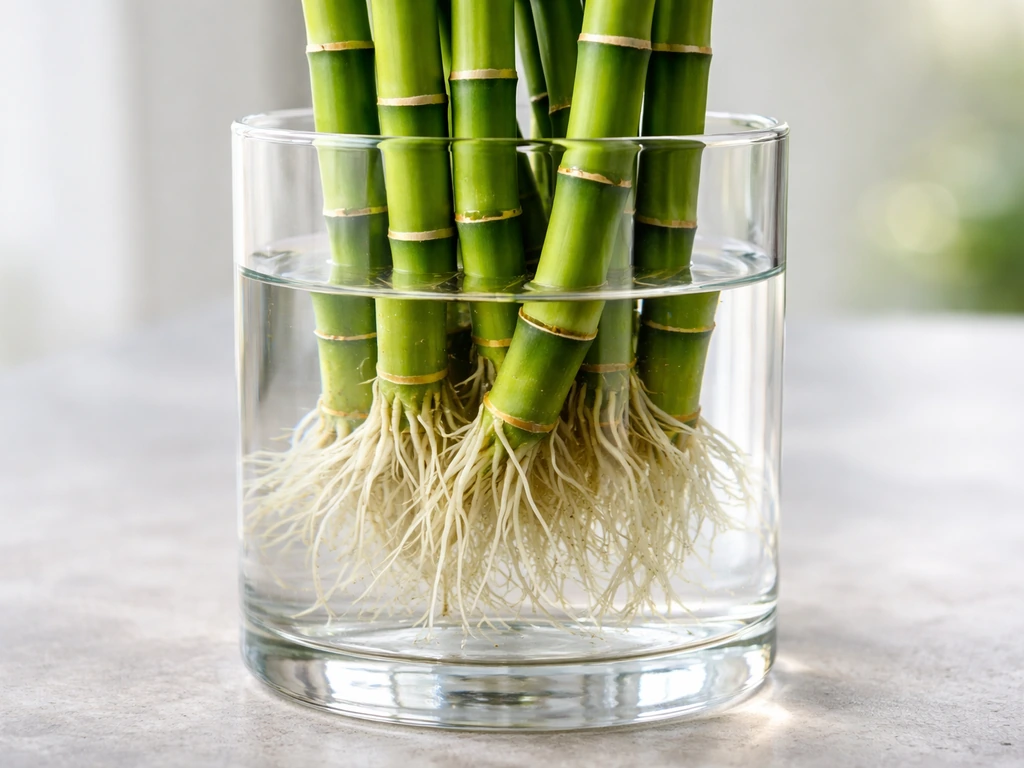
Yes, lucky bamboo (Dracaena sanderiana) can absolutely grow in water, and it can stay there indefinitely. This is not just a short-term trick for display purposes. Water culture is a fully legitimate long-term method, endorsed by horticulturists, and millions of healthy plants are kept this way for years. The catch is that "growing in water" does not mean tossing the whole plant into a fish tank and calling it a day. The roots need to stay submerged, but the stems and leaves need to stay above the waterline. Get that boundary right, and you have one of the most low-maintenance water-grown plants you can keep indoors.
How to Grow Lucky Bamboo in Water: A Step-by-Step Guide
Marcus Holloway
3 Apr 2026
Can lucky bamboo grow in water (and can it stay there forever)
Lucky bamboo is not actually a bamboo at all. It is a tropical cane plant, and its roots are naturally adapted to wet, humid conditions. This is why water culture works so well for it. As long as you keep the roots wet and the water clean, the plant will live, root, and push out new growth indefinitely. There is no point at which it "needs" soil to survive.
That said, water-only culture does come with one ongoing requirement: you have to stay on top of water quality. The plant is not pulling nutrients from soil, so stale, contaminated, or chemically harsh water hits it harder. Think of it less like watering a houseplant and more like maintaining a small aquatic system. Change the water regularly, keep the container clean, and the plant will reward you by staying healthy for years.
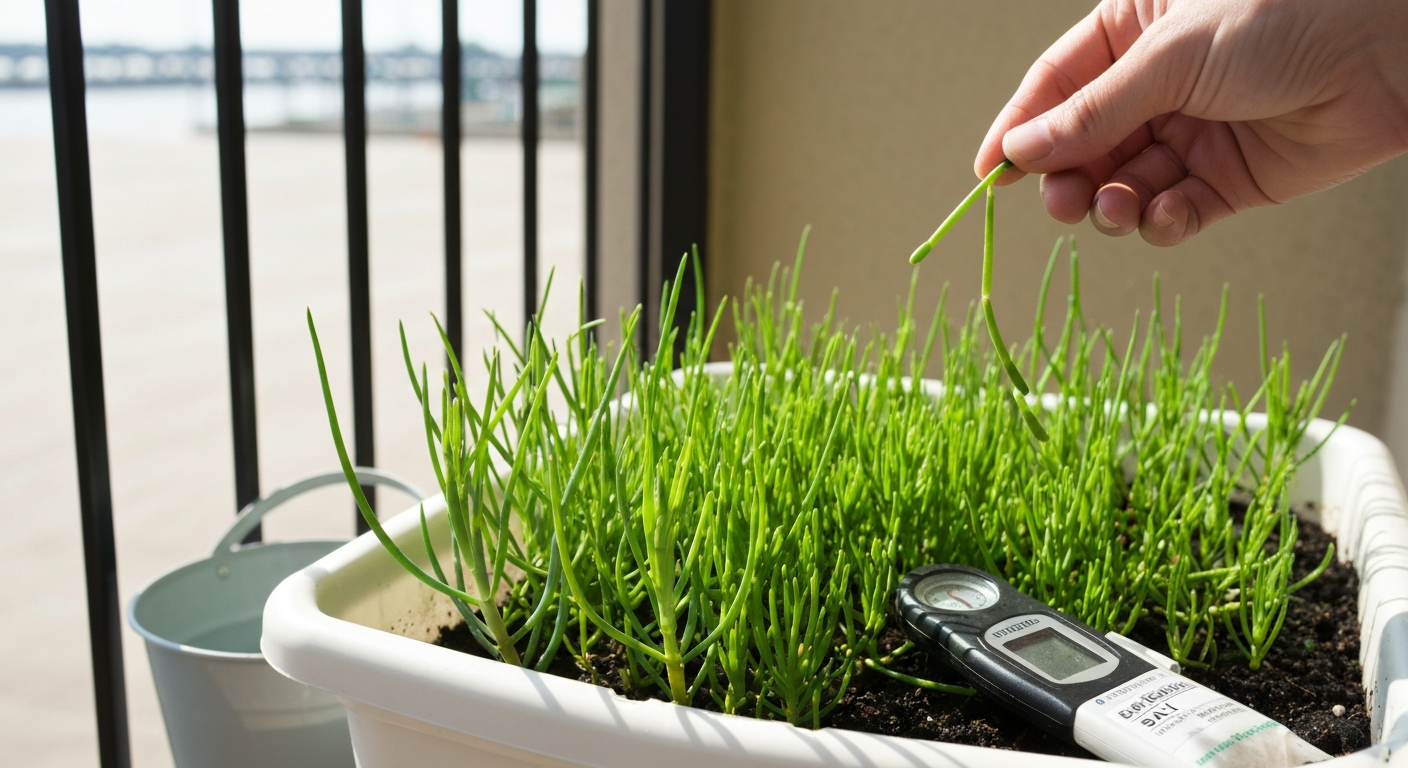
If you are curious how this compares to growing other semi-aquatic or water-rooted plants, it follows the same principles as growing a bamboo plant in water, where root submersion and water hygiene are the two core variables that determine success or failure.
Water-only vs underwater: how submerged it should be
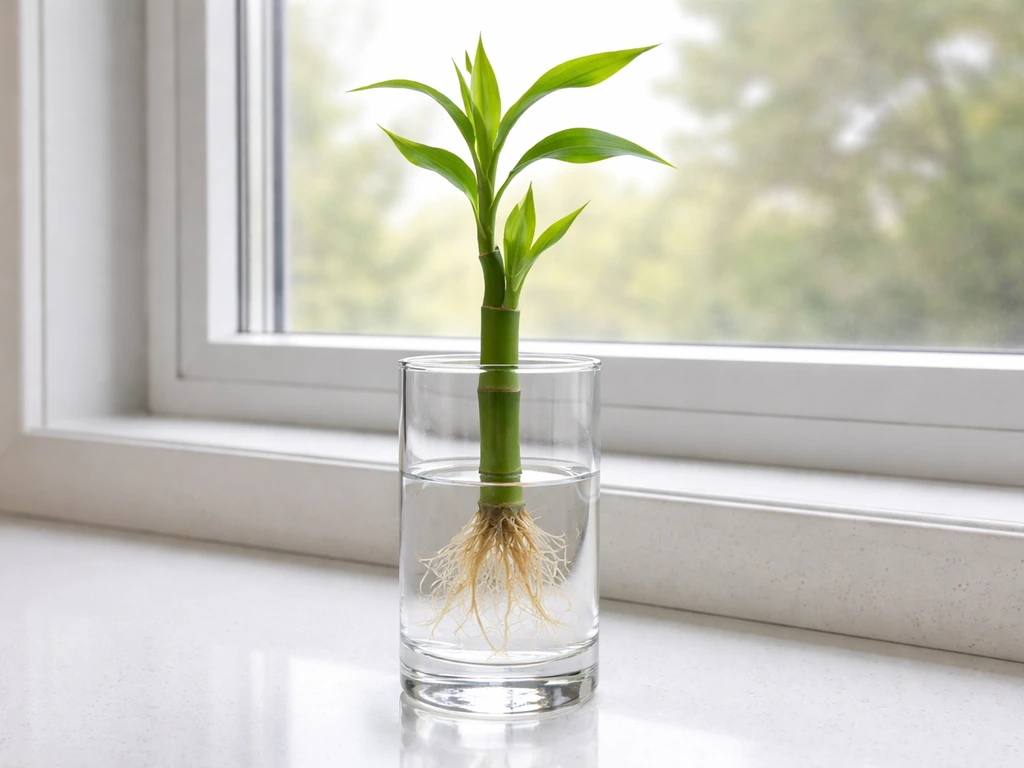
This is the part that trips people up the most, so let me be direct: lucky bamboo grows in water, but it does not grow underwater. There is a big difference. The roots must be submerged at all times. The stems and leaves must stay above the waterline. Fully submerging the whole plant, the way you would with a true aquatic species, will cause the stems to rot within days or weeks.
The correct water level is 1 to 2 inches deep (roughly 2.5 to 5 cm), enough to cover the root system but stopping well below where the green stems begin. A more specific guideline: keep the water no more than 2 to 3 cm above the upper roots, with a total water depth of about 6 to 8 cm in the container. If your container is taller, that is fine, but do not fill it to the brim. The exposed lower cane is part of the system. It needs airflow and should never sit waterlogged.
Roots that dry out even briefly can stress the plant and cause yellowing. Stems that stay wet will rot. Keep that boundary consistent and check the water level every few days, especially in a dry or warm environment where evaporation is faster.
Best setup: containers, water type, oxygen, and positioning
Choosing the right container
A tall, narrow vase or glass cylinder works well because it supports the stems upright without needing gravel or stakes. Ceramic, glass, or opaque containers are better than clear ones for one simple reason: light-blocking containers significantly reduce algae growth. If you love the look of a clear glass container (and honestly, the roots do look great), just be prepared to deal with algae more often and consider placing it away from direct light. Decorative stones, river pebbles, or aquatic gravel at the bottom help anchor the roots in place and keep the stems stable.
Water type matters more than most people expect
Tap water works in some areas, but it is often the hidden cause of yellowing and decline. Chlorine and fluoride in tap water are both stressful for Dracaena sanderiana over time. If you use tap water, let it sit uncovered for 24 hours before using it to allow chlorine to off-gas. Better options are filtered water or bottled spring water. Distilled water is an acceptable choice, but because it is stripped of minerals, you will need to be more attentive to fertilizing. Aim for a pH between 6.0 and 7.0. Hard water with heavy mineral content is a common cause of the brown leaf tips you see on many indoor plants.
Oxygen and positioning
Still water in a sealed container loses oxygen over time, and stagnant water is where bacterial biofilms and root rot begin. You do not need an air pump or aquarium aerator for most setups, but regular water changes accomplish the same thing by refreshing dissolved oxygen. Keep the container in a spot with good ambient airflow and avoid sealing the top. Position the plant in bright, indirect light, targeting roughly 1,000 to 2,500 lux for 6 to 8 hours per day. A north or east-facing windowsill is usually ideal. Direct sun, especially through a south or west window in summer, will overheat the water and cause algae explosions.
Step-by-step propagation: getting it rooted in water
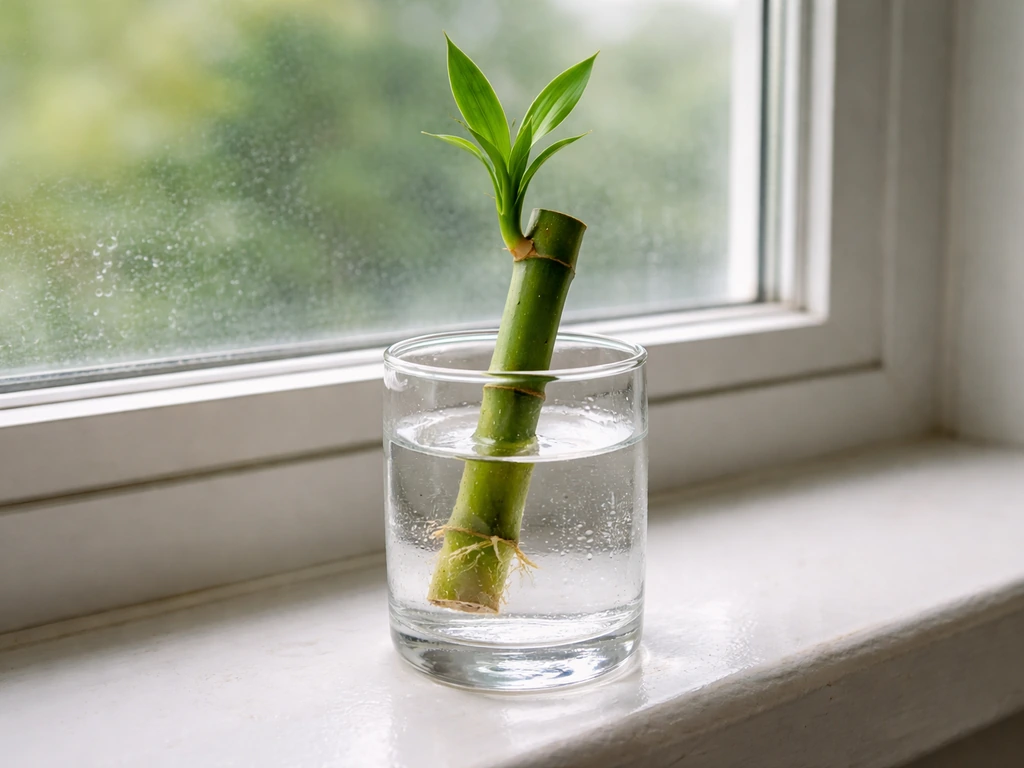
Whether you are starting from a cutting or establishing a whole plant, the process is straightforward. Cuttings are the most common starting point and the most reliable method for water propagation.
- Take a cutting of at least 4 to 6 inches from a healthy stem, cutting just below a node (the raised ring on the cane). Use a clean, sharp knife or scissors. A clean cut reduces the entry point for bacteria.
- Remove any leaves from the lower 2 to 3 inches of the cutting so that no leaf material sits in the water. Submerged leaves rot quickly and foul the water.
- Allow the cut end to air dry for 30 to 60 minutes. This brief drying helps seal the wound slightly before it goes into water.
- Place the cutting in your prepared container with 1 to 2 inches of clean, room-temperature filtered or conditioned water covering the base of the stem.
- Set it in a warm spot with bright indirect light. Avoid moving it around during this early phase. Consistency speeds rooting.
- Check for root growth in 2 to 4 weeks. You should see small white or pale root nubs emerging from the base and nodes. Do not pull or disturb the stem to check.
- Once roots are 1 to 2 inches long and stable, the cutting is established. From here, treat it like a mature water-grown plant with regular water changes and light fertilizing.
If you are transplanting an existing plant from soil to water, gently rinse all soil from the roots under lukewarm running water before placing it in the container. Soil residue in water decomposes and breeds bacteria fast.
How to make lucky bamboo grow faster in water
Lucky bamboo is not a fast grower under any conditions, but you can meaningfully accelerate its growth rate with the right combination of light, temperature, and nutrients. Here is what actually makes a difference.
Light
Light is the single biggest limiting factor for growth rate in water culture. Too little light and the plant barely moves. Too much direct sun and the leaves scorch and the water turns green with algae. The sweet spot is bright, filtered indirect light for at least 6 hours a day. If your space is genuinely dim, a full-spectrum grow light positioned 12 to 18 inches above the plant for 8 hours daily will make a noticeable difference compared to a dark corner.
Temperature
Growth slows significantly below 65°F (18°C) and the plant becomes stressed below 55°F (13°C). The ideal range is 65 to 75°F (18 to 24°C). Keep the plant away from cold drafts, air conditioning vents, and exterior walls in winter. Warm, stable temperatures consistently push faster growth. I have seen the same plant nearly double its new leaf output just by moving it from a cool windowsill to a warmer interior shelf in winter.
Nutrients
Water alone provides no nutrients, so if you want actual growth (not just survival), you need to fertilize. Use one drop of liquid fertilizer diluted into the water blank" rel="noopener noreferrer">every four to six weeks during the spring and summer growing season. Do not over-fertilize. More fertilizer does not mean faster growth with this plant. It means burned roots, yellow leaves, and cloudy water. blank" rel="noopener noreferrer">Skip fertilizing entirely in fall and winter when growth naturally slows.
Humidity
Lucky bamboo prefers humidity around 50% or higher. One convenient benefit of water culture is that evaporation from the open container adds moisture to the immediate air around the plant, which can support that humidity requirement without any extra equipment. If your home is very dry in winter, grouping the plant with others or placing it on a pebble tray with water nearby helps.
Ongoing care schedule: water changes, trimming, and monitoring
Consistency is everything with water-grown lucky bamboo. Here is a practical weekly and monthly rhythm that works.
| Task | Frequency | Notes |
|---|---|---|
| Check water level | Every 2 to 3 days | Top off with clean water if evaporation drops level below root coverage |
| Full water change | Every 1 to 2 weeks | Remove plant, rinse roots, wash container, refill with fresh water |
| Container wash | Every water change | Use mild soap and rinse thoroughly; no soap residue |
| Fertilize | Every 4 to 6 weeks (spring/summer only) | One drop of liquid fertilizer, well diluted |
| Trim yellowed or dead leaves | As needed | Use clean scissors; remove from water immediately |
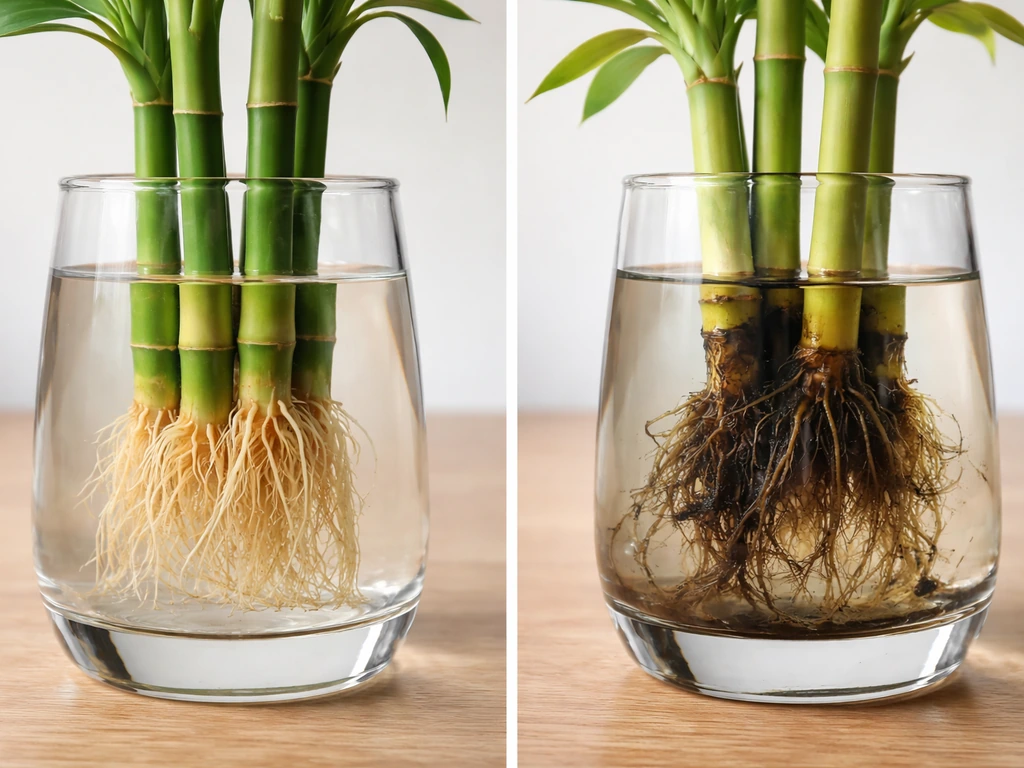
| Check roots for rot or odor | Each water change | Healthy roots are white to pale orange; dark, mushy roots indicate rot |
The most important habit is doing a full water change rather than just topping off. Topping off with fresh water sounds like it helps, but it allows waste products, mineral buildup, and bacteria to accumulate in the bottom of the container. A full change every one to two weeks resets the water quality and is the single most effective preventive measure against rot and decline. If you notice a foul odor at any point, do not wait for your scheduled change. Wash the roots, scrub the container, and refill immediately.
Troubleshooting: yellow leaves, rot, algae, and stalled growth
Yellow leaves
Yellowing is the most common complaint with water-grown lucky bamboo, and it almost always comes down to one of three things: hard tap water, too much direct light, or water that has gone too long without a change. Switch to filtered or bottled water if you have not already. Move the plant out of any direct sun. If the yellowing is on lower leaves only, it may be natural leaf senescence, but if it is spreading up the stem, water quality is usually the culprit. Change the water immediately and check whether the roots are still healthy.
Root rot
Root rot shows up as dark brown or black, mushy roots that may smell foul. The cause is almost always too much stem submerged in water, stagnant water that has not been changed, or a combination of both. Trim the rotted roots with clean scissors, reducing the affected section back to healthy white tissue. Wash the container thoroughly, refill with fresh water, and drop the water level so that only the roots (not the cane) are submerged. If the stem itself has gone soft and brown at the base, that section of the plant is unlikely to recover.
Algae in the water
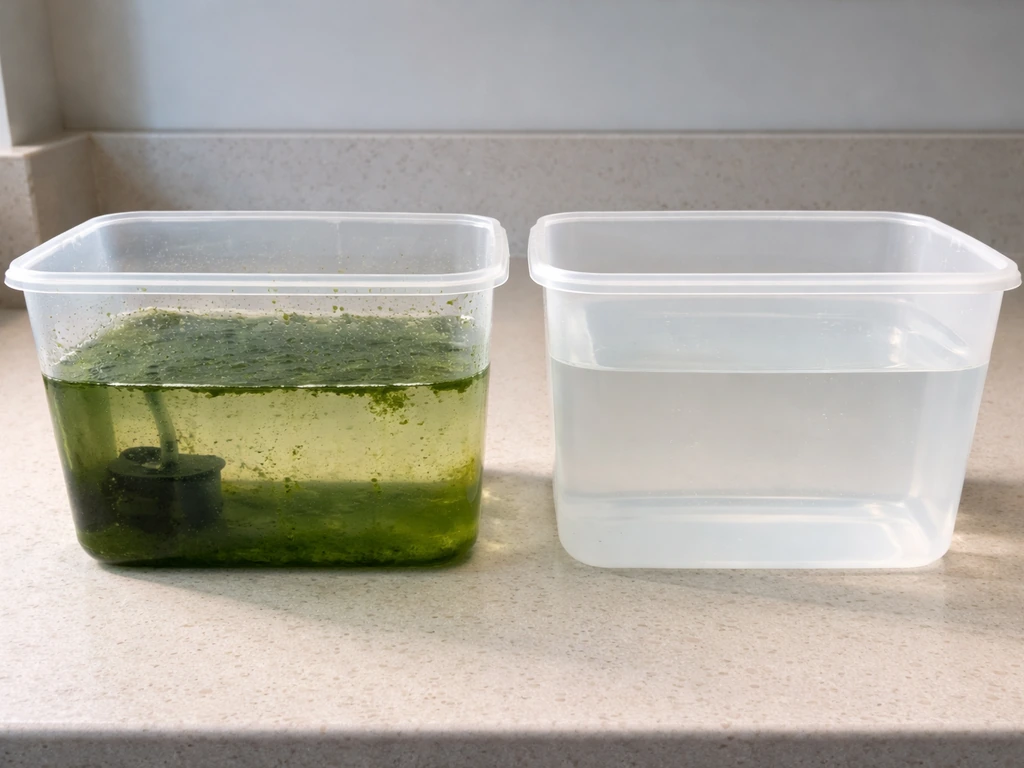
Green water or green slime on the container walls is algae, and it feeds on light and nutrients in the water. The fix is straightforward: switch to an opaque container, reduce light exposure, and change the water more frequently. Algae is not immediately harmful to the plant, but it competes for oxygen and nutrients and is a sign that conditions are off. If you want to keep a clear glass container for aesthetics, keep it out of direct light and stay on top of your water changes.
Stalled or no growth
If your plant just sits there doing nothing for months, the usual causes are insufficient light, water that is too cold, or no fertilization during the growing season. Lucky bamboo does grow slowly by nature, so expectations matter. But if you are not seeing any new leaf unfurling over a full growing season, increase light first, then add a diluted fertilizer dose, and make sure the temperature is consistently above 65°F. Plants that sit in dim corners with no nutrients and are only topped off with tap water will survive but barely grow.
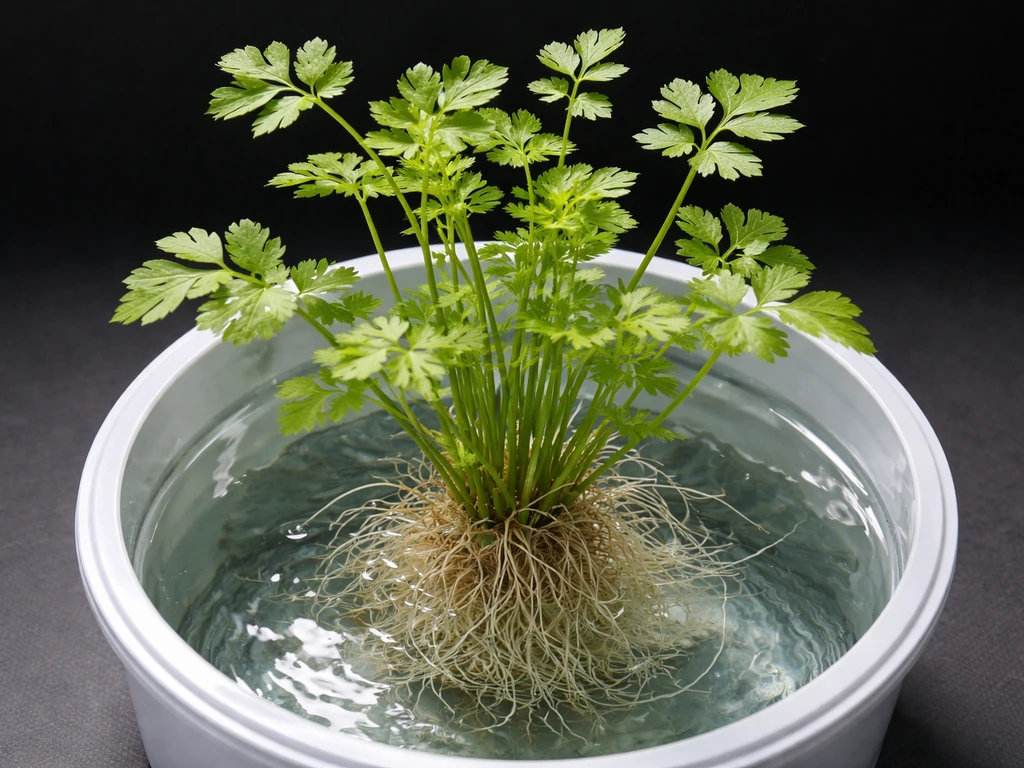
Nutrient management in water-only systems is a challenge shared across many hydroponically grown plants. If you enjoy solving these kinds of water culture puzzles, the approach for managing nutrients and root health when growing taro in water shares some useful parallels, especially around balancing submersion depth and keeping roots oxygenated.
Can it grow without water (and when or why that fails)
Lucky bamboo can grow in well-draining soil, and some growers prefer it for long-term vigor because soil provides a broader range of nutrients. However, the plant cannot go without moisture. It is not drought-tolerant. If you let the roots dry out completely, whether in soil or in a water setup that runs dry, the plant will decline rapidly and may not recover.
The confusion usually comes from people assuming that because the plant tolerates low-water setups in stores, it can handle dry spells at home. It cannot. Those store displays are usually maintained with consistent water levels. Letting a water-grown lucky bamboo run completely dry for even a few days during hot weather can cause significant root damage.
If you decide to move a plant from water to soil, do it gradually. Start by potting it into a consistently moist, well-draining mix (not soggy) and keep the soil evenly damp for the first few weeks while the roots adjust. Going from wet roots to dry soil too fast causes transplant shock. The reverse transition, from soil to water, also works but requires a thorough root rinse and a patient rooting-in period.
The broader takeaway is that this plant evolved for humidity and consistent moisture. Whether you choose water culture or soil, the root system should never fully dry out. Water culture just makes that easier to guarantee, which is one reason it is the preferred method for most indoor growers who want a low-maintenance setup.
Water-based growing systems have a long history of practical application. Ancient techniques like chinampas used to grow crops on floating platforms over water show that the principle of rooting plants in or near water while keeping vegetation above the surface is not new, and it works across a surprising range of species. Lucky bamboo is simply one of the most beginner-friendly examples of that principle in a modern indoor setting.
If you are building out a water garden with multiple plant types, water-tolerant root crops can pair well alongside ornamental water-grown plants. Learning how to handle growing a yam in water is a good next step if you want to expand beyond decorative plants into something more productive, using the same container-and-water-level principles you have already mastered with lucky bamboo.
FAQ
How often should I change the water if I’m using filtered or bottled water?
Still plan on a full water change every 1 to 2 weeks. Filtered or bottled water helps reduce chemical stress, but waste products and root exudates build up over time. If you see cloudiness, a sour smell, or algae increasing, change immediately rather than waiting for the next scheduled swap.
Can I just top off the container when the water level drops?
For lucky bamboo in water, topping off is not ideal long-term. Evaporation removal lowers the water level but it does not remove dissolved buildup at the bottom. Use topping off only as a short-term emergency, and return to full water changes on your normal schedule.
What water level should I aim for after evaporation, do I add water to the same height every time?
Yes, bring it back to the same boundary every time you adjust. The roots should be submerged (about 1 to 2 inches total depth), while the green cane and leaves stay above the waterline. If the cane slips too low and stays wet for days, rot becomes much more likely.
Is it safe to use clear containers so I can see the roots?
It’s safe, but you’ll need more active algae management. Clear containers let more light reach the water, which speeds algae growth. If you use clear glass, place it away from direct sun and consider more frequent water changes or partial light blocking around the container.
Do I need an air stone or aquarium pump to keep roots healthy?
Most setups do fine without an air stone if you do regular full water changes and keep the top open or at least not tightly sealed. If you notice persistent foul odor, thick slime, or consistently cloudy water between changes, that is a sign you should refresh faster and consider improving oxygenation rather than waiting.
What fertilizer should I use, and how do I know I’m not burning the plant?
Use a diluted liquid fertilizer and stick to the low dose guideline, about one drop per serving amount diluted into the water, applied every 4 to 6 weeks in spring and summer. Signs of overdoing include cloudy water, yellowing that spreads upward, and slimy residue. If that happens, skip the next feeding and do a full water change to reset conditions.
Why are only the lower leaves turning yellow, but the top looks fine?
That pattern can be normal leaf senescence, especially with slow growth and natural turnover. The key difference is whether yellowing stays limited to older lower leaves. If yellowing climbs the stem or the cane base darkens, treat it as a water quality or submersion-depth problem.
How can I tell the difference between algae and harmful bacterial slime?
Algae usually looks like green film or green slime on the container walls and is strongly linked to light exposure. Bacterial issues are more associated with foul odor, dark mushy roots, and water that goes bad quickly. If there is an odor plus root changes, focus on root inspection and immediate water replacement.
My lucky bamboo is growing slowly, should I increase fertilizer or light first?
Increase light first. Light is usually the limiting factor for new leaf unfurling in water culture. If light is adequate and growth is still minimal during the growing season, then add fertilizer at the low, infrequent dose. Avoid heavy feeding, it often worsens water quality without boosting growth.
What temperature is safest for water-grown lucky bamboo?
Keep it consistently above about 65°F (18°C) and protect it from cold drafts and AC blasts. Cooler temperatures slow growth and can make the plant more vulnerable when combined with stagnant or dirty water. If your home is cold, choose a warmer interior spot rather than a near-window location in winter.
Can I use rainwater or distilled water, and do I need to adjust anything?
Rainwater can work, but only if it stays clean and you collect it from a safe source, otherwise you may introduce contaminants. Distilled water is acceptable, but because it has no minerals, you may need to be more consistent with nutrient additions and water testing for pH if you have recurring issues like brown tips.
My roots look brown, should I discard the plant?
Not automatically. If the roots are dark brown but still firm, you need to assess whether it’s rot from submersion depth or water stagnation. If roots are mushy and foul-smelling, trim back to healthy tissue with clean scissors, scrub the container, reduce the water level to submerge only the roots, and replace with fresh water right away.
How do I transition a lucky bamboo from soil to water without shock?
Rinse the roots thoroughly under lukewarm running water to remove all soil residue, then place only the root system into the water, keeping the cane above. Keep it in bright, indirect light and maintain the exact submersion boundary while you monitor for yellowing over the first few weeks. Avoid rapid repositioning to harsh sun during the transition.
How do I propagate lucky bamboo cuttings in water, and how long before I see new growth?
Use cuttings, place them so only the roots are submerged, and keep the light bright but indirect. New leaf growth is slow, so judge success by whether roots stay healthy and firm rather than expecting quick leaf unfurling. If nothing changes after a full growing season, re-check light and temperature before increasing nutrients.