You can grow lucky bamboo (Dracaena sanderiana) in a water vase successfully, and it's one of the more forgiving water-based plant setups out there. True bamboo (the actual grass family, Bambusoideae) is a different story: it does not root reliably in water and usually just rots. So if you picked up a spiral-stemmed plant from a shop or received a cutting in a glass vase, you almost certainly have lucky bamboo, and this guide is exactly what you need. If you're genuinely trying to root a true bamboo cutting in water, read the section on that below before you get too attached to the idea. If you meant kangkong, the water-growing approach is different, and you should follow specific guidance for how to grow kangkong in water.
How to Grow Bamboo in Water Vase: Step by Step Guide
Marcus Holloway
10 Jul 2026
Lucky bamboo vs true bamboo: what you're actually growing
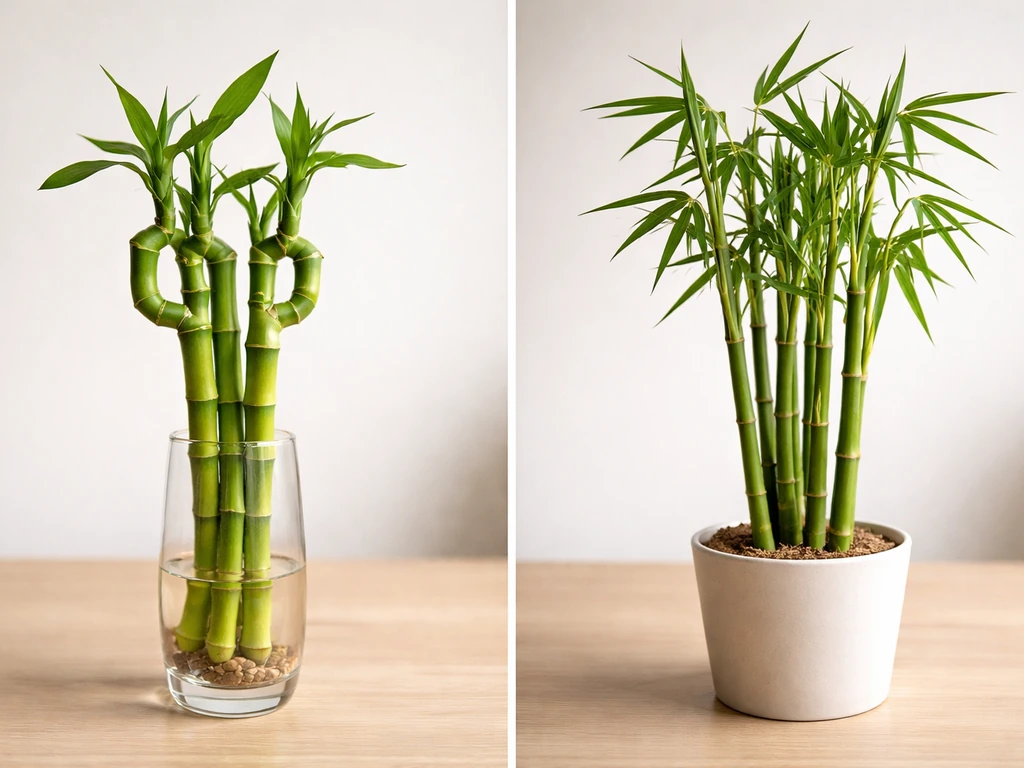
Lucky bamboo is Dracaena sanderiana, a tropical plant native to central Africa. It has segmented stems that look bamboo-like, which is why it gets sold as bamboo in every gift shop and florist. It is not a grass. It is not bamboo. But it thrives in water vases, tolerates low light better than most plants, and stays compact enough to live on a desk or windowsill for years.
True bamboo belongs to the Bambusoideae subfamily of grasses. It needs soil, spreads aggressively through rhizomes, and does not root from cuttings in water with any reliability. Attempts usually end in a mushy, rotting culm within two to four weeks. If you want to propagate true bamboo, division or rhizome separation in soil is the only practical method. Growing true bamboo long-term in a vase is not a realistic option, and I'd steer you away from it entirely.
| Feature | Lucky Bamboo (Dracaena sanderiana) | True Bamboo (Bambusoideae) |
|---|---|---|
| Plant family | Asparagaceae | Poaceae (grasses) |
| Water vase viability | Yes, long-term with care | No, cuttings rot reliably |
| Rooting from cuttings | Reliable in water | Highly unreliable in water |
| Indoor size | Compact, 1–3 ft typical | Can exceed 6+ ft indoors |
| Light needs | Bright indirect light | High light, often needs outdoor conditions |
| Seasonal dormancy | Minimal indoors | May go semi-dormant in winter |
| Nutrient sensitivity | High (chlorine, fluoride) | Moderate |
The rest of this guide focuses on lucky bamboo in a water vase. If your goal is how to grow panikoorka in water, the same water-vase setup principles will help you get healthy roots and steady growth lucky bamboo in a water vase. That is the plant that actually works for this setup, and the one you're most likely holding right now.
Set up the vase correctly from the start
Getting the setup right upfront saves you a lot of trouble later. I've seen more lucky bamboo fail from a bad container or poor water than from any disease or pest.
Container choice
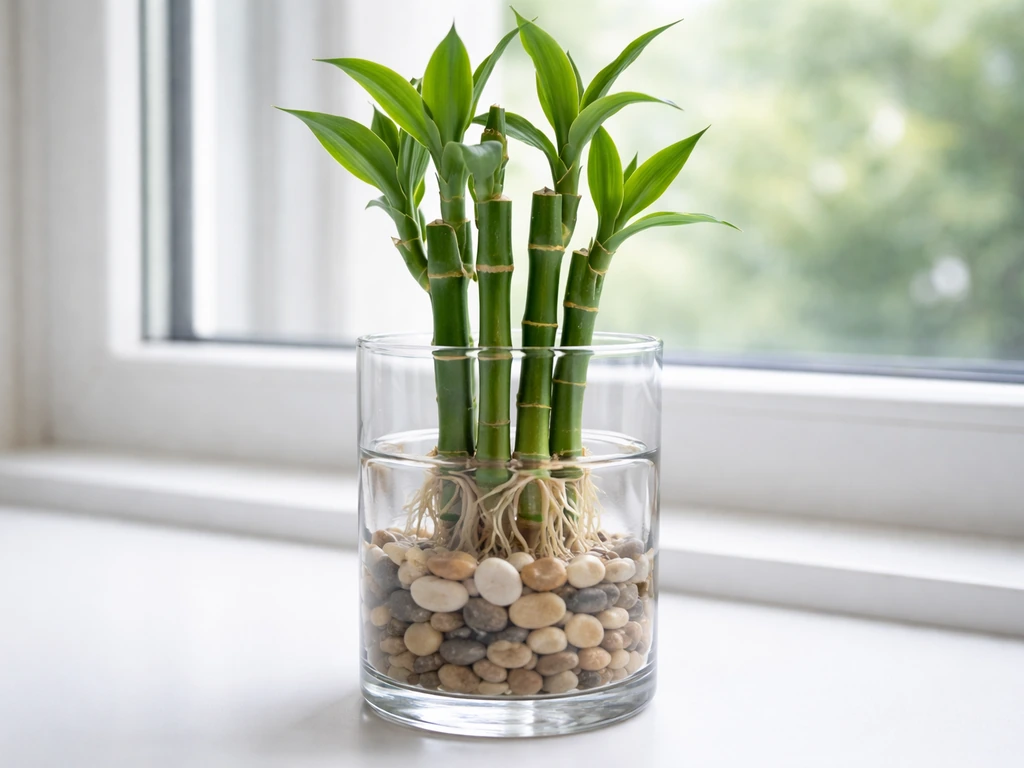
Use an opaque or dark-colored vase if you can. Clear glass looks great but lets light hit the water directly, which fuels algae growth fast. A ceramic vase, dark glass, or even a frosted container keeps algae manageable without extra work. The vase needs to be tall enough to hold the stem upright but you only need 1 to 3 inches of water covering the roots, not a full vase of water. Adding a layer of clean pebbles, river stones, or glass marbles at the bottom (about 2 to 3 inches deep) gives the roots something to anchor into, which matters for long-term stability.
Water quality
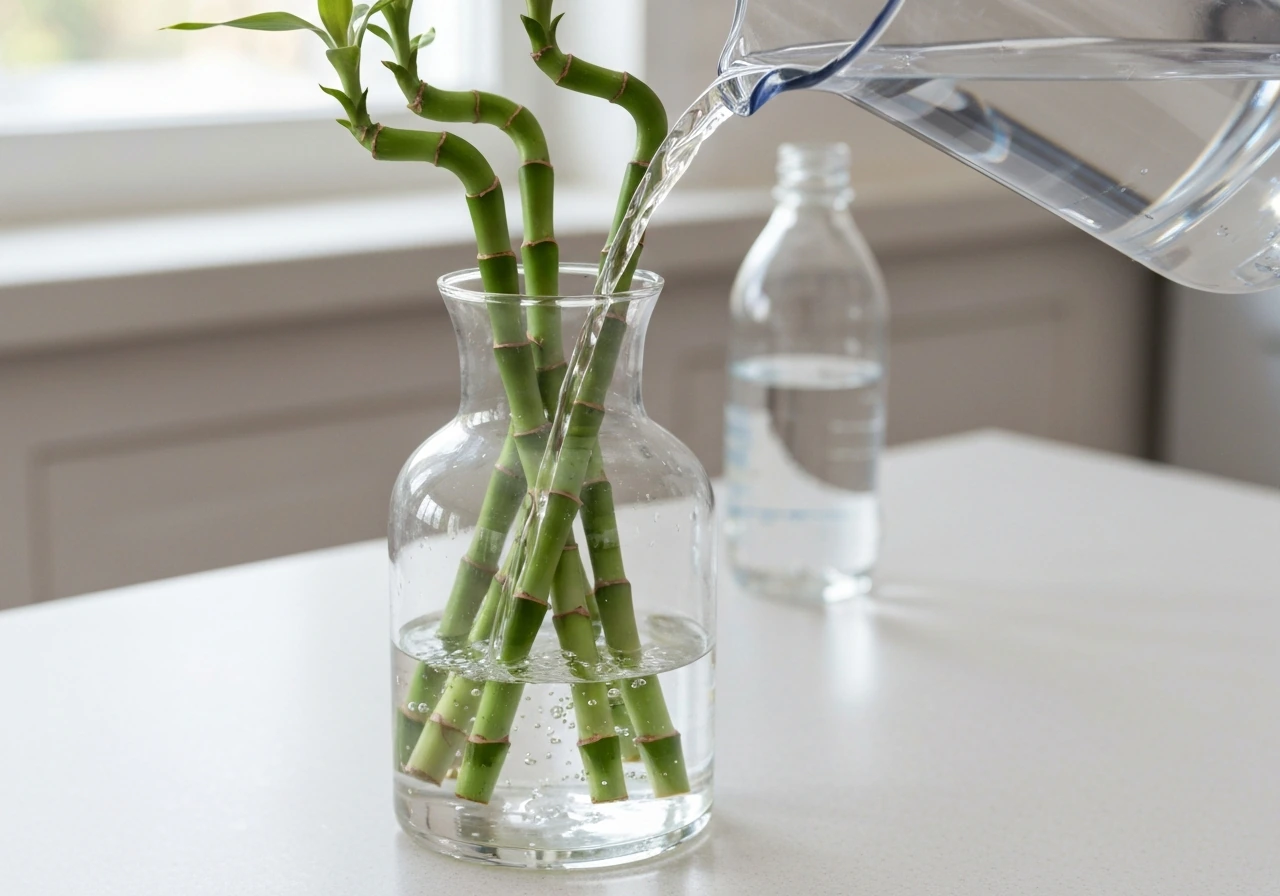
This is the single most important thing to get right. Lucky bamboo is sensitive to chlorine and fluoride, both of which are standard in most tap water. Chlorine causes leaf tip browning and general decline. Use one of these options instead:
- Filtered water (a basic carbon pitcher filter removes chlorine well)
- Bottled spring water (affordable for a small vase)
- Tap water left out uncovered for 24 hours (chlorine dissipates, but fluoride stays, so this is an imperfect fix)
- Rainwater collected in a clean container
Distilled water works but strips out everything, including trace minerals the plant uses. If you're using distilled water long-term, you'll need to add a very dilute nutrient solution to compensate. More on that in the feeding section.
Light and temperature
Bright indirect light is the target. A spot near an east or north-facing window works well. Direct sun will scorch the leaves and heat the water, accelerating bacterial growth and algae. Avoid windowsills with strong afternoon west or south exposure unless you have a sheer curtain filtering the light. Lucky bamboo can tolerate lower light than most plants, but growth will be very slow in a dim corner. If you're running it under grow lights, 12 to 14 hours of moderate-intensity light per day is plenty.
Temperature range is forgiving: lucky bamboo handles roughly 50°F to the mid-90s°F (10°C to around 35°C), though it prefers 65°F to 85°F for steady growth. Keep it away from heating vents, air conditioning drafts, and cold windows in winter. Consistent temperature matters more than hitting a perfect number.
How to propagate and root lucky bamboo in water
If you already have a rooted lucky bamboo stalk in a vase, you don't need to cut it again. The plant grows new shoots from nodes (the raised rings on the stem), and those shoots can be separated once they develop their own roots. If you're starting from a fresh cutting, here's how to do it properly.
Choosing and preparing a cutting
- Select a healthy stem with at least one node (the ring-like joint on the stem) and ideally two or three
- Cut just below a node using a clean, sharp blade (a dirty or dull cut invites rot immediately)
- The cutting should be at least 4 to 6 inches long to have enough stored energy to push roots
- Remove any leaves from the bottom 2 to 3 inches of the cutting so they don't sit in water and rot
- If the cut end looks ragged or crushed, make one clean diagonal slice to expose fresh tissue
Cleanliness during propagation genuinely matters. Rinse the cutting with clean water before placing it in the vase. Some growers dip the cut end in dilute hydrogen peroxide (3%, a few seconds) to reduce bacterial load before rooting. It's not mandatory, but it helps when you're working in warm conditions.
Getting roots started
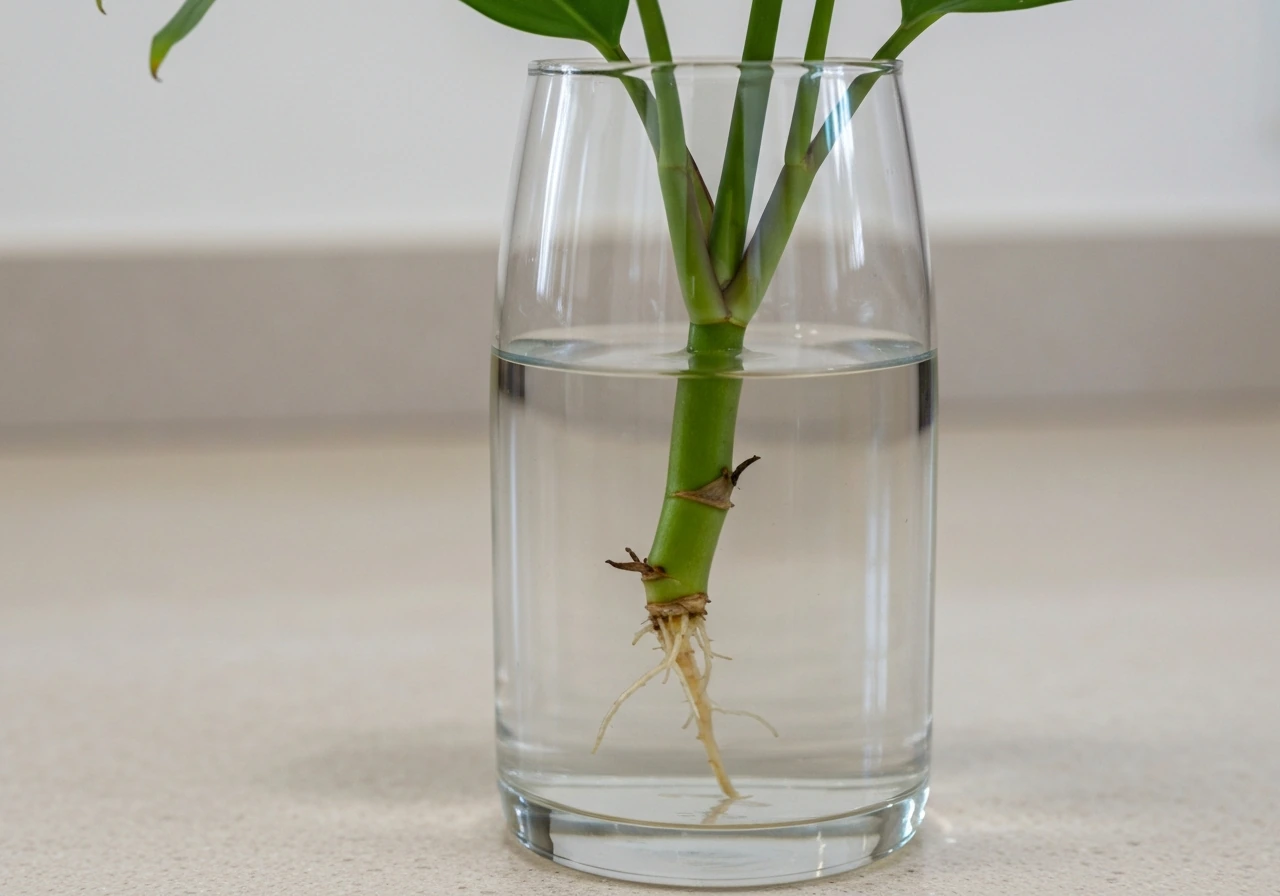
Place the cutting in your prepared vase with 1 to 2 inches of clean, dechlorinated water covering the cut end. If you want the full, step-by-step method for how to grow monggo seeds in water, use the same focus on clean water and regular changes dechlorinated water. Don't submerge the whole stem. Add pebbles or stones around the base to hold it upright. Put the vase in bright indirect light and be patient: roots typically appear within 2 to 4 weeks, and you're looking for roots that are 1 to 2 inches long before considering any transplant. Change the water every 7 to 10 days during this rooting period to keep bacteria from building up. If the water turns cloudy or smells off before the week is up, change it immediately.
A note on true bamboo cuttings: if you've been told you can root a bamboo grass cutting in water, you can try, but the odds are genuinely poor. Most culm cuttings placed in water will soften and rot at the cut end within two to three weeks. Rooting hormones and sterile conditions improve the odds slightly, but water propagation of true bamboo is not a reliable method. Stick with division if that's the plant you have.
Ongoing care: what to do each week
Once your lucky bamboo is rooted and growing, the maintenance routine is simple but it has to be consistent. Skipping water changes is the most common reason healthy plants suddenly decline.
Water changes and cleaning
- Change the water every 7 to 10 days using fresh dechlorinated or filtered water
- When changing water, rinse the pebbles and the inside of the vase to remove any biofilm or sediment
- Keep the water level consistent at 1 to 3 inches above the roots, not up to the leaves
- If you see a slimy film on the vase walls or the roots, do a full clean: remove the plant, scrub the vase with a bottle brush, rinse the pebbles, and restart with fresh water
- Never let the vase go longer than two weeks without a water change, even if it looks clear
Algae control
Green algae growth in the vase is one of the most common problems with clear glass containers. The fix is mostly preventive: use an opaque or dark vase, keep the setup out of direct sun, and change water regularly. If algae has already established, empty the vase completely, scrub it with a dilute vinegar solution (about 1 part white vinegar to 4 parts water), rinse thoroughly, and replace the water. Algae won't kill your plant quickly, but it competes for nutrients, clouds the water, and makes the roots work harder. It's worth staying on top of it.
Root monitoring
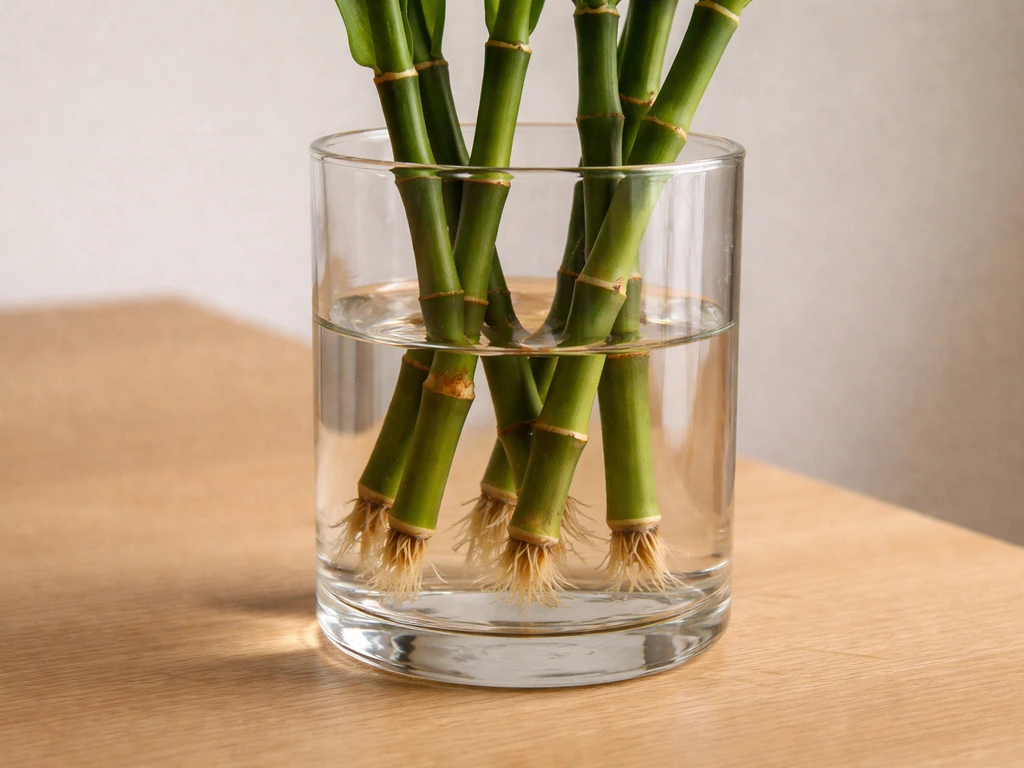
Healthy lucky bamboo roots are pale tan or slightly orange-pink in color. They should look firm and branching. Brown or black roots with a soft, mushy texture are a sign of rot, and you need to act fast: remove the plant, trim the rotted roots back to healthy tissue with sterile scissors, let the roots air dry for 30 minutes, clean the vase thoroughly, and restart with fresh water. Don't leave rotting roots in the vase hoping they'll recover on their own.
Feeding and water quality: plain water vs nutrients
Plain dechlorinated water keeps lucky bamboo alive, but it provides zero nutrients. To grow kangkong hydroponics successfully, you also need clean, treated water and the right nutrient balance so the plants can keep growing steadily Plain dechlorinated water. Long-term, water-only growing leads to slow decline: pale leaves, minimal new growth, and general poor vigor. The plant has reserves stored in its stem, which is why newly potted cuttings look fine for months before the deficiency shows up.
How to feed without overdoing it
Lucky bamboo has minimal fertilizer needs compared to most plants, and overfeeding in a small water vase is genuinely more dangerous than underfeeding. Excess nutrients will cause root burn, yellowing, and salt buildup in the vase. Keep it light:
- Use a balanced liquid houseplant fertilizer or one specifically labeled for lucky bamboo
- Dilute to about 1/10 of the recommended dose on the label (this is not an exaggeration)
- Add nutrients every 4 to 8 weeks during the active growing season (spring through summer)
- Skip fertilizing in winter when growth naturally slows
- Do a plain water flush between fertilized water changes to prevent salt buildup
Going the hydroponic route
If you want to optimize growth rather than just maintain the plant, you can treat the vase as a basic hydroponic setup. If you want to grow coconut in water, you can use similar hydroponic-style water care principles, but coconut has different rooting and nutrient needs vase as a basic hydroponic setup. Use a balanced hydroponic nutrient solution mixed at a very low concentration, targeting an EC of around 0.8 to 1.2 dS/m (well below the standard hydroponic target of 1.5 to 3 dS/m, since lucky bamboo is not a heavy feeder). Keep pH between 6.0 and 6.5 for this plant, slightly above the standard hydroponic range of 5.0 to 6.0, because Dracaena does better in a slightly more neutral environment. A basic pH meter and EC pen cost under $30 combined and are worth having if you're serious about long-term water culture. The same water quality principles apply to other water-grown plants on this site, whether you're running a deeper hydroponic system or a simple vase setup.
Troubleshooting what's going wrong right now
Yellow leaves
Yellow leaves are the most common complaint, and they have several causes. Work through this checklist in order: first, check the water (is it tap water with chlorine or fluoride? Switch to filtered water immediately). Second, check light (too little light causes general yellowing and pale growth; too much direct sun causes bleaching and browning). Third, check if you've been fertilizing too heavily (salt buildup burns roots and shows up as yellowing; do a full water flush). Fourth, check for root rot (see below). Yellow leaves that have already turned won't go green again, but stopping the cause will prevent further decline.
Mushy stem or blackening at the base
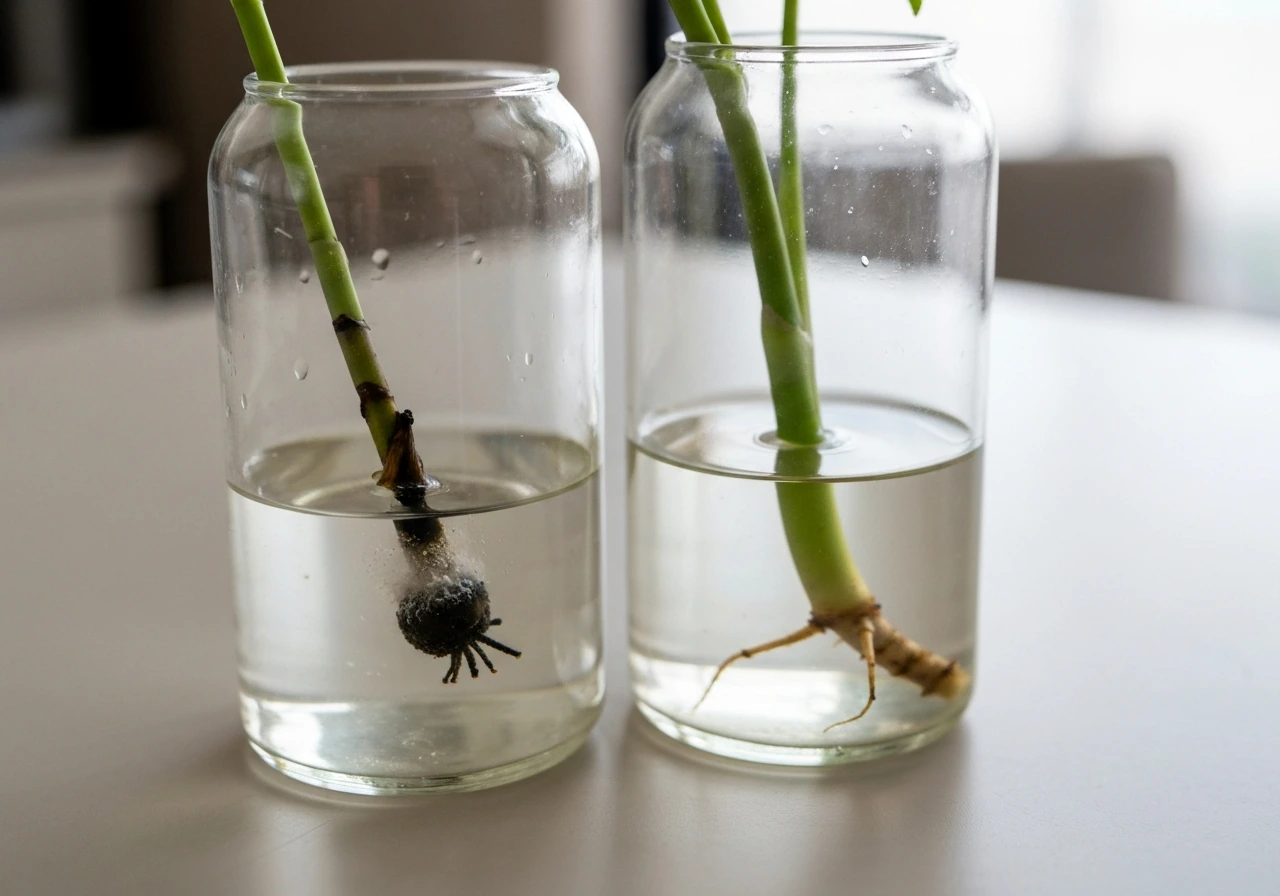
A soft, mushy, or black stem at or near the waterline is stem rot, almost always caused by stagnant water, overwatering (water level too high), or bacterial buildup. Remove the plant from the vase immediately. Cut the rotted section off completely with sterile scissors until you reach firm, green tissue. If the rot has reached the main stalk and there's no firm tissue left, the cutting is lost. If healthy tissue remains, let it dry for an hour, then restart in a clean vase with fresh water and reduced water level. Going forward, the water line should cover roots only, not the stem base.
No roots after several weeks
If your cutting has been in water for more than four weeks with no visible root development, check these things: Was the cut made cleanly near a node? Is the cutting getting enough light (a dark corner slows everything)? Is the water too cold (below 60°F inhibits rooting)? Is the water being changed regularly, or has bacterial buildup created a hostile environment? Try trimming the cut end fresh, move the vase to a warmer, brighter spot, and ensure water changes every seven days. If there's still no root activity by week six, the cutting is likely not viable.
Algae bloom or foul smell
A foul smell from the vase almost always means bacterial or fungal rot in the water, the roots, or both. Don't just top up the water and hope for the best. Do a full restart: remove the plant, inspect roots and trim any rotted sections, scrub the vase and pebbles with dilute vinegar, rinse everything thoroughly, and refill with fresh filtered water. For algae specifically, switch to an opaque vase and keep the setup away from direct sun. Regular water changes every seven days will prevent both problems from recurring.
Brown leaf tips
Crispy brown tips on otherwise green leaves point almost directly to water quality: tap water fluoride and chlorine are the most common culprits. They can also appear if you've over-fertilized. Switch to filtered or rainwater, flush the vase with plain clean water, and back off on any fertilizer. Brown tips won't reverse, but new growth should come in clean once the water quality improves.
When to move your lucky bamboo out of the vase
A water vase is a great starting point and a legitimate long-term setup for lucky bamboo, but it does have limits. If you want stronger growth, more resilience, and less weekly maintenance, transitioning to soil or a more structured hydroponic system makes sense. Here's when to consider making the move: If you meant kumara (sweet potato), use the same dechlorinated-water idea, but keep the roots and growing slips in the right setup so it can sprout properly.
- Roots are visibly root-bound, circling the bottom of the vase with no room to grow
- The plant has been in water for over a year and growth has stalled despite good water quality and light
- You're fighting recurring rot or smell problems that restart within days of cleaning
- You want to propagate the plant and give offshoot cuttings a stronger start
- The roots have reached 1 to 2 inches and you're ready to give the plant a more permanent home
For soil transition, use a well-draining, slightly sandy potting mix. If you're also growing kangkong, focus on a nutrient-rich, well-draining soil bed and keep the moisture steady as it establishes how to grow kangkong in soil. Water-rooted lucky bamboo adjusts to soil well if you keep the soil consistently moist (not wet) for the first two to three weeks while the roots adapt from water to soil conditions. Don't let it dry out completely during this adjustment period. Moist and airy is the goal.
If you want to stay with a water-based system but push for better growth, stepping up to a proper semi-hydroponic or passive hydroponic setup with nutrient solution management is a natural next step. The principles are similar to what this site covers for other water-grown plants: clean water, managed pH and EC, good light, and consistent maintenance cycles. Lucky bamboo in pebbles and nutrient solution is a popular intermediate setup that bridges the gap between a simple vase and a full hydroponic system, and it's worth exploring if you're getting serious about water culture growing.
One honest note to close on: lucky bamboo grown in water is genuinely a plant living outside its natural preference. Extensions and botanical sources are consistent on this: it does better in soil long-term. A water vase can work for years with attentive care, but if your plant keeps struggling despite clean water, good light, and occasional feeding, moving it into a loose soil mix may simply give it the conditions it's asking for. That's not failure; that's reading what the plant is telling you.
FAQ
Can I grow lucky bamboo in a water vase using tap water if I let it sit out overnight?
Sitting tap water out can reduce some chlorine, but it does not reliably remove fluoride. For consistent results, use filtered water or bottled drinking water, then keep doing regular water changes (every 7 to 10 days). If you do use a wait-out method, test and watch for tip browning within 1 to 3 weeks.
How much water should be in the vase once my lucky bamboo is rooted?
Keep the water level low, cover only the roots (about 1 to 3 inches), not the stem base. If the stem sits in water, stem rot risk rises sharply, and rot often starts right at the waterline.
How often should I clean the vase and pebbles besides routine water changes?
Do a deeper clean when you notice persistent algae or any sour or foul smell, not just cloudy water. Empty the vase, scrub with a dilute vinegar solution (about 1 part vinegar to 4 parts water), rinse thoroughly, and restart with fresh filtered or dechlorinated water.
What is the best way to deal with algae in a clear vase without harming the plant?
Reduce light to the water first, move the vase out of direct sun, and switch to an opaque or dark container if possible. If algae keeps coming back, restart with fresh water and scrub the container and stones, because scraping algae off without cleaning often leaves buildup behind.
My lucky bamboo has yellow leaves. How can I tell if it is from water issues versus fertilizer or light?
Use the order you would troubleshoot: first confirm the water is dechlorinated and not fluoride-laden. Next check light intensity and whether there is any direct sun scorching. Then consider fertilizer, yellowing from overfeeding usually follows nutrient use or salt buildup and improves only after a full water flush and reduced feeding.
Should I cut off yellow or damaged leaves or just leave them?
You can remove fully yellow leaves once the cause is fixed, but do not remove healthy green leaves. Cuts create extra entry points for bacteria, so trim only with sterile scissors and keep the plant in clean, correctly leveled water.
How do I know if my lucky bamboo roots are healthy, and when should I take action?
Healthy roots look pale tan or slightly pink-orange and feel firm. Brown or black roots that are soft or mushy indicate rot. If rot appears, remove the plant promptly, trim to firm tissue with sterile scissors, air-dry briefly, and restart in a clean vase with fresh water and a lower water level.
My cutting is in water but no roots appear after a month. What should I check first?
Check four common blockers: cut cleanliness near a node, adequate bright indirect light, water temperature (avoid anything colder than about 60°F/10°C), and whether you have been changing water on schedule. If the cut end has been sitting too long, trim the end again under clean conditions and restart with fresh filtered or dechlorinated water.
Is hydrogen peroxide safe to use on bamboo cuttings for water rooting?
A very brief dip using dilute 3% hydrogen peroxide can reduce bacterial load, but only use it as a short dip (a few seconds), then rinse or place promptly into clean, dechlorinated water. Overuse can damage tissue, especially if the cutting is already stressed from poor light or dirty water.
Can I grow true bamboo in water even if it is not reliable?
It is usually unreliable for long-term success, most attempts end with rot at the cut end within a few weeks. If you truly need a grass-type bamboo, plan for division or rhizome separation in soil rather than relying on a water vase setup.
What should I do if my bamboo smells bad even though I changed the water?
A recurring bad smell usually means hidden rot in the roots or leftover biofilm in the vase and stones. Do a complete restart: remove the plant, inspect and trim rotted tissue, scrub the vase and pebbles with dilute vinegar, rinse thoroughly, and refill with fresh filtered water.
Do I need nutrients for lucky bamboo in a water vase, and what mistake should I avoid?
Water alone keeps it alive, but long-term growth may slow because there are no nutrients. If you add fertilizer, use a very dilute hydroponic nutrient mix and avoid overfeeding, nutrient excess can burn roots and cause salt buildup that shows up as yellowing. If you are unsure, prioritize clean water and light first, then add nutrients gradually.