Yes, watercress will absolutely grow in a pond or fish tank. Nasturtium officinale is a perennial aquatic plant that is literally submerged during growth in commercial production, so putting it in water is not a workaround, it is the intended method. Whether you have a backyard pond, a koi setup, or an indoor aquarium you want to make more productive, watercress can fit into all three, with a few important differences in how you manage each one.
How to Grow Watercress in a Pond Step by Step Guide
Marcus Holloway
15 Apr 2026
Will watercress actually grow in a pond or tank?
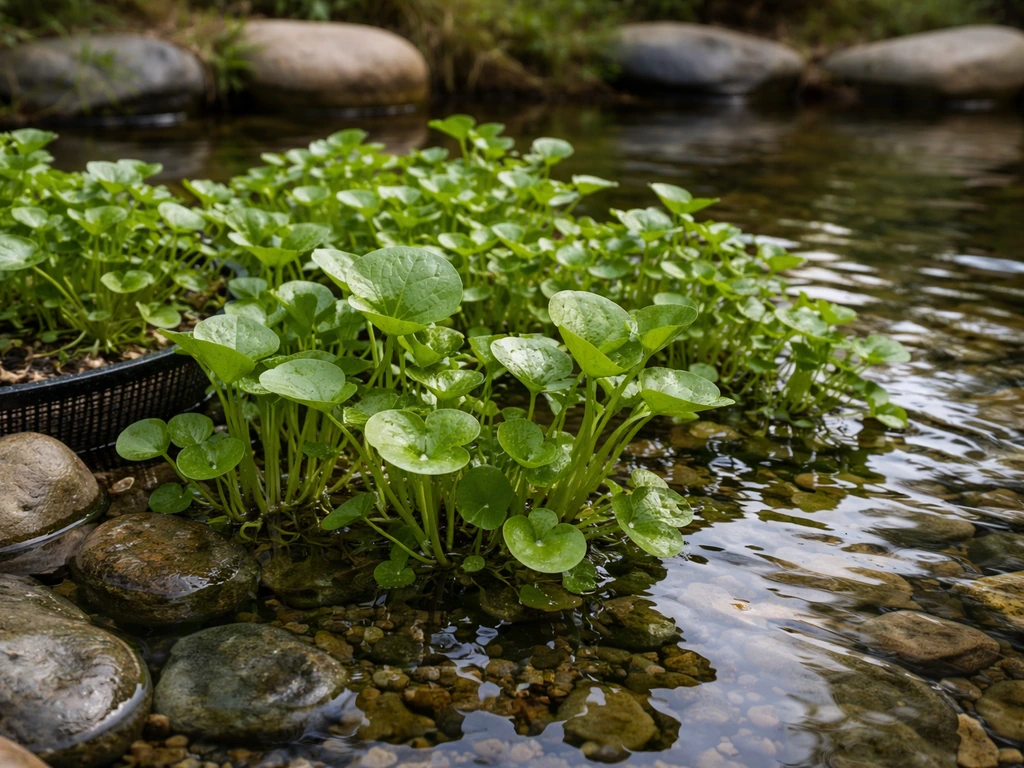
Watercress grows naturally in streams and shallow water, so a pond is basically its native habitat. Texas A&M AgriLife's AquaPlant database lists it as a common pond plant, and UF/IFAS describes it as a managed aquatic crop grown in water-covered beds. The plant forms rafts of floating and submerged foliage, roots easily from cuttings in wet conditions, and handles the variable conditions of a pond or aquarium better than most greens. The honest caveat is that it can spread aggressively if left uncontained, which matters both for pond management and for fish-tank plumbing. But as a food crop or a water-filtering plant? It is one of the easiest aquatic greens you can grow.
Choosing the right watercress type and where to grow it
The species you want is Nasturtium officinale, the standard grocery-store watercress. Minnesota Wildflowers confirms this is the common edible variety. There is also Nasturtium microphyllum (onerow yellowcress), a close aquatic relative that persists in wet environments, but it has smaller leaves and less food value. Stick with N. officinale unless you are just trying to colonize a pond margin with a native-looking plant.
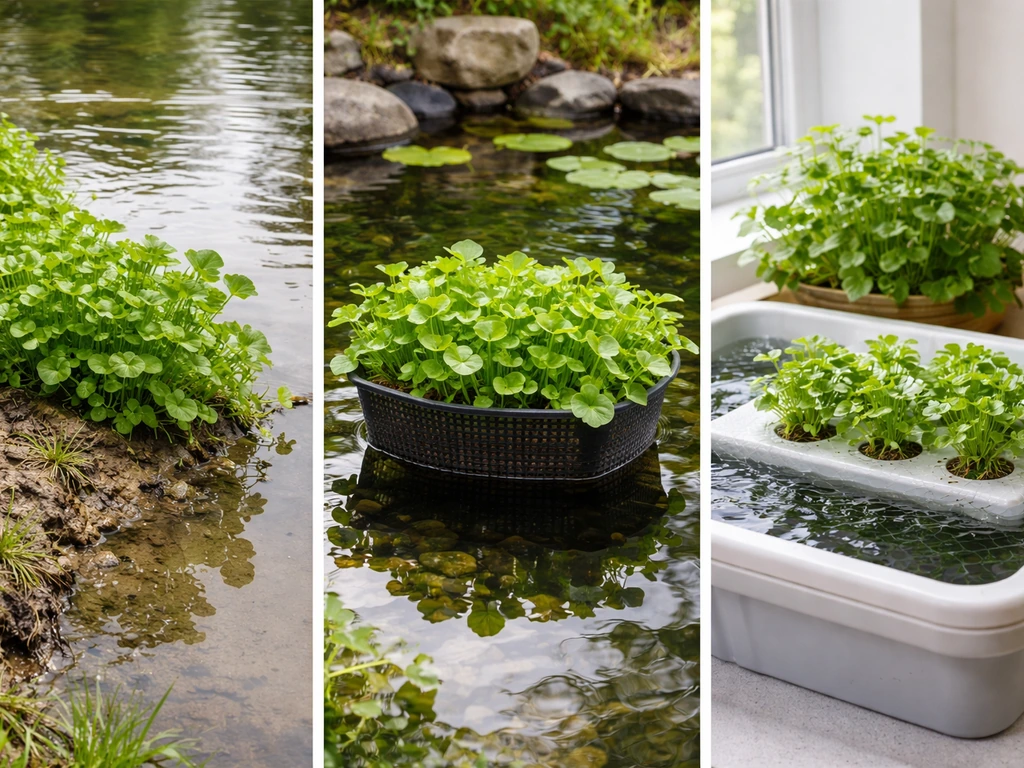
Here is how the three main setups compare before you commit to one:
| Setup | Best For | Containment Needed | Flow Required | Key Challenge |
|---|---|---|---|---|
| Outdoor decorative pond | Visual interest, passive filtration, moderate harvest | Yes, baskets or pond bags | No, but gentle flow helps | Spread and algae competition |
| Outdoor fish pond (koi/goldfish) | Nutrient export, fish waste cycling, regular harvest | Yes, definitely | Gentle return flow nearby | Keeping roots off pump intakes |
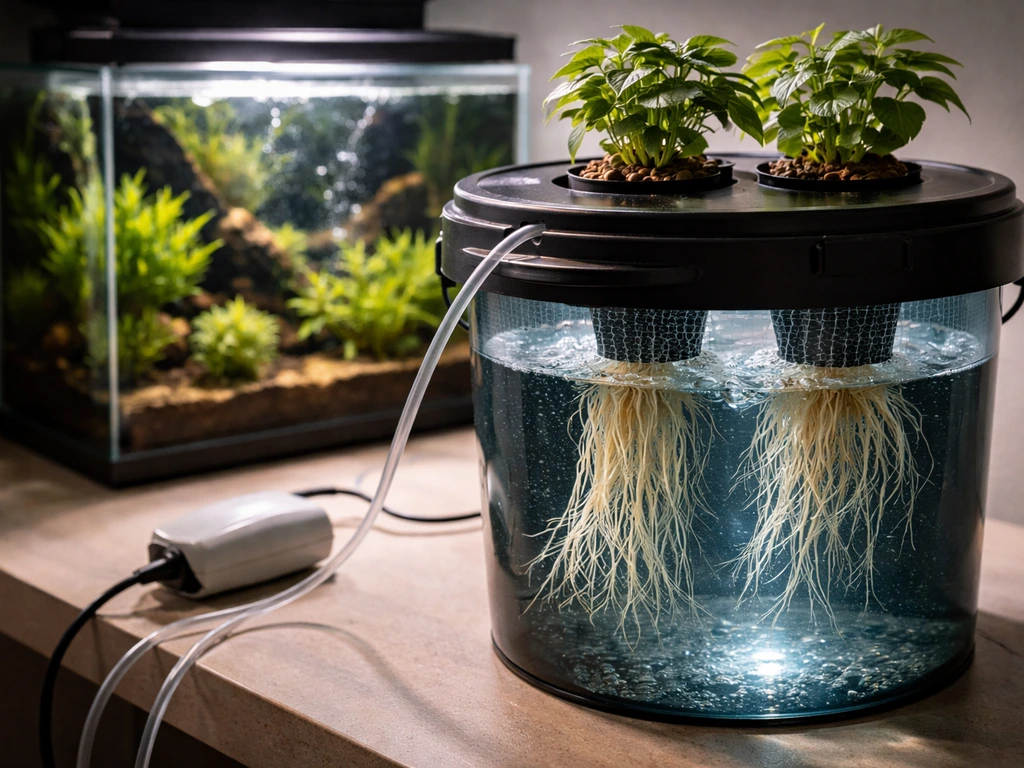
| Indoor fish tank/aquarium | Year-round production, small-scale harvest | Yes, mesh pots or mesh cups | Light flow or still water fine | Low light and temperature swings |
For outdoor pond growers, the process is very similar to setting up any aquatic plant in a pond: you want baskets, controlled depth, and regular trimming to prevent the plant from taking over. For fish tank growers, it is more like hydroponics in a wet, low-light environment, which requires a bit more attention to lighting and containment.
Water, light, and temperature: what watercress actually needs
Temperature
Watercress is a cool-season plant. It thrives between 50 and 70°F (10 to 21°C) and struggles above 80°F. In hot summer conditions, it bolts, turns bitter, and starts to decline. For indoor tanks, aim to keep your water under 72°F. For outdoor ponds in warmer climates, watercress is best treated as a spring and fall crop. One important note from aquaponics research: water temperature matters far more than air temperature here, so monitor what is actually in the tank, not just the room.
Water pH
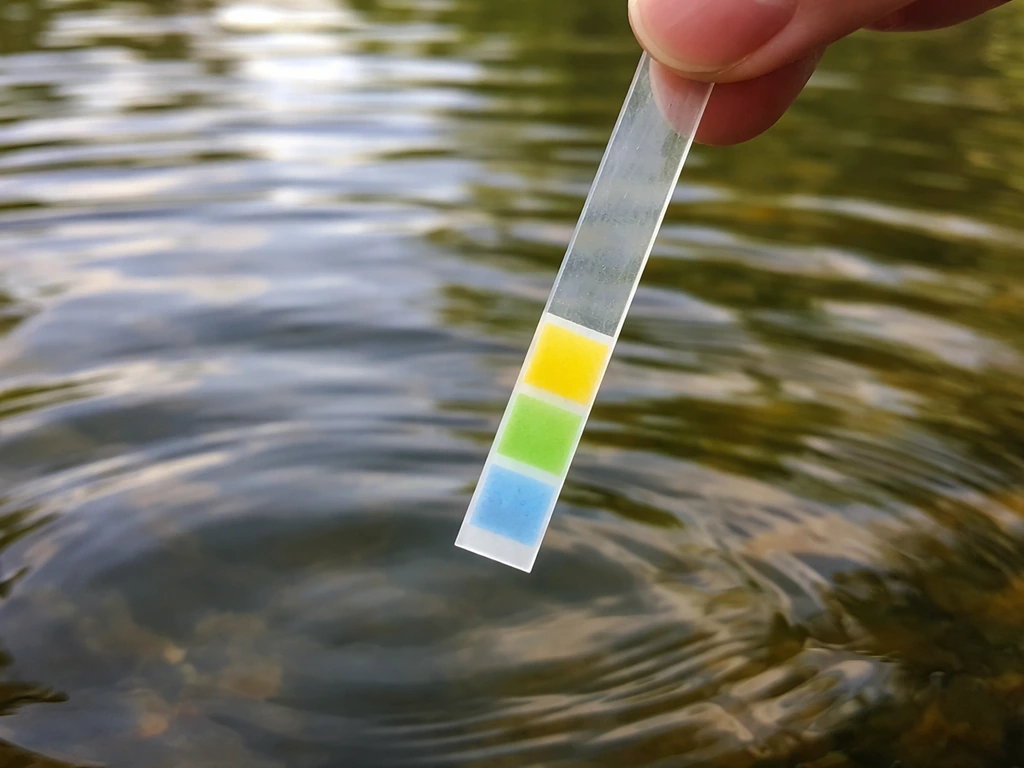
Target a pH of 5.8 to 6.5 for best results. This range comes directly from aquaponics extension guidance (TAMU) for watercress specifically. Research on aquaponic systems also supports staying around pH 6.0 to 6.5 to keep nutrients available to the plant. Most fish tanks run slightly higher (6.8 to 7.4), so you may need to do light pH adjustment if growth is sluggish. Avoid going above 7.5 because nutrient lockout becomes a real problem. Check pH weekly when getting started.
Light
Outdoors, watercress does best with 4 to 6 hours of direct sun, preferably morning sun with afternoon shade in warmer months. Full shade slows growth and makes stems leggy. Indoors, you need a grow light running 12 to 14 hours a day. Research links both light quality and photoperiod directly to plant health outcomes in water-growing setups, so skimping on indoor lighting is one of the fastest ways to get weak, pale plants. A basic full-spectrum LED a few inches above the canopy works well.
How to plant and propagate watercress in water
Starting from cuttings (easiest)
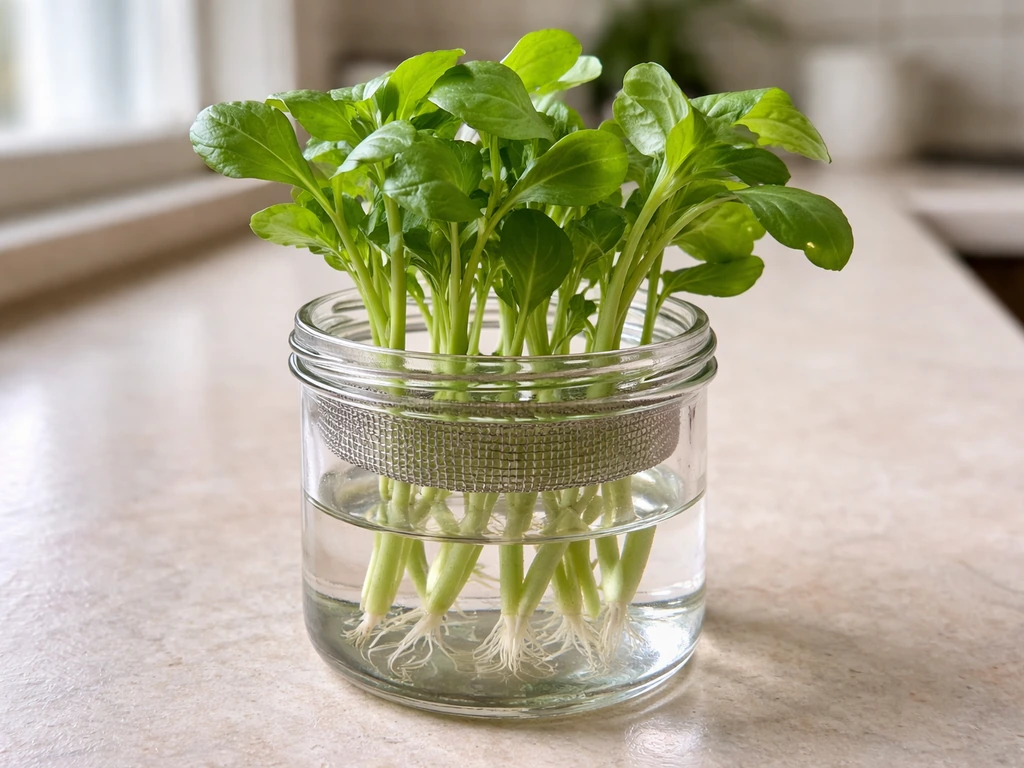
Cuttings are faster and more reliable than seeds in a pond or tank setup. Take a 4 to 6 inch stem from a fresh bunch of grocery-store watercress, remove the lower leaves, and place it directly in your pond basket or mesh pot so the bottom third is submerged. Roots appear within 5 to 10 days at the right temperature. I have started successful plants from supermarket watercress more times than I can count; just make sure the bunch is fresh and not yellowing.
Starting from seed
Seeds germinate best at 50 to 60°F according to Botanical Interests, though a commercial seed supplier notes germination typically happens between 18 and 24°C (64 to 75°F) and expects sprouts in 7 to 21 days depending on conditions. Sow seeds onto moist rockwool, perlite, or a hydroponic medium, and keep them consistently wet but not totally submerged until they have their first true leaves. Research using a non-circulating hydroponic method demonstrated that watercress can go from seed to established plant without any water pump or flow, which is good news for still-water aquarium setups. Once seedlings reach about 2 inches tall, transplant them into your pond basket or aquarium pot and lower them into place.
Planting depth and containment
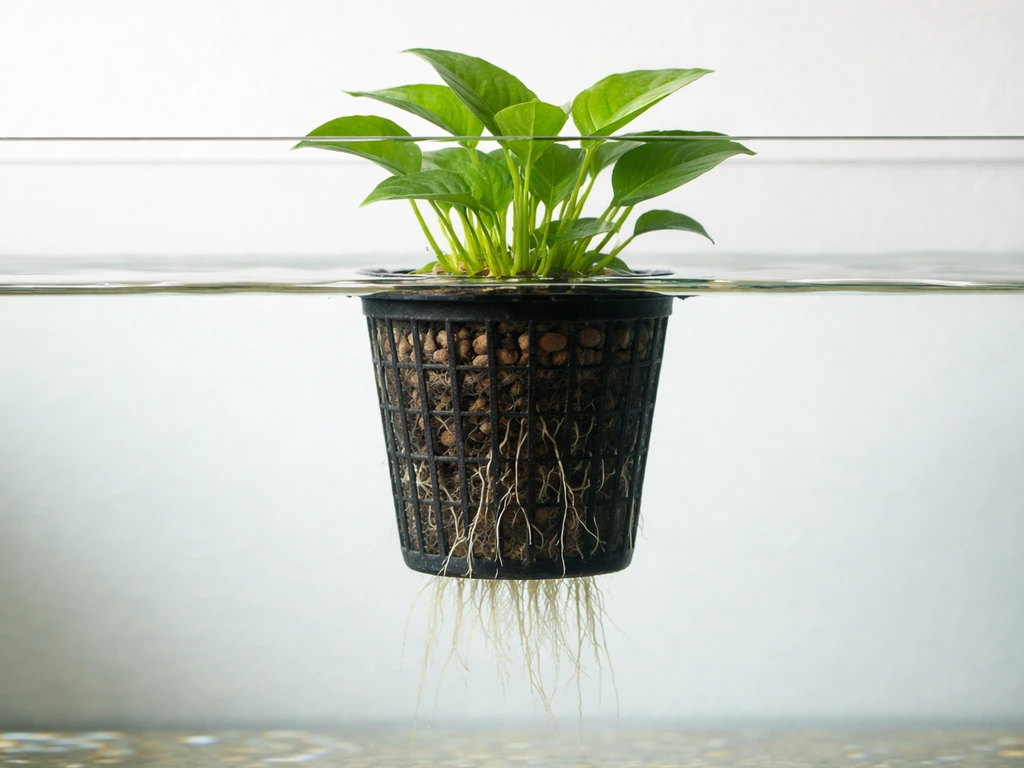
Plant roots at a depth up to 10 cm (about 4 inches) below the water surface. Deeper than that and the plant struggles to access light for the upper canopy. Use mesh planting baskets filled with aquatic soil, gravel, or a hydroponic medium, and if you are in an open pond, wrap the basket in a fine mesh bag or burlap to prevent roots from escaping into the water column. UC Davis watercress protocols specifically call out bagging and containment to prevent plants from tangling and spreading into surrounding systems, which is equally important for keeping roots out of pump intakes and filter returns in fish setups.
Growing watercress with fish: what changes
Is watercress safe for fish?
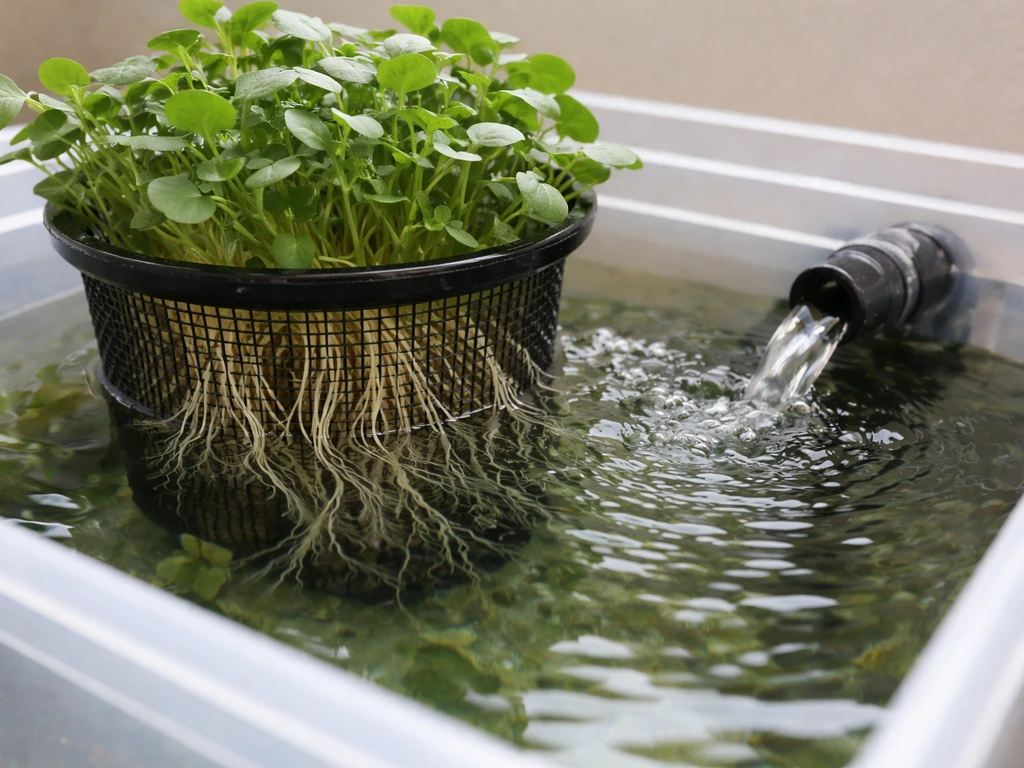
Watercress is not toxic to fish. In fact, it works as a natural biofilter, absorbing nitrates and ammonia from fish waste, which is exactly why it is a popular choice in aquaponics systems. The plant thrives on the same nutrients fish produce, and the fish benefit from cleaner water. This is a genuinely symbiotic relationship when managed correctly. For general aquatic plant culture guidance, the same principles that apply when growing plants in water hold here: stability in pH and temperature matters more than perfection.
Handling flow and filtration
Watercress likes gentle water movement. A slow current near the roots helps with oxygenation and nutrient delivery, but strong flow will dislodge cuttings before they can root and can bury or flip baskets. Position baskets away from pump return jets or use a spray bar to diffuse flow across the surface. Importantly, a production guide excerpt from UF/IFAS states that in a small arrangement, moving water is not necessary at all, so if your fish tank is relatively still, watercress can still establish without a flow problem.
Nutrient balance in a fish pond or aquaponics setup
Fish waste is typically high in ammonia and nitrates, which watercress will use as fertilizer. In a well-stocked fish pond, you may not need to add any extra nutrients at all. The risk runs the other direction: if you have too many fish and too little plant mass, the nitrogen builds up faster than watercress can absorb it, causing algae blooms.
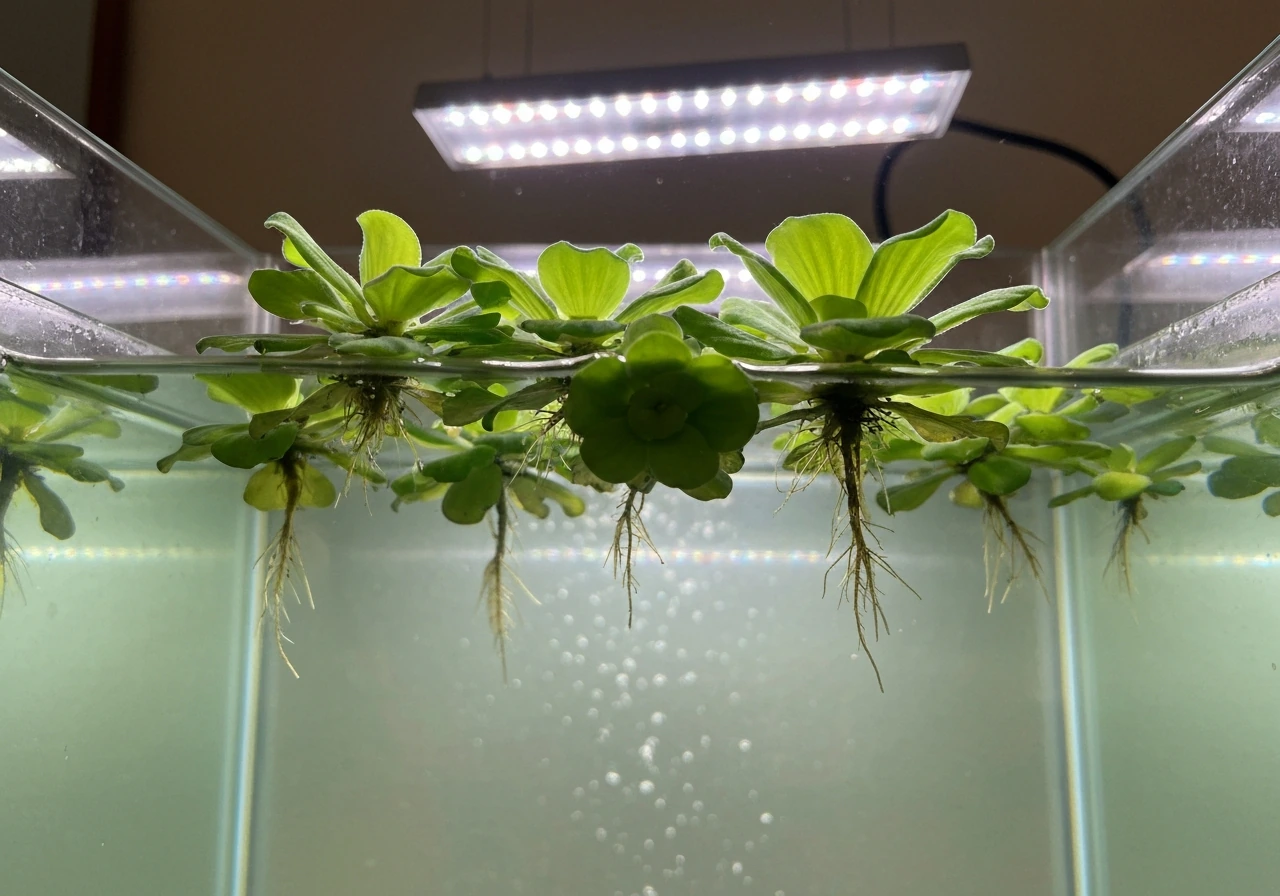
A good starting ratio is roughly 1 square foot of watercress canopy for every 5 to 10 gallons of fish-stocked water, adjusting from there based on how quickly nitrates build. If you have ever tried growing water lettuce in an aquarium as a nutrient exporter, watercress works on the same principle but roots more aggressively and handles cooler temperatures better.
Containment and legal considerations
Do not release watercress cuttings or plant material into natural waterways. The U.S. Fish and Wildlife Service has flagged ecological risk concerns for Nasturtium officinale, and some states have regulations around the introduction of aquatic plants including the watercress group into open water. Always dispose of trimmings in the compost or trash, never into streams, drainage ditches, or natural ponds. Texas A&M AquaPlant also recommends against introducing watercress into new water bodies for this reason.
Day-to-day care and harvesting
Watercress grows fast once it is established, often visibly extending by an inch or more per day in good conditions. Harvest by cutting stems about 6 inches below the growing tips. This encourages branching and keeps the plant bushy rather than leggy. After cutting, the remaining stems thicken and push new growth from the nodes, so regular harvesting actually improves yield over time. If you let it go too long without cutting, stems get woody, flavor intensifies into bitterness, and the plant starts to put energy into flowering instead of leaf production.
Check pH weekly and water temperature at least a few times a week if you are in a season with temperature swings. Top up water in open containers or ponds as evaporation occurs, since letting exposed roots dry out will kill stems quickly. In a fish tank, do your usual partial water changes (around 20 to 25% weekly) as normal; this actually helps by refreshing trace minerals the plant can use. If you are interested in the broader range of plants that grow and flower in water, watercress is a great entry point because its requirements are straightforward and results are fast.
Troubleshooting the most common problems
Seeds or cuttings won't establish
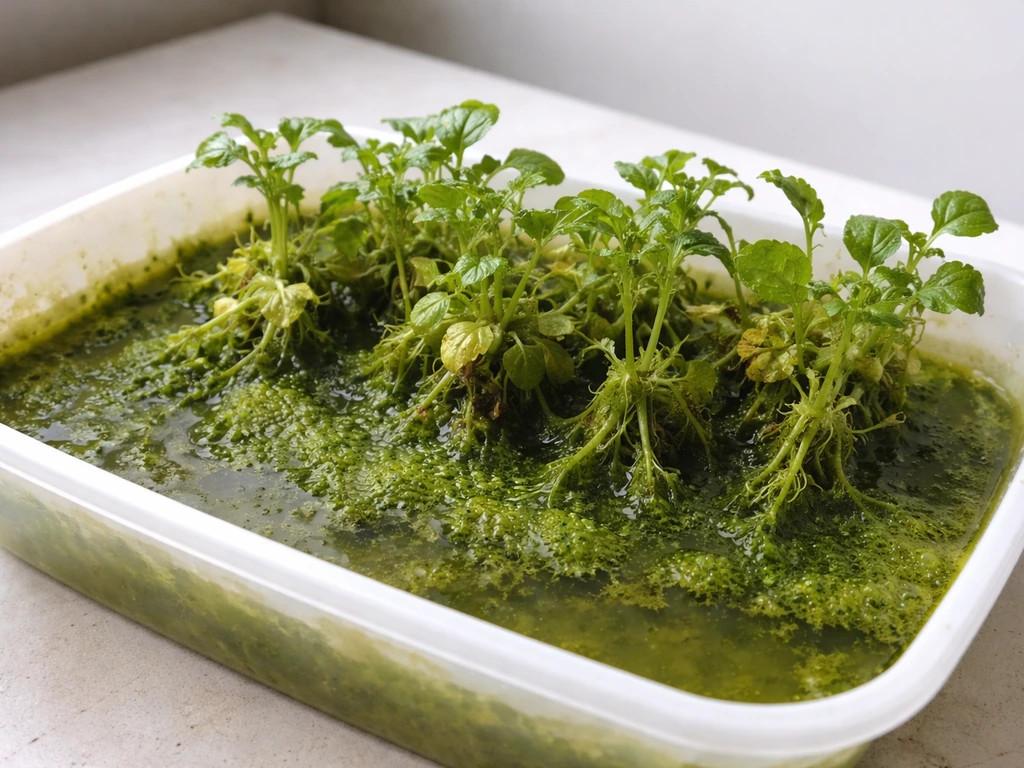
The most common cause is temperature. If water is above 75°F or below 45°F, germination stalls and cuttings rot before rooting. Check your water temperature first. The second common cause is too much flow: strong current rips young roots loose before they anchor. Move the basket to a calmer part of the water and try again. If you are using seeds in a fish tank, start them in a separate container with shallow water or moist medium rather than dropping them straight into the tank.
Leaves are turning yellow or brown
Yellowing usually points to a pH problem or nutrient deficiency. If pH is above 7. 0 in a low-fish-load system, iron and manganese become unavailable to the plant, causing yellowing between the veins. HortiDaily notes that pH influences how available key elements like iron and manganese are, with lower nutrient availability at higher pH levels [iron and manganese become unavailable](https://www.
hortidaily. com/article/9670466/why-ph-matters-in-aquaponics/). Test and adjust pH toward 6. 0 to 6.
5. Browning on leaf tips often means the water is too warm or the plant is getting direct hot afternoon sun. Move it to a shadier spot or reduce water temperature. In fish tanks, browning can also mean ammonia is too high, which happens when you have too many fish and not enough plant coverage.
Algae is taking over
Algae and watercress compete for the same nutrients. If algae is winning, it is usually because there is more nutrient input (fish waste, sunlight) than the watercress can absorb. Solutions: add more watercress surface area, reduce feeding of fish, increase shading of the water surface rather than the plant, and do a partial water change to drop nutrient levels. Some people successfully use nutrient-demanding plants to outcompete algae in water systems, and watercress is genuinely competitive when it has enough canopy established. Get a dense mat going before algae gets a foothold.
Slow or weak growth despite good conditions
- Light is the most likely issue indoors: watercress needs 12 to 14 hours of grow light per day, not ambient room light
- Check that roots are actually reaching water: if your basket medium is too dry or the basket is sitting too high, roots will not establish
- In still fish tanks, gently swirling water near roots once a day helps deliver nutrients to the root zone without needing a pump
- If you recently harvested heavily, give the plant a full week before expecting a growth surge; it needs to rebuild leaf area to power regrowth
- In aquaponic setups with low fish load, you may need to add a diluted liquid kelp or iron supplement to fill in what fish waste alone cannot provide
Plant is flowering and getting bitter
Flowering (bolting) is triggered by warm temperatures and long days. Once it bolts, leaf flavor turns sharply peppery and bitter. Pinch off flower buds as soon as you see them to delay the process, and cut the plant back hard to encourage vegetative regrowth. If water temperature is consistently above 75°F, the plant is past its season in that setup. In outdoor ponds, this is a natural cue to pull back the watercress and let it rest until cooler weather returns.
FAQ
Can I grow watercress in a pond if I do not have fish or aquaponics?
Yes. Use nutrient sources indirectly, for example apply only very small amounts of finished compost tea or use a controlled slow-release fertilizer targeted for aquatic plants, then watch pH weekly. If you start without fish, prioritize canopy coverage early (plant more cuttings at once) so the young growth can compete with algae before nutrient levels get out of balance.
How do I keep watercress from spreading through my pond when I am not using baskets in every area?
Contain it with mesh baskets or at least a fine root barrier, and physically remove all trailing fragments during trimming. If you see pieces floating beyond the planting zone, scoop them out immediately, do not wait for harvest day, because fragments can re-root from wet parts even after you cut the main plant.
What is the safest way to place watercress near pumps and filters?
Avoid the direct path of pump return jets and keep baskets separated from intake screens. If you must place it close, use a secondary containment sleeve (fine mesh bag or burlap wrap) so loose root mats do not get pulled into plumbing, and inspect the area every few days during rooting to catch early escapees.
Do I need a water pump or water circulation for watercress in an aquarium or small pond?
Not necessarily. For many still or lightly aerated tanks, watercress will establish without active flow, as long as water quality is stable and there is gentle oxygen exchange. If cuttings are not rooting or leaves look pale, add only mild circulation using a diffuser (spray bar) rather than strong current that can dislodge seedlings.
How do I prevent cuttings from rotting before they root?
Start with fresh, green stems and keep the bottom third submerged at a consistent temperature, ideally in the cool range. Avoid burying cut ends in dense muck that stays anaerobic, and do not let the cutting dry even briefly during setup. If you have moving water, reposition the basket to a calmer spot until the roots are firmly attached.
Can I grow watercress from grocery store stems in a fish tank, and will it affect water quality?
Yes, cuttings from fresh bunches are usually the fastest route, but expect a short adjustment period. During the first 1 to 2 weeks, the plant is small, so fish waste may temporarily exceed plant uptake, which can raise ammonia or nitrates and trigger algae. Increase plant density early and monitor ammonia, nitrite, and nitrate during that establishment window.
My watercress looks yellow, but my pH test reads normal. What else could be wrong?
Check for iron availability and light stress. Even with “okay” pH, low iron in low-fish-load tanks can cause vein yellowing, so consider a small, aquatic-safe iron source targeted for hydroponic or freshwater use. Also confirm the plant is getting enough direct or grow-light intensity, because weak light can mimic nutrient problems by slowing uptake.
Is it okay to harvest watercress often, and how do I avoid making it woody or bitter?
Frequent harvesting helps, cut stems about 6 inches below the growing tips and keep removing growth before it turns leggy. If flavor becomes bitter or stems get woody, you likely waited too long between cuts or let flowering begin, pinch off buds immediately and cut back harder to force leafy regrowth.
How much watercress should I plant to control algae in a pond with fish?
Use plant mass as your main lever, not just sunlight reduction. A practical starting point is canopy coverage at about 1 square foot per 5 to 10 gallons, then adjust after you observe nitrate build and how quickly algae responds. If algae persists, increase watercress density and consider reducing feeding for a short period while the plant establishes.
What should I do if the watercress is flowering (bolting) in warm weather?
Treat it as seasonal decline and reset. Pinch flower buds as soon as you see them, cut the plant back to encourage vegetative regrowth, and in outdoor ponds plan for a spring and fall cycle. If water temperatures stay consistently high, replace with fresh starters when conditions cool, rather than trying to push the same plants through heat.
How should I dispose of trimmings so they do not re-establish elsewhere?
Bag trimmings and dispose of them in trash or compost, do not rinse them into drains connected to natural waterways. If you compost, keep material contained (in sealed compost bags if possible) until fully broken down, because small fragments can survive and sprout if they end up in wet ditches or unmanaged pond edges.