You can grow water plants in a pond successfully by grouping them into the right depth zones, planting them in containers with heavy topsoil capped with gravel, keeping your water pH between 7 and 8 for most species, and giving them at least 6 to 8 hours of direct sunlight.
How to Grow Water Plants in a Pond: Step-by-Step
Marcus Holloway
26 Apr 2026
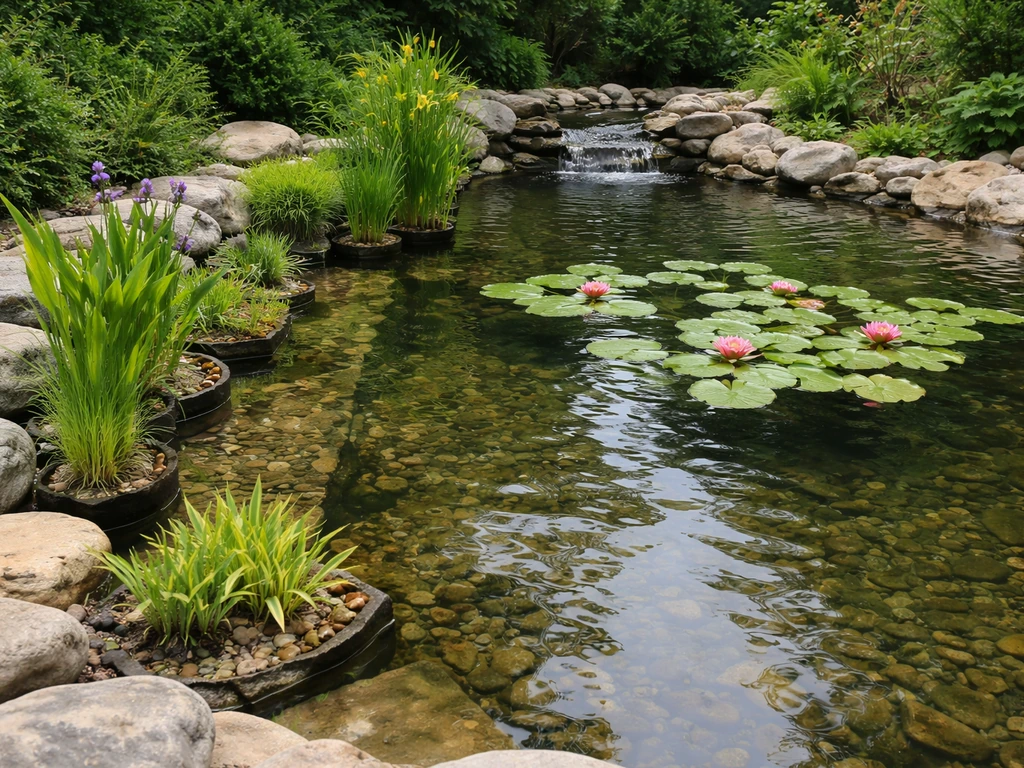
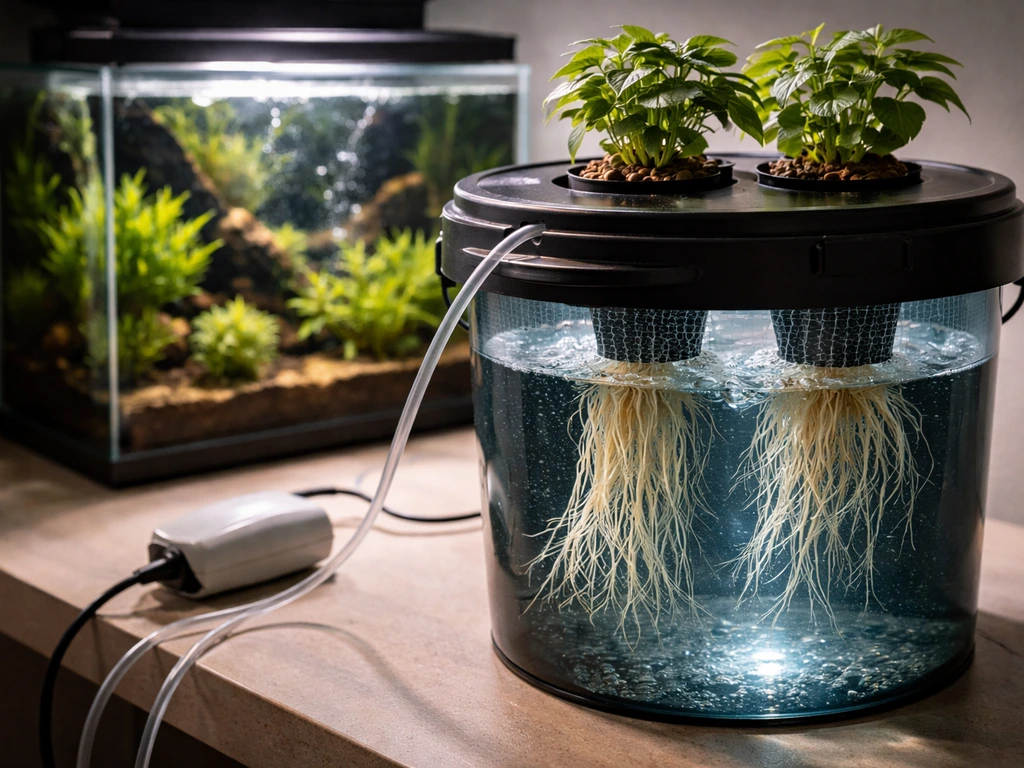
If you want a faster, simpler path that is closer to growing how to grow in water, you can adapt the same depth and sunlight principles to indoor tubs or hydroponic-style setups. If you want to grow in water at home, focus on matching plant type to its zone, depth, and light needs first.
If your real goal is a true flower result, you can also look at how to grow flower in water as a related option for water-based flowering setups. If you're specifically trying the same idea of growing in water for a plant like adenium, you'll want to follow a dedicated method for “how to grow adenium in water” so you avoid rot and keep roots healthy grow in water.
Get those fundamentals right from day one and your plants will root within a few weeks instead of rotting or floating away.
Choosing the right pond plants for your conditions
Before you buy anything, figure out what your pond can actually support. The three major categories of pond plants each occupy a different zone and serve a different role, so you want a mix rather than doubling down on just one type.
| Plant Type | Where They Live | Examples | Best For |
|---|---|---|---|
| Emergent | Roots submerged, leaves/flowers above water | Cattail, iris, watercress | Pond edges, shallow shelves |
| Floating | Free-floating on the surface, roots hang in water column | Water lettuce, duckweed | Nutrient uptake, shade, algae competition |
| Submerged | Fully underwater, near-surface for light | Hornwort, anacharis | Oxygenation, fish habitat, clarity |
Water lilies sit in their own category: rooted in the substrate but with pads that float on the surface. They are the most popular pond plant for good reason, but they do need neutral to slightly alkaline water (pH 7 to 8) and a minimum of 6 to 8 hours of direct sun per day. If your pond is heavily shaded, lilies will disappoint you.
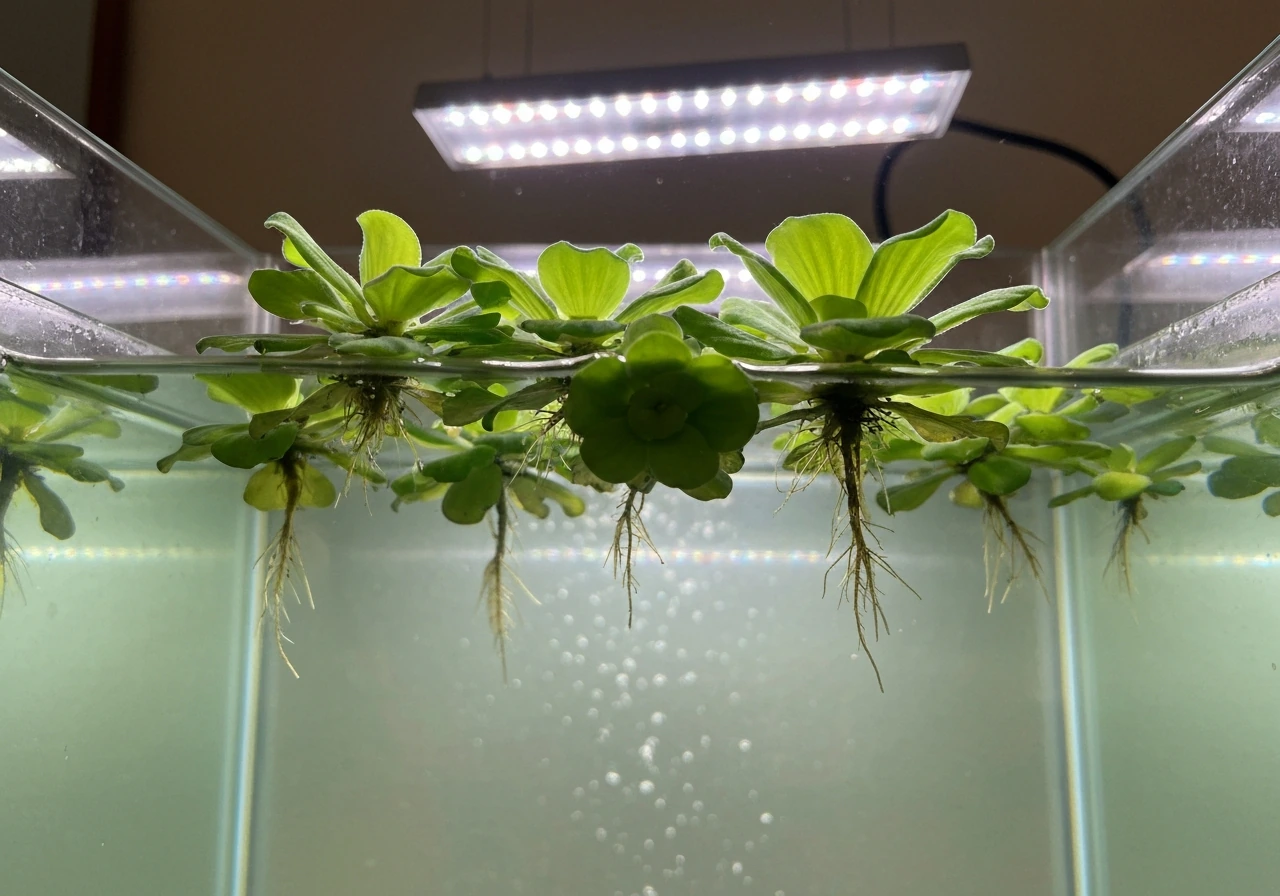
Go with floating plants like water lettuce instead, which tolerate more variable conditions and grow fast enough that you'll see results in days, not weeks. Water lettuce thrives in temperatures between 59°F and 95°F (15°C to 35°C), so it's a solid warm-season option almost everywhere. Water lettuce can also work in aquariums, so you can apply these same comfort conditions and basic floating-plant setup when growing it at home how to grow water lettuce in aquarium.
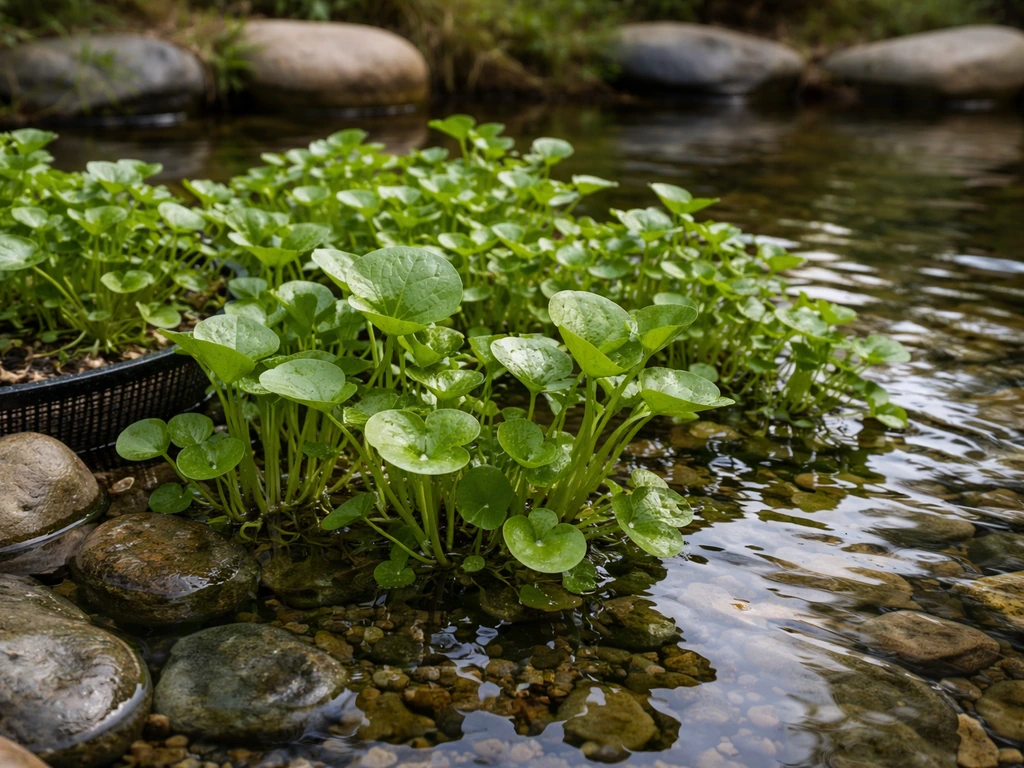
For smaller ponds or those connected to aquarium-style systems, hornwort is a reliable submerged choice. It naturally gravitates toward the upper water column where light is strongest, so it needs almost no setup beyond dropping it in. Watercress works beautifully along pond margins if you want something edible. It prefers a pH of 6.5 to 7.5 and is a long-day plant, meaning it pushes growth hard through spring and summer and starts flowering as days get longer. I've grown watercress along the inlet edge of a small backyard pond and it practically takes care of itself once established.
A practical starter mix for most ponds: one or two water lilies as your centerpiece, a cluster of water lettuce or another floating plant to shade the surface and compete with algae, and a handful of hornwort dropped in for oxygenation. That combination covers all three zones and sets you up for clearer water from the start.
Pond setup basics: depth, zones, substrate, and planting locations
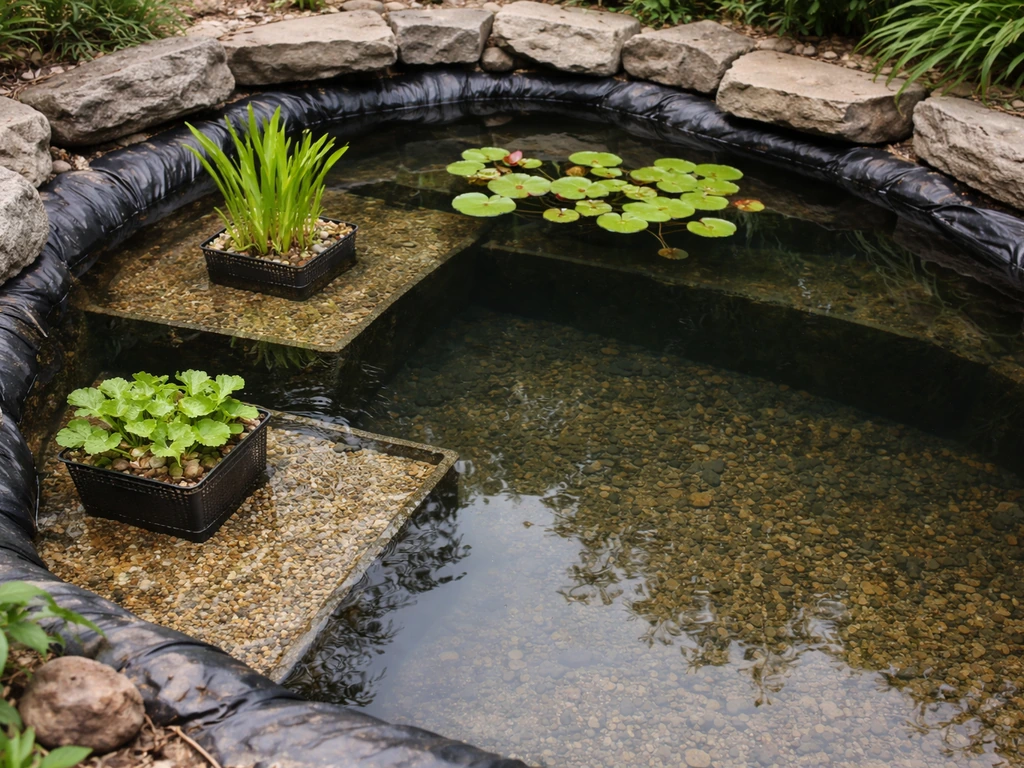
Pond depth matters more than most beginners realize. Different plants need different water depths above their crowns or pots, and placing a plant at the wrong depth is one of the most common reasons new pond plants fail to establish.
Depth guidelines by plant type
- Water lilies: at least 6 inches of water above the crown; tropical varieties do best with 8 to 10 inches above the crown
- Emergent marginals (iris, cattail, watercress): 0 to 6 inches of water over the roots, planted on shallow pond shelves or margins
- Floating plants (water lettuce): simply place on the surface, no depth requirement
- Submerged plants (hornwort): works well from mid-depth to just below the surface, anchored loosely or left free-floating
Most backyard ponds are built with at least one shallow shelf around the edges, typically 9 to 12 inches below the waterline, specifically for marginal plants. If yours doesn't have one, you can use bricks or concrete blocks to raise a plant container to the right height.
This is actually my preferred approach for new lily planting: start the container at about 6 inches of water over the crown, then lower it gradually as the plant grows and sends up longer stems.
BBC Gardeners’ World Magazine also suggests starting a lily container around 6 inches of water over the crown and then lowering it gradually as the plant grows, rather than planting immediately at the final depth starting the container at about 6 inches of water over the crown. It's much gentler on the plant than dropping it straight to full depth.
Substrate and containers
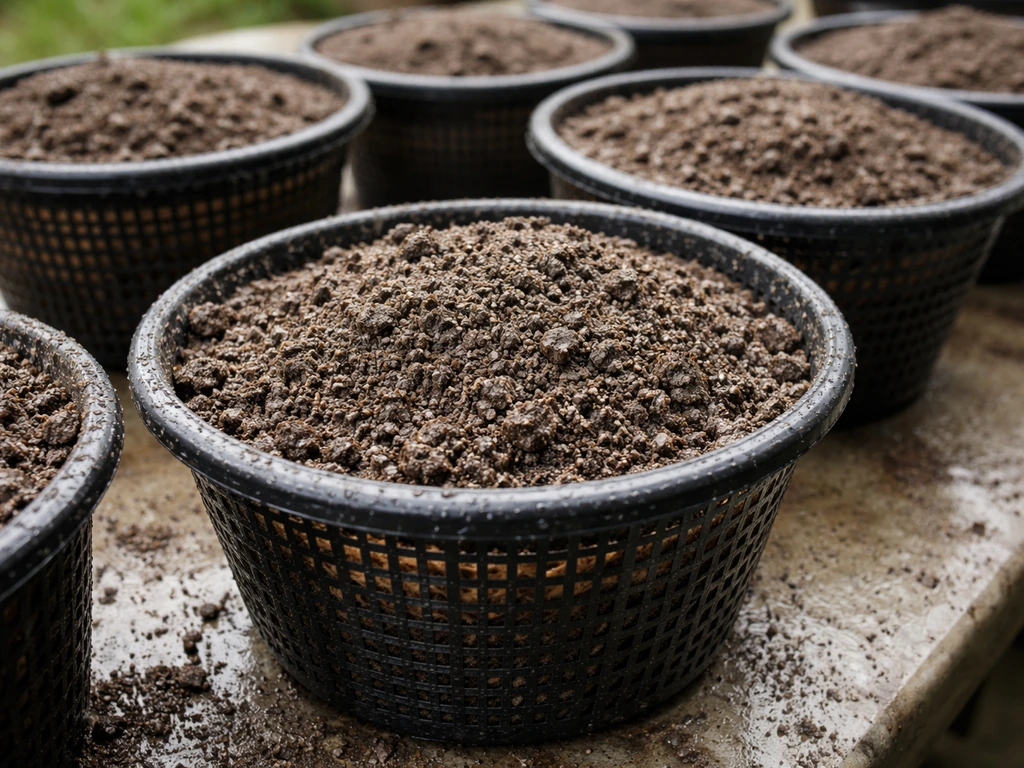
Do not plant water lilies or other rooted aquatics directly into loose pond sediment on the bottom. They'll get uprooted by fish, current, or just shifting, and the disturbed sediment will cloud your water for weeks. Use containers: mesh aquatic baskets or solid pots work well. The key rule is that aquatic plants grow proportionately to their container, so don't go too small if you want a large lily.
For the planting medium, heavy garden topsoil mixed with a little sand is the traditional choice and it works well. Avoid potting mixes with perlite, vermiculite, or fertilizer pre-mixed in since those materials float and can dump excess nutrients into the water. Commercial aquatic planting media made from alluvial material (like products from Aquascape or Maryland Aquatic) are cleaner and worth using if you want to avoid the cloudiness that comes from regular soil.
Aim for 6 to 8 inches of soil depth in the container since water lily roots spread laterally rather than deep. Once planted, cap the surface of the container with a 1-inch layer of pea gravel. That layer holds the soil down when you submerge the pot and prevents fish from rooting around in it.
Water parameters and lighting: what matters for aquatic growth
Most pond plants are forgiving about water parameters as long as you avoid extremes, but there are a few numbers worth knowing before you plant.
| Parameter | Ideal Range | Notes |
|---|---|---|
| pH | 7.0 to 8.0 | For water lilies and most emergents; water lettuce can tolerate lower but pond pH rarely drops that far naturally |
| Temperature | 60°F to 85°F (15°C to 29°C) | Tropical plants need consistent warmth; hardy varieties tolerate cooler water |
| Sunlight | 6 to 8 hours direct sun minimum | Critical for water lilies and most surface plants; submerged plants need less |
| Nutrient load | Low to moderate | High phosphorus and nitrogen feeds algae more than plants |
Sunlight is the variable most people underestimate. If your pond is in a partially shaded yard, measure actual sun hours over a full day before deciding which plants to buy. I've seen people buy water lilies for a pond that only gets 4 hours of afternoon sun and wonder why they never bloom. Six hours is a real minimum. Eight or more hours is where lilies truly thrive.
Water circulation matters too, but for a different reason than most people think. A pump or aerator keeps surface water moving, which helps prevent surface scum and creates slightly more oxygenated water for plant roots. However, strong currents directly over newly planted submerged cuttings can tear them loose before they root. Position any pump outflow away from your newly planted areas during the first few weeks.
Planting step-by-step (including rooting, spacing, and anchoring)
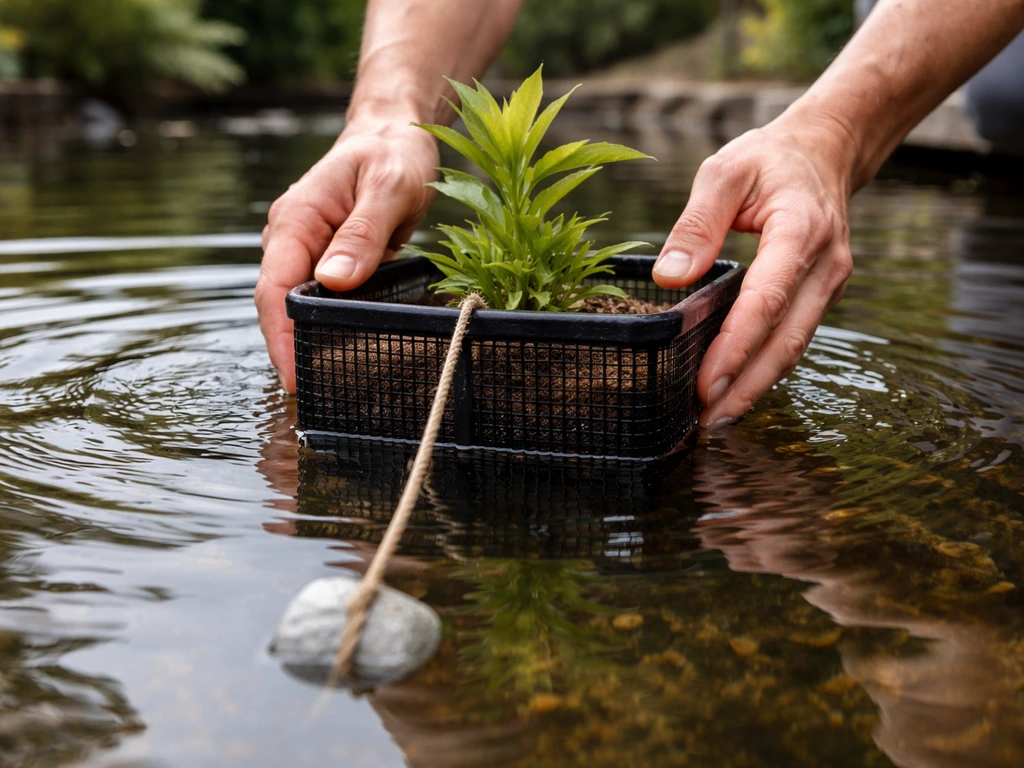
Here's the exact sequence I follow when planting a new pond from scratch or adding plants to an established one.
- Fill your aquatic basket or pot with heavy topsoil or aquatic planting media to about 2 inches below the rim. Do not use standard potting mix.
- For water lilies, handle the rhizome carefully since they are brittle and break easily. Place the rhizome at a slight angle so the growing tip points up and is just at or slightly above the soil surface. Cover the roots but leave the crown exposed.
- Pack the soil firmly around the roots, then add a 1-inch layer of pea gravel over the entire soil surface, keeping the crown clear.
- Lower the container into the pond slowly so water fills it without creating a big sediment cloud. Adjust the depth so the crown sits about 6 inches below the water surface. Use bricks or blocks to raise the pot if your pond is deeper than needed at that spot.
- For floating plants like water lettuce, simply place them on the surface in a calm area away from strong pump flow. No anchoring needed.
- For submerged plants like hornwort, either weight the base with a small plant anchor or rock and drop it to mid-depth, or leave it free-floating and let it drift to where light is strongest.
- For marginal emergents, place pots on the shallow shelf with just 1 to 3 inches of water over the soil surface. Most marginals rot if planted too deep early in the season.
- Space lilies at least 3 to 4 feet apart to allow for pad spread. Marginals can be grouped more closely but still need 12 to 18 inches between plants.
- Mark where you placed each pot so you can find them again for fertilizing and inspection.
Give new transplants 2 to 3 weeks before you expect much visible growth. The first thing the plant is doing is pushing roots, not leaves. If a lily pad melts or goes brown in week one, don't panic. That's often just the transition leaf dying off as the plant adjusts. New growth from the crown is what you're watching for.
Feeding and nutrient management (fertilizers, tabs, and avoiding excess)
Pond plants need nutrients to grow, but adding too much fertilizer is one of the fastest ways to trigger an algae explosion. The goal is to feed the plants, not the water.
Aquatic fertilizer tablets pushed directly into the soil of your plant containers are the right approach for most rooted plants. Tablet products formulated for pond plants, such as those with an NPK around 10-14-8, or products like Seachem Pond Flourish Tabs (which add calcium, magnesium, and iron alongside NPK), release nutrients slowly into the root zone rather than into the open water. That's the key difference. Avoid liquid fertilizers dumped directly into a pond unless you have very specific water-column feeders like some floating plants.
- Push fertilizer tabs into the soil near the roots, about 2 inches deep, not on top of the gravel cap where they can dissolve into the water
- For a standard lily in a mid-sized container (10 to 14 inches), start with 2 to 3 tablets per application
- Fertilize every 3 to 4 weeks during active growing season (late spring through early fall)
- Do not fertilize when water temperatures are below 60°F since plants are not actively growing and nutrients will just leach into the water
- If your pond water is already cloudy or green with planktonic algae, hold off on fertilizing until clarity improves
- Floating plants like water lettuce feed directly from the water column, so if you have a healthy colony of them, they are already extracting nitrogen and phosphorus naturally
One thing that caught me off guard early on: fertilizing when the water was already clear but low in plants triggered a planktonic algae bloom before my lilies even had a chance to establish a canopy. The algae absorbed the nutrients and the light faster than the lilies could. The fix is to wait until you have visible new leaf growth before starting a fertilizer regimen, and even then, start with half the recommended dose.
Algae and water clarity control while plants establish
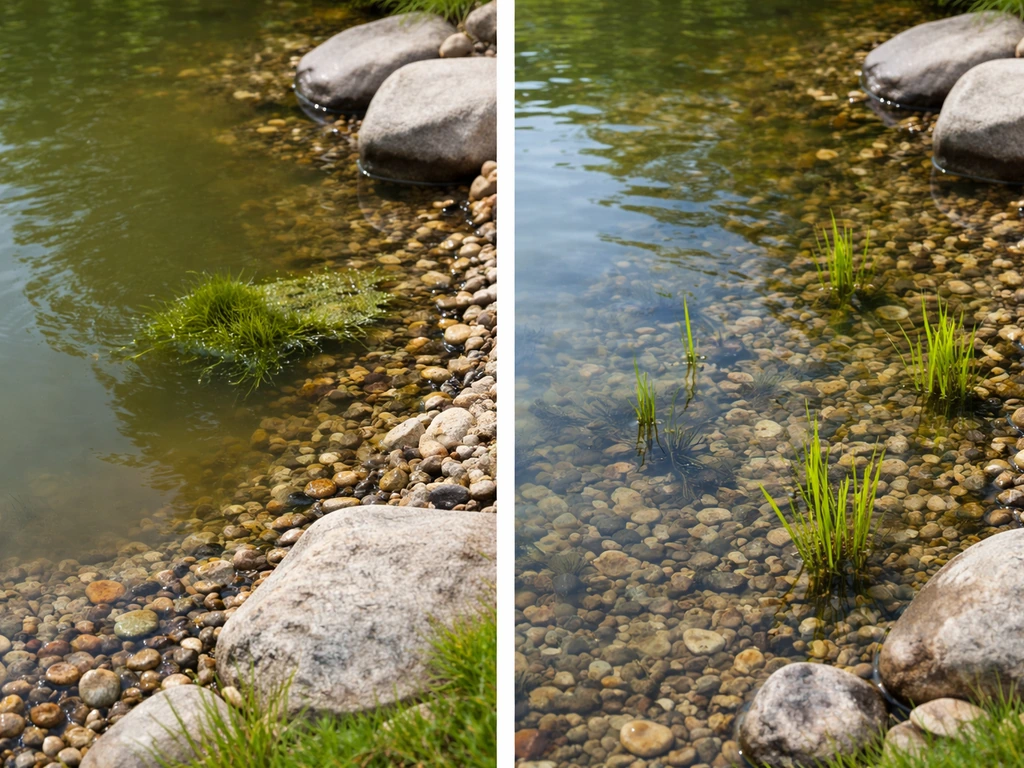
Some algae in a new pond is completely normal and not a sign that something went wrong. The problem starts when it takes over. The best long-term defense is having enough plants to compete with algae for light and nutrients, but in the weeks before your plants are established, you need to manage the conditions that feed algae in the first place.
Algae outbreaks are almost always a symptom of something upstream, typically too much nutrient input, sediment disturbance, shallow stagnant water, or an aging pond with accumulated organic matter. Treat the cause, not just the algae. Skimming green surface scum manually and running a pump to circulate the top layer of water helps in the short term. But if you keep seeing algae blooms, audit your inputs first: are you overfeeding fish, using fertilizer tabs that are too exposed to the water, or getting nutrient runoff from nearby garden beds or lawn?
- Keep a buffer zone of plants or mulch around the pond edge to reduce sediment and nutrient runoff from the surrounding area
- Cover at least 50 to 60 percent of the pond surface with floating leaves (lily pads, water lettuce) once your plants establish, since light restriction is one of the most effective natural algae controls
- Use a pump or aerator to prevent surface stagnation, but position the outflow away from new plantings
- Avoid fertilizing when water is already green or cloudy
- If string algae appears early in the season, remove it manually before it sets seed or multiplies further; a long stick works fine for winding it up and pulling it out
- Water lettuce is particularly effective at competing with algae through nutrient uptake, especially phosphorus and ammonia nitrogen, and by shading the surface
A new pond will often go through a "new pond syndrome" phase in the first 4 to 8 weeks where it looks cloudy or green. This is normal and usually self-corrects once your plant canopy fills in and the pond's biological balance finds its footing. Don't dump algaecides into a new pond during this phase. They can cause a rapid die-off of algae that then decomposes and depletes oxygen, which is worse than the algae itself.
Ongoing care and seasonal troubleshooting (pruning, overwintering, replanting)
Routine maintenance through the growing season
Once your plants are established (usually 4 to 6 weeks after planting), maintenance is straightforward. Remove dead or yellowing leaves as they appear by cutting them cleanly at the stem base rather than pulling, which can damage roots. Trim back floating plants like water lettuce if they spread to cover more than about 60 to 70 percent of the surface, since total coverage can deprive submerged plants and fish of needed light and oxygen.
If leaves are yellowing with green veins, that often signals an iron deficiency, which is common in ponds with high pH. A fertilizer tab that includes chelated iron (like Seachem Pond Flourish Tabs) will usually fix it within a couple of weeks. If leaves are uniformly yellow or pale, the plant likely needs more general nutrition or is planted in a container that's too small to support further root growth.
Overwintering your pond plants
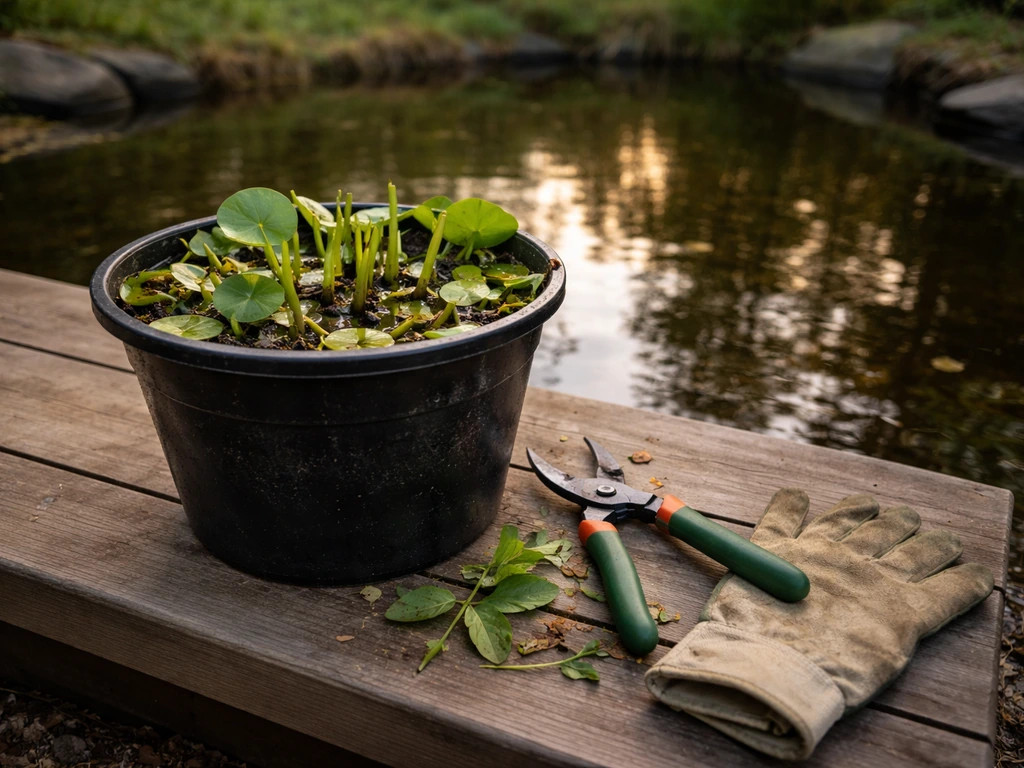
Hardy water lilies can survive winter in most climates if the crown of the plant is below the ice line. If your pond freezes to the bottom, you need to bring them in. Tropical water lilies are not frost-tolerant at all and must be overwintered indoors.
- Before the first frost, remove the lily pot from the pond. Cut off all foliage, flower stalks, and stems down to the crown.
- Remove the tuber from the soil, rinse it gently, and inspect for rot. Discard any soft or blackened sections.
- Store the tuber in moist sand (not soaking wet, just damp) in a sealed container or plastic bag in a cool, dark location like a basement. Target temperature is 55 to 65°F.
- Check the tubers every few weeks. If the sand dries out completely, mist it lightly. If you see mold, reduce moisture slightly.
- After your last frost date in spring, repot tubers in fresh aquatic soil, place them in a sunny indoor spot for a week or two to wake up, then move them back to the pond.
Water lettuce and other tropical floaters simply can't be overwintered outdoors. If you want to keep them, bring a small portion inside and float them in a container under grow lights at 65°F or warmer. Otherwise, buy new plants each spring. They're inexpensive and grow fast once water temps rise above 60°F.
Troubleshooting quick reference
| Symptom | Likely Cause | Fix |
|---|---|---|
| Plants not rooting after 3+ weeks | Depth too great, crown buried, or no soil contact | Raise container, check crown is not covered by soil |
| Leaves browning on new transplants | Transplant stress or transition leaf die-off | Wait 2 weeks; look for new growth from the crown |
| Yellowing with green veins | Iron deficiency, often in high-pH water | Add fertilizer tabs with chelated iron |
| Algae bloom after fertilizing | Nutrients leached into water instead of staying in root zone | Use tabs pushed deeper into substrate; stop fertilizing until bloom clears |
| Cloudy water | Sediment disturbance or excess nutrients | Check fertilizer placement; reduce fish feeding; limit runoff |
| Plant die-off with no clear cause | Check for herbicide drift or contaminated water source | Test water, check nearby lawn/garden chemical use |
| Overgrowth of floaters | Excess nutrients in water and warm temperatures | Manually remove excess plant material; address nutrient source |
What to do this week and what to watch over the next month
If you're starting now (late April), you're in a great window for planting. Water temperatures in most regions are climbing into the 60s, which is exactly when pond plants start pushing growth. Here's what to actually do this week and over the next month.
- This week: Test your pond water pH with a basic test kit. If it's between 7 and 8, you're ready to plant. Pick up at least one lily, one floating plant, and one submerged plant for a balanced start.
- Days 1 to 3: Set up containers with aquatic soil capped with pea gravel. Plant and lower into the pond at the correct depths. Place floaters on the surface away from the pump outflow.
- Week 1 to 2: Watch for cloudiness from disturbed soil (normal and temporary). Do not fertilize yet. Just observe.
- Week 2 to 3: Look for new leaf buds on lilies and new growth on marginals. This confirms rooting is underway. Still hold off on fertilizing if water clarity is reduced.
- Week 3 to 4: Once you see 2 to 3 new leaves developing, push your first fertilizer tab into the soil of each container. Note water clarity and any algae changes over the following week.
- Week 4 to 6: Assess coverage. If you have less than 40 percent surface coverage, consider adding more water lettuce or floating plants to help shade out algae. If water is clear and plants are growing, you're in a good rhythm.
The biggest mindset shift for new pond growers is moving from reactive to observational. You're not managing plants day to day, you're reading the system week to week and making small adjustments based on what you see. Once you've got a balanced mix of emergent, floating, and submerged plants established, the pond largely manages itself. The hard work is front-loaded, and the payoff is a stable, clear, living pond that keeps growing season after season.
FAQ
My pond has no shelf, how do I set correct depths for marginal plants or lilies?
If you cannot place plants in the correct depth zone immediately, raise the container first (using a shelf, bricks, or a planter stand) so the crown sits at the right height, then lower it as stems extend. This gradual approach reduces stress and prevents “floating away” when the plant has not rooted yet.
When should I fertilize pond plants, and how do I avoid triggering algae?
Add fertilizer tabs only after you see new leaf growth, and keep tabs mostly inside the plant container, not just under the water surface near the plant. If you suspect overfeeding, remove uneaten fish food and reduce feeding before you add any more nutrients.
Can I grow water plants in a very small or very shallow pond?
Yes, but only for plants that naturally live in a similar light zone. For example, hornwort can be a reliable oxygenator in shallow setups, but water lilies need strong sun and enough depth for the crown. If your “pond” is very shallow, you may need smaller lily varieties or more marginal planting.
How do I figure out whether my pond has enough sunlight to grow water lilies and lilies will bloom?
Measure sun hours as actual direct sun on the water, not general “yard sun.” A pond that gets bright morning light but loses afternoon sun can still underperform for lilies, since bloom depends on sustained daily light.
Why do my pond plants keep floating or failing to root even after I used containers?
For clear water and stable roots, avoid disturbing the bottom during the first few weeks, and keep plants in secured mesh baskets or capped soil containers. Even minor sediment churn can feed algae and also uproot tender plants before they anchor.
Is it enough to plant at the right depth, or do I also need to match the plant type to the zone?
Most pond plants are easiest when you match their “zone” and not just depth. A common mistake is treating floating plants like submerged ones, or placing submerged plants too shallow so they overheat and stop growing.
What should I do if my fish root around in the pots or mess up the planting medium?
If fish are digging up containers, increase the gravel cap thickness slightly (still shallow enough to avoid burying crowns) and ensure the container rim cannot be pushed or tipped. Also keep fish food portions smaller during establishment, since more feeding increases nutrients that algae can use before plants take over.
How can I tell whether yellow leaves mean nutrient deficiency versus a planting or pH problem?
If leaves yellow with green veins, check for iron availability issues, especially when your pond water trends toward higher pH. Using a chelated-iron tab in the container zone usually helps, while uniformly pale yellow leaves may point to general nutrition or constrained root space.
How do I overwinter lilies and floating plants if my pond freezes?
If your pond freezes to the bottom, hardy lilies need to be protected by getting the crown below the ice line, typically by deeper pond design or by moving containers deeper. Tropical lilies, water lettuce, and most floaters need indoor overwintering because they cannot handle freezing temperatures.
What’s the safest fertilizer routine in the first month after planting?
Use a slow ramp-up. Start with half the recommended dose of fertilizer tabs after you see new growth, then reassess after 2 to 3 weeks. If the pond develops surface scum fast, pause and reduce both feeding and fertilizer rather than “catching up” with more product.
If my plants survive but won’t grow much, what should I troubleshoot first?
When blooms or steady leaf growth do not show up, first verify direct sun and that the crown is at the right water height, then check whether the container soil is capped so roots stay stable. Only after those basics, look at nutrient timing, because early fertilizing often benefits algae more than the plant canopy.