Yes, you can absolutely grow gummy bears in water, and the results are genuinely impressive. Drop a standard gummy bear into a cup of room-temperature water, leave it for 24 to 48 hours, and you'll pull out something that has swollen to several times its original size. This isn't biological growth like you'd see with a marimo ball or aquatic plant.
How to Grow Gummy Bears in Water: Step-by-Step Guide
Marcus Holloway
29 May 2026
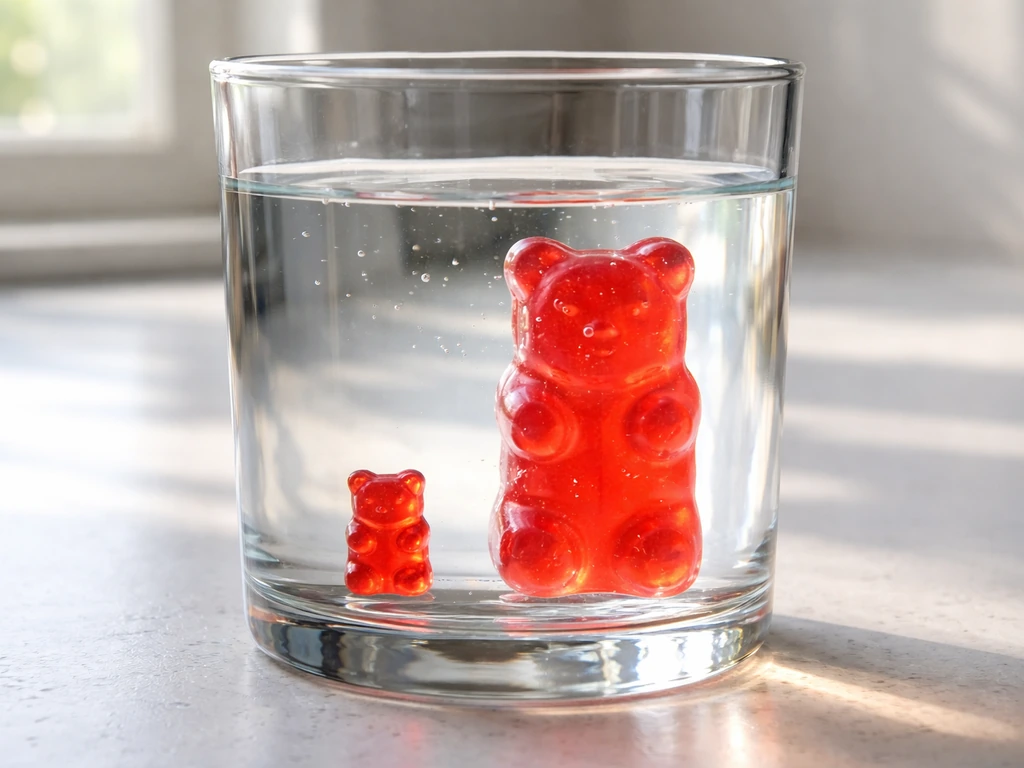
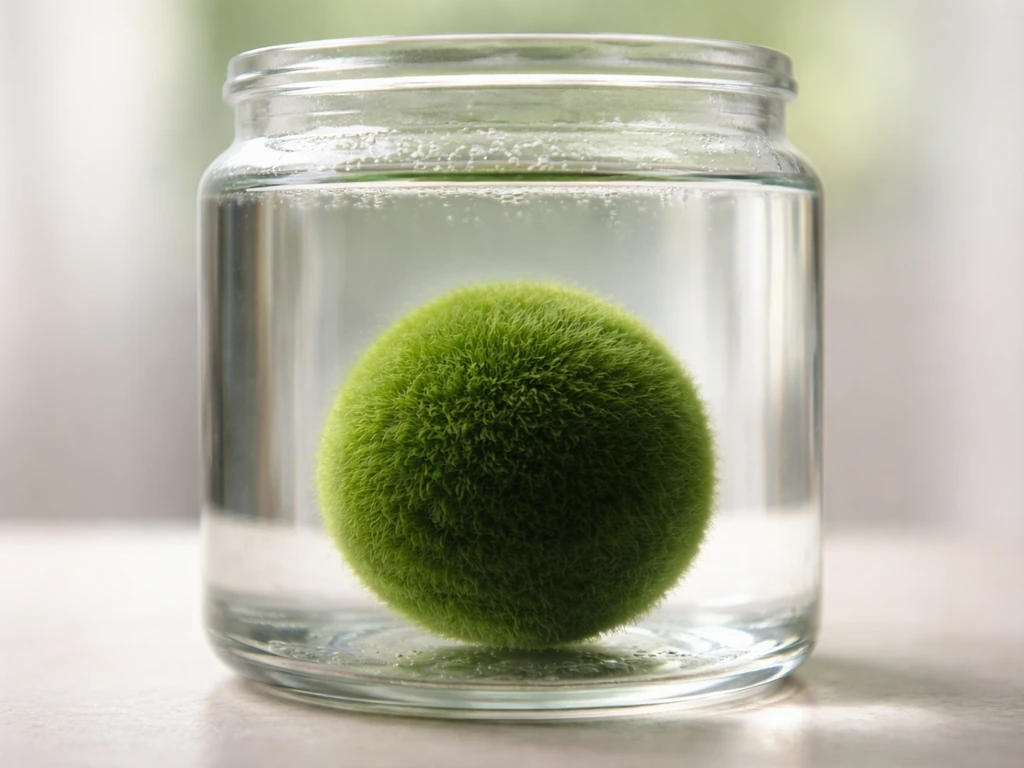
If you want the real answer on how to grow marimo balls, the key is creating the right light, temperature, and water conditions for algae to thrive. It's osmosis: water molecules push into the gummy's gelatin-sugar matrix because the concentration of dissolved solutes inside the candy is much higher than in the surrounding water. The water keeps moving in until the gelatin network physically can't stretch any further. The result is a bloated, wobbly version of the original bear.
What 'growing' a gummy bear in water actually means
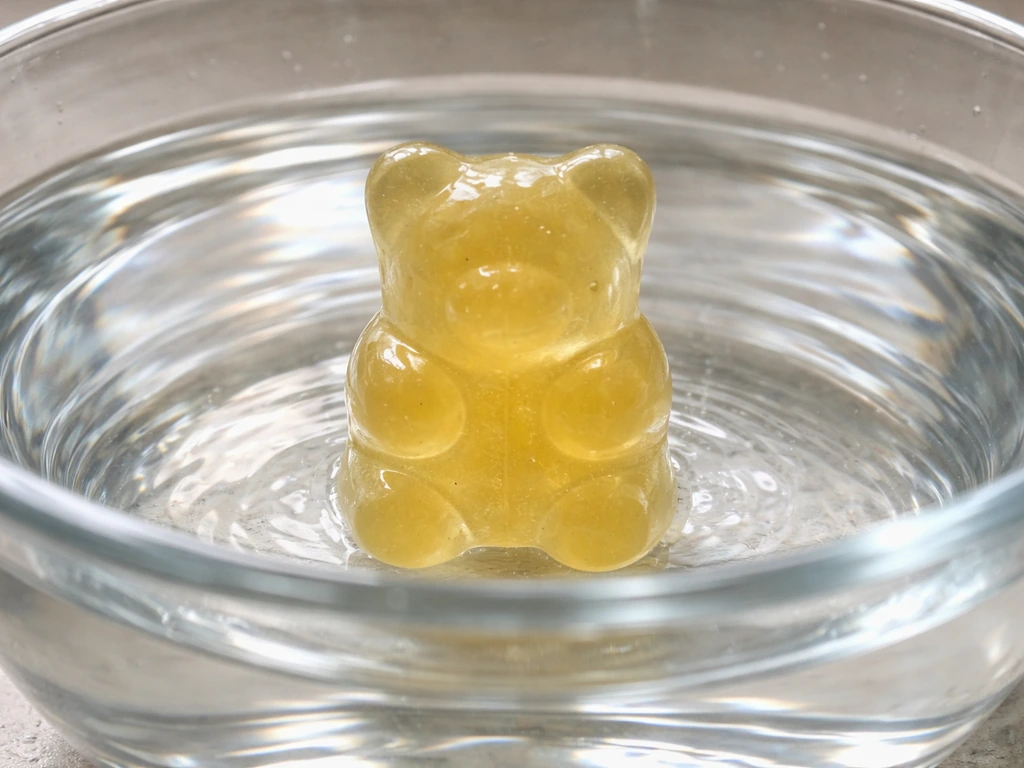
The gummy bear acts like a very crude semi-permeable membrane. Sugar and gelatin molecules inside the candy are too large to pass out through the candy's surface, but water molecules are small enough to move in. Because the interior of the candy is a concentrated sugar solution and the surrounding water is far less concentrated, osmosis drives water inward. The gelatin network swells as it absorbs those water pockets, and the bear grows in all directions.
It stops expanding when the gel structure reaches its structural limit or when the concentration difference between inside and outside equalizes. In distilled water, which has almost no dissolved solutes at all, that concentration gradient is steepest, so growth is most dramatic. Distilled water conditions have produced reported size increases around 396% compared to the original volume, while tap water produces noticeably less growth due to its dissolved minerals reducing the gradient.
Either way, what you end up with is not the candy anymore in any meaningful sense: it's a fragile, water-logged gel that should not be eaten.
What you need before you start
The setup is simple, but the details matter. Getting the right container, water source, and temperature from the start is the difference between a bear that doubles in size and one that either barely changes or turns into a puddle.
Containers
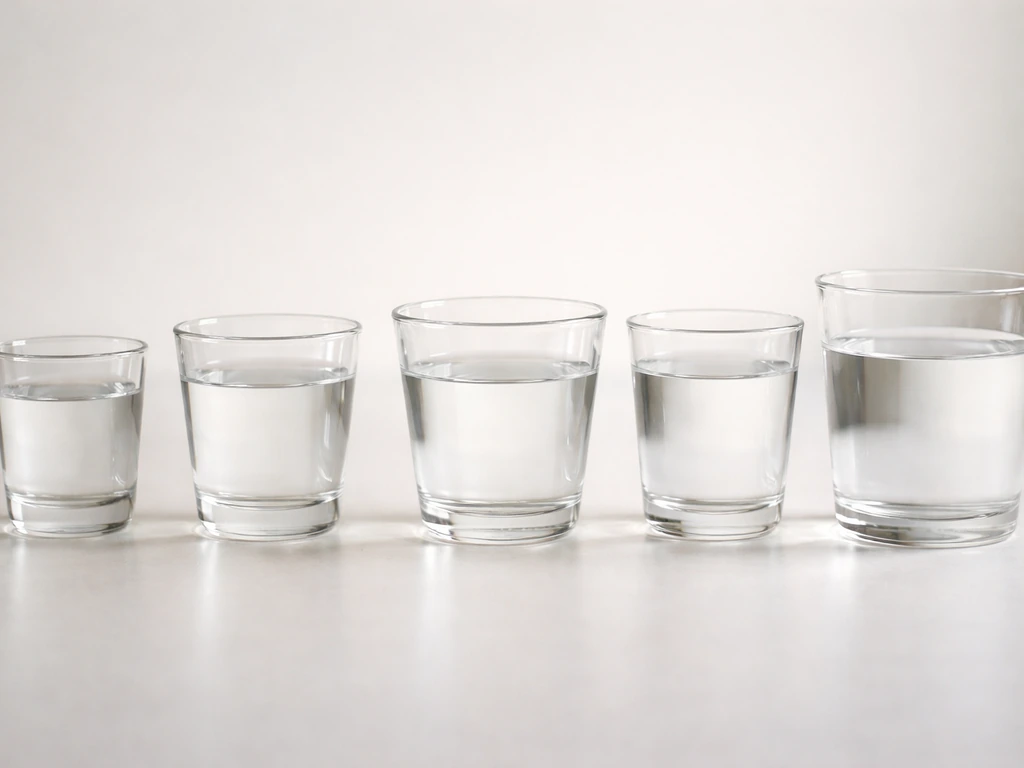
Use small clear cups, shot glasses, or any short-sided transparent container. Clear sides let you observe the bear without disturbing it. The container should be just wide enough that the gummy isn't jammed against the walls, but not so large that the bear floats around and bumps surfaces repeatedly. Glass or food-safe plastic both work fine. Avoid metal containers since they can interact with the acidic sugar water over long soaks.
Water source
You have three main options: distilled water, tap water, and salt or sugar water (used as a control or comparison). Distilled water produces the biggest size gains because it has the highest osmotic gradient relative to the sugar-loaded gummy interior. One protocol-style worksheet also tests distilled water alongside tap water and salt water across multiple time points, including 1 minute, 6 hours, 12 hours, 24 hours, and 48 hours [distilled water produces the biggest size gains](https://littlebinsforlittlehands. com/wp-content/uploads/2023/02/New-GummyBearsLab-Food-Science.
pdf). Tap water works and is the most accessible option, but expect noticeably less swelling than distilled. Salt water actually reverses the process: the solution outside becomes more concentrated than the inside of the gummy, so water is drawn out instead of in, and the bear shrinks. That's a useful comparison experiment but not the path to maximum growth.
Temperature
Room temperature is the target. Aim for somewhere between 68°F and 75°F (20°C to 24°C). Hot water is the single most common mistake: gelatin melts at elevated temperatures, so using warm or hot water doesn't speed up growth, it destroys the gummy's structure and turns it into a sticky puddle. If you're preparing any kind of solution (like a salt or sugar comparison batch), bring it back to room temperature before dropping the gummy in. Cold water slows osmosis significantly without improving structural results, so refrigerating the soak isn't helpful either.
Timing tools
- A kitchen scale accurate to at least 1 gram for measuring mass before and after
- A ruler or calipers for measuring length, width, and height
- A phone timer or simple clock for hitting your observation checkpoints
- A permanent marker for labeling cups if running multiple conditions
- Paper towels for blotting before measuring
- A notebook or spreadsheet to record your before/after numbers
How to actually do it: the step-by-step soak
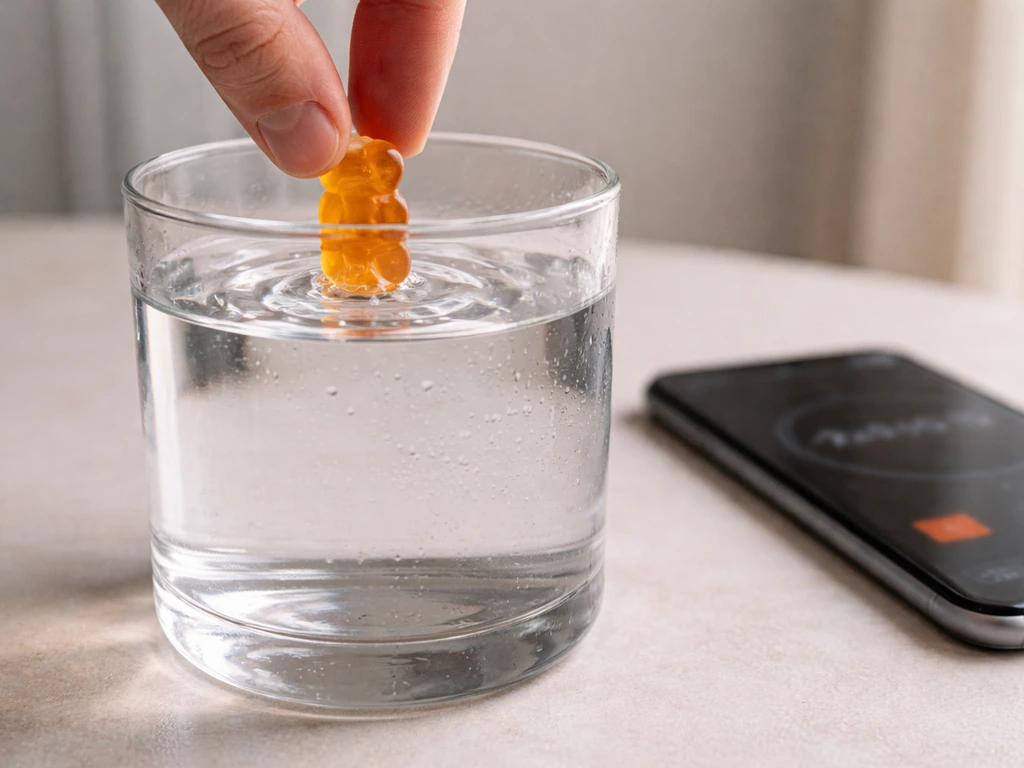
- Choose your gummies. Use classic, firm, chewy gummy bears rather than soft or sugar-coated varieties. Dark-colored, denser gummies hold their shape better during the long soak and give you a clean result. Avoid yogurt-coated, sour-sugar-dusted, or overly soft gummies for your first run.
- Weigh and measure each gummy before soaking. Record the mass in grams and at least one physical dimension (length works well). This baseline is what you'll compare against later. Photograph it next to a ruler if you want a visual record.
- Place one gummy bear in each cup. If you're running multiple conditions (distilled vs. tap, for example), label each cup clearly.
- Pour enough water to fully submerge the gummy, with at least half an inch of water above the top of the bear. The gummy will swell upward and outward, so it needs headroom.
- Cover the cup loosely with plastic wrap or a small plate to slow evaporation and reduce airborne contamination. Don't seal it airtight.
- Leave the cup undisturbed at room temperature. Resist the urge to poke or move the gummy during the soak.
- Check at 6 hours, 12 hours, 24 hours, and 48 hours. At each checkpoint, use a spoon to gently remove the gummy, place it on a paper towel, blot the surface lightly, then measure and reweigh it. Return it to fresh water if continuing the soak.
- At your final checkpoint (48 hours for maximum growth), remove the gummy, blot dry, and take your final measurements. Calculate percent change in mass: ((final mass minus original mass) divided by original mass) multiplied by 100.
The variables you can actually control
Once you've done one basic soak, you can start dialing in the variables to either maximize growth, improve consistency, or explore different outcomes. Here's what actually moves the needle.
| Variable | Effect on Growth | Recommendation |
|---|---|---|
| Distilled water | Largest size increase (~396% reported in some experiments) | Best choice for maximum growth |
| Tap water | Moderate growth, reported up to ~12x mass in some setups | Convenient, reliable, slightly less dramatic |
| Salt water | Gummy shrinks instead of growing | Useful as a comparison, not for growth goals |
| Water temperature: room temp (68-75°F) | Steady, controlled swelling with structure intact | Always use this range |
| Hot water (above ~90°F) | Gelatin melts, gummy dissolves into mush | Avoid entirely |
| Soak depth: fully submerged | Even swelling on all sides | Maintain at least 0.5 inch above gummy |
| Gummy type: firm/classic | Holds shape, absorbs water evenly, good texture result | Recommended |
| Gummy type: soft/sugar-coated | Breaks down faster, uneven absorption, mushy result likely | Avoid for clean results |
Water volume matters more than most people expect. If you use too little water, the solution around the gummy becomes sugar-rich as solutes slowly leach out, reducing the concentration gradient and slowing or stopping growth prematurely. Using a generous amount of water (at least 4 to 6 times the volume of the gummy) keeps the gradient strong throughout the full 48-hour window.
When things go wrong
The gummy barely changed size
This almost always comes down to the gummy type or the water-to-gummy ratio. Sugar-coated gummies have an outer barrier that slows water uptake significantly. If you used a very small cup with just enough water to cover the gummy, the surrounding solution may have equalized quickly. Switch to distilled water in a larger cup and try a classic chewy gummy bear with no coating. You should see clear swelling within the first 6 hours.
The gummy turned mushy or fell apart
Two causes: water that was too warm, or a soak that went too long with an already-soft gummy. Gelatin starts breaking down well before it fully melts, so even slightly warm water accelerates structural degradation. If your room is warm (above 80°F in summer, for example), move the experiment somewhere cooler or check it more frequently. Also, if you're past the 48-hour mark with a soft gummy variety, the structure was likely going to collapse regardless. Next time, use a firmer gummy and stick to the 48-hour maximum.
Uneven growth or lopsided shape
This happens when the gummy is resting against the bottom or side of the container with limited water contact on one face. The gummy absorbs water from all surfaces it's in contact with water, so any surface pressed against the cup wall grows more slowly. Try propping the gummy slightly off the bottom using a small mesh or simply using a wider container where the bear floats or rests with water contact on all sides. Turning it gently at the 12-hour check can also help.
Slime, cloudiness, or off smells (contamination and mold risk)
A gummy bear sitting in sugary water at room temperature is a reasonably good environment for microbial growth, especially past the 24-hour mark. If the water becomes noticeably cloudy, develops a film, or the gummy smells off, end the experiment and discard everything.
To minimize this risk: use clean containers (wash with soap and rinse thoroughly before use), use fresh water, cover the cup loosely to block airborne particles, and don't use previously opened or partially dissolved gummies as your starting material. If you're running the experiment for observation or data purposes only, this is fine.
But just to be clear: you should not eat the gummy bears after soaking, both because of potential contamination and because the texture and composition bear no resemblance to food at that point.
What good results actually look like
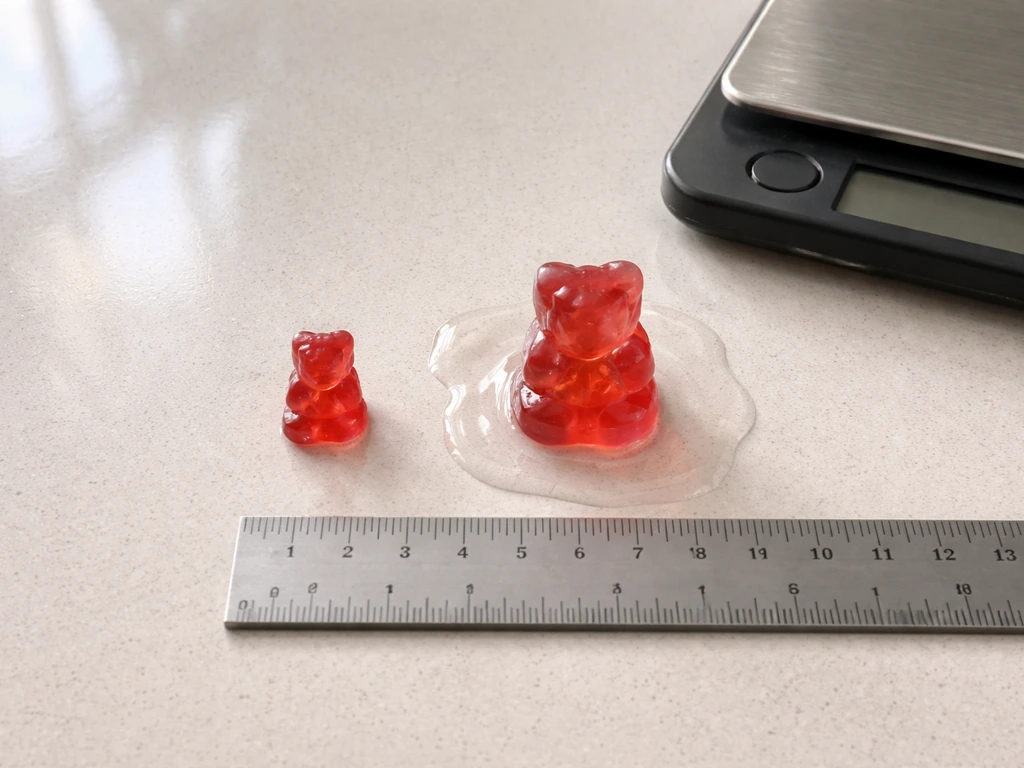
A successful 48-hour distilled water soak should produce a gummy that has roughly tripled or quadrupled in linear dimension and gained dramatically in mass. If you want a similar effect but starting from firmer “jelly balls,” the same osmosis logic is behind how to make jelly balls that grow in water. In controlled experiments, mass increases well above 200% are common in distilled water, and tap water runs typically produce meaningful but smaller gains. The gummy will be translucent, wobbly, and much larger than its original footprint. It won't look like a gummy bear anymore so much as a pale, slightly blurry version of one.
To measure success properly: calculate the percent change in mass using your before/after weigh-ins, and measure at least length in one consistent direction. If you want to get more precise, use volume displacement (drop the gummy into a known volume of water in a measuring cup and read the volume change). The cleanest measurement approach is to blot the surface dry on a paper towel for about 30 seconds before weighing, so you're capturing absorbed water rather than surface water clinging to the outside.
Experiments to try next and how to wrap up cleanly
Once you've done the basic soak, there are several repeatable variations worth running. The most instructive is a side-by-side comparison: distilled water, tap water, and salt water, all with identical gummies, identical water volumes, identical timing, and identical measurement methods. This gives you a concrete dataset showing how solute concentration in the surrounding liquid directly controls the direction and magnitude of osmosis. It's the same core principle that governs how plant roots absorb water from soil or how aquatic organisms regulate hydration in different salinity environments.
- Compare gummy brands or sizes: use identical water conditions but different gummy types to see how gelatin density and sugar content affect absorption rate
- Try a time-lapse series: photograph the same gummy at 1 minute, 6 hours, 12 hours, 24 hours, and 48 hours to create a visual growth record
- Test refrigerated vs. room temperature: same water type, same gummy, different temperature environment to see how temperature affects osmosis rate
- Try different water depths: same gummy, same water type, but vary the water volume (just barely submerged vs. deeply submerged) to observe gradient depletion effects
- Compare sugar-coated vs. plain gummies: the coating acts as a physical barrier that changes uptake kinetics dramatically
For disposal, the process is straightforward. Spoon the swollen gummy out onto paper towels, let it sit for a minute, then discard it in the trash rather than the sink (a fully swollen gummy can be surprisingly sticky and messy going down a drain). Pour the sugar water down the sink with running water. Wash containers with soap and hot water. The residual sugar-water solution is sticky but not hazardous. If you're doing multiple runs back to back, clean the containers between each one to prevent any crossover contamination from previous batches.
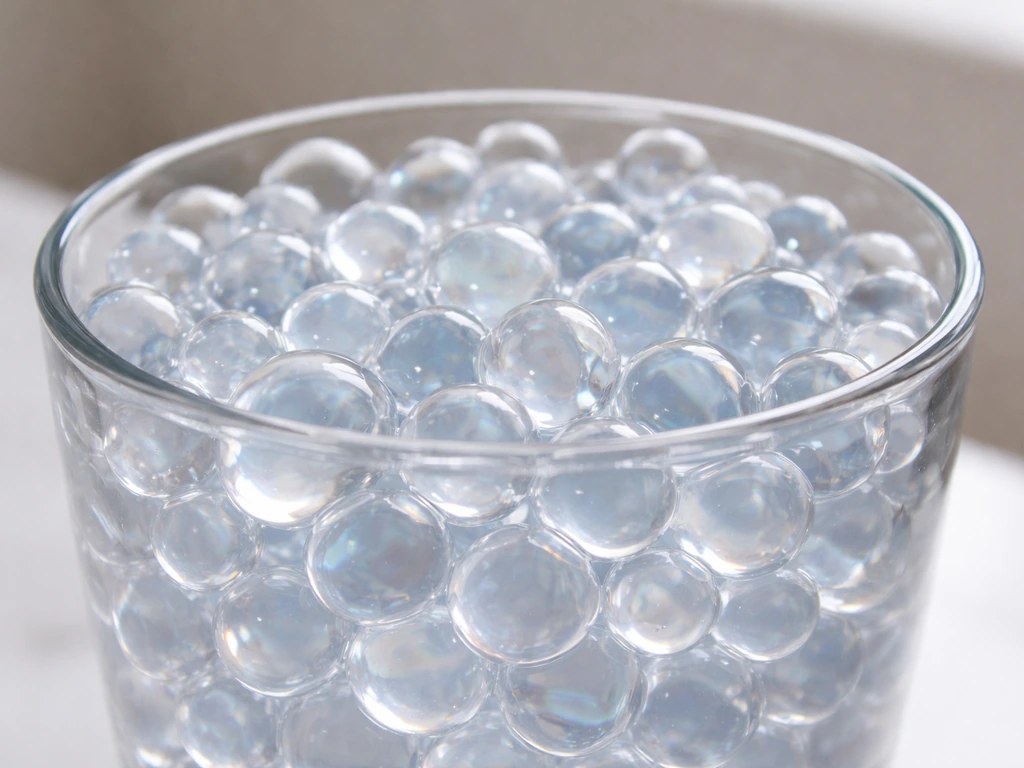
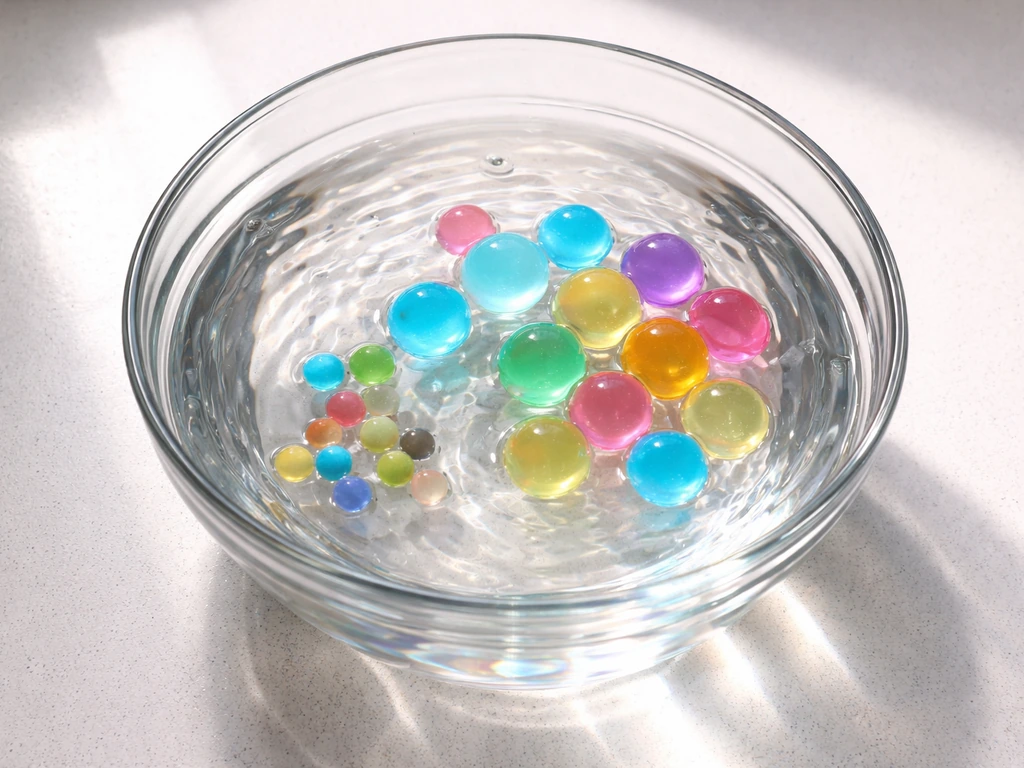
This kind of water-absorption experiment sits naturally alongside other water-based growth projects. If you want to push it toward real “water balls,” you can adapt the same osmosis approach to other gel-like materials and set up a comparison soak. If you want to turn those results into a repeatable routine, follow a simple water-bead style setup and timing plan water beads how to grow.
The underlying osmosis mechanics are genuinely the same forces at work when you're growing water-absorbing polymer beads or maintaining the hydration balance in an aquatic plant tank. If you want to go beyond gummy bears, the same osmosis ideas explain how to make water beads grow in the first place. If you find yourself hooked on the osmosis side of things, exploring how aquatic organisms manage water uptake in different salinity environments is a natural next step into the broader aquatic cultivation world.
If you're wondering how to grow water soldiers, the same water-chemistry and osmosis ideas can help you think through what to prepare and monitor. To learn the setup and timing for water soldiers, follow a similar water-chemistry and osmosis approach how to grow water soldiers.
FAQ
Can I grow gummy bears in hot or warm water to make them expand faster?
Yes, but it will usually reduce or ruin the results. Gelatin breaks down as temperatures rise, so warm gummies can lose structure and turn into a soft paste instead of swelling into a wobbly gel. If you must use pre-made solutions (salt or sugar), let them cool to 68°F to 75°F before adding the gummy.
What happens if I use cold water or soak the gummy in the fridge?
No, don’t refrigerate the soak as a “growth booster.” Cold temperatures slow osmosis significantly, so the expansion takes longer and may not reach the dramatic size you see at room temperature. If your room is cool, move the container to a warmer indoor spot and keep it within the 68°F to 75°F range.
How much water do I need, and does using a huge container change the outcome?
More water helps by keeping the concentration gradient strong, but the best approach is to keep the gummy from bumping and rubbing the container. Use a container wide enough that the gummy is not jammed against the sides, and use at least 4 to 6 times the gummy’s volume of water so the local sugar concentration does not quickly equalize.
Should I cover the cup while the gummy is soaking to keep it clean?
If you cover the container, keep it loose or breathable. Tight lids can trap gases and encourage quicker off-odors, and they also make it easier to accidentally overheat the water. A loose cover helps reduce airborne particles without fully sealing the environment.
When is the best time to measure swelling, and should I rely on height or weight?
Measuring too early or using only size changes can mislead you. Swelling may look small in the first few hours, then accelerate, so take consistent time-point checks (for example at 6 hours and at 48 hours). For accuracy, weigh after blotting dry for about 30 seconds so you measure absorbed water rather than surface water.
How do I set up a proper salt-water control, and will it always shrink the gummy?
A salt bath will typically shrink the gummy because the outside solution becomes more concentrated than the gummy interior, reversing osmosis. If you want a meaningful comparison, make the salt concentration consistent across trials and keep all other variables identical (same container, water volume, temperature, timing, and measurement method).
How can I tell if the gummy has spoiled during the soak?
Discolored or cloudy water is a warning sign, but don’t wait for dramatic spoilage. If you see film growth, a strong unusual smell, or the gummy becomes stringy or slimy, end the experiment immediately and discard it. Even when it looks “okay,” the texture is no longer food-like after soaking, so don’t taste-test.
Why did my gummy grow unevenly or not at all on one side?
They can, but it depends on the material. If the gummy gets stuck to the cup wall, water contact is reduced on that face and growth slows. Use a wider container, or gently reposition at a mid-point check, and avoid using a cup shape where the gummy’s bottom is pressed against the surface too long.
Can I use stainless steel or other metal cups, and how should I reuse containers?
Avoid using metal containers for long soaks, since acidic sugar water can react with some metals and the result can be unpredictable. Glass or food-safe plastic is safer and easier to observe. Also, wash containers thoroughly between runs to prevent residue from previous sugar water batches affecting gradient strength.
My results were tiny, what are the most common reasons gummy bears barely expand in water?
If you see barely any growth, the most common causes are using hot water, using too little water, using tap water that differs widely in mineral content, or using a sugar-coated gummy that has an outer barrier slowing water uptake. Switch to distilled water in a larger cup and choose a firmer, uncoated gummy for a clearer signal.