You can grow fenugreek hydroponically from seed to first harvest in as little as 3 to 4 weeks, using a basic deep water culture (DWC) or raft system, a pH of 5.8 to 6.2, an EC between 1.2 and 1.8 mS/cm, and 16 hours of light per day. It is one of the easier herbs to run hydroponically because it germinates fast, tolerates a range of nutrient solutions, and produces usable leaves before most other herbs even get going.
How to Grow Fenugreek Hydroponically: Step-by-Step Guide
Marcus Holloway
25 Apr 2026
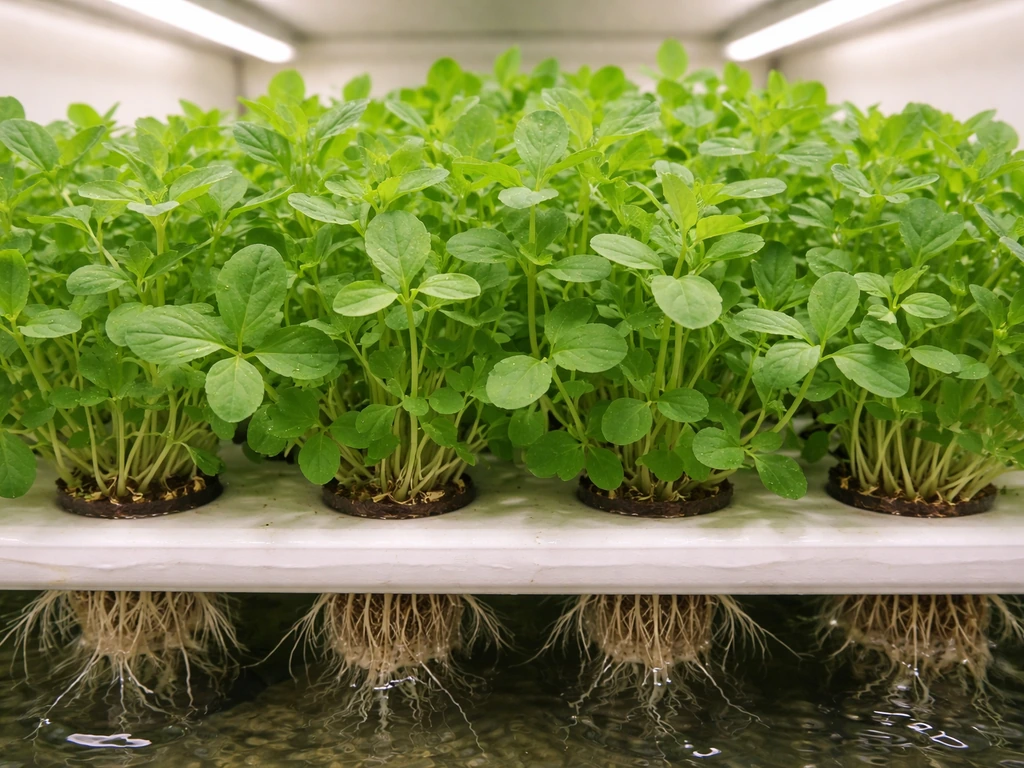
What fenugreek is actually like to grow hydroponically
Fenugreek (Trigonella foenum-graecum) is a fast-growing annual herb grown primarily for its aromatic trifoliate leaves and, when you let it go longer, its seeds. In a hydroponic setup you are almost always growing it for the leaves, which taste like a mild combination of celery and maple with a slightly bitter edge. The plant stays relatively compact at the leaf stage (typically 20 to 30 cm tall before it starts bolting), which makes it very manageable indoors.
Germination under good conditions takes 5 to 10 days, and the first trifoliate leaf follows roughly 5 to 8 days after that. From a practical standpoint that means you can expect to be cutting usable greens around 3 to 4 weeks from seeding if your conditions are dialed in. One thing worth knowing upfront: fenugreek is temperature sensitive. Leaf and flower development both shift noticeably depending on whether you are running warm or cool conditions, so nailing your temperature range matters more than it does with, say, basil. Keep it in the 70 to 78°F (21 to 26°C) range and it will perform well.
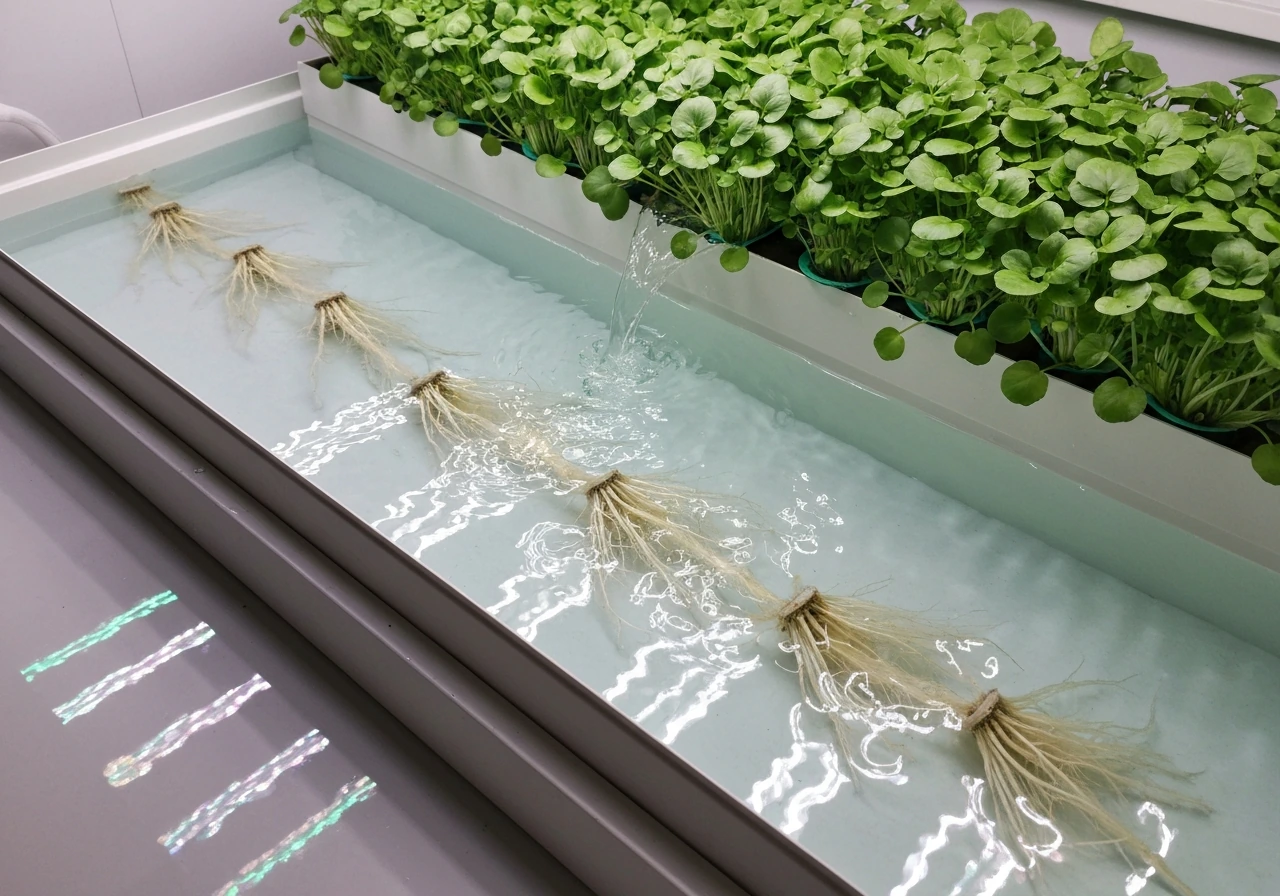
The roots are moderately fine and fibrous, not the thick aggressive roots you get with tomatoes or peppers. This is good news for hydroponics because fenugreek fits comfortably in net cups and smaller growing sites without tangling or clogging tubing early on. It does need consistent oxygenation at the root zone, though, which is a theme you will notice throughout this guide.
Which hydroponic system works best for fenugreek
The good news is that fenugreek is flexible. It does well in several system types. The key variables are oxygen delivery to roots, consistent moisture, and ease of seeding directly into the system since fenugreek is usually direct-seeded rather than transplanted as established plugs.
| System | How it works for fenugreek | Best for | Main risk |
|---|---|---|---|
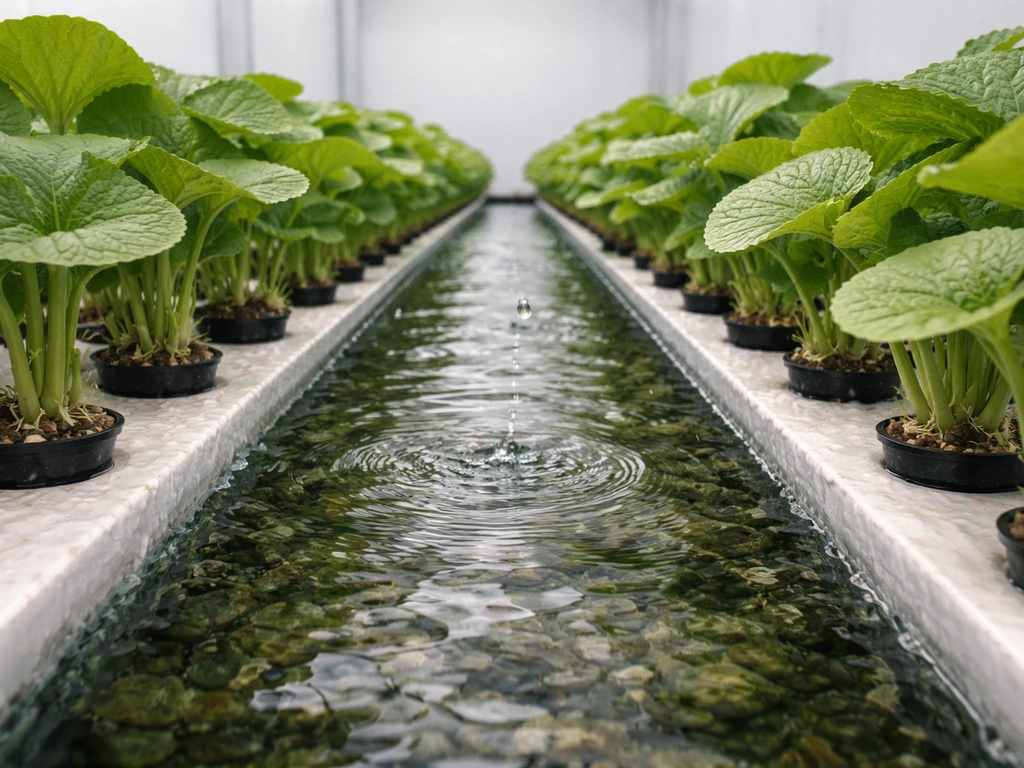
| Deep Water Culture (DWC) / Raft | Plants sit in net cups over aerated nutrient solution; roots hang into oxygenated water | Beginners, small home setups | Root rot if aeration fails or water temp rises |
| NFT (Nutrient Film Technique) | Thin stream of nutrient solution flows over roots continuously | Experienced growers, multiple plant rows | Pump failure dries roots quickly; fine fenugreek roots can mat |
| Ebb and Flow (Flood and Drain) | Reservoir floods grow tray on a timer, then drains | Larger media-based setups | Overwatering or timer failure causes root stress |
| Wick System | Passive capillary action pulls solution to roots; no pump needed | Very small countertop setups | Low oxygen delivery; limits plant density and growth rate |
| Kratky (passive DWC) | Non-recirculating jar/bucket method; roots grow into static solution | Absolute beginners, zero equipment | Oxygen gap must be maintained manually; solution depletes fast |
My honest recommendation: start with a DWC raft or Kratky setup. DWC is low-cost, low-maintenance, and keeps roots consistently wet and oxygenated as long as your air pump is running. The raft approach, where you float a foam board with net cups over an aerated reservoir, is almost perfectly suited for fenugreek's growth habit.
If you want to scale up, NFT is efficient but does require a reliable pump since any flow interruption can dry fenugreek's fine roots within minutes and set the plant back hard. Wick systems will grow fenugreek but they are oxygen-limited and better suited to slower, lighter-feeding herbs. Save the wick approach for something like aloe or basil cuttings.
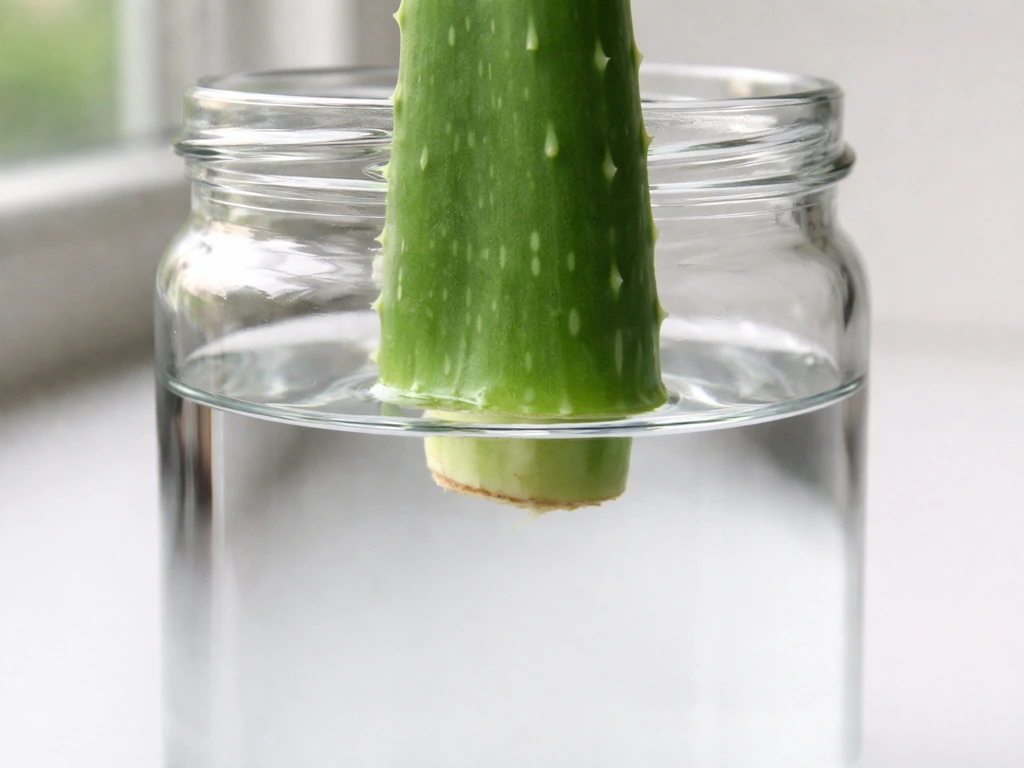
If you are trying something more succulent than fenugreek, you can also grow aloe hydroponically using a similar wick setup with the right drainage and light wick approach.
Starting from seed: germination, media, spacing, and early care
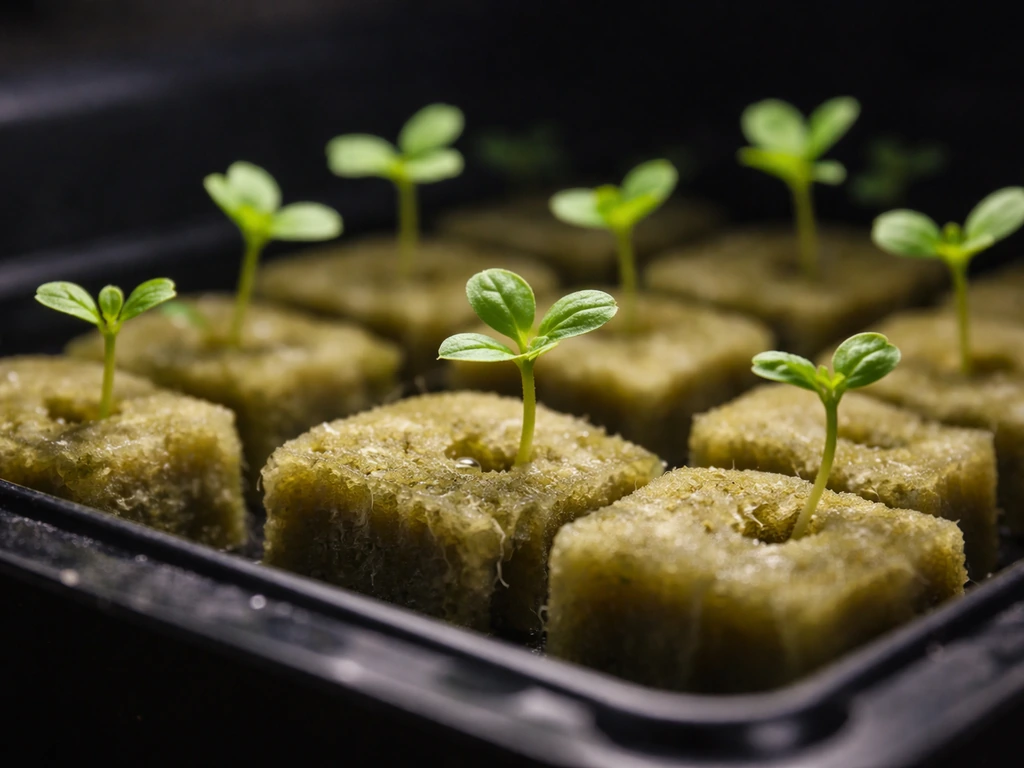
Choosing your growing media
For seed starting in hydroponics you have three main options that work well with fenugreek: rockwool (stone wool) cubes, Oasis foam cubes, or compressed peat pellets. Rockwool is the most widely used in hydroponic herb growing because it holds moisture well and is structurally stable in net cups. The tradeoff is that it is not reusable and needs to be pH-adjusted before use (soak in pH 5.5 to 6.0 water for at least an hour before seeding). Oasis cubes work similarly and require no pre-soaking. Peat pellets are a budget option that works fine, though they can break down slightly faster in recirculating systems. Any of the three will get you to germination.
How to germinate fenugreek seeds hydroponically
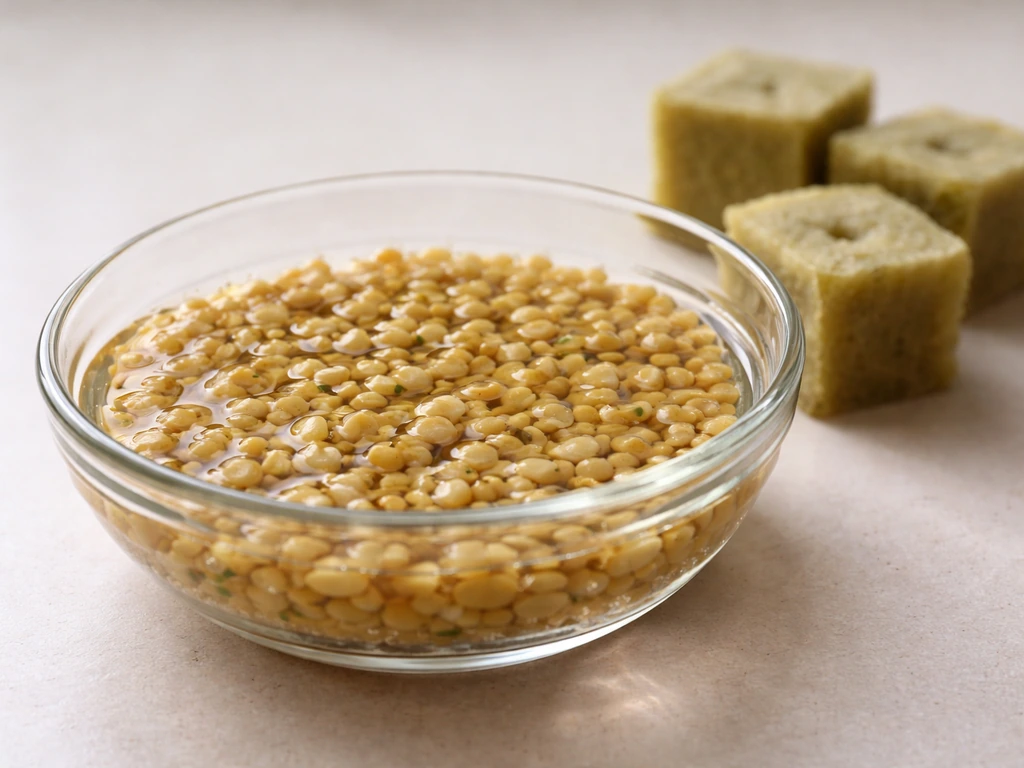
- Pre-soak your seeds in plain room-temperature water for 8 to 12 hours before planting. This softens the seed coat and speeds up germination noticeably.
- Pre-soak your growing media (rockwool cubes, Oasis, or peat pellets) in plain pH-adjusted water at pH 5.8 to 6.0. Do not use nutrient solution at this stage.
- Press 2 to 3 seeds about 3 to 5 mm deep into each cube or pellet. Fenugreek seeds are large enough to handle easily, so placement is straightforward.
- Set the seeded cubes in a tray and cover with a plastic humidity dome for the first 24 to 48 hours. A dark room works equally well if you do not have a dome. The goal is to keep humidity high and the medium consistently moist.
- Keep seeds moist with plain water (no fertilizer) until germination. Overwatering is more of a risk than underwatering at this stage, so check that cubes are damp but not sitting in standing water.
- Germination should appear within 5 to 10 days at 70 to 78°F. Once the seed coat cracks and the radicle is visible, move the tray under your grow lights.
- Wait until the first pair of true trifoliate leaves are fully expanded before transferring into your hydroponic system, typically around 10 to 14 days after germination.
Spacing in your system
For a DWC raft or net cup setup, space fenugreek plants about 10 to 15 cm (4 to 6 inches) apart. Fenugreek grows upright but its canopy spreads, and crowded plants compete for light and airflow, which increases humidity at the base and raises your risk of fungal issues. If you are growing primarily for leaf harvests and planning to cut-and-come-again, slightly tighter spacing at 10 cm is fine. If you want plants to mature fully before a whole-plant harvest, give them the full 15 cm.
Building your nutrient solution
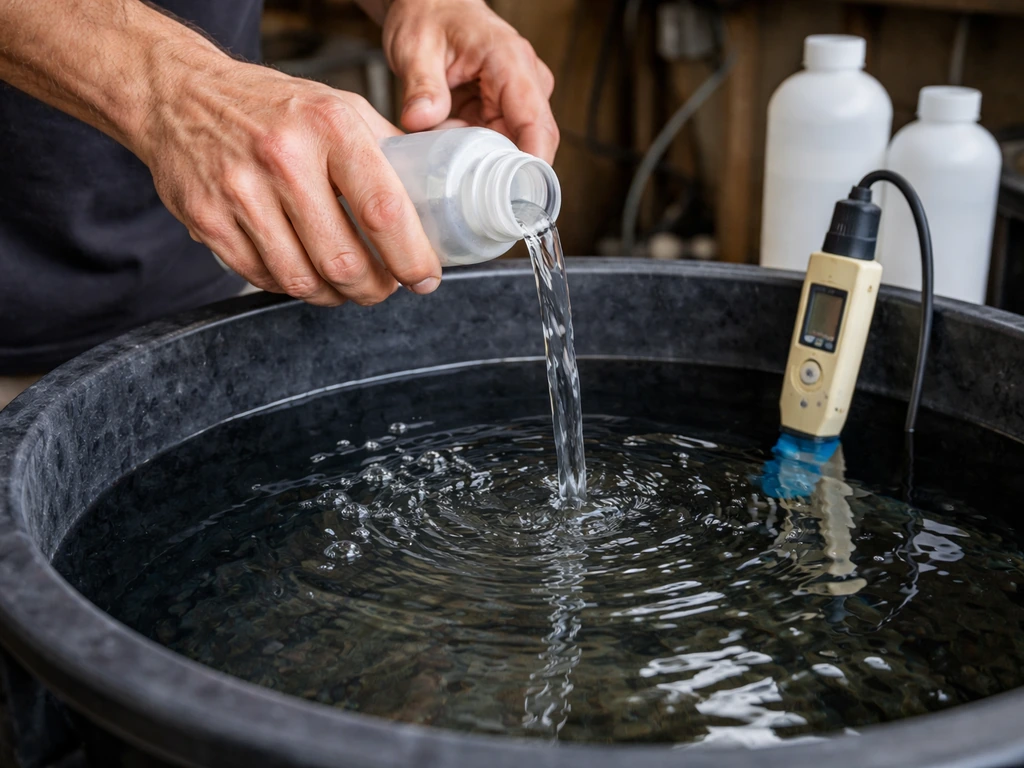
Starting nutrient recipe
You do not need a complicated nutrient program for fenugreek. A good two-part or three-part hydroponic nutrient concentrate (like General Hydroponics Flora Series, Maxigro, or similar leafy-green formulas) mixed according to the manufacturer's seedling/vegetative rate gives you a solid starting point. For the seedling phase (first week in the system), mix to a target EC of around 0.8 to 1.0 mS/cm. Once plants are showing active vegetative growth, bump EC to 1.2 to 1.8 mS/cm and hold it there through harvest.
| Growth Stage | Target pH | Target EC (mS/cm) | Nutrient notes |
|---|---|---|---|
| Germination (in media, no system) | 5.8–6.0 (media soak water) | N/A (plain water only) | No fertilizer until true leaves appear |
| Early seedling (days 1–7 in system) | 5.8–6.2 | 0.8–1.0 | Half-strength vegetative mix |
| Active vegetative growth | 5.8–6.2 | 1.2–1.8 | Full vegetative rate; higher nitrogen emphasis |
| Pre-harvest / mature stage | 5.8–6.2 | 1.4–1.8 | Maintain; reduce slightly if tips burn |
Daily checks and adjustments
Measure pH and EC every day, especially in the first two weeks. It only takes a minute and it will save you from chasing problems that started days earlier. If your EC reads higher than your target, the plants have been drinking more water than nutrients, so top off with plain pH-adjusted water. If EC reads lower than target, add a small amount of nutrient concentrate and recheck.
pH drifts up in most hydroponic systems as plants absorb nutrients, so you will typically be adding pH-down more often than pH-up. Use phosphoric acid-based pH-down rather than sulfuric acid for herb systems since it is gentler and adds a small amount of phosphorus. Do not try to correct a large pH swing all at once; adjust by 0. 2 to 0.
3 units, wait 30 minutes, then check again.
Change your nutrient solution completely every 7 to 10 days. This prevents salt buildup, reduces pathogen risk, and keeps mineral ratios balanced. Between changes, just top off to maintain level. The longer you let a solution run without a full change, the more it drifts in ways a simple EC meter will not catch.
Lighting, temperature, and airflow
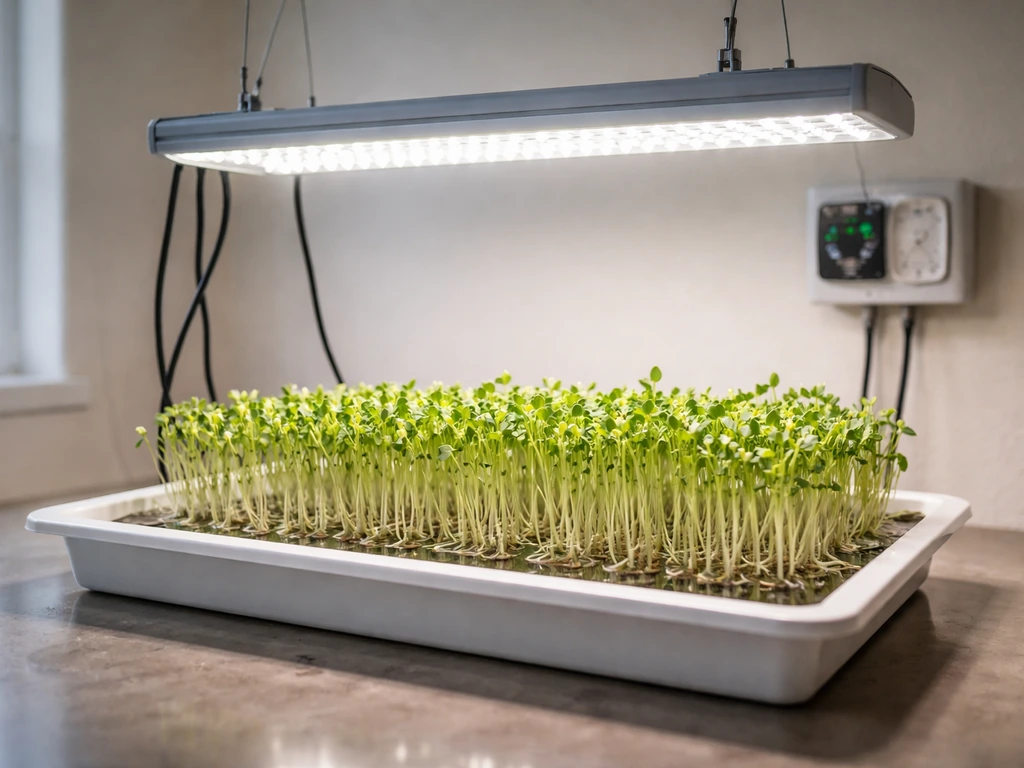
Light requirements
Fenugreek is a full-sun herb in field conditions, so it wants meaningful light indoors. Run your grow lights for 16 to 18 hours per day on a timer. Fenugreek does not strictly need a dark period, and running lights up to 20 hours can push faster growth, but 16 to 18 hours is the practical sweet spot that avoids stressing most nutrient solutions with temperature swings from lamp heat. For LED fixtures without PPFD specs listed, aim for 20 to 30 watts of true draw per square foot of canopy as a practical guide. Position lights so they cover the entire growing surface evenly, as uneven coverage causes the plants closer to edges to stretch and become leggy.
If your plants are stretching toward the light (long internodes, pale lower leaves), the fixture is too far away or the intensity is too low. Lower it by 5 cm at a time and watch the response over 48 hours. If you see bleaching or the new growth looks washed out, back the light up slightly.
Temperature and root-zone water temperature
Keep air temperature at 70 to 78°F (21 to 26°C) during the light period. Fenugreek is not a cool-season crop the way lettuce and watercress are; it actually performs better with a bit more warmth. The nutrient solution itself should stay between 65 and 70°F (18 to 21°C). RootBox Hydro recommends keeping DWC reservoir water temperature in a moderate range around [65°F to 72°F](https://rootboxhydro.
com/blogs/general/do-you-need-a-water-chiller-for-dwc-cannabis-growing) to protect dissolved oxygen and reduce root-rot pressure. This is a range where dissolved oxygen stays high enough to protect roots and where most root pathogens are suppressed. Warmer water (above 72°F) drops dissolved oxygen and dramatically increases Pythium and other root-rot pressure. If your reservoir is warming up because of ambient room temperature or pump heat, wrap it in reflective insulation or add a small aquarium chiller.
I have had roots turn brown within five days in a reservoir that crept to 74°F during a warm week, so do not skip monitoring this.
Airflow and humidity
A small oscillating fan running on low pointed at the canopy (not directly blasting the plants) does two important things: it keeps humidity from building up around the base of the plants, and it creates mild stem movement that strengthens cell walls. Target ambient humidity of 50 to 70% during the growth phase. Higher than 70% for extended periods creates conditions for powdery mildew and botrytis, especially once the canopy gets dense. If you are growing in a basement or other high-humidity space, a small dehumidifier or more aggressive fan circulation helps significantly.
Harvesting fenugreek and what to expect
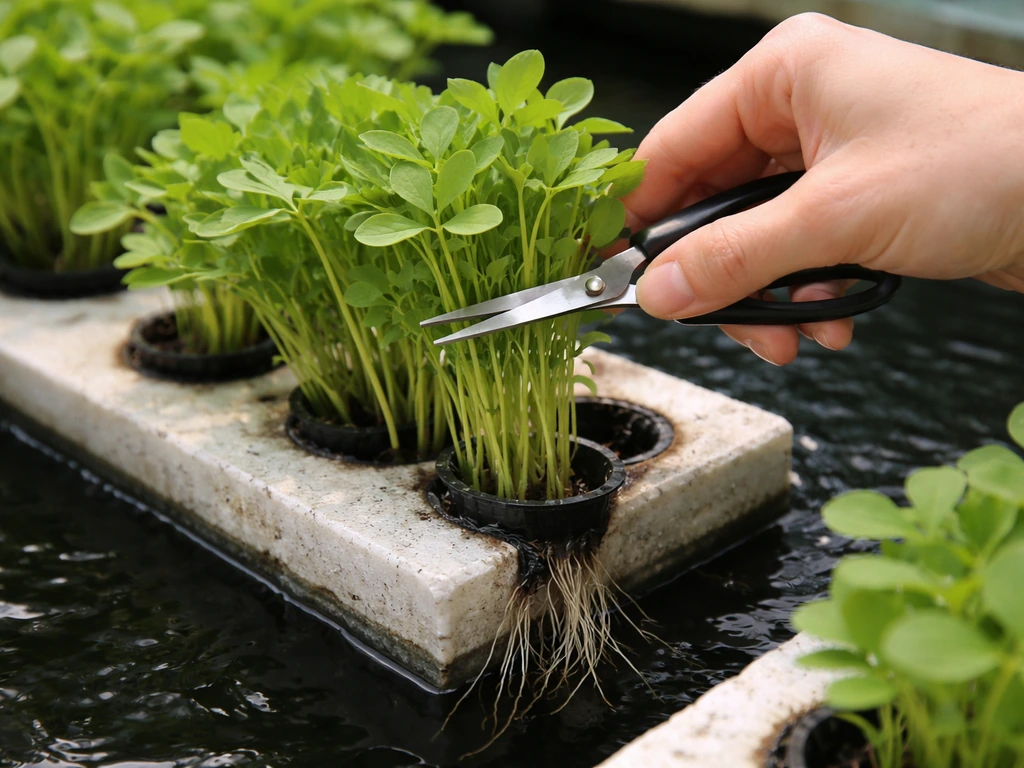
Cut-and-come-again vs. full harvest
You have two main strategies depending on how you want to use fenugreek. The cut-and-come-again approach involves snipping individual stems or the upper third of the plant once it reaches 15 to 20 cm tall, leaving the lower nodes intact to regrow. This works well if you want a steady supply of fresh leaves over several weeks from the same plants. Expect visible regrowth within 2 to 4 days after cutting under good conditions. The second harvest will be slightly smaller than the first but still productive, and a third harvest is usually possible before growth quality drops off.
The full-harvest approach means pulling the whole plant once it hits maturity (around 25 to 30 cm or just as it begins to bolt). This gives you the highest single yield and is the cleaner option if you want to reset your system and reseed. Commercially, regrowing cut fenugreek beyond two rounds is not generally recommended because yield decreases and the risk of mold and bacterial buildup increases the longer aging plant material stays in a wet system. For home growers doing a cut-and-come-again, plan on a maximum of 2 to 3 harvests per planting, then start fresh.
Realistic yield and timeline
- Days 1 to 10: seed soaking, germination, seedling emergence
- Days 10 to 14: transfer seedlings to hydroponic system at first true leaf stage
- Days 14 to 28: active vegetative growth, stems reaching 15 to 20 cm
- Day 28 to 35: first harvest window for cut-and-come-again or full harvest
- Days 35 to 50 (optional): second and third harvests if doing cut-and-come-again
- Each net cup planted with 2 to 3 seeds will yield roughly 20 to 40 grams of fresh leaf per harvest cut, depending on conditions and system size
Troubleshooting the most common problems
Root rot and biofilm
Root rot is the most common killer in hydroponic herb systems. Healthy fenugreek roots should be white or cream-colored with a firm texture. Brown, slimy, or foul-smelling roots mean you have a Pythium or bacterial problem. The main causes are warm reservoir water (above 72°F), low dissolved oxygen, and infrequent nutrient solution changes. Fix it immediately by dropping water temperature, increasing aeration, removing visibly rotted roots, and doing a full reservoir change. Some growers add beneficial bacteria products (like Hydroguard) as a preventative at every reservoir change, which genuinely helps in warm conditions. Do not let biofilm (the slimy coating on reservoir walls and tubing) accumulate between cycles; scrub it out completely at every reset.
pH and EC drift
pH and EC drifting outside target ranges is the second most common cause of slow or stalled growth, and it is often mistaken for a lighting problem. If EC climbs, plants are consuming water faster than nutrients, usually because of heat or low humidity. Top off with plain water. If EC drops fast, plants are feeding heavily; add nutrient concentrate.
If pH keeps climbing above 6. Aero-Gro’s EC/pH recommendation table provides target pH guidance for hydroponic leafy greens, which can help you judge when to adjust pH to stay within a suitable range [pH keeps climbing above 6. ](https://aero-gro. com/wp-content/uploads/2023/07/EC-and-pH-Recommendations-for-Hydroponic-Vegetables.
pdf). 5, check whether your growing media is leaching calcium (common with some perlite and certain rockwool batches that were not pre-soaked properly). Incorrect pH blocks nutrient uptake even when the nutrients are physically present in solution, so a plant sitting in pH 7. 0 water with perfect EC can still show deficiency symptoms.
Nutrient deficiencies
- Yellowing of older (lower) leaves first: classic nitrogen deficiency, or pH too high blocking nitrogen uptake. Check pH before adding more nitrogen.
- Yellowing between leaf veins on younger leaves (interveinal chlorosis): likely iron or manganese deficiency caused by pH above 6.5. Drop pH to 5.8 to 6.0.
- Leaf tip burn or crispy brown edges: calcium deficiency or excessive EC. Increase airflow and check EC is not above 2.0 mS/cm.
- Pale, washed-out new growth overall: either too much light (rare in home setups), very high pH blocking multiple nutrients, or genuine EC too low. Check both.
Algae and green slime buildup
Algae grows wherever light hits your nutrient solution. It competes with your plants for oxygen and nutrients and creates a biofilm that harbors pathogens. Prevent it by covering all reservoir surfaces and any exposed solution with opaque material: black reservoir lids, reflective tape over net cup holes when not in use, and light-blocking covers for any tubes or channels. If you already have algae, do a full reservoir change, scrub surfaces with a diluted hydrogen peroxide solution (3 ml of 3% H2O2 per liter of water), rinse thoroughly, and block the light source. Do not try to grow fenugreek in a clear glass container sitting in sunlight; you will fight algae every week.
Growth stalling or slow development
If your plants are alive but seem stuck, run through this checklist before changing anything drastic: Is the water temperature in range (65 to 70°F)? Is pH between 5.8 and 6.2? Is EC in the 1.2 to 1.8 range? Are lights running for at least 16 hours? Is the air pump running and producing visible bubbles? Is there airflow over the canopy? In my experience, slow growth in an otherwise healthy-looking system almost always traces back to either water temperature being too cold (below 65°F slows nutrient uptake significantly) or pH being too high and blocking iron and other micronutrients.
Keeping your system clean and your harvest safe to eat
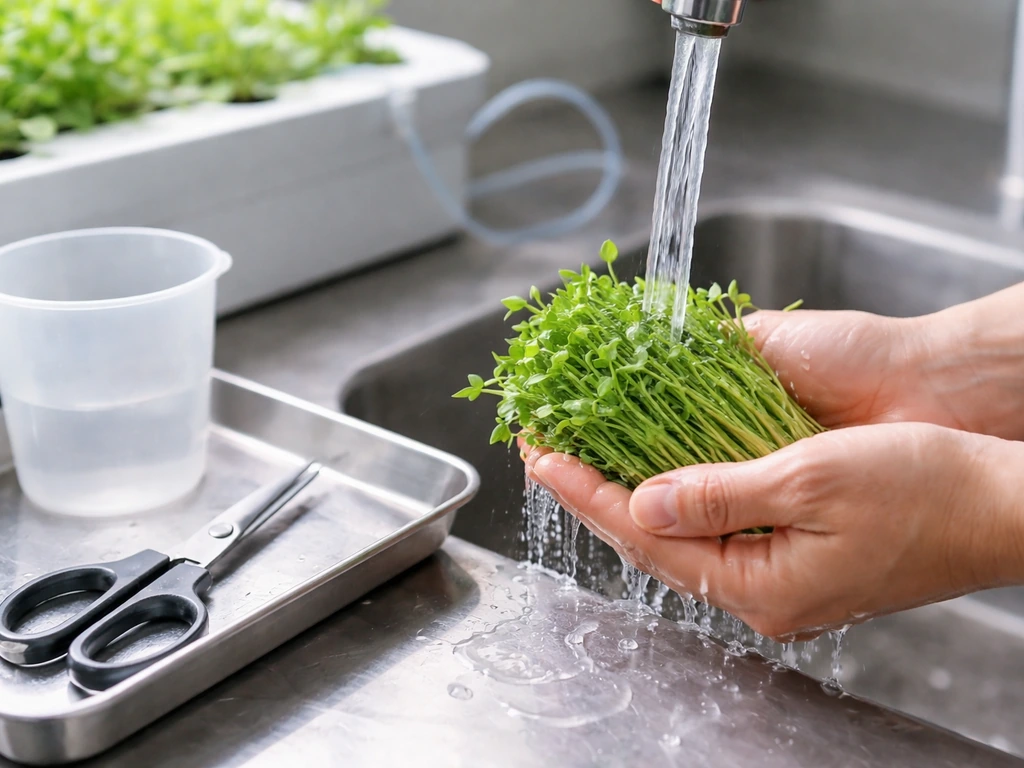
Growing edible herbs hydroponically means the water system you manage is directly connected to the food you eat. That makes sanitation more than just good practice; it is essential. Here are the habits that matter most in a home setup. If you want a similar hydroponic approach but with a peppery, cooling flavor, check out our guide on how to grow wasabi hydroponically.
- Wash your hands thoroughly before handling plants, seeds, or any equipment that contacts the nutrient solution.
- Change the nutrient solution completely every 7 to 10 days and scrub reservoir walls and net cup holders each time.
- Use food-safe reservoirs and containers. Avoid repurposing containers that held cleaning chemicals or non-food-safe materials.
- Do not use manure-based amendments, compost teas, or organic materials that have not been properly processed in your hydroponic solution. These introduce bacterial contamination risk that is hard to control in a recirculating system.
- After harvesting, rinse cut herbs under cool running water before eating or storing. Even in a clean hydroponic system, nutrients and organic material can settle on leaf surfaces.
- If a plant shows signs of disease (sudden wilt, gray fuzzy growth, rot), remove it from the system immediately, do a full reservoir change, and disinfect the site before reseeding.
- Between growing cycles, sanitize all equipment with a diluted bleach solution (1 tablespoon unscented bleach per gallon of water), let it soak for 10 minutes, then rinse thoroughly with clean water before reuse.
- Store harvested fenugreek leaves in a sealed container in the refrigerator and use within 5 to 7 days for best flavor and safety.
Fenugreek is a genuinely rewarding herb to grow hydroponically because it moves fast and gives you something to harvest before most other hydroponic herbs have even established properly. If you have already experimented with growing watercress or wasabi hydroponically, you will find fenugreek more forgiving on pH swings and root zone management. Get your DWC or raft system running, pre-soak your seeds tonight, and you can realistically be cutting fresh fenugreek leaves in about a month.
FAQ
Can I start fenugreek in a hydroponic system without rockwool or peat pellets (for example, in the net cups directly)?
Yes, but it is riskier. Net cups dry out faster at the seedling stage, so direct seeding works best if you keep the cubes or medium consistently moist and use a system with strong oxygenation (DWC/raft). If you seed directly, plan for a higher failure rate and watch germination daily so you can replace non-viable seeds quickly.
What water temperature is safest for fenugreek in a raft or DWC system?
Aim for 65 to 70°F (18 to 21°C) in the reservoir. If your setup trends upward during warm days, treat it as an oxygen problem first, not a nutrient problem. Even a short run above about 72°F can trigger root browning, so it helps to measure water temperature in the reservoir, not just the room temperature.
How do I prevent damping-off or seedling rot during the first week?
Use clean water and sanitized reservoirs, then keep oxygenation active from day one. Avoid letting seedlings sit in low-flow or low-bubble conditions, and do not run EC at full strength immediately. If you notice collapse or mushy roots, do a partial to full reset rather than trying to “nurse” them, because early rot spreads quickly in wet systems.
Should I use a root inoculant or beneficial bacteria products for fenugreek?
It can help as prevention, especially if you have warm water or you often miss the ideal change interval. Apply at reservoir changes as directed by the product, but do not treat it as a substitute for temperature control and oxygenation. If you are already seeing slimy roots or strong odor, prioritize troubleshooting (temperature, aeration, full reservoir change) first.
What dissolved oxygen level should I target, and how can I tell if aeration is insufficient?
You cannot easily measure dissolved oxygen in every home setup, so use practical indicators. In DWC, you should see steady bubbling across the air stone and roots should stay cream to white with firm texture. If bubble activity drops (air pump issues, clogged stones), fenugreek fine roots are affected quickly, sometimes within minutes to hours.
How can I troubleshoot yellowing leaves if pH and EC look correct?
First check whether new growth is affected differently than older leaves. Fenugreek commonly shows micronutrient uptake problems from pH drift, but if your readings are accurate, the next suspects are light stress and root health. Also inspect for salt buildup near the cube, and consider a full reservoir change if you have not changed solution within the recommended window.
Why does my EC reading rise so fast even though I am topping off with water?
A fast EC climb usually means evaporation concentrates salts (topping off not matching the true water loss) or nutrient absorption is uneven due to warm temperatures or poor aeration. Confirm you are measuring after mixing thoroughly, and do not rely on a single EC test taken right after top-off. If water level changes are significant, use consistent refill volumes between checks.
Is it normal for fenugreek to bolt in hydroponics, and how do I slow it down?
Bolting is more likely when conditions are warm and when plants get dense and stressed, and it is influenced by temperature more than many herbs. To slow it, keep temperatures in the 70 to 78°F (21 to 26°C) band you selected, avoid prolonged high humidity around the canopy base, and harvest with the cut-and-come-again method before plants mature.
How do I know whether to harvest leaf cuttings now or wait for a fuller plant?
For consistent leaf yield, harvest at about 15 to 20 cm when you can take the upper third without removing all growing nodes. For a one-time maximum, harvest around 25 to 30 cm or just as bolting starts. If you see uneven growth or lower leaves thinning, switching to cut-and-come-again sooner usually improves total usable harvest over the next cycle.
What should I do if algae starts growing on the reservoir even though I cover everything?
Check for small light leaks at tubing, net cup openings, or any gaps around the lid. If the algae already formed, do a full reservoir change and scrub all surfaces, then verify all light paths are blocked (including reflections). Also confirm that any device window or transparent parts are not exposed to direct light, even briefly.
Can I grow fenugreek hydroponically in a passive system like Kratky for better simplicity?
Yes, Kratky can work, and many growers find it easier than NFT for this herb. The main caveat is managing solution reserve as the plant size increases, because once the reservoir level drops, fine roots are more vulnerable than thicker-root herbs. If your plants are wilting late in the cycle, switch to an active DWC setup or ensure the starting water volume is enough for the full growth period you want.