Yes, you can absolutely grow hyacinth bulbs in water, and the results are genuinely stunning. A single bulb in a glass jar on a windowsill, roots dangling in water, flower spike rising up to bloom indoors in the middle of winter, it's one of the most satisfying things you can do with a bulb. The method is called water forcing, and once you understand the basic rules (especially the one about keeping the bulb dry), it's not difficult at all.
How to Grow a Hyacinth in Water: Step by Step Guide
Marcus Holloway
2 Apr 2026
Choosing the right bulb for water growing
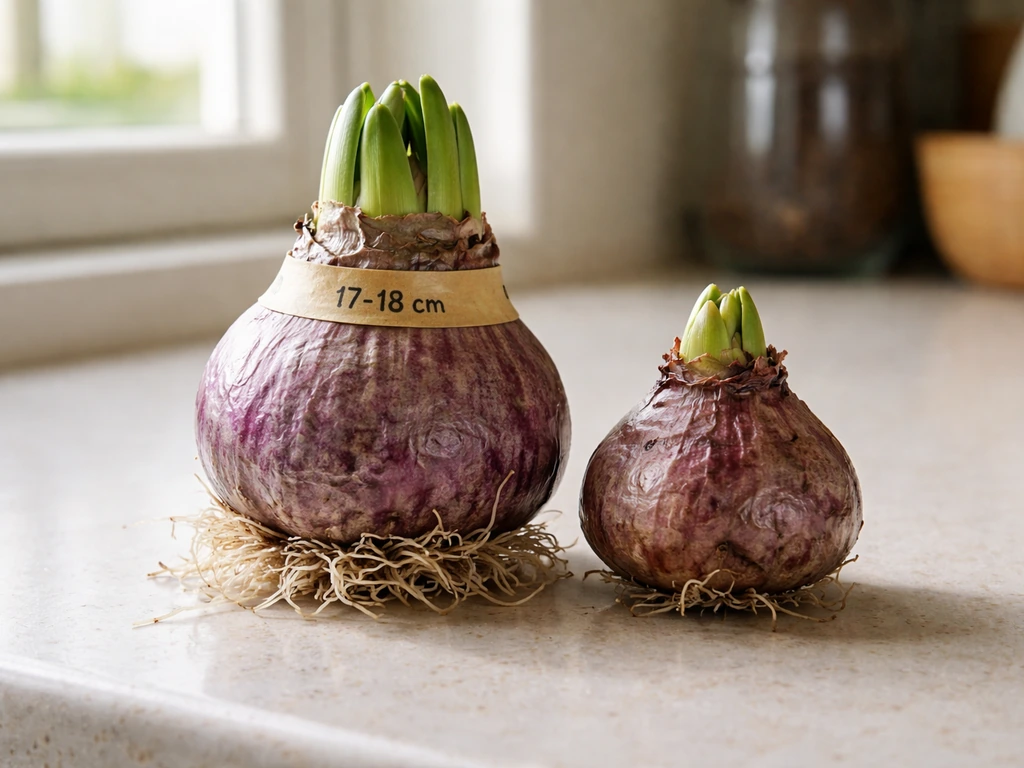
Not every hyacinth bulb performs equally well in water. For the best results, you want a large, firm, top-size bulb, typically labeled 17cm or 18cm and up. Bigger bulbs store more energy, which matters a lot when you're growing in water with no soil nutrition to fall back on.
Some varieties are specifically noted as better for forcing. 'Delft Blue,' 'Carnegie' (white), 'Jan Bos' (red/pink), and 'City of Haarlem' (yellow) are all solid performers for water growing. When you're buying, look for bulbs that are labeled 'prepared' or 'treated.' These bulbs have already been given a head start with controlled temperature treatment, and they respond faster once you set them up in water. If you buy standard, unprepared bulbs, you'll need to do the cold treatment yourself (more on that in the timing section below).
One thing I learned the hard way: avoid any bulb that feels soft, shows mold, or has damaged outer skin. Those problems only get worse in water. Give each bulb a firm squeeze before you buy or use it.
When to start your bulbs in water
Timing depends on when you want blooms. If you want flowers in January or February, you need to start the cold treatment in October or November. If you're aiming for March blooms, you can start in December. Hyacinths need a cold dormancy period before they'll root and bloom, you can't skip this step and expect results.
For unprepared bulbs, expect to cold-treat them for around 12 to 16 weeks total. Wisconsin Extension describes a staged approach: the first 3 to 5 weeks at around 45 to 50°F, then about 3 weeks at 38 to 42°F, then the remainder at 35°F. You can use an unheated garage, a shed, or the back of your refrigerator (keep them away from fruit, which gives off ethylene gas and can damage bulbs). The key milestone before you move them into warmth: tip growth should be 3 to 4 inches tall and the flower cluster should be visibly emerging from the top of the bulb.
Prepared bulbs have already had some of this cold work done for them. They still need chilling, but the required period is shorter, check the package instructions for the specific duration your bulbs need. This makes prepared bulbs a great choice if you're starting late in the season or want faster results.
What you actually need: jars, water, and support
The container
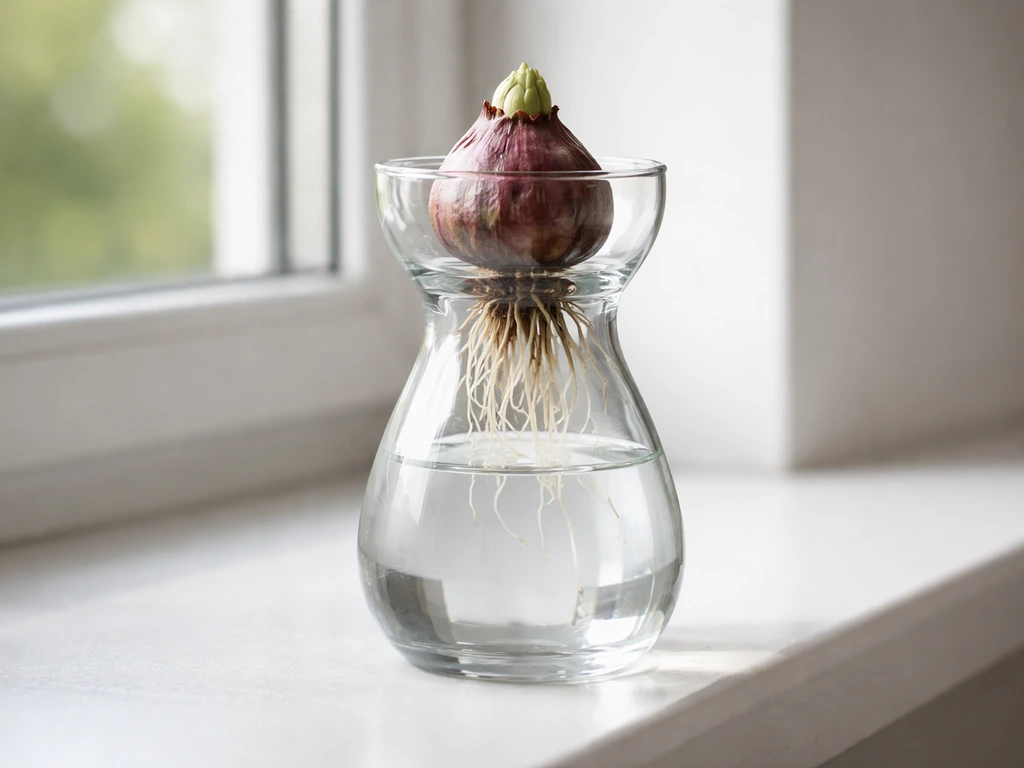
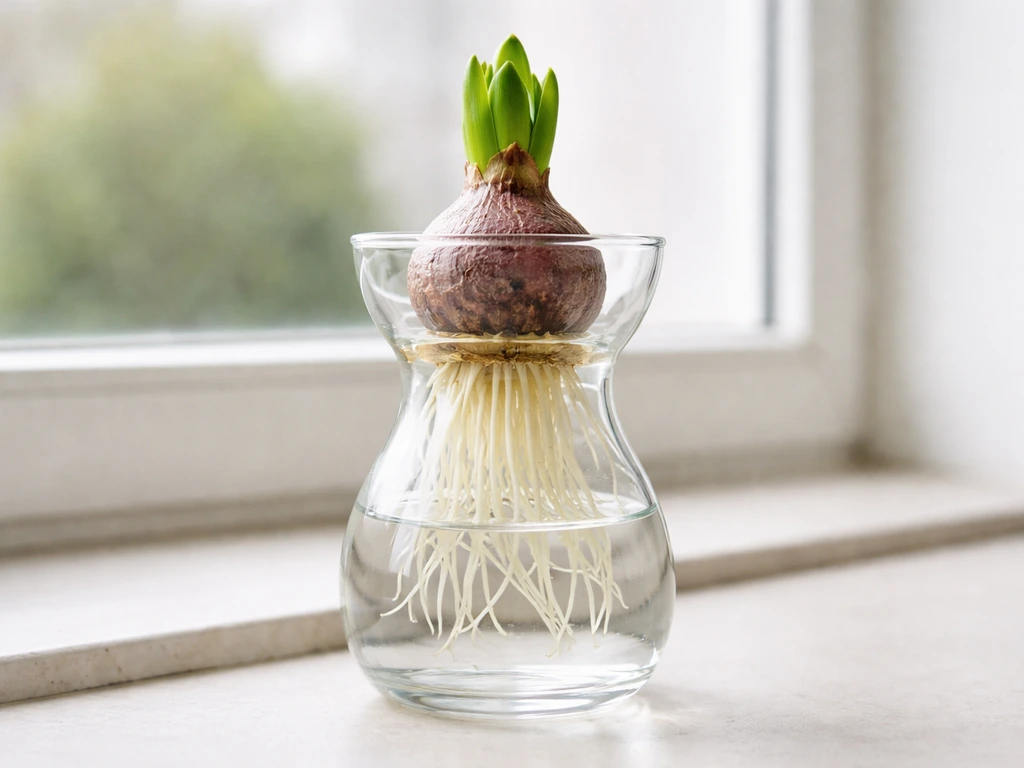
The classic tool for water forcing is a hyacinth glass, an hourglass-shaped vase with a narrow neck that holds the bulb up while its roots hang down into the water below. The narrow neck is the critical design element: it prevents the bulb from slipping into the water and rotting. You can find these in garden centers or online, and they're worth buying if you plan to do this every year. Alternatives include any jar or vase with an opening narrow enough to cradle the bulb's base without letting it fall through. Some people use bulb cradles or small plastic rings placed across the top of a wide jar. What doesn't work: just dropping the bulb into a bowl of water. That's a rot guarantee.
Water type and level
Use plain, room-temperature water. Tap water is fine for most people, though if yours is heavily chlorinated, letting it sit overnight before use won't hurt. Filtered or rain water also works well. The water level is critical: keep it just high enough that the roots can reach down into the liquid, but the base of the bulb stays above the water surface. Even a few millimeters of contact between the bulb and the water surface is enough to invite rot over time. Check the level every few days and top it up as needed, roots drink more than you'd expect once they get going.
Light requirements
During the cold, dark phase, you want zero light, a cupboard, a dark corner of a garage, or a covered box. Once you bring the bulb into warmth, bright indirect light is ideal. A north- or east-facing windowsill works well. Direct, intense sun can cause the flower spike to develop unevenly or lean hard toward the light. Rotate the jar every day or two to keep the growth upright.
Step-by-step: growing hyacinth in water from start to bloom
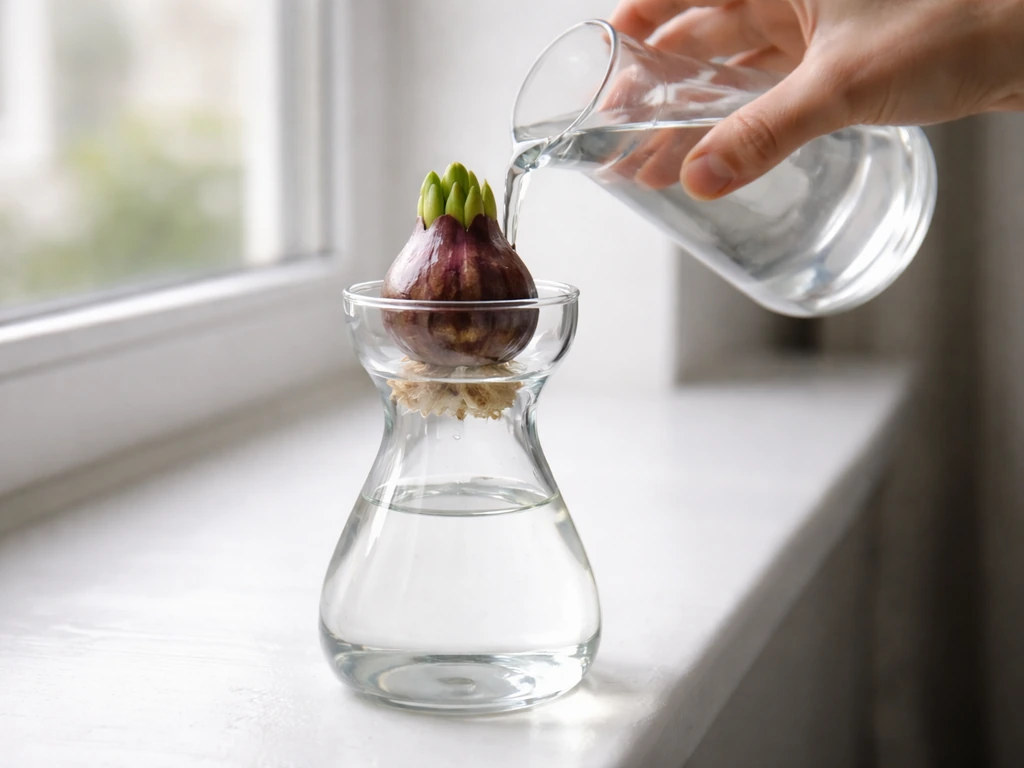
- Set up your hyacinth glass or jar. Fill it with water until the level sits just at or slightly below the narrow neck. For a regular jar, fill to about an inch below where the bulb will rest.
- Place the bulb on top of the glass with the flat, root-plate end facing down. The base of the bulb should be close to the water surface but not touching it. There should be a small air gap between the bulb's base and the water.
- Move the whole setup to a cool, dark location. Aim for 45 to 50°F (roughly 7 to 10°C). A refrigerator works if you have no other cold space — just keep it away from apples and pears.
- Check the water level every week. Top it up so the roots always have water to grow into, but never let the water rise up to touch the bulb base.
- After the first 3 to 5 weeks, lower the temperature slightly if you can, following the staged cooling approach (38 to 42°F, then 35°F for the final stretch).
- Wait until the shoot is 3 to 4 inches tall and you can see the flower cluster beginning to emerge from the bulb. This is your signal to move the bulb to warmth and light.
- Bring it indoors to a bright spot at room temperature (around 60 to 65°F is ideal; warmer can rush the bloom and weaken the stem). Keep it away from heat vents and direct sun.
- Within 1 to 3 weeks, the flower spike will fully emerge and open. Enjoy the blooms — they typically last 1 to 2 weeks.
For prepared bulbs, the process is the same, you're just starting at step 1 with a bulb that's already partway through its cold requirement, so the dark/cold phase will be shorter. Follow the timing on the bulb's packaging rather than the standard 12 to 16 week guideline.
Care after sprouting: keeping your hyacinth healthy through to bloom
Once the shoot is up and you've moved the bulb into the light, the main job is keeping conditions stable. Temperature swings are the biggest threat at this stage, a sudden blast of heat from a radiator will cause the stem to shoot up fast and flop over. Keep the room between 60 and 65°F if you can. Cooler is actually better for longevity.
You don't need to add fertilizer to the water. The bulb carries all the energy it needs to bloom stored inside it. Adding nutrients at this stage doesn't meaningfully improve results and can promote algae growth in the jar. Keep the water clean and clear, top it up regularly, and let the bulb do its thing.
If the flower spike seems to be leaning or growing at an angle, rotate the container to give the other side more light. A consistent half-turn every day or two usually keeps growth upright. If the room is particularly warm, you can slow things down slightly by moving the jar to a cooler spot overnight.
Troubleshooting: when things go wrong
No roots appearing
If you're two to three weeks in and there's no root growth at all, check the temperature first. If the space is too warm (above 55°F during the cold phase), the bulb won't root properly. Also confirm the water is actually close enough to the base of the bulb for the roots to reach it, sometimes the gap is too large and the roots just dangle in air.
Bulb rot
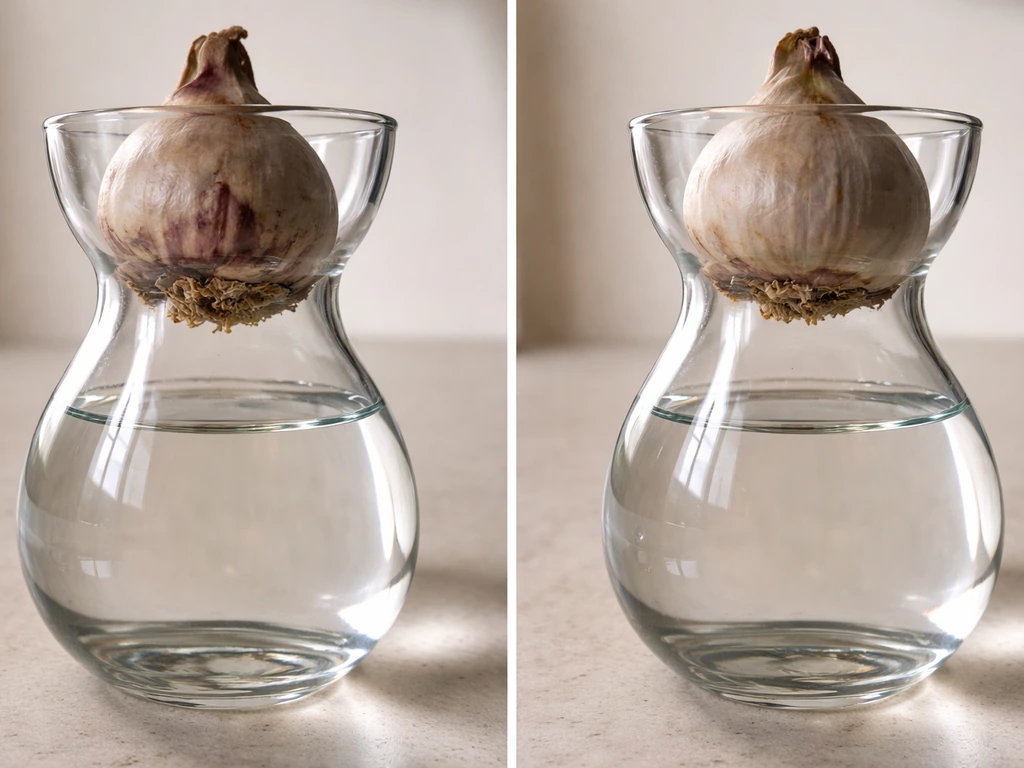
This is the most common problem, and it almost always comes down to one thing: the bulb base is touching the water. The hyacinth glass design solves this by narrowing right at the water line so the bulb physically can't slip in. If you're using a makeshift container, check that gap regularly. If rot starts (soft, brown, mushy tissue), there's usually no saving the bulb, but you can minimize the risk by always keeping that air gap between the bulb and the water surface.
Weak, floppy stems
A tall, floppy stem that can't support the flower spike is usually caused by too much warmth during the growing-on phase, or by not enough light. Stems need a little resistance, cool temperatures and good bright light encourage compact, sturdy growth. If the stem is already elongated, you can stake it with a thin bamboo skewer and a soft tie. This won't fix the cause, but it'll keep the bloom upright long enough to enjoy.
Cloudy or smelly water
Cloudy water usually means bacteria or algae are growing in the jar. This happens faster in warm, bright conditions. Change the water carefully, keeping the bulb in place and tilting the jar to pour out the old water and refill. A dark or opaque container slows algae growth significantly. Some growers add a small piece of horticultural charcoal to the water, it helps keep things cleaner between changes.
Pests and fungus
Water-grown hyacinths are less prone to soil pests, but you can still get fungus gnats hovering around the jar, especially if there's any decaying material in the water. Keep the water clean and remove any rotting root tissue you spot. Gray mold (botrytis) can show up on the foliage or flower if humidity is high and airflow is low, a slightly airier spot usually prevents it. If you see white fuzzy growth on the bulb's outer skin, that's typically surface mold from a damaged scale, not always a death sentence, wipe it away gently with a dry cloth and make sure air can circulate around the top of the bulb.
What to do with the bulb after it blooms
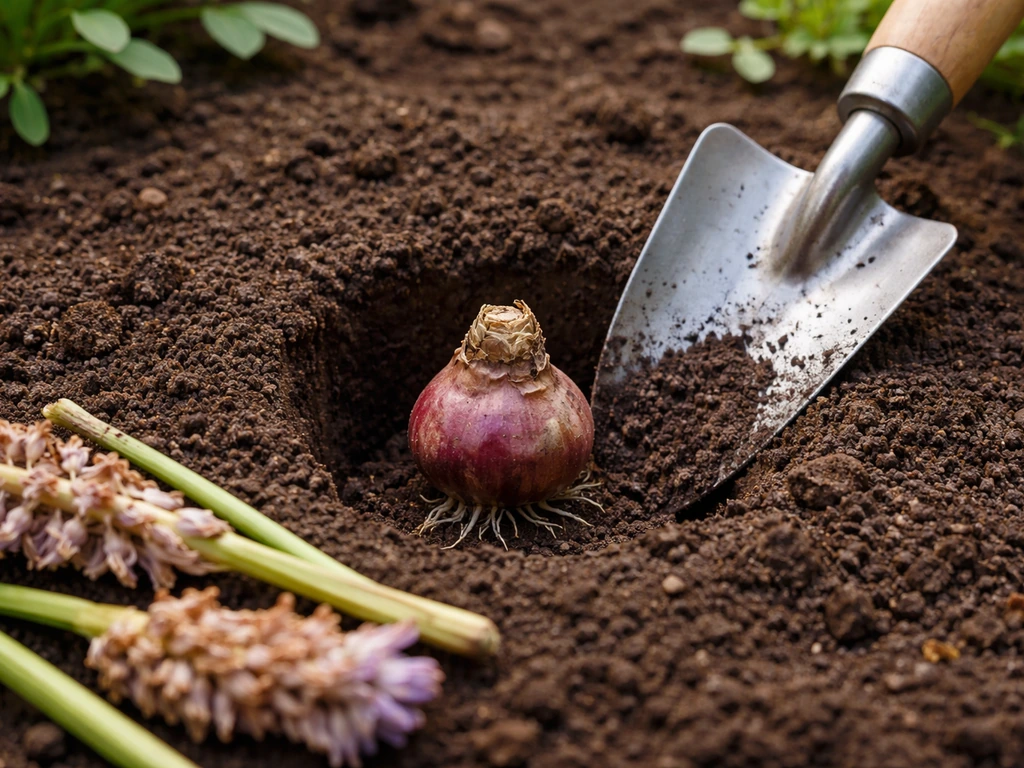
Once the flowers fade, the bulb has spent most of its stored energy. Water forcing is genuinely hard on a bulb, the odds of getting a repeat bloom from the same bulb in water next year are low. That said, you have options.
The most reliable approach is to plant the spent bulb in the garden after the last frost. Remove the flower spike once it's done but leave the foliage intact to photosynthesize and rebuild the bulb's energy reserves. Give it a diluted liquid fertilizer every couple of weeks while the leaves are green. The bulb will likely bloom again in the garden the following spring, though the bloom may be smaller than the first year.
If you want to try water forcing again with the same bulb, let it rest and recover outdoors for at least one full growing season first. Trying to force it in water again right away almost never produces a good result. It's generally more practical to buy fresh bulbs for water growing each year and replant the spent ones in the garden.
If you're interested in expanding your water-growing hobby beyond bulbs, growing paperwhites in water follows a very similar process and makes a great companion project, paperwhites don't even need a cold period, so they're faster and simpler to start.
Prepared vs. standard bulbs: which should you use?
| Feature | Prepared/Pre-treated Bulbs | Standard Unprepared Bulbs |
|---|---|---|
| Cold treatment needed | Yes, but shorter (check pack) | Yes, 12–16 weeks |
| Time to bloom (from setup) | Faster — often 8–10 weeks total | Longer — 14–18+ weeks total |
| Cost | Usually slightly more expensive | Cheaper per bulb |
| Best for | Beginners, late starters, holiday timing | Planners who start in autumn |
| Where to find | Garden centers in autumn, online bulb suppliers | Widely available from late summer |
| Re-blooming potential | Same as standard once planted out | Same once recovered in soil |
If you're new to water forcing, prepared bulbs are worth the small extra cost. They reduce the margin for error and give you a faster result, which is encouraging when you're learning. Once you've seen the process work, standard bulbs and the full cold treatment become easy to manage.
A few extra things worth knowing
Hyacinths grown in water are genuinely low-tech compared to most hydroponic setups. There's no pump, no nutrient solution, no pH management needed. If you're used to the more structured world of aquatic plant cultivation, this will feel refreshingly simple. The closest analog in terms of simplicity is probably growing paperwhites in gravel, which also uses water as the growing medium with minimal inputs.
On the more technical end of water-based cultivation, if you're curious about algae management in your hyacinth jar (or any water-based growing system), understanding how organisms like Haematococcus pluvialis behave in still water can give you useful context for why clean water and limited light exposure to the reservoir matters. That said, for hyacinth growing, the practical fix is just keeping the water changed and the jar clean, no algae science required.
If you've caught the bug for growing things in minimal water setups, it's worth exploring what else is possible with simple containers. Some aquatic hobbyists even experiment with low-tech enclosures like growing organisms in a water bottle to test water quality and organism behavior at small scale, the same curiosity that makes water forcing so satisfying. And for those who want to go further into truly aquatic biology, growing hydroids is a fascinating next step into water-based life cultivation that sits at the other end of the complexity spectrum.
The bottom line with hyacinths in water: get the jar right, keep the bulb dry, give it its cold time, and then let it warm up slowly into a bright spot. Do those four things and you'll have blooms. It's a system that's been working for centuries, and for good reason, it's hard to beat watching roots fill a glass jar and a flower spike push up from a bulb sitting in nothing but water and air.
FAQ
Can I grow a hyacinth in water without the cold treatment?
No. Hyacinths need a cold, dormancy period before they will root and flower. If you skip chilling, you may get little to no rooting, or the bulb may rot because it never transitions into the forcing cycle.
What’s the best option if I missed the right time to cold-treat my bulbs?
Start with “prepared” bulbs when possible. They are already partway through their chilling requirement, so you can follow the exact package timeline and avoid the full 12 to 16 week schedule typical of unprepared bulbs.
Should I use distilled water, and does tap water matter for water forcing hyacinths?
Use plain room-temperature water, and keep the bulb base above the surface. If your water is heavily chlorinated, let it sit out overnight before adding it to the jar. Either way, keep the same basic water level so roots are not alternately submerged and exposed.
My hyacinth is rooting but not shooting a flower spike, what should I check?
If you see roots forming but no flower spike yet, it usually means the bulb still needs time in warmth after cold forcing, or it is not warm enough. Check that the cold phase was long enough, then move to bright indirect light and keep temperatures steady (around the low 60s F).
What should I do if the bulb base is sitting in the water?
If the bulb base is touching the water surface, it can start rotting quickly. Re-seat it immediately using a narrow-neck hyacinth glass or a cradle that maintains a small air gap (only a few millimeters matter).
How often should I rotate the jar to prevent a leaning flower spike?
Rotate gradually and consistently. Rotating every day or two helps keep the spike upright, but avoid moving the jar frequently during the first week in warmth because abrupt changes can cause crooked growth.
Why did my flower stem become tall and floppy, and how can I fix it?
Yes, especially if your home is warm. A sudden heat spike can cause a fast, weak stem that flops. If your room is above the low 60s F, move the jar to a cooler spot overnight and keep bright indirect light during the day.
How do I handle cloudy water in the hyacinth jar?
Change the water when it turns cloudy, smells off, or after any visible decaying tissue appears. When refilling, keep the bulb in position and tilt the jar to pour out the old water to minimize jostling and prevent the bulb from dipping into the water.
Do I need to add fertilizer to help the hyacinth bloom in water?
In water forcing, fertilizer is usually unnecessary because the bulb has stored energy. If you do add anything, keep it minimal and only after leaves are established, otherwise nutrients can feed algae and bacteria in the jar.
Is mold on the bulb always fatal, and what’s the safe cleanup approach?
Wipe surface mold gently if it is only on outer skin, then improve airflow around the bulb top and avoid letting the bulb sit wet. If you see soft, mushy tissue at the base or a wet rot smell, it usually cannot be saved.
After two or three weeks, my bulb has not developed roots. What are the most common causes?
If you are seeing no roots after about two to three weeks, first verify temperature during the cold phase (too warm prevents rooting). Next confirm the water level keeps an air gap between the bulb and surface while still allowing roots to reach water.
Can I re-bloom the same hyacinth bulb in water next year without planting it outdoors?
Once flowers fade, plan on reusing the bulb by planting it outdoors rather than trying to force it again immediately in water. Water forcing depletes the bulb, so repeat water forcing with the same bulb typically fails unless it fully recovers outdoors for at least a full growing season.
Why do some hyacinth bulbs do better in water than others?
Expect the best indoor performance from bulbs that are labeled by size and sold for forcing, often large top-size bulbs. If your bulbs are small or unprepared, you may get slower rooting, weaker spikes, or fewer blooms compared with larger prepared varieties.
What’s the correct way to care for the plant after the flowers fade?
After blooming, leaving foliage in place is key so the bulb can rebuild energy. Remove only the spent flower spike, keep the leaves until they naturally fade, then plant the bulb in the garden after the last frost.
Can I grow multiple hyacinth bulbs in one jar or container?
Yes. If space is limited or light is uneven, you can grow multiple bulbs in separate narrow-neck vessels rather than one shared wide bowl. Do not crowd bulbs in the same jar because it increases moisture and makes water cleanliness harder to maintain.