Aquaponics works, and it works surprisingly well once you understand the three-way relationship between your fish, your bacteria, and your plants. The short version: fish produce ammonia-rich waste, nitrifying bacteria convert that waste into plant-available nitrate, and your plants absorb the nitrate while cleaning the water for the fish. That loop is the entire engine of the system. Everything else you'll do is just keeping that loop running smoothly.
How to Grow Aquaponics: Beginner to Advanced Guide
Marcus Holloway
24 Mar 2026
Aquaponics basics: how the system actually works
The biology here is straightforward. Fish excrete ammonia (NH3/NH4+) through their gills and waste. Left unchecked, ammonia is toxic to fish. That's where nitrifying bacteria come in. Two bacterial genera do the heavy lifting: Nitrosomonas converts ammonia into nitrite (NO2-), and then Nitrospira (along with Nitrobacter) converts nitrite into nitrate (NO3-). Nitrite is also toxic to fish, but nitrate is relatively harmless at concentrations up to around 150-300 mg/L. More importantly, nitrate is exactly what your plants want to grow.
Those bacteria live in your grow media, on the walls of pipes and tanks, and in any biofilter you set up. They are not optional. Without an established bacterial colony, ammonia and nitrite will spike and kill your fish before your plants ever benefit. This is why 'cycling' the system before you add fish is the single most important step most beginners skip or rush. More on that in the step-by-step section below.
The water chemistry side matters too. Nitrification consumes alkalinity, which means pH tends to drift downward over time in an active system. The bacteria also need dissolved oxygen: their optimum range is about 4-8 mg/L, and the system as a whole performs best when DO stays above 6 mg/L. Carbonate hardness between roughly 60-120 mg/L gives you a buffer against rapid pH swings. These aren't just abstract numbers; they're the reason systems crash when growers ignore water testing.
Choosing your setup: system types and sizing
The three main aquaponics configurations you'll actually use at home or small scale are media-bed systems, deep water culture (DWC) raft systems, and nutrient film technique (NFT) or vertical systems. Each has a different feel to manage day to day.
Media-bed systems
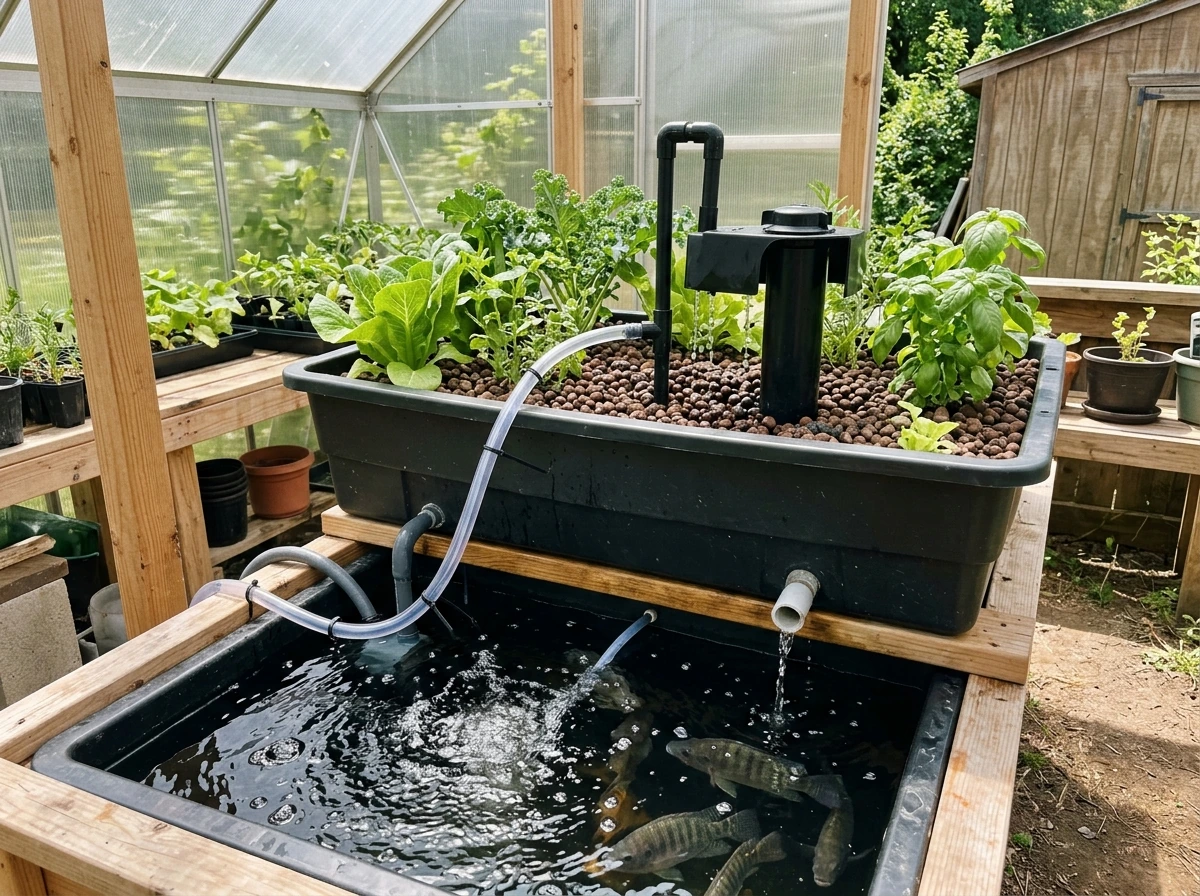
This is the most beginner-friendly option and the most common setup worldwide. You fill grow beds with gravel or expanded clay aggregate (LECA), flood them with tank water on a timer, and drain them back. The media does double duty: it supports plant roots and houses your bacterial colony. OSU Extension recommends gravel and clay-based media because they balance drainage, root access, and biofiltration. Media bed is where I'd tell any beginner to start.
Deep water culture (DWC) raft systems
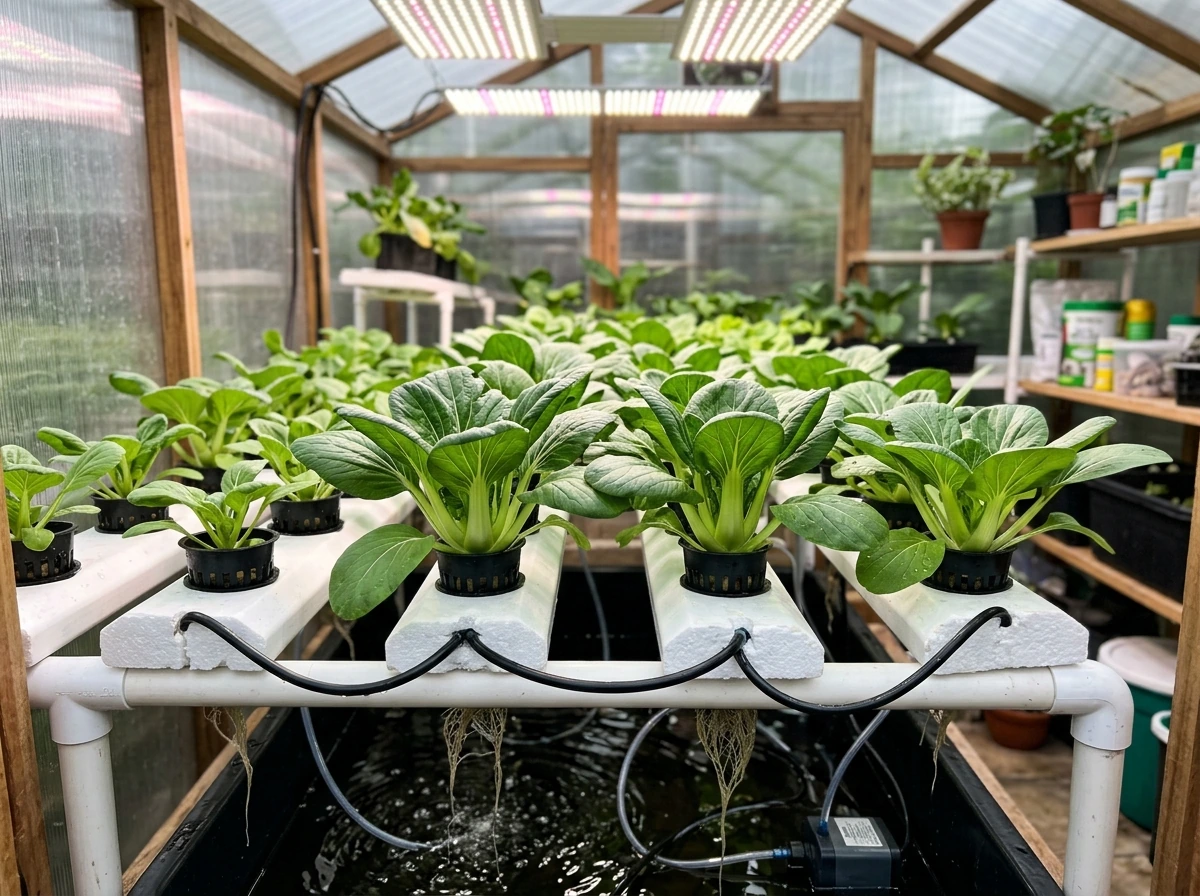
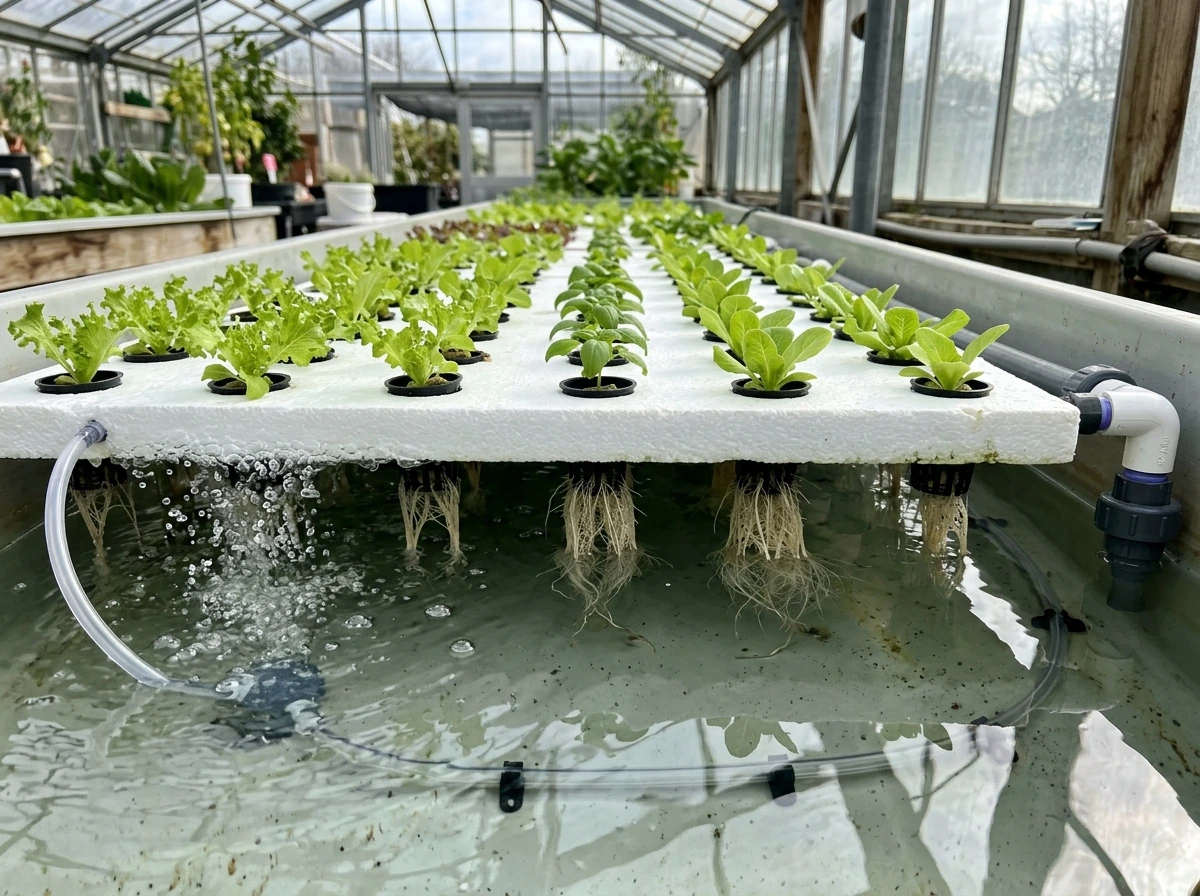
In DWC, plants sit in foam rafts floating directly on a shallow channel of aerated fish water. This method is popular for fast-growing leafy greens because roots have constant access to nutrients and oxygen. The tradeoff is that DWC needs separate solids filtration before water reaches the raft channel, and you need to maintain good aeration. A rough flow target for DWC channels is around 5-10 gallons per minute depending on channel length. DWC also needs its own biofilter since the raft channel doesn't house much bacteria on its own.
Vertical and NFT systems
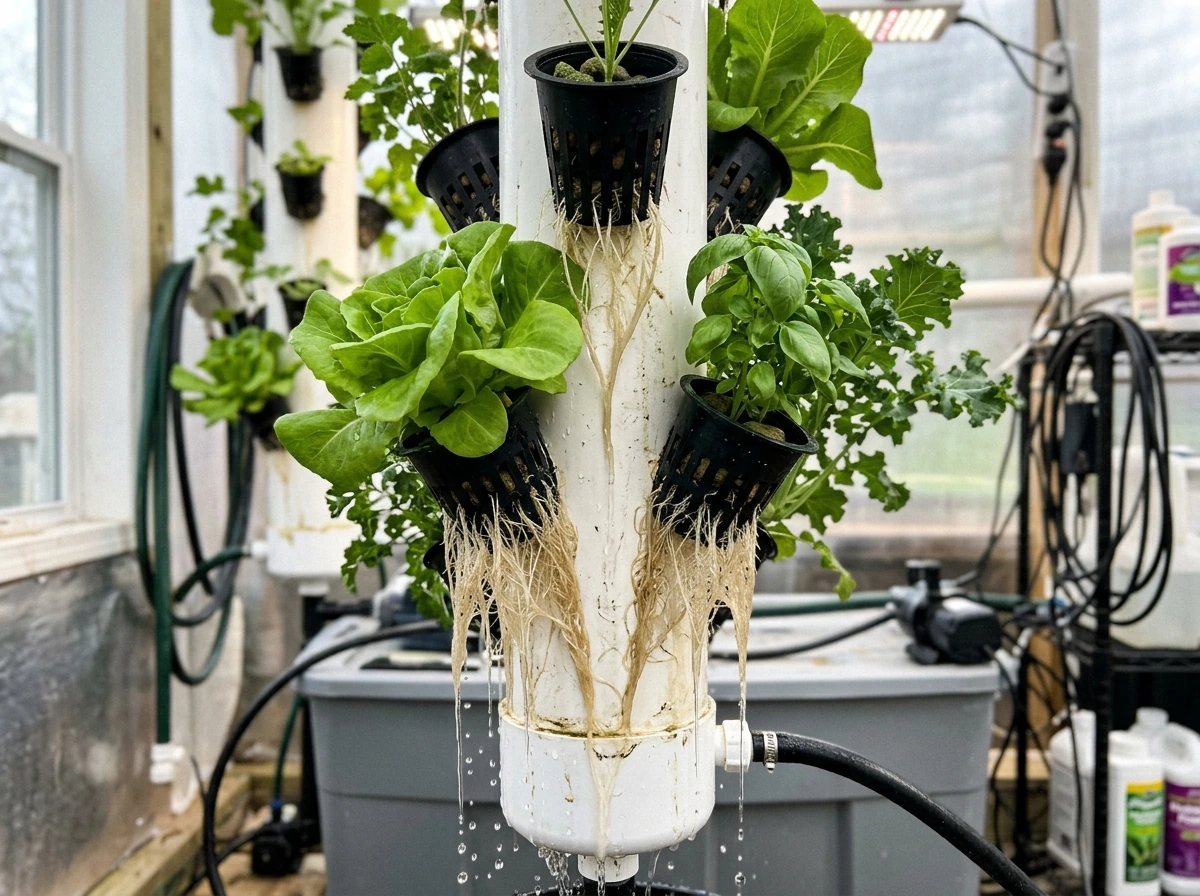
Vertical towers or NFT channels run a thin film of water over roots continuously. These save floor space and look great, but they're less forgiving of power outages or pump failures since roots dry out fast. I'd call these intermediate-level setups. If you're already comfortable managing a media bed, vertical systems are a great way to scale up in a small footprint.
How to size your system
A simple starting point: match your grow bed volume roughly 1:1 with your fish tank volume. A 100-gallon fish tank pairs well with about 100 gallons of grow media volume. This ratio supports adequate biofiltration and nutrient load without overwhelming the system. For a first build, a 50-100 gallon fish tank with one or two grow beds is very manageable. Bigger is often more stable (larger water volume buffers against parameter swings), but start where you can actually monitor and manage things without stress.
| System Type | Best For | Filtration Needs | Beginner Friendly? | Space Requirement |
|---|---|---|---|---|
| Media Bed | All-in-one setups, beginners | Built into media | Yes | Moderate |
| Deep Water Culture (DWC) | High-volume leafy greens | Separate solids filter + biofilter | Intermediate | Larger footprint |
| NFT / Vertical | Space-limited growers, herbs | Separate solids filter + biofilter | No (less forgiving) | Small footprint |
Fish, water quality, and cycling your system
Your fish are both the nutrient source and the most vulnerable part of the system. Getting fish selection, stocking density, and water quality right directly determines how well your plants grow. Get it wrong and you'll have stunted plants at best, or a tank of dead fish at worst.
Choosing your fish
Tilapia are the go-to for warm climates and anyone who wants to eat their fish. They're hardy, grow fast, and tolerate a wide range of conditions. Goldfish and koi are excellent for ornamental systems or cooler environments, with a comfortable temperature range of about 65-75°F (18-24°C). Trout work well in cold systems but demand near-perfect water quality. For a first system, goldfish or tilapia are the most forgiving choices.
Stocking density
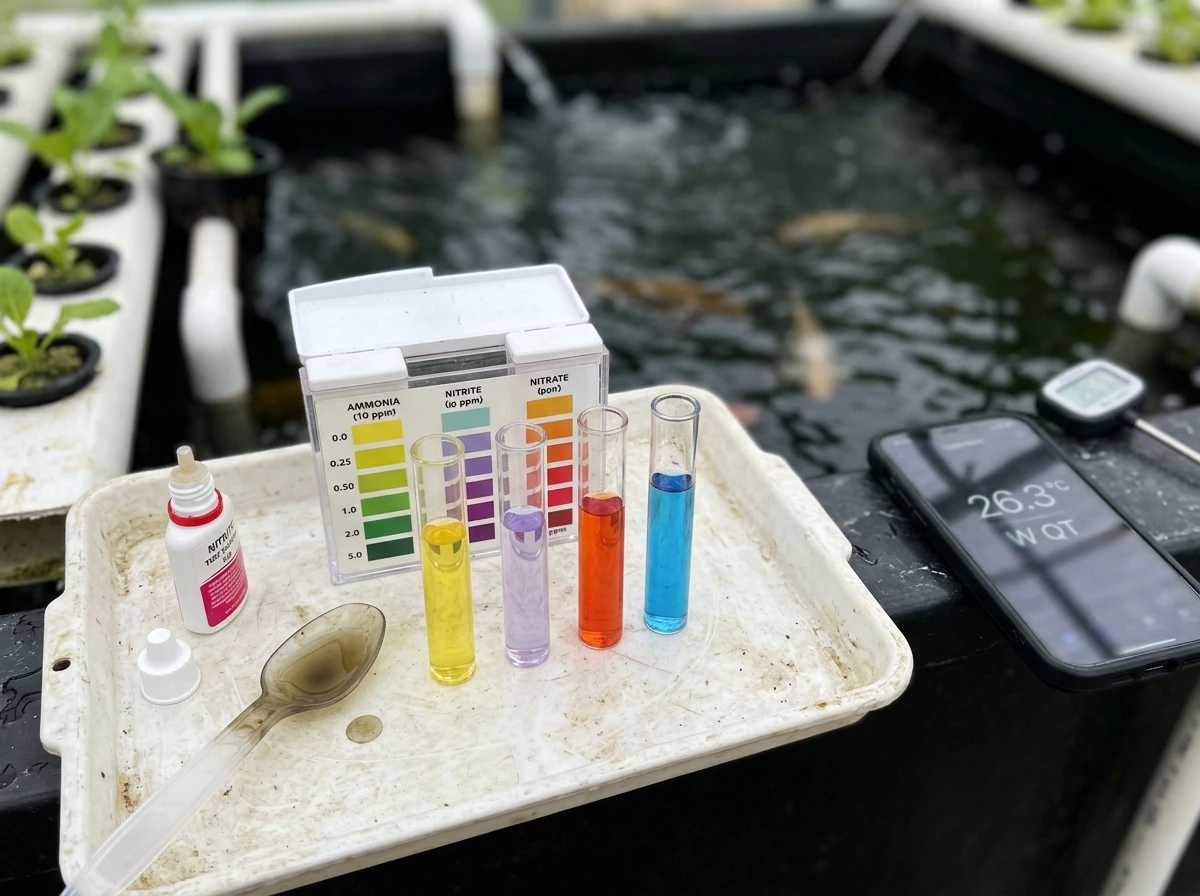
A common beginner mistake is overstocking early. Start conservative: around 1 lb of fish per 5-10 gallons of tank water is a reasonable starting point. As your bacterial colony matures and you get comfortable reading your water parameters, you can increase density. Overstocking before the biofilter is fully established is one of the fastest ways to crash a system.
Cycling: the most important thing you'll do
Cycling means establishing your nitrifying bacterial colony before (or while) fish are present. Without it, ammonia and nitrite will spike to lethal levels. There are two approaches: fishless cycling and cycling with fish.
Fishless cycling is the gentler option. You add a pure ammonia source (unscented household ammonia or fish food left to decompose) to target about 4-5 ppm ammonia. Then you wait, testing daily. You'll see ammonia rise, then nitrite spike, then nitrate start climbing as each bacterial population establishes. Cycling is complete when ammonia and nitrite both drop below 0.5 ppm within 24 hours of adding an ammonia dose, and nitrate is rising steadily. This typically takes 4-6 weeks.
Cycling with fish takes longer, often six weeks or more, and puts fish under some stress. If you go this route, stock lightly, feed minimally, and do partial water changes if ammonia or nitrite climbs above 1 mg/L. The single best way to speed up either method is to seed your system with media, filter sponge, or water from an already-cycled aquarium or aquaponics system. Even a cup of established gravel can cut weeks off your cycle time.
Water quality targets to hit and maintain
Once your system is cycled and running, these are the numbers you're managing every week. During cycling, test daily. After fish and plants are established, two to three times per week is usually enough unless something looks off.
| Parameter | Target Range | Why It Matters |
|---|---|---|
| pH | 6.8–7.2 | Balances bacterial nitrification and plant nutrient availability |
| Ammonia (NH3/NH4+) | 0 mg/L (< 1 mg/L during cycling) | Toxic to fish above safe thresholds |
| Nitrite (NO2-) | 0 mg/L (< 1 mg/L during cycling) | Toxic to fish; signals incomplete nitrification |
| Nitrate (NO3-) | 5–150 mg/L | Primary plant nutrient; fish tolerate up to ~300 mg/L |
| Dissolved Oxygen (DO) | > 6 mg/L (bacteria optimum 4–8 mg/L) | Critical for fish, bacteria, and roots |
| Carbonate Hardness (KH) | 60–120 mg/L | Buffers against pH crashes |
| Water Temperature | 65–82°F depending on fish species | Affects bacterial activity and fish metabolism |
pH is the one that sneaks up on people. Nitrification actively consumes alkalinity, so in a productive system pH will slowly drift downward. If it drops to around 6 or below, nitrification slows significantly. Potassium bicarbonate or calcium carbonate (crushed coral in the sump) are common ways to buffer pH back up without introducing sodium.
Growing plants in your aquaponics system
Once your water is stable and your bacterial colony is established, the plant side is where aquaponics gets genuinely fun. The key difference from pure hydroponics is that your nutrient source is biological and variable. If you specifically want to grow methi without fish, look for a hydroponic methi setup and nutrient plan that matches leafy greens’ needs how to grow methi hydroponically. You're managing a living ecosystem, You're managing a living ecosystem, not a nutrient reservoir you mix to spec hydroponically.
Grow media: what to use and why
For media beds, expanded clay aggregate (LECA) and gravel are the two most widely used options. LECA is lightweight, has a good surface area for bacteria, and doesn't compact over time. Gravel is cheap and effective but heavier. Aim for a media particle size of around 8-16mm, which balances drainage (preventing waterlogging and root rot) with enough surface area for bacterial colonization. Avoid fine materials like sand, which compact, reduce airflow, and clog quickly.
Flood and drain scheduling
In a media-bed system, flood-and-drain (ebb and flow) is almost always better than constant flow. Each flood cycle delivers fresh nutrients and oxygen to roots; each drain cycle pulls air into the media. A typical schedule for a mature system is flooding for 15-30 minutes, then draining completely before the next cycle. This is controlled by a pump timer combined with a standpipe or bell siphon. Flood 3-4 times daily during early plant establishment, then adjust based on plant size and ambient temperature. Constant flow setups can leave stagnant zones in the media where anaerobic pockets form, which is something you want to avoid.
Managing nutrients and iron
Fish waste provides a solid nitrogen base, but aquaponics systems can run low on iron and some other micronutrients. The fix is chelated iron, added at low doses (around 2 mg/L is commonly used). The type of chelate matters: DTPA chelate works well at the pH range of 6.5-7.0 common in aquaponics, while EDTA-chelated iron becomes less available above pH 7. If your plants are yellowing between the veins (chlorosis) while the veins stay green, that's usually an iron deficiency. It's one of the most common plant problems I've seen in otherwise well-run systems.
Best plant species for aquaponics
Leafy greens and herbs are the sweet spot for aquaponics, especially early on. Heavy fruiting crops like tomatoes and peppers can work but demand a well-stocked, mature system with higher nitrate levels to support that growth.
- Lettuce (all types): fast-growing, low demand, harvest leaf-by-leaf once plants hit around 15 cm; continuous harvesting can run 30-50 days per plant
- Basil: high nitrogen uptake, thrives in aquaponics, pairs well with tilapia systems
- Spinach and Swiss chard: easy to grow, consistent producers
- Kale and silverbeet: sturdy, tolerant of fluctuating conditions
- Mint, chives, and parsley: low-maintenance herbs that do well in media beds
- Tomatoes and cucumbers: possible in mature systems with strong fish loads, but need support structures and higher nutrient levels
- Avoid root vegetables (carrots, potatoes) in media beds as they compete with the media and are hard to harvest without disturbing roots
Step-by-step: from building your system to first harvest
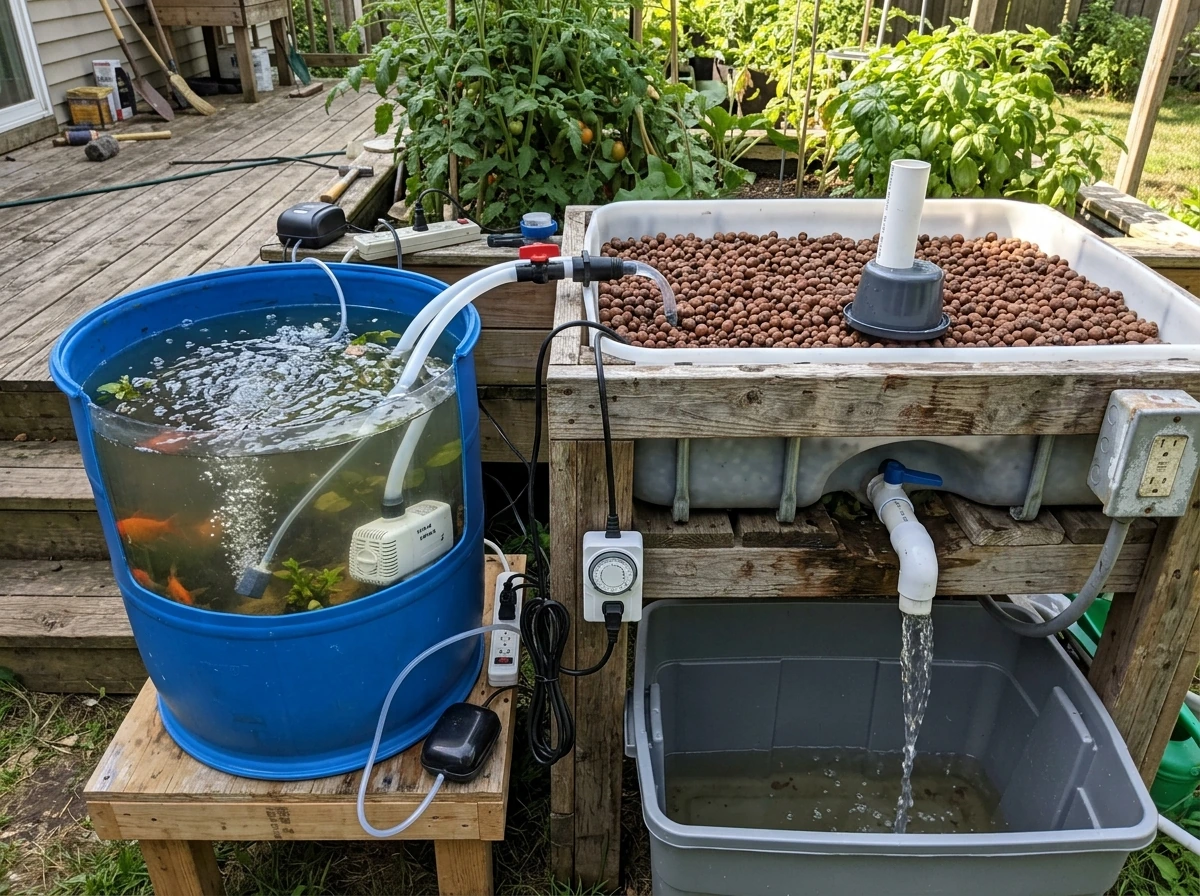
- Assemble your components: fish tank, grow bed(s), pump, timer, standpipe or bell siphon, aeration (air pump and air stone), plumbing to connect tank to grow bed and drain back. Fill with dechlorinated water.
- Set up your aeration and confirm your pump moves water adequately. Check all connections for leaks before adding anything biological.
- Begin fishless cycling: add ammonia to target 4-5 ppm. Test pH, ammonia, nitrite, and nitrate daily. Record everything in a simple log.
- Watch for the nitrite spike (usually around week 2-3). This tells you Nitrosomonas bacteria are working. Keep adding small ammonia doses to feed the bacteria colony.
- Wait for ammonia AND nitrite to drop simultaneously while nitrate climbs. Once both ammonia and nitrite drop below 0.5 ppm within 24 hours of an ammonia dose, your system is cycled.
- Do a large partial water change (about 30%) to lower accumulated nitrate before adding fish, then add your fish at a conservative stocking density.
- Start feeding fish lightly (only what they consume in 5 minutes, once or twice daily). Retest water parameters every 2-3 days for the first few weeks to confirm stability.
- Once fish are settled and water parameters are stable for 1-2 weeks, add your first plants. Start with seedlings or net pots with established starts rather than seeds for faster results.
- Monitor plant growth alongside water testing. Yellowing leaves, slow growth, or wilting usually point to a water quality or nutrient issue rather than a plant problem per se.
- For lettuce and herbs, expect first harvest within 4-6 weeks of transplanting into an established system. Harvest outer leaves first and let plants keep producing.
Maintenance, common problems, and how to fix them
A well-cycled aquaponics system is fairly self-regulating, but it still needs regular attention. Most problems have clear early warning signs if you're testing your water and watching your fish and plants.
Routine maintenance checklist
- Test pH, ammonia, nitrite, and nitrate 2-3 times per week in an established system
- Check dissolved oxygen and water temperature weekly
- Top off evaporated water with dechlorinated water (not tap water directly if your municipality uses chloramine)
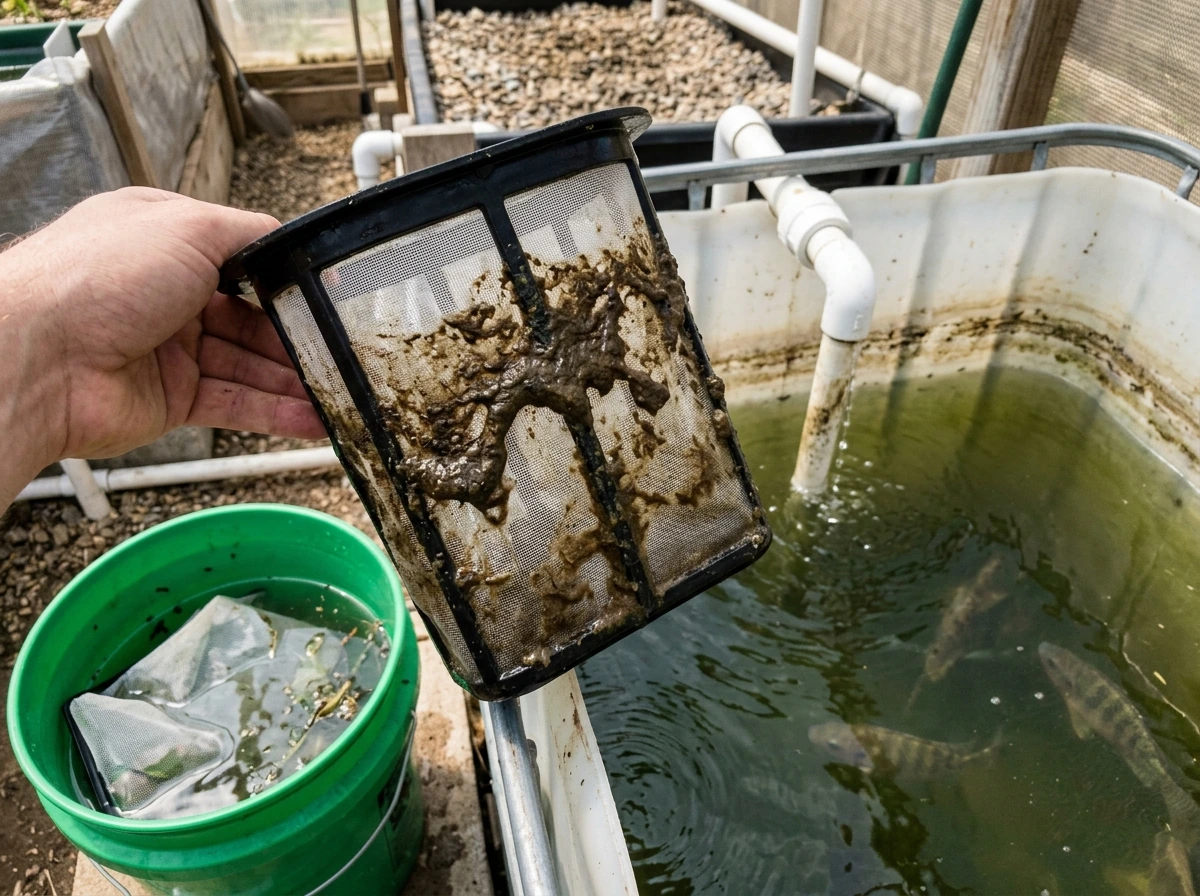
- Clear any debris from the sump or solids filter monthly (more often in heavily stocked systems)
- Check pump and timer function weekly
- Inspect plant roots for slime, rot, or pests monthly
Clogged filters and solids buildup
This is probably the most common mechanical problem in aquaponics. Fish solids accumulate in media beds, sump screens, and DWC pre-filters. Signs include slow drainage, pooling water on the surface of media beds, or a sulfurous smell from the media (anaerobic pockets). Fix: physically remove and rinse solids trap or sump filter. In media beds, a flushing drain cycle or occasional hand-raking of the surface media helps prevent compaction. If you're running a DWC system, a swirl/radial filter or settling tank before the raft channel is almost essential.
pH drifting too low
In a productive system, pH will trend downward over time because nitrification consumes alkalinity. If pH drops below 6.8, plant nutrient availability starts to suffer. Below 6.0, bacterial activity slows significantly. Correct it gradually: add small doses of potassium bicarbonate or calcium carbonate to raise pH. Never try to correct a large pH swing all at once; a sudden shift stresses fish. Target small adjustments of 0.2-0.3 pH units per day.
Ammonia or nitrite spikes
If ammonia or nitrite rises above 1 mg/L in a running system, treat it as an emergency. Stop feeding fish immediately. Do a 20-30% water change with dechlorinated water. Check whether your pump or aeration has failed, because low dissolved oxygen is a quick way to crash a bacterial colony. Reduce fish load temporarily if overstocking is the cause. Don't add more fish or increase feed until parameters return to safe levels for at least a week.
Slow or stalled plant growth
If your water chemistry looks fine but plants aren't growing well, check these in order: light (most indoor setups are under-lit; leafy greens typically need 12-16 hours of adequate light daily), iron (add chelated iron if you haven't), and whether nitrate is actually high enough (below 5 mg/L means your fish aren't producing enough nutrients for the plant load). Stunted growth with yellowing often means iron deficiency or pH too high for nutrient uptake.
Algae problems
Algae thrive on the same nutrients your plants want, and they love light. Green water in your fish tank or algae mats on surfaces are common in systems with exposed water surfaces near light sources. The fix is primarily physical: shade any exposed water surfaces (cover your fish tank and DWC channels), and physically remove algae mats when they appear. Don't use algaecides in an aquaponics system; they'll harm your fish and bacterial colony.
Harvesting, food safety, and scaling up
Harvesting your plants
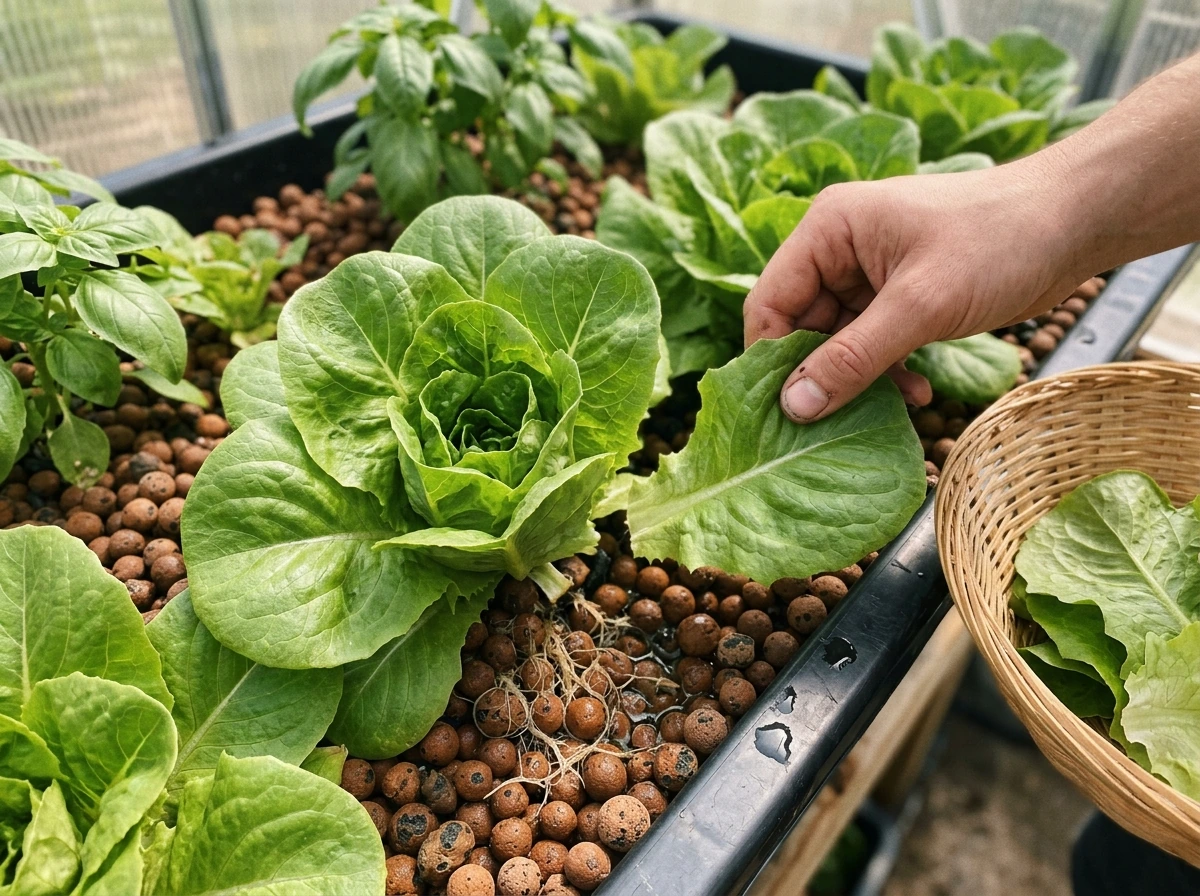
For leafy greens like lettuce and herbs, harvest the outer, larger leaves first and leave the growing center intact. This continuous harvest method can extend a plant's productive period to 30-50 days per plant. For basil, pinch off flower heads as they appear to keep the plant producing leaves rather than going to seed. Wash all produce well before eating, as you would with any garden product. This is especially important since the water circulates through a system containing fish and organic material.
Harvesting fish
If you're running an edible fish species like tilapia, a 24-48 hour purge in clean, dechlorinated water before harvest improves the taste significantly by clearing any off-flavors from the tank environment. Handle and process fish hygienically. Keep fish and plant harvests food-safe by not using any pesticides, heavy-metal-containing treatments, or non-food-safe sealants in your system build.
Scaling up your system
Once you've run your first system through a full grow cycle and feel comfortable with your water parameters, scaling up is mostly a matter of adding grow bed volume and adjusting fish load proportionally. A few practical ways to grow your system:
- Add more grow beds to an existing fish tank before upgrading the tank (this increases plant production without complicating fish management)
- Introduce a sump tank between the fish tank and grow beds to add water volume and buffer parameter swings
- Automate pH and water level monitoring with basic sensors and auto-top-off systems; these reduce daily labor substantially on larger setups
- Add a separate biofilter if you're moving to a DWC or NFT configuration, to ensure you maintain adequate bacterial colonization as you increase fish load
- If moving outdoors or to a greenhouse, factor in temperature swings, pest pressure, and UV exposure on pipes and tanks
The biggest lesson I've taken from scaling aquaponics systems is: don't increase your fish load and your plant area at the same time. Change one variable, let the system stabilize, then adjust the next thing. Systems that get upgraded in every direction at once tend to crash because there's no way to identify which change caused a problem. Go slow, test frequently, and the system will reward you with consistent, low-input production that's genuinely hard to match with any other growing method.
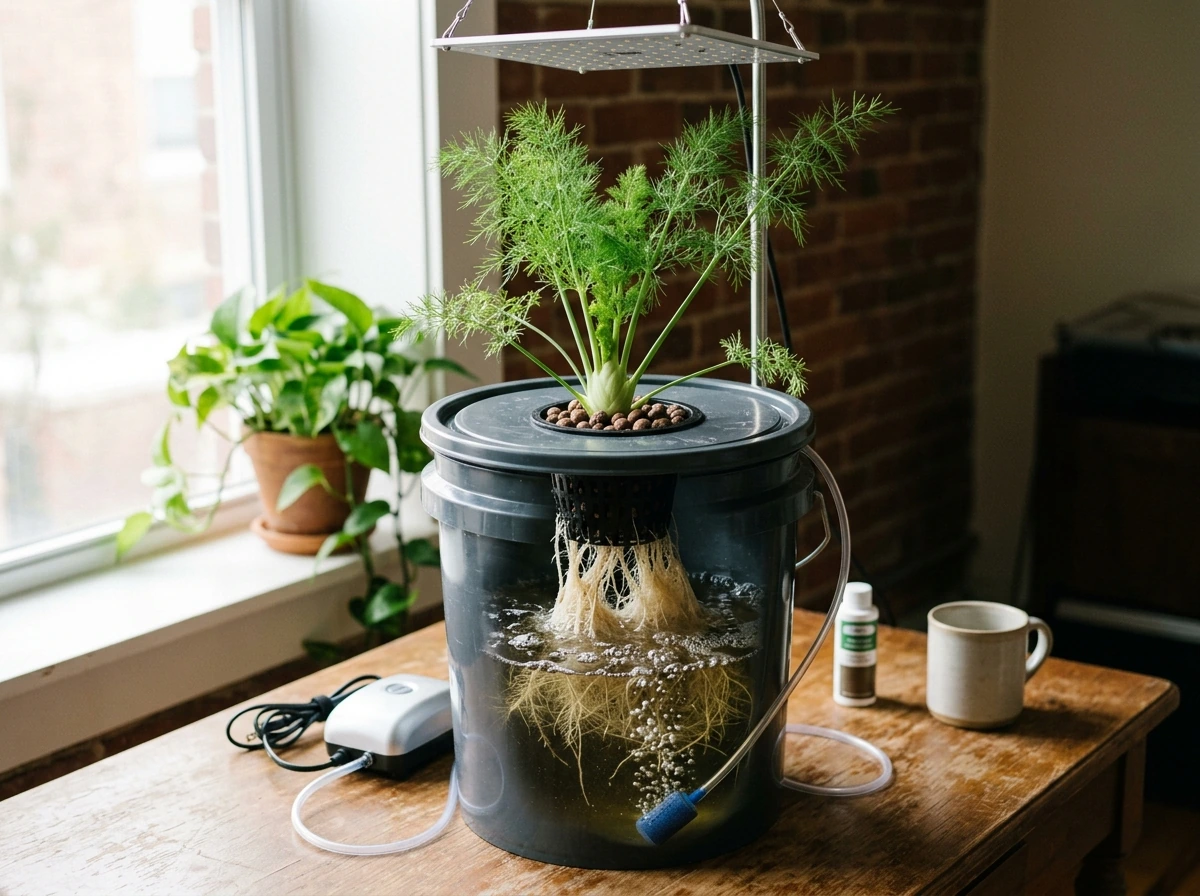
If you want to explore specific plant growing techniques that complement aquaponics, digging into general hydroponic growing methods is a natural next step since the plant-side mechanics overlap significantly And if you're interested in growing specific species like herbs or leafy greens in water-based systems, there are detailed guides on species like fennel, how to grow fennel in water, And if you're interested in growing specific species like herbs or leafy greens in water-based systems, there are detailed guides on species like fennel, how to grow fennel in water, and pechay that cover techniques you can adapt directly to your aquaponic grow beds.
FAQ
After I finish cycling, how often should I test water, and what should I watch first?
Plan on testing and adjusting alkalinity and pH more often than you think during the first month. Even if your cycle completes, pH can keep drifting as the bacterial colony grows and plant uptake accelerates. A practical approach is to test pH and alkalinity whenever you test ammonia, nitrite, and nitrate until levels stop trending, then fall back to routine checks (often 2 to 3 times per week).
What’s the most important backup to have so my aquaponics system doesn’t crash during power or pump failures?
Use a backup air path, not just a bigger aerator. If you lose aeration, dissolved oxygen can collapse quickly, which can stall nitrification and crash fish. Add redundancy like a second air pump on a separate power outlet (or battery/UPS if feasible), and consider an emergency aeration method (air stone plus spare pump) you can swap in within minutes.
Can I run aquaponics in cold winters or hot summers, and how do I avoid crashes when temperatures change?
Yes, but only if you keep the nitrogen cycle fed and buffered. Plants can tolerate temperature swings, but the bacteria and fish are more sensitive. If you move indoors or reduce heat, watch that fish feeding drops appropriately, then keep nitrification alive by maintaining oxygen and alkalinity. The most common mistake is keeping the same feeding schedule while water temperatures drop, which increases ammonia before the biofilter can process it.
Can I start planting before the system is fully cycled, and which plants are safest to start with?
If you want to add plants early, start with low-demand crops and treat the system like it’s still finishing the cycle. You can “test” plant readiness by adding only a small number of seedlings (or cuttings) and monitoring nitrate trend, plant color, and signs of nutrient lockout. Avoid adding heavy feeders like fast-growing fruiting crops until nitrate is consistently supporting plant growth.
My plants are yellowing, should I always add chelated iron, or are there other causes I should rule out?
Don’t treat iron deficiency only by adding iron, check pH and chelate type first. If pH is drifting high, EDTA-based iron can become less available even when you dose it, and plants may still show chlorosis. Also confirm the symptom pattern: yellowing between veins with greener veins often points to iron, but magnesium or potassium issues can look similar depending on crop stage.
What feeding mistakes most commonly prevent aquaponics from producing good plant growth?
Overfeeding is the fastest way to overwhelm your biofilter and create chronic solids and nutrient imbalance. A simple guardrail is to feed only what fish consume quickly (no visible sinking leftovers), then reduce feed when ammonia or nitrite rises or when plants stop growing despite normal lighting. If you need to increase production, increase fish feed gradually, and only then expand plant area.
How do I prevent solids from building up, especially in DWC or media beds?
You usually need to manage solids removal separately from nutrient cycling. In media beds, allow for periodic flushing and surface raking because trapped fines can become anaerobic and reduce oxygen in the root zone. In DWC or raft channels, make sure solids filtration is upstream of the raft, otherwise fish waste can foul roots and block oxygen delivery.
What are the biggest mistakes people make when cleaning filters or grow media, and how do I clean without resetting my cycle?
Set up your biofilter with stable surface area and keep it “wetted and oxygenated.” If you rinse the media in tap water, use dechlorinated water, because chlorine can knock back bacteria and restart the cycle. Also avoid replacing all grow media at once, incremental media changes are safer because they preserve enough bacterial colony to prevent ammonia spikes.
Do I need to purge or treat anything before harvesting fish and produce, and how do I do it safely?
For harvest, keep one routine for plants and a separate one for edible fish processing. For plants, continuous harvesting of outer leaves reduces stress and extends productivity. For fish, a short purge in clean dechlorinated water can improve taste, but only if the fish remain oxygenated and handled hygienically, and you should keep water conditions steady so the purge doesn’t cause additional stress.
What should I troubleshoot first if my nitrate levels are low and plants aren’t getting enough nutrients?
If nitrate stays low, the problem is usually fish input, biofilter performance, or aeration, not the plants. First confirm ammonia and nitrite are staying near zero, because that means nitrification is working. If those are fine but nitrate still won’t rise, check whether your fish are understocked or underfed, then verify oxygen and alkalinity so nitrifying bacteria can keep converting waste.