Yes, you can grow a money plant (pothos) in water with nothing more than a cutting, a glass jar, and tap water, no soil, no roots, no special equipment. I've been doing this on windowsills for years, and it's one of the most forgiving setups in water-based growing. Roots typically appear within 3 to 4 weeks, and if your conditions are warm, you'll often see little buds pushing out in as little as 1 to 2 weeks. This guide walks you through the whole process: picking the right cutting, setting it up correctly, keeping it healthy long-term in water, and transplanting it to soil when you're ready.
How to Grow Money Plant in Water Step by Step
Marcus Holloway
5 Apr 2026
Choosing the right money plant cutting
The cutting you start with makes or breaks this entire process. A bad cutting will rot before it ever roots, and I've wasted weeks learning that the hard way. Here's what to look for when you're selecting a stem from an existing plant.
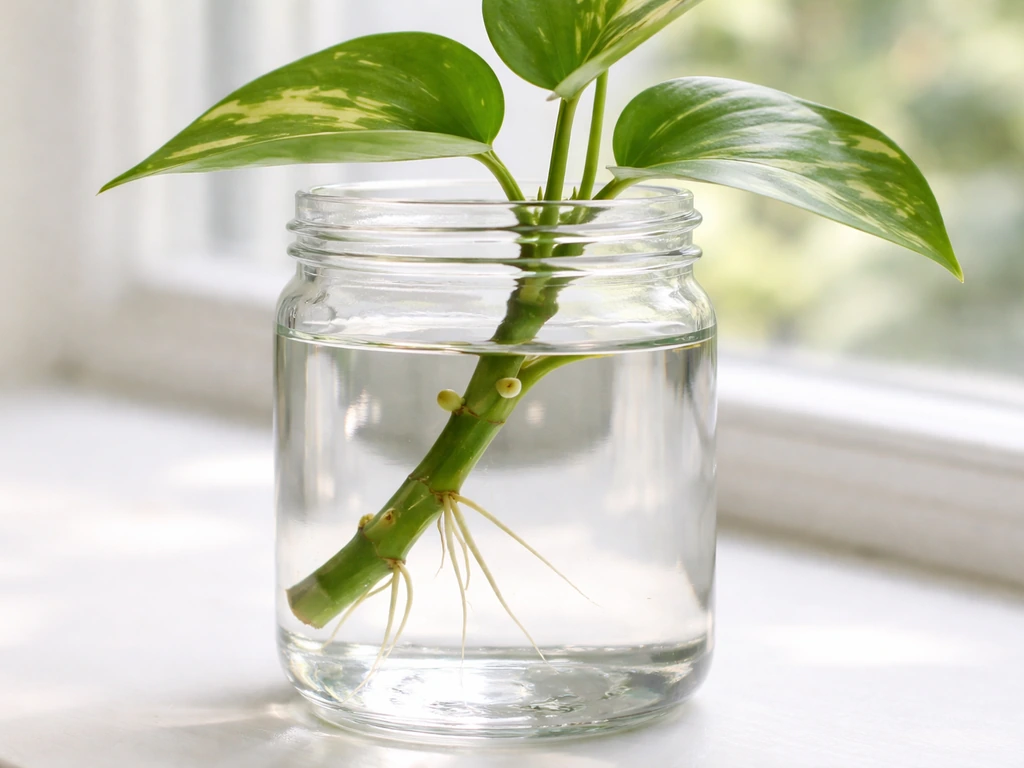
- Pick a stem that has at least one node — the small brown bump or nub on the stem where roots will emerge. No node means no roots, period.
- Your cutting should have 2 to 4 leaves and be roughly 10 to 15 cm (4 to 6 inches) long. Longer isn't better; it just puts more strain on the cutting before it has roots to support itself.
- Choose a healthy, firm stem. Avoid anything with yellowing, mushy, or bruised sections — those problems accelerate fast in water.
- Use clean scissors or a blade, and cut just below a node at a 45-degree angle. This maximizes the surface area that will be submerged and increases rooting speed.
- Remove any leaves that will sit below the waterline. Submerged leaves rot quickly and will cloud the water and introduce bacteria within days.
One thing I always recommend: take two or three cuttings at once. Propagation success rates are high with pothos, but having backups costs you nothing and guarantees you end up with at least one strong plant.
Setting up your indoor water rooting container
The setup is simple, but the details matter. Your container, your water source, and your light placement all affect how fast those roots appear and how healthy the plant stays over the long term.
Container choice
Use a glass jar, vase, or bottle, something narrow enough that the cutting is supported upright without falling over. Opaque or colored glass is slightly better than clear because it limits light reaching the water, which slows algae growth. That said, a clear mason jar works fine if you're just starting out. Make sure your container is clean; wash it with warm soapy water and rinse well before use.
Water type and temperature
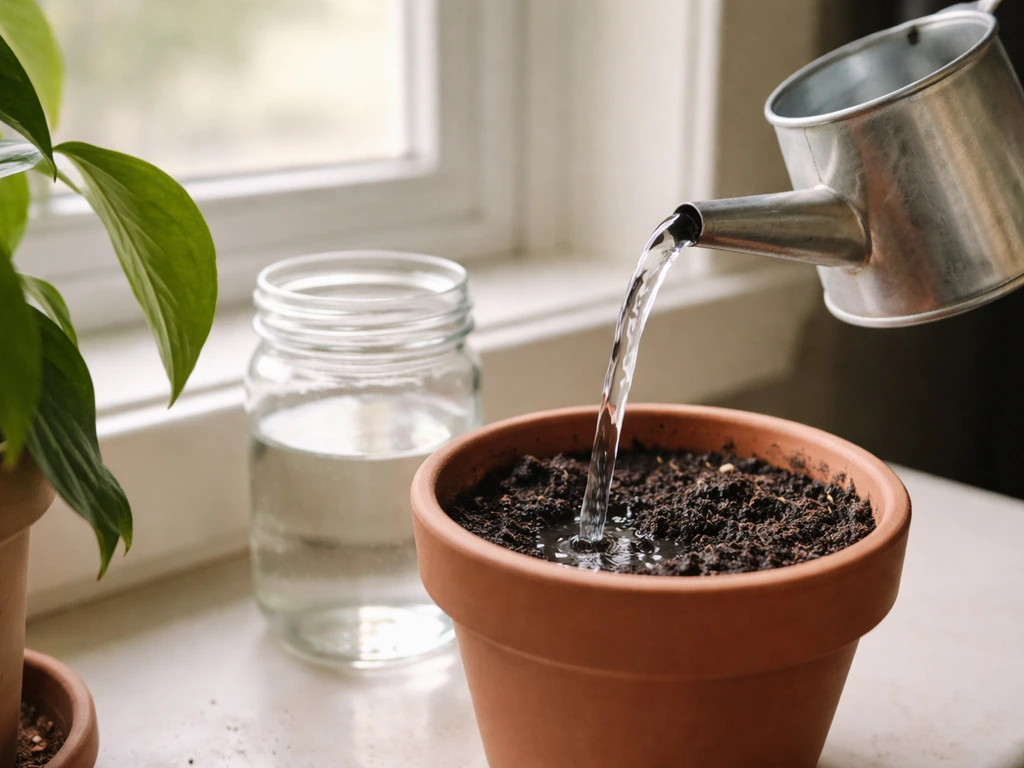
Regular tap water works, but let it sit out for 24 hours before using it if your tap water is heavily chlorinated, this lets the chlorine off-gas. Room-temperature water is best; cold water from the tap can stress tropical cuttings and slow rooting. Filtered water or rainwater are good options if you want to go a step further. Avoid softened water, which contains sodium and is genuinely harmful to plants over time.
Light placement
Pothos is famously tolerant of low light, but bright indirect light will give you significantly faster rooting and healthier growth. A spot near a north- or east-facing window works well. Direct afternoon sun heats the water, promotes algae blooms, and can damage the cutting, so avoid it. If natural light is limited in your space, a basic grow light running 12 to 14 hours per day is more than sufficient.
Step-by-step: growing money plant in water at home
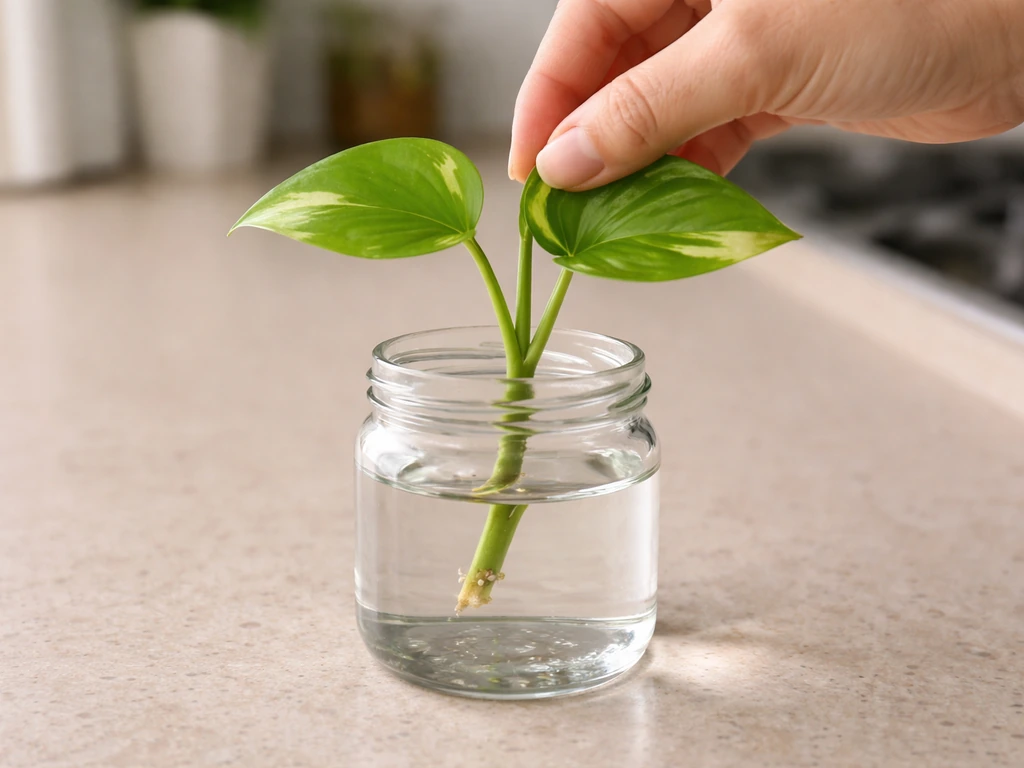
- Take your cutting just below a node, leaving 2 to 4 leaves above and nothing below the waterline. Strip any lower leaves cleanly.
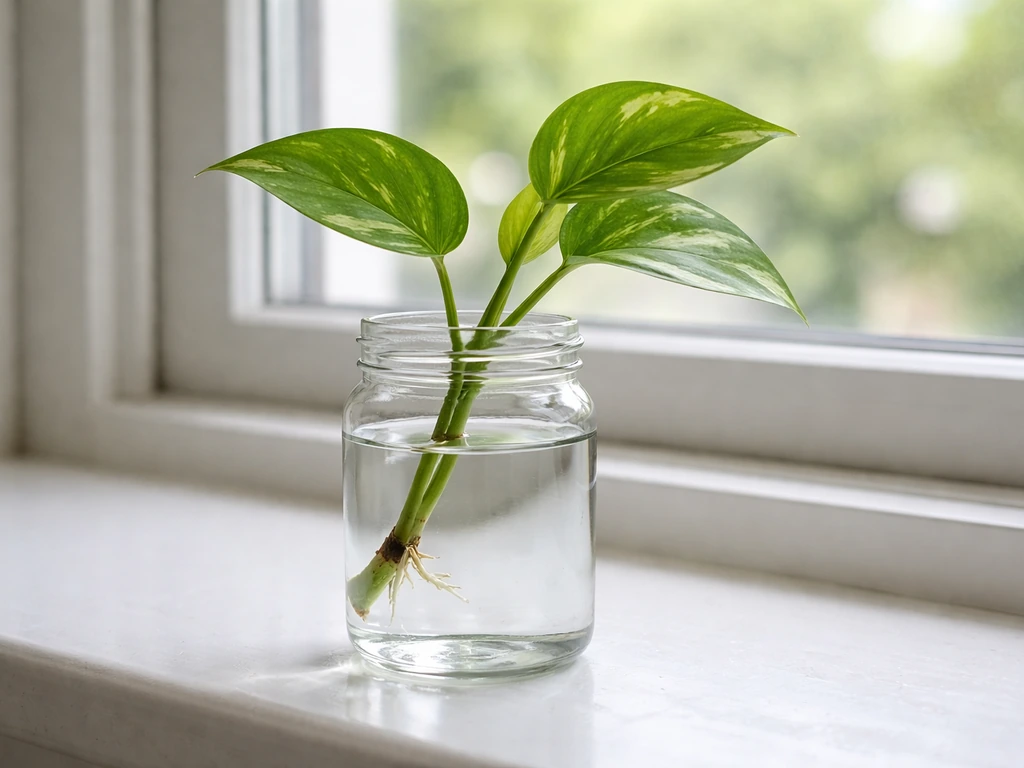
- Fill your container with room-temperature, dechlorinated water so that the node is fully submerged but the leaves sit above the waterline.
- Place the jar in a spot with bright indirect light and stable warmth — ideally 18 to 27°C (65 to 80°F). Warmer temperatures push rooting speed up noticeably.
- Wait. Roots usually appear within 2 to 3 weeks; full, usable roots are ready in 3 to 4 weeks. Buds can start emerging from the cutting in as little as 1 to 2 weeks in warm conditions.
- Change the water every 3 to 4 days for the first two weeks, then once or twice a week after roots appear. Keep the water level consistent — never let it drop so low that developing roots are exposed to air, as this halts growth and can cause root dieback.
- Once roots are 5 to 7 cm (2 to 3 inches) long, the plant is fully established in water and can stay there indefinitely or be transplanted to soil.
How to start without roots and without soil
This is the question I get most often: can I really just drop a bare stem in water with zero roots and have it work? Yes. Pothos is one of the best plants for this. The node on the stem contains all the cells needed to generate roots, water, warmth, and light are all it needs to trigger that process. No rooting hormone is required, though you can use a diluted liquid rooting hormone if you want to speed things up slightly. In my experience, pothos roots so readily in water that rooting hormone is rarely worth the effort.
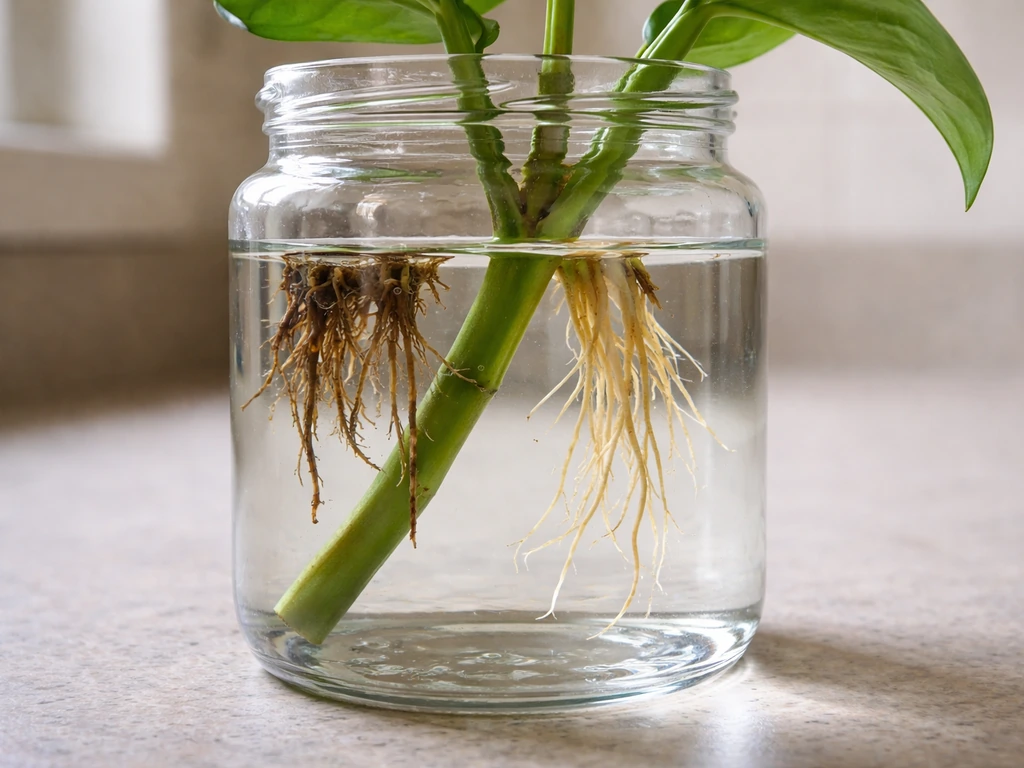
The "without soil" part is just as straightforward. Once rooted, pothos grows perfectly well as a permanent water plant. Many people run pothos in aquariums or decorative vases indefinitely. The plant shifts its root structure to work in an aquatic environment, the roots become pale and slightly stringy compared to soil roots, which is completely normal. If you want to explore how other similar trailing plants handle this kind of setup, how to grow fortune plant in water covers a closely related species with a very similar rooting process.
For cuttings specifically: the most important thing is that at least one node is submerged. If your cutting only has a leaf and no node, it will not root, ever. A leaf without a node can sit in water looking fresh for weeks before slowly declining. Don't waste your time on nodeless cuttings.
Keeping your water-grown money plant healthy
Water changes and maintenance
Consistent water changes are the single biggest factor in long-term success. Iowa State University Extension recommends changing the water one to two times per week and making sure the water level never drops enough to expose developing roots to air. I follow that advice closely: I change water every 4 to 5 days once the plant is established, and I top it off between changes if evaporation drops the level. Fresh water means more oxygen at the roots and fewer bacteria building up, both directly affect how healthy and fast the plant grows.
Nutrients and additives
Plain water keeps a pothos alive, but it won't thrive long-term without any nutrients. Add a very small amount of liquid hydroponic fertilizer or a balanced liquid houseplant fertilizer, about one quarter of the recommended dose, every 2 to 3 weeks. Too much fertilizer in water causes salt buildup and root burn. For a deeper look at what specific additives actually help, what to add in water to grow money plant goes into useful detail on that topic.
Pruning and managing growth
Trim leggy vines regularly to encourage bushier growth. When you trim, you can root those cuttings in the same jar or a new one, which is exactly how you'd grow plant clippings in water to multiply your collection for free. Pinch off any yellowing leaves promptly; leaving them in the water accelerates bacterial growth.
How to speed up growth
If your plant feels stuck, there are a few reliable levers to pull: increase light (move to a brighter spot or add a grow light), raise the ambient temperature slightly, and ensure water changes are happening consistently. For a full breakdown of techniques, how to grow money plant in water faster covers this in much more detail, including timing and environmental tweaks that genuinely move the needle.
Moving your water-grown pothos to soil
Transplanting from water to soil is where a lot of people accidentally kill a perfectly healthy plant. Water roots and soil roots are structurally different, water roots are adapted to a low-oxygen aquatic environment, and suddenly being packed into dry soil is a real shock. The key is to acclimate gradually rather than making an abrupt switch.
- Wait until roots are at least 5 to 7 cm long and look healthy (pale white or cream, not brown or slimy). Trying to transplant too early increases failure rate significantly.
- Choose a well-draining potting mix — a standard indoor potting soil with added perlite (about 20 to 30% perlite by volume) works well.
- A few days before transplanting, start reducing water changes to let the roots experience slightly more depleted water. This is a mild stress that begins shifting root behavior toward soil adaptation.
- Pot the cutting gently. Don't compact the soil around the roots — let them settle naturally.
- Water the soil thoroughly right after transplanting, and keep it consistently moist (not soggy) for the first 2 to 3 weeks. The goal is to prevent the roots from drying out while they restructure for soil.
- Expect some leaf droop or a couple of yellowing leaves in the first week — this is normal. As long as the stem stays firm and new leaves eventually appear, the transition is working.
- After 3 to 4 weeks, the plant should be established in soil and you can back off watering to a normal schedule.
One thing I've found helpful: don't fertilize for the first 4 to 6 weeks after transplanting. The plant is already under stress from the transition, and fertilizer salts in disturbed soil can add to that stress.
Troubleshooting common problems
| Problem | Likely Cause | Fix |
|---|---|---|
| No roots after 4+ weeks | Too cold, too dark, or node not submerged | Move to a warmer, brighter spot; confirm node is fully underwater |
| Slimy or mushy stem | Bacterial rot from stagnant water or submerged leaves | Change water immediately, trim any rotten tissue with clean scissors, remove all submerged leaves |
| Yellow leaves | Overexposure to direct sun, nutrient deficiency, or bacterial buildup in water | Check light placement, add diluted fertilizer, change water more frequently |
| Algae in the jar | Too much direct light reaching the water | Switch to opaque or colored glass, move jar away from direct sun |
| Roots turning brown | Old stagnant water, or roots exposed to air | Change water more frequently; top up water level to keep roots submerged |
| Slow overall growth | Low light, cold temperature, or no nutrients | Increase light to 12+ hours, maintain 20–27°C, add diluted liquid fertilizer |
The slimy stem problem is the one that catches most beginners off guard. It almost always comes down to submerged leaves decomposing in the jar, a completely avoidable issue if you strip all leaves below the waterline before you even start. If you catch sliminess early and trim back to firm, healthy stem tissue, the cutting can often recover. If the sliminess has reached the node, it's best to take a fresh cutting and start over.
Regional growing conditions can also affect how well these tips apply to your setup. If you're working in a tropical or subtropical climate indoors, how to grow money plant in water in Tamil offers guidance tailored to those specific environmental conditions. And if you're curious about expanding to other coin-leafed or round-leafed water plants, how to grow coin plant in water is worth a look for a comparison of care requirements.
What success actually looks like
By week 1 to 2 in warm conditions: you might see small buds starting to push out from leaf nodes. By week 3 to 4: visible pale roots extending from the cut stem. By week 6 to 8: a fully rooted plant with several inches of new vine and a well-developed root system. That's the realistic timeline for a healthy water-grown pothos from a fresh cutting with no roots and no soil, achievable by anyone with a jar, a windowsill, and the patience to change the water twice a week.
FAQ
Can I use distilled or RO water instead of tap water for growing money plant in water?
Yes, distilled or RO water works, but it lacks minerals the plant may use. If you use it, rely on mild fertilizer dosing, and watch for slow growth or pale leaves, which can signal nutrient imbalance rather than a water problem.
How full should I fill the jar, and can the leaves touch the water?
Keep at least one node submerged, but avoid submerging leaves. If leaves sit in the water, they decompose and can cause slimy stems, cloudy water, and stalled rooting.
What’s the best water level practice as roots grow larger?
Top up between changes so the roots stay submerged, but don’t repeatedly raise the level too high. A stable water level reduces stress and prevents parts of the root system from drying at the surface.
Should I cover the jar to keep out dust or light?
If you want to slow algae, use opaque or colored glass, or cover only part of the container (for example, keep the water line shaded). Fully sealing the setup can reduce gas exchange, so leave some ventilation.
Why do my roots turn pale, stringy, or look different from soil roots?
That appearance is normal for pothos grown permanently in water, since aquatic roots adapt to lower oxygen. What matters is firmness and healthy growth, not matching soil-root thickness or color.
How do I know when a cutting is ready to transplant to soil?
Move to soil once you have multiple healthy roots (not just one short filament) and active new growth. If most roots are very tiny or you see frequent root browning, wait longer and keep improving light and water-change consistency.
Is it possible to keep money plant in water permanently without soil?
Yes, pothos can live long-term in water, especially if you provide nutrients. Use mild hydroponic or diluted houseplant fertilizer on a schedule, and keep water changes regular to prevent bacterial buildup.
What fertilizer should I use for money plant in water, and how much is safe?
Choose a diluted liquid fertilizer formulated for hydroponics or houseplants. Start at about one quarter of the label dose every 2 to 3 weeks, then adjust based on growth speed and whether the water starts smelling or getting cloudy faster.
My water smells bad or turns cloudy. Does that mean the cutting is doomed?
Not always. Cloudiness often comes from decomposing leaf material or insufficient water changes. Remove any leaves below the waterline, switch to a consistent change schedule, and if the node area is slimy or soft, restart with a fresh cutting.
How long can I leave the water before changing it?
For long-term success, don’t stretch it too far. If you see cloudiness, a stronger smell, or root browning, switch back to changing more often (about every 4 to 5 days once established, and earlier if needed).
Can I propagate money plant in water using cuttings from different plant sections?
Yes, but prioritize stems with clearly visible nodes. Cuttings that have only a leaf, even if they look healthy, usually fail to root because the node is what triggers root formation.
Will growing in water affect the plant’s leaf size or variegation?
It can. With bright indirect light and appropriate nutrients, variegation often stays attractive, but low light in water setups may reduce contrast and slow overall leaf growth.
What’s the best way to prevent algae in a clear jar?
Reduce light reaching the water by using a less transparent container, placing the jar away from direct sun, or wrapping the jar with light-blocking material. Regular water changes also help by removing nutrient buildup algae feed on.
Should I add hydrogen peroxide or other treatments if water looks messy?
Use caution. Mild hydrogen peroxide can temporarily reduce microbes, but it can also stress cuttings if overused. First fix the usual causes (leaf debris, light exposure, irregular water changes) before using any additives.