Water caltrop (Trapa natans and related Trapa species) is a floating, rooted aquatic annual that grows from a spiny nut, forms a rosette of diamond-shaped leaves on the surface, and blank" rel="noopener noreferrer">produces edible nuts from July through October. You can grow it in a large tub, stock tank, or backyard pond with at least 1–2 meters of water depth, full sun, warm water above 15°C, and seeds that have been cold-stratified for at least nine weeks. If you get those fundamentals right, germination and nut production are very achievable, even in a container setup on a patio or deck. If you want the same approach for growing a croton plant in water, the key is using fresh, healthy cuttings and maintaining clean water container setup. For a complete walkthrough, follow the steps in this guide for how to grow corms in water. If you specifically want to know how to grow cannas in water, the setup and temperature targets are different, but you can still follow a similar step-by-step approach container setup.
How to Grow Water Caltrop: Step-by-Step Guide
Know what you're growing: ID and edible vs ornamental varieties
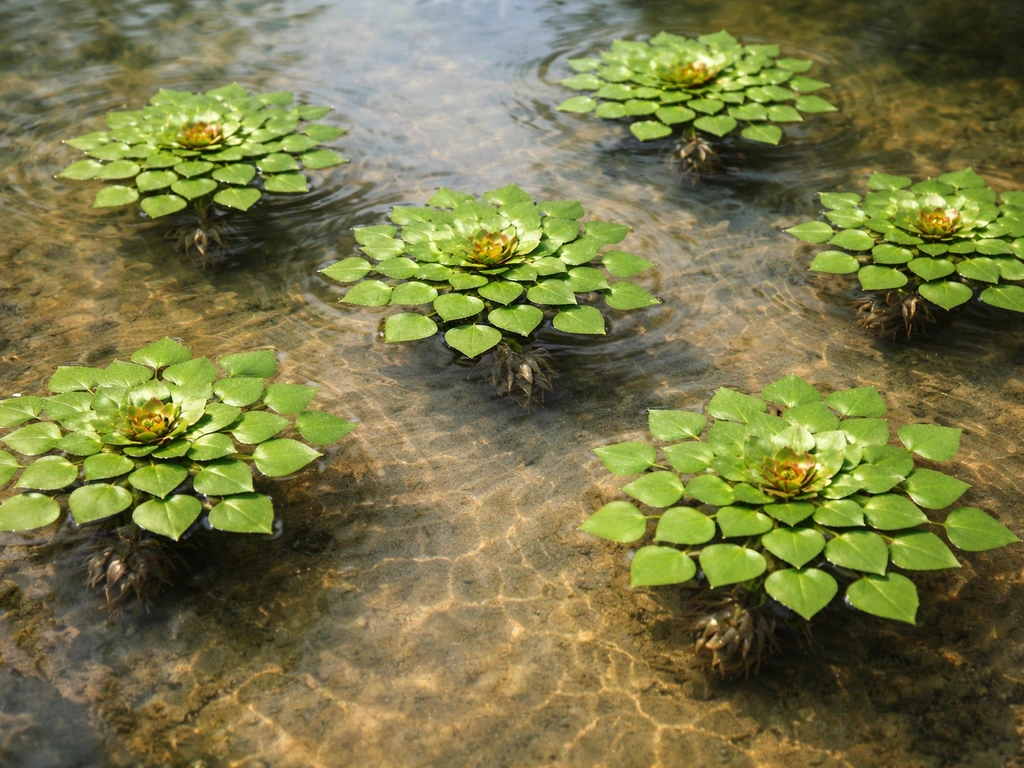
Getting the ID right matters a lot here, because 'water chestnut' is a name shared by two completely different plants. The crunchy white water chestnut sold in cans at Asian grocery stores is Eleocharis dulcis, a grass-like marsh plant with no resemblance to Trapa. Water caltrop (Trapa spp.) is the spiny-nutted floating rosette plant, and it's the one this guide covers.
Within Trapa itself, the two species you'll most likely encounter are Trapa natans (European or Eurasian water chestnut, four-spined nut) and Trapa bispinosa (two-horned water caltrop, two-spined nut). Both produce edible nuts. T. natans is the species most commonly discussed in North American cultivation circles, while T. bispinosa nuts are widely sold raw in Asian markets and are the variety most often cultivated in Southeast and East Asia for food. The NPS has a useful comparison of the two seedpod types if you want a visual reference: four spiny angles versus two horn-like projections.
Here are the key ID traits to confirm you have a true Trapa plant:
- Floating rosette of rhomboid (diamond-shaped) leaves with serrated edges arranged in a loose, flat cluster at the water surface
- Emergent leaf petioles are slightly swollen or inflated — they act like little flotation chambers
- Submerged structures include thin, feathery or pinnate leaves that look completely different from the surface leaves (this two-leaf-type trait is called heterophylly)
- Fruit is a hard, woody nut 2.5–5 cm across with 2 or 4 sharp spines depending on species — not soft, not round, and definitely not something you'd grab barefoot
- Plant roots into sediment while the rosette floats — it's anchored, not truly free-floating like duckweed
From a practical standpoint, if you're buying nuts to grow, buy from a reputable Asian grocery or specialty aquatic plant vendor and confirm the species name. Ornamental Trapa varieties exist but they're uncommon; most commercially available nuts intended for eating or growing are either T. natans or T. bispinosa, both edible. If you're foraging wild nuts, know that T. natans is classified as an invasive species in many US states, so double-check local regulations before collecting or transporting plant material.
Choosing your setup: ponds, stock tanks, and container water gardens
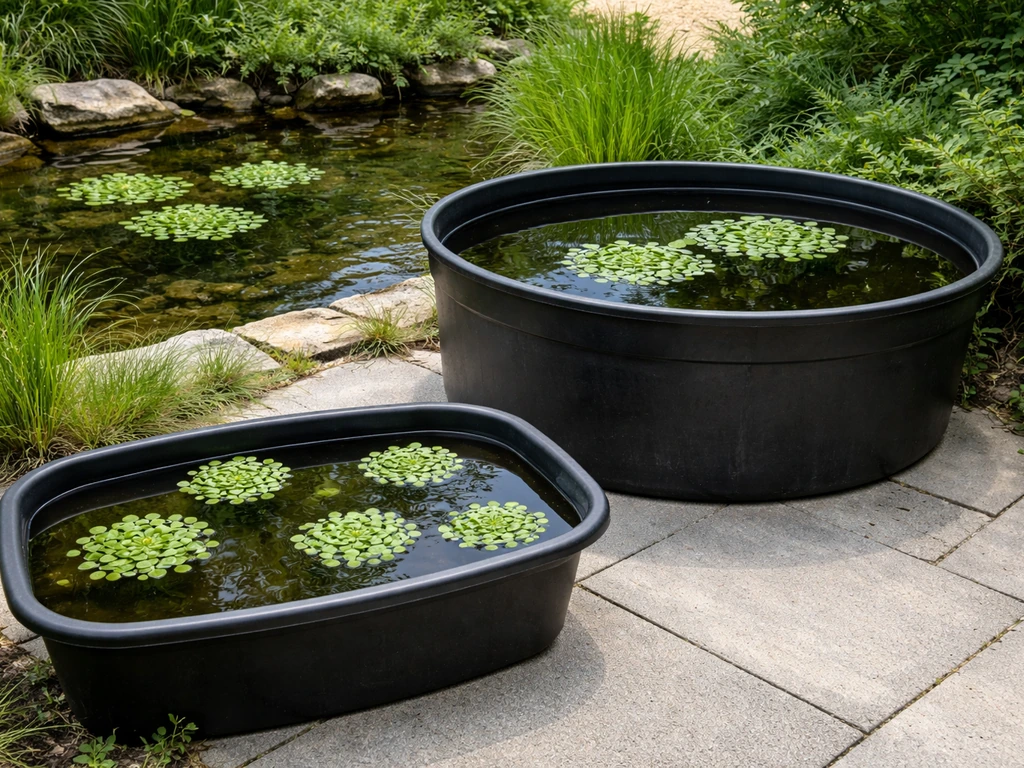
Water caltrop is adaptable enough to grow in anything that holds water and is large enough for the rosette to spread, but some setups work much better than others. If you’re also wondering how to grow cabomba, the key idea is matching the right light, temperature, and nutrient availability for that plant’s growth needs Water caltrop is adaptable enough to grow in anything that holds water. If you're specifically wondering how to grow alocasia corms in water, you'll want to focus on similar basics like clean water, warmth, and good oxygenation water caltrop is adaptable enough to grow in anything that holds water. The plant naturally grows in shallow, slow-moving or still freshwater, and it needs room to spread its floating leaves to capture sunlight. A container that's too small will limit the number of plants you can grow and restrict nut production.
Recommended container types
- 100–300 gallon (380–1,140 L) HDPE stock tanks: the best option for most home growers — durable, UV-resistant, and deep enough at 24–36 inches to hit the 60–90 cm minimum depth
- Large half-barrel or galvanized tub water gardens: workable for one or two plants but you'll be managing water quality more actively
- In-ground backyard ponds: ideal if you have one, especially if it's already established with sediment; aim for 1–2 meters depth in the growing zone for best nut production
- Large aquarium tanks (100 gallons+): possible but suboptimal indoors unless you have very strong lighting — water caltrop really wants full outdoor sun
- Natural ponds or waterways: only where the plant is legal and non-invasive in your region; containment becomes critical
Water depth is one of the biggest factors people get wrong. Research on T. natans shows fruit production peaks in 1–2 meters of water depth. Too shallow (under 30 cm) and the plant struggles to anchor properly and maintain temperature stability. If your container is only 12–18 inches deep, you can compensate by setting pots of sediment on the bottom and letting the plant root into those while the surface rosette floats at the proper height.
Containment is absolutely non-negotiable if you're in a region where T. natans is invasive (most of the eastern US, parts of Canada, and Europe). A single plant can drop more than 20 seeds before you even notice it's producing, and those seeds can stay viable in sediment for up to 12 years. Use solid-walled containers with no drainage to natural waterways. Never dump spent water or sediment into streams, rivers, or stormwater drains.
Anchoring and sediment
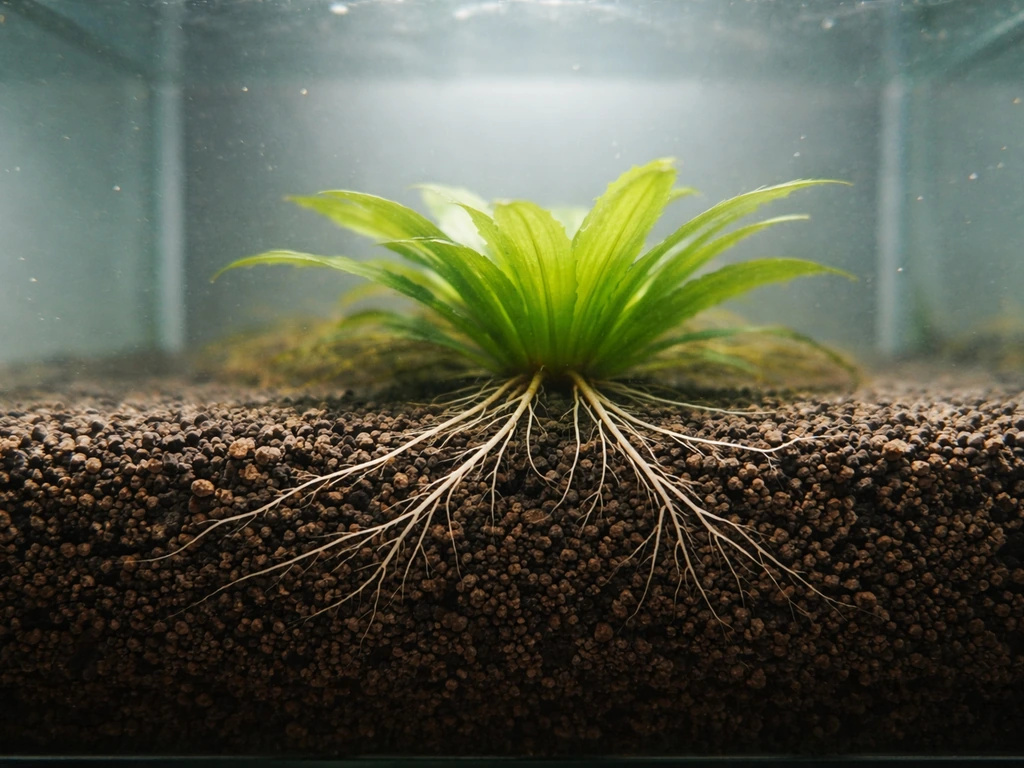
Water caltrop roots into the sediment while the rosette floats. In a container setup, add 3–5 inches of garden loam or aquatic planting soil to the bottom of your tank before filling. Avoid potting mixes with perlite or bark, those materials float and cloud the water. A basic garden soil or pond soil is fine; the plant isn't picky about soil type as long as there's enough substrate for the roots to grip. You can also plant the germinating nut directly into a small mesh aquatic planting basket filled with loam, then lower the basket to the container bottom.
Water, temperature, light, and oxygen
These four parameters determine whether your plant thrives or slowly dies. I've seen people nail the planting and spacing, then lose their crop because the water got too cold in a shaded spot or the dissolved oxygen crashed under a dense mat. For Cryptocoryne, you can use similar principles about stable water conditions, then dial in light, substrate, and temperature to match the specific species. If you want a bigger, stronger harvest, focus on keeping the water temperature stable from seed through maturity when you grow dumb cane in water water got too cold. Here's what you're targeting:
| Parameter | Target Range | Notes |
|---|---|---|
| Water temperature | 18–28°C (65–82°F) | Germination begins around 15°C; active growth and fruiting needs consistent warmth above 18°C |
| pH | 6.5–7.5 | Neutral to slightly acidic; highly alkaline water slows growth |
| Dissolved oxygen | Above 5 mg/L | Dense mats can push DO below 2.5 mg/L — aerate actively in tubs |
| Light | Full sun, 6–8+ hours daily | Plant forms dense surface mats to capture light; partial shade reduces nut production |
| Water clarity | Clear to slightly turbid | Avoid heavy algae blooms; moderate turbidity is fine as roots are in sediment |
Temperature is the biggest limiter in temperate climates. Growth begins in April as water warms, and flowering and fruit development runs from July to October. If your growing season is shorter than that, start seeds indoors in a warm indoor water container and transplant once outdoor water temperatures are consistently above 15°C.
Light is non-negotiable: water caltrop wants full sun and it will tell you quickly if it's not getting enough. Leaves will stay small, the rosette won't expand, and you'll get no nuts. Place your tub or tank in the sunniest spot you have. South-facing locations in the northern hemisphere are ideal.
Oxygen management in a closed tub is something a lot of growers overlook. Research on natural T. natans beds has found dissolved oxygen drops below 2. The Water Chestnut BMP (WNY PRISM) notes that in shallow, slow-moving waters where water chestnut infests, dissolved oxygen can be greatly lowered, which is why oxygen management matters in covered containers. 5 mg/L about 40% of the time under dense mats, which is stressful for any fish or other life sharing the container. In a tub with a few water caltrop plants, a small aquarium air pump and airstone running 24/7 is enough to keep DO in a healthy range and prevent the anaerobic funk that causes root rot.
Planting: getting seeds, germination, spacing, and timing
Getting viable seeds
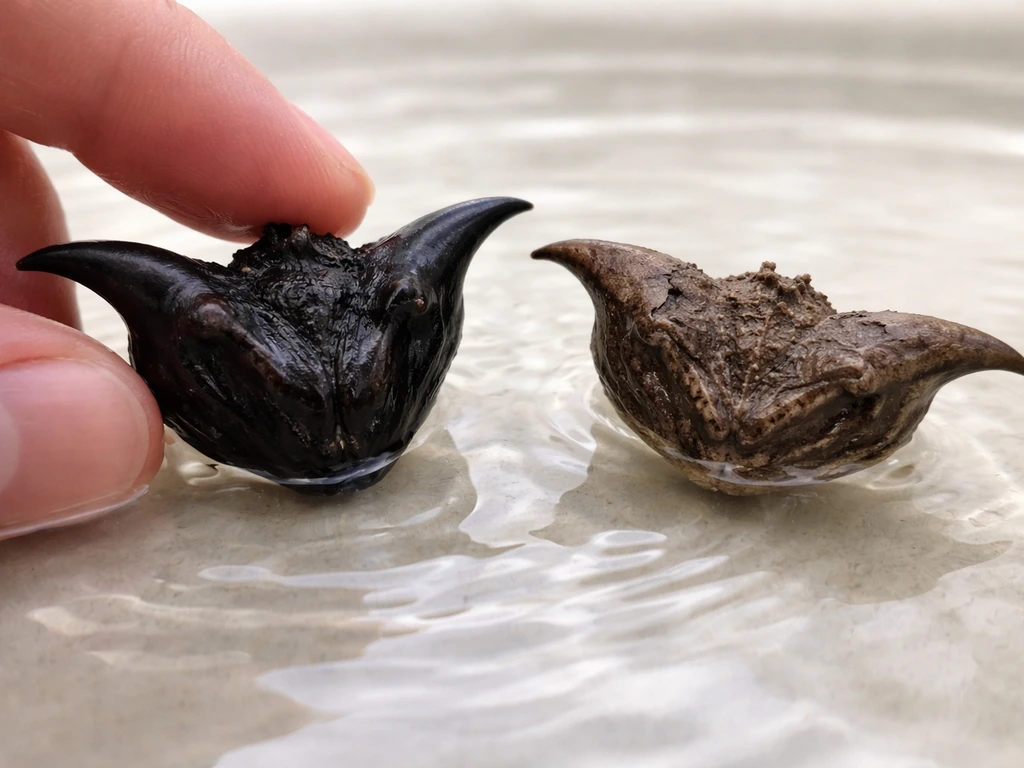
Water caltrop nuts are the seed. A viable nut looks heavy, dark brown to black, and still has its spines intact. If you squeeze it and it crumbles or the nut floats, it's likely dead. Fresh nuts sourced from Asian grocery stores (sold as raw water chestnut or ling nut, particularly T. bispinosa) in late summer or early fall have good viability. Alternatively, purchase from aquatic plant specialists who sell T. natans nuts specifically for growing.
Storing nuts: if you're not planting immediately, keep them submerged in clean water in a sealed container in the refrigerator. Studies show T. natans seeds stored this way in water-filled bottles can remain viable for up to 5 years. Don't let them dry out, a desiccated water caltrop nut is a dead one.
Cold stratification: the step most people skip
This is the single most common reason water caltrop fails to germinate. The nuts require cold stratification to break dormancy, at least nine weeks of cold exposure below roughly 10°C (50°F) before they'll sprout. If you try to plant a fresh-out-of-the-grocery-bag nut in spring without this step, you may wait indefinitely and get nothing.
How to do it: place nuts in a container of clean water, seal it, and put it in the refrigerator (not freezer) for 9–12 weeks. Check every few weeks and replace the water if it gets murky. After the cold period, move the container to a warm location, around 20–25°C, and watch for a root tip emerging from one of the nut's angles. That's your germination signal. Research also suggests shorter daylengths (like those in late winter/early spring) can help stimulate germination, which tracks with the plant's natural spring awakening. Starting stratification in November or December gives you germinated nuts ready for late February or March planting.
Planting and spacing
- Once the nut shows a root tip (radicle), it's ready to plant — don't wait until it's a full seedling or the root becomes fragile
- Press the nut gently into the sediment at the bottom of your container or into an aquatic planting basket, root tip pointing down, with the nut body just at or slightly below the sediment surface
- Fill the container with water to your target depth, slowly — pouring hard will displace sediment and bury the nut too deep
- Space plants at least 60–90 cm (2–3 feet) apart per rosette at the surface; each rosette can spread to 60 cm or more across and needs its own light zone
- For a 100-gallon stock tank, start with 1–2 plants maximum; for a 300-gallon tank or small pond, 3–5 plants is workable
Outdoor planting timing should correspond to when your water temperature reliably stays above 15°C. In most temperate North American climates, that's late May to early June for outdoor containers. In warmer USDA zones 8–10, you may be able to plant in April.
Ongoing care: nutrients, water quality, pests, and harvesting
Nutrients
Water caltrop is a heavy feeder by aquatic plant standards, but overfeeding your container is the fastest way to create an algae disaster. In a natural pond with a decent sediment layer, the plant usually doesn't need supplemental fertilizer. In a clean stock tank with basic garden soil, a slow-release aquatic fertilizer tablet pushed into the sediment near the roots every 4–6 weeks is enough to support healthy growth. Use a fertilizer formulated for aquatic plants, one that releases nutrients slowly into the sediment rather than dissolving into the water column, where it feeds algae more than the plant.
If your water turns bright green with algae bloom, ease up on fertilizer immediately and add shade (floating plants like water hyacinth can help temporarily). The tricky balance is that water caltrop itself outcompetes algae by shading the water surface once it's established, but in the early weeks before the rosette fills out, algae can get a head start if nutrients are too high.
Water quality maintenance
- Top off water lost to evaporation weekly — do not let water level drop more than a few inches
- Do a 20–30% water change every 3–4 weeks in a closed tub to prevent nutrient and waste buildup
- Keep pH between 6.5–7.5; test monthly with an inexpensive aquarium test kit
- Run an airstone or small fountain pump to maintain dissolved oxygen above 5 mg/L, especially once the rosette covers most of the water surface
- Remove dead or yellowing leaves promptly — decomposing plant matter in a small tub drops oxygen and raises ammonia fast
Pests and problems
Water caltrop is relatively pest-resistant compared to terrestrial crops, but a few things will show up. Aphids occasionally colonize the floating rosette, especially in hot dry spells, knock them off with a strong spray of water (directly into the tub is fine). Snails can graze on submerged leaves but rarely cause serious damage. The bigger biological threat in a closed tub is mosquitoes, which love still warm water. An airstone that keeps the surface slightly agitated, a mosquito dunk (Bacillus thuringiensis israelensis), or a few small mosquito fish will handle that without harming the plant.
Harvesting the nuts
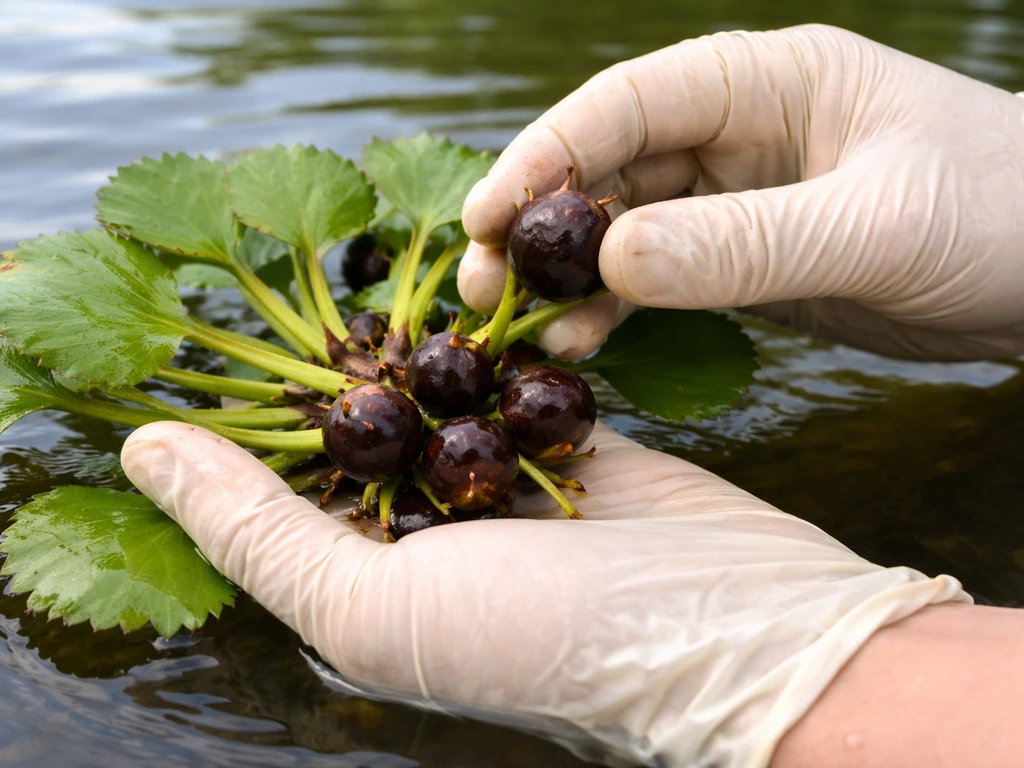
Nuts are ready to harvest from late July through October in most climates, with peak harvest in August and September. A ripe nut is dark brown to black, firm, heavy, and detaches easily from the rosette when you tug gently. Do not wait for the nut to fall on its own, once it detaches naturally, it sinks to the sediment and will either germinate next season or be lost in the muck.
To harvest, reach under the rosette and feel for the developing nuts at the node where leaf meets stem, they hang downward from the rosette. Wear gloves or be careful: the spines are genuinely sharp and can puncture skin. After harvest, rinse nuts in clean water. Fresh water caltrop nuts can be eaten raw, boiled, roasted, or used in stir-fries. They taste mildly starchy and slightly sweet, somewhere between a water chestnut and a chestnut. Store fresh nuts submerged in water in the refrigerator for up to two weeks, or freeze after boiling.
Propagation, overwintering, and troubleshooting failures
Saving seeds and propagating
Water caltrop is an annual, the parent plant dies at the end of the season. The only way to propagate it is through the nuts. To save seeds for next year, harvest mature nuts in late summer before they drop, and store them submerged in clean water in the refrigerator through winter (your built-in cold stratification). Come spring, they'll be ready to plant. Each rosette can produce a significant number of nuts, so even one productive plant gives you plenty of seed stock for next season.
If you're growing in a pond or tub where you want natural regeneration, you can allow a few nuts to sink to the sediment in fall and let them stratify in place over winter, they'll germinate naturally the following spring. This works well in stable outdoor ponds in temperate climates. Just be very careful about containment: sediment carrying water caltrop nuts should never be moved to or drained into natural waterways.
Overwintering strategies by climate
| Climate / Zone | Strategy | Notes |
|---|---|---|
| Cold winters (USDA zones 3–6) | Harvest all nuts before first frost; store submerged in fridge; drain or cover tub | Parent plant dies at frost; nuts survive cold if kept moist |
| Mild winters (zones 7–8) | Allow nuts to sink in place in stable outdoor container; protect tub from hard freezes with insulation or moving to shelter | Natural cold stratification in sediment works if temperatures stay above hard freeze |
| Warm climates (zones 9–10) | Manual cold stratification in refrigerator required; plant doesn't experience natural dormancy break without it | Without cold period, germination rate drops significantly |
| Indoor/year-round growers | Refrigerate harvested nuts for 9–12 weeks, then warm and germinate under grow lights before moving outdoors | Works in any climate; gives you control over timing |
Troubleshooting common failures
- No germination after planting: most likely insufficient cold stratification — the nut needs 9+ weeks below 10°C before it will sprout; restart the process in the fridge
- Nut sprouts but seedling dies: water too cold (below 15°C) or planted too deep in sediment, burying the emerging shoot; keep planting depth shallow and water warm
- Rosette stays small and pale: not enough light; move to full sun immediately, or the plant will never fruit
- Algae takes over the tub: nutrient load is too high or plant hasn't canopied yet; reduce fertilizer, do a partial water change, and add shade temporarily
- Leaves yellowing and rotting: poor water quality or anaerobic sediment; increase aeration, remove dead matter, and do a water change
- Plant looks great but no nuts form: season may be too short, or the plant didn't get pollinated; T. natans flowers are small and self-pollinating but need warmth and time — fruiting really kicks in July through October, so a late start means a short fruit window
- Nuts are hollow or shriveled at harvest: harvested too early or the plant was stressed during nut development; let nuts darken fully before picking
One honest failure from my own experience: I tried growing water caltrop in a half-barrel on a partially shaded deck one season. The plant grew fine, the rosette looked healthy, and I got flowers, but zero nuts. Moving the tub to a full-sun spot the following year made an obvious difference in both rosette size and fruit set. Water caltrop really does need all the sun it can get to produce well.
If you're interested in other aquatic plants in the same growing environment, water caltrop pairs well in large ponds alongside submerged plants that tolerate similar warm, still conditions. The principles around water temperature, seasonal timing, and nutrient management you learn from growing water caltrop also apply broadly to other aquatic food plants and aquarium species you might add to your setup over time.
FAQ
What’s the best way to start water caltrop in a container if I don’t have nuts right now?
Start with any viable, cold-stratified nut you can source (Asian grocery or aquatic vendor). If your stratification already completed, plant once water outdoors is reliably above 15°C, otherwise keep stratification running in the fridge and do not “warm up” the nuts early, the dormancy break timing is what you’re controlling.
Can I grow water caltrop from nuts I buy at any time of year?
You can, but the timing matters because nuts must go into cold stratification immediately after purchase. If you buy in spring, you still need 9 to 12 weeks of refrigerated cold exposure before they will sprout, and then you must still wait for warm-enough water to grow and fruit.
Do I need to stratify both Trapa natans and Trapa bispinosa the same way?
In practice, yes for dormancy breaking, both require cold exposure for germination. The difference you may notice is fruiting pace and nut shape, but your main schedule control is the same (9 to 12 weeks cold, then warmth around 20 to 25°C for germination).
How many water caltrop plants can I put in a tub without killing dissolved oxygen?
Use sparing plant numbers at first. A good rule is to start with only a few plants per tub and increase gradually as the rosette spreads, because dense mats are where dissolved oxygen can crash. If you run an airstone 24/7 and keep the surface gently agitated, you can safely support more plants.
What should I do if my water caltrop leaves look healthy but there are no nuts?
Check the two most common causes: full sun and water warmth. If the rosette isn’t expanding or the leaves stay small, it usually means insufficient light. If flowering happens too early or too late, or the season ends before July to October, your water temperature likely didn’t stay warm enough long enough for nut development.
Can I grow water caltrop partially shaded if I’m in a hot climate?
Partial shade tends to reduce or eliminate fruit set because sun drives both rosette expansion and energy for reproduction. If shade is unavoidable, compensate by choosing the sunniest part of your yard and avoiding positioning near tall walls or trees that block direct light for much of the day.
How deep does the tub really need to be for good rooting and nut production?
Aim for 1 to 2 meters when possible. If you cannot, you can compensate with sediment pots to help anchoring at the bottom, but keep the floating rosette positioned where it can stay warm and stable. Very shallow containers (under about 30 cm) often struggle to anchor properly and maintain temperature stability.
What’s the safest way to prevent water caltrop from escaping my container?
Use solid-walled containers with no drainage holes to any natural area, and treat any spilled water or removed sediment as contaminated. Avoid dumping wash water from harvesting or cleaning near drains, even small nut pieces or sediment can carry viable seeds.
Can I use aquarium filters, and will they help or hurt water caltrop?
Filtration can help water clarity, but avoid strong currents that disrupt the rosette’s surface positioning. If you use a filter, choose a gentle flow setup and keep an eye on dissolved oxygen and algae, since nutrient movement into the water column can still feed algae.
What kind of soil should I use, and what are the worst options?
Use loam or pond-type aquatic planting soil in the bottom 3 to 5 inches. Avoid mixes with perlite or bark because they float or break down and cloud the water, those changes can interfere with rooting and increase algae.
How do I deal with algae blooms before the rosette fills in?
Reduce or pause fertilizer right away if algae turns bright green. Add temporary shade with a floating plant or cover to limit light, then remove shade once the rosette is established. Also ensure your container isn’t too nutrient-rich from overfeeding, since early-stage algae can gain a head start.
Are mosquitoes a problem specifically for water caltrop tubs, and what’s the least disruptive control?
Yes, still warm water can attract egg-laying. An airstone that keeps the surface slightly moving is usually the least disruptive because it also supports dissolved oxygen. If you need extra control, use mosquito dunk (BTI) as directed, and avoid adding broad-spectrum chemicals that could stress aquatic plants.
How can I tell if a nut is viable before I spend time stratifying it?
Look for nuts that are heavy and dark brown to black with spines intact. If you squeeze and it crumbles, or if it floats unexpectedly, it’s likely dead. Viability checks are especially useful if you suspect the nuts were old or dried out in storage.
My nuts germinated, but the plant rosette won’t expand. What should I troubleshoot first?
First verify full sun and stable warmth above roughly 15°C during active growth. Then check oxygen support, in a crowded tub oxygen drops can slow establishment even when the root tip forms. Finally, confirm the substrate is enough for roots to grip, and that you did not use a float-prone potting mix.
When harvesting, how do I avoid losing nuts that sink into the sediment?
Harvest during the ripe window, late July through October, and don’t wait for nuts to fall on their own. If you miss some, they may germinate next season or be lost in muck, so if you want control over propagation, pick routinely and rinse harvested nuts in clean water before storage.
Does water caltrop come back every year in a pond, or is it always re-planted?
It’s an annual, the parent rosette dies at season end. In stable outdoor ponds where you intentionally allow some nuts to sink and stratify in place, you can get natural regeneration, but you must maintain strict containment because viable seeds can persist in sediment for years.