Water beads expand by absorbing water into their superabsorbent polymer (SAP) core, and the single biggest factor controlling how fast and how large they grow is your soak setup. Get the water type, volume, and timing right, and dry beads the size of a peppercorn will swell into marble-sized spheres within a few hours. Get it wrong, and you end up with beads that barely budge, clump together, or shrink back down the moment you think you're done. This guide walks through the exact protocol that works, plus how to troubleshoot when things go sideways.
How to Make Water Beads Grow Faster and Bigger Today
Marcus Holloway
11 Apr 2026
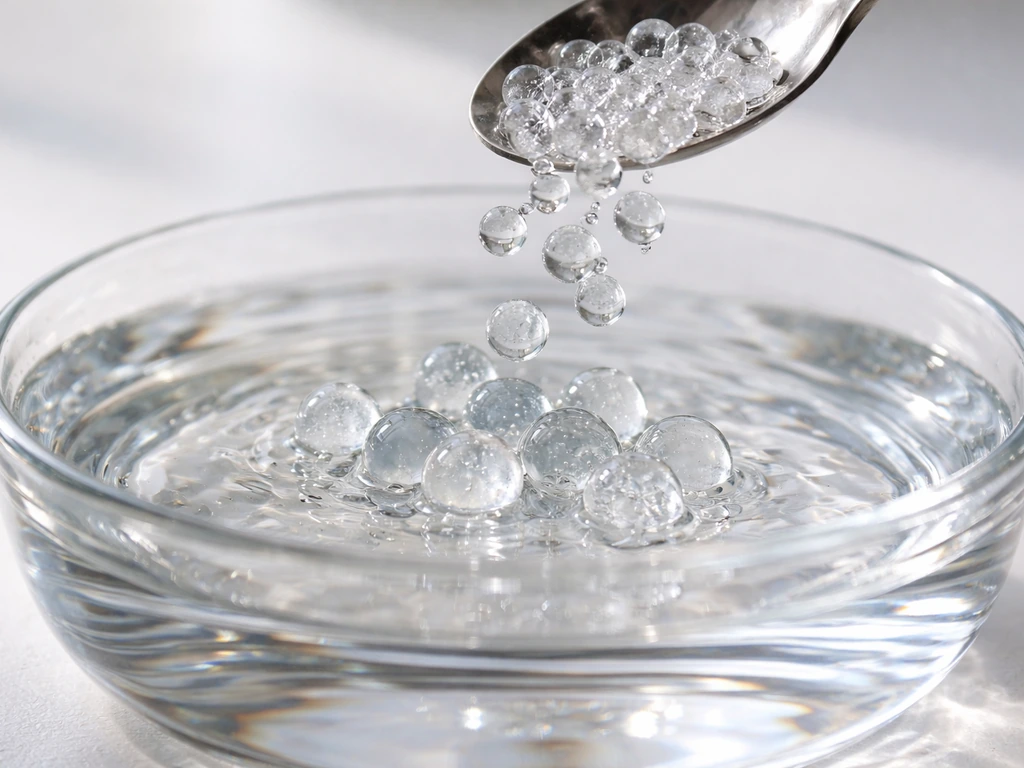
One important note before we get into the how-to: the U.S. Consumer Product Safety Commission has warned that some water bead products may contain toxic acrylamide, and that 'nontoxic' labeling on packaging should not be taken at face value. In 2024, the CPSC also advised removing water beads from environments where young children may be present. If you're using these beads in an aquarium, hydroponic setup, or sensory tray, source from reputable suppliers, check for third-party safety testing, and keep them away from kids and pets who might ingest them.
Choose the right water beads and starting setup
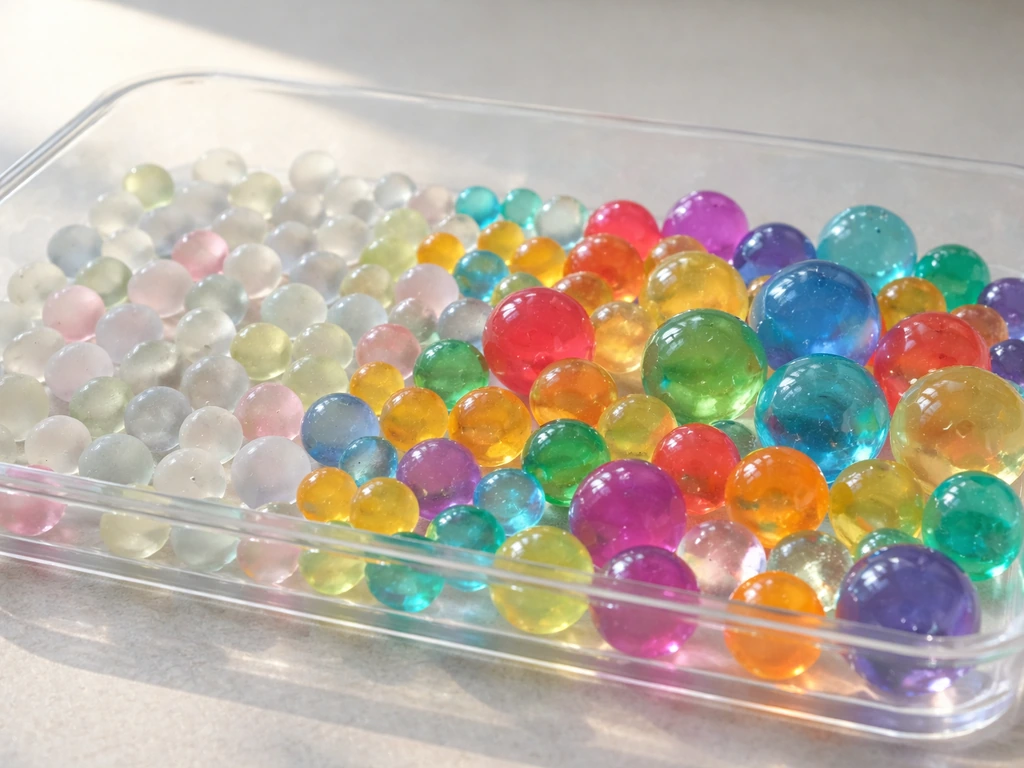
Not all water beads are created equal. The standard round polymer gel bead (sodium polyacrylate or a similar cross-linked SAP) is what most people are working with, and those are what this guide focuses on. If you've seen jelly balls that grow in water, those are essentially the same class of product, just marketed differently. The key specs to look for when buying are the fully hydrated diameter (usually listed as 10–17 mm for standard ornamental beads), the polymer grade, and whether they're marketed for aquarium, decorative, or horticultural use. Agricultural-grade SAP crystals are cheaper but expand irregularly and don't give you that clean sphere shape.
For your starting container, choose something wide and shallow rather than tall and narrow. A wide bowl or tray gives every bead equal access to water and prevents the ones on the bottom from expanding into a solid mass that locks the top ones out. I learned this the hard way when I used a tall vase the first time and ended up with a dense brick at the bottom and dry beads floating on top. Use a container with at least three to four times the volume you expect the fully hydrated beads to occupy. If you're starting with 10 grams of dry beads and expecting roughly 1.5 liters of expanded beads, your container should hold at least 4 to 5 liters comfortably.
- Buy beads labeled with a specific hydrated size (e.g., 14 mm fully expanded) so you know what to aim for
- Avoid bags with clumped or already-tacky beads — they may have absorbed moisture in storage and will expand unevenly
- For aquarium or hydroponic use, confirm the beads are inert and free of dyes that could leach into water
- Wide, shallow containers outperform tall, narrow ones every time
- Keep dry beads sealed in an airtight bag until you're ready to soak — humidity will cause partial pre-hydration and uneven expansion
How to accelerate growth: soak, hydration, and timing
The basic protocol is simple: spread dry beads in a single layer in your container, add water generously, and wait. But if you want faster expansion and more consistent sizing, the details matter. Start with the right water-to-bead ratio. A safe starting point is 1 gram of dry beads per 150 to 200 ml of water. That sounds like a lot of water, but SAPs can absorb 200 to 400 times their dry weight in pure water, so running out of water mid-soak is a real failure point that causes hard, uneven beads. Always use more water than you think you need. You can drain the excess when they're done.
Water temperature plays a big role in how quickly beads expand. Room-temperature water (around 20–22°C / 68–72°F) produces consistent results in 4 to 6 hours for most standard beads. Warm water (30–35°C / 86–95°F) can cut that down to 2 to 3 hours. I've tested this side by side and the warm-water batch consistently reaches full size faster, with no visible difference in final bead quality. Avoid boiling or near-boiling water, temperatures above 60°C can begin to degrade the polymer structure, causing mushy or fragile beads that break apart when handled.
For the fastest possible expansion, use distilled or deionized water and warm it to about 30°C. Add beads in a single layer with plenty of room. Do not stir or agitate during the first two hours, early mechanical disruption can cause surface cracking or irregular shapes. After the two-hour mark, gently swirl the container to redistribute any beads that are sticking together and give them fresh access to the surrounding water. Check again at four hours. Most standard beads will be at or near full size by six hours in warm distilled water.
- Spread dry beads in a single layer in a wide, shallow container
- Add distilled or filtered water at a ratio of at least 150–200 ml per gram of dry beads
- Warm water to 28–35°C for faster expansion (room temp works fine if you're not in a hurry)
- Leave undisturbed for the first 2 hours
- Gently swirl at the 2-hour mark to separate any sticking beads
- Check at 4 hours and add more water if any beads still feel firm at the center
- Drain excess water and rinse lightly at the 6-hour mark once beads have reached full size
Make water beads grow bigger: size and volume goals
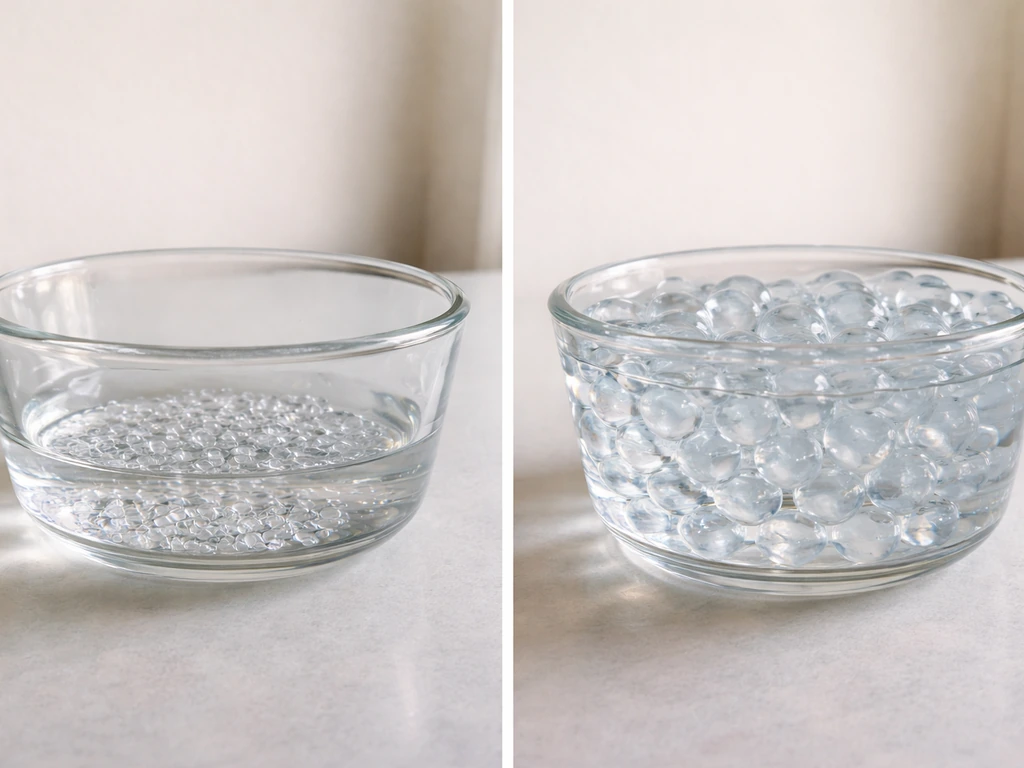
If your goal is maximum size rather than just speed, the approach shifts slightly. The absolute best results come from a slow, extended soak in a large volume of pure water over 12 to 24 hours. Longer exposure time in abundant soft water allows the polymer network to fully relax and absorb as much water as possible, pushing beads toward their upper size limit. Most standard ornamental beads cap out at around 14 to 17 mm in diameter when fully expanded in distilled water. You will not get significantly larger than the manufacturer's specified size no matter what you do, the cross-linked polymer has a physical limit to how far it can stretch.
That said, there's a meaningful difference between beads that hit 80% of their potential size and ones that reach 100%. The two biggest controllable factors are water purity and container space. Ionic content in the water (minerals, salts, nutrients) competes with the polymer's absorption sites and reduces total swelling capacity. Superabsorbent polymers can absorb roughly 300 times their weight in deionized water, but that number drops sharply in ionic or saline solutions. If you're trying to grow beads as large as possible, distilled water is not optional, it's the single most impactful variable. If your tap water is hard (above 150 ppm total dissolved solids), you'll see a noticeable size difference compared to distilled.
Container crowding also caps final size. When beads press against each other before reaching full expansion, they physically resist each other's growth. Give each bead enough room so they aren't touching at the start of the soak. If you're running a large batch, do it in two containers rather than cramming everything into one. Water beads growth stalls when space and available water are both limited, so open volume matters just as much as water quality.
One thing to be careful about: once beads reach full size, continued soaking in standing water with no mineral content won't make them grow further. It may actually begin to weaken the outer gel layer over days, making beads more fragile. Aim for the 12 to 24-hour window, then remove them from the soaking water.
Control water chemistry and environment for faster expansion
If you're integrating water beads into an aquarium or hydroponic system, the water conditions you're already managing for plants or fish will directly affect how beads perform. This is the intersection point that most generic guides completely skip over. Here's what actually matters.
| Water Factor | Effect on Bead Growth | What to Aim For |
|---|---|---|
| Water purity (TDS) | High TDS (hard tap water, nutrient solution) significantly reduces swelling capacity — sometimes by 50% or more | Distilled or RO water for maximum size; under 50 ppm TDS ideal |
| Temperature | Warmer water accelerates absorption rate; cold water slows it dramatically | 28–35°C for fast growth; 20–22°C for standard results |
| pH | Moderate pH (6.5–7.5) is neutral for SAP performance; extreme pH can degrade the polymer | Keep pH between 6.0 and 8.0 for best results |
| Salinity / ionic content | Dissolved salts and mineral ions sharply reduce absorbency — saltwater causes beads to shrink, not grow | Freshwater only; avoid fertilizer solutions or marine water |
| Water volume | Insufficient water volume stops expansion before full size is reached | At least 150–200 ml per gram of dry beads; more is better |
In practice, if you're using a freshwater aquarium setup with soft, conditioned water and a neutral pH, your beads will expand very well, nearly as well as in distilled water, depending on how much dechlorinator and buffering you've added. If you're running a hydroponic system with a nutrient solution, expect beads to reach only 50 to 70% of their maximum potential size. That's still functional for most decorative or substrate applications, but if you want full expansion, pre-expand the beads in distilled water first, then transfer them to the system.
Temperature also matters more than most people expect. I've had beads sit barely changed for two hours in cold tap water (around 10–12°C in winter) and then expand fully in 90 minutes after I switched to warm water. If your beads seem slow, check the water temperature before assuming something is wrong with the beads themselves. This is especially relevant for aquarists who keep cold-water tanks, growing marimo balls in cold water tanks is well established, but SAP water beads behave very differently from living organisms and need warmer water for initial hydration.
Common problems and troubleshooting
Beads aren't expanding (stuck or barely growing)
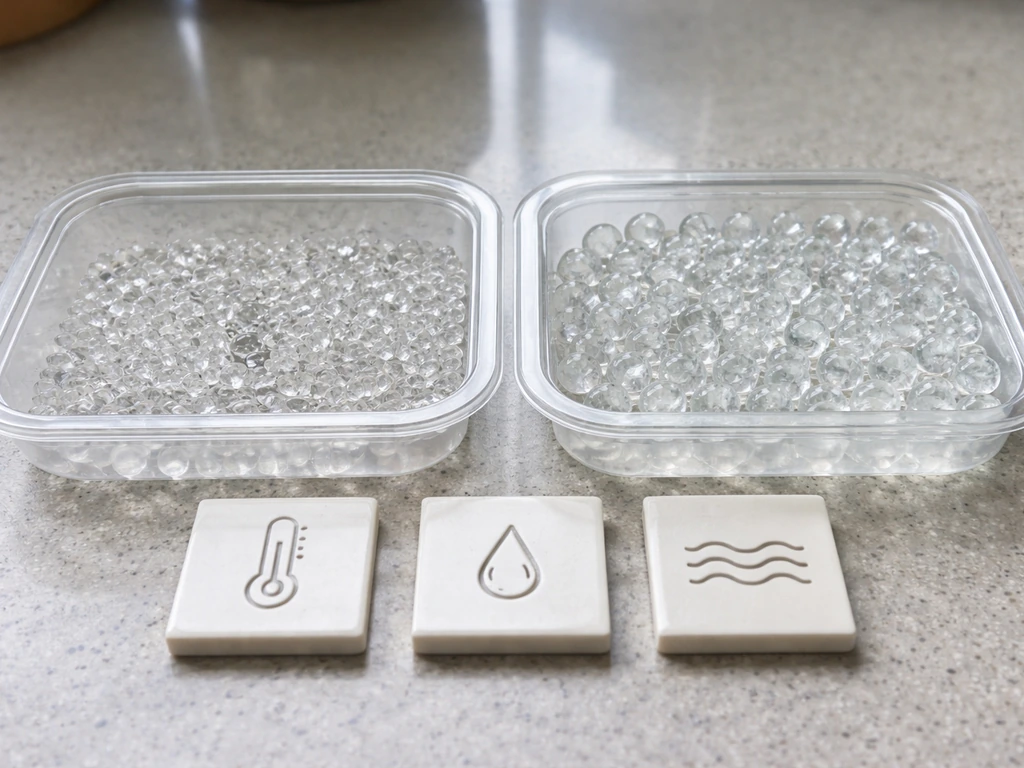
This is almost always a water quality or temperature problem. Check these in order: Is your water warm enough? Is it hard or mineral-heavy? Did you use enough water? Are the beads touching each other in a crowded container, limiting access to water? If you've already been soaking for six or more hours with no real growth, pour off the existing water, add fresh warm distilled water, and give it another four hours. Beads that were pre-exposed to humidity during storage can also form a hardened outer skin that slows the initial absorption phase, a fresh warm soak usually breaks through this.
Beads are shrinking after reaching full size
Shrinkage after full expansion is normal if the beads are sitting in open air, evaporation will slowly pull water out of the gel. This is exactly how they're supposed to behave. To prevent shrinkage, store hydrated beads submerged in water or in a sealed container. If your beads shrank while still in water, the water likely has a high ionic concentration pulling water out of the polymer by osmosis. Ionic solutions can literally cause beads to release water back into the surrounding liquid. This is the same reason saltwater shrinks rather than grows them. Replace the water with distilled and watch the beads re-expand over the next few hours. Water balls that cycle between swelling and shrinking are actually demonstrating this osmotic principle in real time.
Uneven growth and clumping
Uneven bead sizes usually come from two sources: crowding during the soak, or beads that had different levels of pre-hydration from storage. Clumping happens when beads are placed too close together and begin expanding into each other while their outer surfaces are still tacky. The fix is spacing, give them room at the start. If you already have a clump, gently submerge the cluster in fresh warm water and use your fingers to slowly roll them apart rather than pulling them. Forcing them apart when dry will tear the gel. If you're noticing that some beads are consistently smaller than others across multiple batches, your beads may have inconsistent polymer coating, a manufacturing quality issue. Consider switching brands.
Cloudy water or contamination during soaking
If the soak water turns cloudy or develops an odor, it's usually one of two things: residual coating or colorant washing off the beads (normal in the first soak), or bacterial growth if beads were left in warm standing water for more than 24 hours. Always do an initial rinse before the main soak to remove any surface coatings. If the water turns cloudy during soaking, drain and replace with fresh water midway through. Long warm soaks are ideal breeding conditions for bacteria, so if you're pre-expanding beads for use in an aquarium or with live plants, rinse them thoroughly with clean water before placing them in your system.
Maintenance, handling, and storage for continued growth
Once hydrated, water beads need consistent moisture to stay at full size. In open air, they'll lose about 10 to 20% of their water volume per day depending on humidity and temperature. For decorative or aquatic use, keeping them submerged or in a sealed humid environment is the easiest solution. If they start to shrink, just add clean water. The good news is that SAP polymers can be hydrated, dried out, and re-hydrated many times over without degrading significantly, as long as they aren't exposed to extreme heat or strong chemicals.
For long-term storage, dehydrate the beads fully by spreading them in a single layer and letting them air-dry at room temperature. Avoid using heat (oven or microwave) to speed drying, as this can damage the polymer. Once fully dry, store in an airtight container away from humidity. Properly dehydrated and sealed, beads can be re-used multiple times. Each rehydration cycle may produce beads that are very slightly smaller than the previous cycle, but the difference is usually minimal over the first five to ten cycles.
If you're using beads as a growing medium or decorative substrate alongside live aquatic plants, check them regularly for debris, algae buildup, or signs of degradation (mushy texture, fragmentation). Rinse periodically with clean water. For anyone exploring how water-based gel substrates interact with aquatic plants, the same curiosity that drives water bead cultivation often leads to interest in plants like water soldiers, which thrive in similar semi-submerged, water-heavy setups. Beads can even serve as a decorative base layer around the roots of aquatic plants in display containers, as long as the water chemistry is kept soft and clean.
One last thing on handling: fully hydrated beads are fragile. They can tolerate gentle handling but will crack or flatten if squeezed hard or dropped on a hard surface from any height. When moving a batch, scoop rather than pour, and use a wide shallow scoop rather than a ladle. If you want to explore similar water-absorbing, grow-in-water experiments, you might also enjoy learning how to grow gummy bears in water, which demonstrates the same osmosis principle in a very different (and edible) context.
To put it simply: distilled warm water, plenty of it, in a wide container with uncrowded beads will get you the fastest, biggest, most consistent results every time. Everything else is fine-tuning around those four basics.
FAQ
How do I stop water beads from growing further once they reach the size I want?
After beads reach their target size, don’t keep them in the same soaking water indefinitely. If you want to pause the process, remove them promptly and store them submerged in fresh distilled (or very soft) water, then refresh the water daily or every other day if it gets cloudy.
My beads hydrate slowly at first, what’s the best way to fix a hardened outer layer?
A thick, “gel skin” on the outside usually happens after storage in humidity or partial drying. Do a short warm rehydrate (about 30°C water) with plenty of water, and avoid stirring for the first two hours, then gently swirl after that to re-uniform the batch.
Why are my water beads floating or unevenly wet, even though I added enough water?
If beads are floating early, that’s often just incomplete hydration or trapped air. Let them soak undisturbed for the full first two hours, use plenty of excess water, and make sure beads start in a single layer with space so water can reach all sides.
How can I tell whether the whole batch is fully expanded, not just the beads on top?
Don’t judge readiness by how they look at the top layer if the container is deep or crowded. Check several beads from different positions, and if the batch is mixed, drain the water, add fresh warm distilled, then recheck after another four hours.
Can I speed up expansion by heating the water more than 35°C?
Yes, but do it carefully. Use a very gentle temperature adjustment, then confirm you’re not near-boiling, and keep the soak in excess water. Sudden extreme heating or cooling can make beads more fragile and can increase uneven sizing.
When using beads in a tank, which water parameters most limit swelling?
If your goal is maximum final size, avoid brackish or hard water, and also avoid any “water conditioner” that leaves extra dissolved salts. For aquariums, dechlorinator and buffering can be fine, but high total dissolved solids will reduce the swelling ceiling.
If my first soak used tap water, can I recover the lost growth with a second soak?
If you used tap water and see beads settle smaller than expected, discard the soak water and start a second soak in fresh warm distilled. In many cases they’ll partially “catch up,” but you generally cannot exceed the manufacturer’s size limit.
My soak water is cloudy and/or smelly, should I keep going or throw the batch out?
If the soak water turns cloudy early, drain it and replace with fresh water rather than adding more water to the same bath. Cloudiness during long warm soaks can also mean microbial growth, especially beyond 24 hours, so shorten future soaks and rinse well before any aquatic use.
What’s the safest way to separate beads if they’ve formed a clump?
To minimize clumping, start with a single layer and enough spacing so beads are not touching once they’re tacky. If a clump forms, roll the cluster apart slowly while submerged in warm water, pulling only gently to avoid tearing the gel.
How many times can I rehydrate dried water beads before they noticeably shrink?
Yes, you can rehydrate many times, but extreme conditions reduce quality. Avoid strong chemicals (including some cleaners or disinfectants) and avoid rehydrating after heat drying. Expect a small size drop after multiple cycles, especially if stored in humid air.
How should I store hydrated beads to prevent shrinkage?
For best results, store fully hydrated beads submerged in water in a sealed container. If you want them to stay near their maximum size, keep them away from direct air movement and replace the storage water if it becomes cloudy.