Waterleaf, in a food-growing context, almost always means Talinum triangulare, a fast-growing tropical leafy vegetable with fleshy stems and soft, water-rich leaves. It thrives in warm, moist conditions, which makes it a natural fit for hydroponic systems, semi-aquatic containers, and water-based setups. You can start it from cuttings in about a week, get your first harvest in 3 to 4 weeks, and keep the plant producing continuously with regular pruning.
How to Grow Waterleaf Hydroponically Step by Step
Marcus Holloway
30 Apr 2026
The short version: take stem cuttings, root them in water or a hydroponic medium, keep the temperature above 65°F, maintain pH between 5. Betel leaf is usually grown in soil or containers, but you can still use hydroponic-style water setups with the right support and nutrient solution grow betel leaf in water. 8 and 6. 5, give it 14 to 16 hours of light, and harvest outer stems regularly to keep new growth coming.
Which plant is actually called waterleaf?
This is worth getting right before you buy seeds or cuttings. The name 'waterleaf' gets attached to several unrelated plants depending on where you are and who you ask. The most common edible use of the name refers to Talinum triangulare, sometimes called Philippine spinach, Lagos spinach, or sweetheart. It is a succulent-stemmed tropical vegetable popular in West African and Southeast Asian cooking. The leaves are soft, mildly mucilaginous, and cook down quickly, similar to spinach or Malabar spinach.
Two other plants sometimes get called waterleaf and cause real confusion. First, Hydrolea species (blue waterleaf or waterpod) are wetland wildflowers found in the American South. They are not food plants. Second, the broader 'waterleaf family' (historically Hydrophyllaceae) includes native wildflowers with the same common name. Neither of these is what you want for growing and eating. If you see waterleaf seeds or cuttings sold in a West African or tropical produce market, that is almost certainly Talinum triangulare. If you are shopping from a botanical seed supplier, double-check the Latin name. Ipomoea aquatica, commonly called water spinach or kangkung, is semi-aquatic and looks superficially similar, but it is a completely different plant with different care requirements.
For this guide, all instructions apply to Talinum triangulare. It is the waterleaf that grows well in water-based and hydroponic systems, and the one most people searching for 'how to grow waterleaf' are actually trying to cultivate.
Setup options: hydroponics, water-based containers, and semi-aquatic pots
Talinum triangulare is flexible enough to work in several growing systems, which is part of why it fits well on a site like this. Here are the three most practical approaches, along with honest notes on where each one shines and where it falls short.
Deep water culture (DWC) and nutrient film technique (NFT)
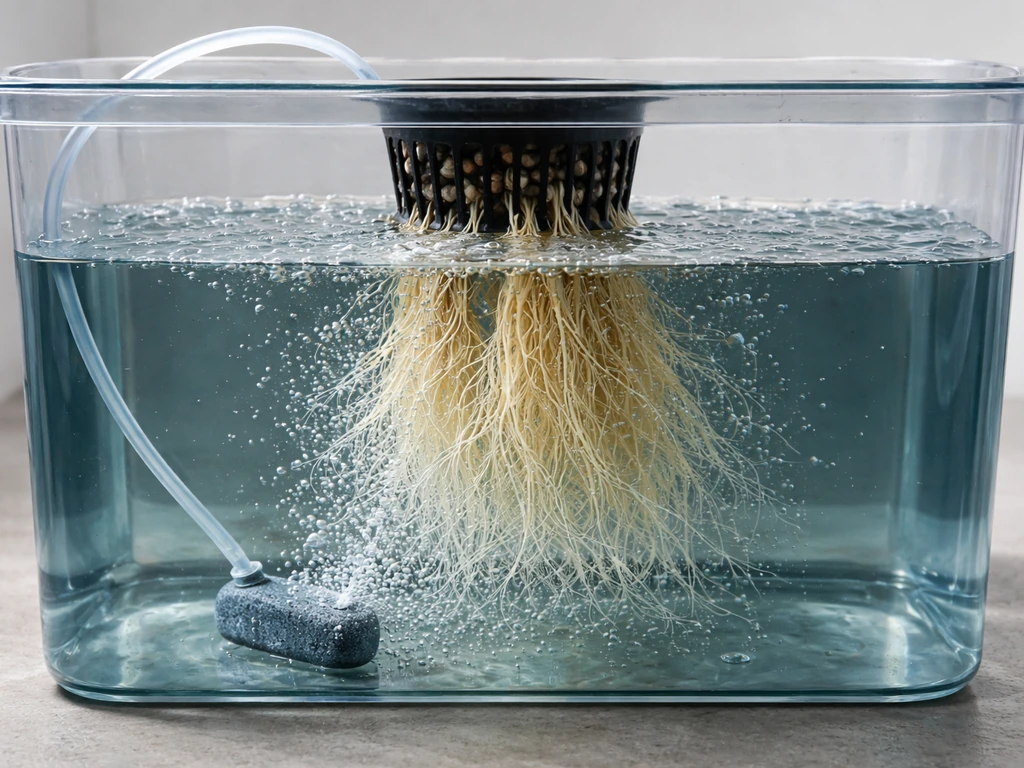
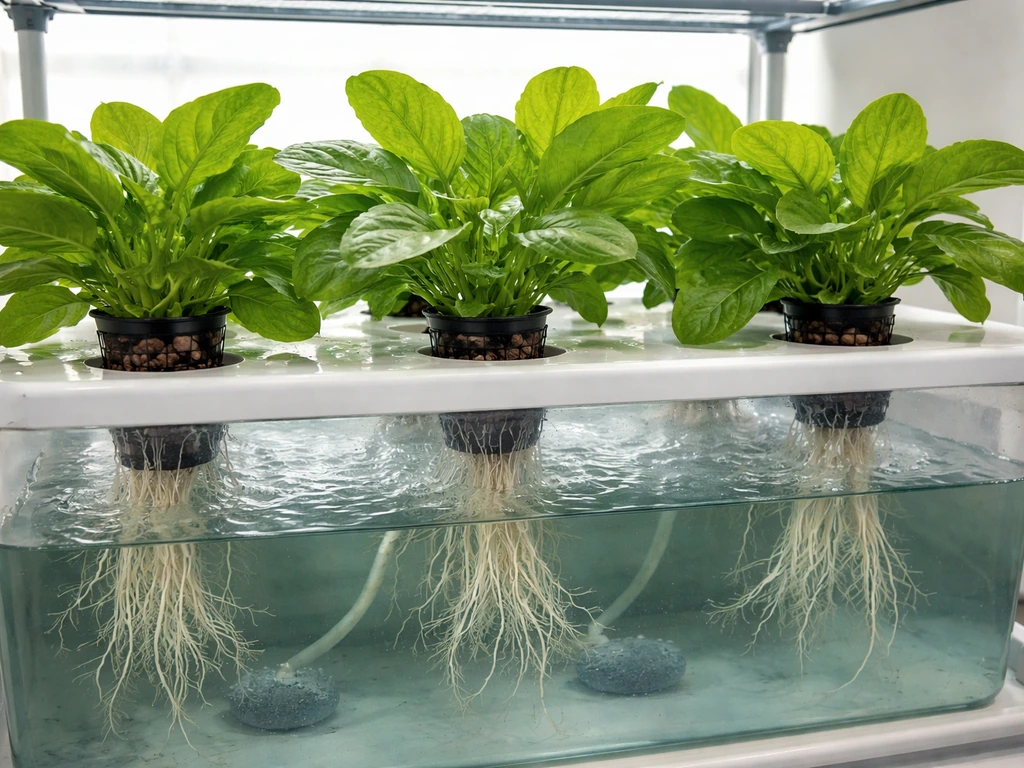
DWC is probably the most popular hydroponic setup for waterleaf because it is simple and the plant responds well to having its roots constantly in oxygenated nutrient solution. You suspend net pots over a reservoir filled with nutrient solution and run an air stone to keep oxygen levels up. NFT works too, running a thin film of nutrients over exposed roots in a channel. Both systems produce fast growth and easy monitoring. The tradeoff is that DWC requires an air pump running continuously, and if your power goes out or the pump fails for more than a few hours in warm weather, roots can start to rot quickly.
Water-based container growing (Kratky method)
The Kratky method (passive hydroponics with no pump) works surprisingly well for waterleaf because the plant is forgiving and grows fast enough to consume the reservoir before stagnation becomes a problem. You fill a container with nutrient solution, leave an air gap between the water surface and the net pot, and let the roots grow down into the solution. Refill when the level drops. I have had good results with wide-mouth mason jars for individual plants and opaque storage bins for a small crop. Keep containers fully opaque to block light from the reservoir, otherwise algae will take over fast.
Semi-aquatic pots and wicking beds
If you want something closer to traditional growing but still water-managed, a wicking bed or a pot sitting in a tray of water works well. Fill a pot with a well-draining medium like coco coir or perlite-enriched potting mix, set it in a shallow tray, and keep about an inch of water or dilute nutrient solution in the tray at all times. Waterleaf pulls moisture up through capillary action and stays consistently moist without waterlogging the crown or stem base. This method has the lowest risk of root rot and the easiest maintenance, making it a good starting point for beginners.
| Setup | Difficulty | Growth Speed | Root Rot Risk | Best For |
|---|---|---|---|---|
| DWC Hydroponics | Moderate | Fastest | Medium (if pump fails) | Experienced growers, high yield |
| NFT Hydroponics | Moderate-High | Fast | Medium | Multi-plant systems |
| Kratky (passive) | Easy | Fast | Low-Medium | Beginners, small spaces |
| Semi-aquatic wicking pot | Easy | Moderate | Lowest | Beginners, balcony growers |
My recommendation for most readers: start with a Kratky setup or a wicking pot to get comfortable with the plant, then move to DWC once you understand how it responds to nutrients and light. Waterleaf is forgiving enough that early mistakes rarely kill it outright.
Starting your plants: seeds vs cuttings
University of Florida extension research on Talinum triangulare makes a direct recommendation: use cuttings whenever possible. Seeds often have poor viability or dormancy issues that result in disappointing germination rates. Cuttings root easily, establish faster, and give you a head start of several weeks. That said, if cuttings are not available to you, seeds can work with some extra steps.
Propagating from cuttings (recommended)
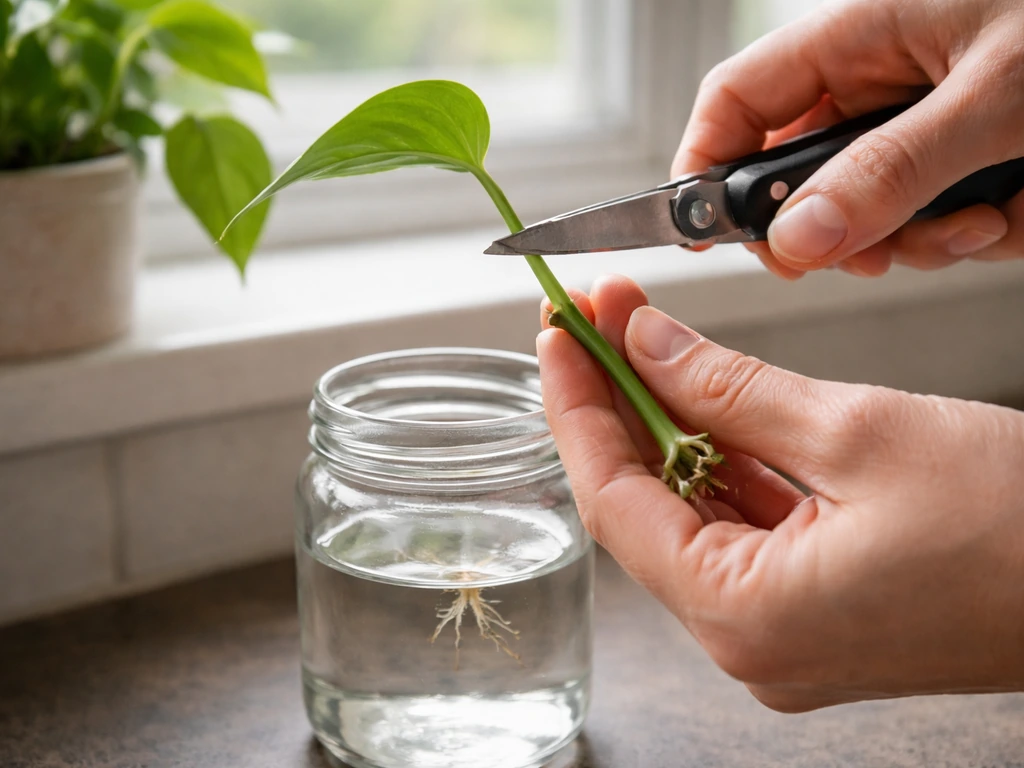
- Take stem cuttings 5 to 8 inches long from a healthy, established plant. Cut just below a leaf node using a clean blade.
- Strip the lower leaves, leaving 2 to 3 leaves at the top.
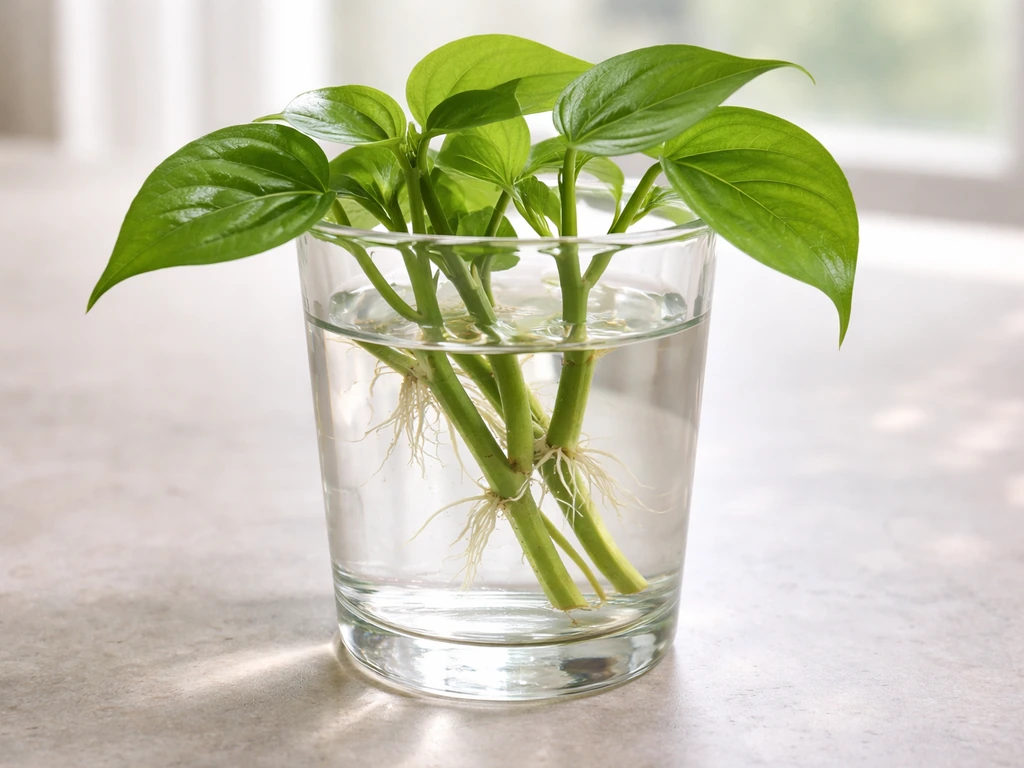
- Place the cut end in a glass of plain water or directly into a moist growing medium (coco coir or perlite work well). Cuttings do not need rooting hormone.
- If water-rooting, change the water every 2 days to prevent bacterial buildup. Roots appear within 5 to 10 days.
- Once roots reach about 1 inch long, transfer to your chosen hydroponic or semi-aquatic setup.
- Space plants 6 inches apart in lower-fertility setups, or up to 10 inches apart in nutrient-rich systems to allow for full canopy development.
Growing from seeds
- Buy seeds from a reputable tropical seed supplier and check the packaging date. Old or poorly stored seeds fail at much higher rates.
- Pregerminate seeds before planting: soak them in room-temperature water for 12 to 24 hours, then place them between damp paper towels inside a zip-lock bag in a warm spot (75 to 85°F). Check daily.
- Seeds that are viable will show a tiny root tip within 3 to 7 days. Discard any that show no movement after 10 days.
- Transfer germinated seeds to rockwool cubes, coco coir plugs, or a fine seedling mix, burying just below the surface.
- Keep the medium consistently moist but not flooded at this stage. Bottom-watering or misting works better than overhead watering.
- Once seedlings reach 3 to 4 inches with a couple of true leaves, transfer them into your main growing system.
I made the mistake of direct-seeding waterleaf into a hydroponic net pot my first time. The seeds that did germinate either washed away or rotted. The pregermination paper-towel method fixed that problem entirely. It takes a few extra days but the success rate jumps noticeably.
Water, nutrients, light, and temperature
Water quality and pH
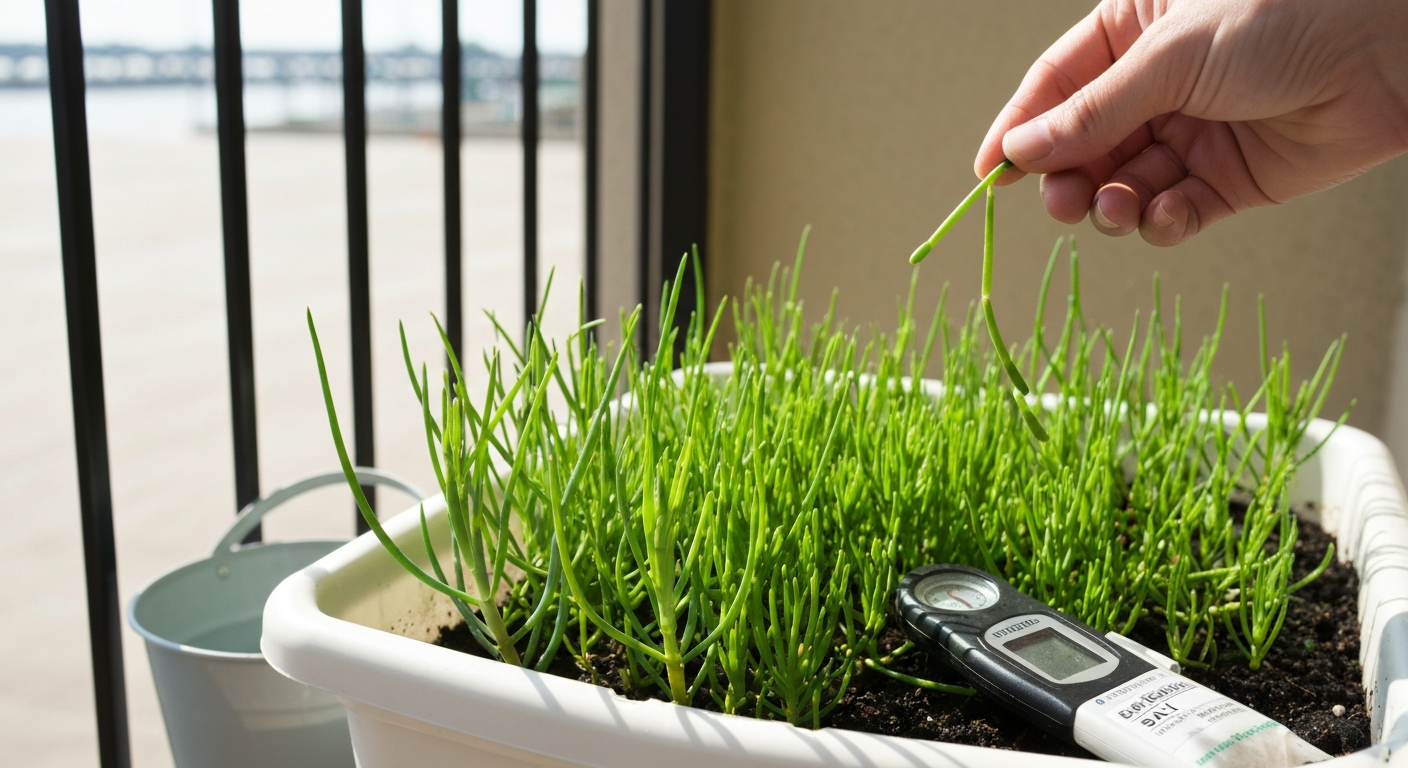
Waterleaf is not particularly fussy about water quality, but keeping pH in the right range makes a big difference in how well it absorbs nutrients. Aim for a pH between 5.8 and 6.5 for hydroponic systems and 6.0 to 6.8 for semi-aquatic soil-based setups. Check pH every 3 to 4 days with a basic pH meter and adjust using pH up or down solutions. Electrical conductivity (EC) for nutrient solution should sit between 1.2 and 2.0 mS/cm for established plants, and lower (0.8 to 1.2 mS/cm) for seedlings and young cuttings.
Nutrients
A balanced hydroponic nutrient formula works well. Look for something with roughly equal nitrogen (N), phosphorus (P), and potassium (K) ratios for leafy greens, like a 3-1-2 or 2-1-2 NPK blend. Since you are primarily harvesting leaves and soft stems, a slightly higher nitrogen ratio promotes the lush, fast regrowth you want after harvesting. Calcium and magnesium supplements (CalMag) are worth adding at half the recommended dose if you are using reverse osmosis or very soft tap water.
Change out the full nutrient reservoir every 7 to 14 days in a DWC system to prevent salt buildup and pH drift. Oklahoma State University Extension notes that nutrient salts can affect both electrical conductivity (EC) and pH, so keep them within acceptable hydroponic ranges [Change out the full nutrient reservoir every 7 to 14 days in a DWC system to prevent salt buildup and pH drift. ](https://extension. okstate.
edu/fact-sheets/electrical-conductivity-and-ph-guide-for-hydroponics. html).
Light
Waterleaf does best with 14 to 16 hours of light per day. A peer-reviewed study on Talinum triangulare shows that germination and early development can be affected by photoperiod and dark incubation conditions 14 to 16 hours of light per day.
It is a tropical plant accustomed to long, bright days. Indoors, a full-spectrum LED grow light positioned 12 to 18 inches above the canopy at around 200 to 400 µmol/m²/s (PPFD) is enough for healthy growth. If you are growing outdoors or in a sunny window, make sure the plant gets at least 6 to 8 hours of direct sunlight.
In my experience, plants that get less than 10 hours of light per day grow slowly and develop stretched, pale stems, which is a clear sign they need more.
Temperature
Waterleaf is a tropical plant and it dislikes cold. Keep temperatures between 70 and 90°F (21 to 32°C) for best results. Growth slows noticeably below 65°F and stops below about 50°F. Roots sitting in cold water will start showing stress within a few days. If your growing space drops below 65°F at night, use a small aquarium heater in your reservoir or move plants somewhere warmer. Water temperature in the reservoir should ideally stay between 65 and 72°F. Warmer water holds less dissolved oxygen, which increases root rot risk, so avoid letting reservoir temps climb above 75°F.
Ongoing care: pruning, pest control, and preventing rot
Pruning and harvesting for continuous growth
Waterleaf responds very well to regular pruning. The more you harvest, the more branching the plant produces, and the more total leaf yield you get over time. Start harvesting outer stems once the plant reaches about 8 to 10 inches tall. Cut stems back to about 3 to 4 inches above the base, leaving a couple of leaf nodes on each stem to regrow from. Do not strip the entire plant at once. Take no more than one-third of the total biomass per harvest session. In a well-maintained hydroponic setup, you can harvest every 10 to 14 days.
Pest control in water-based systems
Common pests include fungus gnats (especially in semi-aquatic soil systems where the top layer stays moist), aphids, and spider mites. Fungus gnats are the most frequent headache. Let the top inch of any soil-based medium dry out slightly between waterings, and consider adding a thin layer of perlite on the surface to discourage egg-laying. For hydroponic systems, make sure the growing medium and reservoir are not exposed to standing water at the crown of the plant. Aphids and spider mites can be knocked back with a diluted neem oil spray applied to the undersides of leaves early in the day. Repeat every 5 to 7 days for 2 to 3 cycles.
Controlling algae
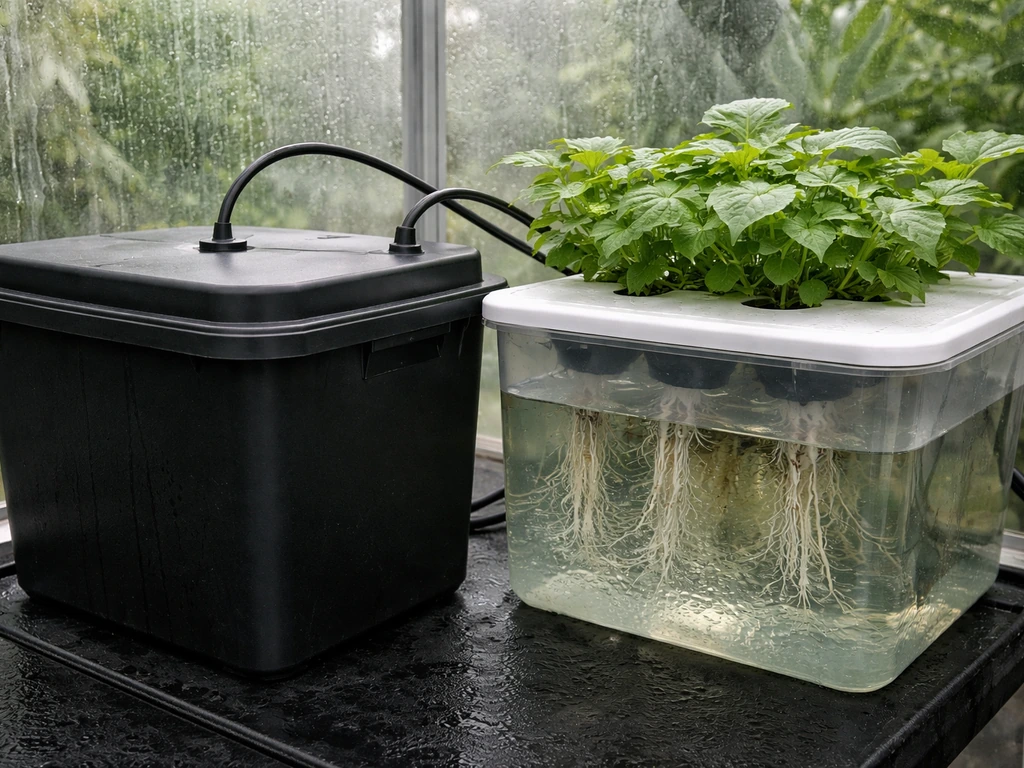
Algae loves the same nutrient-rich, well-lit water your waterleaf grows in. The easiest fix is to block all light from the reservoir. Use opaque containers, wrap clear ones in black tape or aluminum foil, and cover any exposed net pot collars with light-blocking material. If algae has already established in your reservoir, do a full drain and rinse, scrub visible growth with a mild hydrogen peroxide solution (3%), rinse thoroughly, and refill with fresh nutrient solution. Algae itself will not directly kill your plants, but it competes for nutrients, can clog root zones, and signals that your system needs better light management.
Preventing root rot
Root rot in waterleaf usually comes from one of three causes: water that is too warm (above 75°F), not enough dissolved oxygen in the reservoir, or the plant crown sitting in standing water. Keep your air stone running continuously in DWC, do not let the growing medium stay permanently submerged at the stem base, and monitor reservoir temperature. Healthy roots are white to light tan and firm. Brown, slimy, or foul-smelling roots are a warning sign. If you catch it early, remove affected roots with clean scissors, treat remaining roots with a diluted hydrogen peroxide soak (1 part 3% H2O2 to 3 parts water for 30 minutes), then rinse and return to a clean reservoir.
Troubleshooting common problems
| Problem | Likely Cause | Fix |
|---|---|---|
| Yellowing lower leaves | Nitrogen deficiency or pH out of range | Check pH (target 5.8 to 6.5), increase nitrogen in nutrient mix |
| Pale, stretched stems | Insufficient light | Increase light hours to 14 to 16 hrs, move light closer or upgrade intensity |
| Stunted growth overall | Cold temps, low nutrients, or pH drift | Check reservoir temp (target 68 to 72°F), test pH and EC, top up nutrients |
| Poor seed germination | Old/low-viability seeds or no pregermination | Use fresh seeds, pregerminate in damp paper towels at 78 to 85°F before planting |
| Cuttings wilting and not rooting | Stems rotting in water or wrong cutting length | Use 5 to 8 inch cuttings, change water every 2 days, trim any slimy stem ends |
| Brown slimy roots | Root rot from warm water or low oxygen | Lower reservoir temp, check air pump, treat with diluted H2O2, clean reservoir |
| Green algae in reservoir | Light reaching nutrient solution | Block all light from reservoir walls and net pot collars |
| Leaf curl or crispy edges | Low humidity or heat stress | Increase ambient humidity to 50 to 70%, check for heat from grow lights |
Harvesting, storing, and keeping the cycle going
When and how to harvest
Your first real harvest is ready about 3 to 4 weeks after establishing cuttings, or 5 to 6 weeks from seed. Harvest in the morning if possible, when the leaves are most hydrated and the stems are firm. Use clean scissors or a sharp knife. Cut outer stems down to 3 to 4 inches, leaving inner growth intact. You can harvest tender stem tips for a milder texture, or take the entire stem for a larger quantity. The leaves wilt quickly after cutting, so either use them the same day or store them immediately.
Storing fresh waterleaf
Wrap freshly cut waterleaf loosely in a slightly damp paper towel, place it in a plastic bag or airtight container, and refrigerate. It stays fresh for 3 to 5 days this way. Do not wash it before storing, as extra moisture on the surface accelerates decay. If you have more than you can use, blanch the leaves briefly in boiling water for 1 minute, squeeze out the water, and freeze in portions. Frozen waterleaf works well in cooked dishes but will not have the same texture for fresh eating.
Keeping plants productive for the long term
A well-maintained waterleaf plant in a hydroponic setup can stay productive for several months. The key is consistent harvesting (do not let it go to flower, as flowering signals the plant to slow leafy growth), regular nutrient replenishment, and occasional root zone inspection. After 3 to 4 months, older plants tend to become woody and less productive. At that point, take fresh cuttings from the healthiest stems, re-root them, and start a new generation. This gives you a continuous supply and effectively resets the plant to peak productivity. Keeping two staggered batches running at different growth stages means you are never without harvestable material.
If you are interested in other fast-growing leafy plants that suit water-based systems, plants like water sprite and madre de agua share similar moisture-loving traits and fit well in semi-aquatic or hydroponic environments alongside waterleaf.
Quick-reference checklist before you start
- Plant: Talinum triangulare cuttings (5 to 8 inches) or fresh seeds from a reliable tropical seed supplier
- Container: Opaque DWC reservoir, Kratky container, or wicking pot with coco coir or perlite mix
- Nutrients: Balanced hydroponic nutrient formula, leafy-green ratio (higher N), plus CalMag if using soft water
- pH target: 5.8 to 6.5 (hydroponic), 6.0 to 6.8 (semi-aquatic soil)
- EC target: 0.8 to 1.2 mS/cm for seedlings; 1.2 to 2.0 mS/cm for established plants
- Light: Full-spectrum LED, 14 to 16 hours per day, 200 to 400 µmol/m²/s PPFD
- Temperature: Air 70 to 90°F, water reservoir 65 to 72°F
- Air pump (for DWC): Running 24 hours a day
- pH meter and EC meter: Essential for monitoring
- Harvest schedule: Every 10 to 14 days once established, taking no more than one-third of the plant
FAQ
How do I confirm I’m growing the correct “waterleaf” (Talinum triangulare)?
Look for the Latin name Talinum triangulare on seed packets or plant tags. If what you find is Hydrolea (blue waterleaf) or Ipomoea aquatica (water spinach/kangkung), the texture and growing needs will differ, and hydroponic setups for one plant may fail for the others.
My waterleaf cuttings root in water, but they stall after transplanting into DWC or Kratky, what’s going on?
This usually happens when the cutting’s roots are still short and can’t handle higher nutrient strength or airflow differences. Start with lower EC near the range for seedlings, keep reservoir temperature on the cooler side (around 65 to 72°F), and leave the first week with lighter pruning to reduce stress while new roots take over.
What should I do if my Kratky reservoir level drops too fast?
If the container is too small, light is too intense, or the room is very warm, water can evaporate faster than the plant can safely adjust. Use a larger reservoir, ensure the net pot is seated properly to avoid dry pockets, and top off with plain water first (then only adjust nutrients after measuring EC/pH).
How often should I check pH and EC beyond “every few days”?
Check pH and EC more frequently in the first two weeks after moving cuttings, because uptake and evaporation can shift readings quickly. After the plant stabilizes, testing every 3 to 4 days is usually enough for DWC, but always recheck after major harvests or reservoir refills.
Can I use tap water if it’s hard or high in chlorine?
You can, but hard water can push nutrient imbalances and raise EC faster than expected. If you notice unstable pH or frequent salt buildup, switch to filtered or RO water if possible, and consider CalMag at the lower dose mentioned, then confirm results by monitoring EC drift and leaf color.
What does “stretched, pale stems” mean in practice, and how do I fix it quickly?
It’s a light deficiency signal, stems elongate to reach light. Raise your PPFD by moving the light closer (within safe distance), extend photoperiod toward the 14 to 16 hour target, and avoid turning the light schedule off mid-growth, which causes recovery slowdowns.
How do I prevent fungus gnats in semi-aquatic or wicking setups?
Avoid leaving the top surface constantly wet. Let the surface partially dry between adjustments, use a perlite top dressing where appropriate, and consider a simple biological control like beneficial nematodes in soil or potting media that stay moist, since adults will lay eggs in damp upper layers.
Is it normal for some leaves to get slimy or translucent?
Occasionally after the first big harvest or during early transplant stress, but widespread soft, translucent tissue usually indicates crown contact with stagnant water or overly warm reservoir temperatures. Ensure the crown sits above standing solution, keep water under 75°F, and remove visibly damaged parts promptly.
Can I harvest more aggressively than one-third of biomass?
Avoid doing it routinely. Waterleaf can rebound, but taking more than one-third repeatedly reduces branching and makes regrowth slower and thinner. If you need larger yields, spread harvests across more frequent sessions (within the 10 to 14 day window) rather than cutting deeper each time.
When should I start pruning, and how can I tell it’s time?
Start when plants reach about 8 to 10 inches tall, but use a practical cue too: you want at least several healthy nodes on outer stems. If stems are thin and internodes are long, wait for sturdier growth and increase light first, then prune for branching.
How do I store waterleaf so it doesn’t turn watery or spoil fast?
Store unwashed leaves after harvest, wrap loosely in a slightly damp paper towel, then refrigerate in an airtight container or bag. If you wash first, surface moisture accelerates decay, and if the paper towel is too wet, it can speed up slimy breakdown.
What signs tell me root rot is starting before it’s obvious?
Early signs include roots turning tan-to-brown at the tips, increased plant wilting despite adequate light, and an unpleasant odor from the reservoir. If you catch it early, remove affected roots, sanitize the root zone with a diluted hydrogen peroxide soak as described, then restart in a clean, cooler reservoir with reliable oxygenation.
How do I keep waterleaf productive for months without it getting woody?
Use a succession plan. Take cuttings from your healthiest stems every few months, re-root them, and stagger batches so older plants can be phased out after they become woody. Also harvest regularly before flowering begins, since once it shifts to reproductive growth leaf production drops quickly.