Rooting in water vs. growing hydroponically: pick your method
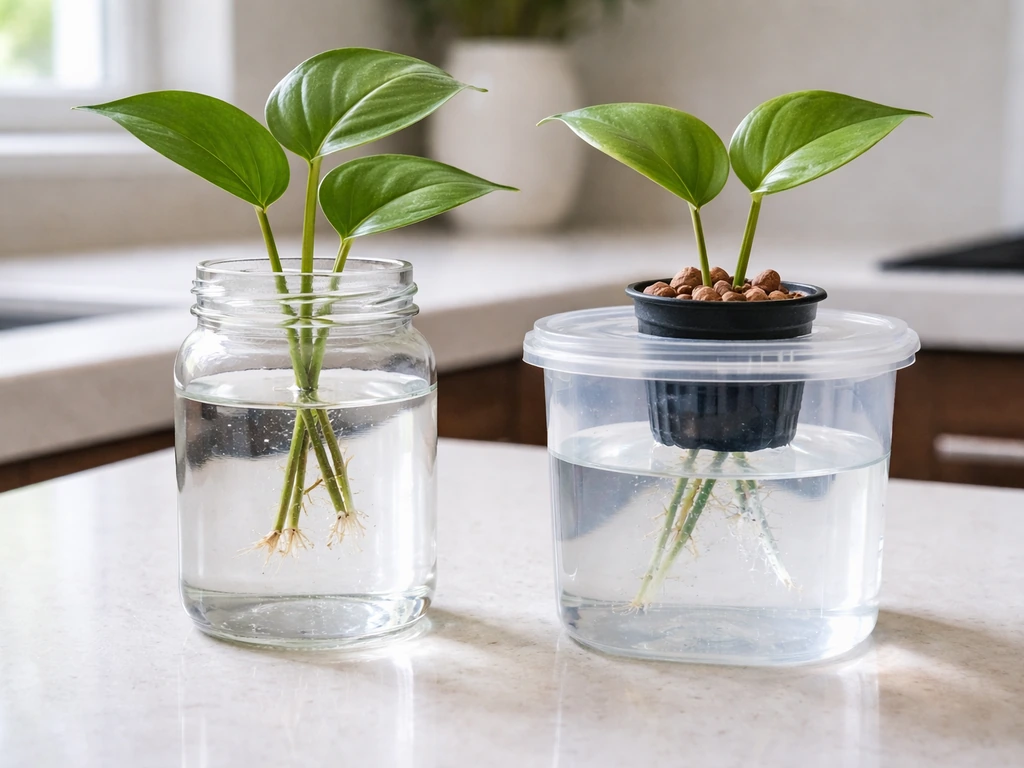
There are two distinct paths here, and which one you choose shapes everything else about your setup. Most people asking "can betel leaf grow in water" are really asking about one or the other without realizing it.
Simple water rooting (beginner-friendly)
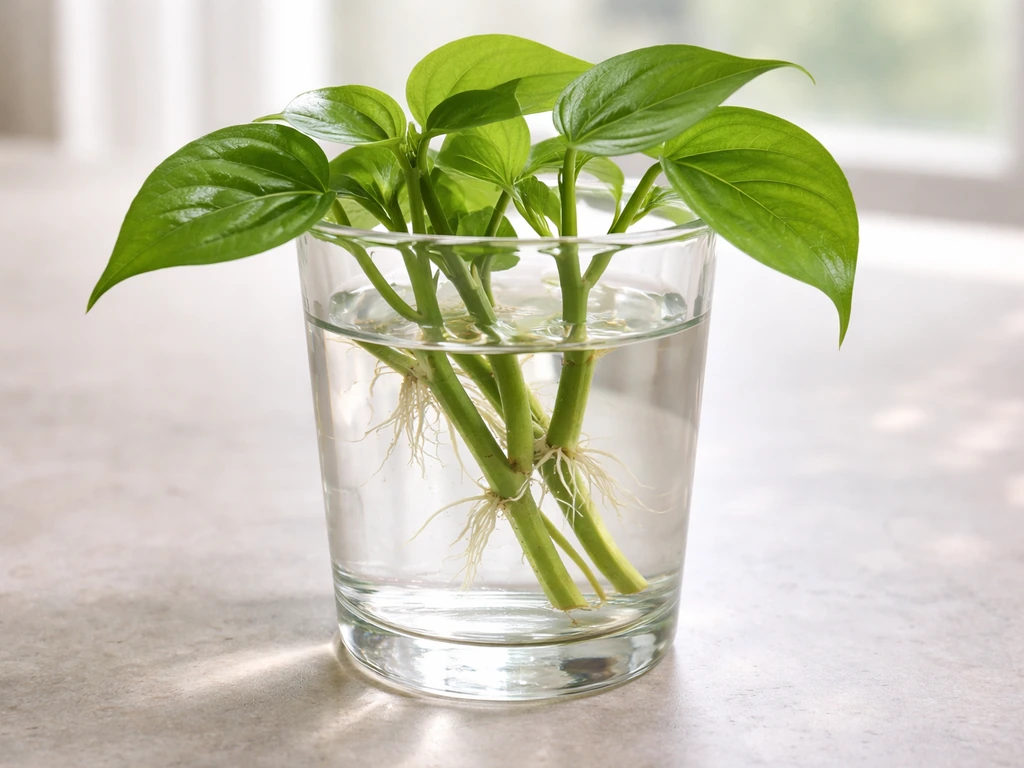
This is exactly what it sounds like: a cutting goes into a jar of plain water, sits near a window, and grows roots over several weeks. No special equipment, no nutrients, no aeration. You are just using water as a rooting medium until the roots are strong enough to move the plant to soil. It is low-cost, low-risk, and a great starting point if you have never propagated betel leaf before. The downside is that plain water without nutrients will only take the plant so far. Research comparing Piper betle growth under control (water only) versus nutrient-supplemented treatments clearly shows that nutrients matter as soon as the plant is actively growing leaves, not just pushing roots.
Hydroponic water growing (long-term)
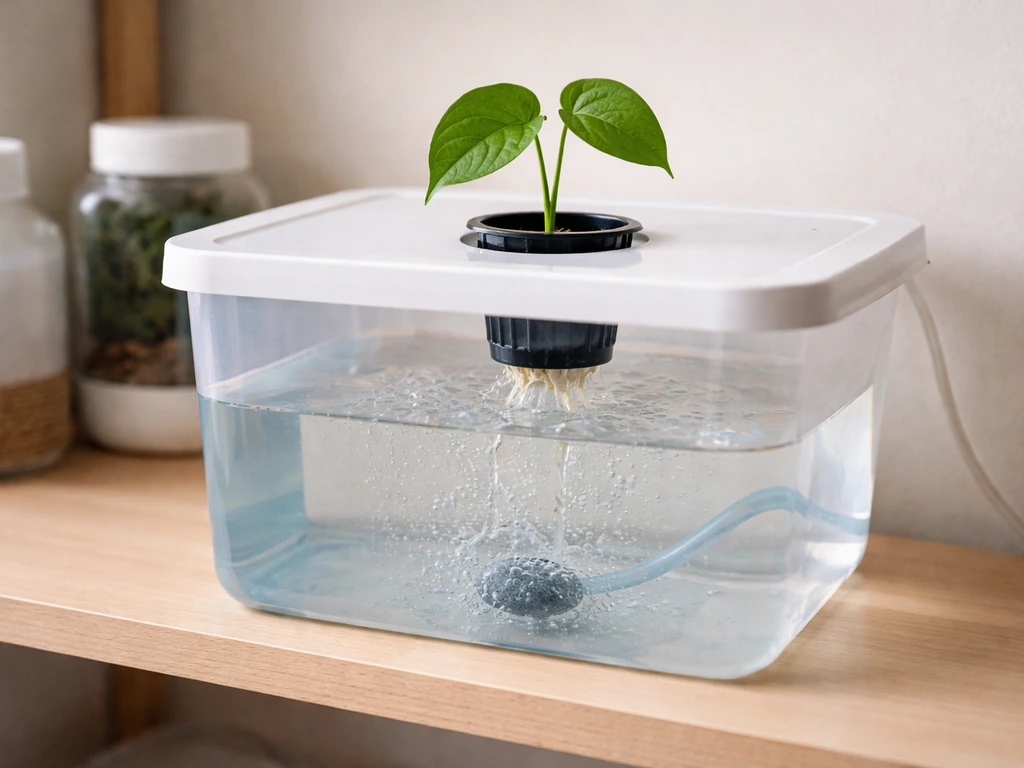
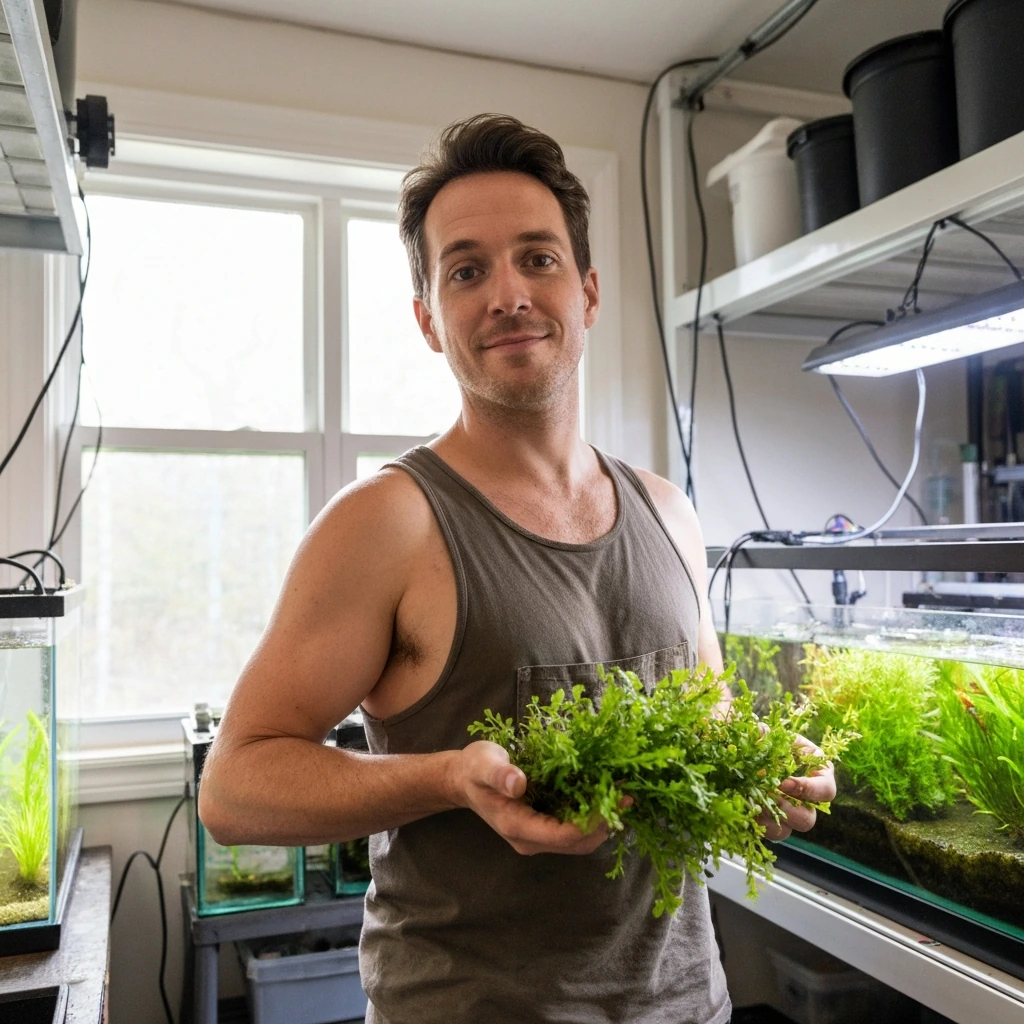
If you want to skip soil entirely and keep betel leaf growing in water permanently, a simple deep water culture (DWC) setup is the most practical approach for home growers. The roots hang in an oxygenated, nutrient-rich solution, and the plant keeps producing leaves indefinitely. This is more involved than a jar of water but not complicated. It does require a few extra pieces of equipment and consistent attention to water quality. If you enjoy water-based growing and already grow water sprite or other aquatic and semi-aquatic plants, betel leaf fits naturally into the same kind of setup.
| Factor | Water Rooting | Hydroponic DWC |
|---|
| Goal | Start roots, then move to soil | Grow the full plant in water long-term |
| Equipment needed | Jar, water, indirect light | Reservoir, air pump, nutrients, pH kit |
| Nutrients required | No (short term) | Yes (ongoing) |
| Ongoing effort | Low | Moderate |
| Best for | Beginners, propagation only | Committed water growers |
| Rooting time | 3–6 weeks | 3–6 weeks before transitioning to full system |
My honest recommendation: start with water rooting to get your cuttings established, then decide whether you want to transition to soil or move into a proper hydroponic setup. Trying to skip straight to DWC without successfully rooting a cutting first is where most beginners get frustrated.
What you actually need to get started
Containers
For water rooting, any clean glass jar, mason jar, or opaque cup works. Opaque is better than clear because it limits light reaching the water, which slows algae growth. If you are going hydroponic, you need a food-safe bucket or tote (5 liters minimum for a single plant), net cups to hold the cutting, and an air pump with an airstone to keep the water oxygenated.
Water type
Tap water that has sat out for 24 hours works fine for water rooting, since this lets chlorine off-gas. For a hydroponic system, filtered or reverse-osmosis water gives you more control because you are starting from a clean baseline before adding nutrients. Rainwater is also a good option if you have access to it. Avoid softened water because it contains sodium, which will damage roots over time.
Light
Betel leaf is a tropical understory vine, which means it is adapted to bright but filtered light, not direct sun beating down on it. A north- or east-facing windowsill with good ambient light is ideal for water rooting. If you are running a hydroponic setup indoors, a full-spectrum LED grow light set to around 12–14 hours per day does the job well. Avoid placing your jar or reservoir in direct afternoon sun because it heats the water, which reduces dissolved oxygen and invites root problems.
Basic hydroponic setup checklist
- Opaque reservoir or 5-liter bucket with a lid
- Net cups (5 cm diameter) to hold cuttings
- Air pump and airstone (even a small aquarium pump works)
- pH meter or test kit
- Liquid hydroponic nutrients (a balanced grow formula)
- Clean water (filtered or de-chlorinated tap water)
- Full-spectrum LED grow light (if no suitable window)
Taking cuttings and getting roots going
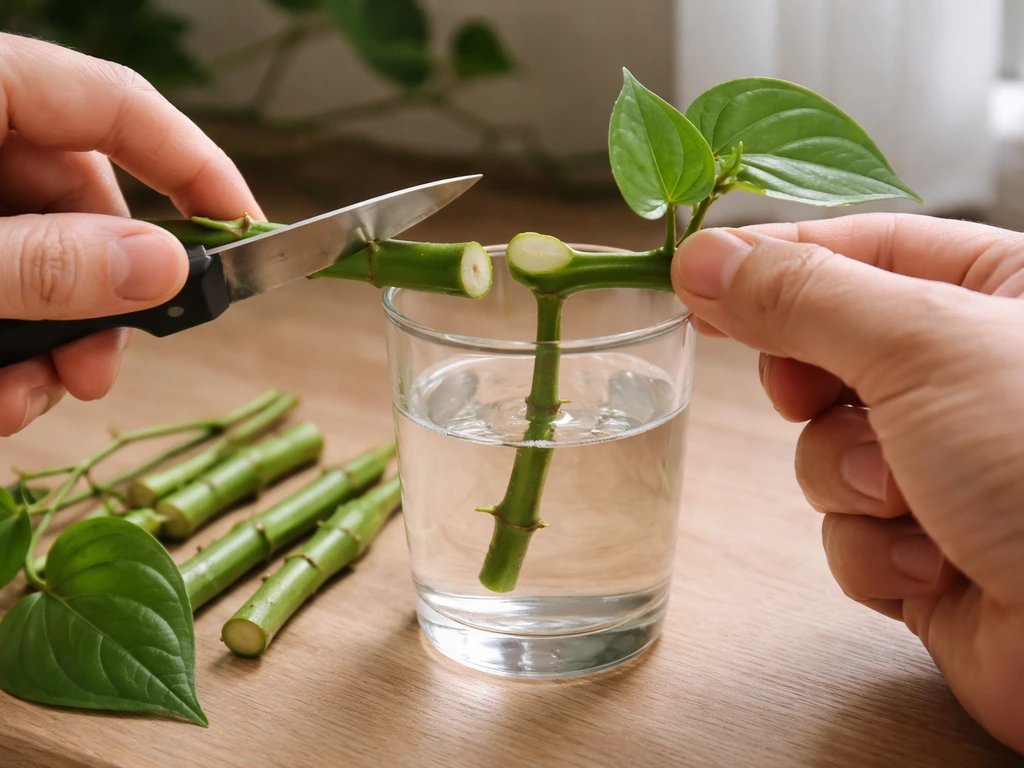
The cutting is everything. A bad cut means no roots, and I have wasted plenty of betel vine stems by being sloppy about this. Here is how to do it right.
- Choose a healthy, non-flowering vine stem. Look for a section that is firm, green, and has at least two or three visible nodes (the bumps where leaves attach).
- Use a clean, sharp knife or scissors. Sterilize the blade with rubbing alcohol before cutting — contaminated tools are a direct path to rot.
- Cut a section roughly 15–18 cm (6–7 inches) long, making the cut at a 45-degree angle just below the lowest leaf node. The angled cut increases the surface area exposed to water, which helps root initiation.
- Remove the leaves from the bottom node so no foliage is submerged in water. Submerged leaves rot quickly and foul the water.
- Optional but helpful: dip the cut end briefly in rooting hormone powder or gel before placing it in water. This is not mandatory for betel leaf, but it can speed things up by a week or two.
- Place the cutting in your jar so that at least one node is submerged and the top leaves are above the waterline. Set it somewhere with bright indirect light.
- Check back every few days. You should see the first white root tips emerging from the submerged node within 2–4 weeks under good conditions. Full root development typically takes 4–6 weeks, though some cuttings take up to 8–10 weeks depending on temperature and light.
One thing that tripped me up early on: betel leaf cuttings look completely inert for the first couple of weeks. Nothing seems to be happening. Then suddenly you see a cluster of fine white roots. Be patient and do not disturb the cutting by pulling it out repeatedly to check. Every time you do that, you set the process back.
Day-to-day care once your cutting is in water
Water changes
Change the water every 5–7 days when rooting in a plain jar. Fresh water keeps dissolved oxygen levels up and prevents the bacterial buildup that causes rot and bad smells. When you do a water change, rinse the jar and any slime off the cutting with clean water before refilling. In a hydroponic system with an air pump running, you can get away with topping up the reservoir between full changes, but a complete water-and-nutrient refresh every 10–14 days is good practice.
Aeration
If you are just rooting in a jar, a daily swirl of the jar helps add a small amount of oxygen. For a hydroponic setup, an air pump running continuously is non-negotiable. Betel roots need oxygen in the root zone or they suffocate and rot. Warmer water holds less dissolved oxygen, so if your room is warm and you are not aerating, you are setting yourself up for root problems. Keeping your reservoir temperature between 18–22°C (64–72°F) is the practical sweet spot for both oxygen availability and pathogen control.
Cleanliness
Algae and slime are your main enemies in any water-based system. Keep containers out of direct sunlight (light feeds algae), use opaque containers where possible, and clean any algae buildup with a dilute hydrogen peroxide rinse (3% solution, rinsed off thoroughly) before refilling. Do not let dead leaves or plant material sit in the water.
Nutrients
During the first few weeks of rooting, plain water is fine. Once you see a decent root system (roots at least 3–5 cm long), the plant is ready for nutrients. For a hydroponic setup, use a balanced liquid nutrient formula at around half the recommended dose to start. Target a pH between 5.5 and 6.5, which keeps nutrient availability optimal. An electrical conductivity (EC) of around 1.2–1.8 mS/cm is a reasonable starting range for a leafy herb like betel. Check pH every few days because it drifts as the plant feeds.
Light, temperature, and spacing for healthy leaves
Betel leaf is a tropical climbing vine that naturally grows in warm, humid, shaded forest environments. Replicating those conditions is the key to getting large, healthy leaves rather than small, stressed ones.
- Light: Bright indirect light for 10–14 hours per day. A spot 30–60 cm back from a bright south-facing window, or a full-spectrum LED grow light at moderate intensity, works well. Direct sun for more than 1–2 hours will scorch the leaves.
- Temperature: 20–35°C (68–95°F) is the comfortable range. Betel leaf is a tropical plant and will stall or drop leaves below 15°C (59°F). Keep it away from cold drafts and air conditioning vents.
- Humidity: Aim for 60–80% relative humidity. This is one of the most overlooked factors indoors. A small humidifier nearby or placing the container on a pebble tray with water helps significantly.
- Spacing: Give each vine enough horizontal room to trail or a vertical support to climb. Crowding reduces airflow, which leads to fungal issues on the leaves.
If you are interested in how other semi-aquatic plants handle similar light and temperature conditions in water-based systems, it is worth reading about how to grow waterleaf, the growing environment overlaps more than you would expect, especially for indoor setups.
Troubleshooting: the most common problems and how to fix them
Cutting not rooting after 4+ weeks
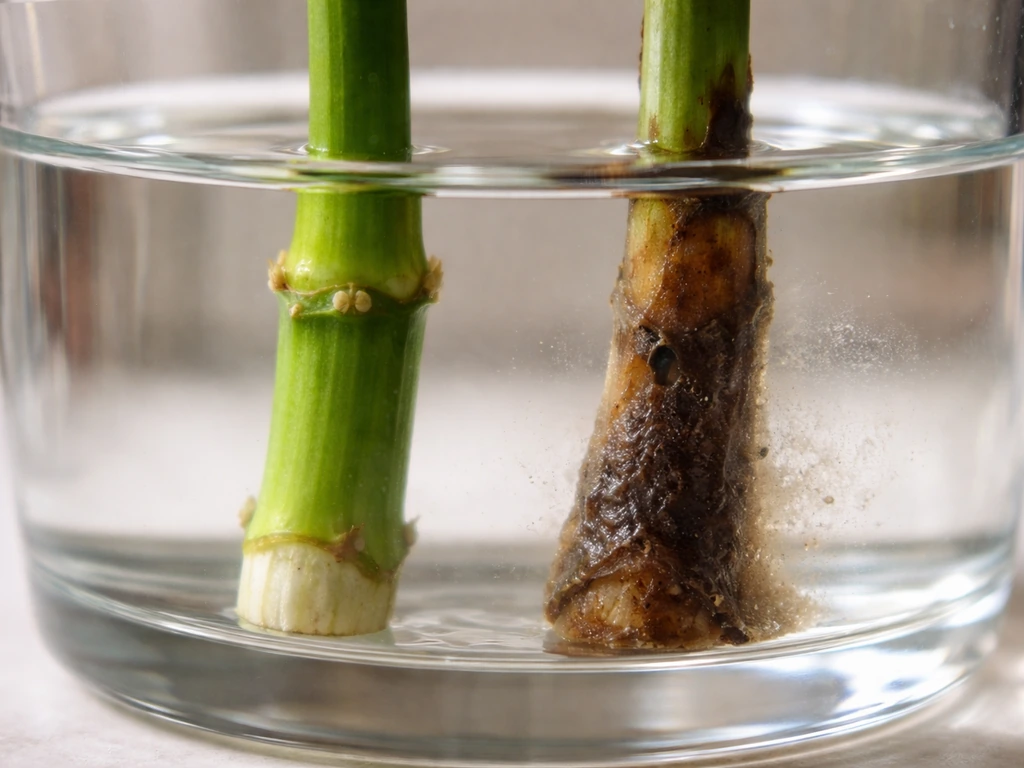
First, check that at least one node is submerged. Roots emerge from nodes, not from bare stem. If the node is above the waterline, lower the cutting. Second, check temperature: if the water is below 18°C (65°F), rooting slows dramatically. Warm it up. Third, check whether the cut end is rotting rather than rooting (it will look brown, soft, and slimy). If so, trim 1–2 cm off the rotted section with a sterilized knife, let the cut end air-dry for 30 minutes, and re-place in fresh water.
Stem rot in the water
Slimy, brown, or bad-smelling stems mean bacteria are winning. The fixes are: change water more frequently (every 3–4 days instead of weekly), keep the container out of direct sunlight, remove any submerged leaves, and consider adding a very small amount of 3% hydrogen peroxide to the water (about 1–2 ml per liter) at each water change. The symptoms to watch for in a hydroponic system are essentially the same as root rot in DWC, brown, slimy roots with a foul odor rather than white, firm, healthy roots.
Yellow leaves
Yellowing leaves on a betel cutting in plain water almost always means one of three things: the cutting is using up its stored nutrients and needs to move to a nutrient solution, the water is too cold, or there is not enough light. If the plant already has an established root system and is in a nutrient solution, yellowing usually signals a pH problem that is locking out nutrients, test your pH and adjust back to the 5.5–6.5 range.
Slow growth or no new leaves
If roots are healthy but the plant is not pushing new leaves, the most likely causes are insufficient light, temperatures below 20°C (68°F), or lack of nutrients in the water. Try increasing light duration to 14 hours, boosting humidity, and making sure the plant has nutrients available. Betel leaf is a vigorous grower when conditions are right, so sluggishness is almost always an environmental signal.
Algae buildup in the container
Green slime or algae growing in your container or on exposed roots is caused by light hitting the nutrient solution. Block all light from reaching the water using opaque containers, black tape, or a light-proof lid. Algae compete with your plant for nutrients and oxygen. Once you block the light, algae stop growing and the existing buildup can be scrubbed out during your next water change. This is a common issue when people use clear glass jars with a bright window, which is why I switched to dark containers early on.
When to move to soil, and when to keep it in water
Once your cutting has roots that are at least 5 cm long and the plant is actively pushing new leaf growth, it is ready to transition. At that point you have a real choice to make.
Moving to soil
If soil growing is your end goal, now is the time. Plant the rooted cutting into a well-draining mix with a slightly acidic pH around 5.5–6.5. Water-rooted cuttings transplant easily, but keep them in a humid, shaded spot for the first 1–2 weeks while the roots adapt to their new medium. Do not overwater during this transition period. The roots have been in water, so they are not accustomed to drying out, but soil that stays waterlogged will rot them just as fast as stagnant, unaerated water.
Keeping it fully water-grown
If you want to stay soil-free, move the rooted cutting into your DWC setup at this point. Suspend the cutting in a net cup filled with a clean inert medium (hydroton clay balls or rockwool work well) so the roots hang freely into the aerated, nutrient-rich reservoir. From here, ongoing care is about maintaining water temperature, pH, EC, and aeration consistently. Betel leaf is a vigorous vine and will reward a well-maintained hydroponic system with rapid growth and large, dark green leaves. Some growers doing this also find it useful to look at how madre de agua grows in water-based systems for comparison, since it is another fast-growing tropical plant often cultivated in similar setups.
A few plants in water-based systems produce leaves that look slightly different from their soil-grown counterparts, typically a bit larger and more uniform when conditions are dialed in. Betel leaf is no exception. The flavor profile holds up well in hydroponic growth, which matters if you are growing it for culinary or traditional use. Whether you stop at rooted cuttings or go all the way to a permanent water garden, the process from cutting to first harvest is roughly 8–12 weeks under good conditions. That is a realistic target to work toward, and everything in this guide is designed to get you there without unnecessary detours.
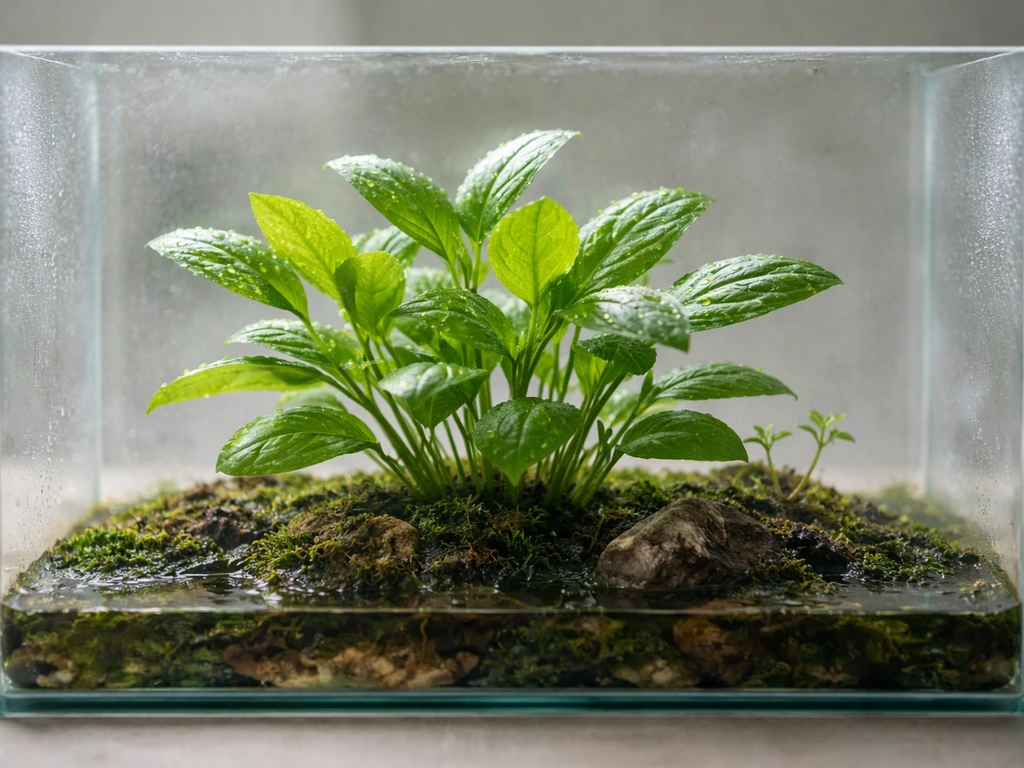
If you are building out a broader water-garden or hydroponic plant collection alongside your betel leaf, it is worth exploring guides tailored to similar plant types. For instance, understanding how waterleaf grows in Terraria-style aquatic setups can offer useful conceptual parallels for structuring multi-plant water systems at home.