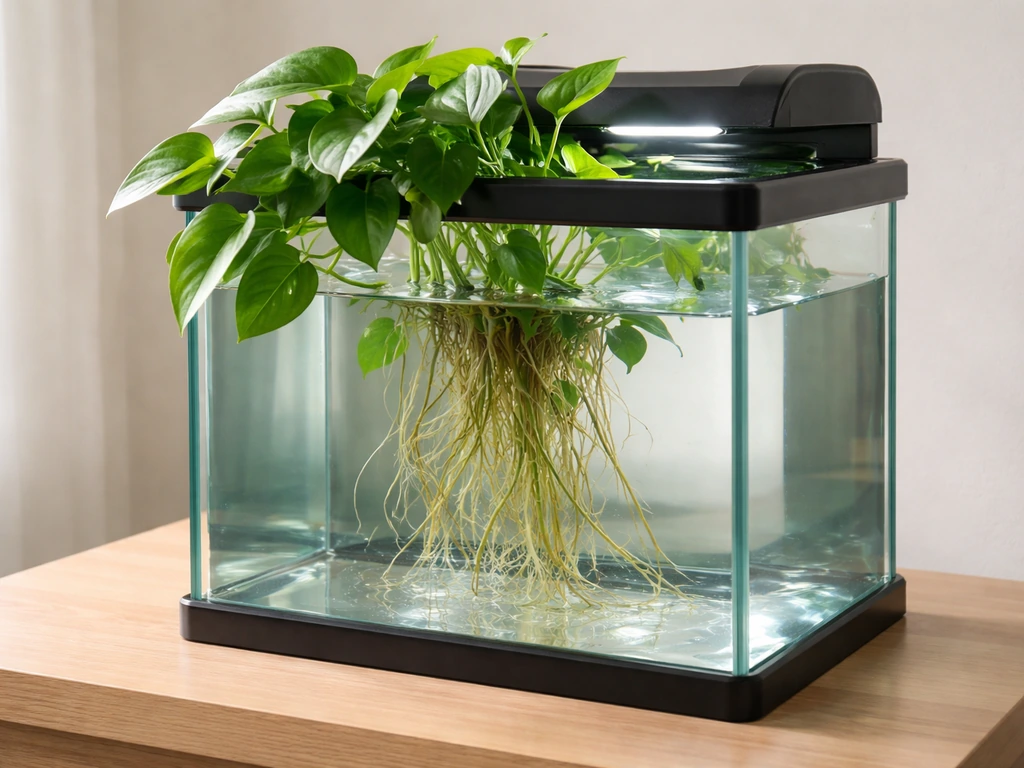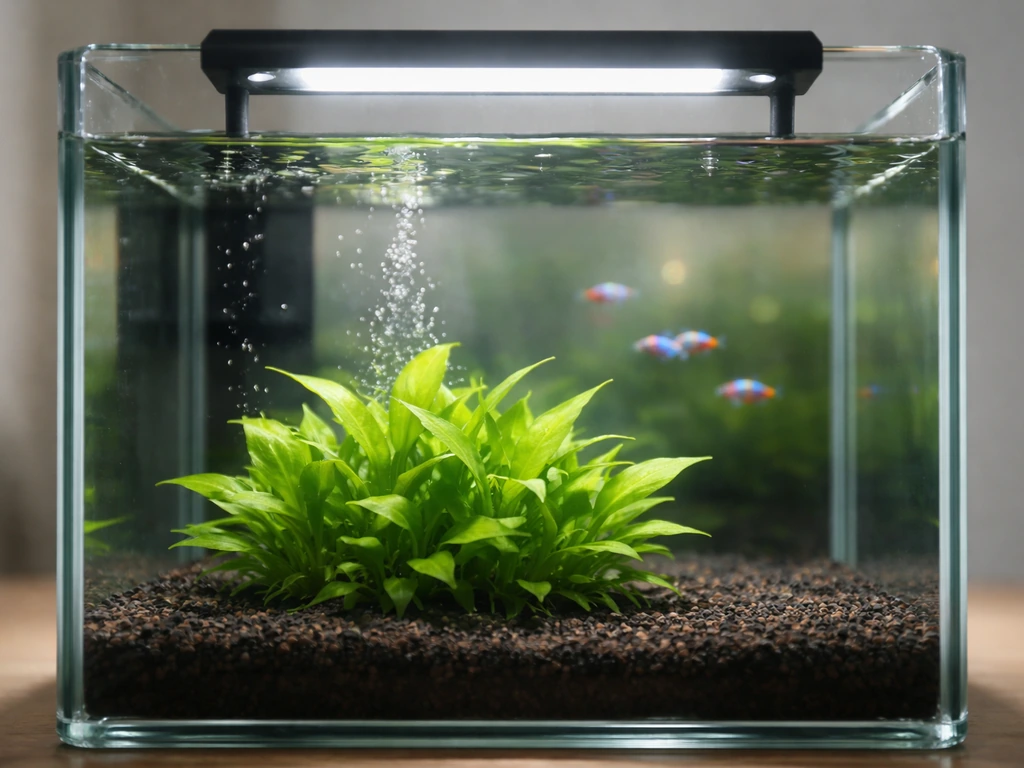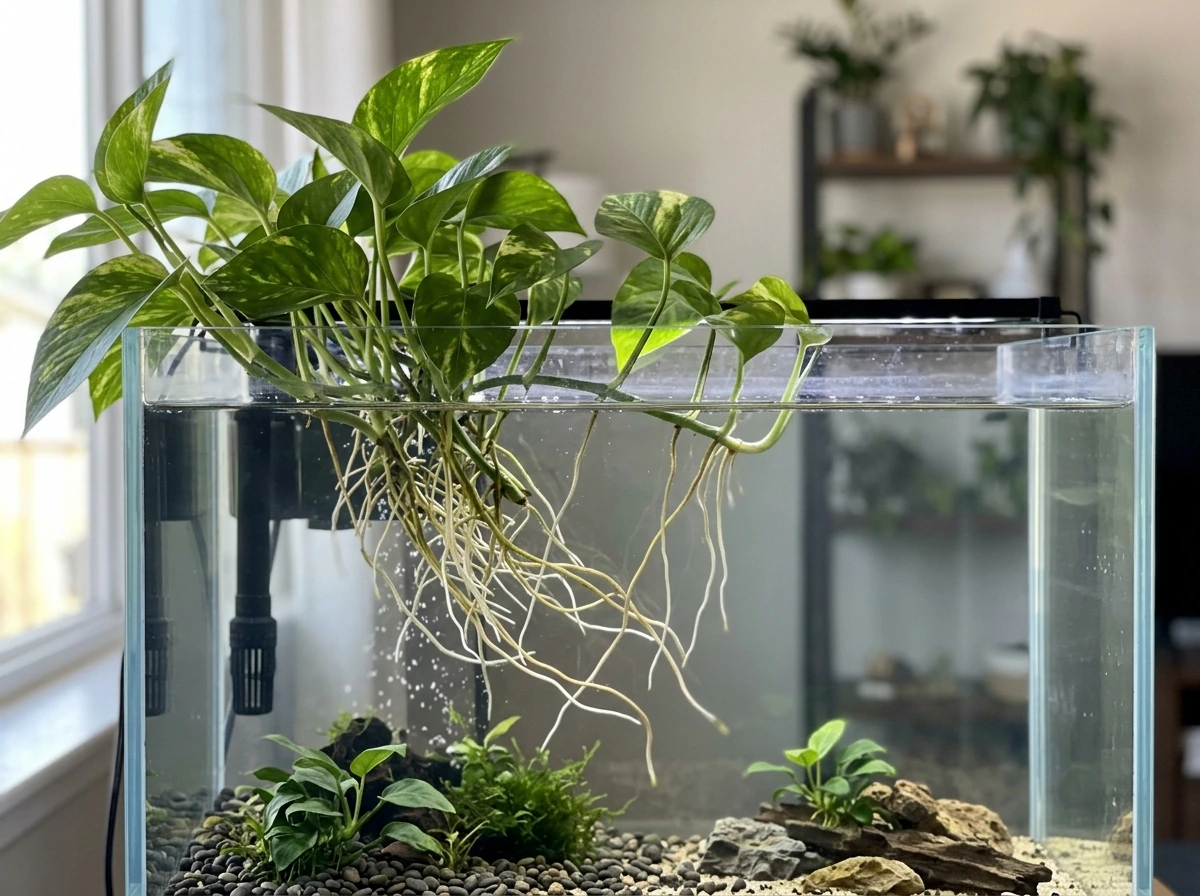
You can absolutely grow healthy aquatic plants in a fish tank with no substrate at all. The key is choosing plants that don't feed through their roots (rhizome plants, floating plants, and moss), anchoring them to hardscape or letting them float freely, and dosing nutrients directly into the water column since there's no soil buffer. Get those three things right and a substrate-free planted tank can look just as lush as any gravel setup, with a lot less maintenance headache. If you want to know how to grow pothos in aquarium conditions, the same substrate-free approach can work as long as you manage nutrients and keep the cuttings stable substrate-free planted tank.
How to Grow Plants in a Fish Tank Without Substrate
Marcus Holloway
3 Jul 2026
Why skip substrate in the first place
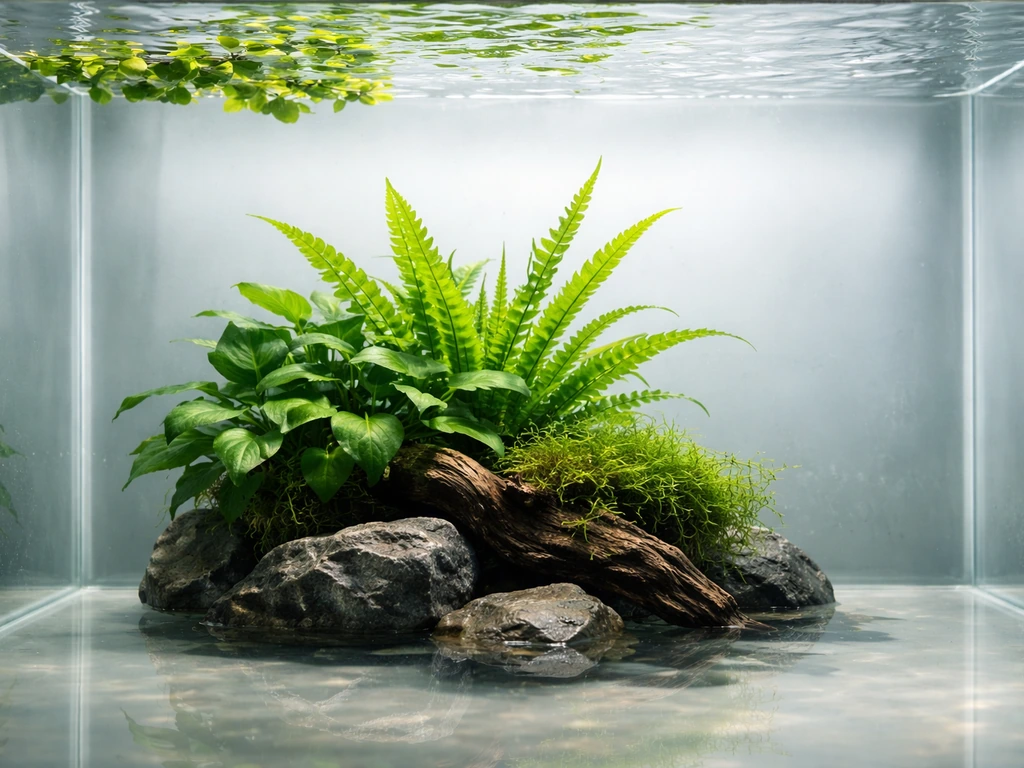
Bare-bottom and substrate-free tanks are easier to clean, let you spot waste and debris immediately, and make moving plants around simple. They're also a great fit for fish that dig, like cichlids, or for quarantine and breeding tanks where hygiene matters. how to grow plants in a fish tank. The tradeoff is that you lose the nutrient buffer a rich substrate provides, so you need to be more intentional about fertilizing. That's not a dealbreaker, it just means a slightly different routine.
Best plant types for a substrate-free tank
Not every aquatic plant can thrive without substrate, and picking the wrong one is the fastest way to get frustrated. There are three categories that genuinely work: rhizome plants, floating plants, and mosses. True root feeders like swords and crypts will struggle without either a nutrient-rich substrate or careful attention to root-zone feeding, so I'd leave those out when you're first setting this up.
Rhizome plants (the backbone of any substrate-free setup)
Anubias and Java fern are the gold standard here. Both feed entirely through the water column rather than their roots, and both actually rot if you bury their rhizome in substrate. That thick horizontal stem needs to stay fully exposed to water and have good flow around it. Attach them to driftwood or rock and they'll grow indefinitely without touching the tank floor. Bolbitis (African water fern) and bucephalandra work the same way and give you more variety in leaf shape and color.
Floating plants (free nutrients, free CO2)
Floating plants like frogbit, Amazon frogbit, duckweed, water lettuce, and salvinia are arguably the best plants for a substrate-free tank. They access atmospheric CO2 directly, pull nitrates straight from the water column, and require zero anchoring. They also act as a natural export system, pulling excess nutrients out of the water and reducing algae pressure. The downside is they block light to lower plants, so use them selectively or confine them to part of the surface with a simple plastic ring.
Mosses and cushion plants
Java moss, Christmas moss, flame moss, and Taiwan moss all absorb nutrients through their entire surface and need no root system. You tie or glue them to hardscape and they spread naturally. Subwassertang (freshwater seaweed) and marimo moss balls fall into a similar category: low maintenance, no substrate needed, and genuinely beginner-friendly.
| Plant | Type | Substrate needed? | Light requirement | Notes |
|---|---|---|---|---|
| Anubias | Rhizome | No | Low to medium | Rhizome must stay exposed or it rots |
| Java fern | Rhizome | No | Low to medium | Attach to wood or rock only |
| Bucephalandra | Rhizome | No | Low to medium | Slow grower, very hardy |
| Bolbitis | Rhizome | No | Medium | Prefers strong flow |
| Java moss | Moss | No | Low to medium | Tie or glue to hardscape |
| Christmas moss | Moss | No | Low to medium | Finer texture than Java moss |
| Frogbit / Amazon frogbit | Floating | No | Medium to high | Great nitrate export |
| Water lettuce | Floating | No | High | Fast grower, excellent filter |
| Duckweed | Floating | No | Low to high | Hard to remove once established |
| Marimo moss ball | Algae ball | No | Low to medium | Rotate occasionally for even growth |
Equipment and tank setup you actually need
You don't need a complicated system to run a substrate-free planted tank, but a few pieces of equipment make a real difference between plants that thrive and plants that slowly melt.
Lighting
PAR (photosynthetically active radiation) is the only meaningful measure of aquarium light intensity. For rhizome plants and mosses, target 20 to 40 PAR at plant level. Floating plants can handle more. For a general substrate-free tank, 30 to 60 PAR measured at mid-depth is a practical medium-light sweet spot that supports most of the plants in the list above without triggering algae outbreaks. If you're running only Anubias and Java fern, you can go lower. If you want faster growth from mosses, push closer to the upper end. Run your photoperiod for 8 to 10 hours. Longer than that at medium-to-high PAR almost always causes algae problems if your CO2 and nutrients aren't dialed in perfectly.
Filtration and flow
Good water movement matters more in a substrate-free tank than in a planted substrate tank, because plants are feeding entirely from the water column. Turnover of 4 to 10 times the tank volume per hour works well for most setups. A hang-on-back or canister filter is fine. The goal is gentle, even circulation that brings nutrients to plant surfaces without creating a constant current that shreds delicate leaves. Avoid dead spots, especially around mounted Anubias, because stagnant water around the rhizome is exactly what causes rot.
Temperature
Most common substrate-free aquarium plants do best between 72°F and 82°F (22°C to 28°C). Anubias and Java fern tolerate the full range. Mosses tend to prefer the cooler end, around 72°F to 77°F. Check that your fish's preferred temperature overlaps with your plant choices before you commit.
CO2 injection
For low-light rhizome and moss setups, CO2 injection is optional. These plants grow happily at ambient CO2 levels if you keep lighting modest. If you want to push growth with medium-to-high light, a pressurized CO2 system targeting around 20 to 30 ppm (a green reading on a drop checker) will help significantly. I'd skip DIY yeast-based CO2 for anything other than experimentation. The output is inconsistent, it drops off as the yeast exhausts itself, and that fluctuation between high and low CO2 actually destabilizes the tank more than no CO2 at all. Aquarium Co-Op also notes that DIY CO2 setups using yeast or citric acid can be cheaper, but they are less stable than pressurized CO2 because they produce inconsistent CO2 levels that make balancing a planted tank harder DIY yeast-based CO2. Liquid carbon (glutaraldehyde-based products) is a reasonable middle ground for low-to-medium light tanks where you want a small boost without the complexity of gas injection.
- LED light with adjustable PAR or dimming (target 30 to 60 PAR for medium setup)
- Filter with 4x to 10x turnover, positioned to create even circulation
- Heater sized to tank volume, maintaining 72°F to 82°F
- Thermometer (separate from heater display for accuracy)
- Pressurized CO2 kit with drop checker if using medium to high light
- Liquid carbon as optional supplement for low-tech setups
- Test kit covering ammonia, nitrite, nitrate, phosphate, and pH
How to actually root and anchor plants without substrate
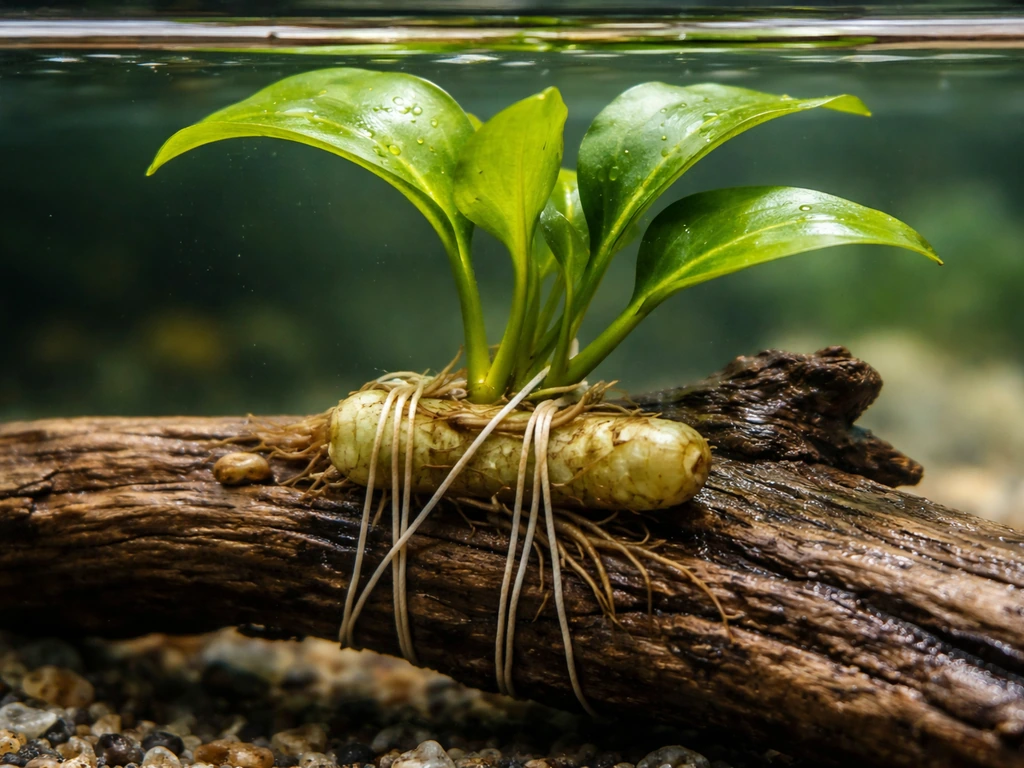
This is where most beginners run into problems. Dropping a rhizome plant loose on the tank floor doesn't work because fish will knock it around, it won't anchor itself, and the rhizome may end up partially buried in debris. Here are the methods that actually hold.
Tying with thread or fishing line
This is the most common method and it works well. Take a piece of driftwood or a smooth rock and tie the plant's rhizome (not the leaves) against the surface using cotton thread or thin fishing line. Cotton thread will break down over a few weeks, by which point the plant's root hairs will have gripped the surface. Fishing line lasts indefinitely. For Java moss and other mosses, press a thin layer against the surface and wrap it loosely, letting it spread naturally. Keep the pieces small when you attach them, about the size of your thumbnail, for even attachment.
Gel super glue (cyanoacrylate)
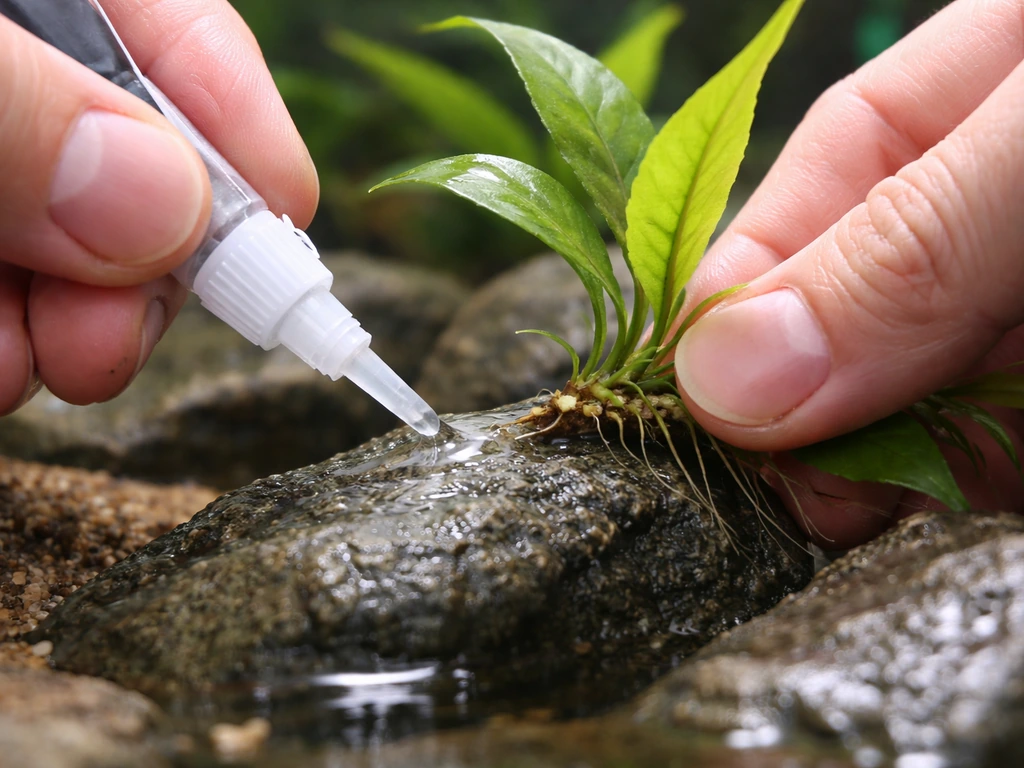
Gel-format cyanoacrylate super glue is safe for aquarium use once cured, and it's the fastest anchoring method. Dry both the attachment surface and the base of the plant briefly, apply a small dot of gel glue to the rock or wood (not to the plant tissue itself), press the rhizome or moss clump down for 30 to 60 seconds, then wait a few more minutes before submerging. The glue cures on contact with water but pressing it dry first gives you a stronger bond. This is my go-to for Anubias because it stays put even when cichlids are rearranging the furniture.
Net pots and suction cups
Small aquarium net pots filled with lava rock or ceramic media can hold rhizome plants upright without burying the rhizome in substrate. The roots grip the porous media while the rhizome stays above the rim of the pot. Suction cup plant holders attach directly to the glass and are good for holding stem plant bundles or rhizome plants in a specific position. Both methods let you reposition plants easily, which is useful while you're still figuring out your layout.
Lava rock and porous hardscape
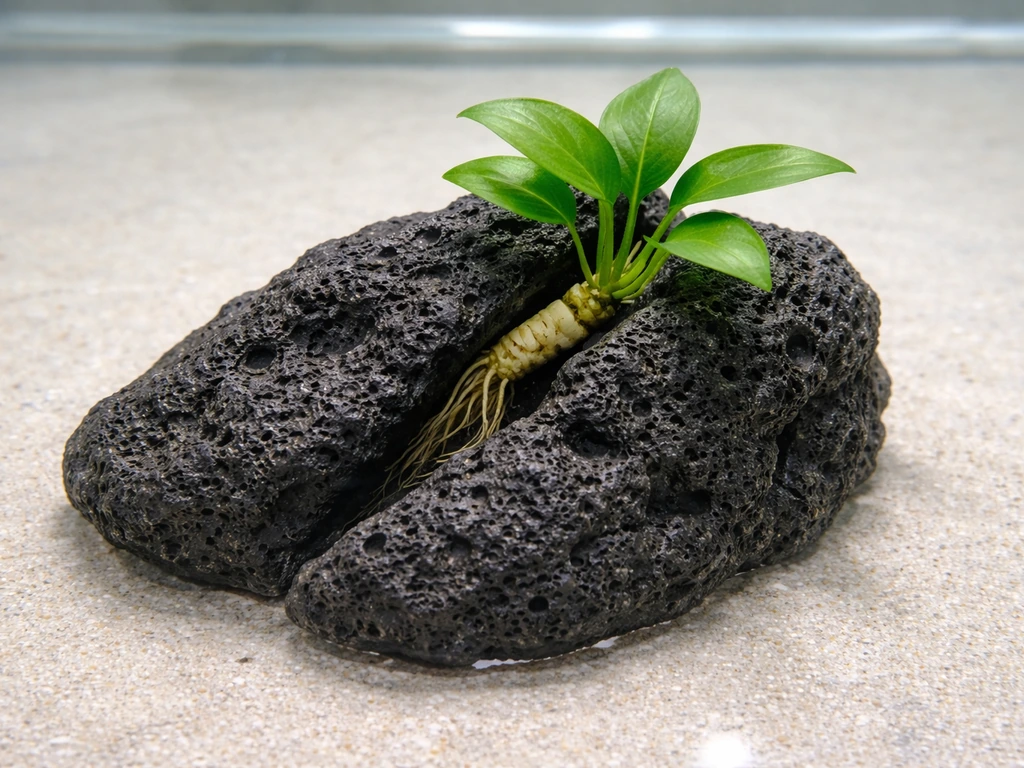
Lava rock is porous, lightweight, and inert, making it ideal for attaching Anubias and Java fern. You can press a rhizome into a crevice and let root hairs grip the surface over time, or speed things up with a dab of gel glue. Some hobbyists wedge Java fern rhizomes directly into natural gaps in driftwood, no glue needed. That works, but fish and shrimp will dislodge them unless the fit is tight. Gluing is more reliable if you have active tank inhabitants.
Floating approach (no anchoring needed)
For floating plants, simply place them on the surface. No anchoring, no fuss. If you want to contain them, use an airline tube bent into a ring or a floating plastic ring to create a defined area. Java fern will actually grow reasonably well floating at the surface without being attached to anything, developing roots that hang freely. It's not the tidiest look, but it works in a low-maintenance setup.
Feeding your plants when there's no substrate to buffer nutrients
Without substrate, you have no slow-release nutrient buffer. Every nutrient your plants need has to come from the water column, which means your fish load, feeding habits, and fertilizer routine are all interconnected. Get this balance right and plants grow steadily. Get it wrong and you'll either starve your plants or feed an algae explosion.
Using fish waste as your nitrogen source
In a fish tank, the nitrogen cycle converts ammonia from fish waste into nitrite and then into nitrate. If you want to grow pothos in a fish tank, the same substrate-free logic applies because you are relying on the water column and fish nutrients to support the roots how to grow pothos in a fish tank. That nitrate is usable by plants as a nitrogen source. If you have a moderately stocked tank with regular feeding, you may not need to add any nitrogen at all. Start by testing nitrate weekly. If you're seeing 10 to 30 ppm nitrate between water changes, your fish are probably providing enough nitrogen for moderate plant growth. Below 5 ppm and plants may show nitrogen deficiency. Above 40 ppm and you're heading toward algae territory.
Liquid fertilizers and dosing strategy
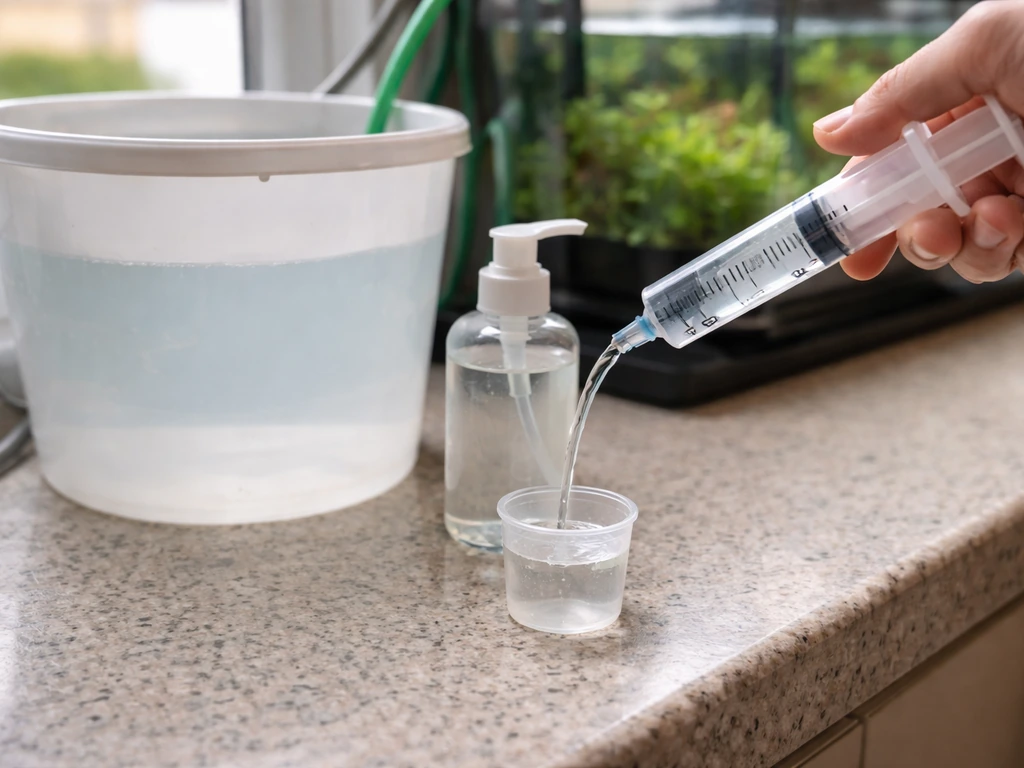
For a substrate-free tank, an all-in-one liquid fertilizer dosed after each water change covers most plants' needs. Add your liquid fertilizer immediately after a water change, since the dilution creates a clean baseline. Dose according to the manufacturer's instructions relative to your tank volume, then test nitrate and phosphate after a few days to see how nutrients are moving. If nitrate stays low but phosphate climbs, your fish food is high in phosphorus and you may need to skip the phosphate portion of your fertilizer. If both are low, your plant demand or fish load is high and you can increase dosing slightly.
For more demanding setups with medium-to-high light, Estimative Index (EI) dosing is a popular approach: dose macro and micro nutrients several times a week, then do a large water change (50%) once a week to reset accumulated nutrients. This gives plants a consistently available supply without letting anything build to toxic levels. EI works best when CO2 is also well controlled.
Reading deficiency symptoms
One important thing to know: if you just added a new plant and the leaves start looking yellow or translucent, that's usually transition melt, not a deficiency. Plants often shed older leaves when moved to a new environment. Wait a few weeks and watch whether new growth comes in healthy. If established plants (more than 4 weeks in your tank) start showing yellowing, then start looking at nutrients.
- Older leaves yellowing uniformly: likely nitrogen deficiency, increase dosing or fish feeding
- Yellow or brown spots that look like polka dots or holes in leaves: potassium deficiency
- Pale new leaves while old leaves stay green: iron or micronutrient deficiency
- Slow growth across all plants despite adequate light: CO2 or nutrient limitation
- New plant with melting/yellowing leaves: transition stress, not deficiency, wait it out
Water change schedule
In a substrate-free tank, weekly 25 to 30% water changes are a good baseline. This prevents nutrient accumulation, removes phosphate (which enters mainly through fish food and tap water), and keeps water parameters stable. After each water change, re-dose your liquid fertilizer. If you notice algae improving after a large water change, it's a signal that nutrients were running high. If plants look worse after water changes, you may be stripping out nutrients they needed and should re-dose more aggressively.
Lighting and growth troubleshooting
Most problems in substrate-free planted tanks come back to the relationship between light, CO2, and nutrients. When these three are out of balance, either plants suffer or algae wins. Here's how to diagnose and fix the most common issues.
Algae outbreaks
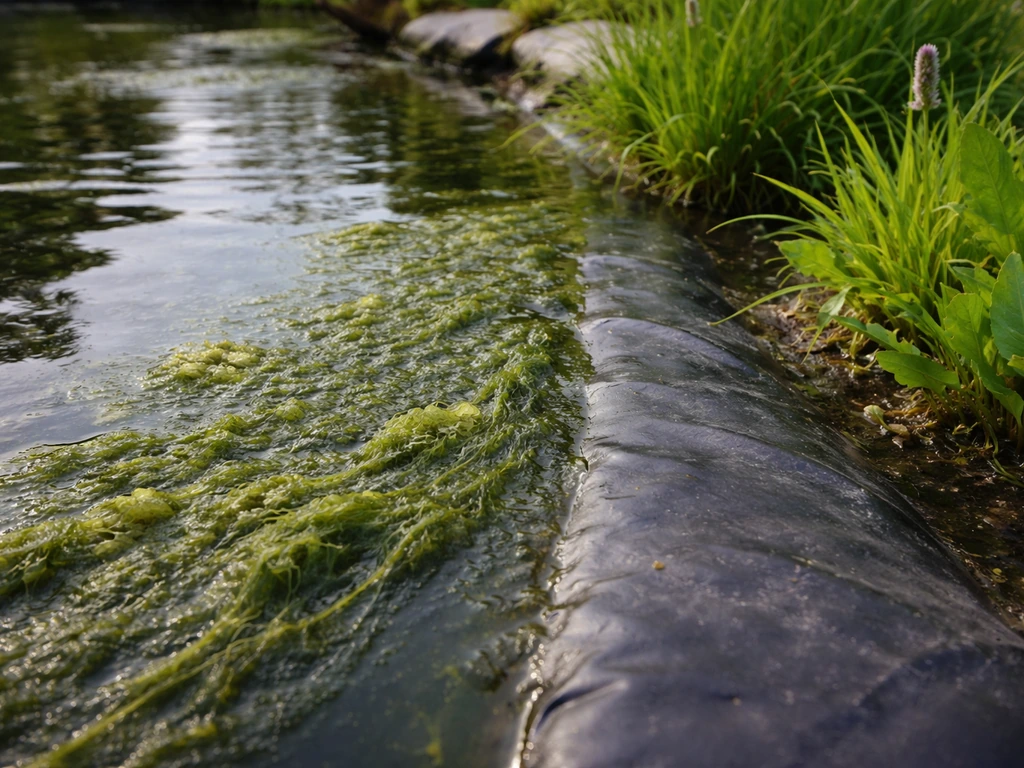
Algae is almost always a symptom of imbalance rather than a problem in itself. Too much light relative to CO2 and nutrients is the most common cause. If you're seeing green algae or hair algae spreading, start by shortening your photoperiod by one hour and see if the situation improves over a week. If you don't have CO2 injection, try running a photoperiod 'siesta': for example, lights on for 5 hours, off for 3 hours midday, then on again for 3 to 4 hours in the evening. This interrupts algae's peak photosynthesis window while still providing usable light to your plants. If algae persists, reduce light intensity before increasing nutrients.
Slow or stalled plant growth
If plants look healthy but just aren't growing, the usual suspects in a substrate-free setup are insufficient light, CO2 limitation, or nutrient deficiency. Check PAR first if you can. If PAR is adequate (above 20 at plant level for low-light plants), test nitrate and check your CO2 level with a drop checker. Green on the drop checker means CO2 is in range. Yellow means too high (and stresses fish). Blue means too low, which stalls growth and favors algae. If all three parameters look fine and growth is still slow, be patient. Anubias and Java fern genuinely grow slowly, and this is normal.
Plant melt
Melting is most common in the first two to four weeks after adding a new plant. Leaves go translucent, fall apart, or turn brown. This is transition stress as the plant adapts from emersed (above water) growth to submerged growth, and it's expected. Remove dead or rotting leaves with scissors to prevent them from fouling the water, but leave the rhizome alone. Watch for new growth. If melt continues beyond four weeks and new growth is also struggling, then investigate nutrients and light.
Cloudy water
Cloudy water in a new substrate-free tank is usually a bacterial bloom from a cycling tank or a disruption to the nitrogen cycle. It typically resolves on its own within a week or two. Cloudy green water is an algae bloom, almost always caused by excess light and/or nutrients with insufficient plant competition. Adding floating plants to shade the water column and compete for nutrients usually resolves green water within a week. A UV sterilizer can help with persistent cases.
Compatibility and safety with fish
A substrate-free planted tank is generally a safe environment for fish, but there are a few specific things worth knowing. If you're specifically wondering how to grow houseplants in a fish tank, substrate-free setups are often the easiest way to start with low-mess anchoring and simple care A substrate-free planted tank.
Plant toxicity
Most common aquarium plants are non-toxic to fish. Avoid terrestrial plants that might look like aquatic plants (like peace lily roots or lucky bamboo that isn't fully aquatic) as long-term submersion causes them to rot, fouling water quality. Anubias, Java fern, Java moss, and floating plants like frogbit are all fully safe for fish and invertebrates.
Oxygen levels
Plants produce oxygen during the day but consume it at night. In a densely planted low-tech tank, especially one with a lot of surface coverage from floating plants, you can see dissolved oxygen dip overnight. Watch for fish gasping at the surface in the morning, which is a sign of overnight oxygen depletion. Adding an air stone that runs at night, or simply reducing floating plant coverage to allow more surface gas exchange, usually solves this immediately. Good surface agitation from your filter return is the simplest fix.
CO2 and fish stress
If you're injecting CO2, keep a close eye on fish behavior, especially in the morning before lights come on. Very high CO2 (over 30 ppm) can stress or even kill fish. A drop checker that reads yellow rather than green means CO2 is too high. Dial back injection and increase surface agitation. Fish swimming erratically, losing balance, or gasping is a sign of CO2 overdose and needs immediate action: increase surface agitation and reduce or stop CO2 injection.
Protecting plants from fish
Some fish will uproot, bite, or shred plants. Goldfish and many cichlids eat or destroy soft-leaved plants. The tough, bitter leaves of Anubias and Java fern are generally left alone by most fish, making them ideal for substrate-free tanks with boisterous inhabitants. Mosses can be picked at by certain shrimp (which is actually beneficial) and by fish that forage aggressively. If fish are repeatedly uprooting attached plants, switch from thread-only attachment to gel super glue.
Maintenance routine and troubleshooting checklist
Consistency is what keeps a substrate-free planted tank stable. Here's a routine that works for a typical medium-light setup with fish.
Weekly routine
- Test nitrate and phosphate before the water change to understand where your baseline sits
- Do a 25 to 30% water change, siphoning any visible debris from the tank floor
- Re-dose liquid fertilizer according to tank volume immediately after the water change
- Trim any dead or yellowing leaves from rhizome plants and remove decaying floating plant matter
- Check that all attached plants are still firmly secured and re-glue or re-tie anything that has come loose
- Observe fish behavior for any signs of stress (gasping, lethargy, erratic swimming)
- Wipe any algae from the glass with a magnetic scraper
Monthly routine
- Clean or rinse filter media in old tank water (never tap water) to maintain biological filtration
- Check lighting intensity and adjust photoperiod if algae pressure has changed
- Thin out floating plants if they're covering more than 50 to 60% of the surface
- Inspect rhizomes for any soft, brown, or mushy sections that might indicate rot and trim affected areas with clean scissors
- Check and adjust CO2 if using pressurized injection
Quick troubleshooting checklist
| Problem | First thing to check | Fix |
|---|---|---|
| Green algae on glass and hardscape | Photoperiod length and PAR | Reduce photoperiod by 1 hour; dim light if adjustable |
| Hair algae spreading | CO2 consistency and light intensity | Check CO2 drop checker; reduce light before adding nutrients |
| Green water bloom | Light exposure and nutrients | Add floating plants; reduce photoperiod; consider UV sterilizer |
| Older leaves yellowing | Nitrate level | Test water; increase fish feeding or dose nitrogen |
| Holes or spots in leaves | Potassium level | Dose potassium supplement or switch to a more complete fertilizer |
| Pale new growth | Iron and micronutrients | Dose micronutrient fertilizer or all-in-one liquid fert |
| Rhizome soft and brown | Burial or water flow | Uncover rhizome; improve circulation around attachment point |
| Plants falling off hardscape | Attachment method | Re-attach with gel cyanoacrylate; avoid thread-only in active tanks |
| Fish gasping in morning | Dissolved oxygen overnight | Add air stone running overnight; reduce floating plant coverage |
| All plants stalled, no growth | Light, CO2, and nitrate together | Confirm PAR > 20, CO2 drop checker is green, nitrate is 5 to 20 ppm |
| New plant melting | Time since introduction | Wait 4 weeks; remove dead tissue; check for new growth at rhizome |
| Cloudy white/gray water | Tank cycle status | Test ammonia and nitrite; increase filtration; reduce feeding temporarily |
A substrate-free planted tank is genuinely one of the simpler aquarium setups to maintain once it's dialed in. The learning curve is mostly about understanding how nutrients flow through the water rather than through the soil, and that adjustment takes a few weeks of testing and observation. Start with Anubias, Java fern, and a handful of floating plants, get your lighting and water change routine consistent, and you'll have a thriving planted tank without a single grain of gravel on the bottom.
FAQ
Can I temporarily keep substrate-free plants in a container or net before attaching them?
Yes, but only if you choose true water-capable plants. Letting floating plants or rhizome plants sit in a plastic nursery cup with the rhizome above the rim can work as a temporary holder, but you should remove the cup once the plant roots grip the surface. Avoid trying to keep terrestrial cuttings submerged long-term, they will rot and spike organics even if they look fine at first.
How long should I wait before moving an attached plant in a substrate-free tank?
If you use glue, anchor in place first and then do not move the plant for at least a few hours, ideally overnight. For thread, keep pressure on the rhizome for a longer window, because early on the plant has not yet developed grip. The safest approach is to do your “final layout” after the tank is settled and the water level is stable, not during ongoing cycles.
What should I change first if algae appears after I start fertilizing?
For most setups, algae prevention is about dialing light plus nutrients, but also about nutrient form. If you routinely see algae after fertilizing, reduce the frequency or switch to a fertilizer plan that targets nitrate and phosphate based on test results (for example, lower or omit phosphate if nitrate stays decent but PO4 climbs). Also check for hidden light sources like a window or a bright room that makes your timer inaccurate.
Which water tests matter most for substrate-free planted tanks?
You need plant-relevant testing, not just “water looks clear.” In substrate-free tanks, test at least nitrate and phosphate weekly at first, and monitor pH alongside CO2 if you are injecting. If you cannot test phosphate, a practical rule is to start with a lower fertilizer dose and increase only after you confirm plants are growing, because fish food often supplies more phosphate than plants immediately use.
How can I tell transition melt from real nutrient deficiency in a no-substrate tank?
If leaves yellow after new-plant melt, don’t immediately add fertilizer. Wait for new growth to appear, then reassess. For established plants, yellow or thinning plus low nitrate and low phosphate usually means under-dosing or light changes. If yellow happens alongside very high nitrates or lingering algae, it can be excess nutrients from overfeeding or too much light, not deficiency.
What is the safest way to reduce floating plants to stop algae?
Yes, but keep it controlled. If you remove or reduce floating plants, do it gradually over several days so light and gas exchange shift slowly. Sudden removal can cause algae spikes because more light hits surfaces and nutrient competition changes at once.
Will digging fish break rhizome plants off in a substrate-free tank, and what attachment method works best?
If fish need sand-like rooting but you are going substrate-free, choose plants and attachment methods that tolerate disturbance. Avoid delicate attachment (like loose thread only) with diggers, because they can constantly loosen rhizomes. Use gel super glue to hardscape, or lava rock in net pots where the plant can be gripped firmly without needing the rhizome buried.
If my tank has fish but nitrate is low, should I feed more or fertilize?
A tank can run without added nitrogen if your fish load and feeding are consistent, but you still need to confirm with nitrate readings. If nitrate consistently stays under 5 ppm even after normal feeding, plants will usually stall and algae becomes more likely. Then add a controlled fertilizer dose (nitrate or an all-in-one) rather than increasing feeding again, because extra feeding also increases organics.
Can I run a substrate-free planted tank in quarantine or breeding setups, and how do I adjust care?
Treat quarantine the same way, but plan for less stability. If you move fish in and out, nutrients and waste inputs fluctuate, so plant growth may slow and algae risk rises. To keep things predictable, shorten the experimental period: run a simple low to medium light schedule, use hardy plants like Anubias and Java fern, and dose fertilizers based on tests after each water change rather than “remembered” doses.