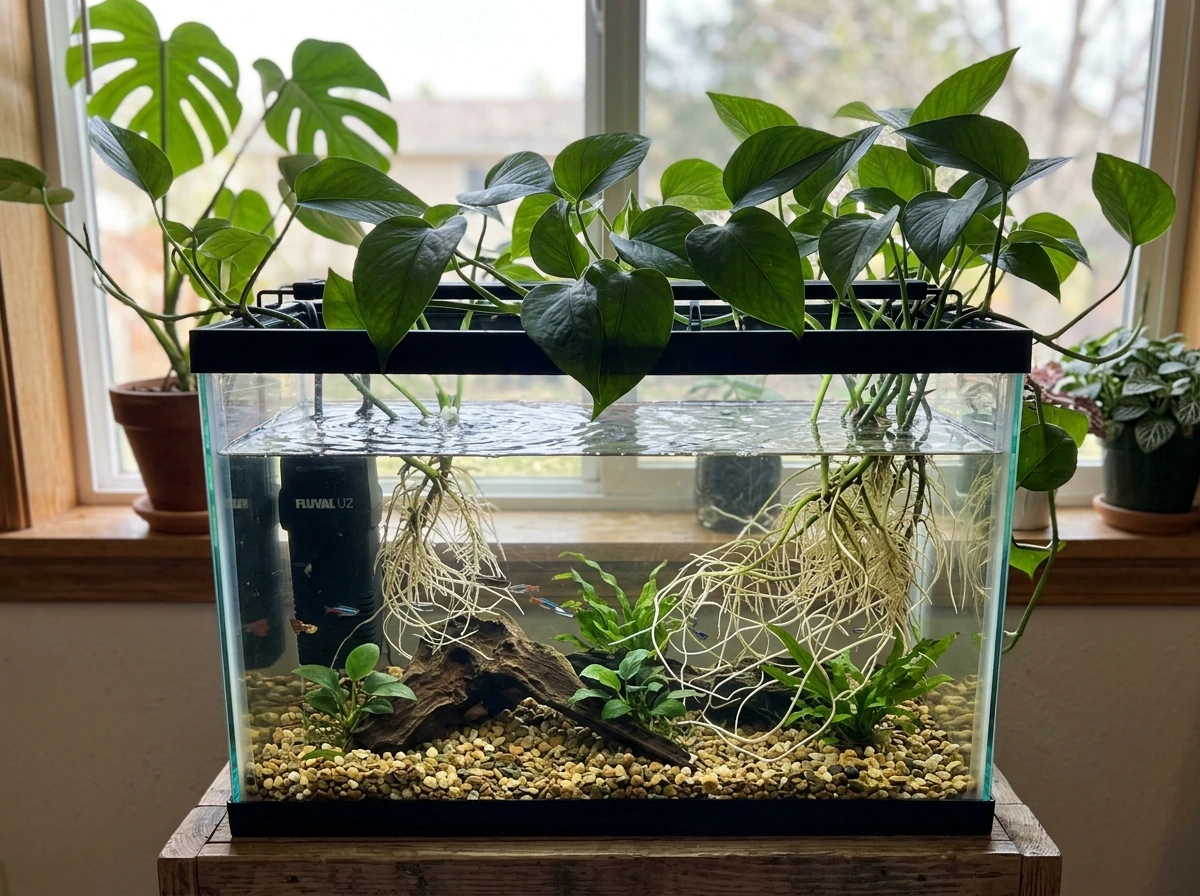
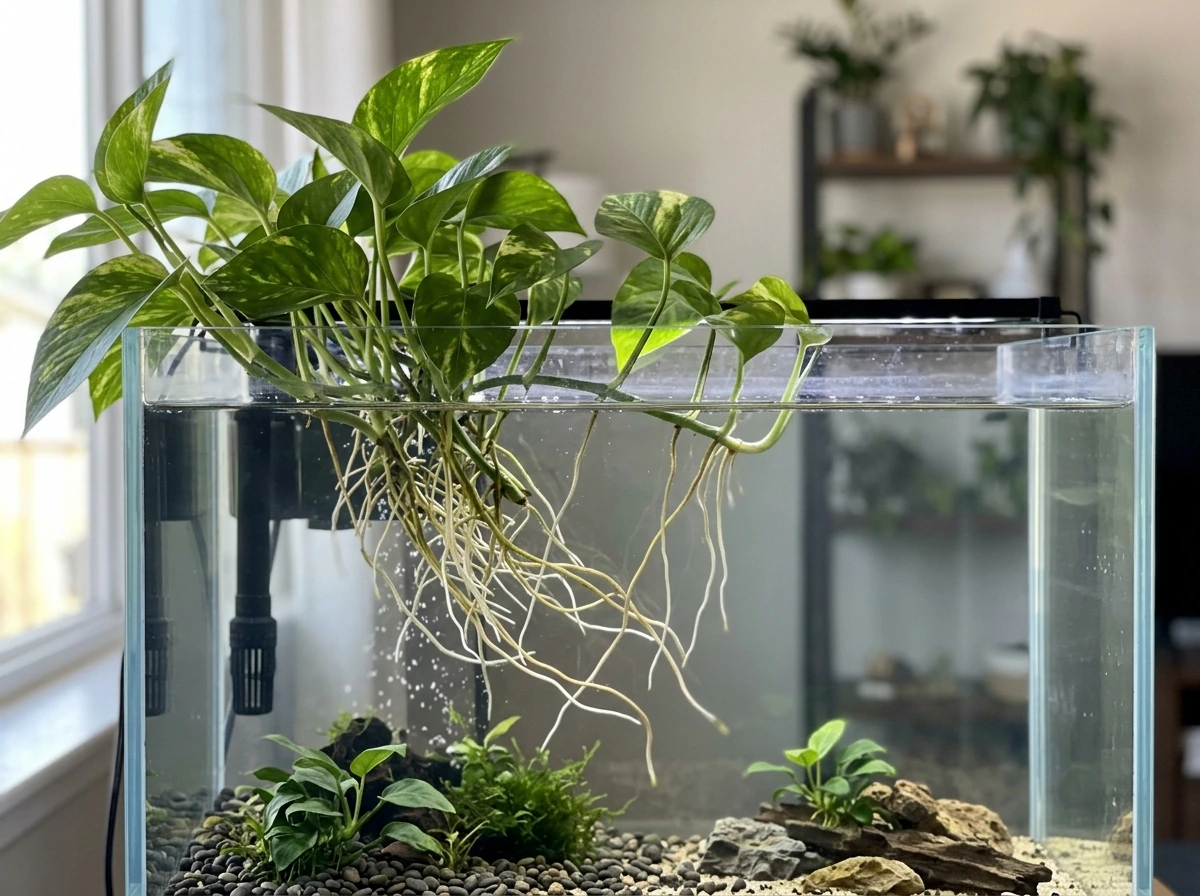
Yes, pothos can absolutely grow in an aquarium, and it does surprisingly well once you understand one key rule: keep the leaves and stems above the waterline while letting the roots hang freely below. That setup is the whole game. Get it right, and you'll have a lush, fast-growing plant that also helps pull nitrates out of your tank water. Get it wrong, and you'll end up with rotting stems and a frustrated plant. Let's walk through exactly how to do it correctly.
How to Grow Pothos in an Aquarium: Step-by-Step Guide
Marcus Holloway
24 Mar 2026
Can pothos actually survive in aquarium water?
Pothos (Epipremnum aureum) is one of the toughest houseplants on the planet, and that toughness extends to water-based growing. It propagates easily in plain water, tolerates a wide range of light and temperature conditions, and has been used in aquarium setups for years. The plant is naturally adapted to humid, tropical environments, which makes it a decent candidate for the warm, nutrient-rich water inside a fish tank.
The important distinction is that pothos is semi-aquatic in this context, not fully aquatic. It won't survive completely submerged. What you're doing is using the aquarium as a hydroponic reservoir: the roots drink from the water below while the foliage lives in open air above. Done this way, pothos not only survives but actively grows and helps filter the tank by absorbing ammonia and nitrates produced by fish waste. A 2021 study published in ScienceDirect found that Epipremnum aureum is a promising plant for nutrient removal from water media, and it preferentially takes up ammonium during early growth stages, which is exactly what builds up in a fish tank.
One thing to be honest about: a single pothos plant won't replace your filter. Aquaponics research is clear that a moderately stocked aquarium will not be adequately bio-filtered by one emergent plant. Think of it as supplemental filtration and a living decoration, not a replacement for your mechanical or biological filter.
Golden pothos vs. other varieties: which one to use
Golden pothos (Epipremnum aureum) is the go-to choice for aquarium growing, and for good reason. It's the most commercially widespread variety, it's been studied extensively for hydroponic and soilless growing, and its root system adapts quickly to water culture. The green-and-yellow variegated leaves also look great trailing over the back edge of a tank.
That said, other pothos varieties will also work in this setup. Here's a quick comparison to help you choose:
| Variety | Variegation | Growth Rate in Water | Best For |
|---|---|---|---|
| Golden Pothos | Green + yellow | Fast | Beginners, most reliable |
| Marble Queen | Green + white | Moderate | Aesthetic appeal, lower light |
| Neon Pothos | Bright chartreuse | Fast | High-contrast visual display |
| Njoy / Pearls & Jade | Green + white, smaller leaves | Slow | Smaller tanks, tight spaces |
| Cebu Blue | Silver-blue green | Moderate | Experienced growers, unique look |
My recommendation: start with golden pothos. It roots fastest, handles temperature and pH fluctuations better than the more delicate variegated types, and gives you the clearest feedback when something is off. Once you have a working setup, you can branch out into other varieties. how to grow pothos in fish tank
Setting up your pothos in the aquarium
Taking and preparing cuttings
The most important thing when preparing a pothos cutting for water growing is the node. Each cutting needs at least one node submerged in the water. The node is the small brown nub on the stem where leaves and roots emerge. No node, no roots. Cut a stem 4 to 6 inches long, ideally with 2 to 3 leaves. Remove any leaves that would sit at or below the waterline, since submerged leaves will rot quickly and foul the water.
If you're taking cuttings from an established soil plant, give the cut end a few hours to dry and callous slightly before putting it in the water. If you're working with a cutting already rooted in water, you can transfer it directly. Roots from water-propagated cuttings tend to adapt to aquarium conditions faster than roots that were grown in soil.
Where and how to anchor the stems
This is where most people run into trouble. If the stem sits in or on the water surface, it will rot. You need to keep the stem and leaves completely above the waterline while only the roots hang below. There are a few reliable ways to do this:
- Overflow box or hang-on-back filter: Thread stems through the slots or over the edge so roots dangle into the water chamber. This is the cleanest method for most aquariums.
- Mesh or egg crate lid: Place a piece of plastic mesh or egg crate over part of the tank top and poke stems through the holes so they hang down into the water.
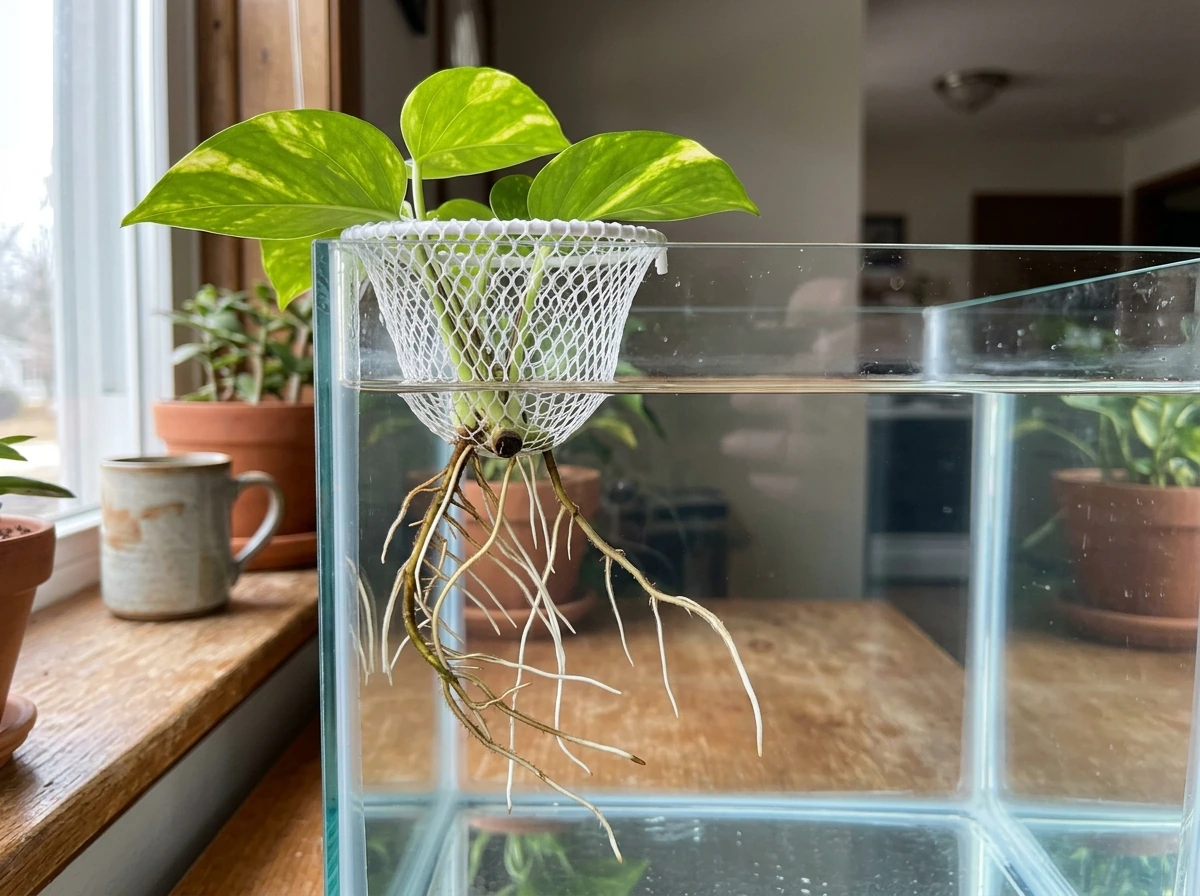
- Foam ring or floater: Use a small piece of foam or a net cup wedged at the waterline to hold the stem upright, with roots dangling below and the stem above water.
- Suction cup clips: Aquarium plant clips or suction cup holders can grip stems and hold them against the inside glass just above the waterline.
- Rim or canopy gap: In open-top tanks, simply drape the stem over the rim and let roots trail inside. Secure with a small clip if needed.
Whatever method you use, check regularly that no part of the stem or any leaves are touching or sitting in the water. That's the single biggest cause of stem rot in this setup. Once the stem rots, it's done. Cut above the rot and start again.
How deep should the roots go?
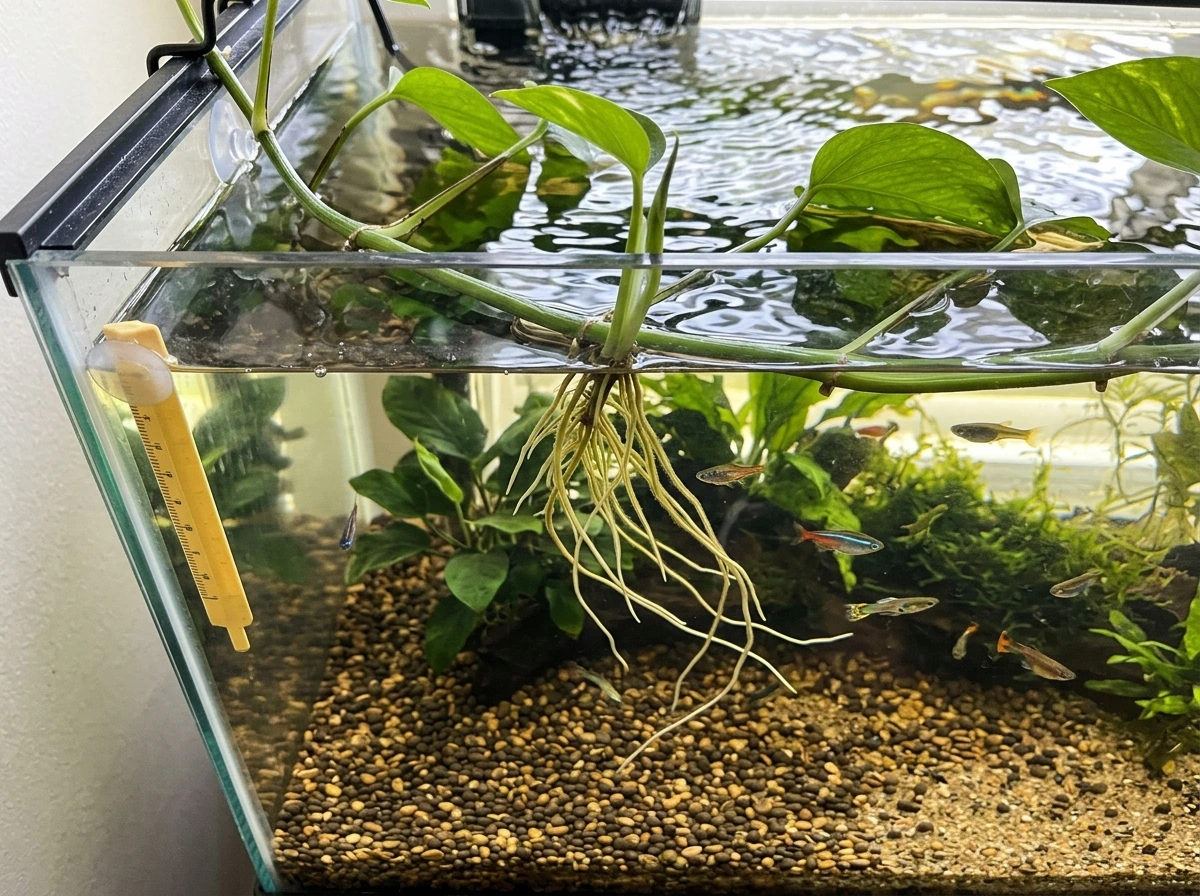
Ideally you want the node just at or slightly below the waterline, with roots extending freely into the water below. You don't need the roots to reach the bottom of the tank. In fact, in a tall tank, roots that only reach partway down are fine. What matters is that the roots have good water contact and some flow around them for oxygenation.
Water conditions and lighting
Temperature
Pothos grows best in water temperatures between 70 and 90°F (21 to 32°C). UF/IFAS production guidelines recommend keeping air temperatures in that range for optimal growth, with a decline when night temps drop below 65°F or day temps exceed 95°F. A tropical fish tank running at 76 to 82°F hits the sweet spot perfectly. If you're running a cold-water tank (below 65°F), pothos will survive but grow very slowly.
pH
Most aquariums for tropical fish run between pH 6.5 and 7.5, which is workable for pothos. For context, hydroponic nutrient solutions are typically kept around pH 5.5 for optimal root nutrient uptake, per OSU Extension guidance. Your aquarium pH won't be that low, but pothos is forgiving enough to root and grow in the 6.5 to 7.5 range without major issues. If your tank runs above pH 8.0 (common in African cichlid or saltwater setups), you may see slower growth and some micronutrient lockout.
Nutrients
If you have fish in the tank, their waste provides ammonia and nitrates that pothos will absorb directly through its roots. This is the main appeal of the aquarium setup: the fish feed the plant, the plant helps clean the water. A lightly to moderately stocked tank with regular feeding will supply enough nutrients to keep pothos growing at a reasonable pace without you needing to add anything extra.
If you're running a fishless tank (like a dedicated planted display or a shrimp-only setup with minimal bioload), the water won't have enough dissolved nutrients for fast growth. In that case, add a diluted liquid hydroponic fertilizer or a standard liquid houseplant fertilizer at about one-quarter the recommended dose every 4 to 6 weeks. Avoid fertilizing heavily in a fish tank because excess nutrients will fuel algae growth fast.
Water movement and oxygenation
Roots in still, stagnant water are more prone to anaerobic rot. Some gentle water movement around the root zone is helpful. If your aquarium filter return creates flow near where the roots hang, that's ideal. In a static setup or a vase used as a small aquarium, consider adding a small air stone to keep oxygen levels up around the roots. This makes a bigger difference than most people expect.
Light
Pothos is famously tolerant of low light, but low light means slow growth in water culture. For actively growing aquarium pothos, aim for 10 to 14 hours of moderate indirect light or LED grow light per day. UF/IFAS production guidelines list 1,500 to 3,000 foot-candles as the recommended range for pothos, with faster growth at the higher end. In aquarium terms, if your tank light is on for a standard 8-hour photoperiod, the pothos trailing above the tank will be fine but won't grow explosively fast. Supplementing with a small grow light or placing the tank near a bright window will accelerate leaf and root development noticeably.
Highly variegated varieties like Marble Queen need more light to maintain their white coloration. Golden and Neon pothos handle lower light better and will stay looking healthy even under modest aquarium lighting.
Growth expectations, care, and propagation
How fast will roots develop?
In warm aquarium water (76 to 82°F), you should see the first root nubs forming within 1 to 2 weeks of placing a fresh cutting. By week 3 to 4, you'll have roots 2 to 4 inches long. After about 6 to 8 weeks in good conditions, the root mass becomes substantial and the plant starts pushing out new leaf growth more aggressively. Success looks like white or light tan roots (not brown and slimy), new leaves unfurling every couple of weeks, and stems that feel firm, not mushy.
Ongoing care and water changes
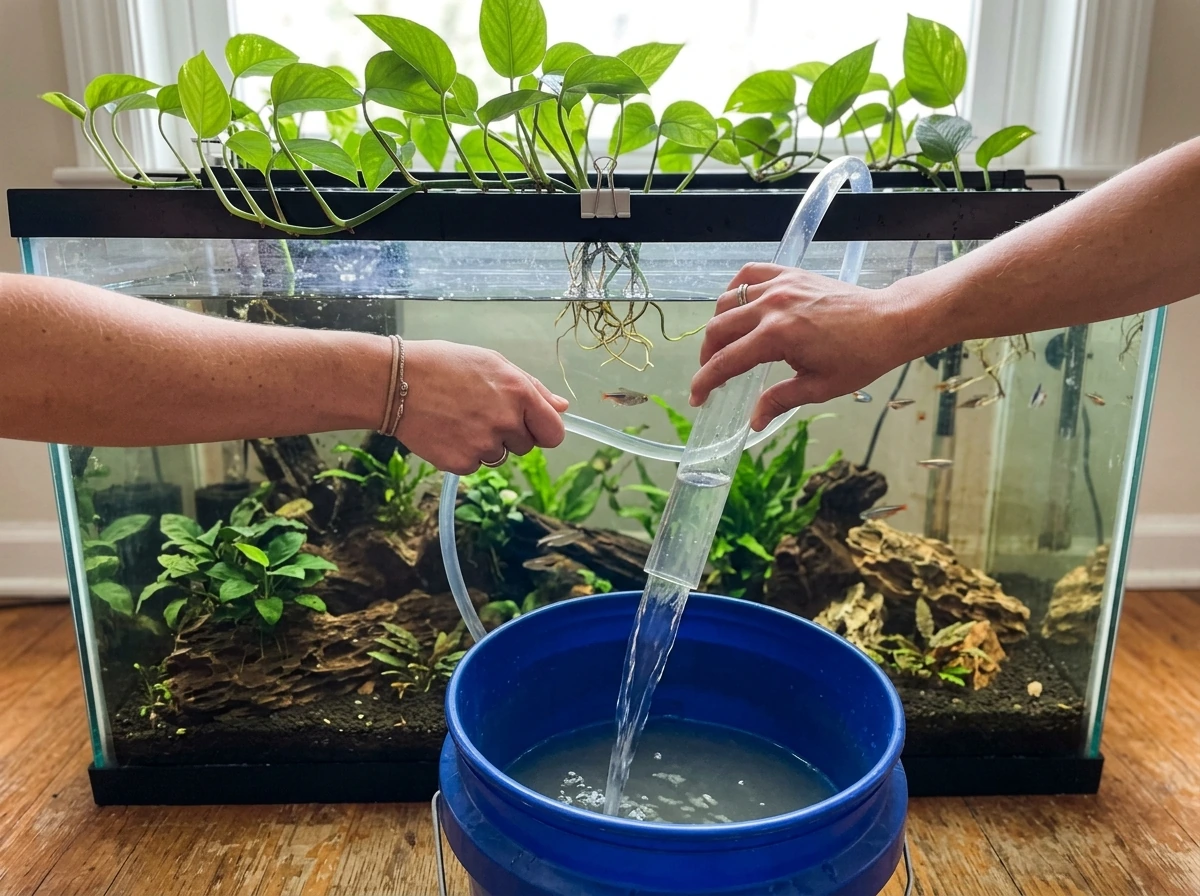
In a fully stocked aquarium, your regular water change schedule (typically 20 to 30% weekly or biweekly) handles water quality maintenance for the pothos along with the fish. In a fish-free setup or a simple vase, change the water every 2 to 3 weeks to prevent it from going stagnant. Oxygen in still water depletes over time, and stagnant water encourages the kind of anaerobic bacteria that cause root rot.
Pruning
Trim any yellowing or dead leaves as soon as you notice them to prevent decay from spreading into the water. When vines get long (12 inches or more), you can trim them back to encourage bushier growth. Always cut just above a node. The trimmed sections can go straight into water to root as new cuttings.
Propagating new cuttings in the aquarium
Propagating more pothos from your aquarium plant is easy. Snip a healthy stem with at least one node, remove lower leaves, and anchor it alongside your existing plant using any of the methods described above. Warm aquarium water actually speeds up rooting compared to a glass of tap water on a countertop. If you want to expand your setup or share plants with other aquarium hobbyists, this is a zero-cost way to multiply your stock quickly.
Troubleshooting common problems
Yellowing leaves
Yellow leaves are the most common complaint and have a few different causes. If the yellowing starts on older, lower leaves and the new growth looks healthy, it's usually just natural senescence or a minor nutrient deficiency, often nitrogen. In a low-bioload tank, try adding a small dose of diluted liquid fertilizer. If yellowing spreads to new leaves or the whole plant looks pale, check light levels first. Pothos yellows fast under too little light. Finally, if leaves yellow and feel soft or the stem near the waterline is mushy, you have stem rot starting. Cut above the rot immediately.
Root rot
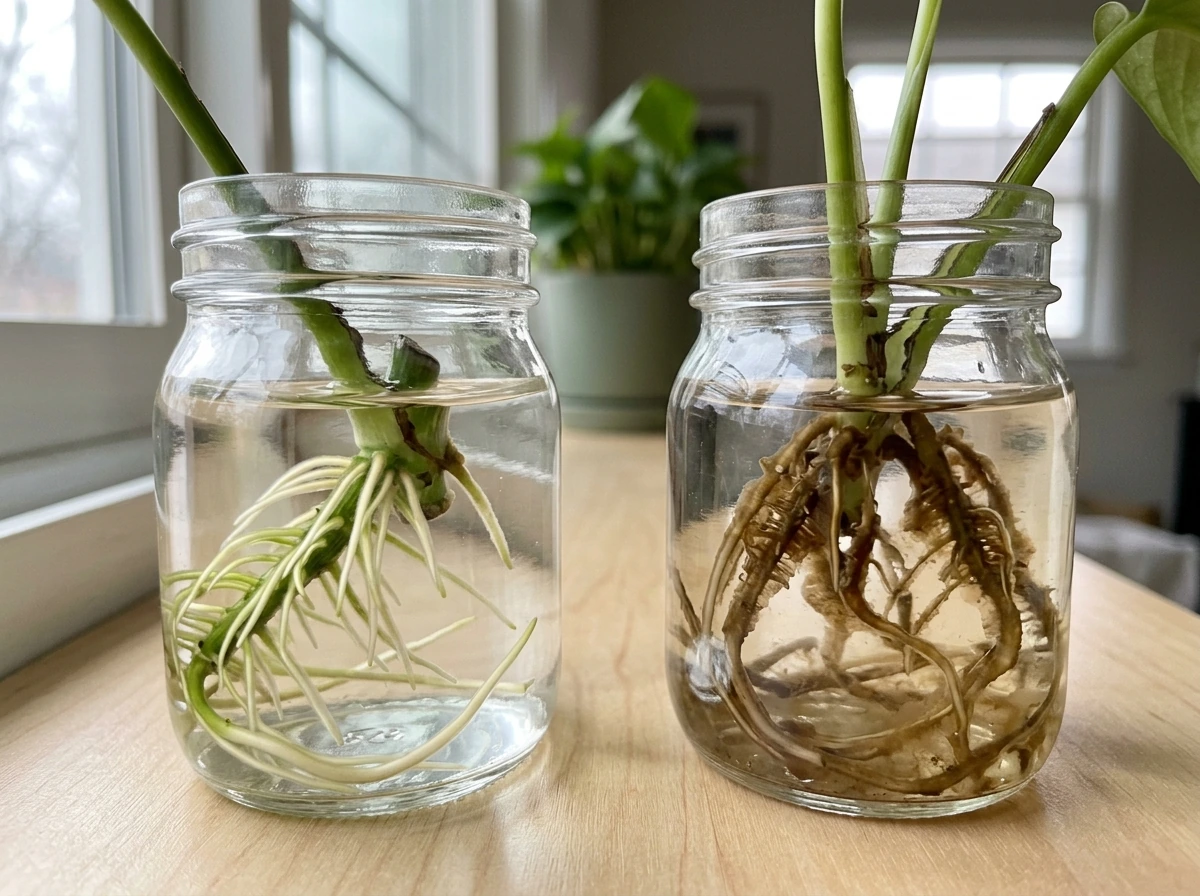
Healthy aquarium pothos roots are white to light tan. If your roots are turning brown, slimy, or smell bad, you have root rot. The usual culprits are: stem touching the water surface, stagnant water with no oxygenation, or water temperature too cold. Remove the affected cutting, trim all the rotted roots back to healthy tissue with clean scissors, rinse the healthy roots, and replace it in fresher, better-oxygenated water. If your filter return creates flow near the roots, redirect it there. Adding an air stone is a fast fix.
Algae growing on roots or near the plant
Algae love the same combination of light, nutrients, and warmth that your pothos enjoys. If algae start coating the roots or growing heavily around the base of the plant, the most common cause is too much light hitting the water surface directly. Try blocking light from reaching the area where the roots enter the water using black foam, opaque tape on the tank rim, or repositioning the plant. Reducing photoperiod by an hour or two can also help. The algae won't kill the pothos, but heavy algae on roots can reduce water uptake and oxygen exchange.
Nutrient deficiency
Slow growth combined with pale or small leaves usually points to insufficient nutrients in the water. This is more common in low-bioload or fishless setups. Add a diluted liquid fertilizer (quarter-strength) and see if new growth picks up within 2 to 3 weeks. Micronutrient deficiencies (iron, manganese, zinc) can cause interveinal chlorosis, where leaf veins stay green but the tissue between them turns yellow. A complete hydroponic micronutrient supplement at low dose will usually fix this.
Slow root development
If you're 4 weeks in and see almost no roots, check that the node is actually submerged. A cutting without a submerged node will not root in water, period. Also check temperature: below 68°F, rooting slows dramatically. Make sure you removed any leaves that were touching or near the water, since decomposing leaves release compounds that can inhibit root development.
Pests and microbial issues
Spider mites, mealybugs, and fungus gnats are common on the aerial (above-water) portions of pothos in any setting. In an aquarium setup, you can't spray chemical pesticides freely without risking harm to your fish or shrimp. For mites and mealybugs, use a damp cloth to manually wipe leaves, or try an insecticidal soap spray applied only to the leaves with care to prevent runoff into the tank. Fungus gnats are less common in a purely water-based setup since there's no moist soil for larvae to live in. If you notice a biofilm developing around the stem at the waterline, scrub it off during your next water change and improve water flow in that area.
Next steps you can take today
If you're starting from scratch, take a cutting from any pothos you already own (or buy a small pot for a couple of dollars), remove the lower leaves, identify the node, and anchor it over your aquarium so only the node and roots will touch the water. That's the whole first step. You should see roots within two weeks in a warm tank.
If you already have pothos in your aquarium and it's struggling, run through this checklist:
- Check that no part of the stem is touching the water. Lift it if needed.
- Check root color. White or tan is healthy. Brown and slimy means rot. Trim and reposition.
- Check your light duration. If you're under 10 hours a day, extend it.
- Check water temperature. Below 68°F will stall growth significantly.
- If running a low-bioload tank, add a small dose of diluted liquid fertilizer.
- If algae are coating the roots, block light from hitting the waterline area.
Pothos in an aquarium is one of the most beginner-friendly semi-aquatic setups you can try. It's forgiving, it grows fast when the basics are right, and it genuinely does pull some of the nutrient load out of your tank water. If you're interested in expanding beyond pothos, you might also look into other houseplants adapted for fish tank growing, since many of the same principles around node placement, stem protection, and water quality apply across species, see how to grow plants in a fish tank for more ideas. how to grow houseplants in fish tank
FAQ
Can I grow pothos in an aquarium without fish, like a shrimp-only or bare setup?
Yes, but growth will usually be slower unless you add nutrients. If there is no meaningful bioload, use quarter-strength liquid fertilizer every 4 to 6 weeks (or add a very small amount of hydroponic-style nutrients). Also keep the water from getting stale, since stagnant, low-oxygen water still triggers root rot even when nutrients are present.
What exact height should the node sit at relative to the waterline?
Aim for the node to be at or just barely below the surface, with no part of the stem itself resting on the water. If the node is too high (above water), it will not root properly, and if the stem floats or touches, rot is likely. A good check is to gently lower and lift the cutting so you can confirm only roots and the node area contact water.
Do I need a special aquarium plant holder, or can I just float the pothos cutting?
Floating is usually a mistake because it encourages the stem to sit in the water or on the surface. Use a top-mounted clip, a mesh basket, or a rigid frame so foliage stays above water and the roots hang freely. If you must improvise, ensure the container cannot tilt and keep the stem from slipping into the water over time.
How often should I change the aquarium water when pothos is the only plant?
For fishless or low-biodeposit setups, change water every 2 to 3 weeks (fresher water means more dissolved oxygen and fewer anaerobic conditions). For tanks with fish, rely on your usual water-change schedule, but still remove decaying leaves promptly, because rotting plant matter can create problems faster than the pothos can manage.
Should I trim roots or prune leaves during troubleshooting?
Yes when rot starts. If roots are brown, slimy, or smelly, remove the cutting, trim back to firm healthy tissue, rinse, then replant in fresher, more oxygenated water. For normal growth, routine leaf trimming is optional, but remove yellowing leaves immediately so they do not become an ongoing source of decay at the waterline.
Why does my pothos have new leaves but the roots look weak?
That can happen when the stem is close to the waterline but the root zone lacks oxygen or flow. Check for stagnant water around the hanging roots, then increase circulation near that area, such as redirecting a filter return. In very still setups, adding an air stone near the root zone is often the fastest fix.
Can I use tap water and leave it untreated?
Usually, but it depends on your tap. If your water is heavily chlorinated or chloraminated, pothos roots may struggle. If you treat your tank water for fish, apply the same approach for pothos, then confirm temperature and pH stay in the workable ranges (roughly 70 to 90°F, pH about 6.5 to 7.5).
What light setup prevents algae while still helping pothos grow?
Block direct light from hitting the water surface where roots enter, since that specific spot often becomes an algae hotspot. Use the plant position so the stems and root entry point are not in harsh overhead glare, or cover that rim area with opaque tape or foam. Also keep photoperiod reasonable, reduce by an hour or two if algae ramps up.
Is it safe to use fertilizer, and how do I avoid harming fish?
Use the lowest effective dose and avoid frequent large additions. If you add fertilizer, stick to quarter-strength and space applications 4 to 6 weeks, then observe algae and fish behavior. Over-fertilizing can rapidly fuel algae, and heavy nutrient spikes can stress aquarium livestock even if the pothos itself looks fine.
Can pests survive only on the above-water leaves in an aquarium?
Yes. Spider mites and mealybugs can persist on aerial leaves even when water-based stages are not present. Since you generally cannot spray freely in a fish or shrimp tank, wipe leaves with a damp cloth first, or use insecticidal soap very carefully so runoff into the water is minimized.
My pothos turns yellow. How do I tell the cause quickly?
Use a fast triage: if older lower leaves yellow first and new growth stays green, it may be natural aging or a mild nutrient shortfall. If new leaves turn pale or yellow, check light intensity before anything else. If yellowing comes with soft tissue near the waterline or mushy stems, treat it as stem rot and cut above the affected area immediately.