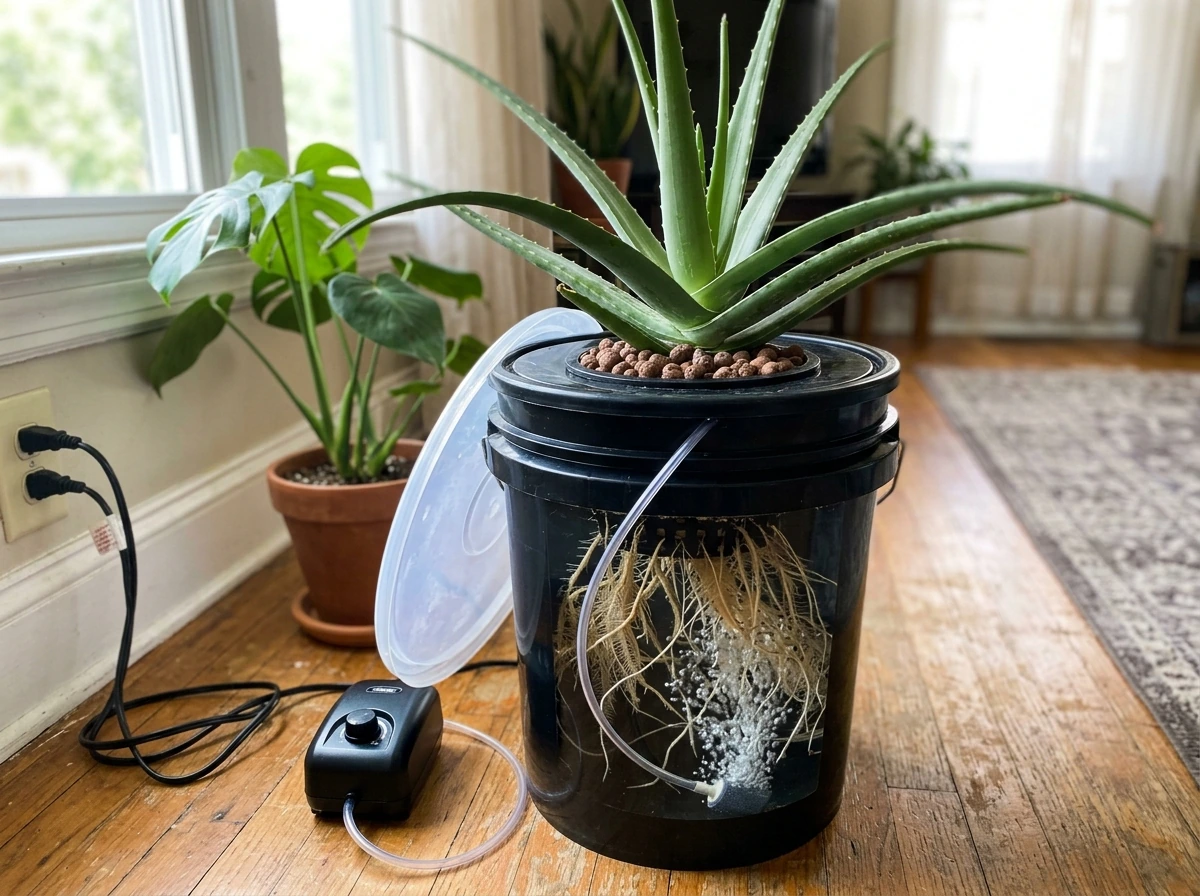
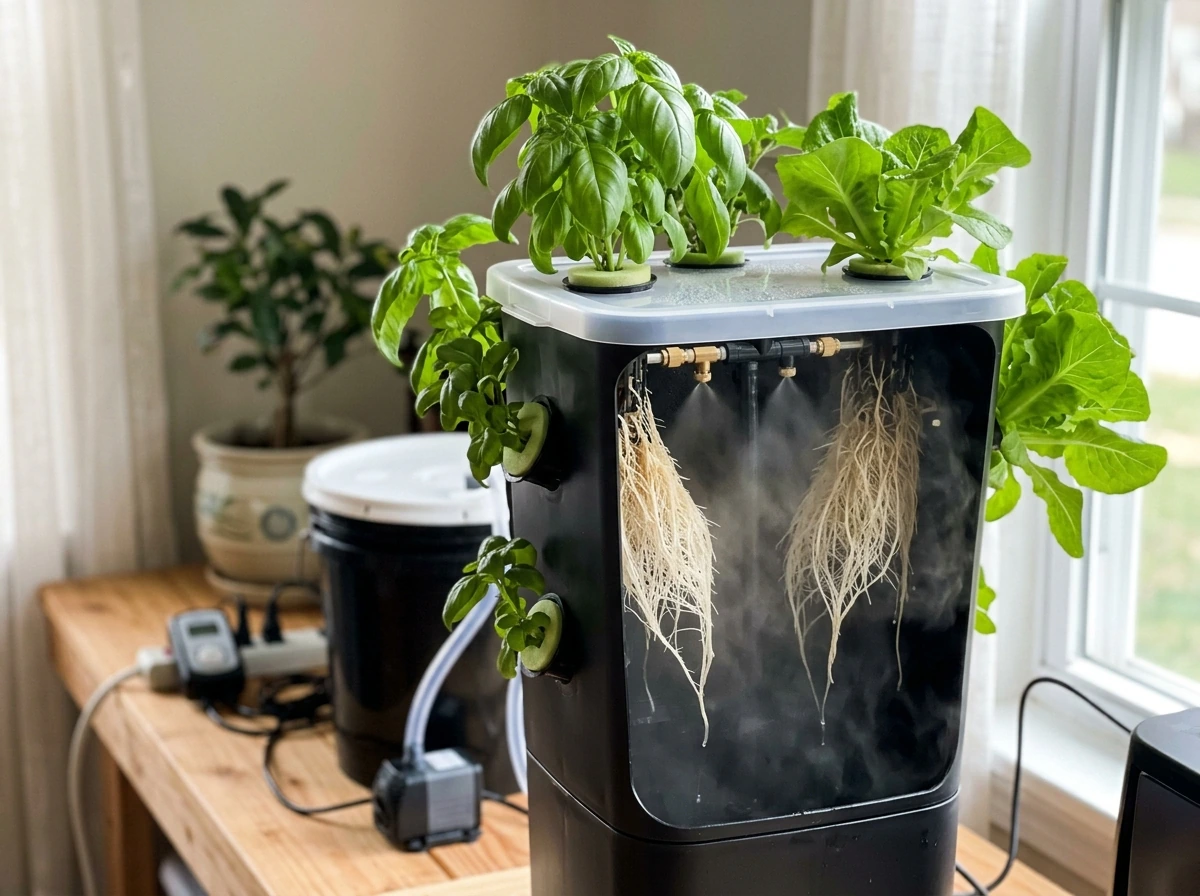
Aeroponics works by suspending plant roots in air and feeding them with a fine mist of nutrient-rich water on a timed cycle. There is no soil, no grow medium soaking in a reservoir, just roots hanging in a dark chamber getting precisely dosed with everything they need. The result is faster growth, better oxygenation at the root zone, and significantly higher yields per square foot compared to soil and often even compared to standard hydroponics. If you are already comfortable with water-based growing systems like hydroponics or aquaponics, such as learning how to grow fennel in water, across water-based setups, aeroponics is the logical next step, and it is more approachable than its reputation suggests.
How to Grow Aeroponics: Setup, Nutrients, and Troubleshooting
Marcus Holloway
24 Mar 2026
How an aeroponics system actually works
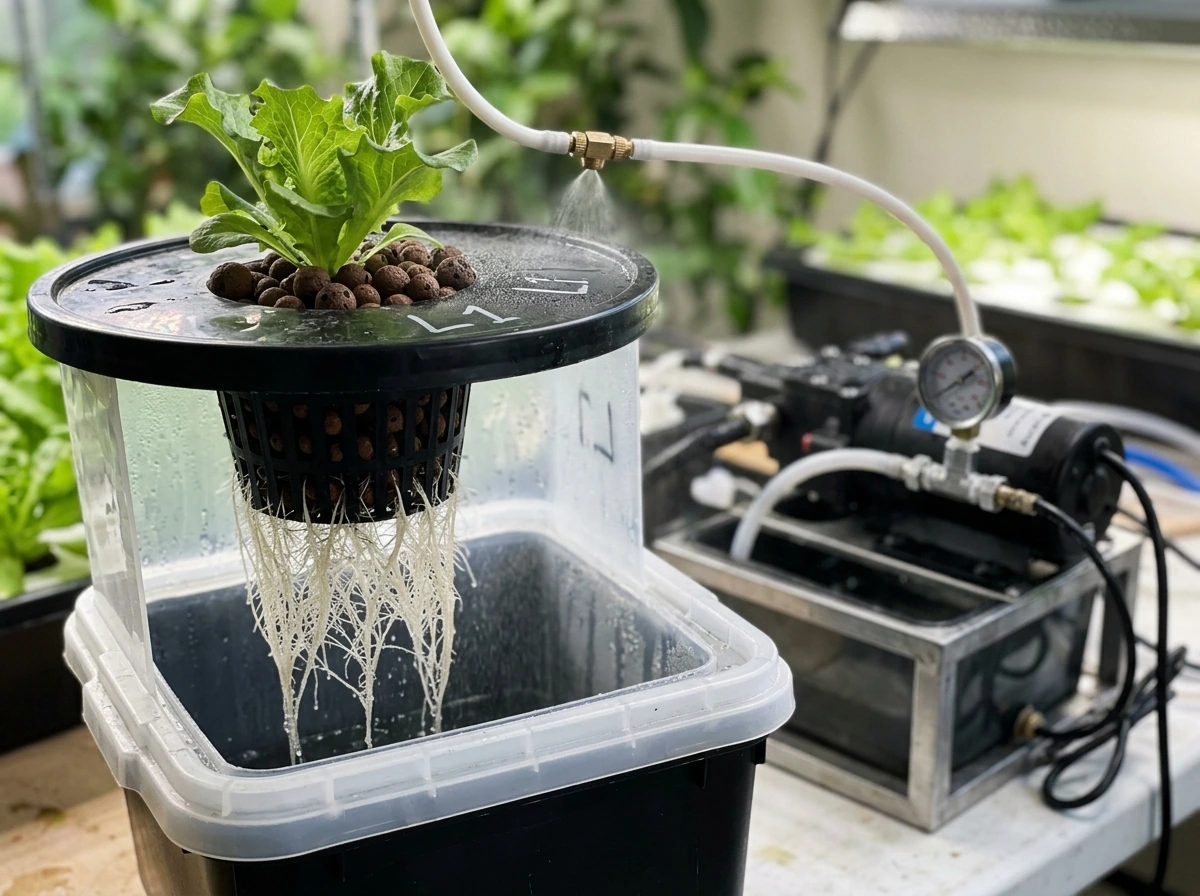
The core idea is simple. Plants sit in net pots or collars mounted into the lid or wall of a sealed chamber. Their roots hang down into that chamber. A pump pressurizes a nutrient solution and sends it through spray nozzles inside the chamber on a timed cycle. The roots get coated in a fine mist, absorb water, oxygen, and nutrients extremely efficiently, then the cycle pauses so oxygen can flood back in before the next spray. That pause is just as important as the spray itself.
High-pressure vs. low-pressure: which one to build
This is the first decision you need to make, and it affects everything downstream. High-pressure aeroponics (HPA) runs at roughly 70 to 120 psi and produces droplets under 50 microns in size. Those tiny droplets cling to root hairs, absorb almost instantly, and leave the root zone well-oxygenated between cycles. HPA systems use a high-pressure pump, solenoid valves, a pressure switch or demand switch, a cycle timer, and inline filtration. They deliver genuinely impressive growth rates but cost more to build and require more maintenance.
Low-pressure aeroponics (LPA) uses a standard submersible pump or ultrasonic fogger to deliver a coarser mist (droplets above 100 microns). It is simpler, cheaper, and a reasonable starting point, but the larger droplet size means roots tend to stay wetter, which cuts into the oxygen advantage that makes aeroponics special. Some growers call the fogger version 'fogponics' to distinguish it. For most beginners who want real aeroponic results without a massive build project, a purpose-built LPA kit or a quality bucket/tower system is the right call. If you want to go DIY HPA, plan for inline filtration from day one.
Core components you need
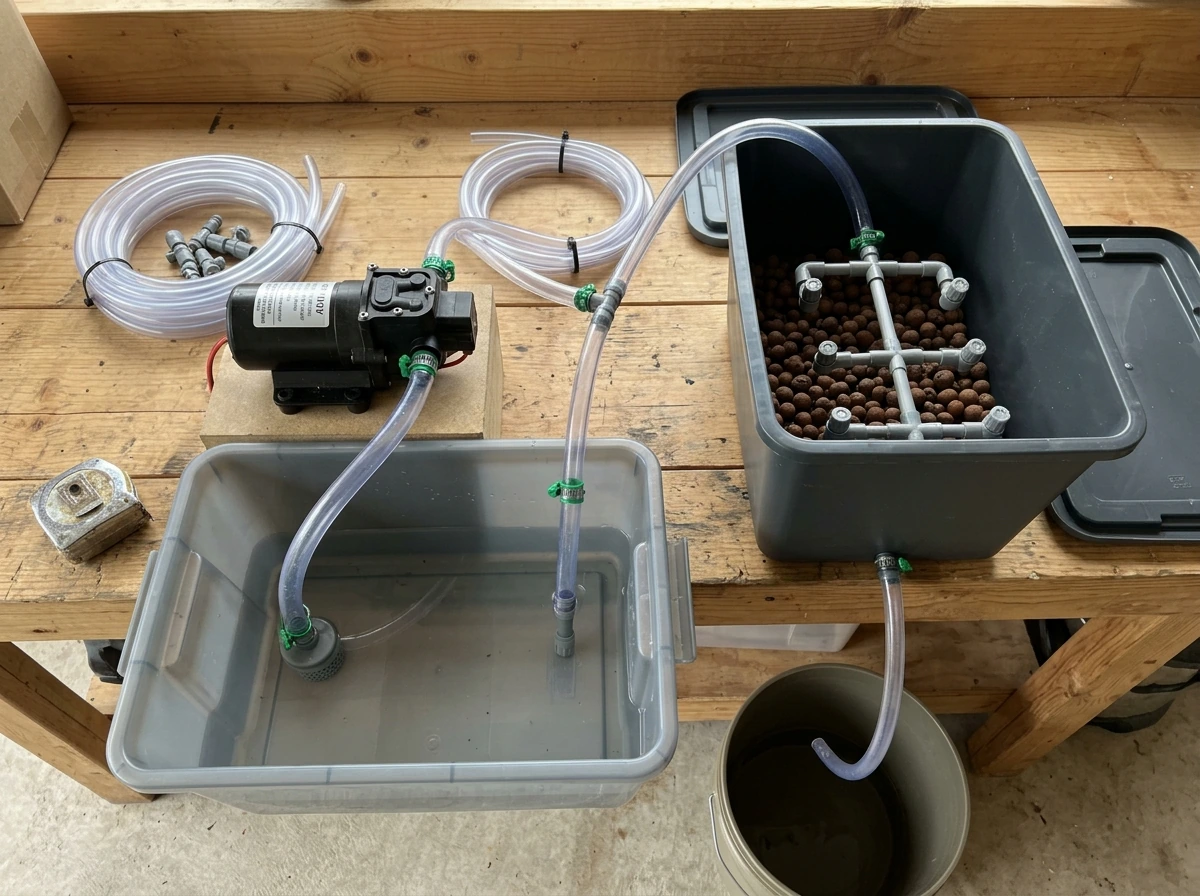
- Root chamber: a dark, sealed container (bucket, tower, or custom box) that blocks light to prevent algae growth and keeps humidity stable around the roots
- Reservoir: a separate tank holding your mixed nutrient solution; size depends on plant count but 20 to 40 liters is a workable starting point for a small system
- Pump: a high-pressure diaphragm pump for HPA or a submersible pump for LPA, sized to maintain consistent pressure across all nozzles
- Spray nozzles or misters: for HPA, precision nozzles rated for fine mist at your target pressure; for LPA, standard garden misters or ultrasonic foggers
- Cycle timer: programmable in short intervals, ideally down to 1-second increments, so you can dial in precise on/off cycles
- Inline filter: installed on the intake side of the pump to catch particles before they reach nozzles; this is non-negotiable for clog prevention
- Relief valve (HPA only): a pressure relief safety valve in case your demand switch fails, preventing dangerous over-pressurization
- Plumbing fittings and tubing: rated for your operating pressure; for HPA, use fittings and tubing that can handle at least 150 psi
- Net pots and collars: neoprene or foam collars seal around plant stems to hold them in the chamber lid while blocking light from entering
- Catch tray and drain: any runoff or condensation drains back to the reservoir in a recirculating setup, or to waste in a run-to-waste configuration
- pH and EC meters: not optional; you will be adjusting these constantly
For a recirculating setup, the drain from the root chamber returns excess solution to the reservoir via gravity or a small drain pump. This is more water-efficient and sustainable but means nutrient concentrations and pH shift as plants consume solution, so you need to check and adjust more frequently. A run-to-waste setup is simpler to manage but uses more water and nutrients. Most hobbyists running small systems do fine with recirculation.
Picking the right plants and planning your first grow
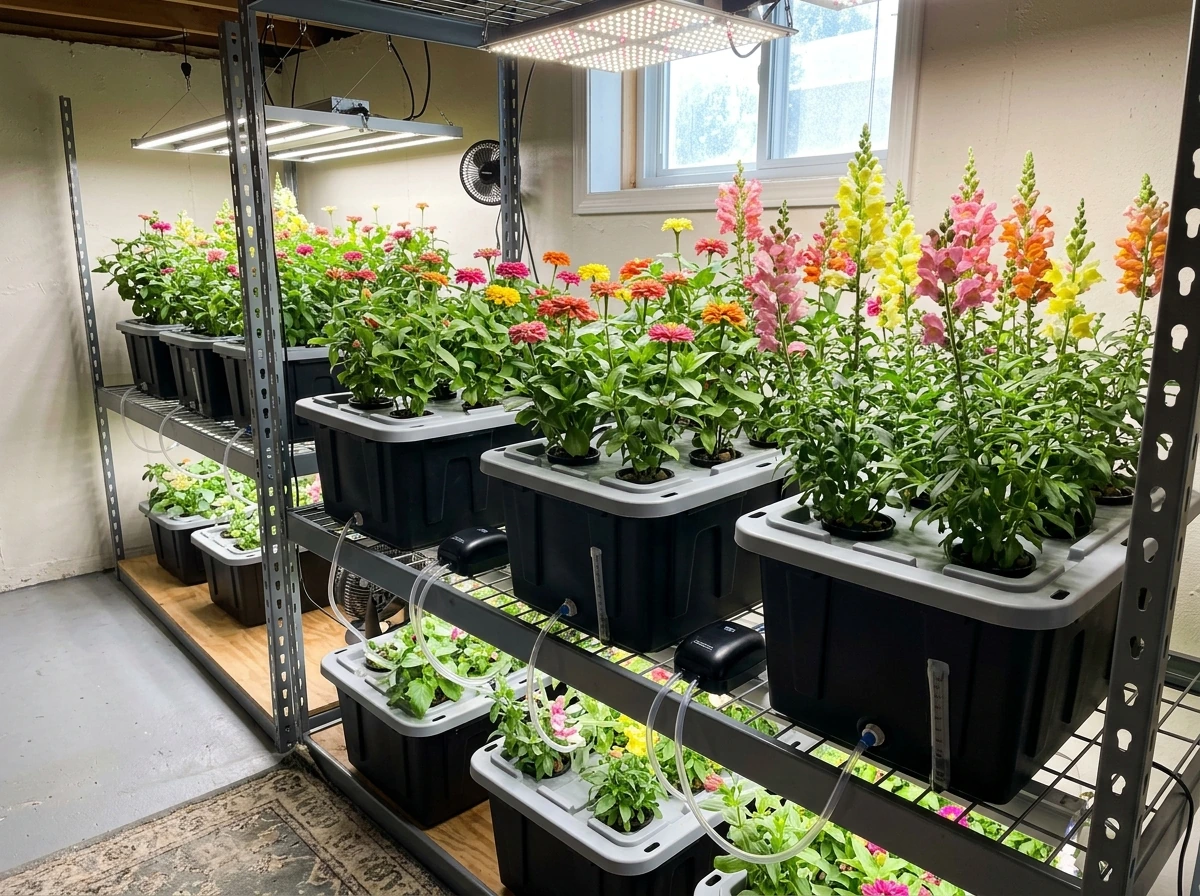
If you’re trying to figure out how to grow aquaponics, Aeroponics rewards plants that respond well to high oxygen availability and fast nutrient uptake. Leafy greens and herbs are the best starting point. They grow quickly, show you results in weeks rather than months, and are forgiving enough that early mistakes rarely kill the crop. how to grow flowers hydroponically
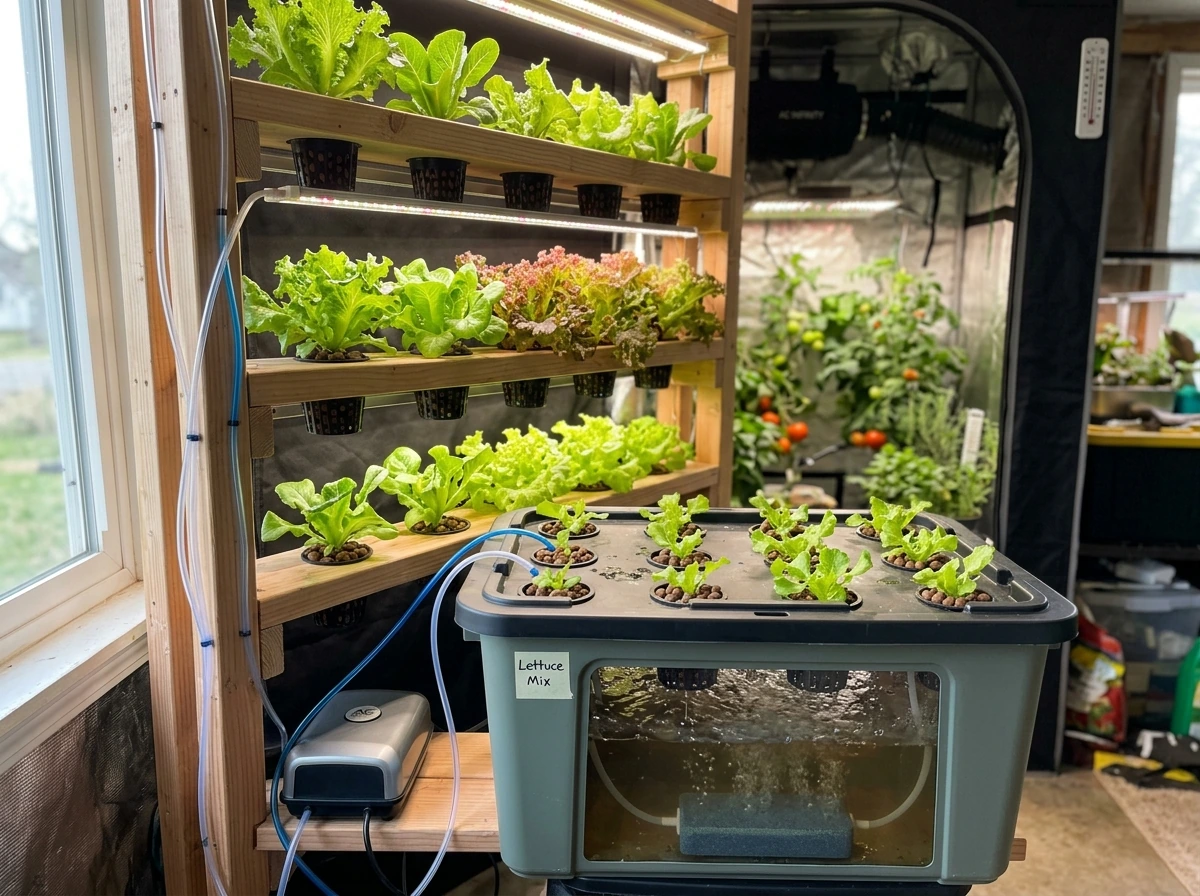
Lettuce, spinach, kale, basil, cilantro, mint, and pak choi are all excellent first crops. They have short root systems, relatively low nutrient requirements, and tolerate the humidity levels typical inside an aeroponic chamber. Once you have one successful cycle under your belt, moving to more demanding crops like tomatoes, peppers, or strawberries is a reasonable next step, though those plants need longer support structures and more attention to nutrient balance.
Plan your grow before you fill the reservoir. Decide how many plants fit your chamber, which species you are growing, and roughly how long the cycle takes from germination to harvest. For lettuce, expect four to six weeks from seedling to harvest in a well-dialed aeroponic system. Basil runs similarly. That timeline gives you a framework for when to mix fresh nutrient solution, when to expect problems, and when to harvest. how to grow pechay in hydroponics
Germination and transplanting into the system
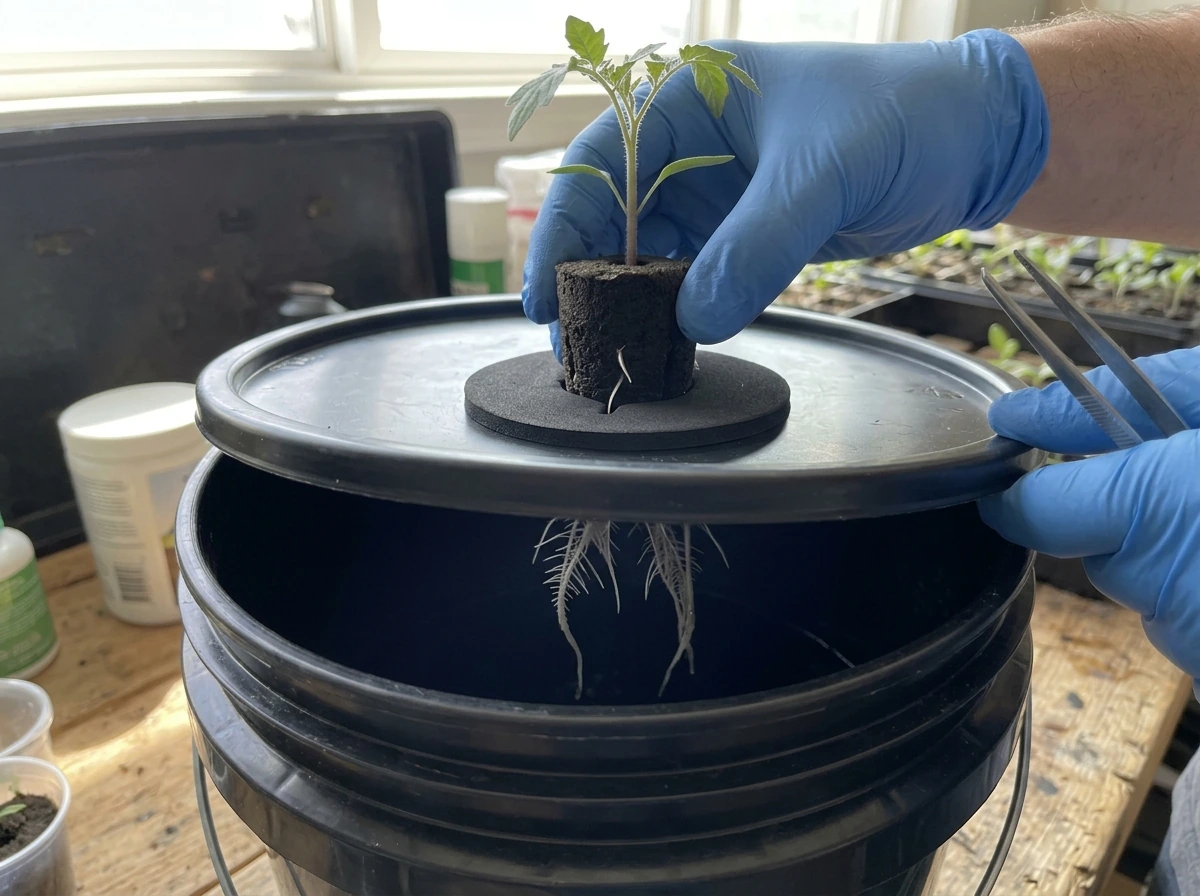
Start seeds in rockwool cubes or rapid rooter plugs, not directly in the system. Wet your germination medium lightly, place one seed per cube, and keep them in a warm, humid environment (around 22 to 25°C) until you see the seed crack and a root emerge. Do not flood the cubes; just keep them moist. Once roots are visible and the seedling has its first true leaves (usually five to ten days), it is ready to go into the system.
Place the germinated plug into a net pot, push a neoprene or foam collar around the stem to seal the hole, and set the net pot into the chamber. On day one in the system, run shorter off-cycles so the misting hits more frequently. This helps the roots transition into open air without drying out before they have grown long enough to reliably intercept the spray. After the first 24 to 48 hours, shift to your normal cycle.
Nutrient solution and water management
Your nutrient solution is the most important variable you control in aeroponics. Get this wrong and you will see it in the roots within a day or two. Get it right and everything else is easier.
pH and EC targets
For leafy greens and herbs, target a pH of 5.5 to 6.5. Most growers aim for around 5.8 to 6.2 as their operational sweet spot, since nutrient uptake for most crops peaks in that range. EC (electrical conductivity, which measures nutrient concentration) for leafy greens should sit between 1.0 and 2.5 mS/cm depending on plant stage, with seedlings and young plants at the lower end and mature plants able to handle the higher end. Check both values daily, especially in a recirculating system where pH drifts as plants consume nutrients.
| Crop Type | Target pH | Target EC (mS/cm) | Notes |
|---|---|---|---|
| Leafy greens (lettuce, spinach, kale) | 5.8 to 6.2 | 1.0 to 1.8 | Lower EC for seedlings, raise as plants mature |
| Herbs (basil, cilantro, mint) | 5.8 to 6.2 | 1.0 to 1.6 | Sensitive to high EC; keep on lower end |
| Pak choi / Asian greens | 5.7 to 6.5 | 1.2 to 2.0 | Tolerates slightly wider pH range |
| Fruiting plants (tomatoes, peppers) | 5.8 to 6.3 | 2.0 to 3.5 | Higher nutrient demand; not a beginner crop |
Mixing nutrients correctly
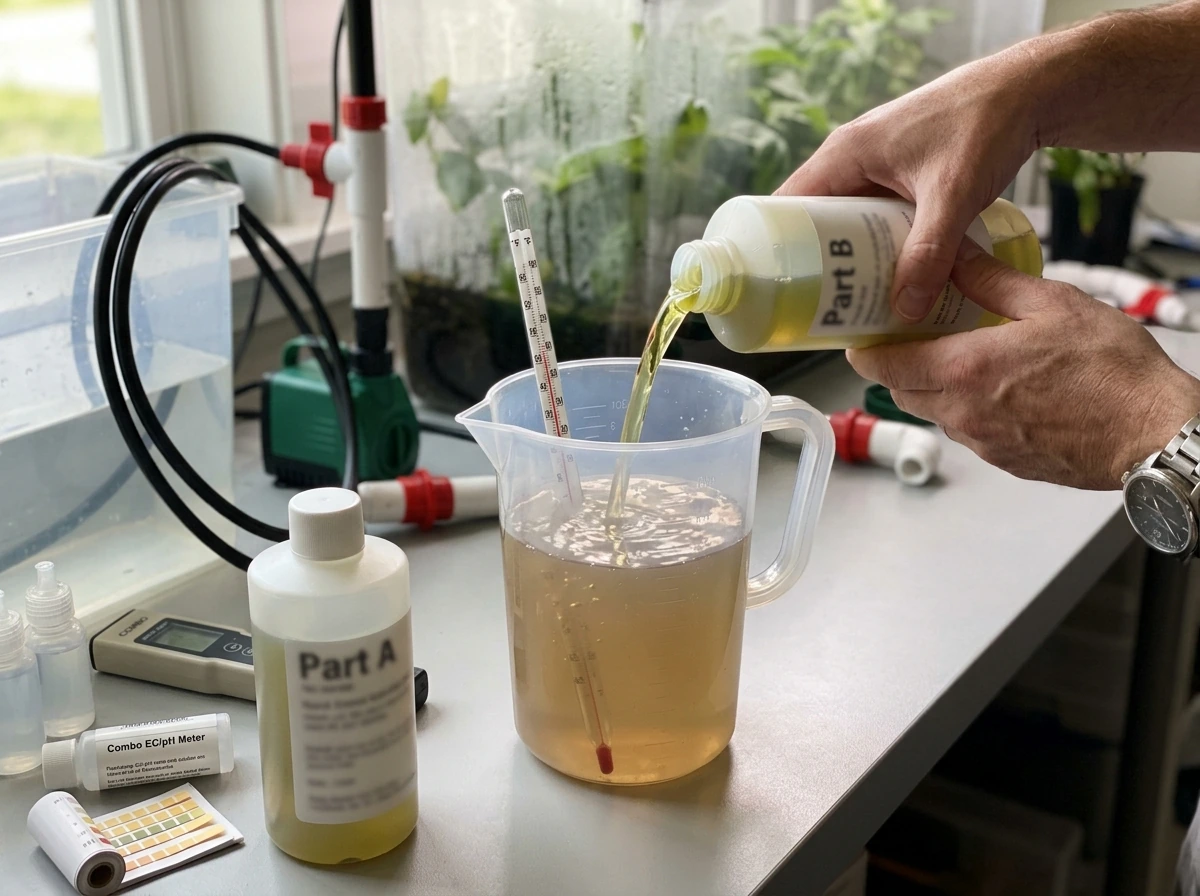
Use a two-part (A/B) liquid nutrient concentrate designed for hydroponics or aeroponics. The reason for two parts is chemistry: Part A typically contains calcium and Part B contains phosphate and sulfate. If you mix them together in concentrated form, you get insoluble precipitates, basically chalk, that will clog your nozzles and starve your plants. Always add Part A to water first, stir, then add Part B. Never mix the concentrates directly with each other.
Start with quality water. If your tap water is above 200 to 300 ppm in dissolved solids, consider using filtered or RO water as your base, then build up to your target EC using your nutrient concentrate. After mixing, check pH and adjust using pH up or pH down solutions in small amounts. In a recirculating system, top off with plain water as the reservoir level drops between solution changes, and do a full reservoir flush and refill every one to two weeks to prevent nutrient lockout and salt buildup.
Keeping nozzles clear and solution clean
Filtration is your first line of defense against clogged nozzles. Install an inline filter on the intake side of your pump and check it weekly. If you are running HPA, even tiny particles can block a nozzle orifice and leave a section of roots dry within hours. In a recirculating system, roots shed material into the solution over time, and that organic matter becomes food for biofilm and algae if you are not filtering it out. Keep the root chamber completely light-tight, clean your reservoir on every solution change, and rinse the chamber walls and nozzles with plain water between grow cycles.
Environmental targets: light, temperature, humidity, and airflow
Aeroponics optimizes what happens at the root zone, but the canopy above still needs the same environmental conditions as any other indoor growing system. Getting these dialed in is what separates a mediocre run from a genuinely fast, productive one.
Lighting
For leafy greens and herbs, 14 to 16 hours of light per day is the standard target. LED grow lights are the best choice for most hobby setups because they produce less heat than HPS or T5 fluorescents, which matters because heat management directly affects your humidity and temperature targets. Keep lights 30 to 60 cm above the canopy for most LED panels, adjusting based on the manufacturer's recommendation for your specific fixture. Fruiting crops need 18 hours during vegetative growth and a 12/12 cycle to trigger flowering.
Temperature
Aim for an air temperature of 18 to 24°C in the grow space for most leafy crops. Reservoir and solution temperature matters too: keep the nutrient solution between 18 and 22°C. Warmer solution holds less dissolved oxygen and encourages pathogen growth. If your grow room runs warm, consider a small reservoir chiller or place the reservoir in a cooler location away from the grow lights.
Humidity and airflow
Relative humidity in the canopy zone should sit between 50 and 70 percent for leafy greens. Too high and you invite powdery mildew and fungal problems; too low and plants lose water through their leaves faster than roots can absorb it, causing stress and tip burn. Airflow is how you manage both. A small oscillating fan blowing gently across the canopy prevents stagnant air pockets, which are where humidity spikes and fungal problems start. It also strengthens stems. This does not need to be powerful airflow, just consistent enough that leaves are visibly moving slightly at all times.
Step by step: from seedling to harvest
- Assemble and pressure-test your system before adding any plants. Fill the reservoir with plain water, run the pump, and check every fitting and nozzle for leaks or drips. Fix anything that is not right before nutrients or plants are involved.
- Mix your nutrient solution to the correct EC for seedlings (start around 1.0 to 1.2 mS/cm for leafy greens) and adjust pH to your target range of 5.8 to 6.2. Fill the reservoir.
- Germinate seeds in rockwool or rapid rooter plugs in a separate tray with a humidity dome. Keep them at 22 to 25°C and lightly moist, not soaking. Wait for visible root emergence and the first true leaves before transferring.
- Transfer germinated plugs into net pots with neoprene collars. Place them into the chamber. Set your cycle timer to shorter off-cycles for the first 24 to 48 hours: for HPA, try 15 seconds on and 2 minutes off; for LPA, 5 minutes on and 5 minutes off.
- After the first 48 hours, shift to normal operating cycles: HPA runs approximately 15 seconds on and 3 to 5 minutes off; LPA runs approximately 5 minutes on and 12 minutes off. Adjust based on how roots look: white, moist, and branching is what you want.
- Check pH and EC daily. Top off with plain water if the reservoir level drops but EC is still in range. If EC is rising (plants are drinking more water than nutrients), top off with dilute solution instead of plain water.
- Inspect roots every two to three days when lights are off. Healthy roots are white to cream-colored and slightly fuzzy with fine root hairs. Brown, slimy, or odorous roots are a problem that needs immediate attention.
- Check the inline filter weekly. Clean or replace it if flow from nozzles seems reduced or if you see particles in the reservoir.
- At the midpoint of your grow cycle, consider doing a reservoir flush and refill with fresh nutrient solution to prevent salt accumulation and nutrient imbalance.
- Harvest leafy greens by the cut-and-come-again method: take outer leaves and let the center keep growing for additional harvests. For full-plant harvests, cut at the base when the plant reaches your target size. For lettuce, that is typically four to six weeks from transplant.
Maintenance, monitoring, and fixing problems fast
Aeroponics is more sensitive than soil or even DWC hydroponics because the roots have zero buffer. In soil, if a watering cycle is skipped, the medium holds moisture for hours or days. In aeroponics, roots exposed to dry air for longer than 30 to 60 minutes during active growth can start to dry out and die. That makes monitoring non-negotiable, especially in the first couple of weeks while you are learning your system.
Daily and weekly routine
- Daily: check pH and EC, top off reservoir as needed, visually confirm misting is happening on schedule by opening the chamber briefly during a spray cycle
- Every two to three days: inspect roots with a flashlight when lights are off, check canopy for signs of stress (yellowing, tip burn, wilting), confirm airflow is running
- Weekly: clean or replace inline filter, check all fittings for drips or mineral buildup, verify timer settings are holding correctly
- Every one to two weeks: full reservoir drain and refill with fresh nutrient solution, rinse chamber walls and catch tray, check nozzles for scale or partial blockage
Common problems and how to fix them
Dry or wilting roots are almost always a timer or nozzle problem. If your cycle timer fails or a nozzle blocks, roots dry out fast. The fix is to check the timer is running and confirm each nozzle is actually misting. For HPA, low pressure at the nozzle usually means a pump issue or a blocked inline filter. Replace or clean the filter first, then check pump output pressure.
Brown, slimy roots with an unpleasant odor indicate root rot, usually triggered by warm solution temperature, poor oxygenation, or pathogen introduction. Drop your solution temperature to below 20°C, check that your root chamber is completely light-tight (light causes algae which leads to biofilm), and consider adding beneficial bacteria products (like Hydroguard) to the reservoir. If the infection is advanced, remove and discard affected roots and do a full system clean with hydrogen peroxide solution before refilling.
Clogged nozzles show up as uneven mist patterns, dry spots in the chamber, or plants on one side of the system looking stressed while others look fine. To fix a clogged nozzle, remove it, soak it in white vinegar for 30 minutes to dissolve mineral scale, rinse with clean water, and reinstall. Prevention is better than the cure: upstream filtration, clean nutrient solution, and regular reservoir changes keep this problem rare.
Algae and biofilm inside the chamber are almost always caused by light leaks. Even a small gap around a net pot collar is enough to let light into the humid chamber and start an algae colony. Check all entry points for light leaks. Black electrical tape or opaque foam can seal problem spots. Once algae is established, you need to scrub the chamber with a dilute hydrogen peroxide solution between cycles.
Nutrient deficiencies or toxicities show up as yellowing leaves, purple tinges, or burnt leaf edges. Before assuming a specific deficiency, check your pH first. A pH that has drifted outside the 5.5 to 6.5 range causes nutrient lockout even when the nutrients are present in the solution. Correct pH, wait 24 hours, and reassess before adding extra nutrients. Adding more of a nutrient to a pH-locked system makes the problem worse, not better.
Inconsistent spray patterns (one part of the chamber getting wet, another staying dry) can also result from pressure drop when multiple nozzles compete for flow. If you added extra nozzles to a system designed for fewer, your pump may not have enough output to sustain pressure across all of them. Remove extra nozzles or upgrade the pump. In HPA, check that the pressure switch is maintaining your target pressure range throughout the misting cycle.
Pests and fungal issues
Aeroponics grown indoors with proper airflow has lower pest pressure than soil growing, but it is not immune. Spider mites, fungus gnats, and aphids can still find their way in. Inspect the underside of leaves weekly. Fungus gnats are attracted to moist growing media, so if you are using rockwool germination plugs, make sure the plugs are not sitting in standing water after transplant. For any pest issue, identify it before treating, since the wrong treatment wastes time and can stress plants further.
Fungal problems in the canopy (like powdery mildew) are a humidity and airflow issue. Get your relative humidity below 65 percent, increase air circulation, and improve spacing between plants so air can move through the canopy. Crowded plants in high humidity with still air is the perfect recipe for a fungal outbreak.
What good results actually look like
A well-running aeroponic system is noticeably faster than soil or passive hydroponics. Lettuce that takes eight to ten weeks in soil can be harvest-ready in four to six weeks in a dialed aeroponic setup. Roots should be dense, white, and visibly fuzzy with fine root hairs extending outward, a sign the plant is actively absorbing nutrients. The canopy should be compact, deep green, and showing new growth every day once plants are established. If your system is quiet, your roots look clean, and your plants are putting on visible growth daily, you are doing it right.
If you are already growing with hydroponic methods and want to compare approaches, aeroponics sits at the high-performance end of water-based cultivation. The principles around nutrient management and environmental control carry over directly, so the learning curve is shorter than it looks. Start simple, get one clean crop through the full cycle, and build from there.
FAQ
How do I transition seedlings into the system without shocking them?
For most home systems, start with shorter misting cycles only during the first 1 to 2 days after transplanting, then switch to your normal schedule. If you keep off-cycles too long early on, roots dry before they develop fine root hairs that efficiently capture the mist. A practical check is to look for steady, uniform root color and no localized wilting within the first 48 hours.
Can I run aeroponics with lights off while keeping misting only at certain times?
Yes, but timing matters. If you grow on a strict dark period, plants still respire, and aeroponic roots can dry faster during longer off times. Reduce risk by keeping the mist schedule consistent, and avoid extending off-cycles just because lights are off.
What is the best way to adjust pH and EC in aeroponics when readings are off?
Start your pH and EC targets as ranges, then tune using plant response rather than daily big changes. The biggest mistake is correcting pH repeatedly within hours, which makes nutrient ions swing and increases root stress. Adjust in small increments, recheck after stabilization (about 24 hours), then only fine-tune.
My plants look stressed, how do I tell if it is nutrients or a nozzle problem?
If you see dry spots or uneven misting, do not immediately add more nutrients or raise EC. First verify nozzle output at the same time during the run, confirm the timer is actuating, and check for a pressure drop (especially if you have added nozzles). Nutrient imbalance often looks similar to oxygen stress, so ruling out spray issues first saves time.
How often should I clean the reservoir, nozzles, and chamber in a recirculating aeroponics setup?
Aim to clean and sanitize on a consistent cadence even if things look fine. Many growers flush or rinse between runs, but full reservoir drains, chamber rinses, and checks of filters and nozzles are what prevent biofilm buildup over multiple cycles. If you are in recirculation, treat every new crop like a reset, not a continuation.
What should I do if my tap water has high dissolved solids or variable quality?
Chloramine in some tap water can interfere with system stability. If your tap water has strong odor or you see persistent algae or biofilm despite light-tight housing, consider using RO or a proper carbon filter and then rebuild to your nutrient targets. The goal is consistent baseline water so pH and EC drift behaves predictably.
Can I top off the reservoir with nutrients when the level drops?
Use plain water to top off, not concentrated nutrient mixes. Adding concentrate directly during growth can spike EC locally, which can cause leaf tip burn or root browning. Top off with water to restore reservoir volume, then rely on your measured pH and EC to guide the next full adjustment cycle.
Does low-pressure aeroponics (foggers) require a different mist timing than high-pressure systems?
If you run a low-pressure setup with larger droplets, you are more vulnerable to the roots staying too wet between cycles. To compensate, keep off-times tight enough that roots do not dry out, but ensure there is still enough oxygen recovery time. Also verify that your chamber is properly sealed and not leaking light, since algae feeds on the extra moisture.
When should I switch from leafy greens to fruiting crops like tomatoes or strawberries?
Start by matching plant spacing and support needs to the chamber capacity, then plan mist coverage for the mature root mass. Tomatoes and strawberries often need more sturdy trellising and higher nutrition demand, and they can outgrow a chamber designed for lettuce quickly. A safe approach is to run a leafy crop first, then test one fruiting plant at a time to see if your pump and nozzle distribution keep the root zone uniformly misted.
How do I handle EC that keeps rising or pH that keeps drifting despite adjustments?
Yes. Even in aeroponics, some nutrients can precipitate or build up if the water chemistry is inconsistent or if you do not flush. If you notice rising EC without adding fertilizer, or pH that will not hold in range, do a full reservoir flush, clean the chamber, and reinstall fresh mixed solution rather than continuing to “chase numbers” daily.
What causes repeated root rot even after I sanitize the system?
In aeroponics, fungi and algae are strongly tied to light leaks and surface film. If you get repeated root browning or slime after you clean, check for hidden light entry (cable gaps, around collars, light from power indicators). Reinforce seals, then address the root zone temperature and keep the solution below 20°C to slow pathogen growth.
If my roots are drying out, should I shorten or lengthen the mist cycle?
That depends on droplet size and chamber humidity, but a simple diagnostic is to observe when wilting happens relative to the spray cycle. If wilting occurs soon after a long off period, reduce off-time or confirm the timer is not slipping. If wilting occurs during misting, suspect nozzle blockage or pressure drop causing inadequate coverage.
How can I prevent powdery mildew without over-drying plants?
Air movement is not only about lowering humidity, it also helps prevent boundary layers around leaves that trap moisture. Use a gentle oscillating fan so the canopy leaves move slightly, but avoid strong direct airflow that can over-dry foliage while roots remain fine. If powdery mildew keeps returning, also increase spacing and lower humidity rather than relying on more airflow alone.
What are the best preventive steps for pests in aeroponics?
Insect pressure is lower than soil, but aeroponics can still attract pests via transplants and airflow from outside. Quarantine new seedlings for about a week, inspect leaf undersides during weeks 1 to 3, and keep entry points sealed with screens when possible. Treat only after you confirm the pest, because treatments that target mites will not fix gnats.